Matthew 26:27
And he took the cup, and gave thanks, and gave it to them, saying, Drink ye all of it;
Translations
And he took the cup, and gave thanks, and gave it to them, saying, Drink you all of it;
King James Version, KJV Cambridge Paragraph Bible, Webster Bible
And he took the cup, and gave thanks, and gave it to them, saying, Drink ye all of it;
Revised Version, American Standard Version
And he took a cup, and gave thanks, and gave to them, saying, Drink ye all of it;
and having taken the cup, and having given thanks, he gave to them, saying, 'Drink ye of it — all;
And having taken [ the] cup and given thanks, he gave [ it] to them, saying, Drink ye all of it.
And, taking a cup, and giving thanks, he gave unto them, saying—Drink of it, all of you;
Berean Standard Bible, Majority Standard Bible
Then He took the cup, gave thanks, and gave it to them, saying, “ Drink from it, all of you.
He took the cup, gave thanks, and gave to them, saying, “ All of you drink it,
And he took a cup and, having given praise, he gave it to them, saying,
Also he tooke the cuppe, and when he had giuen thankes, he gaue it them, saying, Drinke ye all of it.
Douay-Rheims (Challoner revision)
And taking the chalice, he gave thanks, and gave to them, saying: Drink ye all of this.
Pictures
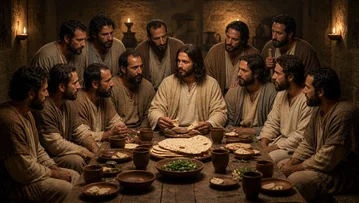
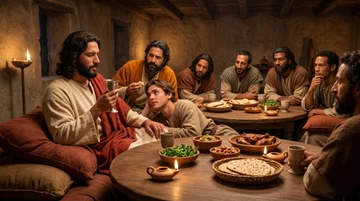
Cross-references 20 of 39
- 1 Corinthians 11:25-26
After the same manner also he took the cup, when he had supped, saying, This cup is the new testament in my blood: this do ye, as oft as ye drink it, in remembrance of me.
The cup is taken in remembrance of Christ and proclaims his death until he comes.
- Luke 22:20
Likewise also the cup after supper, saying, This cup is the new testament in my blood, which is shed for you.
Identifies the cup after supper as the new covenant in Christ’s blood.
- Mark 14:23-24
And he took the cup, and when he had given thanks, he gave it to them: and they all drank of it.
Jesus shares the cup and identifies it with his covenant blood.
- 1 Corinthians 5:7
Purge out therefore the old leaven, that ye may be a new lump, as ye are unleavened. For even Christ our passover is sacrificed for us:
Christ is identified as the Passover sacrifice.
- 1 Corinthians 11:24-25
And when he had given thanks, he brake it, and said, Take, eat: this is my body, which is broken for you: this do in remembrance of me.
The bread and cup are given as memorial signs of Christ’s sacrifice.
- Exodus 12:15-20
Seven days shall ye eat unleavened bread; even the first day ye shall put away leaven out of your houses: for whosoever eateth leavened bread from the first day until the seventh day, that soul shall be cut off from Israel.
The Passover law excludes leaven during the feast, supporting an unleavened cup.
- 1 Corinthians 11:28-29
But let a man examine himself, and so let him eat of that bread, and drink of that cup.
Participants are told to examine themselves before drinking and to discern the Lord’s body.
- Hebrews 9:22
And almost all things are by the law purged with blood; and without shedding of blood is no remission.
Both connect remission of sins with the shedding of blood.
- John 13:1-17
Now before the feast of the passover, when Jesus knew that his hour was come that he should depart out of this world unto the Father, having loved his own which were in the world, he loved them unto the end.
Jesus washes the disciples’ feet before sharing the supper’s cup.
- 1 Corinthians 10:16
The cup of blessing which we bless, is it not the communion of the blood of Christ? The bread which we break, is it not the communion of the body of Christ?
The blessed cup is communion in Christ’s blood.
- Luke 22:19
And he took bread, and gave thanks, and brake it, and gave unto them, saying, This is my body which is given for you: this do in remembrance of me.
Christ commands remembrance through the supper.
- Jeremiah 31:33
But this shall be the covenant that I will make with the house of Israel; After those days, saith the LORD, I will put my law in their inward parts, and write it in their hearts; and will be their God, and they shall be my people.
The cup introduces the covenant that promises God’s law written in his people’s hearts.
- 1 Corinthians 11:20-21
When ye come together therefore into one place, this is not to eat the Lord’s supper.
Paul condemns treating the Lord’s supper as an ordinary meal to satisfy appetite.
- Hebrews 9:15
And for this cause he is the mediator of the new testament, that by means of death, for the redemption of the transgressions that were under the first testament, they which are called might receive the promise of eternal inheritance.
Christ mediates the new covenant through his death, bringing redemption and forgiveness.
- Hebrews 8:8-12
For finding fault with them, he saith, Behold, the days come, saith the Lord, when I will make a new covenant with the house of Israel and with the house of Judah:
Restates Jeremiah’s promise of a new covenant with Israel and Judah.
- 1 Peter 1:19
But with the precious blood of Christ, as of a lamb without blemish and without spot:
Christ’s precious blood is the reality represented by the cup.
- Matthew 26:39
And he went a little further, and fell on his face, and prayed, saying, O my Father, if it be possible, let this cup pass from me: nevertheless not as I will, but as thou wilt.
The cup at the supper anticipates the agony he prays to endure.
- Exodus 12:14
And this day shall be unto you for a memorial; and ye shall keep it a feast to the LORD throughout your generations; ye shall keep it a feast by an ordinance for ever.
The Passover memorial provides the setting for the Lord’s Supper.
- Hebrews 10:9-10
Then said he, Lo, I come to do thy will, O God. He taketh away the first, that he may establish the second.
Christ establishes the new covenant through his once-for-all sacrifice.
- 1 Corinthians 10:17
For we being many are one bread, and one body: for we are all partakers of that one bread.
Sharing one bread makes believers one body.
Commentary
Each commentary is drawn from primary sources: the writings of Ellen G. White and Adventist pioneers and periodicals. Each commentary is separate. Its own words are not a quotation; follow the references to read the source passages.
Ellen G. White
19 sources
On the night before His crucifixion, after eating the Passover with His disciples, Jesus with thanks gave the cup to all who were present and told them all to drink of it, even Judas the betrayer.Ms 106, 1903, par. 27–28Ms 45, 1892, par. 4–5DA 652.1–2DA 653.2–31SP 201.1 The cup is the emblem of His spilled blood given for many for the remission of sins, establishing the new covenant, and drinking it expresses cleansing from sin and continual dependence on His blood for salvation.Ms 106, 1903, par. 27–28ST Dec 23, 1908DA 652.1–2 The wine representing His unblemished sacrifice was pure unfermented juice, for fermentation as a sign of sin and death could not represent Him, and the bread and wine are not changed into His actual body and blood.DA 653.2–3GC 59.2HL 113.14SP 63.1GC88 59.2 Sharing the cup keeps His followers mindful of His betrayal and death until He returns, proclaiming His death till He comes and pointing forward to drinking the fruit of the vine new with Him in His Father's kingdom.ST Dec 23, 1908DA 652.1–2DA 659.3–660.11SP 201.1 It cannot be received worthily while pride, strife, differences between brethren, and evil thoughts are cherished, so every difference must be put away and the heart cleansed and humbled beforehand, yet even a known sinner is not to be turned away, as Christ's patience gave Judas opportunity to repent and be cleansed.Ms 106, 1903, par. 27–28Ms 106, 1903, par. 24–26DA 655.4
Setting and Meaning
On the night before His crucifixion, after eating the Passover supper with His disciples, Jesus instituted this memorial meal.Ms 45, 1892, par. 4–51SP 201.1COS 113.2 He gave it immediately before entering Gethsemane, the quiet garden near Jerusalem where He often went to pray.Ms 45, 1892, par. 4–5COS 113.2 His heart was full of sorrow under the weight of the sins of the world as He did so.Ms 45, 1892, par. 4–5 As He went with them to the garden He talked with them and taught them as they walked, becoming strangely silent as they neared the garden.COS 113.2
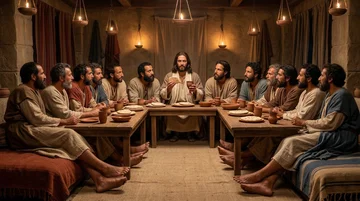
With thanks He gave the cup to all the disciples present and commanded them all to drink of it.Ms 106, 1903, par. 27–28DA 652.1–2DA 653.2–3 Judas the betrayer was included among those who received it.Ms 106, 1903, par. 27–28DA 653.2–3
The cup is the emblem of His spilled, shed blood.Ms 106, 1903, par. 27–28DA 652.1–2DA 653.2–3 That blood was given for many for the remission of sins and establishes the new covenant.ST Dec 23, 1908DA 653.2–3DA 659.3–660.1 Partaking expresses cleansing from sin for those who come to Him for pardon and continual dependence on His blood for salvation.DA 659.3–660.1SG3 227.2 The taking of the cup with thanks expresses the love of God and the constraining power of the love of Jesus that must be kept fresh in memory.DA 659.3–660.1
The wine representing His unblemished sacrifice was pure, unfermented grape juice, not fermented or intoxicating wine.DA 653.2–3HL 113.1 Intoxicating wine should not be placed on the Lord's table.HL 113.1 Fermentation, as a symbol of sin and death, could not represent His unblemished sacrifice.DA 653.2–3
Covenant Remembrance and Hope
Drinking the cup commemorates the deliverance accomplished through His death, for the service was established to remember His sacrifice until He returns.DA 652.1–21SP 201.1 The wine symbolizes His blood, shed to cleanse from sin those who come to Him for pardon and receive Him as Saviour, expressing continual dependence on His blood for salvation.SG3 227.2 The cup is to keep His followers mindful of His betrayal and crucifixion.SG3 227.2 The supper commemorates His death, and the Passover's forward-looking type reached its fulfillment when Christ, the Lamb of God without blemish, died on the cross.1SP 201.1
Sharing the cup keeps the hope of His second coming vivid and proclaims His death till He comes.ST Dec 23, 1908DA 659.3–660.1 The cup represents His blood of the new covenant, shed for many for the remission of sins, and points forward to the day when He will drink the fruit of the vine new with His people in His Father's kingdom.ST Dec 23, 1908DA 659.3–660.1 Every commemoration of His death therefore proclaims His death till He comes, giving comfort in tribulation.DA 659.3–660.1 Only because of His death can His second coming be looked to with joy, expressing the love of God and the constraining power of the love of Jesus that must be kept fresh in memory.DA 659.3–660.1
Jesus connected the supper with the Passover and identified Himself as its great fulfillment.1SP 201.13SP 128.1 The Passover lamb and its blood in Egypt pictured Christ, the sinless Lamb of God without blemish.1SP 201.13SP 128.1 His merits alone avert judgment and condemnation and bring salvation.3SP 128.1
The ordinance uses simple bread and wine, and the bread and wine are not converted into the actual body and blood of Christ.GC 59.2GC88 59.2 The sacrifice of the mass built on that claim supplanted the ordinance with an idolatrous sacrifice, a horrible, Heaven-insulting heresy.GC 59.24SP 63.1GC88 59.2 The claim of power to make that change is blasphemous presumption, openly claiming the power of creating God, the Creator of all things.GC 59.2 Requiring Christians on pain of death to avow faith in that change caused multitudes who refused to be given to the flames.GC 59.24SP 63.1
There can be no union between souls and God except through Christ.DA 659.3–660.1 Union and love between brethren is cemented and made eternal by His love.DA 659.3–660.1 Nothing less than His death could make that love efficacious, so His sacrifice is the center of hope upon which faith must be fixed.DA 659.3–660.1
Sharing the Cup Worthily
The cup was given in the sacramental service as the emblem of spilled blood to all the disciples who were present, including Judas the betrayer.Ms 106, 1903, par. 27–28 Judas received that emblem directly from Jesus while sitting in the very presence of the Lamb of God, brooding upon dark purposes and cherishing sullen, revengeful thoughts.Ms 106, 1903, par. 27–28 With it he heard the command to do this in remembrance of Christ.Ms 106, 1903, par. 27–28
He was permitted to share even though Jesus knew he was a betrayer, for Christ's patience offered him opportunity to receive Him, repent, and be cleansed from sin.DA 655.4 The sacrament is therefore not to be withheld from a known sinner, and carelessly separating from people who are in error is warned against, since such rejection may leave them vulnerable to temptation.DA 655.4 The communion of His blood, the emblem of His shed, spilled, atoning blood to be partaken of in the sacramental supper, cannot be received while pride, variance, strife for supremacy, differences between brother and brother, misunderstandings, and evil thoughts are cherished, for the heart then cannot enter into fellowship with God.Ms 106, 1903, par. 24–26 Christ appointed the ordinance of humility, the memorial of His humiliation, to be observed first as preparation for the supper, so that before the emblems of His broken body and shed blood are partaken of every difference is removed, the heart cleansed from evil, and humility and love restored.Ms 106, 1903, par. 24–26 That preparation shows true appreciation of the service and readiness to sit with Him in His kingdom.Ms 106, 1903, par. 24–26
The supper is to be commemorated often and shared publicly by each participant, not restricted to an exclusive group.Ms 35, 1897, par. 8 Partaking bears witness that each person accepts Christ as a personal Saviour who gave His life to forgive sin and rescue believers from death.Ms 35, 1897, par. 8 The verse belongs to the account of His sacrifice and sufferings, including the mockery and derision He endured, His agony in Gethsemane, His betrayal, trial, and crucifixion.Ms 43, 1909, par. 812MR 14.1–2 Those events leading into betrayal, trial, and crucifixion also stand as a picture of how people driven by doubt and hatred treat those who bring a message from God.12MR 14.1–2
Sources
Pioneers and periodicals
119 sources
Jesus took the cup, gave thanks over it apart from the thanks over the bread, gave it to His disciples on the night He was betrayed at the last Passover meal, and commanded them all to drink of it.ST May 18, 1904CO 45.3–5ST May 12, 1898CO 57.3–4
The cup holds forth His blood of the covenant shed for many for the remission of sins, His poured-out pure and holy life to be remembered with thanksgiving and renewed vows.ST May 18, 1904ST May 12, 1898ST Jun 6, 1878ST May 18, 1904RH Mar 13, 1913
In giving the cup He made and dedicated the new and everlasting covenant in His own blood, confirmed at the cross, which writes the law in heart and mind by the Holy Spirit and blots out sins forever.ST Jun 6, 1878ST Jun 21, 1905ST Aug 11, 1909ST Dec 5, 1916
The bread and wine are emblems and memorial signs of His body and blood, not His literal flesh and blood nor changed by consecration into them, and the cup contained the pure sweet unfermented fruit of the vine fitting His incorruptible spotless offering.ST Nov 28, 1892RH Nov 6, 1900RH Dec 24, 1914RH Mar 7, 1912ST Dec 12, 1911
Each believer is commanded to drink for himself under both kinds of bread and cup, in the permanent gospel ordinance that proclaims His death till He comes and looks forward to drinking it new with Him in His Father's kingdom.ST Dec 23, 1908ST May 18, 1904ST May 12, 1898RH Jan 8, 1867RH May 5, 1874
Institution Setting and Words
Jesus took the cup, gave thanks over it, gave it to the disciples, and commanded every one of them to drink from it.ST May 18, 1904ST May 12, 1898CO 57.3–4CO 42.7–43.1 The thanks offered over the cup was distinct from the thanks offered over the bread, so that one thanksgiving belongs to each of the two elements of the ordinance.RH Apr 7, 1868ST May 8, 1884 The cup thus given is explained by the next verse as covenant blood poured out for many for forgiveness of sins, and sharing it proclaims death until coming.ST May 18, 1904ST May 12, 1898
The giving of the cup belongs to the Lord's Supper instituted on the same night in which He was betrayed, at and after the last Passover meal and at the close of that meal on Thursday evening.ST Jan 1, 1885ST Jun 21, 1905RH Jan 8, 1867 It came after His suffering in Gethsemane in prospect and before His condemnation and crucifixion for the iniquity of all, and after He had washed the disciples' feet and commanded mutual foot-washing.CO 45.3–5RH Jan 8, 1867 By special act toward His disciples He blessed the bread and wine and gave them as a gospel ordinance for Christians in the gospel age, not as a feast to satisfy hunger but as a solemn rite holding His sufferings and death in lasting remembrance.RH Jan 8, 1867RH Jul 8, 1875 The bread used with the cup was unleavened as required at Passover, and the ordinance is distinct from an ordinary meal.ST Jan 1, 1885
The sharing took place as an evening meal in an upper lighted room in Jerusalem, with guests reclining at table and Jesus as the central figure.ST Jun 3, 1875 It was on the last night of His earthly sojourn after eating the Passover, and after giving the cup He and the disciples sang a hymn, left the city, crossed the brook Cedron, and entered Gethsemane where the final struggle began.ST Jan 15, 1885 No specific posture or manner of receiving is prescribed.ST Jun 3, 1875
At that same solemn occasion the bread and wine were given with thanks and the command to drink standing together with the commands about washing one another's feet as binding duties rather than mere example or symbol.CO 45.3–5ST May 13, 1875 After the bread and wine the disciples sang a hymn and went out, the Supper memorializing both shed blood for forgiveness with Christ bearing the curse of the broken law in man's place and His humiliation and willing condescension.RH Jul 21, 1868 At the same last Passover feast before His death Judas the traitor was pointed out and left the company forever through covetousness to perdition, while the ordinance of foot-washing was instituted as a memorial of Christ's humble life.ST Jun 15, 1904 Beneath the paschal moon just before going up Olivet the giving of the cup was a holy rite and blessed sign cheering believers in earthly strife, with outpoured wine symbolizing better life, even as the mighty Victim going to sacrifice had the bitter cup of wrath before Him and sorrow piercing His heart as the suffering Son of God, yet the steep way was cheered with sweet and plaintive song.RH Nov 10, 1904 After Judas left, the others joined with Jesus in a solemn hymn while the betrayer did not remain to sing.ST
The verse belongs to the account of suffering and rejection fulfilling the Messiah as despised and rejected, a man of sorrows acquainted with grief.RH Nov 18, 1862 It belongs to solemn prediction concerning His own death made in instituting the Supper, one of repeated predictions that the divine innocent Victim must be slain and the cup drunk to its dregs, and reading it strengthens faith in Him as Saviour and Son of God.ST Sep 3, 1896 It is associated with celebrating the sufferings and cruel death of Jesus Christ.RH May 2, 1865
The Supper is a literal ordinance in which literal emblems of a literal death are partaken, and observing it follows example.ST Jan 3, 1884 Christ Himself partook of the bread and wine at the first supper and thereby set an example perpetuated by the command to eat and drink in remembrance to show death till coming again, so those who truly love Him must keep observing it outwardly and spiritually, and His saying He would drink no more until drinking anew in the kingdom was spoken because He was about to leave them without bodily presence and does not cancel the ordinance.ST Nov 3, 1909 The cup is material and not merely a purely spiritual rite without wine.ST Jul 17, 1879 Ordinary drinking is given a new religious purpose in directing the disciples to drink the cup representing blood, without giving the word drink a new meaning.ST Jun 29, 1882
The institution of the Lord's Supper came next after the triumphal entry into Jerusalem, and the account of that institution is found in Matthew 26 and also in Mark 14, Luke 22, and John 13.ST The timing of the Passover meal eaten by Jesus and His disciples is used to calculate that if they ate at the proper time Pentecost that year fell on the Sabbath, without claiming that timing can be established from Scripture.ST Apr 15, 1889
Cup Represents Shed Blood
The cup is the blood of the covenant, the blood of Christ and of the new covenant, poured out for many for forgiveness and remission of sins.ST Dec 23, 1908ST May 18, 1904ST May 12, 1898ST Jun 6, 1878RH Jul 21, 1868 Drinking it recalls His sacrifice and approaching death and its cost, renews vows to Him, and keeps that death in remembrance with thankful hearts while proclaiming it until He comes.ST Dec 23, 1908ST May 18, 1904ST May 12, 1898RH Jul 21, 1868RH Dec 2, 1862 The Jewish disciples who drank were receiving it as representatives of the whole Christian church, entering into the new covenant with the Lord by partaking of the emblems.ST Jun 6, 1878 In that giving God set forth Christ as Saviour of the world, proposing remission of sins to all who would receive Christ and His offering on the conditions taught during His three and a half years of divine teaching, which the disciples accepted in the act.ST Jun 6, 1878 The cup therefore stands among the memorials of His broken body and shed blood, showing that His blood was shed so forgiveness could be granted, that He bore the curse of the broken law in humanity's place, and that He humbled Himself in willing condescension for humanity's sake.RH Jul 21, 1868
The cup holds His life poured out for many, His pure and holy life, and the new wine is free from the leaven of death and the sting of sin.ST May 18, 1904RH Mar 13, 1913 It is a covenant seal and memorial of heaven's gift to fallen humanity, meant to keep Christ's gift fresh in mind and to be kept as a sacred service, with each person partaking in recognition of His infinite sacrifice in both individual and collective thanksgiving.ST May 18, 1904RH Mar 13, 1913 The lower tangible wine was joined by the Lord Himself to the higher spiritual reality of His blood, so that solemnly seeing the wine lifts minds by steps of the tangible up into the spiritual to think of His blood, teaching and reminding.ST Aug 13, 1912
The wording is metaphor in which one thing represents another, as the bread represents the body and the cup represents the blood, so that direct biblical identification of bread and wine with body and blood need not always be taken literally.RH Jul 19, 1870RH Apr 18, 1854
The wine also points forward to drinking the deathless fruit of the vine new with Christ in His Father's kingdom, keeping the hope of His return vivid.ST Dec 23, 1908ST Aug 17, 1904RH Dec 2, 1862ST Sep 20, 1910 That promise will be fulfilled at the marriage supper of the Lamb, when those invited are blessed and are served by Christ Himself.ST Aug 17, 1904 The Supper is thus a public memorial of Christ's offering and a representation of communion among believers through Christ, whose shed blood is the life that binds His followers together until He meets them again in God's kingdom.ST Sep 20, 1910 The fruit of the vine is a shadow of Christ's truly existing blood, not of blood that no longer exists, and points to that real blood as the ground of eternal salvation.ST Sep 18, 1884
New Covenant Sealed
The giving of the cup made and dedicated the new covenant in Christ's own blood, testament meaning the same as covenant, the blood shed for the remission of sins.ST Jun 6, 1878ST Jun 21, 1905ST Aug 11, 1909 Although held out to God's children from the beginning, it was not dedicated until Christ was nailed to the cross, when it was confirmed and sealed so that no one may annul it or add to it.ST Aug 11, 1909ST Mar 11, 1889 The new covenant is the same as the everlasting covenant, whose blood makes believers perfect in every good work to do God's will.ST Aug 11, 1909 The bow in the cloud, circumcision, and Sabbath-keeping were its tokens, signs, seals or marks between God and the true Israel whom He sanctifies and makes holy.ST Aug 11, 1909
The cup introduces the new covenant predicted in Jeremiah 31 and made with the house of Israel and the house of Judah as the old was made with their fathers, not with Gentiles alone.ST Dec 14, 1904 It does not change or abolish the law but gives it a more conspicuous place by putting it in the inward parts and writing it in heart and mind by the Holy Spirit, restoring God's law in the heart of every true believer.ST Dec 5, 1916ST Dec 14, 1904ST Apr 3, 1928 The blood of beasts under the old covenant could never take away sin but brought sin to remembrance, whereas by virtue of Christ's blood under the new covenant sins are forever blotted out and forgotten.ST Dec 14, 1904 By that provision sins committed under the old covenant were forgiven, and through Christ's death carrying out the covenant's provisions the Holy Spirit and the blood of Christ are made available to humanity.ST Dec 14, 1904
The Jewish disciples present received the cup as representatives of the whole Christian church, and by drinking entered into the new covenant with the Lord.ST Jun 6, 1878 In that act God set forth Christ as Saviour of the world, proposing remission of sins to all who would receive Christ and His offering on the conditions taught during His three and a half years of divine teaching, which the disciples accepted by partaking of the emblems.ST Jun 6, 1878 Sharing the cup still accompanies a renewal of the believer's covenant with Christ and baptismal vow, strengthening faith and reviving hope, the cup and wine having no merit or power in themselves but representing His sacrificial death at Calvary through which He completed the covenant with the Father to restore the lost world.RH Mar 7, 1912 The covenant cup confirms Daniel's prophecy, for Christ's death and the ending of the sacrificial service belong to the same work of confirming the covenant, after which He served in the heavenly sanctuary.RH Oct 11, 1915 The cup belongs with baptism as a memorial to keep His thorough teaching of the law in all its branches and the real means of pardon in remembrance, pointing to the second covenant based on better promises which He as mediator confirmed and finally sealed with His own blood.RH Apr 9, 1872RH Oct 21, 1873
Pure Unfermented Fruit Vine
The cup held pure sweet unfermented juice of the grape, wholesome unintoxicating natural produce that makes glad the heart, called the fruit of the vine and the cup rather than fermented wine.ST Nov 28, 1892ST Oct 5, 1882ST Jul 13, 1915ST Oct 8, 1894ST May 3, 1877 Only unfermented wine is authorized for the ordinance, and intoxicating sacramental liquor has no foundation in Scripture.ST Jul 13, 1915ST Feb 23, 1915 The drink was free from fermentation and alcohol as the symbol of blood which is life.RH Nov 6, 1900ST Apr 19, 1877
Because the Supper was instituted at the Passover meal when every form of leaven and ferment had to be put out of the homes, fermented drink counted as leaven and was excluded just as leavened bread was.ST Jun 9, 1914RH Nov 6, 1900ST Apr 19, 1877ST Jul 13, 1915 Jesus as an observant Jew would not have used fermented drink or kept the meal where it remained, and the bread used with it was unleavened as required during Passover.ST Oct 8, 1894 The Supper followed and replaced the Passover, from which fermented things were excluded.ST Oct 8, 1894ST Feb 7, 1878
Unfermented juice fittingly signifies incorruptible blood and spotless body and pure perfect offering, as free from decay and corruption as unleavened bread.ST Nov 28, 1892ST Apr 19, 1877ST Jul 13, 1915 Fermentation represents decay and corruption, and alcohol comes by fermentation rather than as fruit of the vine.ST Apr 19, 1877ST Feb 7, 1878ST Feb 6, 1879 Natural unfermented blood like that from Jesus' side is its likeness, and the cup is a symbol of blessing produced by natural growth that cheers God and man and may be used a little for the stomach's sake.ST May 3, 1877
The fitting emblem is pure domestic cultivated grape juice, red like spilled blood and like garments trodden in the winepress, used in only a few drops to wet the lips.RH Apr 16, 1867 It is to be prepared under deacons' care so its purity is known and kept from air to keep it from fermenting as much as possible, matching the white loaf in fitness for the occasion.RH Apr 16, 1867 Wine bought from liquor sellers is unfit because buying sustains an unholy traffic and because it is uncertain, diluted with water, strengthened with alcohol, and colored with poisons rather than pure grape juice, and water sweetened with molasses is unfit and disgusting as an emblem of the holy blood, tied as it is to slavery in growing, pressing, boiling, barreling, and shipping.RH Apr 16, 1867 Those conscientious against any fermented wine may use pure cold water instead, while using water instead of the fruit of the vine is a departure from the practice described in the Gospel.RH Apr 16, 1867ST Nov 18, 1886 Where juice cannot be procured, clean good raisins may be boiled and the juice strained out for use, the juice being preservable in fruit season the same as other fruit juices and fruit in general and usually procurable at good drug stores.ST Sep 15, 1909
The cup does not commend moderate drinking of intoxicating wine.ST Jun 9, 1914ST Feb 23, 1915 Fermented wine dethrones reason and debases the drinker, clouds judgment, and blurs holy from common and clean from unclean, and bites like a serpent.ST Jun 9, 1914RH Jun 18, 1914 Even a sip can awaken a reformed drinker's appetite and endanger recovery or keep him from the table, so churches should use only unfermented wine and practice and advocate complete temperance without seeking an exception for sacramental liquor.ST Aug 26, 1889ST Feb 23, 1915ST Feb 6, 1879
The later Jewish custom of fermented Passover wine, brought in after the return from Babylonian captivity, belongs to human traditions that set aside God's commandment for the commandments of men.ST Jun 9, 1914 Blessing the cup does not make fermented wine harmless though fermented liquor is called a work of death even when used at communion.ST Apr 6, 1882 The question is raised whether the church can consistently condemn beverage alcohol yet administer wine to its members in a sacred ordinance.ST Jan 26, 1882
Symbol Not Literal Change
The bread and the cup are emblems, symbols and memorial signs of body and blood, not literal flesh and blood nor a complete Christ containing soul and divinity.RH Dec 24, 1914RH May 5, 1874RH Jun 19, 1866 The wine was not blood already shed, but represented a sacrifice still future, given to keep its cost in mind.RH Dec 24, 1914 The cup and its wine have no merit or power in themselves; they represent blood shed at Calvary, by which the covenant with the Father to restore the lost world was completed.RH Mar 7, 1912 Sharing them accompanies renewal of covenant and baptismal vow, strengthening faith and reviving hope.RH Mar 7, 1912 The cup stands only to show death till He comes, pointing back to Calvary, not to repeat the sacrifice.ST Jan 9, 1896
Communion in the cup is spiritual, by God abiding in the life through the Holy Spirit.RH Jul 11, 1912 It is joined with receiving Christ inwardly by faith, feeding on His word and drinking in His Spirit, for flesh profits nothing and His words are spirit and life.ST Dec 12, 1911RH Jul 11, 1912 So received, He dwells in believers, His blood cleanses from sin, makes them one in fellowship, and shows itself in words and actions.ST May 13, 1889 The bread and wine are thus signs of a continual feast.ST Dec 12, 1911
Against this, consecration is claimed to effect an inward change or conversion called transubstantiation, so that what before is simply wine on the altar is after consecration no longer wine, but truly, really and substantially blood together with soul and divinity, with only the outward qualities or species of wine remaining while the inward invisible substance is changed.ST Mar 4, 1897 By that power the priest is claimed to call God from heaven down upon the altar, to hold Him in his hands, to carry Him through the streets to the sick and dying, to receive Him into his heart, to nourish souls of the faithful with His precious blood, and to give Him to whom he will according to priestly pleasure.RH Aug 4, 1910 That power is said to exalt weak, sinful men above patriarchs, prophets, angels and archangels, and to place even Almighty God Himself in their hands.RH Aug 4, 1910
That change does not occur, for the words over the cup are spirit like I am the Vine, I am the Light of the world, I am the good Shepherd, and I am the way, the truth, and the life, and must be spiritually interpreted.ST Jan 9, 1896 They effect no true, proper and propitiatory sacrifice for the living and the dead to be trusted in by works and human efforts for salvation.ST Jan 9, 1896 Drinking means feeding upon word and life and bringing mind and principles into the soul, not eating literal flesh.ST Jan 9, 1896 The Supper remains a simple and precious sacrament, in contrast to the wafer and unbloody sacrifice of the mass that superseded the practice instituted by Christ, and in contrast to the claim that glorified humanity becomes mystically present in communion in a way known only to God.RH Jun 23, 1868
The sacramental cup, whose wine is said by transubstantiation to be transformed into real blood, is set beside claims that matter gains life and thought without a Creator.ST Jan 27, 1914 The holy supper is connected with the belief held by John Huss that the real body was present in it, though how was left undefined.ST Nov 18, 1889 It is part of the account of the Eucharist disputed over whether body and blood were actually present in the sacrament.RH May 7, 1872
All Drink the Cup
Jesus gave thanks for the cup and gave it to all the disciples present, commanding each one to drink from it himself rather than having one drink for the rest.ST May 18, 1904ST May 12, 1898CO 57.3–4ST May 18, 1904RH Jan 28, 1862 No one can partake of the bread and cup on another's behalf or supply another's spiritual need, for each person partakes in recognition of the infinite sacrifice.RH Feb 6, 1879ST May 18, 1904 The occasion is both individual and collective thanksgiving, commemorating the covenant blood poured out for many for forgiveness of sins and proclaiming his death until he comes.ST May 18, 1904ST May 12, 1898ST May 18, 1904RH Jan 28, 1862 Mark 14:23 confirms that they all drank from it.CO 57.3–4
Christ instituted communion under both kinds, giving both bread and cup to believers to eat and to drink.RH May 5, 1874RH Nov 29, 1870RH Feb 24, 1874ST Sep 23, 1875 Withholding the cup from the people while priests alone drink, giving the communicant only a wafer while the priest drinks all the wine, or administering bread without wine, breaks and changes the form he instituted.RH Nov 29, 1870RH Feb 24, 1874ST Sep 23, 1875ST Jul 19, 1883RH Mar 31, 1904 Withholding on the ground of preventing spilling contradicts his command to every individual who partakes to drink of the cup as well as to eat the bread.RH May 5, 1874 Administering in bread without wine is a change, though a smaller one than replacing immersion with sprinkling in baptism.ST Jul 19, 1883
Access to the cup belongs to the laity as a reform grounded in Scripture, and the Supper is free with baptism properly coming before partaking among those who have by faith accepted him.ST Mar 20, 1907ST Oct 21, 1886 Responsibility for eating and drinking rests on the one who partakes and not on those who serve the emblems, though communion brings obligations.ST Mar 20, 1907 The word all means all who were present, not necessarily all twelve, so the verse alone does not prove Judas was present when the cup was given, for he could already have left while the eleven who remained all drank.ST Nov 22, 1883
A casual reading of Matthew, Mark and Luke seems to show that Judas was present and partook, with the timing of the supper and his departure the question at issue.RH Jul 29, 1873 Those who hold that he had already received the dipped sop and immediately left teach that he left before this memorial was instituted and so did not partake of the cup with the others.RH May 27, 1873 Those who hold that Jesus gave the cup even to Judas teach that he knew Judas had already agreed to betray him and knew the disciples were striving for greatness, yet did not withhold the emblems.RH Dec 28, 1911ST Mar 20, 1907 On that teaching the cup is not limited to people free from every sin, another's presence does not make one unworthy, each must examine his own heart rather than judge who may take part, and Judas drank though his heart was not right.RH Nov 20, 1856RH Dec 28, 1911ST Mar 20, 1907
The Supper is a memorial of his death and sufferings meant for his true followers rather than for the world or for those living in sin to its disgrace, given privately to his disciples and distinct from a meal served to a crowd.RH May 27, 1873 The cup is a sacred emblem of his blood and of true communion with Christ.RH May 27, 1873RH Jun 23, 1910 The disciples were disputing about the highest place and held alienation and dissension, leaving them unclean in heart, unfit to receive the bread and wine, and not truly enjoying that communion until Christ by washing feet washed away that pride and division and prepared them.RH Jun 23, 1910
Memorial Observance and Blessing
The taking and giving of the cup instituted the Lord's Supper by special act toward the disciples on the same night in which He was betrayed, after His suffering in Gethsemane in prospect and before His condemnation and crucifixion for the iniquity of all.RH Jan 8, 1867 He gave thanks over the cup and gave it to the disciples for all to drink as His blood of the New Testament shed for many for the remission of sins.ST May 12, 1898RH Jan 8, 1867 It is a plainly commanded gospel ordinance and permanent rite for Christians in the gospel age, standing with baptism among the all things commanded to be taught and observed, and receiving at least nominal recognition among Christians generally.RH Jan 8, 1867ST Dec 30, 1889 It is not designed to be made a feast or to satisfy hunger, but to be observed as a solemn rite in which partakers reflect upon and hold in lasting remembrance the sufferings and death of their Lord.RH Jan 8, 1867ST Mar 27, 1901 It commemorates His death on the cross rather than His resurrection, for the crucifixion was the central act by which He showed His love for humanity, and the Supper is one of its memorials.RH Feb 13, 1872RH Mar 11, 1862 The Passover lamb was a type of Christ the true Passover, and once He had come the type gave way to this memorial and object lesson of His great sacrifice after His departure and until His return.ST Jun 9, 1898
The Supper celebrates that the Saviour has come, replacing the sacrifices that pointed forward to His coming, and witnesses to reform, commemorating Him as Reformer and Saviour and marking the followers' own reformation and salvation.ST Aug 13, 1896ST Jun 3, 1875 Partaking of the Supper does not itself merit pardon or salvation.ST Aug 13, 1896 Sharing the cup proclaims His death until He comes.ST May 12, 1898RH Jan 28, 1862 The cup represents His blood of the covenant, shed for many for the remission of sins, shed to cleanse the sins of those who come to Him for pardon and receive Him as Saviour, and it is to be celebrated often so that followers remember His betrayal and crucifixion and their continual dependence on His blood for salvation.ST Mar 25, 1880ST May 12, 1898 It points back to Calvary and forward to the day when He will drink with His people in His Father's kingdom, keeping the hope of His return vivid.ST Dec 23, 1908ST Sep 20, 1910 That promise will be fulfilled at the marriage supper of the Lamb, when Jesus drinks the fruit of the vine new with His people in the Father's kingdom, and those invited to that supper are blessed and will be served by Christ Himself.ST Aug 17, 1904 It is a public memorial of His offering and a representation of communion among believers through Him, the wine representing His shed blood as the life that binds His followers together.ST Sep 20, 1910
The verse prescribes no day or frequency and makes no day sacred, for though the ordinance was instituted in the evening at the beginning of the crucifixion day, with Jesus and all the apostles present, it does not designate a day for its observance.RH Mar 11, 1862 It took place on Thursday evening, probably on Wednesday or certainly by Thursday, and the fact that the meal was celebrated on a particular day does not make that day a Sabbath.RH Feb 3, 1852RH Nov 14, 1865ST Jul 12, 1905 Its timing is not binding and those details of when or how often it must be celebrated are not matters of faith or religious duty.RH Nov 14, 1865 This explicit record of a new religious ordinance contrasts with the absence of any record instituting the first day of the week as the Sabbath or Lord's day, and the practice was not established as a weekly observance of the first day.RH Feb 3, 1852ST Apr 20, 1915 It may be celebrated on a suitable day, most fittingly in the evening after the Sabbath or on the sixth day fitting its commemoration, but not as proof for Sunday sacredness, and being a religious observance with baptism and prayer civil law may not enforce it nor impose it on unbelievers.RH Mar 11, 1862RH Feb 3, 1852ST Apr 20, 1915RH Nov 14, 1865
The fruit of the vine is an emblem through which believers see Christ crucified, shedding His blood on the cross for human sin.ST Apr 26, 1883ST May 27, 1889 Abel's offering of a dying lamb in faith showed the same sacrifice and expressed faith and hope in Christ, just as the communion emblems point back to Him; as Abel saw the blood of Jesus in the blood of the firstling of his flock, believers see the dying Saviour in the fruit of the vine.ST Apr 26, 1883ST May 27, 1889ST Feb 22, 1877RH Apr 23, 1908ST Jan 22, 1880 Abraham's acceptance of bread and wine from Melchizedek foreshadowed the Son of promise, through whom the world would be blessed, the cup of wine being an emblem of the blood of the eternal Son.ST Apr 28, 1914
Drinking the cup recalls His sacrifice and renews vows to Him, accompanying a renewal of the believer's covenant with Christ and baptismal vow, strengthening faith and reviving hope.RH Dec 2, 1862RH Mar 7, 1912 The cup and wine have no merit or power in themselves; they represent His blood and His sacrificial death at Calvary, through which He completed the covenant with the Father to restore the lost world.RH Mar 7, 1912 Believers taste the wine and, through faith, discern His real presence and receive a present blessing from Him, in profound spiritual communion that seals His promise and call.ST Mar 27, 1907 Partaking is to be joined with receiving Him inwardly by faith, so that He dwells in believers and their words and actions show His presence; this union makes them one in fellowship, and His blood cleanses them from sin.ST May 13, 1889 Its lessons convey deep spiritual effect to trusting followers, bringing gratitude with sense of unworthiness and deeper experience, joy and salvation from shame and suffering received with repentance, and the service can be a bright spot for isolated believers who seldom have opportunity to attend.ST May 13, 1889RH Dec 23, 1915
Beyond bread-breaking, sharing the cup points beyond receiving the bread to sharing His passion of suffering, which many who follow to the breaking of bread are unwilling to drink with Him.ST Jun 20, 1900 The verse falls in the period when Jesus dwelt among men as a man keeping the Sabbath as it should be observed and leaving violators unpunished, with Roman law not permitting execution for such offenses because God has appointed a day to judge the world in righteousness; His arrest and condemnation was not lawful execution but the outbreak of lawlessness, like the taking of the law into their own hands to put Stephen to death on a false charge of blasphemy.ST Aug 13, 1902 The order of Last Supper events repays careful study because those events are closely connected with His death and the hope centered on it.ST Nov 15, 1883 The Passover table as spread in the days of Jesus was a great memorial service yielding striking gospel lessons proving Him the true Messiah, the only Saviour of Jew and Gentile.RH Jun 10, 1915 The institution is imitated by celebrating the supper at night after the seventh-day Sabbath ends at sunset and washing one another's feet.RH Feb 12, 1857
Sources