Mark 14:24
And he said unto them, This is my blood of the new testament, which is shed for many.
Translations
American King James Version, Webster Bible
And he said to them, This is my blood of the new testament, which is shed for many.
King James Version, KJV Cambridge Paragraph Bible
And he said unto them, This is my blood of the new testament, which is shed for many.
And he said unto them, This is my blood of the covenant, which is shed for many.
And he said unto them, This is my blood of the covenant, which is poured out for many.
and he said to them, 'This is my blood of the new covenant, which for many is being poured out;
And he said to them, This is my blood, that of the [new] covenant, that shed for many.
And he said unto them—This, is, my blood of the covenant, that is to be poured out in behalf of many.
He said to them, “ This is My blood of the covenant, which is poured out for many.
He said to them, “ This is My blood of the new covenant, which is poured out for many.
He said to them, “ This is my blood of the new covenant, which is poured out for many.
And he said to them, This is my blood of the testament, which is given for men.
And he saide vnto them, This is my blood of that newe Testament, which is shed for many.
Douay-Rheims (Challoner revision)
And he said to them: This is my blood of the new testament, which shall be shed for many.
Pictures
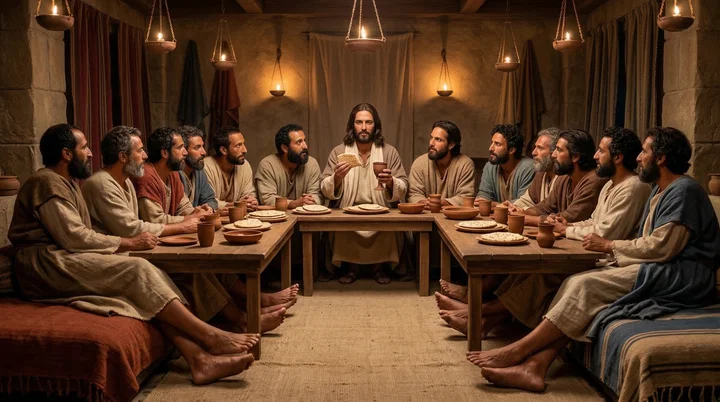
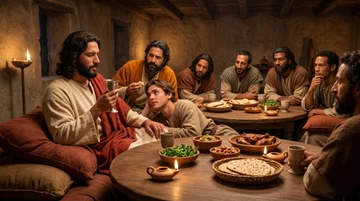
Cross-references 20 of 26
- Matthew 26:28
For this is my blood of the new testament, which is shed for many for the remission of sins.
Jesus connects his shed blood with the covenant and forgiveness.
- Luke 22:19-20
And he took bread, and gave thanks, and brake it, and gave unto them, saying, This is my body which is given for you: this do in remembrance of me.
The parallel account connects the cup with Christ’s blood and the covenant.
- 1 Corinthians 11:23-26
For I have received of the Lord that which also I delivered unto you, That the Lord Jesus the same night in which he was betrayed took bread:
Repeats the cup’s covenant meaning and its memorial purpose.
- 1 Corinthians 11:25
After the same manner also he took the cup, when he had supped, saying, This cup is the new testament in my blood: this do ye, as oft as ye drink it, in remembrance of me.
Paul recounts Jesus’ words over the cup at the supper.
- Exodus 12:1-14
And the LORD spake unto Moses and Aaron in the land of Egypt, saying,
The Passover memorialized deliverance from Egypt and prefigured Christ’s deliverance from sin.
- 1 Corinthians 10:16
The cup of blessing which we bless, is it not the communion of the blood of Christ? The bread which we break, is it not the communion of the body of Christ?
The cup and bread are communion in Christ’s blood and body.
- Luke 22:17-18
And he took the cup, and gave thanks, and said, Take this, and divide it among yourselves:
The cup is identified as the fruit of the vine, contrasted with the emblem cup.
- 1 Corinthians 11:20-21
When ye come together therefore into one place, this is not to eat the Lord’s supper.
Paul contrasts the Lord’s Supper with the Corinthians’ selfish meal.
- John 13:21-30
When Jesus had thus said, he was troubled in spirit, and testified, and said, Verily, verily, I say unto you, that one of you shall betray me.
Judas is identified and leaves during the meal before Christ’s death.
- Exodus 24:8
And Moses took the blood, and sprinkled it on the people, and said, Behold the blood of the covenant, which the LORD hath made with you concerning all these words.
Records Moses’ words when he established the first covenant with blood.
- Leviticus 17:11
For the life of the flesh is in the blood: and I have given it to you upon the altar to make an atonement for your souls: for it is the blood that maketh an atonement for the soul.
Explains the link between blood, life, and atonement.
- Hebrews 9:14
How much more shall the blood of Christ, who through the eternal Spirit offered himself without spot to God, purge your conscience from dead works to serve the living God?
Christ’s blood cleanses the conscience.
- Hebrews 9:20
Saying, This is the blood of the testament which God hath enjoined unto you.
Quotes the covenant declaration associated with Moses’ use of blood.
- Ephesians 1:7
In whom we have redemption through his blood, the forgiveness of sins, according to the riches of his grace;
Both connect Christ’s blood with redemption and forgiveness of sins.
- Hebrews 9:22
And almost all things are by the law purged with blood; and without shedding of blood is no remission.
Both connect remission of sins with the shedding of blood.
- Luke 22:19
And he took bread, and gave thanks, and brake it, and gave unto them, saying, This is my body which is given for you: this do in remembrance of me.
The bread is broken immediately before the cup.
- 1 John 1:7
But if we walk in the light, as he is in the light, we have fellowship one with another, and the blood of Jesus Christ his Son cleanseth us from all sin.
Names Christ’s blood as the means of cleansing.
- 1 Corinthians 11:28
But let a man examine himself, and so let him eat of that bread, and drink of that cup.
Each person is told to examine himself before partaking.
- John 1:29
The next day John seeth Jesus coming unto him, and saith, Behold the Lamb of God, which taketh away the sin of the world.
Jesus is identified as the Lamb who takes away the world’s sin.
- 1 Corinthians 10:17
For we being many are one bread, and one body: for we are all partakers of that one bread.
Many believers share one bread and are one body.
Commentary
Each commentary is drawn from primary sources: the writings of Ellen G. White and Adventist pioneers and periodicals. Each commentary is separate. Its own words are not a quotation; follow the references to read the source passages.
Ellen G. White
5 sources
At the Passover the words institute the Lord's Supper as the great memorial of Christ's sacrifice.Ms 19, 1897, par. 1–2DA 652.1–2 In that supper the wine represents His blood.GC 59.2 That blood is the blood of the new covenant, shed in sacrifice for many.DA 652.1–2 In giving His blood He gave Himself as a sacrificial offering, the captain of salvation making Himself the offering and the Prince of life becoming the Prince of martyrs.Ms 19, 1897, par. 1–2 His death as the spotless Lamb and sin offering fulfilled the system of types and ceremonies that had pointed to it.DA 652.1–2
He gave His life for the remission of sins to rescue from death all who will believe in and receive Him.Ms 35, 1897, par. 8 The new memorial replaced the Jewish national festival of Passover.DA 652.1–2 It belongs to the scriptural ordinance of the Lord's Supper that was later supplanted by the mass.GC 59.24SP 63.1 It does not authorize priests to turn the bread and wine into Christ's actual body and blood.GC 59.24SP 63.1 Claiming the power to effect that change is a blasphemous heresy.4SP 63.1
His followers in every land and age are to observe the Supper, keeping His saving work in remembrance until He comes again.DA 652.1–2 The supper with bread and wine was designed to be commemorated often in order to bring that sacrifice to remembrance.Ms 35, 1897, par. 8 The ordinance is not to be exclusive, but each person is to take part in it publicly, thereby bearing witness to personal acceptance of Christ as the Saviour who gave His life for them.Ms 35, 1897, par. 8
Sources
Pioneers and periodicals
41 sources
On the night he was betrayed, at the close of the Passover meal, Jesus instituted the Lord's Supper and gave the cup as the memorial of his shed blood.ST Jun 21, 1905ST Oct 5, 1882RH Jan 28, 1862 That blood, poured out in his approaching death, establishes the new covenant and brings deliverance from sin and remission of sins for many.ST May 13, 1889ST Feb 17, 1890ST May 12, 1898 He commanded his disciples to eat the bread and drink the cup in remembrance of him, thereby proclaiming his death until he comes.CO 42.7–43.1ST Dec 30, 1889ST May 12, 1898RH Jan 28, 1862ST Nov 3, 1909 The cup does not become his actual blood, but represents the new covenant in his blood, just as the bread represents his body.ST Dec 12, 1911RH Jul 11, 1912 Its contents are the pure, unfermented fruit of the vine, fitly representing his blood shed for mankind.ST Oct 5, 1882ST Jul 13, 1915ST Oct 8, 1894ST Feb 7, 1878
Passover Setting and Wording
The words were spoken on the night of the betrayal, at the close of the Passover supper, when the communion ordinance was instituted and the cup was identified with the new covenant in blood shed for many.ST Jun 21, 1905ST Oct 5, 1882RH Jan 28, 1862ST Nov 22, 1883 The bread and the cup were given with words of remembrance near the close of the meal after Judas had gone out, and eating and drinking proclaimed the death until the coming again, in agreement presenting the events as facts witnessed and recorded by competent witnesses.ST Oct 5, 1882RH Jan 28, 1862 The cup was given to the disciples with the charge for all to drink of it, holding pure unfermented grape juice, the fruit of the vine, as the emblem of blood, just as the unleavened bread was the emblem of the broken body.ST Oct 5, 1882
The old memorial of deliverance from Egypt reached its fulfillment in the Lamb of God, whose blood shed in the approaching death brings deliverance from sin and establishes the new covenant, with the Lord's Supper as a memorial of that death to be observed until he comes again.ST May 13, 1889 The emblems were given after the Passover meal was finished, as a memorial entirely distinct from that supper and having no reference to it, with the emblem of spilled blood together with the emblem of the broken body as all that commemorates the death.ST Jan 1, 1885 That memorial is kept by eating the bread and drinking the cup in remembrance, showing forth the death till he comes, and consists simply in partaking of the bread and the wine, so that to make it a full ordinary meal or to add anything more is a perversion of the ordinance and there is no reason for its celebration to be preceded by a common meal.ST Jan 1, 1885
The phrase blood of the new covenant uses language like the declaration of Moses when he established the first covenant, and its place connects that blood with atonement and remission of sin.ST Feb 17, 1890 Because life is in the blood, blood represents life given for life, and people need the blood to be cleared before the law.ST Feb 17, 1890 Mark's account of the last hours leading to the crucifixion and resurrection gives clear, definite particulars about those hours not given by the other evangelists.ST Mar 10, 1909 Mark places the institution in the same order as Matthew, though both omit details recorded by John and Luke.ST Nov 15, 1883 In the order of the Last Supper the blessing of the cup follows immediately after the bread is broken, rather than being separated from the bread by intervening events in the listed harmony.ST Feb 4, 1903
The blessed cup belongs to the Lord's Supper instituted at the close of the Passover supper and is distinct from the cups drunk during the Passover meal itself, for though the directions in Exodus 12 mention no wine, the Passover meal then included four cups.ST Nov 22, 1883 It belongs to the solemn, tender account in which the emblems of broken body and shed blood were given to the disciples, and partaking of them calls followers to recall the events of the passion with thankful reverence.ST May 13, 1889 Everything centers around the death and all hope depends on it, so the order of the events connected with the last supper requires most careful and reverent study, that the full import of what was done there may be realized and the truths taught may make a deeper impression.ST Nov 15, 1883 After the sacred feast, in which the consecrated wine was shared on the night of the betrayal, Jesus and the remaining disciples after Judas left sang a solemn hymn together, the last hymn they would sing with him, and its theme was redeeming love.STST Jun 18, 1885
Blood Shed for Many
His approaching death shed his blood to bring deliverance from sin and to establish the new covenant.ST May 13, 1889ST May 12, 1898 That blood was shed for many, and the parallel account states expressly that it was shed for the remission of sins.ST May 12, 1898 The old memorial of deliverance from Egypt reached its fulfillment in him as the Lamb of God, and the Lord's Supper is a memorial of his death to be observed until he comes again.ST May 13, 1889 The cup represents his blood, and eating the bread and drinking the cup proclaim his death until he comes.ST May 13, 1889ST May 12, 1898 The wording follows the manner of Moses' declaration when the first covenant was established.ST Feb 17, 1890 Its setting joins that blood to atonement and remission of sin, for life is in the blood so that blood stands for life given for life, and people need Christ's blood in order to be cleared before the law.ST Feb 17, 1890
The wine stands for Christ's blood shed for the cleansing of the sins of those who come to him for pardon and receive him as Saviour.ST Mar 25, 1880 The ordinance keeps followers mindful of his betrayal and crucifixion for the sins of the world and of their continual dependence on his blood for salvation.ST Mar 25, 1880 Together with the broken bread, the fruit of the vine in the cup is a literal emblem of his spilled blood and sacrifice.ST Jan 3, 1884RH Apr 16, 1867 It memorializes a literal death, and partaking of the emblems follows the example he set with his disciples and memorializes the Lord's death until he comes.ST Jan 3, 1884RH Apr 16, 1867
Institution of Communion
At the close of the Passover supper Jesus instituted the communion ordinance and identified the cup with the new covenant in his blood shed for many, giving the form in which the ordinance was delivered to the church.ST Jun 21, 1905CO 42.7–43.1 It is an ordinance he commanded his disciples to observe in remembrance of him, to be celebrated according to that example.CO 42.7–43.1ST Dec 30, 1889 Eating the bread and drinking the cup proclaim his death until he comes, for the cup represents his blood shed for the remission of sins and establishes the new covenant.ST May 12, 1898RH Jan 28, 1862 Jesus himself partook of the bread and the wine at that first supper on the night of his betrayal, with words of remembrance, thereby setting an example for followers to follow, and the agreement of the accounts presents these events as facts witnessed and recorded by competent witnesses.RH Jan 28, 1862ST Nov 3, 1909
With the bread, the cup brings his death vividly to mind until he comes.RH May 27, 1873 The supper remains a living religious duty of remembrance showing his death till he come, which those who truly love him will observe, since he spoke of drinking it anew in the kingdom because he was about to leave them without his bodily presence, not to do away with the ordinance.ST Nov 3, 1909 It was given to chosen disciples in a private room apart from the crowd, rather than served as a meal for everyone, and was instituted for his true followers, not for worldlings or people who profess faith while living in sin.RH May 27, 1873 It consists simply in partaking of the bread and the wine as emblems of broken body and spilled blood, given after the Passover meal was finished as a memorial entirely distinct from that supper and having no reference to it, and to make it a full ordinary meal or to add anything more is a perversion, so there is no reason for its celebration to be preceded by a common meal.RH May 27, 1873ST Jan 1, 1885
The weight holds that Judas was not present when Christ instituted the supper and had no part in that divine memorial of his death.RH Jul 29, 1873RH May 27, 1873 He received the dipped sop and went immediately out into the night some time after Christ announced that one would betray him and before the memorial was instituted, which answers an objection sometimes urged against close communion.RH Jul 29, 1873RH May 27, 1873 Those who held the other teaching held that Jesus gave the bread and cup to his disciples including Judas though Judas had already agreed to betray him and the others were arguing over who was greatest, and though he knew Judas's purpose he washed their feet and gave the emblems, showing the service is not limited to people free from every sin and calling for long-suffering invitation to repentance rather than judging one another's fitness.RH Dec 28, 1911 Whether Judas was present is a question raised about the account, and the Gospel testimony must be examined to establish the timing of the Passover and the memorial, with the proposed sequence placing its institution after Judas received a portion from Christ and left.RH Jul 29, 1873
Cup as Emblem
The cup represents the new covenant in his blood rather than becoming his actual blood, just as the statement over the bread does not mean the bread becomes his literal body.ST Dec 12, 1911RH Jul 11, 1912 Sharing it is the communion of his blood and signifies communion with the Father and the Son.RH Jul 11, 1912 This communion is real through the Holy Spirit dwelling in the life, for his words give spirit and life, and feeding on his word means receiving his spirit and life.RH Jul 11, 1912 The ordinance is therefore an emblem recalling his death, pointing to the continual spiritual feast of receiving his words and his Spirit.ST Dec 12, 1911RH Jul 11, 1912
The cup holds pure, unfermented grape juice, the fruit of the vine, freshly pressed, and he gave it to the disciples and told them all to drink of it, just as the unleavened bread is the emblem of his broken body.ST Oct 5, 1882ST Jul 13, 1915 The drink was unfermented and the bread unleavened because the Passover feast allowed no leaven or ferment.ST Jul 13, 1915ST Oct 8, 1894ST Feb 7, 1878 Leaven and ferment are processes of decay, and fermented drink is treated as a symbol of corruption, so the unfermented contents fitly represented his blood shed for mankind.ST Jul 13, 1915ST Oct 8, 1894ST Feb 7, 1878
He identifies the cup as the fruit of the vine rather than wine, and that phrase excludes alcoholic wine, since alcohol is produced by fermentation or distillation and not simply the fruit of the vine.ST Oct 8, 1894ST Feb 6, 1879 The cup itself does not identify its contents, but the phrase fruit of the vine points to grape juice, not fermented wine.ST Feb 6, 1879 Unfermented wine is to be used and authorizes the sacrament, not fermented wine, and the wine representing his blood does not need to be fermented.ST Feb 6, 1879ST Feb 23, 1915RH Sep 3, 1908 Grape juice kept from fermenting as much as possible is recommended, and using alcoholic wine can endanger people recovering from drunkenness and keep them from the table.ST Feb 6, 1879RH Apr 16, 1867
About the tenth century the Church of Rome taught from his words over the wine the miracle of transubstantiation, in which the wine becomes the real blood of divinity.ST Jan 27, 1914 At consecration bread and wine are claimed to be changed inwardly into his body and blood while retaining their outward appearance.ST Jan 27, 1914ST Mar 4, 1897 That change is the old heathen doctrine of transmutation of species in its most complete form.ST Jan 27, 1914 No logic yet produced can distinguish that miracle from the claim that matter endows itself with life and thought without a Creator.ST Jan 27, 1914
Time and Observance
The institution took place in the memorable evening when the supper was instituted, on a weekday night, on what is now called Thursday evening, the night before the crucifixion.ST Jul 12, 1905ST May 11, 1915ST May 27, 1875 That evening is placed probably on Wednesday evening and certainly no later than Thursday evening.RH Nov 14, 1865 The declaration that this is the blood of the new testament shed for many was joined to taking bread as his body and to the promise to drink no more of the fruit of the vine until drinking it new in the kingdom of God.
The verse stands with the other institution accounts and early church examples of breaking bread to decide whether commemoration was enjoined in the evening and in the evening only thereafter. Christ gave no command making a particular time for observing the Supper binding.RH Nov 14, 1865 The Supper is commanded and consists of bread and the fruit of the vine, and its observance is to continue, but when or how often it must be celebrated is not specified and those details are not matters of religious duty. It gives no command to celebrate on a particular day, so it may be observed on any day.ST May 27, 1875
Neither the supper nor the death on the following Friday made Thursday or Friday sacred.ST May 11, 1915 The day on which the Supper was instituted was not made a Sabbath merely by that observance, even though the death on Friday completed the greatest act in the plan of salvation.ST Jul 12, 1905ST May 11, 1915 Jesus Himself partook of the bread and the wine at the first supper and thereby set an example for followers to follow.ST Nov 3, 1909 His saying that He would drink it no more until He drank it anew in the kingdom was spoken because He was about to leave without His bodily presence, not to do away with the ordinance.ST Nov 3, 1909 The supper remains a living religious duty of remembrance showing the Lord's death till He come, which those who truly love Him will observe.ST Nov 3, 1909
Sources