Mark 14:68
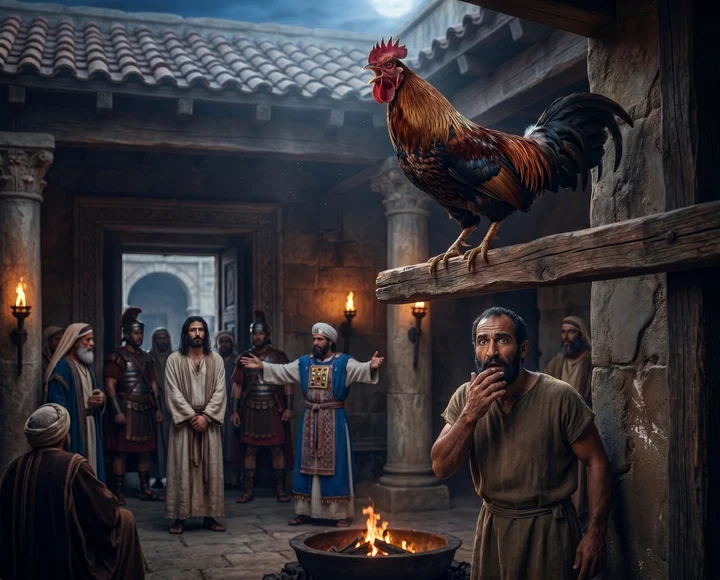
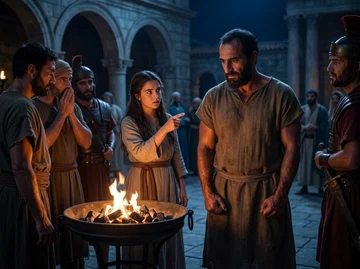
But he denied, saying, I know not, neither understand I what thou sayest. And he went out into the porch; and the cock crew.
Translations
But he denied, saying, I know not, neither understand I what you say. And he went out into the porch; and the cock crew.
King James Version, KJV Cambridge Paragraph Bible
But he denied, saying, I know not, neither understand I what thou sayest. And he went out into the porch; and the cock crew.
But he denied, saying, I know not, neither do I understand what thou sayest. And he went out into the porch; and the cock crowed.
Revised Version, American Standard Version
But he denied, saying, I neither know, nor understand what thou sayest: and he went out into the porch; and the cock crew.
and he denied, saying, 'I have not known [him], neither do I understand what thou sayest;' and he went forth without to the porch, and a cock crew.
But he denied, saying, I know not nor understand what thou sayest. And he went out into the vestibule; and a cock crew.
But, he, denied, saying—I neither know [him], nor do I well understand what, thou, sayest; and went out into the porch.
Berean Standard Bible, Majority Standard Bible
But he denied it. “ I do not know or even understand what you are talking about,” he said. Then he went out to the gateway, and the rooster crowed.
But he denied it, saying, “ I neither know nor understand what you are saying.” He went out on the porch, and the rooster crowed.
But he said, I have no knowledge of him, or of what you are saying: and he went out into the doorway; and there came the cry of a cock.
But he denied it, saying, I knowe him not, neither wot I what thou saiest. Then he went out into the porche, and the cocke crewe.
Douay-Rheims (Challoner revision)
But he denied, saying: I neither know nor understand what thou sayest. And he went forth before the court; and the cock crew.
Pictures

Cross-references
- Luke 22:54-62
Then took they him, and led him, and brought him into the high priest’s house. And Peter followed afar off.
Peter follows Jesus at a distance, denies him, and weeps after the cockcrow.
- John 18:15-27
And Simon Peter followed Jesus, and so did another disciple: that disciple was known unto the high priest, and went in with Jesus into the palace of the high priest.
Peter denies being Jesus’ disciple while Jesus is questioned before the authorities.
- Matthew 26:69-75
Now Peter sat without in the palace: and a damsel came unto him, saying, Thou also wast with Jesus of Galilee.
Matthew recounts Peter’s denials, the cock crowing, and his grief.
- Mark 14:29-30
But Peter said unto him, Although all shall be offended, yet will not I.
Jesus foretold Peter’s denial despite his confident claim that he would remain faithful.
- Luke 22:31-32
And the Lord said, Simon, Simon, behold, Satan hath desired to have you, that he may sift you as wheat:
Jesus warns Peter of Satan’s test, prays for his faith, and speaks of his return.
- Luke 22:61-62
And the Lord turned, and looked upon Peter. And Peter remembered the word of the Lord, how he had said unto him, Before the cock crow, thou shalt deny me thrice.
Jesus looks at Peter, who remembers the prediction and weeps bitterly.
- Mark 14:37-38
And he cometh, and findeth them sleeping, and saith unto Peter, Simon, sleepest thou? couldest not thou watch one hour?
Peter slept instead of watching and praying, showing human weakness before temptation.
- John 21:15-17
So when they had dined, Jesus saith to Simon Peter, Simon, son of Jonas, lovest thou me more than these? He saith unto him, Yea, Lord; thou knowest that I love thee. He saith unto him, Feed my lambs.
Jesus questions Peter three times after his denial and entrusts him with his flock.
- Mark 14:54
And Peter followed him afar off, even into the palace of the high priest: and he sat with the servants, and warmed himself at the fire.
Peter follows Jesus at a distance before denying him.
- Matthew 26:34
Jesus said unto him, Verily I say unto thee, That this night, before the cock crow, thou shalt deny me thrice.
Jesus foretells Peter’s repeated denial before the cock crows.
- Mark 14:30
And Jesus saith unto him, Verily I say unto thee, That this day, even in this night, before the cock crow twice, thou shalt deny me thrice.
Jesus foretold Peter’s denial before the cock crowed.
- John 18:25-27
And Simon Peter stood and warmed himself. They said therefore unto him, Art not thou also one of his disciples? He denied it, and said, I am not.
Records Peter denying that he is Jesus’ disciple.
- Matthew 26:33
Peter answered and said unto him, Though all men shall be offended because of thee, yet will I never be offended.
Peter had claimed he would not fall away.
- Mark 16:7
But go your way, tell his disciples and Peter that he goeth before you into Galilee: there shall ye see him, as he said unto you.
Peter is specifically included in the message to Jesus’ disciples after his denial.
- John 18:15
And Simon Peter followed Jesus, and so did another disciple: that disciple was known unto the high priest, and went in with Jesus into the palace of the high priest.
John entered the high priest’s palace with Jesus, unlike Peter, who followed at a distance.
- John 21:9
As soon then as they were come to land, they saw a fire of coals there, and fish laid thereon, and bread.
Peter later meets Jesus beside another fire of coals.
- John 18:10-11
Then Simon Peter having a sword drew it, and smote the high priest’s servant, and cut off his right ear. The servant’s name was Malchus.
Describes Peter drawing his sword and striking Malchus.
- Matthew 26:41
Watch and pray, that ye enter not into temptation: the spirit indeed is willing, but the flesh is weak.
Jesus warns Peter to watch and pray against temptation, which he fails to do.
Commentary
Each commentary is drawn from primary sources: the writings of Ellen G. White and Adventist pioneers and periodicals. Each commentary is separate. Its own words are not a quotation; follow the references to read the source passages.
Ellen G. White
14 sources
Mark 14:68 records Peter's first denial in the high priest's courtyard, where the doorkeeper exposed him by the firelight and he pretended not to understand and declared he did not know Jesus before slipping out to the porch as the cock crew.5RED 29.1–23SP 108.1DA 710.2–711.1ST Oct 19, 1882 It happened in the early dark morning while Jesus was enduring insult and mockery in a preliminary examination, and hearing his zealous disciple disown him cut Jesus more deeply than all his enemies could.3SP 107.1DA 710.2–711.1ST Jun 6, 1878 Peter yielded not for lack of battlefield courage, for he would have fought openly for his Master, but because fear for his life and dread of scorn overcame his loyalty, and by trying to appear unconcerned and hide his discipleship he placed himself on the enemy's ground as an easy prey.5RED 29.1–25RED 32.2EW 138.23SP 112.2DA 711.2–3 That same denial is repeated whenever a disciple today disguises faith to escape suffering or ridicule, for such concealment denies the Lord as really as Peter's words in the judgment hall.5RED 32.23SP 112.2DA 711.2–3 His first denial led on to a threefold denial, until meeting Jesus' sorrowful gaze brought him to remember his boast, weep bitterly in repentance, and be converted to strengthen his brethren.EW 138.2SG1 49.2
Setting and First Denial
Mark 14:68 belongs to Mark's record of Jesus being hurried bound past midnight over the brook Kedron to the palace of Annas and then to Caiaphas for preliminary examination before the formal trial before the Sanhedrim.DA 698.1–700.5DA 698 It is part of the account of events before Annas and the court of Caiaphas.DA 698.1–700.5DA 698 The denial took place after Jesus had been taken to the palace of the officiating high priest in the early dark morning.3SP 107.1ST Jun 6, 1878 There He was enduring a mockery of an examination with coarse accusation, sneering questioning, insult, mockery and reviling from His persecutors and the whole assembly.3SP 107.1DA 710.2–711.1ST Jun 6, 1878
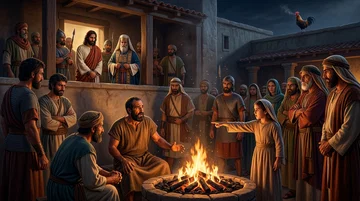
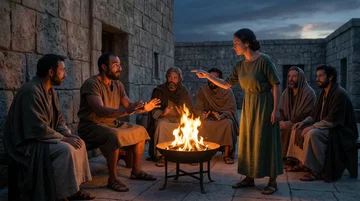
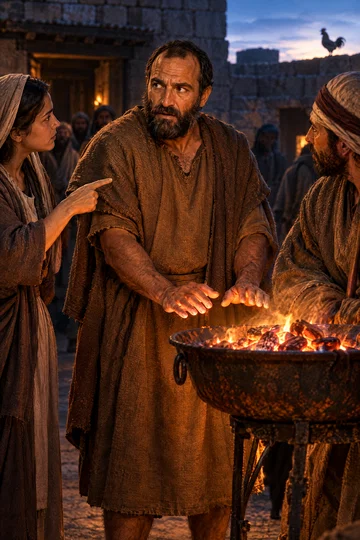
In the high priest's courtyard by the fire, light flashing on his face exposed Peter, who had entered with John and hoped not to be recognized as a disciple.3SP 108.1DA 710.2–711.1 The woman who kept the door had noticed he entered with John and conjectured he was a follower, and she tauntingly asked if he was also one of this man's disciples.3SP 108.1DA 710.2–711.1ST Oct 19, 1882 When she persisted and told those around that he was with Jesus, Peter was startled and confused.3SP 108.1 When questioned he pretended not to understand what was said and tried to appear unconcerned in order to conceal that he was a disciple.5RED 29.1–23SP 108.15RED 28.1–2 He angrily answered that he did not know Jesus, then went out into the porch, and the cock crew immediately.5RED 29.1–23SP 108.1DA 710.2–711.1ST Oct 19, 18825RED 28.1–2
This was the first of three denials.5RED 29.1–23SP 108.1DA 710.2–711.1ST Oct 19, 18825RED 28.1–2 In it one of the most zealous disciples so soon proved ashamed of his Master and cowardly, dishonoring and deserting the Saviour in His humiliation.3SP 108.1DA 710.2–711.1ST Oct 19, 18825RED 28.1–2 Hearing His beloved disciple deny Him pierced Jesus' heart deeply while He endured mockery and examination.3SP 107.1ST Jun 6, 1878 It inflicted a keener pang than anything His enemies and the whole assembly could inflict.3SP 107.1ST Jun 6, 1878
Cause and Present Warning
Peter pretended not to understand what was said and assumed an air of indifference in order to appear unconcerned among Jesus' persecutors and to keep his true character as a disciple from being known.5RED 29.1–2DA 710.2–711.15RED 28.1–2DA 711.2–3 That effort to hide his loyalty put him among the persecutors, placed him on the enemy's ground, and left him an easy prey vulnerable to temptation.5RED 29.1–25RED 28.1–2DA 711.2–3 He denied because fear for his safety and his life overcame his loyalty, after fear and scorn had tested that loyalty.5RED 32.2EW 138.2SG1 49.2
The denial did not come from lack of battlefield courage, for he would have proved bold and courageous and would not have shrunk if called to fight openly or to engage in active warfare for his Master.3SP 112.2DA 711.2–3 It came from cowardice when the finger of scorn was pointed at him, showing that ridicule drives even those who would not hesitate in warfare for the Lord to deny their faith.3SP 112.2DA 711.2–3 By mingling with rough company that was reviling Jesus and associating with those who should be avoided, he placed himself in the way of temptation and invited the enemy to tempt him.3SP 112.2DA 711.2–3 That course led him to say and do what under other circumstances he would never do.3SP 112.2DA 711.2–3
Disguising one's faith to escape ridicule or suffering is a denial of the Lord as really as Peter's denial in the judgment hall, even when it is not made in active opposition to Him.5RED 32.23SP 112.2DA 711.2–3 The same denial happens in the present day when a disciple disguises faith through dread of suffering or reproach.3SP 112.2DA 711.2–3 The verse also exposes those who boast of freedom of thought and action and laugh at the scruples of the conscientious who fear to do wrong.3SP 112.2 When they persuade the righteous to yield their faith they then despise them, acting as Satan's agents to tempt them to ruin.3SP 112.2
This first denial began a threefold denial repeated with cursing and swearing.EW 138.2SG1 49.2 Meeting Jesus' sorrowful, reproving gaze brought Peter to remember Jesus' warning and his own boast of loyalty and faithfulness, and melted him to bitter weeping and repentance.EW 138.2SG1 49.2 His repentance led to his conversion and prepared him to strengthen his fellow disciples.EW 138.2SG1 49.2
Sources
Pioneers and periodicals
24 sources
Mark 14:68 records Peter's first denial in the high priest's palace, where when charged with being Jesus' companion he claims not to know or understand what is meant, then withdraws to the porch as the cock crows the first time as foretold.ST Oct 19, 1882ST Oct 24, 1911ST Aug 12, 1880ST Dec 30, 1889ST Jan 10, 1911 It stands against his promise only hours before to follow faithfully even to death, showing how even the most ardent disciple's courage collapses under testing.ST Oct 19, 1882RH Dec 2, 1909ST Mar 3, 1881 The fall comes from following Jesus afar off without open identification with Him, driven by fear of ridicule and suffering, and made possible by sleeping instead of watching and praying and by presuming on his own strength on enemy ground.ST Mar 14, 1906ST Nov 1, 1910ST Aug 8, 1906ST Aug 12, 1880ST Dec 30, 1889 That denial is the pattern and first stage of every denial of Christ, warning that unless life plainly declares discipleship and the heart is guarded by constant watchfulness and prayer, compromise and rebuke must follow.ST Aug 8, 1906ST Aug 12, 1880ST Dec 30, 1889 Yet Jesus hears him and looks on him with grief, pity and forgiving love, and Peter's bitter weeping over his sin against God leads through repentance and confession to pardon, renewed strength, and usefulness in strengthening his brethren.ST Nov 1, 1910ST Oct 24, 1911ST Jan 10, 1911
The Denial Described
Peter's first denial is made in his own words that he does not know and does not understand what is being said to him when he is accused of being Jesus' disciple and companion, and then he goes out into the porch and the cock crows.ST Oct 24, 1911ST Aug 12, 1880ST Dec 30, 1889RH Oct 7, 1862 The question comes as an accusation about his connection to Jesus, and his answer is a disowning of allegiance to Christ by spoken words, which can also be done by silence under fear.ST Oct 24, 1911ST Aug 12, 1880RH Oct 7, 1862 His claim not to know Jesus dishonored and deserted Jesus in his humiliation.ST Oct 19, 1882ST Aug 12, 1880 Fear and anxiety drove him back into former habits of cursing and swearing to make the denial convincing.ST Apr 23, 1902RH Oct 7, 1862
The denial takes place in the high priest's palace and court, where Peter is questioned by the doorkeeper and a servant and joins the servants and soldiers by the fire.ST Dec 30, 1889ST Jan 10, 1911RH Dec 2, 1909 It is the first of three denials, with the later ones made even with cursing and swearing, and the crowing is the first cockcrow as Jesus had foretold.ST Dec 30, 1889ST Jan 10, 1911RH Sep 19, 1912ST Mar 14, 1906ST Aug 8, 1906 Caught off guard when asked whether he was Jesus' disciple, he said he was not, and rather than go to Jesus he began a course of repeated denials after following at a distance.ST Dec 30, 1889ST Mar 14, 1906ST Apr 23, 1902 Separated from close fellowship and unwilling to be openly identified with His humbled cause, he yielded to the moment.ST Mar 14, 1906ST Apr 23, 1902
The denial happens while Jesus is arrested, mocked, examined, and humiliated, and it deeply pierced His heart.ST Oct 19, 1882ST Aug 12, 1880RH Jun 8, 1869 Jesus heard Peter and looked at him with grief and not anger, with forgiveness, pity, and love.ST Jan 10, 1911RH Sep 19, 1912ST Aug 8, 1906 Peter then realized how fully Christ knew him, his heart was broken, and he left and wept bitterly in sorrow and remorse over denying the one he loved.ST Nov 1, 1910ST Jan 10, 1911RH Sep 19, 1912ST Aug 8, 1906 His bitter cry and tears revealed the grief and seriousness of the fall, and Christ's look brought conviction that could lead to sorrow, pardon, and renewed strength.ST Nov 1, 1910ST Oct 24, 1911ST Mar 3, 1881
The denial stands in contrast to Peter's promise only a few hours before to follow faithfully even to death.ST Mar 3, 1881ST May 25, 1904RH Jun 8, 1869 Though the most ardent, zealous, loving, and devoted disciple, still loving and yearning for his Lord, he forgot loyalty through weakness and fear of mistreatment and death.RH Dec 2, 1909ST May 25, 1904RH Jun 8, 1869 His forgetting of loyalty, desertion, and dishonoring of Jesus shows grievous sin even in gospel light, when the truth taught then condemned his wrongdoing.ST Oct 19, 1882RH Aug 22, 1871 His fall reveals how human courage, confidence, and affection collapse when suffering and testing come, so that even a devoted disciple may shrink from following through hardship.RH Dec 2, 1909RH Jun 8, 1869
Causes Warnings and Restoration
Denial follows following Jesus afar off, separated from close fellowship and unwilling to be openly identified with His humbled cause and to suffer with Him.ST Mar 14, 1906ST Aug 8, 1906ST Dec 30, 1889ST Mar 14, 1906ST Mar 14, 1906 Wanting to see what would happen without standing openly by Jesus, Peter kept company at a distance with scoffers and unbelievers, joining the servants and soldiers by the fire in the high priest's court rather than going to Jesus.ST Mar 14, 1906ST Dec 30, 1889ST Dec 30, 1889ST Mar 14, 1906RH Jul 13, 1911 That distance left him open to temptation and made this denial the first step and first stage of compromise, beginning a course of repeated denials.ST Mar 14, 1906ST Dec 30, 1889ST Mar 14, 1906ST Mar 14, 1906 The distance itself warns against refusing to stand for Christ when He is betrayed or opposed, for it exposes cowardice and disloyalty.ST Aug 12, 1880ST Dec 30, 1889ST Mar 14, 1906 The lesson is to remain with Christ even when doing so brings condemnation, loss of reputation, or death, rather than keeping at a distance.ST Aug 8, 1906ST Dec 30, 1889
Fear and weakness drive the denial even though Peter still loves and yearns for his Lord.ST Mar 14, 1906ST Aug 12, 1880RH Dec 2, 1909 He feared unpopularity, ridicule, sneers, persecution, mistreatment, condemnation, loss of reputation, and death, and was unwilling to face sneers and persecution or suffer with his Master when the doorkeeper questioned him.ST Mar 14, 1906ST Aug 12, 1880ST Mar 14, 1906ST May 25, 1904ST Jan 31, 1911 In forgetting the loyalty promised only a few hours earlier, his fear of being identified with the arrested and mocked Jesus led him to hide his friendship and keep his distance.ST Aug 12, 1880ST May 25, 1904ST Jan 31, 1911 His desire to see the outcome without open identification shows how fear can lead a follower to disown allegiance.ST Mar 14, 1906ST Jan 31, 1911
The denial was made possible by failure to watch and pray, having slept when watching mattered most, leaving him caught off guard when asked whether he was Jesus' disciple.ST Dec 30, 1889ST Dec 30, 1889 By following at a distance and mingling with unbelievers he went onto forbidden and enemy ground through presumption, putting himself in the way of temptation where the Master did not keep him from the consequences.ST Nov 1, 1910RH Jul 13, 1911ST Oct 1, 1885 He had decided beforehand to avoid identification and to conceal his faith, relying on his own strength, and his heart needed guarding so that only right decisions are made.ST Dec 30, 1889RH Jul 13, 1911 He had also grown sensitive under reproof and brooded in selfishness until Christ was far ahead, with pride, ambition, avarice, and pleasure standing between the soul and Christ.ST Aug 8, 1906ST Dec 30, 1889ST Aug 8, 1906 Neglecting Christian fellowship and choosing to imitate unbelievers likewise leads people to conceal faith.RH Jul 13, 1911
Peter's denial is the pattern for every denial of Christ, and the first step in a fall that can lead back to old habits of cursing and swearing and even to blasphemy.ST Aug 8, 1906ST Oct 1, 1885 When a life does not plainly declare discipleship so that others must ask whether one belongs to Christ, there is no assurance against denying the Lord even as Peter did, and such denial brings rebuke and humiliation.ST Aug 8, 1906ST Dec 30, 1889ST Aug 8, 1906 The warning is to remain with Christ, to keep Christian fellowship, to guard the heart, and to watch and pray constantly in order to stand.ST Aug 12, 1880ST Dec 30, 1889RH Jul 13, 1911 Following the Lord afar off can lead to denial.
Christ's look brings conviction, for Jesus knew what Peter was doing and looked at him with grief and not anger, with forgiveness, pity, and love, and Peter realized how fully Christ knew him and his heart was broken.ST Oct 24, 1911ST Jan 10, 1911ST Aug 8, 1906 That look brought him to himself and led him away from despair of self toward God.ST Mar 3, 1881 Peter's bitter grief, cry, and tears over denying the one he loved hold hope because he saw his act as sin against God.ST Nov 1, 1910ST Jan 10, 1911RH Sep 19, 1912ST Mar 3, 1881 His sorrow, repentance, penitence, confession, and seeking of God's forgiveness lead to pardon, renewed strength, and lasting blessing.ST Oct 24, 1911ST Jan 10, 1911ST Oct 1, 1885 Jesus still loves him, pities him, and prays that his faith fail not so that after conversion he will strengthen his brethren, and his controlled ardor and energy become useful; his experience proves God can forgive, help, and turn a fall to His glory those who have sinned and confess freely and fully.ST Oct 24, 1911ST Jan 10, 1911
Sources