Mark 14:69
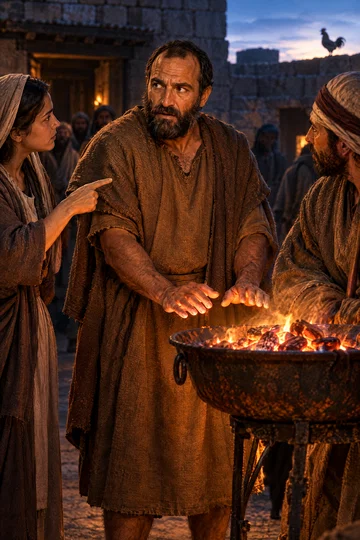
And a maid saw him again, and began to say to them that stood by, This is one of them.
Translations
American King James Version, King James Version, KJV Cambridge Paragraph Bible, Webster Bible
And a maid saw him again, and began to say to them that stood by, This is one of them.
Revised Version, American Standard Version
And the maid saw him, and began again to say to them that stood by, This is one of them.
And the maid having seen him again, began to say to those standing near — 'This is of them;'
And the maid, seeing him, again began to say to those that stood by, This is [ one] of them.
And, the maid-servant, seeing him, began, again, to be saying unto the by-standers—This one, is, from among them.
There the servant girl saw him and again said to those standing nearby, “ This man is one of them.”
There the servant girl saw him again and said to those standing nearby, “ This man is one of them.”
The maid saw him and began again to tell those who stood by, “ This is one of them.”
And the girl saw him, and said again to those who were near, This is one of them.
Then a maid sawe him againe, and bega to say to them that stood by, This is one of them.
Douay-Rheims (Challoner revision)
And again a maidservant seeing him, began to say to the standers by: This is one of them.
Pictures

Cross-references
- Matthew 26:71
And when he was gone out into the porch, another maid saw him, and said unto them that were there, This fellow was also with Jesus of Nazareth.
A maid identifies Peter as one of Jesus’ followers.
- Luke 22:54-62
Then took they him, and led him, and brought him into the high priest’s house. And Peter followed afar off.
Parallel account of Peter denying Jesus during his examination.
- John 18:25-27
And Simon Peter stood and warmed himself. They said therefore unto him, Art not thou also one of his disciples? He denied it, and said, I am not.
Peter is identified again as Jesus’ disciple and denies him.
- John 18:17
Then saith the damsel that kept the door unto Peter, Art not thou also one of this man’s disciples? He saith, I am not.
Peter is questioned in the courtyard and denies being Jesus’ disciple.
- Mark 14:54
And Peter followed him afar off, even into the palace of the high priest: and he sat with the servants, and warmed himself at the fire.
Peter follows Jesus at a distance before denying him.
- Luke 22:61-62
And the Lord turned, and looked upon Peter. And Peter remembered the word of the Lord, how he had said unto him, Before the cock crow, thou shalt deny me thrice.
Jesus looks at Peter after his denial, prompting remembrance and bitter sorrow.
- Luke 22:32
But I have prayed for thee, that thy faith fail not: and when thou art converted, strengthen thy brethren.
Jesus foretells Peter’s denial, prays for his faith, and says he will strengthen his brethren.
- Mark 14:30-31
And Jesus saith unto him, Verily I say unto thee, That this day, even in this night, before the cock crow twice, thou shalt deny me thrice.
Peter insists on loyalty despite Jesus’ prediction that he will deny Him.
- Matthew 26:33
Peter answered and said unto him, Though all men shall be offended because of thee, yet will I never be offended.
Peter recalls his claim that he would never desert Jesus.
- Matthew 26:58
But Peter followed him afar off unto the high priest’s palace, and went in, and sat with the servants, to see the end.
Peter follows Jesus at a distance before denying him.
- Mark 14:38
Watch ye and pray, lest ye enter into temptation. The spirit truly is ready, but the flesh is weak.
Jesus’ warning to watch and pray anticipates Peter’s denial.
- Luke 22:56-57
But a certain maid beheld him as he sat by the fire, and earnestly looked upon him, and said, This man was also with him.
Peter is identified as Jesus’ companion, then denies knowing him.
- John 18:17-18
Then saith the damsel that kept the door unto Peter, Art not thou also one of this man’s disciples? He saith, I am not.
Parallel account describes Peter being identified as a disciple and denying it.
- John 18:26
One of the servants of the high priest, being his kinsman whose ear Peter cut off, saith, Did not I see thee in the garden with him?
A high priest’s servant, related to the man whose ear Peter cut off, questions Peter.
- Mark 14:29
But Peter said unto him, Although all shall be offended, yet will not I.
Peter’s confidence in his loyalty precedes his denial.
- John 21:9
As soon then as they were come to land, they saw a fire of coals there, and fish laid thereon, and bread.
Shows Peter with Jesus beside another charcoal fire.
- John 21:15-17
So when they had dined, Jesus saith to Simon Peter, Simon, son of Jonas, lovest thou me more than these? He saith unto him, Yea, Lord; thou knowest that I love thee. He saith unto him, Feed my lambs.
Jesus restores Peter after his three denials and charges him to care for the flock.
- Mark 16:7
But go your way, tell his disciples and Peter that he goeth before you into Galilee: there shall ye see him, as he said unto you.
Jesus’ message included Peter after his failure.
- John 18:10
Then Simon Peter having a sword drew it, and smote the high priest’s servant, and cut off his right ear. The servant’s name was Malchus.
Peter’s rash action preceded his denial.
Commentary
Each commentary is drawn from primary sources: the writings of Ellen G. White and Adventist pioneers and periodicals. Each commentary is separate. Its own words are not a quotation; follow the references to read the source passages.
Ellen G. White
9 sources
A maid saw Peter again and turned to the bystanders standing by to repeat the charge that he was one of Jesus' followers, that he belonged to His disciples.5RED 29.1–2ST Jun 6, 1878EW 138.2SG1 49.2 This renewed identification took place in the judgment hall, in the palace of Caiaphas, while Jesus was enduring a mockery of an examination with coarse accusation, sneering questioning, insult, mockery, and reviling from the whole assembly.3SP 107.1DA 711.2–3ST Jun 6, 1878 The renewed accusation was pressed with supporting claims, for his Galilean speech marked him and a servant claimed to have seen him with Jesus in the garden.ST Jun 6, 1878
At that moment Peter was trying to conceal his allegiance and hide his faith by blending in with Jesus' enemies, and that course left him open to temptation.5RED 29.1–2DA 711.2–3 When thus challenged he denied his connection to Jesus with an oath, with cursing and swearing, as part of denying Him three times, and after the denial the cock crowed a second time.5RED 29.1–2ST Jun 6, 18783SP 107.1EW 138.2SG1 49.2 Jesus heard His beloved disciple deny Him in this manner, and that denial pierced His heart with a keener pang than anything His enemies could inflict.3SP 107.1ST Jun 6, 1878
After the third denial Jesus gave Peter a sorrowful, reproving look that recalled Jesus' warning and Peter's boast that he would remain faithful.EW 138.2SG1 49.2 The look melted Peter, he wept bitterly, repented and was converted, and was thus prepared to strengthen his fellow believers.EW 138.2SG1 49.2 Peter's repeated denials came from fear for his life, and they show that fear of scorn, ridicule, reproach, suffering, and shame can make even a disciple who would be bold and courageous in open conflict or active warfare turn coward and deny the Lord.5RED 32.2SG1 49.2DA 711.2–33SP 112.2 Disguising one's faith from such dread is itself a denial of the Lord.DA 711.2–33SP 112.2
The setting warns that associating with people who tempt believers to hide their faith places them in the way of temptation and invites the enemy to tempt them to say and do what they otherwise would not.5RED 32.2DA 711.2–33SP 112.2 Those who yield to such pressure may then be despised by the very people who pressured them.5RED 32.23SP 112.2 For those who boast of freedom of thought and action and laugh at the scruples of the conscientious who fear to do wrong yet despise righteous persons when they are persuaded to yield their faith act as Satan's agents to tempt them to ruin.3SP 112.2
Sources
Pioneers and periodicals
28 sources
Mark 14:69 records the second public identification of Peter in the high priest's courtyard by the fire, when a maid saw him again after his first denial and told the bystanders he was one of Jesus' followers.ST Oct 24, 1911ST Nov 1, 1910ST Dec 30, 1889ST Jan 10, 1911ST Aug 8, 1906 Peter denied again rather than stand by his Master, more emphatically with an oath and with cursing and swearing to make it convincing, as the second step toward his three denials before the cock crowed a second time.ST Jun 6, 1878ST Dec 30, 1889RH Dec 2, 1909 Jesus knew what he was doing and looked at him with grief rather than anger, and that look rebuked him, broke his heart, and sent him out weeping in bitter remorse and penitence.ST Oct 24, 1911ST Nov 1, 1910ST Aug 8, 1906 His fall came from following Christ from afar and mingling with His enemies, which left him open to temptation, and from fear of ridicule, suffering and death that overcame his professed loyalty.ST Mar 14, 1906ST Aug 8, 1906ST Oct 24, 1911ST Dec 30, 1889ST Apr 23, 1902 The verse therefore warns never to follow at a distance or conceal discipleship, but to keep close to Christ in trial as in blessing, through constant watchfulness and prayer and a heart renewed and kept by God.ST Dec 30, 1889ST Mar 14, 1906RH Jul 13, 1911RH Aug 3, 1869ST May 10, 1905
Scene of Denial
Mark 14:69 belongs to the account of Jesus' arrest and Peter's failure to stand openly with Him.ST Mar 14, 1906 Peter followed at a distance because he feared the unpopularity and persecution that come with being His disciple, and that distance led toward denial.ST Mar 14, 1906 The account contrasts Peter's wish to defend Jesus by force with a kingdom not advanced by carnal means.ST Mar 14, 1906
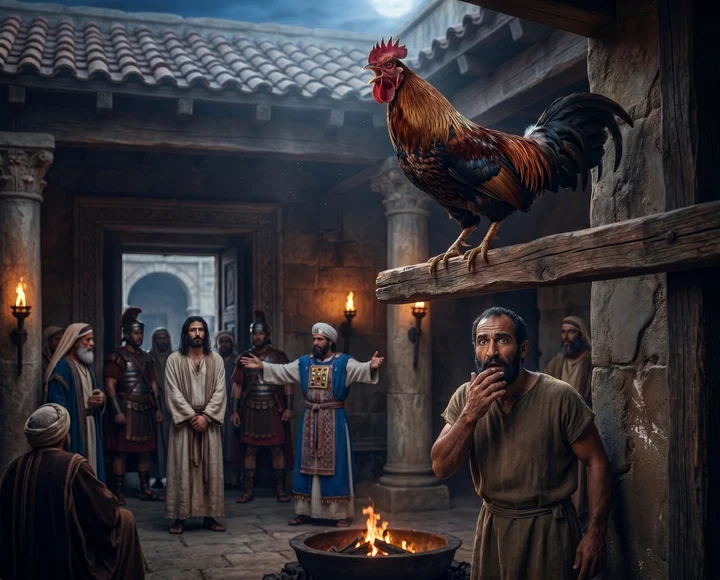
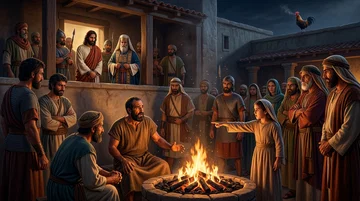
The scene is in the high priest's courtyard, the judgment hall and palace court, in the cold by the fire.ST Oct 24, 1911ST Nov 1, 1910ST Aug 12, 1880RH Sep 19, 1912 Peter stood warming himself there among officers, servants, soldiers, people and bystanders.ST Aug 12, 1880RH Dec 2, 1909ST Mar 14, 1906 At that same time Jesus was being questioned and mistreated inside.ST Jun 6, 1878ST Oct 24, 1911
A maid saw Peter again and began to say publicly to those standing by that he was one of Jesus' followers.ST Jan 10, 1911ST Aug 8, 1906ST May 25, 1904 It was a second and repeated identification after his first denial.ST Dec 30, 1889ST May 25, 1904RH Aug 22, 1871 It was another accusation in the test of Mark 14:66-72 in which he failed to stand by his Master in time of trial.ST Dec 30, 1889RH Aug 22, 1871ST Mar 5, 1912
The accusation was supported by his Galilean speech and by a servant's claim to have seen him with Jesus in the garden.ST Jun 6, 1878 Peter denied again rather than go to Jesus' side.ST Dec 30, 1889 He denied more emphatically, with an oath and with cursing and swearing to make the denial convincing.ST Jun 6, 1878RH Dec 2, 1909RH Oct 7, 1862 Fright and anxiety drove him to this convincing denial, showing lack of patience under pressure, and his anxiety as he watched Jesus being mistreated betrayed him.RH Oct 7, 1862ST Mar 14, 1906 This was his second step in denying Jesus and in turning back toward his former life, part of his three denials, after which the cock crowed a second time.ST Jun 6, 1878ST Apr 23, 1902ST Mar 14, 1906
Jesus knew what Peter was doing and looked at him with grief rather than anger.ST Aug 8, 1906 The denial, made with cursing and swearing, caused Jesus a deep pang.ST Jun 6, 1878 The look rebuked Peter, recalled his failure, broke and pierced his heart, brought him to himself, and made him realize how fully Christ knew him.ST Oct 24, 1911ST Aug 8, 1906RH Sep 19, 1912 It awakened sorrow and brought forgiveness, and sent him out weeping in bitter remorse and penitence and tears.ST Oct 24, 1911ST Nov 1, 1910RH Sep 19, 1912ST Apr 23, 1902
Peter's grief contained hope because he saw his conduct as sin as Jesus sees it, so despair of himself did not become despair of God.ST Mar 3, 1881 His sorrow made him stronger.ST Oct 24, 1911 Jesus remembered him and sent word that he was still included among the disciples.ST Apr 23, 1902 His denial with cursing and swearing stands in contrast to Stephen's steadfastness at death, and to the most ardent disciple denying Him whom he loved.
Warning Against Denial
Peter was following Christ from afar in the judgment hall, keeping away from the inner circle so he would not be identified as His friend.ST Aug 8, 1906ST Dec 30, 1889ST Apr 23, 1902RH Jul 13, 1911 By separating from Jesus and mingling with unbelievers and enemies and with the people gathered by the fire in the palace yard, he put himself in the way of temptation and left himself open to denying Christ.ST Dec 30, 1889ST Apr 23, 1902RH Jul 13, 1911ST Oct 1, 1885 Concealing his Christian identity to avoid recognition brought the very test he had chosen to face, when the maid saw him again and named him as one of Jesus' followers.ST Aug 8, 1906ST Dec 30, 1889ST Apr 23, 1902RH Jul 13, 1911
Fear drove the denial, fear of unpopularity and persecution that comes with being His disciple, fear of blame and ridicule, of suffering and death, and of being identified with Jesus.ST Mar 14, 1906ST Oct 24, 1911ST Jan 10, 1911ST Mar 14, 1906ST May 25, 1904 Fright and anxiety as he watched Jesus being mistreated led him to deny with increasing force to make the denial convincing, even with cursing and swearing, and this was his second step in denying Jesus and turning back toward his former life.ST Mar 14, 1906ST Oct 24, 1911ST Jan 10, 1911RH Oct 7, 1862ST Mar 14, 1906 In that pressure he showed lack of patience and forgot the loyalty he had recently professed.ST Mar 14, 1906ST Oct 24, 1911RH Oct 7, 1862ST May 25, 1904
Distance proves itself when others have to ask whether one is Christ's disciple, for closeness to Christ would make discipleship plain by word and act.ST Aug 8, 1906ST Aug 8, 1906 When the life does not make it plain that one loves Christ, it proves one has moved far from Him, and there is no assurance such a one will not deny the Lord as Peter did, so that rebuke and humiliation must follow.ST Aug 8, 1906ST Aug 8, 1906 Selfish sensitivity to reproof had come between Peter and his Master, and things like pride, ambition, avarice, pleasure, cherished sin and self-trust likewise lead to separation from God and ruin.ST Aug 8, 1906ST Aug 8, 1906
Even the most ardent, loving, devoted and zealous disciple cannot rely on human nature or personal affection, for the flesh leads into denial in words or through lack of faith and courage under fear and trial.ST Aug 8, 1906RH Jun 8, 1869ST Dec 11, 1901 Peter's fall showed that no good dwells in the flesh, and his humiliation taught him that truth.ST Aug 8, 1906RH Jun 8, 1869ST Dec 11, 1901 His denial, accompanied by cursing and swearing, stands in contrast to steadfastness such as Stephen showed at death.RH Jun 8, 1869ST Dec 11, 1901
The fall came from sleeping when it was most important to watch, failing constant watchfulness and prayer in Gethsemane and failing to heed Jesus' warning.RH Aug 3, 1869ST May 10, 1905 Watching and praying would have strengthened him against denying the Lord, but without it a person is left to himself and will deny the Lord in time of trial.RH Aug 3, 1869ST May 10, 1905 The need is greater now because the power of the enemy to benumb and stupefy the mind to important truth was never so great.RH Aug 3, 1869ST May 10, 1905
The verse therefore means never to deny Christ and never to follow at a distance, but to follow with Him and keep close under all circumstances.ST Dec 30, 1889ST Mar 14, 1906RH Jul 13, 1911 That closeness must hold in trial in the judgment hall and toiling up Calvary just as in blessing on the Mount of Transfiguration and in the triumphal entry, even at the cost of reputation, safety or life.ST Dec 30, 1889ST Mar 14, 1906RH Jul 13, 1911 Distancing oneself from Jesus or concealing Christian identity places one in danger of denying Him, and everyone needs a heart renewed by God's grace and kept by His power, with the fallow ground of the heart broken up by repentance so that warnings and admonitions are not lost.ST Dec 30, 1889ST Mar 14, 1906RH Jul 13, 1911RH Aug 3, 1869
Sources