Matthew 26:39
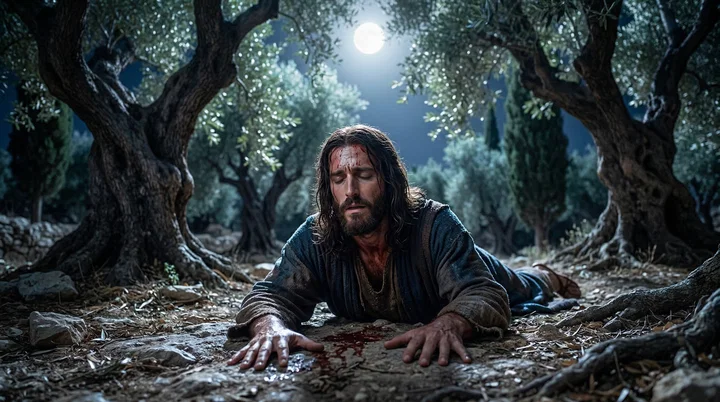
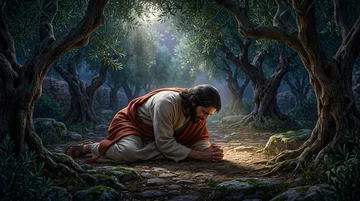
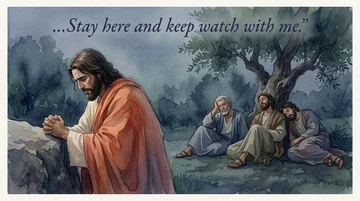
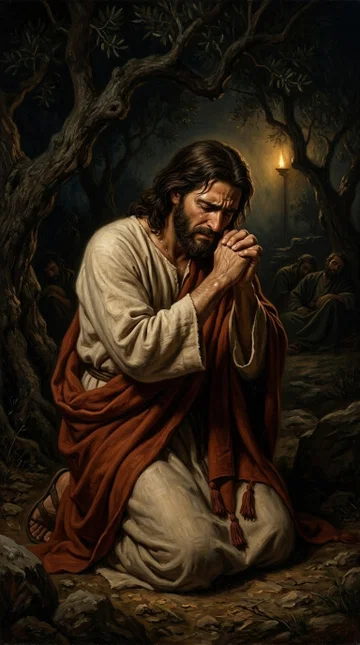
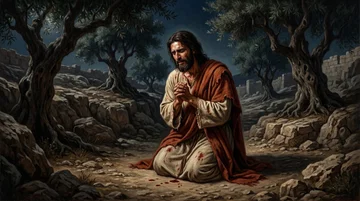
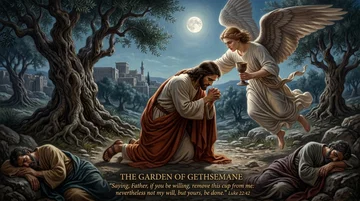
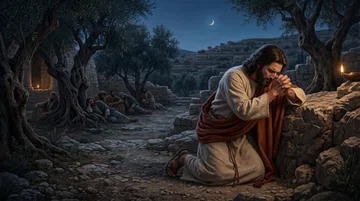
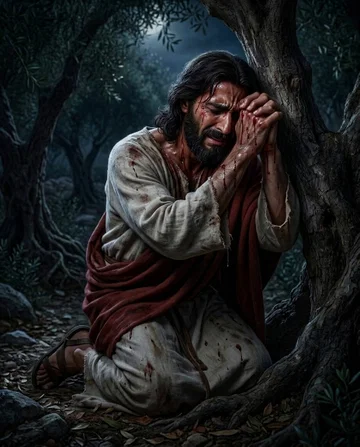
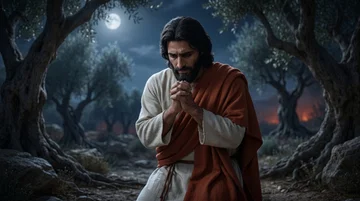
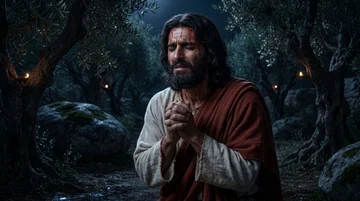
And he went a little further, and fell on his face, and prayed, saying, O my Father, if it be possible, let this cup pass from me: nevertheless not as I will, but as thou wilt.
Translations
And he went a little farther, and fell on his face, and prayed, saying, O my Father, if it be possible, let this cup pass from me: nevertheless not as I will, but as you will.
King James Version, KJV Cambridge Paragraph Bible
And he went a little further, and fell on his face, and prayed, saying, O my Father, if it be possible, let this cup pass from me: nevertheless not as I will, but as thou wilt.
And he went a little further, and fell on his face, and prayed, saying, O my Father, if it is possible, let this cup pass from me: nevertheless, not as I will, but as thou wilt.
And he went forward a little, and fell on his face, and prayed, saying, O my Father, if it be possible, let this cup pass away from me: nevertheless, not as I will, but as thou wilt.
And he went forward a little, and fell on his face, and prayed, saying, My Father, if it be possible, let this cup pass away from me: nevertheless, not as I will, but as thou wilt.
And having gone forward a little, he fell on his face, praying, and saying, 'My Father, if it be possible, let this cup pass from me; nevertheless, not as I will, but as Thou.'
And going forward a little he fell upon his face, praying and saying, My Father, if it be possible let this cup pass from me; but not as I will, but as thou [wilt].
And, going forward a little, he fell upon his face, offering prayer, and saying—My Father! If it is possible, let this cup pass from me,—Nevertheless, not as, I, will, but as, thou, wilt.
Berean Standard Bible, Majority Standard Bible
Going a little farther, He fell facedown and prayed, “ My Father, if it is possible, let this cup pass from Me. Yet not as I will, but as You will.”
He went forward a little, fell on his face, and prayed, saying, “ My Father, if it is possible, let this cup pass away from me; nevertheless, not what I desire, but what you desire.”
And he went forward a little, and falling down on his face in prayer, he said, O my Father, if it is possible, let this cup go from me; but let not my pleasure, but yours be done.
So hee went a litle further, and fell on his face, and praied, saying, O my Father, if it be possible, let this cup passe from me: neuerthelesse, not as I will, but as thou wilt.
Douay-Rheims (Challoner revision)
And going a little further, he fell upon his face, praying, and saying: My Father, if it be possible, let this chalice pass from me. Nevertheless not as I will, but as thou wilt.
Pictures

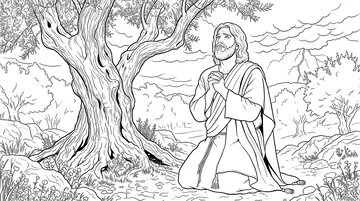
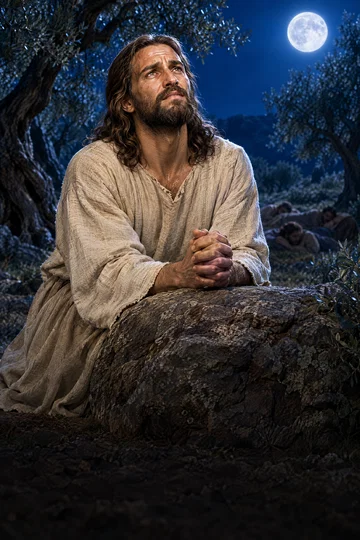
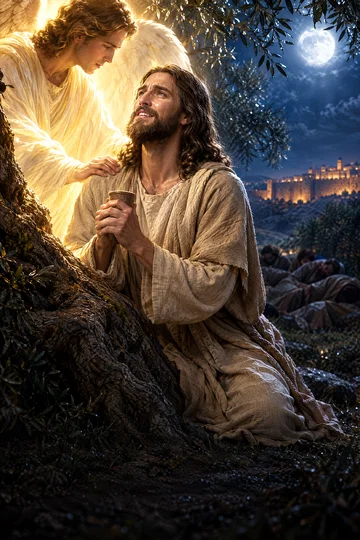
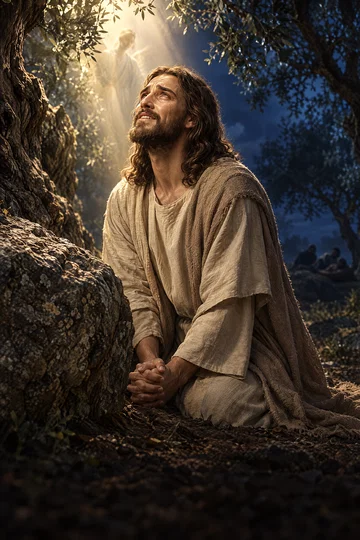
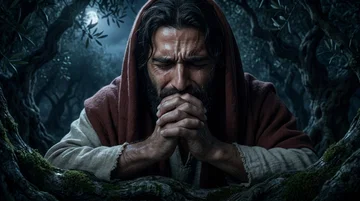
Cross-references 20 of 97
- Luke 22:42-44
Saying, Father, if thou be willing, remove this cup from me: nevertheless not my will, but thine, be done.
Jesus submits to the Father’s will while praying in agony, strengthened by an angel.
- Luke 22:42
Saying, Father, if thou be willing, remove this cup from me: nevertheless not my will, but thine, be done.
Jesus asks for the cup to pass, yet submits to the Father’s will.
- Mark 14:36
And he said, Abba, Father, all things are possible unto thee; take away this cup from me: nevertheless not what I will, but what thou wilt.
Jesus asks for the cup to pass, yet submits to the Father’s will.
- Isaiah 53:6
All we like sheep have gone astray; we have turned every one to his own way; and the LORD hath laid on him the iniquity of us all.
Christ’s agony reflects the iniquity laid upon him for sinners.
- Matthew 27:46
And about the ninth hour Jesus cried with a loud voice, saying, Eli, Eli, lama sabachthani? that is to say, My God, my God, why hast thou forsaken me?
same cup drunk on the cross
- Luke 22:43
And there appeared an angel unto him from heaven, strengthening him.
An angel strengthens Jesus during his agony as he faces the cup.
- Matthew 20:22-23
But Jesus answered and said, Ye know not what ye ask. Are ye able to drink of the cup that I shall drink of, and to be baptized with the baptism that I am baptized with? They say unto him, We are able.
Jesus connects drinking his cup with sharing his suffering.
- Hebrews 5:7
Who in the days of his flesh, when he had offered up prayers and supplications with strong crying and tears unto him that was able to save him from death, and was heard in that he feared;
Jesus prays amid anguish and suffering, submitting to the Father and being heard.
- Hebrews 4:15
For we have not an high priest which can not be touched with the feeling of our infirmities; but was in all points tempted like as we are, yet without sin.
Gethsemane shows Christ facing human temptation and weakness without sin.
- Matthew 6:10
Thy kingdom come. Thy will be done in earth, as it is in heaven.
The garden prayer enacts the request for God’s will to be done.
- Philippians 2:8
And being found in fashion as a man, he humbled himself, and became obedient unto death, even the death of the cross.
Christ humbled himself and obeyed even unto death on the cross.
- John 6:38
For I came down from heaven, not to do mine own will, but the will of him that sent me.
Christ submits his own will to the Father’s will.
- Isaiah 53:4-5
Surely he hath borne our griefs, and carried our sorrows: yet we did esteem him stricken, smitten of God, and afflicted.
His suffering bears human griefs and sins, bringing healing and peace.
- Matthew 16:24
Then said Jesus unto his disciples, If any man will come after me, let him deny himself, and take up his cross, and follow me.
Jesus accepts suffering, while calling disciples to deny themselves and take up the cross.
- John 18:11
Then said Jesus unto Peter, Put up thy sword into the sheath: the cup which my Father hath given me, shall I not drink it?
Jesus accepts the cup of suffering given by his Father.
- Matthew 26:44
And he left them, and went away again, and prayed the third time, saying the same words.
Jesus repeats the same prayer for a third time.
- Hebrews 2:18
For in that he himself hath suffered being tempted, he is able to succour them that are tempted.
Christ suffered when tempted and can help those who are tempted.
- John 12:27
Now is my soul troubled; and what shall I say? Father, save me from this hour: but for this cause came I unto this hour.
Jesus’s troubled prayer about his coming hour anticipates Gethsemane and submits to the Father’s purpose.
- 1 John 5:14
And this is the confidence that we have in him, that, if we ask any thing according to his will, he heareth us:
Jesus submits his request to the Father’s will, and God hears requests made according to his will.
- John 19:30
When Jesus therefore had received the vinegar, he said, It is finished: and he bowed his head, and gave up the ghost.
Jesus declares his work finished as he dies on the cross.
Commentary part 1 of 3
Each commentary is drawn from primary sources: the writings of Ellen G. White and Adventist pioneers and periodicals. Each commentary is separate. Its own words are not a quotation; follow the references to read the source passages.
Ellen G. White
108 sources
In Gethsemane He withdrew a little farther alone within sight and hearing of Peter, James and John and fell prostrate on the cold ground in anguish, bloody sweat falling to stain the sod.COS 114.6–115.2ST Dec 2, 1897Lt 147, 1903, par. 16–18Ms 25, 1898, par. 1–3DA 759.5–760.2 The cup He prayed might pass is the bitter portion due guilty man — betrayal, condemnation, suffering and death, and above all bearing as innocent Substitute the sins, guilt, curse and wrath of the whole world and the hiding of the Father's face in separation that He feared might be eternal.ST Jun 3, 1897Ms 52, 1904, par. 5ST Nov 21, 1892Ms 9, 1910, par. 11–13Ms 47, 1910, par. 8–10 His horror came not from dread of nails and cross but from enduring as man the penalty of transgression of the holy law and the Creator's anger against sin.Ms 45, 1892, par. 4–5Ms 41, 1887, par. 2–5Ms 42, 1897, par. 28–30Ms 69a, 1896, par. 35–36ST May 30, 1878 Nevertheless not as I will, but as thou wilt was full absolute surrender of His human will to the Father, and the Father answered not by removing the cup but by sending a mighty angel to strengthen Him to drink it, assuring Him of the Father's love and the souls to be saved.COS 114.6–115.29T 102.1–3ST Jan 20, 1914Ms 43, 1909, par. 10–12Ms 9, 1910, par. 11–13 That prayer was the awful moment deciding the destiny of the world, when He could still have refused, wiped the bloody sweat away and left man to perish, yet chose at any cost to drink to its dregs to fulfill the covenant and sacrifice planned before the foundation of the world and secure eternal life to all who come.Ms 134, 1905, par. 5Ms 41, 1887, par. 2–5Ms 1, 1892, par. 9–10Ms 49, 1898, par. 37–40Ms 14, 1893, par. 9–10
Garden Prayer Setting
The prayer was offered in Gethsemane at the foot of the Mount of Olives beyond the Kedron, on Passover night after the supper when the bread and the cup had been given, under a broad full moon in a cloudless sky while the city of pilgrim tents lay hushed in silence, just before betrayal and trial.Ms 45, 1892, par. 4–5DA 6855RED 14.1–3 It was His accustomed retreat for bracing His spirit for trial and duty by fervent prayer, where He had frequently spent the entire night while His disciples slept undisturbed at a little distance until He awoke them in the morning to labor anew.5RED 14.1–33SP 94.1–3 On this final visit He came in unusual silence and utter sadness that increased as He proceeded, with labored steps and swaying form as if about to fall, groaning aloud as if under a terrible burden so that twice His companions supported Him lest He fall to the earth, and with no food or drink since the supper.DA 685.35RED 14.1–3 The garden was made holy by His presence in human nature and consecrated by His prayers and tears, and He had prepared the disciples beforehand for betrayal, condemnation and reviling so they would not be overwhelmed when the ordeal came.6RED 88.14RED 102.2–103.1
Having told most companions to sit while He went to pray yonder, He took Peter, James and John farther into the recesses of the garden and then went a little farther alone, still where they could see and hear.COS 114.6–115.2ST Jan 15, 19025RED 14.1–33SP 94.1–3 There He fell on His face prostrate on the cold ground, clinging to it as if to keep from being drawn farther from God, heedless of the chilling night dew falling on His prostrate form.COS 114.6–115.2ST Dec 2, 1897Lt 147, 1903, par. 16–18 His face was changed, pale and convulsed, as He felt sin separating Him from the Father with the gulf appearing broad, black and deep before Him so that He shuddered.COS 114.6–115.2Lt 147, 1903, par. 16–18 He longed for human companionship and even to have an intercessor for Himself who had hitherto interceded for others, yet yielded His own will to the Father's will while asking that the cup pass if possible.Lt 147, 1903, par. 16–18Ms 42, 1897, par. 4–6Lt 54, 1874, par. 15–16
His outward anguish showed a countenance marred by intense mental struggle, yet never more beautiful than in that sorrow in pity for those who knew not what they did and desire to help them if He could.Ms 25, 1898, par. 1–3Ms 154, 1903, par. 27–28 Suppressed wails came from pale and quivering lips, His frame trembled, and bloody sweat was forced from His pores to fall with the dew and moisten and stain the sod, greater than the suffering His face afterward showed before His enemies.ST Dec 2, 1897Ms 25, 1898, par. 1–3Ms 83, 1910, par. 29–32ST Nov 25, 1889 Great drops as blood moistened the ground as He prayed three times for deliverance before being stretched on the cross at Calvary, crushed in His humanity yet never failing on any point.DA 759.5–760.2Ms 83, 1910, par. 29–32Lt 33, 1895, par. 29–32 At last He fainted as dying and fell beneath the weight, bowed under intense sorrow as the Father's presence was withdrawn.DA 759.5–760.2DA 685.3
In human longing He desired sympathy, fellowship and watching prayer from the three closest disciples in His hour of keenest agony when the mysterious cup trembled in His hand.ST Jan 20, 1914Ms 43, 1909, par. 10–12Lt 106, 1896, par. 19–22 But they slept from drowsiness and stupor under satanic influence, leaving Him to wrestle alone with the powers of darkness while angels watched the conflict with amazement.Lt 106, 1896, par. 19–22ST Nov 25, 18894T 542.1 Their drowsiness kept them from hearing His voice and witnessing the scene fully, and so they missed the heavenly evidence that would have strengthened them for Calvary and their own trial and illustrated the danger of being spiritually inattentive when divine instruction is most needed.4T 542.13T 416.2 John was permitted to witness the agony as a token of friendship, and Peter's later remembrance of the prostrate form, the agony and his own sleep, with remorseful tears, marked his conversion to pity the tempted and strengthen his brethren.Lt 54, 1874, par. 15–163T 416.2
Meaning of the Cup
The cup is the bitter portion apportioned to guilty man, the humiliation and sorrow and suffering and death due to transgression, the baptism of blood and the curse of sin with its consequences borne by the Innocent to save the guilty.Ms 134, 1905, par. 5Ms 35, 1895, par. 11–13Ms 45, 1892, par. 15–21ST Nov 25, 1889DA 642.1 It trembled in His hand as a mysterious cup, and to drink it was to open His breast to the griefs and woes and sins of humanity and to drain the load of man's guilt to the dregs while the light of God was withdrawn and the Father's face was turned away and hidden.Ms 158, 1904, par. 2–6Ms 45, 1892, par. 15–21ST Nov 25, 1889 It meant betrayal and abandonment and condemnation and abuse, the crown of thorns and the nails and public exposure as a criminal, and the cross between thieves as the true Passover lamb going to wrath and suffering after serving His disciples to the last hours.Ms 134, 1905, par. 5Ms 49, 1898, par. 37–40DA 642.1 His human nature recoiled and trembled in that trying hour with strong crying and tears and horror and sorrow from trembling lips, His visage marred beyond that of any man, His forehead beaded with drops of blood falling on the sod, until He fainted as dying beneath a weight no finite human nature could bear.Ms 134, 1905, par. 5Ms 35, 1895, par. 11–13Ms 158, 1904, par. 2–6Ms 45, 1892, par. 15–21ST Nov 25, 1889 That awful moment decided whether the world would be saved or lost, for it was not yet too late to refuse the cup, to wipe the bloody sweat away and go back to the Father and leave man to perish in iniquity under his own penalty; but seeing the power of sin and the helplessness of man and the doom of a lost world, He yielded that if the cup could not pass unless He drank it, the Father's will be done, and the Father did not take it from His trembling hand and pale lips but sent an angel with the cup of consolation to strengthen Him with love and assurance of eternal joys for the redeemed, so that He came off victor.Ms 134, 1905, par. 5Ms 35, 1895, par. 11–13Ms 45, 1892, par. 15–21ST Nov 25, 1889
The cup means standing as sinner and substitute and surety and propitiation, bearing the sins and guilt and curse and penalty and wrath of the whole world from Adam to the end of time, though Himself innocent and free from sin.ST Nov 21, 1892Ms 92, 1899, par. 35–36Ms 1, 1892, par. 9–10Ms 49, 1898, par. 37–40Ms 42, 1897, par. 28–30 Even the sins of one man would crush a finite man, and the debt for transgression of the law was demanded of Him as Mediator without abatement, the accumulated sin laid upon Him as chastisement while He was treated as an enemy against the Father He loved that through Him the world might be saved.Ms 92, 1899, par. 35–36Ms 1, 1892, par. 9–10Ms 42, 1897, par. 28–30 He faced the choice of standing as humanity's surety or refusing, with the wail and wretchedness and ruin of a lost world rolled out before Him and Satan surrounding Him with darkness to tempt Him that God had forsaken Him, and His spiritual nature being sinless gave Him a strong and real aversion that made Him long for relief.ST Jun 3, 1897Ms 1, 1892, par. 9–10Ms 49, 1898, par. 37–40Ms 42, 1897, par. 28–30 He freely accepted what He alone could measure, knowing beforehand the self-denial and humiliation and betrayal and rejection and injustice, and the obedience unto death, even the death of the cross, in direct contrast to the foul blot of disobedience and its penalty of death in the garden of Eden, thereby revealing what Adam's disobedience involved and what the Son's obedience means.Ms 92, 1899, par. 35–36Ms 1, 1892, par. 9–10Ms 49, 1898, par. 37–40 His agony under that burden brought bloody sweat to His agonized countenance and moistened the ground, and being in agony He prayed more earnestly three times, each time yielding His own will, until an angel from glory soothed and strengthened Him to endure and to honor the Father by bearing His curse, for if the cup had passed the plan of redemption would have failed.ST Nov 21, 1892Ms 92, 1899, par. 35–36Ms 1, 1892, par. 9–10Ms 49, 1898, par. 37–40Ms 42, 1897, par. 28–30
The bitterness of the cup is separation from the Father, light and love and presence withdrawn, unity broken, the Father's face hidden and His frown felt against sin as a broad, black, deep gulf.Ms 52, 1904, par. 5Ms 9, 1910, par. 11–13Ms 47, 1910, par. 8–10Ms 92, 1899, par. 35–36Ms 41, 1887, par. 2–5 That thought of being separated for a time crushed Him so that He felt He might be unable to endure it, and He shuddered at the bitter agony and shame of suffering for sin with sweat as great drops of blood falling to the ground.Ms 9, 1910, par. 11–13Ms 47, 1910, par. 8–10Ms 41, 1887, par. 2–5 His anguish was not fear of physical suffering but of the Father's displeasure toward sin and the coming conflict with darkness and with Satan, and in His human nature He feared He might not endure, which would leave humanity lost.Ms 52, 1904, par. 5Ms 9, 1910, par. 11–13Ms 41, 1887, par. 2–5 He even faced the possibility of being lost forever and losing His Father's favor, because sin is offensive to God, and was pressed with the temptation that He was left forever separated under Satan's control.ST Jun 3, 1897Ms 1, 1892, par. 9–10Ms 158, 1904, par. 2–6 Yet seeing that sinners could not save themselves and would perish, He chose at any cost to Himself to accept the sacrifice so that people could receive everlasting life, shrinking from drinking yet yielding His will to the Father's, strengthened by a mighty angel to go through the agony and become a propitiation, for if He had refused or His plea to escape had been answered salvation would have been lost.Ms 9, 1910, par. 11–13Ms 47, 1910, par. 8–10Ms 41, 1887, par. 2–5Lt 27, 1892, par. 17–18
"If it be possible" asks if man can be saved in any other way, whether salvation can be accomplished without His drinking, and He submits because He is committed to saving fallen humanity.Ms 92, 1899, par. 35–36Ms 35, 1895, par. 11–132T 203.2–204.1ST Aug 14, 1879 He drinks the bitter cup in man's stead to its dregs, draining with His own lips what our own sins had prepared and what was apportioned for us to drink, having left the glory and riches and majesty and high command of the Father and taken our nature to die for rebels.2T 203.2–204.1ST Aug 14, 1879ST Apr 2, 1912RH May 31, 1870 That punishment that would have fallen on guilty humanity He chose to suffer in humanity's place, enduring God's justice against sin as the innocent obedient Sin-bearer amid temptation and darkness and separation, pleading for release yet holding to submission as central.Ms 35, 1895, par. 11–132T 203.2–204.1ST Aug 14, 1879 In its place He presents the cup of blessing and mercy and salvation, removing the bitter cup from human lips and offering escape from hopeless misery, not to humiliate or degrade nor to deprive of everything worth having, but to elevate the saved to His own right hand in His kingdom and to give power to become sons of God through full consecration.2T 203.2–204.1ST Aug 14, 1879ST Apr 2, 1912RH May 31, 1870 None can realize this immense sacrifice of boundless love except those who understand the mystery of godliness, who have tasted the powers of the world to come and have drunk from the cup of salvation presented to them, denying ease and plenty and pleasures for a life of toil and privation to do good and help those most in need unto the end.ST Apr 2, 1912RH May 31, 1870
Agony Under Sin
His horror in the garden did not come from dread of physical suffering, of nails and cross that did not intimidate Him, but from enduring the penalty of man's transgression of the holy law.Ms 45, 1892, par. 4–5Ms 41, 1887, par. 2–5ST May 30, 18785RED 15.1–16.13SP 95.1–2 As man He must bear without calling His divinity to aid the consequences of sin and the Creator's displeasure, frown and crushing anger against sin, which bowed Him to the earth and seemed to crush out His life.ST May 30, 18785RED 15.1–16.1ST Aug 14, 1879 Going a little farther from the disciples on the night the bread and cup were given, He fell on His face on the cold ground, weeping and clinging to it as if to keep from being drawn farther from God.Ms 45, 1892, par. 4–5ST May 30, 18785RED 15.1–16.1 The sins of the world pressed upon His soul with a weight that bowed Him down, and He feared they were so hateful in the Father's sight that, having become sin for man, God would no longer love Him.Ms 45, 1892, par. 4–5ST Aug 14, 1879 Darkness like death shut Him in as the Father seemed to withdraw light, love, presence and glory and leave Him alone among fallen men and evil angels, and that thought filled His heart with grief, horror and sorrow unto death.ST Dec 9, 1897Ms 45, 1892, par. 4–5
He felt separated from His Father by a gulf of sin so broad, black and deep that His spirit shuddered, felt His unity with the Father broken up, and was overpowered by terrible fear that God was removing His presence.ST May 30, 18785RED 15.1–16.13SP 95.1–2 His cry asking if the cup might pass was wrung from Him by that separation, temptation and darkness, even while He held in full submission to the Father's will.Ms 41, 1887, par. 2–53SP 95.1–2ST Aug 14, 1879 In His human nature He feared He might be unable to endure the coming conflict, which would leave sinners who could not save themselves to perish and humanity irrecoverably lost.Ms 41, 1887, par. 2–5ST May 30, 18785RED 15.1–16.1 If He failed, Satan would be victor, the earth would be his kingdom, and man would remain under his control forever separated from God.ST May 30, 18785RED 15.1–16.1 Seeing this, He chose at any cost to Himself to drink in man's stead the punishment that would have fallen on guilty humanity, that men might receive in its place the cup of blessing and everlasting life.Ms 41, 1887, par. 2–5ST Aug 14, 1879
His sinless human nature felt a strong and real aversion to suffering, intensified because His spiritual nature was free from sin, and it staggered, trembled, recoiled and shrank from the final test and last crowning sacrifice.Ms 42, 1897, par. 28–30Ms 69a, 1896, par. 35–36ST Aug 9, 19059MR 266.2 The mysterious cup trembled in His hand as His tempted, tried, agonized soul longed for relief and to escape, asking whether He must drink it.Ms 42, 1897, par. 28–30ST Aug 9, 19059MR 266.2 The cup meant bearing the sins, wrath and curse laid upon Him as innocent, obedient Sin-bearer, substitute and propitiation, the accumulated guilt from Adam's transgression to the end of time, the humiliation and agony due to sin.Ms 42, 1897, par. 28–30Ms 69a, 1896, par. 35–36Ms 42, 1897, par. 12–16ST Aug 9, 1905 The weight was so great that the sins of even one man would crush a finite man, and the anguish was unendurable to finite nature, so that unsustained by divinity His humanity would have died on that field of battle.Ms 69a, 1896, par. 35–36Ms 105, 1894, par. 22–239MR 266.2 He who had served as intercessor for others now longed for help Himself, weighed the loss of a single soul and of the whole world with its tide of unknown human anguish and terrible consequence of iniquity, saw that loss as so terrible, and consented to be loaded with it all, for only through that sacrifice can everlasting salvation come to a soul that has transgressed the law.Ms 69a, 1896, par. 35–36Ms 105, 1894, par. 22–23Ms 42, 1897, par. 12–16
He wrestled alone in direct combat with the prince of darkness amid horror of great darkness, encircled by satanic agencies striving to separate Him from God.ST Jul 23, 1912ST Mar 26, 1894ST Nov 25, 1889 Satan pressed darkness upon His soul with the temptation that God had forsaken Him and left Him forever separated, and His prayer and suffering convulsed heaven.ST Dec 9, 1897ST Nov 25, 1889 Angels, heaven and the unfallen worlds watched the conflict with amazement, sympathy, intense interest and painful interest at his devices against the divine Son, yet they were not permitted to rescue Him.ST Dec 9, 1897ST Nov 25, 1889ST Mar 19, 1912 Satan with his confederacy of evil, apostate forces and legions of apostasy watched intently the same great crisis.ST Mar 19, 1912ST Mar 19, 1912 In that awful hour the heavens opened with light amid stormy darkness, while good and evil waited for the answer that would decide whether the sacrifice planned before the foundation of the world and pictured in every sacrifice, type, symbol, shadow and prophecy since Adam would be given up and fail.ST Mar 19, 1912ST Mar 19, 1912
That answer would determine whether the united purpose of Father and Son to save a perishing world would come to nothing, whether what prophets foretold and angels eagerly desired to understand would fail, whether the price was too great and man must be left to his doom to be destroyed by the wrath of an offended God, and whether the prince of darkness would triumph, his proud boast prove true, and the prey be left helpless in the mighty's hands.ST Mar 19, 1912ST Mar 19, 1912 Or it would determine whether the types pointing to His suffering and death would be fulfilled after all He had already borne as Son of Man and substitute, whether captives would be delivered, Satan overcome, obedience to the law demonstrated possible, and perishing men made more than conquerors.ST Mar 19, 1912ST Mar 19, 1912 The mysterious cup trembling in the Sufferer's hand meant drinking bitter suffering and bearing human guilt to give eternal life through faith and fulfill God's will that none should perish, for which God had sealed Christ to become man's Restorer.ST Mar 19, 1912 Even His closest disciples did not watch with Him but let sleep overcome them and left their suffering Master alone with pale and quivering lips.ST Jul 23, 1912ST Nov 25, 1889
Humanity shrinking, He prayed the same prayer three times in dying weakness, more earnestly in agony until sweat was as great drops of blood, each time yielding His own will to the Father's.ST Nov 21, 1892Lt 9a, 1891, par. 21–22Lt 33, 1895, par. 29–32ST Jul 23, 1912 Bowed under intense sorrow as the Father's presence was withdrawn, His anguish deepened with bloody sweat, and a messenger of comfort was sent to Him.Lt 9a, 1891, par. 21–22DA 759.5–760.2Ms 41, 1909, par. 5–7 The fate of the lost world hung trembling in the balance, for had He refused the cup and wiped the sweat away the human race would have faced eternal ruin.Ms 41, 1909, par. 5–7 Strengthened to accept and endure its bitter sorrow, He went on from that anguish to betrayal, contradiction of sinners, mocking, scourging and death on the shameful cross to bring everlasting life so the world should not perish, proving that God knows the sufferings of His creatures.Lt 9a, 1891, par. 21–22Ms 41, 1909, par. 5–7 His apparent hesitation and His later cry from the cross show how deep His suffering for sin was.Ms 42, 1897, par. 28–30Ms 69a, 1896, par. 35–36
Submission and Strengthening Aid
Nevertheless not as I will, but as thou wilt is full and absolute submission of His capable human will to the Father's will, holding to the Father in every particular with Godlike fortitude without murmur.COS 114.6–115.29T 102.1–3ST Jan 20, 1914ST Jun 3, 1897Ms 52, 1904, par. 5 Though He had laid off royal robe and crown to live sinless and atone, and could have asserted His own will, He yielded it and consented to be treated as sinner that sinners might be treated as innocent.COS 114.6–115.2Ms 52, 1904, par. 5GW 218.1 Fallen prostrate a short distance from Peter, James and John and clinging to the cold ground in agony with changed, pale face, He felt sin separating Him from the Father as a broad, black and deep gulf before Him that made Him shudder.COS 114.6–115.2ST Jun 3, 1897Ms 52, 1904, par. 5 He suffered not for His own sins but for the sins of the world, feeling God's displeasure against sin as the sinner will feel it in the great judgment day.COS 114.6–115.2ST Jun 3, 1897 The cup trembling in His hand was the suffering He must accept for salvation of the human race, and He asked if it could pass while submitting His desire to the Father's wisdom, facing the cost and crushing burden with human longing for sympathy and comfort, set before the choice of standing as humanity's surety or refusing while Satan surrounded Him with darkness and tempted Him to think God had forsaken Him.9T 102.1–3ST Jan 20, 1914ST Jun 3, 1897Ms 52, 1904, par. 5Ms 43, 1909, par. 10–12 That conditional asking while accepting that God knows what is best is the model for earnest prayer by finite, erring people, who should present requests without demanding command.9T 102.1–3GW 218.1
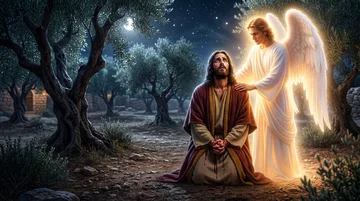
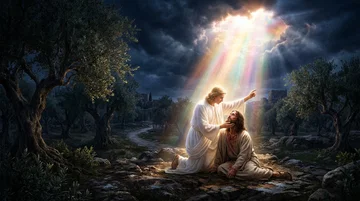
The request for release was not granted, for granting it would have left humanity locked in hopeless despair and the race facing eternal ruin.9T 102.1–3Ms 43, 1909, par. 10–12Ms 9, 1910, par. 11–13Ms 78, 1910, par. 27ST May 30, 1878 The Father, who suffered with His Son, instead sent a mighty angel from the throne, from the presence and the position from which Satan fell, not to take the cup or announce release but to support Him in drinking it.Ms 9, 1910, par. 11–13Ms 47, 1910, par. 8–10Ms 78, 1910, par. 27Ms 1, 1892, par. 9–10ST May 30, 1878 Heaven sympathized and watched with painful interest, but even angels who had never borne the sins of a ruined world could not relieve the sorrow, and heaven strengthened Him to accept and drink.Ms 43, 1909, par. 10–12Ms 9, 1910, par. 11–13ST May 30, 1878 The angel lifted His head, assured Him of the Father's love and acceptance, told Him His thrice-uttered prayer was heard, pointed to open heaven, and set before Him the souls to be saved, the grand result of victory, the utter discomfiture of Satan, the kingdom given to saints, eternal joys for the redeemed, and millions made victors with Him in His glorified kingdom.DA 759.5–760.2Ms 78, 1910, par. 27Ms 1, 1892, par. 9–10Ms 45, 1892, par. 15–21ST May 30, 1878 The cup so trembling was separation for a time from the Father with bitter agony and shame of suffering for sin, with bloody sweat as great drops falling to moisten the ground, intensified by darkness gathered around Him and by finding the disciples asleep when He sought sympathy, staggering as if dying on a battlefield.Ms 43, 1909, par. 10–12Ms 9, 1910, par. 11–13Ms 47, 1910, par. 8–10DA 759.5–760.2Ms 78, 1910, par. 27 The wail, wretchedness and ruin of a lost world rolled out before Him with the question whether He would let man go and whether He would refuse to drink, yet only through His drinking could sinners be saved and become a propitiation, for God knew best and strengthened His only begotten Son to endure.Ms 9, 1910, par. 11–13Ms 47, 1910, par. 8–10Ms 78, 1910, par. 27Ms 1, 1892, par. 9–10 Being in agony He prayed more earnestly three times for deliverance as the Father's presence was withdrawn, until the conflict ended when He consented to honor the Father by doing His will and bearing His curse, the consequence of man's transgression, obedient unto death, even the death of the cross, in direct contrast to the foul blot of disobedience in the Garden of Eden.Ms 9, 1910, par. 11–13DA 759.5–760.2Ms 1, 1892, par. 9–10
Strengthened, He changed His prayer to submission to drink according to the Father's will, and heavenly serenity rested on His pale blood-stained face with depression gone.Ms 83, 1910, par. 29–32Ms 117, 1909, par. 42–44Ms 1, 1880, par. 11–15Ms 45, 1892, par. 15–21ST May 30, 1878 He consented to drain the cup to its dregs and go to Calvary and through death for the lost world, relying by faith on evidence of the Father's character without clear hope of triumph, coming off victor in behalf of man.Ms 83, 1910, par. 29–32Ms 45, 1892, par. 15–2112MR 276.4–278.1ST May 30, 1878 Crushed in His humanity by taking the sins and iniquity of all upon Him, with sin as transgression and breaking of God's holy law so heavy human nature could not bear it, yet never failing on any point, He asked if possible that the cup pass, but if not that He be strengthened to drink it in submission.Ms 83, 1910, par. 29–32Ms 117, 1909, par. 42–44Ms 1, 1880, par. 11–15Ms 45, 1892, par. 15–21 The cup He asked to pass is the cup of suffering and humiliation and agony, the bitter cup and baptism of blood, the curse of sin and load of man's guilt, drunk while the light of God is withdrawn and the Father's face is turned away and hidden, so that His troubled soul cried from trembling lips in horror and sorrow yet in full willingness to do just as the Father wills.Ms 83, 1910, par. 29–32Ms 117, 1909, par. 42–44Ms 45, 1892, par. 15–21 The moment decided whether the world would be saved or lost, for He might still refuse, wipe the bloody sweat away and leave men to perish, but seeing the power of sin, the helplessness of man and the doom of a lost world He decided to save all who will come at any cost to Himself.Ms 45, 1892, par. 15–2112MR 276.4–278.1ST May 30, 1878 The Father did not remove the cup from His trembling hand and pale lips but sent the angel to strengthen and comfort Him with love and assurance, and thus strengthened He drank the cup of suffering through to its end in dying on the cross to save sinners, that His self-sacrifice would reveal His love and move people away from transgression.Ms 83, 1910, par. 29–32Ms 117, 1909, par. 42–44Ms 1, 1880, par. 11–15Ms 45, 1892, par. 15–2112MR 276.4–278.1 Having gone to His disciples hoping to find them watching with Him in the crisis but finding them asleep, His endurance calls believers facing crisis to stay awake, live in close relation with God, be willing to suffer to help the weak, and to understand and sense what He suffered in their behalf.Ms 78, 1910, par. 27Ms 83, 1910, par. 29–32
Salvation Decided and Secured
The prayer in Gethsemane is the awful moment that was to decide the destiny of the world, with the fate of humanity hanging trembling in the balance.Ms 134, 1905, par. 5Ms 1, 1892, par. 9–10ST Jan 15, 1902ST Nov 25, 1889ST Dec 2, 1897 It was not yet too late for Him to refuse to drink the cup apportioned to guilty man, to wipe the bloody sweat from His brow and leave man to perish in his iniquity under his own penalty, letting the transgressor receive the penalty of his own sin while He went back to His Father.Ms 134, 1905, par. 5Ms 14, 1893, par. 9–10Ms 45, 1892, par. 15–21Ms 16, 1893, par. 12ST Jan 15, 1902 The mysterious cup trembled in His hand as the wail, wretchedness, woe and ruin of a lost world rolled out before Him, with the question whether He would let man go and whether He would drink and save it or forbear and let it perish.Ms 1, 1892, par. 9–10Ms 14, 1893, par. 9–10ST Nov 25, 1889ST Dec 2, 1897 He could have had legions of angels at His side in a moment, but He must tread the winepress alone amid the satanic horrors of darkness, in horror of great darkness in Satan's hour of apparent triumph.Ms 14, 1893, par. 9–10ST Jan 15, 1902 The conflict ended only when Jesus consented to honor His Father by doing His will and bearing His curse, the consequence of man's transgression, obedient unto death, even the death of the cross.Ms 1, 1892, par. 9–10Ms 14, 1893, par. 9–10
Seeing the power of sin, the helplessness of man to save himself, the woes of a doomed world and the doom of a lost world, He decided to save all who will come at any cost to Himself.Ms 41, 1887, par. 2–5Ms 45, 1892, par. 15–21ST Jan 15, 1902 He weighed the loss of a single soul and of the whole world, and because that loss seemed so terrible He consented to drink the cup, for only through that sacrifice can everlasting salvation come to a soul who has transgressed the law of God.Ms 69a, 1896, par. 35–36Ms 105, 1894, par. 22–23 He alone could measure the magnitude of bearing the guilt of every sinner, yet He freely accepted self-denial, humiliation, betrayal by a disciple, rejection, denial, injustice, condemnation by Pilate, mocking, scourging, spitting and the cross, knowing the self-denial and suffering He would endure.Ms 49, 1898, par. 37–40Ms 45, 1892, par. 15–21 If the cup had passed, the plan of redemption would have failed, but with the misery and weight of a lost world and a tide of human anguish yet unknown to men before Him He accepted the cup to drain it to the dregs and died for our sakes to become propitiation and give eternal life to all who come.Ms 49, 1898, par. 37–40Ms 69a, 1896, par. 35–36Ms 105, 1894, par. 22–23Ms 45, 1892, par. 15–21Ms 16, 1893, par. 12
The struggle decides whether the sacrifice planned before the foundation of the world and pictured in every sacrifice since Adam's transgression will be given up, and whether the united purpose of Father and Son to save a perishing world will come to nothing.ST Jun 3, 1897ST Mar 19, 1912 It decides whether what prophets foretold, what types and shadows and symbols and prophecies pointing to His suffering and death rested on, what angels eagerly desired to understand, and the covenant made before the world was created will be fulfilled or fail.ST Jun 3, 1897ST Mar 19, 1912DA 799.3 The answer determines whether He fails and falls short in redemption, whether the prince of darkness triumphs and his proud boast proves true, whether the prey is left helpless in the mighty's hands, or whether the captives are delivered, Satan with his confederacy of evil and legions of apostasy is overcome, and obedience to the law is demonstrated possible.ST Mar 19, 1912ST Mar 19, 1912 By drinking He fulfills them, conquers temptation, gains victory over death and the tomb unto glorious eternal victory, obtains the reconciliation remembered in the bread and wine, and makes perishing millions victors with Him and more than conquerors through Christ by obedience to the law.ST Jun 3, 1897ST Mar 19, 19123SP 100.2–101.2DA 642.1DA 799.3
By bearing the curse resulting from human sin as substitute and surety, standing as a sinner against the Father He loved, separated from Him and treated as an enemy that through Him the world might be saved, He honors the Father and reveals what Adam's disobedience involved and what the Son's obedience means.Ms 92, 1899, par. 35–36Ms 1, 1892, par. 9–10ST Apr 10, 1893ST Aug 29, 19116MR 336.3–338.1 Gethsemane's obedience stands in careful contrast to Eden's disobedience and foul blot of transgression, for Christ clothed in humanity though one with Deity submitted His own will and did not follow His own will, obedient unto death.Ms 92, 1899, par. 35–36ST Apr 10, 1893ST Aug 29, 19116MR 336.3–338.1Lt 69, 1897, par. 23–25 In so bearing chastisement and the wrath of God upon Him because of the offensive character of sin, He magnifies the law and testifies it cannot change, showing God's justice punishes thoroughly and every offense is reckoned, for the Father spared not His own Son.Ms 92, 1899, par. 35–36Ms 1, 1892, par. 9–10 Yet through Him the transgressor gains another trial and probation, that humanity could have another trial and probation, and the controversy over the law is settled.Ms 92, 1899, par. 35–36ST Dec 2, 1897
As Elder Brother who suffered there He was in all points tempted like humanity and made perfect through suffering, is touched with the feeling of infirmities and made a merciful High Priest able to succor the tempted.Lt 9a, 1891, par. 21–22ST Jan 15, 1902 He remains firmly dependent on the Father with spotless character revealed, watching over the trembling, tried soul to deliver the tempted, strengthen the weak, enlighten the ignorant, heal the brokenhearted, brace the spirit for endurance and give nearest help in the moment of greatest discouragement.ST Jan 15, 1902 His self-sacrifice in drinking the cup through to its end reveals His love to move people away from transgression, elevate them to share the divine nature and exalt them to God's right hand with eternal joys for the redeemed.Ms 1, 1880, par. 11–15Ms 45, 1892, par. 15–21ST Jan 15, 1902 God suffered with His Son as evidence of boundless love, and believers should understand and sense what He suffered in their behalf, beginning with this anguish and going on to betrayal, mocking, scourging and death on the shameful cross to bring everlasting life so the world should not perish, for this great salvation cannot be neglected without tremendous loss.Lt 9a, 1891, par. 21–22Ms 78, 1910, par. 27Ms 14, 1893, par. 9–10Ms 66, 1901, par. 15
Pattern for Prayerful Endurance
Jesus' plea to let the cup pass, joined to surrender to the Father's wisdom and will, is the rule for prayer for the sick.GW 218.1MH 230.1–2CH 405.2–3ST Sep 29, 1914Ms 26a, 1892, par. 9–10 The sick may be prayed for earnestly, asking God to restore health if it accords with His will and brings Him glory and honor, but without demanding recovery as a command and without feverish anxiety.MH 230.1–2CH 405.2–3HL 238.6 Desire is to be committed with confidence to One who reads every secret of the soul, knows the end from the beginning, knows what is best, and knows whether the one prayed for could endure future trial.GW 218.1MH 230.1–2CH 405.2–3Ms 26a, 1892, par. 9–10 Such conditional prayer, adding nevertheless not my will but Thine be done, is never faithless and is never registered in heaven as faithless, even when healing is not granted and not everyone is raised to health.CH 405.2–3Ms 26a, 1892, par. 9–10HL 238.6 Where the sick are not healed they must not be judged as lacking faith.Ms 26a, 1892, par. 9–10
His threefold yielding in Gethsemane, choosing the Father's will over His own while bearing the sins of the whole world under separation from the Father's love, is true conversion and the pattern for refusing self-directed plans.ST Nov 21, 1892Lt 27, 1892, par. 17–18Ms 27, 1890, par. 22–24 God's will must take precedence over personal desire even in the severest trial, for the human will is to be brought under Christ's will to seek where God wills and best serve Him.ST Nov 21, 1892Lt 27, 1892, par. 17–18Ms 27, 1890, par. 22–24 This is absolute submission in all suffering, shown by One who laid off royal robe and kingly crown to clothe divinity with humanity, live a sinless life, and make atonement, whose human will was capable of asserting itself and could have refused humiliation and ignominious death, yet surrendered to be treated as sinner that sinful beings might be treated as innocent.Ms 134, 1905, par. 3 Trust is to hold even when God's presence cannot be felt and His dealings cannot be understood, for God is too wise to err and too good to do wrong, and spiritual conflict often comes from the heart's refusal to submit.Ms 10, 1866, par. 6–8RH Aug 26, 1909 Believers are to pray for strength to make God known in word and action, and the rebellious cannot enter heaven.ST Nov 21, 1892RH Aug 26, 1909
His acceptance of the bitter cup rather than seeking His own ease calls followers to self-denial and self-sacrifice instead of doing what they wish.STSE 45.13T 371.1GW92 55.3 The way shown by His trials in the wilderness, His suffering in Gethsemane, and His death at Calvary brings divine help to overcome and teaches that following Him may require hardship, conflict, sorrow, humiliation, and tribulation rather than ease or a path apart from suffering.STSE 45.13T 371.1SG4 272.2 His followers are to share the bitter cup of sorrow and humiliation, suffer with Him, and enter the kingdom through tribulation, turning the mind to Him when suffering for His name with the knowledge that sufferers will share glory and reign.SG4 272.2GW92 55.3 They are to work in harmony and lay down life for the brethren, and missionary work bears a Gethsemane atmosphere of surrender.RH Apr 11, 1912 His sacrifice in Gethsemane together with Calvary, bearing the weight of the world's sins, is the measure of devotion and labor called for in the church's work and the price by which men are bought.GW92 69.2RH Apr 11, 1912
The bitter cup is also the image of trials and afflictions God gives His people to purify and cleanse the heart.CET 103.4ExVEGW 28.1–2SG2 290.2 Patience, endurance, and prayer sweeten the cup and allow it to accomplish its purifying work, bringing honor and glory to God.CET 103.4ExVEGW 28.1–2SG2 290.2 Murmuring and complaint make the cup more bitter and may require the trial to be repeated until its work is done and the heart is purified.CET 103.4ExVEGW 28.1–2SG2 290.2 Without deep, constant humility and firm trust in God, self-reliance and self-sufficiency bring affliction upon one or more persons.STPW91 5.1STPW 4.3 Sorrow thus permitted also enables sufferers to sympathize with others who suffer.Lt 49, 1875, par. 17–18
As He pleaded for deliverance while submitting to what God willed, so God's faithful in the time of trouble and shaking will agonize and cry day and night for deliverance from deadly danger while submitting fully to His will.SG1 186.3–187.1RH May 27, 1862CET 177.3–178.1SG4 269.1–2 They must drink the cup and be baptized with the baptism, enduring the appointed trial before deliverance comes.SG1 186.3–187.1CET 177.3–178.1RH Dec 31, 1857 They will face a death decree demanding disregard for the Sabbath of the fourth commandment to honor the first day, yet will remain faithful and face death rather than violate God's Sabbath.RH May 27, 18621T 353.4 Their distress does not mean God has abandoned them, for deliverance is delayed because God's will is not yet fulfilled.RH Dec 31, 1857
Peter slept while Jesus prayed prostrate in fearful humiliation as the Man of Sorrows acquainted with grief, with bloody sweat staining the sod, and afterward returned to that solitude, remembered with remorse his sleep during those hours, prostrated himself where he had seen His Saviour's prostrate form, broke in proud heart, moistened with penitential tears the sod so recently stained, and left converted to pity the tempted, sympathize with the weak, and strengthen his brethren.Lt 54, 1874, par. 15–16ST Nov 11, 18973T 416.2 James later understood drinking the cup and sharing the baptism when imprisoned and executed.4RED 102.2–103.1 Luther in fear followed the example of falling on the face to pour out distress for assurance.2SP 289.2–290.1 The agony with betrayal and crucifixion became a severe test that Jesus foretold to prepare the disciples while still present to comfort and strengthen them, and their continual recounting of it instructs reformers opposed by satanic hatred and all who need communion with heaven.DA 394.2–34RED 102.2–103.12SP 289.2–290.1
Sources