Matthew 14:23
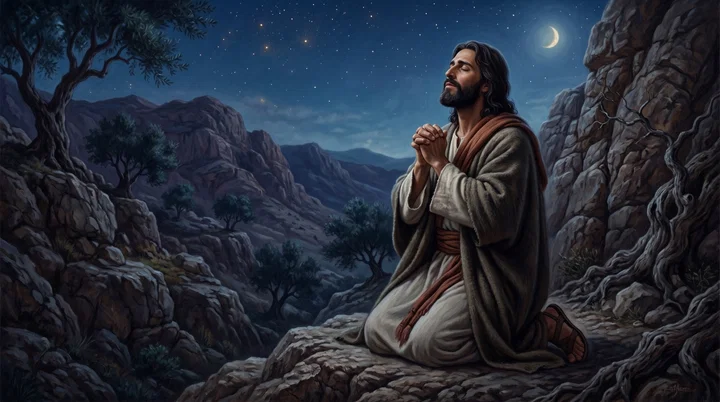
And when he had sent the multitudes away, he went up into a mountain apart to pray: and when the evening was come, he was there alone.
Translations
American King James Version, King James Version, KJV Cambridge Paragraph Bible
And when he had sent the multitudes away, he went up into a mountain apart to pray: and when the evening was come, he was there alone.
And when he had sent the multitudes away, he ascended a mountain apart to pray: and when the evening was come, he was there alone.
Revised Version, American Standard Version
And after he had sent the multitudes away, he went up into the mountain apart to pray: and when even was come, he was there alone.
and having let away the multitudes, he went up to the mountain by himself to pray, and evening having come, he was there alone,
And having dismissed the crowds, he went up into the mountain apart to pray. And when even was come, he was alone there,
And, dismissing the multitudes, he went up into the mountain, apart, to pray,—and when, evening, came, alone, was he, there.
After He had sent them away, He went up on the mountain by Himself to pray. When evening came, He was there alone,
After He had dismissed them, He went up on the mountain by Himself to pray. When evening came, He was there alone,
After he had sent the multitudes away, he went up into the mountain by himself to pray. When evening had come, he was there alone.
And after he had sent the people away, he went up into the mountain by himself for prayer: and when evening was come, he was there by himself.
And assoone as hee had sent the multitude away, he went vp into a moutaine alone to pray: and when the euening was come, hee was there alone.
Douay-Rheims (Challoner revision)
And having dismissed the multitude, he went into a mountain alone to pray. And when it was evening, he was there alone.
Pictures
Cross-references 20 of 24
- Mark 6:46
And when he had sent them away, he departed into a mountain to pray.
Jesus dismisses the crowd and goes up the mountain alone to pray.
- John 6:15
When Jesus therefore perceived that they would come and take him by force, to make him a king, he departed again into a mountain himself alone.
The crowd tries to make Jesus king, and he withdraws alone.
- Luke 6:12
And it came to pass in those days, that he went out into a mountain to pray, and continued all night in prayer to God.
Jesus prays alone on a mountain through the night.
- Mark 1:35
And in the morning, rising up a great while before day, he went out, and departed into a solitary place, and there prayed.
Jesus rises before day and withdraws to pray alone.
- Hebrews 5:7
Who in the days of his flesh, when he had offered up prayers and supplications with strong crying and tears unto him that was able to save him from death, and was heard in that he feared;
Jesus prays earnestly amid suffering.
- Luke 5:16
And he withdrew himself into the wilderness, and prayed.
Jesus withdrew to a solitary place to pray.
- Matthew 6:6
But thou, when thou prayest, enter into thy closet, and when thou hast shut thy door, pray to thy Father which is in secret; and thy Father which seeth in secret shall reward thee openly.
Jesus exemplifies the command to engage in private prayer in seclusion.
- John 6:16-21
And when even was now come, his disciples went down unto the sea,
Jesus comes to his disciples across the sea.
- Mark 6:35-44
And when the day was now far spent, his disciples came unto him, and said, This is a desert place, and now the time is far passed:
The feeding account begins as the day is far spent and precedes Jesus’ withdrawal.
- Matthew 14:27
But straightway Jesus spake unto them, saying, Be of good cheer; it is I; be not afraid.
Jesus reassures the disciples amid the storm, dispelling their fear.
- Matthew 14:15
And when it was evening, his disciples came to him, saying, This is a desert place, and the time is now past; send the multitude away, that they may go into the villages, and buy themselves victuals.
Marks the first evening before the feeding, contrasted with the second.
- Luke 22:41-44
And he was withdrawn from them about a stone’s cast, and kneeled down, and prayed,
Jesus withdraws alone to pray earnestly in anguish.
- Luke 9:12
And when the day began to wear away, then came the twelve, and said unto him, Send the multitude away, that they may go into the towns and country round about, and lodge, and get victuals: for we are here in a desert place.
Both accounts place the feeding as the day began to wear away.
- Luke 9:28
And it came to pass about an eight days after these sayings, he took Peter and John and James, and went up into a mountain to pray.
Jesus went up the mountain to pray.
- John 6:1-14
After these things Jesus went over the sea of Galilee, which is the sea of Tiberias.
John’s account parallels the feeding of the multitude.
- Matthew 26:36-39
Then cometh Jesus with them unto a place called Gethsemane, and saith unto the disciples, Sit ye here, while I go and pray yonder.
The poem recalls Jesus alone in the garden.
- Mark 6:47
And when even was come, the ship was in the midst of the sea, and he alone on the land.
Marks the later evening in Mark’s parallel account.
- Mark 6:31
And he said unto them, Come ye yourselves apart into a desert place, and rest a while: for there were many coming and going, and they had no leisure so much as to eat.
Jesus invites his weary disciples to withdraw and rest awhile.
- Matthew 14:14
And Jesus went forth, and saw a great multitude, and was moved with compassion toward them, and he healed their sick.
Jesus heals the people before withdrawing to pray.
- Daniel 6:10
Now when Daniel knew that the writing was signed, he went into his house; and his windows being open in his chamber toward Jerusalem, he kneeled upon his knees three times a day, and prayed, and gave thanks before his God, as he did aforetime.
Daniel’s regular prayer echoes Jesus withdrawing alone to pray.
Commentary
Each commentary is drawn from primary sources: the writings of Ellen G. White and Adventist pioneers and periodicals. Each commentary is separate. Its own words are not a quotation; follow the references to read the source passages.
Ellen G. White
38 sources
After feeding the multitude that spring evening, He dismissed the crowd that sought to seize Him and crown Him king and sent away His reluctant disciples, then withdrew alone to a mountain apart to pray when evening came.ST Dec 29, 1887DA 377.3–378.1ST Dec 29, 1887DA 378.43RED 58.2 He remained there alone through many hours of the night in earnest persevering prayer with strong crying and tears.DA 378.5–379.1ST Mar 1, 1877ST May 10, 1883 His pleading was not for Himself but for sinful, suffering, lost humanity, that Satan would not blind them and they would turn to salvation, and especially that His disciples would be strengthened for coming trial.DA 378.5–379.1MH 58.1ST Mar 1, 1877ST Dec 11, 1879ST May 10, 1883 His turning aside from ceaseless labor to unbroken communion with the Father gives the perfect pattern that solitary prayer is necessary for strength to endure trial and do successful work for others.MH 58.1ST Mar 1, 1877MH 55.12T 201.2–202.1ST Jul 24, 1893 Even while apart He kept the disciples in view with tender pity, and when their strength failed on the storm-tossed sea He came walking on the waves, made His presence turn their fear to joy, and proved He can be trusted to save those who humbly call upon Him.2SP 267.2–268.13RED 60.1–62.12SP 267.1DA 381.1GW92 31.1–2
Feeding Crowd Then Withdrawing
The verse belongs to the spring evening when the multitude was fed seated on the grassy plain from five barley loaves and two small fishes.DA 377.1 His words that day came as the voice of God and His healings only divine power could perform, so that all who shared in the benefit said He was the prophet that should come into the world foretold by Moses, when God fed Israel with manna in the desert.DA 377.1 The feeding sealed the people's all-day growing conviction that the long-looked-for Deliverer was among them and sent their hopes higher and higher.DA 377.2 They expected Him to make Judea an earthly paradise flowing with milk and honey and to satisfy every desire.DA 377.2 They expected Him to break the hated Romans, to deliver Judah and Jerusalem, to heal soldiers wounded in battle, to supply whole armies with food, to conquer the nations, and to give Israel the long-sought dominion.DA 377.2
Enthusiasm to crown Him king at once reached its height, with agreement to take Him by force and proclaim Him king of Israel as the Deliverer with authority from God who should be exalted.DA 377.3–378.1 They meant to force the arrogant priests and rulers to honor Him.DA 377.3–378.1 The disciples united with the multitude in declaring David's throne His rightful inheritance and saying modesty made Him refuse such honor.DA 377.3–378.1 He made no effort to attract attention or secure honor to Himself and in this was essentially different from the priests and rulers, giving ground for fear that He would never urge His claim to David's throne.DA 377.3–378.1
After the people sought to make Him king, He decisively dismissed the crowd and withdrew alone to a mountain to pray at evening.ST Dec 29, 1887DA 378.43RED 58.2 As they moved to seize Him, His kingly bearing and quiet command stopped them and they submitted to His authority, so He was then able to go apart by Himself.DA 378.4 He separated Himself from the crowd and spent the evening in prayer.ST Dec 29, 1887 He went up the mountain and spent many hours in earnest prayer to the Father, not for Himself but for sinful humanity, pleading for people to turn from guilt to salvation.3RED 58.2
He sent the disciples away and dismissed the crowd after they hoped to make Him king.ST Dec 29, 18872SP 267.1DA 378.3 The disciples found it hard to leave Him alone on the desolate shore because they saw the enthusiasm as an opportunity to place Him on Israel's throne.2SP 267.1DA 378.3 Their departure opposed their wish, they left dissatisfied and regretted yielding to His command while they crossed the lake to the farther side in obedience.ST Dec 29, 18872SP 267.1ST Jul 18, 1878 While the tempest and billows talked with death, He whom they had left behind appeared to them walking calmly upon the boisterous white-capped waves.ST Jul 18, 1878 When they saw Him on the water their terror increased, for they took Him for a sure sign of immediate death, and cried out in great fear.ST Jul 18, 1878 His coming heralded not death but life, and His voice heard above the roar of the elements saying it is He and bidding them not be afraid quickly changed horror and despair into the joy of faith and hope in the presence of the beloved Master.ST Jul 18, 1878 With Christ with them the disciples felt no more anxiety nor dread of death.ST Jul 18, 1878
He was left alone on the desolate shore with high, barren mountains around Him while the people gathered for Passover.3RED 58.1 When evening came He was there alone on the mountain praying after sending the crowd away, before He came to the disciples walking on the storm-tossed lake.DA 3763RED 58.1 The setting is invoked as the scene preceding the storm at sea recalled by the disciples' journey by boat to the other side of the sea.DA 376LSEGW 229.3–230.1
Solitary Intercession for Humanity
Left alone He went up into the mountain apart to pray and continued there for hours, for many hours, through the night and through the remainder of the night.DA 378.5–379.1ST Mar 1, 1877ST May 10, 18833RED 58.2Lt 272a, 1903, par. 7–8 That prayer was earnest and persevering and agonizing, with travail and conflict of soul, with strong crying and tears.DA 378.5–379.1ST Mar 1, 1877ST May 10, 1883ST Jul 24, 1893Lt 272a, 1903, par. 7–8 The quiet, lonely setting of the mountain enabled Him to be apart from others.Lt 272a, 1903, par. 7–8COS 41.4
Those prayers were not for Himself, not for forgiveness of personal sins nor for relief from personal troubles.DA 378.5–379.1MH 58.1ST Dec 11, 1879ST May 10, 18833RED 58.2 They were for men, for those suffering, sinful, needy, lost ones He came to save, for a world lost in error, that people might not perish in sin and impenitence.DA 378.5–379.1MH 58.1ST Dec 11, 1879ST May 10, 1883ST Sep 5, 1900 He poured out His soul in pleading with God for power to reveal to men the divine character of His mission, so that Satan would not blind their understanding and pervert their judgment.DA 378.5–379.1 He pleaded that they would turn from guilt to the light of salvation through redeeming grace.DA 378.5–379.1ST Mar 1, 1877ST May 10, 18833RED 58.22SP 266.1–2
He knew His days of personal ministry were nearly ended and that few would receive Him as Redeemer.DA 378.5–379.1 He grieved and interceded for sinful people who rejected the help God sent, and He prayed especially that His disciples would be strengthened for their duties and prepared for their trials.DA 378.5–379.1ST Mar 1, 18772SP 266.1–23RED 59.2 He sought the quiet, lonely setting of the mountains and other quiet places in nature to commune with His heavenly Father, and such peaceful hours of prayer and reflection strengthened Him to return to His duties.Lt 272a, 1903, par. 7–8COS 41.4 His human nature made prayer a necessity and a privilege, and in communion He found comfort and fresh strength and received strength and grace for the work of helping and blessing others before returning to active work.ST Mar 1, 1877ST Dec 11, 18792T 201.2–202.1ST Sep 5, 19002SP 266.1–2
Example and Watchful Deliverance
Even a life wholly given to doing good for others needs to step back from unceasing work and contact with human need to seek quiet retirement and unbroken communion with the Father, and going up into the mountain apart to pray after the throng is sent away shows that necessity.MH 58.1MH 55.1ST It illustrates the practice of leaving the crowds after a day of ministry, at evening or early morning, to commune alone in the mountains.MH 58.1MH 55.1ST There alone with God He pours out His soul in prayer for suffering, sinful, needy ones.MH 58.1ST
The night is used for prayer and meditation because the daytime is occupied with work, and after exhausting labor He often prays through the night and returns to active work in the morning.ST Dec 11, 1879ST Mar 3, 1881ST Jul 24, 1893 After the labors of the day He withdraws to the solitude of the mountains for earnest, persevering prayer, spending the night in prayer to God before returning to active work.ST Dec 11, 1879ST Mar 3, 1881ST Jul 24, 1893 Upon important occasions, and frequently for the entire night just before working some mighty miracle, He compassionately dismisses the disciples to return to their homes for rest and sleep while He remains alone pouring forth earnest petitions with strong crying and tears in behalf of humanity.ST Jul 24, 1893
That withdrawal is a perfect pattern that prayer is necessary for a successful Christian life, showing constant communion prized as privilege with results seen in His work.ST Mar 1, 18772T 201.2–202.1ST Jul 24, 1893 His human nature makes prayer a necessity and privilege, and in communion He finds comfort and fresh strength for duties and trials before Him.ST Mar 1, 18772T 201.2–202.12SP 266.1–2 In every trial and emergency and urgent need He seeks His Father in private prayer and receives strength for the work before Him.ST Mar 1, 1877ST Jul 24, 18932SP 266.1–23RED 59.2 Christians are to follow that example and seek through prayer strength to endure life's trials and duties and to guard integrity and virtue, which sinful people lacking strength need all the more even though Christ Himself often sought solitary prayer.ST Mar 1, 1877ST Jul 24, 18932SP 266.1–2MYP 383.33RED 59.2
Even while apart on the distant shore He keeps the disciples in view, sees their danger and understands their thoughts, and watches over them with tender care, compassion, sympathy and pitying love as tender as a mother watching a suffering child.2SP 267.2–268.13RED 60.1–62.1DA 381.1Lt 5, 1876, par. 9–15 Their distress and hard obedience on a dark and tempestuous night is a necessary trial of faith and does not mean He has forgotten them.2SP 267.2–268.13RED 60.1–62.1Lt 5, 1876, par. 9–15 Though He is not with them in the boat, His watchful eye follows them all through the fearful storm, and in their greatest peril when despair replaces hope He is close by.2SP 267.2–268.1DA 381.1Lt 5, 1876, par. 9–15
When their own efforts fail and their pride is subdued, He gives help when they humbly pray.2SP 267.2–268.1DA 381.1GW92 31.1–2 He takes up the work they cannot accomplish, and His presence turns fear and despair into faith and hope and sorrow into joy.DA 381.1GW92 31.1–24T 288.1–2Lt 5, 1876, par. 9–15 That deliverance proves He can be trusted in storm as well as sunshine to calm every tempest with infinite power, and protects those who trust and obey Him even when efforts seem useless and death seems near.4T 288.1–2Lt 5, 1876, par. 9–15
After leaving Him they are caught on the Sea of Galilee by contrary winds and a terrible tempest on a dark, tempestuous night, driven away from the shore they try to reach toward the point He designated to meet Him and take Him aboard.2SP 267.1ST Jul 18, 1878Lt 5, 1876, par. 9–157MR 280.4–281.2 Their vessels will not obey them, and they are driven hither and thither until in bewilderment and hopelessness they lay down oars in exhausted strength amid danger and horror and expect to perish while tempest and billows talk with death.ST Jul 18, 1878Lt 5, 1876, par. 9–15 He whom they left behind appears walking calmly upon the boisterous white-capped waves, and they take Him for a sure sign of immediate death and cry out in great fear.ST Jul 18, 1878Lt 5, 1876, par. 9–15 His voice heard above the roar of the elements saying it is He and bidding them not be afraid quickly changes horror and despair into the joy of faith and hope in the presence of the beloved Master, so that with Christ with them they feel no more anxiety nor dread of death.ST Jul 18, 1878Lt 5, 1876, par. 9–15 His word quiets the tempest and the boat lands, and the events that follow — including walking on the water, Peter's adventure, the storm's sudden stilling, and the landing — are later recounted to the crowd.4RED 87.2ST Jul 18, 1878DA 809.3 The waves display God's majesty and power over wind and water, and walking on the waves and speaking peace to the troubled sea testifies to His Messiahship though opponents refuse to acknowledge such mighty works.DA 809.37MR 280.4–281.2
Sources
Pioneers and periodicals
69 sources
After feeding the five thousand He sent the multitudes away and constrained the disciples to cross the sea without Him, and went up alone into a mountain apart to pray where He remained by Himself when evening came through much of the night.ST Jul 18, 1878ST Aug 2, 1905 He withdrew because the people sought to take Him by force to make Him a temporal king, and He refused an earthly kingdom to work out a more glorious one through humility and suffering.ST Dec 29, 1887ST Aug 2, 1905RH Nov 14, 1912ST Apr 25, 1906 Through those solitary hours He pleaded with strong crying not for Himself but for lost sinful humanity and for His dull disciples, seeking from the Father strength, grace and renewal for the work before Him.ST Aug 25, 1881ST Mar 1, 1877ST Aug 2, 1905RH Nov 14, 1912ST Dec 22, 1887 He had not forgotten the disciples while He prayed, but watched them distressed on the stormy sea and came to them walking on the water to rescue them and bring peace and safety.RH Oct 7, 1909ST Oct 28, 1897ST Oct 12, 1904ST Jun 12, 1901ST Jul 7, 1898 His going apart thus gives sanction to private secret prayer, calling believers to leave the throng at times for quiet communion with God to find rest, strength and help for others.ST Aug 25, 1881ST Aug 25, 1881RH Apr 16, 1857RH Nov 23, 1869RH Aug 20, 1872
Setting and Wording
The verse comes directly after the feeding of the five thousand with five loaves and two fishes, when all ate and were filled, and after sending the multitudes away Jesus went up by Himself into a mountain apart to pray and was there alone when the evening came.ST Aug 2, 1905 That day had been spent in demanding public labor, teaching and healing and feeding the people, seeking men in streets and houses and synagogues and by the seaside and preaching to the multitude and healing the sick, and after dismissing the people to return to their homes for rest and sleep He spent part of the night, the greater part or the entire night, alone in prayer.ST Feb 1, 1899RH Apr 30, 1901 He remained there until about three o'clock in the morning, when He came to His disciples walking on the sea, and then went across the sea to help them in their distress and came forth renewed to labor again in the morning.ST Feb 1, 1899ST Jul 7, 1898RH Apr 30, 1901 The withdrawal followed the feeding and the sending away of the crowd and the disciples, and was connected with the crowd's desire to make Him a temporal king from mistaken hopes.ST Aug 2, 1905
He constrained the disciples to enter the boat and go before Him to the other side toward Bethsaida and Capernaum, and He took leave of the multitudes and sent them away.ST May 20, 1886 When evening came He was there alone on the land, while they were on the lake without Him, He remaining behind on the other side while in obedience to His command they crossed to the farther side.ST Jul 18, 1878ST May 20, 1886 He did this because He perceived that after the feeding of the five thousand the people were about to come and take Him by force to make Him king.ST May 20, 1886 While He was apart they struggled to row, and in the fourth watch of the night He came to them walking on the sea.RH May 27, 1858
The mountain was a quiet place apart near the Sea of Galilee, reached by a path the crowd had not known, and He was left alone on the desolate shore surrounded by high and barren mountains.RH Dec 8, 1874ST Dec 22, 1887 The word for the lonely place means an uninhabited region and not necessarily an arid, barren plain.ST May 20, 1880
He had toiled for the throng gathered from noon till the close of day, and He sent them all away amid the evening twilight, sad and weary, choosing to be alone when evening came.RH Dec 8, 1874 He did not go up to see the landscape spread fair below or the beauty of the lake as its waters ebb and flow, nor to find a place for rest and sleep while angels kept watch above Him.RH Dec 8, 1874 Even as the sinless Saviour He felt the need of earnest prayer and took His great life burdens alone to His Father there.RH Dec 8, 1874 His solitary retreat also illustrates that He sometimes sought rest when weary.ST Dec 24, 1894
The feeding that forms the setting shows that He can provide for His people under any circumstances.ST Mar 16, 1904 He knows their needs and calls them to trust Him and obey His Word, which also supplies their spiritual needs, and because He gave His life for them He will not fail to provide for those who faithfully follow Him.ST Mar 16, 1904 The associated acts of feeding the multitudes and walking on the waves show His power, connected with His authority over death and His power to raise the dead.ST May 24, 1905 His solitude on the mountain belongs with the times He was alone on the sea, in the garden, and on the cross.ST Mar 22, 1899
Meaning of Evening
The evening here is the second evening of the same day that began with the evening in Matthew 14:15.RH Apr 20, 1876RH Jan 17, 1856 The first evening came when the day was far spent and the sun inclined to descend, about three o'clock and before sunset, while the feeding of the five thousand with five loaves and two fishes had not yet begun.RH Apr 20, 1876RH Jan 17, 1856 The commanding to sit down, the blessing and breaking of the loaves and fishes, the eating until all were filled, the gathering of the fragments, and afterward the sending of the multitudes away took considerable time, and then Jesus went up into a mountain apart to pray and was there alone when the evening came.ST Sep 21, 1915RH Apr 20, 1876RH Jan 17, 1856
That second evening is the true and real evening beginning at sunset and continuing until dark, marking the beginning of the next day, the same sunset evening in which Mark 6:46-47 has Jesus alone on the land while the ship was in the midst of the sea.RH Apr 20, 1876RH Jan 17, 1856 The two evenings of the same day prove that each day has two evenings, the first beginning much earlier when the sun inclines to descend and the second at sunset.RH Apr 20, 1876 This evening after the feeding and dismissal of the crowd, while he was there alone, does not describe an evening beginning at three o'clock.ST Sep 21, 1915
Reason for Withdrawal
After feeding the five thousand he constrained the disciples to enter the boat and go before him to the other side toward Bethsaida and Capernaum, took leave of the multitudes and sent them away, and withdrew himself alone up into the mountain to pray, remaining alone on the land while they went down to the sea without him.ST Dec 29, 1887ST Aug 2, 1905ST May 20, 1886 He did this because he perceived the people were about to come and take him by force to make him a temporal king after the miracle, a purpose rooted in their mistaken earthly hopes and followed by their disappointment that he would not accept it.ST Dec 29, 1887ST Aug 2, 1905ST Mar 5, 1896ST May 20, 1886 Separated from the crowd when popular favor was high, he spent the evening in prayer to meet and plead with God for the poor, ignorant people and his dull disciples, and that time apart supplied grace for his ministry among the multitudes and for direct, continuing communion with the Father.ST Dec 29, 1887ST Aug 2, 1905RH Nov 14, 1912
The sending away of the disciples opposed their own wish to make him king, for he withdrew to pray while they crossed the lake.ST Dec 29, 1887ST Dec 22, 1887 People were assembling from all quarters for the Passover at Jerusalem, anxious to see the Prophet whose fame had spread through all the land, and the disciples saw this enthusiasm as the golden opportunity to establish him as Israel's king and could not feel reconciled that it should come to nothing, finding it hard to leave him alone on the desolate shore.ST Dec 29, 1887ST Dec 22, 1887 He sought solitude after preventing the crowd and disciples from carrying out that earthly political movement, because it could lead to violence and hinder the spiritual advancement of his kingdom, and from the mountain he prayed for his people.ST Jun 20, 1900
Though kingship was his by right, he refused the people's longing to make him king after feeding the five thousand, and instead of taking a throne he dismissed the multitude and retired alone to pray.ST Apr 25, 1906 He sent them back to everyday life under the Roman yoke and to bitter disappointment, choosing patient submission to suffering rather than a kingdom by worldly power.ST Apr 25, 1906 In that refusal he was working out for them a more glorious kingdom than earth ever knew, a paradox in which humility and suffering issue in exaltation and glory.ST Apr 25, 1906 He withdrew from those who wanted to make him king and went off alone to pray for them, that they might better understand him and his mission, refusing their political ambitions rather than seeking rule through government.ST Jun 30, 1898
Content of His Prayer
After sending the crowd away he went alone up the mountain and spent many hours in earnest, persevering prayer to the Father, pleading for hours with strong crying to God for help.ST Aug 25, 1881ST Mar 1, 1877ST Nov 11, 1889ST Dec 22, 1887 He spent the greater part or the entire night there alone, until about three o'clock in the morning when he came to his disciples walking on the sea, having given part of the night to prayer after a demanding day of teaching, healing and feeding and then going across the sea to help his distressed disciples.ST Aug 25, 1881ST Nov 11, 1889ST Feb 1, 1899 His daytime was occupied with work, so he used the night for prayer and meditation and then returned to active work in the morning.ST Aug 25, 1881ST Mar 1, 1877ST Dec 22, 1887
His earnest prayers and wrestling with bitter agony and tears were not for himself but for depraved, sinful, lost humanity, pleading that the poor sinful creature might turn from guilt to the light of salvation through redeeming grace.ST Aug 25, 1881ST Mar 1, 1877ST May 10, 1883ST Dec 22, 1887 He looked with yearning compassion on the multitudes as scattered sheep without a shepherd, because the priests who should have been teachers in Israel only performed meaningless ceremonies and repeated a law they did not understand or practice.ST Dec 22, 1887 His prayer was not for forgiveness of personal sins or relief from personal troubles, but for a world lost in error, that people might not perish in sin and impenitence.ST Dec 11, 1879
In solitude he sought strength for the work, trials and duties before him, and his time apart with God supplied grace for his ministry among the multitudes and showed his need for direct, continuing communion with the Father.ST Aug 25, 1881ST Aug 25, 1881ST Mar 1, 1877RH Nov 14, 1912 His solitude and prayer brought the rest, comfort, refreshment, renewal and divine strength he needed after a busy day of service, and he returned refreshed to serve others.ST Sep 5, 1900RH Jul 28, 1903RH Oct 10, 1912 He prized the privilege of prayer, lived a life of prayer and communion with the Father, prayed for those he came to save, and received strength and grace for his work of helping and blessing others.ST Jul 24, 1893ST Sep 5, 1900
He went to meet and plead with God for the poor, ignorant people and his dull disciples, sending the crowd away and going alone up the mountain to pray for his people.ST Aug 2, 1905ST Jun 20, 1900 In his humanity he needed strength from God, and he prayed especially that his disciples would be strengthened for their duties and prepared to face trials. His victories were achieved in time alone with his Father, and prayer strengthened his soul and helped keep his followers.RH Jan 5, 1905 Upon all important occasions, and frequently for the entire night just before working some mighty miracle, he compassionately dismissed his disciples to return to their homes for rest and sleep while he remained alone pouring forth with strong crying and tears earnest petitions to God in behalf of humanity.ST Jul 24, 1893
Care for Disciples
The verse sets the crossing of the Sea of Galilee and the storm that followed, with Jesus remaining apart in prayer on the mountain while the disciples struggled to row toward Bethsaida and Capernaum, and in the fourth watch of the night he came to them walking on the sea and stilled the tempest, with Peter also walking on the water.ST Nov 4, 1886ST Jun 12, 1901ST Jul 7, 1898RH May 27, 1858 After feeding the multitude he went apart while his disciples were on the lake without him on the land, and this belongs to his work around the Sea of Galilee before he came walking on the sea as they struggled to row.ST Nov 4, 1886RH May 27, 1858 In obedience to his command to cross to the farther side they met a terrible tempest that would not obey them until in bewilderment and hopelessness they laid down their oars in despair and expected to perish.ST Jul 18, 1878 While the tempest and billows talked with death, Jesus whom they had left behind appeared walking calmly upon the boisterous white-capped waves, and they took him for a sure sign of immediate death and cried out in great fear.ST Jul 18, 1878 His coming heralded not death but life, and his voice heard above the roar of the elements saying it is he and bidding them not be afraid quickly changed horror and despair into the joy of faith and hope, so that with Christ with them they felt no more anxiety nor dread of death.ST Jul 18, 1878
Alone on the mountain in prayer he had not forgotten or forsaken them, for he watched them distressed in the darkness on the stormy sea and came near when helpless to rescue them.RH Oct 7, 1909ST Oct 28, 1897ST Oct 12, 1904 He saw their danger and came to save them, demonstrating power over the storm and care for those in need, for the sea's turmoil cannot overcome him since he is its Master.ST Oct 28, 1897ST Oct 12, 1904RH Jul 28, 1903 His coming brings assurance rather than terror, and receiving him brings safety with recognition of him as the Son of God, powerful, merciful, and ready to rescue.ST Oct 12, 1904RH Jul 28, 1903 He remains near to his disciples in danger and answers humble prayer for help, standing as an unfailing source of joy, comfort, and safety whose present knowledge brings peace with him at the judgment.RH Oct 7, 1909RH Sep 10, 1901 While believers are discouraged on the waves of troubled Galilee and sad at their absent Lord, though absent he pleads their cause with God on the distant hills of light.RH Aug 21, 1860 When sinking hearts quail before the tempest's wildest rage, he will come treading upon the rude billows that disturb them, hushing the fury of the fearful tempest and guiding them to the port of peace.RH Aug 21, 1860
His being alone on the mountain praying for the disciples in the boat in the night storm pictures Christ in heaven praying for his church on the dark waters of this world when through many a dark watch since his ascension she has often seemed forsaken and alone.ST May 12, 1909 His coming to the disciples walking on the sea and piloting them quickly to the other shore pictures his soon coming to rescue the church when the world is going to wreck, with his voice speaking peace above the crash of the elements.ST May 12, 1909 As the Master was bruised and buffeted by the storms of Satanic wrath in this world, so the church must be if she would share with him in victory in the world to come.ST May 12, 1909 The sending away puts the ship out on the deep sea far from land and away from the shallow shore, where winds rise fast and rocks near the shore threaten, the net is cast below in reliance on God to guide the bark to where the fish abide, and the Lord steers, overwhelms danger, stems the squall, and at last guides home to heaven.ST Mar 12, 1894
Pattern for Believers
Jesus sending the multitudes away and going up into a mountain apart alone to pray gives private, secret, solitary prayer its highest sanction.RH Apr 16, 1857RH Nov 23, 1869RH Aug 20, 1872RH Jul 10, 1860 His withdrawal was deliberate and earnest dependence on God, and it was his customary practice.RH Nov 23, 1869ST Nov 24, 1887RH Dec 12, 1907 Believers are to follow that example and make solitary prayer their own regular practice.RH Apr 16, 1857RH Nov 23, 1869RH Dec 12, 1907RH Jul 10, 1860
His going to a mountain alone in the evening shows that prayer may be practiced in a quiet place of retirement, with a secluded mountain and the evening as fitting examples.RH Jul 15, 1858RH Jul 24, 1860RH Apr 22, 1858 A closet for prayer need not be a literal room but any place retired from interruption for being alone with God.RH Apr 22, 1858 Solitary prayer is a place for extended communion with God, unlike brief public prayer.RH Nov 21, 1912 After public duties are finished solitude is fitting for devotion, and his followers should likewise at times leave the throng to commune with God, since such devotion strengthens for further action.RH Feb 17, 1863RH Aug 7, 1860
Though he served and taught among people, he sought quiet solitude for prayer and spiritual refreshment even amid active ministry.STST Jul 8, 1930RH Aug 31, 1911 He toiled all day seeking men in public streets, private houses, synagogues, and by the seaside, preaching to the multitude and healing the sick, then after dismissing the people to return home to rest and sleep he spent the entire night alone in prayer in order to come forth renewed to labor again in the morning.ST Mar 3, 1881RH Apr 30, 1901 His daytime was occupied with work, so he used the night for prayer and meditation and intercession for humanity, and then returned to active work in the morning.ST Mar 3, 1881ST Jul 24, 1893 Those quiet, restful occasions in mountain and forest stillness refreshed him and gave strength to stand against the enemy and the assaults and questions of foes, and even a life devoted to serving others requires such quiet retirement and communion with the Father.STRH Aug 31, 1911 Upon important occasions, and frequently for the entire night just before working some mighty miracle, he compassionately dismissed the disciples to return home for rest and sleep while he remained alone pouring forth earnest petitions with strong crying and tears in behalf of humanity.ST Jul 24, 1893
In solitude and prayer he sought strength, grace, renewal, rest, comfort, and refreshment from the Father for the work, trials, and duties before him.ST Aug 25, 1881ST Aug 25, 1881RH Jul 28, 1903RH Mar 14, 1854 Getting away from demands to pray may take effort, but meeting God in solitude brings his life-giving presence, replacing weakness with strength and sadness with joy.RH Jul 28, 1903 His example presents solitary prayer as the way to renew spiritual strength and prepare for life's struggles, to endure life's trials and duties.ST Aug 25, 1881RH Mar 14, 1854 By faith believers are to find quiet, personal communion with him, consider his character, compare their will with his, and receive strength to serve, discern and resist sin, renew love, remain steady through hardship, and follow the right path.RH Oct 10, 1907
In the mount of prayer he found power to go across the sea to his troubled disciples and bring them peace and safety, showing prayer as the source of strength for meeting trouble and helping others.RH Jul 28, 1903 Followers should at times leave the throng to commune with God and make time to offer earnest prayer for sinners and for themselves.RH Feb 17, 1863RH Oct 10, 1907RH Jan 9, 1866
He alone in evening prayer is the fitting pattern for the lone and tried Christian to tell sorrows to him who died.RH Dec 8, 1874 Friends gather round when joy is at its height, but few choose to tarry and watch through sorrow's night.RH Dec 8, 1874 Meeting with others to claim blessing is sweet, but greater strength often comes from earnest secret prayer, as the tree standing alone proves stronger in tempests than sheltered forest trees.RH Dec 8, 1874 The God who placed the lily upon the lake, spread the wildwood with green, and in pity gave his Son for sinners helps the Christian bear each daily cross, so where suffering must be lonely the sufferer should not ask why but clasp the dear hand closer, and shall hereafter know untold bliss awaiting those proved true below.RH Dec 8, 1874
He sought the stillness and grandeur of the mountains in which to commune with his Father.ST Apr 24, 1901 Mountains are favorable places for seeking and meeting God because of pure mountain air, larger views, freedom from contact with the superficial, and better opportunities for seeing God in his works.ST Apr 24, 1901 God has often trained his messengers among the great mountains and sent them forth to labor for the needy.ST Apr 24, 1901 God wants each of his children to rise into the heights of spirituality, commune with him, and gather the oxygen of life to meet the malaria of the lowlands of sordid greed and sensuality.ST Apr 24, 1901
Sources