Translations
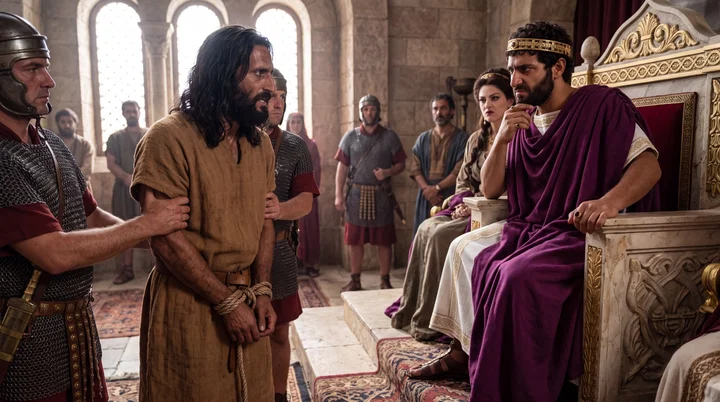
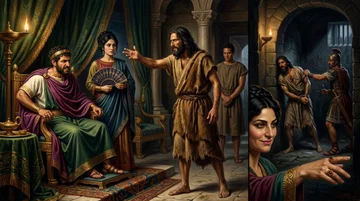
For John said to him, It is not lawful for you to have her.
King James Version, KJV Cambridge Paragraph Bible, Revised Version, American Standard Version
For John said unto him, It is not lawful for thee to have her.
For John had said to him, It is not lawful for thee to have her.
for John was saying to him, 'It is not lawful to thee to have her,'
For John said to him, It is not lawful for thee to have her.
for John had been saying to him, It is not allowed thee, to have her.
Berean Standard Bible, Majority Standard Bible
because John had been telling him, “ It is not lawful for you to have her.”
For John said to him, “ It is not lawful for you to have her.”
Because John had said to him, It is not right for you to have her.
For Iohn saide vnto him, It is not lawfull for thee to haue her.
Douay-Rheims (Challoner revision)
For John said to him: It is not lawful for thee to have her.
Pictures
Cross-references 20 of 21
- Mark 6:18
For John had said unto Herod, It is not lawful for thee to have thy brother’s wife.
John rebukes Herod for marrying his brother’s wife.
- Luke 3:19-20
But Herod the tetrarch, being reproved by him for Herodias his brother Philip’s wife, and for all the evils which Herod had done,
John rebukes Herod over Herodias, and Herod imprisons him.
- Leviticus 18:16
Thou shalt not uncover the nakedness of thy brother’s wife: it is thy brother’s nakedness.
Forbids taking a brother’s wife, the issue in John’s rebuke.
- Leviticus 20:21
And if a man shall take his brother’s wife, it is an unclean thing: he hath uncovered his brother’s nakedness; they shall be childless.
Both texts prohibit taking or marrying a brother’s wife.
- Matthew 14:10-12
And he sent, and beheaded John in the prison.
Records John’s execution and burial after his rebuke of Herod.
- Mark 6:16
But when Herod heard thereof, he said, It is John, whom I beheaded: he is risen from the dead.
Herod fears that John, whom he beheaded, has risen from the dead.
- Exodus 20:14
Thou shalt not commit adultery.
Herod’s conduct violated the prohibition against adultery.
- Mark 6:23-25
And he sware unto her, Whatsoever thou shalt ask of me, I will give it thee, unto the half of my kingdom.
same birthday demand for John's head
- Matthew 14:8
And she, being before instructed of her mother, said, Give me here John Baptist’s head in a charger.
Herodias sought revenge by requesting John’s head.
- Mark 6:20
For Herod feared John, knowing that he was a just man and an holy, and observed him; and when he heard him, he did many things, and heard him gladly.
same Herod's curiosity without love
- John 1:19-27
And this is the record of John, when the Jews sent priests and Levites from Jerusalem to ask him, Who art thou?
same John as humble witness
- Matthew 14:9
And the king was sorry: nevertheless for the oath’s sake, and them which sat with him at meat, he commanded it to be given her.
Herod honors his oath despite his unlawful union.
- Luke 9:7-9
Now Herod the tetrarch heard of all that was done by him: and he was perplexed, because that it was said of some, that John was risen from the dead;
parallel account of Herod and John
- Matthew 11:11
Verily I say unto you, Among them that are born of women there hath not risen a greater than John the Baptist: notwithstanding he that is least in the kingdom of heaven is greater than he.
Calls John exceptionally great among those born of women.
- Romans 7:2-3
For the woman which hath an husband is bound by the law to her husband so long as he liveth; but if the husband be dead, she is loosed from the law of her husband.
Explains that a wife is bound while her husband lives and free to marry after his death.
- Matthew 11:10
For this is he, of whom it is written, Behold, I send my messenger before thy face, which shall prepare thy way before thee.
Identifies John as the messenger sent to prepare the way.
- Luke 1:17
And he shall go before him in the spirit and power of Elias, to turn the hearts of the fathers to the children, and the disobedient to the wisdom of the just; to make ready a people prepared for the Lord.
Foretells John’s ministry in the spirit and power of Elijah.
- Luke 3:1
Now in the fifteenth year of the reign of Tiberius Cæsar, Pontius Pilate being governor of Judæa, and Herod being tetrarch of Galilee, and his brother Philip tetrarch of Ituraea and of the region of Trachonitis, and Lysanias the tetrarch of Abilene,
Identifies Herod who imprisoned John.
- Luke 23:11
And Herod with his men of war set him at nought, and mocked him, and arrayed him in a gorgeous robe, and sent him again to Pilate.
Herod mocked Jesus.
- Matthew 3:3
For this is he that was spoken of by the prophet Esaias, saying, The voice of one crying in the wilderness, Prepare ye the way of the Lord, make his paths straight.
Describes John’s message and mission.
Commentary
Each commentary is drawn from primary sources: the writings of Ellen G. White and Adventist pioneers and periodicals. Each commentary is separate. Its own words are not a quotation; follow the references to read the source passages.
Ellen G. White
35 sources
John told Herod Antipas to his face, plainly and repeatedly, that keeping Herodias, his brother Philip's wife, was sinful and contrary to God's law.STDA 214DA 214.1STRH Sep 11, 1913 The wrong was under God's statutes, not human law, in taking his brother's wife while her husband was still living.Ms 121c, 1898, par. 11–12Lt 19a, 1897, par. 8–102SP 69.2 He warned Herod of coming judgment according to deeds and taught that Herod could have no part in the Messiah's kingdom unless he broke off the union and obeyed God's commandments fully.Ms 121c, 1898, par. 11–12Lt 19a, 1897, par. 8–102SP 69.2 The reproof laid bare the king's sin and struck terror into his guilty conscience, so that Herod feared and honored John as a true prophet and wished to release him, while Herodias resented the rebuke and by her revenge drove Herod to imprison John and put him to death.DA 214.12SP 70.22SP 76.1–77.1RH Mar 11, 1873 John's bold message at the cost of his life shows that God's messengers must faithfully reprove sin even before a king rather than suppress truth to please men.RH Sep 11, 1913Lt 107, 1897, par. 4–5STB 377.2
The Unlawful Marriage
John told Herod Antipas that having Herodias, his brother Philip's wife, was unlawful and sinful.STDA 214DA 214.1ST Nov 2, 1882GW 149.2–150.1 The unlawfulness was under God's law and statutes, not human or Roman law.Ms 121c, 1898, par. 11–12Lt 19a, 1897, par. 8–102SP 69.2 It specifically condemned marrying his brother's wife while her husband was still alive and still living.EW 124.3–125.1LC1 44.3SG1 29.2–30.1
John appealed to divine statutes and to God's law rather than human laws.Ms 121c, 1898, par. 11–12Lt 19a, 1897, par. 8–10 He warned Herod of future judgment, when God would judge each person according to deeds or works.Ms 121c, 1898, par. 11–12Lt 19a, 1897, par. 8–10 He taught that Herod could not share in the Messiah's kingdom unless he broke away from the relationship and ended it.2SP 69.2ST Mar 1, 1883ST Nov 1, 1877RH Mar 4, 1873 That breaking away had to be joined with obeying God's commandments wholeheartedly.2SP 69.2ST Mar 1, 1883ST Nov 1, 1877RH Mar 4, 1873
John spoke the rebuke directly to Herod's face and told him the truth to his face.RH Sep 11, 1913RH Mar 11, 1873RH Nov 1, 1906 He spoke plainly and repeatedly, reproving the unlawful life with Herodias.STRH Sep 11, 1913RH Mar 11, 1873 In doing so he made known to Herod the secrets of his heart and life.RH Mar 11, 1873
Herod was at first inclined to follow John's counsel.2SP 70.1 He told Herodias he could not marry her in defiance of that law.2SP 70.1 But he chose sinful pleasure over obedience and married her anyway despite the rebuke.2SP 70.1EW 124.3–125.1LC1 44.3 He refused to give up the marriage, and under her influence John was imprisoned.EW 124.3–125.1LC1 44.3SG1 29.2–30.1
Rebuke, Death, and Example
John's truthful reproof laid open the king's sin and struck terror into his guilty conscience, laying bare the secrets of his heart and life.2SP 70.22SP 76.1–77.1RH Mar 11, 1873 Herod honored and feared John as a true prophet of God, was convicted by the truth and came very near to becoming his disciple, and intended to release him from prison.2SP 70.22SP 76.1–77.1RH Mar 11, 1873ST Jul 11, 1878 He kept putting off the release from time to time through fear of displeasing Herodias.2SP 70.22SP 76.1–77.1RH Mar 11, 1873
Herodias resented the rebuke against their unlawful life, feared that John's remonstrances might prevail with Herod, and in revenge determined that John should be put to death.DA 214.12SP 70.22SP 76.1–77.1STRH Mar 11, 1873 Under her influence and determination Herod refused to give up the marriage, imprisoned John for his faithful condemnation of the immoral alliance, and later put him to death to satisfy her revenge.DA 214.12SP 76.1–77.13SP 135.1SG1 29.2–30.11RED 44.3 At the point of decision Herod turned away from light into darkness and fell into Satan's snare.3SP 135.1ST Jul 11, 18785RED 55.1
Guilt over John's prophetic witness and death left Herod fearful and troubled, feeling keen remorse afterward.ST3SP 135.1ST Jul 11, 1878 As he continued in sin his conscience and moral sense grew dull and less sensitive, his licentious life degraded his moral perceptions and judgment until his sins seemed trifles.3SP 135.1ST Jul 11, 18785RED 55.1 The fading of remorse shows that those once convicted who turn from light become capable of the worst crimes, and Herod later even boasted to Jesus of the punishment he had inflicted on John for that reproof.ST Jul 11, 18785RED 55.13SP 136.1–2
John's martyrdom followed a feast where intemperance left men in authority unable to exercise sound judgment and silent as his death was decided.COS 144.2–32SP 80.1 Debased with wine in revelry and entrapped by his promise after the captivating dance of Herodias' daughter, Herod gave Herodias occasion to demand John's death.STMs 107, 1893, par. 1 He wrongly treated keeping the oath as binding and chose the real guilt of murder over the supposed guilt of perjury, ordering John's beheading and having his bleeding head brought in before his guests, a horror he could not shut from his sight.STMs 107, 1893, par. 1 The event warns against intemperance and calls for Christian temperance.COS 144.2–32SP 80.1
Herodias was still living with Herod as his unlawful wife a year after John's death, when he brought her with him to observe the annual Passover as a Jew.Ms 107, 1893, par. 1 Herod Antipas, who murdered John, was Agrippa's great-uncle.SLP 255.2
The account belongs to John's violent death, which Jesus had power to prevent by revealing Himself in His true character and asserting His authority as king to save John, yet He did not save him.DA 380.1–2 The disciples, blinded by love of honor, impatient under reproach as followers of a false prophet, and eager to see Jesus exalted and their own way made less painful, stumbled over this.DA 380.1–2 With unbelief taking possession of their minds and hearts they were brought into great spiritual darkness and questioned whether Jesus was an impostor as the Pharisees asserted.DA 380.1–2
John's pointed, bold, fearless and plain message was spoken directly to a ruler at danger to his life and ultimately cost his life.RH Sep 11, 1913Lt 107, 1897, par. 4–5STB 377.2RH Nov 1, 19068T 332.3 His example shows that God's messengers must faithfully confront wrongdoing and speak God's word even to a king, reproving sin rather than suppressing truth to please people.RH Sep 11, 1913STB 377.2RH Nov 1, 19068T 332.3 Such a message warns people so they will not be deceived, and God's testimony must be given whether they heed it or refuse it, though those who reprove wrongdoing may be hated.RH Sep 11, 1913Lt 107, 1897, par. 4–5STB 55.4
Sources
Pioneers and periodicals
78 sources
John told Herod Antipas to his face that keeping Herodias was against God's law, because she was the living wife of his brother Philip and Herod had taken her while putting away his own lawful wife.ST Mar 2, 1904ST Dec 24, 1894RH Sep 28, 1916ST Mar 2, 1904ST Feb 7, 1911 The union was adultery and unlawful marriage forbidden in Leviticus 18:16 and 20:21, not the permitted marriage to a brother's widow after death.RH Nov 12, 1861RH Oct 16, 1860RH Sep 30, 1862 His rebuke was a call to repent, break with the sin and seek God's kingdom, given to save Herod and prepare his heart for the Coming One.ST Mar 1, 1883ST Dec 15, 1887ST Feb 10, 1898ST Mar 2, 1904ST Mar 2, 1904 He spoke plainly, boldly and repeatedly without fear of the king, as a herald of God and not as a political reformer.ST Dec 15, 1887ST Mar 2, 1904ST Mar 2, 1904RH Dec 17, 1903ST Nov 15, 1905 For that faithful reproof Herod seized and imprisoned him at Herodias's plotting, and then beheaded him, making his death both martyrdom for truth and the enduring example of fearless witness though it cost life itself.ST Mar 2, 1904ST Mar 3, 1898ST Mar 16, 1904RH Oct 29, 1861RH May 11, 1869
People and Circumstances
The Herod of the saying is Herod Antipas the tetrarch, son of Herod the Great who sought to kill Jesus in infancy, and distinct from his nephew Herod Agrippa.RH Nov 12, 1861ST May 7, 1902 He was inquisitive about the truth without loving it, crafty and superstitious, and later mocked Jesus in His last sufferings.RH Nov 12, 1861 Herodias was the legal wife of his brother Herod Philip, and Herod took her in mad infatuation as his guilty paramour while abandoning his own lawful wife.ST Mar 2, 1904ST Jun 6, 1900ST Dec 24, 1894 That lawful wife was the daughter of Aretas king of Arabia, who fled to her father for redress when Herod took Herodias.ST Feb 7, 1911ST Dec 24, 1894RH Sep 30, 1862
John's rebuke belonged to his preaching in the wilderness of Judea before vast crowds of prince and commoner alike, which Herod himself attended with reverence.ST Feb 7, 1911 He was a good man who urged the Jews to live righteously and piously and to come to his water baptism.RH Sep 5, 1865 His proud heart was pricked over his sins as he bowed his haughty neck to the humble prophet, and John's words about the unlawful union kept ringing in his ears afterward.ST Feb 7, 1911 For that rebuke Herod laid hold on John and bound him and put him in prison for Herodias's sake.ST Mar 2, 1904ST Mar 3, 1898ST Mar 3, 1898
Herodias treated John as her enemy and manipulated Herod into imprisoning him, falsely accusing him of association with robbers and claiming the imprisonment would protect the people.ST Aug 2, 1910 John's reproof of Herodias for her sins made her hatred grow as she waited for an opportunity to act against him.ST Sep 6, 1910 He was jailed in Tiberias to satisfy her revenge, held in a cell near Herod's palace.ST Aug 2, 1910ST Sep 6, 1910 It was a long confinement known throughout all Galilee and Judea.ST Sep 27, 1910
The rebuke and imprisonment belong to the third year of the ministry of Jesus while Jesus was at Galilee with His disciples, after John had been imprisoned one year, leading to John's martyrdom at age thirty-three.ST Mar 3, 1898 That martyrdom took place in the fortress of Machaerus on the borders of Arabia where Herod's birthday feast was held.ST Mar 3, 1898 Machaerus was a very high rocky hilltop fortress surrounded by deep valleys, built by Alexander Janneus and strengthened by Herod the Great with fortified walls, beautiful palaces, implements of warfare, and reservoirs of water beside natural hot and cold fountains. In Matthew the saying belongs to the account of John's imprisonment and death in Matthew 14:1-21 and 14:3-10, which also contains the feeding of the five thousand, and Jesus had just heard of John's death before withdrawing with His disciples to a quiet place.ST Nov 2, 1882ST Feb 15, 1905ST Jan 20, 1909
Sense of Not Lawful
It was not lawful for Herod to have Herodias because the union violated God's law; he had no right to take his brother Philip's wife.ST Dec 24, 1894RH Sep 28, 1916ST Mar 2, 1904RH Mar 3, 1904 The rebuke declared that taking his brother's wife was unlawful under that law.RH Sep 28, 1916ST Mar 2, 1904RH Mar 3, 1904
The wrong was adultery and unlawful incestuous marriage, breaking the seventh commandment, because Herod took his brother Philip's wife while his brother was still alive.RH Nov 12, 1861RH Sep 30, 1862ST Jan 2, 1893RH Mar 10, 1868ST Apr 28, 1898 It was not marriage to a brother's widow after death, but living in incest as forbidden in Leviticus 18:16 and 20:21.RH Oct 16, 1860RH Sep 30, 1862ST Jan 2, 1893 Herod was scrupulous about keeping an oath as if that excused his other sin, while still living in that incest.RH Oct 16, 1860
His conduct was dissolute and debauched, living in adultery with a guilty paramour.ST Aug 2, 1910ST Jun 6, 1900ST Apr 28, 1898 He had abandoned his own lawful wife and taken Herodias in mad infatuation.ST Jun 6, 1900ST Dec 24, 1894 Herodias was the legal and lawful wife of Herod Philip.ST Jun 6, 1900ST Apr 28, 1898
John by this word brought Herod face to face with God's law.ST Nov 1, 1877RH Mar 4, 1873ST Dec 15, 1887 He taught that Herod could not enter or share in the Messiah's kingdom while clinging to that relationship.ST Mar 1, 1883ST Nov 1, 1877RH Mar 4, 1873ST Dec 15, 1887 He had to break with it and obey God's commandments wholeheartedly.ST Mar 1, 1883ST Nov 1, 1877RH Mar 4, 1873ST Dec 15, 1887
The rebuke was a warning of judgment calling Herod to reform and to seek God's kingdom and righteousness.ST Feb 10, 1898ST Dec 15, 1887 It was part of preaching repentance and the work of a messenger of mercy, spoken plainly so that the king like everyone else could understand his true condition and prepare his heart for the Lord.ST Mar 2, 1904ST Mar 2, 1904 It was given to lead toward God and to save, not merely to condemn, and accepting that saving truth could have saved Herod.ST Feb 10, 1898ST Mar 2, 1904ST Apr 28, 1898 Though the warning called Herod to reform, Herodias's revenge led to murder, yet the death did not silence the teaching, which continued to influence people through later generations.ST Dec 15, 1887
John's Bold Rebuke
John told Herod to his face that it was not lawful under God's law for him to have Herodias, speaking plainly, openly, boldly, courageously and fearlessly even though Herod was a powerful king on his throne.ST Dec 15, 1887ST Mar 2, 1904RH Dec 17, 1903ST Apr 20, 1882 The rebuke was repeated, not a single word, declaring again and again that the union was unlawful.ST His truthful reproof exposed guilt and struck terror into conscience.ST Dec 15, 1887
He reproved plainly but kindly, speaking from conscience about what was right regardless of danger.RH Mar 2, 1905RH Dec 22, 1868 In doing so he made known the secrets of Herod's heart and life.RH Mar 11, 1873 The rebuke confronted a particular sin directly, applying God's law boldly to sin in high places and laying open guilt.RH May 11, 1869RH Jul 9, 1867ST Oct 2, 1893
That confrontation belonged to his God-given work as herald of the King and messenger of mercy.ST Mar 2, 1904ST Mar 2, 1904 He preached repentance so that all hearers, including the king, could understand their true condition and prepare their hearts for the Lord and the Coming One.ST Mar 2, 1904ST Mar 2, 1904ST Jun 6, 1900 He urged righteous and pious living, reproving, rebuking and warning Israel to make ready the way.RH Sep 5, 1865ST Jun 6, 1900
He worked as a religious reformer, not a social or political reformer.ST Nov 15, 1905 His word to Herod was not an appeal to reform the laws but a personal admonition to put away sin and repent because the kingdom of God was at hand.ST Nov 15, 1905ST Dec 11, 1901 Spiritual repentance comes first, and all other necessary reforms follow from it, and such Christian duty in obedience to God is Christianity, not politics.ST Nov 15, 1905ST Dec 11, 1901
He did not avoid condemning adultery in order to preserve his freedom to preach, though his preaching was stopped when he lost his head.RH Nov 25, 1858 He did not change the message from fear or from desire to please powerful people.ST Dec 4, 1884 Freedom from dependence on Herod's court enabled him to speak plainly against the ruler's sin.ST Feb 22, 1883 Meekness did not make him vacillating, weak, yielding to public opinion or expediency, or timid in doing right, but gave greatest strength of character, for one who has looked upon God and seen the Majesty of Heaven does not fear man or quail before a king in telling him what is right.ST Feb 11, 1897
Arrest, Imprisonment and Death
For that rebuke Herod seized John, bound him, and put him in prison for Herodias's sake, and the rebuke that brought him trouble ultimately led to his death.ST Mar 2, 1904ST Mar 3, 1898ST Mar 3, 1898ST Dec 26, 1892 The imprisonment followed John's direct confrontation of Herod to his face over taking his brother Philip's wife in an unlawful marriage.ST Mar 3, 1898ST Mar 3, 1898
Herodias treated John as her enemy for reproving Herod for having no right to take her, opposed him, and sought his death.ST Dec 24, 1894ST Aug 2, 1910ST Sep 6, 1910 She resented his remonstrances, feared they might prevail, and in lasting anger at his reproof of her sins plotted his death and waited for opportunity to act.STST Sep 6, 1910ST Sep 6, 1910 She manipulated Herod into imprisoning him in a cell near the palace at Tiberias to satisfy revenge, falsely accusing him of association with robbers and claiming the imprisonment would protect the people.ST Aug 2, 1910ST Sep 6, 1910 She treated his public rebuke as a deadly threat to her safety and reputation, resolved he should die, and used her daughter's dancing and promised rewards and influence over Herod to obtain it.ST Sep 6, 1910ST Sep 6, 1910
John was held alone in a cell until Herod at his banquet commanded the soldier Rufas to go to the cell and bring his head on a charger taken from the banquet table, which Rufas did after hesitating in astonishment while the guests looked on, some horrified as if awakening from drunken stupidity.ST Sep 13, 1910 His death is a ghastly tragedy at the close of the feast in a house of blood, with a righteous prophet cut off amid the intemperance and failed judgment of people in authority at the birthday feast.ST Sep 13, 1910ST Sep 13, 1910ST Dec 15, 1887
Herod lived in incest with Herodias yet was scrupulous about keeping his oath to the dancer, treating that concern as if it excused his other sin.RH Oct 16, 1860 He wrongly treated keeping the oath as binding and chose the real guilt of murder over the supposed guilt of perjury, and her resentment gave her the occasion through that oath to demand John's death.STRH Oct 16, 1860
John was beheaded because he rebuked Herod for this wrongdoing, suffering martyrdom for faithfully proclaiming truth and for preaching saving truth that could have saved Herod.ST Mar 16, 1904ST Apr 28, 1898RH Mar 3, 1904 His plain rebuke of Herod's particular sin and faithful reproof of a ruler cost him his life.RH May 11, 1869RH Nov 11, 1858 He remained faithful and calm even when he was killed, and his faithfulness won his Master's approval, which is the chief object of life.ST Mar 16, 1904ST Sep 27, 1910
His imprisonment and beheading were not defeats but victories of faith and success in God's sight, with victory through duty and love of what is pure, good, and true rather than through earthly triumph.RH Sep 15, 1904ST Dec 2, 1889ST Feb 4, 1913 His suffering for Christ and for truth was an honor bringing a reward outweighing earthly loss and enduring through eternity.STRH Sep 15, 1904 His warning had called Herod to reform, but Herodias's revenge led to murder, yet his death did not silence his teaching, which continued to influence people and endure through later generations.ST Dec 15, 1887
His death presaged Jesus' own suffering and death. His work prepared the way for Christ's ministry, continued till the work of Jesus was well established, and then came to an end.ST Mar 10, 1898
The account of his martyrdom is also a lesson on temperance and the folly of making rash vows.ST Mar 10, 1898 The reference to Salome's dance places dancing alongside Herodias and the events that led to John's death.ST Apr 28, 1909
Herod's Conscience and Guilt
John's truthful telling that the union with Herodias was unlawful laid Herod's guilt bare before him, pricking his proud heart and striking terror into his guilty conscience, and the words kept ringing in his ears afterward.RH Mar 11, 1873ST Dec 15, 1887ST Feb 7, 1911 He made known the secrets of Herod's heart and life, so that the haughty king bowed his neck before the humble prophet.RH Mar 11, 1873ST Feb 7, 1911 For that reason Herod honored and feared John as a true prophet of God.RH Mar 11, 1873ST Dec 15, 1887
Though he kept John in prison, Herod designed to release him, yet delayed from time to time through fear of displeasing Herodias.RH Mar 11, 1873 He was also troubled in conscience and reluctant to imprison or punish John because he feared the people.RH Mar 11, 1873ST Aug 2, 1910 Herod was convicted by the Spirit of truth and came very near to becoming John's disciple, but at the point of decision he turned away from light into darkness and fell into Satan's snare.ST Jul 11, 1878 His licentious life had degraded his moral perceptions until his sins seemed trifles.ST Jul 11, 1878
He treated the reproof as a threat to his peace, whereas had he humbled himself and repented as David did when reproved, it could have brought him peace instead of distress.RH Dec 22, 1868 A particular cherished sin for which reproof cannot be borne deceives the soul, and joyful feelings are no proof of conversion while that sin remains.ST Oct 2, 1893 John's prophetic witness lived on in Herod's memory after the death, leaving him fearful and troubled, with the peace of his bosom gone forever.STST Sep 13, 1910 He feared John would rise from the dead to condemn him, and though he felt keen remorse afterward it faded, for silencing the prophet did not remove the truth of the rebuke.ST Jul 11, 1878ST Nov 2, 1882ST Sep 13, 1910
John lost his head because Herod had lost his judgment through a woman.ST Mar 8, 1899 Rejecting conviction to kill a known prophet shows that those once convicted who turn from light become capable of the worst crimes.ST Jul 11, 1878 This Herod, son of Herod the Great who sought to kill Jesus in infancy and distinct from his nephew Herod Agrippa, was inquisitive about the truth without loving it, crafty and superstitious, and later mocked Jesus in His last sufferings.RH Nov 12, 1861
Elijah Type and Mission
John was prepared in the wilderness as Elijah had been prepared, and was sent by God to reprove, rebuke and warn Israel so as to prepare them for the Coming One.ST Jun 6, 1900 His bold reproof of Herod Antipas, a professed Jew given to pleasure and debauchery, for his mad infatuation with his guilty paramour Herodias, the legal wife of Herod Philip, belonged to that God-sent work.ST Jun 6, 1900 Ruler and people were as guilty before God as Ahab and his subjects of old, and Herodias possessed all the malignity of Jezebel if not her brilliancy and intellect.ST Jun 6, 1900 The backslidden people, the weak wicked king, the crafty scheming ambitious woman, the bold prophet with his soul-stirring message, and the persecution that followed reproduce the Elijah type of nine hundred years before Christ in the days just preceding the first advent of the Lord.ST Jun 6, 1900
Many heard John, from enslaved soldier to King Herod, and conscience was aroused, but few heeded.ST Jun 6, 1900 Because of his message of reproof Herod's Jezebel put John to death.ST Jun 6, 1900 His stand against Herod, like Elijah's stand against Baal or sun-worship and Jezebel, was a mighty heralding of Christ's impending coming indicated by prophecy, calling Herod as nominal local ruler bewitched by Herodias, a low designing woman, with all others to repent, turn to obedience to God, and thus prepare for Christ.ST Aug 7, 1901 By such preparation even then destruction of people and city could have been averted, and that stand typifies the work and character of God's servants in the last days.ST Aug 7, 1901 Yet John being slain for rebuking sin shows his career ended in eclipse, in contrast to Elijah who was translated without seeing death and whose career ended gloriously, showing John and his times did not meet all the requirements of the type in Elijah.ST Aug 7, 1901
Example for Faithful Witness
John stands as an example of faithfulness in constantly speaking the truth, boldly rebuking vice, and patiently suffering for the truth's sake, an example to be observed and followed.RH Oct 29, 1861RH Mar 2, 1905RH Nov 11, 1858 In telling Herod that taking his brother Philip's wife was unlawful, he spoke from conscience about what was right regardless of danger, and his beheading made him a model of courageous fidelity to duty.RH Oct 29, 1861RH Mar 2, 1905RH Nov 11, 1858 His faithful rebuke of the king for sin cost him his life.RH Mar 2, 1905RH Nov 11, 1858 In openly declaring the relationship with Herodias unlawful he was doing his God-given work as herald of the King, and his refusal to conform to wrongdoing had divine approval even though it led to imprisonment and death.RH Oct 29, 1861RH Mar 2, 1905
His fearless warning to a king despite danger to his life exemplifies the direct and faithful message that must be given when sin is being tolerated.RH Sep 11, 1913ST Apr 20, 1882RH Dec 8, 1904 That plain declaration that living with his brother's wife was unlawful provoked anger and ultimately cost him his life, yet it shows preaching must not change the message from fear or desire to please powerful people.RH Sep 11, 1913ST Apr 20, 1882RH Dec 8, 1904ST Dec 4, 1884 Loyalty to God and truth may cost a person life, position, or friends.ST Dec 4, 1884ST Sep 8, 1898ST Feb 1, 1905 Adherence to the message given him led to imprisonment and the loss of his head, teaching that proclaiming the gospel may bring serious consequences, including imprisonment and death, but faithful service must not shrink from them.ST Apr 20, 1882ST Sep 8, 1898ST Feb 1, 1905
His suffering martyrdom for faithfully proclaiming that Herod's marriage to Herodias was unlawful won his Master's approval, which is the chief object of life.ST Mar 16, 1904ST Sep 8, 1898 Heeding the warning was costly because the marriage was unlawful, showing that loyalty to God and truth may cost everything.ST Mar 16, 1904ST Sep 8, 1898 True success is faithfulness to duty even at such cost.ST Mar 16, 1904ST Sep 8, 1898 His courageous proclamation of God's truth to Herod faced the hatred of Herodias, who sought his death and dishonored his severed head, showing that courageous proclamation faces such hatred.
The account of the beheading presents John as a hero who gave his life for his Master. Its frightening details are unsuitable for very young children.
Sources