Matthew 20:14
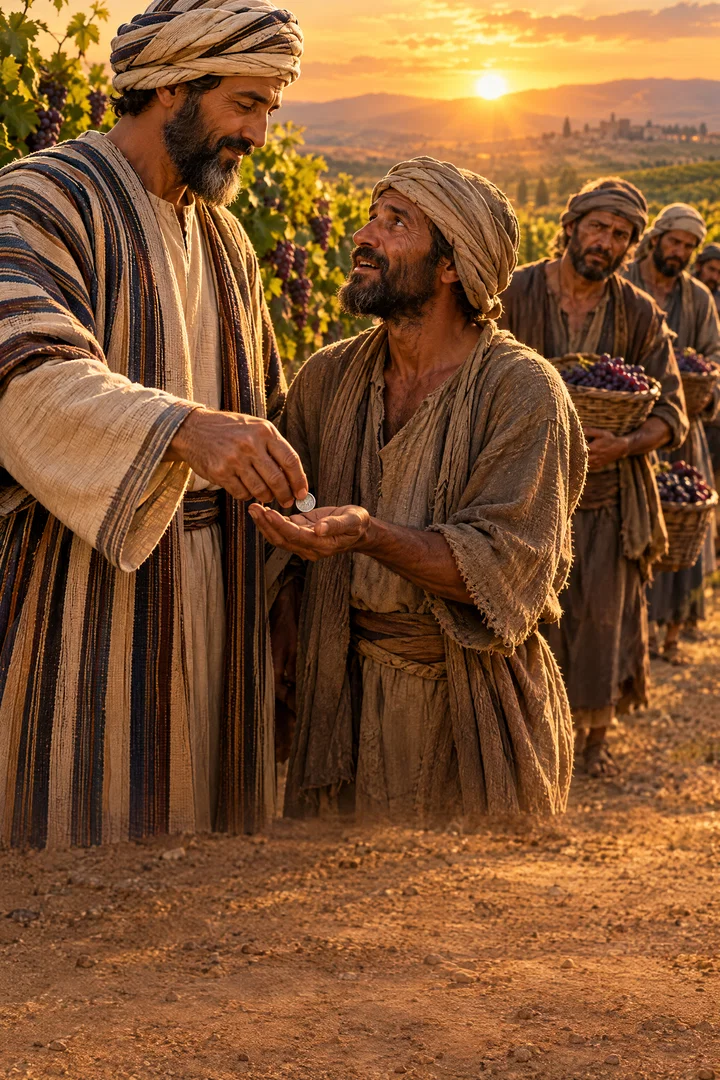
Take that thine is, and go thy way: I will give unto this last, even as unto thee.
Translations
Take that your is, and go your way: I will give to this last, even as to you.
King James Version, KJV Cambridge Paragraph Bible
Take that thine is, and go thy way: I will give unto this last, even as unto thee.
Take that which is thine, and depart: I will give to this last, even as to thee.
Revised Version, American Standard Version
Take up that which is thine, and go thy way; it is my will to give unto this last, even as unto thee.
take that which is thine, and go; and I will to give to this, the last, also as to thee;
Take what is thine and go. But it is my will to give to this last even as to thee:
Take thine own, and go thy way; but I please, unto this last, to give, as also to thee:
Berean Standard Bible, Majority Standard Bible
Take your pay and go. I want to give this last man the same as I gave you.
Take that which is yours, and go your way. It is my desire to give to this last just as much as to you.
Take what is yours, and go away; it is my pleasure to give to this last, even as to you.
Take that which is thine owne, and go thy way: I will giue vnto this last, as much as to thee.
Douay-Rheims (Challoner revision)
Take what is thine, and go thy way: I will also give to this last even as to thee.
Pictures
Cross-references
- Matthew 20:6-7
And about the eleventh hour he went out, and found others standing idle, and saith unto them, Why stand ye here all the day idle?
The eleventh-hour laborers are called to work in the vineyard.
- Matthew 19:30
But many that are first shall be last; and the last shall be first.
The first-last reversal introduces the parable’s late workers being accounted first.
- Mark 10:29-31
And Jesus answered and said, Verily I say unto you, There is no man that hath left house, or brethren, or sisters, or father, or mother, or wife, or children, or lands, for my sake, and the gospel’s,
Jesus promises reward to those who forsake things for his sake, then says the first will be last.
- Matthew 19:16-22
And, behold, one came and said unto him, Good Master, what good thing shall I do, that I may have eternal life?
The parable follows the rich young man’s refusal to give up his possessions.
- Matthew 19:27-29
Then answered Peter and said unto him, Behold, we have forsaken all, and followed thee; what shall we have therefore?
Jesus promises reward to those who leave everything to follow him.
- Matthew 20:2
And when he had agreed with the labourers for a penny a day, he sent them into his vineyard.
The first laborers agreed to the same daily wage later given to the last.
- Romans 4:5
But to him that worketh not, but believeth on him that justifieth the ungodly, his faith is counted for righteousness.
The reward is given by grace, not earned as payment for works.
- Matthew 20:8
So when even was come, the lord of the vineyard saith unto his steward, Call the labourers, and give them their hire, beginning from the last unto the first.
The passage calls God the Lord of the vineyard.
- Matthew 20:1
For the kingdom of heaven is like unto a man that is an householder, which went out early in the morning to hire labourers into his vineyard.
The verse is part of the parable about workers in the vineyard.
- Matthew 20:4
And said unto them; Go ye also into the vineyard, and whatsoever is right I will give you. And they went their way.
Later workers trusted the master to give them what was right.
- Matthew 20:6
And about the eleventh hour he went out, and found others standing idle, and saith unto them, Why stand ye here all the day idle?
The question to idle people in the marketplace is applied to the busy world.
- Luke 15:28-32
And he was angry, and would not go in: therefore came his father out, and intreated him.
The elder brother’s resentment reflects an entitled, self-righteous attitude toward grace.
- Revelation 22:12
And, behold, I come quickly; and my reward is with me, to give every man according as his work shall be.
Christ gives each person a reward according to their work.
- Luke 14:16-23
Then said he unto him, A certain man made a great supper, and bade many:
Both invite unexpected people to share in the master's provision.
Commentary
Each commentary is drawn from primary sources: the writings of Ellen G. White and Adventist pioneers and periodicals. Each commentary is separate. Its own words are not a quotation; follow the references to read the source passages.
Ellen G. White
86 sources
The householder tells the first-hired workers to take the wage they agreed to for the day and go their way, asserting his right to do what he will with what is his and to give to the last hired even as to the first, which does them no wrong since they receive in full what was promised.9T 73.3–74.1Ms 19, 1897, par. 38–41Ms 23, 1908, par. 33–36 His reward is a free gift of grace and liberality, not a debt earned by works or claimable as a right, and it is not measured by length of labor, hardship, or amount accomplished, but by the spirit of faith, love, and trust brought to the work.9T 73.3–74.1COL 390.1RH Jul 31, 1900COL 396.3–397.1RH Aug 13, 1908 The complaint against his goodness rebukes a grasping, mercenary spirit that bargains for a fixed sum, expects greater honor for long service, and turns envious and jealous when others are made equal.9T 73.3–74.1Ms 19, 1897, par. 38–41Ms 87, 1899, par. 1–3COL 390.1RH Jul 24, 1900 In contrast the last workers trusted him to do what was right without fixing a sum, and they illustrate the penitent sinner who comes late in humble faith, expects little, is thankful simply to be accepted, and is greatly surprised to receive a full day's wage he knows he has not earned.RH Jul 24, 1900RH Jul 24, 1900RH Jul 24, 1900Ms 87, 1899, par. 11–12Ms 87, 1899, par. 15 Those called late may through grace be accounted first and receive the chosen reward, while those who stipulate their own wages and exalt themselves fix their own destiny and are found last.10MR 170.2–3Lt 36, 1895, par. 30–32Lt 123, 1897, par. 24–28
The Householder's Settlement
The word is a dismissal to the workers hired first, bidding them take the wage agreed for the day and go their way, with exactly what was promised put into their hands.9T 73.3–74.1Ms 19, 1897, par. 38–41Ms 23, 1908, par. 33–36Ms 87, 1899, par. 1–3Ms 87, 1899, par. 4–5 The householder keeps his agreement and honors the settled sum while he freely gives the same amount to those hired last.9T 73.3–74.1Ms 19, 1897, par. 38–41Ms 23, 1908, par. 33–36Ms 87, 1899, par. 1–3RH Jul 24, 1900 In the same breath he asserts his own right to do what he will with what is his, to use his own as he chooses and to give to the last hired even as to the first.9T 73.3–74.1Ms 19, 1897, par. 38–41Ms 87, 1899, par. 1–3Ms 87, 1899, par. 4–5RH Jul 24, 1900
To pay the last in full does the first no wrong and is no injustice, since they receive the agreed wage in full and the settled penny is not made unjust by generosity to another.9T 73.3–74.1Ms 23, 1908, par. 33–36Ms 87, 1899, par. 1–3RH Jul 24, 1900RH Aug 13, 1908 Their complaint that the late workers were made equal only exposes resentment at equal treatment and envy of his goodness.9T 73.3–74.1Ms 87, 1899, par. 1–3RH Jul 24, 1900 The same liberality is to be shown in making Christian books available at low prices on special occasions, that more may receive their light.Ms 23, 1908, par. 33–36
The contrast turns on the bargain: the first stipulated a fixed penny, while the last agreed to no set sum but trusted the owner to do what was right and just, leaving payment in his hands without asking how much it would be.RH Jul 24, 1900RH Jul 24, 1900Ms 87, 1899, par. 15Ms 87, 1899, par. 8–9Ms 29, 1911, par. 67 They trusted his promise of a just wage and brought faith and loving trust into the work, and for that spirit they were placed first, whereas those who labored all day would have remained first had they served in the same trust instead of bargaining as though the Master would deal unfairly.RH Jul 24, 1900RH Jul 24, 1900Ms 29, 1911, par. 67 Their reward is therefore measured by his generous purpose and not by hours worked, amount accomplished, or visible results, though this seems unfair by human reckoning.RH Jul 24, 1900Ms 87, 1899, par. 8–9Ms 29, 1911, par. 67
Those called late had not been available to refuse the morning call, so their receiving the same reward does not excuse any who refuse the call or who merely agree with truth without obeying it.RH Jul 31, 1900 Nor does lifelong service give ground to claim greater reward, for self-exaltation can make those who might have been first last.RH Jul 31, 1900 The saying belongs to the parable of the householder.Ms 184, 1898, par. 6
Reward by Grace Alone
The householder pays the first exactly what was agreed and freely gives the last the same, doing the first no wrong, and their complaint only exposes envy at his generosity.9T 73.3–74.1COL 396.3–397.1COL 399.2–4 The parable sets right principles against treating divine favor and the righteous reward as earned by works, for the reward rests on generous purpose rather than human merit.COL 390.1COL 396.3–397.1COL 401.2–402.1 Keeping the agreed wage for the first while giving the same to the last is not unfair, because length or hardship of service earns nothing and resentment of generosity reveals a grudging spirit.COL 399.2–4COL 399.5–401.1 Long service, hardship, and sacrifice give no title to preference or honor above others, since service is a privilege rather than a basis for pride or a claim on God.COL 399.5–401.1COL 401.2–402.1 No one can claim the gift as a right or boast over another, but all are saved by grace alone and those who receive it should welcome others receiving the same.COL 399.5–401.1COL 401.2–402.1
Its value is measured by the spirit in which it is done, not simply by how long a person has labored.9T 73.3–74.1RH Aug 13, 19089T 74.2 Claiming a greater reward for lifelong service is warned against, for God regards the spirit of the work, and self-exaltation can make those who might have been first last.RH Jul 31, 1900RH Aug 13, 1908 The last trusted the promise to do what was right and just, bringing faith into the work, and they were placed first; those who worked all day would have remained first if they had served with loving trust instead of bargaining for a fixed reward.RH Jul 24, 1900RH Jul 24, 1900 Christ does not measure service by amount of labor or visible results but by the spirit of faith and love brought to it.9T 73.3–74.1RH Jul 24, 19009T 74.2 The late-called had not been available to refuse the morning call, so equal pay for them does not excuse those who refuse the call or merely agree with truth without obeying it.RH Jul 31, 1900
God's reward is governed by his goodness and sovereign generosity, not by comparisons of how long or how hard others have served.RH Jul 24, 1900COL 396.1–2 His treatment of servants follows the principles of his kingdom rather than human expectations of equal pay for equal hours or human standards and opinions.RH Jul 24, 1900RH Jul 24, 1900 What seems unfair by human reckoning reflects that his ways and thoughts are higher, for he does not measure by hours worked or visible results but by the spirit brought to the work.RH Jul 24, 1900Ms 87, 1899, par. 8–9 Servants are not to treat work as a claim to reward proportionate to labor or to compare themselves with others, since the master is free to give the last even as the first from generosity.RH Jul 24, 1900COL 396.1–2 The Lord himself determines each worker's reward according to the spirit and principles guiding it, so purity of motive and earnest desire to glorify him can bring the same reward to one who accomplishes less as to one who accomplishes more.Ms 87, 1899, par. 8–9Ms 72, 1902, par. 34
Even one who enters late and serves only a short time may receive generously according to gracious purpose rather than amount of work or personal merit.COL 397.2–398.1Ms 17, 1901, par. 21 The eleventh-hour workers are poor sinners who know their unworthiness, long neglected the vineyard, yet come thankful for a chance to work, glad to work at any price, asking no questions about reward and leaving payment with the employer in faith.Ms 87, 1899, par. 11–12COL 397.2–398.1 When they receive a full day's wage their time seems so short and the wages so large that they are greatly surprised, knowing they have not earned it, and the kindness in the employer's countenance fills them with gratitude and joy never forgotten.Ms 87, 1899, par. 11–12COL 397.2–398.1 Those brought in at the eleventh hour, if earnest, are accepted and used and receive the same payment as those who began earlier.Ms 17, 1901, par. 21Lt 123, 1897, par. 24–28 Even after time and talent have been spent selfishly, those who begin now can receive acceptance and eternal life, and late faithful ones given a place when those with greater light and opportunity turn away are rewarded for faithfulness and duty rather than length of service.Lt 123, 1897, par. 24–286T 304.2
Long service and hardship do not entitle anyone to a larger reward, as those who treated service as earning salvation and expected a set return for years of work wrongly did.RH Jul 31, 1900Ms 87, 1899, par. 16 Time, talents, and abilities are themselves entrusted by God, so service gives no ground for selfishly demanding more.RH Jul 31, 1900Ms 87, 1899, par. 16 Eternal life is his gift, given on condition of entire obedience.RH Jul 31, 1900
The Grasping Spirit Exposed
The command to take the agreed wage and go exposes a grasping, mercenary, hireling spirit that treats service as a bargain and tries to make terms with God.Ms 19, 1897, par. 38–41COL 390.1RH Jul 24, 1900Ms 87, 1899, par. 10 It rebukes entering His work only for remuneration, fixing a stated amount of work for a certain sum, and claiming favor and reward as something earned by works rather than received by free grace.COL 390.1RH Jul 24, 1900Ms 87, 1899, par. 10 Those who serve in this spirit think their work is of greater value than the work of those who come later, measure their labor as more worthy, and work only for the wages they hope to receive.RH Jul 24, 1900COL 399.5–401.1Ms 87, 1899, par. 10 Many professed believers still carry this spirit, believing long service, hardship, or sacrifice entitles them to preference and honor above others.COL 399.5–401.1Ms 87, 1899, par. 10 The answer that the master keeps his agreement while freely giving the same to the later-hired shows his generosity is no injustice, and he has full right to do what he will with what is his.Ms 19, 1897, par. 38–41Ms 87, 1899, par. 1–3
Resentment that the last are made equal and complaint against the householder's goodness reveal envy, jealousy, suspicion, distrust, selfishness, and resentment of another's fair reward.9T 73.3–74.1Ms 19, 1897, par. 38–41Ms 87, 1899, par. 1–3RH Jul 24, 1900COL 399.5–401.1 The first laborers receive exactly what they agreed to for a penny, yet their complaint exposes envy at generosity that does them no wrong.9T 73.3–74.1Ms 87, 1899, par. 1–3Ms 87, 1899, par. 4–5RH Jul 24, 1900 His liberality toward the last is presented not as ground for complaint but as reason the first should not resent them.Ms 87, 1899, par. 4–5RH Jul 24, 1900 Such grumbling treats God's goodness itself as an offense and shows a heart that needs to be changed and purified.Ms 29, 1911, par. 65Ms 87, 1899, par. 15
Expecting greater reward, honor, wages, or recognition for lifelong service reveals self-seeking that can make those who might have been first last.RH Jul 31, 1900RH Jul 31, 1900COL 399.5–401.1RH Jul 31, 1900 Self-exaltation, disparaging others, measuring one's service against theirs, and demanding a larger share because time, talents, and abilities seem greater in one's own eyes are condemned as unworthy motives.RH Jul 24, 1900RH Jul 31, 1900Ms 87, 1899, par. 10RH Jul 31, 1900 In God's estimation those who so value their own labor above another's are last, for eternal life is His gift on condition of entire obedience and time and ability are themselves entrusted by Him.RH Jul 31, 1900Ms 87, 1899, par. 10 The warning applies to those who refuse the call or merely agree with truth without obeying it, since the later-called had not been available to refuse the morning call.RH Jul 31, 1900 Service does not give ground for selfish demand, and length of labor does not make service worthy apart from the spirit in which it is done.RH Jul 31, 1900RH Jul 31, 1900RH Jul 31, 1900
Christ's servants are instead to trust the Master to deal fairly and rightly, serving in dependence on God rather than for praise, compensation, or self-advancement.RH Jul 24, 1900COL 397.2–398.1Ms 29, 1911, par. 65Ms 87, 1899, par. 15RH Jul 31, 1900 Like the last workers who agreed to no set sum and left payment in his hands, they are to bring faith, love, and loving trust into the work and meet His goodness with gratitude and joy rather than grumbling.RH Jul 24, 1900RH Jul 24, 1900COL 397.2–398.1 Those who worked all day would have remained first if they had served in that spirit instead of bargaining for a fixed reward.RH Jul 24, 1900 A purified, changed heart no longer sets its own value on its own labor or another's, but recognizes the householder's liberality and accepts his decision about reward.Ms 29, 1911, par. 65Ms 87, 1899, par. 15RH Jul 31, 1900Ms 87, 1899, par. 26–27
The Last Workers Welcomed
The last workers stand for the penitent sinner whom Christ accepts when he comes late in humble faith, knowing his unworthiness, expecting little, thankful simply to be accepted, and obedient to His commandments.RH Jul 24, 1900RH Jul 24, 1900Ms 87, 1899, par. 11–12COL 397.2–398.1 They trusted the householder's promise and brought faith into their work, and for that spirit they were placed first, for the Lord values the spirit of loving trust above bargaining for a fixed reward.RH Jul 24, 1900COL 397.2–398.1 The reward given them is graciously greater than their short service seems to merit, bestowed according to God's gracious purpose and not according to amount of work done or personal merit.RH Jul 24, 1900COL 397.2–398.1 Such kindness fills the undeserving worker with gratitude and joy that is never forgotten.Ms 87, 1899, par. 11–12COL 397.2–398.1
They are eleventh-hour workers who after long neglect come at last, thankful for a chance to work, glad to work at any price, leaving payment with the employer in faith and asking no questions about reward.Ms 87, 1899, par. 11–12 When they receive a full day's wage their time seems so short and their wages so large that they are greatly surprised, because they know they have not earned it.Ms 87, 1899, par. 11–12 The kindness in the employer's countenance goes to their hearts and fills them with thanksgiving and love toward the one who accepted them.Ms 87, 1899, par. 11–12 The dying thief is such an eleventh-hour laborer, casting his helpless dying soul and body on Christ in faith, patience, contrition, and earnestness, with hope mingled with anguish as one who fully realized that Jesus could save him and that without Him he would be lost, eternally lost.Ms 52, 1897, par. 26–27
Many such eleventh-hour laborers will come out of the ranks of the world and out of the churches, even the Catholic church, whose zeal will far exceed that of those who have stood in rank and file to proclaim the truth heretofore.Ms 30, 1889, par. 73–79 They will come to the front when the crisis and season of calamity over religious liberty comes, seeing the battle coming, giving the trumpet a certain sound, girding themselves with the whole armor of God, exalting God's law, holding to the faith of Jesus, and maintaining the cause of religious liberty.Ms 30, 1889, par. 73–79 Those reached through house-to-house Bible work may thus be prepared to choose rightly during the crisis, even amid deceptive miracles.Ms 18, 1888, par. 30 The one-hour laborers brought in at the eleventh hour are given a place when people who had greater light and opportunity turn away.Lt 123, 1897, par. 24–28
Those called late may through Christ's grace be accounted first and receive the chosen reward, for late arrival does not prevent receiving His favor.Lt 36, 1895, par. 30–32Lt 123, 1897, par. 24–28 They are rewarded for faithfulness and duty, not length of service, and they take the place and crown of those who reject their privileges, while the Lord supplies new workers to fill places left vacant through death or apostasy.10MR 170.2–3Lt 123, 1897, par. 24–28 It is not too late even at the eleventh hour to receive forgiveness and make wrongs right and to share in the gift given to others.Ms 48, 1891, par. 55 But those who will not work without the wages they themselves stipulate are the first-hired who at the close of the day find themselves last, and by that self-seeking spirit they fix their own destiny.Lt 93, 1899, par. 14Ms 142, 1903, par. 90
The Vineyard and Its Laborers
The vineyard is the Lord's work of carrying salvation and gospel truth to those in darkness.3T 202.1TCBMP 201.1CH 583.2 To labor in that vineyard is to enter the gospel ministry of warning sinners, winning souls, explaining Scripture, and teaching present truth.TCBMP 201.13T 159.23T 160.2 That same work includes bearing the burden of souls by books that express faith and give light, which gives fitness and experience for ministry, while using one's powers for books and pictures that do not express faith is refusing to labor in the vineyard for selfish interests.7T 255.2–3MC 40.3–4 The vineyard is a place where everyone can do good work for the Master, and its servants are called to earnest, persevering labor that opens new fields and warns the world rather than limiting work to churches already richly served.CH 583.27T 255.2–3
Every Christian man and woman in every sense is called to labor in the vineyard, and there are to be no idlers.3T 202.1TCBMP 201.15T 386.1SBAWP 10.3–11.1 Every member of the household of faith has work assigned and a place, whatever its burden, and each should persevere in it, increasing in usefulness and bearing fruit for God.5T 386.1SBAWP 10.3–11.14T 454.1 The work of communicating heaven's light is not for ministers alone but rests on every church member, including those serving in office work, who are to work with devotion and unselfish purpose for the salvation of souls.3T 202.1Ms 42, 1890, par. 31–32TBC1872 20.2 That service is to be done anywhere and everywhere to the utmost of ability, without seeking the position that brings the most enjoyment or gain, in a spirit of personal sacrifice rather than selfishness.5T 386.1SBAWP 10.3–11.1
Men standing idle in the marketplace are to be put to work and given a portion of the vineyard, with their blunders corrected and themselves set to work again to learn to trade upon their talents by using them.OEWP 36.1–37.1 Usefulness does not require long education in one central place, for God Himself is teacher to those who improve their talents where they are, sends them teachers, and heavenly intelligences wait to cooperate with them as missionaries in the dark parts of the earth and in home missionary work in large cities.OEWP 36.1–37.1 They must be distributed to cities and towns and along the highways and hedges to call men to come, for all things are now ready, and God's servants are to enter the cities to work with God for the winning of souls.OEWP 36.1–37.17T 255.2–3ST Oct 31, 1911 The call reaches home and foreign fields, large cities, neglected peoples, the young at home and school, and literature work with letters, tracts, and papers, and God Himself teaches and leads workers in every part.OEWP 36.1–37.1MYP 206.2–207.1HCSSP 18.1 Young people in particular are to follow Christ and faithfully seek to save souls rather than pursue their own pleasure, consecrating themselves unreservedly, using powers of mind for God instead of self and property-getting, studying Scripture and spiritual knowledge, warning sinners and winning souls to Christ until the warfare is ended.MYP 206.2–207.1HCSSP 18.13T 159.2STSE 27.1–28.1
Faithful workers are prayerful, trusting, self-denying, and restrained in appetite and passion, so that their lives show the truth's power and their work bears effect.TCBMP 201.1GW 80.2 They are earnest, persevering, humble, energetic, and unselfish, wide awake and zealous for the salvation of fellow men, giving themselves unreservedly and pressing in at every opening after the Saviour's example of self-denial, sacrifice, and faithful, earnest labor.TCBMP 201.13T 159.2SBAWP 10.3–11.1 They do not measure every hour or seek to do as little as possible, but seek to do much for Him, counting themselves unprofitable beside the Saviour's work.5T 386.13T 191.2 They send up earnest prayers in faith for fellow workers not fully in the truth, feel the worth of the soul for whom Christ died, handle sacred things with sacredness rather than as common labor, avoid trifling frivolities, and cease being fruitless cumberers of the ground by centering affections and hopes in God.3T 191.2SBAWP 10.3–11.1
God accepts willing, devoted, consecrated service, even from the humblest servant and those who seem unlikely or discouraging choices.SBAWP 10.3–11.1CH 26.17T 271.1Lt 31, 1879, par. 4 He sees in them abilities that can be developed, and as they keep learning His providence fits them for work within their capacity while the Holy Spirit gives them power to speak.CH 26.17T 271.1 Young people who consecrate their abilities to God can thus become earnest, persevering, successful laborers, turning sinners to Christ and pointing the unbelieving and desponding heavenward.MYP 206.2–207.13T 159.2STSE 27.1–28.1 Such labor need not consist of continual argument or much speaking, for consistently living out faith is acceptable service, and the reward includes souls won, the consciousness of doing right, and at last welcome to the joy of the Lord when the work is ended.MYP 206.2–207.13T 159.2Lt 31, 1879, par. 4
The parable's call to labor runs through the ages and remains urgent near the close of earth's history.15MR 81.1TCBMP 201.1 Those who know the truth must go to work in some part of the vineyard where workers are greatly needed, with a burden for souls, rather than sitting at home in ease and calling the church to themselves.TCBMP 201.1Lt 58, 1890, par. 5–6 Workers are not to wait for a regular process but should take up the work where they are, including in irregular lines, giving themselves wholly to God, placing themselves where He is working, keeping step with His people and work, and going without the camp bearing the reproach.RCOC 114.5Lt 58, 1890, par. 5–6 God's servants are to keep widening their efforts, reach new fields, train others to work alongside them, and find a way forward when the way is not prepared, learning by experience what it means to be laborers together with God.TCBMP 201.1RCOC 114.5Ms 61, 1902, par. 20–21 Those called to labor in new fields bear the burden of the message to raise up Sabbathkeepers, though not everyone who can assist is called to give himself wholly to teaching the truth or to travel extensively.Lt 58, 1890, par. 5–6Ms 1a, 1859, par. 7–8
Faithful Stewardship Today
The householder's freedom to honor the agreed wage for the first while freely giving the same to the last shows a generosity that does no wrong, and that same generosity calls for making books of light available at low prices on special occasions so more people can receive them.Ms 23, 1908, par. 33–36 The Lord of the vineyard who pays the last even as the first requires equity and just judgment from all who serve Him, for He sees the whole field, the places where memorials for truth should stand and the fields unworked and destitute of facilities.YGBCOEP 39.3–40.2Lt 180, 1901, par. 5–6 Means are therefore not to be absorbed in one place or selfishly used in one line of work to carry out large human plans, and every building is to be erected with reference to other places that need similar buildings, bringing the building to the means rather than gathering means from every possible source.YGBCOEP 39.3–40.2 Other parts of the vineyard must have a chance to gain facilities and plants must be made in other cities, with many small sanitariums rather than one mammoth institution where the high spiritual standard is hard to maintain, with treatment rooms established in many cities and hygienic restaurants started so people may learn health reform.YGBCOEP 39.3–40.2 God Himself is ruler and counselor and guardian of every sanitarium that shall be established, and He Himself will teach and lead and guide the men He has in all parts of His vineyard.Lt 180, 1901, par. 5–6
His work is one shared cause, one field with servants working in different places, to be carried forward without selfish rivalry or sectional jealousy.8T 138.2–35T 417.2 Those truly converted care about every part of it and not only the work they oversee, and willingly help wherever help is needed.8T 138.2–3 Managers in every place are to make God their confidence and power rather than be bound with human cords to one great center and power or be asked to subscribe to human contracts, and all, high and influential as well as lowly, are required to work in perfect harmony under God without binding or attaching the various institutions to that center.Lt 180, 1901, par. 5–6 Entrusted resources are to be used wisely according to His own will rather than divided through sectional interests, for He has authority to give to the last as generously as to the first.21MR 459.2–4
Laborers in the vineyard are the workers employed in God's cause, and their service is not to be prescribed by human rules contrary to their convictions of duty but to be sought in direction from God, with those unable to support themselves helped to labor according to their ability.2MR 62.2 Their wages must not be cut down without their consent and without understanding their situation, especially when their work brings means into the treasury to sustain the cause, for God's cause can afford to be fair and true and to deal on right principles.Ms 142, 1903, par. 65–66 To cut wages in that way changes God's order, turns the back and not the face, and reveals a selfish character in those handling sacred things before heaven and men.Ms 142, 1903, par. 65–66 It brings families into strait places, oppression and want, gives occasion for the enemy to tempt and discourage workers, and can drive them from the field.Ms 142, 1903, par. 65–66 When lack of means pressures a reduction, the true situation should be published openly and those employed asked if they could do with less, for every arrangement is a sacred transaction between man and his fellow man in which workers have as much right to a voice as men in trade, and workers together with God must not be handled coolly and indifferently as inanimate objects without voice, but with discrimination, judgment, justice, righteousness, and a cleansed will under sanctification of the Spirit.Ms 142, 1903, par. 65–66
Workers in the Lord's vineyard are to follow the self-denying example of Christ Jesus as their Pattern and not set a high price upon their own labors or seek higher and still higher wages.Ms 109, 1907, par. 39–41 Setting a high price misrepresents Christ and spoils the spirituality of men in responsibility, and the desire for high wages is an evil liable to crop out anywhere.Ms 109, 1907, par. 39–41 Those who begin new work, especially leaders, must set an example of self-denial from the start so that associates whose wages are not high will not feel wronged, because God's people are to be a missionary people with many laborers set at work and supported in the vineyard.Ms 109, 1907, par. 39–41
As owner of what is His, the master has the right to decide how to use what belongs to Him, and property, good abilities, quick perceptions and understanding, talents and means are entrusted by Him as a stewardship to be put into active use in the Master's service during one's lifetime to do good and glorify God.3T 121.1–2TCBMP 156.13T 126.2–127.2TCBMP 164.2–165.2 Parents are stewards of their means, not bound to pass them to their children merely because they are their children, but should consider need and wise use and give to God's work while they live, bringing satisfaction now and reward hereafter.3T 121.1–2TCBMP 156.1 Faithfulness in that which is least qualifies for heavier responsibility, while covetous desire to retain all possible in one's own hands and selfish advantage of others for gain perverts God-given powers, roots out love for humanity and love for God, makes men selfish, penurious and overbearing, brings bitterness, loss of peace and confidence among brethren and reproach upon the cause, and turns qualifications that would have given energy, efficiency, humility, respect and influence for good into a power for great harm.3T 126.2–127.2TCBMP 164.2–165.2
Men standing idle in the marketplace are to be put to work in God's vineyard, and the last will be given even as the first.OEWP 36.1–37.1 A portion of the vineyard is to be apportioned to idle men, including youth without long education in one central place, with their blunders corrected when they err and with them set to work again to learn to trade upon their talents by using them.OEWP 36.1–37.1 Usefulness does not require long central training, for God Himself is teacher to those who improve their talents where they are and sends them teachers, and heavenly intelligences wait to cooperate with them as missionaries in the dark parts of the earth and in home missionary work in large cities.OEWP 36.1–37.1 Those called late and without central training will do good work in the Master's vineyard and must be distributed to cities and towns and along the highways and hedges to call men to come, for all things are now ready.OEWP 36.1–37.1 Those employed in God's work are responsible for using all their abilities faithfully in His service rather than leaving God-given abilities unused, and for taking up responsibility in that labor.RH Apr 13, 1905TCBMP 77.2–3
Sources
Pioneers and periodicals
97 sources
The householder tells the murmuring first worker to take the agreed penny and go his way, while he gives the same to the last, keeping his bargain yet remaining free to be generous with his own.ST Jul 13, 1915ST Dec 2, 1886ST Mar 5, 1902 He has supreme right to order each one's labor and to give what he wills, even to the last, and his gift is by favor and grace rather than debt, contrary to human custom of pay following work done.RH Jul 24, 1900ST Jul 13, 1915RH Jul 24, 1900ST Feb 26, 1880RH Apr 12, 1870 The penny is eternal life and the joy of the kingdom, and its giving depends not on how long or hard one has labored but on love, faith, humility and the spirit brought to the work, so even one hour of willing service may receive the same reward.RH Jul 31, 1900ST Dec 2, 1886ST Jul 28, 1881ST Aug 28, 1898 The first stand for those who claim more for long service and murmur when others are made equal, while the last stand for penitent sinners who come late in humble trust, yet this does not mean all the righteous receive the same regardless of labor, for each is finally rewarded according to his works.ST Jul 13, 1915RH Jul 24, 1900ST Jul 13, 1915RH Sep 4, 1866RH Sep 4, 1866 The late-called had not refused an earlier call, so their acceptance gives no warrant to delay after hearing truth, but all who are still idle are urged to enter the vineyard today, for even at the eleventh hour there is still time to labor and receive the promised reward.RH Jul 31, 1900ST Feb 26, 1880ST Jul 28, 1881ST Feb 26, 1880ST Sep 15, 1881
Words and Setting
The householder answers the complaining first worker by telling him to take the agreed penny and go his way, while declaring that he will give to the last worker even as to him.ST Jul 13, 1915RH Jul 24, 1900RH Aug 13, 1908ST Dec 2, 1886ST Mar 5, 1902 He has kept his agreement in full and remains free to be generous with what is his own, doing no wrong to the first who received what was bargained for.RH Jul 24, 1900RH Aug 13, 1908RH Jul 24, 1900ST Dec 2, 1886ST Mar 5, 1902 Equal gifts to others take nothing from those who received their stipulated sum and give no ground for resentment at his goodness.ST Jul 13, 1915RH Jul 24, 1900RH Jul 24, 1900
The kingdom is like a householder who went out to the market-place early in the morning and again at the third, sixth, ninth and eleventh hours to hire laborers into his vineyard.ST Aug 9, 1899 With the first he agreed for a penny a day, while the others he sent on the promise of whatsoever is right, trusting them to his justice and equity.ST Aug 9, 1899ST Jul 13, 1915RH Jul 24, 1900 At evening he paid hire beginning from the last unto the first, so that the eleventh-hour men each received a penny and the first likewise received every man a penny, and the first murmured that those who wrought but one hour were made equal to those who bore the burden and heat of the day.ST Aug 9, 1899 Market-place hiring was an illustration familiar to all the hearers.ST Aug 9, 1899 This dealing is contrary to human custom and worldly business, where compensation follows work accomplished and the laborer expects to be paid only what he earns, because the principles illustrated are those of a kingdom not controlled by any human standard.ST Jul 13, 1915RH Jul 24, 1900
The workday in the parable began at the first hour and ended at evening, with the third hour about nine o'clock, the sixth noon, the ninth three o'clock and the eleventh five o'clock.RH Jun 2, 1851 The last workers therefore labored one hour before dismissal at evening.RH Jun 2, 1851 The lesson was called forth by the disputing of the disciples as to who should be greatest and continues the preceding chapter where Peter asked what those who forsook all to follow Christ shall have.ST Aug 9, 1899 To that question Jesus promised thrones judging Israel and a hundredfold with everlasting life, but added that many first shall be last and the last first.ST Aug 9, 1899
Those still idle near the end of the day explain that no one has hired them, showing laborers dependent on an employer with no capital of their own.STST They have no work when no one hires them and no place to work without another's permission.STST The parable including this verse gives the chronology and duration of the tarrying time before Christ's personal advent, providing a renewed platform of definite time for faith.RH Apr 21, 1868
God's Sovereign Generosity
The Master holds supreme right and authority to do as He wills with His own, to fix each worker's labor with its length and burden, to appoint the time of rest, and to decide what to give each worker including the last, even to pay when He prefers for labor never done.ST Feb 26, 1880RH Apr 12, 1870RH Aug 18, 1910 His promise to pay what is right stands sure to whoever comes when bidden, whether the morning or the noon of life is past, and the penny is given alike to those who have striven longer and to those hired at noontide or later.RH Jul 24, 1900ST Feb 26, 1880 Each person has a proper place and work assigned by God, who knows what each can do and endure and what is best, so another cannot do the work left undone and each is to accept his own allotment rather than envy another's.RH Apr 12, 1870ST Aug 20, 1885 The summons to enter the vineyard embraces earnest organized work for souls in the cities, and the weary toiler through life's long day must not envy his brother that equal pay.ST Feb 26, 1880RH Aug 18, 1910
Giving the same to the last does no wrong to the first, for the householder tells the complaining laborer to take the agreed penny and go his way while he gives the last the same amount, keeping his agreement and remaining free to be generous with what belongs to him.ST Jul 13, 1915ST Dec 2, 1886ST Mar 5, 1902 He honors the agreed wage and may also freely give the same to the worker hired last, and equal gifts to others do not wrong those who received their bargain.RH Jul 24, 1900RH Aug 13, 1908RH Jul 24, 1900 His generosity is his to choose, governed by his goodness and sovereign generosity rather than by comparisons of how long or how hard others have served.RH Aug 13, 1908RH Jul 24, 1900 This exercise of sovereign goodness gives no word or action to fear that He will shun justice in the future.ST Feb 26, 1880
The gift to the last is by favor and not by debt, for no one can claim reward as due in the kingdom of God.ST Mar 5, 1902ST Dec 2, 1886ST Mar 5, 1902 The reward is received by grace and not earned by length or amount of service, so no worker is wronged when God is generous to another and no one has grounds to boast of deserving a place in His kingdom.ST Jul 13, 1915ST Jul 13, 1915ST Mar 5, 1902 Salvation is a gift of grace and not a wage earned by the amount or duration of work, and eternal life is God's gift given on condition of entire obedience, with time, talents and abilities themselves entrusted by God so that service gives no grounds for selfishly demanding a larger reward.RH Jul 31, 1900ST Mar 5, 1902 The motive for sacrifice is therefore to be trust in God's gracious reward rather than a claim to merit.ST Mar 5, 1902
God's dealing in giving to the last even as to the first is contrary to human custom, where in worldly business compensation is given according to work accomplished and the laborer expects to be paid only what he earns.ST Jul 13, 1915RH Jul 24, 1900 Christ is illustrating the principles of His kingdom, which is not of this world and is not controlled by any human standard or opinion, rather than human expectations of equal pay for equal hours.ST Jul 13, 1915RH Jul 24, 1900RH Jul 24, 1900 He does not measure service by the amount of labor or its visible results but by the spirit brought to the work.RH Jul 24, 1900
The first laborers agreed to work for a stipulated sum and received the amount specified, nothing more, having worked for hire for the sake of a future reward.ST Jul 13, 1915ST Dec 2, 1886 Those hired later asked no question about wages but showed confidence in the master's promise to give whatsoever is right, trusting to his justice and equity without thinking of gain.ST Jul 13, 1915RH Jul 24, 1900ST Dec 2, 1886 They brought faith into their work and were rewarded not according to the amount of their labor but according to the generosity of his purpose, and would have remained first had the all-day workers served with the same loving trust rather than bargaining for a fixed reward.RH Jul 24, 1900ST Jul 13, 1915RH Jul 24, 1900 He who serves most purely and devotedly without thought of reward is given first place of favor, so that he who is called late in life and serves unselfishly will stand higher at the great day than he who has served longer with a less noble motive, and if the first find themselves last it depends on themselves.RH Jul 24, 1900ST Dec 2, 1886
Reward Valued by Spirit
The penny is the reward for service, the promised pay for labor in the vineyard, the hire paid at evening and at the close of day.ST Jul 28, 1881ST Aug 28, 1898RH Jun 27, 1871 That reward includes eternal life and joy in the kingdom, the home of the just, brightness as the stars for soul-winners, and souls won through service leading people to Christ.ST Aug 28, 1898ST Jul 8, 1875RH Dec 30, 1909RH Jun 27, 1871 It is given to faithful workers in the Lord's vineyard, including those who begin work late, and even at the eleventh hour there is still time to labor, use what one has, depend on divine help rather than personal strength or ability, and receive the promised reward with the Master's approval.ST Jul 28, 1881ST Aug 28, 1898RH Jun 27, 1871 Those who labor there are to work in harmony under one rule, for those who work outside have no promise of that pay.
Labor has no intrinsic value before God by which to measure reward, but serves as evidence of a willing response to the call.ST Dec 2, 1886ST Feb 26, 1880 Its value and the reward depend on love and faith that motivate the work, and on humility, self-forgetfulness and the spirit brought to the work, rather than on how long, how hard, or with what visible quantity or results one works.RH Jul 31, 1900ST Jul 13, 1915RH Aug 13, 1908ST Dec 2, 1886 The first had worked for hire for a stipulated sum while the later workers simply trusted the promise of what is right and his justice and equity, and he who works for the sake of a future reward honors God less than he who trusts without thinking of gain.ST Dec 2, 1886 God gives first place of favor to those who serve most purely and devotedly without thought of reward, so that he who is called late in life and serves unselfishly will stand higher at the great day than he who has served longer with a less noble, less zealous and less loving motive, and if the first find themselves last it depends on themselves.RH Jul 31, 1900ST Jul 13, 1915ST Dec 2, 1886 The parable therefore warns against claiming greater reward on the basis of lifelong service and against self-exaltation, jealousy and comparison, for many are called to work but few show themselves worthy of honor.RH Jul 31, 1900ST Jul 13, 1915ST Dec 2, 1886
The wages offered are of far greater value than the labors of a short life or even the longest life.ST Feb 26, 1880ST Jan 8, 1880 God graciously welcomes and rewards late-coming sinners who know their unworthiness, expect little, are joyful and thankful simply to be accepted, and serve humbly in trust.RH Jul 24, 1900ST Jul 13, 1915ST Dec 18, 1901 He gives kindly and beyond what short service seems to merit, alike to those who have striven longer and to those hired at noon-tide or later, and the weary toiler through life's long day must not envy his brother that equal pay.RH Jul 24, 1900ST Jul 13, 1915ST Feb 26, 1880 That promise to pay what is right is sure at last to whoever comes when bidden, even if the morning or noon of life is past.ST Feb 26, 1880ST Dec 18, 1901
Entering the vineyard to serve is necessary to receive the reward, but the amount is not fixed by how long they worked.RH Apr 8, 1902RH Feb 6, 1855 Even one hour can show the same real love as ten hours, because love matters more than length of service and genuine love expresses itself in service.RH Apr 8, 1902 Those who begin late, even at the eleventh hour, may receive the same reward as those who labored through the day, share in the harvest and its joyful reward and approval, which encourages the late-called to work with renewed zeal while the earlier laborers' faithful efforts set an example.ST Jul 28, 1881RH Oct 3, 1865ST Nov 9, 1915RH Feb 6, 1855RH Jun 24, 1902
The reward in the kingdom is the same for those who begin the Christian course late as for those who begin in youth.ST Jan 24, 1911 The decisive questions are whether a person enters the right way and continues toward the right goal, not how long the person has been running.ST Jan 24, 1911
First Workers and Last
The first workers stand for those who claim a larger reward because of long service and sacrifice, who credit themselves for advancement, seek praise, precedence and honor, measure their own work above others, and deal unjustly with the poor and needy.ST Jul 13, 1915RH Jul 24, 1900ST Aug 9, 1899 Their murmuring that the last were made equal to them, and their resentment at the householder's goodness in keeping his agreement yet freely giving the same to the last, expose pride, distrust of God, jealousy, self-righteousness and a desire for honor instead of joy in serving Christ.ST Jul 13, 1915RH Jul 24, 1900ST Jul 13, 1915ST Aug 9, 1899RH Jul 31, 1900 Those who serve in this bargaining, calculating spirit must accept the agreed reward without begrudging the same gracious reward given to the last, for reward comes by grace and not by length or amount of service.ST Jul 13, 1915RH Jul 31, 1900 God values willing, faithful work marked by love, humility and self-forgetfulness more than time spent or quantity accomplished, judging motives rather than appearances and rewarding the spirit of love and tenderness, while humble workers who serve in self-sacrificing love without calculating reward are precious to Him.ST Jul 13, 1915ST Aug 9, 1899
Among the first hired are the Jews who expected greater reward for longer service, and religious professors who keep the commandments outwardly, rely on an earlier experience of blessing, and become jealous and complain when their brethren prosper.RH Jul 31, 1900RH Sep 4, 1866 Some called early to sacrifice for the cause of truth refuse because they value their possessions more than God, other people and heavenly treasure, while those called later heed the call, surpass the first in service, and receive blessing and advancement.RH Sep 4, 1866 The last workers show Christ accepting the penitent sinner who comes late, knows his unworthiness, expects little, is joyful and thankful simply to be accepted, and serves humbly in obedient faith trusting God, receiving by kindness far beyond what short service seems to merit.RH Jul 24, 1900RH Jul 24, 1900ST Jul 13, 1915 The first had worked for hire for a stipulated sum while the others trusted the promise of what was right without thought of gain, and he who serves unselfishly without thinking of reward honors God more and will stand higher, for if the first become last it depends on themselves, since God gives first place of favor to those who serve most purely and devotedly.RH Jul 24, 1900ST Dec 2, 1886
The Master may give the same penny to the last as to the first because labor has no intrinsic value before God to measure reward, but serves as evidence of willing response to His call.ST Feb 26, 1880 Those who waited willingly without being called earlier were not at fault for lack of labor, and the Master who knows their patience counts such waiting as service when they respond wholeheartedly.ST Feb 26, 1880ST Feb 26, 1880 So a faithful person who lived in moral darkness, sincerely sought God, faithfully followed the light available, and heard the gospel only near the end of life through no fault of his own may receive the same crown as lifelong servants, each honored because each obeyed when first called.ST Feb 26, 1880ST Feb 26, 1880ST Feb 26, 1880
The workers called at the eleventh hour are the generation that witnesses the Lord's coming and does the closing gospel work to prepare His way, proving faithful even as the work grows harder and receiving their penny even as the earlier workers.RH Oct 8, 1903 A variety of talents is brought in, sacrificing workers step into places left vacant by unwillingness, death and apostasy, youth are called, and young and old receive the cooperation of heavenly intelligences with converted minds and tongues to carry the work onward and upward.RH Oct 8, 1903 Their preaching of salvation through faith, bringing every hidden truth to light, exposing every perversion, restoring the gifts belonging in the church, sweeping aside human inventions and traditions, and teaching the simple convicting gospel with authority, leaves every unsaved one without excuse.RH Oct 8, 1903 God has both early-hour and late-hour workers in His cause, for the early workers labored when the cause was young and the work was small, going forth from refreshing gatherings with cheerful courage, strength of purpose and ardent zeal that those coming in at the sixth or ninth hour can hardly realize, and those exact early seasons will not come again.ST Jan 4, 1883
Those who enter the vineyard late, including newer members on the Pacific Coast, may receive the same penny and the same share as those who worked through the day, and are not to be treated as lesser.ST Jun 7, 1877ST Jun 7, 1877ST Jun 7, 1877 Their equal reward does not excuse them from earnest work, for eleventh-hour workers are still expected to labor earnestly and to take up time, means, costs and burdens alongside those who have long sacrificed, helping raise funds and support mission and institutions.ST Jun 7, 1877ST Jun 7, 1877 Their arrival calls for broader plans and changes as the work grows.ST Jun 7, 1877
Warnings and Limits
The verse does not teach that all the righteous will receive the same reward no matter how much they have labored, but must stand with the plain teaching that the righteous are rewarded according to their works.RH Sep 4, 1866ST Mar 3, 1887 In some respects the Lord rewards people according to their deeds even in this life, and at the day of reckoning each laborer will receive an allotted reward.RH Sep 4, 1866 What counts before God is works of faith and love, for good intentions without action have little value.ST Mar 3, 1887
The equal payment cannot mean that the unrighteous will share the reward of the righteous in the world to come.RH Sep 4, 1866 The saved will not murmur against God, and those who persist in such murmuring cannot be saved.RH Sep 4, 1866 The complaint in the parable therefore does not prove universal equality of reward regardless of labor.RH Sep 4, 1866
The parable teaches the difference between being called and being chosen.RH Sep 4, 1866 Those who are not chosen are those who refuse the terms of salvation, though the call and the choice to accept it are open to all.ST Feb 20, 1901RH Sep 4, 1866 Some called to sacrifice do not sacrifice, while others called later heed the call, surpass the first in service, receive blessing and advancement from the Lord, and make their calling and election sure.RH Sep 4, 1866RH Sep 4, 1866 Its main application is to this present probationary life.RH Sep 4, 1866
The late workers had not been available to refuse the morning call and had not refused the earlier calls, but responded when the call came to them.RH Jul 31, 1900ST Feb 26, 1880RH Dec 14, 1905 Those whose eleventh-hour call is truly their first call, who can answer that they stood idle because no one hired them, may still hope to be saved.RH Sep 22, 1863RH Dec 14, 1905 This gives no assurance to those in Christian lands who hear the truth early yet deliberately delay, postpone repentance until death, or grieve away the Spirit.ST Feb 26, 1880ST Feb 26, 1880RH Apr 20, 1876 Waiting after the call has been heard is not the same as beginning work late because the call came later.ST Feb 26, 1880ST Feb 26, 1880 The call comes when a person first hears the truth, and waiting until later loses the honor prompt faithfulness might have received.ST Feb 26, 1880ST Feb 26, 1880 God's mercy reaches even to the eleventh hour, but delaying salvation and a life of service is perilous, and the present is the time to surrender and work.RH Dec 14, 1905
The equal payment is no reason to delay or neglect service.RH Sep 4, 1866 The first need not become last if they heed the call and labor with zeal, faithfulness and unselfishness, for all are called to sacrifice and have work to do.RH Sep 4, 1866 Those who fail to work should not expect the penny given to the eleventh-hour workers, while even small efforts in the work matter. Those who bargain with God should expect no special favors, for God gives generously and abundantly blesses those who do good unselfishly without seeking a reward.RH Jun 4, 1908 Giving does not purchase God's favor or place Him under obligation to repay the giver.RH Jun 4, 1908
Workers must accept the householder's decision about their reward rather than measure their service against others.RH Jul 24, 1900RH Jul 31, 1900 Service is not made worthy by length of labor or by seeking greater wages, recognition and praise, for God values the spirit in which the work is done.RH Jul 31, 1900RH Jul 31, 1900 Treating service as a bargain with God, measuring one's own work as more valuable than others' and working for a fixed reward, exposes the hireling spirit.RH Jul 24, 1900 Claiming a greater reward on the basis of lifelong service is warned against, since time, talents and abilities are entrusted by God and give no grounds for selfishly demanding a larger reward.RH Jul 31, 1900RH Jul 31, 1900 Self-exaltation and disparaging others can make those who might have been first last, and those who exalt themselves need a changed heart to serve Christ in dependence on God rather than for praise or self-advancement.RH Jul 31, 1900RH Jul 31, 1900 Eternal life is God's gift, given on condition of entire obedience, and this does not excuse refusing His call or merely agreeing with the truth without obeying it.RH Jul 31, 1900RH Jul 31, 1900
The verse affirms the giver's right to distribute his own gift as he chooses.ST Jan 21, 1886 It does not teach that those called to labor in the Lord's vineyard are promised an easy lot.ST Jan 21, 1886 The Lord is not a hard or unjust master, but blesses those who labor in His vineyard according to their strength, including amid trials and weakness.RH Apr 26, 1870
Urgent Call to Work
The vineyard is the Lord's work for the salvation of fellow men, his church and harvest field of souls bought with his blood, claiming time, talents, powers, affections and hours for plenteous tasks such as weeding, fencing, clearing roots, plowing, sowing, gathering fruit, taking foxes, destroying wolves, tending sheep, feeding lambs, gathering the lost and leading the weary.RH May 23, 1912RH Nov 6, 1856RH May 14, 1867 The world is pictured as the market-place and those standing there as those outside God's service, whose busyness with work, wealth, pleasure or fame is idleness while salvation and everlasting peace are neglected.RH May 17, 1864 Those waiting because no one has hired them are thereby connected with being called even after waiting to labor in harmony under one rule, rather than working outside where there is no promise of the pay.RH Sep 28, 1911 The call must be answered in the morning and continued all day while daylight lasts, for night comes when labor forever ends, yet Christ supplies strength, pays the wages himself, and pronounces thrice blessed the diligent few who finish their given work.RH May 14, 1867
God as a friend searches out every idle group gathered along the highway from early morning until the last hour, asking with love and sympathy why they stand all the day idle, opposite to human justice that condemns the unemployed and sends him from street to prison. He wants to employ all who have a mind to work, having work enough for all to do and reward enough for all at the close, giving the last a place to work as well as the first and furnishing the place himself.RH Aug 5, 1873 He accepts all willing laborers without asking nationality, previous condition or vocation and without regard to tattered rags or fine dress. He sets each worker at labor adapted to strength and congenial to the soul, giving no task beyond ability because he gives power to the faint and knows exactly how many talents each possesses and what they are, so that work done by his direction has no failure, and he fits people for service in his work.RH Mar 18, 1873 Many fail to work for him because they excuse themselves or prefer to work for others, for the world, for themselves or even for Satan, while others who truly desire to work think they do not know how or see no opening adequate to their ability and wait until education is finished, faculties developed or a more convenient sphere is found.RH Aug 5, 1873
All who are Christians should be workers in the vineyard, wide-awake and zealously laboring in unison with God and angels who are impressing hearts, following the Saviour's life of self-denial, sacrifice and earnest effort rather than sleeping while God and angels work.RH May 23, 1912ST Apr 14, 1914 The call extends to everyone including the young, the old and children, and to all who have received the new birth to proclaim the gospel, urging idle professed disciples to enter the Master's work and use entrusted abilities to help save souls.RH Jan 9, 1913ST Aug 7, 1884RH Jul 14, 1903 Labor is to be faithful while harvest time remains before the work is over, developing character, improving talents and laboring in harmony under one rule.ST Aug 7, 1884 Excuses of inability, waiting for education or a convenient sphere, or working outside for world, self or Satan leave the professed worker idle in the marketplace.RH Aug 5, 1873
Even at the eleventh hour there is still time to labor, to use what one has rather than excuse lack of ability, depending on God's help and not one's own strength, and to receive the promised reward and the Master's approval.ST Jul 28, 1881RH Apr 16, 1857 The Master calls to serve while there is still time and strength, and the faithful will rejoice when labor is finished and its fruit is gathered in heaven.ST Sep 15, 1881 The limited time requires urgent labor with the Holy Spirit's help in love and reverence, for the Master will come and the work will be assessed.ST Jul 28, 1881 The late urgent call is to be answered through active labor including circulating religious literature, using the final eleventh-hour opportunity to help finish the work.RH Jan 28, 1902RH Jun 24, 1902 Delay risks another doing one's work, bearing one's cross and wearing one's crown, for time is short and probation will close, yet even at eventide or late in life entrance, labor, reward and approval remain open.ST Jul 28, 1881ST Sep 15, 1881ST Jul 28, 1881RH Jan 28, 1902RH Jun 24, 1902
Workers are to enter and gather ripe fruit without delaying to bargain over wages, trusting the Master to settle rightly at evening, while the first are told to accept the wage already agreed.RH Aug 17, 1911RH May 21, 1914 The eleventh-hour workers enter trusting him to give what is right without a definite wage promised in advance, and this faith tests love.RH Aug 17, 1911RH Aug 17, 1911 This applies to missionary service in which workers enter in faith trusting him to provide simple needs rather than waiting for regular financial support from people, including service in neglected fields in a self-supporting way by those with means and ability.RH Aug 17, 1911RH Aug 17, 1911RH Aug 17, 1911
The summons embraces earnest organized evangelism in the cities, with servants entering the cities to work with God for winning souls.ST Oct 31, 1911 It calls youth to take the cross, pray for souls and seek what can be done, calls schools and home training to fit young and old for service, and calls ministry to visit people and circulate publications, including literature and canvassing work.RH Dec 2, 1915RH Jan 28, 1902RH Jun 6, 1912 It obliges work among the heathen at home in villages, wharves and taverns as well as in foreign fields, teaching and elevating ignorant souls, helping neighbors and doing good wherever help is needed without needing to be conference employees, and helping reapers even without sheaves of one's own.ST Nov 24, 1881RH Sep 19, 1912ST Jan 28, 1897 It sets a high standard for gospel ministry to warn men and to save them and lead many to obey the truth, and it makes supporters whose means send missionaries investors in that same harvest.ST Nov 24, 1881RH Jun 6, 1912 It leaves no excuse of having no work or of no one having hired, calling young men and women to active service or preparation, even requiring parents to sacrifice what belongs to God rather than withhold it.RH Dec 2, 1915
Faithful vineyard labor brings sure reward of joy and eternal life in the kingdom, brightness as stars for soul-winners, the Lord's approval, rest after toil, and welcome even for late returners after long neglect whose renewed service is blessed with souls.ST Nov 24, 1881ST Nov 9, 1915RH May 16, 1907 Receiving the same penny does not depend on doing the hardest or longest toil, for the Master loves the worker and gives the promised reward in his own time, and one entering at the eleventh hour may receive the same welcome as earlier servers.RH Apr 2, 1901RH May 16, 1907 Even one who has only waited and prayed and obeys falteringly without a reaper's blade is called to a place today to lend willing aid instead of standing fruitless with empty hands, finding in the ripened grain sickles enough for each reaper and sheaves to gather, with coming at eventide bringing full repayment and sheaves brought in with evening light.ST Feb 24, 1898 There are to be no idlers but ever-widening influence and more rather than less work, with new workers receiving a blessed experience, and all urged to do their best with what they have, work in unity, and help save fellow men before the Saviour comes.ST Nov 9, 1915
Sources