Matthew 27:22
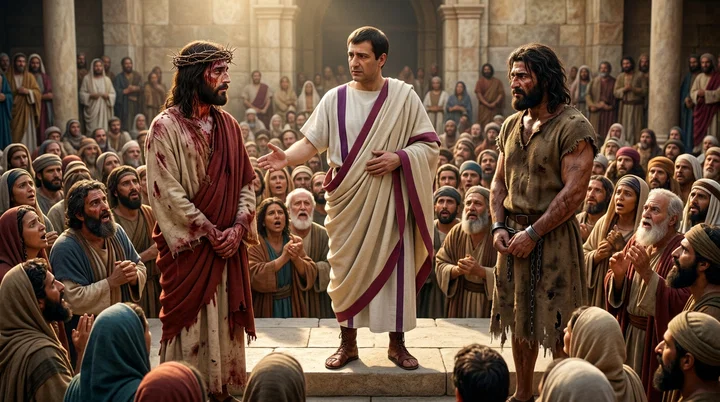
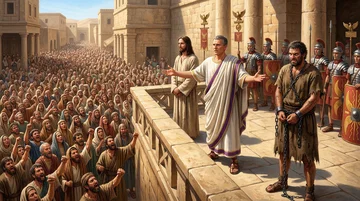
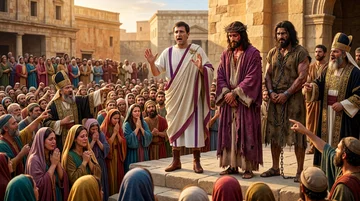
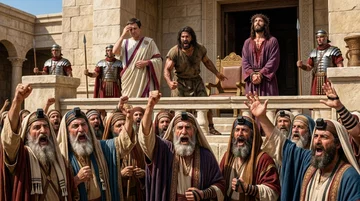
Pilate saith unto them, What shall I do then with Jesus which is called Christ? They all say unto him, Let him be crucified.
Translations
Pilate says to them, What shall I do then with Jesus which is called Christ? They all say to him, Let him be crucified.
King James Version, KJV Cambridge Paragraph Bible
Pilate saith unto them, What shall I do then with Jesus which is called Christ? They all say unto him, Let him be crucified.
Pilate saith to them, What shall I do then with Jesus, who is called Christ? They all say to him, Let him be crucified.
Pilate saith unto them, What then shall I do unto Jesus which is called Christ? They all say, Let him be crucified.
Pilate saith unto them, What then shall I do unto Jesus who is called Christ? They all say, Let him be crucified.
Pilate saith to them, 'What then shall I do with Jesus who is called Christ?' They all say to him, 'Let be crucified!'
Pilate says to them, What then shall I do with Jesus, who is called Christ? They all say, Let him be crucified.
Pilate saith unto them—What then shall I do unto Jesus, who is called Christ? They all say—Let him be crucified!
Berean Standard Bible, Majority Standard Bible
“ What then should I do with Jesus who is called Christ?” Pilate asked.They all answered, “ Crucify Him!”
Pilate said to them, “ What then shall I do to Jesus who is called Christ?”They all said to him, “ Let him be crucified!”
Pilate says to them, What, then, am I to do with Jesus, who is named Christ? They all say, Let him be put to death on the cross.
Pilate said vnto them, What shall I do then with Iesus, which is called Christ? They all said to him, Let him be crucified.
Douay-Rheims (Challoner revision)
Pilate saith to them: What shall I do then with Jesus that is called Christ? They say all: Let him be crucified.
Pictures
Cross-references 20 of 64
- Luke 23:18-23
And they cried out all at once, saying, Away with this man, and release unto us Barabbas:
The crowd rejects Jesus and repeatedly demands his crucifixion.
- Mark 15:12-14
And Pilate answered and said again unto them, What will ye then that I shall do unto him whom ye call the King of the Jews?
The crowd demands Jesus’ crucifixion before Pilate.
- John 19:15
But they cried out, Away with him, away with him, crucify him. Pilate saith unto them, Shall I crucify your King? The chief priests answered, We have no king but Cæsar.
The crowd rejects Jesus as king and demands his crucifixion.
- Luke 23:18
And they cried out all at once, saying, Away with this man, and release unto us Barabbas:
The crowd demands Barabbas’s release instead of Jesus.
- John 18:39-40
But ye have a custom, that I should release unto you one at the passover: will ye therefore that I release unto you the King of the Jews?
The crowd rejects Pilate’s offer to release Jesus and chooses Barabbas.
- John 19:6
When the chief priests therefore and officers saw him, they cried out, saying, Crucify him, crucify him. Pilate saith unto them, Take ye him, and crucify him: for I find no fault in him.
The chief priests and officers demand Jesus’ crucifixion.
- Matthew 27:17
Therefore when they were gathered together, Pilate said unto them, Whom will ye that I release unto you? Barabbas, or Jesus which is called Christ?
Pilate offers Jesus or Barabbas to the crowd, framing their answer to crucify Jesus.
- Acts 3:14
But ye denied the Holy One and the Just, and desired a murderer to be granted unto you;
They chose a murderer over Jesus and demanded that he be crucified.
- Matthew 27:29-31
And when they had platted a crown of thorns, they put it upon his head, and a reed in his right hand: and they bowed the knee before him, and mocked him, saying, Hail, King of the Jews!
The soldiers mock and abuse Jesus before leading him away to be crucified.
- Matthew 26:59-60
Now the chief priests, and elders, and all the council, sought false witness against Jesus, to put him to death;
False witnesses were sought to condemn Jesus to death.
- Matthew 28:5-6
And the angel answered and said unto the women, Fear not ye: for I know that ye seek Jesus, which was crucified.
The risen Jesus is identified as the one who was crucified.
- Matthew 21:9
And the multitudes that went before, and that followed, cried, saying, Hosanna to the Son of David: Blessed is he that cometh in the name of the Lord; Hosanna in the highest.
The crowd’s earlier hosannas contrast with its later demand for crucifixion.
- Mark 15:15
And so Pilate, willing to content the people, released Barabbas unto them, and delivered Jesus, when he had scourged him, to be crucified.
Pilate releases Barabbas and delivers Jesus to be crucified.
- Luke 23:4
Then said Pilate to the chief priests and to the people, I find no fault in this man.
Pilate declares Jesus faultless yet delivers Him to be crucified.
- Acts 2:23
Him, being delivered by the determinate counsel and foreknowledge of God, ye have taken, and by wicked hands have crucified and slain:
Peter addresses those who rejected Jesus and were implicated in his crucifixion.
- Luke 23:34
Then said Jesus, Father, forgive them; for they know not what they do. And they parted his raiment, and cast lots.
Jesus prayed for forgiveness for those who crucified him in ignorance.
- Matthew 27:18
For he knew that for envy they had delivered him.
Envy motivated the leaders to deliver Jesus to Pilate.
- Hebrews 6:6
If they shall fall away, to renew them again unto repentance; seeing they crucify to themselves the Son of God afresh, and put him to an open shame.
Rejecting Christ is described as crucifying the Son of God afresh and putting him to shame.
- Matthew 27:51
And, behold, the veil of the temple was rent in twain from the top to the bottom; and the earth did quake, and the rocks rent;
The earth quaked and the rocks split when Christ died.
- Mark 15:12
And Pilate answered and said again unto them, What will ye then that I shall do unto him whom ye call the King of the Jews?
Pilate asks what to do with Jesus as the crowd demands his crucifixion.
Commentary
Each commentary is drawn from primary sources: the writings of Ellen G. White and Adventist pioneers and periodicals. Each commentary is separate. Its own words are not a quotation; follow the references to read the source passages.
Ellen G. White
70 sources
Pilate asked what should be done with Jesus who is called Christ, and the crowd answered with one voice that He should be crucified.3SP 141.1–142.1Ms 29, 1909, par. 12–17Ms 136, 1899, par. 30–33 Pilate knew He was innocent and just and found no fault deserving death, yet washed his hands and delivered Him to be crucified.RH Jan 23, 1900Ms 29, 1909, par. 12–1719MR 263.2–264.1Ms 56, 1894, par. 3–4COS 149.4–6 The people standing beside Him chose Barabbas the notorious murderer and robber to be released, thereby rejecting the Holy One and Prince of Life, at the stirring of the priests and rulers and of Satan working through them.RH Jan 23, 1900Ms 11, 1896, par. 5–619MR 263.2–264.1Ms 136, 1899, par. 30–33Ms 78, 1893, par. 55–56 His enemies thought that by taking His life they could prevent His becoming king, but by murdering the Son of God they brought about the very thing they sought to prevent, making Him the Redeemer and ruler over the whole world.Ms 11, 1896, par. 5–6Ms 56, 1894, par. 3–4ST Feb 5, 1880SG3 174.2–176.1 That choice between Christ and Barabbas is set before every person today as the choice between Christ who is the Truth and Satan the rebel, liar and murderer, so that rejecting the message of mercy is joining the cry to crucify Christ.Ms 11, 1896, par. 5–619MR 263.2–264.1
Pilate's Question and Setting
Pilate asked what should be done with Jesus who is called Christ, and the crowd answered with one voice that He should be crucified.3SP 141.1–142.1Ms 29, 1909, par. 12–17Ms 136, 1899, par. 30–33Lt 30, 1900, par. 5–6COS 148.8–149.3 The question was put after the priests and rulers had persuaded the people to choose Barabbas, and their answer led to Jesus being delivered to be crucified.Ms 136, 1899, par. 30–33DA 723.1–724.1 Pilate knew Jesus was innocent and just, for witnesses had shown the charges were false and made for envy, and he had received light through his wife.RH Jan 23, 1900Ms 29, 1909, par. 12–17Ms 112, 1897, par. 33–34 He knew by Christ's power even bound and accused that He was God and no common man, yet he was too weak to obey and failed his official duty to do justice while wishing to avoid appearing guilty.RH Jan 23, 1900Ms 29, 1909, par. 12–17Ms 112, 1897, par. 33–34
Pilate repeatedly declared he found no fault in Jesus and found no charge deserving death, washed his hands as innocent of His blood, yet delivered Him to be crucified.19MR 263.2–264.1Ms 56, 1894, par. 3–4COS 149.4–6ST Jul 11, 1878ST May 17, 1899 To avoid condemning Jesus he invoked the Passover custom of releasing a prisoner, proposed punishing and releasing Him, and had Him scourged to satisfy the crowd.RH Jan 23, 1900DA 735.1–5ST Jul 11, 18785RED 62.3 He asked what evil He had done, but by putting the decision to an enraged crowd he yielded his judgment and compromised his authority.RH Jan 23, 1900COS 148.8–149.3ST Jun 3, 1889 He lost control and was swayed by them, surrendering justice to a lawless mob while intimidated by the priests.COS 148.8–149.3ST Jun 3, 1889ST Jul 11, 1878ST Jul 11, 1878
The scene took place in Pilate's judgment hall in Jerusalem among professedly pious Jews, Christ's own nation.Ms 150, 1906, par. 1–3Lt 26, 1897, par. 8–9ST May 17, 1899 Many demanding His blood had hailed Him as king only days before when He rode into Jerusalem, showing fickle acclaim because praising Him had been popular.4RED 102.2–103.1ST Jul 18, 1878 Those He had healed and raised from the dead bore witness to His works and questioned why He was treated as a criminal.ST Jul 18, 1878 When Pilate asked what evil Jesus had done, the crowd only cried the more for crucifixion.RH Jan 23, 1900COS 148.8–149.35RED 62.3 Their voices were like bellowing wild beasts in satanic madness and frenzy.RH Jan 23, 1900Ms 40, 1897, par. 3–6
Choice of Barabbas
Jesus stood side by side with Barabbas, the Prince of Life bearing the seal of heaven set against a notorious thief, robber, murderer and hardened rebel noted for cruelty.RH Jan 23, 190019MR 263.2–264.1Ms 56, 1894, par. 3–4Ms 16, 1893, par. 13Ms 78, 1893, par. 55–56 He was the sinless Lord of glory, full of goodness, mercy, truth, compassion and holy teaching, with the divine impress shining through His humanity even as He stood beside Barabbas.RH Jan 23, 1900Ms 16, 1893, par. 13Ms 78, 1893, par. 55–56 The contrast before all was open light against darkness, sin against righteousness, truth against falsehood.RH Jan 23, 1900
Barabbas was a pretended Christ who did great wickedness through satanic agencies by theft and robbery and murder, claiming religious power and right as Christ to establish a different order of things and to set the world right.DA 733.1–4Ms 112, 1897, par. 33–34 He stands for Satan personified, the rebel, liar and murderer, while Jesus is the Son of God who made the world and all things in it.16MR 259.3–260.1Ms 39, 1894, par. 10 The roaring demand for Barabbas chose Satan before Christ and exalted Satan.16MR 259.3–260.1
The people chose Barabbas to be released and Jesus to be crucified, thereby preferring the society of a murderer.RH Jan 23, 1900Ms 11, 1896, par. 5–6Ms 78, 1893, par. 55–56 In doing so they rejected the Holy One, the Holy One of Israel, the world's Redeemer who came to save the people.Ms 11, 1896, par. 5–6Ms 78, 1893, par. 55–56Ms 23, 1900, par. 7–9COL 293.1–3ST Apr 15, 1897 Their demand expressed the rulers' hatred of His righteousness and rebuke, and their choice of disobedience over the eternal life offered through obedience to Him.Ms 23, 1900, par. 7–9COL 293.1–3
The rulers' demand went on while the Passover ceremonies went on as usual.12MR 411.3–4 Their imposing religious dress and rites covered hearts full of selfishness, fraud, discontent and unholy passion, and their life and character contradicted their ceremonies.12MR 411.3–4 Profession of piety, love for God, and knowledge of Scripture did not make them God's children or lead them to reflect His character.12MR 411.3–4Ms 106, 1897, par. 5
Hands Behind the Cry
The priests, rulers, elders, rabbis and scribes persuaded and instructed the crowd against Jesus and stirred and inflamed them to demand His death.Ms 136, 1899, par. 30–33Ms 56, 1894, par. 3–4ST Nov 2, 1882DA 733.1–4 They acted from envy, malice, jealousy and bigotry, fearing He would draw attention away from themselves because He did greater works than they could perform and would rise higher in authority and even become king.RH Jan 23, 1900Ms 150, 1899, par. 3–5DA 733.1–4 They hired false witnesses to testify falsely in order to condemn Him, and that false testimony stirred the mob into frenzy.Ms 150, 1899, par. 3–5
Satan prompted the cry for crucifixion, working through the religious element in bigotry and prejudice and using priests and people and evil angels as his agents to stir their passions.RH Jan 23, 1900Ms 40, 1897, par. 3–6Ms 150, 1899, par. 3–54SP 321.1–2ST Mar 26, 1894 He stood at the head of those who reviled and crucified Christ, having consulted with his angels to inspire the demand for blood and to heap cruelty and scorn upon Him.SG1 39.1 His influence turned people into liars and murderers, and their cry exposed his malice and revealed the character of the great deceiver.4SP 321.1–2ST Mar 26, 1894
Apart from God's Spirit, humanity under the powers of darkness rejected the innocent Jesus in the crisis, choosing the thief and murderer Barabbas instead of Christ and showing what people may do in a great crisis.Lt 59a, 1895, par. 27–28 His pure life and holy teaching convicted the crowd of sin and condemned them, producing the same hostility that leads many to hate God's word because it exposes sin.STE 59.3
Pilate knew Jesus was innocent yet yielded his judgment and compromised his authority, and by his wavering he allowed the priests to intimidate him and to carry their purpose through a lawless mob.ST Nov 2, 1882ST Jun 3, 1889 In this way Jewish priests and rulers prevailed upon the Roman governor to carry out their will, an example of corrupt human power opposing righteousness.RH Nov 11, 1915
What the Rejection Accomplished
Jesus came to save the people and to win immortality for humanity, yet when asked what should be done with Him He was rejected and a murderer was chosen in His place.Ms 11, 1896, par. 5–6Ms 56, 1894, par. 3–4 He was delivered to crucifixion though pronounced innocent, because He was the perfect sacrifice for the sins of the whole world.Ms 56, 1894, par. 3–4 He foresaw this rejection and the cross, and knew that through His death as a propitiation for human sin His kingdom would be perfected and extend throughout the world, bringing salvation to people of every nation.DA 621.1–622.2
His enemies feared losing their authority and seized Him privately with false witnesses, thinking that by taking His life they could prevent His becoming king.ST Feb 5, 1880SG3 174.2–176.1 By murdering the Son of God they brought about the very thing they sought to prevent, making Him the Redeemer of mankind, the Saviour of the fallen race, and ruler over the whole world.ST Feb 5, 1880SG3 174.2–176.1 As Joseph by being sold by his brethren into Egypt became saviour to his father's family, God's providential hand controlled the crucifixion for His own glory and man's good, yet their crime was just as heinous as though God had not overruled events.ST Feb 5, 1880SG3 174.2–176.1
The cry for crucifixion was the climax of Satan's cruel warfare upon the world's Redeemer, prompted by him and carried out through priests and people as his agents with unsleeping malice hunting Jesus from place to place.4SP 321.1–2GC88 501.1–2ST Mar 12, 1885 Satan so acted because Christ's mercy and love and compassion and pitying tenderness were representing the character of God to the world.GC88 501.1–2ST Mar 12, 1885 Together with the demand for homage on the mountain summit and the temple pinnacle and the urging to cast Himself down, this warfare unmasked the character of the great deceiver, exciting the amazement and indignation of heavenly angels and the whole loyal universe, while Heaven gazed in silent horror and pent-up envy and malice and hatred and revenge burst forth on Calvary against the Son of God.4SP 321.1–2GC88 501.1–2
Angels looked on the choice with sorrow and indignation but did not interfere, because in the great controversy between good and evil Satan had to be allowed to reveal his character and the principles of his rule, so the heavenly universe and humanity could see the righteousness of God's purposes.Lt 132, 1910, par. 4–9Ms 136, 1899, par. 34 By submitting with perfect calmness to the coarsest insults and outrage in His cruel death of shame on the cross of Calvary, the Redeemer proved the falsity of Satan's charges against God and vindicated God in the sight of the angels in heaven as willing to make the greatest sacrifice for man.Lt 132, 1910, par. 4–9
Satan and his angels consulted together and decided to inspire Christ's own nation to cry eagerly for His blood and to invent cruelty and scorn to heap upon Him.SG1 39.1EW 131.1 They hoped such treatment would make Jesus resentful, cause Him to abandon humility and meekness, provoke Him to retaliation, or drive Him to perform a miracle to release Himself and thus break up the plan of salvation.SG1 39.1EW 131.1Lt 132, 1910, par. 4–9 But his cunning and hatred did not break up the plan, and the time drew on for the accomplishment of the object for which Jesus came into the world.SG1 39.1Lt 132, 1910, par. 4–9
The hour when the multitude that had hailed Jesus as their king hissed at Him and reviled Him and demanded His crucifixion was a great trial and horror for the disciples that threatened their faith and their fondest hopes with fear, grief and disappointment.4RED 102.2–103.1DA 394.2–32SP 289.2–290.1 It was a place where faint-hearted and undecided followers would have sunk and their apostasy would have carried the rest with them, as disappointed hopes and worldly ambitions tested all.4RED 102.2–103.1DA 394.2–3 Jesus foresaw this betrayal and death with the agony in Gethsemane and deliberately brought an earlier sifting crisis while still present to comfort, strengthen and prepare His faithful few.4RED 102.2–103.1DA 394.2–32SP 289.2–290.1 Having already seen followers turn away and experienced the fickleness of popular favor and desertion by professed followers, they were not to be overwhelmed with surprise when the jeering crowd scorned Him doomed to the cross, and were not to hang their faith upon the opinions of others.4RED 102.2–103.1DA 394.2–32SP 289.2–290.1
Judgment Foreseen and Foretold
The answer, let him be crucified, pronounced upon Jesus the doom of crucifixion, and that same doom afterward came upon the Jews themselves.DA 840.5 At the destruction of Jerusalem multitudes of Jews perished by crucifixion, and crosses stood on Calvary as thickly as forest trees.DA 840.5 Soon after Jesus was crucified the Romans in Judea had stopped using the cross as an instrument of death because they were terrified by the priests' malignity, the people's rage, the convulsions of nature, and the supernatural darkness at His death, but at Jerusalem's destruction crucifixion was revived for a time against the Jews.DA 840.5
Jerusalem's choosing of Barabbas and rejecting of Christ brought humiliation and ruin on the city.Lt 98, 1900, par. 31–33 By refusing to submit to God's way and accept His mercy the people were left to carry out their own rebellious purposes, and God's heavenly protection was withdrawn.Lt 98, 1900, par. 31–33 This warns that those who exalt themselves and persist in disobedience face the consequences of rejecting mercy.Lt 98, 1900, par. 31–33 After His death many voices that had united in the cry for crucifixion realized the calamity that had fallen upon them and would have as eagerly cried for Jesus to be given back had He still been alive.ST Aug 8, 1878 Their mourning over the sick and dying with no one to save them brought home to thousands that a great light had gone out of the world, leaving a blank which could not be supplied.ST Aug 8, 1878
As Jesus neared the cross the disciples would hear His own nation clamor for His blood and see Him condemned to die as a criminal, though He was the one in whom their hopes of eternal life rested.ST Jul 7, 1898 Witnessing this rejection and death would give them cause to mourn and fast, and their hope and courage would fail.ST Jul 7, 1898 The rulers permanently chose Barabbas and, while the Passover ceremonies went on as usual, joined the demand for crucifixion and called His blood upon themselves and their children.12MR 411.3–4 Their imposing religious dress and rites covered hearts full of selfishness, fraud, discontent and unholy passion, and their life and character contradicted their ceremonies.12MR 411.3–4 By that joining they brought that blood and the blight of God's curse upon themselves, and those words would never cease to torture their hearts, while the character they chose in Barabbas would ever remain their character.12MR 411.3–4Ms 40, 1897, par. 51
Hypocrisy cloaked by a garment of religion is hated, though the true penitent is never spurned.12MR 411.3–4 Rejecting heaven's light is casting Him out, crying for His death, and choosing Barabbas instead, which rejects the only means of cleansing from sin.Ms 40, 1897, par. 51 It is as if crucifying the Son of God afresh and putting Him to open shame, and God will avenge His death.12MR 411.3–4Ms 40, 1897, par. 51 At the final judgment the lost will recognize the sacrifice made for them and hear the question of what should be done with Jesus answered by the demand to crucify Him.Ms 77, 1906, par. 13–14RH Nov 22, 1906 They will understand that their own choice stands with His condemnation.RH Nov 22, 1906
Compelled to look upon Him who clothed His divinity in humanity and still wears that humanity, sinners will remember that choice with indescribable confusion, remembering how His love was slighted and His compassion abused.21MR 349.6–350.3 Every insult offered to Christ and all suffering caused to His disciples will be as fresh as when done.21MR 349.6–350.3 His voice heard in entreaty and gracious solicitude in synagogues and streets will sound again distinctly in their ears, making them realize what they might have been had they received Christ and improved the opportunities granted them.21MR 349.6–350.3
Choosing Christ Today
The same decision stands before people today between the side of Christ and the side of the apostate rabble, with two distinct parties set over against each other.19MR 263.2–264.1Lt 30, 1900, par. 5–6 By life and character every person individually demonstrates whom he will have as king, and the choice between Christ and Barabbas is still being made.Ms 11, 1896, par. 5–616MR 259.3–260.1Lt 93, 1893, par. 18–19 Barabbas stands for Satan personified, while Jesus is the Son of God who made the world and all things in it, so the roaring demand for Barabbas chose and exalted Satan before Christ.16MR 259.3–260.1 That choosing of Barabbas and rejecting of Christ to crucify Him is repeated in the world today, and people must answer to God if their example encourages transgression.19MR 263.2–264.1Lt 30, 1900, par. 5–616MR 259.3–260.1
The choice between Christ and Barabbas is a symbol of the choice in earth's closing scenes to accept Christ who is the Truth or Satan the rebel, liar and murderer. Rejecting the message of mercy about God's commandments and the faith of Jesus means accepting Satan's falsehoods, joining the disloyal and turning from the Son of God. The choice is repeated whenever people reject Christ and choose another leader, for refusing light brings deception, darkness, false witness and rebellion. Those who turn from truth act as though crying to release Barabbas and crucify Christ, and Christ is betrayed when His saints are betrayed. By rejecting the light of heaven they cast Him out, refuse the only provision for cleansing from sin, and choose another in His place.
Rejecting Christ means rejecting the only means of cleansing from sin, as if crucifying the Son of God afresh and putting Him to open shame.Ms 40, 1897, par. 51 Those who reject Him will have to answer for that choice at the final judgment as though they had cried for His death and chosen Barabbas instead, and God will avenge His death.Ms 40, 1897, par. 51 Finite man rejected the Prince of Life and cast Christ out, while the heavens received Him and God the sovereign Ruler received and exalted Him.Lt 31, 1898, par. 33–35 Man crowned Him with a crown of thorns, and God crowned Him with a crown of royal majesty.Lt 31, 1898, par. 33–35 To the rejector of His mercy His death brings the wrath and judgments of God unmixed with mercy, the wrath of the Lamb, but to all who receive and believe Him it is hope and eternal life.Lt 31, 1898, par. 33–35
People may condemn the Jews for rejecting and crucifying Jesus while professing love for Him, yet reveal their love is not genuine when they reject the message about His coming.SG1 170.1 This blindness came because they overlooked the word of Life and failed to search the Scriptures, and the same neglect in the last days causes many to be weighed in the balances and found wanting.Ms 1, 1869, par. 10–12 Minds engrossed with things of little importance set aside elevating, sanctifying truth that would refine and fit for immortality.Ms 1, 1869, par. 10–12 Those who cling to earthly things and reject the life offered through Christ act in the same spirit contrary to God's desire.Ms 28, 1897, par. 46–48 By persisting in resisting the Spirit they become spiritually blind, misread evidence and counsel, and finally choose what is wrong while rejecting truth.Ms 28, 1897, par. 30–34
Near the end of earth's history people deceived by Satan will repeat that rejection, crying for Christ to be crucified.Ms 39, 1894, par. 11–12 Disloyal people who reject their Saviour would have joined that demand had Christ been on earth in human form.MWISDAP 15.3–4 The greater the position and light given to one who becomes disloyal and denies Christ, the greater that person's future punishment.MWISDAP 15.3–4 That same eager cry for blood is repeated by powerful enemies seeking to silence a fearless witness for truth and take his life.SG4 275.3–276.3 The demand of the Roman zealots that Luther be put to death is like the crowd clamoring for Christ's blood, since both opposed those they believed threatened their cause.ST Jun 21, 1883 The Jewish scribes and elders having Christ crucified while professing great zeal for the honor of God proves Satan's delusive power to make people believe they serve God while opposing Him.PP 635.2 As Korah, Dathan and Abiram in rejecting Moses rejected Christ and insulted the Spirit of God, so rejecting God in Christ was rejecting Christ and insulting the Spirit of God, exposing a spirit that follows its own will in opposition to the will of God still existing in human hearts.PP 635.2
Sources
Pioneers and periodicals
105 sources
Pilate asks what shall be done with Jesus which is called Christ after the crowd, under the Passover custom of releasing a prisoner, chooses Barabbas for release.RH Jan 23, 1900ST Jul 1, 1897ST May 19, 1898 He repeatedly declares Jesus innocent, finding no fault and no cause of death in Him, yet from weakness and fear surrenders judgment to the mob and gives sentence that what they ask should be done.ST Jun 3, 1889ST Jun 9, 1898ST Mar 13, 1901ST Mar 28, 1906ST Oct 7, 1886 With one voice the multitude demands let Him be crucified, the most severe and shameful Roman punishment, until their voices prevail.ST Nov 9, 1882ST Mar 13, 1901ST Oct 27, 1898ST May 6, 1913 The question first asked by Pilate is presented to every person ever since, affecting individual welfare not merely temporally but through eternity, and no one can avoid it by ignoring Jesus or letting Him alone.ST Jul 3, 1884ST Oct 13, 1881ST Nov 19, 1894ST Nov 17, 1881ST Mar 23, 1915 Deciding rightly means trusting and following Jesus who saves from sin, obeying His word and accepting the crucifixion of self, while rejecting Him or merely neglecting His claims repeats the choice and shares in crucifying Him afresh.ST Jul 3, 1884ST Nov 19, 1894
Trial Words and Setting
Pilate puts the question what shall be done with Jesus which is called Christ after the crowd, moved by the chief priests, elders and rulers, asks for Barabbas under the Passover custom of releasing a prisoner.RH Jan 23, 1900ST May 19, 1898ST Mar 28, 1906ST Aug 17, 1904 He has set the two side by side, expecting the multitude to choose the innocent One, and he appeals to chief priests, rulers and people to release Jesus.ST Jul 1, 1897ST Mar 13, 1901ST Aug 17, 1904 The crowd with one impulse cries out all together for Barabbas and shouts that Jesus be crucified, choosing His crucifixion when asked what to do with Him.ST Jul 1, 1897ST May 19, 1898ST Mar 13, 1901 Though Pilate has repeatedly declared Jesus innocent and unworthy of death, the crowd, stirred by the Jewish rulers, still demands that He be crucified.RH Jan 23, 1900ST Mar 28, 1906
Pilate examines Jesus before the accusers and finds no fault in Him touching the things charged, and Herod likewise finds nothing worthy of death in Him.ST Mar 13, 1901 He repeatedly asks what evil Jesus has done, since he finds no cause of death in Him, and he desires to release Him.ST Mar 13, 1901ST Mar 28, 1906 He proposes to chastise Him and release Him, yet in inconsistency he treats Jesus, whom he has declared innocent, as equal to a convicted man and leaves the innocent man's fate to the choice of His avowed enemies.ST Mar 13, 1901 Convinced of Jesus' innocence, he nevertheless yields his judgment and compromises his authority, allowing the priests to intimidate him and surrendering judgment to a lawless mob rather than upholding justice.ST Jun 3, 1889ST Jul 11, 1878ST Jul 11, 1878
Full light is given to Pilate through Christ's dignified, trusting, unresentful and unresisting bearing under unproved charges and scourging, through Pilate's own finding of no crime and Herod's finding Him worthy of no punishment, and through the Jews' malignity in choosing Barabbas and rejecting law, justice and pity despite the declarations of both rulers.ST Oct 27, 1898 Pilate knows by witnesses that the charges are false and for envy, and he receives further light through his wife that Jesus is a just man, yet he is too weak to obey.RH Jan 23, 1900 God makes one more effort through his wife Claudia Procula and her dream vision warning to have nothing to do with that righteous Man, giving Pilate his last chance, and her keen intuitive sense catches the heavenly warning sent in haste while angels whisper to save the world from that sin.ST Oct 27, 1898RH Dec 14, 1911 Her voice is the only voice raised that night in defense of the Saviour, warning in a night vision to have nothing to do with that guiltless blood and to shield and spare Him, and the vision also rolls open the future to a vast countless multitude of all tribes and ages kneeling before the cross and confessing belief in Him that died, by Pontius Pilate crucified, who shall come when time is fled to judge the living and the dead.ST Oct 27, 1898RH Dec 14, 1911 Pilate does not mark his wife's prayer but again tries to induce the priests to withdraw, then from fear of the Jews remains undecided, refuses to identify himself with the suffering Innocent One, washes his hands in water hoping to escape responsibility and ease conscience, and delivers Jesus to the mob, to his own stain and curse with youthful joy withered and his lot cast far from Rome under the skies of Gaul.ST Oct 27, 1898ST Oct 27, 1898
The crowd answers with one voice that He should be crucified, and they are instant with loud voices asking that He might be crucified until their voices prevail.ST Jul 11, 1878ST Mar 13, 1901 Pilate changes his question in an effort to persuade the people to release Jesus, but they demand crucifixion, which he had not expected, and his declaration that he finds no cause of death and his offer of a lesser punishment only make them cry out more loudly.ST Nov 9, 1882 Their demand comes from groundless hatred and blind fury despite Jesus' innocence, and though Pilate's question exposes motives and brings innocence to mind, they shut their ears and repeat the demand, condemning the innocent Christ to death.ST Jul 11, 1878RH Dec 15, 1863 Pilate gives sentence that what they ask should be done and delivers Him to them, declaring he finds no fault, washing his hands as innocent of His blood, while the crowd calls for His blood to be on them and their children, with priests and rulers present in abiding hatred and hands stained with the blood shed in crucifying Him.ST May 17, 1899ST Mar 13, 1901ST Oct 27, 1898
The demand is for crucifixion, the most severe and shameful Roman punishment, reflecting crucifixion as the Roman penalty for sedition, the charge brought against Jesus.ST Nov 9, 1882 Crucifixion is already familiar, since the people's immediate demand implies they know this form of punishment, and it is considered deeply dishonorable, generally imposed on slaves and the lowest class of criminals.ST Nov 9, 1882ST May 6, 1913
The account is true history told with minute accuracy about the customs, opinions, political events and circumstances of that time.RH Feb 11, 1862 Pontius Pilate is governor of Judea at that time, and a sentence from him is necessary before Jesus can be executed, because the power of life and death is vested in the Roman governor.RH Feb 11, 1862 The subordinate details fit the manners and institutions of that period, entering accidentally and naturally out of the progress of the narrative with nothing forced, out of place, or thrust in to give probability: condemned criminals treated with derision before and during execution, scourging before crucifixion as usual Roman practice, executions following the form of stripping, whipping and executing, the crime affixed to the instrument of punishment, public notices at Jerusalem commonly written in three different languages, the condemned bearing his own cross, and the body given up to be buried at the request of friends unless the criminal is infamous.RH Feb 11, 1862
The day Jesus is condemned and crucified is the last Passover He attends, in A.D. 31.ST Dec 23, 1897 It belongs to the account of His crucifixion as Lord of the Sabbath nailed to the cross as the great sacrifice for human sin, when the Messiah is cut off in the middle of the seventieth week and brings the sacrificial system to an end. That day is uniquely significant because Jesus dies for sinful humanity, bearing the curse of the law and showing His love for people, yet the day itself is not set apart in Scripture for sacred observance.RH Feb 13, 1872
The choice sets in open contrast light and darkness, sin and righteousness, truth and falsehood, with the Prince of Life bearing the seal of heaven beside Barabbas.RH Jan 23, 1900 Jesus is harmless and honored by the people a few days before, and even when scourged His noble character contrasts sharply with the robber's hardened appearance.ST Oct 7, 1886ST Aug 17, 1904 Barabbas is a noted prisoner in prison for insurrection made in the city and for murder, convicted also of robbery, a robber and murderer whose society the people prefer when they refuse the sinless Lord of glory full of goodness, mercy and truth.RH Jan 23, 1900ST Mar 13, 1901ST Aug 17, 1904 One account names him Joseph Barabbas as a possible ringleader arrested on the occasion of Matthew 27:15-26 and later released instead of Jesus.ST Feb 16, 1882
Jesus stands in the Roman hall at Pilate's judgment seat and before Herod and endures sarcasm, cruel mockery, blows, spitting, a crown of thorns, mocking robes and a purple robe, and crucifixion.RH Nov 12, 1872RH Jun 10, 1862 He stands alone before proud Pilate's pompous throne, clothed in mocking robes of might, mocked and beaten, crowned and wounded, while Jew and Gentile join together in hatred to demand His crucifixion.RH Nov 12, 1872RH Mar 5, 1901 The priests and elders swell the cry away with Jesus, leading directly to His bearing the rugged cross to Calvary and dying under darkened skies at Golgotha to pay the debt of guilt and save guilty man from hell.RH Mar 5, 1901 He does not retreat from truth or yield to demands but remains steady through questioning, insults, spitting and blows, joining firm courage with perfect gentleness, innocence and lamb-like peace for the joy set before Him, and His calm self-possession amid turmoil shows Christian repose not as inaction but as a steady state of mind sustained by faith in God and confidence in His promises.RH May 5, 1863ST Jul 29, 1886
Motives and Human Guilt
The chief priests, elders, rulers, scribes and Pharisees persuaded, stirred and incited the multitude to ask for Barabbas and destroy Jesus, turning the people against an innocent man.ST Nov 2, 1882ST Jun 3, 1889ST May 19, 1898ST Aug 17, 1904 The leaders' malice and influence worked upon the crowd after Pilate set the harmless One honored days before beside Barabbas, a prisoner convicted of insurrection, murder and robbery, expecting they would choose the innocent.ST Jul 1, 1897ST Jun 3, 1889ST Aug 17, 1904 When Pilate appealed to them and asked what should be done with Jesus called Christ, they cried for Barabbas for release and answered that Jesus should be crucified.ST Jul 1, 1897ST Nov 2, 1882ST May 19, 1898ST Aug 17, 1904 This course continued what had begun in turning from John the Baptist, as the priests turned the people from one innocent man to destroy another.ST May 19, 1898
The demand came not from honest error but from envy, malice, hatred, bigotry and cupidity.RH Jan 9, 1855RH Sep 15, 1868ST Sep 22, 1898 Bigotry produced hatred of religious innovation and bitter opposition to interference with immemorial institutions, while cupidity produced violent opposition from fear of losing prestige and the benefits of religious office, because Christ as mediator between God and man took away the leaders' distinctive and exclusive function.ST Sep 22, 1898 Those who fired the mind of the perpetrator bear criminal responsibility for the crime, and the priests are shown guilty in repudiating Christ prematurely and maliciously refusing to use their superior wisdom to reconcile Him with prophecy.ST Feb 5, 1880ST Sep 22, 1898 The high priest, learned men, Pharisees and those regarded as especially pious almost unanimously opposed Him, mocked Him as an impostor and helped bring about His death, while only a few fishermen and people of low status received Him, yet opposition by prominent or respected people is no evidence against His claims.RH Sep 15, 1868 Envy, hatred and malice that grew from hatred of Jesus in whom all excellence met must be suppressed before they grow into destructive passions.RH Jan 9, 1855 By killing Him to keep their authority as king-makers, His enemies brought about the very outcome they sought to prevent, for Christ became Redeemer of mankind and Saviour of the world.ST Feb 5, 1880
Disappointed national pride also drove the demand, for the people expected a glorious conqueror who would free them from the Roman yoke, enthrone Jerusalem over the nations and lead them to victorious battles.RH Oct 15, 1861 When He came and was crucified in their capital and placed Jew and Gentile low together as sinners, with poor fishermen as His emissaries, their national pride was lowered and their hopes were blasted, turning to malignant spite.RH Oct 15, 1861 They thoroughly knew the facts of His origin and work yet resisted intensely and left no means untried against the faith.RH Oct 15, 1861 Connected with that hope of national liberation, Judas expected a king who would lead Israel against Rome and considered Barabbas a possible source of deliverance when Jesus would not take that role.ST Oct 4, 1910
Satan worked through the religious element in bigotry and prejudice with satanic madness and frenzy, turning the heart of Judea against her Lord and teaching that last act of relentless fury against the Harmless One amid jeers from throats that had before praised Him.RH Jan 23, 1900ST Mar 11, 1903 The open contrast of light and darkness, sin and righteousness, truth and falsehood stood before all in the Prince of Life bearing heaven's seal beside Barabbas the robber and murderer, yet the people refused the sinless Lord of glory full of goodness, mercy and truth and preferred the society of a murderer.RH Jan 23, 1900 Their cry revealed the principles of Satan's rule, and heaven witnessed the choice but angels could not interfere because the conflict between good and evil had to expose those principles and show the righteousness of God's purposes. Satan used the Jewish priests and rulers to stir the passions of the crowd, and the demand with the abuse that followed made clear that his influence turns people into liars and murderers.ST Mar 26, 1894 The rejection of Jesus' love exposed Satan's malice against the Son whose life revealed God's character.ST Mar 12, 1885
Pilate, though he recognized Jesus as innocent, knew by witnesses the charges were false and for envy, and had received light through his wife that Jesus was a just man, was too weak to obey.RH Jan 23, 1900ST Nov 2, 1882ST Oct 7, 1886 By putting the sentence to the mob instead of judging fairly he showed weakness, compromised his authority and surrendered judgment and control to a lawless mob driven by envy and malice.ST Jun 3, 1889ST Jul 11, 1878ST Oct 7, 1886 Though convinced Jesus was innocent and having repeatedly declared Him innocent and found no charge deserving death, he yielded his judgment, allowed the priests to intimidate him, yielded to the crowd's pressure and consented to the death of a just man.ST Nov 2, 1882ST Jun 3, 1889ST Jul 11, 1878 His earlier choices to violate conscience and excuse himself from just judgment left him nearly helpless, and each evasion to shift responsibility made the situation more difficult.ST Oct 7, 1886 His sense of justice and high moral principles failed when a nation clamored for death because his morality was not grounded in love for God and regard for God's law, showing that a person may at first resist joining a wicked crowd yet still yield, approve injustice and make a show of innocence.RH Aug 25, 1868 Threats and intimidation thus led the Roman governor to approve an unjust and illegal trial of an innocent man.ST Jun 9, 1898
The people as well as Pilate acted as judges in the case of Jesus the Truth on trial.ST Sep 12, 1895 With groundless hatred and blind fury they demanded crucifixion despite His innocence, and Pilate's question what evil He had done exposed their motives and brought His innocence to mind, but they shut their ears and repeated the demand.RH Dec 15, 1863 With voices like bellowing wild beasts they cried the more for crucifixion when asked what evil He had done.RH Jan 23, 1900
The same people who one day honored Jesus as King, spread garments before Him and cried Hosanna, the next day led by demagogues became a mad, impulsive mob demanding His crucifixion.ST Feb 8, 1899ST Sep 2, 1897RH Feb 15, 1870 Their change reflects conformity to the crowd masquerading as conscience and the weak, degenerate, impulsive condition of the nation in its closing years.ST Feb 8, 1899ST Sep 2, 1897 Yielding to such uncontrollable frenzy is weakness and loss of self-control, not strength of manhood, for true strength remains calm and thoughtful when others go wild.ST Sep 2, 1897 Popular feeling is fickle and no reliable standard of right, and many who praised Him when He rode into Jerusalem and when praising was popular joined the cry within days, though those He had healed, given sight and raised from the dead bore witness to His works and questioned why He was treated as a criminal.ST Jul 18, 1878STRH Feb 15, 1870 People may thus celebrate while life is pleasant then reject and mock when suffering comes.ST Weak and undecided followers would have been overwhelmed by fear and disappointment at this severe trial of the disciples, so Jesus brought an earlier crisis while still with them to strengthen His chosen for what was to come.ST Oct 8, 1896
The condemnation was carried out under appearance of public justice, for Pilate declared Him innocent yet handed Him over to be crucified.RH Nov 18, 1862 Threats and intimidation secured an unjust and illegal trial of an innocent man from those professing to look for the Messiah.ST Jun 9, 1898 The chief priests and elders spoke as representatives of the nation and accepted responsibility for the sentence of death upon the Messiah.RH Apr 29, 1909 The rebellion the priests stirred in the judgment hall, when the people clamored for His blood, is described as persisting thereafter.RH Oct 14, 1862RH Oct 28, 1873
God providentially used the enemies' crime for His glory and humanity's good, making Christ Redeemer and Saviour, yet this did not lessen their guilt.ST Feb 5, 1880 Heaven witnessed but angels could not interfere because the conflict must expose evil and show the righteousness of God's purposes.
The cruelty chosen fell upon the choosers, culminating in the destruction of Jerusalem by the Romans under Titus when more than a million were killed.ST Aug 18, 1909 After His death many who had joined the united cry realized the calamity, would have cried as eagerly for Him to be given back had He still been alive, and mourning the sick and dying with no one to save them brought home to thousands that a great light had gone out and left a blank that could not be supplied.ST Aug 8, 1878 At His coming the lost will recognize the sacrifice and love they rejected and understand that their own choice stands with the condemnation of Christ.RH Nov 22, 1906
Meaning of Christ's Death
Jesus knew the rejection and death awaiting Him were necessary, for by making atonement and propitiation for sin as the Lamb of God He would save the world, bring all who accept Him into perfect harmony with God, and establish and perfect His kingdom as Restorer so that it would spread throughout the world by His Spirit prevailing.ST Jul 1, 1897ST Mar 26, 1912RH Jun 24, 1915 The choice of Barabbas the robber and murderer over the innocent Son of God, stirred by the priests and rulers and roared like wild beasts, stood in the shadow of the cross which He foresaw after the Greeks came seeking Him when the sacrifice was near.ST Jul 1, 1897ST Mar 26, 1912 That hour of the cry for crucifixion was the hour for the Son of Man to be glorified, leading to voices in all parts of the earth hailing Him as the Lamb who takes away sin.ST Jul 1, 1897ST Mar 26, 1912
The demand for crucifixion on Calvary, done amid jeers from throats that had before praised Him in the streets of Galilee and Judah, was persecution of the Harmless One with relentless fury through Satan turning the heart of Judea against her Lord and teaching her that last act.ST Mar 11, 1903 Watched with reverent suspense by countless millions on circling peopled worlds, it stands with the first fratricide in the lurid history of evil written with tears and heart-blood, and it sealed the doom of evil and its king.ST Mar 11, 1903 What cherished thoughts of self produce was forever shown in one endowed with glory, beauty and wisdom and familiar with the love and peace of heaven transformed into a malignant fiend warring against God, and seeing a cherub so changed inspires dread of evil and loathing and fear of transgressing the perfect law of love even by a thought.ST Mar 11, 1903
The night vision warning to have nothing to do with that just and guiltless blood and to shield and spare the Sufferer lifted on the shameful cross in blood and agony was not marked, and letting the crucifixion happen became a stain and curse with youthful joy withered and the lot cast far from Rome under the skies of Gaul.ST Oct 27, 1898 That same vision rolled open the future to a vast countless multitude of all tribes and ages, sire and child and mother and maiden and youth, kneeling in humble silence before the cross and confessing belief in Him that died, by Pontius Pilate crucified, and that He shall come when time is fled to judge the living and the dead.ST Oct 27, 1898 Those who rejected and crucified Him under Satan's stirring of priests and rulers, which turned people into liars and murderers, will see Him in glory as King of kings and Lord of lords.ST Mar 26, 1894ST Oct 27, 1898
Jesus faced arraignment before Pilate and the hostile religious mob without retreating from truth or yielding to demands, steady through questioning, insults, spitting and blows, joining firm courage with perfect gentleness, innocence and lamb-like peace without anger or pride for the joy set before Him.RH Mar 26, 1861RH May 5, 1863 Following Him therefore means resolutely bearing the cross and remaining faithful through suffering, shame, injustice and toward the cross, for Christian perfection is shown not by continual joy or extraordinary experiences but by such following.RH Mar 26, 1861RH Jul 30, 1867RH Aug 14, 1860 The scene thus presents Him as the example to follow in bearing the cross.RH Mar 26, 1861RH Jul 30, 1867RH Aug 14, 1860
The final scene of His life on earth before Pilate and Herod, enduring sarcasm, cruel mockery, blows, spitting, a crown of thorns, a purple robe and crucifixion though no evil could be said of the innocent Saviour, shows the cruelty and madness of sin.RH Jun 10, 1862RH Jun 12, 1866 The clamoring for the blood of the innocent Saviour illustrates bitter opposition, blind prejudice, intense hate and malignant bitterness directed against innocence itself, as the carnal heart's enmity against what is heavenly, holy, divine and spiritual.RH Dec 15, 1863RH Jun 12, 1866RH Jun 13, 1871 It arises from the same cause as Cain slaying his brother, the carnal heart at enmity with everything holy and spiritual.RH Jun 12, 1866
Mercy and opportunity to repent remained extended to individuals afterward, for participation in the condemnation did not put them beyond mercy and the invitation to repent and receive remission of sins and the Holy Spirit extended to every one of them, even as the chief priests and elders as representatives of the nation accepted responsibility for the sentence of death on the Messiah.RH Apr 29, 1909RH Jun 12, 1855 The Jews thoroughly knew the facts of His origin and work yet from disappointed pride and malignant spite resisted intensely, expecting a glorious conqueror to free them from the Roman yoke, enthrone Jerusalem over the nations and lead victorious battles, and when He placed Jew and Gentile low as sinners together with poor fishermen as emissaries their national pride was lowered and hopes blasted so they left no means untried against the faith.RH Oct 15, 1861 Afterward thousands upon thousands of those same Jews who cried for crucifixion repented, melted before the love of the gospel, praised Him and became the most successful preachers of the Christ they had crucified, which proves the spread of Christianity was sustained by the power of God.RH Oct 15, 1861
The turning of the crowd that had hailed Him as king to demand His crucifixion illustrates the severe trial awaiting the disciples, and weak and undecided followers would have been overwhelmed by fear and disappointment if they had faced it unprepared, so Jesus brought an earlier crisis while still with them to strengthen His chosen for what was to come.ST Oct 8, 1896 As He neared the cross they would hear His own nation clamor for His blood and see Him condemned to die as a criminal though He was the one in whom their hopes of eternal life rested.ST Jul 7, 1898 Witnessing this rejection and death would give them cause to mourn and fast, and their hope and courage would fail.ST Jul 7, 1898
Jesus which is called Christ is the Truth on trial before Pontius Pilate and before every person, not only before civil courts, with Pilate and the people alike acting as judges when they must decide what shall be done with the truth.ST Sep 12, 1895ST Sep 12, 1895 While the truth is on trial, those judging it are themselves on trial, for as they judge the truth so the truth will judge them, and truth is the final judge so that every judgment contrary to truth will at last be reversed.ST Sep 12, 1895 The day of judgment only announces the judgment people have already pronounced upon themselves by their dealing with the truth.ST Sep 12, 1895
Doctrine Government and Prophecy
Matthew 27:22 belongs to the condemnation of Jesus, when people who professed to look for the Messiah rejected Him, and threats and intimidation moved the Roman governor to approve an unjust and illegal trial of an innocent man.ST Jun 9, 1898 That rejection of Christ in favor of Barabbas and Caesar is a sign of the failure of earthly, fleshly hopes and of salvation by human effort.ST Apr 11, 1900 It resulted from apostasy from the true view of Christ's kingdom, carried out through enforcement of a creed, forming one distinct line of apostasy in the pagan division of the Babylonian apostasy originating from Babylon.ST Jul 6, 1915
The choice between Christ and Barabbas is a symbol of the choice to be faced in earth's closing scenes, to accept Christ who is the Truth or Satan the rebel, liar and murderer. Rejecting the message of mercy concerning God's commandments and the faith of Jesus means accepting falsehood, joining the disloyal, and turning from the Son of God. The question of what will be done with Jesus the Christ therefore carries lasting stakes, applying to choosing Christ with His word, truth, example and Gospel over Babylon's traditions and errors, and choosing the riches of grace and everlasting life over Babylon's appeal.ST Dec 24, 1896 The Jews' choice against Christ is a pattern for the present, when the world must choose between Christ and a religious federation that enforces religious observance and works.ST Jul 21, 1914 That movement will exclude Christ before His second coming as apostasy excluded Him before His first coming, while the gospel is to be preached to all nations as a witness and no one is to be compelled to obey it.ST Jul 21, 1914
The demand for crucifixion illustrates a church-state alliance using civil power to condemn Christ because He rejected religious traditions made into civil law. The Jewish leaders condemned Christ and by threats compelled the Roman governor to execute Him, showing how civil government usurps God's authority when it attempts to define and punish sin.ST Oct 9, 1907 When the people demanded crucifixion, Pilate as government ratified their demand, warning that popular opinion even when voiced by religious leaders and masses can oppose Christ and should not be treated as a just basis for government action.RH Jun 4, 1908
The majority clamoring for the Son of God proves the voice of the people is not the voice of God but the voice of the devil, that majorities are generally in the wrong especially at first on all great moral questions while minorities with brains and conscience are generally in the right, and that the popular voice sanctions evil and wrong and condemns good and right.ST Sep 9, 1889 The Jerusalem crowd's demand was not made right merely because it came from the majority, for popular opinion can be unjust and tyrannical.ST Feb 10, 1887 Pilate gave Christ up to be crucified because he feared the mad thoughtless mob stirred up by the priests, proving that popular clamor moves magistrates to condemn the innocent against their own judgment.ST Jun 26, 1893 Such public sentiment helped bring about the death of the Son of God, illustrating how popular opinion can uphold an unjust decision.ST May 10, 1910 The crowd demanding death while seeking Barabbas's release shows that popular opinion especially in religious matters can be gravely wrong.RH Apr 14, 1874
Choosing the first day of the week in place of the seventh-day Sabbath repeats the crowd's choice of Barabbas instead of Christ, rejecting Christ as Lord of the Sabbath.RH Feb 14, 1854 People who claim to serve God can reject light and oppose Christ, and persecuting Sabbath keepers for observing the true Sabbath repeats the spirit of those who called for Jesus to be crucified.ST Sep 24, 1894 The same spirit that rejected Jesus and chose Barabbas is still at work in religious persecution and slander against those preaching present truth, for religious profession does not prevent opposition to Christ.RH Mar 15, 1860 The religion of the scribes and Pharisees that demanded crucifixion shows that religious zeal and profession do not make worship true when opposed to obedience to God.RH Jul 10, 1860
The chief priests and elders rejected the light given in Jesus Christ at His trial and misled the people to demand His death, and that same crime is committed on a greater scale when Protestant churches reject the greater light of present truth, oppose God's holy law and the testimony of the Old and New Testaments concerning fulfilled prophecy, ignore the grand truths expressly made known in the word of God for the especial benefit of God's people in the last perilous days, cover those truths with error and confusion, and warn all to avoid those spreading them as heresy and fanaticism, eating out the vitality of popular Christianity.RH Jun 13, 1865 Those who mourned their fathers' rejection of God's prophets repeated that rejection themselves, for when Christ came they despised Him and demanded the death of the Son of God rather than heed the truth sent for their time.ST Jul 4, 1878 The Pharisees murdered Christ despite great outward show of religion, even wearing texts of God's word conspicuously on their bodies without becoming better men, proving a thing is not good or bad simply because it mentions or fails to mention God.RH Nov 5, 1901 People with little religious understanding may follow a priest's signal without thinking, as the crowd called for crucifixion when prompted by religious leaders.RH Apr 28, 1874
People may not foresee the evil they will later choose, though God knows what they will do and foretells it for the benefit of those who heed His word, as seen when those once inclined to welcome Jesus as one of their own turned against Him, demanded His crucifixion, and even preferred that a known murderer be released.RH Feb 27, 1872 The crowd clamoring for Christ's blood parallels the demand by Roman zealots that Luther be put to death, since both opposed those they believed threatened their cause.ST Jun 21, 1883 By his decision concerning Jesus called Christ, Pilate set himself against the Rock of God's word, placing himself among those who lifted puny hands against God's mighty plans and precepts and opposed truth, whose names and fate are written in black characters of hopeless doom on history's pages and now live only in infamy, for Pilate is dead but the Rock stands.ST Jul 15, 1908
Jewish priests and rulers prevailing upon the Roman governor to carry out their will is an example of corrupt human power opposing righteousness.RH Nov 11, 1915 The scene of Christ before Pilate, where the crowd answers the question of what should be done with Jesus by demanding His crucifixion, presents Christ as humble and stands as a contrast to the Pope.RH Dec 28, 1911
Universal Personal Question
Pilate's question about what to do with Jesus who is called Christ is momentous, first asked by the Roman governor and presented to every person ever since, and its proper decision affects individual welfare not temporally merely but through eternity, for on it hangs the eternal welfare of the race.ST Jul 3, 1884 It has lost none of its importance, must yet be answered by each for himself, and the answer forms his life and shapes his destiny.ST Oct 13, 1881 It demands immediate attention and must be settled as becomes a rational being by being reconciled to Christ.ST Jul 3, 1884 The essential difference between people before God is whether they accept or reject Jesus, and receiving His abundant grace is what saves, settling that question rightly leading to eternal life and the blessed hope.RH Jan 2, 1900
No one can avoid the question by ignoring Him or letting Him alone, for He stands before every soul in silent majesty claiming the homage and obedience of the heart.ST Nov 17, 1881 His enemies may reject, scoff, rail and blaspheme, but they cannot banish Him, for He forces Himself into the thoughts and discussions of men everywhere.ST Nov 17, 1881 He stirs the world as never before and remains in the midst of friends and foes as the one living, vital power in thought, literature, philosophy, science and art, so that around His person the battle continually rages and to banish Him is impossible.ST Nov 17, 1881 He is Son of God and Messiah, King of humanity, so everyone owes Him allegiance, and refusing Him as King and Lord is disloyalty to God.ST Mar 23, 1915
The choice cannot be postponed or divided, because Christ will not share the heart with sin.ST Mar 28, 1906 Deciding wrongly does not require blasphemy or rage against Him, for mere neglect of His claims does the work of ruin.ST Jul 3, 1884 Self-interest may press people to give Him up, fearing loss of position, business or friends, and surrendering Him to protect self and wavering under pressure leads to loss of life, because Christ alone can give life, though He remains faithful.ST Nov 19, 1894 Deciding rightly means trusting in and following Jesus who saves His people from their sins, which brings happiness.ST Jul 3, 1884 It means yielding to His drawing and accepting the crucifixion of self, obeying His written word, following His works and commandments, and receiving abundant grace.RH Jan 2, 1900ST May 28, 1896
Answering what to do with Him means deciding where to place Him as Son of God in the divine plan, in what light to view His incarnation and His death, whence came the necessity of such suffering and such a death, and what its object was and what is to be accomplished thereby.ST Oct 13, 1881 Choosing one's own sins, desires and ways is choosing Barabbas, represented as a robber and murderer of one's life.ST Mar 28, 1906 Choosing Christ or the world, its pleasures, riches and human fame, means leaving worldly pursuits and accepting earthly hardship for the hope of heavenly glory, immortality and eternal life, while choosing the world means rejecting Christ for temporary gain. Every Christian must change Pilate's past question into a present personal question of what he is doing now with Jesus, for personal knowledge of Jesus Christ is the chief trust and most invaluable talent, for which each servant will one day stand before Jesus Christ as Master to give an account of fidelity in using tools and talents and of what he did in this world with what he knew about Him.ST Dec 4, 1901
The choice is repeated whenever people reject Christ and choose another leader, for refusing light brings deception, darkness, false witness and rebellion, and those who turn from truth act as though crying to release Barabbas and crucify Christ, and Christ is betrayed when His saints are betrayed. Rejecting the light of heaven casts Him out, refuses the only provision for cleansing from sin, and chooses another in His place, and at the final judgment those who reject Him will have to answer for that choice as though they had cried crucify Him and crucified the Son of God afresh. Rejecting Christ by refusing to obey His written word makes a person share in the decision to crucify Him, just as Pilate did.ST May 28, 1896 The account of His suffering can move fretful and discontented Christians to humility and contentment.ST Apr 17, 1879 Envy, hatred and malice must be suppressed before they grow into destructive passions, for the cry expressed malice grown from hatred and envy of Jesus in whom all excellence met.RH Jan 9, 1855
Blinded by worldly desires people can reject and destroy their best friend while preferring an enemy, and hatred of good people and fear of reform can lead to grave guilt and disaster.RH Jul 2, 1861 Going with Jesus as far as the judgment hall would represent only partial consecration, while complete consecration means being willing in Christ's strength to go with Him to Calvary.ST Sep 12, 1900 The crowd's demand followed their earlier praise of Him as King, setting their rejection against the good He had done in healing the lame and giving sight to the blind, saving a murderer and demanding the death of the Prince of Life while Jesus willingly goes to suffering so even His enemies may be freed.ST Oct 11, 1899 Many who had praised Him only days earlier when He rode into Jerusalem joined the cry because praising Him had been popular, so their acclaim proved fickle, while those He had healed and raised from the dead instead bore witness to His works and questioned why He was being treated as a criminal.ST Jul 18, 1878 People may celebrate someone while life is pleasant then reject and mock him when suffering comes.ST Public acclaim can so quickly turn to rejection that fame and applause are shown fleeting and unreliable.RH Dec 2, 1862
Jesus, the Root of David and Lion of the tribe of Judah, stands alone before proud Pilate's pompous throne, clothed in mocking robes of might, while priests and elders swell the cry away with Jesus and demand His crucifixion, a shameful sight leading directly to His bearing the rugged cross to Calvary and dying under darkened skies at Golgotha to pay the debt of guilt and save guilty man from hell.RH Mar 5, 1901 Refusing Him as Saviour means missing eternal life, because He alone is the way to the Father.ST Mar 23, 1915 The question of what should be done with Jesus whom Pilate called Christ, answered by the crowd with crucifixion, is applied as a warning for Christians to consider what their choices mean for their relationship with Jesus, including in amusements such as dancing.RH Sep 5, 1912
Sources