Matthew 26:29
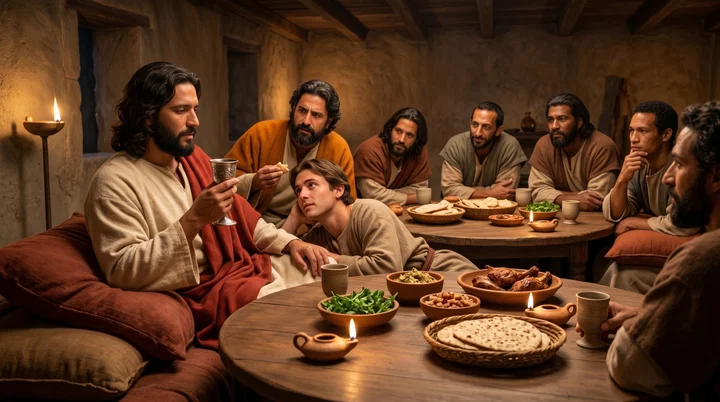
But I say unto you, I will not drink henceforth of this fruit of the vine, until that day when I drink it new with you in my Father’s kingdom.
Translations
But I say to you, I will not drink from now on of this fruit of the vine, until that day when I drink it new with you in my Father’s kingdom.
King James Version, KJV Cambridge Paragraph Bible, Revised Version
But I say unto you, I will not drink henceforth of this fruit of the vine, until that day when I drink it new with you in my Father’s kingdom.
But I say to you, I will not drink henceforth of this fruit of the vine, until that day when I drink it new with you in my Father's kingdom.
But I say unto you, I shall not drink henceforth of this fruit of the vine, until that day when I drink it new with you in my Father’s kingdom.
and I say to you, that I may not drink henceforth on this produce of the vine, till that day when I may drink it with you new in the reign of my Father.'
But I say to you, that I will not at all drink henceforth of this fruit of the vine, until that day when I drink it new with you in the kingdom of my Father.
Moreover, I say unto you—In nowise, will I drink, henceforth, of this produce of the vine, until that day, whensoever I shall drink it with you, new, in the kingdom of my Father.
Berean Standard Bible, Majority Standard Bible
I tell you, I will not drink of this fruit of the vine from now on until that day when I drink it anew with you in My Father’s kingdom.”
But I tell you that I will not drink of this fruit of the vine from now on, until that day when I drink it anew with you in my Father’s Kingdom.”
But I say to you that from now I will not take of this fruit of the vine, till that day when I take it new with you in my Father's kingdom.
I say vnto you, that I will not drinke henceforth of this fruit of the vine vntil that day, when I shall drinke it new with you in my Fathers kingdome.
Douay-Rheims (Challoner revision)
And I say to you, I will not drink from henceforth of this fruit of the vine, until that day when I shall drink it with you new in the kingdom of my Father.
Pictures
Cross-references 20 of 26
- 1 Corinthians 11:26
For as often as ye eat this bread, and drink this cup, ye do shew the Lord’s death till he come.
Partaking of the bread and cup proclaims the Lord’s death until he comes.
- Mark 14:25
Verily I say unto you, I will drink no more of the fruit of the vine, until that day that I drink it new in the kingdom of God.
Jesus promises to drink the fruit of the vine anew in God’s kingdom.
- Luke 22:18
For I say unto you, I will not drink of the fruit of the vine, until the kingdom of God shall come.
Jesus promises not to drink the fruit of the vine until God’s kingdom comes.
- Revelation 19:9
And he saith unto me, Write, Blessed are they which are called unto the marriage supper of the Lamb. And he saith unto me, These are the true sayings of God.
The Lamb’s marriage supper is the future feast shared with Christ.
- Luke 22:19-20
And he took bread, and gave thanks, and brake it, and gave unto them, saying, This is my body which is given for you: this do in remembrance of me.
Parallel account of the communion ordinance.
- John 13:21-30
When Jesus had thus said, he was troubled in spirit, and testified, and said, Verily, verily, I say unto you, that one of you shall betray me.
John’s fuller account of the final meal includes Judas’s betrayal and departure.
- Exodus 12:15-20
Seven days shall ye eat unleavened bread; even the first day ye shall put away leaven out of your houses: for whosoever eateth leavened bread from the first day until the seventh day, that soul shall be cut off from Israel.
Passover required the removal of leaven, including from food and drink.
- Luke 22:30
That ye may eat and drink at my table in my kingdom, and sit on thrones judging the twelve tribes of Israel.
Jesus promises his followers a meal with him at his kingdom table.
- 1 Corinthians 11:25
After the same manner also he took the cup, when he had supped, saying, This cup is the new testament in my blood: this do ye, as oft as ye drink it, in remembrance of me.
Both describe Jesus’ cup at the supper and its covenant significance.
- John 14:2-3
In my Father’s house are many mansions: if it were not so, I would have told you. I go to prepare a place for you.
Christ promises to return and receive his followers to himself.
- 1 Corinthians 15:50
Now this I say, brethren, that flesh and blood cannot inherit the kingdom of God; neither doth corruption inherit incorruption.
Both describe the kingdom as a future inheritance.
- 1 Corinthians 10:16
The cup of blessing which we bless, is it not the communion of the blood of Christ? The bread which we break, is it not the communion of the body of Christ?
The cup anticipates shared fellowship with Christ in his kingdom.
- Revelation 19:7
Let us be glad and rejoice, and give honour to him: for the marriage of the Lamb is come, and his wife hath made herself ready.
Names the marriage of the Lamb as the promised future fellowship.
- Deuteronomy 32:14
Butter of kine, and milk of sheep, with fat of lambs, and rams of the breed of Bashan, and goats, with the fat of kidneys of wheat; and thou didst drink the pure blood of the grape.
The wine is identified as the pure blood of the grape.
- Jeremiah 31:31-34
Behold, the days come, saith the LORD, that I will make a new covenant with the house of Israel, and with the house of Judah:
The new covenant foretold here is introduced by Jesus.
- John 2:1-11
And the third day there was a marriage in Cana of Galilee; and the mother of Jesus was there:
Jesus’ wine at Cana anticipates the wine of the kingdom.
- 1 Corinthians 5:7
Purge out therefore the old leaven, that ye may be a new lump, as ye are unleavened. For even Christ our passover is sacrificed for us:
Christ is identified as the Passover celebrated at this meal.
- Hebrews 8:8-12
For finding fault with them, he saith, Behold, the days come, saith the Lord, when I will make a new covenant with the house of Israel and with the house of Judah:
Both speak of the promised new covenant, entered into at the supper.
- Joel 3:18
And it shall come to pass in that day, that the mountains shall drop down new wine, and the hills shall flow with milk, and all the rivers of Judah shall flow with waters, and a fountain shall come forth of the house of the LORD, and shall water the valley of Shittim.
Both describe new wine in the coming kingdom.
- 1 Corinthians 10:21
Ye cannot drink the cup of the Lord, and the cup of devils: ye cannot be partakers of the Lord’s table, and of the table of devils.
It contrasts drinking the Lord’s cup with drinking the cup of devils.
Commentary
Each commentary is drawn from primary sources: the writings of Ellen G. White and Adventist pioneers and periodicals. Each commentary is separate. Its own words are not a quotation; follow the references to read the source passages.
Ellen G. White
12 sources
The words were spoken at the sacramental service while they were eating, at the Passover and final meal shared with the disciples before going to the garden of Gethsemane where prayer was often made, and before the betrayal.Ms 106, 1903, par. 27–28COS 113.212MR 14.1–2 They came after bread had been given as the body and the cup as the blood, at the institution of the Lord's Supper.Ms 106, 1903, par. 27–28DA 652.1–2 The bread and the cup are emblems of the broken body and spilled blood, given in the very presence of the Lamb of God.Ms 106, 1903, par. 27–28 The cup is a symbol of the work for salvation, as blood of the New Testament shed for many for the remission of sins, to be taken in remembrance.Ms 106, 1903, par. 27–28DA 148.4–149.2DA 659.3–660.1
The unleavened bread and unfermented wine represent the unblemished sacrifice, since fermentation symbolizes sin and death and corrupted wine could not represent the sinless Lamb.DA 653.2–3 Judas the betrayer was present, though known as a betrayer, and still was allowed to partake.Ms 106, 1903, par. 27–28DA 655.4 He received the emblems and heard the call to remembrance while brooding upon dark purposes and cherishing sullen, revengeful thoughts.Ms 106, 1903, par. 27–28 That treatment showed patience and offered opportunity to receive Christ, repent, and be cleansed from sin, teaching that those believed to be in error or sin should not be abandoned.DA 655.4
The promise was that there would be no drinking henceforth of the fruit of the vine until the day of drinking it new with the disciples in the Father's kingdom, promising reunion, future fellowship, and sitting with Him in His kingdom.ST Dec 23, 1908Ms 29, 1909, par. 2–4DA 148.4–149.2DA 652.1–2DA 653.2–3 That future sitting and sharing is presented as a future scene for which the emblems of broken body and shed blood are now partaken with preparation.Ms 29, 1909, par. 2–4Ms 106, 1903, par. 24–26 The communion service and cup point forward to the return and second coming and were designed to keep that hope vivid, giving the Supper an outlook toward His return.ST Dec 23, 1908DA 652.1–2DA 659.3–660.1 The promise comforted sorrow at parting, comforts believers in tribulation, and makes the return unspeakably precious whenever they meet to commemorate the death and recount the promise.ST Dec 23, 1908DA 148.4–149.2DA 659.3–660.1
The service was instituted to speak to the senses of the love of God expressed for humanity and to keep the constraining power of the love of Jesus fresh in memory.DA 659.3–660.1 There is no union between souls and God except through Christ, and the union and love between brethren is cemented and made eternal by the love of Jesus.DA 659.3–660.1 Nothing less than the death of Christ could make His love efficacious, and only because of His death can believers look with joy to His second coming.DA 659.3–660.1 His sacrifice is the center of hope, upon which faith must be fixed.DA 659.3–660.1
While pride, variance, and strife for supremacy are cherished the heart cannot enter fellowship with God and is not prepared to receive the communion of the body and blood.Ms 106, 1903, par. 24–26 Therefore the memorial of humiliation is first observed as preparation for the sacramental supper.Ms 106, 1903, par. 24–26 Before the emblems are taken every difference between brother and brother must be removed, the heart cleansed from evil thoughts, and misunderstandings swept away, so the service is entered with true appreciation.Ms 106, 1903, par. 24–26 The verse belongs to Scripture associated with a vivid portrayal of sacrifice and suffering, recalling the betrayal, trial, and crucifixion that followed, drawing a parallel between the hostility directed at Jesus and the mob spirit stirred against reformers.12MR 14.1–2Ms 43, 1909, par. 8
Sources
Pioneers and periodicals
104 sources
On His last night with His disciples at the Passover meal in Jerusalem, just before Gethsemane, Jesus instituted the Lord's Supper and pledged to abstain from the cup until He should drink it new with them in His Father's kingdom.ST May 12, 1898ST Jun 9, 1914RH Mar 11, 1862ST The fruit of the vine is pure unfermented juice of the grape, free from leaven and decay as Passover required, and fit to represent His pure blood shed for remission of sins.ST Feb 10, 1881ST Jul 8, 1889ST Jun 9, 1890RH Nov 6, 1900ST Apr 19, 1877 The cup is the blood of the new covenant made with Israel and Judah, and the bread and cup look backward to His broken body and shed blood on the cross and forward to His return.ST Jun 6, 1878ST May 25, 1882ST Mar 27, 1901ST Mar 11, 1889 That drinking anew is still future, to be fulfilled at His second coming and resurrection when the saints sit with Abraham, Isaac and Jacob at heaven's table and the marriage supper of the Lamb.ST Feb 19, 1880ST Apr 7, 1909ST Jul 27, 1882RH Dec 10, 1857ST Jul 7, 1890 The emblems remain bread and wine representing His body and blood, to be given to every believer until He comes, keeping vivid the hope of reunion and requiring abstinence from intoxicating drink.ST Dec 23, 1908ST Aug 24, 1888RH Dec 24, 1914RH May 5, 1874RH Dec 24, 1914
Last Passover Night Setting
The words were spoken in an upper chamber in Jerusalem on the last night of Christ's work on earth, at the Passover eaten with His disciples.RH Mar 11, 1862ST Jan 15, 1885ST May 11, 1915 That evening was Thursday evening, the evening with which the crucifixion day began, and the night before His crucifixion.RH Mar 11, 1862RH Feb 3, 1852ST May 11, 1915 It came near the close of nearly three years of teaching, miracle-working and healing in Judea, Samaria and Galilee, after His final visit to Galilee and His entry into Jerusalem never to leave it again, with full knowledge that His enemies would seize Him before the feast ended.STST Jan 15, 1885 The institution of the breaking of bread and the Lord's Supper belongs after that entry into Jerusalem.RH Mar 11, 1862STRH Feb 3, 1852 The account in which He speaks about the bread and wine is also recorded in the parallel Gospels and in Paul's account.RH Jan 28, 1862
It came just before singing a hymn and leaving the city, crossing the brook Cedron for Gethsemane.ST Jan 15, 1885 At that same last Passover feast eaten before His death Judas was pointed out as traitor and left the company forever to perdition through covetousness.ST Jun 15, 1904STST Nov 15, 1883 At that same feast Jesus instituted the ordinance of the Lord's Supper in commemoration of His death and the ordinance of foot-washing as a memorial of His humble life.ST Jun 15, 1904 On the night He was betrayed He conveyed through the Supper wonderful lessons to His disciples, with undying pitying love even in view of His coming agonies.RH Feb 16, 1864RH Dec 3, 1908 Then He and the disciples joined in a solemn hymn on His redeeming love, their last song together before His death, sung after the Passover meal and the sharing of the bread and wine and before their departure.STST Jan 15, 1885ST Jun 18, 1885
The verse belongs to the Passover table as spread in the days of Jesus and to the Passover cup shared there.ST May 18, 1904RH Oct 16, 1860RH Jun 10, 1915 Jesus would share that cup no more with the disciples until drinking it anew with them in His Father's kingdom.ST May 18, 1904 Partaking of the Lord's Supper looks back to that meal with the disciples, and remembering it brings deep solemnity, drunk in remembrance of Christ with sad hearts over sin while looking forward with joy to drinking free from sin with Him.RH Feb 16, 1864RH Oct 16, 1860 That great memorial service gives striking gospel lessons proving Jesus is the true Messiah, the only Saviour of Jew and Gentile, drawing deep and respectful interest from Hebrews as well as Gentiles.RH Jun 10, 1915
Fruit Of Vine Meaning
The phrase fruit of the vine means the pure natural juice and product of grapes, fresh grapes or raisins and their juice, not wine in general and not alcohol produced by fermentation or distillation.ST Feb 10, 1881ST Jul 8, 1889ST Jun 9, 1890ST Feb 6, 1879ST Jul 8, 1889 Calling the cup by that name shows only unfermented wine was used at the Supper and any other kind would be highly improper.ST Feb 10, 1881ST Jun 9, 1890ST Feb 6, 1879 The wording does not sanction intoxicating drinks even though many grape drinks are called wine, for alcohol is not itself the fruit of the vine and gives no basis for choosing an alcoholic mixture of any strength.ST Jul 8, 1889ST Aug 24, 1888ST Jul 8, 1889 Alcohol can harm people and become a snare to a brother's soul, and avoiding it also protects people recovering from drunkenness, for whom even tasting it may bring danger or ruin.ST Aug 24, 1888ST Feb 6, 1879
Because the Supper was instituted at Passover when leaven and fermented things were forbidden in Israelite homes and excluded from the feast, the cup was likewise free from ferment.RH Nov 6, 1900ST Apr 19, 1877ST Jul 13, 1915ST Oct 8, 1894 As unleavened bread represented His body, the cup representing His blood, which is the life, was unleavened unfermented grape juice fitly representing blood shed for mankind.ST Apr 19, 1877ST Oct 5, 1882ST Oct 8, 1894ST Jul 13, 1915 As an observant Jew He would not have used fermented drink, since fermented drink counted as leaven, and the same unfermented character belongs to the wine He made at Cana.ST Oct 5, 1882 The cup shared at the close of the Passover meal was therefore pure unfermented grape juice, freshly pressed and required to be free of leaven.ST Oct 5, 1882ST Jul 13, 1915ST Oct 8, 1894
Fermentation is decomposition and decay over time by leaven acting on sugar, often with drugs added and grape substances altered or destroyed.ST Feb 22, 1877ST Aug 19, 1889ST Feb 10, 1881ST Jul 15, 1889 Alcohol is not naturally present in the vine or its fruit but forms when leaven decomposes sugar, so fermented wine is decomposed decayed wine and cannot truthfully be called the fruit of the vine unless made from rotten grapes.ST Feb 22, 1877ST Aug 19, 1889ST Feb 10, 1881 Fermented wine made by converting sugar and water into alcohol is a vile intoxicating compound unfit for any table and much less for the Lord's table.ST Feb 22, 1877 Wine sold as pure fermented wine may contain no grape juice at all, so its label does not guarantee that it is the fruit of the vine, which must contain grape juice.ST Jan 5, 1882
The unfermented cup fitly represents Christ's blood shed for remission of sins, precious as of a lamb without blemish and without spot, perfectly pure and without blemish, and must be represented by that which is most pure.ST Aug 19, 1889ST Feb 10, 1881ST Jun 9, 1890 Its gluten is analogous to blood's fibrin and its albumen nourishes in nearly similar proportion, and this resemblance in constituents supports its fitness as a symbol of Christ's blood.ST Oct 8, 1894 Fermented wine begun to decay cannot fittingly symbolize that purity, and to represent so pure a thing by what has decayed would be sacrilege.ST Feb 10, 1881ST Jun 9, 1890 The wine and the blood that flowed from His side at the crucifixion had a similar meaning, so fermented wine would imply fermented blood.ST Aug 19, 1889
Real grape juice from the cultivated grape should be secured for the Supper under the care of deacons and kept from air to prevent fermenting as much as possible.RH Apr 16, 1867 It is to be made and preserved in fruit season like other fruit juices or supplied from boiled raisins strained for juice when fresh juice cannot be procured, with no fermentation and no leaven.ST Sep 15, 1909 Liquor-sellers' wine diluted with water, fired with alcohol and colored with poisons is to be refused, as is water sweetened with molasses from cane raised and worked in slavery, while its red juice is the emblem of precious spilled blood matching the prophecy picturing garments red as one treading the winepress in death.RH Apr 16, 1867 Those conscientious against taking even a few drops of domestic wine to wet the lips at the table may use pure cold water, and water instead of the fruit of the vine has been used in some services.RH Apr 16, 1867ST Nov 18, 1886
The wine to be drunk new in the Father's kingdom is the same kind: new, unfermented, pure, sweet, harmless juice pressed from grapes.ST Jun 9, 1914RH Jun 16, 1868RH Dec 24, 1901ST Jul 27, 1915 He has not tasted the fruit of the vine since that last supper before the closing hymn, and will drink it new with His disciples and redeemed ones where there is no decay or death.ST Jun 9, 1914RH Jun 16, 1868ST Jul 27, 1915 It will be like the wholesome good wine made at Cana, fresh grape juice, a blessing rather than a curse.RH Dec 24, 1901ST Jul 27, 1915 The Bible therefore speaks of different kinds of wine, for the kingdom's wine is a blessing, distinct from wine that is a mocker or the wine of God's wrath, and is even described as wine preserved in the grapes from creation with pure water for the redeemed.ST Jun 9, 1914ST Jan 12, 1882
The verse gives no basis for choosing an alcoholic mixture of any strength for the Supper.ST Jul 8, 1889 The claims that the wine was fermented, that fermented wine must be used, and that fermented wine is necessary are rejected, and unfermented wine is recommended.RH Sep 3, 1908RH Jun 18, 1914 The claim that communion wine is harmless merely because blessed is treated as ironic, since the same reasoning calls the sale of fermented liquor deadly.ST Apr 6, 1882 The practice where some churches use unfermented grape juice while others use fermented wine because they consider the simple fruit of the vine insufficient to represent His blood is set beside the teaching that only the pure juice is proper.ST Jan 18, 1883
Future Drinking In Kingdom
Jesus pledged to abstain from the fruit of the vine from that hour until He drinks it new with His disciples in His Father's kingdom, and He has not tasted it since that supper.ST May 12, 1898ST Jun 9, 1914ST May 12, 1898 The promise points beyond His coming death to a future renewed sharing with them from the deathless Vine, giving the Lord's Supper a forward-looking hope.ST May 12, 1898ST May 12, 1898RH Dec 2, 1862 It expresses His desire for the presence and companionship of His human followers in real, embodied fellowship of eating and drinking with Him.RH Apr 4, 1871RH Sep 4, 1856RH Dec 2, 1862 The saints will eat and drink with Jesus in heaven in the Father's kingdom after the resurrection.RH Apr 4, 1871RH Sep 4, 1856
That kingdom was still future at the last Passover and had not been set up at the crucifixion, since sharing the fruit of the vine new with His disciples still lay ahead.ST Feb 19, 1880RH Dec 10, 1857 It is the future immortal kingdom and promised reward of the saved, not the present work of grace in saving people.RH Feb 1, 1870 At the institution of the Supper He turned the minds of His followers forward to His coming and kingdom, and the Supper remains a witness that His coming is still future through the gospel age to the end of the world.ST Nov 25, 1889ST May 13, 1880 It was not fulfilled at the destruction of Jerusalem in A.D. 70, because the Supper is still kept and the preaching of the gospel still continues, with believers still holding the coming as the blessed hope, still taking comfort in meeting friends in the resurrection, and still praying for His return.ST Nov 25, 1889ST May 13, 1880 Nor is the shared feast at the time of each believer's death, while Christ continues His work as High Priest, which contradicts the idea that departed Christians are already joining Him at the marriage supper.RH Aug 22, 1865
The promised drinking will be at His second coming and the resurrection gathering, when the saints are taken to the New Jerusalem and the marriage supper takes place.ST Jul 27, 1882ST Jul 7, 1890 The redeemed will be brought into the Father's presence in heaven and sit down at heaven's table in the presence of God and the angels, fulfilling the blessed eating of bread in the kingdom of God and the marriage supper of the Lamb as eternity begins.ST Jul 7, 1890ST Jun 16, 1887RH Dec 23, 1862 There Christ Himself will have His watching servants sit down, come forth to serve them as servant, and preside among them.ST Jul 7, 1890ST Sep 12, 1900 Unlike its present celebration, which looks forward to Christ's coming and is kept in remembrance of Him until His return, the Supper then expresses the completed fulfillment of past promises.ST Apr 7, 1909ST Jul 7, 1890 At that great supper Jesus comes forth and serves His children, where a thousand years of festivities pass as an earthly day.ST Apr 7, 1909ST Sep 12, 1900
That feast gathers the faithful home with the saints of all ages alongside Abraham, Isaac, and Jacob at the marriage supper of the Lamb.RH Feb 5, 1867 It is a future kingdom where there is no decay or death.RH Jun 16, 1868 It is a place with no more dangers by land or sea and no more parting, when followers are reunited to drink together with Him. The promised occasion is associated with Christ's return and the renewal of the earth and heavens, freed from the curse brought by the fall.RH Sep 12, 1865 The promised joy is anticipated alongside deliverance and immortality.RH Oct 3, 1854
Having gone to His Father to receive His church in marriage, Jesus at the end of the gospel age will return from the wedding to take His wife the church back to His Father's house and make her sit down to meat.ST Aug 13, 1912 That sitting down to meat is the partaking of the marriage supper, where the Bridegroom drinks anew with the bride in the Father's kingdom.ST Aug 13, 1912 Its nearness is announced to all the world by a proclaimed message of His soon revelation.ST Aug 13, 1912 The fruit of the vine stands prepared at the heavenly banquet, and the Lord's Supper looks forward to meeting at Christ's table above.RH Jul 2, 1901ST Jun 13, 1916
Those who held the other position taught that the kingdom is the Christian kingdom that replaced the Jewish dispensation when the kingdom of God was taken from the Jews and given to Christians.RH Aug 20, 1872 On that reckoning, having shared the cup at the last supper within the old kingdom, He drank anew in the new kingdom after that transfer.RH Aug 20, 1872
Covenant Memorial Looking Forward
Matthew 26:26-30 records the form in which the communion ordinance was delivered to the church as a commanded Christian institution to be practiced in remembrance of Him.CO 42.7–43.1ST Dec 30, 1889RH Dec 2, 1909RH Mar 30, 1916 It stands with baptism among the all things commanded to be kept and taught, generally recognized at least in name.ST Dec 30, 1889 Its observance is to be continuous as often as believers eat, consisting of bread and the fruit of the vine, and it does not tell when or how often it must be celebrated so its time and frequency are not subjects of faith or matters of religious duty. His words about drinking it anew with His followers in His Father's kingdom do not cancel the ordinance, for He also commanded its continuance as a religious duty until He comes again.ST Nov 3, 1909
The Supper is the making of the new covenant, with testament meaning the same as covenant, the cup being the blood of the new covenant shed to bring remission of sins.ST Jun 6, 1878 That covenant was then manifested and sealed to the nations through Christ's death, complete so that no one can annul or add to it.ST Mar 11, 1889 Christ as Mediator instituted the Christian ordinances to keep in remembrance the covenant and the real means of pardon through His blood, which He taught in all its branches and finally sealed with His own blood.RH Oct 21, 1873 His institution of these ordinances to keep His covenant acts in remembrance is distinct from His death itself, which provides pardon and seals the covenant.RH Apr 9, 1872
That new covenant was predicted in Jeremiah 31 and therefore was not an unheralded event, leaving no reason for confusion about the two covenants.ST Dec 14, 1904 It was made with the house of Israel and the house of Judah just as the old was made with their fathers, not with Gentiles apart from them.ST Jun 6, 1878ST Dec 14, 1904 It does not change or abolish the law but gives the law a more conspicuous place by putting it in the inward parts and writing it in the heart, so its members have the law enshrined like its Mediator.ST Dec 14, 1904 Its striking difference is that while the blood of beasts could never take away sin but brought sin to remembrance, the blood of Christ forever blots out and forgets sin, by which even sins committed under the old covenant were forgiven.ST Dec 14, 1904 The disciples present were Jews acting as representatives of the whole Christian church, and by partaking they entered into the new covenant, God therein setting forth Christ as Saviour of the world and proposing remission to all who would receive Him and His offering on the conditions set before them in His three and a half years of divine teaching.ST Jun 6, 1878
The Supper stands at the Passover table as a memorial of Christ's sacrifice replacing the Passover lamb because Christ the true Passover had come.ST Jun 9, 1898 It takes the place of sacrifices that showed a Saviour was to come by celebrating that the Saviour has come, as a remedial work celebrating His death.ST Aug 13, 1896 The broken bread and fruit of the vine show the dying Saviour shedding His blood on the cross for sins, just as Abel truly saw the blood of Christ in the firstling of his flock offered in faith of the coming Sacrifice, seeing through it the Lamb of God and Redeemer of the world.ST Feb 22, 1877
The bread and wine look backward to His suffering and humiliation, His body broken and blood poured out for sinners, commemorating His death on the cross and not His resurrection.RH Mar 11, 1862RH Oct 5, 1869 They look forward to His return and reuniting to drink together anew with His followers in His Father's kingdom, when those who have received the virtue of His blood by faith are saved and gathered with Him.ST May 25, 1882ST Mar 27, 1901 The ordinance is therefore both memorial and prophecy, one of three remedial institutions set up since sin entered and left to the church with baptism and foot-washing.RH Oct 5, 1869
It was instituted in a private room with His chosen disciples, its sacred emblems given not indiscriminately to a crowd but to true followers commemorating His death.RH May 27, 1873 Christ appointed both eating and drinking for each individual who partakes.RH May 5, 1874 The present feast is a sacred gathering where believers receive the bread of life and are cheered by His presence while anticipating sitting at His table in the glorious feast in their heavenly home.RH Oct 5, 1869
Doctrines Proved From Verse
Jesus still called what was in the cup the fruit of the vine after blessing it, and said He would drink it again with His disciples in His Father's kingdom, which shows the wine remained wine and only represented His blood, which had not yet been shed, while the bread likewise only represented His body.RH Dec 24, 1914RH Dec 24, 1914 The bread and wine are therefore memorial symbols of His broken body and shed blood, appointed to keep His sacrifice and its cost for salvation in remembrance.RH Dec 24, 1914RH Dec 24, 1914 Because the symbols remain bread and wine representing body and blood, they refute the doctrine that they become His literal blood and body.RH Dec 24, 1914RH Dec 24, 1914
Christ appointed both eating and drinking for each individual who partakes, so withholding the cup from the people while the priest alone drinks violates His institution.RH May 5, 1874 The verse states no rule that the Supper must be observed in the evening, for the evening example does not restrict when disciples may commemorate His death. Though instituted on a weekday Thursday night, the account leaves the Supper free to be observed on a weekday and does not confine it to Sunday or to any fixed time or frequency.ST May 27, 1875 The Supper is plainly commanded to consist of bread and the fruit of the vine and to be observed continuously as often as believers eat, yet it does not tell when or how often it must be celebrated, so its time and frequency are not subjects of faith or matters of religious duty.
The institution used literal emblems of a literal event.ST Jan 3, 1884 The promise to drink new wine with His disciples in His Father's kingdom shows that life in the kingdom includes real, embodied fellowship and eating and drinking with Him.RH Apr 4, 1871RH Apr 4, 1871 That future fellowship is presented as including the drinking of wine together.RH Apr 4, 1871
At the institution Jesus pointed His disciples forward to His coming and kingdom by pledging to abstain from the fruit of the vine until He shares it new with them in His Father's kingdom.ST Nov 25, 1889ST May 13, 1880 The Supper is therefore a witness that His coming is still future and not fulfilled at the destruction of Jerusalem in A.D. 70, because the Supper is still kept and the preaching of the gospel still continues.ST Nov 25, 1889ST May 13, 1880 This proves the gospel ordinances remain in force through the gospel age to the end of the world and were not made obsolete by that destruction.ST Nov 25, 1889 The coming remains the blessed hope, the comfort of meeting friends in the resurrection while sorrowing for those asleep, and the prayer for the Lord to come.ST Nov 25, 1889ST May 13, 1880
Hope Comfort And Temperance
The pledge to drink the fruit of the vine anew with His disciples in His Father's kingdom keeps the hope of His return vivid and comforts followers in tribulation.ST Dec 23, 1908RH Sep 30, 1909 The communion service keeps that hope fresh as it points forward to the future meeting of Christ and His people in God's kingdom.ST Dec 23, 1908RH Sep 30, 1909 Participation in the ordinance commemorating His dying love looks forward to seeing Him and sharing that promised joy.RH Feb 4, 1858 That future fellowship gives hope of sharing with Him beyond death, and supports the hope that those who have shared His work and borne trials together will know one another in the heavenly land.ST Apr 8, 1913ST Jul 2, 1885 The new wine of that kingdom is a future joy made especially sweet to those who have endured long affliction, where sad remembrance with hearts grieved over sin turns to joyful drinking free from sin in paradise and glory.RH May 28, 1861
At His second coming those who have faithfully watched for Him will sit down at heaven's table and He Himself will serve them and share the kingdom feast anew with them.ST Sep 12, 1900 The redeemed will share the fruit of the vine with Him in God's kingdom, and partaking of it requires cleansing from sin, for His blood washes away spiritual uncleanness and makes the heart fit for that fellowship.ST Sep 12, 1900RH Nov 10, 1868 The drink He will share there is identified as the fruit of the vine, meaning the grape's natural juice, not alcohol produced by fermentation or distillation, so fermented wine is excluded from the Lord's Supper.ST Aug 24, 1888ST Feb 6, 1879 Alcohol can harm people and become a snare to a brother's soul, and avoiding intoxicating wine protects those recovering from drunkenness, for whom even tasting it may bring danger or ruin.ST Aug 24, 1888ST Feb 6, 1879 The communion cup should contain no intoxicating wine, because even a sip can awaken a former drinker's appetite and lead to relapse.ST Feb 6, 1879ST Aug 26, 1889
The wine He will drink with His disciples in His Father's kingdom is distinct from wine described as a mocker or as the wine of God's wrath, belonging with the Bible's language of blessing, not condemnation.ST Apr 22, 1889ST Jan 24, 1878 That distinction supports giving up even a lawful pleasure for the sake of someone who might be led into sin by another's example, and abstaining from wine when doing so protects a weaker person from stumbling.ST Apr 22, 1889ST Jan 24, 1878 The wine of the kingdom is also a spiritual after-dose to be taken after drinking the mixture that cures unbelief, together with hidden manna, to keep the soul continually under its healing influence.ST Nov 16, 1876 The promised fellowship of drinking new wine with His followers in the Father's kingdom is reason to look forward to the heavenly wedding feast.RH Feb 4, 1858ST Oct 26, 1904
Sources