John 18:1
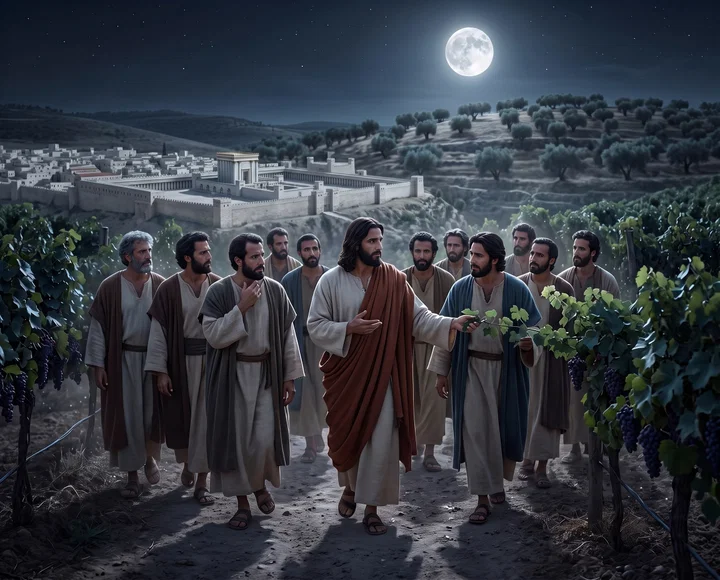
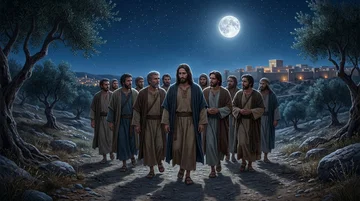
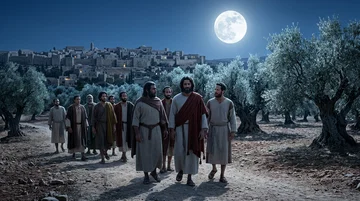
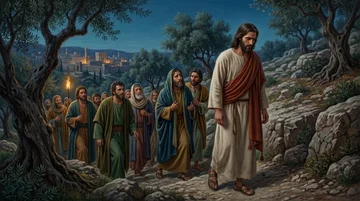
When Jesus had spoken these words, he went forth with his disciples over the brook Cedron, where was a garden, into the which he entered, and his disciples.
Translations
American King James Version, King James Version, KJV Cambridge Paragraph Bible
When Jesus had spoken these words, he went forth with his disciples over the brook Cedron, where was a garden, into the which he entered, and his disciples.
When Jesus had spoken these words, he went forth with his disciples over the brook Kedron, where was a garden, into which he entered, and his disciples.
When Jesus had spoken these words, he went forth with his disciples over the brook Kidron, where was a garden, into the which he entered, himself and his disciples.
When Jesus had spoken these words, he went forth with his disciples over the brook Kidron, where was a garden, into which he entered, himself and his disciples.
These things having said, Jesus went forth with his disciples beyond the brook of Kedron, where was a garden, into which he entered, himself and his disciples,
Jesus, having said these things, went out with his disciples beyond the torrent Cedron, where was a garden, into which he entered, he and his disciples.
Having said these things, Jesus, went out, with his disciples, across the winter-torrent of the Kedron, where was a garden,—into which he entered, he, and his disciples.
Berean Standard Bible, Majority Standard Bible
After Jesus had spoken these words, He went out with His disciples across the Kidron Valley, where they entered a garden.
When Jesus had spoken these words, he went out with his disciples over the brook Kidron, where there was a garden, into which he and his disciples entered.
When Jesus had said these words he went out with his disciples over the stream Kedron to a garden, into which he went with his disciples.
When Iesus had spoken these things, hee went foorth with his disciples ouer the brooke Cedron, where was a garden, into the which he entred, and his disciples.
Douay-Rheims (Challoner revision)
When Jesus had said these things, he went forth with his disciples over the brook Cedron, where there was a garden, into which he entered with his disciples.
Pictures
Cross-references 20 of 22
- Matthew 26:36-56
Then cometh Jesus with them unto a place called Gethsemane, and saith unto the disciples, Sit ye here, while I go and pray yonder.
Parallel account of Jesus praying in Gethsemane and being arrested.
- Luke 22:39-53
And he came out, and went, as he was wont, to the mount of Olives; and his disciples also followed him.
Parallel account of Jesus praying in the garden and being arrested.
- Mark 14:32-50
And they came to a place which was named Gethsemane: and he saith to his disciples, Sit ye here, while I shall pray.
A parallel account of Jesus entering the garden, praying, and being arrested.
- Matthew 26:47
And while he yet spake, lo, Judas, one of the twelve, came, and with him a great multitude with swords and staves, from the chief priests and elders of the people.
Judas comes with an armed crowd to betray and arrest Jesus.
- John 18:10-11
Then Simon Peter having a sword drew it, and smote the high priest’s servant, and cut off his right ear. The servant’s name was Malchus.
Peter draws his sword, and Jesus tells him to put it away as he accepts the cup.
- Mark 14:43-50
And immediately, while he yet spake, cometh Judas, one of the twelve, and with him a great multitude with swords and staves, from the chief priests and the scribes and the elders.
Parallel account of Jesus’ betrayal and arrest, followed by the disciples’ flight.
- 2 Samuel 15:23
And all the country wept with a loud voice, and all the people passed over: the king also himself passed over the brook Kidron, and all the people passed over, toward the way of the wilderness.
David and Jesus both cross the Kidron.
- Luke 22:47-51
And while he yet spake, behold a multitude, and he that was called Judas, one of the twelve, went before them, and drew near unto Jesus to kiss him.
Parallel account of Jesus’ betrayal and arrest, including his healing of the wounded man.
- Luke 22:39
And he came out, and went, as he was wont, to the mount of Olives; and his disciples also followed him.
Locates Jesus’ customary departure with His disciples at the Mount of Olives to pray.
- 2 Samuel 15:30
And David went up by the ascent of mount Olivet, and wept as he went up, and had his head covered, and he went barefoot: and all the people that was with him covered every man his head, and they went up, weeping as they went up.
David also crossed the Kidron while fleeing Absalom.
- Matthew 26:36
Then cometh Jesus with them unto a place called Gethsemane, and saith unto the disciples, Sit ye here, while I go and pray yonder.
Places Jesus and His disciples in Gethsemane.
- Matthew 26:57-75
And they that had laid hold on Jesus led him away to Caiaphas the high priest, where the scribes and the elders were assembled.
A parallel account continues through Jesus’ arrest and Peter’s denial.
- Luke 22:42
Saying, Father, if thou be willing, remove this cup from me: nevertheless not my will, but thine, be done.
Jesus asks whether the cup may pass from him.
- Matthew 26:38
Then saith he unto them, My soul is exceeding sorrowful, even unto death: tarry ye here, and watch with me.
The garden setting accompanies Jesus’ deep sorrow.
- Luke 22:14-15
And when the hour was come, he sat down, and the twelve apostles with him.
Jesus shares the Passover supper with his disciples before going to Gethsemane.
- Matthew 26:40
And he cometh unto the disciples, and findeth them asleep, and saith unto Peter, What, could ye not watch with me one hour?
The chosen disciples are asleep while Jesus prays.
- John 19:17-18
And he bearing his cross went forth into a place called the place of a skull, which is called in the Hebrew Golgotha:
Continues the route from Gethsemane to Calvary and Jesus’ death.
- John 13:17-31
If ye know these things, happy are ye if ye do them.
Jesus spoke these words before going to the garden.
- John 18:11
Then said Jesus unto Peter, Put up thy sword into the sheath: the cup which my Father hath given me, shall I not drink it?
Jesus commands Peter to put away his sword at Kedron.
- John 17:1
These words spake Jesus, and lifted up his eyes to heaven, and said, Father, the hour is come; glorify thy Son, that thy Son also may glorify thee:
Jesus speaks of His hour before departing.
Commentary
Each commentary is drawn from primary sources: the writings of Ellen G. White and Adventist pioneers and periodicals. Each commentary is separate. Its own words are not a quotation; follow the references to read the source passages.
Ellen G. White
12 sources
After His final discourse and intercessory prayer following the Passover supper in the upper room, Jesus went forth with His disciples over the brook Cedron or Kedron and entered the garden of Gethsemane.ST Sep 23, 1886Ms 91, 1909, par. 11–15DA 685.1COS 113.2ST Aug 12, 1886 The crossing took place at night under a full Passover moon, and they approached slowly while the nearby city of pilgrims' tents lay quiet.ST Sep 23, 1886DA 685.1 The garden was a familiar retreat where He often resorted with His disciples for meditation and fervent prayer before trial and duty, sometimes spending the whole night there with them, and it was known to Judas.ST Sep 23, 1886Ms 91, 1909, par. 11–15DA 685.2DA 685.3COS 113.2 Because the disciples were accustomed to His withdrawing to pray, they were not surprised when He went farther in with Peter, James, and John.ST Sep 23, 1886
As they walked to the garden He taught His disciples, using the vine to illustrate the union of His church with Himself and the Father.COS 113.2ST Jan 4, 18836RED 87.1–2 At or near Gethsemane He paused to recall and repeat those lessons taught on the way there on the night of His agony.ST Jan 4, 18836RED 87.1–2 As they drew near the garden He grew strangely silent.COS 113.2 On this final visit He entered in profound sorrow and physical weakness under the burden He was about to bear.DA 685.3 He was overwhelmed because though He Himself had known no sin He was to carry humanity's guilt and its consequences, feeling shut out from the Father's sustaining presence, which marked the beginning of His last agony, with sorrow pressing heavily even before His arrest.DA 685.2DA 685.3ST Aug 12, 1886
The garden is where, after His agony, He was betrayed by Judas, one of His professed disciples, and arrested and seized by armed men and soldiers.Ms 91, 1909, par. 11–15Ms 107, 1893, par. 2 Judas came there with a band of men and officers from the chief priests and Pharisees carrying lanterns, torches, and weapons.Ms 91, 1909, par. 11–15 Though knowing all things that would come upon Him and having power to deliver Himself from His enemies, as proved when they fell backward to the ground at His word I am He, He went forth to meet them and yielded Himself because He was sent to bear the sins of the world and must pay the penalty of man's transgression.Ms 91, 1909, par. 11–15 The disciples who were with Him later reproached and forsook Him when He most needed their sympathy and comfort.ST Jan 4, 1883
His going forth was toward betrayal, agony in Gethsemane, and crucifixion, the most trying ordeal awaiting the disciples.4RED 102.2–103.1 Because He knew beforehand who among His followers were unbelieving and who were of weak faith and undecided character, He had purposely brought about an earlier crisis of testing while He was still present to comfort and strengthen His chosen and prepare His faithful few for what was to follow.4RED 102.2–103.1 When their Lord was betrayed and condemned in the judgment hall, when He was humiliated and the multitude who had hailed Him as king hissed at Him and reviled Him, when the cruel jeering crowd cried for crucifixion, the faint-hearted would otherwise have sunk beneath fear, disappointment, horror, grief, and ruined hopes in a way the twelve could not have endured and that might have swept the rest away.4RED 102.2–103.1 Having already seen the fickleness of those who had once followed Him and tested the inconstant favor of the world, the disciples would not be overwhelmed with surprise at insult to their Master and at professed friends turning from Him in His trouble, nor hang their faith upon the opinions of others.4RED 102.2–103.1 The verse belongs to the account of His suffering and death, continued in the next chapter, which is of special importance and is to speak to the hearts of believers.Lt 100, 1910, par. 16
Sources
Pioneers and periodicals
41 sources
After speaking his teaching and prayer of John 13:31 to 17:26 following the supper, Jesus left the upper room and Jerusalem by night and crossed the brook Cedron, the Kidron east of the city, entering with his disciples the garden of Gethsemane on the slope of the Mount of Olives.ST Sep 23, 1886ST Feb 27, 1901ST Sep 28, 1882ST Nov 3, 1898ST Mar 18, 1897 That garden was his accustomed place of solitary communion with the Father, where he often resorted with his disciples and sometimes spent the whole night in prayer, and Judas knew it for that reason.ST Sep 23, 1886ST Apr 29, 1897ST Mar 27, 1901 He went there knowing he would meet Judas and the arresting party, turning from the city to face betrayal, suffering and death in obedience to the Father, when he could have gone another way.ST Mar 27, 1901RH Nov 6, 1860ST Mar 16, 1915RH Aug 17, 1911 There in darkness beneath the olives the decisive struggle of his mission began, as sorrow and anguish pressed upon him and his prayer strengthened him to bear the sin-avenging stroke in his Passover sacrifice at its appointed time.RH Oct 30, 1855RH Jul 1, 1873RH Mar 14, 1865ST Mar 16, 1915 His regular communion and lingering prayer there show disciples where to find strength to overcome temptation and endure trial, lifting the cry to God in anguish rather than yielding to despair.ST Feb 27, 1901RH Jun 22, 1916RH Feb 3, 1863
Place, Time, and Journey
The brook Cedron is the Kidron east of Jerusalem, crossed from the city by a rapid descent of about five minutes down into the Kidron Valley by a road with the garden in view all the way.ST Nov 3, 1898 From the gate of the city a slight declivity conducts down to the stream.RH Aug 17, 1911
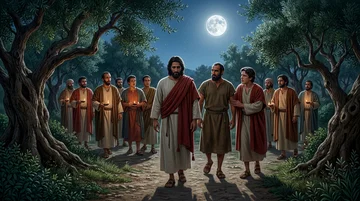
The garden across the brook is Gethsemane, at the foot of the Mount of Olives and on its slope, beneath the olive trees and among mountain trees.ST Nov 3, 1898ST Mar 18, 1897ST Jun 4, 1894RH Nov 11, 1862RH May 17, 1860 It is a vale reached along the streamlet's bank.RH Mar 14, 1865 The name Gethsemane means oil press, referring to the olive oil made there and, in a deeper sense, to Christ's agony on behalf of humanity.ST Mar 31, 1909
The crossing happened at night after leaving the upper room or upper chamber and leaving Jerusalem and the city.RH Nov 6, 1860ST Mar 18, 1897ST Jan 15, 1885ST Mar 16, 1915 It was under the full Passover moon while the nearby city of pilgrims' tents was quiet.ST Sep 23, 1886 It was a cold, dark night with chill breezes from Cedron and clouds shrouding the starlight, under night and dim starlight.ST Sep 23, 1886RH Mar 14, 1865
After speaking with them, Jesus went forth with his disciples over the brook and entered the garden with them on the way toward Gethsemane.ST Apr 29, 1897ST Jun 11, 1896ST Aug 15, 1916 Only John mentions this stream, to guide the reader to its typical bearing.RH Aug 17, 1911 Jesus crosses it even as his father David had crossed it a thousand years before in bitterness of spirit, flying from persecution and treachery.RH Aug 17, 1911
The brook Cedron near Jerusalem serves as a landmark identifying the city, and nearby Mount Olivet is identified as the place where Jesus went to pray.RH Dec 25, 1856 One teaching connects the crossing over Kedron and going up to the Mount of Olives with Jesus' prediction of the destruction of the temple buildings and Jerusalem, after which the disciples came to him privately on the Mount of Olives to ask when these things would happen and what would be the sign of his coming and of the end of the world.ST Feb 3, 1881
Words Before the Crossing
The words just spoken are the teaching and prayer after the supper in John 13:31–17:26.ST Feb 27, 1901ST Sep 28, 1882 They include the warnings and instruction in John 15–16 and the prayer in John 17.ST Feb 27, 1901ST Sep 28, 1882 That instruction in chapters 15 and 16 and that prayer in chapter 17 were given while going toward the garden.ST Sep 28, 1882ST Mar 18, 1897 The warnings in John 15–16 were given on the way, and the prayer in John 17 was offered just before reaching Gethsemane.ST Sep 28, 1882ST Mar 18, 1897 The movement is from leaving the upper chamber to crossing the brook Cedron and entering a garden on the way toward Gethsemane at the foot of the Mount of Olives.ST Mar 18, 1897
On the way to the garden on the night of his agony he taught them by a vine to represent the union of his church with himself and his Father.ST Jan 4, 1883 Near Gethsemane he recalled and repeated those truths.ST Jan 4, 1883 There he had told them to be of good cheer because he had overcome the world.ST Jan 4, 1883ST Apr 16, 1885 He went to Gethsemane after the Passover, the institution of the Lord's Supper, and a song.ST Jan 15, 1885 That going followed the last supper in the evening before his suffering, from the Passover supper with his disciples.ST Jan 15, 1885ST Oct 13, 1898ST Mar 11, 1886
Accustomed Place of Prayer
The garden across the brook was the place where Jesus often withdrew with his disciples for solitary communion with his Father in quiet retreat before trial and duty.ST Sep 23, 1886ST Apr 29, 1897ST Feb 27, 1901RH Jun 22, 1916ST Oct 13, 1898 Sometimes he spent the whole night there in fervent prayer.ST Sep 23, 1886 Judas knew the place well because of those frequent visits with the disciples.ST Apr 29, 1897ST Mar 27, 1901ST Jun 7, 1899ST Jun 11, 1896ST Jan 10, 1911
That regular communion strengthened him to overcome temptation and endure trial.ST Feb 27, 1901 There he received heavenly light and strength for the conflicts of his ministry.ST Feb 27, 1901ST Oct 13, 1898 His disciples saw that his secret prayer was connected with his mighty works.RH Jun 22, 1916
They were so accustomed to his withdrawing to pray that his going farther into the garden with Peter, James, and John did not surprise them.ST Sep 23, 1886 The other disciples entered the garden with him too but stayed behind as the struggle began in stillness and darkness.ST Sep 23, 1886ST Jan 15, 1885 The chosen three left to keep nightly watch slept and left him to go through sorrow alone.RH Mar 14, 1865
He regarded not the chill of the air and beheld not the terrors of the night on that cold, dark night when chill breezes blew from Cedron and clouds shrouded the starlight.RH Feb 3, 1863 He lingered there in sadness through the long night hours until the dawning of day for prayer.RH Feb 3, 1863 That prayer prepared him for the ocean of woe soon to flow over his soul and strengthened him to bear the dark scenes of pain ahead, and he was heard in those hours he devoted to prayer.RH Feb 3, 1863
Betrayal, Arrest, and Trial
After speaking with His disciples He crossed the brook Cedron and entered a garden with them, and that garden became the setting of His betrayal and arrest.ST Mar 14, 1906ST Jun 11, 1896ST Jan 10, 1911 Judas knew the place because Jesus had often gone there with His disciples, and that professed friend used his knowledge of the place to lead the arresting party to Him and help arrest Him during the night.ST Jun 7, 1899ST Jun 11, 1896ST Jan 10, 1911 There Jesus was apprehended.ST Mar 14, 1906ST Jun 7, 1899
He went directly to the garden knowing He would meet Judas and the men who came to betray Him.RH Nov 6, 1860ST Mar 16, 1915 Turning away from the impenitent city in sorrow, He went there to pray in agony about the suffering before Him, was betrayed with a kiss, and was lifted up on Calvary for sin.RH Nov 6, 1860ST Mar 16, 1915 He could have gone another way and avoided them, but He went forward to face betrayal, suffering, and death in obedience to the Father's will.RH Nov 6, 1860
His sacrifice was voluntary, for the officers could not have taken Him unless He surrendered.ST Mar 27, 1901 His appointed time had come and He was ready for the ordeal, having consecrated Himself by prayer as the great sacrifice to God the Father, bent on nothing so much as completing His sacrifice.ST Mar 27, 1901RH Aug 17, 1911
The disciples forsook Him and fled when He most needed their sympathy and comfort, leaving Him alone with His enemies.ST Jan 4, 1883ST Mar 14, 1906 Bound, He was taken to Annas, the former high priest and father-in-law of Caiaphas, who then held the office.ST Mar 14, 1906
The verse belongs to the beginning of the events leading into His trials and persecution before the high priest and Pilate, including Pilate's effort to release Him.ST Sep 24, 1912ST Oct 18, 1905 The chapter records His trial and begins the account of events leading to His crucifixion.ST Sep 24, 1912ST Oct 18, 1905
Beyond the brook in the garden beneath the olive trees He calmly faced armed men who came to bind Him, a clamoring crowd with sword and stave and torch and stormy men of death, with vengeance waiting only on His word.RH Jun 25, 1901ST Jun 4, 1894ST Apr 8, 1903 When the sword was drawn He looked with pitying eyes and spoke calm and kinglike with loving word and patient breath, commanding to put away the sword into the sheath.RH Jun 25, 1901ST Jun 4, 1894ST Apr 8, 1903 As He was led away to die, His final command was not to fight.RH Jun 25, 1901
The power of darkness had a temporary sway over the Light of the world, but Jesus accepted this apparent victory of His enemies so that they might see Scripture fulfilled in His disgrace and be convinced that He was the Son of God.ST Jun 7, 1899 From His betrayal over the brook until His resurrection He entered the period in which wicked people and the Devil held Him under their control, before Pilate and on the cross as well as in Joseph's tomb.RH Apr 7, 1851 In this sense being in the heart of the earth means being under those powers, not lying beneath the earth's surface in the tomb.RH Apr 7, 1851
Sacrifice, Agony, and Fulfillment
John 18:1 places the crossing after leaving the upper room or upper chamber, after the Passover and the institution of the Lord's Supper and a song, as Jesus goes with his disciples across the brook Cedron into the garden of Gethsemane.ST Aug 12, 1886ST Jan 15, 1885 As they went sorrow and anguish pressed heavily upon him, and in that garden sorrow overwhelmed him before his death in anguish endured for humanity.ST Aug 12, 1886RH Jul 1, 1873 There the decisive struggle of his mission began in stillness and darkness, where he knelt alone in grief and deep agony raising his voice to God in prayer for strength from heaven to bear the sin-avenging stroke.RH Mar 14, 1865ST Jan 15, 1885 The garden across the brook is deep, dark Gethsemane beneath the olives by night, where he suffered in tears and blood with unknown pangs in his bosom and vital streams trickling to the dewy sod.RH Mar 14, 1865RH Nov 11, 1862 There he is to be recognized as both Son of God and Son of man, the Prince Messiah.RH Nov 11, 1862 His disciples entered the garden too but stayed behind as the struggle began, and the chosen three left to keep nightly watch slept and left him to wade through sorrow alone, forgotten by his own.RH Mar 14, 1865ST Jan 15, 1885
That prayer in agony about the suffering before him prepared him for the ocean of woe soon to flow in wrath over his soul and strengthened him to bear the dark scenes of pain ahead, and he was heard in those hours he devoted to prayer through the long night hours until dawn, regarding not the chill of the air nor the terrors of the night.ST Mar 16, 1915RH Feb 3, 1863 The passage belongs to the account of Christ's Passover sacrifice, which fulfilled the Passover type at its appointed time on the fourteenth day of the first month.RH Oct 30, 1855RH Dec 15, 1868 After being seized in Gethsemane where Judas's mob took him, and after being mistreated by priests, Pharisees, and soldiers, he was crucified that same day in the afternoon.ST Mar 11, 1886 That day was Friday, the fifteenth of the month, the first day of the feast of unleavened bread.ST Mar 11, 1886
The garden scene among the trees is joined to his shameful death, for he enters the woods weary and burdened by love and shame, with the olives and their leaves portrayed as kind to him and the thorn tree as sympathetic, and his coming out of the woods leads to his death on a tree.ST Jul 8, 1897 Betrayed with a kiss, he is lifted up on Calvary for sin, after being left alone to endure anguish before being led across Kidron toward Calvary.ST Aug 15, 1916ST Mar 16, 1915 The setting near the Kidron and the garden is connected with the place near which he was later buried in Joseph's tomb, where he lay until the resurrection morning.ST Jul 7, 1914
Pattern for Disciples Today
After the words to his disciples after the supper, the teaching and prayer of John 13:31-17:26, he went with them across the brook Kidron to a garden, a solitary place where he often sought communion with his Father, and this regular communion strengthened him to overcome temptation and endure trial, showing that disciples need the same source of strength.ST Feb 27, 1901 The crossing of the brook Cedron with his disciples to enter the garden of Gethsemane for prayer was on a cold, dark night with chill breezes blowing from Cedron over Gethsemane and wild clouds covering the heavens and shrouding the starlight in unwonted darkness.RH Feb 3, 1863 He regarded not the chill of the air and beheld not the terrors of the night, but lingered there in sadness through the long night hours until the dawning of day for prayer, and that prayer prepared him for the ocean of woe soon to flow in wrath over his soul and strengthened him to bear the dark scenes of pain ahead, and he was heard in those hours he devoted to prayer, teaching the soul overwhelmed with anguish in the high tempest of sorrow to lift its cry to God and not yield to the woes of despair, for God ever hears and will answer prayer.RH Feb 3, 1863
Beyond the brook Cedron in the garden, beneath the olive trees, he calmly faced the armed men who came to bind him, a clamoring crowd with sword and stave and torch and stormy men of death, with vengeance waiting only on his word.RH Jun 25, 1901ST Apr 8, 1903 When the sword was drawn he looked with pitying eyes and spoke calm and kinglike with loving word and patient breath, commanding to put away the sword into the sheath, and as he was led away to die his final command was not to fight, making him the bravest hero ever born, daring a felon's grave and bearing the scorn of scorn, whose calm, loving nonresistance is the pattern to follow to end war, daring to live and die as he commanded and rejecting war for peaceful courage.RH Jun 25, 1901ST Apr 8, 1903 Going with his disciples to Gethsemane, where the world's betrayal and opposition met him, he shows that the way to heaven passes through the shadow of Gethsemane and the cross.ST Jan 8, 1902
Sources