Matthew 26:42
He went away again the second time, and prayed, saying, O my Father, if this cup may not pass away from me, except I drink it, thy will be done.
Translations
He went away again the second time, and prayed, saying, O my Father, if this cup may not pass away from me, except I drink it, your will be done.
King James Version, KJV Cambridge Paragraph Bible, Webster Bible
He went away again the second time, and prayed, saying, O my Father, if this cup may not pass away from me, except I drink it, thy will be done.
Again a second time he went away, and prayed, saying, O my Father, if this cannot pass away, except I drink it, thy will be done.
Again a second time he went away, and prayed, saying, My Father, if this cannot pass away, except I drink it, thy will be done.
Again, a second time, having gone away, he prayed, saying, 'My Father, if this cup cannot pass away from me except I drink it, Thy will be done;'
Again going away a second time he prayed saying, My Father, if this cannot pass [ from me] unless I drink it, thy will be done.
Again, a second time, departing he prayed, saying: My Father! If it is impossible for this to pass, except I, drink, it, Accomplished, be, thy will.
A second time He went away and prayed, “ My Father, if this cup cannot pass unless I drink it, may Your will be done.”
A second time He went away and prayed, “ My Father, if this cup cannot pass from Me unless I drink it, may Your will be done.”
Again, a second time he went away and prayed, saying, “ My Father, if this cup can’ t pass away from me unless I drink it, your desire be done.”
Again, a second time he went away, and said in prayer, O my Father, if this may not go from me without my taking it, let your pleasure be done.
Againe he went away the second time, and praied, saying, O my Father, if this cuppe can not passe away from mee, but that I must drinke it, thy will be done.
Douay-Rheims (Challoner revision)
Again the second time, he went and prayed, saying: My Father, if this chalice may not pass away, but I must drink it, thy will be done.
Pictures

Cross-references 20 of 48
- Luke 22:42-44
Saying, Father, if thou be willing, remove this cup from me: nevertheless not my will, but thine, be done.
Jesus prays to submit to the Father’s will amid agony, strengthened by an angel.
- Mark 14:36
And he said, Abba, Father, all things are possible unto thee; take away this cup from me: nevertheless not what I will, but what thou wilt.
Jesus asks that the cup be removed while submitting to the Father’s will.
- Luke 22:42
Saying, Father, if thou be willing, remove this cup from me: nevertheless not my will, but thine, be done.
Jesus prays about the cup and submits to the Father’s will.
- Isaiah 53:6
All we like sheep have gone astray; we have turned every one to his own way; and the LORD hath laid on him the iniquity of us all.
The Lord lays humanity’s iniquity on the innocent sufferer.
- Luke 22:43
And there appeared an angel unto him from heaven, strengthening him.
An angel strengthens Jesus during His agony as He faces the cup.
- Matthew 27:46
And about the ninth hour Jesus cried with a loud voice, saying, Eli, Eli, lama sabachthani? that is to say, My God, my God, why hast thou forsaken me?
His cry on the cross reveals the depth of the suffering anticipated in Gethsemane.
- Matthew 6:10
Thy kingdom come. Thy will be done in earth, as it is in heaven.
Jesus accepts the Father’s will, echoing the prayer for God’s will to be done.
- Philippians 2:8
And being found in fashion as a man, he humbled himself, and became obedient unto death, even the death of the cross.
Christ submits to the Father’s will and becomes obedient unto death.
- Matthew 20:22
But Jesus answered and said, Ye know not what ye ask. Are ye able to drink of the cup that I shall drink of, and to be baptized with the baptism that I am baptized with? They say unto him, We are able.
Jesus speaks of drinking his cup as sharing his suffering.
- Mark 10:38-39
But Jesus said unto them, Ye know not what ye ask: can ye drink of the cup that I drink of? and be baptized with the baptism that I am baptized with?
Both texts use the cup to describe suffering Jesus and his followers undergo.
- John 6:38
For I came down from heaven, not to do mine own will, but the will of him that sent me.
Both express Christ’s submission to the Father’s will.
- John 18:1
When Jesus had spoken these words, he went forth with his disciples over the brook Cedron, where was a garden, into the which he entered, and his disciples.
locates praying beyond the brook
- John 12:27
Now is my soul troubled; and what shall I say? Father, save me from this hour: but for this cause came I unto this hour.
Jesus’ troubled soul faces the coming hour of suffering and death.
- Matthew 26:38
Then saith he unto them, My soul is exceeding sorrowful, even unto death: tarry ye here, and watch with me.
Jesus tells His disciples of His sorrow unto death before praying.
- Mark 14:37-38
And he cometh, and findeth them sleeping, and saith unto Peter, Simon, sleepest thou? couldest not thou watch one hour?
Jesus finds the disciples sleeping between prayers and urges them to watch and pray.
- John 5:30
I can of mine own self do nothing: as I hear, I judge: and my judgment is just; because I seek not mine own will, but the will of the Father which hath sent me.
Jesus submits his own will to the will of the Father.
- Psalms 40:8
I delight to do thy will, O my God: yea, thy law is within my heart.
Christ’s surrender accords with delight in doing God’s will.
- Hebrews 4:15
For we have not an high priest which can not be touched with the feeling of our infirmities; but was in all points tempted like as we are, yet without sin.
Jesus faced human temptation and suffering yet remained sinless.
- Hebrews 5:7
Who in the days of his flesh, when he had offered up prayers and supplications with strong crying and tears unto him that was able to save him from death, and was heard in that he feared;
Jesus prayed amid agony and needed his Father’s help.
- Isaiah 53:11
He shall see of the travail of his soul, and shall be satisfied: by his knowledge shall my righteous servant justify many; for he shall bear their iniquities.
Christ’s suffering bears iniquities and brings many to salvation.
Commentary
Each commentary is drawn from primary sources: the writings of Ellen G. White and Adventist pioneers and periodicals. Each commentary is separate. Its own words are not a quotation; follow the references to read the source passages.
Ellen G. White
94 sources
In Gethsemane it is the second of three identical prayers for deliverance, no longer asking to escape but consenting to drink the cup if it cannot pass otherwise.COS 117.5–7Ms 1, 1892, par. 9–10Ms 29, 1909, par. 2–4Ms 42, 1897, par. 4–6ST Mar 26, 1894 The cup is the suffering appointed to guilty humanity in bearing the guilt, curse and penalty of the whole world's transgression as substitute even to death on the cross.3SP 98.2–99.2Ms 52, 1904, par. 6Ms 1, 1892, par. 9–10 Drinking it meant enduring the hiding of the Father's face and the crushing weight of divine wrath against sin with dread of separation from God.Ms 45, 1892, par. 15–21DA 685.2ST Jun 3, 1897 It was prayed at the awful moment when the destiny of the world trembled in the balance and He could still have refused, yet He chose to save all who will come at any cost to Himself.ST May 30, 1878Ms 52, 1904, par. 6Lt 147, 1903, par. 25–26Ms 45, 1892, par. 15–21 The Father did not take the cup away but sent a mighty angel to strengthen Him to drink it, setting before Him victory and multitudes saved, and His submission patterns believers in yielding to God's will under suffering and persecution.Ms 73, 1909, par. 22–24Ms 45, 1892, par. 15–213SP 100.2–101.25RED 20.1–21.2SG1 186.3–187.1
Garden Night of Agony
The prayer was offered in Gethsemane at the foot of the Mount of Olives, ground hallowed and consecrated by His presence in human nature and by His prayers and tears, where He agonized alone and moistened the sod with His blood.6RED 88.13SP 250.3 He reached it after crossing the Kidron on the way to the garden, giving lessons on the way with the vine to represent the union of His church with Himself and His Father, and entering His great agony and humiliation there in most need of sympathy and comfort while even dear disciples reproached and forsook Him, leaving reminders of unrequited love all around.6RED 87.1–2
It was night under a broad and full Passover moon shining from a cloudless sky, with the city of pilgrims' tents hushed into silence, as He slowly made His way there in company with His disciples.DA 685.1 It was a place He had often used for meditation and prayer but never before with a heart so full of sorrow, entered after the last solemn and momentous interview with the apostles whose hearts were heavy with sorrow and minds distracted with doubt and fear from hearing Him foretell His sufferings and death.DA 685.2LSEGW 257.4 That interview closed with courage and fortitude, with no loud outcries and no abandonment to grief, spending those last hours speaking words of comfort and assurance and then uniting with them all in a hymn of praise to the Most High as a prelude to Gethsemane.LSEGW 257.4 It came after the Passover supper with no food or drink since, in solitude and a night spent in prayer to the Father to prepare for the great trial of the judgment hall and the cross and the bloodstained path that led to Calvary, a scene more trying than any other followed by abuse and mockery and the awful scenes of Calvary.LSEGW 257.4Ms 95, 1897, par. 10–12
He was already utterly sad and silent under a terrible burden, His strange sadness deepening toward His usual place of retirement, His form swaying as if about to fall, every step made with labored effort, groaning aloud under pressure, and twice needing His companions to support Him or He would have fallen to the earth.DA 685.3 Then prostrate on the cold ground He was seized with superhuman agony greater than before, fainting and exhausted and staggering back to the place of prayer, exceeding sorrowful even unto death.COS 117.5–7ST May 30, 1878Ms 42, 1897, par. 4–6 This was His hour of keenest agony, when the mysterious cup trembled in His hand, greater than what He endured afterward before priests, rulers and soldiers.Ms 25, 1898, par. 1–3 His face was pale and spoke of deep sorrow, yet His visage was not marred before His enemies and His countenance never appeared more beautiful than in His sorrow, expressing pity for those who knew not what they were doing and a desire to help them if He could.Ms 25, 1898, par. 1–3 His wonted calm was broken and His voice was full of human anguish instead of triumph, as when He wept over Jerusalem, taking the position of a lost soul like a reed beaten and bent where He who had stood as a mighty cedar and conqueror over the powers of darkness had come to the hour of the power of darkness, passing through a death struggle on which hung whether sinful human beings would fall into the hands of Satan while a world of loathsome sin seemed about to fall upon Him though He knew He was the Son of God.Lt 147, 1903, par. 21–24
The agony was so intense that it forced drops of blood from His pores that stained His face and fell in drops upon the ground and moistened the sod, with sweat falling like drops of blood.COS 117.5–7ST May 30, 1878Ms 42, 1897, par. 4–6ST Aug 8, 1878 He uttered suppressed wails and trembled under horror of great darkness, with pale and quivering lips, fainting and exhaustion, dying prostrate under the burden with bodily anguish that marred His visage more than any man.ST May 30, 1878Lt 147, 1903, par. 21–24ST Nov 25, 1889ST Aug 8, 1878 The conflict was so severe that great drops came from the pores of His skin and moistened the ground, immediately before betrayal by Judas with a kiss, abandonment by all His disciples, and being taken to Annas then Caiaphas then Pilate then Herod then Pilate again through insult and mockery and scourging.Ms 95, 1897, par. 10–12
Through life on earth He had walked in the light of God's presence, but in this prayer He felt shut out from God's sustaining presence under horror of great darkness He had never before experienced.DA 685.2ST Aug 8, 1878 The reason is that He was numbered with the transgressors and must bear the guilt of fallen humanity, with the iniquity of all laid upon Him who knew no sin, drinking the accumulated guilt of the world while feeling His Father's presence withdrawn.DA 685.2ST Aug 8, 1878 Sin appeared so dreadful to Him and the weight of guilt so great that He was tempted to fear it would shut Him out forever from His Father's love, His divine spirit filling with shuddering dread, feeling how terrible is the wrath of God against transgression, with sorrow exceeding the last great struggle with death.DA 685.2ST Aug 8, 1878
Darkness was pressed upon His soul with almost unbearable agony, with rejection by His own people who had not received Him, hunted from place to place by priests and rulers, with betrayal, denial and desertion, while angels watched with amazement at Satan's devices against the divine Son.ST Jan 15, 1902ST Nov 25, 1889ST Mar 19, 1912 Satan tempted Him with fear that taking the place of substitute and surety and bearing human sin with its anguish of separation and crushing weight of wrath would mean He would never again be one with God but would come under Satan's control.ST Jan 15, 1902ST Jun 3, 1897ST Mar 19, 1912 It was a wrestling with temptation of awful power in which impurity fought with purity and the prince of light met the prince of darkness.Lt 147, 1903, par. 29 His agony was part of the assault of apostasy seeking to destroy Him and cut off communication between the world and heaven, leading on to insult, mocking, scourging, the cross and shameful humiliation and agony in death, with satanic agencies striving to divorce Him from God as the Jews had divorced themselves, which He would not yield.Ms 95, 1897, par. 10–12ST Apr 15, 1897
The prayer belongs to the ordeal He knew would lead to betrayal and crucifixion, to agony in Gethsemane, condemnation, humiliation and death, for which He prepared His faithful disciples so they would not be overwhelmed when the crowd and those who had followed Him turned against Him, having already seen how fickle the world's favor was and not basing faith on others' opinions.2SP 289.2–290.14RED 102.2–103.1 John was one of the three disciples permitted to witness the agony in the garden, and the disciples spoke often afterward of His suffering there, including His humility and forbearance as He faced betrayal, trial and execution.ST Nov 2, 1882ST Jun 12, 1879 The painful history of suffering in Gethsemane before betrayal for the world is what the Lord's Supper brings to mind, where He suffered as He faced the sacrifice for humanity.9T 101.3Ms 19, 1897, par. 50–53
The conflict endured in the garden led through shame of the cross to victory over death and the tomb by the risen Redeemer, before whom angels fall prostrate in worship with thanksgiving and praise, who sought out the two lonely and desponding disciples, remained hours in their presence teaching and comforting them unrecognized because their eyes were clouded, though the truths He spoke sank deep into their discouraged hearts.ST Sep 19, 1878 The scene forms part of revealed redemptive history, showing beneath the crushing weight of the sins of the whole world the suffering He endured before betrayal, trial and death as He yielded His life for the world.4SP 481.2–482.2 Yet these coming scenes of crucifixion and making His soul an offering for sin were not what caused His sorrow at that moment; He wept for Jerusalem's doomed people, blinded and impenitent despite His desire to bless and save them.4SP 18.1
Disciples Sleeping Nearby
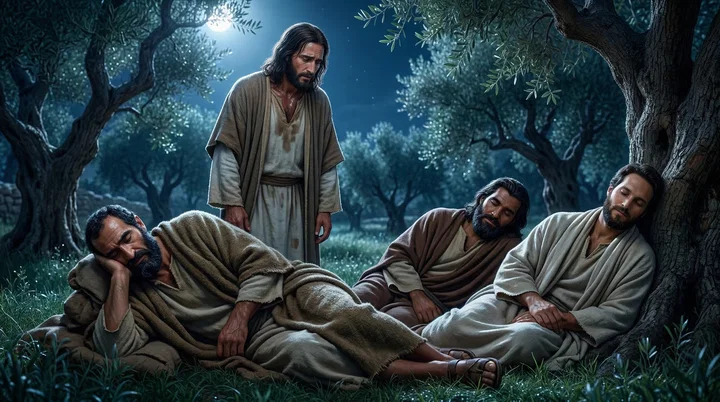
In His anguish among the trees He leaned in sorrow and longed for sympathy and heartfelt prayers.COS 112RH Dec 28, 1911AA 490.3–491.2SLP 309.2 After praying in submission to drink the cup if it could not pass, He returned in superhuman agony, fainting and exhausted, to seek companionship and relief, hoping for a word of love to strengthen and comfort Him in sorrow.COS 117.5–7Ms 45, 1892, par. 6–9 But He again found them sleeping, and when aroused they looked on His blood-stained face with fear without understanding the anguish of mind it expressed.COS 117.5–7
That sleep came when love for their suffering Master should have kept them awake, for Satan and his evil angels caused it.Ms 45, 1892, par. 6–9 Through drowsiness and stupor they heard not His voice and had only a dim sense of the angels' presence.Ms 59, 1897, par. 7ST Jul 27, 1915 So they missed the spiritual evidence and the power and glory of the scene that could have strengthened their souls for the terrible scenes before them.ST Aug 31, 19154T 542.1ST Jul 27, 1915
He had meant the night-watch to fortify them for the severe test of faith they were to face.5RED 31.1–2 That mournful period should have been spent in noble mental struggles and prayers that would have brought strength to witness the terrible agony of the Son of God and fitted them to behold His death on Calvary.5RED 31.1–2Ms 45, 1892, par. 6–9 It would have prepared them to understand in some degree the overpowering anguish He endured and would endure on the cross, and helped them recall what He had told them beforehand many times about His sufferings, death, and resurrection.5RED 31.1–2Ms 45, 1892, par. 6–9 Then amid the gloom of that trying hour some rays of hope would have lighted the darkness and sustained their faith against the power the prince of darkness used to paralyze their senses while they should have been watching and praying.5RED 31.1–2Ms 45, 1892, par. 6–9
Because they did not watch and pray as asked, they were unready to bear the scorn and mockery that fell on Christ and left Him alone in His bitter trial.Ms 45, 1892, par. 6–9 If they had spent that hour watching with Him and praying to God, Peter would not have been left to depend on his own feeble strength and would not have denied his Lord.5RED 31.1–2 Peter later remembered with grief and penitence that Jesus had prayed in great agony while he slept.Lt 54, 1874, par. 15–163T 416.2 His remorse humbled him, led to repentance and renewed commitment to his Saviour, taught him sympathy for the weak and erring, and fitted him to warn the presumptuous and strengthen his brethren.3T 416.2
The disciples had hoped Christ was about to set up an earthly kingdom where nations would bow and they would be chief rulers.Ms 45, 1892, par. 6–9 Instead He was nearing a slave's death on a shameful cross that would blow their earthly hopes apart.Ms 45, 1892, par. 6–9 He desired them to watch so they would understand He had come to suffer and die for the sins of the world and to set up a kingdom of love, peace, and purity in hearts to fit men for heaven.Ms 45, 1892, par. 6–9 James, who had been with Jesus in Gethsemane, understood more fully what sharing that cup of suffering meant when he was imprisoned and led to execution.7RED 68.1RH Apr 27, 1911
Second Prayer of Submission
This is the second prayer in Gethsemane, standing between the first request that the cup might pass and the third repetition, one of three thrice-uttered prayers for deliverance wrung from Him under overmastering agony.COS 117.5–7Ms 1, 1892, par. 9–10ST Mar 26, 1894ST Mar 19, 19125RED 18.2–19.3 It was prayed while seized with superhuman agony greater than before, fainting and exhausted, staggering back to the place of prayer, prostrate on the cold ground with suppressed wails while nature and the drowsy disciples witnessed.COS 117.5–7Lt 147, 1903, par. 25–265RED 18.2–19.3 The agony was so intense that it forced drops of blood from His pores that stained His face and fell to the ground.COS 117.5–7Ms 1, 1892, par. 9–105RED 18.2–19.3 After the prayer He again sought sympathy from the disciples and again found them sleeping, and when aroused they looked on His blood-stained face with fear without understanding the anguish of mind it expressed.COS 117.5–7Lt 147, 1903, par. 21–24
Its language is changed to acceptance, no longer seeking escape but asking that the cup pass only if He need not drink it, and consenting that if it may not pass except by drinking it the Father's will be done, breathing only submission.Ms 29, 1909, par. 2–4Ms 42, 1897, par. 4–6Ms 1, 1878, par. 14–16COS 112ST Jun 3, 1897 He prayed a second time in overwhelming agony, returning to prayer with the same surrender after being left without the human companionship He longed for, continuing through such anguish that His sweat fell like drops of blood.Ms 29, 1909, par. 2–4Ms 42, 1897, par. 4–6ST Dec 2, 1897 The cup was the suffering on the path to Calvary, the anguish of becoming substitute and surety for a sinful world including separation from God because of sin, which He willingly bore so that His self-sacrifice would reveal His love and secure humanity's salvation.Ms 1, 1878, par. 14–16ST Jun 3, 1897ST Dec 2, 1897 Satan tempted Him even then with fear that taking this place would mean He would never again be one with God but would come under Satan's control.ST Jun 3, 1897ST Mar 19, 1912
It was prayed prostrate in horror of great darkness not for His disciples but for His own tempted, agonized soul at the awful moment that was to decide the destiny of the world with the fate of humanity trembling in the balance.Lt 147, 1903, par. 25–26Lt 147, 1903, par. 21–24DA 690.2–3 His voice was full of human anguish instead of triumph and His wonted calm broken, like a reed beaten and bent where He who had stood as a mighty cedar and conqueror over the powers of darkness now took the position of a lost soul, with a face marked with bloody sweat showing bodily anguish that marred His visage more than any man.Lt 147, 1903, par. 21–24ST Jan 15, 1902 The prayer expressed His longing for companionship and relief from the darkness that well-nigh overpowered Him, while His humanity shrank from the last crowning sacrifice.Lt 147, 1903, par. 25–26Lt 147, 1903, par. 21–24ST Jan 15, 1902DA 690.2–3ST Mar 19, 1912 As He prayed earnestly in submission, darkness pressed upon His soul with almost unbearable agony.ST Jan 15, 1902ST Mar 19, 1912
Cup of Sin Bearing
The cup is the humiliation and agony apportioned to guilty humanity on the path to Calvary, the anguish of bearing the guilt of the whole world's transgression of the law and suffering its curse, penalty and consequence as substitute and surety, the innocent for the guilty, even unto death on the cross.3SP 98.2–99.2Ms 52, 1904, par. 6Ms 1, 1892, par. 9–10Ms 1, 1878, par. 14–16DA 690.2–3 It trembled in the hands of the Son while His countenance was marked by bloody sweat, as the wail and wretchedness and ruin of a lost world and the woes of the lost race came before Him, even to the prospect of separation from God.Ms 1, 1892, par. 9–10Ms 73, 1909, par. 22–24DA 690.2–3 His consent to drink it if it could not pass without His drinking it was consent to honor the Father by doing His will and bearing His curse, ending the conflict in obedience unto death, even the death of the cross, set against Eden's foul blot of disobedience to reveal what Adam's disobedience involved and what the Son's obedience means.Ms 1, 1892, par. 9–10Ms 1, 1878, par. 14–16DA 690.2–3 He willingly bore that agony so that His self-sacrifice would reveal His love and secure humanity's salvation, and He was strengthened by a mighty angel to endure the trial.Ms 52, 1904, par. 6Ms 73, 1909, par. 22–24Ms 1, 1878, par. 14–16
Drinking it meant bearing sin while the Father's face was turned away and hidden and His sustaining presence withdrawn, enduring separation from God and the crushing weight of divine wrath against transgression.Ms 45, 1892, par. 15–21DA 685.2ST Jun 3, 1897ST Aug 14, 1879Ms 123, 1909, par. 35–36 Through life He had walked in the light of God's presence, but here He felt shut out, numbered with transgressors with the iniquity of all laid upon Him who knew no sin, with sin appearing dreadful and guilt so heavy He was tempted to fear it would shut Him out forever from the Father's love, feeling how terrible that wrath is unto exceeding sorrowfulness even unto death.Ms 45, 1892, par. 15–21DA 685.2ST Jun 3, 1897 Satan pressed darkness upon His soul with almost unbearable agony and tempted Him with the fear that taking the sinner's place would mean He would nevermore be one with God but would come under Satan's control, so that He longed for companionship and words of relief.ST Jun 3, 1897ST Mar 19, 1912 His soul was in anguish beyond what finite nature could endure, with overpowering fear and dread as of something He could not endure, marked by bloody sweat that makes it possible for humanity to receive divine power to overcome through the blood of the Lamb and the word of testimony.ST Mar 19, 1912ST Aug 14, 1879Ms 123, 1909, par. 35–36
Because His spiritual nature was free from every taint of sin He felt suffering more keenly than human beings do and His desire for relief from God's displeasure was stronger than theirs.ST Dec 9, 1897 His apparent hesitation therefore reveals the depth and intensity of the suffering He endured for the sins of the world.ST Dec 9, 1897Ms 139, 1907, par. 6
His surrender was absolute though His will was capable of asserting itself and He could have refused to be humiliated, facing the most fearful strain ever brought upon a human being because He was bearing the sins of the whole world.Ms 134, 1905, par. 3 He had laid off His royal robe and kingly crown and clothed His divinity with humanity to live a sinless life in behalf of humanity and to suffer humiliation and death to make atonement on the cross.Ms 134, 1905, par. 3 The sinless Son was treated as a sinner that sinful human beings might be treated as innocent, wounded for transgressions and bruised for iniquities with the chastisement of peace upon Him and healing by His stripes, becoming poor for guilty people's sake so they might become rich through His poverty, in willing obedience as He faced the agony and death awaiting Him.Ms 134, 1905, par. 3RH Apr 15, 1858ST Jan 17, 1878
World Deciding Choice
The second prayer was uttered at the awful moment that was to decide the destiny of the world, with the fate of humanity trembling in the balance while heavenly hosts waited.ST May 30, 1878Lt 147, 1903, par. 25–26Ms 45, 1892, par. 15–21ST Jan 15, 1902DA 690.2–3 It was not yet too late to refuse the cup apportioned to guilty men, to wipe the bloody sweat from the brow, to leave transgressors to perish in iniquity under displeasure and receive sin's penalty, and to go back to the Father.ST May 30, 1878Lt 147, 1903, par. 25–26Ms 45, 1892, par. 15–21ST Jan 15, 1902DA 690.2–3 Satan urged that course even then, tempting Him to save Himself.Lt 147, 1903, par. 25–26ST Jan 15, 1902
With the history of the human race before Him He saw transgressors of the law left to themselves perishing, the power of sin, and the utter helplessness of man to save himself.ST May 30, 1878Lt 147, 1903, par. 25–26Ms 45, 1892, par. 15–21ST Jan 15, 1902DA 690.2–3 He beheld the woes and lamentations and cries of a doomed world, its impending fate and ruin and doom and day of doom.ST May 30, 1878Lt 147, 1903, par. 25–26Ms 45, 1892, par. 15–21DA 690.2–3 He gathered the sinfulness of every man upon His divine soul, treading the winepress alone with none with Him in a sorrow beyond angels' power to ease.Lt 147, 1903, par. 25–26Ms 45, 1892, par. 15–21
Having left the purity and happiness and glory of the heavenly courts to save the one lost sheep, the one fallen world, reaching to the very depths of misery to rescue a lost and ruined race, He would not now turn away from His mission.ST May 30, 1878Lt 147, 1903, par. 25–26Ms 45, 1892, par. 15–21DA 690.2–3 His decision was made to save man and all that will come to Him at any cost to Himself.ST May 30, 1878Lt 147, 1903, par. 25–26Ms 45, 1892, par. 15–21ST Jan 15, 1902DA 690.2–3 He would drink the bitter potion and bitter cup of humiliation and agony, accept His baptism of blood, suffer as the innocent the curse and consequence of God's curse for sin, and become the propitiation of a race that has willed to sin, that perishing millions through Him may gain everlasting life.ST May 30, 1878Lt 147, 1903, par. 25–26Ms 45, 1892, par. 15–21ST Jan 15, 1902DA 690.2–3 At that decisive moment He could still have refused and left humanity to perish, but He accepted the suffering and death necessary to save the human race.Ms 52, 1904, par. 6ST Aug 9, 1905
At stake was the sacrifice ordained before the foundation of the world and symbolized in every sacrifice offered since Adam's transgression.ST Mar 19, 1912 At stake was the glorious purpose of the Father and the Son to save a perishing world, the thing angels eagerly desired to look into, the burden of prophecy and the foundation of types and shadows.ST Mar 19, 1912 The hour had come when all the types and symbols pointing to His suffering and death must be fulfilled, after He had already suffered much as the Son of Man and as man's substitute to redeem and save men.ST Mar 19, 1912 If He refused the cup, redemption would fail and Satan with his apostate forces and confederacy of evil would come off triumphant, while if He drank it the captives would be delivered from the mighty, Satan would be overcome, obedience to the law would be demonstrated possible, and all would be made more than conquerors through Him.ST Mar 19, 1912
The more mercilessly wrath beat upon Him the more firmly He clung to His Father's hand and pressed on in the bloodstained path with Thy will be done.ST Aug 8, 1878 That steadfast submission brought His spotless character out in purer light and vindicated God in the controversy with Satan over the execution of the plan of salvation.ST Aug 8, 1878
Set against the Garden of Eden with its foul blot of disobedience, His consent honored the Father by doing His will and bearing His curse, the consequence and burden of man's transgression, and ended the conflict in obedience unto death, even the death of the cross.Ms 1, 1892, par. 9–106MR 336.3–338.1Lt 69, 1897, par. 23–25 The contrast reveals what was involved in Adam's disobedience and what the obedience of the Son means, teaching that faithfulness follows God's will rather than self.Ms 1, 1892, par. 9–10Lt 69, 1897, par. 23–25 His will was capable of asserting itself and He could have refused to be humiliated, having laid off His royal robe and kingly crown and clothed His divinity with humanity to live a sinless life in behalf of humanity and to make atonement, treated as a sinner that sinful human beings might be treated as innocent, wounded for transgressions and bruised for iniquities with the chastisement of peace upon Him and healing by His stripes.Ms 134, 1905, par. 36MR 336.3–338.1
Heaven Strengthens for Victory
The Father did not take the trembling cup from His hand and pale lips, but heaven opened with light amid stormy darkness in answer to the thrice-uttered prayer heard in heaven.Ms 45, 1892, par. 15–21ST May 30, 1878Lt 147, 1903, par. 27 A mighty angel in God's presence, occupying the place from which Satan fell, came from the throne to His side.Ms 73, 1909, par. 22–24Lt 147, 1903, par. 27 The angel was not sent to tell Him release was granted, which would have left mankind in hopeless despair and eternal ruin, but to support Him in drinking the cup presented to Him.3SP 100.2–101.25RED 20.1–21.29T 102.1–3ST May 30, 1878 The cup was the bitter suffering for humanity, and strengthened by the angel He accepted it and submitted to the Father's will.9T 102.1–3Ms 43, 1909, par. 10–12
The angel came not to take the cup from Christ's hand but to strengthen the divine-human sufferer under the most fearful strain ever brought on a human being to drink it.Ms 45, 1892, par. 15–21Lt 147, 1903, par. 27 He gave power to Him, raised Him from the cold ground, and comforted Him with love from the Father.Ms 45, 1892, par. 15–21Lt 147, 1903, par. 27 He gave assurance of the Father's love and that the Father is greater and more powerful than Satan.Lt 147, 1903, par. 27 He assured Him of eternal joys for all who accept redemption.Ms 45, 1892, par. 15–21Lt 147, 1903, par. 27
He pointed Him to the open heavens and the souls that would be saved as the result of His sufferings.Lt 147, 1903, par. 27 He set before Him victory over Satan and millions made victors with Him in His glorified kingdom.3SP 100.2–101.25RED 20.1–21.2ST May 30, 1878 He assured Him that His sacrifice would result in the utter discomfiture of Satan and that the kingdom of this world would be given to the saints of the Most High.Lt 147, 1903, par. 27 He assured Him that He would see of the travail of His soul and be satisfied in seeing a multitude of the human race saved, eternally saved.Lt 147, 1903, par. 27
Having faced the cost of humanity's sin and chosen to save the race, He prayed in a spirit of submission and found serenity.Ms 45, 1892, par. 15–21ST Sep 23, 1886 Heavenly serenity and peace then rested upon His pale and blood-stained face, with victory bringing peace after the fearful hour passed with the cup accepted to drain to the dregs.Ms 45, 1892, par. 15–215RED 20.1–21.2ST May 30, 1878 His acceptance was essential and stood between humanity and its destiny, for if the cup had passed from Him the human race would have faced eternal ruin.9T 102.1–3Ms 43, 1909, par. 10–12
His submission shows that God's will may involve bitter suffering, yet His self-sacrifice endured to its full measure on the way to Calvary reveals love.Ms 119, 1909, par. 32–3412MR 114.2–115.1 That love was made to draw people away from sin and secure their eternal salvation.12MR 114.2–115.1 His suffering, marked by bloody sweat in bearing humanity's sin, made salvation possible and made it possible for humanity to receive divine power and overcome through the blood of the Lamb and the word of testimony.Ms 123, 1909, par. 35–36Ms 119, 1909, par. 32–34
Pattern for Believers
Christ's hardship and self-denial in accepting the Father's will when obedience meant suffering shows the way to overcome and the need for divine help.STSE 45.12T 205.1–23T 371.1 Those who seek eternal life must likewise resist their own inclinations, not shrink from hardship or sacrifice, and seek God as their source of strength in need, distress and peril.STSE 45.12T 205.1–23T 371.1 His willingness to drink the cup of suffering while bearing the weight of the world's sins exemplifies humble obedience, self-denial and self-sacrifice for humanity's salvation.2T 205.1–23T 371.1GW92 69.2 His life of agonizing prayer and wrestling with the Father teaches prayer for strength and power to make God known in word and action, and stands as a pattern of patience, consecration and preparation for sacred work to follow.RH Aug 26, 1909ST Mar 15, 1883
His surrender sets the pattern for giving all to keeping power and bringing life into conformity with His will.Lt 122, 1901, par. 15 His passing through the last terrible trial so sinners might not perish but have eternal life reveals divine love in laying down life for others.Lt 67, 1903, par. 3–13 That love requires believers to lay down their lives for the brethren in brotherly love and united service instead of dishonoring God by working at cross-purposes.Lt 67, 1903, par. 3–13
The prayer also belongs to God's faithful people facing deadly persecution and the time of trouble.SG1 186.3–187.11T 353.4CET 177.3–178.1 Like Him in the garden in deep agony pouring out His soul, they will cry and agonize earnestly day and night for deliverance while facing the threat of death for keeping God's Sabbath.1T 353.4RH May 27, 1862SG4 269.1–2 Yet they submit to God's will, must drink their appointed cup and undergo their trial before God delivers them and fulfills His will.SG1 186.3–187.1CET 177.3–178.11T 183.1–2
The same submission of "Thy will be done" applies when prayer is offered for healing and life and when facing painful outcomes including death whose purpose is not understood.Lt 40, 1897, par. 13–16Lt 72, 1874, par. 6 It expresses yielding the outcome of earnest prayer for a critically sick person to God while prayer continues and belief remains that His power to hear and spare life from the grave is undiminished.13MR 285.2–286.1 If He allows death it is accepted, because the death of His saints is precious to Him.13MR 285.2–286.1Lt 72, 1874, par. 6
His resort to solitude and spending the night in agonizing prayer on the damp ground to prepare for the judgment hall and the cross patterns communion with heaven for strength.RH Aug 26, 1909ST Mar 15, 1883 His example teaches seeking strength and power to make God known in words and actions.RH Aug 26, 1909 Even those most needing divine instruction will miss evidence and strength for coming trials without constant connection and obedience, as the drowsy disciples through stupor heard not His voice and had only a dim sense of angelic presence, losing the power and glory that would have strengthened their souls for the terrible scenes before them.Ms 59, 1897, par. 7
His sacrifice in Gethsemane stands alongside His sacrifice on Calvary as one great sacrifice that should move the church to greater missionary effort.RH Apr 11, 1912Ms 56, 1901, par. 8 It is part of the painful history of His great agony before betrayal and suffering for the world, which the Lord's Supper brings to mind.Ms 19, 1897, par. 50–53 His prayer of submission there belongs to the sacrifice required of Him and made for the world.RH Apr 11, 1912Ms 19, 1897, par. 50–53Ms 56, 1901, par. 8
Sources
Pioneers and periodicals
95 sources
In Gethsemane on the night before the crucifixion He withdrew a little way from Peter, James and John and prayed a second time in nearly the same few words, accepting that if the cup could not pass unless He drank it, the Father's will be done.ST Apr 11, 1900RH Nov 1, 1853ST Sep 16, 1875ST Dec 15, 1898RH Apr 7, 1868 The cup was the suffering, anguish, humiliation and death before Him, above all bearing as substitute the guilt of the whole world, being made sin and enduring the curse, wrath, hiding of the Father's face and separation from God that sin brings.ST Mar 30, 1904RH Sep 25, 1913ST Dec 15, 1898ST Oct 10, 1906 He was still free to refuse it and leave guilty men to perish, but seeing their helplessness and ruin He chose to save them at any cost to Himself, and the prayer was answered not by removal but by strength to endure, with an angel sent to sustain Him and set before Him the millions who would be victors with Him.ST May 30, 1878ST Jan 15, 1902ST Mar 19, 1912ST May 6, 1889RH Jan 21, 1858 That surrender was the awful moment when the destiny of the world hung in the balance, gaining an infinite victory by which Satan is overcome, captives delivered, the law upheld so God can justly pardon, and God vindicated before angels and devils.ST May 30, 1878ST Mar 7, 1906ST Nov 14, 1906RH Dec 11, 1916 It stands as the pattern for prayer in every trial, to ask humbly for deliverance yet submit to God's wisdom and timing, in short fervent repeated words, trusting that denial is for good and that earnest prayer brings strength, serenity and victory.RH Nov 1, 1853RH Feb 3, 1863RH Feb 5, 1914RH Apr 6, 1916ST Jul 14, 1881
Garden Prayer Setting
This is the second of three prayers offered in Gethsemane on the night before the crucifixion, prayed again in the same words because those words expressed exactly what was needed.ST Sep 16, 1875ST Dec 15, 1898RH Apr 7, 1868 It was spoken in human anguish and not in triumph, each time adding resignation with thy will be done.ST Jan 15, 1902ST Mar 26, 1894ST Jun 14, 1877 The threefold repetition proves that deepest distress does not require length in prayer.ST Mar 26, 1894ST Sep 16, 1875
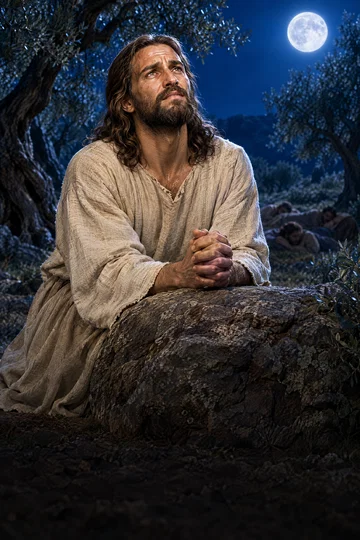
He prayed alone at a little distance from Peter, James and John, withdrawing to stricter solitude to be alone with God.RH Feb 3, 1863RH Mar 14, 1865 He was prostrate with face downward on the damp, dew-cold ground, trembling under horror of great darkness, uttering suppressed wails, with burning lips and clasped hands lifted up, and sweat as great drops of blood forced from His pores and falling to the ground.ST May 30, 1878ST Jun 3, 1908 While He agonized the three disciples slept, angels watched, and an angel strengthened Him, and afterward a heavenly serenity rested on His face.ST May 30, 1878RH Feb 3, 1863RH Mar 14, 1865ST Jun 3, 1886 The sleeping disciples missed His voice, the angels' presence and evidence that would have strengthened them, illustrating spiritual drowsiness, languor and stupor in the hour of darkness and calling for watchfulness rather than spiritual sleep.ST May 30, 1878ST Jun 3, 1886 His hours devoted to prayer strengthened Him to bear the coming pain, and God heard Him.RH Feb 3, 1863
The wording is conditional acceptance: if the cup may not pass away except He drink it, the Father's will be done.ST Apr 11, 1900ST Mar 27, 1901ST May 5, 1909 His desire gave no right to claim removal, and repeated asking did not mean it had to be granted literally.RH Nov 1, 1853 Sincere believers should pray humbly and accept God's will, trusting that God may withhold what is not proper to grant and answer in another way, seeking God's help while surrendering to God's will in severe trial.RH Nov 1, 1853ST Mar 27, 1901ST May 5, 1909
The prayer belongs to the day of the Lord's Supper, betrayal, agony, arrest, trial, condemnation, mocking, scourging and crucifixion, the day on which He showed His love for humanity above all others.RH Feb 13, 1872ST Oct 8, 1896ST Sep 3, 1912 It stands in the final Passover setting, virtually the last Passover because its type was to meet its antitype when the Lamb of God was slain for the sins of the world, as He was about to undergo His full baptism of suffering.ST Aug 12, 1886 It was spoken at the real place Gethsemane where He was betrayed and where those coming to arrest Him approached, and Gethsemane with the cross marks the way to heaven.ST Jan 8, 1902 If the Passover was eaten at the proper time, Pentecost that year fell on the Sabbath.ST Apr 15, 1889
Meaning of the Cup
The cup is the suffering, sorrow, pain, anguish, humiliation, bitter conflict and death before Him in Gethsemane.ST Jan 20, 1914ST Mar 30, 1904ST Oct 10, 1906ST May 6, 1889RH Jan 16, 1908 It includes the physical horror of crucifixion, the baptism of blood, and the ordeal from which His human nature recoiled yet which He drank to its dregs.ST Jan 20, 1914ST Mar 30, 1904ST Oct 10, 1906ST May 6, 1889RH Jan 16, 1908 After anguish, tears, mortal agony alone while the disciples failed to watch, He yielded and came out content with death and shame after yielding in the woods among the olives, where the little gray olive leaves were kind to Him and the thorn tree mindful of Him, before He was drawn from under the trees to be slain on a tree and went on to face mockery and death with serenity.ST Mar 30, 1904ST Oct 10, 1906ST May 6, 1889RH Jan 16, 1908ST Jul 8, 1897
The cup is bearing as substitute and surety the accumulated guilt, iniquity and transgression of the whole world against God's law.ST Jan 15, 1902ST Dec 15, 1898ST Sep 30, 1889ST Apr 14, 1914 Though He knew no sin He was made sin, wounded for transgressions and bruised for iniquities with His soul made an offering for sin, enduring the curse, the wrath of a righteous God against transgression, the hiding of the Father's face and separation from God under Satan's pressure, with the sins and misery of the world resting upon Him.ST Jan 15, 1902ST Dec 15, 1898ST Sep 30, 1889ST Apr 14, 1914 That separation is sin's greatest torture, pressed upon Him with rejection by His own people, betrayal, denial and desertion, the wail and ruin of a lost world, and the horror that wrung the cry of forsakenness on the cross.ST Jan 15, 1902ST Dec 15, 1898ST Sep 30, 1889ST Apr 14, 1914 Having taken the transgressor's place He had to bear sin's penalty as it would fall on a transgressor, and every sacrificial lamb struggling in death with blood poured forth had typified this, while His obedience even at the cost of life gives the proper meaning of all typical sacrifices.ST Jan 15, 1902RH Sep 25, 1913
He was still free to refuse the cup, wipe the bloody sweat from His brow, let mankind go and return to the Father leaving guilty men to perish in iniquity under the Father's displeasure.ST May 30, 1878ST Jan 15, 1902ST Mar 19, 1912ST Aug 9, 1905ST Mar 31, 1909 If He refused, redemption would fail and Satan and his apostate forces and confederacy of evil would come off triumphant.ST May 30, 1878ST Mar 19, 1912ST Aug 9, 1905 But with the history of the human race before Him, seeing transgressors of the law perishing if left to themselves, the power of sin, man's utter helplessness to save himself and the woes of a doomed world, His decision was made to save man at any cost to Himself, even eternal death if need be, accepting His baptism of blood that perishing millions through Him might gain everlasting life and become victors with Him.ST May 30, 1878ST Jan 15, 1902ST Mar 19, 1912ST Aug 9, 1905ST Sep 23, 1886
The prayer for release was not granted by removal of the cup, which would have left mankind in hopeless despair.ST May 30, 1878ST May 6, 1889RH Nov 20, 1856ST Dec 12, 1892RH Sep 2, 1902 It was answered by sharing His suffering and by strength and support to endure what lay before Him, for habitual remembrance of Gethsemane with Golgotha works lively faith and weans the soul from the vain world.ST May 30, 1878ST May 6, 1889RH Jan 21, 1858RH Nov 20, 1856ST Dec 12, 1892 An angel from the throne was sent not to tell Him He was released but to support Him in drinking the cup presented to Him and to set before Him the grand results of victory over Satan, that millions would be victors with Him in His glorified kingdom, and though He prayed the cup remained and He received strength from above to die for humanity.ST May 30, 1878ST May 6, 1889RH Jan 21, 1858 Denial of the literal request therefore teaches that God knows best and withholds what is not proper, answering by a path of pain, patience, and forgiving love that brings the sufferer nearer to Him enriched with treasure.RH Nov 20, 1856ST Dec 12, 1892RH Sep 2, 1902
Surrender and Victory
The second prayer shows complete yielding of life to do the will of God, accepting that the suffering represented by the cup cannot pass unless it is drunk, and submitting to the Father's will in facing betrayal and the burden of humanity's guilt.ST Apr 11, 1900ST Mar 30, 1904ST May 5, 1914 After anguish and tears and the failure of the disciples to watch, conquest came through submission, and serenity followed for mockery and death.ST Apr 11, 1900ST Mar 30, 1904 True sacrifice is giving oneself up to a life of obedience to God culminating in death on the cross, and this is the proper meaning of all typical sacrifices in contrast with sacrifices and offerings which in themselves availed nothing.RH Mar 28, 1912 Even His divine self was made subject to the Father, refusing to act according to His own will but allowing the Father's will and power to govern His life. At the supreme test of giving His life for humanity's transgression of God's law, He sought no will or law of His own in opposition to God, but obeyed the Father even at the cost of His life.ST May 5, 1914
The prayer marks the awful moment that decided the destiny of the world, when the fate of earth and of the human family for all eternity hung trembling in the balance while heavenly hosts waited with intense interest.ST May 30, 1878 It decides whether the sacrifice ordained before the foundation of the world and symbolized in every sacrifice offered since Adam's transgression will be given up.ST Mar 19, 1912 At stake is God's glorious purpose to save a perishing world, the thing angels eagerly desired to look into, the burden of prophecy and the foundation of types and shadows, with all types and symbols pointing to His suffering and death now to be fulfilled.ST Mar 19, 1912 This submission in the garden was the world's supreme crisis, while crucifixion and resurrection demonstrated in life the decision made there.ST Mar 7, 1906ST Mar 31, 1909 An infinite victory was there gained that will be praised through all eternity.ST May 30, 1878
Victory came by surrender in one of the supreme tests, with Calvary and the tomb, where Christ conquered in the great controversy.RH Dec 11, 1916 Though the malignity of sin was dark and the temptation terrible to let the human race bear the consequence of its own guilt while He stood innocent before God, to have drawn back would have been to accept defeat.RH Dec 11, 1916RH Jan 4, 1906 His word of surrender to the divine will was a veritable token of victory, manifesting the same spirit of perfect submission later shown in the final surrender on the cross.RH Dec 11, 1916 If He drinks the cup the captives are delivered from the mighty, Satan is overcome, reconciliation is obtained, and it is demonstrated that obedience to the law is possible so that all are made more than conquerors through Christ.ST Mar 19, 1912RH Nov 4, 1902 His steadfast submission brings out His spotless character in purer light and vindicates God in the controversy with Satan over the execution of the plan of salvation, and His struggle in Gethsemane together with His sufferings on Calvary magnifies and intensifies the holiness of the law given at Sinai.ST Aug 8, 1878ST Jun 12, 1907
The agony belongs to the sin-atoning sacrifice that upheld the majesty of the law so that God could justly pardon sinners, witnessed by angels and devils that the universe might recognize God's justice.ST May 24, 1883 Having taken the transgressor's place, He had to bear sin's penalty as it would fall upon a transgressor, when it could not pass without setting aside the law.ST Mar 3, 1914ST May 24, 1883 Those who reject His substitution must bear the penalty of their own sin, for God cannot set aside His law.ST May 24, 1883 It was not a means of appeasing an angry Father or reconciling God to humanity, for God already loved the world, but God in Christ suffered to reconcile sinners.ST May 24, 1883 Garden consecration is incomplete without going on to Calvary where life is given and blood is shed, for without shedding of blood there is no remission, and garden suffering belongs together with death on the cross to rescue sinners from death's overwhelming tide.RH Apr 11, 1912RH Jul 23, 1857ST Aug 12, 1886
The prayer reveals Him as Messiah, despised and rejected, a man of sorrows enduring grief and suffering, truly human as well as divine.RH Nov 18, 1862 Because His spiritual nature was free from sin He felt suffering more keenly than human beings do, and His desire for relief was stronger than theirs, with intense human longing to escape suffering and the displeasure of God yet willingness to drink the cup.ST Dec 9, 1897 Under crushing burden of temptation and anguish He endured temptation fully yet remained without sin and with no guile.RH Jul 19, 1864 Because He suffered being tempted He is touched with human infirmity and able to deliver, strengthen, enlighten and heal the tried, tempted, weak and brokenhearted, having entered men's sufferings and resisted unto blood as the perfect example calling believers to perfection.ST Jan 15, 1902
Pattern for Prayer
The second prayer in Gethsemane gives the pattern of withdrawing to pray alone in distress, stealing away from others to pour out the soul to the Father on a mountain-top or in a garden.RH Apr 16, 1857RH Aug 10, 1869RH Aug 19, 1873 There in lone communion, at a little distance even from the three nearest disciples in stricter solitude to be all alone with God, strength is received to drink the bitter cup that cannot pass away.RH Jan 6, 1910RH Aug 19, 1873 That solitude before Calvary is preparation for a great moment, spending the night on the damp ground in prayer to prepare for the trial of the judgment hall and the cross, and returning again to prayer until earth is made heaven.RH Apr 16, 1857RH Aug 10, 1869ST Nov 21, 1892
Even with the soul in awful agony the prayer is spoken in only a few recorded words, and going away again repeats the first brief prayer with a few more words of resignation and submission added.ST Jan 11, 1877RH Oct 7, 1873 This proves that deepest distress does not require length in prayer, and that even in secret prayer where longer prayer is possible, prayer may and should be short, frequent and fervent.ST Jan 11, 1877RH Oct 7, 1873 Private devotional petitions remain without set limit.ST Jan 11, 1877
Humble prayer asks for deliverance and support yet submits when the specific thing asked may not be God's will.RH Nov 1, 1853RH Jul 9, 1872RH Jan 9, 1913 Desire gives no right to claim removal, and repeated asking does not mean the request must be granted literally, for God knows best and withholds what is not proper to grant, answering in another way.RH Nov 1, 1853RH Jan 9, 1913 When suffering cannot be avoided or removed, the right prayer is a yielding spirit that accepts what God allows, trusts His wisdom, timing, ways and goodness rather than questioning or insisting that trials be taken away.RH Nov 1, 1853RH Apr 6, 1916ST Jul 14, 1881RH Sep 4, 1866 Prayer may therefore grow more earnest as pain increases, seeking deliverance and strength and above all resignation, as a refuge in severe trials including the approach of death, and that submission itself is a precious blessing whether or not the requested thing is granted, preserving spiritual good that might be lost if every wish were granted.RH Jul 9, 1872RH Jan 9, 1913RH Sep 4, 1866
Hours devoted to prayer strengthen to bear coming pain, and God hears by sending relief.RH Feb 3, 1863ST Aug 24, 1915 The plea for the cup to pass gives way to acceptance of the Father's purpose, laying down human plans to receive God's perfect will, praying for strength when distressed or tempted and meekly submitting.ST Sep 23, 1886RH Feb 5, 1914ST Nov 25, 1897 The prayer is heard not by deliverance from death but by strength and support to endure what lies before, with angels brought to relief, and after facing the cost of human sin and choosing to save the race, serenity and victory are found even in agony.ST Sep 23, 1886ST Aug 24, 1915RH Nov 20, 1856 Earnest prayer offered with trust and resignation likewise brings help, deliverance, strength and power to make God known.ST Aug 24, 1915
Following His Example
The second prayer in Gethsemane is the prayer to speak in every trial, affliction, chastening, bitter disappointment, dark day and hour of death.ST Mar 27, 1901RH Jan 30, 1879ST Jun 17, 1886RH Apr 7, 1868ST Dec 20, 1905 It takes up the burden without asking that it be made less and without complaining of weakness or love of ease, counting it joy to suffer, to serve or to wait.RH Jan 30, 1879ST Jun 17, 1886RH Apr 7, 1868ST Dec 20, 1905 It traces God's wise design in the trial, gives thanks for sacrifice, trusts His wisdom rather than questioning it, and remains with Him through suffering.RH Jan 30, 1879RH Apr 7, 1868ST Dec 20, 1905 As He sought above all for God's will to be done in and through Him, so the follower renounces self-will to do the will of God.RH Jan 30, 1879ST Jun 17, 1886ST Dec 20, 1905 Feelings at the hour of death are not made evidence of acceptance with God nor a substitute for a life of faithful conduct.RH Jan 30, 1879
Accepting God's will is learned in specific losses.RH Jul 21, 1868RH Jul 21, 1868RH Feb 17, 1903RH Aug 23, 1906 A mother's grief over a daughter's illness teaches letting go of wishing the child to live for her own pleasure, and saying thy will be done.RH Jul 21, 1868RH Jul 21, 1868 Refusal to accept the possibility of death stands in contrast to that surrender, though in that instance the child recovered.RH Jul 21, 1868RH Jul 21, 1868 Saying thy will be done is also spoken with a heavy heart at a loved child's death after all has been done to keep her alive, trusting that God is good and knows what is best, letting the loss draw the mourner nearer to Him and staying of good courage in His cause.RH Aug 23, 1906 The same calm trust appears when loved ones are lost in death, and in willingness to accept continued suffering if God wills and to accept uncertainty about how long to remain near Plymouth.RH Feb 17, 1903 As the way grows narrower with rising trials, gathering shadows, obscured sunlight and storms of affliction, the heart stayed upon Jesus keeps joy mixed with suffering and keeps saying always that the Father's will be done, knowing that at extremity the Father sends bright angels and the Saviour Himself is present.
The disciples slept in the garden before they forsook Him and fled, and their sleep warns against spiritual sleep, languor and wavering faith.ST Jun 3, 1886RH Jul 21, 1868ST Apr 20, 1882RH Jun 8, 1869 Failure beginning with neglected duties grows gradually into greater unfaithfulness, marked by worldliness, stagnation and death even amid outward growth.ST Apr 20, 1882 Their unusual drowsiness in the hour of darkness, when Satan was struggling against Christ's saving work, aided Judas in his crime and left souls in danger. The command to watch and pray lest they enter temptation is God's present call to shake off lethargy while Christ ministers in the heavenly sanctuary and wrath hastens, lest His final sad word be sleep on now.ST Jun 3, 1886RH Jul 21, 1868 Even those who most need divine instruction will miss His voice, lose the sense of angels' presence, and fail to receive evidence that would strengthen them for terrible scenes before them, if drowsiness and stupor keep them from communion with heaven. The remnant's fearful cry in the seven last plagues is compared with His cry.
Following Him means treading the same path from the victory heights of new birth through a lonely Gethsemane of anguish to a crucified Calvary before the little while of sleep in death and the morning call to the home above.ST Aug 15, 1916RH Aug 20, 1908ST Dec 3, 1902 After the joy of palms and hosannas He went into brooding shadows under the olives at night to wrestle forsaken and alone, with none to comfort Him or wipe His brow in bloody sweat, yielding to drink the cup, and from that lonely vigil His weary feet were led over Kidron onward to the shame of Calvary and the tomb and then to resurrection victory and heaven.ST Aug 15, 1916RH Feb 4, 1904 Following therefore means self-denial and taking up the cross through temptation, patient toil, sickness, sorrow and fierce struggle, accepting hardship rather than demanding an easier path.ST Dec 3, 1902ST Aug 22, 1900RH Feb 4, 1904 Effort is put forth as though all depended on self while trusting God as though He must do all, willing to die rather than continue in sin whether victory comes instantaneously or after days of agony.ST Aug 22, 1900RH Sep 8, 1910 There is no way to God's throne apart from Calvary, yet earthly trials make heaven sweeter and the cup of joy double, and His refusal to compromise His holy mission with worldly principles and His absolute loyalty in living, praying, suffering and dying for the Kingdom call every follower to whole-hearted devotion, with hours when pride is humiliated and meek submission required because each desires to be his own master.RH Sep 8, 1910RH Feb 4, 1904
Because He prayed in doubt and anguish, was tempted, grieved and pained, and as sinless Man of Calvary and gentle Judge paid for sin with wounded hands and blood, He is touched with human infirmity.ST Jun 3, 1908RH Feb 14, 1854ST Mar 5, 1902ST Dec 12, 1892RH Sep 1, 1863 He is able to understand, pity, comfort, enlighten, strengthen and heal the tried, tempted, weak, lonely, sorrowful and brokenhearted who spread their case before Him, abide with Him in their Gethsemane hour, and look to His garden and cross.ST Jun 3, 1908RH Feb 14, 1854RH Sep 1, 1863 The blind, helpless, bleeding and guilt-burdened mourner in a dark hour of temptation, doubt and dread finds in Him a Saviour-man and brother priest crowned with glory, bringing rest, peace, comfort and home.ST Mar 5, 1902RH Sep 1, 1863 His bosom deepened by sorrow becomes rest, home, nest, house and hearthstone for tired woe, trouble, tears, sighs, homeless pangs and famished hope.ST Mar 5, 1902 His love remains above feeling without sunshine or ecstasy, He was no less loved by the Father at Gethsemane than at Jordan, the holy mount, the wilderness or Calvary, and His composed trust expresses faith in God's promises.RH Feb 14, 1854ST Dec 12, 1892
The garden with Calvary shows the great sacrifice for others that should move the church to missionary effort, to sow beside all waters looking often to the garden, to seek lost souls where earnest prayer gives desire for their salvation, to serve those for whom He died and share His throne, and to meditate often on the Supper, Gethsemane and Calvary.RH Jan 21, 1858RH Jan 6, 1910ST Jan 13, 1881ST Apr 1, 1880RH Jan 7, 1909 Attentive consideration of His prayer and unutterable merits works lively faith and joyful hope, and habitual remembrance weans the soul from undue attachment to a vain world, so the soul should dwell much in Gethsemane along with Golgotha.RH Jan 21, 1858RH Jun 23, 1910 Remembering His patience, love, humility and forbearance under betrayal and trial, His giving up what was His by right to buy lasting joy and honor brighter than earth's fleeting wealth and pleasure, and His self-forgetting love restrains wilful unholy acts, helps give up harmful habits and foolish fashions, and fits souls to help others in hard battles.ST Sep 19, 1911ST Jan 13, 1881 Difficulty and temptation in the Gethsemane trial develop character and fit people for heavenly destinies, as He who often communed with His Father there received strength for the conflicts of His ministry and then suffered before giving His life as a ransom for the world.ST Sep 19, 1911RH Jan 6, 1910ST Apr 1, 1880
Sources