Mark 14:36
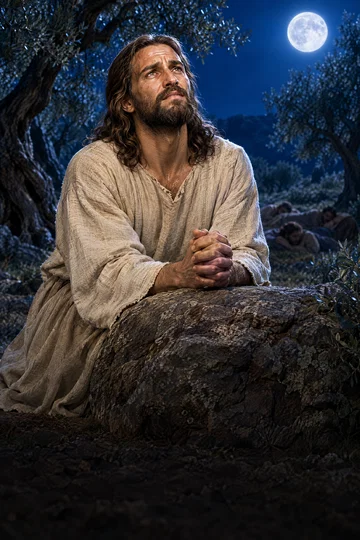
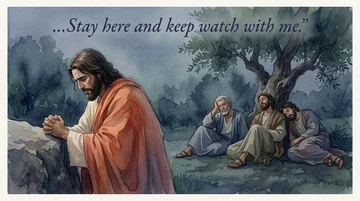
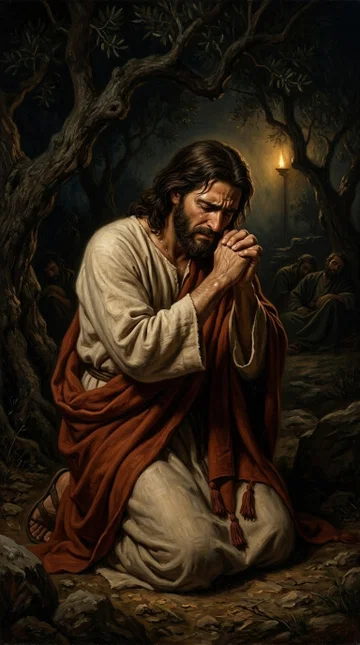
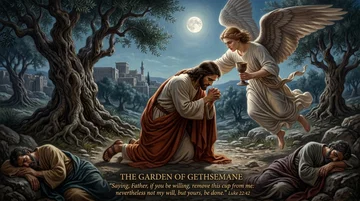
And he said, Abba, Father, all things are possible unto thee; take away this cup from me: nevertheless not what I will, but what thou wilt.
Translations
And he said, Abba, Father, all things are possible to you; take away this cup from me: nevertheless not what I will, but what you will.
And he said, Abba, Father, all things are possible unto thee; take away this cup from me: nevertheless not what I will, but what thou wilt.
And he said, Abba, Father, all things are possible unto thee; take away this cup from me: nevertheless not that I will, but what thou wilt.
And he said, Abba, Father, all things are possible to thee; take away this cup from me: nevertheless, not what I will, but what thou wilt.
Revised Version, American Standard Version
And he said, Abba, Father, all things are possible unto thee; remove this cup from me: howbeit not what I will, but what thou wilt.
and he said, 'Abba, Father; all things are possible to Thee; make this cup pass from me; but, not what I will, but what Thou.'
And he said, Abba, Father, all things are possible to thee: take away this cup from me; but not what I will, but what thou [wilt].
and was saying—Abba! O Father! All things, are possible to thee: Bear aside this cup from me; but not what, I, will, but what, thou, [wilt].
Berean Standard Bible, Majority Standard Bible
“Abba, Father,” He said, “ all things are possible for You. Take this cup from Me. Yet not what I will, but what You will.”
He said, “Abba, Father, all things are possible to you. Please remove this cup from me. However, not what I desire, but what you desire.”
And he said, Abba, Father, all things are possible to you; take away this cup from me: but even so let not my pleasure, but yours be done.
And he saide, Abba, Father, all things are possible vnto thee: take away this cup from me: neuertheles not that I will, but that thou wilt, be done.
Douay-Rheims (Challoner revision)
And he saith: Abba, Father, all things are possible to thee: remove this chalice from me; but not what I will, but what thou wilt.
Pictures


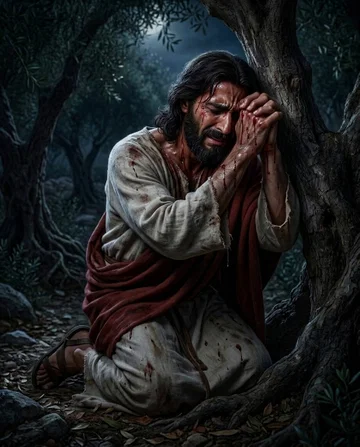
Cross-references 20 of 46
- Luke 22:42
Saying, Father, if thou be willing, remove this cup from me: nevertheless not my will, but thine, be done.
Jesus asks for the cup to pass, yet submits to the Father’s will.
- Matthew 26:39
And he went a little further, and fell on his face, and prayed, saying, O my Father, if it be possible, let this cup pass from me: nevertheless not as I will, but as thou wilt.
Records Jesus’ prayer for the cup to pass and his submission to the Father’s will.
- Luke 22:44
And being in an agony he prayed more earnestly: and his sweat was as it were great drops of blood falling down to the ground.
Describes Jesus praying in agony in Gethsemane, with sweat like drops of blood.
- John 18:11
Then said Jesus unto Peter, Put up thy sword into the sheath: the cup which my Father hath given me, shall I not drink it?
Jesus accepts the cup his Father has given him.
- John 12:27-28
Now is my soul troubled; and what shall I say? Father, save me from this hour: but for this cause came I unto this hour.
Jesus faces the coming hour in anguish and chooses the Father’s glory.
- 1 John 5:14
And this is the confidence that we have in him, that, if we ask any thing according to his will, he heareth us:
Both connect confident prayer with asking according to God’s will.
- Hebrews 5:7-8
Who in the days of his flesh, when he had offered up prayers and supplications with strong crying and tears unto him that was able to save him from death, and was heard in that he feared;
Jesus’ earnest prayer amid anguish is connected with learning obedience through suffering.
- Isaiah 53:5-6
But he was wounded for our transgressions, he was bruised for our iniquities: the chastisement of our peace was upon him; and with his stripes we are healed.
Christ’s suffering bears human sin and transgressions.
- Matthew 26:42
He went away again the second time, and prayed, saying, O my Father, if this cup may not pass away from me, except I drink it, thy will be done.
Jesus accepts the cup if it is the Father’s will.
- Luke 22:43
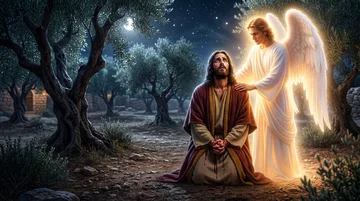
And there appeared an angel unto him from heaven, strengthening him.
An angel strengthens Jesus as he prays and faces the cup.
- Philippians 2:8
And being found in fashion as a man, he humbled himself, and became obedient unto death, even the death of the cross.
Christ’s humility and obedience unto death reflect his submissive spirit.
- Hebrews 10:7
Then said I, Lo, I come ( in the volume of the book it is written of me,) to do thy will, O God.
Christ submits to the Father’s will and comes to do it.
- Matthew 6:10
Thy kingdom come. Thy will be done in earth, as it is in heaven.
Jesus submits to the Father’s will, embodying the prayer for God’s will to be done.
- Matthew 26:41
Watch and pray, that ye enter not into temptation: the spirit indeed is willing, but the flesh is weak.
Jesus’ command to watch and pray warns against entering temptation.
- Matthew 20:22-23
But Jesus answered and said, Ye know not what ye ask. Are ye able to drink of the cup that I shall drink of, and to be baptized with the baptism that I am baptized with? They say unto him, We are able.
Jesus speaks of sharing the cup of suffering he will drink.
- Mark 10:38-39
But Jesus said unto them, Ye know not what ye ask: can ye drink of the cup that I drink of? and be baptized with the baptism that I am baptized with?
Jesus’ cup of suffering is shared by his disciples.
- Matthew 26:38
Then saith he unto them, My soul is exceeding sorrowful, even unto death: tarry ye here, and watch with me.
Both express Christ’s sorrow unto death in Gethsemane.
- Romans 8:14
For as many as are led by the Spirit of God, they are the sons of God.
Both texts address God as Abba, Father, expressing a child’s relationship with God.
- Hebrews 2:18
For in that he himself hath suffered being tempted, he is able to succour them that are tempted.
Christ’s suffering under temptation enables him to help those who are tempted.
- Galatians 4:5
To redeem them that were under the law, that we might receive the adoption of sons.
Both express a child’s intimate address to the Father.
Commentary
Each commentary is drawn from primary sources: the writings of Ellen G. White and Adventist pioneers and periodicals. Each commentary is separate. Its own words are not a quotation; follow the references to read the source passages.
Ellen G. White
28 sources
In Gethsemane he calls upon God with intimate trust as a Father for whom all things are possible, asking to be spared what lies before him yet yielding fully to the Father's will rather than his own.8T 100.2–3STGC 15.2–3Lt 5, 1903, par. 19–20 The cup he asks to have taken away is not mere fear of pain and death but bearing the guilt of fallen humanity and the penalty of its sin, with the iniquity of all laid upon one who knew no sin.DA 685.2ST May 30, 18785RED 14.1–3 It means feeling separated from the Father by sin as by a broad gulf, with God's sustaining presence withdrawn and the dread of being shut out forever from his love, under the curse and wrath against transgression from Adam to the close of time.DA 685.2RH Jul 7, 1910ST Dec 2, 1897ST May 30, 1878DA 690.2–3 He meets this final trial as a man who has taken man's nature, without calling on his divinity to escape or aid him, while the destiny of a lost world hangs in the balance and it is still possible to refuse to drink and leave transgressors to perish.RH Jul 7, 1910ST Dec 2, 1897ST May 30, 18785RED 14.1–3DA 690.2–3 The cup is not removed but strength is sent to drink it, and his submission teaches his people to watch and pray so their faith will stand when tested and evil seems to prevail.8T 100.2–3STGC 15.2–3Lt 5, 1903, par. 19–20ST May 30, 1878
Setting in Gethsemane
It was Passover night under a broad full moon in a cloudless sky, while the city of pilgrims' tents lay hushed in silence, when Jesus went slowly with His disciples to the garden of Gethsemane.DA 685.13SP 94.1–3ST Sep 23, 1886 That garden was His accustomed retreat to brace His spirit for trial and duty by meditation and fervent prayer, where He had frequently spent the entire night while His disciples, after a little season of watching and prayer, slept undisturbed at a little distance until He awoke them in the morning to labor anew, so His going apart to pray called forth no remark.3SP 94.1–3ST Sep 23, 1886 He had often visited it for meditation and prayer, but never with a heart so full of sorrow as on the night of His last agony.DA 685.2
On the way He had earnestly conversed with and instructed His disciples, but as He neared Gethsemane He became strangely silent and utterly sad as they had never seen Him before, perplexing them as they anxiously watched His countenance.DA 685.2DA 685.33SP 94.1–3 His sadness deepened as He proceeded, His form swaying as if about to fall, every step taken with labored effort and groaning aloud as if suffering under the pressure of a terrible burden.DA 685.33SP 94.1–3 Twice His companions had to support Him or He would have fallen to the earth, while the disciples anxiously looked for His usual place of retirement that He might rest.DA 685.3
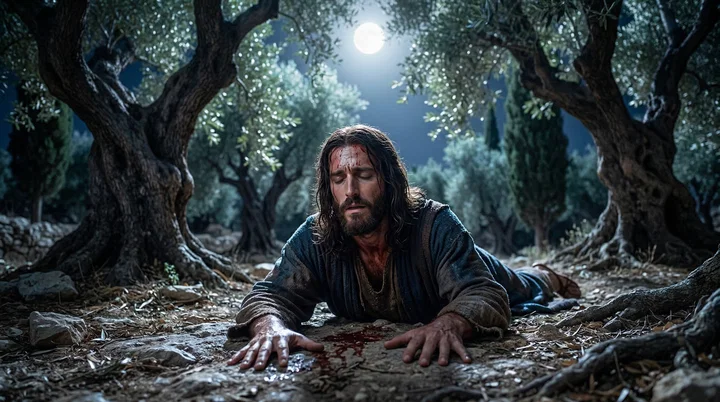
Upon entering the garden He left His companions to sit while He went yonder to pray, selecting Peter, James and John to go farther with Him into the recesses of the garden to His usual place of retirement.3SP 94.1–3ST Sep 23, 1886 A little distance from them, where they could still see and hear Him, He fell prostrate with His face on the cold ground, heedless of the chilling dews of night falling upon Him.RH Jul 7, 19103SP 95.1–2 His frame was convulsed with anguish and His pale countenance full of indescribable sorrow, and He prayed with labored effort and groaning and strong cries and weeping until bloody sweat was forced from His pores and fell like drops of blood to the ground.Ms 42, 1897, par. 4–6Lt 54, 1874, par. 15–163SP 95.1–2EW 136.1ST Aug 8, 1878
In that superhuman agony His human heart longed to the depths for human companionship and sympathy, with yearning desire for words of comfort and steadfast faith and refuge in God, and to know the disciples understood His agony and were praying for Him and for themselves.Ms 42, 1897, par. 4–6RH Jul 7, 1910RH Dec 28, 1911 He came back hoping for a word of love to strengthen and comfort Him in sorrow, but they slept while He prayed again, leaving Him to wrestle alone with the powers of darkness.Ms 42, 1897, par. 4–6ST Nov 25, 1889Ms 45, 1892, par. 6–9 Their sleep was pressed upon them by darkness when love for their suffering Master should have kept them awake, for Satan and his evil angels caused their sleep.Ms 45, 1892, par. 6–9
Because they slept they did not hear His voice and missed the scene's spiritual evidence, and their drowsiness kept them from receiving what could have strengthened them for the trials ahead.Ms 59, 1897, par. 7 Watching with Him in His hour of pain would have fitted them to better understand the sorrow pressing on Him, to behold His death on Calvary's cross, to remember what He told them about His suffering and death and rising again, to have rays of hope shine amid gloom, and to have faith strengthened even when Satan and his angels seemed to gain the victory.Ms 45, 1892, par. 6–9 Angels witnessed His agony, but only one was allowed to strengthen Him, since the betrayal and the plan that had been laid had to go forward.EW 136.1
Meaning of the Cup
The cup he asked to have taken away was not dread of physical pain and death but the suffering of bearing the guilt of fallen humanity and the penalty of human sin.DA 685.2ST May 30, 18785RED 14.1–3 The iniquity of all was laid upon Him who knew no sin, numbering Him with transgressors.DA 685.2 Sin appeared so dreadful to Him and the weight of guilt so great that He was tempted to fear it would shut Him out forever from His Father's love, feeling how terrible is the wrath of God against transgression until His soul was exceeding sorrowful even unto death.DA 685.2
The cup meant being separated from the Father by sin as by a broad, black, deep gulf that made His spirit shudder.RH Jul 7, 19103SP 95.1–2 He who had walked in the light of God's presence and could say the Father had not left Him alone now seemed shut out from the light of God's sustaining presence.DA 685.2 The sins of the world and the Father's displeasure seemed to separate Him from God, and He felt His Father's presence withdrawn and was filled with dread and horror of darkness He had never before known.ST May 30, 1878ST Aug 8, 1878 Overpowered by terrible fear that God was removing His presence from Him, He clung convulsively to the cold ground as if to keep from being drawn still farther from God.3SP 95.1–2
The cup was the bitter cup of humiliation and agony apportioned to guilty man, the curse of sin and its penalty and the wrath of the Father against transgression.ST Dec 2, 1897DA 690.2–3 It meant the sins of an apostate world from Adam's transgression to the close of time laid upon Him, all innocent and undeserving, placing Him under the penalty of a just law.ST Dec 2, 1897 The innocent would suffer to save the guilty, paying the price for the human soul.DA 690.2–3DA 687.3
He met this final trial as One who had taken man's nature, bearing the consequences of man's sin and straining His human nature to bear it.RH Jul 7, 1910ST Dec 2, 1897 He did not call on His divinity for aid nor exert His divine power to escape, but as a man bore the consequences of sin.RH Jul 7, 1910ST May 30, 18785RED 14.1–3 He feared His human nature could not endure the coming conflict.ST May 30, 1878
In that moment the destiny of a lost world hung in the balance and the fate of humanity trembled, for if He failed humanity would be lost and Satan would prevail.ST Dec 2, 1897ST May 30, 1878DA 690.2–3 It was not yet too late to refuse to drink, to wipe the drops of blood from His brow, to cast from His soul the guilt of a perishing world and let the willful transgressor receive the penalty of his own sin and perish while He went back to the Father.ST Dec 2, 1897DA 690.2–3 He did not make that choice but willed to drink the cup and become the substitute and surety and propitiation of a race that willed to sin, refusing man no further trial and probation.ST Dec 2, 1897DA 690.2–3ST Jan 15, 1902
Submission and Its Call
He calls God Abba, Father, for whom all things are possible, and asks that the cup pass and be taken away from him, yet yields fully with not what he wills but what the Father wills.8T 100.2–3STGC 15.2–3Lt 5, 1903, par. 19–20Ms 42, 1897, par. 4–6 His prayer breathes only submission even amid overwhelming agony and dread of separation from God, for the cup is the price paid for the human soul.Ms 42, 1897, par. 4–6DA 687.3 He prays this while his disciples fail to give the human companionship he longs for, praying again while they sleep until his sweat falls like drops of blood.Ms 42, 1897, par. 4–6
Three times his humanity shrinks from the last, crowning sacrifice and he prays for deliverance, feeling an agony and horror of darkness never before known as his Father's presence is withdrawn and his sorrow exceeds the final struggle with death.DA 690.2–3ST Aug 8, 1878 It is not yet too late to refuse, to wipe the bloody sweat from his brow, to let the transgressor receive the penalty of his own sin and perish in his iniquity, and to go back to his Father.DA 690.2–3 Then he sees that transgressors of the law left to themselves must perish, sees the helplessness of man and the power of sin and the woes and lamentations and impending fate of a doomed world, and his decision is made to save man at any cost to himself.DA 690.2–3 He accepts his baptism of blood so that through him perishing millions may gain everlasting life, having left the courts of heaven where all is purity, happiness and glory to save the one lost sheep, the one world fallen by transgression, and he will not turn from his mission but will become the propitiation of a race that has willed to sin.DA 690.2–3 Heaven sends a messenger to comfort him as he faints under the guilt of the world.ST Aug 8, 1878
Though sinless he is treated as a sinner so that sinful people may be treated as innocent, bearing the sins of the whole world in the greatest suffering ever brought upon a human being.ST Jan 15, 1902Ms 134, 1905, par. 3 His human nature shrinks from bearing the consequences of human sin and God's wrath against transgression, and his will could have asserted itself to refuse humiliation and the cup, but he surrenders his will to God's and comes to suffer and die as humanity's substitute and propitiation.ST Jan 15, 1902Ms 134, 1905, par. 3 The cup is not removed, but an angel is sent to strengthen him to drink it.ST May 30, 1878 He faces this crisis alone among people, yet he is not alone, for the Father suffers with his Son, and the sacrifice shows the Father's boundless love for humanity.ST May 30, 1878
His experience gives his people the lesson to watch and pray so they do not enter into temptation.8T 100.2–3STGC 15.2–3Lt 5, 1903, par. 19–20 He urges his disciples to watch and pray because their faith will be tested and they will need strength to withstand temptation, praying in deep agony with strong cries and weeping while blood gathers on his face and falls to the ground as angels witness but only one is allowed to strengthen him, since the betrayal and the laid plan must go forward.RH Jul 7, 1910EW 136.1 His asking them to watch with him in his hour of pain is meant so they will better understand the sorrow pressing on him, be fitted to behold his death and remember his resurrection, have rays of hope shine amid gloom, and have faith strengthened even when Satan and his angels seem to gain the victory.Ms 45, 1892, par. 6–9 Watching would have taught them that he came to suffer and die for the sins of the world to set up a kingdom of love, peace and purity in hearts until fitted for heaven, instead of clinging to hope of an earthly kingdom where nations would bow and they would be chief rulers, and would have made them ready and able to bear the scorn and mockery falling on him and not leave him alone in bitter trial.Ms 45, 1892, par. 6–9 He longs to the depths for their sympathy, for words of comfort and steadfast faith and refuge in God and to know they understand and are praying for him and for themselves, and would have been comforted and strengthened by it while facing the terrible temptation to let the human race bear its own guilt while he stood innocent before God.RH Jul 7, 1910
The night of agony belongs to the great trial of his betrayal and death which he foresaw and told beforehand so his faithful followers would not be overwhelmed when he was humiliated and abandoned by people who had once followed him.4RED 102.2–103.1 Its image of the cup is linked with the suffering he told James and John they would share, which James understood more fully when imprisoned and sentenced to death.7RED 68.1 The very sod stained with his sweat drops afterward became the place where repentant Peter, prostrated where his Saviour had been prostrated in his hour of humiliation as the Man of Sorrows, broke in heart over sleeping and denying him through fearful hours and wept blinding penitential tears, and left a converted man fitted to pity the tempted and strengthen his brethren.Lt 54, 1874, par. 15–16
Sources
Pioneers and periodicals
90 sources
In the garden on the night before the cross he drew apart alone and pleaded with the Father in intimate childlike trust, acknowledging that unlimited power and wisdom and love belong to him.ST Mar 10, 1909ST Mar 7, 1906ST Dec 24, 1912ST Jul 8, 1897ST Nov 21, 1892 The cup he asked to have taken away was scourging and shame and death, and far more the bearing of the guilt and woe of the whole world, enduring wrath against sin and hiding of the Father's face in man's place.RH Jul 7, 1910ST Sep 30, 1908ST Oct 22, 1896ST May 13, 1903ST Oct 18, 1899 His desire to be spared was real and human, yet he made the Father's will chief and paramount over his own, resting in confident trust in a loving, wise and all-powerful Father even while feeling forsaken.ST Sep 30, 1908RH Sep 16, 1915ST May 28, 1896ST Mar 6, 1893 He was heard but the cup was not removed; instead strength was given to drink it, and that yielding won the decisive victory over Satan, deciding the destiny of a lost world that would have faced eternal ruin had he refused.ST Dec 2, 1897ST Sep 30, 1908ST May 28, 1896RH Jul 13, 1905 That surrender is the pattern for all who follow, to bring every trial and desire to God without dictating the outcome, trusting that prayer submitted to his will is always answered for eternal good.ST Mar 7, 1906ST Oct 11, 1899ST Dec 9, 1880RH Mar 26, 1861ST Aug 24, 1904
Words of Address
The prayer keeps the very form spoken in the original, preserving the Aramaic word Abba, which means Father.ST Oct 7, 1897 To call God Abba, Father is to speak as a true child to a loving parent, expressing not mere fatherhood but an intimate life relation and resting the whole case in confident trust in divine love.ST Mar 7, 1906ST Mar 7, 1906ST Mar 31, 1909 That confidence belongs to the last agonizing prayer in which struggle ends in absolute submission, with the human longing for deliverance remaining subordinate to the paramount desire for the Father's will, and with solitary anguish receiving strength to endure when the cup could not pass.ST Mar 7, 1906ST Dec 24, 1912ST Mar 7, 1906ST Mar 31, 1909RH Aug 19, 1873
To say all things are possible unto thee is to acknowledge the Father's unlimited, omnipotent power, confessed even while asking for the cup of suffering to be taken away and submitting personal desire to the Father's will.RH Sep 16, 1915 That power stands together with infinite understanding and love, so that His plan and His giving of life are wisely, powerfully and lovingly righteous.ST Oct 17, 1900 It is complete confidence in the Father's infinite power, goodness, love, wisdom and knowledge, held firm under utmost testing when bearing the world's sins and feeling apparently abandoned and turned away, trusting that what appears impossible or like failure from a human viewpoint remains possible with God and can serve His purpose.RH Sep 16, 1915
The prayer is directed to the Father as a person distinct from Christ Himself, for He asks that the cup be taken from Him yet yields His own will to the Father's, showing He did not pray to Himself.RH Nov 5, 1861
Gethsemane Setting
Mark 14:36 falls within Mark's account of Jesus' last hours before his crucifixion.ST Mar 10, 1909 It belongs to the trying ordeal he faced in Gethsemane before his betrayal and crucifixion, after which followed his condemnation, humiliation, and rejection by the crowd.ST Oct 8, 1896 On Passover night he went with his disciples to his accustomed olive-garden retreat to brace his spirit by fervent prayer, telling his companions to sit while he went to pray yonder and taking Peter, James and John farther into the recesses of the garden.ST Sep 23, 1886 That going apart alone in solitude was part of his preparation for the great moment as he approached the sacrifice of Calvary, a place where he had frequently spent the entire night while his disciples after a little season of watching and prayer would sleep undisturbed at a little distance until he awoke them in the morning to go forth and labor anew, so that his withdrawing called forth no remark from them.ST Sep 23, 1886ST Nov 21, 1892 The scene lay in the woods among olive trees under a broad full moon in a cloudless sky while the city of pilgrims' tents lay hushed in silence, where the olives and their little gray leaves were kind to him spent with love and shame and the thorn tree was mindful of him, and his prayer resolving in acceptance of the Father's will brought him out content with death and shame to go from under the trees to be slain on a tree.ST Sep 23, 1886ST Jul 8, 1897
Gethsemane was the supreme crisis of the world, even of the universe, met not at the cross with its mocking, pain, and hiding of the Father's face, but alone in the garden while his strongest followers slept.ST Mar 7, 1906 It is the darkest spot from Bethlehem to Calvary and its night the blackest from the manger to the tomb, where the great moral battle in the world's history was fought and won, with no other crisis in Christ's life to be compared with it.ST Jan 15, 1885 All that preceded simply led up to the scene in the garden, and all that followed was the outcome of the moral victory there singly won, for there facing all the suffering ahead he yielded himself again with renewed consecration to become the supreme and everlasting sacrifice for humanity.ST Mar 7, 1906ST Jan 15, 1885 The crucifixion and the resurrection were only the demonstration in life of the submission settled in Gethsemane.ST Mar 7, 1906 There he began to endure the suffering that led to the cross, descending into sorrow, pain, and anguish to recover what humanity lost through sin in Eden and to save the lost, bearing lonely, deep human sorrow while remaining consecrated to his saving work to prepare humanity's lasting blessedness, so that the way to heaven leads through Gethsemane's shadow and the cross and his hour of trial there meant final victory for the sinner.ST Feb 24, 1887ST Mar 5, 1902ST Jan 8, 1902ST May 19, 1909
He prayed fallen prostrate on the ground a little distance away where Peter, James and John could see and hear him, praying for the hour to pass and for the cup to be taken away while submitting to the Father's will and not his own.RH Jul 7, 1910 He sought the disciples' companionship but faced his darkest agony alone, praying alone while the three disciples who stayed to keep watch fell asleep though Peter had been asked to watch with him.ST Apr 23, 1902ST Dec 30, 1889RH Mar 14, 1865 Their sleep despite his call to watch and pray shows their weakness and leaves him facing the trial alone, for their spirit was willing but their flesh was weak and ready spirit needed prayer against human weakness.ST Aug 8, 1906ST Dec 30, 1889 The enemy pressed darkness upon him as he wrestled alone with the powers of darkness in tears and blood as Son of both God and man and Prince Messiah, seeking strength from heaven to endure the stroke brought by sin, and the disciples missed the lesson of human weakness and submission to God's will and the strengthening they needed.ST Nov 25, 1889ST Apr 23, 1902RH Mar 14, 1865RH Nov 11, 1862 His experience gives the lesson on the necessity of watchfulness and earnest prayer to withstand temptation, and the disciples' access to the deeper mystery shows no unjust favoritism toward them.RH Jul 7, 1910
His prayer was most earnest, most urgent, repeated, continued, private, solitary, proceeding from the recesses of his soul, prayer for deliverance, prayer for strength, and above everything prayer for resignation to the Father's will, with almost every word he spoke in that tremendous scene being prayer whose ardor and fervency increased in proportion to pain as refuge from the storm.RH Jul 9, 1872 Alone in the garden and sorrowful unto death as Son of God and man, he asked three times for the bitter cup to be removed if possible, yet desired that his own will be set aside and only his Father's will be done.ST Jun 24, 1886RH Nov 11, 1862RH Apr 7, 1868 His soul was exceeding sorrowful even unto death, and his agony was so intense that great drops of sweat as blood burst through his skin under the guilt and shame of sinners, pleading again and again that the cup might pass as the hour of death approached after years of toil, privation, suffering and scorn.ST Dec 6, 1883 This repeated prayer stands at the head of his final sufferings leading to betrayal, mocking, scourging, condemnation and crucifixion, and proves the offering involved divine justice and suffering toward the Saviour himself and not only mercy toward the sinner.ST Dec 6, 1883 Under the weight of grief and anguish he trembled and was distressed as he bore the guilt of the world, yet drained the suffering he accepted for every mortal, and an angel from heaven strengthened him.ST Apr 14, 1914
The cup did not pass; instead strength was given from on high so that he could die for humanity, and prayer brought angels to his relief in the final, tremendous crisis before he was handed over to sinners.ST May 6, 1889ST Aug 24, 1915 The cup was not removed but an angel was sent to comfort and strengthen him to drink the suffering he had asked to have taken away, for the cup can remain even when it is deeply feared and God's grace and help can give strength to endure it.ST May 30, 1878 He faced this crisis alone among people, yet he was not alone, for the Father suffered with his Son, and the sacrifice shows the Father's boundless love for humanity.ST May 30, 1878 In that superhuman agony his human heart longed to the depths for sympathy, with yearning desire for words of comfort and to know the disciples understood his agony and were praying for him and for themselves, and he would have been comforted and strengthened by their steadfast faith and refuge in God.RH Jul 7, 1910RH Dec 28, 1911 Jesus was strengthened for the coming ordeal through communion with an angel, and the disciples might also have been strengthened if they had watched as he commanded, but their failure to watch and pray left them vulnerable to temptation so that Peter later denied him.ST May 10, 1905
Meaning of the Cup
The cup meant the scourging, humiliation, mockery and mock honor, crown of thorns, abuse, cross and death, completing the humiliation begun when he left heaven to become human.ST Oct 22, 1896ST May 13, 1903ST Apr 20, 1915ST Apr 8, 1889ST May 13, 1903 It was the bitter cup he had accepted as the price of redemption, from which his humanity shrank and recoiled as he faced the suffering and death ahead.ST May 13, 1903ST Apr 20, 1915ST Apr 8, 1889ST May 13, 1903 He accepted it as part of God's righteous will rather than gain relief or glory through any compromise of what is right, and so became both spotless Victim and eternal Victor.ST Oct 22, 1896ST May 13, 1903ST May 13, 1903
Its deepest horror was not bodily pain but bearing as his own the sins, guilt, misery and woe of an apostate world from Adam's transgression to the close of time.RH Jul 7, 1910ST Dec 2, 1897ST Sep 30, 1908ST Dec 15, 1898 All innocent and undeserving, he was placed under the penalty of a just law, enduring the wrath of the Father against transgression, the hiding of the Father's face, and separation by a broad, black, deep gulf of sin that made his spirit shudder.RH Jul 7, 1910ST Dec 2, 1897ST Sep 30, 1908 With the mysterious cup trembling in his hand he struggled earnestly and alone against a cruel foe, yet he must drink it fully as intercessor and offering for sin to accomplish redemption, and the cross follows the cup.ST Dec 2, 1897ST Oct 18, 1899ST Oct 10, 1906 His agony reveals the depth of his love, and his prayer made God's will his chief petition even while asking that the cup be taken away.ST Sep 30, 1908ST Oct 18, 1899ST Oct 10, 1906
As deeply troubled intercessor he was burdened for souls under the world's woe, for Israel's need and the world's rejection of his loving care.ST Oct 18, 1899RH Jan 16, 1908 He was the lone Man of Sorrows in midnight prayer, with yearnings and soul distress and agony breaking his great heart of love while the Father beheld him from above.ST Oct 18, 1899RH Jan 16, 1908 Mortal hearts know this only in small part through yearning for a wandering one and anxious night watchings and fervent heart-pleadings, given as a mite of fellowship with his anguish to prune passion, rule life by love, and impart the sympathy that sorrow alone gives, with assurance that through such sorrow he is with them always.RH Jan 16, 1908
His human nature shrank from the ordeal, recoiled, and was strained to bear it, and his human limitations seemed for a time to hide from him the knowledge of his triumph.ST Jun 26, 1907ST Sep 29, 1914ST Apr 8, 1889ST May 13, 1903 His struggle concerned whether he himself was sufficient for the work, not whether God could be trusted, and though harassed by temptation and doubt he did not sin or distrust God.ST Jun 26, 1907ST Sep 29, 1914 Satan could make his fiercest assault, but he would not yield to temptation or act against the Father's will for relief or glory.ST Jun 26, 1907ST May 13, 1903
The cup could not be taken away because it was made necessary and embittered by human sin, not by a faulty law.ST Dec 6, 1883ST Jul 29, 1875 Its offering involved divine justice and suffering toward the Saviour himself and not only mercy toward the sinner, proved by his repeated pleading again and again that the cup might pass as he stood alone with the Father with soul exceeding sorrowful unto death and sweat like drops of blood bursting through his skin on the way to betrayal, mocking, scourging, condemnation and crucifixion.ST Dec 6, 1883ST Jul 29, 1875 His struggle in Gethsemane and suffering at Calvary magnify the holiness of the law given at Sinai.ST Jun 12, 1907
Submission to the Will
In Gethsemane he voiced a real human desire for the cup of suffering and felt separation to be taken away, yet he made the Father's will his chief and paramount petition.ST Sep 30, 1908RH Sep 16, 1915ST Jun 26, 1907ST May 28, 1896 His request for deliverance was wholly subordinate to the prayer that God's will be done in him, whatever suffering obedience required.RH Sep 16, 1915ST Jun 26, 1907ST May 28, 1896ST Mar 8, 1910 He placed doing God's will above his own desire for relief, accepting sacrifice for humanity rather than glory through compromise.ST Sep 30, 1908RH Sep 16, 1915ST Jun 26, 1907ST Mar 8, 1910 His prayer was answered not by removal of the cup but through the crucifixion and the glory that followed, so that what appeared impossible or like failure from a human viewpoint became the means of his mission's triumph.ST Sep 30, 1908RH Sep 16, 1915ST May 28, 1896 The victory was already won within, for he would not yield to temptation or act against the Father's will even under the fiercest assault.ST Sep 30, 1908RH Sep 16, 1915ST Jun 26, 1907
The human request to be spared if possible is not rebuked.ST Mar 7, 1906ST Dec 9, 1880ST Mar 31, 1909ST Jul 22, 1880RH Apr 24, 1866 God does not reject or blame his children for asking to be delivered from severe trials.ST Mar 7, 1906ST Dec 9, 1880ST Mar 31, 1909 Earnest prayer may ask for removal of suffering because all things are possible to him, but it must join that asking to complete submission to God's will.ST Dec 9, 1880ST Mar 31, 1909ST Jul 22, 1880RH Apr 24, 1866 A prayer sincerely submitting to God is always answered and ultimately brings blessing, even when the immediate outcome includes betrayal, crucifixion and death.ST Dec 9, 1880ST Mar 31, 1909ST Jul 22, 1880RH Apr 24, 1866 Such submission means trusting God even when the reason for a particular trial is unclear, since the trial may ultimately prove a blessing.ST Dec 9, 1880ST Jul 22, 1880RH Apr 24, 1866
His submission rested on faith and confidence that the will of his all-loving, all-merciful, all-wise, all-powerful Father was best.ST May 28, 1896ST Mar 7, 1906ST Mar 7, 1906ST Mar 31, 1909 It rested on the confidence of a true child in a loving parent's love, power, knowledge and wisdom, leaving the case with divine love while acknowledging that the Father can take away the cup.ST Mar 7, 1906ST Mar 7, 1906ST Mar 31, 1909 He held that trust to the utmost when apparently abandoned by the nation and his disciples, bearing the weight of the world's sins and feeling the Father turned away.ST Mar 7, 1906ST Mar 7, 1906 His giving up his own will shows entire coincidence of his will with God's, exemplifying a faithful, submissive and self-denying spirit.ST May 28, 1896ST Mar 6, 1893ST Mar 7, 1906 It proves love permanent and flourishing even when joy is taken and God hides his face.ST May 28, 1896ST Mar 6, 1893ST Mar 7, 1906
That yielding brought the torment under control and gave peace, and the struggle ends where absolute submission wins the victory.ST Jun 26, 1907ST Mar 7, 1906ST Mar 7, 1906 The inward victory was already won in Gethsemane, settling submission and giving strength to endure what followed.ST Jun 26, 1907ST Mar 7, 1906ST Mar 7, 1906ST This season of complete self-sacrifice and consecration of mind and body prepared him to endure the cross and despise its shame.ST Mar 7, 1906ST Mar 7, 1906ST Dec 2, 1880ST Yielding sent him unwavering to the cross to forgive his enemies and entrust his spirit to the Father, bringing salvation of the world and his eternal exaltation.ST Mar 7, 1906ST Mar 7, 1906ST Dec 2, 1880 The way of Gethsemane, though marked by suffering, thus leads to victory, new life and exaltation, and meeting each duty with God prepares for future trials.ST Mar 7, 1906ST Mar 7, 1906ST
His submission turned the desert of human ruin into a paradise and made Gethsemane the gate of heaven. This stands in contrast to the self-will that turned Paradise into a desert.
Answered Prayer and Victory
Jesus was heard, but the cup was not taken away.ST Sep 30, 1908ST Aug 24, 1904RH Feb 3, 1863 His asking that suffering be removed was wholly subordinate to his chief petition that the Father's will be done in him whatever obedience cost, and the prayer was answered in that form through the crucifixion and the glory that followed.ST Sep 30, 1908ST May 28, 1896ST Aug 24, 1904 Faith respects God's will rather than making removal the test of answer, trusting that the will of the all-loving, all-merciful, all-wise, all-powerful Father is best.ST May 28, 1896ST Mar 8, 1910 Hours given to prayer prepared and strengthened him to bear what lay ahead, and strength was given to endure it.ST Sep 30, 1908RH Feb 3, 1863 The overwhelmed may therefore cry to God in sorrow rather than despair, confident that God hears and answers.ST Mar 8, 1910RH Feb 3, 1863
What looked impossible or like failure from a human standpoint became the means of his mission's triumph.RH Sep 16, 1915ST Mar 7, 1906 Yielding again with renewed consecration to become the supreme and everlasting sacrifice, he won the greatest victory earth has known, deciding the destiny of the world, defeating Satan's kingdom over the earth and its inhabitants, and bringing salvation, new life and eternal exaltation.ST Mar 7, 1906ST Nov 14, 1906ST Mar 7, 1906ST Mar 31, 1909RH Jul 13, 1905 The struggle ended in absolute submission resting on confidence in God's love as a true child's life relation to a parent and on confidence in God's omnipotent power, knowledge and wisdom.ST Mar 7, 1906ST Mar 7, 1906 That paramount desire was that the Father's name be glorified by giving his only-begotten Son to die that fallen humanity might be saved, sending him unwavering to the cross to forgive his enemies and entrust his spirit to the Father.ST Mar 7, 1906ST Nov 14, 1906 His death is the climax of his life of love, as the Lamb of God dies so that sinful, mortal people may have life.ST Mar 7, 1906ST Nov 14, 1906
The destiny of a lost world hung in the balance while the mysterious cup trembled in his hand.ST Dec 2, 1897RH Jul 13, 1905 It was not yet too late to refuse to drink, to wipe the drops of blood from his brow, to cast from his soul the guilt of a perishing world, to let the willful transgressor bear his own penalty, and to go back to the Father without becoming man's substitute, surety and propitiation.ST Dec 2, 1897ST May 30, 1878ST Jan 15, 1902 Had he refused, humanity would have faced eternal ruin, and had he failed humanity would have been lost and Satan would have prevailed.ST May 30, 1878ST Jan 15, 1902RH May 4, 1911 He did not make that choice but willed to drink and become the propitiation of a race that willed to sin, though sin had opened the floodgates of woe upon the world.ST Dec 2, 1897ST Jan 15, 1902RH May 4, 1911 By giving up all he made possible life that measures with the life of God, bearing as a man without calling on his divinity the consequences of sin and the Father's wrath against transgression under the penalty of a just law from Adam's transgression to the close of time.ST Dec 2, 1897ST May 30, 1878RH May 4, 1911
Earnest prayer may ask God to remove suffering if possible, since all things are possible to him, but it must join the request to complete submission to God's will.ST Dec 9, 1880ST Aug 24, 1904ST Jul 22, 1880 A prayer sincerely submitting to God is always answered and ultimately brings blessing, even when the immediate outcome includes betrayal, crucifixion, suffering and death.ST Dec 9, 1880ST Jul 22, 1880 Faith may plead for deliverance while accepting that God may permit sickness, death and separation, trusting that God sees the better end and works in infinite wisdom for eternal good.ST Aug 24, 1904ST Aug 24, 1904ST May 28, 1896 Faith is not a guarantee of escape from trial but trust in God's will even through suffering and death, developing faith and revealing the sufficiency of grace.ST Aug 24, 1904ST May 28, 1896ST Mar 31, 1909 The words not what I will but what thou wilt are therefore the underlying prayer for every trial, when a person cannot see the purpose of suffering yet rests in God's wisdom and accepts that God's purpose may require a bitter cup.ST Aug 24, 1904ST May 28, 1896ST Mar 31, 1909
Doctrinal Bearings
He faced the cup as the penalty for human sin, not merely from fear of bodily pain, for the sins of the world and the Father's displeasure seemed to separate him from God and he feared his human nature could not endure the coming conflict.ST May 30, 1878 He did not call upon his divinity for aid but as a man bore the consequences of man's sin, sharing human weakness and tempted without sin, yet submitting his will to the Father's.ST May 30, 1878 The cup can remain even when deeply feared, for God's grace and help give strength to endure it, and an angel was sent to strengthen him. The outcome of that trial concerned the fate of the human race, for if he had failed humanity would have been lost and Satan would have prevailed.ST May 30, 1878
His suffering reveals God's abhorrence of sin, since he endured sin's penalty because God's law had been transgressed, thereby honoring the law and making justification possible for those who believe.ST Nov 20, 1879 His struggle in Gethsemane and suffering at Calvary magnify the holiness of the law given at Sinai, and his prayer for the Father's will rather than his own, repeated three times, marked the great final victory.ST Jun 12, 1907 The cup could not be taken away because it was made necessary by human sin, prepared and embittered by our sins, so his death was not needed to remove a faulty law but was required by sin's transgression of God's law.ST Jul 29, 1875
After years of toil, privation, suffering and scorn he was alone with the Father as the hour of death approached, pleading again and again that the cup might pass, his soul exceeding sorrowful even unto death and his agony so intense that great drops of sweat as blood burst through his skin.ST Dec 6, 1883 That repeated prayer stands at the head of his final sufferings leading to betrayal, mocking, scourging, condemnation and crucifixion, and proves the offering involved divine justice and suffering toward the Saviour himself and not only mercy toward the sinner.ST Dec 6, 1883 The cup was not removed but an angel was sent to strengthen him to drink it, and though he faced the crisis alone among people he was not alone, for the Father suffered with his Son, showing the Father's boundless love in giving his only-begotten Son to die that fallen humanity might be saved.ST May 30, 1878
Pattern for Believers
Christ's surrender is the pattern for followers to yield the whole self and every trial to God, placing God's will above even a deeply desired request.ST Mar 7, 1906ST Oct 11, 1899RH Jun 23, 1904 Battling self and weakness, accepting the path God permits, resisting temptation and meeting each duty with God prepares for future trials and makes conquerors through His strength.RH Mar 26, 1861RH Aug 10, 1869RH Jun 23, 1904 The struggle is faced with God, and settled submission gives strength to endure what follows, so that the way of Gethsemane, though marked by suffering, leads to victory, new life and exaltation.ST Mar 7, 1906ST Oct 11, 1899ST Mar 7, 1906 Submission reaches its height when one's own will is yielded to the Father's will even in deep distress and when those nearby fail to offer support.ST Oct 11, 1899ST Mar 7, 1906 All paths that have been or shall be pass somewhere through Gethsemane, so each one must kneel alone there and face that struggle, joining any asking for the cup of suffering to be removed with surrender to the Father's will instead of one's own and trusting there is purpose in the suffering, while those who only ask for escape without that surrender are to be pitied because they do not see the purpose.ST Mar 7, 1906ST Mar 7, 1906
The verse carries His instruction to watch and pray through the dark night of sin until the day of God, remaining spiritually watchful and prayerful while awaiting an unknown time of return.RH Jul 7, 1910RH Dec 28, 1916RH Jun 23, 1910 Disciples need to watch and remain with Christ in His suffering rather than rely on their own strength, for Peter though asked to watch with Him slept and missed the lesson of human weakness and submission to God's will.ST Apr 23, 1902ST Dec 30, 1889RH Jun 23, 1910 Jesus in the garden's shade at a fearful hour of pain woke His weary disciples again when they had slumbered forgetful of His suffering, and He bends over believers now as over them to set their sleep-bound spirits free, so they are not left slumbering in the watch their souls should keep with Him.ST Jun 3, 1886RH Jun 23, 1910 He sought the disciples' companionship but faced His darkest agony alone, even Peter unable to stay awake with Him for an hour, and urged them to watch and pray because the spirit is ready but the flesh is weak.RH Jul 7, 1910ST Apr 23, 1902ST Dec 30, 1889 Fallen prostrate a little distance away where Peter, James and John could see and hear, He prayed for the hour to pass and the cup to be taken away while submitting to the Father's will and not His own, His human heart longing to the depths for sympathy, comfort and steadfast faith, and His experience gives the lesson for the Lord's people today on the necessity of watchfulness and earnest prayer to withstand temptation.RH Jul 7, 1910ST Dec 30, 1889 Those who feel temptation are called to come, see His conflict under grief in dark Gethsemane, watch with Him one little hour, not turn away from His grief, and learn from Him to watch and pray.RH Dec 28, 1916RH Jun 23, 1910
Surrender to God is a source of comfort and trust in times of darkness, unrest, loss, loneliness and intense despair, because the One who loves us has gone before us and continues to fulfill His love for us.ST Dec 16, 1880ST Aug 24, 1904ST Jun 19, 1879 People overwhelmed by sorrow should cry to God rather than give way to despair, trusting that God hears and answers prayer, and His hours devoted to prayer prepared and strengthened Him to bear the pain ahead.ST Aug 24, 1904RH Feb 3, 1863 Intense despair is to be met by seeking to accept God's will and trusting that suffering can have a purpose rather than praying only for escape.ST Aug 24, 1904ST Aug 24, 1904ST Mar 7, 1906 The prayer becomes the underlying prayer in every trial: to plead for deliverance while submitting fully to God's will, trusting that God sees the better end and works in infinite wisdom for eternal good, even when death and separation are not prevented.ST Aug 24, 1904ST Aug 24, 1904
Prayer for physical healing must always add if it be Thy will and leave the case in the hands of God without dictating the result.ST Mar 24, 1914 God's will about healing in each individual case has not been made known, so healing is trusted to His wisdom, power and love to do what is best and to restore the sick when it will glorify Him and be for the good of the sick one, for with God all things are possible.ST Mar 24, 1914 Forgiveness of sin is different, because God has made His will known and the promise is absolute when the conditions are met.ST Mar 24, 1914
Perfect submission of human will to God's requirement, yielding one's own desire in favor of God's requirement, is the highest spiritual ground, a rich, grand, scriptural experience attainable by all and broad enough as a pathway for the entire church.ST Jan 15, 1885RH Jun 10, 1915 It was lived by Moses at the divine command, by Stephen amid stoning, by Peter in inverted crucifixion, by Paul at execution, and by Polycarp at martyrdom.ST Jan 15, 1885 Completeness in Christian character comes by perfect obedience to each individual divine requirement, with these words of yielding written on the mind, buried in the heart, and lived in the life for the bettering of the world, made the constant aim as a prayerful desire to yield one's own will to God's.ST Jan 15, 1885RH Jun 10, 1915 Through that perfect submission the world was redeemed, the world will be saved through the same spirit, the church will be cleansed in the same way, and character completed.ST Jan 15, 1885 The disciples could not then share His painful cup, which He accepted while willingly submitting to the Father's will, but later drank of it through self-denying service and giving their lives for His sake.ST Jan 15, 1885
Dwelling on His extreme agony in Gethsemane and His unutterable merits strengthens lively faith and joyful hope and loosens attachment to the vain world.RH Jan 21, 1858ST Apr 14, 1914 His suffering under grief and anguish bore the guilt and shame of sinners, the cup representing suffering accepted for every mortal and drained despite trembling and distress, with prayer repeated and an angel from heaven strengthening Him, showing the cost of sin.RH Jan 21, 1858ST Apr 14, 1914 Believers should not regard their own burdens as too heavy when they follow Him, and heaven's comfort comes to the one who bows in submission.ST Apr 14, 1914RH Feb 3, 1859 His suffering was endured to save people from eternal death, even those who failed to support Him in that lonely hour when His chosen friends could not stay awake and watch with Him, and His selflessness is a pattern for followers to cling to Him rather than yield to selfishness, jealousy or discontent when others fail them.ST Apr 14, 1914 The verse serves as an example for praying that overwhelming experience be withdrawn if God wills, while accepting God's will even at great personal cost.ST Apr 14, 1914RH Feb 3, 1859
Sources