Matthew 6:29
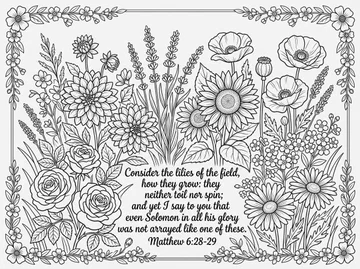
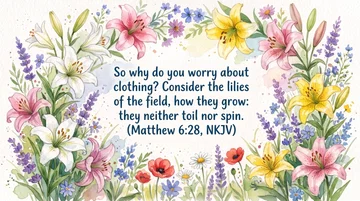
And yet I say unto you, That even Solomon in all his glory was not arrayed like one of these.
Translations
And yet I say to you, That even Solomon in all his glory was not arrayed like one of these.
And yet I say unto you, That even Solomon in all his glory was not arrayed like one of these.
and yet I say unto you, That even Solomon in all his glory was not arrayed like one of these.
And yet I say to you, that even Solomon in all his glory was not arrayed like one of these.
Revised Version, American Standard Version
yet I say unto you, that even Solomon in all his glory was not arrayed like one of these.
and I say to you, that not even Solomon in all his glory was arrayed as one of these.
but I say unto you, that not even Solomon in all his glory was clothed as one of these.
And yet, I say unto you, not even Solomon, in all his glory, was arrayed like, one of these!
Berean Standard Bible, Majority Standard Bible
Yet I tell you that not even Solomon in all his glory was adorned like one of these.
yet I tell you that even Solomon in all his glory was not dressed like one of these.
But I say to you that even Solomon in all his glory was not clothed like one of these.
Yet I say vnto you, that euen Salomon in all his glorie was not arayed like one of these.
Douay-Rheims (Challoner revision)
But I say to you, that not even Solomon in all his glory was arrayed as one of these.
Pictures








Cross-references 20 of 22
- Luke 12:27
Consider the lilies how they grow: they toil not, they spin not; and yet I say unto you, that Solomon in all his glory was not arrayed like one of these.
Lilies surpass Solomon’s splendor, illustrating God’s care and provision.
- Matthew 6:33
But seek ye first the kingdom of God, and his righteousness; and all these things shall be added unto you.
Seeking God’s kingdom first is joined to the promise of provision.
- Luke 12:24
Consider the ravens: for they neither sow nor reap; which neither have storehouse nor barn; and God feedeth them: how much more are ye better than the fowls?
God feeds the ravens and cares for people.
- Matthew 6:25
Therefore I say unto you, Take no thought for your life, what ye shall eat, or what ye shall drink; nor yet for your body, what ye shall put on. Is not the life more than meat, and the body than raiment?
The lilies’ lesson teaches trust in God’s care rather than worry about life’s needs.
- 1 Kings 10:4-5
And when the queen of Sheba had seen all Solomon’s wisdom, and the house that he had built,
Describes Solomon’s royal splendor, which the flowers surpass in appearance.
- 1 Kings 10:20
And twelve lions stood there on the one side and on the other upon the six steps: there was not the like made in any kingdom.
Its golden throne and lions illustrate Solomon’s royal splendor.
- 1 Kings 11:4-8
For it came to pass, when Solomon was old, that his wives turned away his heart after other gods: and his heart was not perfect with the LORD his God, as was the heart of David his father.
Solomon’s foreign wives turned his heart from God to worship other gods.
- Luke 12:6-7
Are not five sparrows sold for two farthings, and not one of them is forgotten before God?
God notices even small creatures and cares for people.
- Luke 12:32
Fear not, little flock; for it is your Father’s good pleasure to give you the kingdom.
Both promise the Father’s care so his flock need not fear.
- Matthew 6:19
Lay not up for yourselves treasures upon earth, where moth and rust doth corrupt, and where thieves break through and steal:
The following context warns against laying up earthly treasure.
- Psalms 145:16
Thou openest thine hand, and satisfiest the desire of every living thing.
Both teach God's provision for every living thing.
- Matthew 10:29-31
Are not two sparrows sold for a farthing? and one of them shall not fall on the ground without your Father.
The Father’s care for sparrows and people supports confidence in his providence.
- 1 Kings 10:26-27
And Solomon gathered together chariots and horsemen: and he had a thousand and four hundred chariots, and twelve thousand horsemen, whom he bestowed in the cities for chariots, and with the king at Jerusalem.
Details Solomon’s wealth and splendor.
- 2 Chronicles 9:19
And twelve lions stood there on the one side and on the other upon the six steps. There was not the like made in any kingdom.
It describes Solomon’s grandeur, which the lily’s beauty exceeds.
- Song of Solomon 3:9-10
King Solomon made himself a chariot of the wood of Lebanon.
Supplies details of Solomon’s richly adorned chariot.
- Deuteronomy 17:17
Neither shall he multiply wives to himself, that his heart turn not away: neither shall he greatly multiply to himself silver and gold.
Warns kings against multiplying wives, as Solomon did.
- Matthew 12:42
The queen of the south shall rise up in the judgment with this generation, and shall condemn it: for she came from the uttermost parts of the earth to hear the wisdom of Solomon; and, behold, a greater than Solomon is here.
Both contrast Solomon with a greater figure, showing Solomon’s limited glory.
- 1 Timothy 6:8
And having food and raiment let us be therewith content.
Both counsel contentment with food and clothing rather than fine raiment.
- Matthew 6:8
Be not ye therefore like unto them: for your Father knoweth what things ye have need of, before ye ask him.
The Father knows and provides what his children need.
- Revelation 19:8
And to her was granted that she should be arrayed in fine linen, clean and white: for the fine linen is the righteousness of saints.
The saints’ fine, clean clothing echoes the bride’s fine linen.
Commentary part 1 of 2
Each commentary is drawn from primary sources: the writings of Ellen G. White and Adventist pioneers and periodicals. Each commentary is separate. Its own words are not a quotation; follow the references to read the source passages.
Ellen G. White
119 sources
Christ illustrated with the common wild lilies around Him that even the greatest king at the height of royal splendor in costly robes was not clothed with such beauty as one of these simple flowers which God as Master Artist arrays with delicate color and life beyond all human skill to copy.2T 496.2Ms 24, 1895, par. 15Lt 43, 1896, par. 3Lt 79, 1900, par. 23–26Lt 4, 1896, par. 6–8 If such beauty is given to the short-lived grass of the field, He will much more clothe and care for men and women formed in His image and purchased with His blood.Lt 175, 1896, par. 19–23Ms 94, 1899, par. 25–26Lt 79, 1900, par. 23–26 The lesson rebukes anxious thought about food, drink, and clothing and calls instead for a single eye, laying up treasure in heaven, refusing to serve God and mammon, and seeking first the kingdom of God and His righteousness with the promise that all needed things shall be added.Ms 139, 1897, par. 3–5Lt 70, 1893, par. 29–33ST Jan 19, 1915 It sets the standard for dress in the grace and appropriateness of natural simplicity, warning against pride, extravagance, and costly artificial display while approving neat, modest, durable, and serviceable clothing.MH 288.4Ms 14, 1889, par. 4CT 303.3MYP 352.3–4Lt 301, 1904, par. 19–21 Beyond outward clothing, the most beautiful dress is upon the soul in the inward adorning of a meek and quiet spirit and the robe of Christ's righteousness, unfolding by God's life as the lily unfolds from a rough bulb into spotless purity.2T 496.2CT 303.3Lt 84, 1900, par. 12–14MH 289.1
Words and Setting
The saying stands in the Sermon on the Mount, spoken on a mountainside to the disciples and the gathered multitude.DA 298.2–3 That sermon opposed the self-righteous scribes and Pharisees and revealed the true character of love, mercy and compassion.FE 309.1 It is wonderful teaching, simple enough for a child to study without being misled, spoken with His own authority with every sentence from God.STE 10.1 It teaches the far-reaching principles of God's law, showing that the state of the heart regulates life and character, so that instructing in the claims of the law requires having its spirit in the heart and impressing its principles on others.Lt 7, 1886, par. 34 It gives the pure gospel explaining God's holy law and setting the holy standard of character for loving God with the whole heart and loving one's neighbor, even in business dealings.Ms 26, 1899, par. 29–30
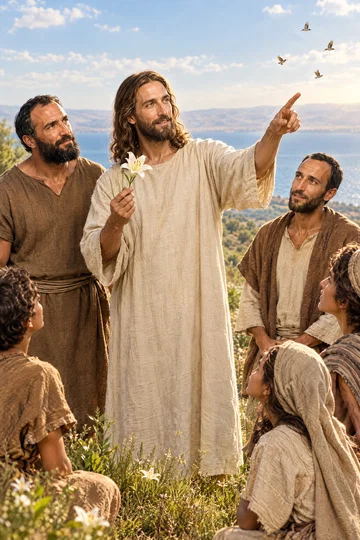
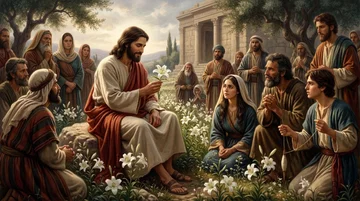
Christ illustrated it with a lily He had plucked and placed in the hands of children and youth, while they looked into His youthful face bright with His Father's presence.CT 178.3–179.1 He did this at Nazareth while subject to His parents, delighting in beautiful things of nature and drawing illustrations from familiar natural things.Lt 53, 1898, par. 27–28 On one morning He pointed in dewy freshness to flowers bright on the hillsides and fields.ST Mar 10, 1909
Even Solomon in all his glory means the greatest king at the height of royal splendor in costly robes.Ms 24, 1895, par. 15ST Feb 7, 1878 Yet he was not arrayed like one of these simple field lilies and common wild flowers growing around.2T 496.2Lt 43, 1896, par. 3Lt 391, 1907, par. 13–16 Their simplicity and innocence in natural beauty and loveliness surpass costly robes and elaborate display.2T 496.2ST Feb 7, 1878Ms 89, 1909, par. 16 Their growth and adornment without toil or spinning show God's provision for what He has made and support trusting Him rather than worrying about clothing and material needs.Ms 24, 1895, par. 15Ms 89, 1909, par. 16
God as the great Master Artist gives the lily delicate and beautiful tints, varied shades, color, vitality and life with skill infinitely beyond any human skill.Lt 79, 1900, par. 23–26Ms 75, 1886, par. 5 No human artist can match their perfection or reproduce or copy it perfectly.Ms 75, 1886, par. 5ST Mar 10, 1909 No human touch can impart life to even one flower or blade of grass, for every wayside blossom owes its being to the same power that set the starry worlds on high, with one pulse of life from the great heart of God thrilling through all created things.ST Mar 10, 1909 Their full wonderful beauty may not be known at sight but is revealed under a microscope or magnifying glass.Ms 230, 1902, par. 24–26 Even after the soil had long been blighted by sin's curse, a single lily possessed greater glory than Solomon in royal splendor, so the trees and flowers of Eden untouched by sin and the curse must have been more glorious still.CTBH 171.9–172.1
The lilies toil not neither do they spin, yet God clothes the grass of the field which today is and tomorrow is cast into the oven.Ms 139, 1897, par. 3–5Lt 70, 1893, par. 29–33MH 289.2–4 The same care feeds the fowls of the air that sow not nor reap.Ms 139, 1897, par. 3–5Lt 70, 1893, par. 29–33 He also sustains what He has made and attends even to the needs of a small sparrow, watching each person in every circumstance.CE 54.4–55.1
God's Care and Trust
God arrays the lilies of the field, which toil not and spin not, with a beauty of color and varied shades that surpasses even Solomon in all his glory as the greatest king that ever wielded a scepter.Lt 175, 1896, par. 19–23Ms 94, 1899, par. 25–26Lt 79, 1900, par. 23–26Lt 4, 1896, par. 6–817MR 182.3–183.2 As the great Master Artist He gives the lily its delicate and beautiful tints with skill infinitely beyond any human skill, and He has made the grass of the field into a beautiful carpet for the earth.Lt 79, 1900, par. 23–26Lt 4, 1896, par. 6–817MR 182.3–183.2 Divine attention is proportionate to the rank an object holds in the scale of creation, so the beauty given to a flower that withers in a day proves His care.Lt 79, 1900, par. 23–26Lt 4, 1896, par. 6–817MR 182.3–183.2 If such beauty is given to short-lived flowers and grass, His regard for men and women is far greater, for they were formed in His image, given intellect to comprehend greater things and to be led higher into truth and the divine mind, made His purchased heritage by His blood, upheld and strengthened even when His weakest child, whose name is never absent from His mind for a moment.Lt 175, 1896, par. 19–23Ms 94, 1899, par. 25–26Lt 79, 1900, par. 23–26Ms 8a, 1894, par. 22Lt 4, 1896, par. 6–8 Their clothing is evidence of His care for creation and supports confidence that He will much more clothe and care for His people rather than leave them to little faith.Lt 175, 1896, par. 19–23Ms 94, 1899, par. 25–26Ms 8a, 1894, par. 22
The verse rebukes little faith and anxious thought saying What shall we eat or What shall we drink or Wherewithal shall we be clothed, which is the way the Gentiles seek after food and drink and clothing.Ms 139, 1897, par. 3–5Lt 70, 1893, par. 29–33ST Jan 19, 1915 It calls for keeping the eye single so the body is full of light, for refusing to lay up treasures on earth where moth and rust corrupt and thieves steal, for laying up treasure in heaven where it never fails by giving entrusted means to sustain His cause, and for refusing to serve God and mammon.Ms 139, 1897, par. 3–5Lt 70, 1893, par. 29–33Ms 73, 1894, par. 1–3 It belongs with trusting the heavenly Father who feeds the fowls of the air though they sow not nor reap and who knows all need of these things, with seeking first the kingdom of God and His righteousness with the promise that all these needed things shall be added, and with taking no thought for the morrow.Ms 139, 1897, par. 3–5Lt 70, 1893, par. 29–33ST Jan 19, 1915ST Jul 2, 1894 It answers the excuse that children and domestic duties leave no time for study of the Word and for taking up God-given responsibilities, exposes the dangers and unbelief of the present time, calls for walking by faith, and directs the mind beyond common matters toward eternal truth and God.Ms 139, 1897, par. 3–5Ms 73, 1894, par. 1–3Ms 61b, 1895, par. 16–19
Solomon's outward glory in costly robes and royal splendor did not bring happiness, for amid riches, learning, magnificence and outward display without true godliness he was troubled by the emptiness of a life spent seeking pleasure and selfish gratification, which cannot give contentment, peace or happiness.ST Feb 7, 1878Ms 20, 1894, par. 15–194T 628.1–2 His extravagance burdened his people, and his pursuit of appearance and worldly glory caused him to neglect beauty of character and connection with God.Ms 20, 1894, par. 15–194T 628.1–2 His disobedience in marrying foreign wives led him to idolatry, corruption and apostasy, warning that even a wise and honored ruler cannot be relied on when turning from God's commands.Ms 20, 1894, par. 15–194T 628.1–2
The passage does not mean Christians should give no thought to temporal welfare or family needs and refrain from work, for concern for spiritual things does not make honest labor for spiritual ends sinful.AA 348.1Ms 8b, 1894 [Copy 2], par. 26–27 God provides through the earth when people work diligently with the strength and abilities He gives.Ms 8b, 1894 [Copy 2], par. 26–27 The flowers teach perfect trust, simplicity, quiet trust and quiet rest of soul, and as people notice and enjoy their beauty and fragrance they are led to confidence in the Saviour who provides for them.Lt 91, 1887, par. 2CE 54.4–55.17MR 326.2–327.2 He sustains what He has made and attends even to the needs of a small sparrow, watching each person in every circumstance, and He will especially care for those who believe, even clothing them with His righteousness, which is reason to appreciate His love and be cheerful and restful rather than doubt or mourn.Lt 91, 1887, par. 2CE 54.4–55.1Lt 43, 1896, par. 4 Trusting this constant care means leaving both great and small concerns in God's hands, casting the burden of care upon Him for help and comfort, and bringing life's burdens to Him, for when followers forget and do not trust and cast their burden upon Him He cannot carry it, and those very worldly cares separate them from Him.CE 54.4–55.1COL 51.2ST Feb 2, 1915 God provides for temporal needs through nature's gifts such as sunshine and rain that sustain life, yet He cares even more for people's eternal interests.3SP 48.1
Dress and Adornment Standard
Christ points to the flowers of the field, to the lily unfolding in its purity, to set the standard for dress.MH 288.4CT 303.3MYP 352.3–4RH Jan 6, 1916 By the things of nature He illustrates the beauty that heaven values, and that beauty is the pattern for human attire.MH 288.4CT 303.3RH Jan 6, 1916 Dress should have the grace, beauty and appropriateness of natural simplicity, with modest grace, simplicity, purity and appropriateness that makes it pleasing to Him.MH 288.4CT 303.3MYP 352.3–4RH Jan 6, 1916 That calls for good quality and becoming colors and fitness for service, chosen for durability and warmth and protection rather than display.RH Jan 6, 1916 The comeliness of the field flowers is greater than all the glory of Solomon, and that comeliness makes simplicity in dress charming and interesting, a picture of the charm and beauty of simple, appropriate dress.2MR 3.4MYP 353.1–2
He warns against the pride of life but not against its grace and natural beauty.MH 288.4Ms 14, 1889, par. 4CT 303.3MYP 352.3–43T 375.2 The warning is against giving excessive thought to clothing and against pride and extravagance in dress, pointing to simplicity rather than outward display.Ms 14, 1889, par. 4CT 303.3CTBH 93.2–3 No matter how much care and weary toil is spent to make self an object of admiration by outward decoration, all highly valued artificial adornment cannot compare in natural loveliness with the simple flowers of the field.3T 375.2 Even with God's adornment these simple flowers surpass in loveliness the gorgeous apparel of Solomon in his splendid royal clothing, for the lilies possess a natural beauty and grace greater than his.Ms 14, 1889, par. 43T 375.2 Costly artificial display and fashion's elaborate changing show are the opposite of their loveliness.MH 288.4CT 303.3CTBH 93.2–3MYP 352.3–4
Outward adornment does not give a person worth of character.Ms 46, 1902, par. 17–19 Devotion to dress and worldly display can divert time from God's work and eternal concerns.Ms 46, 1902, par. 17–19 Appearance and display should not consume time that belongs to giving God the heart's best and holiest affections, for God made beautiful things to be enjoyed and to turn minds from artificial display toward nature and His care.CTBH 70.1–2 Life is about more than food, drink, and clothing, and calls to seek something higher than material provision.ST Sep 2, 1875 Needless excess in dress and appetite wastes God-given time, money, and strength, harms the body, and is a marked sin of the last days and a sign of soon coming.ST Sep 2, 1875
The most beautiful dress to be worn is upon the soul.CT 303.3MH 289.1 No outward adorning can compare in value or loveliness with that inward adorning of a meek and quiet spirit which is of great price in His sight.CT 303.3MH 289.1 Their simplicity and innocence are more pleasing to God than outward riches without the inward adorning of meekness and righteousness.2T 496.2 Solomon's outward glory and costly display were less beautiful than integrity, honesty, a pure heart, and a steadfast purpose to do right untouched by worldly show, for worldly splendor is inferior to the beauty of a meek and quiet spirit.RH Jan 18, 1906ST Nov 26, 1896 Young people are to value inward purity and a meek, quiet spirit above time, money, and effort spent on appearance, and consecrated lives can resemble the lily in purity and bring a pleasant influence to others.ST Feb 7, 1878
Anxious thought for raiment is needless and wrong, though the lilies that are dressed more beautifully than Solomon in all his royal splendor do not toil or spin.Lt 301, 1904, par. 19–21RH Feb 23, 1905 Spending large sums of money on dress to satisfy fashion is rebuked when that money ought to feed the hungry and clothe the naked and cold.Lt 301, 1904, par. 19–21 People should dress neatly and tastefully but leave off unnecessary trimmings and lay aside the means thus saved for the advancement of the cause of God.Lt 301, 1904, par. 19–21 Every penny is needed to relieve the suffering, clothe the naked, feed the hungry, and proclaim present truth, and by denying what is not necessary all may have a part in that work, with the lesson of self-denial to be learned and taught to children.Lt 301, 1904, par. 19–21 Living simply and working in simplicity, dressing in a modest, becoming way that will gain a welcome everywhere, is required, for jewelry and expensive dress do not give influence, while devotion to service producing the ornament of a meek and quiet spirit gives power with God, and kindness and forethought for others are precious in His sight.RH Feb 23, 19059MR 120.2Ms 83, 1909, par. 8 A simple and unpretending dress and manner shows moral worth and marks true character, and those who break away from slavery to fashion and dress this way become ornaments in society.2MR 3.4
Beyond outward clothing the heavenly adorning must be sought instead.Lt 84, 1900, par. 12–14 God clothes the lilies in endless variety with a beauty greater than Solomon to minister delight and to express His love to all who will be softened and subdued by the works of His hands, and because He Himself nourishes every root no artificial display is needed.Lt 84, 1900, par. 12–14 The beautiful things of creation represent His love and mean more than many suppose.Lt 84, 1900, par. 12–14 The robe of Christ's righteousness which He provides is what every human being must put on who desires to enter the pearly gates of the New Jerusalem.Lt 84, 1900, par. 12–14 Since He cares for flowers and animals, He will especially care for those who believe, clothing them with His righteousness, which is reason to trust, appreciate His love, and be cheerful and restful rather than doubt or mourn.Lt 43, 1896, par. 4
Character and Spiritual Growth
The lily sends its roots down deep through mire, debris, weeds and rubbish by open channeled stems to the pure sand beneath, gathering only what is pure and refusing all debris and every unsightly thing to send up a pure, spotless, perfect blossom without mar.3MR 114.2–44MR 268.1–2Ms 73, 1895, par. 8Ms 29, 1886, par. 6–8Ms 6, 1905, par. 10–11 Rooted in Christ and firmly rooted in God, a person can in the same way reject what is impure and choose what is pure, escape surrounding evil and moral pollution amid temptation, share the divine nature, and grow up into pure noble character with courage to resist Satan and refuse evil.3MR 114.2–44MR 268.1–2Ms 73, 1895, par. 8Ms 29, 1886, par. 6–8Ms 6, 1905, par. 10–11 Children and youth are to be educated to draw purity, virtue, grace, courtesy, love and forbearance from the Source of all power, learning from the flowers to know God and the sacrifice made in their behalf so the lessons are always remembered.3MR 114.2–44MR 268.1–2Ms 6, 1905, par. 10–11RH Jul 9, 1901 The lilies’ growth also teaches receiving what helps life flourish and refusing what would spoil it, rather than striving for artificial display.RH Jul 9, 1901
As a lily unfolds in loveliness from a rough bulb through the life God gives it with rain and sunshine freely offered to all, so God’s life can unfold Christlike character in souls that yield to His grace.ST Mar 10, 1909ST Mar 10, 1909 The word that creates the flowers can produce the graces of the Spirit in them, imparting to the soul the beauty of His own character for pure and holy lives that reflect Him who made man in His image.DA 313.2–3ST Nov 19, 1896Ms 137, 1908, par. 11–15ST Mar 10, 1909 That care for the flowers, which neither toil nor spin, displays tender unceasing love for people of far greater value and assures them He longs to see them reflect His character.DA 313.2–3ST Nov 19, 1896Ms 137, 1908, par. 11–15 The flowers’ simple beautiful lives follow the same great laws that guide the stars.ST Mar 10, 1909
In the natural world growth depends wholly on the Lord without anxious toil, and no one by taking thought can add one cubit to stature.18MR 3.1–3Ms 116, 1898, par. 10–11HL 19.3 So in spiritual growth each person must grow up under God’s supervision to his own individual measure, trading with conscientious fidelity on his own God-given talents instead of patterning character after any other man.18MR 3.1–3Ms 116, 1898, par. 10–11 As flowers differ in form, people are not meant to have identical characters but to develop individual gifts and character under God’s direction, since human life and the flourishing of a field flower alike depend on what God provides.18MR 3.1–3Ms 116, 1898, par. 10–11HL 19.3
The flowers obey the orders of God’s will and are clothed more gloriously than Solomon, while man gifted with higher nobler powers has disobeyed his Creator, departed from God’s plan, lowered himself to acts that dishonor his Maker, and failed in the virtues that give welcome into the heavenly courts.STB 353.1–3Ms 108, 1905, par. 8–10MWISDAP 10.1–3 The verse therefore keenly rebukes ingratitude, distrust, lack of faith and every phase of unbelief, including anxious self-serving care about houses, lands and business interests with greed, selfishness and sinful sharp practices as seen in the institutions at Battle Creek where God’s rebuke and displeasure fell in stern judgments upon the two largest institutions.STB 353.1–3STB 354.1–2Ms 108, 1905, par. 8–10MWISDAP 10.1–3 It calls for unquestioning faith and pure unselfish love such as Christ manifested in clothing His divinity with humanity and becoming one with humanity, obeying the principles of heaven and God’s Word, living pure holy lives, and learning to cast all care upon Christ, for without His help life’s heavy burdens cannot be carried aright, that through grace men may become one with Him and thus one with God and partakers of the divine nature.STB 353.1–3Ms 108, 1905, par. 8–10MWISDAP 10.1–3
Nature as Lesson Book
Jesus as Creator taught divine truth in new light from what His own hands had made, delighting in beautiful things, open to nature's influences, and gathering spiritual teaching from daily surroundings to enlarge views of God's goodness.CT 178.3–179.1Lt 53, 1898, par. 27–283MR 343.2–3 At Nazareth while subject to His parents He plucked a lily and placed it in the hands of children and youth as they looked into His youthful face bright with His Father's presence, teaching that lilies grow in simplicity of natural beauty and loveliness without toiling or spinning yet are clothed more gloriously than Solomon.CT 178.3–179.1Lt 53, 1898, par. 27–28 In the Sermon on the Mount He used the lilies of the field in their natural loveliness to illustrate great truth in language fitted to the opening minds and intellect of children, bringing hearers into contact with nature that they might listen to the voice speaking in all created things.3MR 343.2–3Lt 223, 1905, par. 8–10 As hearts became tender and minds receptive He helped them interpret the spiritual teaching in the scenes before their eyes, opening the true philosophy of nature's great lesson book to teach simplicity and trust in God and to teach parents to teach children to distinguish the genuine from the artificial.3MR 343.2–3Lt 223, 1905, par. 8–10
He took lilies and other familiar things of daily life — birds, sower and seed, shepherd and sheep — to illustrate immortal truth simply yet with wonderful depth.CT 261.1Ms 16, 1897, par. 3–5Lt 223, 1905, par. 8–10 The illustration was given so that ever afterward when hearers chanced to see lilies they recalled His words, making truth a living reality, with scenes of nature and daily affairs ever repeating His teaching and keeping divine truths fresh in memory.CT 261.1ST Jun 4, 1874RH May 30, 18712T 579.2–580.2 By joining works of nature to sacred teaching He made divine truth plain, clear and memorable, directing from nature to its Creator so that later sights of flower, lily resting on the lake, and landscape would bring lessons freshly to mind.ST Jun 4, 1874RH May 30, 18712T 579.2–580.2 What He had made could teach more than could be grasped by sight and sense alone, and His use of daily facts brightens and uplifts the daily task with constant reminders of the spiritual and unseen.3MR 343.2–3Ms 16, 1897, par. 3–5Lt 223, 1905, par. 8–10
Rightly understood, nature's lessons point from visible works to the Creator and lead heavenward.Ms 21, 1899, par. 35ED 102.3–44T 579.2–580.2 The God-given beauty of simple field flowers surpassing Solomon's splendid clothing teaches that costly adornment labored for admiration cannot compare with the loveliness God gives nature. That growth and development teach principles of Christ's kingdom and lessons about God's work in the heart, turning familiar sights of birds and flowers into reminders of the unseen and lifting ordinary life toward higher thoughts.ED 102.3–4 Children should likewise learn to see God's teaching in the natural world, for things God has made reveal knowledge of Him, and nature and Scripture together reveal His wisdom and power through the laws by which He works.ED 102.3–44T 579.2–580.2CE 66.2–3
The beautiful things of creation express tender fatherly love and loving thought for human happiness, made to minister delight, bring joy to sad hearts, and make life bright and joyous through love for others.Lt 84, 1900, par. 12–1417MR 349.1–5PP 599.2–4 God clothes the lilies in endless variety with beauty greater than Solomon in all his glory to express His love to all softened and subdued by the works of His hands, giving each flower distinctive beauty because He delights in beauty and cares for His creation.Lt 84, 1900, par. 12–14Ms 20, 1886, par. 3–9ST Nov 17, 1898 Every opening bud and blossoming flower with lofty trees, springing grass, running brooks and stones gives lessons pointing upward, and together with sunshine, flowers and trees amid which the sick are to be taught, they are God's natural means for restoring body and mind.17MR 349.1–5 Their brief loveliness points beyond earthly things to eternal glories prepared for those who love Him, giving a small taste of Eden and a shadow of the full loveliness of Paradise where eye has not seen and ear has not heard, speaking of unseen eternal treasures and teaching simplicity and quiet trust.Ms 20, 1886, par. 3–920MR 81.6–82.3ST Nov 17, 1898
The comparison does not present God as dwelling personally in a flower or other part of nature.Ms 154, 1903, par. 14–15Lt 230, 1903, par. 7–921MR 172.1–2 The lilies' beauty exceeds Solomon's royal splendor because God clothes them, yet their beauty points to God as Creator, not to His being physically present in plants.Ms 154, 1903, par. 14–15Ms 154, 1903, par. 16–18 Nature's beauty is a gift expressing His love and mercy and a preserved glimpse of Eden's beauty, given to direct from created things to their Creator rather than to regard nature as God or part of God, for the works of God are not God Himself.Ms 154, 1903, par. 16–18Lt 230, 1903, par. 7–921MR 172.1–2
Contemplating God's work in plants and animals helps people become better fitted to serve their Creator, know God, enjoy health, and learn simplicity and faith.13MR 337.2–3Ms 35, 1899, par. 6–8Ms 230, 1902, par. 24–26 The lily formed and clothed by God with beauty greater than all Solomon's glory includes common flowers growing wild around, whose full wonderful beauty is not known at sight but is revealed under microscope or magnifying glass as proof of His wonderful works, calling all to be introduced to nature and to know He wants everyone in health.13MR 337.2–3Ms 35, 1899, par. 6–8Ms 230, 1902, par. 24–26 Considering lilies of the valley and beautiful flowers growing around awakens reverence and love to God, teaching simplicity and trust and distinction between genuine and artificial.3MR 343.2–3Lt 223, 1905, par. 8–105MR 20.1 Reading the lesson rightly requires greater natural simplicity and far more spirituality to read aright the book of nature opened before all, grasping through faith the eternal set forth in earthly forms and semblances so the depths of the soul are reached and the God of nature is magnified and reverenced.5MR 20.1
Daily Life Applications
Parents are to take children into field and garden and beside lake, and point from lofty trees and shrubs, from the green carpet of earth, from roses and pinks and lilies to nature's God, that they may become acquainted with Him and learn to serve and glorify Him.Lt 175, 1896, par. 19–233MR 114.2–4Lt 4, 1903, par. 12Ms 16, 1895, par. 11–13Ms 10, 1903, par. 29–30 The lilies though they toil not nor spin are clothed with beauty and varied shades surpassing even Solomon in all his splendor, revealing skill and care and love for every person, and parents are to notice and love this loveliness and draw from it the lesson of trust that God will care for His children and provide what they need.Lt 175, 1896, par. 19–233MR 114.2–4Lt 4, 1903, par. 12Ms 16, 1895, par. 11–13Ms 10, 1903, par. 29–30 Christ Himself picked flowers and gave them to children bidding them study them, and God looks with pleasure upon flowers and upon a beautiful field of grass and planted flowers before a place of healing.Ms 6, 1905, par. 10–11 The water lily strikes its channeled stems down through mire and filth and weeds and rubbish to pure sand beneath, drawing thence only pure nourishment to send up a pure spotless blossom, and children taught this lesson they will always remember are to reject what is impure and choose what is pure, refusing evil and choosing good, that they may grow into pure noble men and women with courage to resist evil.3MR 114.2–4Ms 6, 1905, par. 10–11 Such gentle repeated care is like that which makes plants flourish, and shows how to shape character after Christ in simplicity and purity and love for the heavenly Father.3MR 114.2–4Ms 10, 1903, par. 29–30Ms 6, 1905, par. 10–11
The beauty that surpasses Solomon is a messenger of love to the afflicted family here below, for every opening bud and blossoming flower with lofty trees and springing grass and running brooks expresses love for His children and points upward to God.17MR 349.1–5MH 265.3–266.1CH 171.1MH 264.2–3STB 108.5–109.1 Sick ones dwelling amid attractive country surroundings are to be taught these lessons amid sunshine and flowers and trees, and venturing a few steps to gather the flowers brings restfulness and refreshment, revives drooping spirits, recruits waning strength, and turns the mind from self and from aches and pains to God.17MR 349.1–5MH 265.3–266.1MH 264.2–3STB 108.5–109.1 In rural sanitariums out of the city the sick can have outdoor life, lying in shade of trees, working among flowers, gathering flowers and fruit, listening to birds praising God, breathing fresh air and enjoying sunshine and exercise, so that sorrows are forgotten and melancholy and depression leave and life and vitality return.Ms 6, 1905, par. 10–11STB 108.5–109.1 Looking at and working in this beauty with good treatment and wholesome diet builds up strength and gives relief to wearied brain and nerves, so there is no need for health-destroying drugs or intoxicating drink, while angels draw near and souls are opened to learn of God.17MR 349.1–5MH 265.3–266.1STB 108.5–109.1 The One who cares for birds and flowers and clothes them will much more care for human beings formed in His image, and lifting thoughts beyond what is seen reminds the sick of that care.17MR 349.1–5MH 265.3–266.1CH 171.1
The verse rebukes little faith and unbelief leading to evil works and wrong principles, rebuking a life of self-serving in those claiming to be disciples of Christ.Ms 108, 1905, par. 11–15STB 354.1–2 Such anxious care saying What shall we eat or What shall we drink or Wherewithal shall we be clothed is the way the Gentiles seek, giving first consideration to houses and lands and business interests with greed and selfishness and sinful sharp practices, diverting money into wrong channels to carry out worldly plans and hindering the proclamation of the last gospel message to all nations and kindreds and tongues and peoples.Ms 108, 1905, par. 11–15STB 354.1–2 At Battle Creek this course placed institutions where the rebuke of God fell on their unrighteousness, and His displeasure was shown before all the world by stern judgments upon the two largest institutions.Ms 108, 1905, par. 11–15STB 354.1–2 Those refusing correction and continuing in determined obstinacy and defiance and worldliness, acting as the Gentiles act and mingling human wisdom with the divine and unjustly acquiring means at another's expense, prove they have not learned the pure gospel of the Mount setting the holy standard of character for loving God wholly and neighbor in business dealings, and need a cleansing of the soul temple.Ms 108, 1905, par. 11–15Ms 26, 1899, par. 29–30 They will be visited for iniquity and punished as the Gentiles, only with greater severity because of abundance of light given, and God will not spare unless there is thorough conversion of soul and repentance.Ms 108, 1905, par. 11–15
The sixth chapter holds lessons not yet learned by which life must be ordered according to truth found in the Word, teaching that every gift received comes from God and that gratitude for His goodness fills the heart and brings a heavenly atmosphere around the soul.STB 823.2–3Ms 15, 1912, par. 1–2 It calls for diligent study of the Scriptures as not a make-believe story but truth of the living God, foundation of faith and assurance on which hope of eternal life in the kingdom of heaven is built.STB 823.2–3Ms 15, 1912, par. 1–2 It teaches contentment to those determined to be rich, directing life under control of the Holy Spirit away from strife for place and position and reaching out for honor and recognition.STB 828.2–829.1AFUP 13.3Ms 15, 1912, par. 15–17 Honor is to be sought in obedience to the word of truth and in honoring Christ at every step, with the greatest desire to work in just the place God assigns where He can look with approval, in right words that bless and encourage revealing fruits of righteousness, without elbowing fellow workers aside to make room for personal plans, without hasty temper and cruel speech and unkind thought, without exalting one and condemning another.STB 828.2–829.1AFUP 13.3Ms 15, 1912, par. 15–17 Worldly matters of eating and drinking and clothing can occupy the mind to exclusion of serving God with humility and prayer, and the lesson directs attention away from worldly concerns toward things of eternity.AFUP 13.3AFUP 9.1
The surrounding command is to lay not up treasure on earth where moth and rust corrupt and thieves break through and steal, but to lay up treasure in heaven where treasure is safe, for where treasure is there the heart will be also.Ms 73, 1894, par. 1–3Ms 151, 1898, par. 45–48Ms 187, 1898, par. 51–54 That teaching exposes the dangers and unbelief of the present time and calls for walking by faith.Ms 73, 1894, par. 1–3 It is for enlightenment of parents, showing them as teachers in God's place to act His mind and will in every particular, not to scold and fret at children or be harsh and punish them in anger, but to bring them up in habits of strict temperance.Ms 151, 1898, par. 45–48Ms 187, 1898, par. 51–54
Sources