Numbers 12:10
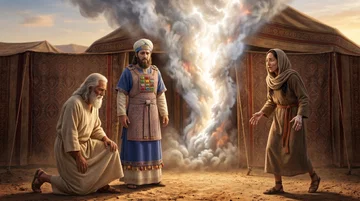
And the cloud departed from off the tabernacle; and, behold, Miriam became leprous, white as snow: and Aaron looked upon Miriam, and, behold, she was leprous.
Translations
And the cloud departed from off the tabernacle; and, behold, Miriam became leprous, white as snow: and Aaron looked on Miriam, and, behold, she was leprous.
And the cloud departed from off the tabernacle; and, behold, Miriam became leprous, white as snow: and Aaron looked upon Miriam, and, behold, she was leprous.
KJV Cambridge Paragraph Bible, Webster Bible
And the cloud departed from off the tabernacle; and behold, Miriam became leprous, white as snow: and Aaron looked upon Miriam, and behold, she was leprous.
Revised Version, American Standard Version
And the cloud removed from over the Tent; and, behold, Miriam was leprous, as white as snow: and Aaron looked upon Miriam, and, behold, she was leprous.
and the cloud hath turned aside from off the tent, and lo, Miriam [is] leprous as snow; and Aaron turneth unto Miriam, and lo, leprous!
and the cloud departed from off the tent. And behold, Miriam was leprous as snow; and Aaron turned toward Miriam, and behold, she was leprous.
And, when, the cloud, removed from off the tent,—lo! Miriam, leprous, like snow! And Aaron turned unto Miriam and lo! …leprous!
Berean Standard Bible, Majority Standard Bible
As the cloud lifted from above the Tent, suddenly Miriam became leprous, white as snow. Aaron turned toward her, saw that she was leprous,
The cloud departed from over the Tent; and behold, Miriam was leprous, as white as snow. Aaron looked at Miriam, and behold, she was leprous.
And the cloud was moved from over the Tent; and straight away Miriam became a leper, as white as snow: and Aaron, looking at Miriam, saw that she was a leper.
Also the cloude departed from the Tabernacle: and beholde, Miriam was leprous like snowe: and Aaron looked vpon Miriam, and beholde, she was leprous.
Douay-Rheims (Challoner revision)
The cloud also that was over the tabernacle departed: and behold Mary appeared white as snow with a leprosy. And when Aaron had looked on her, and saw her all covered with leprosy,
Pictures

Cross-references
- Numbers 12:2
And they said, Hath the LORD indeed spoken only by Moses? hath he not spoken also by us? And the LORD heard it.
The Lord hears Aaron and Miriam’s challenge against Moses before judging Miriam.
- Matthew 8:3
And Jesus put forth his hand, and touched him, saying, I will; be thou clean. And immediately his leprosy was cleansed.
Jesus cleanses a leper, as God later removes Miriam’s leprosy.
- 1 Corinthians 10:10-11
Neither murmur ye, as some of them also murmured, and were destroyed of the destroyer.
Israel’s recorded murmuring serves as a warning and admonition to later generations.
- Numbers 12:15
And Miriam was shut out from the camp seven days: and the people journeyed not till Miriam was brought in again.
Israel waits seven days for Miriam to return to camp.
- Numbers 12:4
And the LORD spake suddenly unto Moses, and unto Aaron, and unto Miriam, Come out ye three unto the tabernacle of the congregation. And they three came out.
The summons to the tabernacle precedes Miriam’s punishment.
- Micah 6:4
For I brought thee up out of the land of Egypt, and redeemed thee out of the house of servants; and I sent before thee Moses, Aaron, and Miriam.
Names Moses, Aaron, and Miriam as leaders who brought Israel from Egypt.
- Numbers 11:35
And the people journeyed from Kibroth-hattaavah unto Hazeroth; and abode at Hazeroth.
Places the people at Hazeroth before the later journey.
- Numbers 33:18-36
And they departed from Hazeroth, and pitched in Rithmah.
Lists the encampments between Hazeroth and Kadesh-barnea.
- Numbers 12:3
(Now the man Moses was very meek, above all the men which were upon the face of the earth.)
declares the meekness Moses showed here
- 2 Chronicles 26:19-20
Then Uzziah was wroth, and had a censer in his hand to burn incense: and while he was wroth with the priests, the leprosy even rose up in his forehead before the priests in the house of the LORD, from beside the incense altar.
Uzziah is struck with leprosy after presuming to perform a priest’s duty.
- 2 Kings 5:27
The leprosy therefore of Naaman shall cleave unto thee, and unto thy seed for ever. And he went out from his presence a leper as white as snow.
Gehazi’s leprosy follows his covetousness and deceit.
- Numbers 12:16
And afterward the people removed from Hazeroth, and pitched in the wilderness of Paran.
Describes the move from Hazeroth toward Paran after Miriam's punishment.
Commentary
Each commentary is drawn from primary sources: the writings of Ellen G. White and Adventist pioneers and periodicals. Each commentary is separate. Its own words are not a quotation; follow the references to read the source passages.
Ellen G. White
18 sources
After the Lord rebuked Miriam and Aaron for speaking against Moses, the cloud lifted from the tabernacle and Miriam was left white with leprosy before Aaron's eyes.SG4 20.21SP 287.2Lt 7, 1894, par. 18–22 The cloud withdrew because God's displeasure rested upon her, and the token of His favor did not return until she was shut out of the camp.SG4 20.2ST Aug 19, 1880SG4 21.1 The stroke punished jealousy, murmuring and presumptuous opposition to Moses, God's chosen and faithful servant with whom He spoke directly and upon whom He laid the burden of leadership.SG4 20.21SP 287.2Ms 201, 1898, par. 1–5RH Aug 14, 1900 To dishonor Moses was to dishonor God, so the public affliction vindicated His appointed instrument and showed He does not treat such sin lightly even in leaders.Lt 7, 1894, par. 18–22RH Aug 14, 1900ST Aug 19, 1880SG4 21.11SP 288.1 The judgment was set as a warning to all Israel against jealousy, complaint and rebellion toward those God entrusts with His work, and against disparaging fellow workers and seeking to be first.ST Aug 19, 1880SG4 21.1SG4 27.1–2Lt 14a, 1898, par. 10–13
Cloud Departs, Leprosy Falls
The anger and rebuke of the Lord against Miriam and Aaron for speaking against Moses was followed at once by the departure of the cloud from off the tabernacle, and behold, Miriam became leprous, white as snow, and Aaron looked upon her and saw that she was leprous.SG4 20.21SP 287.2Lt 7, 1894, par. 18–22PP 382.4–383.1RH Aug 14, 1900 The stroke came as punishment and public vindication, because in jealousy, murmuring and presumptuous opposition they had challenged Moses as God's chosen servant, appointed and distinguished as faithful.SG4 20.2Lt 7, 1894, par. 18–22PP 382.4–383.1RH Aug 14, 1900ST Aug 19, 1880 Her sudden, visible affliction marked God's displeasure and the seriousness of speaking against His chosen servant and resisting His appointed agency.1SP 287.2RH Aug 14, 1900ST Aug 19, 1880
The cloud left because God's wrath and displeasure rested on Miriam, and it remained away and did not return until she was removed from the camp.SG4 20.2ST Aug 19, 1880SG4 21.1PP 384.31SP 288.1 Its absence was the withdrawal of the sign of God's favor, which did not come back to the tabernacle until her exclusion was complete.SG4 20.2ST Aug 19, 1880SG4 21.1PP 384.31SP 288.1 In this way the departure itself declared judgment for jealous complaints and disloyalty, for irreverence toward Moses as the one God had chosen and filled with His Spirit was irreverence toward God as well.ST Aug 19, 1880SG4 21.11SP 288.1
Aaron was spared the disease, yet Miriam's punishment rebuked him and humbled them both.PP 384.3 After Aaron confessed their sin, Moses prayed, and Miriam was cleansed and healed of the leprosy.RH Aug 14, 1900ST Aug 19, 1880PP 384.3 Healing did not cancel exclusion, for she still had to remain outside the camp for seven days.RH Aug 14, 1900ST Aug 19, 1880PP 384.3
Sin Against God's Appointee
The leprosy that fell when the cloud lifted was punishment for jealousy and for murmuring and complaints against Moses.SG4 20.21SP 287.2PP 382.4–383.1ST Aug 19, 1880 It was punishment for disloyalty and opposition to him and for the presumptuous sin of speaking against him and challenging his leadership.SG4 20.21SP 287.2Lt 7, 1894, par. 18–22Ms 201, 1898, par. 1–5RH Aug 14, 1900 The anger that produced the stroke followed a direct rebuke for that speaking against Moses.SG4 20.21SP 287.2
Moses was God's chosen servant and chosen instrument to carry out His will and purposes.SG4 20.2Ms 201, 1898, par. 1–5SG4 21.11SP 288.1 He had been appointed and distinguished as faithful, chosen and filled with His Spirit, entrusted with the burden of leading His people and carrying the burden of His work.ST Aug 19, 1880RH Aug 14, 1900SG4 21.1 God had affirmed his special position by speaking with him more directly than with a prophet.1SP 295.1–2 Aaron and Miriam had lost the sense of this appointment, and their faultfinding was the more wrong because they would not bear that burden themselves while blaming the one God had entrusted with it.Ms 201, 1898, par. 1–5
Disrespect toward Moses was irreverence toward God as well as toward Moses.SG4 21.11SP 288.1 The stroke that made Miriam white as snow therefore publicly vindicated Moses.Lt 7, 1894, par. 18–22
Warning to All Israel
The sudden stroke that whitened Miriam with leprosy when the divine presence withdrew showed how grave it is to speak presumptuously against the servant God has appointed and distinguished as faithful.RH Aug 14, 1900ST Aug 19, 1880RH Aug 14, 1900 Her visible affliction marked God's displeasure with murmuring and made plain that He does not treat such sin lightly, even when it comes from those given positions of responsibility.RH Aug 14, 1900ST Aug 19, 1880RH Aug 14, 1900 Though the leprosy was afterward removed in answer to Moses' prayer, she was still required to remain outside the camp seven days.RH Aug 14, 1900ST Aug 19, 1880
That punishment was made a warning to all Israel, not to Miriam and Aaron alone, and the instructions given to them were for the benefit of the whole congregation.SG4 27.1–21SP 295.1–2SG4 27.3PP 396.3 The cloud left because wrath rested upon her and did not return until she was removed from the camp.ST Aug 19, 1880SG4 21.1 Her jealous complaints against the one God had chosen and filled with His Spirit and entrusted with the burden of His work were irreverence toward God as well as toward Moses, whom God had affirmed in a special position by speaking with him more directly than with a prophet.ST Aug 19, 1880SG4 21.11SP 295.1–2 The event therefore stands as a rebuke to jealousy and to murmuring, accusing, complaining against, and opposing those on whom God lays responsibility.ST Aug 19, 1880SG4 21.1SG4 27.1–2PP 396.3
God struck her as a deliberate public example to expose secret, heart rebellion against Moses and to warn all who might be tempted to rebel.1SP 296.1SG4 27.3 It was meant especially for Korah, who was already rebellious at heart and secretly working against Moses while serving in the tabernacle and seeking to exalt himself to the priesthood God had given to Aaron and his sons.1SP 296.1 In the same way the verse signals God's displeasure against speaking against His appointed messengers and fellow workers.Lt 14a, 1898, par. 10–13 A like course of disrespect, contempt, evil surmising, loose-tongued criticizing and condemning of brethren, disparaging their work and cutting away the influence God appointed them to have, and seeking to be first, will meet His displeasure, and this requires guarding sacredly one another's interests and purging the leaven of Pharisaism, criticism, and accusing from the heart.Lt 14a, 1898, par. 10–13
Sources
Pioneers and periodicals
32 sources
Aaron and Miriam spoke against Moses their brother from envy and jealousy, wanting to stand on an equal footing with him and questioning whether God had spoken only by him, with prejudice against his marriage to an Ethiopian woman as the immediate occasion.RH Jun 25, 1872RH Dec 17, 1901RH Aug 10, 1916ST Mar 31, 1909ST May 6, 1889
When the anger of the Lord was kindled He departed, and the cloud with God's presence and glory departed from off the tabernacle, and Miriam became leprous white as snow while Aaron looked upon her and saw she was leprous.ST Aug 19, 1880ST May 6, 1889RH Jun 12, 1913RH Jul 18, 1907ST May 20, 1889
At Moses' prayer she was healed, but she was shut outside the camp seven days and the whole camp was stayed and could not move until she returned.RH Jun 12, 1913RH May 23, 1912RH Apr 26, 1906
Speaking against God's chosen servant is speaking against God Himself, for God always leads His people by human instrumentalities, appointing and distinguishing His faithful servant and speaking with him mouth to mouth and face to face.RH Nov 12, 1903RH Jun 25, 1872RH Mar 7, 1907ST Mar 31, 1909RH May 26, 1863
Miriam's leprosy shows that jealousy, murmuring, faultfinding and resisting God's appointed agency are sin abhorrent to God and damage spiritual life as leprosy damages the body, written as an ensample and admonition to later believers, while Moses meekly and forgivingly praying for the very ones who attacked him gives a lifetime lesson.RH Aug 14, 1900RH May 23, 1912RH Feb 24, 1916RH Feb 28, 1907RH Jun 16, 1863
Offense and Punishment
The verse belongs to the wilderness murmurings of Numbers 11-14, where Israel complained because they could not live like the world and lusted after the food they had eaten in Egypt, murmuring on until the Lord's protecting care was withdrawn and all but Caleb and Joshua and the children perished without entering the promised land.RH Apr 17, 1879 It belongs to the account of their wanderings with their ceremonies and service, in which God kept very strict order among His children because they needed to learn system and by carrying it out form a systematic character.ST Mar 4, 1913 It is a typical story of jealousy and the Lord's vindication of His servant, with Miriam's chastening at Hazeroth as a swift, signal punishment following discontent.ST May 23, 1911
Aaron and Miriam spoke against Moses their brother because they felt not honored enough and wanted to stand on an equal footing with him, asking whether the Lord had spoken only by Moses and not also by them.RH Jun 25, 1872ST Mar 31, 1909 Though Miriam herself was a prophetess, Moses was Israel's leading prophet, and they treated him contemptuously despite his divinely appointed position.RH Aug 10, 1916RH May 26, 1863 Their envy was pain, uneasiness, mortification and discontent excited by the sight of his superiority and success, accompanied by hatred and a desire to depreciate him and bring him down, since they could not bear to have anyone above them however worthy or well fitted for his place and thought their only hope of being exalted was to have him brought down.ST Apr 29, 1913 They sought to weaken confidence in God's work by pointing to real or supposed errors in his conduct in order to bring themselves into notice and to hide their own faults.RH Jun 25, 1872
The immediate occasion was prejudice against his marriage to an Ethiopian woman.RH Dec 17, 1901 It was a tender and embarrassing personal matter in which Aaron, influenced by Miriam, plotted against him, though Moses was learned in all the wisdom of the Egyptians and honored by God above every other prophet.ST Mar 31, 1909ST May 6, 1889
After the anger of the Lord was kindled against them and He departed, the cloud departed from off the tabernacle, for God's presence and glory left it because His wrath rested on them.ST Aug 19, 1880RH Aug 14, 1900ST May 6, 1889 It did not return until she was removed from the camp, showing God's displeasure and the serious consequence of rebellion against Him.ST Aug 19, 1880RH Feb 24, 1916 Her sin was presumption in speaking against the one God had appointed, which He does not treat lightly even in those given positions of responsibility.RH Aug 14, 1900
Behold, Miriam became leprous, white as snow, which Aaron saw upon looking at her, the Lord laying His hand in punishment on murmuring against His chosen leader.ST May 6, 1889RH Jun 25, 1872RH Jul 18, 1907 Aaron fully shared the wrongdoing, and he sorrowed deeply over his beloved sister smitten extremely with a disease imperiling the life of all who touched her.ST Mar 31, 1909 The sight of her striking punishment made the congregation tremble.ST May 20, 1889
Moses did not resent or retaliate but prayed that God would forgive the sin and heal her, and God removed the leprosy in response to his prayer.RH Aug 14, 1900RH Apr 26, 1906ST May 6, 1889 Her leprosy illustrates that jealousy, murmuring and faultfinding damage spiritual life as leprosy damages the body.RH May 23, 1912 She was nevertheless required to remain outside the camp seven days, so the whole camp was stayed and could not move and Israel's progress waited until she could return.RH Aug 14, 1900ST Aug 19, 1880RH Jun 12, 1913RH Jun 16, 1863 One person's disobedience thus hinders God's work even when Moses and Aaron and the elders might be obedient, for obedience is an individual work, and to see the work move on in power believers must walk up to the light, keep God's commandments fully and have the faith of Jesus, putting away everything that will be a clog.RH Jun 16, 1863
Warning for Later Generations
The Lord heard the speaking against His servant, and He marks such speaking, though it is often done without thought that He hears.RH Jun 25, 1872ST Mar 31, 1909 He watches with jealous care the reputation of the few through whom He speaks for the salvation of His people.RH Jun 25, 1872 To point at defects, real or supposed, in leaders He still retains is to call in question His wisdom in choosing them.RH Jun 25, 1872
To speak against the chosen instrument is to speak against God Himself.RH Mar 7, 1907 God always leads His people by human instrumentalities and speaks His will through His chosen servants, proving the need and importance of having a God-appointed leader.RH Mar 7, 1907 Those servants He appoints, distinguishes as faithful, and declares greater than a prophet, speaking with them mouth to mouth and face to face as a man speaks to his friend.RH Nov 12, 1903ST Sep 9, 1880RH Mar 7, 1907 His people are to follow not the human person but the voice of God spoken through him, and must not defame or oppose His chosen servants nor try to take over their appointed office.RH Mar 7, 1907RH May 26, 1863
Miriam's leprosy shows that slander, presumption, jealousy, murmuring and faultfinding are sin abhorrent to God.RH Aug 14, 1900RH May 23, 1912RH Feb 24, 1916 It is not treated lightly even in those given positions of responsibility, and the sudden affliction demonstrated the seriousness of resisting God's appointed agency.RH Aug 14, 1900 Jealousy, murmuring and faultfinding damage spiritual life as leprosy damages the body.RH May 23, 1912 The stroke proves the holiness of God's work and how particular He is that everything be performed exactly, with sacred ordinances kept precisely.ST Jun 17, 1889 He is no respecter of persons but treats the greatest among men, even of His own people, as the lowest with strict justice.ST Jun 17, 1889 No outward provocation is an excuse for sin, for its root is wholly in the heart of man.ST Jun 17, 1889 Her punishment stands as the example of the consequences of a complaining spirit and as a fearful judgment warning against distrust and rebellion against God's appointed servants.ST Apr 22, 1889RH May 20, 1873
Like the judgments for the camp's murmuring and for Korah, Dathan, Abiram and the princes, the stroke happened for an ensample and was written for the admonition of those upon whom the ends of the world are come.RH Mar 7, 1907 Israel's record of unbelief and hardness of heart was written as an admonition for later generations.RH Feb 28, 1907 Her affliction warned all Israel and later believers against irreverence, distrust, jealousy and rebellion toward those entrusted with God's work.ST Aug 19, 1880RH Nov 12, 1903ST Sep 9, 1880 The stroke teaches fear of speaking against God's servant, and it left the offenders in haste to have Moses himself, the very one they had attacked, entreat the Lord for them.RH Jun 25, 1872 Fear of judgment alone, however, is not true sorrow for sin.RH Jun 25, 1872
A spirit of rebellion or murmuring cannot be tolerated among God's people but brings God's judgment.RH Nov 18, 1862 Those who sympathize and take sides with rebels against tried and faithful leaders place themselves with the rebels and are unworthy of fellowship.RH Nov 18, 1862 Obedience is an individual work, so one person's disobedience hinders God's work and clogs the camp, staying its progress even when others are obedient.RH Jun 16, 1863 To see the work move on in power believers must walk up to the light, keep the commandments of God fully, and have the faith of Jesus, putting away everything that will be a clog.RH Jun 16, 1863 Though Moses was learned in all the wisdom of the Egyptians and honored by God above every other prophet, speaking face to face with Him as a man to his friend with mighty miracles wrought through him, he did not resent or retaliate in this tender and embarrassing personal matter.ST May 6, 1889 He meekly, unselfishly, tenderly and forgivingly prayed God to forgive and heal, giving a strong practical lifetime lesson.ST Mar 31, 1909ST May 6, 1889
Sources