Translations
American King James Version, King James Version, Webster Bible
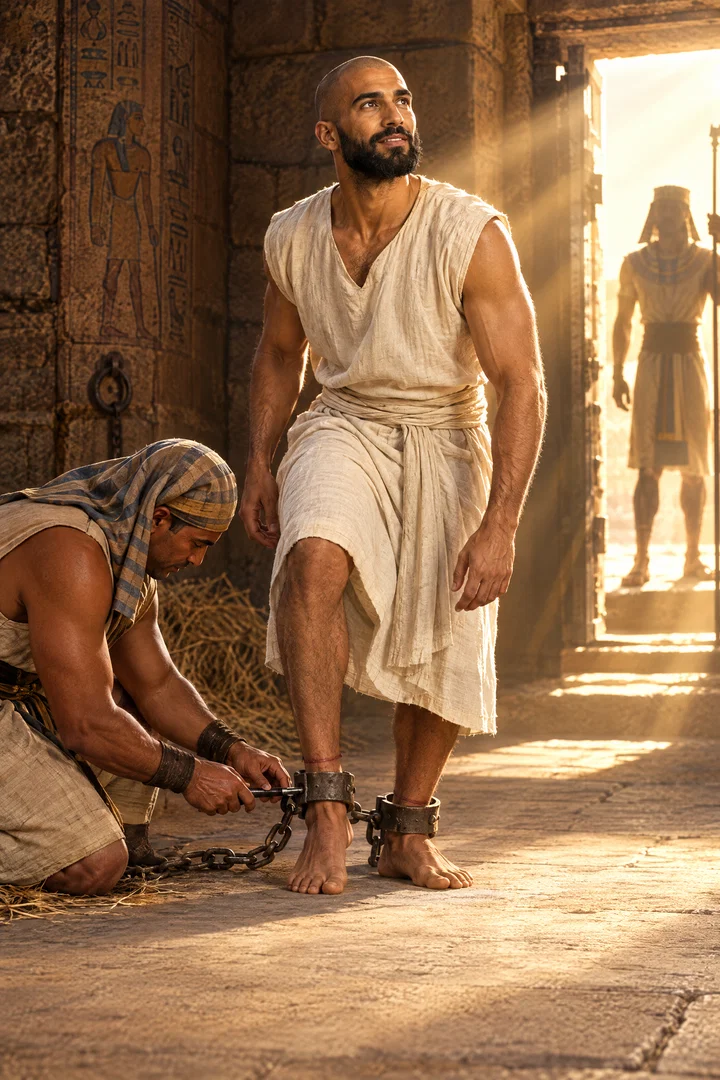
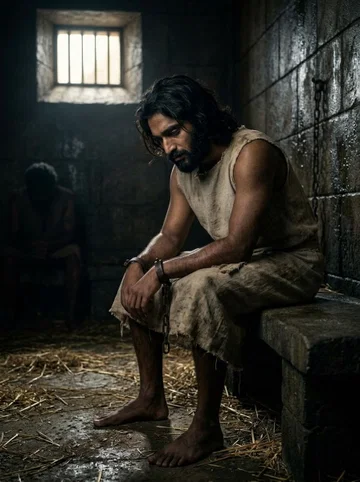
Whose feet they hurt with fetters: he was laid in iron:
Whose feet they hurt with fetters:
He was laid in iron:His feet they hurt with fetters; he was laid in chains of iron:
His feet they hurt with fetters:
He was laid in chains of iron,They have afflicted with fetters his feet, Iron hath entered his soul,
They afflicted his feet with fetters; his soul came into irons;
They forced, into a fetter, his foot, Into the iron, entered his soul;
Berean Standard Bible, Majority Standard Bible
They bruised his feet with shackles
and placed his neck in irons,They bruised his feet with shackles.
His neck was locked in irons,His feet were fixed in chains; his neck was put in iron bands;
They helde his feete in the stockes, and he was laide in yrons,
Douay-Rheims (Challoner revision)
They humbled his feet in fetters: the iron pierced his soul,
Pictures
Cross-references
- Genesis 39:20
And Joseph’s master took him, and put him into the prison, a place where the king’s prisoners were bound: and he was there in the prison.
Joseph is confined in prison, as the verse recounts.
- Genesis 41:39-41
And Pharaoh said unto Joseph, Forasmuch as God hath shewed thee all this, there is none so discreet and wise as thou art:
Joseph is raised from prison to rule Egypt.
- Genesis 37:28
Then there passed by Midianites merchantmen; and they drew and lifted up Joseph out of the pit, and sold Joseph to the Ishmeelites for twenty pieces of silver: and they brought Joseph into Egypt.
Joseph was sold into slavery on the way to Egypt.
- Genesis 41:14
Then Pharaoh sent and called Joseph, and they brought him hastily out of the dungeon: and he shaved himself, and changed his raiment, and came in unto Pharaoh.
Joseph is brought out of prison before Pharaoh.
- Acts 7:9-10
And the patriarchs, moved with envy, sold Joseph into Egypt: but God was with him,
Stephen recounts Joseph’s sale into Egypt and God’s deliverance, also told in Psalm 105.
- Genesis 45:5-7
Now therefore be not grieved, nor angry with yourselves, that ye sold me hither: for God did send me before you to preserve life.
Joseph says God sent him ahead to preserve life.
- Genesis 50:20
But as for you, ye thought evil against me; but God meant it unto good, to bring to pass, as it is this day, to save much people alive.
God turned the harm intended against Joseph toward good.
- Genesis 39:21
But the LORD was with Joseph, and shewed him mercy, and gave him favour in the sight of the keeper of the prison.
The Lord was with Joseph and showed him mercy in prison.
- Genesis 40:3
And he put them in ward in the house of the captain of the guard, into the prison, the place where Joseph was bound.
Joseph and the chief butler were imprisoned together.
- Genesis 15:13-16
And he said unto Abram, Know of a surety that thy seed shall be a stranger in a land that is not theirs, and shall serve them; and they shall afflict them four hundred years;
God foretold Israel’s servitude and its timing.
- Genesis 37:3
Now Israel loved Joseph more than all his children, because he was the son of his old age: and he made him a coat of many colours.
Joseph’s favored status precedes his brothers’ envy and his imprisonment.
- Genesis 42:21-22
And they said one to another, We are verily guilty concerning our brother, in that we saw the anguish of his soul, when he besought us, and we would not hear; therefore is this distress come upon us.
Joseph’s brothers recognize their guilt while suffering imprisonment in Egypt.
- Exodus 7
And the LORD said unto Moses, See, I have made thee a god to Pharaoh: and Aaron thy brother shall be thy prophet.
God’s judgments in Egypt demonstrate his rule and bring deliverance.
- Exodus 11
And the LORD said unto Moses, Yet will I bring one plague more upon Pharaoh, and upon Egypt; afterwards he will let you go hence: when he shall let you go, he shall surely thrust you out hence altogether.
God’s final plague secures Israel’s deliverance from Egypt and displays his authority over Pharaoh.
- Exodus 12
And the LORD spake unto Moses and Aaron in the land of Egypt, saying,
Israel’s deliverance from Egypt establishes the LORD’s right to rule.
- Acts 16:24
Who, having received such a charge, thrust them into the inner prison, and made their feet fast in the stocks.
Both describe feet bound in imprisonment.
Commentary
Each commentary is drawn from primary sources: the writings of Ellen G. White and Adventist pioneers and periodicals. Each commentary is separate. Its own words are not a quotation; follow the references to read the source passages.
Ellen G. White
3 sources
The verse speaks of Joseph after he was sold into servitude.8T 107.3 It portrays a harsh imprisonment in which his feet were confined and injured by fetters and his person was bound in iron chains.PP 218.1–28T 107.3 That bondage followed a false accusation brought against him notwithstanding his upright integrity.PP 218.1–2 His affliction lasted until the word of God concerning him was fulfilled, and that word proved and tried him.8T 107.3
Through much personal affliction God chose him and fitted him to bear a heavy burden of responsibility in idolatrous Egypt.Ms 18, 1897, par. 10 His suffering placed him to labor in precisely the line God had appointed for him.Ms 18, 1897, par. 10 The purpose was that the knowledge of God might shine out in the kingdom of Egypt.Ms 18, 1897, par. 10 In that trust Joseph remained faithful and did not betray his sacred charge.Ms 18, 1897, par. 10
Sources
Pioneers and periodicals
26 sources
The verse describes Joseph after he was sent ahead of Israel and sold as a servant, with his feet hurt by fetters and his whole person confined in iron in a dungeon prison in Egypt.RH May 3, 1870ST Jul 28, 1881ST Dec 16, 1880 He endured it in innocency and without blame, keeping his integrity with God through unswerving devotion to His commandments.RH Jun 4, 1901ST Dec 25, 1901 His binding was a trial and testing that lasted until the appointed time for God's word concerning him to come to pass, before his release and elevation to rule over Egypt.ST Jul 28, 1881ST Dec 16, 1880ST Dec 8, 1881 That humiliation prepared him for his appointed work as ruler and preserver in famine, teaching him patience, humility, submission, sympathy for every class, singleness of heart and fear of God, and that the Most High rules in the kingdoms of men.RH May 3, 1870ST Jul 28, 1881ST Dec 16, 1880 It shows that abasement and faithfulness come before honor, and that God permitted this seeming evil for a high and precious purpose for Joseph and the whole seed of Abraham, overruling envy and plotting for good.RH May 3, 1870RH Jun 4, 1901
Joseph's Suffering and Preparation
Psalm 105:18 describes Joseph after God sent him before Israel, when he was sold for a servant and a slave and carried into Egypt, where his feet were hurt with fetters and his person was laid in iron in a dungeon and jail, enduring harsh physical confinement of the kind he shared with the chief butler.RH May 3, 1870ST Jul 28, 1881ST Dec 16, 1880ST Dec 8, 1881RH Mar 9, 1869 His limbs were shackled with iron fetters and he was bound and placed in irons in prison before he was called out to rule.RH May 3, 1870ST Jul 28, 1881ST Dec 16, 1880ST Dec 8, 1881RH Mar 9, 1869
He went into that bondage and dungeon in innocency and without blame, taken while about his father's business by cruel hearts, and he suffered there unjustly because of unswerving devotion to the commandments of God and faithful keeping of his integrity with Him.RH Jun 4, 1901ST Dec 25, 1901 His binding and imprisonment were a trial and testing with fetters and chains of iron that continued until the time appointed for God's word concerning him to come and be fulfilled.ST Jul 28, 1881ST Dec 16, 1880ST Dec 8, 1881ST Apr 9, 1894ST Oct 9, 1901 From that prison, where he faithfully did his duty, he was soon taken to be made ruler over all Egypt and lifted to high position and authority.ST Jul 28, 1881ST Dec 16, 1880ST Apr 9, 1894ST Jun 11, 1894
That humiliation and hardship prepared him for his appointed work as ruler and savior to Israel and Egypt in famine, so that he could govern wisely and preserve the nation and Jacob's family.RH May 3, 1870ST Jul 28, 1881ST Dec 16, 1880ST Dec 8, 1881RH Mar 9, 1869 It taught him patience, humility, and submission, with singleness of heart and fear of God.RH May 3, 1870ST Jul 28, 1881ST Dec 16, 1880RH Mar 9, 1869RH Mar 9, 1869 Experience among humble people and prisoners taught him sympathy for every class, and taught him that the Most High rules human kingdoms and appoints their rulers.ST Oct 9, 1901RH Mar 9, 1869RH Mar 9, 1869
The verse therefore illustrates that humility, faithfulness, and abasement come before honor and glory, and that those who honor God in time of trial God will honor and exalt.RH May 3, 1870ST Jul 28, 1881ST Dec 16, 1880ST Dec 8, 1881ST Jun 11, 1894 God let such seemingly evil suffering come upon so faithful and pure a servant for a high, precious, and exalted purpose for Joseph and for the whole seed of Abraham in the earth, a purpose known to God alone and not then revealed even to Joseph.RH Jun 4, 1901ST Jun 11, 1894ST May 9, 1906 In leading, protecting, redeeming, and restoring providence toward His people in making Israel a nation, God overruled envy and plotting against His providence unto good in loving-kindness, directing their journey into Egypt where they were preserved from famine and tried while Egypt had representatives of God's truth before it.ST Jun 11, 1894ST May 9, 1906 Those experiences of Israel were written as examples to admonish and teach lessons for God's people living near the end, upon whom the ends of the world have come.RH Jun 4, 1901ST Jun 11, 1894RH Aug 29, 1912
Psalm Setting and Wording
Psalm 105 is a historical psalm that recounts in detail God's wonderful works, dealings, deliverances, and leading, protecting, redeeming and restoring providence toward Israel in making them a nation.ST Mar 7, 1906ST Mar 18, 1913ST Dec 5, 1911 It comments on the events in Genesis concerning Joseph and his family in Egypt, including their imprisonment, and fittingly accompanies the instruction given in Deuteronomy.STST Mar 18, 1913 God's providence directed Israel's journey into Egypt, where they were preserved from famine and tried, while Egypt continually had representatives of God's truth before it, for God placed the people there to carry the gospel to Egypt and to teach Israel humility, trust, and the right way. Those deliverances from Egypt and at the Red Sea were wrought through Jesus Christ, the Angel of God's presence who was with His people.ST Dec 5, 1911 The record demonstrates His wisdom, love, and power, His ability and right to rule, and Israel's obligation to obey, while Israel still had to be tested and tried to prove whether they would walk in His law.ST Mar 7, 1906
The wording that his soul was laid in iron and that iron entered his soul means that Joseph himself was confined in irons after he was sold and before he rose to high office in Egypt.ST Sep 28, 1882RH Feb 7, 1856RH Dec 15, 1910 The person called he can be expressed in Hebrew as his soul, where soul here refers to the whole person rather than necessarily to a separate, immortal part.ST Sep 28, 1882RH Feb 7, 1856
Replacing soul in this verse with thinking principle, reasoning principle, or intellectual principle makes the verse nonsensical.RH Feb 15, 1870 The example illustrates that soul has varied meanings in Scripture and cannot be assigned that single definition in every passage.RH Feb 15, 1870
Providence and Figurative Applications
The iron entering the soul pictures being thrust into an inner prison and a time of temptation far beyond reproach and exclusion, even beyond the scourge of the tongue and being cast out of the synagogue.RH Jan 23, 1866 In that inner prison even God's people may forsake for a while.RH Jan 23, 1866 In that suffering Jesus stands by to strengthen the inward man, and his love sweetens every bitter cup so that suffering for him can be borne with a cheerful heart.RH Jan 23, 1866
The same image of iron entering the soul describes Israel wearing the chain of captivity in the Babylonian captivity.RH Jan 15, 1857 Sabbath pollution was a chief national sin that led to that punishment.RH Jan 15, 1857 Wasteful spending also brings iron bondage into the soul, for fetters mean dependence and debts that destroy liberty.RH May 3, 1864 Economy produces integrity and liberty and belongs with temperance, cheerfulness and health, while profuseness is a cruel and crafty demon that enslaves its followers in dependence and debts.RH May 3, 1864 Fetters and iron are suffering that wounds a person, so that when the restraint is loosened the relief can become a source of joy and comfort.RH Jul 8, 1858 Figuratively, the iron enters the soul in the deep anguish of the condemned as they understand their loss, most deeply in those who are most guilty and best able to comprehend their fate, with suffering proportionate to guilt.RH Oct 6, 1859
Sources