Translations
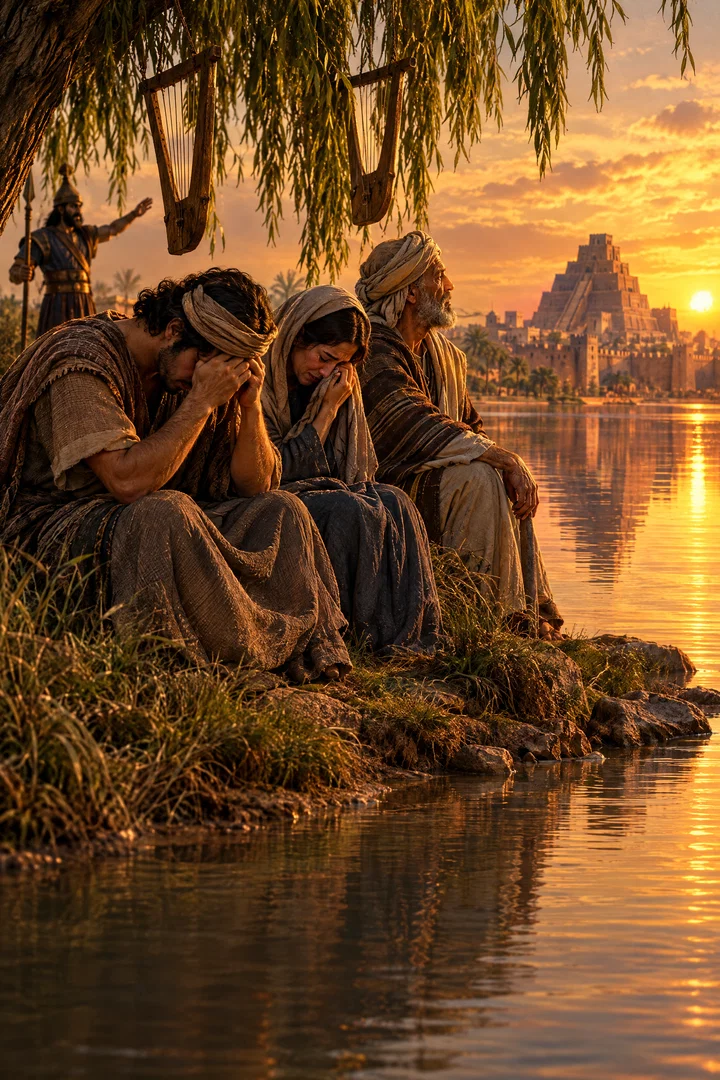
We hanged our harps on the willows in the middle thereof.
King James Version, Darby Translation
We hanged our harps upon the willows in the midst thereof.
We hanged our harps
Upon the willows in the midst thereof.We hung our harps upon the willows in the midst of it.
Upon the willows in the midst thereof we hanged up our harps.
Upon the willows in the midst thereof
We hanged up our harps.On willows in its midst we hung our harps.
Upon the willows—in the midst thereof, hanged we our lyres:
Berean Standard Bible, Majority Standard Bible
There on the willows
we hung our harps,On the willows in that land,
we hung up our harps.Hanging our instruments of music on the trees by the waterside.
Wee hanged our harpes vpon the willowes in the middes thereof.
Douay-Rheims (Challoner revision)
On the willows in the midst thereof we hung up our instruments.
Pictures
Cross-references
- 2 Chronicles 36:19-20
And they burnt the house of God, and brake down the wall of Jerusalem, and burnt all the palaces thereof with fire, and destroyed all the goodly vessels thereof.
Jerusalem’s destruction led to the people’s exile in Babylon.
- Micah 4:10
Be in pain, and labour to bring forth, O daughter of Zion, like a woman in travail: for now shalt thou go forth out of the city, and thou shalt dwell in the field, and thou shalt go even to Babylon; there shalt thou be delivered; there the LORD shall redeem thee from the hand of thine enemies.
Zion’s anguish accompanies her exile to Babylon.
- Daniel 5:2-3
Belshazzar, whiles he tasted the wine, commanded to bring the golden and silver vessels which his father Nebuchadnezzar had taken out of the temple which was in Jerusalem; that the king, and his princes, his wives, and his concubines, might drink therein.
A Babylonian king uses vessels taken from Jerusalem’s temple.
- Jeremiah 29:10
For thus saith the LORD, That after seventy years be accomplished at Babylon I will visit you, and perform my good word toward you, in causing you to return to this place.
The seventy-year prophecy underlies the exiles’ anticipated return.
- Jeremiah 25:11
And this whole land shall be a desolation, and an astonishment; and these nations shall serve the king of Babylon seventy years.
It foretells the seventy years of Babylonian rule.
- Psalms 137:8
O daughter of Babylon, who art to be destroyed; happy shall he be, that rewardeth thee as thou hast served us.
Names the daughter of Babylon as responsible for the captives’ suffering.
- Isaiah 35:10
And the ransomed of the LORD shall return, and come to Zion with songs and everlasting joy upon their heads: they shall obtain joy and gladness, and sorrow and sighing shall flee away.
Promises the ransomed a joyful return to Zion.
- Revelation 14:2-3
And I heard a voice from heaven, as the voice of many waters, and as the voice of a great thunder: and I heard the voice of harpers harping with their harps:
The redeemed sing a new song before the throne, with a sound like many waters.
- Daniel 5:30-31
In that night was Belshazzar the king of the Chaldeans slain.
The Persian conquest leaves Babylon desolate.
Commentary
Each commentary is drawn from primary sources: the writings of Ellen G. White and Adventist pioneers and periodicals. Each commentary is separate. Its own words are not a quotation; follow the references to read the source passages.
Ellen G. White
5 sources
The verse depicts Judah in Babylonian captivity after the division of the kingdom and the reigns of its good and bad kings.PK 7.4–8.1 By the waters of the Euphrates her children wept with their harps hung upon the willows, turning longing eyes toward Jerusalem lying desolate.PK 7.4–8.1 It recalls the Hebrews mourning for the holy temple that had been laid waste.DA 28.2 In that affliction many renewed their faithfulness to God's covenant, and through them the light of truth and the knowledge of God spread among the nations.DA 28.2
The harps left tuneless and silent on the willows picture believers who lost their joy and the music of their faith after the disappointment of 1844.Lt 22, 1890, par. 2–420MR 378.3–5 When error is cleared away and the jewels of truth are revealed and recovered, they take their harps from the willows again and sing with renewed faith.Lt 22, 1890, par. 2–420MR 378.3–5 In doing so they see harmony in the truth and know that God has not forsaken them.Lt 22, 1890, par. 2–4 Their silent harps are taken down and made to sound sweetly again.20MR 378.3–5
The same image of harps hung up and silent in sorrow applies to those who could sing Zion's songs but are hindered by poverty in missionary fields and by lack of concern for missionary work.Lt 2c, 1892, par. 22–26 When people work in love to save the lost, those harps can be taken down and made to give sweet music again.Lt 2c, 1892, par. 22–26
Sources
Pioneers and periodicals
64 sources
The verse describes Jews carried captive to Babylon sitting by its rivers in the land of their enemy and conqueror where they did not wish to be.ST May 13, 1908ST Dec 10, 1912ST May 24, 1883 Hanging their harps on the willows shows grief and homesickness for Zion, Jerusalem and home that left the exiles unable to sing joyfully.ST Feb 11, 1886RH May 27, 1858ST Apr 19, 1910 When those who carried them captive demanded a song and mirth, they hung up their harps and refused to turn holy songs into entertainment amid mockery and scorn.RH Apr 22, 1915RH Jul 20, 1911ST Dec 19, 1916 The sorrow pictures the church of God in Babylonian humiliation mourning what she had lost and longing for the Deliverer and the coming Messiah.ST Oct 8, 1896ST May 16, 1911ST Apr 29, 1903 Those whose praise has been silenced are urged to take their harps down from the willows and sing Zion's songs again in renewed praise and joyful service.RH Dec 4, 1913RH May 7, 1872RH Sep 29, 1859RH Jul 10, 1856
Words and Historical Setting
The verse belongs to a song sung by the captives in Babylon by its rivers, growing out of the exile and written from captivity by the River of Babylon.ST May 13, 1908ST Dec 10, 1912ST May 25, 1904ST Aug 25, 1909 It describes Jews carried captive to Babylon, identifying them as exiles in Babylon hanging their harps on the willows there and setting aside their instruments amid sorrow for Zion.ST May 24, 1883ST May 25, 1904ST Aug 25, 1909 It places Israel in Babylon, the land of their enemy and conqueror, where they did not wish to be and did not find life pleasant.ST Aug 28, 1884 The plural willows and plural harps and the words in the midst thereof mean the willows stood in gardens strictly inside the city of Babylon, not above or below it, in places easily reached by the captives and not only in the royal gardens.RH Oct 17, 1865 Together with the plural rivers of Babylon this means the city was refreshed by many flowing streams, which were branches or canals cut by art from the one river Euphrates and still called by its name, with a large lake or reservoir inside the city also fed by the Euphrates and called a sea.RH Oct 17, 1865
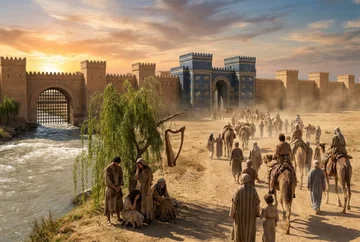
The willows were gray osier willows on the hoary, reedy banks of the Euphrates wandering in solitude through the ruins of Babylon, still standing there in modern times on the very spot where the captives mourned.RH Nov 11, 1862 They show how fertile and well-wooded the country around Babylon was at the time of the captivity, when palm trees grew a hundred feet high and the soil yielded two hundredfold.RH Oct 24, 1885 That fertility is now gone, and where the harps once hung not a tree is to be seen, the land having become barren waste, a desert, a dry land and a wilderness.RH Oct 24, 1885 The captives hung their harps on those willows and refused to be comforted while Jerusalem was no more.RH Nov 11, 1862RH Oct 24, 1885
The psalm is a prophecy of the Babylonian captivity.RH Aug 31, 1916RH Mar 12, 1861 It was written during the captivity in its latter portion during the reign of Belshazzar, who knew not Daniel, when persecution and distress of the Jews were greatest, by Asaph, Ethan, and others.RH Aug 31, 1916 It relates to the sorrows and afflictions of the Hebrew captives, joined with exhortations, encouragements, and assurance of divine help and final deliverance from persecutors.RH Aug 31, 1916 The psalm was also written after the Babylonian captivity, after the return, by a child of God who had endured its hardships.ST Its mention places it among the psalms that shed light on the Jews' return and the rebuilding of the temple, recalling Israel's exile and sorrow while away from Jerusalem.STST Jan 23, 1893
The verse shows the children of God as captives for seventy years in Babylon under youthful Nebuchadnezzar.ST Jun 6, 1916ST They were removed from the promised land because of continued apostasy, and hung their harps on the willows along the Euphrates and wept when they remembered Zion.ST Jun 6, 1916ST The glory and prosperity of the land of captivity oppressed more than cheered them.ST
Grief That Hung the Harps
The hanging of harps on the willows shows grief over separation from Zion that left the exiles unable to sing joyfully.ST Feb 11, 1886RH May 27, 1858ST Apr 19, 1910 Grief and homesickness for Zion, Jerusalem, and home silenced their songs of Zion beside the river in Babylon.ST Apr 19, 1910ST Apr 1, 1913ST Nov 21, 1900 The harp hanging on the willow represents sorrow and separation from home, set aside among the willows as they mourned for Zion and their lost home.ST Feb 11, 1886ST Nov 21, 1900 In Babylon they hung up their harps instead of playing them while longing for Zion and Jerusalem rather than play.ST Apr 19, 1910ST Sep 24, 1894
The silenced music means the loss of homeland and the languishing of God's cause had silenced the music of worship.ST Sep 24, 1894 Jerusalem lay waste and the king was captive, so in grief and captivity the exiles hung their harps unused on the willows and could not sing the songs of Zion when asked.RH Jul 20, 1911RH Sep 11, 1913 Captive and bereft of city and temple after Jerusalem's fall, Judah hung its harps by Babylon's waters and wept over the past.ST May 23, 1911 After its kingdom was lost, its walls broken down, its temple burned, and its cities deserted, the people hung their harps on the willows beside Babylon's waters and wept for what was past.ST Oct 15, 1896 In a strange land the exiled Jews laying aside their harps as they remembered Zion could not bring themselves to sing the Lord's songs.RH Jul 20, 1911
When those who carried them captive and wasted them demanded a song and mirth, the exiles hung up their harps and refused to sing.RH Apr 22, 1915ST Dec 19, 1916 They were unwilling to turn holy songs into entertainment at a pagan feast, for their sacred songs were their own and not to be so used.RH Apr 22, 1915ST Dec 19, 1916 Their harps lay silent beside Babylon's streams amid the tyrant's mockery and the scorn of other nations.ST Jan 30, 1896 In that grief their captors in scorn and derision asked them why they did not sing one of those songs.RH Jul 20, 1911
The harp hanging on the willows represents praise silenced and laid aside in sorrow.ST May 20, 1880RH May 7, 1872 Servitude and exile silenced the music, with grief silencing their songs.ST May 20, 1880RH May 7, 1872 The willow's sigh is pictured as the only music left in Babylon, now a lonely ruin.ST May 20, 1880
Prophecy of Captivity and Deliverance
The psalm is prophetic concerning Babylon and the tribulation to fall upon the enemies of God's people, and its words of judgment declare God's retributive justice rather than urging cruelty.RH Sep 11, 1860 The hanging of the harps sets forth Israel's captivity and portrays the church of God when her travail began in Babylonian humiliation about six hundred years before Christ.ST Oct 8, 1896ST May 16, 1911ST Apr 29, 1903 In captivity she sat down and wept remembering Zion, mourning what she had lost and putting away her harps instead of singing when mirth was demanded in a strange land.ST Oct 8, 1896ST May 16, 1911ST Apr 29, 1903ST May 23, 1911ST Oct 15, 1896 That sorrow was anguish and crying and longing for the Deliverer, for salvation to come out of Zion, for the Desire of all nations and the coming Messiah.ST Oct 8, 1896ST May 16, 1911ST Apr 29, 1903ST Dec 9, 1908 It was also the beginning of Zion's birth pangs as the church longed for the birth of the Saviour.ST May 23, 1911ST Oct 15, 1896
The lament marks the beginning of the church's broader captive state in subjection to and oppression by earthly powers, which continues until earthly powers give way to Him whose right it is to reign.STST Feb 15, 1877 The same hung harp portrays Zion languishing in sorrow under Rome, with Israel grieving beneath foreign rule because the expected Deliverer had not come.ST Jun 7, 1910 The presence of Jesus with His followers on earth ended that mourning captivity, bringing light in darkness and sweet melody that moved the heart.RH Feb 5, 1867 For six centuries that anguish of captivity continued until it ended when Jesus was born in Bethlehem as the Shiloh of the tribe of Judah to whom the gathering of the nations should be.ST May 16, 1911
Babylon's fall became for the exiles a pledge that their oppressors would be overthrown and that deliverance, liberty, and restoration would come.RH Jan 23, 1855 The redeemed will no longer be captives in the land of the enemy, but will return to Zion with songs and everlasting joy.ST Dec 23, 1889 That sorrow stands opposite the coming deliverance when God's people will enter the fifteen-hundred-mile heavenly city not as captives entering a foreign land but as exiles returning to their Father's house.ST There they will exchange the mournful waters of the Euphrates for the river of life, and sighs and laments for songs of victory over death and the grave in freedom, peace, purity, bliss, and unending life.ST
The hanging of the harps in Babylonian captivity is a type of the bitter, unavailing regret of those who become lost through Sabbath-breaking and the entanglements of modern Babylon.RH Mar 19, 1901
Doctrine Proved by Verse
The hanging of the harps with refusal to sing the songs of Zion when captors demanded song and mirth proves that the music of ancient Israel was not copied nor borrowed from surrounding nations but was their own musical literature, an expression of the individual and national life of God's chosen people composed to memorialize great events.RH Apr 22, 1915 After that refusal God gave Israel through Jeremiah another and last song sung even in a strange land, the funeral song of Lamentations, their swan song and funeral dirge of what was once a mighty and glorious nation, whose former glory never returned.RH Apr 22, 1915
The captivity and loss of homeland with mourning in Babylon and weeping when remembering Zion were punishment for long-continued breaking of the Lord's Sabbath and continued apostasy after removal from the promised land for the seventy-year captivity.RH Mar 19, 1901ST Sep 9, 1886ST Jun 6, 1916 That Sabbath-breaking made them forget the Lord as Creator of the heavens and the earth and all their hosts and led them into idolatry.ST Sep 9, 1886 The daughter of Babylon in verse 8 is the power responsible for that captivity.ST May 24, 1883
Hanging harps on the willows means the churches carried away captive as Israel was carried to Babylon, powerless either to meet the world or to escape it.ST Jan 3, 1884 It means loss of spiritual power and song through sins of flesh and spirit as great as Israel's before the captivity, a carnal mind and worldly heart shown in fraternizing with the world, seeking to be in harmony with the age and up with the times, neglecting the word of God for science and literature, and neglecting fellowship and discipline.ST Jan 3, 1884 It means dead indifference to that captive condition, being content with worldly gain for self and worldly dress for family instead of mourning.ST Jan 3, 1884 It calls for judgment beginning at the house of God and awaking out of sleep to cast off darkness and put on light so God's power and glory can return.ST Jan 3, 1884 The verse pictures the church hanging up its harps in grief and mourning over spiritual failure and lost former days, as the church weeps while remembering the thousands once converted, while its enemies rejoice and the Lord's chastening brings shame and deep sorrow.RH Dec 3, 1867
Links to Other Scriptures
The captivity took place in Babylon, the land of the enemy and conqueror, where the people did not wish to be and did not find life pleasant, and for that reason the psalm stands as a fitting companion to the image of death as the enemy's land.ST Aug 28, 1884 By the rivers of Babylon the captives hung their harps silent upon the willows in sorrow and ceased to sing.RH Jul 5, 1870 By the river of true life and gladness in the New Jerusalem the opposite is true: no harps hang silent there and happy voices never cease.RH Jul 5, 1870 There the redeemed sit forever by its tranquil waters and sing, finding health and peace in its stream.RH Jul 5, 1870
The hanging of the harps on the willows in sorrow and the ceasing to sing stands against the joy and praise fitting for those who await the triumph of God's kingdom.ST Nov 26, 1894 They should not let Satan's dark reign keep them from praising God, but should begin learning the new song that will be sung before the great white throne.ST Nov 26, 1894 The homesickness of the Hebrew exiles in Babylon carries a note of longing that recalls the Turkish soldier's yearning for his distant home.ST Mar 4, 1913
Call to Take Harps Down
Sorrow that silences song need not leave the harp hung on the willows when affliction comes.RH Dec 4, 1913RH Jul 10, 1856 Even in poverty and grief those who have God should praise Him with an instrument rather than lay it aside.RH Dec 4, 1913RH Jul 10, 1856 The choice is to keep singing despite weakness and loss, using song and helpful words to encourage others and help them remain strong.RH Dec 4, 1913 Bearing one's cross bravely and serving others can make even one who cannot join the struggle a blessing to those who can.RH Dec 4, 1913
Idle harps picture songs of heaven held back in the heart amid the confusion and sorrow of earthly life.ST Dec 19, 1916ST Dec 19, 1916 The captive exiles set aside their harps by the river in grief for their homeland while keeping its songs in their hearts.ST Dec 19, 1916 Taking the harps down and singing of the home of sweet rest and its rest can touch and comfort and bless others.ST Dec 19, 1916ST Dec 19, 1916 As the captive's song moved the king and those who heard it, so such singing reaches hearers now.ST Dec 19, 1916
Those who have grown spiritually cold and laid down spiritual work, with praise silenced, are urged to take their harps down from the willows and sing Zion's songs again.RH May 7, 1872RH Sep 29, 1859 The hanging harp is praise laid aside in sorrow, and taking it up again is renewing service in praise of God.RH May 7, 1872RH Sep 29, 1859 That return is a return to praise and joyful service.RH Sep 29, 1859
Hanging harps mean souls fainting and weeping by the way under burdens, with joy and music laid aside.ST Jun 7, 1877RH Feb 25, 1875 Every phase of human sorrow fills the path of life today.ST Jun 7, 1877 Yet this earthly sorrow is met by continuing healing and rest, for there is still balm in Gilead.ST Jun 7, 1877 God gives His beloved sleep and rest in the many mansions through Christ the Consolation who came to bear sins and sorrows and lift burdens.ST Jun 7, 1877
The same image marks the rich person who makes wealth a god and finds riches bring burdens and sighing rather than lasting joy.ST Mar 30, 1876 It marks religious fervor that suddenly subsides when a lesson in self-denial is pressed home, as when challenged to give up tobacco.ST Apr 15, 1886 It marks sadness and loss of joy when meeting plans were disappointed.RH Dec 5, 1871 It marks feeling hurt after being falsely accused or misjudged, showing the trial has not yet yielded sweetness or become a means of grace.ST Mar 30, 1904 The question pressed is whether such trials have produced sweetness and patience or merely hurt feelings.ST Mar 30, 1904
Sickness or approaching death is no reason to give up cheerfulness.ST Oct 19, 1904 One who trusts Christ can answer without fear, because death's claim is only temporary and the hope of resurrection gives reason for triumph.ST Oct 19, 1904 A harp left tuneless when the heart is overshadowed with sadness and tiredness gives no echo of gladness while the path is dreary, the feet bleeding and weary, and the soul longs for a view of the Lord.RH Mar 21, 1865 The willow with weeping and tears is the portion of the disappointed whose efforts seem in vain, yet they are still given a song and honor though they fail.RH Dec 30, 1915 Believers mourning in captivity with formal songs tuned in vain while the heart murmurs are broken out of despair when a gentle ray of heavenly light brings reviving hope that Jesus will not leave them.RH May 15, 1866
Grief through harps hung on willow trees belongs to sorrowing people whose lives feel silenced by suffering.ST Feb 11, 1886ST Mar 4, 1880 Such burdened sadness in a sinful, troubled world keeps Zion's songs unsung for a time.ST Feb 11, 1886 Yet the hope held out is singing them at the Lord's coming in the heavenly home.ST Feb 11, 1886 Those who await the triumph of God's kingdom should not let Satan's dark reign keep them from praising God, but should begin learning the new song that will be sung before the great white throne.ST Nov 26, 1894
Sources