1 Samuel 16:6
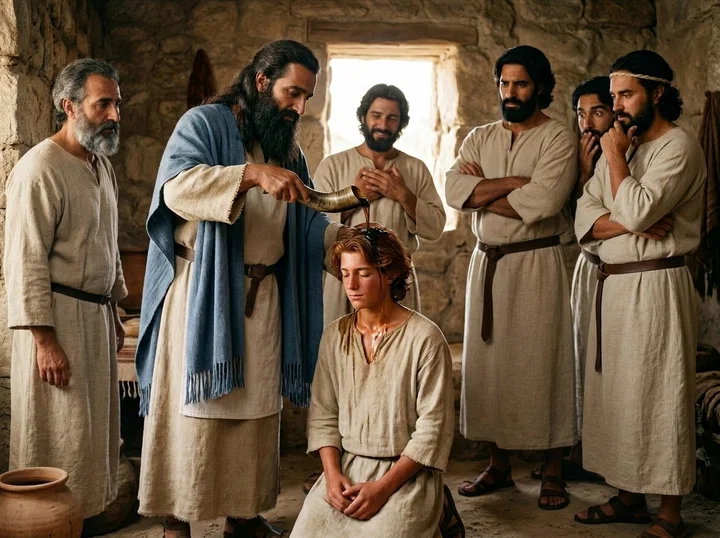
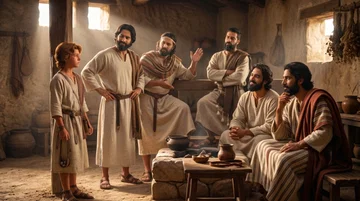
And it came to pass, when they were come, that he looked on Eliab, and said, Surely the LORD’s anointed is before him.
Translations
American King James Version, King James Version
And it came to pass, when they were come, that he looked on Eliab, and said, Surely the LORD’s anointed is before him.
And it came to pass, when they were come, that he looked on Eliab, and said, Surely the Lord’s anointed is before him.
And it came to pass when they had come, that he looked on Eliab, and said, Surely the LORD'S anointed is before him.
And it came to pass, when they were come, that he looked on Eliab, and said, Surely the LORD’S anointed is before him.
And it came to pass, when they were come, that he looked on Eliab, and said, Surely Jehovah’s anointed is before him.
And it cometh to pass, in their coming in, that he seeth Eliab, and saith, 'Surely, before Jehovah [is] His anointed.'
And it came to pass when they were come, that he looked on Eliab, and said, Surely Jehovah's anointed is before him.
And it came to pass, when they entered, that he looked upon Eliab,—and said to himself, Surely, before Yahweh, is his Anointed.
Berean Standard Bible, Majority Standard Bible
When they arrived, Samuel saw Eliab and said, “ Surely here before the LORD is His anointed.”
When they had come, he looked at Eliab, and said, “ Surely the LORD’s anointed is before him.”
Now when they came, looking at Eliab, he said, Clearly the man of the Lord's selection is before him.
And when they were come, hee looked on Eliab, and saide, Surely the Lordes Anointed is before him.
Douay-Rheims (Challoner revision)
And when they were come in, he saw Eliab, and said: Is the Lord’s anointed before him?
Pictures
Cross-references
- 1 Samuel 16:12-13
And he sent, and brought him in. Now he was ruddy, and withal of a beautiful countenance, and goodly to look to. And the LORD said, Arise, anoint him: for this is he.
God identifies David as his chosen one, and Samuel anoints him king.
- 1 Samuel 16:1
And the LORD said unto Samuel, How long wilt thou mourn for Saul, seeing I have rejected him from reigning over Israel? fill thine horn with oil, and go, I will send thee to Jesse the Beth-lehemite: for I have provided me a king among his sons.
God sends Samuel to anoint a new king after rejecting Saul.
- 1 Samuel 16:13
Then Samuel took the horn of oil, and anointed him in the midst of his brethren: and the Spirit of the LORD came upon David from that day forward. So Samuel rose up, and went to Ramah.
Samuel anoints David as the chosen king.
- 1 Samuel 15:26
And Samuel said unto Saul, I will not return with thee: for thou hast rejected the word of the LORD, and the LORD hath rejected thee from being king over Israel.
Saul’s rejection precedes the choosing of David.
- 1 Samuel 16:10
Again, Jesse made seven of his sons to pass before Samuel. And Samuel said unto Jesse, The LORD hath not chosen these.
The seven older sons are rejected, while David is chosen.
- 1 Samuel 24:6
And he said unto his men, The LORD forbid that I should do this thing unto my master, the LORD’s anointed, to stretch forth mine hand against him, seeing he is the anointed of the LORD.
David spares Saul, respecting him as the LORD’s anointed and trusting God’s timing.
- 1 Samuel 26:16
This thing is not good that thou hast done. As the LORD liveth, ye are worthy to die, because ye have not kept your master, the LORD’s anointed. And now see where the king’s spear is, and the cruse of water that was at his bolster.
Abner is rebuked for failing to protect the Lord’s anointed, whom God chose.
- 1 Samuel 26:9-11
And David said to Abishai, Destroy him not: for who can stretch forth his hand against the LORD’s anointed, and be guiltless?
David again refuses to take Saul’s life.
- Psalms 89:19-37
Then thou spakest in vision to thy holy one, and saidst, I have laid help upon one that is mighty; I have exalted one chosen out of the people.
The psalm’s promises to David point to the Messiah’s Davidic lineage.
- Jeremiah 17:10
I the LORD search the heart, I try the reins, even to give every man according to his ways, and according to the fruit of his doings.
God searches the heart and repays each person.
- 2 Samuel 5:2
Also in time past, when Saul was king over us, thou wast he that leddest out and broughtest in Israel: and the LORD said to thee, Thou shalt feed my people Israel, and thou shalt be a captain over Israel.
Israel acknowledges David as king, whom God had chosen earlier.
- 2 Samuel 7:8
Now therefore so shalt thou say unto my servant David, Thus saith the LORD of hosts, I took thee from the sheepcote, from following the sheep, to be ruler over my people, over Israel:
David was chosen from among the sheep to rule Israel.
- Ruth 4:17-22
And the women her neighbours gave it a name, saying, There is a son born to Naomi; and they called his name Obed: he is the father of Jesse, the father of David.
David is Ruth’s descendant.
- 1 Samuel 17:28
And Eliab his eldest brother heard when he spake unto the men; and Eliab’s anger was kindled against David, and he said, Why camest thou down hither? and with whom hast thou left those few sheep in the wilderness? I know thy pride, and the naughtiness of thine heart; for thou art come down that thou mightest see the battle.
Eliab’s anger at David shows his jealous, discourteous treatment of his brother.
- Hebrews 4:13
Neither is there any creature that is not manifest in his sight: but all things are naked and opened unto the eyes of him with whom we have to do.
All things are open to God’s sight.
- 1 Samuel 9:17
And when Samuel saw Saul, the LORD said unto him, Behold the man whom I spake to thee of! this same shall reign over my people.
Both show God choosing Israel’s king.
Commentary
Each commentary is drawn from primary sources: the writings of Ellen G. White and Adventist pioneers and periodicals. Each commentary is separate. Its own words are not a quotation; follow the references to read the source passages.
Ellen G. White
13 sources
When Samuel was sent to Jesse's house to anoint a successor to Saul, he looked first on Eliab the eldest and concluded that the Lord's anointed stood before him.ED 265.2–3PP 638.1SG4 77.4–78.1 Eliab was tall and handsome and princely in bearing, more like Saul than the others, so Samuel was ready to anoint him.ED 265.2–3Lt 18, 1891, par. 15–17PP 638.1 But God rejected that choice made for countenance and stature, for He does not judge as men judge by outward sight but looks on the heart and sees what is hidden within.ED 265.2–3Lt 18, 1891, par. 15–17PP 638.1 Eliab's heart was not right with God and he would have been a proud and exacting ruler, while David the youngest, a humble shepherd lad little in his own sight, was chosen and fitted to rule God's people.PP 638.11SP 367.3–368.1SG4 77.4–78.1 No outward beauty or nobility of stature can commend the soul to God, but inner worth and excellency of heart determine acceptance with Him.PP 638.1 Therefore present promise does not show which children will do the greatest work, and none should be passed by but every child should be trained and educated for the highest usefulness.ED 265.2–3YCDCP 2.1HCSSP 18.2–19.1ED 266.1–3
Anointing Scene at Bethlehem
Samuel was sent to Jesse's house to anoint one of his sons as king over Israel as successor to Saul after Saul was rejected, examining the sons in prophetic inspection before the offering-feast.ED 265.2–3PP 638.1SG4 77.4–78.1 When seven noble-looking sons passed before him, he looked on Eliab the eldest first.ED 265.2–3PP 638.1YCDCP 2.1 Eliab's handsome features, high stature, well-developed form, and dignified and princely bearing more nearly resembled Saul in stature and beauty than the others and attracted attention.ED 265.2–3PP 638.11SP 367.3–368.1SG4 77.4–78.1YCDCP 2.1 Seeing him, Samuel concluded that surely the Lord's anointed stood before him, waiting for divine sanction to anoint him and ready to choose him and the elder sons.ED 265.2–3Lt 18, 1891, par. 15–17PP 638.11SP 367.3–368.1YCDCP 2.1
God guided the momentous decision by an angel standing beside Samuel who instructed him not to judge from appearance.SG4 77.4–78.1 That angel signified that David was the one God had chosen to anoint.SG4 77.4–78.1 The verse thus belongs to God's appointment of David, the youngest son and humble shepherd lad, to succeed Saul on the throne of Israel.1SP 367.3–368.1SG4 77.4–78.1PP 698.2–3 That appointment led to the later stand of the promised heir, to whom God had given promise of the throne, against Saul the established monarch determined to keep his power.RH Dec 24, 1908ED 254.2–3RH Nov 11, 1915 Abner knew of that appointment to succeed Saul yet despised the man chosen and resisted it, being unwilling for him to succeed Saul.PP 698.2–3
God Looks on Heart
Samuel's exclamation over Eliab was a mistake, for when the seven noble-looking sons passed before him he judged by outward sight and concluded that the eldest, with handsome features, well-developed form, high stature and dignified, princely bearing, must be the Lord's anointed and was ready to choose him and his elder brothers.ED 265.2–3PP 638.1YCDCP 2.1RH Feb 13, 1913ED 266.1–3 That error exposes how human judgment fails, mistaking noble appearance for fitness for God's service and being unable to discern who will bear the most important responsibilities, who will be most promising, or who will render the best service to God.ED 265.2–3PP 638.1YCDCP 2.1RH Feb 13, 1913ED 266.1–3 God does not judge as people judge, for He refuses choice made for countenance and stature and rejected Eliab.ED 265.2–3Lt 18, 1891, par. 15–17PP 638.1 He looks on the heart and sees what is hidden within each person, not as man looks.ED 265.2–3Lt 18, 1891, par. 15–17PP 638.1
Eliab did not fear the Lord and his heart was not right with God, so he was unfit to rule.PP 638.11SP 367.3–368.1SG4 77.4–78.1 Had he been called to the throne he would have been a proud, exacting ruler.PP 638.11SP 367.3–368.1SG4 77.4–78.1 The elder brothers generally lacked the qualifications God saw as essential in a ruler of His people, being proud, self-centered and self-confident.PP 638.1ED 266.1–3 No outward beauty of face or nobility of stature can recommend the soul to God.PP 638.1 True beauty is the wisdom and excellence revealed in character and deportment, and inner worth and excellency of the heart determine acceptance with the Lord of hosts.PP 638.1
David, the youngest son and humble shepherd lad, was chosen for his faithfulness and courage in tending sheep.1SP 367.3–368.1SG4 77.4–78.1 He had preserved the simplicity and sincerity of his youth and, being little in his own sight, could be trained by God for the responsibilities of the kingdom.SG4 77.4–78.1ED 266.1–3 His countenance was not lofty but beautiful and expressive of humility, honesty and true courage.SG4 77.4–78.1 From the time of his anointing he received a prudent and understanding heart to become captain of God's people.SG4 77.4–78.1ED 266.1–3
Human wisdom without special enlightenment from heaven is incapable of understanding the secrets of the heart or comprehending the counsels of God.PP 638.1 God's thoughts and ways toward His creatures are above finite minds.PP 638.1 Yet if His children submit their will to God, He will bring them to fill the very place for which they are qualified and enable them to accomplish the work committed to them, so that His beneficent plans are not frustrated by human perversity.PP 638.1 This truth must be deeply felt in judging self and others, showing how vain is estimation resting on appearance.PP 638.1
Educate Every Child Equally
Samuel's mistake before Eliab shows that human judgment fails to discern who will bear the most important responsibilities, for when seven noble-looking youths passed before him he saw the first with handsome features, well-developed form and princely bearing and decided this must be the anointed king.ED 265.2–3ED 266.1–3 That readiness to choose Eliab and the elder sons for their noble appearance exposed judging by outward sight, since the elder brothers were proud, self-centered and self-confident and lacked the qualifications essential in a ruler, while David, whom they lightly regarded, had preserved the simplicity and sincerity of his youth and, being little in his own sight, could be trained for the responsibilities of the kingdom.ED 265.2–3ED 266.1–3 No one can decide from present promise what will prove great or small in life's possibilities, for brightness and promise do not reveal which children will be used most, and in many a child whom parents would pass by are seen capabilities far above those of others thought to possess great promise, while workers in lowly places often achieve results kings might envy.ED 265.2–3ED 266.1–3
Judging by outward appearance mistakes noble bearing for fitness for service, as when the eye rested on the elder son's handsome countenance and fine stature and concluded surely the anointed stood before him.YCDCP 2.1HCSSP 18.2–19.1RH Feb 13, 1913 Such human selection by noble appearance cannot tell who will be most promising, who will render the best service, or who will prove efficient in the work.YCDCP 2.1HCSSP 18.2–19.1RH Feb 13, 1913 It is therefore wrong to choose only a few youth of apparent outward promise for thorough education while the rest are neglected.ED 265.2–3YCDCP 2.1HCSSP 18.2–19.1 No child should be passed by or denied full education, but every child and all youth should be given education, training and opportunity for usefulness as laborers together with God, fitted for the highest service and for places of responsibility in private and public life in this life.ED 265.2–3YCDCP 2.1HCSSP 18.2–19.1ED 266.1–3
The truth that God refuses choice made for countenance and stature and looks on the heart must be deeply felt in judging self and others, showing how vain is estimation resting on appearance.ED 265.2–3PP 638.1 No outward beauty of face or nobility of stature can recommend the soul, for inner worth and excellency of the heart determine acceptance.PP 638.1 David as the promised shepherd lad holding God's promise of the throne while the established monarch was determined to keep his power shows how to meet powerful opposition by standing in faith in God's word.RH Nov 11, 1915
Sources
Pioneers and periodicals
41 sources
When Samuel came to Bethlehem on his divine mission to anoint one of Jesse's sons as king in Saul's place, his eye fell first on Eliab the eldest, whose tall, noble and handsome appearance led him to conclude that this must be the man God had chosen.ST Nov 14, 1895ST Jul 2, 1885ST Dec 22, 1914ST Apr 22, 1903 God stopped him and corrected that human judgment, for He does not choose by outward stature and appearance but looks upon the heart, which in Eliab was not right and fit for rule.ST Nov 14, 1895ST Dec 22, 1914ST Dec 12, 1895 He passed by the seven elder sons and chose David the youngest, a fifteen-year-old shepherd left keeping the sheep, because his courage, faithfulness and love for God commended him, and Samuel anointed him with oil in the midst of his brethren so that the Spirit came upon him from that day forward.ST Apr 22, 1903ST Jun 19, 1884RH Nov 18, 1862RH Jul 1, 1862 That choice fixed the line through which the Messiah would descend, not through any of the seven older brothers, and made Bethlehem the town of David's anointing to which Joseph and Mary later came as of his house.ST Oct 19, 1888RH Nov 18, 1862ST Dec 15, 1898 So outward wealth, position, physique and prosperity give no favor with God and reveal neither fitness for His service nor the possibilities of the young, and judging by them misses those whom He has chosen.RH Oct 10, 1912RH Nov 18, 1909RH Aug 20, 1914RH May 9, 1907RH Aug 18, 1910
Setting and Wording
The scene is Bethlehem, David's town and birthplace, called the city of David, where Samuel came to sacrifice and on a divine mission to examine Jesse's sons and anoint one of them king in place of Saul.ST Apr 22, 1903ST Dec 15, 1898RH Dec 18, 1913ST Feb 17, 1904RH Jul 20, 1905 It was the home of Ruth's great-grandson David, who was of the stock of Israel and of the tribe of Judah and of Bethlehem.ST Apr 22, 1903RH Dec 18, 1913ST Feb 17, 1904ST Apr 28, 1914 Samuel came as prophet, priest and judge to anoint David, and the Lord directed him to anoint David as king over Israel.ST Apr 22, 1903RH Dec 18, 1913ST Apr 28, 1914 Joseph and Mary's going to Bethlehem to be registered proves they were of the house and family of David, which explains why Jesus was born in Bethlehem as David's heir.ST Dec 15, 1898
Seven sons successively passed before Samuel for inspection, with Eliab the eldest first, while the Spirit of divine wisdom and discernment pointed to none of these older sons as the one chosen of God.ST Apr 22, 1903ST Dec 22, 1914RH Dec 24, 1867 David was Jesse's youngest son, the eighth son, distinct from his seven older brothers, a fifteen-year-old ruddy shepherd of beautiful countenance and goodly to look to.ST Apr 22, 1903RH Nov 18, 1862RH Dec 24, 1867 He had been left keeping his father's sheep because his father considered him too young, and in his earliest youth he was slighted by his father.ST Apr 22, 1903RH Jul 1, 1862ST Dec 22, 1914 He was then fetched from the sheep and anointed with the horn of oil in the midst of his brethren, when the Spirit of the Lord came upon him from that day forward.ST Apr 22, 1903
The word anointed in the verse is in Greek Christ.ST Jul 20, 1904 The verse belongs to the account of David's calling during the waning of Saul's house.ST Apr 15, 1913
Samuel Mistakes Eliab
When they were come, Samuel looked upon Eliab's tall, noble and handsome appearance, his commanding physique, countenance, height and stature, and said surely the Lord's anointed is before him, assuming from what he saw that Eliab was the man God had chosen to anoint as king.ST Nov 14, 1895ST Jul 2, 1885ST Dec 22, 1914ST Sep 20, 1883 Human judgment was drawn to outward stature, and Samuel at first judged Eliab's fitness for kingship from a human standpoint as marked out by his appearance.ST Nov 14, 1895ST Jul 2, 1885ST Sep 20, 1883 Eliab was not the one God had chosen, and outward appearance did not determine God's choice, for Eliab was not fit because his heart was not right.ST Nov 14, 1895ST Jul 2, 1885ST Dec 22, 1914ST Sep 20, 1883
Eliab's position as Jesse's eldest son strengthened that human expectation that he must be the Lord's chosen one.ST Dec 22, 1914ST Aug 19, 1889ST Aug 19, 1889ST Dec 22, 1914 Samuel had been directed to anoint the person God would name, and not to choose on outward qualities, so the verse marks the moment before God identified David instead.ST Dec 22, 1914ST Aug 19, 1889ST Aug 19, 1889ST Dec 22, 1914 God stopped the ceremony and the anointing, and by divine impression suddenly changed Samuel's decision and corrected the first impression, revealing that Eliab was not the chosen one.ST Dec 22, 1914ST Aug 19, 1889ST Aug 19, 1889ST Dec 22, 1914 Samuel's lifelong prophetic experience did not make his unaided judgment infallible while seeking the person to anoint; the Lord corrected him, showing that infallibility belongs to divine inspiration, not to the prophet himself.ST Aug 10, 1904
Eliab himself expected to be chosen and fondly hoped to reign, likely because of his imposing appearance and his awareness of it.RH Sep 3, 1901ST Aug 17, 1904 He was a proud, handsome man, proud of his splendid proportions and handsome face, who could be polite and courteous on public occasions.RH Sep 3, 1901ST Aug 17, 1904
Heart Rather Than Appearance
The verse introduces the contrast that human judgment is drawn to outward stature while the Lord judges the heart, and Samuel's mistaking Eliab's impressive, noble appearance and stature for the sign of the Lord's chosen king marks the moment before God stopped the ceremony and revealed Eliab was not the chosen one.ST Nov 14, 1895ST Dec 22, 1914ST Feb 9, 1915RH Aug 20, 1914ST Aug 19, 1889 God rejected Eliab and did not let outward appearance, stature, or other outward qualities determine His choice of a man fit to be Israel's future king, for Eliab was not fit because his heart was not right and God looks at the heart while people see appearances.ST Nov 14, 1895ST Dec 12, 1895ST Feb 9, 1915RH Aug 20, 1914ST Aug 19, 1889 Outward appearance is therefore not the measure for choosing a king, since God considers the motives of the heart, and outward looks and actions may conceal true struggles and character so that judgment must not be passed from what can be seen.ST Dec 12, 1895RH Aug 20, 1914ST Aug 19, 1889
Saul also was fit when God chose him, for his heart was changed, and the fault lay with himself and developed later.ST Dec 12, 1895 Saul was of kingly appearance while David was not, showing that even the poorest in appearance may be one with whom the Lord delights to dwell.ST Dec 12, 1895
God passed over the outwardly impressive boys and chose David, Jesse's youngest son, whose courage and character commended him.RH Nov 18, 1909 David was chosen because he loved God and was faithful in his work, which teaches that God's selection for service does not depend on outward appearance.RH Nov 18, 1909
David Anointed as King
God kept to Himself the right to choose Israel's king, first choosing Saul, next choosing David, and finally choosing Christ.RH Aug 14, 1856ST Jun 19, 1884 The kingdom was first God's own, with God Himself ruler, and it became David's only secondarily by gift, for God said of David, I have provided me a king.RH Aug 14, 1856 Samuel's anointing of David with the horn of oil in the midst of his brethren was the first of three distinct steps directed by God in David's rise to complete dominion over all Israel, his anointing by Samuel the prophet, priest and judge.ST Apr 22, 1903 Seven sons successively passed before Samuel on his divine mission to examine Jesse's sons, and the Spirit of divine wisdom and discernment pointed to none of these older sons as the one chosen of God, leaving Samuel in perplexity until Jesse's youngest, the fifteen-year-old shepherd David of the stock of Israel and tribe of Judah, ruddy and of beautiful countenance and goodly to look to, was fetched from keeping his father's sheep and anointed.ST Apr 22, 1903 When the Spirit of the Lord came upon David from that day forward, he was made anointed and Spirit-guided but not yet crowned, with his later recognition as king fulfilling that earlier choice made before Saul's death.ST Apr 22, 1903ST Jun 19, 1884
David's anointing followed Saul's rejection from being king for disobeying God's command concerning the Amalekites.RH Jul 24, 1860 Saul's failure to utterly destroy the Amalekites was the decisive test on which his throne and kingdom hung for him and his family, the final link in a long chain of obstinacy and self-willed conduct in which he added stubbornness to rebellion.RH Jul 24, 1860 After Saul was so rejected, good angels were bid to depart from him and attend upon David instead, a transfer that warns the stubborn that the same loss will happen to them.RH Jul 24, 1860 God had chosen David to replace Saul before Saul's death, though Saul could not submit to that choice and, as the established king and monarch, was determined to keep his power.RH Dec 24, 1908RH Nov 11, 1915ST Sep 20, 1883ST Jun 19, 1884
David as a shepherd lad had God's promise of the throne and a heaven-told destiny and God-given future as king made known through the prophet.RH Dec 24, 1908RH Nov 11, 1915ST Jan 17, 1906RH Mar 4, 1873 He trusted that this prophetic choice would be fulfilled in God's own time and way, waiting patiently rather than grasping power or yielding to a tyrant's hostility, so that his future victory came in its appointed time.ST Jan 17, 1906RH Mar 4, 1873 He therefore refused to kill Saul even when urged to do so, showing faith in God's word while facing powerful opposition.RH Nov 11, 1915ST Jan 17, 1906 He kept the prophet's words and the anointing oil as vivid reminders during his flight.ST Jan 17, 1906RH Mar 4, 1873 God's choice of David, one of Jesse's sons, for special work was temporal and did not itself guarantee David's eternal salvation or consign his brothers to destruction.ST Apr 10, 1907
Christ and Prophecy
The account identifies David as the son of Jesse from whom the Messiah was to descend.RH Nov 18, 1862 Jesse had eight sons, and David was the youngest of them.RH Nov 18, 1862 The descent of the Messiah was through David, not through any of his seven older brothers, so Jesus is presented as a descendant of David.RH Nov 18, 1862
Bethlehem was David's town, where Samuel came and anointed David.ST Dec 15, 1898 Joseph and Mary's going to Bethlehem to be registered proves they were of the house and family of David.ST Dec 15, 1898 This explains why Jesus was born in Bethlehem as David's heir.ST Dec 15, 1898
Samuel anointed David, a shepherd's son from Bethlehem, as Israel's future king.ST Oct 19, 1888 His reign was looked toward as a time of Israel's renewal.ST Oct 19, 1888 The promised everlasting throne and the coming of the Bright and Morning Star were tied to David's line.ST Oct 19, 1888
Warnings for Daily Life
The account warns against passing judgment on others from what can be seen, because Samuel judged Eliab by outward appearance and wrongly concluded he was the Lord's anointed, while people see appearances and God sees the heart, and outward looks and actions may conceal true struggles and character.RH Aug 20, 1914 Human judgment can therefore miss the person God has chosen for His work, for Samuel looked on Eliab and assumed from his tall, noble, handsome appearance and stature that he was the one God had chosen as king, yet God passed over the outwardly impressive sons and chose David instead.RH Feb 13, 1913RH Nov 18, 1909RH May 9, 1907RH Aug 18, 1910RH Dec 18, 1913 Outward appearance does not reveal a young person's possibilities or fitness for service, and human beings cannot reliably identify by outward qualities alone who will be best suited for God's service, since God's selection for service does not depend on outward appearance.RH Feb 13, 1913RH Nov 18, 1909RH May 9, 1907RH Aug 18, 1910RH Dec 18, 1913 David was chosen because he loved God and was faithful in his work, while people judge by what is external and God sees the heart.RH Nov 18, 1909RH May 9, 1907
Man looks on the outward appearance and places false moral value on wealth, position, and a well-developed body, as seen when Samuel looked on the commanding physique, countenance and height of Eliab and concluded he must be the Lord's anointed king of Israel.RH Oct 10, 1912 That outward standard treats such advantages as if they give favor with God and prove salvation in the world to come, while the Lord looks on the heart.RH Oct 10, 1912 Christ gave the parable of the rich man and Lazarus to refute that same doctrine of the Pharisees and to put His disapproval on judging character by outward prosperity.RH Oct 10, 1912
Eliab expected to be chosen as king when Samuel came to anoint one of Jesse's sons, likely because of his imposing appearance and his awareness of it, as a proud, handsome man proud of his splendid proportions and handsome face who fondly hoped to reign, and who could be polite and courteous on public occasions.RH Sep 3, 1901ST Aug 17, 1904 When Samuel passed him over and chose David, Eliab's ambition turned to envy, and ever since the prophet's anointing oil was poured on his youngest brother's head he cherished bitter hatred and jealousy toward him and treated him at home with nothing but discourtesy.RH Sep 3, 1901ST Aug 17, 1904 His outward appearance invited human expectation, but his home life proved his unfitness to rule, for he could not even govern himself.ST Aug 17, 1904 His later contemptuous words to David, belittling his work as a shepherd and accusing him of pride, were the bitterness of a brother who could not accept that David had been chosen instead of him, and that habit broke out when David defeated the giant of Gath, when Eliab in unreasoning jealous anger forgot all restraint, decency, and company manners and made a public spectacle of himself before thousands of the chosen men of Israel, and perhaps the Philistines.RH Sep 3, 1901ST Aug 17, 1904 Loving-kindness and courtesy practiced at home would have prevented that shameful record.ST Aug 17, 1904
Sources