Acts 4:6
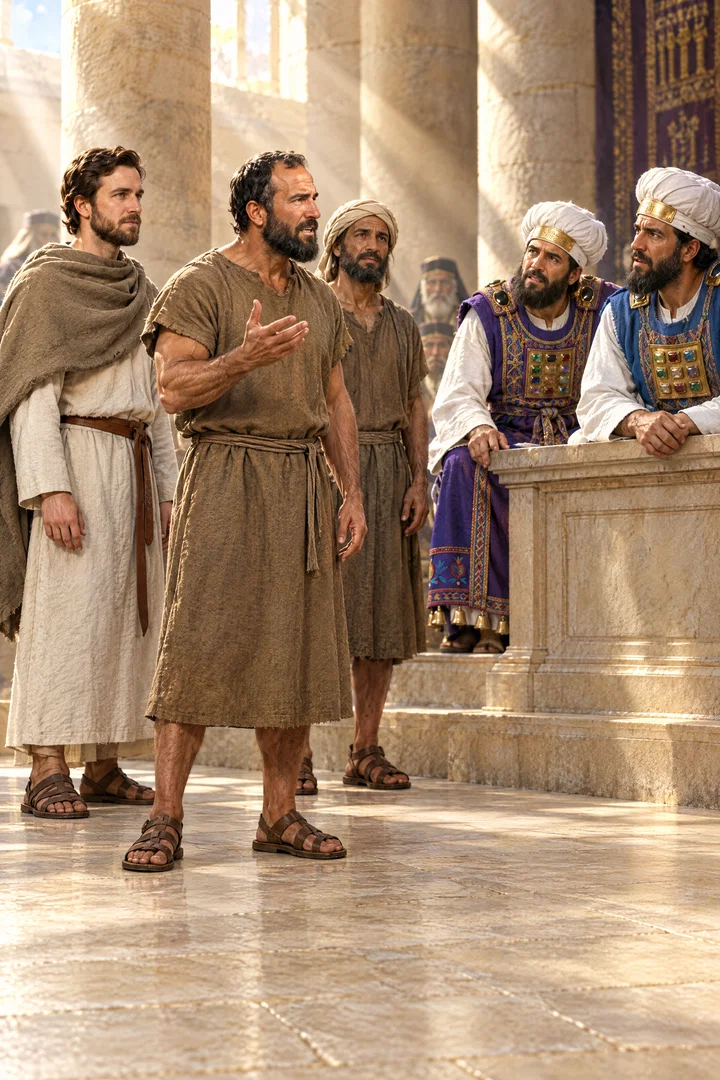
And Annas the high priest, and Caiaphas, and John, and Alexander, and as many as were of the kindred of the high priest, were gathered together at Jerusalem.
Translations
American King James Version, King James Version
And Annas the high priest, and Caiaphas, and John, and Alexander, and as many as were of the kindred of the high priest, were gathered together at Jerusalem.
and Annas the high priest, and Caiaphas, and John, and Alexander, and as many as were of the kindred of the high priest, were gathered together at Jerusalem.
And Annas the high priest, and Caiaphas, and John, and Alexander, and as many as were of the kindred of the high priest, were assembled at Jerusalem.
Revised Version, American Standard Version
and Annas the high priest was there, and Caiaphas, and John, and Alexander, and as many as were of the kindred of the high priest.
and Annas the chief priest, and Caiaphas, and John, and Alexander, and as many as were of the kindred of the chief priest,
and Annas the high priest, and Caiaphas, and John, and Alexander, and as many as were of [ the] high priestly family;
Also Annas, the high-priest, and Caiaphas, and John, and Alexander, and as many as were of high-priestly descent;—
Berean Standard Bible, Majority Standard Bible
along with Annas the high priest, Caiaphas, John, Alexander, and many others from the high priest’s family.
Annas the high priest was there, with Caiaphas, John, Alexander, and as many as were relatives of the high priest.
And Annas, the high priest, was there, and Caiaphas and John and Alexander, and all the relations of the high priest.
And Annas the chiefe Priest, and Caiaphas, and Iohn, and Alexander, and as many as were of the kindred of the hie Priestes.
Douay-Rheims (Challoner revision)
And Annas the high priest, and Caiphas, and John, and Alexander, and as many as were of the kindred of the high priest.
Pictures

Cross-references
- Acts 4:18-20
And they called them, and commanded them not to speak at all nor teach in the name of Jesus.
The council forbids the apostles to speak in Jesus’ name, but they refuse to stop.
- Acts 3:1-10
Now Peter and John went up together into the temple at the hour of prayer, being the ninth hour.
Peter and John heal the lifelong cripple at the temple gate, leading to their trial.
- John 18:13-14
And led him away to Annas first; for he was father in law to Caiaphas, which was the high priest that same year.
Annas and Caiaphas are identified in Jesus’s hearing before the high priests.
- Acts 4:13
Now when they saw the boldness of Peter and John, and perceived that they were unlearned and ignorant men, they marvelled; and they took knowledge of them, that they had been with Jesus.
The council marveled at the apostles’ boldness despite their lack of formal learning.
- Luke 3:2
Annas and Caiaphas being the high priests, the word of God came unto John the son of Zacharias in the wilderness.
Both texts identify Annas and Caiaphas in connection with the high priesthood.
- Matthew 26:57
And they that had laid hold on Jesus led him away to Caiaphas the high priest, where the scribes and the elders were assembled.
Caiaphas and the assembled leaders appear at Jesus’ trial.
- Luke 22:54-62
Then took they him, and led him, and brought him into the high priest’s house. And Peter followed afar off.
Peter denied Jesus during the high priest’s circle and wept bitterly afterward.
- Acts 5:17-18
Then the high priest rose up, and all they that were with him, (which is the sect of the Sadducees,) and were filled with indignation,
Religious leaders again arrest and persecute the apostles for preaching Christ.
- Acts 4:16-17
Saying, What shall we do to these men? for that indeed a notable miracle hath been done by them is manifest to all them that dwell in Jerusalem; and we can not deny it.
The rulers acknowledge the miracle but plan to suppress the apostles’ message.
- Acts 4:10-12
Be it known unto you all, and to all the people of Israel, that by the name of Jesus Christ of Nazareth, whom ye crucified, whom God raised from the dead, even by him doth this man stand here before you whole.
Jesus’ name heals the man, and Peter declares Jesus the only source of salvation.
- John 11:49-52
And one of them, named Caiaphas, being the high priest that same year, said unto them, Ye know nothing at all,
Caiaphas prophesied that Jesus would die.
- Matthew 26:3-4
Then assembled together the chief priests, and the scribes, and the elders of the people, unto the palace of the high priest, who was called Caiaphas,
Chief priests plot to kill Jesus.
- Mark 14:62-64
And Jesus said, I am: and ye shall see the Son of man sitting on the right hand of power, and coming in the clouds of heaven.
Shows leaders condemning Jesus.
- John 11:47
Then gathered the chief priests and the Pharisees a council, and said, What do we? for this man doeth many miracles.
Religious leaders gather after Jesus’ miracles to discuss what to do.
- Acts 4:19
But Peter and John answered and said unto them, Whether it be right in the sight of God to hearken unto you more than unto God, judge ye.
Peter and John refuse to obey the council over God.
- Galatians 2:9
And when James, Cephas, and John, who seemed to be pillars, perceived the grace that was given unto me, they gave to me and Barnabas the right hands of fellowship; that we should go unto the heathen, and they unto the circumcision.
Paul also mentions John as a pillar of the church.
- Matthew 26:69-75
Now Peter sat without in the palace: and a damsel came unto him, saying, Thou also wast with Jesus of Galilee.
Peter denies Jesus while gathered with the high priest’s household.
- John 7:45-48
Then came the officers to the chief priests and Pharisees; and they said unto them, Why have ye not brought him?
Leaders reject Jesus and rebuke those who believe in him.
- John 19:15
But they cried out, Away with him, away with him, crucify him. Pilate saith unto them, Shall I crucify your King? The chief priests answered, We have no king but Cæsar.
Shows the leaders’ rejection of Christ before their later persecution of his followers.
- Acts 5:28
Saying, Did not we straitly command you that ye should not teach in this name? and, behold, ye have filled Jerusalem with your doctrine, and intend to bring this man’s blood upon us.
The authorities again forbid teaching in Jesus’ name.
Commentary
Each commentary is drawn from primary sources: the writings of Ellen G. White and Adventist pioneers and periodicals. Each commentary is separate. Its own words are not a quotation; follow the references to read the source passages.
Ellen G. White
7 sources
The gathering at Jerusalem brought together Annas the high priest, Caiaphas, John, Alexander, and others of the high priest's kindred, the dignitaries of the temple, rulers and elders.SPBC 139.2Ms 22, 1900, par. 11–16AC1 15.3–16.1ST Nov 14, 1878RH Feb 2, 1911 They had assembled at Jerusalem the day after the arrest and the healing of the crippled man to examine and try Peter and John, and his fellow prisoner.Ms 22, 1900, par. 11–16AC1 15.3–16.1ST Nov 14, 18787RED 15.3RH Feb 2, 1911 The trial concerned the healing of the disabled man and the apostles' preaching.Ms 22, 1900, par. 11–16Ms 47, 1886, par. 5–9
They questioned the apostles about the power and name by which the healed man had been made whole.Ms 22, 1900, par. 11–16 Their gathering forms the setting for the apostles' bold testimony, given through the Holy Spirit, that the miracle was done through Jesus, who had risen, and for the rulers' opposition to that message.SPBC 139.2Ms 47, 1886, par. 5–9
The hearing placed Peter in that very room and before those very men who had judged Jesus and where he had shamefully denied his Lord, and he distinctly remembered his denial as he stood for his own trial.ST Nov 14, 18787RED 15.3RH Feb 2, 1911 Changed by conversion and filled with the Holy Spirit, he now faced the same leaders with courage and boldness, with opportunity to redeem his former wicked cowardice.SPBC 139.2ST Nov 14, 18787RED 15.3RH Feb 2, 1911
Sources
Pioneers and periodicals
29 sources
The verse records the meeting of the Sanhedrin in Jerusalem on the morning after Peter and John were arrested and imprisoned for healing the lame man, assembled to question the apostles about the authority behind their work and preaching.ST Jan 29, 1902ST Mar 11, 1897ST Jan 29, 1902 Those gathered were Annas the high priest, Caiaphas, John, Alexander, and as many as were of the kindred of the high priest, together with the rulers and elders, with Annas and Caiaphas serving in association as high priests since Annas had formerly held the office and though deposed by Rome was still regarded as high priest as Caiaphas's father-in-law and deputy who retained influence and had secured the office for five of his sons.ST Jan 29, 1902ST Jan 18, 1899ST Jan 29, 1902ST Mar 6, 1901ST Jan 14, 1897 The apostles thus stood before the very religious authorities who had opposed and judged Jesus, in the place where Peter had denied Him, and the leaders took note that Peter and John had been with Jesus by which time the church numbered about five thousand.ST Jan 22, 1885ST Mar 11, 1897RH Feb 12, 1861 This was the first persecution and opposition faced by the early church, with the religious leaders opposing the apostles for preaching Christ after the healing just as they had opposed Christ, yet the healing showed that the power of Jesus' name remained after His resurrection and the council could not deny the miracle.ST Jan 21, 1897ST Feb 13, 1901RH Jul 25, 1854RH Jun 8, 1916RH Feb 12, 1861 Peter stood before the same men before whom he had denied Jesus now converted and filled with the Holy Spirit, no longer intimidated but boldly witnessing with modest courage, and though he and his companions were few, poor, obscure and weak their message overcame the Sanhedrin's implacable opposition and spread throughout the world.ST Jan 22, 1885ST Nov 14, 1878ST Jun 2, 1909RH Jun 27, 1865RH Sep 15, 1868
The Council Gathered
Acts 4:6 records the meeting of the council in Jerusalem on the morning of the day after Peter and John were arrested and put in prison for healing the lame man.ST Jan 29, 1902ST Mar 11, 1897ST Jan 29, 1902 The Sanhedrin assembled to question the apostles about the authority behind their work and preaching, and John was imprisoned with Peter and released with him in God's deliverance of them.ST Jun 2, 1909ST Jan 29, 1902ST Sep 15, 1887 Those brought before that council were examined concerning the healing, with the high priest's relatives also admitted into the court of inquiry because of the great interest in the affair.ST Jan 29, 1902ST Jan 29, 1902
Those gathered were Annas the high priest, and Caiaphas, and John, and Alexander, and as many as were of the kindred of the high priest, together with the rulers and elders.ST Jan 29, 1902ST Jan 14, 1897ST Jan 14, 1897 The rulers were chief priests heading the twenty-four courses, and the elders were heads of families who sat on the Sanhedrin.ST Jan 14, 1897 John and Alexander held unknown offices but were influential members of the Sanhedrin, and the Sanhedrin itself was the leading civil and religious court whose members included the high priest and other leading men.ST Jan 14, 1897RH Feb 16, 1911
Annas and Caiaphas served in association as high priests, with Annas retaining influence through his son-in-law Caiaphas even after losing the office himself, and Annas had also secured the office for five of his sons.ST Jan 18, 1899 Annas had formerly held the office and was Caiaphas's father-in-law, serving as his deputy, or sagan, and his influence explains why he continued to be called high priest.ST Mar 6, 1901 Annas had been deposed by Rome but was still regarded by the Jews as high priest, while Caiaphas, Annas's son-in-law, held the office by Roman appointment.ST Jan 14, 1897
The gathering placed the apostles before the very religious authorities who had opposed Jesus and judged Him, and their presence places the apostles' testimony before those leaders when the council could not deny the miracle.ST Nov 14, 1878RH Feb 12, 1861 The hearing took place in the room where Peter had earlier denied Jesus, bringing his earlier denial vividly to mind, and these were the same men before whom he had denied Him.ST Jan 22, 1885ST Nov 14, 1878RH Feb 2, 1911 Now converted and filled with the Holy Spirit he stood before them with modest courage, no longer intimidated by threats, and boldly bore witness to Christ with opportunity to face them again.ST Jan 22, 1885ST Feb 7, 1884RH Feb 2, 1911 The Jewish leaders took note that Peter and John had been with Jesus, and by this time the church had about five thousand members.ST Mar 11, 1897
The surrounding events are part of the later harvest from the seed Jesus sowed when He spoke with the Samaritan woman.ST Jul 17, 1901
Persecution and Bold Witness
This gathering belongs to the first persecution and opposition faced by the early church after the healing of the lame man and the preaching about Jesus.ST Jan 21, 1897RH Jul 25, 1854RH Jun 8, 1916RH Oct 22, 1908 The high priest Annas, Caiaphas, John, Alexander, and the high priest's relatives gathered at Jerusalem represent the religious leaders standing among the strongest opponents of the apostles, just as they had opposed Christ.RH Jul 25, 1854RH Jun 8, 1916RH Jun 27, 1865 Their questioning of the apostles after their preaching is an instance of civil or religious authority interfering with religious witness.RH Oct 22, 1908
The condemnation and persecution of Christ's apostles and people after His resurrection by the Jewish leaders filled up Jerusalem's cup of iniquity.RH May 10, 1915 The assembling of Jerusalem's high priest and others of the high-priestly family against the apostles after Jesus' death and resurrection shows that the influential religious leaders' rejection of Jesus continued after His resurrection.RH May 10, 1915RH Sep 15, 1868 Their standing and numbers did not prove that their judgment was right.RH Sep 15, 1868
The council illustrates that human authority must not take the place of conscience or God.ST Apr 23, 1912 Forbidding speech about a faith is religious persecution even when belief and worship are not directly forbidden.ST Sep 11, 1884 The religious authorities gathered at Jerusalem — the high priest, the other named leaders, and members of the high priest's family — opposed the apostles' preaching about Jesus.ST Sep 11, 1884ST Apr 23, 1912
The bringing of Peter and John before the gathered authorities followed the healing of the lifelong cripple.ST Feb 13, 1901RH Feb 12, 1861 That healing showed that the power of Jesus' name remained after His resurrection and departure from earth.ST Feb 13, 1901 The council that confronted the apostles, the very religious authorities who had opposed Jesus, could not deny the miracle.RH Feb 12, 1861
Peter and John were imprisoned and then brought to examination in Jerusalem before Annas, Caiaphas, John, Alexander, other temple dignitaries, and other members of the high priest's family, with John imprisoned with Peter, released with him, and delivered by God.ST Jan 22, 1885ST Nov 14, 1878RH Feb 2, 1911ST Jun 2, 1909ST Sep 15, 1887 The hearing took place the day after the crippled man was healed, in the room where Peter had earlier denied Jesus, before the same men before whom he had denied Jesus and the same leaders who had judged Jesus.ST Jan 22, 1885ST Nov 14, 1878ST Feb 7, 1884RH Feb 2, 1911 Now converted and filled with the Holy Spirit, Peter stood before them with modest courage, no longer intimidated by threats, and boldly bore witness to Christ.ST Jan 22, 1885ST Nov 14, 1878ST Feb 7, 1884RH Feb 2, 1911
The apostles' appearance before that powerful council, the Sanhedrin, is an example of bearing witness to truth despite opposition, like Luther before the assembly at Worms.RH Apr 7, 1863 As the first-century priesthood opposed the apostles and the gospel, so the church's leaders later opposed Luther and the Reformation.RH Apr 7, 1863 Peter and his companions were few, poor, obscure, and weak, yet in the face of the Sanhedrin's implacable opposition their message overcame and spread Christianity throughout the world, a result presented as evidence of a miracle.RH Jun 27, 1865
Sources