Luke 6:1
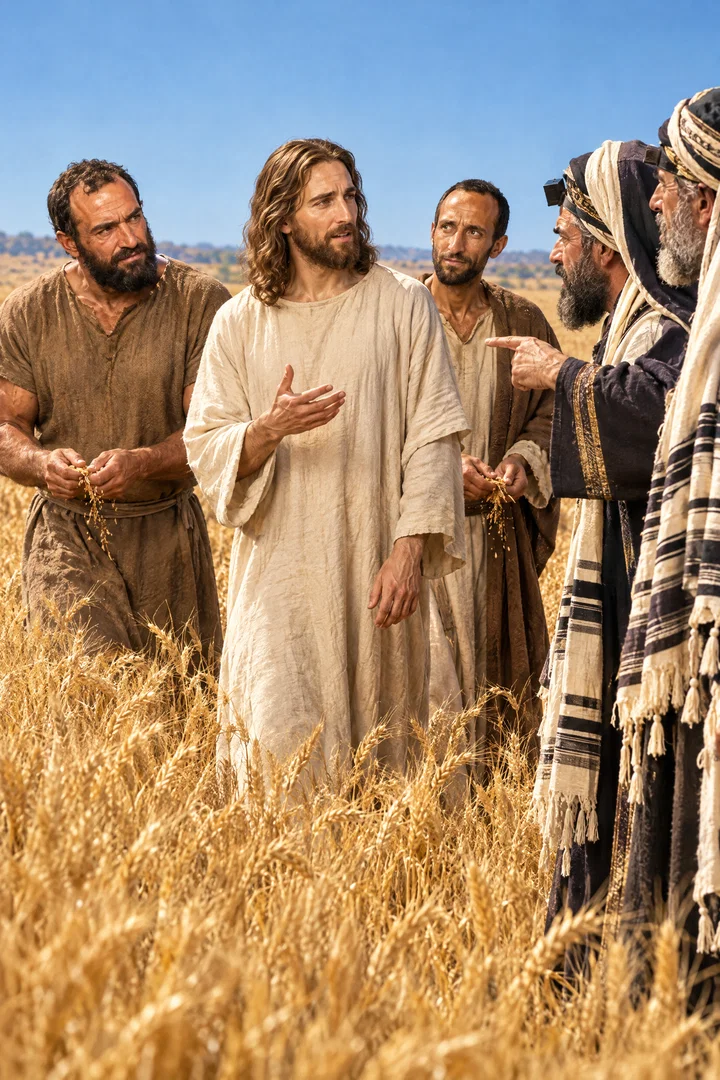
And it came to pass on the second sabbath after the first, that he went through the corn fields; and his disciples plucked the ears of corn, and did eat, rubbing them in their hands.
Translations
American King James Version, King James Version, KJV Cambridge Paragraph Bible
And it came to pass on the second sabbath after the first, that he went through the corn fields; and his disciples plucked the ears of corn, and did eat, rubbing them in their hands.
And it came to pass on the second sabbath after the first, that he went through corn-fields; and his disciples plucked the ears of corn, and ate, rubbing them in their hands.
Now it came to pass on a sabbath, that he was going through the cornfields; and his disciples plucked the ears of corn, and did eat, rubbing them in their hands.
Now it came to pass on a sabbath, that he was going through the grainfields; and his disciples plucked the ears, and did eat, rubbing them in their hands.
And it came to pass, on the second-first sabbath, as he is going through the corn fields, that his disciples were plucking the ears, and were eating, rubbing with the hands,
And it came to pass on [ the] second-first sabbath, that he went through cornfields, and his disciples were plucking the ears and eating [ them], rubbing [ them] in their hands.
And it came to pass, on a Sabbath, that he was passing along through cornfields, and his disciples were plucking and eating the ears of corn, rubbing them with their hands.
One Sabbath Jesus was passing through the grainfields, and His disciples began to pick the heads of grain, rub them in their hands, and eat them.
On the second chief Sabbath, Jesus was passing through the grainfields, and His disciples began to pick the heads of grain, rub them in their hands, and eat them.
Now on the second Sabbath after the first, he was going through the grain fields. His disciples plucked the heads of grain and ate, rubbing them in their hands.
Now it came about that on the Sabbath he was going through the fields of grain, and his disciples took the heads of the grain for food, crushing them in their hands.
And it came to passe on a second solemne Sabbath, that hee went through the corne fieldes, and his disciples plucked the eares of corne, and did eate, and rub them in their hands.
Douay-Rheims (Challoner revision)
And it came to pass on the second first sabbath, that as he went through the corn fields, his disciples plucked the ears, and did eat, rubbing them in their hands.
Pictures
Cross-references 20 of 27
- Matthew 12:1-8
At that time Jesus went on the sabbath day through the corn; and his disciples were an hungred, and began to pluck the ears of corn, and to eat.
Parallel account of the disciples plucking grain on the Sabbath and Christ defending them.
- Mark 2:23-28
And it came to pass, that he went through the corn fields on the sabbath day; and his disciples began, as they went, to pluck the ears of corn.
Jesus defends the disciples’ grain-plucking and teaches that he is Lord of the Sabbath.
- Exodus 20:10
But the seventh day is the sabbath of the LORD thy God: in it thou shalt not do any work, thou, nor thy son, nor thy daughter, thy manservant, nor thy maidservant, nor thy cattle, nor thy stranger that is within thy gates:
The seventh-day Sabbath commandment is the law by which the disciples’ actions are judged.
- 1 Samuel 21:4-6
And the priest answered David, and said, There is no common bread under mine hand, but there is hallowed bread; if the young men have kept themselves at least from women.
David eats the consecrated showbread when hungry, a precedent Jesus invokes for his disciples.
- Luke 6:6-10
And it came to pass also on another sabbath, that he entered into the synagogue and taught: and there was a man whose right hand was withered.
Jesus challenges restrictive Sabbath traditions by healing a man and teaching that it is lawful to do good.
- Deuteronomy 23:25
When thou comest into the standing corn of thy neighbour, then thou mayest pluck the ears with thine hand; but thou shalt not move a sickle unto thy neighbour’s standing corn.
The law permits passersby to pluck and eat grain by hand from a neighbor’s field.
- Mark 2:27
And he said unto them, The sabbath was made for man, and not man for the sabbath:
The Sabbath was made for humanity, allowing benevolent necessity.
- Mark 3:1-5
And he entered again into the synagogue; and there was a man there which had a withered hand.
Jesus’ Sabbath healing continues the dispute over Sabbath observance.
- Genesis 2:2-3
And on the seventh day God ended his work which he had made; and he rested on the seventh day from all his work which he had made.
God rested on the seventh day and blessed and sanctified it.
- Matthew 12:12
How much then is a man better than a sheep? Wherefore it is lawful to do well on the sabbath days.
Jesus teaches that doing good on the Sabbath is lawful.
- Luke 6:5
And he said unto them, That the Son of man is Lord also of the sabbath.
Further reference to the Sabbath in the same account.
- John 7:22-23
Moses therefore gave unto you circumcision; ( not because it is of Moses, but of the fathers;) and ye on the sabbath day circumcise a man.
Jesus defends Sabbath healing by appealing to circumcision permitted on the Sabbath.
- Isaiah 58:13
If thou turn away thy foot from the sabbath, from doing thy pleasure on my holy day; and call the sabbath a delight, the holy of the LORD, honourable; and shalt honour him, not doing thine own ways, nor finding thine own pleasure, nor speaking thine own words:
Both concern the Sabbath and its observance as God’s holy day.
- Mark 2:24
And the Pharisees said unto him, Behold, why do they on the sabbath day that which is not lawful?
Records the accusers’ charge about the disciples’ actions.
- Mark 2:28
Therefore the Son of man is Lord also of the sabbath.
Identifies Jesus as Lord of the Sabbath.
- Deuteronomy 24:19-22
When thou cuttest down thine harvest in thy field, and hast forgot a sheaf in the field, thou shalt not go again to fetch it: it shall be for the stranger, for the fatherless, and for the widow: that the LORD thy God may bless thee in all the work of thine hands.
Harvest gleanings are reserved for the poor, including strangers, orphans, and widows.
- Matthew 12:7
But if ye had known what this meaneth, I will have mercy, and not sacrifice, ye would not have condemned the guiltless.
Jesus says the accusers condemned the guiltless.
- Numbers 15:32-36
And while the children of Israel were in the wilderness, they found a man that gathered sticks upon the sabbath day.
Contrasting presumptuous Sabbath-breaking punished with death.
- Matthew 12:10
And, behold, there was a man which had his hand withered. And they asked him, saying, Is it lawful to heal on the sabbath days? that they might accuse him.
Jesus affirms that doing good on the Sabbath is lawful.
- John 5:16-18
And therefore did the Jews persecute Jesus, and sought to slay him, because he had done these things on the sabbath day.
Both texts describe Sabbath controversy and opposition to Jesus.
Commentary
Each commentary is drawn from primary sources: the writings of Ellen G. White and Adventist pioneers and periodicals. Each commentary is separate. Its own words are not a quotation; follow the references to read the source passages.
Ellen G. White
10 sources
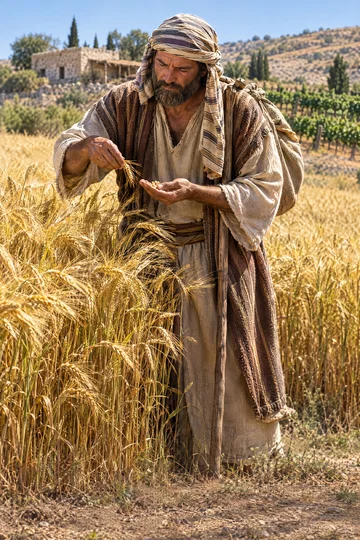
It was the Sabbath, and the grain was ripening and ready for the sickle as Jesus and His disciples passed through the standing fields on their way back from worship.DA 283.4–284.14RED 48.1 He had prolonged His teaching and healing work to a late hour, and the disciples had been a long time without food, so they were hungry.DA 283.4–284.14RED 48.1 Passing through the field in that hunger, they plucked heads of wheat, rubbed the kernels in their hands, and ate them to satisfy their need.DA 283.4–284.14RED 48.1PP 531.1–2ST Sep 16, 1913Ms 43b, 1891, par. 9
What they did was permitted by the law of God, which allows a hungry passerby to pluck ears with the hand from a neighbor's standing corn to satisfy hunger.DA 283.4–284.14RED 48.1PP 531.1–2 The same permission extends to grain, orchard fruit, or vineyard produce taken to meet immediate hunger, while it forbids putting a sickle to the neighbor's standing corn.DA 283.4–284.14RED 48.1PP 531.1–2HSFM 165.2 On the Sabbath, however, the rabbis treated the same act as a double desecration, counting gathering as a kind of reaping and rubbing as a kind of threshing.DA 283.4–284.1 Scribes, Pharisees, and Jewish rulers, prompted by the enemy, impatiently watched and spied on every word and action to find cause to accuse, and finding nothing else charged Jesus and His disciples with breaking the Sabbath for plucking, rubbing, and eating.STMW6 43.218MR 155.1–3Ms 43b, 1891, par. 9Ms 43b, 1891, par. 1
The charge was false, for what Christ and the disciples did was in harmony with the Sabbath commandment, so they were guiltless and innocent in the deed.ST Sep 16, 1913Ms 43b, 1891, par. 9 Christ repelled the charge and, with a dignity He alone possesses, covered the disciples with the shield of His own divine prerogatives as God in the flesh.Ms 43b, 1891, par. 9 The incident reveals who He is: the One sent of God as the greatest Teacher the world ever knew, the One who made the Sabbath and is Lord of the Sabbath.STMW6 43.218MR 155.1–3Ms 43b, 1891, par. 1
He kept the Sabbath according to God's law rather than conforming to burdensome human requirements that made God appear as a tyrant and Sabbath-keeping appear hard-hearted and cruel.DA 283.4–284.1PK 183.1 By so doing He cleared away misconception, rejected false teachings that had distorted the institution, and reflected the character of the loving Heavenly Father, while the Sabbath remained binding.DA 283.4–284.1PK 183.1 The false charge exposes the foolishness, weakness, fallibility, and blindness of human judgment and illustrates how people can misinterpret the Sabbath and work blindly against its purpose.STMW6 43.218MR 155.1–3Ms 43b, 1891, par. 1 The disciples' eating from another person's field illustrates God's provision for the needy built into His laws.HSFM 165.2
Sources
Pioneers and periodicals
50 sources
On a Sabbath in the Passover season Jesus and his disciples walked through ripening grain on the way to the synagogue, and being hungry from attendance upon him the disciples plucked heads of milky grain and rubbed out the kernels in their hands to eat.ST Apr 14, 1881RH Jan 8, 1857ST Feb 10, 1904ST Nov 26, 1894RH Jun 26, 1900 Jewish custom allowed a hungry traveler to take grain for food, but the watchers treated plucking as reaping and rubbing as threshing, so the dispute was over what was lawful on the Sabbath under restrictive human rules rather than over which day was the Sabbath.ST Apr 14, 1881ST Mar 4, 1889RH Feb 11, 1858 Jesus defended them by the hunger of David and his men eating the showbread that was not lawful for them, and by the priests laboring blamelessly in temple service on the Sabbath for One greater than the temple, declaring the disciples guiltless and lawful because mercy is greater than sacrifice.RH Feb 4, 1862RH Jan 8, 1857ST May 17, 1910 He taught that the Sabbath was made for humanity as a blessing of rest and holy joy, and as Lord of the Sabbath he restored it to its true purpose and upheld its sacredness without violating or abrogating it.RH Feb 4, 1862ST Jun 11, 1894RH Nov 14, 1871ST Nov 14, 1900 The day was the seventh-day Sabbath and not the first day, which no human agreement can make holy, and satisfying hunger and other works of necessity and healing are permitted on it, for he did not transgress the law or he would have been a sinner unable to provide a sinless offering for salvation.ST Feb 16, 1915RH Jun 5, 1860ST Apr 15, 1886ST Jul 23, 1912RH Nov 1, 1853
Time, Place, and Wording
On the Sabbath Jesus and his disciples walked through ripening barley or wheat fields on their way to the synagogue.ST Apr 14, 1881ST Feb 10, 1904 The disciples plucked ears and rubbed them in their hands to eat.ST Apr 14, 1881ST Feb 10, 1904 The setting belongs to the Passover season, when the barley harvest and the offering of the first sheaf on the second day of Passover place the incident.ST Apr 14, 1881
The phrase second sabbath after the first means no more than a second Sabbath after one previously mentioned.ST Jan 29, 1902 The best Greek copies lack the words second and first, reading simply on a Sabbath.ST Jan 29, 1902 The grain they took was ripening grain in the milky stage, sweet and juicy with sugar not yet changed into starch.RH Jun 26, 1900RH Sep 10, 1901 For that reason it was very easily digested and able to be eaten without cooking.RH Jun 26, 1900RH Sep 10, 1901
The disciples were hungry because their attendance upon Christ had kept them from making prior provision for their bodily wants.RH Jan 8, 1857ST Nov 26, 1894 Being hungry they picked heads of grain as they passed through the grainfield and ate them, rubbing them in their hands to remove the kernels.RH Jan 8, 1857ST Feb 10, 1904ST Nov 26, 1894ST Sep 19, 1911 This meeting of their own need for food was a work of necessity.ST Sep 19, 1911 The ripe ears show a Passover had just been kept, fitting the visit to Jerusalem for the feast, marking that feast as the second Passover of Christ's public ministry and so supporting a three-and-a-half-year public ministry.RH Dec 5, 1907
Act and Accusation
It was the disciples, passing through the grainfields on the Sabbath, who plucked the ears and ate, rubbing them in their hands to remove the kernels.ST Mar 12, 1894ST Mar 12, 1894ST Mar 12, 1894 Their passage through the fields and eating of the grain prompted the Pharisees to charge them with doing what was unlawful on the Sabbath.ST Mar 12, 1894ST Mar 12, 1894RH Apr 21, 1863ST Mar 12, 1894 The dispute was not simply about walking through the fields, but about plucking and rubbing the grain as unlawful Sabbath work.RH Apr 21, 1863
Jewish law and custom allowed a hungry traveler to take enough grain from a field for food.ST Apr 14, 1881 The watchers treated plucking as reaping and rubbing in the hands as threshing and food preparation, making the act a Sabbath offense in their view.ST Apr 14, 1881ST Mar 4, 1889ST Jan 30, 1896ST Sep 8, 1881 Their charge was therefore an addition to God's Sabbath law, not a violation of it, and Jesus justified what the disciples did.ST Mar 4, 1889ST Jan 30, 1896
The dispute was over whether their action was lawful, not over which day was the Sabbath. It concerned the Mishna and restrictive human rules, the Jews' own corruptions of the Scriptures, rather than the Sabbath of the law of God itself.RH Feb 11, 1858ST Apr 26, 1905 Christ and his followers were guided by the Bible as quite another rule from that by which the Jews judged, so the incident gives no argument against observance of the Bible Sabbath.RH Feb 11, 1858 The accusation reflected a formalistic view that obscured the Sabbath's true significance.ST Apr 26, 1905
The disciples were hungry because their attendance upon Christ had kept them from making prior provision for their bodily wants.RH Jan 8, 1857 Under a narrow reading of the letter, which on ordinary Sabbaths forbade work even to supply bodily wants, the charge of Sabbath-breaking had some shadow of foundation.RH Jan 8, 1857 Christ declared the disciples guiltless on the ground of dire necessity, and their act was wholly different from the presumptuous, daring Sabbath-breaking punished with death.RH Jan 8, 1857
That offense of reaping and threshing had already been observed and established against them before the graver scandal of eating without ceremonial handwashing.ST Sep 8, 1881 Together these complaints brought deputies from the alarmed authorities at Jerusalem directly to Jesus himself.ST Sep 8, 1881 Those who held the other account taught that Jesus himself plucked ears of grain and ate them while walking through the grainfields on the Sabbath.RH Sep 1, 1859
Defense and Meaning
Jesus met the charge by pointing to David and his men, who when hungry ate the sanctuary showbread which was not lawful for them to eat, yet were not condemned.RH Feb 4, 1862RH Jan 8, 1857ST Mar 12, 1894RH Apr 21, 1863 The hunger of the disciples excused them as dire necessity excused David, and their attendance upon One greater than the temple justified them still more in satisfying immediate craving need.RH Jan 8, 1857RH Jul 18, 1854 The appeal to that scriptural precedent showed their plucking and rubbing of grain to eat could be justified and did not have to go unappeased to satisfy Pharisaic rules.ST Mar 12, 1894RH Apr 21, 1863RH Jul 18, 1854
He joined to this the case of the priests who labor on the Sabbath, kindling fires and preparing sacrifices, yet are blameless in service of One greater than the temple.RH Feb 4, 1862RH Jan 8, 1857 So much more were the disciples, in serving One greater than the temple, justified in supplying their immediate need.RH Jan 8, 1857 He therefore pronounced them guiltless and their conduct lawful under the Sabbath law.RH Feb 4, 1862RH Jan 8, 1857ST Jun 6, 1878RH May 13, 1875 The law rightly understood permits works of necessity and mercy, for mercy rather than mere sacrifice is its genius and it is not opposed to doing good.RH Jan 8, 1857ST May 17, 1910ST Jun 6, 1878
The Sabbath was made for humanity as a blessing, a day of rest, delight and holy joy rather than a burden or hardship imposed upon them.ST Jun 11, 1894ST Nov 14, 1900ST Mar 12, 1894 It was made for their benefit and for mercy and good deeds, not for faultfinding and harsh traditions that make its observance a hardship.ST Jan 30, 1896RH Aug 15, 1854 Yet it was still to be kept holy according to the commandment and not made a common day.ST Jun 11, 1894RH Aug 15, 1854
In defending them He exercised authority to explain the Sabbath, interpret the law, uphold its sacredness and restore it to its true purpose and spirit against restrictive human rules and false traditions.ST Jun 11, 1894RH Nov 14, 1871ST May 17, 1910ST Mar 12, 1894RH Jul 18, 1854 The dispute was not about the Sabbath of the law of God itself but about the Mishna and the Jews' own corruptions, by which they judged while He and His followers were guided by the Bible as quite another rule.RH Feb 11, 1858 He did not violate or abrogate the Sabbath and did not claim a right to change its day, and His words and actions uphold the weekly Sabbath as a duty for all people.RH Nov 14, 1871RH Jan 8, 1857RH Oct 21, 1851RH Jul 18, 1854RH Feb 11, 1858 He declared Himself the Son of man as Lord of the Sabbath, affirming it as His own institution whose sanctity is added to by beneficent action that gives relief to the hungry.RH Feb 4, 1862ST Nov 14, 1900ST Nov 18, 1880
Sabbath Day and Authority
The day in the verse is the seventh-day Sabbath, called the Sabbath in the Christian dispensation and counted among the New Testament references to the Sabbath of the Lord.RH Jun 5, 1860ST Mar 16, 1882ST Apr 15, 1886ST Mar 12, 1894ST Jul 23, 1912 The disciples gathering and eating grain in the fields took place on that seventh day, not on Sunday the first day.ST Apr 15, 1886ST Jul 23, 1912 It therefore cannot be used to claim that God permitted this act on Sunday or that Sunday and the Sabbath are the same day.ST Apr 15, 1886 The seventh day remains the day God blessed and made holy, and human agreement cannot make the first day sacred or transfer that blessing and sanctification to it.ST Jul 23, 1912 The verse does not establish that the first day of the week became a Sabbath, for identifying the second Sabbath after the first as the first day is a misreading, not evidence that a first-day Sabbath was instituted during Christ's life.RH Jul 29, 1862
The episode does not say that Jesus plucked the grain or acted to transfer a priesthood or abolish the Sabbath.RH Oct 21, 1851RH Oct 21, 1858 The dispute was not over the Sabbath of the law of God itself but over the Mishna and corrupt human traditions, with the accusers judging by their own rule while Christ and his followers were guided by the Bible.RH Feb 11, 1858 It therefore gives no argument against observance of the Bible Sabbath, and by exposing false traditions and pointing to the Sabbath's true purpose and spirit it upholds the weekly Sabbath as a duty for all people.RH Oct 21, 1851RH Jul 18, 1854RH Feb 11, 1858 Jesus had authority to explain the Sabbath yet did not violate the commandment, and the disciples' hunger did not have to go unappeased to satisfy Pharisaic rules.RH Oct 21, 1851RH Jul 18, 1854 He did not transgress the law in this incident, for if he had he would have been a sinner and his sacrifice could not provide a sinless offering for pardon, salvation, and redemption.RH Nov 1, 1853
Against this, those who held otherwise taught from the verse that Christ broke the Sabbath and taught his disciples to break it.RH Jun 18, 1872 Those who held still otherwise taught from the going through the cornfields and the charge of neglect brought against him that he was no particular observer of the Sabbath.ST In that teaching the Sabbath was a fictitious subdivision of time not fitting natural divisions, created by special enactment requiring the Jews to come together every seven days.ST
Observance and Application
It is right to satisfy hunger on the Sabbath, for the disciples did no wrong in plucking ears of grain, rubbing out the kernels in their hands, and eating as they passed through the field.ST Sep 16, 1913ST Feb 16, 1915ST Mar 3, 1914ST Sep 19, 1911ST Sabbath rest permits works of necessity, so meeting the need for food in this way was lawful and in harmony with the Sabbath commandment.ST Sep 16, 1913ST Mar 3, 1914ST Sep 19, 1911ST Sabbath keeping does not require suffering or going without what is necessary to life and comfort, and the charge that they broke the Sabbath was false, for they were guiltless.ST Sep 16, 1913ST The same principle allows ministering to the sick and healing on the Sabbath, and allows fire on the Sabbath when needed for life and comfort, since the command to kindle no fire belonged to Israel's wilderness wandering in a warm country where fire was needed only for cooking food, which was not to be done on the Sabbath.ST
The incident, together with the Sabbath healing that follows, involved acts the Jews regarded as borderline conduct and illustrates the Sabbath disputes that arose between Christ and the Jewish authorities.ST Oct 19, 1882ST Apr 9, 1894 The accusers treated the plucking and rubbing of grain as unlawful, reflecting a formalistic view that obscured the Sabbath's true significance.ST Apr 26, 1905ST Apr 9, 1894 Christ opposed such restrictive human rules and taught the day's proper observance according to the law's true spirit, as a day of rest, delight, and holy joy rather than a burden.ST Jun 11, 1894 In this way Sabbath keeping is presented as a test of obedience to God's commandments.ST Jun 11, 1894
Christ's experience with the Pharisees over Sabbath observance parallels the prosecution of those who do not keep the Sabbath according to restrictive human interpretations, as in Tennessee.ST Nov 21, 1895 The complaint of religious opponents against the disciples for eating the grain illustrates how disputes over Sabbath observance can be used to press religious rules on others.ST Feb 2, 1915 The fault-finding against them reflects the same persecuting spirit as using a bad law to punish people for harmless conduct on Sunday.ST Sep 1, 1909 Jesus is thus shown acting contrary to the religious view of the Sabbath in His day, a view that modern advocates seek to apply to Sunday.RH Jul 24, 1913
Sources