Matthew 12:1
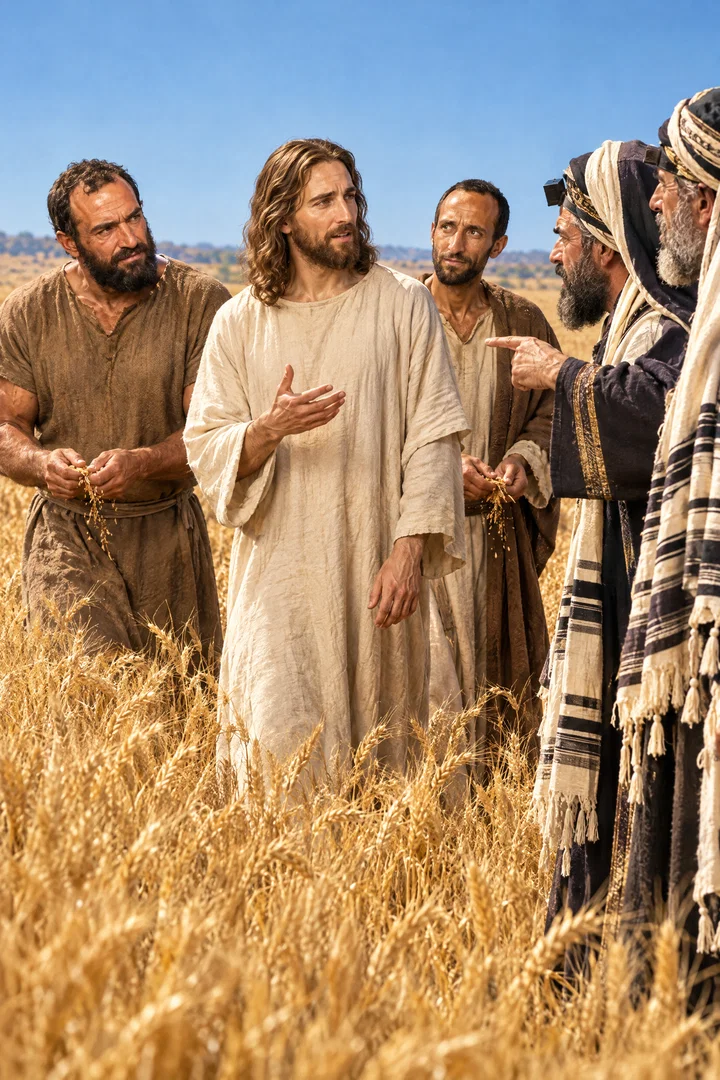
At that time Jesus went on the sabbath day through the corn; and his disciples were an hungred, and began to pluck the ears of corn, and to eat.
Translations
At that time Jesus went on the sabbath day through the corn; and his disciples were an hungered, and began to pluck the ears of corn and to eat.
At that time Jesus went on the sabbath day through the corn; and his disciples were an hungred, and began to pluck the ears of corn, and to eat.
At that time Jesus went on the sabbath day through the corn; and his disciples were a hungred, and began to pluck the ears of corn, and to eat.
At that time Jesus went on the sabbath through the corn, and his disciples were hungry, and began to pluck the ears of corn, and to eat.
At that season Jesus went on the sabbath day through the cornfields; and his disciples were an hungred, and began to pluck ears of corn, and to eat.
At that season Jesus went on the sabbath day through the grainfields; and his disciples were hungry and began to pluck ears and to eat.
At that time did Jesus go on the sabbaths through the corn, and his disciples were hungry, and they began to pluck ears, and to eat,
At that time Jesus went on the sabbath through the cornfields; and his disciples were hungry, and began to pluck the ears and to eat.
In that season, went Jesus, on, the sabbath, through the cornfields,—and, his disciples, hungered, and began to pluck ears of corn, and to eat.
Berean Standard Bible, Majority Standard Bible
At that time Jesus went through the grainfields on the Sabbath. His disciples were hungry and began to pick the heads of grain and eat them.
At that time, Jesus went on the Sabbath day through the grain fields. His disciples were hungry and began to pluck heads of grain and to eat.
At that time Jesus went through the fields on the Sabbath day; and his disciples, being in need of food, were taking the heads of grain.
At that time Iesus went on a Sabbath day through ye corne, and his disciples were an hungred, and bega to plucke ye eares of corne and to eate.
Douay-Rheims (Challoner revision)
At that time Jesus went through the corn on the sabbath: and his disciples being hungry, began to pluck the ears, and to eat.
Pictures
Cross-references 20 of 54
- Mark 2:23-28
And it came to pass, that he went through the corn fields on the sabbath day; and his disciples began, as they went, to pluck the ears of corn.
The parallel grain-field incident includes Jesus’ defense and teaching on the Sabbath.
- Exodus 20:10
But the seventh day is the sabbath of the LORD thy God: in it thou shalt not do any work, thou, nor thy son, nor thy daughter, thy manservant, nor thy maidservant, nor thy cattle, nor thy stranger that is within thy gates:
Names the seventh day as the Sabbath of the Lord, the command at issue.
- Matthew 12:12
How much then is a man better than a sheep? Wherefore it is lawful to do well on the sabbath days.
Jesus declares it lawful to do good on the Sabbath.
- Luke 6:1-5
And it came to pass on the second sabbath after the first, that he went through the corn fields; and his disciples plucked the ears of corn, and did eat, rubbing them in their hands.
Luke recounts the hungry disciples plucking and eating grain on the Sabbath.
- 1 Samuel 21:4-6
And the priest answered David, and said, There is no common bread under mine hand, but there is hallowed bread; if the young men have kept themselves at least from women.
David ate the consecrated bread in need, a precedent Jesus invoked for his hungry disciples.
- Matthew 12:7-8
But if ye had known what this meaneth, I will have mercy, and not sacrifice, ye would not have condemned the guiltless.
Jesus invokes mercy to vindicate the disciples and declares himself Lord of the Sabbath.
- Isaiah 58:13
If thou turn away thy foot from the sabbath, from doing thy pleasure on my holy day; and call the sabbath a delight, the holy of the LORD, honourable; and shalt honour him, not doing thine own ways, nor finding thine own pleasure, nor speaking thine own words:
The Sabbath is called holy and honourable, with observance distinguished from pursuing one’s own pleasure.
- Genesis 2:2-3
And on the seventh day God ended his work which he had made; and he rested on the seventh day from all his work which he had made.
God rested, blessed, and sanctified the seventh day at creation.
- Hosea 6:6
For I desired mercy, and not sacrifice; and the knowledge of God more than burnt offerings.
God’s preference for mercy shows the hungry disciples were guiltless.
- Matthew 12:8
For the Son of man is Lord even of the sabbath day.
Jesus identifies himself as Lord of the Sabbath after defending his disciples.
- Matthew 12:5
Or have ye not read in the law, how that on the sabbath days the priests in the temple profane the sabbath, and are blameless?
Priests’ Sabbath service supports Jesus’ defense of the disciples’ actions.
- Luke 13:15-16
The Lord then answered him, and said, Thou hypocrite, doth not each one of you on the sabbath loose his ox or his ass from the stall, and lead him away to watering?
Jesus defends freeing the woman on the Sabbath as an act of mercy.
- John 5:16
And therefore did the Jews persecute Jesus, and sought to slay him, because he had done these things on the sabbath day.
Jesus is persecuted for healing on the Sabbath.
- Matthew 5:17-19
Think not that I am come to destroy the law, or the prophets: I am not come to destroy, but to fulfil.
Jesus’ teaching that he did not abolish the law frames his Sabbath actions.
- Deuteronomy 23:25
When thou comest into the standing corn of thy neighbour, then thou mayest pluck the ears with thine hand; but thou shalt not move a sickle unto thy neighbour’s standing corn.
Permits travelers to pluck grain by hand from a neighbor’s field for food.
- Mark 2:23-24
And it came to pass, that he went through the corn fields on the sabbath day; and his disciples began, as they went, to pluck the ears of corn.
Jesus’ disciples pluck grain on the Sabbath, prompting the Pharisees’ accusation.
- Mark 2:28
Therefore the Son of man is Lord also of the sabbath.
Jesus is identified as Lord of the Sabbath.
- Numbers 15:30-36
But the soul that doeth ought presumptuously, whether he be born in the land, or a stranger, the same reproacheth the LORD; and that soul shall be cut off from among his people.
Contrasts the disciples’ need with deliberate, defiant Sabbath-breaking and its penalty.
- Colossians 2:16
Let no man therefore judge you in meat, or in drink, or in respect of an holyday, or of the new moon, or of the sabbath days:
Matthew 12:1 illustrates that “sabbaths” can refer to the weekly Sabbath.
- Mark 3:1-5
And he entered again into the synagogue; and there was a man there which had a withered hand.
A Sabbath healing dispute illustrates Jesus’ teaching on the Sabbath.
Commentary
Each commentary is drawn from primary sources: the writings of Ellen G. White and Adventist pioneers and periodicals. Each commentary is separate. Its own words are not a quotation; follow the references to read the source passages.
Ellen G. White
14 sources
On the Sabbath Jesus and His hungry disciples walked through a field of ripening standing wheat, and to satisfy hunger the disciples plucked heads of grain, rubbed them in their hands, and ate the kernels.Ms 31a, 1898, par. 1–3DA 283.4–284.1ST Jul 29, 1897PP 531.1–2 The law of Moses gave a person passing through a neighbor's field the right to take grain by hand to satisfy hunger, though not to harvest it with a sickle.DA 283.4–284.14RED 48.1HSFM 165.2 The Pharisees who were tracking Him treated this plucking and rubbing as reaping and threshing, and made it a charge of Sabbath-breaking against the disciples.Ms 31a, 1898, par. 1–3DA 283.4–284.1Ms 43b, 1891, par. 9 Jesus rejected the charge and established them as guiltless, for their eating to satisfy hunger was lawful and in harmony with the Sabbath commandment they were observing.ST Jul 29, 18974RED 48.1ST Sep 16, 1913 As the maker and Lord of the Sabbath He kept it according to God's law rather than the rabbis' arbitrary requirements, obeying it perfectly in human nature and proving that it can be kept.PK 183.1STMW6 43.218MR 155.1–3RH May 28, 1901
Scene in the Grainfield
The grain called corn was wheat, standing and ripening in the field through which the company passed.Ms 31a, 1898, par. 1–3DA 283.4–284.1PP 531.1–2 It was the Sabbath day, and the walk came after return from worship, with Christ leading His disciples outdoors, for His Sabbath teaching was not always given inside enclosed walls.DA 283.4–284.1Ms 3, 1879, par. 4–5 He had worked late through a long period of teaching and healing without food, and those with Him were hungry.DA 283.4–284.14RED 48.1
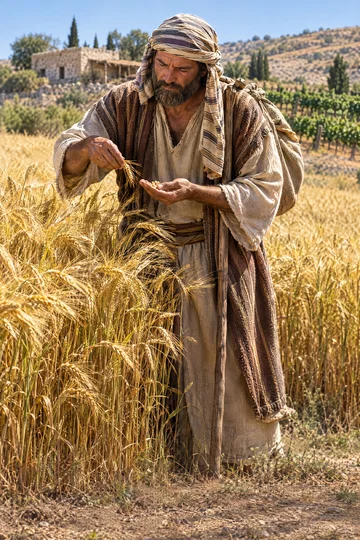
Being hungry, the disciples began to pluck heads of grain, rub them in their hands, and eat the kernels to satisfy hunger and keep strength for service.Ms 31a, 1898, par. 1–3DA 283.4–284.1ST Jul 29, 18974RED 48.1STMW6 43.2 What they did was allowed by the law of Moses, which on other days permitted a person passing through a neighbor's field to take grain by hand to satisfy hunger, but forbade harvesting it with a sickle.DA 283.4–284.14RED 48.1HSFM 165.2 That ancient allowance gave a hungry person and the poor a right to a share of the land's produce.4RED 48.1HSFM 165.2PP 531.1–2
The Pharisees were continually on Christ's track, with the enemy working through them to counteract His healing the sick and preaching the gospel to the poor.Ms 31a, 1898, par. 1–3 The rabbis treated plucking and rubbing grain on the Sabbath as both reaping and threshing, and therefore as a double offense.DA 283.4–284.1 They made the disciples' action the basis for a charge of Sabbath-breaking by scribes and Pharisees.DA 283.4–284.1Ms 43b, 1891, par. 9
Sabbath Keeping Vindicated
Jesus and His disciples were keeping and observing the Sabbath as they traveled through the grainfields, with the hungry disciples plucking and eating grain along the way.ST Jul 29, 1897ST Sep 16, 1913 Their plucking and eating to satisfy hunger did not break the Sabbath commandment but was lawful and in harmony with it.ST Jul 29, 18974RED 48.1ST Sep 16, 1913 After a long period of teaching and healing without food, they passed through the fields, plucked ears of grain, rubbed them in their hands, and ate the kernels to meet hunger and maintain strength for service.4RED 48.1Ms 43b, 1891, par. 9 The law of Moses permitted this, allowing a person passing through a neighbor's field to take grain by hand but not to harvest it with a sickle, so the act was lawful and not a violation of the Sabbath.4RED 48.1 Christ rejected the charge brought by the scribes and Pharisees and declared and established the disciples guiltless and innocent.ST Jul 29, 1897ST Sep 16, 1913Ms 43b, 1891, par. 9
He kept the Sabbath according to God's law rather than the rabbis' arbitrary requirements.PK 183.1 His conduct rejected teachings that had distorted the Sabbath and misrepresented God, while affirming the Sabbath's binding claims and the reverence due to the institution God had given.PK 183.1 Jesus is the maker and Lord of the Sabbath, yet the Jewish rulers, scribes, and Pharisees accused Him and His disciples of breaking it.STMW6 43.218MR 155.1–3Ms 43b, 1891, par. 1 They brought a blind and mistaken charge and controversy against the Lord, despite clear evidence that He was sent by God.STMW6 43.218MR 155.1–3Ms 43b, 1891, par. 1 His actions on the Sabbath were in harmony with God's law, and He obeyed the law perfectly in human nature, proving that it can be kept.RH May 28, 1901
Sources
Pioneers and periodicals
133 sources
On the Sabbath Jesus went through standing grain with His disciples, who being hungry plucked ears by hand, rubbed out the kernels and ate, which the law allowed a passerby to do to satisfy hunger so the charge was Sabbath-breaking and not theft.RH Feb 4, 1862ST Mar 19, 1894RH Aug 15, 1854ST Apr 14, 1881 Their eating to meet hunger was lawful and guiltless under the fourth commandment, belonging to mercy and doing good on the Sabbath rather than to forbidden work for profit or pleasure.ST Jul 8, 1897ST Feb 17, 1898RH Mar 1, 1864RH Jun 10, 1852ST Mar 16, 1904 The Pharisees falsely accused them because their tradition treated plucking as reaping and rubbing as threshing, and Jesus used the dispute over what is lawful to expose that human burden and restore the Sabbath to blessing rather than bondage.ST Apr 14, 1881RH Jun 10, 1852RH Nov 4, 1858ST Apr 19, 1883ST Feb 26, 1885 He upheld and defended the Sabbath instead of changing, relaxing or abolishing it, and as its Creator and Lord declared the guiltless and showed that if He had broken it He would have been a sinner unable to save.RH Feb 4, 1862ST Jul 8, 1897RH Jun 10, 1852ST Jan 6, 1881RH Aug 27, 1857 The Sabbath at issue was the seventh day, made for the good of humanity and not for Jews alone, to be kept as holy delight in communion and worship with works of necessity and mercy while ceasing from ordinary toil.ST Mar 19, 1894RH Apr 5, 1860RH Nov 2, 1911ST Mar 25, 1889
Scene and Wording
On the Sabbath Jesus went through standing grain with His disciples, who being hungry began to pluck ears by hand and eat.RH Feb 4, 1862ST Mar 19, 1894RH Aug 15, 1854ST Feb 17, 1898 They rubbed the heads in their hands to release the kernels before eating, and the question raised was what is lawful to do on the Sabbath.ST Apr 14, 1881ST Feb 17, 1898ST Nov 11, 1897ST Feb 10, 1904ST Feb 17, 1898 The act was judged borderline in Jewish eyes, condemned by the Pharisees as Sabbath-breaking yet declared guiltless by Jesus as Lord of the Sabbath, who rules that mercy and doing good govern its observance.RH Feb 4, 1862ST Mar 19, 1894ST Feb 17, 1898ST Nov 11, 1897
Corn here means grain such as wheat, barley, rye and oats, including wheat or barley, and wheat or grain would make the meaning clearer to American readers.ST Oct 10, 1911ST Feb 10, 1904ST Feb 17, 1898 It does not mean American maize or Indian corn, which was unknown until the discovery of America, while as still used in England corn means wheat, rye, oats and barley.ST Oct 10, 1911ST Feb 10, 1904ST Feb 17, 1898 The grain was ripening barley in the Passover month Abib when the first sheaf was offered on the second day of the feast, with the walk taking place after the Passover as the barley was coming into ear.ST Apr 14, 1881 It was still in the milky stage when kernels were sweet and juicy rather than dry and starchy, easily digested and able to be rubbed out and eaten in that condition without cooking.RH Jun 26, 1900RH Sep 10, 1901 As grain ripens its sugar changes into starch, unlike ripe starchy grain needing cooking to be suitable food, so Christ ate grain while it was still green and in its milky stage containing sugar rather than starch.ST Apr 14, 1881RH Jun 26, 1900RH Sep 10, 1901
The law and local custom allowed a traveler or passerby to pluck grain by hand to take enough to satisfy hunger without it being theft.RH Aug 15, 1854ST Apr 14, 1881RH Dec 8, 1859 The law allowed hungry people to take food ready at hand on the Sabbath and allowed time for ordinary meals, while it forbade reaping and storing a harvest, not plucking and eating a few ears.RH Aug 15, 1854ST Apr 14, 1881 Hence the complaint against the disciples was not theft or taking grain from another person's field, but breaking the Sabbath.RH Aug 15, 1854ST Apr 14, 1881RH Dec 8, 1859 They were going to or returning from the synagogue for holy convocation and worship, in obedience to God to hear the reading of the law, with the Pharisees in company.RH Aug 27, 1857RH Oct 21, 1851ST Feb 10, 1904RH Feb 4, 1862 Their traveling itself was not questioned, but whether the hungry disciples broke Sabbath law by plucking ears to satisfy hunger as they passed.RH Aug 27, 1857RH Oct 21, 1851ST Feb 10, 1904RH Feb 4, 1862
The Greek uses the plural form Sabbaton with singular meaning Sabbath day, especially the seventh day by Hebrew idiom.RH Nov 8, 1853RH Oct 15, 1872RH Jan 5, 1864 The same original term is used as in Colossians 2:16 and refers to the Jewish Sabbath, so plural form alone does not prove more than the weekly Sabbath is meant and counters the claim that the plural sabbaths cannot include the weekly Sabbath.RH Nov 8, 1853RH Sep 20, 1853RH Oct 15, 1872RH Jan 5, 1864 The cornfield incident leads without break directly to the synagogue and the healing of the man with the withered hand, for they went from the cornfield direct to the synagogue where Jesus performed that miracle.ST Nov 11, 1897ST Jan 16, 1896 It belongs with Luke 4:33 to 6:11 as part of a series of miracles showing the power of Jesus, one of thirty-six miracles described in the Gospels with sixty-seven reports besides many miracles noticed but not recorded in detail, centered at Capernaum on the Sea of Galilee.ST Nov 11, 1897ST Jan 16, 1896
Its timing near a Passover serves as evidence that a Passover had just been kept, helping place Jesus' visit to Jerusalem in the chronology of His ministry.RH Dec 5, 1907RH Apr 2, 1908 This incident came after the first Passover mentioned by John and before the Passover preceding His crucifixion, helping establish that His ministry lasted more than three years.RH Dec 5, 1907RH Apr 2, 1908 The day was the seventh-day Sabbath recognized by the Jews and specified by the Fourth Commandment, called the Sabbath in the Christian dispensation, not Sunday itself.RH Jun 5, 1860ST Apr 15, 1886ST Nov 26, 1894RH May 17, 1906 It was reckoned from Friday at sunset to Saturday at sunset, the day before Sunday, and the Pharisees' charge of Sabbath-breaking confirms it was not Sunday, with Jesus' discussion giving no instruction about observing Sunday.RH Apr 7, 1868ST Apr 15, 1886ST Nov 26, 1894RH May 17, 1906
Lawful Need and Mercy
The disciples were guiltless, and their plucking and eating when hungry was lawful and only lawful under God's instruction, not a breach of the Sabbath law or of the fourth commandment.ST Jul 8, 1897ST Feb 17, 1898RH Mar 1, 1864RH Jun 10, 1852RH Jun 12, 1860 No requirement of God is contrary to the principles of mercy, and in disregarding human traditions they stood innocent before the defense from Scripture that left no consistent answer and gave no ground for charging a change in the Sabbath.ST Jul 8, 1897ST Feb 17, 1898RH Jun 10, 1852 Their act was an act of mercy to relieve hunger, belonging to the weightier matters of judgment, mercy and faith, and therefore in harmony with the command not to do thy work on the seventh day.RH Mar 1, 1864RH Jun 10, 1852RH Jun 12, 1860 The Sabbath was still in full force before the crucifixion, and the eating was not a needless breaking of the Father's law but keeping of His commandments and the pattern to follow.RH Mar 1, 1864RH Jun 12, 1860RH Aug 27, 1857 Doing good in this way is lawful on the Sabbath.ST Feb 17, 1898RH Mar 1, 1864RH Jun 12, 1860
Hunger and immediate, urgent need made the act lawful, for a law's purpose is not served by enforcing its letter in a way that defeats its purpose.RH Jan 8, 1857ST Mar 30, 1888RH Mar 24, 1903 Necessity is not a Sabbath violation, and supplying necessary wants and obtaining food when needed are lawful and in harmony with the law.ST Mar 30, 1888RH Jun 18, 1861ST Nov 16, 1876 Ordinary Sabbath observance calls for preparing beforehand for bodily needs, yet their immediate necessity made them guiltless and not presumptuous transgressors, showing the Sabbath law was not meant to deny mercy or meet a need with a narrow, harsh rule.RH Jan 8, 1857RH Mar 24, 1903 The proof stands with David's necessary use of the consecrated bread and the priests' Sabbath offerings, and with rejection of excessive rules against such acts, for the spirit of the Sabbath law permits works that honor God and meet human need while human traditions must not burden it.ST Mar 30, 1888RH Jun 18, 1861RH Mar 24, 1903
The eating belongs to mercy and to doing good and doing well on the Sabbath, which govern Sabbath observance.ST Feb 17, 1898RH Mar 1, 1864RH Jun 10, 1852ST Mar 16, 1904ST Jun 4, 1874 That permission does not lessen the holiness of the day nor remove the need to keep it in a special manner, and it leaves the Sabbath to be devoted to deeds of mercy and benevolence.ST Mar 16, 1904RH Jan 28, 1873ST Jan 25, 1910 Healing on the Sabbath and helping an animal in need are lawful under the same Sabbath law of the fourth commandment still in force, and the disciples' actions with Jesus' response illustrate how Sabbath law permits such acts.RH Mar 1, 1864ST Jun 4, 1874ST Jan 25, 1910
Scripture does not forbid eating when hungry, and the Sabbath allowed time for ordinary meals and meeting a need.RH Aug 15, 1854RH May 19, 1851RH May 5, 1874RH Oct 21, 1851 The complaint was not theft, since the law allowed plucking by hand, but Sabbath-breaking, and the defense without setting aside or changing the command pointed to David eating the reserved bread in urgent need, to priests doing necessary work, and to God's desire for mercy rather than sacrifice.RH Aug 15, 1854RH May 19, 1851RH Oct 21, 1851 Feeding hunger, like healing the sick, like building a fire to keep a freezing person from suffering, or preparing food for a starved person, is lawful because the Sabbath was made for man and not man for the Sabbath, and whatever is necessary to relieve suffering may be done for relief of suffering and the honor of God and exactly adapted to the design of the Sabbath.ST Apr 10, 1893RH May 5, 1874ST Nov 16, 1876 Only what is unnecessary remains sinful, as with building fire for Israel in the wilderness, and avoidable need from failing to prepare beforehand does not excuse laxness.RH Jan 8, 1857ST Apr 10, 1893 The Sabbath prohibition concerns work done for personal profit or pleasure and chores that could have been done beforehand, not acts that preserve life and comfort and meet the needs of the sick and suffering, while Sabbath rest is not idleness but turning from such work and what is necessary must be settled by conscience before God.ST Jul 1, 1908RH Jul 29, 1862ST Dec 3, 1896 Proving this merciful eating lawful gives no justification for any amount of labor or for open willful violation of the fourth commandment, for the examples of David and the priests prove innocence under the circumstances without relaxing, changing, superseding or abolishing the law or excusing wrongdoing by others.RH Jun 10, 1852RH Feb 3, 1852RH Feb 3, 1852RH Feb 3, 1852
By contrast, those who held it taught that the plucking before the wave sheaf was presented was deliberately allowed though unlawful under the Jewish system to signify abolishing the Jewish priesthood and transferring its work to the disciples as future priests, with change of priesthood bringing change of law and end of the Jewish Sabbath.RH Sep 30, 1858 By contrast, those who held it claimed the act means labor was commanded on the Sabbath so men may labor, and that the Sabbath was broken and the disciples taught to break it.RH Apr 19, 1870RH Jun 18, 1872 By contrast, those who held it claimed the plucking of green corn was on Sunday, showing that Sunday work with Saturday observance fulfills the law of God as it should of man and condemns arresting sincere Christians for Sunday work when they keep Saturday holy.ST Sep 22, 1909
Tradition Versus True Law
The charge that plucking and eating was unlawful Sabbath-breaking came only from the Pharisees, in a fault-finding and accusatory spirit that sought grounds to accuse Christ, and that charge was false.RH Jun 10, 1852RH Nov 4, 1858ST Jun 26, 1901RH Sep 2, 1851ST Jan 22, 1885 The disciples were declared guiltless, for Jesus denied the charge and upheld a day of rest with a law regulating it rather than breaking or setting it aside.RH Jun 10, 1852ST Feb 26, 1885RH Sep 2, 1851 Their accusers were unfit judges because they misunderstood Sabbath observance while claiming to defend it.RH Nov 4, 1858RH Sep 2, 1851
Under added human tradition the simple act was condemned as forbidden work, with plucking treated as reaping and rubbing or shelling in the hands as threshing, grinding, separating chaff, or preparing food, even from a single kernel.ST Apr 14, 1881ST Feb 10, 1904RH May 17, 1906RH Jul 18, 1854 The law and local custom allowed a traveler to take enough grain by hand to satisfy hunger without theft, so the objection was not to taking another's grain but to the Pharisees' regulations.ST Apr 14, 1881ST Apr 19, 1883 What was challenged as unlawful under rabbinical Sabbath rules was therefore lawful under God's commandment, whose true purpose and spiritual meaning human rules had obscured.ST Apr 19, 1883ST Feb 10, 1904RH Jul 18, 1854
Jesus used the incident to clear away errors and human traditions that obscured the Sabbath, exposing inconsistency, hypocrisy, hostility, and superstitious austerities loaded upon the holy day.RH Jun 10, 1852ST Mar 10, 1898RH Nov 4, 1858 He restored it from those traditions to its original simplicity and institution at creation as made for man, teaching His disciples to observe it according to God's commandment by precept, example, and miracles.RH Jun 10, 1852ST Aug 6, 1912ST As Creator and Lord He knew its purpose, upheld it as a lawful blessing for humanity and not against it, and freed its observance from burdensome exactions to bring it back to joy and delight rather than burden, bondage, or misery.ST Mar 11, 1889ST Dec 5, 1892ST Mar 13, 1907
The dispute was over what is lawful to do on the Sabbath, not over which day is the Sabbath of the Lord, and not over introducing a new day.ST May 17, 1910ST Jun 6, 1878ST Oct 17, 1900 It was truth against tradition rather than spirit against letter, and not condemnation of caring about the letter of the law, for Jesus interpreted the Sabbath law correctly and showed that what is lawful is in perfect harmony with law.ST May 17, 1910ST Jun 6, 1878 He never broke the Sabbath law in all His work but did only what was lawful, and the fact that the Jews never afterward accused the disciples of subverting the Sabbath shows no change of day was involved.ST May 17, 1910ST Jun 6, 1878ST Oct 17, 1900
The antagonism between Jesus' true Sabbath teaching and practice as its author and Lord and the rigorous, burdensome, superstitious prohibitions caused the Jews to hate Him, watch Him to find grounds for accusation in the grainfield and in healing, and take counsel with the Herodians, a religio-political sect with influence in the Roman government, how they might put Him to death.STST Mar 12, 1894ST Oct 19, 1882ST Apr 9, 1894 That persecution culminated in His crucifixion and the final downfall of the Jewish nation, exposing rejection of Christ in the last apostasy of the Jewish church.ST Jan 30, 1896ST Mar 12, 1894 The same forcing of straight-jacketed ideas of Sabbath keeping reappears when prosecutors punish Sabbath keepers for Sunday labor because they do not observe according to the prosecutors' ideas, showing that abettors of fraudulent man-made religious institutions persecute true religion.ST Mar 12, 1894ST Nov 21, 1895
Sabbath Unchanged and Seventh Day
Christ's answer rested on Scripture and left no fair reply, giving no basis for charging Him with changing, relaxing, superseding or abolishing the Sabbath, for He upheld, cherished, protected and defended it rather than destroying it.ST Jul 8, 1897RH Jun 10, 1852ST Jan 6, 1881RH May 19, 1851RH Nov 14, 1871 His defense proved the act lawful under God's instruction and in harmony with mercy, showing that no requirement of God is contrary to principles of mercy, and in setting aside human traditions He and His disciples stood guiltless.ST Jul 8, 1897RH Jun 10, 1852RH May 19, 1851ST Feb 26, 1885 That defense does not make every amount of labor guiltless and gives no justification for open willful violation of the fourth commandment, nor does it show He claimed a right to change the Sabbath day.RH Jun 10, 1852RH Nov 14, 1871ST Feb 26, 1885 He taught how the day should be observed as a merciful institution for humanity's good, recognized a day of rest and a law regulating it, and trained His disciples for work under the new covenant while keeping the commandment still binding.ST Jan 6, 1881RH May 19, 1851ST Feb 26, 1885
The Sabbath was still in full force before the crucifixion, and Jesus kept His Father's commandments in going through the grain with His hungry disciples plucking ears to eat, doing only what was lawful and not a needless breach of the Father's law.RH Aug 27, 1857RH Aug 27, 1857RH Jun 2, 1851RH Nov 25, 1852 He always vindicated Himself on the ground that He had done only what was lawful and could truly say He had kept His Father's commandments, remaining the pattern to follow.RH Aug 27, 1857RH Aug 27, 1857RH Nov 25, 1852 His going through the grain and the disciples' plucking to eat when hungry was according to the law without abating one jot or tittle, kept not in formal self-righteous manner but as God's spiritual, just and good commandment, exemplifying righteousness exceeding that of scribes and Pharisees.RH May 28, 1901 Since sin is transgression of the law, His lawful observance proves He committed no sin, and He obeyed perfectly in human nature proving the law can be kept.RH May 28, 1901 To charge Him and His disciples with breaking the Sabbath without necessity would make them deserve the death of the man in the wilderness stoned for Sabbath-breaking and would make God's ways unequal.RH Aug 27, 1857
If He had broken the Sabbath He would have been a transgressor and a sinner, for sin is transgression of the ten commandments whose wages is death.RH May 28, 1901RH Aug 27, 1857RH Nov 1, 1853 His death as a sinner would have been the sacrifice of a sinner with no power to bring pardon, salvation, justification and redemption, which He died and rose again to secure for transgressions of that law and to make a way of escape from death.RH May 28, 1901RH Nov 1, 1853 His lawful harmony with God's law therefore proves the law can be kept in human nature.RH May 28, 1901RH Aug 27, 1857
The Sabbath at issue was the seventh day, so Lord of the Sabbath means Lord of the seventh day, the Sabbath of the Lord and the Lord's day under the fourth commandment.RH Nov 2, 1911ST Oct 13, 1898RH May 17, 1906 It gives no instruction to observe Sunday or any other day than the seventh-day Sabbath, makes no suggestion of change to the first day after His death, and leaves the seventh day intact with its blessing and sanctification untransferred.RH May 20, 1909RH May 17, 1906 Christ and His disciples observed the seventh-day Sabbath in its regular weekly succession, and His title establishes His authority to correct its observance and to teach that it is lawful to do good on the Sabbath.RH Nov 2, 1911ST Mar 25, 1889ST Oct 13, 1898 Even if the calendar had become confused, the Lord of the Sabbath could set the reckoning right.ST Mar 25, 1889
Being Lord of the Sabbath lays obligation to cherish and protect it, not right to do as He pleases with it to abolish it.RH Nov 14, 1871 As a man's being lord of his wife lays obligation to cherish and protect her rather than abolish her, so His lordship frees the Sabbath and the other commandments from abuses heaped by tradition rather than abolishing them or claiming right to change the day.RH Nov 14, 1871
The Jews kept the Sabbath strictly when Christ came, and the day they were then observing was the true seventh-day Sabbath.ST Mar 25, 1889 He did not deny that the day was the Sabbath but defended the disciples by teaching that it is lawful to do well on the Sabbath days, thereby recognizing the day then observed as the true Sabbath.ST Mar 25, 1889 This proves the true Sabbath was known then and the weekly reckoning had not been lost even though Joshua had commanded the sun to stand still long before.
The account stands among New Testament references to the Sabbath of the Lord, not among references to ceremonial sabbaths, showing the weekly Sabbath present when Jesus and His disciples walked through the grain fields.RH Aug 13, 1857RH Mar 19, 1857 It does not prove the seventh-day Sabbath was a prominent ceremonial part of the law of Moses, for classification with other ceremonies does not prove a ceremonial, Jewish, positive nature but proves the opposite.RH Aug 13, 1857RH Mar 19, 1857
Christ's Lordship and Example
Jesus as one greater than the temple and as Creator and Lord even of the Sabbath has authority to explain its purpose, correct its observance, and declare the guiltless.RH Feb 4, 1862ST Mar 11, 1889RH Jul 15, 1915ST Mar 25, 1889ST Dec 5, 1892 He removed human traditions from the Sabbath and upheld it as a lawful blessing for people, for it was given for humanity and not against it, and as its Maker He knew its design.RH Feb 4, 1862ST Mar 11, 1889ST Jul 21, 1898 By observing it during His earthly ministry He gave men an example of Sabbath observance, because He is Lord of the Sabbath as its Creator.RH Jul 15, 1915ST Dec 5, 1892 His title establishes authority to correct observance while the day remains the original seventh day in regular weekly succession, so that even if the calendar had become confused the Lord of the Sabbath could set the reckoning right.ST Mar 25, 1889ST Jul 21, 1898 As Lord He honored the day as His own and kept its sacred character, working by precept and example to free it from burdensome Jewish traditions and bring it back to the place appointed in the beginning as a day of joy and delight.ST Mar 11, 1889ST Dec 5, 1892ST Mar 13, 1907 True observance therefore includes thoughtful love and liberty and beneficence, and does not forbid work that is genuinely necessary or merciful, rejecting the severe conception of the day.ST Mar 11, 1889ST Jul 21, 1898
The passage through the grain begins His rebuke of slavish Sabbath-keeping and shows by His own example how the Sabbath should be observed according to God's commandment.RH Jul 25, 1912ST Jun 4, 1874 He taught its true spirit that doing good on the Sabbath is lawful and in harmony with God's law, and His healing of the man with the withered hand confirms He recognized the Sabbath as part of that law.RH Jul 25, 1912ST Jun 4, 1874ST Jan 6, 1881 His hungry disciples plucked and ate grain as they walked, and He explained the Sabbath's merciful purpose and affirmed that it is lawful to do good on the Sabbath.ST Jun 4, 1874ST Jan 6, 1881RH Nov 16, 1914 He did not abolish the Sabbath but upheld it as a merciful institution for humanity's good, so that lawful Sabbath actions give no reason to treat the day as abolished.ST Jan 6, 1881RH Nov 16, 1914ST Jul 18, 1878 He carefully instructed people in the true manner of observance, and this account is instruction about proper keeping.RH Nov 16, 1914ST Jul 18, 1878
The Sabbath was made for man and for humanity for its good and benefit, not man for the Sabbath and not for Jews alone, so its reason applies to Christians and to all before and after Christ's advent.ST Mar 19, 1894ST Apr 10, 1893RH Apr 5, 1860RH May 5, 1874RH Apr 11, 1854 It is not meant to burden or tyrannize people, and its Lord upheld its true observance with mercy rather than oppressive rules.ST Mar 19, 1894ST Nov 14, 1900RH Apr 11, 1854 Feeding hunger on the Sabbath, like building a fire to keep a freezing person from suffering or preparing food for a starved person, is lawful because whatever is necessary to relieve suffering may be done, while only what is unnecessary remains sinful.ST Apr 10, 1893 Meeting a need was permissible and did not make the day less sacred, for they were not taking an ordinary Sabbath journey, and such merciful uses as supplying necessities, visiting the sick, and preaching or hearing the gospel do not violate God's law even when they require travel or bodily effort.RH Apr 5, 1860RH May 5, 1874 The Sabbath is not a carnal ordinance to be destroyed by His death but a permanent institution perverted by rigorous, burdensome traditions, including the notion that healing and relief were unlawful, which He spent much of His life correcting.RH May 5, 1874STST Nov 14, 1900 Eating to relieve hunger, like healing the sick, is a deed of mercy exactly adapted to the design of the Sabbath for the good of man, done not in a careless or irreverent manner but for relief of suffering and the honor of God, and therefore no violation of its law.RH Apr 5, 1860RH May 5, 1874RH Apr 11, 1854 The Pharisees observed the same day yet condemned the guiltless with a fault-finding and accusatory spirit, because they misunderstood the Sabbath as a burden rather than a gift suited to human physical and spiritual needs through rest and special service to God.ST Mar 19, 1894RH Apr 11, 1854
It remains His memorial of creation and of redemption, a day of joy, delight, blessing and mercy, not misery, bondage, yoke of bondage or tyranny.ST Mar 16, 1904ST Dec 5, 1892ST Mar 13, 1907 Permission to do well does not lessen the holiness of the day nor remove the need to keep it in a special manner, and He still recognized the Sabbath and required His disciples to observe it, even directing them years ahead to pray that their flight from Jerusalem would not be on the Sabbath.ST Mar 16, 1904ST Oct 8, 1894 As Lord He had no purpose to abolish or replace it, but restored it to its proper place for blessing, joy, helpfulness and doing God's work rather than burdening it with human traditions.ST Mar 16, 1904ST Dec 5, 1892 Made sacred as a day of rest and blessing and not for personal profit, it allows meeting genuine human needs as lawful, and His example of spending it in God's service and doing good showed it was not meant to be a day of misery for the afflicted.ST Mar 13, 1907ST Oct 8, 1894
It was made for communion with God, for God's service and public worship, which Christ observed customarily, and its outward observance is empty without mercy, integrity and love as a means to draw to the Saviour.RH Nov 15, 1906ST Oct 8, 1894RH Apr 10, 1916 His Sabbath conduct in keeping the day by spending it in God's service and doing good was lawful and showed thoughtful love toward the afflicted.RH Nov 15, 1906ST Oct 8, 1894 The account evidences the Sabbath as His customary day of public worship while teaching its proper use.ST Oct 8, 1894RH Apr 10, 1916 The Sabbath does not forbid work necessary to carry out God's work of redeeming people, and as Lord He had authority to explain its purpose and declared His disciples guiltless under the very Scriptures used against them.RH Nov 15, 1906RH Apr 10, 1916 Like sacrifice, Sabbath observance is a means of drawing people to the Saviour and not an end in itself, and without mercy, integrity and love it becomes burdensome rites rather than communion.RH Nov 15, 1906
Jesus regarded the Sabbath as a divine institution and treated it as such, keeping the seventh-day Sabbath as one of God's spiritual, just and good commandments rather than after the formal, self-righteous manner of those seeking their own honor and not God's.RH Sep 19, 1854 His going through the grain with hungry disciples plucking ears to eat was doing what is lawful according to the law without abating one jot or tittle, and exemplifies the righteousness that must exceed that of the scribes and Pharisees.ST Because sin is transgression of the law, His lawful observance proves He committed no sin. He embodied the true meaning of the Sabbath while oppressive rabbinical restrictions obscured it, challenging false estimates and hypocrisy rather than abolishing the commandment, and this conflict led to His persecution.STRH Sep 19, 1854
Scriptural Links and History
When accused, Jesus defended the guiltless by pointing to what David did when hungry in eating the showbread reserved for priests.RH Feb 4, 1862RH Aug 15, 1854RH Jun 10, 1852RH Feb 3, 1852ST Mar 30, 1888 The fitness of that example proves David's eating of bread taken from before the Lord to put hot bread in its place also took place on the Sabbath.RH Feb 4, 1862RH Aug 15, 1854RH Jun 10, 1852RH Feb 3, 1852ST Mar 30, 1888 His defense was based on Scripture and left no consistent answer, proving the act was lawful under God's instruction and giving no ground for charging Him with making any change in the Sabbath.RH Feb 4, 1862ST Jul 8, 1897RH Aug 15, 1854 The disciples' small effort to satisfy hunger was permitted, the Sabbath allowed time for ordinary meals, and their action belonged to mercy and the weightier matters of judgment, mercy and faith in harmony with the command not to do thy work.RH Aug 15, 1854RH Jun 10, 1852ST Mar 30, 1888
He defended them also by how the priests in the temple profane the Sabbath with offerings and labor to maintain appointed worship and are blameless.RH Feb 4, 1862RH Aug 15, 1854RH Jun 10, 1852RH Feb 3, 1852ST Mar 30, 1888 Such sacred service is not doing thy work forbidden by the fourth commandment, and Christ's merciful Sabbath acts belong with it rather than with forbidden labor.RH Feb 4, 1862RH Jun 10, 1852RH Feb 3, 1852ST Mar 30, 1888RH May 2, 1854 The Sabbath command's prohibition of labor or your work means ordinary toil for this life, not eating to meet a need.RH Aug 15, 1854RH Jun 10, 1852RH May 2, 1854 The defense of this merciful eating under these circumstances proves innocence and does not make any amount of labor guiltless nor give justification for open willful violation.RH Feb 4, 1862RH Jun 10, 1852RH Feb 3, 1852
He demanded mercy and not sacrifice, teaching that relieving need and doing good on the Sabbath fulfills rather than violates binding law.RH Feb 4, 1862ST Jul 8, 1897RH Aug 15, 1854RH Jul 18, 1912ST Sep 27, 1899 No requirement of God is contrary to the principles of mercy, and in disregarding the traditions of men He and His disciples were guiltless.RH Feb 4, 1862ST Jul 8, 1897RH Aug 15, 1854 Feeding the hungry expresses mercy and love and was lawful under God's Sabbath law despite violating the Pharisees' human tradition against rubbing out the grain.RH Aug 15, 1854RH Jul 18, 1912ST Sep 27, 1899 Sabbath observance that brings blessing and mercy fulfills God's law, which remains binding.RH Feb 4, 1862ST Jul 8, 1897RH Jul 18, 1912
Those who held it taught that the comparison of the hungry disciples' plucking and eating grain with David's eating the showbread when hungry presents the Sabbath as a positive institution, not a moral law.RH Nov 12, 1872 On that view the disciples' hunger is a matter of mercy, and the defense rests on the principle that mercy takes precedence over a positive requirement.RH Nov 12, 1872
The Sabbath law forbids ordinary toil and work for this life, personal profit or pleasure, while permitting sacred service, necessity and mercy.ST Jul 1, 1908RH May 2, 1854ST Dec 3, 1896ST May 25, 1904 Sabbath rest is not idleness or absolute quiescence but a turning from work done for personal profit or pleasure, while necessary acts remain in harmony with the Sabbath.ST Jul 1, 1908ST Dec 3, 1896ST May 25, 1904 Sabbath observance does not forbid obtaining necessary food or doing work that meets the needs of the sick and suffering, and works of necessity such as the disciples' plucking and eating grain may be done on that day.ST Jul 1, 1908RH May 2, 1854ST Dec 3, 1896ST May 25, 1904 Human laws cannot make a day holy or claim authority over matters belonging to God.ST Jul 1, 1908
The lesson belongs to instruction on proper observance, correcting Pharisaic austerities and determining what was lawful to do on the Sabbath.RH Mar 14, 1854ST Mar 12, 1894 Jewish converts already kept the Sabbath rigidly, so Christ's instruction clarified its proper observance rather than introducing the duty.RH Mar 14, 1854 Faithful Sabbath keeping according to God's word could still be denounced as Sabbath breaking.ST Mar 12, 1894
Sabbath Practice Today
Works of necessity and mercy are lawful on the Sabbath, and the hungry disciples plucking and eating grain shows that obtaining necessary food to meet hunger does not violate God's law.RH Apr 5, 1860ST Jul 1, 1908RH Aug 27, 1914ST Nov 18, 1889ST The same permission covers doing good, healing the sick, caring for animals in distress, visiting the sick, and preaching or hearing the gospel even when travel or bodily effort is required.RH Apr 5, 1860ST Jul 1, 1908RH Aug 27, 1914RH Oct 29, 1914 What is forbidden is ordinary work done for personal profit or pleasure, not work that preserves life, relieves suffering, and supplies comfort.ST Jul 1, 1908RH Aug 27, 1914RH Oct 29, 1914ST Nov 18, 1889ST The Sabbath was made for the benefit of all humanity and not for Jews alone, so its reason applies to Christians and to those before Christ's advent, and it remains a blessing and a day of joy, love and goodwill rather than a burden of restrictive traditions.RH Apr 5, 1860RH Oct 29, 1914ST
Sabbath observance is to be guided by God's Word and Jesus' example rather than by human strictures and severe conceptions that make the day absolute quiescence.RH Oct 29, 1914ST Jul 21, 1898ST Sep 7, 1904ST Apr 2, 1894RH Jan 10, 1916 True observance hallows the day in its spirit with thoughtful love, liberty and beneficence, ceasing from ordinary work while not forbidding what is genuinely necessary, merciful or pious.RH Oct 29, 1914ST Jul 21, 1898RH Jan 10, 1916RH Mar 24, 1903 Christ's explanation removed traditions that obscured the commandment without changing or abolishing the Sabbath law.RH Jan 10, 1916RH Mar 24, 1903 Meeting with fellow believers for God's glory is permitted, and using an animal to reach worship is no violation when the animal is properly fed, cared for and given sufficient rest.ST Sep 7, 1904
Meeting genuine need is consistent with keeping the Sabbath holy, for Jesus justified His hungry disciples in plucking grain.ST Sep 7, 1904ST Jun 20, 1911 His rejection of Pharisaical additions that were not part of God's law does not excuse lax Sabbath observance. Doing well on the Sabbath is lawful, and that permission does not lessen the holiness of the day nor remove the need to keep it in a special manner.ST Mar 16, 1904 As Lord of the Sabbath He had no purpose to abolish it, for it remains His memorial of creation and of redemption, and He still recognized it and required His disciples to observe it, even directing them years ahead to pray that their flight from Jerusalem would not be on the Sabbath.ST Mar 16, 1904 Disputes over His actions centered on proper observance according to the true letter and spirit of the law, making the Sabbath a test of obedience to God's commandments rather than a day whose sacredness had ended, and His exposure of the last apostasy of the Jewish church over the Sabbath sounds a message of reform calling out a remnant.ST Jun 11, 1894ST Jan 30, 1896
The Sabbath's authority and observance rest in God's law, not in a state's ruling, and the gathering and eating of grain from necessity is not ordinary labor for its own sake.ST Nov 21, 1911 Condemning hungry disciples for satisfying hunger was Pharisaic legalism, and supplying food to satisfy hunger on a rest day should not be treated as a crime or punished.RH Dec 29, 1904 The distinction between forbidden business and excepted works of necessity and charity is even written into Sunday laws that make Sunday business a penal offense, and trying to force straight-jacketed ideas of Sabbath keeping is the same work as prosecuting Sabbath keepers for Sunday labor because they do not observe the day according to the prosecutors' ideas.RH Oct 15, 1857ST Nov 21, 1895 The Sabbath law allows acts of mercy and necessity even when they may appear to violate its letter, as in deciding whether an otherwise secular act such as getting mail is necessary, and caring for a hungry person is necessity not violation.RH Mar 11, 1873
Religious rules imposed on others can become bigotry and disregard for individual rights, as when religious people complained at hungry disciples plucking heads of grain to eat on the Sabbath.ST Feb 2, 1915 Outward keeping of a day does not compel genuine worship, which must be voluntary, so Sabbath observance can become Pharisaic and be condemned.ST May 28, 1912 Jesus' association with ordinary people in passing through the grainfield and His treatment of the incident stands in contrast with using religious claims to punish others for their day of worship.RH Sep 9, 1909 Keeping the right day does not mean keeping it in the right way, for the seventh-day Sabbath had been buried beneath formal rules and unscriptural ideas that condemned lawful care for human need.ST Apr 26, 1905 A Sunday-school lesson setting for the grainfield walk includes the claim that Jewish law assigned the seventh day as rest and that Christians later transferred observance to Sunday.ST Dec 8, 1887
Christ appealed to the original law when defending Sabbath conduct and did not introduce the commandments on new authority, confirming that the Sabbath remains binding while acts of mercy are not forbidden by its law.RH Apr 18, 1871 The dispute involved Jewish rules from the Mishna or corruptions of Scripture, while Christ and His followers were guided by the Bible, so the disciples' conduct is no argument against observing the biblical Sabbath.RH Feb 11, 1858 Their satisfying hunger did not break the Sabbath commandment, and Jesus declared them guiltless in harmony with the Sabbath.ST Jul 29, 1897 He disregarded Pharisaic traditions and magnified His Father's law written by God on stone, which His followers still rested by according to the commandment after His death.ST Feb 7, 1911 His vindication of the Sabbath from Pharisaic tradition and superstition was made and recorded especially for disciples and Christians in this dispensation, showing the perpetuity of the law and that works of mercy and necessity, such as relieving the distressed and ministering to the physical wants of ourselves and our animals, are strictly in accordance with the Sabbath law.RH Jan 17, 1871
Sources