Exodus 12:22
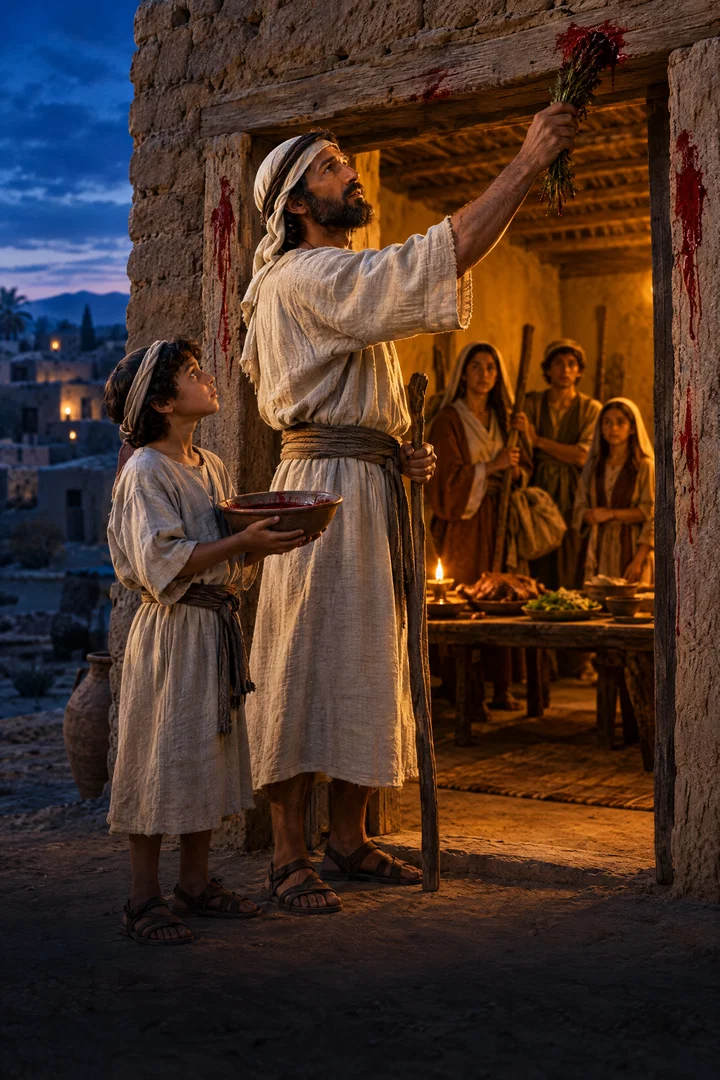
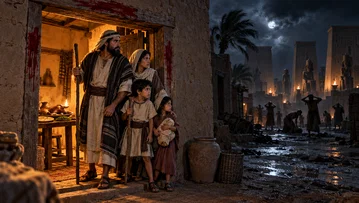
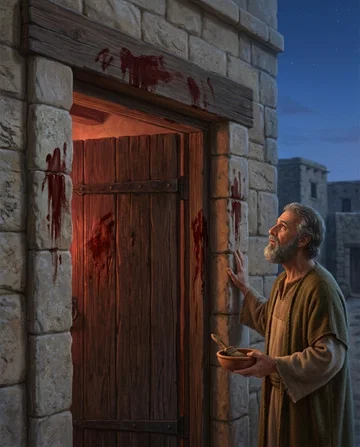
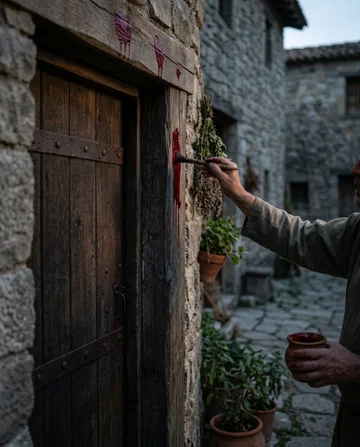
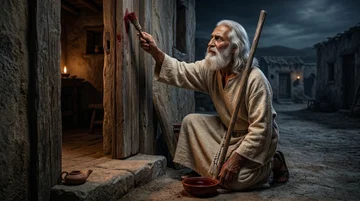
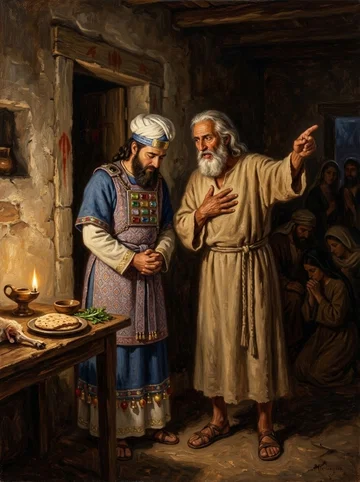
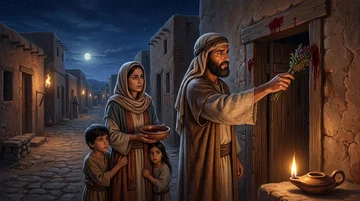
And ye shall take a bunch of hyssop, and dip it in the blood that is in the bason, and strike the lintel and the two side posts with the blood that is in the bason; and none of you shall go out at the door of his house until the morning.
Translations
And you shall take a bunch of hyssop, and dip it in the blood that is in the basin, and strike the lintel and the two side posts with the blood that is in the basin; and none of you shall go out at the door of his house until the morning.
King James Version, KJV Cambridge Paragraph Bible
And ye shall take a bunch of hyssop, and dip it in the blood that is in the bason, and strike the lintel and the two side posts with the blood that is in the bason; and none of you shall go out at the door of his house until the morning.
And ye shall take a bunch of hyssop, and dip it in the blood that is in the basin, and strike the lintel and the two side-posts with the blood that is in the basin: and none of you shall go out at the door of his house till the morning.
And ye shall take a bunch of hyssop, and dip it in the blood that is in the bason, and strike the lintel and the two side posts with the blood that is in the bason; and none of you shall go out of the door of his house until the morning.
And ye shall take a bunch of hyssop, and dip it in the blood that is in the basin, and strike the lintel and the two side-posts with the blood that is in the basin; and none of you shall go out of the door of his house until the morning.
and ye have taken a bunch of hyssop, and have dipped [it] in the blood which [is] in the basin, and have struck [it] on the lintel, and on the two side-posts, from the blood which [is] in the basin, and ye, ye go not out each from the opening of his house till morning.
And take a bunch of hyssop, and dip [ it] in the blood that is in the bason, and smear the lintel and the two door-posts with the blood that is in the bason; and none of you shall go out of the door of his house until the morning.
Then shall ye take a bunch of hyssop, and dip it in the blood which is in the basin, and strike the upper beam and the two door-posts, with the blood which is in the basin,—and, ye, shall not go forth any man out of the entrance of his house, until morning,
Berean Standard Bible, Majority Standard Bible
Take a cluster of hyssop, dip it into the blood in the basin, and brush the blood on the top and sides of the doorframe. None of you shall go out the door of his house until morning.
You shall take a bunch of hyssop, and dip it in the blood that is in the basin, and strike the lintel and the two door posts with the blood that is in the basin. None of you shall go out of the door of his house until the morning.
And take some hyssop and put it in the blood in the basin, touching the two sides and the top of the doorway with the blood from the basin; and let not one of you go out of his house till the morning.
And take a bunch of hyssop, and dip it in the blood that is in the basen, and strike the lintell, and the doore cheekes with the blood that is in the basen, and let none of you goe out at the doore of his house, vntill the morning.
Douay-Rheims (Challoner revision)
And dip a bunch of hyssop in the blood that is at the door, and sprinkle the transom of the door therewith, and both the door cheeks: let none of you go out of the door of his house till morning.
Pictures
Cross-references 20 of 43
- 1 Corinthians 5:7
Purge out therefore the old leaven, that ye may be a new lump, as ye are unleavened. For even Christ our passover is sacrificed for us:
Christ is identified as the Passover sacrifice prefigured by the lamb and its blood.
- Exodus 12:13
And the blood shall be to you for a token upon the houses where ye are: and when I see the blood, I will pass over you, and the plague shall not be upon you to destroy you, when I smite the land of Egypt.
The blood marked the houses God spared from the plague.
- John 1:29
The next day John seeth Jesus coming unto him, and saith, Behold the Lamb of God, which taketh away the sin of the world.
The Passover lamb foreshadows Christ, the Lamb who takes away sin.
- Exodus 12:29-30
And it came to pass, that at midnight the LORD smote all the firstborn in the land of Egypt, from the firstborn of Pharaoh that sat on his throne unto the firstborn of the captive that was in the dungeon; and all the firstborn of cattle.
Midnight judgment strikes Egypt’s firstborn, while blood-marked houses are spared.
- Exodus 12:7
And they shall take of the blood, and strike it on the two side posts and on the upper door post of the houses, wherein they shall eat it.
The blood on the doorposts marks the Israelite homes to be spared.
- Exodus 12:12
For I will pass through the land of Egypt this night, and will smite all the firstborn in the land of Egypt, both man and beast; and against all the gods of Egypt I will execute judgment: I am the LORD.
God announces judgment on Egypt’s firstborn, while blood-marked homes are spared.
- Hebrews 11:28
Through faith he kept the passover, and the sprinkling of blood, lest he that destroyed the firstborn should touch them.
Moses kept the Passover and applied the blood by faith.
- 1 Peter 1:19
But with the precious blood of Christ, as of a lamb without blemish and without spot:
Christ’s precious blood redeems, as the Passover lamb’s blood protected.
- Exodus 12:26-27
And it shall come to pass, when your children shall say unto you, What mean ye by this service?
Children ask about the Passover service, and parents recount Israel’s deliverance from Egypt.
- Exodus 12:5
Your lamb shall be without blemish, a male of the first year: ye shall take it out from the sheep, or from the goats:
The unblemished yearling lamb supplies the blood used to mark the doorway.
- Exodus 12:8-11
And they shall eat the flesh in that night, roast with fire, and unleavened bread; and with bitter herbs they shall eat it.
Both describe the Passover meal eaten in haste before deliverance.
- 1 John 1:7
But if we walk in the light, as he is in the light, we have fellowship one with another, and the blood of Jesus Christ his Son cleanseth us from all sin.
Christ’s blood cleanses from sin and is connected with the lamb’s saving blood.
- Romans 3:25
Whom God hath set forth to be a propitiation through faith in his blood, to declare his righteousness for the remission of sins that are past, through the forbearance of God;
Christ’s blood brings forgiveness through faith, as the Passover blood signified.
- Ezekiel 9:4-6
And the LORD said unto him, Go through the midst of the city, through the midst of Jerusalem, and set a mark upon the foreheads of the men that sigh and that cry for all the abominations that be done in the midst thereof.
A distinguishing mark protects the faithful from slaughter when judgment comes.
- Exodus 13:3-8
And Moses said unto the people, Remember this day, in which ye came out from Egypt, out of the house of bondage; for by strength of hand the LORD brought you out from this place: there shall no leavened bread be eaten.
The unleavened-bread feast commemorates Israel’s deliverance and departure from Egypt.
- Hebrews 12:24
And to Jesus the mediator of the new covenant, and to the blood of sprinkling, that speaketh better things than that of Abel.
Christ’s blood is the sprinkled blood shed for sin.
- Exodus 12:42
It is a night to be much observed unto the LORD for bringing them out from the land of Egypt: this is that night of the LORD to be observed of all the children of Israel in their generations.
The Passover night commemorates the Lord’s deliverance from Egypt.
- Luke 22:19-20
And he took bread, and gave thanks, and brake it, and gave unto them, saying, This is my body which is given for you: this do in remembrance of me.
Christ’s Supper parallels the Passover as a memorial instituted by Moses and Christ.
- Exodus 12:14
And this day shall be unto you for a memorial; and ye shall keep it a feast to the LORD throughout your generations; ye shall keep it a feast by an ordinance for ever.
The Passover commemorates deliverance from Egypt.
- Deuteronomy 16:1-6
Observe the month of Abib, and keep the passover unto the LORD thy God: for in the month of Abib the LORD thy God brought thee forth out of Egypt by night.
Passover instructions recall the night Israel came out of Egypt and prescribe the sacrifice and meal.
Commentary
Each commentary is drawn from primary sources: the writings of Ellen G. White and Adventist pioneers and periodicals. Each commentary is separate. Its own words are not a quotation; follow the references to read the source passages.
Ellen G. White
41 sources
On the night of the last plague on Egypt, Israel was directed through Moses to slay an unblemished lamb, strike its blood on the lintel and side posts with hyssop, and remain inside until morning with the family gathered in.6T 194.2–195.1PP 274.1–2Ms 54, 1903, par. 3–7 When the destroying angel came at midnight to slay the firstborn, he passed over every blood-marked dwelling and spared all sheltered under the token.PP 274.1–2SG3 223.1PP 279.3 The blood signified the future death of Christ for the sins of the world, whose merits cleanse the believing sinner and shelter him from coming wrath.6T 194.2–195.1Lt 58, 1898, par. 17–191RED 30.1MH 403.3 It was not enough for the lamb to be slain; the blood had to be applied by individual faith and exact obedience, for mere descent from Israel without the sign left one exposed to judgment.Lt 58, 1898, par. 17–19Ms 41, 1902, par. 8–10Ms 15, 1894, par. 7–9HSFM 216.4–217.2PP 277.1 Faithful parents who kept their children inside the blood-marked home suffered no loss that night, teaching godly parents in the last days to keep their children separate from the world under sacred influences and to receive the mark of loyalty in Sabbath-keeping before the final plagues fall.6T 194.2–195.1Ms 54, 1903, par. 3–7Lt 58, 1898, par. 17–19HSFM 216.4–217.28MR 2.3–3.3
Passover Night in Egypt
The direction came through Moses to Israel before the judgment on Egypt, for their preservation from it.PP 274.1–2 Each family, alone or joined with others, was to slay a lamb or kid without blemish and with a bunch of hyssop strike its blood on the lintel and the two side posts, and none was to go out of the door of the house until morning.6T 194.2–195.1PP 274.1–2Ms 54, 1903, par. 3–7Lt 58, 1898, par. 17–19Ms 41, 1902, par. 8–10 The blood was to be a token upon the houses where they were, and when seen God would pass over them so the plague to smite Egypt would not destroy them.PP 274.1–2 Being Israelite did not replace obedience, for anyone who failed to obey and was not under the sign would suffer with the Egyptians and could not be spared.Lt 58, 1898, par. 17–19Ms 41, 1902, par. 8–10Ms 15, 1894, par. 7–9
The father and priest of each household sprinkled the blood and then joined his family inside the dwelling to remain there until morning.PP 279.3 There they ate the lamb in haste and silence, praying and watching and waiting in awe with dread for the stroke to fall that night.PP 279.3 They waited through the night in faith in the promised deliverance as they prepared to leave.PP 279.3LS 97.2–100.2
Israel was to separate from the Egyptians and gather inside their own houses, bringing in the children and even bringing cattle in from the fields.Ms 100, 1902, par. 26–27SG3 223.1 Any Israelite found in an Egyptian house would fall by the hand of the destroying angel.Lt 58, 1898, par. 17–19SG3 223.1 Egyptians who acknowledged Israel's God as the only true God were welcomed into Israelite houses that night and shared the protection.SG3 223.1
When the blood-marked sign was seen, the destroying angel coming at midnight to slay the firstborn of man and beast would pass over and would not enter or smite that dwelling.PP 274.1–2SG3 223.1PP 279.3 The blood struck on the lintel and side posts was the sign of a Saviour's protection, and where that sign was on the door the death-dealing angel visited not and the destroyer entered not.PP 279.3PP 275 Not one Hebrew with the token was slain.SG3 223.1
It was the night of the last and most severe plague upon Egypt, a night terrible to the Egyptians and glorious to God's people.SG3 244.21SP 217.2 The nature and effect of that last plague were made known beforehand by Moses to Pharaoh and to the people of Egypt as well as to the Israelites.SG3 244.21SP 217.2 The king and his idolatrous priests opposed letting Israel go to the last, while the people desired that the Hebrews be permitted to leave.SG3 244.21SP 217.2
The blood-marked doorway, the command to remain inside until morning, the night assembly with girded loins, shoes on feet and staff in hand, the hasty meal of the lamb with unleavened bread and bitter herbs, and the deliverance from bondage were part of the solemn Passover service.SG3 223.1ED 42.2ST Nov 2, 1915 That service was to impress the deliverance forever in memory, rehearsed in solemn silence and taught to children and youth, so that parents would relate that preservation when their children asked what the service meant.SG3 223.1ED 42.2ST Nov 2, 1915 That deliverance brought the people toward Sinai, where God proclaimed the law they were to keep.8T 197.4–198.1
Blood and Hyssop Meanings
The blood struck on the lintel and side posts symbolized the blood of Christ, which alone saved the Hebrew firstborn from destruction and from the curse.6T 194.2–195.1Lt 58, 1898, par. 17–191RED 30.1 The slaying of the lamb pointed to the future death of the Son of God for the sins of the world, and the lamb and its blood taught the people about Christ's death.1RED 30.1COS 106.6–7 That blood is efficacious for the believing sinner to cleanse from sin and to shelter from the wrath of God that will come upon the impenitent and unbelieving world, as His wrath fell upon the Egyptians.1RED 30.1 This shelter is the protection of sacred influences made possible through Christ's redeeming blood.MH 403.3
The blood was the token and sign that those inside were God's people and connected with God.Ms 41, 1902, par. 8–1017MR 350.2–351.1Ms 5, 1889, par. 14–16 When the Lord passed through to smite Egypt He would not suffer the destroyer to enter a blood-marked house, so the sprinkled blood on the lintel and two side posts spared Israel from the death-dealing angel on the night of deliverance from bondage.Ms 41, 1902, par. 8–10ST Nov 2, 1915Ms 5, 1889, par. 14–16 It belonged with the night assembly, the hasty meal, and the grand march from the land of bondage, to fix the deliverance forever in memory.ST Nov 2, 1915
It was not enough for the paschal lamb to be slain; its blood had to be sprinkled upon the doorposts.PP 277.1 The lamb represents the Lamb of God, in whom is the only hope of salvation, and the sprinkling means the merits of Christ's blood must be applied to the soul.PP 277.1 Each person must believe not only that Christ died for the world but that He died individually for him, appropriating to himself the virtue of the atoning sacrifice.PP 277.1 The blood-marked door showed faith in Jesus Christ as the great antitype of the offerings and the Lamb who takes away the world's sin, and the family's safety depended on making sure the mark was in place before the destroying angel came.Ms 15, 1894, par. 7–9Ms 116, 1894, par. 14Ms 15, 1894, par. 10 Marking the heart with the blood of Jesus means surrendering wholly to God and trusting in Christ's saving virtue.Ms 15, 1894, par. 11Ms 15, 1894, par. 10
The hyssop used to sprinkle the blood was the symbol of purification.PP 280 Once Christ, the Lamb of God, was sacrificed for the sins of the world, animal sacrifices no longer had purpose as symbols of His death.COS 106.6–7 After Christ's death, keeping the feast as a Jewish ritual was a worthless form because those who rejected Him rejected what gave the feast its meaning.COS 106.6–7 The Passover points forward to the greater deliverance Christ accomplishes in freeing His people from the bondage of sin.PP 277.1
Faith Proved by Obedience
God required a work on Israel's part to prove faith by works in the deliverance He was bringing about, and the token of blood had to be seen upon their houses to escape the judgment coming on Egypt.SG3 223.11RED 30.1 No one is benefited by His special provision for salvation unless he does the work left him to do and manifests by his own acts his faith in the provision made for his salvation.SG3 223.11RED 30.1 That work included separating themselves and their children from the Egyptians and gathering inside their own houses and staying there until morning.SG3 223.1
Being an Israelite did not replace obedience, for safety depended on making sure the mark was in place before the destroying angel came.Lt 58, 1898, par. 17–19Ms 41, 1902, par. 8–10Ms 15, 1894, par. 7–9 Anyone who failed to obey, was not under the sign, or was found in an Egyptian house would fall by the hand of the destroying angel and suffer with the Egyptians and could not be spared.Lt 58, 1898, par. 17–19Ms 41, 1902, par. 8–10Ms 15, 1894, par. 7–9Lt 10, 1888, par. 23–26SG3 223.1 Even Hebrew children found in Egyptian homes among unconsecrated idolaters would perish, while the blood on the door alone saved the firstborn of the Hebrews from the curse.Lt 58, 1898, par. 17–19Ms 15, 1894, par. 7–9Lt 10, 1888, par. 23–26
God demands exact obedience as the test of loyalty honoring His law above men, testing faith by giving a part to act in connection with His interposition.HSFM 216.4–217.2Ms 3, 1885, par. 8–9 Neglecting the blood on the plea that God could distinguish Hebrews from Egyptians, or that His angels would recognize them without it, would not have left heavenly sentinels guarding the dwelling.HSFM 216.4–217.2Ms 3, 1885, par. 8–9 His promises will be fulfilled to those who comply with the conditions, while all who depart from His instructions to follow their own will and judgment will perish with the wicked when judgments visit the earth.HSFM 216.4–217.2
Parents Guarding Children Today
Faithful parents who gathered their little ones with them into the house and remained there until the destroying angel passed over had no judgment fall upon their children when God smote all the firstborn in Egypt at midnight.Ms 54, 1903, par. 3–78MR 2.3–3.3Ms 28, 1895, par. 10–11 The blood-marked home was spared when the Lord passed through in judgment, with the lintel and two side posts struck with hyssop dipped in the blood of the lamb in the basin, and the household kept inside under that token was not entered or smitten.Ms 54, 1903, par. 3–78MR 2.3–3.3Ms 28, 1895, par. 10–11 That gathering illustrates the importance of keeping children under the protection and influence of their family, within the circle and fortress of the home.Ms 54, 1903, par. 3–78MR 2.3–3.3Ms 28, 1895, par. 10–11
The command is a lesson for God-fearing parents today in this time of peril to understand the will of the Lord concerning themselves and their children.Ms 54, 1903, par. 3–7Ms 100, 1902, par. 26–278MR 3.4 They are to keep their children separate and distinct from the world, not imitating the practices of transgressors of God's law, but respecting God's Word, obeying it, and teaching the commandments diligently to their children.Ms 100, 1902, par. 26–275T 505.2 Even cattle were brought in from the fields that night, and a later mark on the forehead likewise identifies those separated from sin and sinners while the destroying angel brings judgment on the unmarked, young and old alike.Ms 100, 1902, par. 26–275T 505.2
Parents must keep their children inside godly companionship and the protection of sacred influences made possible through Christ's redeeming blood, separated from worldly society, unconsecrated idolaters, and classes voicing Satan's words and disobeying God's commandments.Lt 10, 1888, par. 23–26ST Nov 24, 1914TEPD 17.1 Safety depended on staying inside under the blood until morning, for children found in Egyptian homes among unconsecrated idolaters would perish with them.Lt 10, 1888, par. 23–26TEPD 17.1 Letting them drift into worldly society exposes them to destruction, rather than keeping them among people connected with God.Lt 10, 1888, par. 23–26ST Nov 24, 1914TEPD 17.1
The truth builds a protecting barrier and fortress around God's people that must not be broken down.Lt 244, 1903, par. 14Ms 155, 1903, par. 17–18 It is unsafe to permit children to associate with unbelievers as freely as with Christians, because whether youth who received wise instruction and training from godly parents continue to be sanctified through the truth depends largely upon the influences they meet after leaving their homes among those to whom they look for instruction, and their characters will be to a large extent in accordance with the teachings given them.Lt 244, 1903, par. 14Ms 155, 1903, par. 17–18
Parents are to guard the associations of their children in civil, religious, and social life, preserving them from harmful companionship and making them familiar from earliest years with the precepts and principles of the law of God.Ms 54, 1903, par. 3–7MH 403.3 Given at the birth of the nation as an object-lesson to impress every heart, the command to call children in and keep them under their own roof means parents who love and fear God are to keep their children in the same way under the bond of the covenant.MH 403.3Ms 161, 1904, par. 35–37 They are to give them an education based on a scriptural foundation, line upon line and precept upon precept, keeping them under scriptural influence rather than sending them to public schools.Ms 54, 1903, par. 3–7MH 403.3Ms 161, 1904, par. 35–37
Staying inside their own house protected them from the plagues, and anyone found in the houses of the Egyptians would not escape.Ms 116, 1894, par. 14Ms 161, 1904, par. 35–37 Parents must therefore keep their children close to them and away from worldly and evil influences, under the best influences where they hear the truth and are schooled in the truths of the Word as preparation for the higher school above and for future immortal life.Ms 116, 1894, par. 14Ms 161, 1904, par. 35–37 Otherwise the children may imbibe the spirit of unbelief that was revealed among the Israelites of old and kept God from bringing them into the promised land, for the home is the setting where character is formed and will be revealed in the judgment amid deception and false teaching.Ms 116, 1894, par. 14Ms 161, 1904, par. 35–37
Separation Before Coming Judgments
Exodus 12:22 instructs the last days, for as Israel marked homes with the blood of the Passover sacrifice and remained inside until morning, so God's people now are to prepare for coming judgment and keep their families apart from those who disregard God's commandments and teach evil.6T 194.2–195.1Lt 58, 1898, par. 17–19 The blood on the doorway was Christ's blood, which alone saved the Hebrew firstborn from the curse, and any Hebrew found in an Egyptian house was destroyed.6T 194.2–195.1Lt 58, 1898, par. 17–19 The command not to go out means those who are Israelites indeed must now gather their children into their own houses before the overflowing scourge comes on all dwellers on earth, gathering them away from classes voicing Satan's words and disobeying God's commandments.Lt 58, 1898, par. 17–19 This requires getting out of the cities as soon as possible, establishing church schools, and giving children the Word of God as the foundation of all their education.Lt 58, 1898, par. 17–19
The same law applies when the plagues of the last days are poured out on despisers of God's law.Ms 41, 1902, par. 8–10 Protection at the Passover required putting the lamb's blood on the lintel and side posts with hyssop and staying inside until morning, for the blood-marked house was the sign that they were God's people and the Lord would not suffer the destroyer to enter it, while anyone who failed to obey could not be spared but would suffer with the Egyptians.Ms 41, 1902, par. 8–10Ms 173, 1902, par. 20–231MR 248.1–249.2 If found mingled with the Egyptians they would be destroyed with them, so God's people must obey instruction to move out of the cities and live in small companies by themselves, and those who choose to remain surrounded by unbelievers must share the disaster coming upon them.Ms 41, 1902, par. 8–10Ms 173, 1902, par. 20–2310MR 248.1–252.11MR 248.1–249.2 The verse thus illustrates the need for God's people to be a separate people, remaining inside their own houses during the plague, marked off from the Egyptians' houses.Ms 173, 1902, par. 20–2310MR 248.1–252.11MR 248.1–249.2
This separation requires that His institutions, especially sanitariums for recovering health of body and saving souls, be located out of the cities where they can have space and grounds and every advantage of nature in air and scenery.Ms 173, 1902, par. 20–23 They are not to be huddled in grand city buildings that will share the confusion, shaking, and judgments coming upon every city according to the wickedness of the people and the light of truth they have had.Ms 173, 1902, par. 20–23
As Israel had to bring children in, strike the doorpost with blood, and let none go out of the house until morning because all found among the Egyptians would be destroyed with them, so when the destroying angel again passes through the land the mark placed upon God's people is the keeping of His holy Sabbath.HSFM 216.4–217.2Ms 3, 1885, par. 8–9 The blood mark was a required sign of protection that could not be dismissed on the plea that God could distinguish Hebrews from Egyptians or that heavenly sentinels and angels would guard the dwelling without it, for God demands exact obedience as the test of loyalty honoring His law above men and tests faith by giving a part to act in connection with His interposition.HSFM 216.4–217.2Ms 3, 1885, par. 8–9 His promises will be fulfilled to those who comply with the conditions, while all who depart from His instructions to follow their own will and judgment will perish with the wicked when judgments visit the earth.HSFM 216.4–217.2
Parents must therefore faithfully teach children God's commandments, bring them into subjection to parental authority, and commit them to God by faith and prayer rather than letting them receive an education with the world and making the Sabbath a common day.HSFM 216.4–217.2Ms 3, 1885, par. 8–9 If they let children treat it as an ordinary day the seal of God cannot be placed upon them and they will be destroyed with the world, while those faithful with their children may be hidden in the secret of the Lord's pavilion when the overflowing scourge passes through the land.HSFM 216.4–217.2Ms 3, 1885, par. 8–9 The command to remain in the house kept them under that protection and illustrates the duty of parents to separate their children from sin and harmful influences, and a later mark on the forehead likewise identifies those separated from sin and sinners while the destroying angel brings judgment on the unmarked, young and old alike.HSFM 216.4–217.25T 505.2
Sources
Pioneers and periodicals
93 sources
On that Passover night each household was to dip hyssop in the lamb's blood in the basin, mark the lintel and two side posts, and remain inside until morning under that appointed sign.RH Sep 8, 1904ST Nov 14, 1906RH Jan 16, 1913ST May 12, 1898 When judgment fell on Egypt the destroying angel passed over every marked house and spared the firstborn inside, while any unprotected house was struck.RH Jan 16, 1913ST May 12, 1898RH Feb 7, 1907 They were saved not by their own righteousness but through faith shown by exact obedience, for the saving power was not in the liquid itself but in what it represented and trusted.ST Mar 25, 1880RH Sep 8, 1904ST Dec 11, 1901RH Sep 8, 1904ST Aug 18, 1881 That blood points to the blood of Jesus Christ, the true Passover Lamb slain for redemption from sin, shelter from wrath, and deliverance from bondage to the heavenly Canaan.RH Sep 8, 1904ST Apr 13, 1904RH Apr 11, 1912ST Aug 13, 1874 The blood must actually be applied, not merely provided, with Christ's blood applied to the heart to cleanse sin, which is the sealing mark that spares in judgment and the work every father as priest is now to make sure of in his own household.RH Sep 30, 1852ST May 8, 1879RH Oct 5, 1905RH Apr 24, 1879ST Mar 29, 1899
Passover Night Setting
Exodus 12:22 belongs to the ordinance for the Passover given in close connection with the tenth plague, the death of the firstborn, and the hurried departure of Israel from Egypt, when the firstborn were claimed as the Lord's. It stands within the mainly historical first division of Exodus in chapters 1-18, in the section covering the last plague, the Passover, and the going out of Egypt.ST Jan 25, 1910 It belongs to the account of the first Passover, kept in Egypt on the night Israel left bondage, when the people marked their doorposts with the lamb's blood and the destroying angel passed over those houses rather than killing the firstborn inside.ST May 22, 1907
The Passover takes its name from the angel of the Lord passing over the houses of the Hebrews on the night the firstborn in every Egyptian family was slain.RH Jan 14, 1862 The feast was ordained in commemoration of the deliverance from Egyptian bondage, began with the slaying of the paschal lamb on the fourteenth day of the first month, and extended through seven days in which only unleavened bread was eaten.RH Jan 14, 1862 The lamb was slain on the fourteenth day at about three o'clock in the afternoon, with the preparation continuing until the evening that began the fifteenth day and the feast of unleavened bread.RH Apr 7, 1851 The first Passover supper with the lamb killed and eaten happened that very night before the Israelites were delivered from Egyptian bondage and before they departed from Egypt, though the institution was to be a memorial of that deliverance for future generations.ST Oct 7, 1930 Exodus 12:1-6 gives the time when the Passover lamb must be taken and slain, and Exodus 12:7-27 gives further instruction on how the festival should be observed, commanding proper preparation with a definite time arranged for the preparatory work.ST Oct 7, 1930 Its great antitype was reached when Christ our Passover was sacrificed for us.RH Jan 14, 1862
Through Israel's deliverance from Egypt God demonstrated His wisdom, love, power, and right to rule, and showed Israel its obligation to obey Him.ST Mar 7, 1906 That saving work is described as a new manifestation of creative power, culminating in Israel's triumph after the Red Sea crossing.ST Jan 30, 1912 In that setting God prepared the Israelites to leave Egypt while bringing judgment on their oppressors.RH Oct 1, 1861 That deliverance, in which God redeemed Israel with a mighty hand, came before God instructed Israel to build a sanctuary as an object lesson in the plan of salvation.
The oppression of Israel in Egypt over worship of the true Creator and keeping His commandments, particularly Sabbath rest, came to a crisis and a deliverance in the narrative of Exodus 5-12.RH Mar 25, 1909 Pharaoh claimed not to know the Lord, accused Moses and Aaron of hindering the people from their works by teaching them Sabbath rest, and answered with heavier labor and contempt for God and His law as vain words.RH Mar 25, 1909 Pharaoh refused to let Israel go to hold a feast to the Lord in the wilderness until his power was broken and the people were delivered only through terrible plagues and the direct miraculous intervention of God, culminating when the angel of death visited every family and there was not a house where there was not one dead.RH Mar 25, 1909
Exodus 12:22 stands in the account in chapters 6 to 12 of the ten plagues upon Egypt and God's merciful deliverance to His children.ST Jan 20, 1909 The ten plagues humbled proud Egypt to the dust and destroyed the supposed power of its many gods, while the firstborn of those who believed God were delivered and in the homes of those who rejected His mercy not one escaped the destroyer's hand.ST Nov 27, 1901 This gave each Israelite abundant opportunity for personal knowledge of and acquaintance with the King of kings and Lord of lords, so that God could then introduce His law as the Lord who brought them out of the land of Egypt, out of the house of bondage.ST Nov 27, 1901 Israel's departure from Egypt is dated to 1491 BC.ST Jan 28, 1886 It was a nation's deliverance accompanied by striking manifestations of divine power amid darkness, plagues, and storm.ST Sep 28, 1904 The Israelites were to mark their doorways with the lamb's blood and remain inside until morning, with the blood protecting those within from the destroyer, and the passing of midnight brought the promised release while Egypt mourned its dead firstborn and the Hebrews were urged to leave.ST Dec 14, 1904
Israel in Egypt still worshiped God and kept His ordinances, and their readiness to eat the Passover proves they kept circumcision, because circumcision was necessary to eat it, which proves they had not forgotten God's past dealings with them.RH Sep 24, 1872 The Passover, which commemorated Israel's deliverance from Egypt and served as a shadow of something good to be done for the human race, was eaten at night.ST Aug 13, 1885 It was eaten in haste with clothing secured by a girdle, and they did not know the exact moment of the angel's arrival but knew it was near and were ready to leave quickly.ST Aug 26, 1889 The custom of marking houses with the blood is connected with the source of the ancient Egyptians' yearly practice of marking houses, sheep, trees, and lands with red.RH Mar 26, 1861
Blood and Doorway Actions
Each household was to take a bunch of hyssop, dip it in the blood that was in the basin, strike the lintel and the two side posts with that blood, and let none go out of the door of his house until the morning, remaining inside through the night under the appointed sign.RH Sep 8, 1904ST Nov 14, 1906ST Jan 21, 1889ST Feb 4, 1889 The act showed faith and marked the household for protection, so that the destroying angel would pass over those houses and spare the firstborn inside, while any Hebrew found in an Egyptian habitation would fall.RH Sep 8, 1904ST Nov 14, 1906ST Jan 21, 1889ST Feb 4, 1889 The Hebrew verb for the putting of the hyssop into the blood means to dip, plunge, or submerge, not to sprinkle.ST Oct 24, 1895ST Apr 22, 1880 In the Septuagint it is rendered by bapto, the source of the New Testament word baptize, and the Bible uses a different expression for sprinkling, so the dipping of the hyssop and the subsequent striking of the doorway with the blood are distinct actions.ST Oct 24, 1895ST Apr 22, 1880
The blood was to be put on all three parts of the doorway, the lintel and the two side posts, providing more than one visible mark if one was removed.RH Oct 5, 1905ST Feb 4, 1889 It had to be really applied and made sure of and finished quickly before the angel passed, not merely assumed to be done, with basin, hyssop, and prompt action at the father's word showing the need to make sure.RH Oct 5, 1905ST Feb 4, 1889 The lamb was the fairest of the flock, a yearling, slain as evening fell, and its blood was applied promptly.ST Feb 4, 1889 It was then roasted with fire and eaten in haste with bitter herbs and bread without leaven as the Lord's appointed feast.ST Feb 4, 1889 Nothing leavened or fermented was permitted at the memorial feast, so the drink used through the seven-day festival could not be leavened or fermented, the command to eat implying both eating and drinking, drink being necessary in practice over seven days though optional in wording, and the kind being left to circumstances and common sense except for the absolute rule that it must be unleavened.ST Oct 8, 1894
Escape required faith proved by obedience in the least particular, as God led Israel from the confusion of slavery into order.ST Mar 25, 1880LS 97.2–100.2ST Aug 18, 1881 The token of blood had to be seen upon their houses, and the Israelites had to separate themselves and their children from the Egyptians and gather and remain inside their own houses until morning, waiting through the night trusting the promised deliverance and ready to leave.ST Mar 25, 1880LS 97.2–100.2ST Aug 18, 1881 Departure from detail was worthy of blame, as part of one grand yearly series of forms of religious service instituted to bring Israel nearer to God and to make them a mighty people and a praise in all the earth, because God is not the author of confusion but brings harmony and order out of chaos.ST Aug 18, 1881
The sprinkled blood belongs with the night assembly, the men with girded loins, shoes on feet and staff in hand, the hasty meal of the lamb with unleavened bread and bitter herbs, and the grand march from the land of bondage.ST Mar 25, 1880ST Nov 2, 1915 The keeping of the Passover feast as an ordinance preserves that deliverance by requiring parents to relate it when their children ask what the service means.ST Mar 25, 1880 Rehearsed in solemn silence in the paschal service at Jerusalem, and taught to children and youth as they journeyed with offerings of gratitude to meet with God in His holy habitation, with past experiences recounted, wilderness songs sung, and God's commandments chanted amid nature and kindly human association, it stirs the imagination, impresses the heart, and fixes the deliverance forever in memory.ST Nov 2, 1915
Protection Through Faith
The blood-marked doorway was God's appointed means of protection when judgment came on Egypt, and the destroying angel passed over every house so marked and spared the firstborn inside.RH Jan 16, 1913ST May 12, 1898RH Dec 10, 1867ST Jun 3, 1897ST Dec 7, 1904 The mark was made by dipping hyssop in the lamb's blood in the basin and striking lintel and side posts, and those inside were to remain until morning in safety and peace from fear.RH Jan 16, 1913ST May 12, 1898RH Dec 10, 1867ST Jun 3, 1897ST Dec 7, 1904 Safety was only inside the marked house, so any Hebrew found in an Egyptian habitation fell with the Egyptians.RH Feb 7, 1907 The command to remain inside until morning was written for the instruction of those living in the last days.RH Feb 7, 1907
The destroyer was an angel of Jehovah commissioned by God, not Lucifer. The Egyptians were struck because they chose sin and stood with oppression, and Satan was responsible for leading them into sin while God's angel carried out the punishment.
The people were saved not by their own righteousness but through faith shown by obeying the instructions.RH Sep 8, 1904ST Dec 11, 1901RH Sep 8, 1904RH Sep 8, 1904 The saving power was not in the visible liquid itself but in what it represented and what the Israelites trusted.RH Sep 8, 1904RH Sep 8, 1904RH Sep 8, 1904 The outward act of sprinkling the doorway did not save apart from faith in God and in the gift of His Son, the Lamb of God, to save from sin.RH Sep 8, 1904RH Sep 8, 1904RH Sep 8, 1904
The blood points to the blood of Jesus, through faith in which sins are forgiven and people are protected from the destroyer.RH Sep 8, 1904ST Apr 13, 1904RH Apr 11, 1912RH Sep 8, 1904 It cleanses believing sinners from sin and shelters them from God's wrath, and the passing over in Egypt illustrates God's passing over sins committed before through His forbearance.RH Sep 8, 1904ST Apr 13, 1904RH Sep 8, 1904 Being sheltered inside the blood-marked house means being in Christ, for to be protected by His blood people must be in Him.RH Feb 19, 1901 Receiving this provision also required acting in faith by carrying out the work God commanded.
The blood had to be really applied, not merely provided or known about or assumed to be done, and made sure of and finished quickly before the angel passed.RH Oct 5, 1905RH Apr 24, 1879ST Mar 29, 1899 Its application to the door stands for Christ's blood applied to the heart to cleanse sin, the saving mark by which God passes over and delivers from destruction to the promised land.RH Oct 5, 1905RH Apr 24, 1879ST Mar 29, 1899 Each soul must make sure Christ's blood has been applied to the heart, and while gospel opportunity stands open there is urgent duty to tell Christless people the way of escape lest even one be lost.RH Oct 5, 1905ST Mar 29, 1899
Although Israel was God's son, even His firstborn, the Israelites would have been destroyed with the firstborn of Egypt without obedience in remaining inside and sprinkling the blood.ST Apr 19, 1883 God's chosen continue in favor only on condition of continued obedience.ST Apr 19, 1883 The households that trusted and obeyed His instructions were spared that night.ST Jun 25, 1912ST Apr 19, 1883
Type of Christ's Redemption
The slaying of the paschal lamb on the fourteenth day of the first month prefigured the death of Christ, the Lamb of God, on that same day.ST Aug 13, 1874RH Mar 31, 1874 That slaying met its antitype in the death of Jesus, whose blood brings redemption from sin.ST Aug 13, 1874RH Mar 31, 1874RH Apr 23, 1908 The Passover looked forward to His sacrifice and points to Christ crucified as our Passover, whose resurrection gives its central meaning.RH Feb 2, 1911ST Apr 5, 1899
The directions to apply the lamb's blood to the lintel and doorposts with hyssop and to remain inside the household until morning governed the preparations for Jesus and His disciples to eat the Passover, including the preparation and eating of the paschal lamb.ST Sep 20, 1910 As Moses instituted the Passover, so Christ instituted the Lord's Supper.RH Feb 19, 1861 The deliverance of the whole nation out of Egyptian bondage in a single night was temporal and a mere type of the far greater redemption by Christ, who delivers His people from the tyranny of Satan and the sword of divine justice and brings them to the heavenly Canaan.RH Feb 19, 1861
The going out of Egypt toward Canaan is a type of the deliverance of God's people from the dark Egypt of earth.ST That deliverance marked by the Passover is a type of God's people being freed from the bondage of sin and this world and brought to the heavenly Canaan.ST Mar 18, 1889 It points beyond triumph over earthly foes celebrated in the song of Moses to final redemption from all sin celebrated in the song of the Lamb, which the redeemed at last will sing together, both the song of Moses and the song of the Lamb.ST Jan 30, 1912
The plagues of Egypt in Exodus 7-12 came just prior to the deliverance of Israel, so they foreshadow the seven last plagues to be poured out just before the final deliverance of the saints.RH Dec 23, 1851ST Oct 28, 1930 The seven last plagues will be as real and literal as those plagues were, which were literal, known by Egypt and undoubted by Philistia.RH Dec 23, 1851ST Satan's deceptive power shown by the magicians who withstood Moses was manifested just before and in connection with the plagues of Egypt, as deceptive wonders and miracles will precede and accompany the last plagues.RH Dec 23, 1851 The saints' experience during the end-time plagues will be like Israel's blood-marked houses as a setting of safety, for they will remain on earth through the calamities while God protects them from the destruction falling around them.ST Jul 18, 1878
The blood of the paschal lamb struck on the lintel and side posts marked the houses of the Israelites so they were spared when the destroying angel passed over to slay the firstborn of the Egyptians.ST May 8, 1879 That marking means the sealing of the servants of God is the same kind of preparatory work done beforehand to save them from coming trouble.ST May 8, 1879 It is a distinguishing mark or religious characteristic through which they will be exempted from the judgments of God that fall on the wicked around them.ST May 8, 1879 The marking with remaining inside until morning when safe from judgment passing through Egypt is an example of God's people finding shelter during divine wrath, with the name and seal of Jehovah as hiding-place until His indignation passes.RH Sep 30, 1852
The appointed time set out in Exodus 12 shows the Passover was both a type of Christ and a memorial of deliverance from Egyptian bondage ended.ST Apr 23, 1896 Understanding the exodus given through Moses is necessary to understand the life of Jesus Christ, because Jesus Christ is the fulfilment of Moses and the prophets and the embodiment of the written Word, so no attempt to understand Jesus apart from the Old Testament can succeed.RH Nov 8, 1906 The Passover represented Christ and is solemn, calling for the personal lesson and question whether sins are washed away if the decision should come tonight or death should visit.STRH Mar 24, 1904
The lamb's blood marked the houses of those to be spared from the angel of death when the destroying angel struck Egypt's firstborn, and the blood alone was Israel's protection.RH Apr 23, 1908ST Oct 25, 1905 That blood typifies Christ's blood, which brings redemption from sin.RH Apr 23, 1908 The Passover Lamb was a type of the greater sacrifice in which type would meet its antitype, and Israel's deliverance through the blood is a gospel lesson about salvation through Christ alone.RH Apr 23, 1908ST Oct 25, 1905
Doctrines Confirmed by Passover
The Passover is the memorial God gave of deliverance and flight from Egypt, its memorial character plainly declared and its office described as keeping in remembrance the rush from Egypt on the fourteenth of the first month when the destroying angel passed over blood-marked houses while Egypt's firstborn were doomed to die.RH Dec 17, 1857ST May 31, 1905RH Nov 15, 1853ST Sep 13, 1877 Together with the Feast of Unleavened Bread it preserves how God stretched forth His hand to save and brought Israel up with mighty hand, and the people were to remain inside until morning under that sign.RH Nov 15, 1853ST Sep 13, 1877 The Sabbath therefore is not commanded as a memorial of that deliverance and is not to be wrested from its proper office to commemorate it, but is and always has been a memorial of the Creator's rest after making heaven and earth, distinct from the Passover which commemorated passing over Israel when striking Egypt.RH Dec 17, 1857ST May 31, 1905RH Jan 7, 1862RH Nov 15, 1853
Exodus 12:1-28 gives the origin of the Passover as a new institution with full directions for its first observance, with plain command of how it should be celebrated, when and by whom, and for what purpose.RH Mar 9, 1905RH Mar 14, 1865 By that pattern Genesis 2 gives the origin of the Sabbath, in striking contrast to Exodus 16 which does not institute the Sabbath but refers to it familiarly as an existing institution already known and observed.RH Mar 14, 1865 Unlike tithing, which reaches back to the beginning when the fall made it necessary and hope was promised to a lost world, the Passover begins here as a commanded observance.RH Mar 9, 1905
The command for none to go out of the door of his house until morning belonged to that one Passover night at the coming out of Egypt, not to the weekly Sabbath as a standing law against leaving houses.RH Apr 30, 1872 Worship on the Sabbath required going to the temple to worship, so the night confinement cannot be made a Sabbath rule.RH Apr 30, 1872 Moses understood the day to begin in the evening, so the seventh day starts at the end of the sixth day, while feast convocations falling on particular days of the month have no reference to the weekly Sabbath and make no reference to creation.RH Apr 9, 1861
The calendar arrangement at most applied in that particular year and does not prove that weeks began with the year or that the Sabbath began on the same date each month. Passover holy days were not necessarily weekly Sabbaths, and changes in month or year did not create an incomplete week. Exodus 12:1-51 records departure from Egypt one month before arrival in the wilderness of Sin on the fifteenth day of the second month, providing the second day of unleavened bread from which fifty days are numbered to fix the weekday of that arrival, with the exodus put forward as the alleged time of a Sabbath change.ST Apr 24, 1879
Preparing and eating the paschal lamb belonged to the night following the fourteenth day of the month, and eating the Passover means specifically eating the lamb with bitter herbs, not merely the feast in general.RH Jun 24, 1873 Its timing supports identifying the day of the crucifixion as the preparation day before the weekly Sabbath, rather than the fifteenth, when the lamb had already been eaten.RH Jun 24, 1873 The first institution in Egypt was kept in that form in the wilderness journey and for some time later, but after the building of the temple the form of celebration was materially changed with added injunctions hardly possible to carry out in the wilderness.ST Feb 22, 1899 Wine was used in later observances but was not enjoined in the original instructions, and the Hallel of Psalms 113-118 sung at beginning and close was not required originally, while a rite described as perpetual could still have its prescribed period expire.ST Feb 22, 1899RH Apr 15, 1873
The Passover was appointed and commanded by God, divine in origin and full of meaning to faith, and is not transfigured, illumined, or glorified by Easter, which is of merely human and pagan appointment with no precept of Scripture to support it.ST Dec 9, 1897 Its observance as a Jewish feast and festival was a matter of indifference about which there should have been no controversy, a principle capable of broader application.ST Dec 9, 1897 The same law given to Israel is for every person of whatever race or nationality, with Israel as chosen people through whom knowledge of God was to extend as a light to surrounding nations, revealing what it means to be a member of God's government.ST Jun 13, 1906 The Ten Commandments were the constitution of that government while added ceremonies and instructions were by-laws declaring its greatness and depth, and the deliverance from Egypt illustrates the great controversy between good and evil and the plan of salvation.ST Jun 13, 1906
The deliverance from Egypt and institution of the Passover sacrifice and rite of worship is true history given by God and divine enactment and religious institution.ST May 8, 1879 All other Old Testament books recognize it as reality and proceed upon it as verity in presenting Israel as God's peculiar people with His priesthood, sacrifices, covenants, promises, and laws.ST May 8, 1879 The New Testament ratifies it in the fullest manner and recognizes it as reality, and the work of redemption it reveals is founded upon it and dependent upon it for truth and propriety, so that denial of its divine origin and authority requires rejection of the whole Old Testament, the whole New Testament, and the whole Bible as revelation.ST May 8, 1879
Households Sheltered Today
The dipping of hyssop in the basin and striking the lintel and two side posts, with none going out of the door until morning, is the symbol of the work to be done in every family in this age of the world.RH Jul 25, 1907 The father is to act as priest of the household, and if the father is dead the eldest living son is to perform the solemn act.RH Jul 25, 1907 He is to gather the children into the home, present Christ before them as their Passover, and dedicate every inmate of the home to God.RH Jul 25, 1907
The blood mark on the door is the mark of God, the seal of God placed on the household in this day of probation and privilege.RH Jul 25, 1907 That saving blood must actually be applied and not merely provided or assumed, for it is by faith the type of Christ's saving blood and the sign of safety on the night of judgment.RH Jul 25, 1907RH Oct 16, 1900 This solemn duty must be done by the parent's own hands and made sure by personal sight, with parents personally leading children to Christ to make sure they understand and share the assurance.RH Jul 25, 1907RH Oct 16, 1900 It is perilous to leave children's conversion to others, to trustworthy servants, or to the minister, lest the destroyer enter.RH Jul 25, 1907
The command to remain inside the marked house until morning was written for the instruction of those who should live in the last days.RH Feb 7, 1907 Before the overflowing scourge comes upon the dwellers of the earth, all who are Israelites indeed must prepare by heeding the warning to parents to gather their children into their own houses away from those who disregard the commandments of God and teach and practice evil.RH Feb 7, 1907 They are to get out of the large cities as fast as possible and to establish church-schools, for the blood on the lintel which alone saved the Hebrew firstborn from the curse means Christ's blood alone saves.RH Sep 15, 1910RH Feb 7, 1907 Safety was only inside the marked house, so that any Hebrew child found in an Egyptian habitation was destroyed.RH Feb 7, 1907
God's people are to keep their households apart from surrounding corruption and cover them with blood so judgment does not enter.RH Aug 20, 1857 This means Sabbath-keeping parents separating their children from the poisonous associations of common schools and streets and gathering them into the home for pure, pious teaching by parents and godly teachers.RH Aug 20, 1857 It is keeping children within the protection of the covenant and the sacred influences made possible through Christ's redeeming blood.ST Nov 24, 1914ST The reason is urgent, because destroying angels will soon go out to slay the unmarked while sparing those with the mark.RH Aug 20, 1857
Striking the blood on the doorway represents acting in time, consecrating the household and bringing children under God's protection before trouble comes.RH Apr 16, 1901 That timely action shields households, especially daughters, from the shame and danger associated with worldly fashions and companions.RH Apr 16, 1901 The blood had to be really applied, made sure of, and finished quickly before the destroying angel passed by, and those with the blood applied were spared when he passed.RH Oct 5, 1905 So while the door of gospel opportunity still stands open there is urgent duty to tell Christless people the way of escape and to examine whether Christ's blood is sprinkled on one's own heart and sins washed away, lest even one be lost if decision or death should come tonight.RH Oct 5, 1905ST
Sources