Exodus 12:39
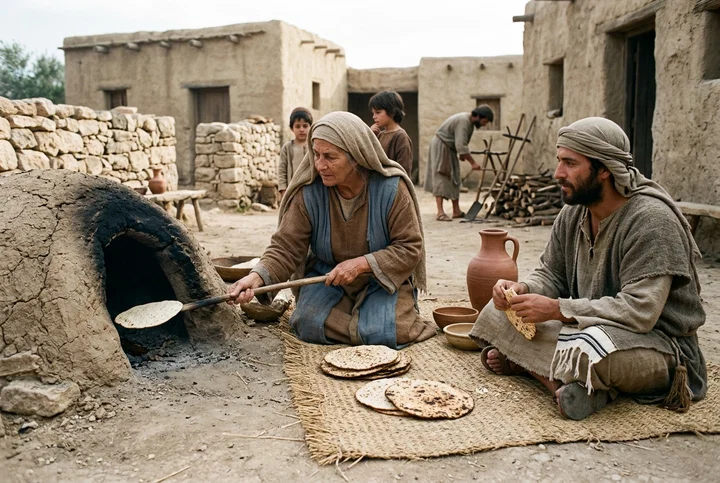
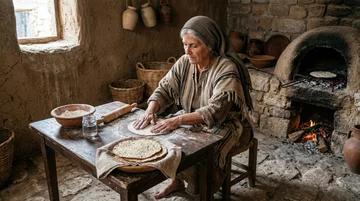
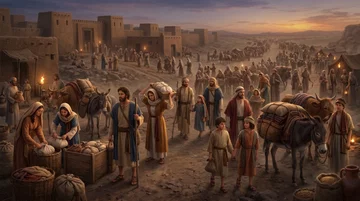
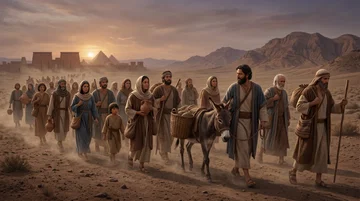
And they baked unleavened cakes of the dough which they brought forth out of Egypt, for it was not leavened; because they were thrust out of Egypt, and could not tarry, neither had they prepared for themselves any victual.
Translations
American King James Version, King James Version, KJV Cambridge Paragraph Bible, Revised Version
And they baked unleavened cakes of the dough which they brought forth out of Egypt, for it was not leavened; because they were thrust out of Egypt, and could not tarry, neither had they prepared for themselves any victual.
And they baked unleavened cakes of the dough which they brought from Egypt, for it was not leavened: because they were driven from Egypt, and could not tarry, neither had they prepared for themselves any victuals.
And they baked unleavened cakes of the dough which they brought forth out of Egypt; for it was not leavened, because they were thrust out of Egypt, and could not tarry, neither had they prepared for themselves any victuals.
And they bake with the dough which they have brought out from Egypt unleavened cakes, for it hath not fermented; for they have been cast out of Egypt, and have not been able to delay, and also provision they have not made for themselves.
And they baked the dough that they brought forth out of Egypt into unleavened cakes, for it was not leavened; for they were driven out of Egypt, and could not wait; neither had they prepared for themselves any food.
Then baked they the dough which they had brought out of Egypt—into round unleavened cakes for it had not been leavened,—for they had been driven out of Egypt and could not tarry, and indeed no provisions, had they made ready for themselves.
Berean Standard Bible, Majority Standard Bible
Since their dough had no leaven, the people baked what they had brought out of Egypt into unleavened loaves. For when they had been driven out of Egypt, they could not delay and had not prepared any provisions for themselves.
They baked unleavened cakes of the dough which they brought out of Egypt; for it wasn’t leavened, because they were thrust out of Egypt, and couldn’t wait, and they had not prepared any food for themselves.
And they made unleavened cakes from the paste which they had taken out of Egypt; it was not leavened, for they had been sent out of Egypt so quickly, that they had no time to make any food ready.
And they baked the dough which they brought out of Egypt, and made vnleauened cakes: for it was not leauened, because they were thrust out of Egypt, neither coulde they tarie, nor yet prepare themselues vitailes.
Douay-Rheims (Challoner revision)
And they baked the meal, which a little before they had brought out of Egypt, in dough: and they made earth cakes unleavened: for it could not be leavened, the Egyptians pressing them to depart, and not suffering them to make any stay: neither did they think of preparing any meat.
Pictures
Cross-references 20 of 41
- 1 Corinthians 5:7
Purge out therefore the old leaven, that ye may be a new lump, as ye are unleavened. For even Christ our passover is sacrificed for us:
Christ is the Passover sacrifice, and the unleavened bread recalls Israel’s haste in leaving Egypt.
- Exodus 12:13
And the blood shall be to you for a token upon the houses where ye are: and when I see the blood, I will pass over you, and the plague shall not be upon you to destroy you, when I smite the land of Egypt.
pairs Passover with unleavened bread as exodus memorial
- Exodus 12:33-34
And the Egyptians were urgent upon the people, that they might send them out of the land in haste; for they said, We be all dead men.
The Egyptians hurried Israel out, so the people took their dough before it was leavened.
- Exodus 13:6-8
Seven days thou shalt eat unleavened bread, and in the seventh day shall be a feast to the LORD.
The feast of unleavened bread recalls Israel’s hurried departure from Egypt.
- Exodus 12:27
That ye shall say, It is the sacrifice of the LORD’s passover, who passed over the houses of the children of Israel in Egypt, when he smote the Egyptians, and delivered our houses. And the people bowed the head and worshipped.
Explains the Passover memorial of Israel’s deliverance from Egypt.
- Exodus 20:2
I am the LORD thy God, which have brought thee out of the land of Egypt, out of the house of bondage.
The law’s preface grounds the covenant in God’s deliverance from Egypt.
- Deuteronomy 16:3
Thou shalt eat no leavened bread with it; seven days shalt thou eat unleavened bread therewith, even the bread of affliction; for thou camest forth out of the land of Egypt in haste: that thou mayest remember the day when thou camest forth out of the land of Egypt all the days of thy life.
Unleavened bread recalls Israel’s hurried departure from Egypt.
- Exodus 12:14
And this day shall be unto you for a memorial; and ye shall keep it a feast to the LORD throughout your generations; ye shall keep it a feast by an ordinance for ever.
The feast memorializes Israel’s deliverance from Egypt.
- Exodus 12:11
And thus shall ye eat it; with your loins girded, your shoes on your feet, and your staff in your hand; and ye shall eat it in haste: it is the LORD’s passover.
The Passover meal was eaten dressed and ready for an urgent departure from Egypt.
- Exodus 12:29
And it came to pass, that at midnight the LORD smote all the firstborn in the land of Egypt, from the firstborn of Pharaoh that sat on his throne unto the firstborn of the captive that was in the dungeon; and all the firstborn of cattle.
The midnight smiting of Egypt’s firstborn forced Israel’s flight.
- Genesis 15:13-14
And he said unto Abram, Know of a surety that thy seed shall be a stranger in a land that is not theirs, and shall serve them; and they shall afflict them four hundred years;
The prophecy to Abraham is fulfilled in Israel’s departure from Egypt.
- Exodus 13:14
And it shall be when thy son asketh thee in time to come, saying, What is this? that thou shalt say unto him, By strength of hand the LORD brought us out from Egypt, from the house of bondage:
Israel’s departure is explained to sons as the LORD’s deliverance by a mighty hand.
- Leviticus 23:4-9
These are the feasts of the LORD, even holy convocations, which ye shall proclaim in their seasons.
Expands the Passover institution and includes its observance among the annual Sabbaths.
- Exodus 12:8
And they shall eat the flesh in that night, roast with fire, and unleavened bread; and with bitter herbs they shall eat it.
The Passover meal included unleavened bread and bitter herbs.
- Exodus 16:4
Then said the LORD unto Moses, Behold, I will rain bread from heaven for you; and the people shall go out and gather a certain rate every day, that I may prove them, whether they will walk in my law, or no.
Bread from heaven provided food after the Israelites left Egypt in haste.
- Exodus 12:34
And the people took their dough before it was leavened, their kneadingtroughs being bound up in their clothes upon their shoulders.
same unbaked dough in kneading troughs
- Exodus 12:19-20
Seven days shall there be no leaven found in your houses: for whosoever eateth that which is leavened, even that soul shall be cut off from the congregation of Israel, whether he be a stranger, or born in the land.
These verses forbid leaven during the memorial observance.
- Exodus 12:18
In the first month, on the fourteenth day of the month at even, ye shall eat unleavened bread, until the one and twentieth day of the month at even.
The passage cites this verse concerning the feast.
- Joshua 5:10-12
And the children of Israel encamped in Gilgal, and kept the passover on the fourteenth day of the month at even in the plains of Jericho.
Records Passover after Israel entered Canaan and the end of the manna.
- Exodus 12:51
And it came to pass the selfsame day, that the LORD did bring the children of Israel out of the land of Egypt by their armies.
It records God bringing Israel out of Egypt on that day.
Commentary
Each commentary is drawn from primary sources: the writings of Ellen G. White and Adventist pioneers and periodicals. Each commentary is separate. Its own words are not a quotation; follow the references to read the source passages.
Ellen G. White
11 sources
The verse belongs to the record of Israel's departure from Egypt after dwelling in the country round about Goshen, on the very day the appointed time was completed.PP 281.4SG3 169.1 They set out in a hurried procession carrying staffs and bundles, and baked unleavened cakes from the dough they had brought out because they were thrust out, could not tarry, and had prepared no food for the journey.ED 42.2PP 281 The unleavened bread was the hasty meal eaten on the night of the march from the land of bondage, with loins girded, shoes on feet and staff in hand, together with the lamb and the bitter herbs, while the sprinkled blood and the death-dealing angel were rehearsed in solemn silence.ST Nov 2, 1915 The unleavened bread in the Passover service recalled that hurried departure from bondage, and that night assembly was fitted to stir the imagination, impress the heart, and fix the past experiences and God's commandments forever in the memory of children and youth, though the people delivered from lifelong slavery were not yet prepared for that work of teaching.ED 42.2ST Nov 2, 1915ED 34.1
That departure fulfilled the prophecy given to Abraham that after four hundred years Israel would leave with great substance.PP 281.4 God in pity broke the yoke of their bondage and brought His people out with power and mighty signs and wonders, placing Moses at their head to lead them through the wilderness to the promised land.SG3 169.1Ms 55, 1901, par. 22–23 He called them out to separate them from the customs, habits, and practices of the world and to bring them nearer to Himself to make known His will, so that in life and character they would manifest the principles of His kingdom and give the world a representation of His goodness, mercy, justice, and love.STB 834.1 He called them out to bring them to Sinai to hear the proclamation of the law first given in Eden, proclaiming the Ten Commandments with His own voice in awful grandeur as Ruler of the world to impress the sacredness of His law and the importance of obeying it, revealing by its force and power its importance as the faith once delivered to the saints by Christ the Redeemer speaking from Sinai.Lt 74, 1900, par. 29–30
That freeing from Egyptian slavery, with the opening of the Red Sea and the destruction of the pursuers, is meant to be remembered as proof of God's power to give victory and to lead His people forward to the heavenly Canaan.STBk 53.2–54.1STA 53.2–54.1 When Israel believed the discouraging report of the unfaithful spies they forgot that deliverance and gave way to mourning, complaint, lamentation, distrust of God, desperation, and the sin of murmuring and rebellion, instead of trusting Him for victory.STBk 53.2–54.1STA 53.2–54.1 Gratitude and memory of the deliverance should keep God's people from that sin.STBk 53.2–54.1 That same purpose and pity holds for God's people today, whom the world will recognize as superior when the law is exemplified in life, and it calls upon those who name His name to lift the degraded as He lifted Israel, as seen in the colored people in America who in one sense have been freed from slavery but are still in the slavery of ignorance and living in sin and degradation.STB 834.1Ms 55, 1901, par. 22–23
Sources
Pioneers and periodicals
79 sources
The verse records that Israel baked unleavened cakes from the dough they carried out of Egypt because they were thrust out suddenly and could not wait for it to rise or prepare food for the way.RH Apr 7, 1868RH Jan 20, 1916RH Dec 17, 1861 It belongs to the midnight flight on the fifteenth day of Abib, when some three million left Rameses for Succoth with girded loins, staff in hand, and kneading troughs unbaked, hurried away by Egyptians in fear under God's judgment.ST Jul 17, 1879RH Apr 14, 1874RH Oct 1, 1861ST Nov 1, 1899ST Feb 4, 1889 The unleavened bread therefore memorializes that haste, called the bread of affliction to recall leaving Egypt's corruption behind and to teach children how Jehovah brought them out with a mighty hand.RH Apr 7, 1851RH Nov 15, 1853ST Sep 13, 1877 The deliverance it seals was wrought through the blood of the paschal lamb slain on the fourteenth day, a type met when Christ our passover was sacrificed for forgiveness and blotting out of sin.ST Apr 13, 1904RH Jan 14, 1862ST Aug 13, 1874 In that deliverance God humbled proud Egypt, opened the Red Sea, and made Himself known as the Lord who brought Israel out, laying the historical ground for the covenant and its law.ST Mar 7, 1906ST Feb 15, 1905ST Nov 27, 1901
Departure Setting and Haste
Exodus 12:39 belongs to Exodus 11-13, which covers the last plague, the Passover, and the going out of Egypt.ST Jan 25, 1910 It stands within the mainly historical first division of Exodus in chapters 1-18, in close connection with the giving of the ordinance for the Passover and the claiming of the firstborn as the Lord's. It stands at the close of the Exodus 5-12 account of oppression that denied Israel the right to worship the true God as Creator and keep His commandments, particularly the Sabbath, broken only by terrible plagues and direct miraculous intervention.RH Mar 25, 1909 It stands in chapters 6 to 12, which give the account of the ten plagues upon Egypt and merciful deliverance.ST Jan 20, 1909
The setting was Egypt three and one-half millenniums ago when it ruled the world as the greatest kingdom in might, power, skill and statecraft.ST Nov 14, 1906 It was fertilized by its yearly overflowing river and by the sun, deifying river and sun with kings titled as representatives of the sun-god.ST Nov 14, 1906 Joseph as captive slave taught Pharaoh to store grain in plenteous years to become rich in famine and instituted its land-law of easy combined rental and taxes, so that while he lived Egypt prospered without oppression.ST Nov 14, 1906 Later came burdens in making bricks and erecting store-city buildings, and Israel was reduced to a servile condition as serfs.ST Dec 14, 1915RH Oct 1, 1861
They baked unleavened cakes of the dough which they brought forth out of Egypt, for it was not leavened.RH Apr 7, 1868RH Jan 20, 1916RH Dec 17, 1861ST Aug 9, 1910ST May 12, 1898 They did so because they were thrust and driven out of Egypt and could not tarry, wait for it to rise, or prepare victuals for the journey.RH Apr 7, 1868RH Jan 20, 1916RH Dec 17, 1861ST Aug 9, 1910ST May 12, 1898 The lack of leaven at the exodus was a matter of necessity from sudden departure, distinct from the later prohibition against leaven in houses for the Passover memorial observance.RH Apr 7, 1868 The unleavened bread served as a reminder of hurried departure, was also called the bread of affliction, and its purpose was to recall the sudden departure and teach children when they asked why they ate unleavened bread how with mighty hand Jehovah brought them up from Egypt.ST May 12, 1898RH Apr 18, 1854
The flight was at and just after midnight on the fifteenth day of the first month of Abib.ST Jul 17, 1879RH Apr 14, 1874 Some three millions started in the night and marched from Rameses to Succoth driving flocks and herds.ST Jul 17, 1879ST Aug 31, 1888 They left with only enough food for two or three days, preserved day by day afterward by signal manifestations of power.ST Aug 31, 1888 They waited restless with girded loins, sandals on feet, staff in hand, bread still unbaked in kneading troughs and flocks gathered, amid thrilling silence and quiet joy mingled with regret at leaving their birthplace.ST Nov 2, 1915ST Feb 4, 1889 The unleavened bread was the hasty meal eaten on the night of the march with loins girded, shoes on feet and staff in hand, together with the lamb and bitter herbs, while the sprinkled blood and the death-dealing angel were rehearsed in solemn silence in a night assembly that stirred the imagination, impressed the heart, and fixed past experiences and God's commandments forever in the memory of children and youth.ST Nov 2, 1915
The Egyptians in fear hurried Israel away, and Pharaoh could not stop them.RH Sep 10, 1901RH Mar 20, 1913 God demanded instant release, brought terrible judgments on the oppressors, showed He was above their gods, led Israel forth as an army and drowned their pursuers in the Red Sea.RH Oct 1, 1861ST Nov 1, 1899 The judgments on Egypt were joyful signs that freedom was coming.RH Sep 10, 1901 The departure is dated to 1491 years before Christ.ST Jan 28, 1886 It fulfils the declaration that the seed of Abraham would come out with great substance after four hundred years of affliction, and the sudden thrusting out proves God's purpose cannot be overthrown by human opposition.RH Mar 20, 1913
The exact time from creation to the first day of unleavened bread cannot be established by Hebrew chronology, which is rejected in favor of the Septuagint's numbers though those may need correction.ST Jun 12, 1879 The second day begins a fifty-day count fixing the fifteenth day of the second month after departure as Monday, one month before Elim to Sin and the manna.ST Apr 24, 1879 The exodus was directly supervised by Moses and is stated as plain historical fact by inspiration with as much certainty as creation and the fall.ST Jul 28, 1881ST Aug 25, 1881 It is among the most wonderful events on record and proves that God lives and reigns and knows how to save His people and punish the wicked.RH Apr 20, 1916 With order God brought harmony out of the chaos of distracted Egyptian slavery as in the six days of creation and the saving of Noah.ST Mar 24, 1887 The journey of families was known to God, came at the appointed time by a deliverance human wisdom and power could neither plan nor accomplish.ST Nov 4, 1880ST Jan 16, 1896
Unleavened Bread and Passover
At the Passover nothing leavened or fermented was allowed, for leaven means fermentation as decay, and the use of anything leavened at that sacred memorial feast brought the heaviest penalty.ST Oct 8, 1894 Christ and His disciples as obedient Israelites kept that requirement, so both the bread and the drink were unleavened, the command to eat implying both eating and drinking, drink being a necessity through a seven-day feast though its kind was left to circumstances and common sense except that it absolutely could not be leavened.ST Oct 8, 1894
The lack of leaven at the exodus itself was a matter of necessity, for the Israelites baked unleavened cakes from dough they had carried out of Egypt because their sudden departure left no time for it to rise and they had not prepared food.RH Apr 7, 1868 That necessity stands distinct from the prohibition against leaven in their houses, which concerned the later observance of the Passover memorial.RH Apr 7, 1868
The feast of unleavened bread memorializes the haste of the departure, when Israel left before the dough had time to rise and baked it as unleavened cakes for the next morning's breakfast.RH Apr 7, 1851RH Nov 15, 1853ST Sep 13, 1877 It was baked because they were driven out in haste, could not wait, and had not prepared victuals for the journey, the Egyptians in fear hurrying them away so they were thrust out and could not tarry.RH Nov 15, 1853ST Sep 13, 1877ST May 12, 1898RH Apr 18, 1854ST Oct 29, 1912 It is also called the bread of affliction, and it signified putting away corruption by leaving behind the sins of Egypt and the flesh to worship God with sincerity of heart.ST May 12, 1898ST Oct 29, 1912 Its purpose was to recall the sudden departure and to teach children when they asked why they ate unleavened bread how with mighty hand Jehovah brought them up from Egypt's land.RH Nov 15, 1853ST Sep 13, 1877RH Apr 18, 1854
The name Passover means that when the angel saw the blood on the doorposts he passed over the house and did not slay the oldest child.ST May 22, 1907 The very first Passover feast was kept at Rameses in Egypt on the night the children of Israel were led out of bondage to march toward the land of Canaan, the night to be observed unto the Lord.ST May 22, 1907RH Nov 13, 1860 The feast began with the slaying of the paschal lamb on the evening after the fourteenth day of the first month, with roasting of the lamb, and extended through seven days in which nothing but unleavened bread was eaten.RH Jan 14, 1862RH Jan 7, 1862 It was ordained in commemoration of the deliverance from Egyptian bondage when the angel passed over the houses of the Hebrews on the night the firstborn in every Egyptian family was slain, and its great antitype was reached when Christ our passover was sacrificed for us.RH Jan 14, 1862
The unleavened bread was the hasty meal eaten on the night of the march from the land of bondage, with loins girded, shoes on feet and staff in hand, together with the lamb and the bitter herbs.ST Nov 2, 1915 While the sprinkled blood and the death-dealing angel were rehearsed in solemn silence, this night assembly in connection with the paschal service was of a nature to stir the imagination, impress the heart, and fix the experiences of the past and God's commandments forever in the memory of children and youth.ST Nov 2, 1915
The original Passover instructions given in Egypt were for observance in the wilderness on the journey to Palestine, and that first form stands distinct from the later temple form.ST Feb 22, 1899 The later form added injunctions not found in Exodus 12-13 and hardly possible to carry out in the wilderness, including the use of wine not enjoined in the Pentateuch and the closing Hallel of Psalms 113-118 with the first two psalms sung at the beginning of the meal and the rest at the close.ST Feb 22, 1899 The Passover was to be regularly observed after Israel entered the promised land, was observed once in the wilderness and then omitted until the people entered Canaan.RH Jan 7, 1862 Its being called perpetual does not by itself prove that it remains in force forever, for its prescribed period can be regarded as having expired, just as the period described as a thousand generations can.RH Apr 15, 1873 Its appointed time, which memorialized Israel's deliverance from Egyptian bondage, does not establish a required quarterly schedule for the Lord's Supper.ST Apr 23, 1896
Sabbath and Calendar Questions
The Passover and the feast of unleavened bread are the fitting memorials of the deliverance from Egypt ordained to preserve it in remembrance.RH Dec 17, 1857ST Aug 13, 1885ST May 31, 1905RH Jan 7, 1862RH Nov 15, 1853 The Passover recalls God passing over Israel when He struck Egypt and the firstborn were doomed to die, and unleavened bread recalls the bread eaten in flight when Israel baked unleavened cakes of dough brought out of Egypt because they were thrust out and could not tarry.RH Apr 30, 1872RH Jan 7, 1862RH Nov 15, 1853ST Sep 13, 1877RH Apr 14, 1874 Together as a twofold memorial on the fourteenth and fifteenth days they fully preserve that deliverance, to be explained when sons ask its meaning as Jehovah bringing them up from Egypt's land with a mighty hand.RH Nov 15, 1853ST Sep 13, 1877RH Apr 14, 1874 One memorial does not commemorate two different events and two memorials are not given for the same event, so this leaves no place for making the Sabbath a memorial of that deliverance.RH Dec 17, 1857 As the Lord's Supper keeps the broken body and shed blood in remembrance and baptism keeps the resurrection in remembrance, so the Passover alone commemorates the hasty rush from Egypt on the fourteenth of the first month, while the Sabbath's proper office remains the memorial of creation rest after six days of labor.RH Dec 17, 1857
The Sabbath is not a memorial of that flight but a weekly rest day whose origin is traced to creation, not the exodus, and whose command rests on creation, rest, and sanctification rather than being given as a memorial of the Exodus.ST Aug 13, 1885ST May 31, 1905RH Apr 30, 1872RH Jan 7, 1862RH Nov 15, 1853 It was also a shadow of something good to be done for the human race, distinct from this deliverance memorial given at creation's Sabbath.ST Aug 13, 1885 The night to be observed memorialized the coming out, not the weekly Sabbath.RH Apr 30, 1872
The fifteenth of Abib was a night and day of hurried labor and travel wholly unlike the weekly Sabbath of the Lord.ST Jul 17, 1879RH Nov 15, 1853ST Sep 13, 1877RH Apr 14, 1874 Just after midnight Israel was thrust out of Egypt, taking what they could carry upon their shoulders, and that whole people of some three millions started in the night and marched from Rameses to Succoth driving their flocks and herds, baking unleavened cakes of the dough brought out of Egypt because they could not tarry and had prepared no food for themselves.ST Jul 17, 1879ST Jul 24, 1879 The Egyptians in fear hurried Israel away, and God appointed the feast of unleavened bread on that fifteenth day to commemorate that haste and unleavened bread, joined with the Passover on the fourteenth day commemorating the sparing of Israel when the firstborn of Egypt were slain.RH Nov 15, 1853ST Sep 13, 1877RH Apr 14, 1874 Resting on the seventh day every week has nothing in it to commemorate a midnight flight on a fixed monthly date, for a weekly rest cannot fitly keep in memory a rush that could come round but once a year, making a rest a memorial of a rush.RH Nov 15, 1853ST Sep 13, 1877RH Apr 14, 1874
Such toil and flight could not lay the foundation for a new order of Sabbaths.ST Jul 17, 1879 The verse gives no ground for saying God then took away His own Sabbath and gave a ceremonial Sabbath in its stead, whether by changing the Sabbath from the seventh day to the sixth or from the first day to the seventh.ST Jul 24, 1879 The verse belongs to convocation days appointed for particular days of the month, not to the weekly Sabbath, and makes no reference to creation.RH Apr 9, 1861 It provides at most proof about the calendar in that one year; it does not prove that the week began with the year or that the Sabbath began on the same day each month, and the Passover holy days were not necessarily weekly Sabbaths.
The verse stands at the close of the Exodus 5-12 account of Israel's deliverance, when oppression that denied Israel the right to worship the true God as Creator and to keep His commandments, particularly the Sabbath, was broken only by terrible plagues and God's direct miraculous intervention.RH Mar 25, 1909 Yet in Egypt Israel still worshiped God and kept His ordinances, including circumcision which was necessary for eating the Passover, for which they were ready.RH Sep 24, 1872 This proves they remembered the Lord's past dealings and had not forgotten His institutions, so the Sabbath could not have been a forgotten ordinance later recalled to mind.RH Sep 24, 1872
Type Prophecy and Fulfillment
The deliverance at Passover shows forgiveness and the blotting out of sin through the blood of Christ, typified by the blood on the doorposts of the Israelites.ST Apr 13, 1904ST May 8, 1879 The feast takes its name from the angel passing over the houses of the Hebrews on the night the firstborn in every Egyptian family was slain, and it was ordained in commemoration of the deliverance from Egyptian bondage.RH Jan 14, 1862 It began with the slaying of the paschal lamb on the fourteenth day of the first month and extended through seven days in which nothing but unleavened bread was eaten.RH Jan 14, 1862 That slaying of the paschal lamb was a type met in its antitype by the death of the Lamb of God on that same corresponding day, when Christ our passover was sacrificed.RH Jan 14, 1862ST Aug 13, 1874RH Mar 31, 1874
The Egyptian plagues that came just before that deliverance foreshadow the seven last plagues that will come just before the final deliverance of the saints.RH Dec 23, 1851 As the houses marked with the lamb's blood were spared when the destroying angel passed to slay Egypt's firstborn, so the seal of God is a distinguishing religious mark exempting His servants from the judgments falling on the wicked around them.ST May 8, 1879 As Israel remained on earth through the Egyptian plagues protected by God, so God's people remain on earth through the first six end-time plagues protected by the seal before they are delivered.ST Jul 18, 1878 The hurried departure with no time to prepare food, so that the dough brought out was unleavened, belongs to that same experience of preservation through plague unto deliverance.ST Jul 18, 1878
Israel's departure serves as a type of God's people being delivered from the dark Egypt of this world and of the Christian being called out of sin.STRH Aug 24, 1916 It is a pattern for a people coming out of spiritual Egypt under the midnight cry, who after freedom receive God's law pointing them toward the promised inheritance.RH May 29, 1856 The hasty going up out of Egypt to the promised land was repeated when about 50,000 captives of Judah and Israel joyfully began the homeward journey from Babylon, a second going up out of Egypt to the promised land.ST Dec 19, 1892 Both foreshadow the final deliverance of all who believe from the bondage of sin and death.ST Dec 19, 1892
The sudden thrusting out proves God's purpose cannot be overthrown by human opposition, for Pharaoh could not stop Israel from leaving.RH Mar 20, 1913 The departure fulfilled the declaration that the seed of Abraham would come out with great substance after four hundred years of affliction.RH Mar 20, 1913 The same unstoppable power carries forward the threefold message of Revelation 14.RH Mar 20, 1913 The history of that deliverance illustrates the great controversy between good and evil and the plan of salvation, giving new significance and beauty to the record. The wilderness sojourn came after that deliverance, so it cannot be used to place a forty-year period between October 10, 1844 and the Lord's coming on the ground that the deliverance itself marked the start of the wilderness.
Deliverance Doctrine and Covenant
Exodus 12:39 belongs to God's wonderful deliverance of Israel from Egypt, which demonstrated His wisdom, love, and power, His ability and right to rule, and Israel's obligation to obey.ST Mar 7, 1906 That deliverance left them to be tested and tried to prove whether they would walk in His law.ST Mar 7, 1906 The ten plagues humbled proud Egypt to dust and annihilated the supposed power of its many gods, while giving each Israelite a rare opportunity to gain personal knowledge and acquaintance with the King of kings and Lord of lords.ST Nov 27, 1901 To those who believed Him the deliverance of their firstborn was surpassingly impressive, while in the homes of those who rejected His mercy not one escaped the destroyer's hand.ST Nov 27, 1901 Together with the opening of the Red Sea for Israel to pass over dry shod and the drowning of the Egyptians, the sweetening of the waters of Marah, the giving of bread from heaven, and water from the dry flinty rock, this made the title I am the Lord thy God, which have brought thee out of the land of Egypt, out of the house of bondage far more comprehensive than the God of Abraham, the God of Isaac, and the God of Jacob.ST Nov 27, 1901
The destroying angel in that judgment was one of God's angels, not Lucifer. The blood on the doorposts kept the destroyer from entering the Israelites' houses. Satan was responsible for inducing the Egyptians to choose sin and oppress Israel, but God commissioned an angel to carry out the punishment upon them. The same law given to Israel at Sinai was for every person of whatever race or nationality.ST Jun 13, 1906 Israel was the chosen people through whom the knowledge of God was to extend throughout the earth, to be as a light to the surrounding nations, with their course revealing what it means to be a member of God's government and God's people.ST Jun 13, 1906
The Ten Commandments were the Constitution of the government of Israel as the basis of natural and individual life.ST Jun 13, 1906 The added laws, rites, services and ceremonies, including the Passover and unleavened bread requirements, were by-laws to make plain the greatness and depth of that organic law, to explain its real meaning, to keep Israel from transgressing it, and to show what to do when it was violated.ST Jun 13, 1906 The deliverance from Egypt recorded in Exodus 12:39 is that on which the Ten-Commandment covenant spoken to them was made.ST Feb 15, 1905 That deliverance signifies salvation, redemption, and recreation, and was the only possibility of their having opportunity to enter into or receive the benefits of the everlasting covenant made with Abraham, Isaac, and Jacob.ST Feb 15, 1905
Their Deliverer was Christ, the Creator, so the covenant comes back at once to the everlasting or new covenant and its promises.ST Feb 15, 1905 The immediate basis for establishing the covenant with them differed from that of their fathers because their deliverance from Egypt was a fact in history for the first time, but the principles underlying the deliverance and the covenant were old.ST Feb 15, 1905 With that deliverance a special work of education and revelation in the unfolding of the plan of redemption was introduced through Israel as the people bringing in the promised Seed, with the everlasting covenant re-established, special statutes and judgments for social and national life given through Moses, and the typical system of sacrifices and offerings enlarged, centralized, and embodied in the sanctuary and its services.ST Feb 15, 1905
The Son of God personally delivered His ancient people and led them toward earthly Canaan, even as He will lead the saved of every age into the heavenly land.ST Mar 24, 1887 That history of deliverance from Egyptian bondage is of deepest interest to all believers in divine revelation.ST Mar 24, 1887 Their long slavery had left them unable to understand the full meaning of God's salvation and the character He required. Their rescue from bondage, in haste with unleavened dough because they had no time to prepare food, preceded renewed instruction in the principles of atonement and reconciliation with God.ST Mar 3, 1898
Spiritual Application for Believers
The midnight flight pictures deliverance from bondage to a cruel king through the blood of Jesus into singing His praise.ST Jul 4, 1906 It was fleeing at darkest midnight with Jesus leading the way, and the cloud ever present to guide by night and by day.ST Jul 4, 1906 The journey after is a crooked and thorny pathway through the desert with murmuring, sustained by God's presence and sufficient grace.ST Jul 4, 1906 It passes through the river to reach the prize, a way still open for others to enter with Jesus as guide.ST Jul 4, 1906
God led the children of Israel out of bondage in Egypt in a night, and He can and does lead people out of their own Egypt of bondage in the same sudden way.ST Sep 9, 1913 That coming out is only the beginning, because Egypt is still in the blood.ST Sep 9, 1913ST Sep 29, 1898 It is as important for God to get Egypt out of the person as it is to get the person to Palestine.ST Sep 9, 1913ST Sep 29, 1898 That requires the longer way of discipline, defeat, deferred hope, faith and perseverance, in contrast with how quickly they were brought out.ST Sep 9, 1913ST Sep 29, 1898
The deliverance was emancipation from bodily servitude under oppression, and it did not free them from slavery to sin and Satan.ST Apr 21, 1909 Their experience on the journey in the wilderness proves they remained in that slavery.ST Apr 21, 1909 Only those who attained the other liberty, with a different spirit in their hearts like Caleb, could enter Canaan.ST Apr 21, 1909 This points to the heavenly Canaan, the eternal kingdom of God, which only those set free by the Son of God into the glorious liberty of the sons of God will enter.ST Apr 21, 1909
Standing through the night as they waited to leave Egypt showed the faith required to obey God in a time of testing.RH Feb 15, 1912RH Oct 6, 1904ST Mar 7, 1878 Their departure is an example of obeying and leaving without delay under severe test, without time to wait or prepare food.RH Oct 6, 1904ST Mar 7, 1878 That waiting was an act of faith like the faith of Abraham in offering Isaac, Noah in building the ark, Lot in leaving Sodom, Daniel in going into the lions' den, and the three Hebrews in going into the fiery furnace.LDT 173.1–174.1RH Aug 27, 1914 It required entire consecration to God and deadness to the world with the same state of mind as if to die that day, daring to be counted fools and madmen, escaping for life without looking back.LDT 173.1–174.1RH Aug 27, 1914 The same faith buys for oneself an individual experience that prepares to meet the Lord, and this earnest faith is what is required in giving the midnight cry near the termination of the 2300 days.LDT 173.1–174.1RH Aug 27, 1914
Being thrust out of Egypt parallels being thrust out of a church when brought to keep the Sabbath.RH Dec 17, 1861 Israel leaving under Pharaoh's oppression parallels the Huguenots' mass flight from France, who fled persecution for the sake of religion enduring severe hardships and danger.ST May 17, 1905
The history of deliverance is an object lesson for all time showing God's power freeing His people. Brought out of servitude by God's mighty power with their oppressors overthrown, they started for the promised land and became shut in by the fruitless wastes of the wilderness of Sin.RH Jun 27, 1912 The supply brought out of Egypt was exhausted and could not feed the vast multitude on the journey, so He who had undertaken their deliverance supplied the lack by raining bread from heaven every morning for six days of the week.RH Jun 27, 1912 Their departure came at the appointed time and brought deliverance from their enemies, serving as an example of God's people being prepared before a decisive event.RH Jun 27, 1912RH Jun 11, 1901
Sources