Exodus 12:38
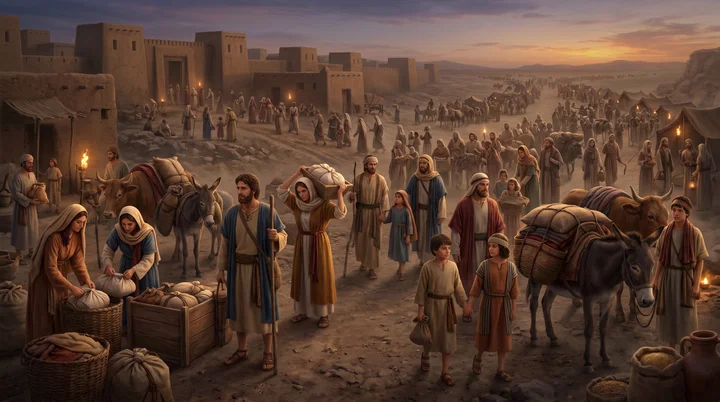
And a mixed multitude went up also with them; and flocks, and herds, even very much cattle.
Translations
American King James Version, King James Version, KJV Cambridge Paragraph Bible, Revised Version, American Standard Version
And a mixed multitude went up also with them; and flocks, and herds, even very much cattle.
And a mixed multitude went up also with them; and flocks, and herds, even very many cattle.
and a great rabble also hath gone up with them, and flock and herd — very much cattle.
And a mixed multitude went up also with them; and flocks and herds — very much cattle.
Moreover also, a mixed multitude, came up with them,—flocks also, and herds, exceeding much cattle,
Berean Standard Bible, Majority Standard Bible
And a mixed multitude also went up with them, along with great droves of livestock, both flocks and herds.
A mixed multitude went up also with them, with flocks, herds, and even very much livestock.
And a mixed band of people went with them; and flocks and herds in great numbers.
And a great multitude of sundrie sortes of people went out with them, and sheepe, and beeues, and cattel in great abundance.
Douay-Rheims (Challoner revision)
And a mixed multitude without number went up also with them, sheep and herds and beasts of divers kinds, exceeding many.
Pictures
Cross-references 20 of 26
- Numbers 11:4-6
And the mixt multitude that was among them fell a lusting: and the children of Israel also wept again, and said, Who shall give us flesh to eat?
The mixed multitude stirred Israel to complain and crave Egypt’s former food.
- Genesis 15:14
And also that nation, whom they shall serve, will I judge: and afterward shall they come out with great substance.
Israel’s departure from Egypt fulfills the promise to come out with great substance.
- Exodus 12:12-13
For I will pass through the land of Egypt this night, and will smite all the firstborn in the land of Egypt, both man and beast; and against all the gods of Egypt I will execute judgment: I am the LORD.
God’s judgment on Egypt and the Passover blood that spared Israel.
- Exodus 12:33
And the Egyptians were urgent upon the people, that they might send them out of the land in haste; for they said, We be all dead men.
Egyptians urged Israel to leave in haste, driving their hurried departure.
- Exodus 13:6-8
Seven days thou shalt eat unleavened bread, and in the seventh day shall be a feast to the LORD.
The feast of unleavened bread commemorates Israel’s departure from Egypt.
- Exodus 12:42
It is a night to be much observed unto the LORD for bringing them out from the land of Egypt: this is that night of the LORD to be observed of all the children of Israel in their generations.
The night of Israel’s deliverance is to be observed.
- Exodus 12:29-31
And it came to pass, that at midnight the LORD smote all the firstborn in the land of Egypt, from the firstborn of Pharaoh that sat on his throne unto the firstborn of the captive that was in the dungeon; and all the firstborn of cattle.
The death of the firstborn leads to Pharaoh’s call for Israel to leave Egypt.
- Deuteronomy 16:1-6
Observe the month of Abib, and keep the passover unto the LORD thy God: for in the month of Abib the LORD thy God brought thee forth out of Egypt by night.
Passover observance commemorates Israel’s exodus from Egypt.
- Exodus 13:14
And it shall be when thy son asketh thee in time to come, saying, What is this? that thou shalt say unto him, By strength of hand the LORD brought us out from Egypt, from the house of bondage:
Both describe the LORD’s mighty-hand deliverance from Egypt.
- Exodus 12:51
And it came to pass the selfsame day, that the LORD did bring the children of Israel out of the land of Egypt by their armies.
Both describe Israel’s departure from Egypt.
- Hosea 11:1
When Israel was a child, then I loved him, and called my son out of Egypt.
Its words first refer to Israel’s exodus from Egypt.
- Psalms 114
When Israel went out of Egypt, the house of Jacob from a people of strange language;
closing song added in later observance
- Numbers 33:3
And they departed from Rameses in the first month, on the fifteenth day of the first month; on the morrow after the passover the children of Israel went out with an high hand in the sight of all the Egyptians.
joins in dating the midnight flight
- Exodus 3:21-22
And I will give this people favour in the sight of the Egyptians: and it shall come to pass, that, when ye go, ye shall not go empty:
Israel leaves Egypt with goods and possessions.
- Deuteronomy 23:8
The children that are begotten of them shall enter into the congregation of the LORD in their third generation.
Their descendants were not counted until the third generation.
- Psalms 105:37-38
He brought them forth also with silver and gold: and there was not one feeble person among their tribes.
Recounts God bringing Israel out of Egypt with their goods and people.
- Exodus 11
And the LORD said unto Moses, Yet will I bring one plague more upon Pharaoh, and upon Egypt; afterwards he will let you go hence: when he shall let you go, he shall surely thrust you out hence altogether.
Foretells Israel’s deliverance from Egypt.
- Exodus 20:2
I am the LORD thy God, which have brought thee out of the land of Egypt, out of the house of bondage.
Deliverance from Egypt explains the law’s preface.
- Deuteronomy 24:18
But thou shalt remember that thou wast a bondman in Egypt, and the LORD thy God redeemed thee thence: therefore I command thee to do this thing.
Deliverance from Egypt motivates just treatment of the vulnerable.
- Genesis 41:33-36
Now therefore let Pharaoh look out a man discreet and wise, and set him over the land of Egypt.
Joseph’s grain storage brought Israel to Egypt.
Commentary
Each commentary is drawn from primary sources: the writings of Ellen G. White and Adventist pioneers and periodicals. Each commentary is separate. Its own words are not a quotation; follow the references to read the source passages.
Ellen G. White
21 sources
Israel left Egypt in haste yet in order at dawn, a vast company marching in divisions from lifelong bondage after God judged their oppressors with plagues and mighty signs under Moses as leader.1SP 205.2ST Apr 1, 1880SG3 230.1SG3 169.1 Their flocks and herds and very much cattle were their own property grown from what Jacob and his sons had brought in, carried out with the wealth of the Egyptians who hastened them and paid them for unpaid labor, fulfilling the promise to Abraham of leaving bondage with great substance.1SP 205.2ST Apr 1, 1880PP 281.4SG3 230.1PP 281.3 The mixed multitude who went up with them were Egyptians who saw the signs and the slaying of the firstborn, professed to choose Israel's God and were welcomed in, many from desire to escape the plagues or from excitement rather than true faith, while they are also understood as Hebrews who had intermarried with Egyptians.PP 281.2ST May 13, 1880SG3 223.1ST Aug 12, 1880 They remained corrupted by idolatry and irreverence, grew impatient at Sinai and demanded a visible god, and became first in murmuring and first in apostasy, stirring strife through the camp as a continual snare and hindrance to the faithful.PP 281.2ST May 13, 1880ST Aug 12, 1880PP 408.3 God's purpose in bringing His people out was to separate them from the world's customs and bring them near to Himself at Sinai to hear His law, that their lives would reveal His goodness and justice, a deliverance to be remembered with gratitude and trust on the way to the heavenly Canaan.STB 834.1STA 53.2–54.1STBk 53.2–54.1Lt 74, 1900, par. 29–30
Departure from Egypt
Israel went out from bondage at dawn as a vast and exceedingly numerous company, moving in haste yet in order, divided into companies with a leader for each.ST Apr 1, 1880 The march came after dwelling in Goshen and the country around it, when God in pity broke the yoke of slavery and brought His people out with power and mighty signs and wonders.SG3 230.1SG3 169.1Ms 55, 1901, par. 22–23 He judged the Egyptians with plagues and placed Moses at their head to lead them through the wilderness to the promised land.1SP 205.2SG3 230.1Ms 55, 1901, par. 22–23
The flocks and herds and very much cattle that went up were the property of the Israelites themselves, who had never sold their possessions to Pharaoh the king.1SP 205.2ST Apr 1, 1880SG3 230.1PP 281.3 They came from what Jacob and his sons had brought into Egypt, and had greatly increased there alongside the people, who had themselves become exceedingly numerous.1SP 205.2ST Apr 1, 1880SG3 230.1PP 281.3 God made the Egyptians hasten His people out with all they possessed, urging them to leave.1SP 205.2SG3 230.1PP 281.3 In doing so they gave them recompense for unpaid labor, so that Israel departed carrying the wealth of their former oppressors.PP 281.3
That departure with a mixed multitude and abundant livestock fulfilled God's prophecy to Abraham that his descendants would leave their place of bondage with great substance.PP 281.4 It was the grand march from the land of bondage that followed the sprinkled blood and the death-dealing angel.ST Nov 2, 1915 Those who made it were coming out of lifelong slavery with little preparation, knowledge of God, or faith, and they needed instruction and discipline to be ready to work with God.ED 34.1
Mixed Multitude Explained
A mixed multitude went up from Egypt with Israel, including Hebrews who had intermarried with Egyptians.ST May 13, 1880 They were also Egyptians who had been led by the signs and wonders to acknowledge that the God of the Hebrews was the only true God and that their own gods were without knowledge and had no power to save or destroy.SG3 223.1 On the fearful night when the destroying angel slew the firstborn, they with their families entreated permission to come into the houses of the Israelites for protection, pledged to choose the God of Israel as their God from that time on, and decided to leave Egypt to worship Him, and they were welcomed in.SG3 223.1
Some among them had faith in Israel's God, but many joined chiefly to escape the plagues or followed out of excitement and curiosity.PP 281.2 These believing Egyptians were professedly turned from idolatry yet still corrupted by it.ST Aug 12, 1880 They professed to have given up idolatry and to worship the true God, but upbringing had shaped habits and character that remained corrupted by idolatry and irreverence toward God.PP 408.3 While Moses was receiving instruction from God on the mount, this multitude at its foot still held the gods of Egypt in mind, and when he did not return as soon as expected after ascending into the cloud with the summit in flames, they grew impatient and claimed he had been slain by the burning flame.ST May 13, 1880 They gathered around Aaron to demand something visible to resemble God, and under Satan's tempting to imitate Egyptian idolatry urged making an idol that could lead them back to Egypt and gain favor with the Egyptians, becoming the principal movers in dreadful departure from God.ST May 13, 1880 Stirred first by Satan to seditious murmurings, they became a hindrance and a snare to Israel, repeatedly stirring up strife, complaining first, and spreading idolatrous practices and murmuring through the camp as a continual source of temptation and trouble.PP 281.2ST Aug 12, 1880PP 408.3
Like the heathen who later married into Judah, they were not whole-hearted in serving God and became a source of constant trouble.ST Jan 3, 1884PK 657.1–3 When God's work called for sacrifice they were ready to break solemn promises and commitments of cooperation and support, weakening and discouraging those who faithfully worked for it.ST Jan 3, 1884PK 657.1–3 That mixed multitude is found in every congregation in our day in many professing godliness who openly transgress the law of God, claiming to be righteous while they do not the things God has commanded.RH Feb 27, 1900 They are like the self-righteous Pharisees who say and do not and stand aloof from their fellow men, showing the power of the adversary upon the human mind, and loyalty or disloyalty is proved by whether they keep Christ's commandments out of love for Him.RH Feb 27, 1900
Divine Purpose Remembered
God's purpose in bringing Israel out of Egypt was to separate them from the customs, habits, and practices of the world and to bring them nearer to Himself that He might make known to them His will.STB 834.1 In life and character they were to manifest the principles of His kingdom and reveal His goodness, mercy, justice, and love, giving the world a representation of His character.STB 834.1 His purpose for His people today is the same, that when the law of God is exemplified in the life even the world will recognize the superiority of those who love and fear and serve God above every other people in the world.STB 834.1
The Lord called His people out of Egypt in order to bring them to Sinai to hear the proclamation of the law that had been given in Eden.Lt 74, 1900, par. 29–30 The deliverance was for the purpose of hearing the Ten Commandments proclaimed to the children of Israel by God with His own voice, demonstrating their fundamental importance.Lt 74, 1900, par. 29–30 That same pity that moved God to break the yoke of their bondage in slavery in Egypt and place Moses at their head to lead them through the wilderness to the promised land is not indifferent to the suffering of the colored people in America.Ms 55, 1901, par. 22–23 Though freed from slavery in one sense, they are still in the slavery of ignorance, living in sin and degradation, because more favored men and women have not taken pains to lift them, and that pity calls upon those who name His name to take up the work they have neglected.Ms 55, 1901, par. 22–23
That mighty work of God in delivering Israel from Egyptian bondage is to be remembered with gratitude and firm trust in God when trials come on the way to the heavenly Canaan.STA 53.2–54.1STBk 53.2–54.1 Forgetting it leads to distrust of God, mourning and lamenting over self, desperation, and repeating the sin of murmuring and rebellious Israel stirred up by the discouraging words of the unfaithful spies.STA 53.2–54.1STBk 53.2–54.1 The grand march from the land of bondage that followed the sprinkled blood and the death-dealing angel was rehearsed in solemn silence in the night assembly of the paschal service at Jerusalem, with men with girded loins, shoes on feet, and staff in hand eating the hasty meal of lamb, unleavened bread, and bitter herbs, to stir the imagination and impress the heart.ST Nov 2, 1915 On the journey to Jerusalem Hebrew children learned the same march through recounting of past experiences, singing of the songs that had cheered the wilderness wandering, and chanting of God's commandments amid nature and kindly human association, fixing them forever in memory.ST Nov 2, 1915 It belongs to the setting of a people coming out of lifelong slavery, with little preparation, knowledge of God, or faith, who needed instruction and discipline to be ready to work with God in teaching their children.ED 34.1
Sources
Pioneers and periodicals
90 sources
When Israel was thrust out of Egypt, more than Abraham's descendants went up, with very large flocks and herds that were Israel's own property increased in Egypt.ST Apr 1, 1880ST Feb 25, 1886RH Dec 17, 1861ST May 27, 1908RH Apr 20, 1916
Part were Egyptians convinced by the plagues that their gods could not save and that Israel's God was the only true God, and part were Hebrews who had intermarried with Egyptians.ST Mar 25, 1880ST May 13, 1880RH Jun 4, 1867
They were not numbered with God's chosen people, and joined from mixed motives of terror, excitement, advantage and fear of being left behind without understanding God's character, law and purity.RH Dec 5, 1912ST Feb 22, 1883RH Nov 25, 1873RH Nov 21, 1907
They became a continual hindrance and the first murmurers, holding Egypt's gods in mind and moving the camp to demand a visible god and make an idol while Moses was in the mount.ST May 13, 1880RH Dec 5, 1912ST Feb 22, 1883RH Nov 21, 1907ST Mar 1, 1883
They are found in every congregation today as false professors among true believers, tares among wheat, proving loyalty only by keeping Christ's commandments from love.RH Feb 27, 1900RH Nov 21, 1907
Exodus Departure Setting
Exodus 12:38 belongs to the account of the ten plagues culminating in the tenth plague, the death of the firstborn, and the hurried departure of Israel from Egypt.ST Apr 13, 1904RH Jan 20, 1916 It is closely joined to the giving of the ordinance for the Passover and the claiming of the firstborn as the Lord's, and to the detailed story of deliverance and the beginning of Israel's formation as a nation.RH Jan 20, 1916 The deliverance begins in oppression and bondage and ends with Israel safe beyond the Red Sea and Egypt's host overthrown, as a display of creative power.ST Jan 30, 1912 The twelfth chapter telling of the slaying of the firstborn stands together with the first chapter's record of burdens in making bricks and erecting buildings in connection with the ruins of the store cities.ST Dec 14, 1915 Exodus 6-12 record the ten plagues upon Egypt and God's merciful deliverance of His children, showing mercy also to Pharaoh and the Egyptians by the reasonable request to let the people go to serve Him.ST Jan 20, 1909
The setting is God's call to Egypt three and one-half millenniums ago, when Egypt ruled the world as the greatest of earth's kingdoms, mighty in power and skill and wisdom in statecraft.ST Nov 14, 1906 It deified its annually overflowing and fertilizing river as a god and worshiped the food-producing sun, from whom its kings received title as representatives of the sun-god upon the throne of men.ST Nov 14, 1906 The verse concerns the few descendants of the nomadic patriarch Abraham who sought supplies from Egypt's granaries, after one of the same people, the captive slave Joseph, taught Pharaoh to store grain in plenteous years to become rich in time of famine.ST Nov 14, 1906 Joseph instituted an easy land-law of combined rental and taxes, so that while he was prime minister and while his memory was honored and his laws governed, Egypt prospered and those living in Egypt knew no oppression.ST Nov 14, 1906
The departure was hasty yet in order at midnight on the fifteenth of Abib in 1491 B.C., when Israel was thrust out and started in the night.ST Apr 1, 1880ST Jul 17, 1879RH Apr 14, 1874ST Jan 28, 1886 It took only about forty-eight hours, marching by night in companies with a leader for each from Rameses toward Succoth and on toward Canaan, carrying what could be carried on the shoulders, with dough not yet leavened and unbaked bread, girded loins, sandals, staffs, gathered flocks, thrilling silence, quiet joy mingled with regret, and a national march accompanied by darkness, plague and storm.ST Apr 1, 1880ST Jul 17, 1879ST May 22, 1907RH Apr 7, 1851 The flocks and herds were the property of the Israelites, who had never sold their possessions to the king, coming from what Jacob and his sons had brought into Egypt and greatly increased there, while the children of Israel themselves had become exceedingly numerous so that a vast company, some three million people, was on the way from bondage at dawn driving very much cattle.ST Apr 1, 1880ST Jul 17, 1879 The feast is called Passover because when the angel saw the blood on the doorposts he passed over the house and did not slay the oldest child, and the very first Passover was held at Rameses on the night they were led out of bondage.ST May 22, 1907 That fifteenth-of-Abib day was wholly unlike the weekly Sabbath, being filled with travel, burden-bearing and driving cattle, and there is nothing in resting on the seventh day of each week that commemorates a midnight flight on that monthly date, so it could not be the foundation of a new order of Sabbaths dated from the fifteenth of Abib.ST Jul 17, 1879RH Apr 14, 1874
The account is a confrontation of God's religious system with Egypt's religious system, with miracles on both sides.RH Mar 11, 1915 The early plagues were directed not at first against human beings but against the gods the Egyptians worshiped to show those gods unworthy of trust, humbling proud Egypt to the dust and annihilating supposed divine power.ST Jan 20, 1909ST Nov 27, 1901 The name LORD in this deliverance means Jehovah, whom Pharaoh said he did not know and for whom he would not let the people go.ST Jan 20, 1909 Each Israelite was given abundant opportunity to gain a personal knowledge of the King of kings and Lord of lords, for those who believed had their firstborn delivered when the destroyer struck, while in the homes of those who rejected mercy not one firstborn escaped, and this thrilling personal experience prepared the people for the fuller title of God as the Lord who brought them out of Egypt out of the house of bondage.ST Nov 27, 1901
The Passover requirements in this chapter are the slaying of the paschal lamb on the fourteenth day of the first month, when the angel passed over the houses of the Hebrews on the night the firstborn in every Egyptian family was slain, ordained in commemoration of deliverance from bondage.RH Jan 14, 1862ST Aug 13, 1874 Through seven days nothing but unleavened bread was eaten, with nothing leavened or fermented permitted and a severe penalty for using leavened food.ST Oct 8, 1894RH Jan 14, 1862 Eating was required while drink was optional, yet the seven-day festival made drink practically necessary, with the law requiring only that it be unleavened and not specifying what drink to use.ST Oct 8, 1894 That first form instituted in Egypt and observed in the wilderness on the journey to Palestine as set out in Exodus 12-13 differs from the later temple form, which added injunctions hardly possible in the wilderness, including the use of wine and the closing song of the Hallel, and the night was to be observed.ST Oct 8, 1894ST Feb 22, 1899 Its great antitype was reached when Christ our Passover was sacrificed for us, for the slaying of the Lamb of God on that same fourteenth day met the slaying of the paschal lamb.RH Jan 14, 1862ST Aug 13, 1874
Mixed Multitude Identity
Part of the mixed multitude were Egyptians who had become convinced by the signs and wonders in Egypt that the gods they had worshiped had no knowledge and no power either to save or to destroy and that the God of the Hebrews was the only true God.ST Mar 25, 1880 On the fearful night when the firstborn of the Egyptians were slain they begged to be allowed to come with their families into the houses of the Israelites, and being welcomed there they pledged to choose the God of Israel as their God and to leave Egypt to go and worship the Lord.ST Mar 25, 1880 Having seen Israel favored by God during the plagues, they took refuge in Israelite homes through belief and then left Egypt with the liberated people.ST Mar 25, 1880
Part were also Hebrews who had intermarried with Egyptians.ST May 13, 1880RH Jun 4, 1867 The departure therefore brought out more than Abraham's descendants alone, for Egyptians and likely people of other nations went up with Israel to Sinai, so that with very large flocks and herds the exodus included more than Israel itself.ST Feb 25, 1886RH Dec 17, 1861RH Apr 20, 1916RH Jun 11, 1901 Their presence shows that Israel as God's people from the first included those beyond Abraham's literal descendants, and that Gentiles could join them, receive God's law, and share in their blessings.ST Feb 25, 1886RH Jan 16, 1872
By divine provision these camp followers remained separate from Israel itself, not numbered with God's chosen people nor allowed to be counted with any of the tribes until after the third generation.RH Dec 5, 1912ST Feb 22, 1883 They were not imbued with the spirit of their leader and had no whole-hearted interest in his cause, and at times though they seemed as loyal as the rest of the camp, when adversity came and faith was tried they showed their interest was in material things and not in trust in the unseen Presence within the veil.RH Dec 5, 1912 They joined from mixed motives and without due care or deliberation and without any adequate idea of the character of God and the purity and strictness of His law.RH Dec 5, 1912RH Nov 25, 1873 Some went for mercenary advantage, some in search of adventure or for love of excitement, and others because they had married into the families of Israel.RH Dec 5, 1912
Others were compelled by terror of the plagues in the excitement of the hour to acknowledge the power of God, having seen evidence that God was with Israel but joining for motives other than love of the truth.RH Nov 25, 1873RH Nov 21, 1907 Their enthusiasm and fear of being left behind helped carry them forward and swelled the company when some Israelites refused to go, yet joining the journey did not mean their hearts were prepared for its trials.ST Oct 20, 1914 Their hopes of temporal advantage later gave way in the wilderness experience.ST Oct 20, 1914
Flocks Herds and Numbers
The very much cattle were the property of the Israelites, who had never sold their possessions to the king.ST Apr 1, 1880 They came from the flocks and herds that Jacob and his sons had brought with them into Egypt, which had greatly increased there.ST Apr 1, 1880 Israel left in haste yet in order, divided into companies with a leader for each, so that a vast company was on the way from the land of bondage at dawn.ST Apr 1, 1880 Their going up began the journey from bondage toward the freedom and homeland to be reached after the wilderness years, with very large flocks and herds accompanying the mixed multitude that went up with them.ST May 27, 1908RH Apr 20, 1916RH Jul 31, 1913
Together with the census figures the company supports an estimate of about three million souls, counting women, children and older people.ST Aug 9, 1910RH May 28, 1901 They were thrust out just after midnight on the fifteenth of Abib and started in the night carrying what they could carry on their shoulders, marching from Rameses toward Succoth driving flocks and herds with them.ST Jul 17, 1879 They left with only enough food for two or three days, and God signally manifested His power every day for their preservation while leading them toward the land He had promised to give them for an inheritance, feeding them with manna.ST Jul 17, 1879ST Aug 31, 1888 These were the people who witnessed the giving of the law at Sinai.RH May 28, 1901 Their having these animals with them while they wept for flesh in the wilderness is evidence that they understood God had not allowed them to eat flesh.RH Feb 19, 1901
Wilderness Hindrance and Rebellion
The mixed multitude went up with Israel yet were separate from Israel itself, not numbered with the chosen people nor counted with any tribe until after the third generation, and though at times they seemed as loyal as the rest of the camp, adversity showed they were not imbued with the spirit of their leader and had no whole-hearted interest in his cause but trusted in material things rather than the unseen Presence within the veil.RH Dec 5, 1912ST Feb 22, 1883 They were a source of continual hindrance and active agents of Satan to stir murmuring, faultfinding, disaffection, discontent, strife and actual revolt against those God was leading, becoming the first murmurers, the principal instigators in the camp, and sources of rebellion in the wilderness journey.RH Dec 5, 1912RH Nov 21, 1907GSAM 330.3ST Jun 25, 1902 They lusted for flesh and spread disaffection through all the camp as uncommitted followers who come without counsel, never truly join, feel responsible to nobody and act independently, yet pass as part of the people and give character to the church and work, bringing trouble long to clear, showing that men may belong outwardly to God's people without being faithful to Him.ST Feb 22, 1883RH Nov 21, 1907 Many were overthrown in the wilderness and none of them entered the promised land, and they stand as complainers and faultfinders whom none should follow, but whom all should answer with a mind to work, standing by one another in united courageous effort in the Lord.RH Nov 21, 1907RH Feb 13, 1913
While Moses was receiving instruction from God on the mount, this multitude at its foot were the principal movers in corrupting the people in dreadful departure from God, still holding the gods of Egypt in their minds.ST May 13, 1880 When he did not return as soon as expected after ascending into the cloud with the summit in flames, they grew impatient, claimed he had been slain by the burning flame, gathered around Aaron to demand something visible to resemble God, and under Satan's tempting to imitate Egyptian idolatry urged making an idol that could lead them back to Egypt and gain favor with the Egyptians.ST May 13, 1880 They were an astonishingly wicked rabble for falling into the customary sin of their times, following surrounding custom and excusing idol worship as worship of the true God through a graven image, proving that no substitute for what God has commanded is acceptable.ST Mar 1, 1883 Their experience stands on record for instruction and admonition to those on whom the ends of the world are come, making still more wonderful the disobedience of the enlightened nineteenth century which, with Israel's history, fulfilled prophecy and the final warning, disregards what God plainly said of His day and keeps the rival sabbath of the man of sin because custom commands it while hoping for acceptance.ST Mar 1, 1883
They had been compelled by terror of the plagues in the excitement of the hour to acknowledge God's power without due care and deliberation and without any adequate idea of God's character and the purity and strictness of His law.RH Nov 25, 1873 After crossing the sea and encamping on the barren desert they discovered their mistake but could not return, and without spiritual discernment and reckless of the future they looked back to the fertile valley of the Nile with terrible homesickness and sense of loss, and spread complaint like a plague until nearly all Israel joined their wail and, destitute of faith in God's goodness and love and power and wisdom, saw only ruin, hunger, thirst and death in the desert and wished for death in Egypt.RH Nov 25, 1873 Stirred by Satan to complain against their leaders and urge return and rebellion, they were quieted for a time by manna from heaven and water from the rock, but their carnal hearts remained unsubdued with no deep soul-converting power, weighing miracles by human probabilities, so every new trial re-enacted the same murmuring until Moses was provoked to impatience and sin against God and Aaron in weakness went to great lengths to please the people in idolatrous worship.RH Nov 25, 1873 Unconverted members ever hang upon the rear of God's army, and their baleful poisonous influence curses the church in every age by settling in carnal security and dragging brethren and ministry to perdition unless good men withstand it.RH Nov 25, 1873
Their later departure from God and seditious murmurings, first stirred by Satan among believing Egyptians, made them a snare to Israel and showed the danger Israel faced in dealings with other nations.ST Oct 15, 1896ST Aug 12, 1880 Like the heathen who later married into Judah, they were not whole-hearted in serving God and became a source of trouble, ready when God's work called for sacrifice to break solemn promises of cooperation and support and to weaken and discourage those who faithfully worked for it.ST Jan 3, 1884
The deliverance from Egypt was freedom only from bodily servitude, not from the slavery of sin and Satan, though it gave cause for thankfulness and joy.ST Apr 21, 1909 God can lead people out of bondage in a single night, yet that sudden coming out does not bring them to Canaan, for Egypt is in their blood and God must also get Egypt out of them through the discipline of defeat, deferred hope, failing water and food, inscrutable mystery, faith and perseverance, including gradual conflict, to teach dependence on God and fitness for life's task.ST Sep 9, 1913ST Apr 21, 1909 Only those who attain the other liberty, having a different spirit in their hearts like Caleb and being set free by the Son of God into the glorious liberty of the sons of God, could enter Canaan, a liberty open to everyone and the only way into the heavenly Canaan and eternal kingdom.ST Apr 21, 1909
Law Sabbath and Passover
Those who left Egypt included a mixed company of Egyptians and likely people of other nations who were not descended from Abraham, and they went with Israel to Sinai and there received God's law, showing the law was never intended for Jews alone but for every person of whatever race or nationality who would join in serving God.ST Feb 25, 1886ST Jun 13, 1906RH Jan 16, 1872 Israel was chosen to spread the knowledge of God through the earth and to be a light to surrounding nations, with its course revealing what it means to be a member of God's government and people.ST Jun 13, 1906 The Ten Commandments were the constitution of that government, explained by many ceremonial bylaws, and that same constitutional law applied equally to all who joined them, illustrating that Gentiles could join and share blessings beyond Abraham's literal descendants.ST Jun 13, 1906RH Jan 16, 1872
The deliverance from Egypt on which the Ten-Commandment covenant was based signified salvation, redemption and recreation, and it gave Israel its first new historical opportunity to enter into and receive the benefits of the everlasting covenant made with Abraham, Isaac and Jacob.ST Feb 15, 1905 The Deliverer was Christ the Creator, so the deliverance leads at once back to the everlasting or new covenant and its promises, with principles old though its immediate historical basis was new for the first time.ST Feb 15, 1905 With that deliverance began a special work of education and revelation in unfolding the plan of redemption belonging to that dispensation, because through Israel the Lord was bringing in the promised Seed the Redeemer, re-establishing the everlasting covenant, giving through Moses special statutes and judgments regulating social and national conduct, and enlarging, centralizing and embodying the typical sacrifices in the sanctuary and its services.ST Feb 15, 1905 This was necessary because after generations of slavery the people had become associated with heathen worship and had largely lost knowledge of God and Christ, so they needed instruction to understand His salvation, the character He required, and the principles of atonement.ST Mar 3, 1898
Through that deliverance God demonstrated His wisdom, love, power and right to rule and Israel's obligation to obey Him.ST Mar 7, 1906 He led Israel out with order, bringing harmony out of the confusion of distracted slavery, proving He is not the author of confusion.ST Mar 24, 1887 He brought about the promised redemption in a way human wisdom and power could neither plan nor accomplish, to be received by faith trusting He would do what could not yet be seen.ST Jan 16, 1896
The Sabbath is not a memorial or sign of the flight and deliverance from Egypt but of the Creator's rest after making heaven and earth, while the Passover is the ordinance perfectly fitted to call that deliverance to mind.ST May 31, 1905RH Apr 30, 1872RH Nov 7, 1871 The departure described here took place at midnight on the fifteenth of Abib, when Israel was thrust out and started by night marching some three million people from Rameses toward Succoth carrying what they could carry and driving flocks and herds.ST Jul 17, 1879RH Apr 14, 1874 That day was filled with travel, burden-bearing and driving cattle and was wholly unlike the weekly Sabbath of the Lord, so it could not be the foundation of a new order of Sabbaths dated from the fifteenth of Abib.ST Jul 17, 1879 There is nothing in resting on the seventh day of each week that commemorates a midnight flight on a monthly date, and the chapter at most gives evidence about the calendar in that particular year without proving the week began again with the year or with each month, nor were the Passover holy days necessarily weekly Sabbaths.RH Apr 14, 1874
The Passover deliverance in this account of the ten plagues pictures forgiveness and the blotting out of sin through the blood of Christ our Passover.ST Apr 13, 1904 The ordinance began with slaying the paschal lamb on the fourteenth day of the first month when the angel passed over Hebrew houses on the night the firstborn in every Egyptian family was slain, extending through seven days in which nothing but unleavened bread was eaten.RH Jan 14, 1862 That slaying met its great antitype when Christ our Passover, the Lamb of God, was sacrificed on that same day.RH Jan 14, 1862ST Aug 13, 1874
Abib was thereby established as the first month of the sacred year, though it was the seventh month of the civil year reckoned from creation, and the Passover rather than any change of the Sabbath stands as the memorial of deliverance.RH Nov 7, 1871 The wilderness sojourn followed the deliverance rather than preceding it. The exodus under Moses' direct supervision and the journey through the wilderness are told as plain positive history with the same direct certainty as the creation narrative and the first chapters of Genesis, showing creation and the fall are literal facts and not allegory or parable, so that treating creation as unreliable calls the truth of the exodus into question.ST Jul 28, 1881ST Aug 25, 1881
Types Prophecy and Deliverance
The plagues of Exodus 7-12 shadow forth the seven last plagues of Revelation, which will be as real and literal as those in Egypt were.RH Dec 23, 1851RH Mar 23, 1852 As the plagues of Egypt came just prior to the deliverance of Israel, so the seven last plagues will be poured out just before the final deliverance of the saints.RH Dec 23, 1851 The going up out of Egypt toward Canaan with mixed multitude, flocks, herds and much cattle is a type of the deliverance of God's people from the dark Egypt of earth.ST That going out also points to the Christian being called out of sin, as an Old Testament fulfillment of the call of God's Son out of Egypt.RH Aug 24, 1916 The homeward journey of about 50,000 captives of Judah together with the longer captives of Israel from Babylon was a second going up out of Egypt to the promised land, typifying once again the final deliverance of all who believe God from the bondage of sin and death, to be celebrated with joy and singing as in Psalm 126:1-3.ST Dec 19, 1892
Israel's departure from Egypt is an example of a people led out of bondage toward a promised inheritance, and not everyone who came out of Egypt entered the promised land.RH May 29, 1856 Likewise not everyone who professes the Third Angel's Message will reach the antitypical land.RH May 29, 1856 The exodus under the midnight cry is compared with the last-days movement out of spiritual Egypt, followed by the commandments that lead the faithful toward the everlasting inheritance.RH May 29, 1856 As Israel remained in Egypt while the plagues fell, God's people will remain on earth through the time of trouble and be protected amid its calamities by the seal of the living God.ST Jul 18, 1878 The history of the deliverance of the Hebrews from Egyptian bondage is of deepest interest to all believers in divine revelation.ST Mar 24, 1887
The Son of God by personal agency led His ancient people out of Egypt toward the earthly Canaan, even as He will erelong lead the saved of every age into the heavenly land.ST Mar 24, 1887 Pharaoh could not prevent this exodus after God had declared that Abraham's descendants would come out of affliction with great substance.RH Mar 20, 1913 The Israelites waited through the night for their departure, and their experience illustrates the faith needed to be ready to meet the coming Savior.RH Feb 15, 1912RH Aug 27, 1914 Their readiness to leave is an example of the faith, full consecration to God, and separation from the world required of those expecting a decisive act of God.RH Aug 27, 1914 Exodus 12:29-42 shows the children of Israel standing all night waiting for departure out of Egypt as an act of the same faith that led Abraham to offer Isaac, Noah to build the ark, Lot to leave Sodom, Daniel to go into the lions' den, and the three Hebrews into the fiery furnace.LDT 173.1–174.1
Believing God's truth and venturing out upon it by strong faith gives glory to God and gains an individual experience that prepares to meet the Lord.LDT 173.1–174.1 It brings a test that none will venture upon except those who dare to be counted fools and madmen by the world, a lukewarm church, and sleeping virgins.LDT 173.1–174.1 It requires the state of mind of one ready to die that day, with entire consecration to God and deadness to the world, escaping for life without looking back.LDT 173.1–174.1 The account of Israel's deliverance from Egypt begins in oppression and bondage and ends with Israel safe beyond the Red Sea and Egypt's host overthrown.ST Jan 30, 1912 The deliverance is described as a display of God's creative power.ST Jan 30, 1912
God by exhibition of mighty power brought His chosen people with a vast multitude out of servitude in Egypt in a triumphal departure that marked the overthrow of their oppressors and set them free, calling out gratitude for marvelous divine workings in their behalf, to start the journey to the land of promise.RH Jun 27, 1912 Shut in on every side by the fruitless wastes of the wilderness of Sin, the food supply hastily prepared and taken in flight from Egypt was exhausted with no place to find food for so great a host, but He who had undertaken their deliverance was abundantly able to supply the lack by raining bread from heaven.RH Jun 27, 1912 Israel's deliverance from Egypt shows that God brought about the promised redemption in a way human wisdom and power could neither plan nor accomplish, and faith trusted that God would do what people could not yet see.ST Jan 16, 1896 Israel's departure from Egypt came at the appointed time and serves as an example of preparatory work reaching its culmination.RH Jun 11, 1901 The plagues were joyful signs to the Israelites that their freedom was coming, just as God's final judgments will be signs to the saints that He is working for them and bringing their hopes to fulfillment.RH Sep 10, 1901
Church Application Today
The mixed multitude that went up out of Egypt is found in every congregation today, for false professors were joined with true believers from the beginning and the true church in this world of sin will always have tares among the wheat as Judas was among the twelve.RH Feb 27, 1900RH Nov 21, 1907 It means many professing godliness while openly transgressing the law of God, claiming righteousness without doing what God commands, like self-righteous Pharisees who say and do not and stand aloof from fellow men.RH Feb 27, 1900 Loyalty is proved only by keeping Christ's commandments from love for Him, and only fruitful good-ground believers who endure to the end will be saved.RH Feb 27, 1900 Having seen evidence that God was with Israel yet joining from motives other than love of truth, they became the first murmurers, led Israel into sin, were overthrown in the wilderness, and none entered the promised land, showing that outward belonging to God's people is not faithfulness to Him.RH Nov 21, 1907
Among God's people they are uncommitted followers who come without counsel, never truly join, feel responsible to nobody and act independently, yet pass as part of the people and give character to the church and the work, bringing trouble long in clearing.ST Feb 22, 1883 The phrase describes those who attach themselves to a good work but are unreliable, against whom credentials help protect the churches.ST Feb 22, 1883RH Jul 31, 1913 After lusting for flesh they spread disaffection through all the camp, separate from Israel itself.ST Feb 22, 1883
The same mixed condition blurring God's people and the world returns near the close of the outcalling of the Gentiles, when all moral forces intensify and men grow better and worse.ST Mar 31, 1887 A kind of mixed multitude then fills the moral chasm between church and world, which is the lukewarmness, lawlessness and apostasy of much of the professing church.ST Mar 31, 1887 Their hearts still in Egypt pictures those who have outwardly left a former position but remain inwardly attached to it and echo opposition to leaders.RH Feb 27, 1908 Their enthusiasm and fear of being left behind carried them forward when some Israelites refused to go, but joining did not prepare their hearts for trial, and hopes of temporal advantage gave way in the wilderness.ST Oct 20, 1914
God's people are now no longer to be a mixed multitude of backward tendencies, neutral positions and divided loyalty, of those who hinder God's work, trifle with salvation, lift souls to vanity, mark out self-righteous paths, and act as stumbling-blocks causing delay and confusion.RH Dec 21, 1905RH Dec 28, 1905 The church has been a mixture of divine with worldly elements, impurity and dross, incapable in that state of the high use God intends and of revealing His power unto salvation.RH Jan 25, 1906 It is being divided by a separating line between serving God and not serving Him, the one part to return to Egypt and the other to cross Jordan, while God purifies by removing baseness, casting out worldliness and separating from all unrighteous and unholy until she appears fair as the moon, clear as the sun and terrible as an army with banners for a work undreamed of.RH Jan 25, 1906 Now is the time for enlargement, for thorough straightforward holy loyalty, clearing every stumbling-block from God's highway, because His work will be delayed no longer, and unless they change He will remove them and they will be destroyed suddenly without remedy.RH Dec 21, 1905RH Dec 28, 1905
The same mercenary spirit that moved camp followers without the leader's spirit or whole-hearted interest — some for advantage, some for adventure and excitement, some through marriage into Israel — attracts men and women to the Lord's work in all ages including the closing work, and may be found in one's own life.RH Dec 5, 1912 By divine provision they were not numbered with the chosen people nor counted with any tribe until after the third generation, yet they were a continual hindrance and active agents of Satan to stir murmuring, faultfinding and revolt, seeming loyal until adversity tried faith and showed interest in material things rather than trust in the unseen Presence within the veil.RH Dec 5, 1912 Compelled by terror of the plagues in excitement without due care or adequate idea of God's character and the purity and strictness of His law, after crossing the sea they found barren desert a mistake without return, looked back to the Nile with homesickness and loss, spread complaint like a plague until nearly all joined without faith in God's goodness, love, power and wisdom, wishing death in Egypt and seeing only ruin, hunger, thirst and death ahead.RH Nov 25, 1873 Though quieted for a time by manna and water from the rock, carnal hearts remained unsubdued without soul-converting power, weighing miracles by human probabilities and re-enacting murmuring at every trial until Moses was provoked to sin and Aaron went far to please them in idolatry.RH Nov 25, 1873 Unconverted members ever hang on the rear with baleful poisonous influence cursing the church in every age, settling in carnal security and dragging brethren and ministry to perdition unless good men withstand, proving none safe and demanding greater vigilance as sin accumulates, since even Moses was thrown off balance.RH Nov 25, 1873RH Nov 25, 1873 Entire separation with a whole pure heart alone secures God's government and eternal life, and the church shows greatest kindness by marching steadily on and leaving murmurers behind, for none would enter heaven unprepared or spotted.RH Nov 25, 1873
They stand as a warning that none of God's people should be complainers and faultfinders, but should have a mind to work, stand by one another, and join united courageous effort in the Lord.RH Feb 13, 1913 The going up is also personal deliverance from dwelling under a cruel king through the blood of Jesus, fleeing at darkest midnight with Jesus as the ever-present cloud guiding night and day toward the prize, kept daily by grace and Spirit through a crooked murmuring desert path until passing through the river to safety, a door open wide for every brother to follow under the same guide.ST Jul 4, 1906 It shows Israel as an army of fugitive slaves freed from serfdom, a condition God allowed for a time without sanctioning, demanding instant release, judging oppressors for refusal, leading slaves out and drowning pursuers.RH Oct 1, 1861 The departure from oppression likewise parallels the vast emigration of French Protestants fleeing persecution for religion.ST May 17, 1905
Leaving with unleavened dough meant cutting loose from Egypt's sins and leaven's corruption to come before God with sincere hearts.ST Oct 29, 1912 Being thrust out of Egypt compares to being brought out of a church to keep the Sabbath.RH Dec 17, 1861 The grand march after the sprinkled blood and death-dealing angel was rehearsed in solemn night silence at Jerusalem's paschal service, men with girded loins, shoes and staff eating lamb, unleavened bread and bitter herbs to stir imagination and impress the heart.ST Nov 2, 1915 On the journey Hebrew children learned it by recounting past experiences, singing songs of the wandering, and chanting commandments amid nature and kindly association fixing memory forever.ST Nov 2, 1915
A mixed multitude also describes a very cosmopolitan crowd of almost all nationalities gathered in one place.RH Sep 5, 1907RH Nov 19, 1903 It is the condition in Natal and Transvaal where Europeans, chiefly Zulu natives, Asiatics, Colonial Dutch, Jewish people and Chinese live intermingled in every city and district, so work must be planned for a very mixed multitude and workers educated for calls as widely different as the peoples.RH Sep 5, 1907RH Sep 5, 1907 The phrase likewise describes foreign nationalities in Asiatic Turkey alongside Turks, Arabs, Greeks, Armenians and Syrians.RH Jul 16, 1914
The phrase denotes a mixed unsuitable company that cannot win the fight while a reduced resolute force prevails.ST Mar 18, 1897 It identifies those in camp as principal instigators of murmuring and rebellion, marking the need of Sabbath reform.ST Jun 25, 1902 The deliverance and march toward the promised land stands as a striking object lesson. Its record instructs and admonishes those on whom the ends of the world are come that no substitute for God's command is acceptable, exposing as astonishingly wicked the rabble following custom to excuse idol worship as worship of the true God by a graven image, and making still more wonderful the nineteenth-century disobedience that with Israel's history, fulfilled prophecy and final warning keeps the rival sabbath of the man of sin by custom while hoping for acceptance.ST Mar 1, 1883
Sources