Exodus 12:27
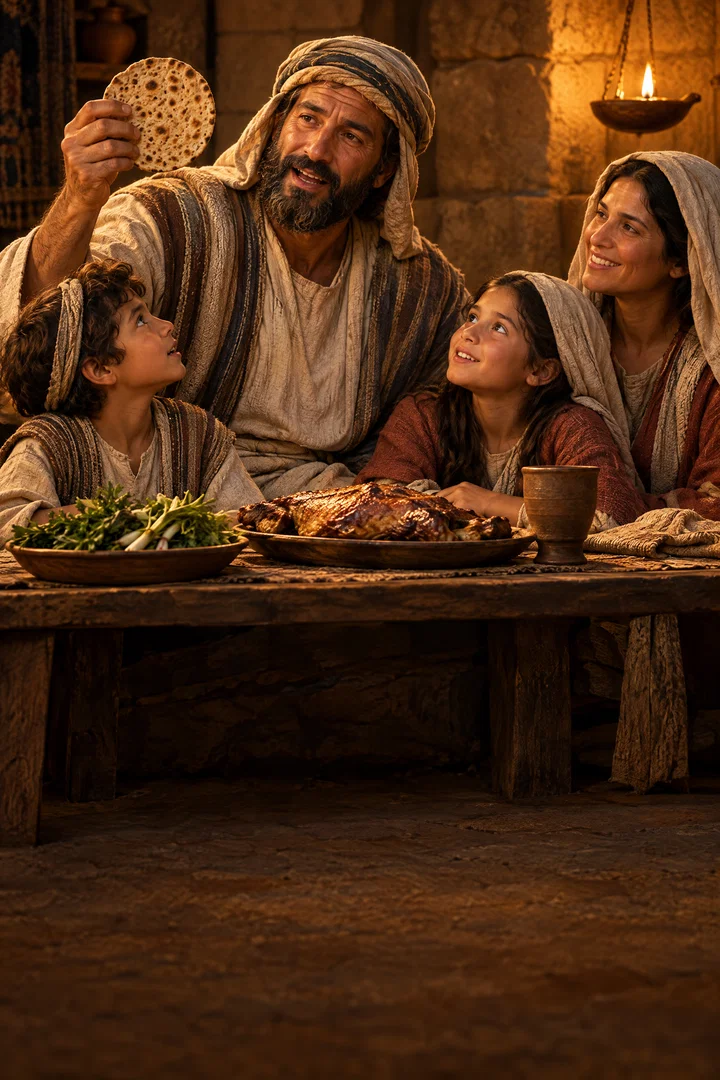
That ye shall say, It is the sacrifice of the LORD’s passover, who passed over the houses of the children of Israel in Egypt, when he smote the Egyptians, and delivered our houses. And the people bowed the head and worshipped.
Translations
That you shall say, It is the sacrifice of the LORD’s passover, who passed over the houses of the children of Israel in Egypt, when he smote the Egyptians, and delivered our houses. And the people bowed the head and worshipped.
That ye shall say, It is the sacrifice of the LORD’s passover, who passed over the houses of the children of Israel in Egypt, when he smote the Egyptians, and delivered our houses. And the people bowed the head and worshipped.
that ye shall say, It is the sacrifice of the Lord’s passover, who passed over the houses of the children of Israel in Egypt, when he smote the Egyptians, and delivered our houses. And the people bowed the head and worshipped.
That ye shall say, It is the sacrifice of the LORD'S passover, who passed over the houses of the children of Israel in Egypt, when he smote the Egyptians, and delivered our houses. And the people bowed the head and worshiped.
that ye shall say, It is the sacrifice of the LORD’S passover, who passed over the houses of the children of Israel in Egypt, when he smote the Egyptians, and delivered our houses. And the people bowed the head and worshipped.
that ye shall say, It is the sacrifice of Jehovah’s passover, who passed over the houses of the children of Israel in Egypt, when he smote the Egyptians, and delivered our houses. And the people bowed the head and worshipped.
that ye have said, A sacrifice of passover it [is] to Jehovah, who passed over the houses of the sons of Israel in Egypt, in His smiting the Egyptians, and our houses He delivered.'
that ye shall say, It is a sacrifice of passover to Jehovah, who passed over the houses of the children of Israel in Egypt when he smote the Egyptians and delivered our houses. And the people bowed their heads and worshipped.
Then shall ye say—A passover sacrifice, it is to Yahweh, who passed-over the houses of the sons of Israel, in Egypt, when he plagued the Egyptians but our houses, he delivered. Then did the people bend their heads and bow themselves down.
Berean Standard Bible, Majority Standard Bible
you are to reply, ‘ It is the Passover sacrifice to the LORD, who passed over the houses of the Israelites in Egypt when He struck down the Egyptians and spared our homes.’”Then the people bowed down and worshiped.
that you shall say, ‘ It is the sacrifice of the LORD’s Passover, who passed over the houses of the children of Israel in Egypt, when he struck the Egyptians, and spared our houses.’”The people bowed their heads and worshiped.
Then you will say, This is the offering of the Lord's Passover; for he went over the houses of the children of Israel in Egypt, when he sent death on the Egyptians, and kept our families safe. And the people gave worship with bent heads.
Then ye shall saye, It is the sacrifice of the Lordes Passeouer, which passed ouer the houses of the children of Israel in Egypt, when he smote the Egyptians, and preserued our houses. Then the people bowed them selues, and worshipped.
Douay-Rheims (Challoner revision)
You shall say to them: It is the victim of the passage of the Lord, when he passed over the houses of the children of Israel in Egypt, striking the Egyptians, and saving our houses. And the people bowing themselves, adored.
Pictures
Cross-references 20 of 62
- 1 Corinthians 5:7
Purge out therefore the old leaven, that ye may be a new lump, as ye are unleavened. For even Christ our passover is sacrificed for us:
Identifies Christ as the Passover sacrifice.
- Exodus 12:13
And the blood shall be to you for a token upon the houses where ye are: and when I see the blood, I will pass over you, and the plague shall not be upon you to destroy you, when I smite the land of Egypt.
The blood marks the houses God passes over.
- Exodus 12:14
And this day shall be unto you for a memorial; and ye shall keep it a feast to the LORD throughout your generations; ye shall keep it a feast by an ordinance for ever.
The Passover feast commemorates Israel’s deliverance from Egypt.
- Exodus 12:23
For the LORD will pass through to smite the Egyptians; and when he seeth the blood upon the lintel, and on the two side posts, the LORD will pass over the door, and will not suffer the destroyer to come in unto your houses to smite you.
The LORD passes over blood-marked houses and protects them from the destroyer.
- John 1:29
The next day John seeth Jesus coming unto him, and saith, Behold the Lamb of God, which taketh away the sin of the world.
The Passover lamb teaches of Christ, the Lamb whose death takes away sin.
- Exodus 12:11
And thus shall ye eat it; with your loins girded, your shoes on your feet, and your staff in your hand; and ye shall eat it in haste: it is the LORD’s passover.
reenacted girded loins, staff, hasty meal
- Exodus 12:42
It is a night to be much observed unto the LORD for bringing them out from the land of Egypt: this is that night of the LORD to be observed of all the children of Israel in their generations.
Calls the Passover night a memorial of Israel’s deliverance.
- Deuteronomy 16:1-6
Observe the month of Abib, and keep the passover unto the LORD thy God: for in the month of Abib the LORD thy God brought thee forth out of Egypt by night.
gives later temple form with added injunctions
- Exodus 13:14
And it shall be when thy son asketh thee in time to come, saying, What is this? that thou shalt say unto him, By strength of hand the LORD brought us out from Egypt, from the house of bondage:
Explains to children the meaning of the Passover service and Israel’s deliverance.
- Exodus 13:8
And thou shalt shew thy son in that day, saying, This is done because of that which the LORD did unto me when I came forth out of Egypt.
Israel was to explain the exodus and its Passover observance to children.
- Luke 22:19
And he took bread, and gave thanks, and brake it, and gave unto them, saying, This is my body which is given for you: this do in remembrance of me.
Both keep deliverance fresh in mind through a commemorative meal.
- Hebrews 11:28
Through faith he kept the passover, and the sprinkling of blood, lest he that destroyed the firstborn should touch them.
Passover blood, kept through faith, protected Israel from the destroyer.
- Exodus 12:5
Your lamb shall be without blemish, a male of the first year: ye shall take it out from the sheep, or from the goats:
Identifies the Passover sacrifice as a lamb without blemish.
- Matthew 26:26-28
And as they were eating, Jesus took bread, and blessed it, and brake it, and gave it to the disciples, and said, Take, eat; this is my body.
Jesus institutes the bread and cup during the Passover meal.
- Exodus 12:8
And they shall eat the flesh in that night, roast with fire, and unleavened bread; and with bitter herbs they shall eat it.
lamb, unleavened bread, bitter herbs witnessed
- Leviticus 23:4-9
These are the feasts of the LORD, even holy convocations, which ye shall proclaim in their seasons.
Sets forth feast-day sabbaths connected to Passover.
- John 19:14
And it was the preparation of the passover, and about the sixth hour: and he saith unto the Jews, Behold your King!
The day of the crucifixion is called the preparation of the Passover.
- Exodus 12:31
And he called for Moses and Aaron by night, and said, Rise up, and get you forth from among my people, both ye and the children of Israel; and go, serve the LORD, as ye have said.
Pharaoh releases Israel to leave after the judgments.
- Exodus 12:33
And the Egyptians were urgent upon the people, that they might send them out of the land in haste; for they said, We be all dead men.
The hurried expulsion is remembered alongside the Passover deliverance.
- Exodus 10:21-23
And the LORD said unto Moses, Stretch out thine hand toward heaven, that there may be darkness over the land of Egypt, even darkness which may be felt.
Egypt’s darkness and Israel’s light precede Passover night.
Commentary
Each commentary is drawn from primary sources: the writings of Ellen G. White and Adventist pioneers and periodicals. Each commentary is separate. Its own words are not a quotation; follow the references to read the source passages.
Ellen G. White
19 sources
The sacrifice is the Lord's passover because on the night of the last plague He passed through Egypt to strike all the firstborn and judge its gods, yet when He saw the blood of the slain unblemished lamb sprinkled on the doorposts He passed over the houses of Israel and delivered them from destruction.PP 274.1–2SG3 244.21SP 217.2PP 275 The blood was the appointed token of belonging to God, so every household had to separate from the Egyptians, gather inside behind the marked door, and show faith by obedience in eating the roasted flesh with unleavened bread and bitter herbs in haste, ready for departure.17MR 350.2–351.1SG3 223.11SP 199.1–200.1PP 275 From that night the feast was to be kept yearly as a lasting memorial, with parents answering their children's questions in the prescribed words and retelling the sprinkled blood, the passing over of the destroyer, and the hasty departure so the deliverance would stay fresh and assure them God would finish what He began.SG3 223.1DA 76.1RH Nov 4, 1902PP 274.313MR 186.2 When Moses made these provisions known the people bowed the head and worshiped their gracious Deliverer, their gratitude for a time swallowing up both dread of the coming judgment and care over their speedy flight.PP 279.2SG3 223.11SP 199.1–200.1 The slain lamb pointed forward to Christ, the Lamb of God whose blood cleanses the believing sinner and shelters from wrath, so that after His death animal sacrifices ceased to avail and the same memorial purpose continues in the Lord's Supper to keep His deliverance fresh until He comes again.COS 106.6–7RH Nov 4, 1902DA 652.3
Passover Night in Egypt
The sacrifice is the Lord's passover because He passed over the houses of Israel in Egypt when He struck the Egyptians and delivered their houses.PP 274.1–2PP 275 Each household, alone or joined with others, was to slay an unblemished lamb or kid and sprinkle its blood with hyssop on the two side-posts and the upper door-post, so the destroying angel coming at midnight would not enter that house.PP 274.1–2 They were to eat the flesh roasted with unleavened bread and bitter herbs at night, with loins girded, shoes on feet, and staff in hand, eating in haste.PP 274.1–2 That night God passed through Egypt to smite all the firstborn of man and beast and to execute judgment against all the gods of Egypt, and the blood was a token on the houses where Israel was, so that when He saw the blood He would pass over them and the plague would not destroy them when He smote Egypt.PP 274.1–2PP 275
The Passover was instituted as a solemn ordinance on the night of the last plague upon Egypt, which was more severe than any before it.SG3 244.21SP 217.2 That night was terrible to the Egyptians and glorious to the people of God.SG3 244.21SP 217.2 Beforehand Moses made known to Pharaoh, to the people of Egypt, and to the Israelites the nature and effect of that last plague.SG3 244.21SP 217.2
The final plague came after the dreadful plague of locusts, which the king chose to receive rather than submit to God.SG3 244.21SP 217.2 It came after the plague of darkness that was oppressive and hard to breathe in for the Egyptians, while the Hebrews had pure air and light in their dwellings.SG3 244.2 Pharaoh and his idolatrous priests opposed Moses' request to the last, while the people of Egypt desired that the Hebrews be permitted to leave.SG3 244.21SP 217.2
The blood on the door marked the occupants as God's people and kept the destroyer from entering their houses, and no Hebrew with the token of blood on the door-posts was slain.17MR 350.2–351.1SG3 223.11SP 199.1–200.1 The token had to be seen on their houses to escape God's judgment, so families had to separate from the Egyptians and gather inside their own houses.SG3 223.1 Any Israelite found in an Egyptian house would fall by the destroying angel, and anyone who failed to obey the instruction would suffer with the Egyptians.17MR 350.2–351.1SG3 223.1 Doing this work proved faith by works in the deliverance God was bringing about.SG3 223.1
Remembrance Through Generations
From the birth of the Hebrew nation the Passover was commanded to be kept yearly as a lasting ordinance and memorial of the deliverance on the last night of bondage.SG3 223.1DA 76.1PP 274.3 In future years when Israel kept the feast in all generations they were to explain its service to their children in the prescribed words, that the sacrifice honors the Lord because He spared and rescued the houses of Israel when He struck the Egyptians.SG3 223.1DA 76.1PP 274.3 That telling was of their wonderful preservation in Egypt, when the destroying angel went forth by night to slay the firstborn of man and beast but passed over Hebrew houses, and not one Hebrew with the token of blood on the doorposts was slain.SG3 223.1
When children asked what the service meant, the history of that wonderful deliverance and preservation was to be repeated from generation to generation.SG3 223.1DA 76.1RH Nov 4, 1902DA 652.3 God directed that year by year the story should be told so it would be kept fresh in the minds of all.DA 76.1RH Nov 4, 1902DA 652.3 The telling was given to preserve to children the remembrance of God's care for His people.SG3 223.1
The solemn service retold the sprinkled blood, the passing over of the death-dealing angel, and the departure and grand march from the land of bondage.ED 42.2ST Nov 2, 1915 It rehearsed the hasty meal of lamb, unleavened bread, and bitter herbs eaten with girded loins, shoes on feet, and staff in hand, rehearsed in solemn silence in the night assembly at Jerusalem.ST Nov 2, 1915 Past experiences were recounted to Hebrew children and God's commandments were chanted on the journey.ST Nov 2, 1915 Recalling these events stirred the imagination, impressed the heart, and fixed the memory of children and youth in knowledge of and fellowship with God.ED 42.2ST Nov 2, 1915
When Moses rehearsed God's provisions for their deliverance the people bowed the head and worshiped.PP 279.2SG3 223.11SP 199.1–200.1 Their worship was gratitude to their gracious Deliverer for this memorial and sign of care.PP 279.2SG3 223.11SP 199.1–200.1 Their thankfulness was so complete that the glad hope of freedom, the awful knowledge of the impending judgment upon their oppressors, and the cares and labors of speedy departure were all for the time swallowed up.PP 279.2
Israel's deliverance from Egypt was to be recounted continually as a wonderful act of God.13MR 186.2 Remembering what He had done was to assure them that He would accomplish what He had undertaken, and human resistance would only make His victory more striking and triumphant.13MR 186.2
Christ and Christian Life
The slain lamb pointed forward to the death of Christ, the Lamb of God for the sins of the world, and the blood placed on the doorposts symbolized Christ's blood, which cleanses the believing sinner from sin and shelters that person from God's wrath.COS 106.6–7 The provision required a response of love, reverence, and trust, acted out in faith upon what God had provided. When Christ died, animal sacrifices no longer served to represent His death, and rejecting Christ meant rejecting the value of the feast and leaving its observance an empty form.COS 106.6–7
The same memorial purpose continues in the ordinance of the Lord's Supper, which was given to commemorate the great deliverance wrought by Christ's death and to keep His work fresh in mind until He comes the second time in power and great glory.RH Nov 4, 1902DA 652.3 As the Passover was ordained as a commemoration of the deliverance of Israel from Egyptian bondage, to be repeated year by year when children asked its meaning so that wonderful deliverance would be kept fresh in the minds of all, so the Supper celebrates the greater deliverance until His coming.RH Nov 4, 1902DA 652.3 At its institution Israel ate in haste with loins girded and staves in hand, ready for the journey because they had been thrust out of Egypt toward a painful and difficult wilderness journey, while in Christ's time the position had changed and in harmony with the rest given them the people partook reclining, with pure unfermented juice of the grape.RH Nov 4, 1902
Before the death of the firstborn God commanded His people to gather their children into their own homes behind blood-marked doorposts and to abide within the protection assured by that token, as an object-lesson on guarding children's associations.MH 403.3 That arrangement reveals His purpose in all His civil, religious, and social dealings with Israel to preserve children from harmful companionship and to make them familiar from their earliest years with the precepts and principles of the law.MH 403.3 The same protection holds today when parents who love and fear God keep their children under the bond of the covenant within the sacred influences made possible through Christ's redeeming blood.MH 403.3
By His mighty power God delivered His people from Egypt despite Pharaoh's opposition so that they might keep the law given in Eden, bringing them to Sinai to hear its proclamation.8T 197.4–198.1 By proclaiming the Ten Commandments with His own voice in awful grandeur He made known His majesty and authority as Ruler of the world, to impress them with the sacredness of the law and the importance of obeying it, revealing its importance by the power and glory with which it was given as the faith once delivered to the saints by Christ the Redeemer speaking from Sinai.8T 197.4–198.1 Parents were to tell the next generation how He brought Israel out of bondage so they could serve Him and keep His Sabbaths.8T 197.4–198.1Lt 8a, 1896, par. 8–9
Sources
Pioneers and periodicals
85 sources
The appointed answer to the question about the service is that it is the sacrifice of the Lord's passover, because He passed over the houses of Israel in Egypt when He struck the Egyptians and spared their homes.RH Mar 11, 1915RH Mar 5, 1872RH Nov 13, 1860 The name Passover comes from that passing over on the night the firstborn in every Egyptian household was slain.ST May 22, 1907RH Jan 14, 1862RH Mar 31, 1863 It was ordained as a plain yearly memorial to keep the deliverance from bondage fresh in thought, to be carefully explained by fathers in the home so that children would know the sacred history.RH Dec 17, 1857RH Feb 18, 1904RH Apr 7, 1851RH Oct 16, 1900ST Sep 13, 1877 The family lamb typified Christ the true Passover, and the blood on the doors taught that shelter from wrath and passing over of sins come through faith in His sacrifice, not through the visible sign itself.RH Sep 8, 1904ST Apr 13, 1904RH Feb 19, 1901RH Oct 16, 1900ST Apr 23, 1896 It is the true memorial of coming out of Egypt, while the weekly Sabbath memorializes the Creator's rest and was not given for that work.RH Dec 17, 1857ST May 31, 1905RH Nov 13, 1860RH Nov 15, 1853
Words and Historical Setting
The name Passover comes from the Lord passing over the houses of the Hebrews on the night the firstborn in every Egyptian family was slain.ST May 22, 1907RH Jan 14, 1862RH Mar 31, 1863 God passed over Israelite homes marked by blood and spared their firstborn when He struck Egypt.ST May 22, 1907 The ordinance was given in commemoration of the deliverance from Egyptian bondage.RH Jan 14, 1862
The prescribed answer when children asked about the service was that it is the sacrifice of the Lord's passover, who passed over the houses of Israel in Egypt when He smote the Egyptians and delivered their houses.RH Mar 11, 1915RH Mar 5, 1872RH Nov 13, 1860ST Aug 9, 1910RH May 27, 1875 It is the Lord's sacrifice and memorial of God passing over Israelite homes while striking the Egyptians and delivering Israel.RH Mar 11, 1915ST Aug 9, 1910 The people responded by bowing their heads and worshiping.RH Mar 11, 1915RH Mar 5, 1872RH Nov 13, 1860RH May 27, 1875
The ordinance belongs in close connection with the tenth plague, the death of the firstborn, and the hurried departure of the Israelites.ST May 22, 1907ST May 28, 1894 It marks the departure from Rameses to Succoth on the fourteenth day of the first month, with Succoth as the first night's encampment.RH Jun 19, 1856 That account forms the chief incidents leading up to Israel's passage through the Red Sea, which took place 1491 years before Christ.ST May 28, 1894ST Jan 28, 1886 The first Passover was kept in Egypt at Rameses on the night Israel was led out of bondage.ST May 22, 1907
The paschal lamb was slain on the fourteenth day of the first month, on the fourteenth of Abib.RH Jan 14, 1862RH Apr 18, 1854 Each Israelite family was to roast the lamb on the evening after the fourteenth day of the first month and eat it that night with unleavened bread and bitter herbs, with nothing allowed to remain till morning.RH Jun 24, 1873RH Jan 7, 1862ST Oct 7, 1930RH Dec 10, 1867 The first lamb was killed and eaten that very night before the deliverance and departure, after proper preparation made at a definite arranged time.ST Oct 7, 1930 The feast extended through seven days in which only unleavened bread was eaten, the lamb eaten on its first night and unleavened bread throughout the seven days.RH Jan 14, 1862RH Dec 10, 1867 It is an annual observance on its historical date, distinct from the feast of unleavened bread which memorialized the sudden departure from Egypt.RH Apr 18, 1854
The first Passover was kept in Egypt at Rameses in Goshen on the night Israel was led out, when families gathered, slew and roasted the lamb, sprinkled blood on the doorposts, and watched and prayed.ST May 22, 1907ST Dec 7, 1904 On that dark eve in Goshen the families prepared unleavened bread and bitter herbs and watched and prayed in awe.ST Dec 7, 1904 It was observed only once during the wilderness journey, with regular observance to follow after entering the promised land.RH Jan 7, 1862 The ordinance was to be a memorial of the deliverance for future generations.ST Oct 7, 1930
The original instructions in Exodus 12-13 were kept in the wilderness on the journey from Egypt to Palestine and for some time later.ST Feb 22, 1899 After the building of the temple the form of celebration was materially changed, with injunctions added in the later scriptures that were not in Exodus 12-13 and could hardly have been carried out in the wilderness.ST Feb 22, 1899 Wine used in later observances and the Hallel of Psalms 113-118 sung at the beginning and close of the meal, including the song with which Christ closed the last Passover, were not enjoined by the original instructions.ST Feb 22, 1899
At its institution Israel ate in haste with loins girded, shoes on feet, staves and staff in hand, ready for the journey because they had been thrust out of Egypt and were about to begin a painful and difficult journey through the wilderness.RH Nov 4, 1902ST Nov 2, 1915 They ate the hasty meal of lamb, unleavened bread, and bitter herbs as men ready for the march from bondage.ST Nov 2, 1915 In Christ's time the position had changed, and in harmony with the rest given them the people partook reclining, with pure unfermented juice of the grape.RH Nov 4, 1902
The striking of Egypt was done by the destroyer as a commissioned angel of the Lord, and God acted through angelic agents. The destroying angel, dark with wrath, passed over the dwellings of Israel on his fearful path while he smote the Egyptians and delivered Israelite houses.ST Sep 13, 1877 He went forth in the night to slay the firstborn of man and the firstborn of beast.ST Mar 25, 1880 The smiting and delivering was the work of God's Word spoken through Moses, for the power that turned the rivers into blood and smote the land was not in Moses himself but in the Word, in the message God spoke through him.ST Apr 4, 1911
The Egyptians were destroyed because they had chosen sin and aligned themselves with Egypt's oppression of Israel. Satan had induced them to sin, but the angel carried out God's punishment. God spared the firstborn of the people who believed Him, while in the homes of the rejecters of His mercy not one escaped the destroyer's hand.ST Nov 27, 1901 The ten plagues humbled proud Egypt to the dust and annihilated the supposed power of its many gods, giving each person abundant opportunity to gain personal knowledge of the King of kings and Lord of lords.ST Nov 27, 1901
Escape required a proving work of faith: the token of blood had to be seen upon the houses.ST Mar 25, 1880 Israelites were to separate themselves and their children from the Egyptians and gather them into their own houses, for any Israelite found in an Egyptian dwelling would fall by the hand of the destroying angel.ST Mar 25, 1880 When God saw the lamb's blood on the houses He passed over them while striking the Egyptians, and the blood marked their obedience.ST Jun 3, 1897 Not one Hebrew who had the token of blood upon the doorposts was slain.ST Mar 25, 1880
On that fearful night when the angel slew the firstborn of the Egyptians, quite a number of Egyptians begged with their families to come into the houses of the Israelites.ST Mar 25, 1880 They had been led by the signs and wonders shown in Egypt to acknowledge that the gods they had worshiped were without knowledge and had no power to save or destroy, and that the God of the Hebrews was the only true God.ST Mar 25, 1880 The Hebrews welcomed these believing Egyptians, who pledged henceforth to choose the God of Israel as their God and to leave Egypt and go with the Israelites to worship the Lord.ST Mar 25, 1880
The setting was about three and one-half millenniums ago when Egypt ruled the world as its greatest kingdom, acknowledged for might and power and skill and wisdom in statecraft.ST Nov 14, 1906 She was enriched by her annually overflowing river which she deified as a god and by the sun which she worshiped and from whom her kings took title as representatives of the sun-god.ST Nov 14, 1906 The few descendants of the nomadic patriarch Abraham had come to Egypt for supplies from her granaries, where Joseph the captive slave had taught Pharaoh to store grain in plenteous years against famine and had instituted Egypt's land law of rental and taxes, under which as prime minister he made the country prosper and its people live without oppression.ST Nov 14, 1906 The account in chapters 6 to 12 covers the ten plagues upon Egypt and God's merciful deliverance to His children, connected with Pharaoh's free will, the time of the plagues, the borrowing from the Egyptians, and darkness, plagues and storm.ST Jan 20, 1909ST Feb 21, 1911ST Sep 28, 1904
With that ordinance the firstborn are claimed as the Lord's. The whole chapter gives the endpoint for counting weeks and years from the Creator's rest-day in Eden to the departure, marking the first day of unleavened bread in Egypt at the time of the exodus.ST Jun 12, 1879 That date begins a count of thirty-one days to the journey of the fifteenth day of the second month, fixing the crossing of the Red Sea and the song of deliverance and allowing the Sabbaths to be numbered in regular order from the Red Sea onward.RH Jun 19, 1856
Memorial Teaching in Homes
The Passover was ordained as the fit and plain yearly memorial to keep fresh in thought the deliverance from Egyptian bondage and Him who stretched forth His hand to save with mighty hand and outstretched arm.RH Dec 17, 1857ST Sep 13, 1877RH Nov 15, 1853 As often as Israel observed it, it preserved in strong remembrance how God brought deliverance nigh through judgment, when Egypt's firstborn sons were doomed to die and the destroying angel, dark with wrath on his fearful path, passed over the dwellings of the children of Israel while he smote the Egyptians and delivered their houses.ST Sep 13, 1877RH Nov 15, 1853 It recalled the lamb slain in Egypt and its blood placed on the doorposts, so that when the Lord struck Egypt's firstborn He passed over Israelite homes marked by the blood, and its family lamb typified Christ, the Lamb of God and true Passover.RH Apr 7, 1851ST May 12, 1898 It was instituted as a memorial of the Lord passing over the houses when He struck Egypt and delivered them, and the annual feast marked the anniversary of Israel's departure from Egypt.ST May 12, 1898ST Dec 2, 1880 There is beauty and harmony in one memorial for one event: the mighty rush from Egypt on the fourteenth of the first month is commemorated by the Passover, not by the Sabbath, and the Passover is sufficient for that work, as the broken body and spilt blood of Christ are kept in remembrance by the Last Supper and His resurrection by baptism.RH Dec 17, 1857
Its meaning was to be carefully explained within the home so that children would know the sacred history of how God passed over Israel's houses in Egypt, struck the Egyptians, and delivered Israel.RH Feb 18, 1904RH Oct 16, 1900 Jewish fathers held the service in their homes and answered what it meant, and out of that home instruction the nation was knit together as one great homogeneous people.ST Mar 28, 1906 Christian fathers should do the same with the great services and sacraments of faith, often explaining their meaning to their children so that more will follow Jesus Christ as the Lamb of God who takes away the sin of the world.ST Mar 28, 1906 Parents explained the blood service to teach that the blood marked homes for deliverance, and the blood was a sign of safety because by faith it pointed to Christ's saving blood, with the lesson to make that protection personally sure rather than assume someone else had done what was needed.RH Oct 16, 1900 The blood marked obedience, and the people responded by bowing their heads and worshiping.ST Jun 3, 1897
The recurring household religious feasts contained special rites designed to stir the child to ask their meaning, so that fathers, and mothers also, could teach sons and daughters of both sexes the sacred history, the great deeds and fortunes of their ancestors, and the express words of the law and Scriptures diligently at table, at home or abroad, evening and morning, until they knew them by heart.ST Feb 9, 1882 When children asked what the service meant, the history of that wonderful deliverance was to be repeated to keep it fresh in the minds of all, teaching how the Lord passed over Israelite homes in Egypt, struck the Egyptians, and delivered their households.RH Nov 4, 1902RH Mar 5, 1872RH May 27, 1858 At its institution the children of Israel ate in haste with loins girded and staves in hands ready for the journey because they had been thrust out and were about to begin a painful and difficult journey through the wilderness, while in Christ's time the position had changed and in harmony with the rest given them the people partook reclining with pure unfermented juice of the grape.RH Nov 4, 1902 The same memorial object continues in the ordinance of the Lord's Supper, given to keep fresh the great deliverance wrought by Christ's sacrifice until His second coming with power and great glory.RH Nov 4, 1902
The deliverance was rehearsed in solemn silence in the night assembly at Jerusalem as the story of the sprinkled blood, the death-dealing angel, and the grand march from the land of bondage.ST Nov 2, 1915 Men with girded loins, shoes on feet, and staff in hand ate the hasty meal of lamb, unleavened bread, and bitter herbs, with past experiences recounted to Hebrew children and God's commandments chanted on the journey.ST Nov 2, 1915 All was to stir the imagination, impress the heart, and fix the memory of children and youth in knowledge of and fellowship with God.ST Nov 2, 1915 In response to the commemoration of deliverance from bondage that pointed forward to Christ's death, explaining that the Lord passed over Israel's houses when He struck Egypt and delivered them, the people bowed their heads and worshiped.RH Feb 19, 1901RH Mar 5, 1872RH Nov 13, 1860 They bowed in grateful worship for the remarkable memorial God gave to preserve to their children the remembrance of His care for His people.ST Mar 25, 1880
The sacrifice belongs to the directions for keeping the Passover, and following those directions meant preparing and eating the Passover lamb, as Jesus and His disciples did at the last supper.ST Sep 20, 1910 It records God's command as a new institution, how it was to be celebrated, when and by whom, and its purpose, describing the sacrifice that commemorated God passing over Israelite homes in Egypt, striking the Egyptians, and delivering Israel.RH Mar 9, 1905ST Mar 4, 1903 The requirements are summed up as nothing leavened or fermented being permitted at that sacred memorial feast under the heaviest penalty known for using anything leavened.ST Oct 8, 1894 The word eat implies both eating and drinking so drink was optional in the wording but made necessary by a seven-day festival, with what that drink was to be left to circumstances and common sense except for the absolute rule that it could not be leavened, so the cup called fruit of the vine was unfermented.ST Oct 8, 1894 Circumcision was required for eating the Passover, showing Israel worshiped God and observed His ordinances even in Egypt.RH Sep 24, 1872
The sacrifice belongs to the entire ordered system of yearly religious service God instituted to bring the Jews nearer to Himself and to make them a mighty people and a praise in all the earth.ST Aug 18, 1881 It was a grand series of forms repeated each passing year in which departure in the least particular was worthy of blame, proving God is not the author of confusion but a God of harmony and order who has not changed, showing the order with which He led Israel out of the confusion of Egyptian slavery.ST Aug 18, 1881 On the dark eve of the Passover night in Goshen the families of Israel gathered together, slew the paschal lamb, roasted the flesh, prepared unleavened bread and bitter herbs, sprinkled the blood on the doorposts, and watched and prayed in awe.ST Dec 7, 1904 It also covers households with absent members locked in Egypt's dungeons, for whom those at home bowed in prayer for restoration on the assurance that God would bring the absent ones back.ST Dec 7, 1904
Christ Typified by Passover
The Passover commemorated Israel's deliverance from Egyptian bondage and from death when the Lord struck Egypt, and it pointed forward to the death of Christ.ST Apr 13, 1904RH Feb 19, 1901ST Apr 23, 1896ST May 12, 1898RH Feb 2, 1911 The family lamb typified Christ, the Lamb of God and the true Passover.ST Apr 23, 1896ST May 12, 1898RH Feb 2, 1911 The blood on the doors pictured the blood of Christ, whose sacrifice brings pardon and the blotting out of sin.ST Apr 13, 1904 Because the Lord passes over transgressions through that blood, His people are not cut off, and the deliverance points to the experience of God's remnant at the close of probation.ST Apr 13, 1904
The blood-marked homes were protected from the destroyer, and the service taught later generations about that deliverance when parents explained it to their children.RH Sep 8, 1904RH Oct 16, 1900 Protection and the passing over of sins come through faith in Christ, not through the visible blood itself.RH Sep 8, 1904 Safety was found in the blood of the Passover lamb as a type of Christ's sacrifice, the only means of safety from sin.ST Oct 25, 1905 That blood cleanses the believing sinner from sin and shelters from God's wrath, but the provision requires acting in faith on what God provided and making that protection personally sure rather than assuming another has done what is needed.RH Oct 16, 1900
The slaying of the paschal lamb on the fourteenth day of the first month was a type that met its antitype in the death of the Lamb of God on that same day.ST Aug 13, 1874RH Mar 31, 1874 This fulfillment stands with the fulfillment of the firstfruits offering in Christ's resurrection and the fulfillment of Pentecost fifty days later.ST Aug 13, 1874 God was thereby honoring the antitype of the feast, not the first day of the week.ST Aug 13, 1874 The same memorial object continues in the ordinance of the Lord's Supper, given to keep fresh the great deliverance wrought by Christ's sacrifice until His second coming with power and great glory.RH Nov 4, 1902 Moses instituting the Passover matches Christ instituting the Supper, proving Christ a prophet like Moses in superior degree as lawgiver, prophet, miracle-worker and king, while His resurrection centers the great principles of the Gospel.ST Apr 5, 1899RH Feb 19, 1861
The earthly redemption from foes in Egypt, celebrated in the song of Moses as triumph over earthly foes, points beyond itself.ST Jan 30, 1912 The redeemed at last will sing not only the song of Moses but the song of the Lamb, celebrating redemption from earthly foes as well as redemption from all sin.ST Jan 30, 1912 Understanding the exodus, with the election of Abram, the Angel of Jehovah, and the types of the tabernacle, high priest and sacrifices, is necessary to understanding Jesus of Nazareth as God manifest in the flesh, the Word made flesh and the fulfillment of Moses and the prophets in contrast with false christs.RH Nov 8, 1906 The solemn Passover that represented Christ calls for personal self-examination whether sins are washed away and one is ready if God's decision or death should come, even tonight.ST Easter has entered into the feast and with divine light transfigured it, making one of the old and the new and demonstrating the essential unity of God's purposes throughout all generations.ST Dec 9, 1897
The Passover also served as a shadow of good to be done for the human race.ST Aug 13, 1885 It instituted sacrifice with its covenant, promise and rite of worship, adopting Israel as a peculiar people and setting their relation to God.ST May 8, 1879 The later books of the Old Testament proceed on this deliverance and system of laws as verities, and the New Testament ratifies it in the fullest manner as reality, for the work of redemption it reveals is founded on it.ST May 8, 1879
Passover Distinct From Sabbath
The Passover is the true and appropriate memorial of Israel's deliverance from bondage, suited to call that deliverance to mind.ST May 31, 1905RH Nov 13, 1860RH Apr 30, 1872RH Jan 7, 1862 It commemorates how the Lord passed over the houses of the children of Israel in Egypt when He smote the Egyptians and delivered their houses, to which the people responded by bowing the head and worshiping.ST May 31, 1905RH Nov 13, 1860RH Apr 30, 1872RH Jan 7, 1862RH Nov 7, 1871 The weekly Sabbath is not a memorial of coming out of Egypt and was not given for that work, for that deliverance was commemorated by the Passover rather than by changing the Sabbath.ST May 31, 1905RH Apr 30, 1872RH Jan 7, 1862RH Nov 7, 1871
The Sabbath, by contrast, memorializes the Creator's rest, instituted before the fall to commemorate creation and to typify future rest.RH Dec 17, 1857ST May 31, 1905 Its obligation rests on creation and on the rest and sanctification of the Sabbath for man and for all the world, not on the exodus.RH Dec 17, 1857RH Nov 15, 1853 That deliverance already had its own memorial in the Passover, whose memorial character is plainly declared as the sacrifice of the Lord's passover, and the Passover is sufficient for that work.RH Dec 17, 1857RH Nov 15, 1853 There is beauty and harmony in one memorial for one event, as Christ's broken body and spilt blood are kept in remembrance by the Last Supper and His resurrection by baptism, and there is no fitness in wrestling the Sabbath from its proper office to make it also commemorate redemption from Egypt and then the resurrection.RH Dec 17, 1857
The fitness of the Passover is seen in that the flight from Egypt took place in the night and the Passover was celebrated in the night, so the memorial fits the event it commemorates. It is an annual observance on its historical date, on the fourteenth day of the first month and on the fourteenth of Abib, rather than a weekly rest.RH Dec 17, 1857RH Apr 18, 1854 It is distinct from the feast of unleavened bread, which memorialized Israel's sudden departure from Egypt.RH Apr 18, 1854
Exodus 12 gives the origin of the Passover as a new institution, showing how the beginning of an institution is recorded.ST Apr 13, 1915RH Mar 14, 1865 This stands in contrast to the familiar reference to the already existing Sabbath in Exodus 16, in the same manner that Genesis 2 gives the origin of the Sabbath.RH Mar 14, 1865 The Passover is recorded with the same plainness as the making of the Sabbath and of the annual feast-day sabbaths and their repeal, setting the standard of plain information to be expected if the Sabbath law had been revised or repealed.ST Apr 13, 1915
The holy days connected with the Passover feast establish at most the calendar arrangement for that one year and did not necessarily fall on the weekly Sabbath. The Passover lamb was to be roasted in the evening after the fourteenth day of the first month, with regular observance to take place after entering the promised land and with only one observance during the wilderness journey.RH Jan 7, 1862 Because its appointed evening would sometimes fall on the Sabbath, the restriction on kindling fires could not have been a permanent rule for life in the promised land.RH Jan 7, 1862
Through the deliverance from Egypt God showed Israel His wisdom, love, power, and right to rule, establishing their obligation to obey Him.ST Mar 7, 1906 The same law given to Israel was for every other person of whatever race or nationality.ST Jun 13, 1906 Israel was the chosen people through whom the knowledge of God was to extend throughout the earth, to be as a light to the surrounding nations, and the course they pursued was to reveal to all other people what it means to be a member of God's government and of God's people.ST Jun 13, 1906 The deliverance came after the plagues and after the angel of death visited the Egyptian families, and connects with the conflict over Israel's worship and Sabbath observance.RH Mar 25, 1909
Prophecy of Final Deliverance
The plagues of Egypt culminating in the Passover deliverance came just prior to the deliverance of Israel and shadow forth the seven last plagues that will be poured out just before the final deliverance of the saints.RH Dec 23, 1851RH Mar 23, 1852ST Oct 28, 1930 The ten plagues that fell on Egypt just before that deliverance provide the comparison for the seven plagues that will sweep over the world.RH Dec 23, 1851RH Mar 23, 1852ST Oct 28, 1930 Those final plagues will be as real and literal as the plagues of Egypt were, which are described as real and literal judgments on Egypt and deliverance for Israel.RH Dec 23, 1851RH Mar 23, 1852
The going out of Egypt toward Canaan is a type of the deliverance of God's people from the dark Egypt of this earth.ST The plagues visited upon Egypt are a type of the last plagues, which were literal events that Egypt knew by experience.ST Israel's experience during the Egyptian plagues provides the pattern that God's people will be protected through the final plagues rather than removed from the earth before they begin.STST Jul 18, 1878
The Passover was Israel's deliverance from death when the Lord struck Egypt, and the blood on the doors pictured the blood of Christ whose sacrifice brings pardon and the blotting out of sin.ST Apr 13, 1904 Because the Lord passes over transgressions through that blood, His people are not cut off, and this deliverance points to the experience of God's remnant at the close of probation.ST Apr 13, 1904 The houses of the Israelites marked with the blood of the paschal lamb were spared as the destroying angel passed over to slay the firstborn of the Egyptians.ST Apr 13, 1904ST May 8, 1879ST Jul 18, 1878 That blood was a distinguishing mark that exempted God's people from the judgments falling on the wicked around them, and it illustrates the seal of God placed upon His servants, upon the 144,000, to save them from war and trouble before the four winds blow.ST May 8, 1879
Doctrine and Christian Life
The deliverance from oppression and servitude in Egypt is a mighty work of God, described as a manifestation of creative power, in which He demanded the release of His people, judged their oppressors, and brought them out of bondage.ST Jan 30, 1912RH Oct 1, 1861 In the setting of the plagues that sparing of Israelite homes shows Jehovah to be above the Egyptian gods, for He alone is all-powerful and rules over all.ST Nov 1, 1899 The ten plagues humbled proud Egypt to the dust and annihilated the supposed power of its many gods, while giving each person abundant opportunity to gain a personal knowledge of and acquaintance with the King of kings and Lord of lords.ST Nov 27, 1901 God spared the firstborn of the people who believed Him, while in the homes of the rejecters of His mercy not one escaped the destroyer's hand.ST Nov 27, 1901 That deliverance, together with the Red Sea crossing, the sweetened waters of Marah, the bread from heaven, and water from the rock, became the thrilling personal experience behind His fuller title as the Lord who brought them out of the land of Egypt, out of the house of bondage.ST Nov 27, 1901
That deliverance from Egyptian bondage provides the historical background for His later instruction to build a sanctuary where He would dwell among them. It belongs to the history illustrating the great controversy between good and evil in the lives of the holy men of old, showing with new significance and beauty the plan of salvation from the rebellion in heaven and the temptation and fall of man through the lives of the patriarchs from Adam to David, the forty years wanderings, the building of the sanctuary, and the entrance into and subjection of Canaan. The exodus occurred under the direct supervision of Moses and is stated as positively as the history of creation, so the account of creation is no less credible than the account of the exodus.ST Jul 28, 1881
The reference to the Passover and its feast as perpetual institutions is a duration that could have expired, just as a period described as lasting to a thousand generations could have expired.RH Apr 15, 1873 The Passover was instituted as a Jewish feast and festival whose keeping, in the condition of the church at Rome when Paul wrote, was a matter of indifference to cause no controversy, a principle holding broader application.ST Dec 9, 1897 As a memorial of God's deliverance it calls the people to remember His works and respond with love, reverence, and trust. The slain lamb pointed forward to the death of Christ, and the blood on the doorposts symbolized His blood, which cleanses the believing sinner from sin and shelters that person from wrath, yet required acting in faith on what God had provided. As Jewish fathers held the service in their homes and explained its meaning until the nation grew knit together as one homogeneous people, so Christian fathers should often explain the great services and sacraments of faith to their children so that more will follow Jesus Christ as the Lamb of God who takes away the sin of the world.ST Mar 28, 1906
Sources