Translations
American King James Version, King James Version, Webster Bible
Therefore the Son of man is Lord also of the sabbath.
therefore the Son of man is Lord also of the sabbath.
Revised Version, American Standard Version
so that the Son of man is lord even of the sabbath.
so that the son of man is lord also of the sabbath.'
so that the Son of man is lord of the sabbath also.
So that the Son of Man is, Lord, even of the Sabbath.
Berean Standard Bible, Majority Standard Bible
Therefore, the Son of Man is Lord even of the Sabbath.”
Therefore the Son of Man is lord even of the Sabbath.”
So that the Son of man is lord even of the Sabbath.
Wherefore the Sonne of man is Lord, euen of the Sabbath.
Douay-Rheims (Challoner revision)
Therefore the Son of man is Lord of the sabbath also.
Pictures
Cross-references 20 of 69
- Exodus 20:10
But the seventh day is the sabbath of the LORD thy God: in it thou shalt not do any work, thou, nor thy son, nor thy daughter, thy manservant, nor thy maidservant, nor thy cattle, nor thy stranger that is within thy gates:
Identifies the seventh day as the Lord’s Sabbath.
- Genesis 2:2-3
And on the seventh day God ended his work which he had made; and he rested on the seventh day from all his work which he had made.
God rested on, blessed, and sanctified the seventh day.
- Isaiah 58:13
If thou turn away thy foot from the sabbath, from doing thy pleasure on my holy day; and call the sabbath a delight, the holy of the LORD, honourable; and shalt honour him, not doing thine own ways, nor finding thine own pleasure, nor speaking thine own words:
Both call the Sabbath the Lord’s holy day.
- Matthew 12:8
For the Son of man is Lord even of the sabbath day.
Jesus declares the Son of man Lord of the Sabbath.
- Luke 6:5
And he said unto them, That the Son of man is Lord also of the sabbath.
Jesus declares the Son of man Lord of the Sabbath.
- Luke 4:16
And he came to Nazareth, where he had been brought up: and, as his custom was, he went into the synagogue on the sabbath day, and stood up for to read.
Jesus customarily attended synagogue and observed the Sabbath.
- Exodus 16:23
And he said unto them, This is that which the LORD hath said, To morrow is the rest of the holy sabbath unto the LORD: bake that which ye will bake to day, and seethe that ye will seethe; and that which remaineth over lay up for you to be kept until the morning.
Moses calls the coming seventh day the holy Sabbath unto the Lord.
- Matthew 12:12
How much then is a man better than a sheep? Wherefore it is lawful to do well on the sabbath days.
Jesus teaches that doing good on the Sabbath is lawful.
- Ezekiel 20:12
Moreover also I gave them my sabbaths, to be a sign between me and them, that they might know that I am the LORD that sanctify them.
The Sabbath is a sign that the Lord sanctifies his people.
- Exodus 31:17
It is a sign between me and the children of Israel for ever: for in six days the LORD made heaven and earth, and on the seventh day he rested, and was refreshed.
The Sabbath signifies God’s authority as Creator, who rested on the seventh day.
- Matthew 5:17-19
Think not that I am come to destroy the law, or the prophets: I am not come to destroy, but to fulfil.
Christ’s Sabbath lordship accords with his upholding the law, including the Sabbath commandment.
- Exodus 20:11
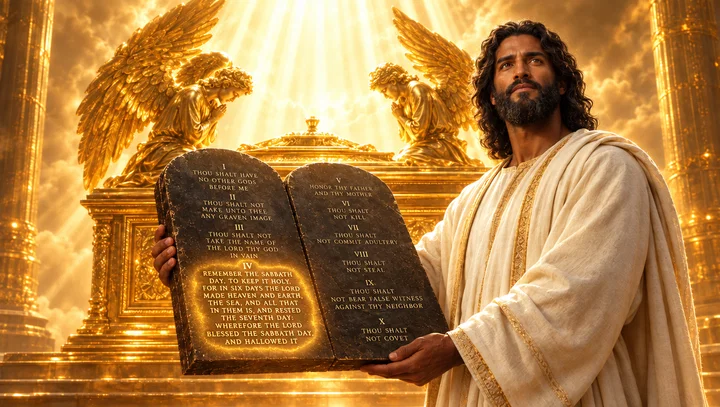
For in six days the LORD made heaven and earth, the sea, and all that in them is, and rested the seventh day: wherefore the LORD blessed the sabbath day, and hallowed it.
God’s creation rest grounds the seventh-day Sabbath and its belonging to the Lord.
- Ezekiel 20:20
And hallow my sabbaths; and they shall be a sign between me and you, that ye may know that I am the LORD your God.
The Sabbath is a sign identifying the Lord and his relationship with his people.
- Mark 3:1-5
And he entered again into the synagogue; and there was a man there which had a withered hand.
Jesus heals on the Sabbath and shows that doing good is lawful.
- 1 Samuel 21:1-6
Then came David to Nob to Ahimelech the priest: and Ahimelech was afraid at the meeting of David, and said unto him, Why art thou alone, and no man with thee?
David’s hunger and use of the showbread provide Jesus’ precedent in the Sabbath dispute.
- John 5:17
But Jesus answered them, My Father worketh hitherto, and I work.
The Father’s sustaining work supports Christ’s merciful Sabbath acts.
- Exodus 31:13
Speak thou also unto the children of Israel, saying, Verily my sabbaths ye shall keep: for it is a sign between me and you throughout your generations; that ye may know that I am the LORD that doth sanctify you.
Both identify the Sabbath as the Lord’s, a sign of his authority and sanctifying power.
- Colossians 2:16-17
Let no man therefore judge you in meat, or in drink, or in respect of an holyday, or of the new moon, or of the sabbath days:
Sabbath days are described as shadows fulfilled in Christ, and believers are not to be judged over them.
- Luke 13:10-17
And he was teaching in one of the synagogues on the sabbath.
Jesus heals a suffering woman on the Sabbath and defends the deed.
- Isaiah 56:2
Blessed is the man that doeth this, and the son of man that layeth hold on it; that keepeth the sabbath from polluting it, and keepeth his hand from doing any evil.
Blessing is promised to those who keep the Sabbath from being polluted.
Commentary part 1 of 2
Each commentary is drawn from primary sources: the writings of Ellen G. White and Adventist pioneers and periodicals. Each commentary is separate. Its own words are not a quotation; follow the references to read the source passages.
Ellen G. White
33 sources
Jesus as the Son of man, God in the flesh in whom divine and human nature are united, is Lord also of the Sabbath because He made it and set it apart as the memorial of creation.DA 288.2–3ST Sep 14, 1882Ms 76, 1897, par. 17–18Ms 43b, 1891, par. 9 As its Creator and rightful Lord He is above all question and above all law concerning it, with authority to declare its purpose and proper observance, to free it from burdensome human rules, and to acquit His disciples of blame for plucking and eating grain on the Sabbath to satisfy hunger.2SP 195.2–197.1DA 284.2–285.34RED 48.2–49.1Ms 12, 1893, par. 8–12 He did not abolish the law or break the Sabbath but kept His Father's commandments without violation, so His lordship upholds the commandment and magnifies God's law rather than canceling its binding claims.PK 183.1DA 287.3–288.1Ms 43b, 1891, par. 12ST Sep 16, 1913Ms 55, 1895, par. 17–21 The Sabbath He is Lord of was made for man for rest and peace and human good, so what is necessary in doing the work of Christ and works of mercy to relieve suffering and meet human need is in accord with the Sabbath law.DA 284.2–285.34RED 48.2–49.14T 539.3–43MR 245.1Ms 12, 1893, par. 8–12 That Sabbath is the seventh day instituted in Eden for all mankind before the Jews existed, and it has not been changed to the first day nor canceled by His death, but remains sacred as long as heaven and earth remain.GC88 446.3–447.1GC 446.3–447.1ST Nov 12, 1894Ms 12, 1893, par. 8–12Ms 6, 1878, par. 11–12
Christ's Lordship and Defense
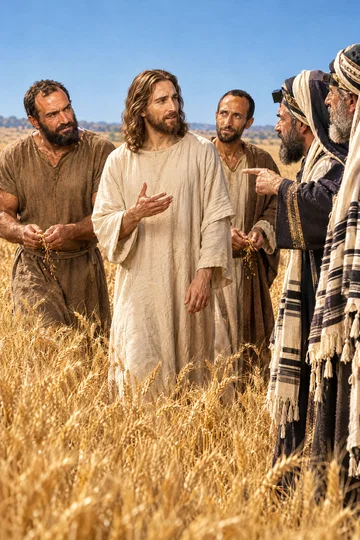
As Son of man He is Lord also of the Sabbath, One above all question and above all law, and as the Infinite Judge He acquits His disciples of blame for plucking and eating grain on the Sabbath to satisfy hunger and sustain bodily strength for God's service, appealing to the very statutes they were accused of violating to prove the act right and lawful.2SP 195.2–197.1DA 284.2–285.3 His lordship means that what is necessary to be done on the Sabbath in doing the work of Christ and in accomplishing God's redemptive service for man is in accord with the Sabbath law, because the service of God is first of all.DA 284.2–285.3 In divine and human nature united as God in the flesh with all the fullness of the Godhead, He exercised His own divine prerogative as Lord of the Sabbath.Ms 43b, 1891, par. 9 When the disciples were charged with breaking the Sabbath for plucking heads of wheat and rubbing out and eating the kernels, He repelled the charge, established their innocence, and with unique dignity cast over them the shield of His own lordship.Ms 43b, 1891, par. 9
He has authority to declare the Sabbath's purpose and proper observance and to explain its original meaning, cutting through burdensome human rules.4RED 48.2–49.1Ms 12, 1893, par. 8–12 The Sabbath was made for human good to give rest and peace and remind of the Creator, not to burden or deny bodily needs, so meeting hunger to continue serving God was lawful.4RED 48.2–49.1 Because He made the Sabbath and is its Creator and Lord, the rulers' charge that He broke it was wrong.STMW6 43.2Lt 78, 1896, par. 42–43 Charging its own Maker with transgression was blindness.Ms 43b, 1891, par. 1
As rightful Lord He denied the Pharisees' right to question Him or interfere with His work, for the Jewish system gave them no such authority and their claims rested on pride and arrogance.2SP 169.1–23RED 32.1–2 Though virtually summoned before the dignitaries to be tried for His life on the charge of breaking the Sabbath, His words were unanswerable and they could not condemn Him.2SP 169.1–2 He refused to plead guilty to any wrong or submit to unjust claims.2SP 169.1–23RED 32.1–2 He did not abolish the law, break the Sabbath, or justify His disciples in breaking it, but kept His Father's commandments without violation of its holy precepts so that He could ask unchallenged who could convict Him of sin.DA 287.3–288.1 His declaration and conduct uphold the Sabbath commandment with respect for God's holy law, and His death magnifies God's law and shows it immutable.ST Sep 16, 1913Ms 55, 1895, par. 17–21
Sabbath's Origin and Permanence
The Sabbath belongs to Christ and is the Lord's day because the Sabbath was made for man and Christ made it.DA 288.2–3 He set it apart as a memorial of creation, so it points to Him as both Creator and Sanctifier.DA 288.2–3 He who created all things in heaven and earth and by whom all things hold together is head of the church and by His power reconciles to God.DA 288.2–3
It is a sign of His power to make people holy, given to all whom He makes holy and to all who through Him become part of the Israel of God.DA 288.2–3 Received as a sign of His creative and redeeming power it is a delight, and seeing Christ in it brings delight in Him.DA 288.2–3 It points to the works of creation as evidence of His mighty power in redemption, calls to mind the lost peace of Eden while telling of peace restored through the Saviour, and repeats His invitation to rest.DA 288.2–3
His lordship rests on creatorship, for He made the worlds and made the world and man, proclaimed the law at Sinai, and made the Sabbath and gave it to man to keep holy.ST Sep 14, 1882Ms 76, 1897, par. 17–18 The seventh day is sacred to Him as the day set apart to receive the worship of angels and people.ST Sep 14, 1882 He displaced the rubbish of human tradition that had been piled upon the Sabbath and made its true meaning plain.Ms 76, 1897, par. 17–18
He put His divine sanction on the seventh day by freeing the Sabbath from the human traditions and rubbish under which it had been buried and placing it on its eternal basis.PK 183.1Ms 43b, 1891, par. 12 He kept it according to God's law rather than rabbinical requirements, and rejected observance that reflected human selfishness and arbitrariness rather than God's character.PK 183.1 His authority therefore does not cancel its binding claims.PK 183.1 Through His precepts and example His disciples kept obtaining new discoveries of truth, as He presented heaven and earth united in harmonious action.Ms 43b, 1891, par. 12
The Sabbath He is Lord of is the seventh day, not the first day, and His lordship confirms its claim as the Lord's day rather than authorizing a change to Sunday.GC88 446.3–447.1GC 446.3–447.1 The seventh-day Sabbath is God's memorial of creation and a witness to His claim to human reverence and homage.GC88 446.3–447.1 His words cut through human rules that had burdened the Sabbath with extra demands, for He has authority to explain its original meaning.Ms 12, 1893, par. 8–12 The Sabbath is the Lord's Sabbath commanded in the fourth commandment and enduring, so replacing it with Sunday is a change to God's law, not an equivalent choice of day.Ms 12, 1893, par. 8–12 His death did not cancel the fourth commandment, which was to remain sacred forty years after His death and to retain its claim as long as heaven and earth remain.ST Feb 20, 1901
The Sabbath is not Jewish in origin but was instituted in Eden before the Jews existed, made for all mankind and intended to last as long as humanity.ST Nov 12, 1894 He called it His holy day, and the seventh-day Sabbath of the fourth commandment has not been changed.ST Nov 12, 1894 He sanctified and blessed the seventh day, hallowing it as the day on which He rested.Ms 6, 1878, par. 11–12 Its association with the Jews is no reason to reject it, just as that would be no reason to reject the Bible or Christ, and keeping it bears witness that God's original Eden Sabbath remains His Sabbath.ST Nov 12, 1894Ms 6, 1878, par. 11–12
The Lord of the Sabbath is the Creator of heaven and earth, exalted above all false and other gods.8MR 100.1Ms 122, 1901, par. 8 Keeping the true Sabbath bears witness to knowledge of the true and living God.8MR 100.1 Observing it bears witness to the world that Christians know the true and living God and distinguish Him from false gods.Ms 122, 1901, par. 8
False zeal for the Sabbath joined with rejection of its Lord sets aside the true foundation for observance and makes the fourth commandment of no significance.Ms 91, 1894, par. 11 Under pretense of honoring Christ such a course tears down God's great memorial and turns minds away from the Creator to a spurious institution.Ms 91, 1894, par. 11 Keeping the Sabbath is obedience to the truth against the claim that the law has been done away.Lt 130, 1894, par. 1–4 In the perilous period when universal contempt is placed on God's law and the world is choosing between the holy Sabbath of the fourth commandment and the spurious sabbath, His words about the Sabbath carry full authority and nothing should detract from them, for He foreknew the deadening and paralyzing influence abounding iniquity would have on the piety and loyalty of believers.Ms 21, 1897, par. 30–33
Right Sabbath Observance
The Sabbath permits works of mercy, and relieving the suffering of the sick is not a violation of it.4T 539.3–43MR 245.1 It is a day set apart by God for sacred use under Christ's authority as its Lord.3MR 245.1 His miracles on that day showed that meeting the needs of people afflicted by Satan is fitting work for the Sabbath, done to relieve suffering and not merely to display power.3MR 245.1
The disciples' plucking and eating grain as they passed through a field on the Sabbath was in keeping with God's provision for human need.PP 531.1–2HSFM 165.2 A hungry person was permitted to take grain or fruit from a neighbor's field, and the laws reserving harvest leftovers and gleanings for the poor illustrate the same care.PP 531.1–2HSFM 165.2
That permission does not excuse regularly spending the Sabbath in writing or in ordinary labor, which harms spiritual life and dishonors God.4T 539.3–4 Ordinary work and pleasure-seeking activities such as ball playing and swimming are not necessities and neglect the Sabbath's sacred purpose.3MR 245.1 Doing unnecessary work on this holy commandment can weaken its sacredness until the commandment has no effect.CH 452.2 Work that is truly necessary does not make Sabbath observance unimportant, and those required to do such work need special care to preserve its sacredness.CH 452.2
Sources
Pioneers and periodicals
203 sources
Therefore because the Sabbath was made for humanity and not humanity for the Sabbath, the Son of man is its Lord, having made it as a blessing for people. He is its Lord as its Creator, owner and sole divine authority, who with the Father made all things, rested on the seventh day, blessed and sanctified it, and to whom it belongs as his holy day.ST Sep 24, 1912RH Jul 15, 1915ST Nov 7, 1900 The Sabbath he claims is the definite seventh day of the week, Saturday, made in Eden for the whole human race and not for Jews alone, which as his day is the Lord's day of Revelation 1:10.ST Sep 24, 1912RH Jul 15, 1915ST Nov 7, 1900RH Oct 10, 1907 His lordship does not abolish, change or transfer the Sabbath but cherishes, protects and upholds it, giving him authority as Maker and interpreter to judge its purpose and to show that meeting human need and doing good is lawful on it.ST Apr 14, 1881ST Nov 7, 1900RH Feb 3, 1852RH Apr 25, 1854RH May 23, 1865 The first day, Sunday, is never claimed by him, never called the Sabbath or the Lord's day, and his lordship gives no authority to remake it as a Christian Sabbath, while the claim of another power to change the day is a usurpation that does not alter his appointment.RH Oct 22, 1861RH Jul 23, 1857RH Jan 10, 1854RH May 6, 1873
Setting and Wording
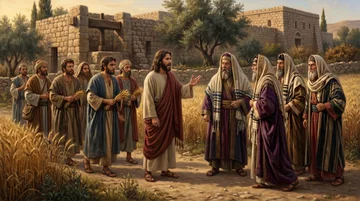
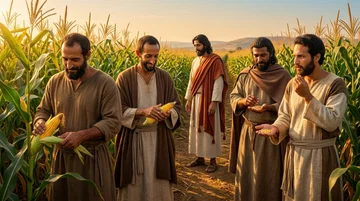
The setting was an accusation on the seventh day, when the Pharisees who knew no other Sabbath charged the disciples with breaking it for satisfying hunger by plucking wheat and rubbing and eating grain as they walked through the field.ST Nov 11, 1897ST Dec 4, 1884ST Aug 6, 1894ST Nov 7, 1906 That seventh day was Saturday, the Sabbath the Pharisees themselves recognized, and the declaration that follows concerns that day and no other.RH Apr 25, 1854ST Dec 4, 1884ST Jan 5, 1915ST Nov 7, 1906 It was spoken before the first-day tradition existed, so it cannot refer to Sunday, and the Gospel record afterward still calls the next day simply the first day of the week.ST Dec 4, 1884ST Aug 6, 1894ST Nov 7, 1906
The word therefore joins lordship to the reason just given, because the Sabbath was made for humanity and not humanity for the Sabbath.ST Nov 7, 1900ST Nov 11, 1897 For that reason the Son of man is its Lord, having made it as a blessing for people.ST Nov 7, 1900ST Jan 5, 1915 He created it, rested on the seventh day, and blessed and set it apart for all people in every age and place, that they might receive God's rest and blessing.ST Nov 7, 1900RH Oct 10, 1907 His lordship upholds the fourth commandment while condemning narrow ideas of its observance, and his own careful observance showed how it should be regarded.ST Nov 7, 1900
The title Son of man relates him to all humanity and not to only one part of the human race, supporting the reading of man in the preceding statement as mankind generally.ST Nov 16, 1876ST Jun 6, 1900 It points to his position as the second Adam answering to Adam the man for whom the Sabbath was made, beginning with Adam before the fall.RH Mar 4, 1875RH Sep 2, 1851RH Apr 28, 1874 As Lord of humanity made for humanity he is also Lord of the Sabbath made for humanity, its sacred rest day.ST Jun 6, 1900RH Sep 2, 1851 As second Adam and heir of all things and author of good and giver of mercy, he holds rightful authority over it; as Son of God he was with the Father in its institution, and as Son of Man and appointed head of humanity he observes it perfectly.RH Sep 2, 1851RH Apr 28, 1874 The Sabbath began with the first Adam and endures throughout the reign of the second Adam as part of creation's perfect order, not a ceremonial or typical code, a living word of God and not something absent or merely a dead type or shadow.RH Sep 2, 1851RH Apr 28, 1874
The disciples' act of picking and shelling grain to eat as they passed through the field was not sinful, because it was a work of necessity providing their meal, and when they were charged with threshing he justified them against the charge.ST Sep 19, 1911RH Oct 21, 1858 He pointed to David who when hungry went into the house of God in the days of Abiathar the high priest and ate the showbread lawful only for priests and shared it with those with him, teaching that God will have mercy and not sacrifice, so meeting human need does not condemn the guiltless.ST Nov 11, 1897 He referred to the Sabbath teaching in the books of Moses without questioning their authority.ST May 28, 1902 The incident gives no support for saying he himself plucked grain to transfer a priesthood to his disciples, nor for saying a change of priesthood required a change of Sabbath law, nor did he correct the disciples by saying their Sabbath reckoning was wrong.RH Oct 21, 1858RH Sep 1, 1859RH Jun 26, 1900
Creator and Lord
The Son of man, Jesus Christ, is Lord of the Sabbath as its owner, master, possessor and sole divine authority.ST Sep 24, 1912RH Mar 22, 1864ST Oct 22, 1894 The Sabbath belongs to him and is his day and his holy day, standing under his authority as a religious institution.ST Sep 24, 1912RH Mar 22, 1864ST Oct 22, 1894 It bears the title the Lord's day, and no other day is so called in the Bible.ST Sep 24, 1912RH Mar 22, 1864 He has authority over the Sabbath and teaches its true use, sanctioning the meeting of human need upon it.ST Apr 14, 1881ST Oct 22, 1894
He is its Lord because he made it as Creator and Maker.RH Jul 15, 1915ST Nov 7, 1900 As God's agent and co-worker by whom all things and worlds were made, through whom nothing was made without him, he with the Father rested on the seventh day at the close of creation week.RH Jul 15, 1915ST Nov 7, 1900RH May 16, 1912ST Aug 12, 1886 He blessed it, sanctified it, set it apart and established the seven-day week, and all things hold together through him.RH Jul 15, 1915ST Nov 7, 1900 His own careful observance showed how it should be regarded, as made for all people in every age and place to receive God's rest and blessing. Because he made and honored it, it is the Lord's day and a memorial of creation, eternal and unchangeable, whose law runs parallel with every other divine law.RH Jul 15, 1915ST Nov 7, 1900
Father and Son are one as Lord of the Sabbath and shared in creating humanity and in making, resting on and blessing it, so it belongs to both.RH Mar 22, 1864RH Feb 13, 1872RH Sep 30, 1852ST Aug 12, 1886ST Sep 18, 1893 His claim dates from creation as an inherent right, not a later appointment, for the Son shared in creation and was directly involved in the original rest and setting apart.RH Feb 13, 1872RH Sep 30, 1852 The title Lord of the Sabbath is connected with Lord of hosts as Lord of creation's hosts, and keeping it honors Christ as well as the Father with honor due the Son.RH Sep 30, 1852ST Aug 12, 1886 His lordship cherishes, protects and defends his people, compared to a husband's relation to his wife in giving his life for them and coming again to take them to himself.RH Feb 3, 1852
As sinless second Adam he now holds in a twofold sense as Son of God and Son of man the lordship of earth and Sabbath forfeited by sinful man.RH Apr 28, 1874 The Sabbath was given to sinless man when he stood under his Creator as lord of the earth, with man as master and the Sabbath as servant for his good, to be used righteously without exceeding rightful prerogative or trampling it underfoot. By sin man forfeited right and title as lord of the earth and is therefore no longer lord of the Sabbath, and mere man is not its lord. Christ alone is the rightful Lord of the Sabbath and also Lord of all, as Son of God present with the Father at its institution and as Son of man and appointed head of humanity observing it perfectly, in close relation to the first Adam for whom it was made in Eden.RH Feb 13, 1872RH Apr 28, 1874 Mere legal keeping on any day amounts to nothing and turns the Sabbath into a yoke of bondage with master and servant exchanged, and keeping a spurious Sabbath made by man without divine authority and compelling others usurps his prerogative over the Sabbath and over consciences.
In opposition held by some, his appeal does not prove ownership by nature but only official lordship as church head over the Lord's day while the Father remains Lord, since he was present at creation as the Father's agent not proprietor.RH Mar 4, 1873 In that same dispute his lordship described as higher than man's was contested, though his authority over it is established by his own words and his work of creation.RH Jul 29, 1873RH May 6, 1873 The claim by Rome for the Vicar of Christ to have lordship even of the Sabbath and power to change it is an arrogant usurpation of his sole divine authority and a corruption of his law and institution, which does not in reality change or give ability to change the divinely appointed day.RH May 27, 1873
As Maker and best interpreter he has authority to establish the Sabbath, judge its purpose and proper observance, and judge what is lawful on it.ST Apr 14, 1881ST Oct 22, 1894RH Feb 4, 1862 His authority is grounded in his presence with the Father when it was made and in his divine creative work by which all things were created by him and for him.RH Feb 4, 1862 He designates the particular day without leaving confusion and has authority to determine and to change it, and neither Acts nor epistles decide the Lord's day but his affirmation settles it.ST Dec 19, 1916RH May 27, 1873 Churches, civil government and earthly rulers have no authority to set, regulate, make or enforce it.RH May 27, 1873
Made for Humanity
The Sabbath was made for the whole human race and not for Jews alone, for man in its broadest sense means all mankind including Adam and all his posterity, patriarchs, Gentiles and Christians in every age, place and dispensation.RH Oct 10, 1907RH Apr 11, 1854RH Apr 28, 1874 It was instituted in Eden at creation before sin and the fall, before national divisions and one language, more than two thousand years before any Jew existed, and not first at Sinai, and it will continue after sin is gone.RH Oct 10, 1907ST Apr 6, 1915ST Aug 6, 1894 If it were for Jews only, Christ would be Saviour only of Jews.RH Oct 10, 1907 The declaration was spoken when the Pharisees charged the disciples with Sabbath-breaking for plucking ears of corn while hungry passing through a field, correcting their error of treating the Sabbath as if man were made to serve it as a burden.RH Apr 11, 1854ST Aug 6, 1894 Joined to the statement that the Sabbath was made for humanity, lordship shows Christ made it, has authority over it, observed it as continued practice, and left its Eden institution and Sinai command continuing without change or repeal, commemorating creation and lasting as long as heaven and earth endure.ST Apr 6, 1915RH Apr 28, 1874
It was made for man's highest good as blessing, delight, rest, refreshment and holy joy, not as burden, yoke or cruel sacrifice.RH Oct 10, 1907ST Jan 30, 1896 It is perfectly adapted to man's condition, meeting physical and spiritual and moral and mental and intellectual need for rest and for a day devoted to the special service of God, so that people could receive God's rest and rich blessing and honor the Creator.RH Apr 11, 1854RH Jan 22, 1914 Because he with the Father made it on man's account, rested on the seventh day, blessed and set it apart, and carefully observed it, he is its Lord and its best interpreter and shows how it should be regarded.ST Jan 30, 1896 Its purpose permits doing good on the Sabbath but not using the day for personal profit or pleasure or for whim, and because Jesus made and honored it, it is the Lord's day, eternal and unchangeable, sanctified and blessed for man as perpetual covenant and perpetual reminder of God's rest with universal application and perpetual obligation from Genesis to Revelation.RH Jan 22, 1914
As a husband being lord gives no right to abolish his wife, Christ being Lord gives no right to abolish the Sabbath.ST Jan 6, 1881RH Jul 24, 1866 He has authority over it while upholding it, and loves, cherishes and protects it and defended it as a merciful institution made for humanity's good, with his works on it lawful and according to Sabbath law rather than violations, binding at least to the crucifixion, for breaking it would have made him a sinner.ST Jan 6, 1881RH Jul 24, 1866 Its divine appointment at creation before the fall gives it moral standing like marriage, placing it alongside marriage as a God-given sacred moral institution, and establishing its obligations as part of his righteousness.ST Jan 28, 1875ST Dec 7, 1915RH Feb 4, 1875 The fact it was made for humanity no more makes it disposable than marriage is disposable, and lordship gives people no liberty to disregard or put it away, for it belongs to moral law not ceremonial law, established in paradise before sin made a future-pointing shadow necessary, continuing as long as new heavens and new earth remain and not ceasing as a shadow reaching its body.RH Oct 7, 1851
Made for humanity to use in worship of God, it does not make humanity proprietor like Christ its Maker nor subject to each will or to use as pleased.RH Jul 8, 1873ST May 20, 1897ST Jul 29, 1880 Sabbath means rest put by God into the seventh day when heavens and earth and all their host were finished in six days, then blessed and sanctified because he had rested in it, made with the Father for upright holy man made in God's image to enjoy and enter his Creator's rest, not man for the Sabbath as a burden against him.ST Aug 8, 1906ST Aug 4, 1914 It is his holy day, not merely an old Jewish day, to be honored as delight by turning from one's own pursuits and choices to do his will, with violators of the fourth commandment to be called to account.ST May 20, 1897ST Jul 29, 1880 The Jewish hedging of the fourth commandment with traditions above every other commandment came from reversing this and treating the Sabbath as against man, because without taking away the stony heart and giving a heart of flesh and a new spirit they did not see the spirituality of the law, could not understand spiritual things, and could not enter God's rest and keep the Sabbath.ST Aug 8, 1906
Seventh Day Identified
The Sabbath he claims is the definite seventh day of the week, Saturday, the Sabbath of the fourth commandment blessed and sanctified by God and kept according to the commandment.RH Jul 15, 1915ST Nov 7, 1900RH Mar 22, 1864RH Apr 25, 1854 It is the day before the first day of the week, and with only seven days the day before the first is always the seventh, not of year or month.RH Mar 22, 1864ST Dec 4, 1884 His authority over it comes from his role as Creator, who after creating the world rested on the seventh day, blessed it, and set it apart as holy time for the human family.RH Jul 15, 1915ST Nov 7, 1900RH Apr 25, 1854ST Dec 4, 1884 Being its Lord means the Sabbath belongs to him and is his day, the Lord's day, and no other day is called the Lord's day in the Bible.RH Jul 15, 1915ST Nov 7, 1900RH Mar 22, 1864 The Sabbath day in that encounter was the seventh day the Pharisees recognized as the Sabbath, and his lordship together with the Sabbath made for man proves its perpetuity through the First Advent, confirmed by his recognition that it would still exist at least thirty-five years after his death and resurrection at the destruction of Jerusalem.RH Apr 25, 1854ST Dec 4, 1884
The Sabbath institution and its day are inseparable, because its essential basis is God's rest on the definite seventh day after creation.RH Oct 24, 1871RH Feb 7, 1916RH Jan 13, 1852 Christ's words concern observance of that day, not an abstract institution that can be transferred to another weekday, and therefore do not support abolishing the seventh-day Sabbath while retaining the institution on the first day.RH Oct 24, 1871ST Jul 19, 1883RH Jan 13, 1852 The verse concerns the weekly Bible Sabbath established at creation resting on God's creative power and humanity's needs, distinct from the yearly feast-day, annual ceremonial, festival, land and shadow sabbaths that could fall on any weekday and ended with their antitype.RH Feb 7, 1916RH Jan 13, 1852 It has not been put away or transferred, with its name and place given to the first day of the week, and identifies the Sabbath as the Sabbath, not merely one among different days, given for all people and not only for Jews.RH Dec 21, 1869ST Jul 19, 1883RH Feb 7, 1916 His authority to determine how it is properly kept and which acts do or do not violate it was exercised as Son of man because the Sabbath was made for humanity, not by claiming a right to set aside the law or change its appointed day.RH Oct 24, 1871RH Jan 13, 1852
Jesus knew which day the Sabbath was, kept the same day his countrymen kept without correcting the day, and with the Father calls it his holy day.ST Feb 22, 1905RH Jul 21, 1853RH Nov 5, 1861RH Sep 9, 1902 His observance without correcting the day confirms that the seventh day known in his time was the true seventh day established at creation, the same seventh day known by Adam, through manna, wilderness, and the Old Testament to Christ's time.RH Jul 21, 1853RH Nov 5, 1861 His living, dying, and rising in sequence with the Sabbath proves its identity, for he lived, died, and rose on the first day Sunday which is the day just after the Sabbath, while his disciples rested on the Sabbath according to the commandment while he lay in the tomb.RH Jul 21, 1853ST Mar 27, 1893RH Oct 23, 1866 Weekly order is unbroken by creation order not human reckoning, refuting loss by lengthened days in Joshua and Hezekiah and the claim that time was lost and Sunday is as near right as Saturday.RH Jul 21, 1853ST Mar 27, 1893 His custom of teaching on the Sabbath while expounding the prophets and magnifying God's law shows his regard for it, his teaching and practice revealed its true spirit against burdensome traditions, and his authority would set it right even if lost.RH Jan 21, 1915RH Oct 23, 1866RH Sep 9, 1902
The seventh day alone carries God's claim and alone is required to be kept holy, reserved from the beginning to be devoted exclusively to worship and acknowledgment of God as Creator.RH Jan 24, 1865RH Aug 17, 1869ST Aug 23, 1883 It is set apart from the other six, never changed, divorced, taken away or replaced, and remains his unless he gives up his claim to it.ST Feb 22, 1905RH Jan 24, 1865RH Aug 17, 1869 It is the only day for which either the Father or the Son makes such a claim, because the Son shared with the Father in creating the world and in resting, blessing, and sanctifying the seventh day.RH Jan 24, 1865RH Feb 18, 1873 God never rested on, blessed, or made any other day the Sabbath, that blessing and sanctification apply to the seventh day of every week, and blessing cannot be transferred.RH Aug 17, 1869ST Aug 23, 1883ST Mar 9, 1915 His lordship does not mean the Sabbath has been changed, for the Lord of the Sabbath never changes and made it right from the beginning, so substituting Sunday by human custom makes void the commandment at peril.ST Feb 22, 1905ST Aug 23, 1883ST Mar 9, 1915
The definite seventh day can be found and kept wherever people live, including while traveling around the world and in the polar regions.RH Nov 9, 1911RH May 26, 1853 Crossing the date line changes the reckoning of the day, not the actual amount of time.RH Nov 9, 1911 Its day runs from sunset to sunset, unlike Saturday as a civil day which runs from midnight to midnight.ST Jun 26, 1901 It is not a local, racial, or national institution to be called merely the Jewish Sabbath.RH Nov 9, 1911ST Jun 26, 1901 He kept the Sabbath rightly in Jerusalem and at the right time, showing it can be observed at its proper local time in different places.RH Nov 9, 1911RH May 26, 1853ST Jun 26, 1901
Lord's Day Versus Sunday
Because he is its Lord, the seventh-day Sabbath is the Lord's day and God's holy day.ST Sep 24, 1912ST Nov 7, 1900RH Mar 22, 1864ST Sep 19, 1911ST Sep 2, 1897 The Sabbath he claims is the seventh day of the week made at creation when God worked six days then rested, blessed and sanctified the seventh day for holy use, commanded in the fourth commandment and kept by the Jewish nation, not a human institution to be added to or changed to a day of human choosing.ST Nov 7, 1900ST Dec 4, 1884ST Sep 2, 1897 As its Maker by whom all things were made and its Author who knows how it was made to be observed, his lordship means it was made for man's highest good and not against man, not as cruel sacrifice nor as a thing to use or abuse for human whim, with its law running parallel to every other divine law.ST Nov 7, 1900ST Sep 19, 1911 His lordship upholds the validity of the fourth commandment while condemning narrow ideas of its observance, so that meeting human hunger and healing, doing good on the Sabbath, is lawful, and the dispute concerned manner of keeping, not which day was the Sabbath.ST Nov 7, 1900ST Sep 19, 1911ST Dec 4, 1884 This fixes Revelation 1:10, joined with Exodus 20:10 calling the seventh day the Sabbath of the Lord, where six days are man's but the seventh is the Lord's, and no other day is called the Lord's day in the Bible.RH Mar 22, 1864RH Jul 23, 1857RH May 8, 1900 John in the Spirit on the Lord's day in A.D. 97, sixty-four years after the cross, was on the seventh-day Sabbath, proving it did not cease at the cross.RH May 8, 1900
The verse proves Sunday, the first day of the week, is not the Lord's day or Sabbath.RH Oct 22, 1861RH Jul 23, 1857RH Jun 10, 1873RH May 8, 1900 The first day is never claimed by the Lord in Scripture, is never called the Lord's day or a Sabbath, and is only called the first day of the week, while the seventh day alone is the Sabbath of the Lord, God's holy day, and the true Lord's day.RH Jun 10, 1873RH May 8, 1900ST Apr 8, 1889 Sunday has no more right to the title than Monday and is only kept as the Lord's day by human choice, while keeping the seventh day, commonly called Saturday, according to the commandment is keeping the Lord's day.ST Apr 8, 1889 Jesus kept the seventh day in imitation of his Father's example at creation, leaving an example faithfully followed by the primitive church, and the only true observance is to observe it when Christ observed it and as he observed it, letting him observe it in the believer as he did in Jesus of Nazareth nineteen and a half centuries ago.RH Jun 10, 1873 Early Christians did not call the first day Sabbath or Lord's day until A.D. 200 when apostasy advanced, and the Bible does not forbid travel or work on it.RH Jun 10, 1873
His lordship gives no power to remake a first-day Christian Sabbath or Resurrection Day.RH Jan 10, 1854 It does not prove from his resurrection on the first day that he and his disciples ever after met only on that day, and does not prove they never met on the seventh day afterward, with no such change intimated during the forty days after his resurrection and no change announced in his discussions that freed the Sabbath from false interpretations and taught its true nature and purpose.RH Jan 10, 1854ST Feb 15, 1883 His resurrection on the first day did not sanctify it nor make it holy, for as Creator he made the Sabbath, set it apart, gave it to humanity, and gave its unchangeable law.ST Jul 13, 1904 Using his lordship to require first-day observance and to condemn those who disregard it makes void the law of God and opposes God's truth, calling instead for keeping God's Sabbath with all his commandments and the faith of Jesus without drawing back to perdition.RH Jan 10, 1854 That his authority alone does not show that he changed it is admitted even where the right to change it is asserted from his lordship, and the claim that resurrection changed the Sabbath to the first day is speculation without biblical evidence.RH Apr 13, 1869RH Jan 30, 1866
In opposition, some held that lordship proves the first day of the week should be kept as the Sabbath day.RH Oct 4, 1870 Others held that the seventh day already had a familiar distinctive name, so the unusual phrase in Revelation 1:10 must refer to the first day of the week, even while citing his declaration that the Son of man is Lord of the Sabbath as support for calling a Sabbath the Lord's day.RH Apr 29, 1873RH Jan 16, 1866 Others described the Sabbath's glory as surviving his death with his body in the tomb on the seventh day and gaining new luster through his resurrection, so that the first day became the Lord's day.ST Sep 6, 1883RH Apr 1, 1873 That claimed change was supported by his appearances to the disciples on the first day and by the outpouring of the Holy Spirit at Pentecost, treated as teaching that the first day had become holy time.ST Sep 6, 1883 These are rejected as without biblical evidence, act of consecration, announced change, or Scripture authority.RH Apr 13, 1869ST Feb 15, 1883
In further opposition, some claimed that men are lords over the Sabbath and may change it into Monday or any other day as need is seen, may make every tenth day holy or two days every week if expedient to teach the people, and are not bound to keep Saturday.RH Mar 7, 1854ST Oct 19, 1882RH Jan 31, 1856 On that view the ancient Sabbath is abolished and Sunday is kept only as a festival appointed by the church and magistrates to put a difference between Christians and Jews and lest men become servants to the day after Jewish superstition, a human ordinance which magistrates and the church may lawfully change whenever they see cause.RH Mar 7, 1854ST Oct 19, 1882RH Jan 31, 1856ST Sep 21, 1882 A related claim joined this human lordship to his lordship by saying Jesus as Lord changed the Sabbath from the seventh to the first day in honor of his resurrection, so the first day was observed as the Christian Sabbath for almost sixteen hundred years.ST Sep 21, 1882 Against this, Christ alone is the rightful Lord of the Sabbath and man is not its lord, for man was not made for the Sabbath, not even for the true seventh-day Sabbath made by the Creator for man, and certainly not for a counterfeit Sabbath made by man without divine authority.RH May 20, 1862 Mere legal Sabbath-keeping on any day amounts to nothing and turns the Sabbath into a yoke of bondage in which master and servant have exchanged places, and those who keep a spurious Sabbath and compel others to keep it usurp Christ's prerogative as Lord of the Sabbath and assume lordship over men's consciences, which is a great departure and sin, with the Sabbath under his authority not human authority to change at will nor its observance a human ordinance.RH May 20, 1862
Sources