Mark 16:1
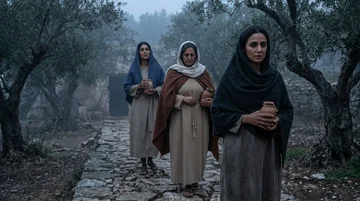
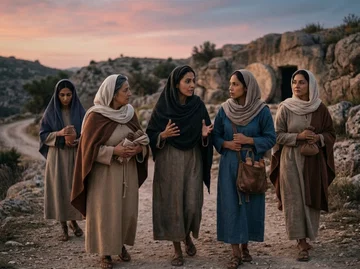
And when the sabbath was past, Mary Magdalene, and Mary the mother of James, and Salome, had bought sweet spices, that they might come and anoint him.
Translations
American King James Version, King James Version, KJV Cambridge Paragraph Bible, Webster Bible
And when the sabbath was past, Mary Magdalene, and Mary the mother of James, and Salome, had bought sweet spices, that they might come and anoint him.
Revised Version, American Standard Version
And when the sabbath was past, Mary Magdalene, and Mary the mother of James, and Salome, bought spices, that they might come and anoint him.
And the sabbath having past, Mary the Magdalene, and Mary of James, and Salome, bought spices, that having come, they may anoint him,
And the sabbath being [ now] past, Mary of Magdala, and Mary the [mother] of James, and Salome, bought aromatic spices that they might come and embalm him.
And, the Sabbath having passed, Mary the Magdalene, and Mary the mother of James, and Salome, bought spices, that, coming, they might anoint him.
Berean Standard Bible, Majority Standard Bible
When the Sabbath was over, Mary Magdalene, Mary the mother of James, and Salome bought spices so they could go and anoint the body of Jesus.
When the Sabbath was past, Mary Magdalene, and Mary the mother of James, and Salome bought spices, that they might come and anoint him.
And when the Sabbath was past, Mary Magdalene and Mary, the mother of James, and Salome, got spices, so that they might come and put them on him.
And when the Sabbath day was past, Marie Magdalene, and Marie the mother of Iames, and Salome, bought sweete oyntments, that they might come, and anoynt him.
Douay-Rheims (Challoner revision)
And when the sabbath was past, Mary Magdalen, and Mary the mother of James, and Salome, bought sweet spices, that coming, they might anoint Jesus.
Pictures
Cross-references 20 of 58
- Matthew 28:1
In the end of the sabbath, as it began to dawn toward the first day of the week, came Mary Magdalene and the other Mary to see the sepulchre.
Places the women’s visit to the tomb after the Sabbath, at the first day of the week.
- Luke 24:1
Now upon the first day of the week, very early in the morning, they came unto the sepulchre, bringing the spices which they had prepared, and certain others with them.
The women bring spices to the tomb early on the first day after the Sabbath.
- Luke 23:56
And they returned, and prepared spices and ointments; and rested the sabbath day according to the commandment.
The women prepare spices and rest on the Sabbath before going to the tomb.
- John 20:1
The first day of the week cometh Mary Magdalene early, when it was yet dark, unto the sepulchre, and seeth the stone taken away from the sepulchre.
Both describe Mary Magdalene coming to Jesus’ tomb early on the first day of the week.
- Exodus 20:10
But the seventh day is the sabbath of the LORD thy God: in it thou shalt not do any work, thou, nor thy son, nor thy daughter, thy manservant, nor thy maidservant, nor thy cattle, nor thy stranger that is within thy gates:
Identifies the seventh day as the Sabbath of the Lord.
- Mark 16:9
Now when Jesus was risen early the first day of the week, he appeared first to Mary Magdalene, out of whom he had cast seven devils.
Jesus rose early on the first day and appeared first to Mary Magdalene.
- John 20:19
Then the same day at evening, being the first day of the week, when the doors were shut where the disciples were assembled for fear of the Jews, came Jesus and stood in the midst, and saith unto them, Peace be unto you.
Jesus appears to the disciples that evening on the first day of the week.
- Mark 15:42
And now when the even was come, because it was the preparation, that is, the day before the sabbath,
Identifies the preparation day as the day before the Sabbath.
- John 19:31
The Jews therefore, because it was the preparation, that the bodies should not remain upon the cross on the sabbath day, ( for that sabbath day was an high day,) besought Pilate that their legs might be broken, and that they might be taken away.
The Sabbath followed the day Jesus was crucified and was a high day.
- Matthew 27:66
So they went, and made the sepulchre sure, sealing the stone, and setting a watch.
The tomb was sealed and guarded as the Sabbath ended.
- Genesis 2:2-3
And on the seventh day God ended his work which he had made; and he rested on the seventh day from all his work which he had made.
Identifies the Sabbath as the day God rested, blessed, and sanctified at creation.
- Luke 23:54
And that day was the preparation, and the sabbath drew on.
Places the preparation day before the Sabbath in the chronology of Jesus’ burial.
- Luke 24:10
It was Mary Magdalene, and Joanna, and Mary the mother of James, and other women that were with them, which told these things unto the apostles.
Luke names the women who went to the tomb and told the apostles.
- Leviticus 23:32
It shall be unto you a sabbath of rest, and ye shall afflict your souls: in the ninth day of the month at even, from even unto even, shall ye celebrate your sabbath.
Sets the Sabbath’s observance from evening to evening.
- John 20:11-18
But Mary stood without at the sepulchre weeping: and as she wept, she stooped down, and looked into the sepulchre,
The risen Jesus appears to Mary Magdalene and sends her to tell the disciples.
- Mark 16:6
And he saith unto them, Be not affrighted: Ye seek Jesus of Nazareth, which was crucified: he is risen; he is not here: behold the place where they laid him.
The women are told Jesus has risen and is no longer in the tomb.
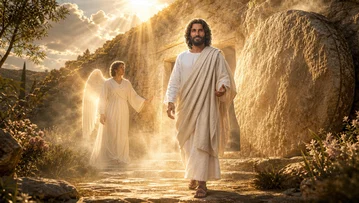
- Matthew 28:9
And as they went to tell his disciples, behold, Jesus met them, saying, All hail. And they came and held him by the feet, and worshipped him.
The risen Jesus meets the women as they leave the tomb.
- John 19:39-40
And there came also Nicodemus, which at the first came to Jesus by night, and brought a mixture of myrrh and aloes, about an hundred pound weight.
Nicodemus brings spices to prepare Jesus’ body for burial.
- Matthew 12:40
For as Jonas was three days and three nights in the whale’s belly; so shall the Son of man be three days and three nights in the heart of the earth.
Jesus’ predicted time in the grave frames the resurrection chronology.
- 1 Corinthians 15:20
But now is Christ risen from the dead, and become the firstfruits of them that slept.
Christ’s resurrection is the firstfruits of the dead.
Commentary
Each commentary is drawn from primary sources: the writings of Ellen G. White and Adventist pioneers and periodicals. Each commentary is separate. Its own words are not a quotation; follow the references to read the source passages.
Ellen G. White
13 sources
When the Sabbath was past the women rested according to the commandment came very early on the first day of the week at sunrise, Mary Magdalene with Mary the mother of James and Salome and Joanna and others, bringing sweet spices to anoint and embalm the body.Ms 115, 1897, par. 1–2COS 175.4–176.1DA 788.1 The spices had been prepared on the day before the Sabbath and set aside, and even the work of embalming was left undone on the Sabbath after the Friday burial.COS 175.4–176.13SP 198.2ST Aug 22, 1878 They came expecting him to remain dead and did not think of his rising, for they had forgotten his promise to see them again and night had settled on their hearts.DA 788.1Ms 94, 1897, par. 22–23RH Aug 7, 1900 On the way they wondered who would roll away the great stone, but they found it already rolled away and the tomb empty with light about it because he had risen.Ms 115, 1897, par. 1–2EW 153.2–154.1SG1 71.2 The angel in white reminded them that while yet in Galilee he had said he must be crucified and rise the third day, and sent them to tell the disciples and Peter that he goes before them into Galilee.Ms 115, 1897, par. 1–2EW 153.2–154.1SG1 71.2
Coming to Anoint Jesus
When the Sabbath was past, Mary Magdalene and Mary the mother of James and Salome, joined by Joanna and certain other women spoken of as the three Marys, came very early on the first day of the week to anoint and embalm the body with sweet and precious spices.Ms 115, 1897, par. 1–2COS 175.4–176.1DA 788.1EW 153.2–154.1SG1 71.2 They came at sunrise while it was still dark, with Mary Magdalene arriving first to meet the others there.Ms 115, 1897, par. 1–2ST Aug 22, 1878Ms 115, 1897, par. 3 The spices they brought had been prepared on the day before the Sabbath and set aside, and they waited until the Sabbath was past before going to the tomb.COS 175.4–176.13SP 198.2ST Aug 22, 1878COS 175.1–3 They rested on the Sabbath according to the commandment, so that even the work of embalming was not done that day, and the burial itself had taken place on Friday.COS 175.1–3Ms 28, 1897, par. 21–29
The women had stood by the cross waiting and watching for the hours of the Sabbath to pass, then rose very early on the first day and made their way to the tomb.Ms 94, 1897, par. 22–23Ms 115, 1897, par. 3 As they walked they recounted his works of mercy and his words of comfort.Ms 94, 1897, par. 22–23 They did not expect him to rise and did not think about his rising, but expected him to remain dead.DA 788.1Ms 94, 1897, par. 22–23Ms 83, 1910, par. 33–34 The sun of their hope had gone out and night had settled on their hearts, because they had forgotten his promise to see them again.Ms 94, 1897, par. 22–23 Their expectation was mistaken, since they would not find a dead Savior needing their care because he would be risen and living.RH Aug 7, 1900Ms 83, 1910, par. 33–34
He received no other anointing afterward, for the Sabbath was near at hand and the Sabbath was kept according to the commandment, so the pouring of ointment upon his head and feet was his anointing for burial.Ms 28, 1897, par. 21–29
Finding the Empty Tomb
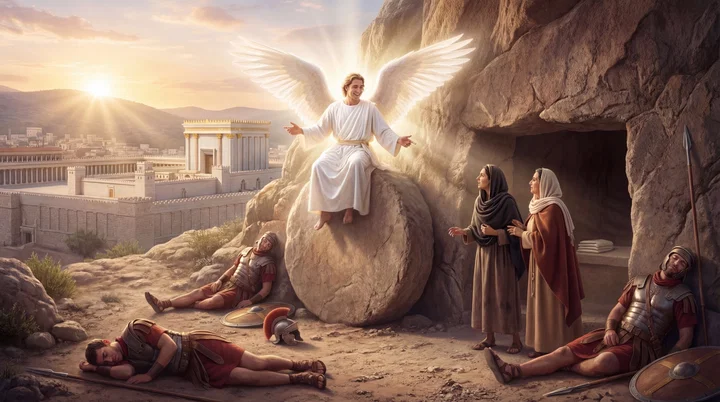
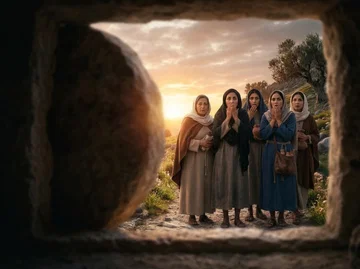
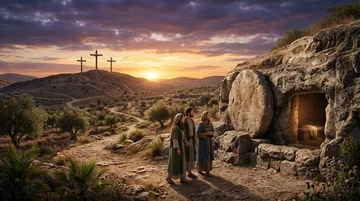
On the way the women asked among themselves who would roll away the great stone from the door for them.Ms 115, 1897, par. 1–2 As they neared the garden the heavens were beautifully lighted up and the earth trembled beneath their feet.Ms 115, 1897, par. 1–2ST Aug 22, 1878
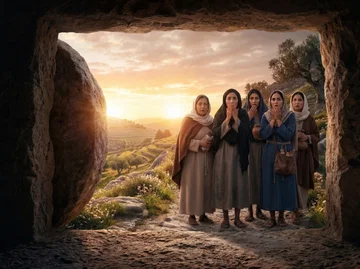
They hastened to the sepulcher and found the stone already rolled away from the door.Ms 115, 1897, par. 1–2EW 153.2–154.1SG1 71.2ST Aug 22, 1878Ms 28, 1897, par. 21–29 The Roman guard was gone, with light shining about the tomb.ST Aug 22, 1878 On looking inside they saw it was empty and His body gone because He had risen.Ms 115, 1897, par. 1–2EW 153.2–154.1SG1 71.2ST Aug 22, 1878Ms 28, 1897, par. 21–29
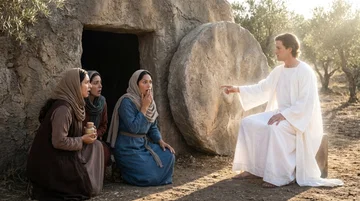
Inside was a young man in a long white garment sitting on the right side, with angels, who told them that Jesus of Nazareth who was crucified is risen and is not there.Ms 115, 1897, par. 1–2EW 153.2–154.1SG1 71.2 They asked why they seek the living among the dead.Ms 115, 1897, par. 1–2 They reminded them that while yet in Galilee He said the Son of man must be delivered into the hands of sinful men and be crucified and rise the third day.Ms 115, 1897, par. 1–2 They sent them to tell His disciples and Peter that He goes before them into Galilee where they will see Him as He said, and to report this to the disciples.Ms 115, 1897, par. 1–2EW 153.2–154.1SG1 71.2
They remembered His words and told them to the eleven and to all the rest.Ms 115, 1897, par. 1–2EW 153.2–154.1 Yet the apostles counted it as idle tales and did not believe.Ms 115, 1897, par. 1–2 The women's errand with the empty tomb marks the beginning of the resurrection announcement.EW 153.2–154.1
Sources
Pioneers and periodicals
117 sources
When the Sabbath was fully past, Mary Magdalene and Mary the mother of James and Salome bought sweet spices and came very early on the first day of the week to anoint Jesus, but found the stone rolled away and learned He was already risen.RH Apr 12, 1906ST Nov 11, 1930RH Oct 4, 1864ST Mar 16, 1882RH May 10, 1860
The Sabbath here ended at sunset Saturday evening, and the visit belongs to the early morning of the next day, showing the Bible day begins at sunset.ST Aug 9, 1899RH Aug 17, 1869ST Nov 29, 1910RH Jan 2, 1900
That Sabbath was the seventh day, commonly called Saturday, ordained in the fourth commandment, and the first day immediately following it is a separate working day, not a continuation of the Sabbath.ST Mar 4, 1886ST Feb 7, 1911ST Feb 16, 1882ST Nov 19, 1902ST Jun 12, 1879
The women rested according to the commandment and waited until it passed to buy and prepare spices, and the day is still called the Sabbath after the resurrection with no repeal or transfer to the first day.ST Nov 12, 1894ST Feb 10, 1904ST Mar 16, 1882RH Jun 23, 1853RH Mar 31, 1874
The resurrection morning is called only by the ordinary name first day of the week with no sacred title or command for its observance, and Jesus rose early that day as conqueror over death.RH Apr 12, 1906ST Nov 11, 1889ST Sep 6, 1910RH Oct 28, 1915
Women Spices and Anointing
The verse names the three women who came to anoint Jesus as Mary Magdalene and Mary the mother of James and Joses and Salome.ST Jan 28, 1913ST Feb 14, 1911ST Mar 20, 1893ST Apr 3, 1901ST Jun 8, 1904 They are the same three women who had been present at the crucifixion, with Salome being the mother of Zebedee's children.ST Jan 28, 1913ST Apr 3, 1901 The Mary who was mother of James and Joses is distinct from the Lord's mother, and Salome is identified as the Lord's mother's sister, so that with two Marys named in the verse and the Lord's mother counted there are three Marys in all, while the Lord's mother herself is not named in this verse.ST Jan 28, 1913ST Feb 14, 1911 Gathered from the different Gospels, Joanna the wife of Chuza is also counted with Mary Magdalene and Mary the mother of James the less and of Joses and Salome among those who went to the tomb, and the women belonged to the company of the disciples who at times went with Jesus and ministered to Him and the company.ST Apr 3, 1901
When the Sabbath was past they bought sweet spices and prepared costly fragrant burial ointment that they might come and anoint and embalm His body.RH Apr 12, 1906ST Nov 11, 1930RH Dec 1, 1868ST Aug 26, 1880ST Aug 26, 1880 The ointment was very precious and costly, made from fragrant spices, joined with what Nicodemus had prepared, and a good name fragrant with humility, self-sacrifice, patience, purity, and love of God and fellow men is better and more valuable still.RH Dec 1, 1868 His body had already been wrapped in linen with spices according to Jewish custom, yet they obtained more spices after the Sabbath for this work.ST Nov 11, 1930ST Mar 16, 1882ST Mar 16, 1882 Though He did not need them and they were not used as intended, their offering expressed love and was not wasted in their eyes.ST Aug 26, 1880ST Aug 26, 1880
They came expecting to tend a dead body and to prepare Him for burial, not expecting Him to have risen.RH Feb 13, 1866RH Aug 12, 1875RH May 10, 1860ST Feb 3, 1881ST Jan 1, 1894 Their buying of spices and their wondering who would roll away the stone show they had not yet learned that He was risen and that this was their first visit to prepare His body, not a return after learning of the resurrection.RH Feb 13, 1866RH Aug 12, 1875RH Feb 7, 1871ST Feb 3, 1881 Their planned anointing on the first day is therefore inconsistent with a visit to the tomb on the previous Sabbath, when they would already have learned that He had risen.RH Feb 7, 1871ST Feb 3, 1881
Very early in the morning on the first day of the week at the rising of the sun, before it was yet fully light and as day was beginning to break, they came to the sepulcher.RH Apr 12, 1906ST Feb 8, 1905RH Oct 4, 1864ST Apr 3, 1901 They found the stone rolled away and entered, and saw a young man sitting on the right side clothed in a long white garment.RH Apr 12, 1906 Being frightened, they were told not to be frightened, because Jesus of Nazareth who was crucified was risen and was not there, with the place where He had been laid shown to them.RH Apr 12, 1906 This first-day dawn visit after the Sabbath is the true order of events, agreeing with Matthew and Luke when the end of the Sabbath is joined to the sealing of the tomb with the guard, and the verse so opens the resurrection account in which Christ's resurrection assures believers that they too will live.ST Feb 8, 1905ST Jun 17, 1889
Language and Timing Details
The phrase when the Sabbath was past means the Sabbath had fully ended and was completed and finished, describing the closing moments of the seventh-day afternoon and the night following it, and the purchase of spices and the coming to anoint belong to after Saturday evening into the early morning after sunset had ended the Sabbath.ST Aug 9, 1899RH Aug 17, 1869RH Jan 2, 1900RH Dec 15, 1863 It does not mean during its closing hours or at the morning beginning of the next daylight period, but after the Sabbath, at the dawning toward the first day of the week, with the end of the Sabbath referring to the same time.ST Aug 9, 1899RH Aug 17, 1869ST The Sabbath still closed at sunset and was observed from evening to evening, so the visit belongs to the early morning after sunset had ended it rather than lasting until daylight, and after the Sabbath is passed is a general time expression for the Sabbath having ended before the women came to the tomb.STRH Jan 2, 1900RH Dec 15, 1863 This timing explains Matthew's wording, in that the Roman authorities sealed the tomb and set a watch at the end of the Sabbath while the women came to see the tomb as dawn began on the first day, placing their purchase in the night following the Sabbath and preserving harmony with Matthew 28:1.ST
The Sabbath begins at sunset Friday and ends at sunset Saturday, observed from Friday evening at sundown to the following day at sundown, and the first day of the week begins at Saturday sunset in agreement with the Bible day beginning at sunset.ST Nov 29, 1910RH Jan 2, 1900ST Nov 17, 1909ST Apr 30, 1896 The day before the first day is therefore the seventh day, commonly called Saturday, the day God rested on, blessed, and made holy, the seventh day ordained in the fourth commandment, coming after six days of work, not five, and coming just before the first day.ST Nov 29, 1910ST Nov 17, 1909ST Apr 30, 1896 That first day is the day Jesus rose from the dead, the day now called Sunday, identified as a working day following the seventh-day Sabbath, while day can also refer to the light part of the day.ST Aug 9, 1899ST Nov 17, 1909 God specifically appointed that very seventh day itself, from sunset Friday to sunset Saturday, not merely a seventh part of time.ST Jan 21, 1897
In the phrase the first day of the week the Greek word Sabbaton means week, not Sabbath, and it should be rendered week, not sabbaths, so the verse does not establish the first day as a Sabbath, make it holy, or change the Sabbath from the seventh day to the first day.RH Oct 9, 1860ST Jan 16, 1896ST Aug 9, 1905 The plural form of the word for Sabbath can have a singular meaning following a Hebrew idiom, where there it refers to the Sabbath day in the phrase the Sabbath being passed.RH Jan 5, 1864 Mark 16:1-2 is one of the four Gospel accounts using the same singular Greek expression containing the word for day to mean the first day of the week, in which sabbaton does not mean Sabbath in the sense of the first of Sabbaths.ST Mar 24, 1887 To use its Greek to prove Sunday holiness twists its meaning, for the Sabbath remains the definite seventh day and the verse does not show that the old order of seventh-day Sabbaths passed away at the resurrection and a new order of first-day Sabbaths began.ST Aug 9, 1905ST Mar 24, 1887
It has been taught otherwise that the singular number for Sabbath speaks of the old Sabbath as past, in contrast with the plural Sabbaths in the next verse, meaning the old order of Sabbaths had passed away and a new order of Sabbaths had begun at the resurrection, with the first of the new Sabbaths coming on resurrection morning.ST Mar 24, 1887 On that teaching the Sabbath was past in the plural, the end of the Sabbaths, because once every year after the Exodus two Sabbaths came together, and the day on which the women come to anoint him is itself called Sabbath, one of the Sabbaths, and is known in the Gospels by no name but Sabbath.ST Apr 15, 1897 The Greek on this argument contains no word for week anywhere in the New Testament and no word for day in this expression, so the first day of the week cannot be found in the Greek and does not belong in English.ST Apr 15, 1897 The resurrection day is thus called Sabbath eight times in the New Testament and the Lord's day once, and by no other names.ST Apr 15, 1897
Harmony with Other Gospels
The buying after the Sabbath is reconciled with Luke's account of spices prepared on Friday in that the women prepared some on the preparation day after his death and bought more after the Sabbath had ended.ST Aug 22, 1878ST Nov 11, 1930ST Feb 7, 1911 They had prepared the spices and ointments before the weekly Sabbath after Jesus was laid in the tomb, then rested on the Sabbath according to the commandment.ST Feb 7, 1911RH Apr 7, 1851 Early in the morning of the first day of the week the Marys with certain other women went to the sepulcher to embalm the body of the Saviour.ST Aug 22, 1878ST Feb 7, 1911 As they neared the garden the heavens were beautifully lighted up and the earth trembled beneath their feet, and hastening to the sepulcher they found the stone rolled away from the door and the Roman guard gone, with a light shining about the tomb, and on looking in they saw it was empty.ST Aug 22, 1878
The Sabbath was past when Mary Magdalene and Mary the mother of James and Salome came to anoint Jesus, and with the next verse this places their coming very early in the morning on the first day of the week at the rising of the sun.ST Feb 8, 1905RH Oct 9, 1866RH Apr 23, 1861 That first-day dawn visit after the Sabbath is the true order of events, agreeing with Matthew and Luke when the end of the Sabbath is joined to the sealing of the tomb with the guard.ST Feb 8, 1905ST The Roman authorities sealed the tomb and set a watch at the end of the Sabbath, while the women came to see the tomb as dawn began on the first day of the week.ST Feb 8, 1905ST This timing explains Matthew's phrase in the end of the Sabbath and shows that Matthew's account agrees with Mark's, confirming that the events described in Matthew 28:1 occurred after the Sabbath had ended, not during its closing hours.RH Oct 9, 1866RH Apr 23, 1861 After the Sabbath is passed is a general time expression, not a claim the visit was twelve hours later, and the Sabbath ended before the dawning toward the first day mentioned in Matthew 28:1, the first day as a civil day beginning when the Sabbath ended while day in the dawning expression refers to the daylight part of the day.ST Dec 14, 1882RH May 8, 1879 Those who held it described when the Sabbath was past as late on the Sabbath day.ST
Differences among the resurrection reports do not by themselves mean they contradict one another, since they are separate memoirs that may include events or particulars omitted by the others.ST Mar 5, 1912ST Jun 14, 1877 Mark's account agrees with Luke's and John's, and identifies this visit with the morning of the first day of the week when the disciples came to the tomb.ST Dec 14, 1882 The women's movements help explain why the Gospel accounts name different visitors and describe different times.RH Sep 11, 1860 They had left their home at the first dawn, nearly twelve hours after the Sabbath ended, and Mary Magdalene reached the tomb while it was still dark, before the other women arrived.ST Dec 14, 1882RH Sep 11, 1860 Mary Magdalene and another Mary set out in the dark or at daybreak, and Salome joined them on the way, and they reached the tomb about sunrise.RH Sep 11, 1860
The sequence is that Jesus was crucified on the preparation day, died before the Sabbath, rested in the tomb during the Sabbath, and was raised after it on the third day reckoned from his death.RH Mar 15, 1860RH Sep 16, 1902 He rose early on the first day of the week, the third day after his crucifixion, so that after the Sabbath had passed the women bought spices to anoint him and came to anoint him after the Sabbath had ended.RH Mar 15, 1860 His death and resurrection thus span parts of three days, with the three days ending during the third day as the first day began the final part of that period.RH Jun 2, 1851ST Sep 25, 1893 Together with verse 2 this identifies the following morning as the first day of the week, showing that the Sabbath immediately after the crucifixion was the weekly Sabbath and that the crucifixion took place on the preceding sixth day.RH Mar 15, 1860 The Sabbath had ended before the women came to the tomb with spices, placing their visit on the first day of the week and the Sabbath on the seventh day, with the resurrection on the day after the Sabbath identified here as the first day of the week and the sixteenth day of the first month.RH Jun 2, 1851 The Sabbath was kept according to the commandment and was a high day, coinciding either with the Passover Sabbath on the fifteenth of Nisan or, if it fell on the sixteenth, with the offering of the wave sheaf. This establishes the order of preparation day, Sabbath, and first day but does not by itself determine which day he was crucified or buried.RH Jun 2, 1851RH Mar 15, 1860
Sabbath Before First Day
When the Sabbath was past the women bought spices to anoint Jesus and came to the tomb very early on the first day of the week, so the Sabbath had already ended before that first day began.ST Mar 4, 1886ST Feb 7, 1911ST Aug 22, 1916ST Oct 21, 1886 The Sabbath and the first day are two separate days, with the first day immediately following the Sabbath, and the Sabbath did not continue into Sunday or abide upon it.ST Mar 4, 1886ST Feb 7, 1911ST Aug 22, 1916ST Oct 21, 1886 Read with the next verse, the day before Sunday is identified as the Sabbath, the day of rest, the seventh day of the week and not Sunday.RH Oct 16, 1913ST Oct 21, 1886 The evangelists thus distinguished the Sabbath from the first day even though Jesus was raised on the first day, and the first day follows the Sabbath and is not itself the Sabbath.ST Aug 22, 1916ST Oct 21, 1886
That Sabbath immediately before the first day is the seventh day of the week, the last day, commonly called Saturday, the day before Sunday.ST Nov 19, 1902STST Feb 15, 1905ST Dec 28, 1876RH Jul 25, 1912 It is the seventh day ordained in the fourth commandment and hallowed in memory of God's rest at creation, identified at Sinai and in the manna account, kept by the Jews and by Christ, kept according to the commandment, blessed and made holy, while the first day is a working day.ST Feb 16, 1882ST Feb 15, 1905RH Jul 25, 1912ST Feb 4, 1897ST Feb 24, 1898 The holy women who followed Christ knew which day was the true seventh day, and their observing the seventh day after the crucifixion and holding the work of anointing over until the first day settles the order of the week.ST Feb 16, 1882ST Nov 19, 1902RH Jul 25, 1912 Whenever the first day comes the Sabbath is always past, so the Sabbath is the seventh day before the first day and not the first day itself, and the Bible always distinguishes the two by calling Sunday the first day and the seventh day the Sabbath.ST Nov 19, 1902ST Feb 15, 1905 The day of Christ's resurrection is the first day of the week, not the seventh day from creation, and God recognizes no other day than the seventh as the Sabbath.ST Jun 12, 1879RH Jul 25, 1912
The weekly sequence has continued without a change in its reckoning, without break, loss of time, or change of the week, from that time to now.STST Feb 4, 1897ST Feb 24, 1898ST Jan 30, 1896ST Apr 21, 1909 The Sabbath Christ kept was the same Sabbath the Jews kept, the Sabbath according to the commandment, which could have been none other than the seventh day of the week, the same Sabbath made at creation and spoken in the Ten Commandments and marked by the wilderness manna and kept by Christ.ST Feb 4, 1897ST Feb 24, 1898 This unbroken weekly succession to the present is confirmed by astronomy, by commerce, by history, by religion, by worldwide Jewish observance of the day before the first day, by unbroken knowledge of which day Sunday is, and by general agreement of nations on the week.ST Feb 24, 1898ST Jan 30, 1896ST Apr 21, 1909 So the seventh day now is the same Sabbath of the Lord then, continuous with the present Saturday, and the day can be known with no mistake.ST Feb 4, 1897ST Feb 24, 1898ST Jan 30, 1896ST Apr 21, 1909ST Feb 26, 1894 It is a definite particular day, not merely a proportion of one in seven or an indefinite seventh part of time left for man to choose.ST Feb 24, 1898ST Apr 21, 1909
Sabbath Still Kept Unchanged
The women waited until the Sabbath had fully ended before buying spices and coming to anoint Jesus, refraining from that work during the Sabbath itself and coming very early on the first day of the week.ST Nov 12, 1894ST Mar 16, 1882ST Feb 16, 1882RH May 5, 1874RH Nov 13, 1866 Their purchase after the Sabbath and their visit on the first day show that they had observed the seventh day after the crucifixion, keeping it as a day of rest in obedience to God's commandment according to the commandment.ST Nov 12, 1894ST Mar 16, 1882ST Feb 16, 1882RH May 5, 1874RH Nov 13, 1866 That day was the seventh day ordained in the fourth commandment and hallowed in memory of God's rest at creation, and their careful regard shows that Christ's disciples knew which day was the true seventh day and gave it the same regard he gave it.ST Feb 16, 1882RH May 5, 1874ST Mar 16, 1882 Mary Magdalene and Mary the mother of James and Salome brought the spices to the tomb to anoint him, treating that first-day work by its ordinary name and not by a sacred title.ST Nov 12, 1894ST Mar 16, 1882ST Mar 16, 1882
The verse still calls the seventh day the Sabbath after the crucifixion and after the resurrection, preserving the distinction by giving the seventh day its sacred title Sabbath and giving the next day only its secular numeral first day of the week, with no religious title such as Sabbath or Lord's day.ST Feb 10, 1904RH Jan 19, 1860RH Apr 1, 1873ST Apr 13, 1915RH Dec 19, 1871 It is counted among the New Testament references to the Sabbath after the crucifixion, showing that the Sabbath was still acknowledged as an existing institution in the gospel age and in the present dispensation.ST Feb 10, 1904RH Jan 19, 1860ST Written about twenty years after the crucifixion in the language as then used, and still recognizing the seventh day as the Sabbath long after Jesus' resurrection, this proves the seventh day remained the Sabbath when the Gospels were written, with its name and standing continuing unchanged, holy while the first day of the week is profane and common.ST Feb 10, 1904RH Apr 1, 1873ST Apr 13, 1915 The Sabbath comes first and is past before the women come to the tomb very early on the first day of the week, which shows the seventh day remained the Sabbath distinct from the first day, with no repudiation of God's ancient Sabbath and no substitution of a new day in its place.RH Apr 1, 1873STST Apr 13, 1915
The account identifies the Sabbath as the day immediately before the first day of the week and therefore means the seventh day, not the first day, carefully distinguished from the first day with no change of sacredness from the seventh day to the first at the resurrection.RH Jun 23, 1853RH Mar 31, 1874RH Jul 25, 1912 It contains no mention of such a change, applies no sacred title such as Christian Sabbath to the first day, records no rest of Christ upon that day, relates no taking of God's blessing from the seventh day and placing it upon the first and no blessing and hallowing of the first day, records nothing Christ did to the first day and not even Christ naming it, and gives no precept for first-day observance and no hint how the fourth commandment could enforce it, nor any institution of the first day as a day of worship.RH Mar 31, 1874RH Dec 19, 1871 Their visit to the tomb belongs to the first day of the week, the day of the resurrection and the day after the Sabbath, and the account does not establish a change of the Sabbath to that day but leaves the law as spoken with the blessing still where God placed it.RH Jun 23, 1853ST Jan 25, 1910ST Jan 17, 1911 The women counted the Sabbath too sacred to finish anointing Christ's body and held that work over until the first day, proving the Sabbath is the seventh day distinct from the first and that God recognizes no other day than the seventh as the Sabbath; Christ closed his earthly labor before the Sabbath, rested in the tomb in sleep on the seventh day, and was awakened to new life on the first day when the first day dawned after the Sabbath had just passed.RH Jun 23, 1853RH Jul 25, 1912
First Day Without Sacredness
The resurrection day is called only by the ordinary secular numeral first day of the week, with no religious title such as Sabbath, Lord's day, or Christian Sabbath and no sacredness or holiness attached to it.RH Oct 28, 1915ST Mar 16, 1882ST Jul 21, 1909RH Apr 1, 1873ST Feb 15, 1905 The seventh day keeps its sacred title Sabbath and is holy, while the first day that follows it is profane and common, distinguished as purely a man-made institution and not the Sabbath but the day after the Sabbath was past.RH Oct 28, 1915ST Mar 16, 1882ST Jul 21, 1909RH Apr 1, 1873ST Feb 15, 1905 Mark writing twenty, thirty, thirty-two, and nearly twenty to more than sixty years after the crucifixion and resurrection, and inspiration as late as 97 A.D., still calls that seventh day the Sabbath and gives the next day only its secular numeral, which proves no repudiation of God's ancient Sabbath, no substitution of a new day, and no change of the Sabbath to the first day.RH Apr 1, 1873RH Oct 28, 1915ST Jul 21, 1909RH Apr 1, 1873ST Mar 18, 1889 The disciples did not regard that first day as a Sabbath, for two of them traveled seven miles to Emmaus on business that day and did not meet to celebrate it, because they did not yet believe Jesus had risen.ST Mar 18, 1889
The verse records no rest of Christ upon that day, no blessing and hallowing of it, no taking of God's blessing from the seventh day to place it upon the first, no precept or example for first-day observance as a Christian duty or moral obligation, and no appointment of Sunday for public worship.ST Nov 11, 1889ST Sep 6, 1910ST Feb 15, 1910ST Sep 20, 1899ST Aug 24, 1888 It contains no hint that the day was sacred or was henceforth to be considered so, pronounces no blessing on the day, gives no command to observe the first day in honor of the resurrection, and does not call that day holy or a Sabbath or present it as sacred.ST Nov 11, 1889ST Sep 6, 1910ST Feb 15, 1910ST Sep 20, 1899ST Aug 24, 1888 Its silence at the very point when the day would have become sacred makes it a witness against Sunday sacredness, and the resurrection and appearances show he was alive but do not set the day apart as holy.ST Nov 11, 1889ST Nov 14, 1878ST Aug 24, 1888 The first day is identified simply as the day following the Sabbath, the same identical resurrection morning named in the other Gospels, and it gives no example of keeping the first day as a Sabbath.ST Sep 20, 1899ST Nov 14, 1878ST Aug 24, 1888
The verse is one of only eight New Testament mentions of the first day of the week, and among six Gospel mentions pointing to that same resurrection morning.ST Nov 11, 1889ST Sep 6, 1910ST Nov 14, 1878RH Aug 1, 1912 It refers to the single first day on which Christ rose from the tomb and on which he met with his disciples after his resurrection, the day coming after the seventh-day Sabbath.ST Nov 11, 1889ST Nov 14, 1878ST Aug 24, 1888ST Jun 18, 1894 It simply records the visit of Mary Magdalene and Mary the mother of James and Salome very early at the rising of the sun with sweet spices to show that Christ really rose from the dead the third day as he had said, which supports the reliability of the Gospel witnesses.ST Nov 11, 1889ST Aug 24, 1888ST Jun 18, 1894
The teaching of those who held otherwise was that Mark's concurrent and prominent mention with Matthew, Luke, and John proves the first day had become an honored and noted day among Christians when the histories were written.RH Apr 1, 1873 In that teaching the day following the Sabbath is honored as the day of the Lord's resurrection, identified as the Lord's day and as Sunday in civil language distinct from Saturday, and was thereafter observed weekly to commemorate the resurrection.RH Nov 27, 1913RH May 3, 1864ST Oct 24, 1911RH May 13, 1873 In that same teaching this honoring was becoming a rival to the true Sabbath, a departure from the primitive church rooted in heathen usage and the commingling of Christian and heathen customs, giving Gentile Christians a pretext for connecting Sunday observance with Christianity because those converts had previously reverenced that day as the day of sun worship.ST Oct 24, 1911ST Jul 1, 1886RH May 13, 1873
Resurrection on First Day
Jesus rose from the dead early on the first day of the week, the third day after His crucifixion and burial, and the grave was empty on Sunday and not on Saturday.RH Apr 12, 1906RH Jun 24, 1873 The first day is the day Christ arose and the day His resurrection was first known, when the women came after the Sabbath was past and were told that Jesus of Nazareth who was crucified was risen and was not there.RH Apr 12, 1906RH Oct 28, 1915ST Jul 21, 1909 Mark, writing nearly twenty to more than sixty years after the event, points out particularly and formally the first day of the week as the resurrection day in agreement with Matthew, Luke, and John, and this concurrent and prominent mention is taken to prove the first day had become an honored and noted day among Christians when the histories were written.RH Apr 1, 1873 The verse means more than dating the resurrection as the third day from the crucifixion and burial, which is how Christ, the chief priests and Pharisees, the angels at the sepulcher, the two disciples on the way to Emmaus, and the risen Lord Himself spoke of it at the time.RH Apr 1, 1873
The verse concerns the women's coming to the tomb and does not state the precise moment of the resurrection.RH Oct 7, 1873ST Feb 8, 1883ST Feb 8, 1883 They had bought spices to anoint Jesus after the Sabbath had ended and came early on the first day of the week to find the grave empty, their visit taking place after Jesus had already risen shortly before in the early morning.ST Feb 8, 1883RH May 9, 1865 The surrounding chronology places the resurrection no earlier than the beginning of that first day, keeping the Sabbath distinct from the first day of the week.RH Oct 7, 1873ST Feb 8, 1883 The resurrection on the first day does not make that day a Sabbath or command its observance.ST Feb 8, 1883
The chapter to which the verse belongs closes the account of Jesus' earthly life and records His triumph over death.ST Oct 10, 1911 It belongs to the close of Mark and to the closing chapters of the Gospels, which are of wonderful interest because they give wonderful detail of the last weeks of the Lord's life, where every moment throbs with importance and every event is full of meaning.ST Oct 10, 1911 The verse opens the resurrection account, and Christ's resurrection assures believers that they too will live.ST Jun 17, 1889 At early dawn a mighty shining angel descended from the presence of the Father, the earth trembled at his presence, the Roman soldiers guarding the sepulcher fell to the earth like dead men, the angel rolled away the stone from the mouth of the sepulcher and sat upon it, awakened Jesus from the sleep of death with the Father's call to come forth, and Jesus came forth to die no more as a mighty conqueror having the keys of death and the grave.RH Sep 16, 1915 The resurrection itself was not witnessed by the women or by Jesus' friends, for the Roman soldiers were the witnesses to the angel's arrival and the announcement that Jesus should rise, in contrast to the claim that guardian spirits restored His spirit to His body so that He walked bodily out of the tomb.RH Sep 8, 1853ST Feb 7, 1911 This triumphant resurrection makes possible the resurrection of all the dead, for as death came by Adam so the resurrection of the dead came by Christ, and as in Adam all die even so in Christ shall all be made alive every man in his own order.RH Sep 16, 1915
The resurrection is dated to the day after the Sabbath, identified as the first day of the week and the sixteenth day of the first month, with Jesus' death and resurrection thus spanning parts of three days, dying before the Sabbath and being raised after it on the third day reckoned from His death.RH Jun 2, 1851RH Sep 16, 1902 That day is identified as Sunday, March 28, A.D. 28, the sixteenth of Abib or Nisan.ST Jun 12, 1879ST Jun 12, 1879 The Sabbath then kept according to the commandment was a high day, coinciding either with the Passover Sabbath on the fifteenth of Nisan or, if it fell on the sixteenth, with the offering of the wave sheaf. The gospel entrusted in this setting is a commission to preach to all nations before the end, not a message reserved for a future dispensation after the present one.RH Dec 9, 1851 That resurrection Sunday is reckoned as A.M. 5573, the 2,035,369th day from creation, which divided by seven gives 290,767 weeks, with the beginning placed 5,545 years, 3 months, and 19 days before the Christian era, reckoned to the exact day from creation through the exodus to the resurrection and on to the present by a reckoning that sets aside the Hebrew numbers for the Septuagint, which differs from the Hebrew by 1,386 years to the exodus and 1,426 years to the Christian era and itself requires correction.ST Jun 12, 1879ST Jun 12, 1879
Devotion and Holy Example
Though He did not need them and they were never used as intended, the costly fragrant spices the women bought were an offering of love and were not wasted in their eyes.ST Aug 26, 1880ST Aug 26, 1880RH Nov 9, 1911 Love is not content to serve by others but must serve itself, so even though the body had already been wrapped in linen with spices according to Jewish custom they bought more to anoint Him themselves.RH Nov 9, 1911 Their devotion stands as an example of women carrying the joyful news of the resurrection to others.ST Aug 26, 1880
Their love is seen in coming so early at sunrise, grieving and believing hope was gone, yet still coming to serve Him and wondering who would move the stone for them.ST Apr 11, 1911RH Nov 9, 1911ST Apr 11, 1911 They bought the spices and came expecting a great stone blocking the body, too great for their strength with no man near to help, and a tomb sealed and guarded that made their errand seem useless.RH Nov 9, 1911 They came believing Him dead and intending to anoint Him, seeking Him as the Dead One in grief and disappointment, yet their continued search was pleasing to God.ST Apr 11, 1911ST Nov 21, 1900 For this they were the first to see the risen Jesus, the first to learn He had risen, and were entrusted with the message to His sorrowing disciples.RH Nov 9, 1911 To seek Him there becomes an image of longing to hear and see Him with the heart.ST Nov 21, 1900
Their loving action teaches that tender promptings of love should be followed even when others consider them futile. God often removes difficulties beyond human help when His servants come face to face with their work, as He had already rolled the stone away before they arrived.RH Nov 9, 1911 Their buying of spices and traveling on that day shows it was treated as an ordinary working and laboring day, distinct from the Sabbath on which they had rested.ST Mar 18, 1889RH Nov 9, 1911ST Feb 17, 1881ST Feb 17, 1881
Sources