Matthew 28:1
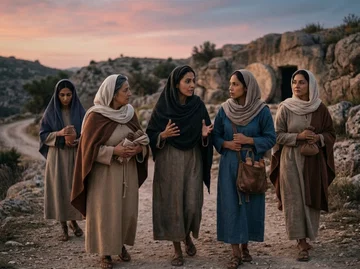
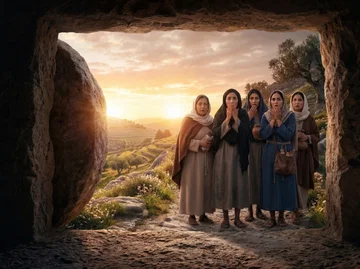
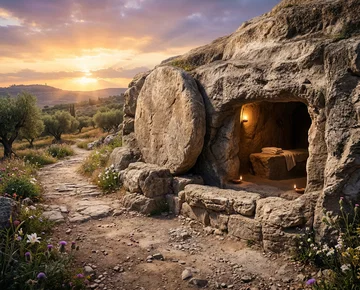
In the end of the sabbath, as it began to dawn toward the first day of the week, came Mary Magdalene and the other Mary to see the sepulchre.
Translations
In the end of the sabbath, as it began to dawn toward the first day of the week, came Mary Magdalene and the other Mary to see the sepulcher.
In the end of the sabbath, as it began to dawn toward the first day of the week, came Mary Magdalene and the other Mary to see the sepulchre.
In the end of the sabbath, as it began to dawn towards the first day of the week, came Mary Magdalene and the other Mary to see the sepulchre.
In the end of the sabbath, as it began to dawn towards the first day of the week, came Mary Magdalene, and the other Mary to see the sepulcher.
Revised Version, American Standard Version
Now late on the sabbath day, as it began to dawn toward the first day of the week, came Mary Magdalene and the other Mary to see the sepulchre.
And on the eve of the sabbaths, at the dawn, toward the first of the sabbaths, came Mary the Magdalene, and the other Mary, to see the sepulchre,
Now late on sabbath, as it was the dusk of the next day after sabbath, came Mary of Magdala and the other Mary to look at the sepulchre.
And, late in the week, when it was on the point of dawning into the first of the week, came Mary the Magdalene, and the other Mary, to view the sepulchre.
Berean Standard Bible, Majority Standard Bible
After the Sabbath, at dawn on the first day of the week, Mary Magdalene and the other Mary went to see the tomb.
Now after the Sabbath, as it began to dawn on the first day of the week, Mary Magdalene and the other Mary came to see the tomb.
Now late on the Sabbath, when the dawn of the first day of the week was near, Mary Magdalene and the other Mary came to see the place where his body was.
Now in the end of the Sabbath, when the first day of ye weeke began to dawne, Marie Magdalene, and the other Marie came to see the sepulchre,
Douay-Rheims (Challoner revision)
And in the end of the sabbath, when it began to dawn towards the first day of the week, came Mary Magdalen and the other Mary, to see the sepulchre.
Pictures
Cross-references 20 of 83
- Mark 16:1-2
And when the sabbath was past, Mary Magdalene, and Mary the mother of James, and Salome, had bought sweet spices, that they might come and anoint him.
Places the women’s tomb visit after the Sabbath, on the first day of the week.
- Luke 24:1
Now upon the first day of the week, very early in the morning, they came unto the sepulchre, bringing the spices which they had prepared, and certain others with them.
Both describe the women coming to the tomb on the first day after the Sabbath.
- John 20:1
The first day of the week cometh Mary Magdalene early, when it was yet dark, unto the sepulchre, and seeth the stone taken away from the sepulchre.
Both describe Mary Magdalene coming to the tomb early on the first day of the week.
- Luke 23:56
And they returned, and prepared spices and ointments; and rested the sabbath day according to the commandment.
The women rested on the Sabbath before going to the tomb.
- Exodus 20:8-11
Remember the sabbath day, to keep it holy.
Identifies the seventh day as the Sabbath and commands its observance.
- Mark 16:9
Now when Jesus was risen early the first day of the week, he appeared first to Mary Magdalene, out of whom he had cast seven devils.
Jesus rose early and appeared to Mary Magdalene on the first day of the week.
- John 20:19
Then the same day at evening, being the first day of the week, when the doors were shut where the disciples were assembled for fear of the Jews, came Jesus and stood in the midst, and saith unto them, Peace be unto you.
Jesus appears to the disciples on the first day of the week after his resurrection.
- Acts 20:7
And upon the first day of the week, when the disciples came together to break bread, Paul preached unto them, ready to depart on the morrow; and continued his speech until midnight.
Both texts use the same expression for the first day of the week.
- 1 Corinthians 16:2
Upon the first day of the week let every one of you lay by him in store, as God hath prospered him, that there be no gatherings when I come.
Both use the same first-day-of-the-week expression.
- Mark 16:1
And when the sabbath was past, Mary Magdalene, and Mary the mother of James, and Salome, had bought sweet spices, that they might come and anoint him.
Both accounts place the women’s visit to Jesus’ tomb after the Sabbath.
- Matthew 27:62-66
Now the next day, that followed the day of the preparation, the chief priests and Pharisees came together unto Pilate,
The tomb is sealed and guarded as the Sabbath closes, immediately before the women arrive.
- Luke 23:54
And that day was the preparation, and the sabbath drew on.
Christ was laid in the tomb on the preparation day, as the Sabbath drew on.
- John 19:31
The Jews therefore, because it was the preparation, that the bodies should not remain upon the cross on the sabbath day, ( for that sabbath day was an high day,) besought Pilate that their legs might be broken, and that they might be taken away.
Identifies the high Sabbath following Jesus’ death and preceding the resurrection.
- Romans 6:4
Therefore we are buried with him by baptism into death: that like as Christ was raised up from the dead by the glory of the Father, even so we also should walk in newness of life.
Baptism represents burial and resurrection with Christ, bringing believers into new life.
- Matthew 12:40
For as Jonas was three days and three nights in the whale’s belly; so shall the Son of man be three days and three nights in the heart of the earth.
The stated time in the tomb is reconciled with the resurrection on the third day.
- John 20:26
And after eight days again his disciples were within, and Thomas with them: then came Jesus, the doors being shut, and stood in the midst, and said, Peace be unto you.
Jesus’ later appearance to the disciples is linked to the first day of the week.
- Mark 15:42
And now when the even was come, because it was the preparation, that is, the day before the sabbath,
Identifies Jesus’ burial day as the preparation before the Sabbath.
- 1 Corinthians 15:20
But now is Christ risen from the dead, and become the firstfruits of them that slept.
Christ is risen from the dead and is the firstfruits of those who sleep.
- Luke 24:13
And, behold, two of them went that same day to a village called Emmaus, which was from Jerusalem about threescore furlongs.
Two disciples travel to Emmaus on the same first day of the week.
- Genesis 2:2-3
And on the seventh day God ended his work which he had made; and he rested on the seventh day from all his work which he had made.
The creation Sabbath’s rest contrasts with Christ’s resurrection on the first day.
Commentary part 1 of 2
Each commentary is drawn from primary sources: the writings of Ellen G. White and Adventist pioneers and periodicals. Each commentary is separate. Its own words are not a quotation; follow the references to read the source passages.
Ellen G. White
22 sources
In the end of the Sabbath as dawn began toward the first day of the week, Mary Magdalene and the other Mary came to see the tomb, with other women at times approaching from another direction.Lt 290, 1906, par. 3Lt 248, 1906, par. 4–10Ms 111, 1897, par. 65–66Lt 278, 1908, par. 4–73SP 198.2 They came to look upon the burial place and to finish anointing the body with spices prepared before the Sabbath, without expecting Him to rise, and found the great stone rolled away, the guard gone, and the tomb empty in shining light.Ms 61a, 1906, par. 16–21Ms 111, 1897, par. 65–663SP 198.2ST Dec 14, 1882DA 788.1 A great earthquake attended the descent of an angel bright as lightning who declared that the crucified Jesus was risen as He said and sent them to tell the disciples He would go before them into Galilee, and Jesus Himself then met the women and directed them to send His brethren to Galilee.Ms 61a, 1906, par. 16–21Lt 318, 1906, par. 5–8SG1 71.2 That morning turns grief to revived hope by proving Christ's victory over death and the hope of life through Him.Lt 290, 1906, par. 3Lt 278, 1908, par. 4–7Ms 29, 1909, par. 19–21EW 206.4 The verse calls the resurrection day only the first day of the week while calling the day before it the Sabbath, and gives no ground for making Sunday sacred in its honor, since rising on that day did not alter God's law or change the Sabbath, whose fitting memorials are new life in believers shown in the Lord's supper and in baptism.DA 842.2–8EW 180.1–3ST Nov 12, 18946RED 22.2–3SG1 111.1
Visit at Dawn
Matthew 28:1 places the visit at the end of the Sabbath as dawn began toward the first day of the week, early in the morning after the Sabbath was past and before it was fully light.Lt 290, 1906, par. 3Ms 111, 1897, par. 65–66Lt 278, 1908, par. 4–7DA 788.1SG1 71.2 It was the close of the Sabbath with the first day beginning to dawn when Mary Magdalene and the other Mary came to see the tomb.Lt 290, 1906, par. 3Ms 111, 1897, par. 65–66Lt 278, 1908, par. 4–7Ms 29, 1909, par. 19–21DA 788.1 Their coming opens the brighter chapter after suffering and burial and leads into the announcement that Jesus had risen.Lt 290, 1906, par. 3Lt 278, 1908, par. 4–7Ms 29, 1909, par. 19–21
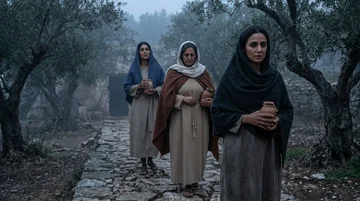
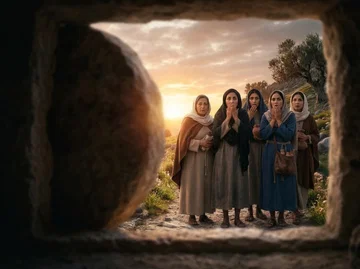
The visitors named are Mary Magdalene and the other Mary, accompanied at times by other women approaching from another direction.Lt 248, 1906, par. 4–103SP 198.2ST Dec 14, 1882ST Aug 22, 1878 Mary found the body gone and hurried to tell Peter and the beloved disciple, while the other women arriving from another direction also found the tomb empty.Ms 111, 1897, par. 65–66ST Dec 14, 1882ST Aug 22, 1878 They came to see the tomb and to continue preparing the body for burial with spices prepared before the Sabbath and prepared the day before the Sabbath.3SP 198.2ST Dec 14, 1882DA 788.1ST Aug 22, 1878 They came very early with spices to anoint His body, without expecting Him to rise from the dead.3SP 198.2DA 788.1SG1 71.2
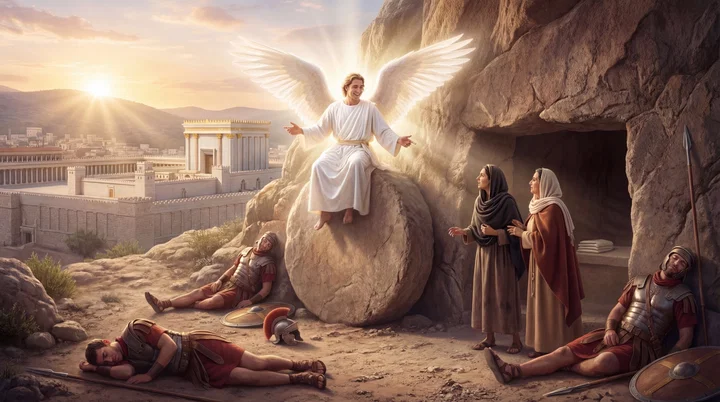
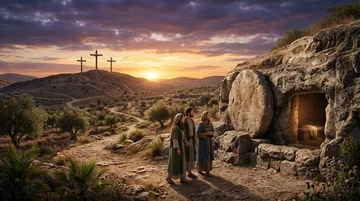
As they approached they saw that the great stone was rolled away from the entrance and that a light was shining about the tomb.Ms 61a, 1906, par. 16–213SP 198.2ST Dec 14, 1882ST Aug 22, 1878 The earth was trembling, the Roman guard was gone, and the tomb was empty with the body of Jesus not there.Ms 61a, 1906, par. 16–21Ms 111, 1897, par. 65–663SP 198.2ST Dec 14, 1882SG1 71.2 A great earthquake attended the descent of the angel of the Lord from heaven, who rolled back the stone from the door and sat upon it, with countenance like lightning and raiment white as snow.Ms 61a, 1906, par. 16–21Lt 318, 1906, par. 5–8 For fear of him the keepers shook and became as dead men.Lt 318, 1906, par. 5–8
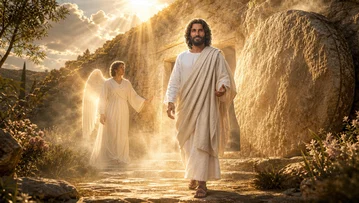
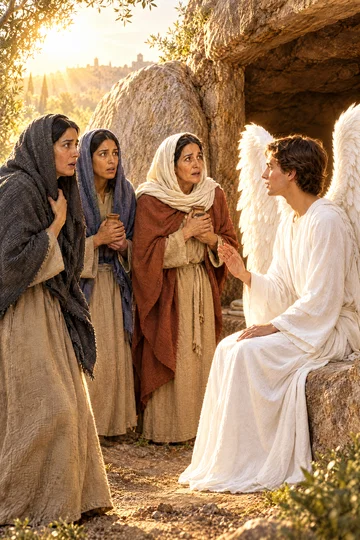
The angel told the women not to fear, that Jesus which was crucified was not there but was risen as He said, invited them to see the place where the Lord lay, and sent them quickly to tell His disciples He was risen from the dead and would go before them into Galilee where they would see Him.Ms 61a, 1906, par. 16–21Lt 318, 1906, par. 5–8SG1 71.2 They departed quickly with fear and great joy to bring word, Jesus met them saying All hail, they held Him by the feet and worshiped Him, and He told them not to be afraid but to tell His brethren to go into Galilee.Lt 318, 1906, par. 5–8 Angels told them Jesus had risen and directed them to report this to His disciples, the disciples initially did not believe the report, but went to the tomb and found that Jesus was gone.Ms 61a, 1906, par. 16–21Lt 318, 1906, par. 5–8SG1 71.2
The sealed tomb and Roman guard had been set to prevent the disciples from removing the body, and the strict discipline of the guard made a secret removal harder to explain.ST Aug 1, 1878 The precautions intended to prevent deception instead more fully established the truth and magnified the triumph of the resurrection.ST Aug 1, 1878 Meanwhile some of the watch told the chief priests all that was done, and the priests with the elders bribed the soldiers with large money to say His disciples came by night and stole Him away while they slept, promising to persuade the governor and secure them, and that saying was commonly reported among the Jews.Lt 318, 1906, par. 5–8 The denial of Christ's resurrection was not for lack of evidence and not because the Jews were ignorant of the truth, but because they desired to keep the people from knowing the truth, for if the truth were known they would stand forth as murderers; false teachers are ever afraid to trust the people with knowledge and ever seek to hide the facts that would show the error of their position.Lt 318, 1906, par. 5–8
Resurrection Triumph Revealed
Matthew 28:1 gives proof that Christ was risen, part of the wondrous things opened out of the Word even in this life.Lt 290, 1906, par. 3 It places Mary Magdalene and the other Mary coming to see the tomb at the end of the Sabbath as dawn approached toward the first day of the week.Lt 290, 1906, par. 3Lt 278, 1908, par. 4–7 It opens the brighter chapter following suffering and burial, leading into the announcement of resurrection.Lt 278, 1908, par. 4–7Ms 29, 1909, par. 19–21
That visit turns grief after death and burial into revived hope, as the sorrowing disciples found their Saviour again.EW 206.4 The announcement establishes victory over death and the hope of life given through Him.Lt 278, 1908, par. 4–7 Christ had rested in the tomb on the Sabbath day and rose on the morning of the first day of the week to renew His work of teaching His disciples.6RED 22.2–3 That resurrection morning was the brightest morning ever dawned upon a fallen world, yet it was of no greater importance to man than the day of His trial and crucifixion.6RED 22.2–3
It was no marvel to the heavenly host that He who controlled the power of death and had life in Himself should awaken from the sleep of the grave, but it was a marvel to them that their loved Commander should die for rebellious men.6RED 22.2–3 The verse begins the distinct history of the meeting appointed with the disciples after the resurrection just before the ascension.Lt 248, 1906, par. 4–10 It belongs to the chapter holding the promised ministration of the Holy Spirit from which Christian experience is gained, the earnest of the spirit of life through Christ needed now.Lt 248, 1906, par. 4–10 That provision leaves no excuse for departing from the faith to seducing spirits and doctrines of devils, with Jesus close beside those who view His unseen personality by the eye of faith.Lt 248, 1906, par. 4–10
The resurrection glory set forth from the verse came after a night of prayer.MH 509.1ST Aug 31, 1915 He prepared for every great trial and important work by going alone into the solitude of the mountains and spending the night in prayer to His Father, and the resurrection morning was no exception.ST Aug 31, 1915 After the resurrection Jesus appeared to the weeping women and made them His messengers.ST Aug 20, 1902
First Day Not Sabbath
The day on which Christ rose is called only the first day of the week, the same title given to that day in five other New Testament texts, while the day before it is called the Sabbath.DA 842.2–8 Though written years after the resurrection, it says nothing about Sunday being the Sabbath or the Lord's day, and nothing about its being a sacred day or a replacement for the Sabbath.DA 842.2–8
It gives no ground for Sunday sacredness in honor of the resurrection, because the disciples did not believe He had risen and did not meet to celebrate Him.DA 842.2–8 Two disciples spent that day traveling to Emmaus, and the rest were gathered in their own lodging with doors shut for fear of the Jews.DA 842.2–8 The resurrection on the first day did not alter God's law or change the Sabbath from the seventh day to the first.EW 180.1–3ST Nov 12, 1894SG1 111.1 There is no scriptural command or apostolic example for treating the resurrection day as the Christian Sabbath, and the claim rests on tradition, while the resurrection itself gives strong evidence that the law remains unchanged.ST Nov 12, 1894SG1 111.1
Rising on the first day does not consecrate that day or make it a Sabbath.DA 842.2–86RED 22.2–3 The fitting memorial of the resurrection is the power of new life in believing children, not a weekly holy day.DA 842.2–8 Its appointed memorials are the Lord's supper, showing the Lord's death till He come, and baptism, in which the repentant believer goes down into the water in the likeness of Christ's death and burial and is raised in the likeness of His resurrection to live a new life apart from the old life of sin.DA 842.2–86RED 22.2–3 Christ did not use a whole day in rising as He did in resting at creation.DA 842.2–8
Sources
Pioneers and periodicals
510 sources
After the seventh-day Sabbath had fully ended, Mary Magdalene and the other Mary came to see the tomb as dawn approached on the first day of the week.RH Jan 24, 1871ST Apr 3, 1879RH May 9, 1865 The Sabbath named is the seventh day immediately before the first day, distinct from it, with Sunday as the first day and Saturday as the seventh.ST Dec 28, 1876ST Mar 20, 1893ST May 20, 1897RH Apr 8, 1873ST Dec 28, 1876 In the wording, the first Sabbath means the seventh day itself while the second means the week, with first agreeing with the understood word for day so the phrase means first day of the week.RH Jan 24, 1871ST Apr 3, 1879 By the time the women arrived the resurrection had already taken place, and the verse reports their visit and its discovery rather than the moment He rose.RH Oct 7, 1873ST Feb 17, 1890 The verse gives the first day no sacred title, blessing, command, or observance, distinguishes it from the Sabbath, and shows no change of the Sabbath to Sunday.ST Feb 15, 1910RH Jan 17, 1856ST Aug 22, 1916ST Mar 18, 1889ST Sep 20, 1899
Greek Wording Explained
In the end of the Sabbath the word without a numeral means the Sabbath itself, the seventh day, the last day of the week, while toward the first of the week the same word following the numeral means week, the seven-day interval from Sabbath to Sabbath by metonymy in which Sabbath is put for the whole week.RH Jan 24, 1871ST Apr 3, 1879RH Aug 26, 1862 Sabbaton is rendered week whenever it follows a numeral marking the days of the week, for first day of the Sabbath would be meaningless because the Sabbath itself is only one day, and context determines when the usual meaning Sabbath gives way to week.ST Apr 3, 1879RH Aug 26, 1862ST Aug 12, 1880 The visit is therefore after the Sabbath as dawn approached on the first day of the week, and does not call that day a new Sabbath.RH Jan 24, 1871ST Aug 12, 1880
The feminine numeral mian, one, used by Hebraism for first, agrees with the understood feminine noun hemera, day, not with neuter sabbaton, so day is supplied in translation to give first day of the week.RH Jan 24, 1871RH Aug 26, 1862RH Apr 27, 1905 Sabbaths in the second clause is partitive genitive and does not need to agree with first in number, and eis can stand for first where another Greek word for first might be expected.ST Aug 9, 1905RH Apr 27, 1905 That sense stands only if sabbaton were plural for a series and first agreed with sabbaton understood to give the first Sabbath of a new series, and without those two grammatical points a rendering toward one of the Sabbaths meaning the end of seventh-day Sabbaths and dawn toward the first Sabbath of a new first-day series is incorrect and unfounded.ST Mar 27, 1879ST Aug 9, 1905
The wording reflects Hebrew and Jewish custom of naming the whole seven-day week from its chief day the Sabbath and counting other days from it as one, two, three of the Sabbath, so Sunday is called one of the Sabbath meaning first day of the week and Monday two of the Sabbath.ST Mar 27, 1879ST Aug 9, 1905RH May 4, 1869RH Sep 11, 1913ST Mar 27, 1879 The Sabbath marked the completed week and a new week began when it ended, thus the first day was the first day of the week that culminated in the Sabbath.RH Dec 17, 1908ST Mar 27, 1879RH Sep 11, 1913 The phrase the first of the Sabbaths is that Hebrew way of designating the first day of the week, and does not mean a Christian Sabbath began as the Jewish Sabbath ended.RH May 4, 1869RH Sep 11, 1913ST Mar 27, 1879
Plural sabbaton has the same signification as singular sabbaton, the forms being used interchangeably with the plural form generally used for the singular, so here it means the Sabbath.ST Mar 27, 1879ST Aug 12, 1880RH Jan 24, 1871 Opse with the genitive means late, after a long time, at the end of, at the close of, after, de is a continuative particle meaning but, and, also, and the genitive case fixes opse to denote the time when as after the Sabbath was fully completed and finished at sunset in the night following the Sabbath.ST Mar 27, 1879ST Mar 27, 1879ST Aug 12, 1880ST Mar 27, 1879 Mian sabbaton plainly says first day of the week, mian being the numeral adjective agreeing with day understood and sabbaton being genitive plural meaning of the week, and the common translation is correct.ST Mar 27, 1879RH Jan 24, 1871ST Apr 3, 1879
Began to dawn has its proper literal signification of growing light toward daylight, to grow light upon, to dawn upon, in the participle with the article in dative form for the genitive absolute with day understood, the article agreeing with day.ST Aug 12, 1880ST Mar 27, 1879 Toward means into, denoting entrance into a period of time, the phrase depending on began to dawn, with first limiting day understood and the plural word meaning week.RH Jan 2, 1900RH Jan 2, 1900 Day can refer to daylight rather than the full civil day, the Sabbath having passed and the first day having begun at sunset with dawn coming later, so mention of dawn does not show the day began in the morning and cannot have the Jewish idiom sense it has in Luke 23:54 of a day commencing at evening.RH May 8, 1879RH Jan 2, 1900RH Jan 24, 1871ST Mar 27, 1879
Sabbaton is the Greek form of Hebrew shabbath meaning rest, occurring sixty-seven times in the Greek New Testament chiefly in the Gospels.RH Jan 2, 1900 The singular occurs forty times, translated in thirty-eight places as Sabbath or Sabbath day and in two places as week, and the plural sabbata occurs twenty-seven times, translated in seven places including this verse as week, with the remainder in the Revised Version except for one place translated by the singular Sabbath or Sabbath day while the Authorized Version varies between singular and plural.RH Jan 2, 1900
The same Greek construction for the first day of the week is used as in Acts 20:7, and the form of the word rendered week does not show the first day is itself called Sabbath or Sabbaths, but refers to the weekly Sabbath and the first day of the week, not to multiple Sabbaths or a first day of Sabbaths.RH Apr 11, 1871ST Jan 9, 1879 The dawning day means first day, not Sabbath, and to translate it Sabbath is error.RH Apr 11, 1871ST Jan 9, 1879 The word for Sabbath can mean rest, the seventh day of the week, or a Jewish or ceremonial Sabbath, and here is an example of its Sabbath meaning while the same word is also translated week.RH Jul 24, 1866
This is a sabbaton text standing with parallel passages including Acts 13:42, where the request for preaching on the next Sabbath reads in the margin in the week between or in the Sabbath between.ST Apr 10, 1879 It is an example of the Greek term for Sabbath used for the Jewish Sabbath, supporting that the same term in Colossians 2:16 refers to that Sabbath.RH Sep 20, 1853 Toward the first day renders eis as to, toward, into or unto, mian as one used by Hebraism for first, mian being feminine singular accusative unable to agree with neuter plural genitive sabbaton but agreeing with implied feminine hemera, day, while sabbaths is partitive and can mean either Sabbath day or week, here first day of the week.RH Apr 27, 1905
The word rendered end does not mean termination but states time as late in the Sabbath or its latter part, so it does not by that word say Jewish Sabbaths including the weekly Sabbath ended then.RH Jul 2, 1908 First is used for the first day in a series, not for a day of highest rank or importance, so the ordinary rendering is correct and gives no evidence the seventh-day Sabbath was abolished or replaced by Sunday as a new Sabbath.RH Jul 2, 1908 The phrase for the end of Sabbaths is indefinite and the following phrase for one of the Sabbaths does not certainly mean the first day of the week in the disputed sense, and does not by itself show obligation ended and a new series began.RH
The claim that the Greek words for first day of the week should instead be rendered one of Sabbath or the one of Sabbaths is challenged, and the common English rendering is supported by versions and Greek scholarship.ST May 15, 1884RH The argument that sabbaton gives the first day the sacred title Sabbath at the resurrection is examined and challenged, not affirmed.RH Dec 5, 1871 First day of the week is not equivalent to the name Sunday, and the Hebrew and Greek sacred record contains no term meaning Sunday.ST Nov 13, 1893
The verse literally reads in some renderings at the end of Sabbaths at the beginning of the first of Sabbaths in the plural both times, where late in the week as the first day was beginning to dawn is the sense, as in Luke 18:12, and the plural does not require first of the sabbaths or one of several Sabbaths or a new series beginning at resurrection.RH Jun 4, 1908 The wording of sabbaton in end of the sabbath and first day of the week, with day supplied by translators, is questioned in connection with a claimed Sabbath change at the resurrection, asking for information rather than stating a conclusion.
Visit Timing Described
The women, Mary Magdalene and the other Mary, came to see the tomb after the Sabbath had ended, as daylight began to grow toward the first day of the week, very early while it was yet dark, having rested according to the commandment, and this is the same early first-day visit recorded by Mark, Luke and John.RH Jan 24, 1871ST Apr 3, 1879RH May 9, 1865ST Dec 14, 1882RH May 4, 1869 The feminine numeral for first agrees with the implied feminine noun for day rather than with the neuter word for Sabbath, so the phrase means the first day of the week, with the first occurrence of the Sabbath-related word meaning the seventh-day Sabbath itself and its occurrence after the numeral meaning week, the interval from Sabbath to Sabbath.RH Jan 24, 1871ST Apr 3, 1879 The resurrection occurred at early dawn just before the women arrived, and the angel who rolled back the stone then told them Jesus had risen.RH May 9, 1865 The women left home at first dawn, nearly twelve hours after the Sabbath ended, with Mary Magdalene reaching the tomb while still dark apparently before the others, while Matthew describes their visit together.ST Dec 14, 1882 The Hebrew way of designating the first day of the week as the first of the Sabbaths does not mean a Christian Sabbath began as the Jewish Sabbath ended.RH May 4, 1869
The visit is also described as late on the Sabbath as dawn approached the first day, with the tomb sealed and guarded on the Sabbath before they came, in harmony with Mark and Luke on timing.RH Apr 27, 1905RH Jan 2, 1900ST Mar 20, 1893RH Oct 4, 1864ST Sep 10, 1912 Late on the Sabbath day means in the evening at its close and therefore after the Sabbath, which ended at sunset and was observed from evening to evening, as light was dawning into the first day early in the morning while yet dark when the Sabbath was passed and after the women had rested according to the commandment.RH Jan 2, 1900 The day they came was the first day, and the Sabbath was the day that preceded it.ST Mar 20, 1893 It is argued by some that day and dawn are not in the original and that the word rendered there means approached, placing their arrival late on the Sabbath as the first day approached rather than on the first day itself.RH Oct 4, 1864 The Greek does not mean all Sabbaths had passed or that a first-day Sabbath had come, and first modifies the understood word day, not Sabbaths, so the first of the Sabbaths is not a valid rendering.ST Sep 10, 1912ST Oct 17, 1906
The chapter division misplaces the first clause, for in the end of the Sabbath belongs with the preceding account of sealing the stone and setting the watch, and the account of the women begins with dawn toward the first day just before sunrise.ST Nov 15, 1910ST Mar 20, 1907STST Feb 8, 1905ST The sealing was done in the end of the Sabbath, late on the Sabbath day when the Sabbath was past, and the women came as it began to dawn toward the first day, after the Sabbath had ended.ST Nov 15, 1910ST In the end of the Sabbath can mean after the Sabbath had passed toward dawn on the first day, keeping Matthew in harmony with Mark and Luke.ST Mar 20, 1907 Read this way the Roman power at the instigation of the Jews sealed the stone and set a watch in the end of the Sabbath, and Mary Magdalene and the other Mary came to see the sepulchre as it began to dawn toward the first day.ST
Dawning toward the first day denotes the interval from Saturday night until Sunday daybreak as the start of a new week after the Sabbath was divided from it, marking completion of one Sabbath week and beginning of another.ST Aug 27, 1912ST Aug 27, 1912RH Mar 15, 1860 It describes the beginning of the next week after the Sabbath's close at sunset until Sunday morning, and does not mean daylight had already begun.ST Aug 27, 1912ST Aug 27, 1912 The wording reflects Jewish reckoning in which the week was oriented toward the Sabbath and counted with the Sabbath in view, so a new week began when the Sabbath ended.ST Aug 27, 1912ST Aug 27, 1912 Sabbath is used first for the seventh day which is the end of the week and then in its secondary sense of week, and the verse therefore does not call the first day a Sabbath or describe a new series beginning.RH Mar 15, 1860
It is argued by some that the visit occurred late on the Sabbath as the first day approached rather than on the first day itself, on the ground that day and dawn are not in the original and the word rendered there means approached.RH Oct 4, 1864 Mary Magdalene and the other Mary are placed coming at the close of the Sabbath as dawn approached, arriving early with spices to find the stone rolled away, with the angel's opening, their running to tell the apostles and meeting Jesus.ST Oct 21, 1886ST Feb 15, 1910RH Jan 17, 1856ST Aug 22, 1916RH Apr 5, 1860 The parallel accounts clarify they arrived early bringing spices and found the stone rolled away.ST Oct 21, 1886 The verse says they came to see the tomb and that Jesus was not there, but does not state that he rose on the first day or that the day was to be observed in honor of the resurrection.RH Jan 17, 1856 Written more than thirty years after the resurrection it still calls the seventh day the Sabbath and resurrection day merely the first day, following preparation day Friday the sixth day of crucifixion and the next day when the priests secured permission and made the sepulchre sure by sealing the stone and setting a watch.ST Aug 22, 1916 The Greek word for week means a period of seven days and does not call the first day a new Sabbath, while dawn means to begin to shine or become day so the account agrees the visit was early on the first day not on the Sabbath.RH Apr 5, 1860RH Oct 4, 1864
In the end of the Sabbath means after the Sabbath was fully past in the night following the Sabbath which closed at sunset as it began to dawn toward the first day, agreeing with Mark that the Sabbath was past without requiring Roman reckoning.ST Mar 27, 1879ST Mar 30, 1876ST Mar 3, 1890 The King James wording is the best translation of the original, though the phrase in the end of the Sabbath is also judged an incorrect rendering whose correct sense is after the Sabbath or after the end of the week.ST Mar 27, 1879ST Mar 30, 1876 End means after the Sabbath was fully finished, and Christ did not rise in the end of the Sabbath day but in the beginning of the first day.ST Mar 30, 1876 Opse with the genitive means after the Sabbath, placing the visit after the weekly Sabbath, and the Greek word for in the end can mean after the close of the Sabbath so the verse does not require Jesus to have risen late on the Sabbath.ST Mar 3, 1890 The opening phrase can mean after the Sabbath or late after the Sabbath rather than placing the visit before it ended, describing the women coming after sunset when the first day was beginning, consistent with the Bible day beginning at sunset.ST Sep 2, 1897
The verse does not establish sunrise as start of day, for read with John 20:1 where Mary came while still dark on the first day, the first day already included part of the night following the Sabbath, and the biblical day is evening to evening from sunset.RH Dec 4, 1855RH May 8, 1879ST Sep 15, 1898ST Jan 30, 1896RH Apr 23, 1861 In the end of the Sabbath can mean after the Sabbath, supporting the Sabbath ending before the women arrived rather than defining sunrise as start of day.RH Dec 4, 1855 The conclusion that the Sabbath was reckoned past sundown until near dawn and the first day not counted until daybreak is rejected as inference, since the biblical day was reckoned evening to evening.RH May 8, 1879 The Sabbath's boundaries are established by clearer texts that the day begins in the evening at sunset, with Mark 16:1-2 helping explain Matthew.ST Sep 15, 1898 The first day came immediately after the Sabbath making the Sabbath the seventh day just before it, identified with Friday evening at sunset to Saturday evening at sunset.ST Jan 30, 1896 Opponents use the verse to argue the day starts at sunrise, but with sunset reckoned as start the first-day evening meeting at Troas occurred on what is now called Saturday night with Paul departing Sunday morning.RH Apr 23, 1861
By one reading the verse shows the Sabbath still continuing late after dark during hours Jewish reckoning assigns to the following day, taken as evidence Matthew uses Roman reckoning under which the first day begins after late evening. On another reading the Jewish Sabbath ended at sundown while the week ended at sunrise the next day, with sabbaton understood as week in both instances as late in the week, describing the women approaching toward Sunday morning not Jesus rising on the Sabbath.RH Jun 24, 1873 In this reckoning the day begins at sunrise so the Sabbath ends as the first day dawns, and the wording does not use the Jewish sunset division but speaks of the end of the week as first-day light began.RH Dec 15, 1863RH Jun 17, 1873 Sabbath can mean a week and day here means the light part of the twenty-four hours, so the verse does not teach the Sabbath ended at dawn but speaks of the week's end as the first day's light began.RH Dec 15, 1863
The verse places the visit and resurrection on the day after the holy Sabbath, the third day counted from Friday suffering with the Sabbath as second day, proving crucifixion on preparation day and resurrection on the first day.RH Apr 7, 1851ST Jun 18, 1894RH Feb 7, 1916RH Aug 21, 1855 In the end of the Sabbath means after the Sabbath, the Sabbath being over, and does not mean Christ rose on the Sabbath.RH Apr 7, 1851 The day following the Sabbath kept according to the commandment is the first day, proving the Sabbath seventh and crucifixion before that seventh-day Sabbath. It identifies the day as Christ's resurrection day but does not show repeated first-day meetings or appointment for regular observance.ST Jun 18, 1894 It is cited as evidence Christ rose on the first day without making that day the Sabbath, with the first day kept in memory of redemption in contrast with the seventh commemorating creation.RH Feb 7, 1916RH Aug 21, 1855 Sunday's numerical designation as first confirms it is not seventh.RH Nov 12, 1903
The three days in one reckoning began when Jesus was delivered to his enemies and included parts of Friday and Sunday and all of the Sabbath, ending with the first part of the first day at dawn as the first day began.ST Sep 25, 1893 The Sabbath that had just passed was also a high day. The verse gives the time of the women's visit at dawn on the first day, not the moment Jesus rose, for by the time they arrived the resurrection had already taken place.RH Oct 7, 1873ST Feb 17, 1890ST Feb 8, 1883RH May 9, 1865 It keeps Sabbath distinct from the first day as two different days and does not give the exact time of resurrection.RH Oct 7, 1873 It gives when the women came toward dawn but does not say when Jesus rose. They arrived early on the first day and found the tomb empty, in harmony with the Sabbath having passed, so the verse does not show Christ rose on the Sabbath.ST Feb 8, 1883 Dawn means beginning to shine not time before sunset, with resurrection shortly before arrival.RH May 9, 1865
By itself the verse does not prove Christ rose on the first day; it reports only that he had risen by the time the women came.ST Feb 17, 1890ST Feb 17, 1890ST Apr 13, 1882RH Jan 8, 1861RH Mar 25, 1873 It places the visit on that day without explicitly saying resurrection occurred then.ST Apr 13, 1882 Resurrection on that day is inferred from surrounding events rather than stated directly, and the guards' false claim about stealing while asleep does not establish the hour.RH Jan 8, 1861 It does not say Jesus rose on the first day, rested, or blessed and sanctified that day.RH Mar 25, 1873 The verse dates the women's first visit very early on first-day morning as daylight began when the resurrection became known, but does not by itself state the exact moment.RH Feb 13, 1866RH Feb 13, 1866ST Mar 8, 1910 In the end of the Sabbath means after the Sabbath and dawn describes beginning of daylight, dating visit and discovery not the moment of resurrection, which was not known until that visit.RH Feb 13, 1866 Its setting is closely connected with the angel's arrival and guards' terror without stating exact time.RH Feb 13, 1866 Read continuously with Matthew 27:66 it follows setting of the guard at the end of the Sabbath, with resurrection coming as the first day began to dawn.ST Mar 8, 1910
The verse is cited in connection with the claim that a Hebrew word can mean both evening and night, with Genesis 1:5 as example, supporting that night is included in a day.RH Dec 4, 1855 It places the first day after the Sabbath and before dawn, so the Bible first day begins at sunset Saturday and ends at sunset Sunday, and if sacred the whole period must be observed not only daylight hours.ST The weekly return of that resurrection-associated first day is observed according to each place's local time, not at the same absolute moment, and the same principle applies to observing the seventh day.RH Apr 28, 1853RH Apr 28, 1853RH Oct 3, 1907 The first day associated with the resurrection is observed wherever it arrives even when longitude makes it begin and end at different absolute times.RH Apr 28, 1853 The resurrection in Palestine connected with the first day is commemorated when it arrives in each place, with different local times not preventing observance.RH Oct 3, 1907
Days by another reckoning begin and end in the morning with the Sabbath ending as the first day dawned, and since the body was already gone before the first day began Jesus rose on the seventh-day Sabbath before the first day, the earthquake and rolling away of the stone occurring before the women arrived.ST Sep 2, 1897RH Apr 12, 1860
Resurrection Events Reported
Matthew 28:1 opens the account of Christ's resurrection as a well-attested historical fact, placing the women's visit to the tomb at the close of the Sabbath as dawn began on the first day of the week.ST Jun 15, 1904ST Jun 8, 1904ST Mar 20, 1893RH Aug 19, 1909 Mark makes the timing more explicit that they came very early on the first day when the sun had risen, while John names Mary Magdalene and Luke and Mark supply the other names of the women who came.ST Jun 8, 1904 The glad message begun here is that He is risen, defeating death and making resurrection life possible for believers.RH Aug 19, 1909
The verse belongs to a condensed selective report fitting the Gospel as the record of the Galilean ministry of the King of Israel.ST Nov 25, 1889 It establishes the fact of the resurrection while passing by the Jerusalem appearances granted to individuals as having less bearing on His royalty, emphasizing His rejection by the representatives of the nation whose lie was endorsed by popular acceptance and His solemn assumption in familiar Galilee of universal dominion with the world-wide commission in which the kingdom bursts narrow national limits and becomes co-extensive with humanity.ST Nov 25, 1889 Attempts to harmonize this with the other resurrection narratives blur its distinctive characteristics, and it is better to learn the meaning of its selection of incidents than to wipe out instructive peculiarities in a vain attempt after harmony.ST Nov 25, 1889
The verse begins Matthew's testimony to the bodily resurrection, and Matthew is a competent credible historian whose record is veracious with Mark and the others.RH Jan 1, 1914 That resurrection testimony stands together with the testimony of Matthew and Luke to the virgin birth, on which His deity and office as Saviour rest, so that to reject the birth account as gullible ignorant romantic invention or deception discredits Matthew and Luke as historians and destroys confidence in their testimony here, and the resurrection cannot be permanently held while the birth narratives are cut out.RH Jan 1, 1914 Matthew's resurrection account gives some details John's account does not, and differences and omissions do not by themselves make them contradictory.ST Mar 5, 1912 The story of the women at the tomb in Matthew 28:1-10 is to be understood woven together with Mark, Luke and John with the exact sequence of each narrative preserved.ST Oct 21, 1886 The Gospel narratives are memoirs by different authors set down at different times and places, and may be abrupt, incomplete or redundant, their differences reflecting the original character of these records rather than a later effort to shape them into a uniform history.ST Jun 14, 1877RH Apr 11, 1871
The time was the Sabbath waning to its close with the night of the first day well nigh gone and morning about to break.ST Apr 8, 1903 At that hour a mighty angel from God descended lighting the darkness with glory, his power making the earth quake so that the soldiers fell as though dead, and he overcame the strong Roman guard simply by the holiness of his presence.ST Aug 13, 1874ST Apr 8, 1903 By the authority of the Most High the angel called to Jesus sleeping in the tomb, Son of God, Thy Father calls Thee, and at the angel's call from the Father Jesus who died as victim to hate, blindness and ignorance came forth as mighty Conqueror over the mightiest foes of the ages, sin and death, a conqueror for you and for me.ST Apr 8, 1903ST Apr 7, 1914 The glory of that one angel is a measure of the overwhelming glory that will accompany Christ's coming.RH Jun 19, 1900 His resurrection together with His death makes eternal life possible, for without it salvation would fail.ST Apr 7, 1914
The resurrection occurred at early dawn just before the women arrived and the earthquake was already past, its exact time not revealed.ST Feb 7, 1911 The tomb is open and Jesus is gone when the women arrive in the early morning as the first day began, but the women do not witness the messenger's arrival or the moment Jesus rises, while the Roman guards witness that event.ST Feb 7, 1911
Mary Magdalene, the other Mary, and other women came to anoint the body having prepared spices the day before the Sabbath to continue the work of anointing.ST Dec 14, 1882ST Aug 22, 1878 They came early on the first day after the Sabbath and found the stone rolled away amid trembling earth and light around the tomb, the Roman guard gone and the tomb empty and unsealed with the Saviour absent.ST Dec 14, 1882ST Aug 22, 1878ST Mar 27, 1907 An angel told them He had risen and gone before them to Galilee.ST Mar 27, 1907 Three days after Jesus in mortal flesh entered the grave and dwelt among the dead, the great stone at the mouth of the sepulchre was rolled away and His body was missing.RH Oct 14, 1862 Every possible means had been used to keep the body entombed, for the sepulchre was sealed with the king's signet so that anyone who touched it endangered his life, and a watch was placed to guard it to keep the disciples from stealing the body.RH Oct 14, 1862
After Jesus was crucified under Roman rule and laid in a rock tomb sealed with a Roman seal, God broke the seal and raised Him.ST Nov 7, 1906 Righteousness could not remain entombed, for the Prince of Light conquered even in death.ST Nov 7, 1906 His rising while Roman soldiers guarded His tomb confounded the rulers who thought they had dealt a final blow to God's plan of salvation, demonstrating that earthly powers cannot thwart the Most High.ST Jun 10, 1913 The sealed tomb and Roman guard set to prevent removal made the truth of the resurrection more fully established, for the strict discipline of the guard made secret removal harder to explain, and the precautions intended to prevent deception instead magnified the triumph.ST Aug 1, 1878
The verse begins the biblical account of actual bodily resurrection, triumphant victory following suffering, rising from the sealed tomb despite the guard.RH Jun 17, 1915ST Oct 6, 1914ST Jul 25, 1911 The sealed tomb and watch could not prevent Jesus from coming forth at the appointed time, ending Satan's hope of overcoming Him as His triumph over the enemy and victory over death.ST Oct 6, 1914RH Jun 20, 1865 It points to victory over death in facing the tomb and coming forth conqueror, as proof that the Pilot guiding His people through danger has Himself passed through death and triumphed.RH Feb 4, 1915 The setting is Joseph's new tomb with the King dead, a few fishermen having lost faith, and grief-stricken women kept from approaching by the guard, yet the scene that appears to mark failure becomes the starting point for kingdom growth and worldwide proclamation.RH Jun 8, 1911
Resurrection glory came after a night of prayer, for Jesus prepared for every great trial and important work by going alone into the solitude of the mountains and spending the night in prayer to His Father, and resurrection morning was no exception.ST Aug 31, 1915 The risen Jesus is the same Jesus who was buried, risen triumphant over death and the grave for Himself and for humanity.ST Apr 15, 1897 Christ seeming to be in the very dominion of death quickly confuted the dishonor of the grave by astonishing resurrection, in the unbroken order of His life in which nothing low or weak is related without being immediately seconded by something high and miraculous.RH Feb 20, 1900
After the resurrection Jesus appeared to the weeping women and made them His messengers, with the astonishing report belonging to that day's events at dawn on the first day.ST Aug 20, 1902ST Feb 7, 1911 The verse gives authentic testimony to the miraculous resurrection as supernatural fact, which with the miraculous birth and Pentecost forms the basis of Christian faith and missions, so that to deny its testimony leaves no Bible to carry to the heathen and no new birth from above to proclaim.RH Dec 30, 1902 The empty-tomb story with appearances in Jerusalem and Galilee is not the primary evidence, for faith in the resurrection was believed, preached, propagated and fruitful in the new phenomenon of the church long before any Gospel was written and was prevalent and immensely powerful before any New Testament book was written, so that not one could ever have been written without that faith.RH May 11, 1916 The primary evidence is the New Testament itself and the existence of the church in extraordinary spiritual vitality, the life throbbing from beginning to end that fills souls with wonder as the risen Saviour quickens them, left without adequate explanation if the resurrection is denied.RH May 11, 1916
The resurrection testimony is part of the combined Gospel witness to His life and work, not merely an appendix or unhistorical claim.RH Mar 8, 1906 It occurred in spring, the Passover season, at dawn on the first day after the Sabbath, identifying the timing Western churches used to observe its anniversary on the Sunday following the start of Passover on the fourteenth of Nisan.RH Apr 2, 1914 It is one of the events commemorated during Passion Week, whose Friday procession representing His burial carries a life-size image of Him in the tomb through the streets and returns it to the churches.ST Jul 29, 1908 The other Mary was evidently the mother of James and Joses.ST Jun 2, 1898
The women who brought spices became the first messengers of the resurrection.ST Aug 26, 1880 Mary Magdalene and the other women had ministered to Him through burial and resurrection, and their presence supports that women may proclaim the redemption He brought.RH Jul 30, 1861 Their loving service is an example for women who carry news of the risen Christ to others.ST Aug 26, 1880 The visit at dawn when darkness gives way to light presents the resurrection as glad light scattering the gloom of the tomb.ST Apr 15, 1889 Followers came in love and reverence to encounter the tomb illuminated by angels and the presence of the risen Christ, bringing life and immortality to light and giving mourners hope, joy and consolation.RH Sep 4, 1855 The grave could not hold Him, and He rose as Saviour for humanity as good news to the guilty bringing eternal life, joy and peace, making Him the dead and risen Lord.RH Nov 12, 1872
Sabbath Week Identified
Matthew 28:1 shows the Sabbath is always the day immediately before the first day of the week, so knowing when the first day comes identifies which day the Sabbath is, placing Mary Magdalene and the other Mary at the tomb late on the Sabbath as dawn approached on the first day.ST Dec 28, 1876ST Mar 20, 1893ST May 20, 1897ST Apr 29, 1913RH Jun 23, 1853 The day they came was the first day, and the Sabbath was the day that preceded it, identifying the Sabbath as the seventh day and Sunday as the first day, the first day being the time immediately following the seventh-day Sabbath, not a Sabbath or rest day.ST Mar 20, 1893ST May 20, 1897ST Apr 29, 1913RH Jun 23, 1853 The seventh day, not the first day, is the Sabbath, remaining distinct from the first day of the week, and the account of dawn toward the first day rules out the claim that the evangelists called the original seventh day the first day.RH Jun 23, 1853
The verse places the women's visit at dawn on the first day after the Sabbath had ended, showing the seventh-day Sabbath and the first day are distinct, the Sabbath past before the first day began, so the first day is not the Sabbath.RH Apr 8, 1873ST Dec 28, 1876ST Mar 16, 1882ST Oct 23, 1893RH Jun 12, 1855 The day before that dawn visit was the seventh day, therefore identifying the Sabbath as the seventh day, not the first day, with no indication the Sabbath was changed at resurrection or that the first day had become sacred, naming that day simply as the first day of the week.ST Dec 28, 1876ST Mar 16, 1882ST Jan 1, 1894ST Oct 23, 1893RH Jun 12, 1855 Read with the other cited verses, the Sabbath was the seventh day and the dawning day after was the first day, Sunday, so an open fair on Sunday does not violate the Sabbath law commanding the seventh day, and the Sabbath observed according to the commandment was the seventh day immediately before that first day.ST Jan 1, 1894ST Oct 23, 1893
The sequence shows the Sabbath came just before the first day, and together with the commandment and the account of the women resting on the Sabbath this identifies that day as the seventh day of the week.ST Sep 10, 1896ST Jan 23, 1896ST Sep 17, 1902ST Nov 11, 1889 The Sabbath kept by the Jews was the seventh day distinct from Sunday, the first day was not the Sabbath, and the New Testament distinguishes the Sabbath from the first day rather than identifying Sunday as the Sabbath.ST Nov 11, 1889ST Jan 24, 1884 The Sabbath ends as the first day begins, proving the seventh day is a definite day not any chosen day, with the week reckoned the same from creation to the present, the Old Testament week and New Testament week corresponding precisely where the former ends the latter begins.ST Mar 27, 1893ST Mar 25, 1880ST Mar 12, 1912STST Jul 3, 1893 That weekly order is the same now with no break, so the seventh day now is the Sabbath of the Lord, the days had not changed numbering, and the New Testament week follows the same order as the Old with the Sabbath preceding the first day as the day God rested and set apart.ST Mar 12, 1912STST Jul 3, 1893ST May 9, 1878
The first day was the day of Christ's resurrection when Mary Magdalene and the other Mary came at dawn, immediately after the seventh-day Sabbath, supporting continuity of weekly reckoning without change between creation and resurrection.RH Apr 1, 1873ST Jul 24, 1879ST Jan 20, 1887ST Nov 11, 1875ST Nov 24, 1914 The Gospel writers' prominent shared identification of the first day rather than simply saying the third day marks it as a marked day by the time the histories were written, yet it is one of only eight texts speaking of the first day, proves nothing in favor of Sunday, and on that resurrection day the disciples disbelieved and did not keep it in honor while Christ himself never mentioned it.RH Apr 1, 1873ST Jul 24, 1879ST Nov 11, 1875RH May 1, 1900 The sealing with guard late on the Sabbath fits the accounts that Christ rose on the first day, distinguishing Sabbath from first day as the Sabbath ending while dawn approached, with the Sabbath remaining distinct after resurrection.RH Jun 23, 1863ST Nov 24, 1914ST Sep 18, 1884RH Aug 13, 1857RH Aug 27, 1857 Christ rose on the first day not the seventh, the last day celebrates creation distinct from resurrection day, and the unbroken sequence contrasts the Father's rest-day with the day Jesus rose.ST Sep 18, 1884RH Aug 13, 1857RH Aug 27, 1857RH Mar 9, 1869ST Jul 15, 1913
The Sabbath identified is the day immediately before the first day, kept by the Jews and called the Sabbath according to the commandment, the seventh day enjoined by the commandment and sanctified at creation.ST Feb 26, 1894RH Sep 1, 1910ST Aug 4, 1909ST May 26, 1898 Together with the women resting according to the commandment it identifies the day before the first day — Saturday — as the seventh-day Sabbath, proving the seventh day commanded as the Lord's Sabbath is a particular definite day not merely one in seven man may choose.RH Sep 1, 1910ST Aug 4, 1909ST Sep 7, 1904ST May 26, 1898 In Bible reckoning the day begins at sunset, so that Sabbath ran Friday evening to Saturday evening, and that seventh day corresponds to Saturday in Roman and pagan naming while its position has not changed.ST Nov 17, 1909ST Apr 30, 1896 The first day after the Sabbath ended as it began to dawn is Sunday, the sixth day not the seventh is preparation, and the first day named by the evangelists is the Lord's first day not His seventh while the seventh commanded and observed by Hebrews is the Lord's seventh, the Creator's rest-day.ST Nov 17, 1909ST Apr 30, 1896ST Jul 9, 1894ST Aug 7, 1879
Sunday is the first day and the Sabbath a different seventh day Saturday, New Testament reckoning keeping Saturday seventh and Sunday first, so the claim Sunday is seventh and Monday first contradicts the verse, and the claim Monday was first is challenged since resurrection belongs to the first day not Monday.RH Mar 30, 1905RH Jun 2, 1851ST Feb 16, 1882 The verse is one of the passages naming the first day cited for Sunday observance, and identifying Sunday as first also confirms Saturday as seventh.ST Feb 16, 1882 The Sabbath named is the seventh day, the Sabbath of the commandment, because it precedes the first day, proving the first day was not then a Sabbath since the women would not embalm on the seventh as holy time but on the first their scruples were gone to do work unlawful on the Sabbath.RH Nov 19, 1872 Calling the seventh day the Sabbath with the definite article decades later honors it with the sacred Bible title while calling resurrection day only by the secular name first day, which would be inexplicable if the first day had taken sacred character.RH Nov 19, 1872
The verse refers to the weekly Sabbath, the Sabbath of the Lord, the same seventh-day Sabbath commanded in the Old Testament, not a festival, land sabbath, or local sabbath expired at the cross.RH Mar 19, 1857 That seventh day just before the first day proves the Lord's day is the seventh-day Sabbath, fixing which day it is and therefore proving the Lord's day of Revelation 1:10 is the seventh-day Sabbath of the Lord God.ST Aug 6, 1896ST Nov 21, 1911ST Aug 13, 1896 It is the weekly holy day hallowed as creation's memorial and sign of sanctification and redemption, the only weekly holy day known in Scripture, which Christ kept as example without requiring the first day instead.ST May 30, 1895ST Feb 7, 1906ST Apr 10, 1893 Relieving suffering and necessary help are lawful on the Sabbath for humanity's good, while unnecessary work remains wrong.ST Apr 10, 1893
The verse helps identify the Sabbath as the weekly day between crucifixion and resurrection, the same day observed by the women, remaining the same corresponding to Good Friday to Easter, while a yearly sabbath tied to a month date does not change the weekly seventh day.ST Sep 29, 1914 The weekly reckoning at resurrection includes the Sabbath at the close as the first day began, so treating the Jewish Sabbath as abolished at the cross would leave a week with no Sabbath.ST Jul 31, 1879 The Sabbath was the day before resurrection day, so resurrection day was not the seventh-day Sabbath required by the commandment, distinct from the seventh day God blessed at creation.RH Feb 5, 1867ST Jan 24, 1884 Resurrection on the day after the Sabbath confirms reckoning of the seventh day with no lost time, the weekly cycle remaining identifiable, contrasting that certainty with the claim the seventh day cannot be identified.ST Sep 22, 1881ST Mar 27, 1893RH Dec 20, 1853RH Aug 27, 1857
Jesus was crucified and laid in Joseph's new tomb the day before the weekly Sabbath, lay there on the seventh day kept according to the commandment between burial and resurrection, and rose the day after, an event intimating no change to the first nor establishing its sacredness.RH Apr 7, 1851ST Mar 24, 1881RH Jul 3, 1879 That resurrection on the first day after the Sabbath following Friday's crucifixion is the third day though not three complete days, since Jewish usage allows three days and after three days to include only part of first and third days.RH Mar 15, 1860ST Dec 23, 1903 Having been crucified on the sixth day, the short interval of parts of two days and the whole of one parallels the lamb killed 14th Nisan and wave sheaf offered 16th with only the whole 15th between.RH Mar 15, 1860ST Dec 23, 1903 The verse places Mary Magdalene and the other Mary at dawn on the first day after the Sabbath, the day associated with rising, showing they came the day after and supporting He rose on the first day which is Sunday.ST Aug 12, 1880ST Oct 21, 1880ST Jun 26, 1879ST Jun 24, 1889 The Sabbath began sundown Friday so disciples waited until it ended, the tomb by Sunday morning was open and gone, and the first day following the Sabbath with rising on it establishes no command to keep it sacred against the commanded seventh.ST Aug 12, 1880ST Sep 9, 1886
The verse is invoked over which day followed the Sabbath, pointing to the first day as resurrection morning against confusion from claims the Sabbath fell Thursday with Wednesday crucifixion requiring two Sabbaths abolished and leaving Jesus entombed part of five days.RH Mar 23, 1869RH Mar 23, 1869 The day of resurrection is recorded as the 2,035,369th day from creation, 290,767 weeks from the first Sabbath in Eden, making it the seventh reckoned from creation in that calculation, corresponding to Sunday March 28 A.D. 28, the sixteenth of Abib, A.M. 5573.ST Jun 12, 1879RH Jun 3, 1873ST Jun 12, 1879 That Sunday was held as morrow after the Sabbath, 16th Abib, third day after the lamb slain 14th, with 14th always Friday before Sabbath and 15th first of unleavened bread always a weekly Sabbath so regular succession was broken yearly, in the teaching of those who held it. The resurrection on the first day is also placed as seventeenth of Nisan connected with Red Sea crossing and wave sheaf offered first day after Passover as types of resurrection.RH Sep 30, 1858
The verse is used as chronological starting point to reckon backward claiming Genesis seventh day was that first day, which is challenged since Matthew's inspired naming of resurrection day as first stands against any count making it seventh.ST Jun 26, 1879ST Jun 12, 1879ST Apr 17, 1879ST Apr 24, 1879ST Jun 26, 1879 Sunday called first day is treated in that theory as actually seventh from creation and original Sabbath, rightly called first even from the beginning continuing into New Testament times, but noted as theory not established fact with reckoning challenged.ST Jun 26, 1879ST Jun 12, 1879ST Apr 17, 1879ST Apr 24, 1879ST Jun 26, 1879
Sources