Exodus 24:4
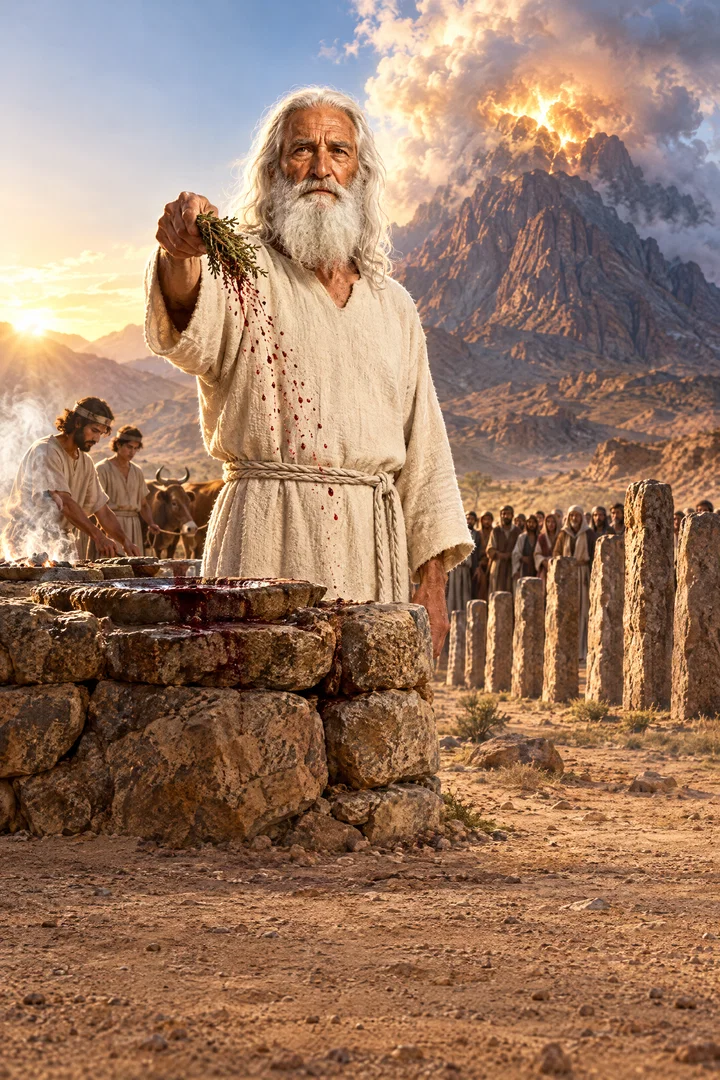
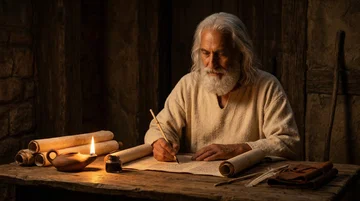
And Moses wrote all the words of the LORD, and rose up early in the morning, and builded an altar under the hill, and twelve pillars, according to the twelve tribes of Israel.
Translations
And Moses wrote all the words of the LORD, and rose up early in the morning, and built an altar under the hill, and twelve pillars, according to the twelve tribes of Israel.
And Moses wrote all the words of the LORD, and rose up early in the morning, and builded an altar under the hill, and twelve pillars, according to the twelve tribes of Israel.
And Moses wrote all the words of the Lord, and rose up early in the morning, and builded an altar under the hill, and twelve pillars, according to the twelve tribes of Israel.
And Moses wrote all the words of the LORD, and rose early in the morning, and built an altar under the hill, and twelve pillars according to the twelve tribes of Israel.
And Moses wrote all the words of the LORD, and rose up early in the morning, and builded an altar under the mount, and twelve pillars, according to the twelve tribes of Israel.
And Moses wrote all the words of Jehovah, and rose up early in the morning, and builded an altar under the mount, and twelve pillars, according to the twelve tribes of Israel.
And Moses writeth all the words of Jehovah, and riseth early in the morning, and buildeth an altar under the hill, and twelve standing pillars for the twelve tribes of Israel;
And Moses wrote all the words of Jehovah, and rose up early in the morning, and built an altar under the mountain, and twelve pillars, according to the twelve tribes of Israel.
Then wrote Moses all the words of Yahweh, and rose up early in the morning, and builded an altar, under the mountain, and twelve pillars, for the twelve tribes of Israel:
Berean Standard Bible, Majority Standard Bible
And Moses wrote down all the words of the LORD.Early the next morning he got up and built an altar at the base of the mountain, along with twelve pillars for the twelve tribes of Israel.
Moses wrote all the LORD’s words, then rose up early in the morning and built an altar at the base of the mountain, with twelve pillars for the twelve tribes of Israel.
Then Moses put down in writing all the words of the Lord, and he got up early in the morning and made an altar at the foot of the mountain, with twelve pillars for the twelve tribes of Israel.
And Moses wrote all the wordes of the Lord, and rose vp early, and set vp an altar vnder the mountaine, and twelue pillars according to the twelue tribes of Israel.
Douay-Rheims (Challoner revision)
And Moses wrote all the words of the Lord: and rising in the morning he built an altar at the foot of the mount, and twelve titles according to the twelve tribes of Israel.
Pictures
Cross-references 20 of 46
- Exodus 19:5-8
Now therefore, if ye will obey my voice indeed, and keep my covenant, then ye shall be a peculiar treasure unto me above all people: for all the earth is mine:
covenant ratified in Exodus 24
- Hebrews 9:18-20
Whereupon neither the first testament was dedicated without blood.
Moses’ covenant ceremony dedicates the first covenant by sprinkling blood on the book and people.
- Exodus 20:1-17
And God spake all these words, saying,
The law proclaimed at Sinai is the covenant’s subject.
- Exodus 24:8
And Moses took the blood, and sprinkled it on the people, and said, Behold the blood of the covenant, which the LORD hath made with you concerning all these words.
Moses ratifies the covenant concerning God’s written words by sprinkling blood on the people.
- Exodus 24:12
And the LORD said unto Moses, Come up to me into the mount, and be there: and I will give thee tables of stone, and a law, and commandments which I have written; that thou mayest teach them.
God calls Moses to receive the commandments written on stone tablets.
- Deuteronomy 4:13
And he declared unto you his covenant, which he commanded you to perform, even ten commandments; and he wrote them upon two tables of stone.
God declares his covenant as the commandments written on stone.
- Hebrews 8:9
Not according to the covenant that I made with their fathers in the day when I took them by the hand to lead them out of the land of Egypt; because they continued not in my covenant, and I regarded them not, saith the Lord.
Identifies the covenant made with Israel when God led them out of Egypt.
- Exodus 34:27-28
And the LORD said unto Moses, Write thou these words: for after the tenor of these words I have made a covenant with thee and with Israel.
The covenant words Moses was commanded to write are identified as the Ten Commandments.
- Exodus 31:18
And he gave unto Moses, when he had made an end of communing with him upon mount Sinai, two tables of testimony, tables of stone, written with the finger of God.
God wrote the stone tablets, while Moses wrote the covenant words.
- Jeremiah 31:32
Not according to the covenant that I made with their fathers in the day that I took them by the hand to bring them out of the land of Egypt; which my covenant they brake, although I was an husband unto them, saith the LORD:
Identifies the covenant made with Israel’s fathers when God brought them from Egypt.
- Exodus 19:8
And all the people answered together, and said, All that the LORD hath spoken we will do. And Moses returned the words of the people unto the LORD.
Israel promises to do all the Lord commanded before the covenant is confirmed.
- Exodus 34:1
And the LORD said unto Moses, Hew thee two tables of stone like unto the first: and I will write upon these tables the words that were in the first tables, which thou brakest.
God promises to write the words on the replacement stone tablets.
- Deuteronomy 31:24
And it came to pass, when Moses had made an end of writing the words of this law in a book, until they were finished,
Both describe Moses writing the words of the law.
- Exodus 21:1-23
Now these are the judgments which thou shalt set before them.
These judgments are among the precepts Moses wrote as the covenant’s application of the commandments.
- Hebrews 8:5
Who serve unto the example and shadow of heavenly things, as Moses was admonished of God when he was about to make the tabernacle: for, See, saith he, that thou make all things according to the pattern shewed to thee in the mount.
The earthly sanctuary follows the pattern shown to Moses in the mount.
- Exodus 20:19
And they said unto Moses, Speak thou with us, and we will hear: but let not God speak with us, lest we die.
The people ask Moses to speak for God, and he writes the covenant words.
- Deuteronomy 5:22
These words the LORD spake unto all your assembly in the mount out of the midst of the fire, of the cloud, and of the thick darkness, with a great voice: and he added no more. And he wrote them in two tables of stone, and delivered them unto me.
God wrote the commandments on stone tablets.
- Deuteronomy 5:2-3
The LORD our God made a covenant with us in Horeb.
Names the Horeb covenant as made with Israel present, distinguishing it from the covenant with their ancestors.
- Exodus 20:1
And God spake all these words, saying,
God speaks the commandments Moses writes in the covenant book.
- Deuteronomy 31:9
And Moses wrote this law, and delivered it unto the priests the sons of Levi, which bare the ark of the covenant of the LORD, and unto all the elders of Israel.
Moses writes the law and delivers it to Israel’s priests.
Commentary
Each commentary is drawn from primary sources: the writings of Ellen G. White and Adventist pioneers and periodicals. Each commentary is separate. Its own words are not a quotation; follow the references to read the source passages.
Ellen G. White
17 sources
Moses recorded in a book exactly what the Lord spoke to him in the mountain, writing at God's direction the additional judgments and statutes beyond the Ten Commandments.Ms 126, 1901, par. 52–561SP 239.2–240.11MR 114.3 Early the next morning he erected an altar at the foot of the mountain with twelve pillars, one for each tribe, to represent Israel and witness their acceptance of the covenant.Ms 119, 1903, par. 11–121MR 114.1Ms 126, 1901, par. 52–56 He then read what he had written to the people, received their united promise to obey, and sprinkled blood upon them to seal the agreement and set them apart as God's special people.Ms 119, 1903, par. 11–12Lt 188, 1903, par. 21–26Ms 58, 1900, par. 23–25Ms 65, 1906, par. 17–18RH Aug 16, 1906 That blood pointed to the cleansing of sin through the shedding of Jesus' blood.Ms 119, 1903, par. 11–12Lt 188, 1903, par. 21–26Ms 65, 1906, par. 17–18 The detailed directions simplified the Ten Commandments and laid out duty to God and to others, and the pledge Israel made typifies the covenant every believer in Christ is to accept with wholehearted obedience.Ms 126, 1901, par. 52–56Lt 160, 1906, par. 3–91SP 263.1–265.11MR 114.2
Record, Altar and Pillars
While still in the mount Moses wrote all the words of the Lord in a book exactly as they had been spoken and dictated by the Son of God, Christ Himself, so that the people could refer to them afterward and would not misconstrue the words or misapply the requirements.Ms 126, 1901, par. 52–561MR 114.3 What he thus wrote was not the Ten Commandments but the judgments and statutes spoken from God's mouth in addition to the decalogue, written at God's bidding while with Him in the mount.1SP 239.2–240.1 Those writings give minute, definite directions concerning duty to God, to one another, and to the stranger, simplifying and explaining the principles of the Ten Commandments and guarding the law engraved on the tables of stone.Lt 160, 1906, par. 3–91SP 263.1–265.1 They guide dealings with one another and guard against injustice, and together with the Ten Commandments which they explain they stand as the foundation of the national law and set the conditions for the fulfillment of God's promises to Israel.Lt 160, 1906, par. 3–9PP 311.3
By making the people's duties clear these specific directions keep them from erring and draw them to strict obedience to the moral, holy law they are prone to transgress.1SP 263.1–265.1 The written words were preserved as God's commands, preserving both the commands they were bound to obey and the people's pledge to obey them, thus joining Israel's pledge to obey with God's promise of blessing to the obedient.PP 311.5–312.2Lt 100, 1907, par. 9 Coming down from the mount, after receiving the laws and ordinances, Moses rose up early in the morning and in preparation for ratifying the covenant according to God's directions built an altar under the hill at the foot of the mountain.Ms 119, 1903, par. 11–121MR 114.1Ms 126, 1901, par. 52–56Lt 188, 1903, par. 21–26FE 506.8–507.1 With it he set up twelve pillars according to the twelve tribes of Israel, one for each tribe, representing the tribes and testifying to their acceptance of the covenant.Ms 119, 1903, par. 11–121MR 114.1Ms 126, 1901, par. 52–56PP 311.5–312.2FE 506.8–507.1
Ratifying the Covenant Service
Coming down from the mount, Moses told the people all the words of the Lord and all the judgments, and all the people answered with one voice that all that the Lord had said they would do.Ms 58, 1900, par. 23–25Ms 65, 1906, par. 17–18RH Aug 16, 1906 He then wrote all the words of the Lord and rose up early in the morning and built an altar under the hill with twelve pillars according to the twelve tribes of Israel.Ms 58, 1900, par. 23–25Ms 65, 1906, par. 17–18RH Aug 16, 1906 In preparation he had young men offer burnt offerings and peace offerings of oxen, and he divided the blood, putting half in basins and half upon the altar.Ms 65, 1906, par. 17–18RH Aug 16, 1906 He took the book of the covenant and read it in the audience of the people, who renewed their promise to do all and be obedient, and he sprinkled the blood upon the people to seal the covenant and declare it the blood of the covenant which the Lord had made with them concerning all these words.Ms 58, 1900, par. 23–25Ms 65, 1906, par. 17–18RH Aug 16, 1906
This writing and building, with offerings and reading and pledge and sprinkling, was a most solemn covenant service.Ms 119, 1903, par. 11–12Lt 188, 1903, par. 21–26Ms 65, 1906, par. 17–18FE 506.8–507.1 By it the children of Israel were once more set apart as a peculiar people, a special people devoted to God.Ms 119, 1903, par. 11–12Lt 188, 1903, par. 21–26Ms 65, 1906, par. 17–18FE 506.8–507.1 The covenant was confirmed through sacrifice and the sprinkling of blood.Ms 119, 1903, par. 11–12Lt 188, 1903, par. 21–26 The sprinkled blood represented the shedding of the blood of Jesus, by which human beings are cleansed from sin.Ms 119, 1903, par. 11–12Lt 188, 1903, par. 21–26Ms 65, 1906, par. 17–18FE 506.8–507.1
The writing stands between the summons for Moses, Aaron, Nadab, Abihu, and seventy of the elders to come up and worship afar off with Moses alone coming near to the Lord, and the ascent in which they saw the God of Israel and ate and drank.Ms 58, 1900, par. 23–25 Afterward Moses with his minister Joshua went up into the mount to receive tables of stone with the law and commandments to teach the people.Ms 58, 1900, par. 23–25 Then followed directions for building the sanctuary and the pattern of the ark.Ms 58, 1900, par. 23–25
In this service Israel formally covenanted to accept Jehovah as their sovereign and were acknowledged as the chosen people of the Most High.PP 376.3 After the wonders wrought in bringing them from Egypt, they could expect great blessings as they left Sinai with the prospect of speedily entering Canaan.PP 376.3
Covenant Obligation Today
Here the conditions of the covenant were plainly laid before the people, with the specifically defined particulars of the law stated in detail so they could understand what obedience required.Ms 126, 1901, par. 52–561MR 114.2 The people unanimously agreed to fulfill every obligation, accepting every specifically defined requirement of the law.Ms 126, 1901, par. 52–561MR 114.2 Their covenant typifies the covenant made between God and every believer in Jesus Christ, to be accepted with unanimous consent to obey every obligation.Ms 126, 1901, par. 52–561MR 114.2
The instruction God gave in the mount in Exodus 19-24 is to be obeyed, studied, and presented before the people now just as verily as by the children of Israel.Lt 160, 1906, par. 3–9 This is to cause all contention to cease and to lead to loving as brethren with softened and subdued hearts.Lt 160, 1906, par. 3–9 The Teacher who gave the directions on Mount Sinai is Christ Jesus, who afterward spoke in human flesh.Lt 160, 1906, par. 3–9 Obeying those requirements would have made the Israelites practical Christians, happy in following God's ways rather than their natural inclinations.1MR 114.3
Sources
Pioneers and periodicals
104 sources
Moses wrote down all the Lord's words fully in the book of the covenant so they would not be forgotten or changed, then rose early in the morning and built an altar under the mountain with twelve pillars representing the twelve tribes and including the whole nation in the act.ST Dec 16, 1897RH May 13, 1862ST Sep 23, 1913ST Apr 17, 1907 This was the ratification and sealing of the first covenant with blood before Moses went up for forty days to receive the stone tables, while the covenant itself had been made when the people first promised obedience.RH Jun 26, 1900ST Oct 1, 1885ST Jan 3, 1878ST May 16, 1878 The covenant was not the Ten Commandments themselves but the solemn mutual agreement in which the people pledged perfect obedience and God pledged to make them His people.ST Dec 16, 1897ST Mar 15, 1883ST Jan 3, 1878 That old covenant was faulty because it rested on the people's promise in their own strength, providing no forgiveness or power to keep the law and leaving them condemned.ST Jun 3, 1886ST Mar 9, 1915ST Aug 6, 1896ST Sep 28, 1915 The Ten Commandments were the conditions and basis of that agreement, written by God on stone and never dedicated with blood, and they existed before the covenant and remain binding although the covenant has ended.ST Dec 16, 1897RH Jun 26, 1900ST Sep 23, 1913
Words and Actions Recorded
Moses wrote down all the words of the Lord in what became the book of the covenant, recording everything fully so it would not afterward be forgotten or changed.ST Dec 16, 1897ST Apr 17, 1907ST Feb 6, 1879ST Dec 10, 1896 That book contained the covenant and the laws Israel agreed to keep to regulate the theocracy, including moral, civil and ceremonial matters and the statutes of Exodus 21-23 that applied the principles of the Ten Commandments and helped the people understand their moral duties.ST Dec 16, 1897ST Apr 17, 1907ST Feb 6, 1879ST Dec 10, 1896 After God spoke His law and gave other instruction through Moses, Moses wrote it all, then read it to the people for their renewed promise to obey, and the book was ratified with blood, sealing the old covenant as the mutual agreement concerning His law and the principles of that law in national life.ST Dec 16, 1897ST Dec 10, 1896 All afterward added did not enlarge or diminish it by one moral principle but simply developed principles already in it, which an ignorant and sin-blinded people could not see.ST Dec 10, 1896
He did this after coming down and telling the people all the words of the Lord and all the judgments and receiving their answer with one voice that all the words the Lord had said they would do.RH Aug 16, 1906RH Dec 31, 1861RH Dec 31, 1861RH Mar 17, 1863 He then wrote, and rose up early in the morning as the next step in the covenant-making sequence before reading the book in their hearing for their further answer.RH Aug 16, 1906RH Dec 31, 1861RH Dec 31, 1861RH Mar 17, 1863 This writing and building prepared the way for the signal honor then conferred upon the law.RH Mar 17, 1863
He built an altar under the hill or mountain and set up twelve pillars according to the twelve tribes of Israel.RH May 13, 1862ST Oct 10, 1895ST Nov 4, 1897ST Mar 8, 1883ST Feb 17, 1890 The pillars represented Israel's twelve tribes, formally including the whole people and nation in the covenant and establishing the nation under Jehovah as its King.ST Sep 23, 1913ST Oct 10, 1895ST Nov 4, 1897ST Mar 8, 1883ST Feb 17, 1890 The written words were then associated with the altar and with sacrifices made for the covenant ceremony, including burnt offerings and peace offerings of oxen by young men, putting half the blood in basins and sprinkling half on the altar.RH Aug 16, 1906RH May 13, 1862ST Feb 6, 1879ST Oct 10, 1895ST Mar 8, 1883 The book was read in the audience of the people for their renewed promise to do and be obedient before blood was sprinkled on the people and the book to declare the blood of the covenant concerning all these words.RH Aug 16, 1906ST Sep 23, 1913ST Oct 10, 1895ST Feb 13, 1879 The agreement concerned God's law, which Israel formally promised to obey, and the written record was later included in the covenant's solemn ratification with blood.ST Feb 6, 1879ST Feb 13, 1879
The fact that he could write the Lord's words in a book before going up the mountain for forty days to receive the stone tablets shows writing was already known, and this written document read aloud to the people shows the Decalogue was not the first written document seen by people.ST Nov 11, 1886
Covenant Ceremony Setting
Exodus 24:4 belongs to the account of the giving of the Ten Commandments on Mount Sinai.ST Mar 3, 1914 It belongs to the record of God's personal descent upon the mount with His angels.RH Dec 24, 1861 Jehovah came down amid thunder and lightning, Moses and Aaron were allowed to go up, and Moses, Aaron, Nadab, Abihu and seventy elders saw God and were not harmed, as an actual supernatural event and not merely what Israel believed or a story stripped of its supernatural elements.ST May 25, 1904
The verse belongs to the ratification, completion, sealing and dedication with blood of the first or old covenant.RH Jun 26, 1900ST Oct 1, 1885ST Sep 23, 1889 The covenant itself was made in Exodus 19 when the people promised obedience to God's voice before they had yet heard His voice in the speaking of the law in Exodus 20, so Exodus 19 was preliminary to Exodus 24:3-8.RH Jun 26, 1900ST Sep 23, 1889 After they heard His voice from Sinai and promised to obey it, Moses wrote all the words of the Lord, read the book of the covenant in the audience of the people, the people vowed with one voice to do all the Lord had said and be obedient, and Moses sprinkled blood on the people and declared it the blood of the covenant which the Lord had made with them concerning all these words.ST Oct 1, 1885RH May 13, 1862 The law and other statutes given at Sinai are thus ratified over the book of the covenant. The covenant concerned God's words, with obedience as the condition for receiving His promises, and the people remained obligated to obey God's voice whether or not they made that promise.ST Sep 17, 1885
That ratification was finished at the sprinkling before God called Moses into the mount to receive tables of stone written by God forty days later.RH Jun 26, 1900 The Ten Commandments were commanded by God while the old covenant was the people's agreement to obey them, and that covenant was ratified before God wrote the commandments.ST Jan 3, 1878ST Dec 18, 1893 The words Moses wrote down and spoke and read to the people were the terms of the covenant ratified with blood before he received the stone tablets and the law God had written for him to teach, and were not a written copy of the Ten Commandments.ST May 16, 1878 Moses was later called into closer fellowship with God for forty days, receiving the Ten Words on stone.ST Jan 31, 1911 Israel did not receive a written copy of the Ten Commandments until at least eighty days after the ratification, after the first tables were broken and Moses prepared two other tables.RH Jun 26, 1900
The writing and altar-building came immediately after the giving of the Ten Commandments the day before Moses went up, after speaking the Lord's words to the people, writing them, rising early, and ratifying the covenant before going up to receive the stone tablets.RH Dec 31, 1861 In this proposed chronology Moses ascended on the first day of the week, waited six days, and heard God speak on the seventh day, the Sabbath.RH Dec 31, 1861
The ceremony established the nation under Jehovah as its King, with the written record read to the people and the covenant ratified with sacrificial blood confirming Israel's promise to obey God.ST Oct 10, 1895 It was a national covenant in which the people as a whole were formally included, with an altar and twelve pillars, one for each tribe of Israel.ST Oct 10, 1895ST Nov 4, 1897 It was a solemn contract joining the people's pledge to obey God's law with God's pledge to accept them as His people and be their God, through which God became Israel's husband.ST Mar 15, 1883 God promised to be a God to His people and to do great things by them if faithful and obedient, with obeying His voice and keeping His covenant as the condition, and Israel agreed to those terms following its making in Exodus 19:5.ST Nov 2, 1915 It was a formal public covenant in which God espoused Israel and the people accepted His law, Sabbath, and Himself.RH Dec 17, 1861
Moses acted as mediator between God and the people, carrying God's promised blessings to them, receiving their promise to obey, and reporting it back to God.ST Jan 17, 1884 He acted between the Lord, Creator of heaven and earth, as first party and the house of Israel, meaning all the Jews both believers and unbelievers, as second party, by laying all the words of Jehovah before the people, carrying their answer back to the Lord, writing the book of the covenant, and transacting the whole business between the two parties. The covenant thus made had obedience to the voice of the Lord and keeping His commandments as its condition, bestowal of great blessings on the Jews in preference to all other nations as its promise, and the blood of offered animals as its seal. The moral law, the Ten Commandments, is different, for God spoke it directly to the people face to face without Moses standing between them to show God's word, and the people had nothing to do with making that law or giving it effect, since it comes from Supreme Authority and rests for its force on nobody's will and action but those of the one Lawgiver.ST Jan 17, 1884
After coming down and telling the people all the words of the Lord and all the judgments and receiving their answer with one voice to do all the words the Lord had said, Moses rose early and built an altar under the hill with twelve pillars according to the twelve tribes as preparation for burnt offerings and peace offerings of oxen, the dividing of the blood between basins and the altar, the reading of the book in the audience of the people with their renewed promise to do and be obedient, and the sprinkling of the blood on the people to declare the blood of the covenant concerning all these words.RH Aug 16, 1906 Young men offered burnt offerings and peace offerings of oxen, half the blood was put in basins and half sprinkled on the altar, the book was read to the people who promised obedience, then the blood was sprinkled on the people with the declaration of the blood of the covenant, while the tables of stone are not referred to at all.RH May 13, 1862 The covenant between God and Israel was so dedicated with blood, providing a comparison for the new covenant ratified through Christ's death.RH Jul 7, 1874 The old covenant was ratified with corruptible animal blood, in contrast to Christ's unblemished blood which ratifies the everlasting new covenant.ST May 12, 1898 Sacrificial blood was sprinkled partly on the altar representing God and partly on the people, marking the covenant bond between God and the people, which differed from the ceremony in which both parties passed between divided animals.ST May 28, 1896
This dedication of the covenant occurred once.ST Oct 25, 1883 It was distinct from the sanctuary's yearly cleansing.ST Oct 25, 1883
Content of Written Book
Moses wrote in the book of the covenant all that God had given, namely the Ten Commandments God had spoken to Israel together with their amplification in Exodus 21-23 and the following chapters.ST Oct 19, 1888RH Mar 25, 1873ST Oct 19, 1888ST Dec 10, 1896ST Jan 30, 1901 That written covenant included commandments about sacrifices as well as other commands, comprising moral, civil, ceremonial, sacrificial, health and conduct laws forming the national law and the basis of national life, so it was not a separate law consisting only of the Ten.ST Oct 19, 1888ST Dec 10, 1896RH Feb 4, 1873 Moses writing the Lord's words in a book does not rule out God also writing the commandments directly on the stone tables, which God himself wrote.ST Oct 19, 1888ST Oct 19, 1888 After God spoke His law and gave other instruction through Moses, Moses wrote it all, then read it to the people for their renewed promise to obey, and the book was ratified with blood, sealing the old covenant as the mutual agreement concerning His law and the principles of that law in national life.RH Mar 25, 1873ST Dec 10, 1896 All afterward added did not enlarge or diminish it by one moral principle but simply developed principles already in it, which an ignorant and sin-blinded people could not see.ST Dec 10, 1896
The statutes in Exodus 21-23 applied the principles of the Ten Commandments and helped the people understand their moral duties.ST Apr 17, 1907ST Jun 13, 1906 The written laws, rites, services and ceremonies explained the meaning of the law given at Sinai, taught Israel how to avoid breaking it, and prescribed what to do when it was broken.ST Jun 13, 1906 At God's bidding Moses wrote, in addition to the Decalogue, the judgments and statutes spoken from God's mouth, giving minute definite directions about duty to one another and to the stranger.ST Apr 17, 1907 These simplify the principles of the Ten Commandments and guard the law engraved on the tables of stone, so the people need not err and are led to strict obedience to the holy law they are prone to transgress.
In another understanding the words Moses wrote were the terms he had spoken to the people and read to them, namely precepts, judgments, ordinances and local and ceremonial laws, and were not a written copy of the Ten Commandments.RH Jun 26, 1900RH Jun 30, 1859ST May 16, 1878ST Oct 2, 1884RH Jun 14, 1864 These written ordinances were distinct from the Ten Commandments, which God spoke and later wrote with His finger upon two tables of stone.RH Jun 30, 1859ST May 16, 1878ST Oct 2, 1884RH Jun 14, 1864 The ritual and judicial laws in the book were given after Israel's transgression and were to accord with the form of the law written on stone.RH Feb 7, 1854 The covenant itself was made in Exodus 19 when the people promised obedience to God's voice before they had yet heard His voice in Exodus 20, and Exodus 24:3-8 records its ratification when Moses sprinkled the altar, read the book, received again the people's promise to do and be obedient, then sprinkled the people and the book with blood and declared the blood of the covenant concerning those words.RH Jun 26, 1900 Thus the first covenant was dedicated with blood and finished at that sprinkling before God called Moses into the mount to receive tables of stone written by God forty days later, and Israel did not receive a written copy of the Ten Commandments until at least eighty days after the ratification, after the first tables were broken and Moses prepared two other tables.RH Jun 26, 1900
The law of Moses included all the laws God gave through Moses, not only the Ten Commandments: statutes and judgments, civil and health regulations, rules for conduct between people, and ceremonial laws about sacrifices and offerings. These laws included both moral requirements and types that revealed the substance of the new dispensation through the shadows of the old. When the record reaches Moses' time both the moral law and the law of ordinances are written out in full, with the moral law presented first and the ordinances immediately after.ST Apr 15, 1886ST May 6, 1875 The phrase distinguishes the words of the Lord, identified as the Ten Commandments, from the judgments and other precepts communicated through Moses.ST Apr 15, 1886ST May 6, 1875
In a further understanding Moses immediately after receiving the Ten Commandments, including the second commandment, copied into a book for the benefit of the people the same law God had written with His finger upon stone.RH Aug 1, 1871ST Sep 1, 1881 This copying proves that copying, patterning and imitating are not in themselves morally wrong, and that the second commandment does not forbid all pictures, copies, representations, images and likenesses but only images made for adoration or with wrong objects and for purposes connected with adoration.RH Aug 1, 1871ST Sep 1, 1881 Those written words became the book of the covenant, which Moses later read aloud to the people so they could understand the full agreement concerning God's law and give their assent.ST Dec 23, 1897ST Feb 6, 1879 The book of the covenant was later delivered to the priests, while the tables of the covenant were put in the ark, showing the Ten Commandments to be God's law in plain distinction from all other laws and from the first covenant and its regulations written by Moses in a book.ST Dec 23, 1897ST Feb 22, 1883ST Feb 6, 1879RH Mar 29, 1864
Covenant Distinguished From Law
The covenant at Sinai was not the Ten Commandments themselves but a solemn mutual agreement, contract and voluntary promises between God and Israel concerning obedience to His voice and law, in which the people pledged to obey and God pledged to accept them as His people and be their God, to make them a favored people above all nations, and through this agreement God became Israel's husband.ST Mar 15, 1883ST Jan 3, 1878ST Feb 20, 1879RH Jun 25, 1872 The Ten Commandments were commanded by God while the old covenant was the agreement made by the people to obey them, and that covenant was ratified before God wrote the commandments; the written words in the book of the covenant, rather than the Ten spoken by God, are the words concerning which the covenant was made.ST Jan 3, 1878RH Jun 25, 1872RH Apr 30, 1872 The Ten Commandments are called a law, and this shows they are not the old covenant itself.RH Apr 30, 1872
The book was not itself the covenant but contained the covenant and the moral, civil and ceremonial laws the people agreed to keep to regulate the Jewish theocracy, while the covenant or agreement was concerning those words.ST Dec 16, 1897 The Ten Commandments were the conditions, terms and basis on which the promised blessings depended and to which the covenant related, written by God on stone and associated with the covenant as its written terms, and Moses wrote the Lord's words as part of those terms and wrote the people's promises with the terms given by the Lord.ST Dec 16, 1897ST Aug 13, 1885 The law was the basis of the agreement made after the exodus, whose terms are given in Exodus 19:3-8 and 24:3-8, requiring Israel's obedience in return for God's promised blessings of national greatness and a priestly role.ST Jun 3, 1886 This pledge made no provision for forgiveness of sins or for power to keep the law, and since Israel had already broken the law and could not keep it by their own strength, the pledge brought guilt and condemnation home to show their sinful condition and their need for the new covenant through which Christ forgives sin and enables obedience.ST Sep 23, 1913ST Jun 3, 1886 Israel undertook to obey God's voice and covenant by faith, but reliance on its own strength would prove unable to save.ST Sep 23, 1913
The agreement concerned all the words God had spoken, entered voluntarily under penalty of death, requiring perfect obedience in return for God's promises to make Israel a favored, great, priestly nation above all others and to do great things by them if faithful.ST Oct 1, 1885ST Mar 9, 1915ST Jun 16, 1914 After hearing His voice from Sinai and promising to obey it, Moses wrote all the words of the Lord, read the book of the covenant in the audience of the people, the people vowed with one voice that all the Lord had said they would do and be obedient, and Moses then took blood and sprinkled it on the people, declaring it the blood of the covenant which the Lord had made with them concerning all these words.ST Oct 1, 1885 Moses presented the Lord's words and laws to Israel and the people agreed to obey them, and the covenant they undertook was the Lord's covenant whose commands included the Ten Commandments.ST Dec 30, 1889 The covenant was then confirmed with blood, but Israel's promise to obey did not give power to keep God's will in their own strength and could not save individuals, for the covenant was no stronger than its weakest link, Israel's promise to do God's will in their own strength when they had no power of themselves to do it.ST Jan 29, 1908ST Mar 9, 1915 Moses writing the Lord's words as the conditions of the covenant, including laws and judgments, with the early-morning altar and twelve pillars corresponding to the twelve tribes, forms part of the confirmation in which Israel agreed to obey what the Lord had commanded.RH Oct 22, 1861
There were two covenants at Sinai in this sense: God's covenant of the Ten Commandments commanded to man and written by God's finger upon two tables of stone, and the Horeb covenant written by Moses in a book as an agreement sealed by the people's promise, altar, pillars and blood.RH Jun 14, 1864RH Jun 25, 1861RH Mar 1, 1864 Moses writing all the words of the Lord distinguishes that first covenant written in a book from the Ten Commandments, proving the Ten Commandments are not the first covenant.RH Jun 14, 1864 The covenant written by Moses in a book and dedicated with blood is distinct from God's covenant of the Ten Commandments, which was written on stone and had no blood sprinkled on it.RH Jun 25, 1861
The first covenant was made in Exodus 19 when the people promised obedience to God's voice before they had yet heard His voice in the speaking of the law in Exodus 20, and Exodus 24:3-8 records its ratification: Moses sprinkled the altar, read the book of the covenant to the people, the people again promised all that the Lord hath said we will do and be obedient, and Moses sprinkled the people and the book with blood, declaring the blood of the covenant concerning those words, meaning the Ten Commandments they had covenanted beforehand to obey and had now heard.RH Jun 26, 1900 The covenant was finished at that sprinkling before God called Moses into the mount to receive tables of stone written by God forty days later, and Israel did not receive a written copy of the Ten Commandments until at least eighty days after the ratification, after the first tables were broken and Moses prepared two other tables.RH Jun 26, 1900 The Ten Commandments in written form were never dedicated with blood and no blood was sprinkled on the stone, while the book and people were sprinkled, and the tables of stone are not referred to at all in this dedication, proving a clear distinction between the old covenant and the Ten Commandments and that the Ten are no part of the first covenant except as its basis to which the covenant related.RH Jun 26, 1900RH May 13, 1862RH Jun 25, 1861 The dedication began with Moses writing all the words of the Lord, rising early, building an altar under the hill with twelve pillars for the twelve tribes, having young men offer burnt offerings and peace offerings of oxen, putting half the blood in basins and sprinkling half on the altar, reading the book to the people who promised obedience, then sprinkling the blood on the people and declaring the blood of the covenant.RH May 13, 1862
God's law written there existed before this covenant was made and still exists although that covenant has ended.ST Dec 16, 1897 The commandments kept as the condition, including the Sabbath, already existed before their public proclamation on Sinai, having been obeyed by Abraham, having been used to prove Israel by the Sabbath before Sinai, having been implied by the presence of sin in the world since sin is transgression of the law, and having included the Sabbath instituted at creation as part of God's holy law from the beginning.
Israel's breach removed its claim to the promised blessings but did not abolish God's claim to obedience to His law, and the people remained obligated to obey God's voice whether or not they made that promise.ST Sep 17, 1885RH Jun 25, 1872 The covenant concerned God's words which the people promised to obey with obedience as the condition for receiving His promises, and Israel failed to keep the promise, but the duty remained the same and the law remained the same.ST Sep 17, 1885ST Mar 9, 1915 The commandments written by Moses were called a covenant and Israel's promise to keep them was a separate covenant or agreement, and failure to keep that agreement did not make the law invalid, alter it, or abolish it.ST Aug 19, 1875ST Mar 4, 1889ST May 21, 1896 The Ten Commandments were the basis of the covenant made at Horeb, not the covenant itself, and the law remains binding even if people fail to keep the agreement they made concerning it, for the agreement could be broken without affecting God's law which stands whether kept or not.ST Mar 4, 1889ST May 21, 1896
Though strictly an agreement rather than the law itself, the law is also called His covenant even though it is His law to humanity rather than strictly a mutual agreement, and the law itself also embodied the covenant's conditions.ST Mar 4, 1889RH Nov 10, 1874ST Feb 6, 1879 The Ten Commandments called God's covenant were distinct from the agreement Israel made to obey them, for the law was the condition of the agreement not the agreement itself, and the agreement depended on Israel's promise and became void when they failed to keep it, but their failure did not invalidate the law.RH Nov 10, 1874 After Moses returned to the people and received their first answer to obey, he wrote all the words of the Lord, rose up early in the morning, built an altar under the hill and set up twelve pillars according to the twelve tribes, before he read the book in their hearing for their second answer, and this writing and building prepared the way for the signal honor then conferred upon the law.RH Mar 17, 1863
Character of Old Covenant
The blood-ratified covenant at Sinai is the Hagar, first or old covenant, dedicated with sacrificial blood when Moses wrote all the words of the Lord in what is called the book of the covenant as the first step in ratifying the agreement between God and Israel.ST Dec 16, 1897 That book was not itself the covenant but contained the covenant and the moral, civil and ceremonial laws the people agreed to keep to regulate the Jewish theocracy, while God's law written there existed before this covenant was made and still exists although that covenant has ended.ST Dec 16, 1897 This blood ratification is the foundation of the Jewish theocracy and the Levitical priesthood, with the old covenant plan being the plan of the Jewish theocracy while the new covenant plan is the plan of salvation.ST Dec 16, 1897 Its confirmation ushered in the Levitical dispensation whose foundation was God's law, the Ten Commandments, distinct from Israel's ritual and ceremonial system.ST Mar 4, 1889
The old covenant was faulty because it depended on and was no stronger than the people's promise to do in their own strength what God alone could do, and the people, not God, were at fault.ST Mar 9, 1915ST Aug 6, 1896ST Mar 17, 1909 Israel promised to keep the law of God, but the covenant was no stronger than its weakest link, Israel's promise to do God's will when they had no power of themselves to do it.ST Mar 9, 1915ST Mar 17, 1909 Their reliance on human effort made it a covenant grounded in the flesh and leading to bondage, and attempting to do God's will by human power genders to bondage and cannot save the soul.ST Mar 9, 1915ST Aug 6, 1896 The weak part was the promise of the people, for they had no power in themselves to fulfill it although they thought they had, so they failed and their own promises led to bondage rather than liberty.ST Sep 28, 1915
As man's effort to save himself in his own strength and man's way of carrying out God's will, it provided no forgiveness for sin or power to keep the law.ST Jun 3, 1886ST Jul 29, 1913 The terms promised Israel national greatness and a priestly role in return for their pledge to keep God's law, amounting to a promise of perfect obedience, but since Israel had already broken the law and could not keep it by their own strength, the pledge brought guilt and condemnation home and left them condemned for violations already committed.ST Jun 3, 1886 Their transgression turned their covenant bond into an accusation against them, and the covenant would have been proper if they could have kept the law.ST Oct 21, 1897 Those under it are children of the bondwoman, in bondage and following the flesh, and their way leads to bondage and failure, typified by Hagar the handmaid whose child Ishmael was born to bondage.ST Jul 29, 1913ST Sep 28, 1915 It could not save individuals, and could not save merely by national membership.ST Jan 29, 1908ST Apr 22, 1913
Its purpose was to show them their sinful condition and their need for the new covenant, through which Christ forgives sin and enables obedience.ST Jun 3, 1886 In contrast the new and everlasting covenant rests on God's promises given in Jesus Christ, received by faith, making free children who follow the Spirit.ST Jul 29, 1913ST Mar 17, 1909 It brings God's law into heart and mind so that people love and obey Him, represented by Sarah the freewoman whose child Isaac came contrary to human order by the power and promise of God and represents the children of freedom saved in Christ.ST Sep 28, 1915ST Mar 17, 1909 The words Moses wrote were the covenant's conditions; Israel broke the covenant, but the righteous law of those conditions remained.ST
Those saved under that era, including Moses, Joshua and Caleb, obeyed by faith in the coming Christ and God's plan of salvation rather than by their own strength.ST Sep 28, 1915ST Apr 22, 1913 It was Israel's privilege to accept Jesus Christ there by giving themselves to God so that the Lord's power would come in and help and save them, but they could not look beyond that glory and consequently that glory condemned them.ST Sep 28, 1915
The blood-dedicated ceremony provides a comparison for the new covenant ratified through Christ's death.RH Jul 7, 1874 The old covenant was ratified with the blood of animals when Moses wrote the Lord's words, built an altar and set up twelve pillars representing Israel's twelve tribes, with corruptible animal blood contrasting Christ's unblemished blood which ratifies the everlasting new covenant.RH Jul 7, 1874ST May 12, 1898
Israel undertook to obey God's voice and covenant by faith when the written words were read to the people and the covenant blood was applied to the book and the people concerning all the words God had spoken, while their reliance on their own strength would prove unable to save them.ST Sep 23, 1913 The solemn promise was made shortly before many turned to idolatry, with the people hearing the Lord's words and pledging obedience before Moses went up the mountain, in striking contrast with how quickly they turned from faith and obedience during his absence.ST Sep 24, 1896RH Jan 7, 1862 They broke the agreement in less than forty days by worshiping the golden calf, transgressing the law they had recently accepted, which Moses' breaking of the tablets signified.ST Dec 25, 1893ST Jan 2, 1893RH Dec 14, 1911 Yet God did not cast Israel off but commanded Moses to prepare new tablets and wrote the same law on them again.ST Jan 2, 1893
Responsibility to keep its precepts rested on the people's own personal pledge at Horeb, not merely on what their ancestors had done.RH Jan 7, 1862
Sanctuary and Typology Links
Exodus 24 holds part of the first instructions respecting the sanctuary, giving what is to be learned about the sanctuary before the next chapter begins and states the express purpose for which the sanctuary was erected.RH Oct 20, 1863 The writing of all the Lord's words and the building early the next morning of an altar with twelve pillars beneath the mountain for the twelve tribes belong to the making of God's covenant with Israel, which preserved the people, their records, and the truths connected with the promises of the coming Messiah.ST Feb 17, 1890
Moses going up into the cloud on Mount Sinai and remaining there forty days belongs to God explaining the sanctuary's construction and showing him its pattern.RH Jan 6, 1853 During that time in the cloud that covered the God of Israel the building of the sanctuary was explained to him and the pattern of it was shown to him in the mount.RH Mar 1, 1870 The precise details of those sanctuary instructions and their fulfillment have meaning beyond the Jewish setting, and support reading the sanctuary and its furnishings as types connected with Christ's work.RH Feb 1851
The covenant made in Exodus 24:3-8 included divinely appointed ordinances of service.ST Jan 27, 1890 The law given through Moses included all the laws God gave, not only the Ten Commandments but also statutes and judgments, civil and health regulations, rules for conduct between people, and ceremonial laws about sacrifices and offerings, comprising both moral requirements and types that revealed the substance of the new dispensation through the shadows of the old. The law written in a book by Moses was distinct from God's law written on stone, pointed to Jesus through its types and shadows, and set out temporal punishments for transgressing God's law.RH Aug 19, 1852 It was the scriptural basis for a law regulating sanctuary services and ceremonies that foreshadowed good things to come.ST Jan 27, 1890ST Apr 6, 1915
The sacrificial ordinances were connected with that covenant but were not part of its terms.ST Jan 27, 1890 They served to acknowledge the people's just condemnation for breaking the law they had promised to keep and to express faith in the Mediator of the new covenant.ST Jan 27, 1890
Moses wrote in a book all the directions God himself devised and gave him for the tabernacle, with particular directions as to its size and form, the materials to be used, and every article of furniture it was to contain.ST Jun 24, 1880 He wrote after being presented on the mount with a miniature model of the heavenly sanctuary and the command to make all things according to the pattern shown him there, with neither Moses nor the workmen left to plan its form and workmanship.ST Jun 24, 1880 What he had written he read to the most influential of the people and to the people's leaders, recording God's plan for the sacred structure and its furnishings.ST Jun 24, 1880ST Mar 21, 1911 The verse gives practical lessons that form preliminary instruction for the building of the sanctuary.ST Feb 11, 1913
The writing of the Lord's words in a book is identified with the old-dispensation ordinances later described as a handwritten record that could be blotted out and nailed to the cross.RH Oct 1, 1901
Writing History and Present Duty
Moses writing down the words of the Lord shows that writing was known in his time, answering the objection that he could not have written the law because writing had not yet been invented.ST Nov 20, 1884 Extensive public and private correspondence from an earlier period confirms that literacy existed then, so illiteracy does not rule out his writing the Pentateuch.RH Aug 31, 1905
Alphabetic writing is a divine art beyond unaided human invention first revealed at Sinai, where Moses wrote down the words of the Lord among the Hebrews.RH Apr 18, 1871 Cadmus learned letters through contact with the Hebrews and carried them to Greece.RH Apr 18, 1871
Soon after receiving the Ten Commandments, including the second commandment, Moses copied into a book for the benefit of the people the same law God had written with His finger on stone.RH Aug 1, 1871ST Sep 1, 1881 That act of copying, patterning, and imitating proves that making copies, likenesses, and representations is not in itself morally wrong when done with right objects.RH Aug 1, 1871ST Sep 1, 1881 The second commandment therefore does not forbid all pictures, copies, representations, images, and likenesses, but only images made for adoration or with wrong objects and for purposes connected with adoration.RH Aug 1, 1871ST Sep 1, 1881
The law at Sinai, with other laws given through Moses after he repeated the Lord's words to the people and wrote them in the covenant-making sequence of promise and reading, was given in love to draw the people near to God and to be written on their hearts.ST Jan 27, 1909RH Dec 31, 1861 Those words included the Sabbath commandment among the precepts given to Israel.RH Dec 31, 1861 The question put to the reader is whether one's life conforms to the requirements of justice and humanity required by the moral law in Exodus 23-26.RH Jan 27, 1916
Israel's receiving an organized body of law in this section of Exodus shows its transformation from an oppressed family into a nation.RH Jan 20, 1916 The Ten stand as the constitution of Old Testament regulations.RH Jan 20, 1916
Sources