Exodus 26:32
And thou shalt hang it upon four pillars of shittim wood overlaid with gold: their hooks shall be of gold, upon the four sockets of silver.
Translations
And you shall hang it on four pillars of shittim wood overlaid with gold: their hooks shall be of gold, on the four sockets of silver.
King James Version, Webster Bible
And thou shalt hang it upon four pillars of shittim wood overlaid with gold: their hooks shall be of gold, upon the four sockets of silver.
and thou shalt hang it upon four pillars of shittim wood overlaid with gold: their hooks shall be of gold, upon the four sockets of silver.
and thou shalt hang it upon four pillars of acacia overlaid with gold, their hooks shall be of gold, upon four sockets of silver.
and thou shalt hang it upon four pillars of acacia overlaid with gold; their hooks shall be of gold, upon four sockets of silver.
and thou hast put it on four pillars of shittim wood, overlaid [with] gold, their pegs [are] of gold, on four sockets of silver.
And thou shalt attach it to four pillars of acacia-wood overlaid with gold, their hooks of gold; they shall be on four bases of silver.
and thou shalt hang it upon four pillars of acacia overlaid with gold, with their hooks of gold,—upon four sockets of silver,
Berean Standard Bible, Majority Standard Bible
Hang it with gold hooks on four posts of acacia wood, overlaid with gold and standing on four silver bases.
You shall hang it on four pillars of acacia overlaid with gold; their hooks shall be of gold, on four sockets of silver.
Hanging it by gold hooks from four pillars of wood, plated with gold and fixed in silver bases.
And thou shalt hang it vpon foure pillars of Shittim wood couered with gold, (whose hookes shalbe of gold) stading vpon foure sockets of siluer.
Douay-Rheims (Challoner revision)
And thou shalt hang it up before four pillars of setim wood, which themselves also shall be overlaid with gold, and shall have heads of gold, but sockets of silver.
Pictures
Cross-references 20 of 30
- Hebrews 9:3
And after the second veil, the tabernacle which is called the Holiest of all;
Jesus passes within the second veil into the Most Holy
- Hebrews 9:24
For Christ is not entered into the holy places made with hands, which are the figures of the true; but into heaven itself, now to appear in the presence of God for us:
Earthly holy places are figures of the true heavenly sanctuary, where Christ appears for us.
- Hebrews 8:5
Who serve unto the example and shadow of heavenly things, as Moses was admonished of God when he was about to make the tabernacle: for, See, saith he, that thou make all things according to the pattern shewed to thee in the mount.
The earthly tabernacle was made as a pattern and shadow of heavenly things.
- Exodus 25:8-9
And let them make me a sanctuary; that I may dwell among them.
God commands a sanctuary so he may dwell among his people, according to the shown pattern.
- Exodus 25:40
And look that thou make them after their pattern, which was shewed thee in the mount.
The sanctuary is built according to the pattern shown to Moses on the mount.
- Hebrews 6:19
Which hope we have as an anchor of the soul, both sure and stedfast, and which entereth into that within the veil;
Hope enters within the veil in sanctuary imagery.
- Hebrews 9:11
But Christ being come an high priest of good things to come, by a greater and more perfect tabernacle, not made with hands, that is to say, not of this building;
Christ ministers as High Priest in the greater, heavenly sanctuary.
- Acts 7:44
Our fathers had the tabernacle of witness in the wilderness, as he had appointed, speaking unto Moses, that he should make it according to the fashion that he had seen.
The wilderness tabernacle was made according to the pattern shown to Moses.
- Hebrews 9:8-9
The Holy Ghost this signifying, that the way into the holiest of all was not yet made manifest, while as the first tabernacle was yet standing:
The tabernacle’s two-apartment pattern prefigures the heavenly sanctuary and its service.
- Exodus 25:9
According to all that I shew thee, after the pattern of the tabernacle, and the pattern of all the instruments thereof, even so shall ye make it.
God directs Moses to make the sanctuary according to the pattern shown him.
- Mark 15:38
And the veil of the temple was rent in twain from the top to the bottom.
Both describe the sanctuary veil, which is torn in two.
- Luke 23:45
And the sun was darkened, and the veil of the temple was rent in the midst.
The temple veil is torn as Jesus dies.
- Exodus 26:36
And thou shalt make an hanging for the door of the tent, of blue, and purple, and scarlet, and fine twined linen, wrought with needlework.
The door hanging uses the same materials as the inner veil.
- Exodus 36:31-38
And he made bars of shittim wood; five for the boards of the one side of the tabernacle,
Describes the construction of the tabernacle’s bars, pillars, and veils.
- Exodus 39:32-43
Thus was all the work of the tabernacle of the tent of the congregation finished: and the children of Israel did according to all that the LORD commanded Moses, so did they.
The completed tabernacle was made according to what the LORD commanded.
- Exodus 40:20-27
And he took and put the testimony into the ark, and set the staves on the ark, and put the mercy seat above upon the ark:
The veil separates the ark from the furnishings placed outside it.
- Matthew 27:51
And, behold, the veil of the temple was rent in twain from the top to the bottom; and the earth did quake, and the rocks rent;
The temple veil was torn at Jesus’ death.
- Hebrews 10:20
By a new and living way, which he hath consecrated for us, through the veil, that is to say, his flesh;
Christ’s flesh is identified with the veil through which he enters.
- Hebrews 8:2
A minister of the sanctuary, and of the true tabernacle, which the Lord pitched, and not man.
The earthly sanctuary pointed to the heavenly place where Jesus ministers.
- Leviticus 16:2-3
And the LORD said unto Moses, Speak unto Aaron thy brother, that he come not at all times into the holy place within the vail before the mercy seat, which is upon the ark; that he die not: for I will appear in the cloud upon the mercy seat.
Details the high priest’s entrance into the holy place within the veil.
Commentary
Each commentary is drawn from primary sources: the writings of Ellen G. White and Adventist pioneers and periodicals. Each commentary is separate. Its own words are not a quotation; follow the references to read the source passages.
Ellen G. White
8 sources
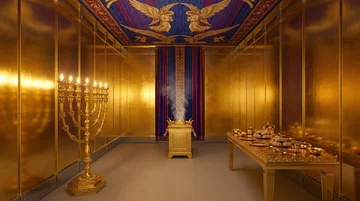
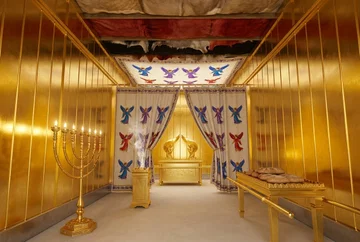
The verse belongs to the account of the construction of the tabernacle built at God's command as the earthly dwelling-place of the Most High.ST Mar 4, 1903GC88 411.1–412.3 That tabernacle was a structure of great magnificence yet made to be portable and removed from place to place in the wilderness.ST Mar 4, 1903GC88 411.1–412.3 It was divided by a rich and beautiful veil or curtain into its two apartments, the holy place and the most holy place, with a similar veil closing the entrance to the first apartment.GC88 411.1–412.3 Its walls were upright boards heavily plated with gold set in sockets of silver, and its roof was layered curtains with outer coverings of skins and innermost fine linen beautifully wrought with figures of cherubim.GC88 411.1–412.3
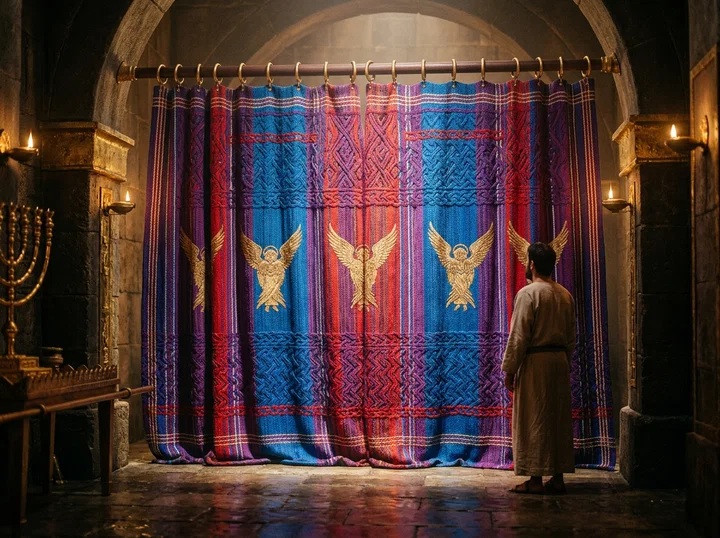
The verse describes that dividing veil as hung upon four pillars of shittim or acacia wood overlaid, covered, or plated with gold, with hooks of gold and sockets or bases of silver, standing at the entrance into the most holy place or holy of holies.MH 437.18T 284.3–285.1CET 91.2–3 The veil was heavy and richly woven and glorious, made of different colors and material, with a beautiful border and figures of gold wrought upon it representing angels.SG1 158.1DA 774.1
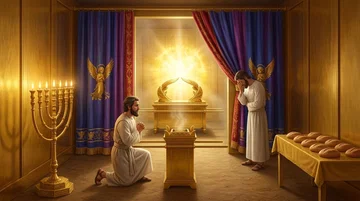
The veil separated the two apartments and marked off the boundary of the sacred place of God's presence, and it was not to be lifted or entered unbidden, with intrusion beyond it meaning death.MH 437.18T 284.3–285.1SG1 158.1ST Mar 4, 1903 Only the high priest entered beyond it for the appointed yearly ministry, once a year and trembling, carrying incense whose cloud veiled the glory above the mercy seat from his sight.MH 437.18T 284.3–285.1
At Jesus' death this heavy, richly woven veil was torn from top to bottom, leaving the most holy place open to view, which showed that the sanctuary service had reached its fulfillment in Christ's sacrifice and was no longer of value.DA 774.1 At the end of the prophetic periods in 1844 Jesus, attired as high priest, passed in a flaming chariot within the second veil from the Holy place into the Most Holy place, and the curtain was opened and the veil was lifted so the second apartment could be seen, revealing the ark, the cherubim, and the glory of God above it.SG1 158.1 The veil is the entrance into the holy of holies that Jesus raises so that the viewer can enter and see the heavenly sanctuary.CET 91.2–3 The skill and wisdom used in building the sanctuary according to these instructions came from God and should be used for His glory.Ms 97, 1899, par. 3–4
Sources
Pioneers and periodicals
52 sources
Exodus 26:32 belongs to the detailed instructions Moses received on Sinai for building the tabernacle in the wilderness, showing how particular God was about His worship.ST Mar 25, 1889RH Dec 31, 1861 In plain terms it directs that the inner veil be hung upon four pillars of acacia wood overlaid with gold, with hooks of gold, upon four sockets of silver.ST May 20, 1880RH Jan 6, 1853ST May 16, 1878 That hanging is the second veil stretched across the inside to divide the dwelling into two apartments, the holy place and the most holy place containing the ark.ST May 20, 1880RH Jan 6, 1853RH Aug 4, 1863ST Dec 2, 1889 Its construction followed the pattern shown on the mount, so the earthly house with its two holy places served as a figure and teaching type of the heavenly sanctuary where Christ ministers.ST Jan 24, 1911ST May 16, 1878ST Jun 26, 1907RH Feb 3, 1853 Thus the sanctuary was an earthly object lesson of God's plan for dwelling among His people and saving sinners from sin.ST Jul 8, 1930
Instructions and Historical Setting
Exodus 26:32 belongs to the detailed instructions for constructing and fitting the tabernacle that Moses received from God during his forty days on the mountain on Sinai.RH Dec 31, 1861ST Dec 10, 1896 It specifies part of the construction of the sanctuary where the ark containing the written law would be placed.RH Dec 31, 1861 The sanctuary so instructed was built and set up afterward as described later in Exodus, in Exodus 33–40.ST Dec 10, 1896
The verse belongs to the worship division of Exodus, chapters 25 to 40, by which Israel was given an established form of worship.RH Jan 20, 1916 Exodus means the going out, referring to the departure of Israel from Egypt.RH Jan 20, 1916 It tells the story of their great deliverance from bitter bondage and oppression into nationhood with thorough organization, efficient leadership, a complete code of laws, and an established form of worship.RH Jan 20, 1916
The verse is part of the story told in Exodus 25 to 40 of the building of the inner tabernacle, erected by Israel at God's command in the wilderness, which is what the word sanctuary generally means.ST Jun 19, 1907 It belongs to the complete description of the worldly sanctuary given in Exodus 25-31 and 35-40, summarized in Hebrews 9:1-5.ST Jun 4, 1885 That sanctuary was God's dwelling-place among the people in the wilderness, and remained so in the time of the judges, of Samuel, of Saul, and of David, until Solomon built the temple after the same pattern, which from the day of its dedication when the glory of the Lord filled the house of the Lord was God's dwelling-place among Israel.ST Jun 4, 1885
The verse is part of the law of Moses commanded by God through Moses in Horeb, standing under the statutes and judgments together with the Ten Commandments and with all the civil, sacrificial, moral, health, and ceremonial laws. It belongs to the laws revealing offerings, sacrifices, and types whose substance is traced in the new dispensation. It is among the law set forth in Exodus 20 to 40 and Leviticus to be remembered in the last days.
The verse belongs to the instructions for the sanctuary ceremonies given through Moses, distinct from the Ten Commandments spoken directly by God.ST Apr 15, 1886 Those instructions included burdensome ceremonial requirements imposed until the time of reformation.ST Apr 15, 1886 It is part of God's detailed instruction for building the sanctuary, showing how particular God was about what pertained to His worship.ST Mar 25, 1889
The sanctuary was to be erected as God directed, and its center was the holy of holies, where the ark containing God's law on stone tablets was placed.ST Jan 27, 1909 The builders were given God's Spirit for their work, showing that God blesses people consecrated to Him in practical, material work as well as in spiritual work.ST Jan 27, 1909 The verse belongs to the earthly sanctuary system whose pattern God showed Moses on Mount Sinai, with its two apartments, the holy place and the most holy place.RH Dec 24, 1908 That system continued in its later temple forms until Christ came and the second temple was destroyed in A.D. 70.RH Dec 24, 1908
Pillars Veil and Materials
The hanging was to be hung upon four pillars of shittim or acacia wood overlaid or plated with gold, with hooks of gold, upon four sockets or bases of silver, hung under the taches.ST May 20, 1880RH Jan 6, 1853ST May 16, 1878ST Dec 2, 1889RH Aug 28, 1853 In contrast with the first or entrance veil, this second veil has four rather than five pillars, and silver rather than bronze sockets.RH Jan 20, 1859 The veil itself was blue and purple and scarlet and fine-twined linen with cherubim, a heavy embroidered linen veil similar to the ceiling overhead.ST Dec 2, 1889ST Mar 11, 1886 It was richly made with gorgeous colors and with cherubim and flowers embroidered in gold and silver, of the same material and nearly the same pattern as the outer door curtain.ST Oct 29, 1894RH Aug 3, 1916 Its linen was beautifully worked with cherubim in gold and silver thread.ST Mar 21, 1911ST Oct 29, 1894
The cherubim represented angels connected with the heavenly sanctuary and ministering to God's people, emblematic of the heavenly angels surrounding God's throne.ST Jun 24, 1880ST Mar 21, 1911ST Oct 29, 1894 The building was thirty cubits, forty-five feet, long, ten cubits, fifteen feet, wide, and ten cubits high, made of upright boards of acacia wood overlaid with gold set in sockets of silver so that it looked like a building of gold.ST Feb 17, 1890ST Jun 20, 1911 Over the walls was a ceiling of fine-twined linen wrought with needlework and figures of angels, and over the building a tent roof of goat's hair, red ram-skins, and seal skins.ST Feb 17, 1890 The sanctuary had forty-eight gold-covered boards forming its solid sides, each board resting on two silver sockets with bars joining the boards.ST Mar 18, 1897 The boards stood on the earth which God made as the foundation.ST Mar 18, 1897
The sanctuary tent was about eighteen by fifty-four feet, with the first room about eighteen by thirty-six feet and the second room about eighteen feet square.RH Aug 3, 1916 The tabernacle was made to be taken apart and carried during Israel's journeys, yet it was magnificent and carefully made, with richly colored veils and ceiling curtain.ST Mar 21, 1911ST Mar 4, 1903 The veil did not reach the top of the building, so the glory above the mercy seat was partly visible from the first apartment.ST Jun 24, 1880 The entrance was toward the east, opposite ancient sun-worship, so the ministering priest stood with his back to the entrance and his face to the west.ST Feb 17, 1890 No specific explanation of the pillars, hooks, or silver sockets is given beyond their place in the sanctuary's construction.ST Jun 19, 1907
Two Apartments and Furnishings
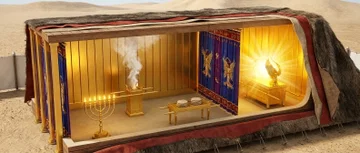
The hanging described is the inner veil stretched across the inside of the sanctuary to divide it into two apartments, the holy place and the most holy place.ST May 20, 1880RH Jan 6, 1853RH Aug 4, 1863RH Jul 27, 1916RH Oct 5, 1916 It was suspended from four pillars of shittim or acacia wood overlaid with gold, with hooks of gold, set in four silver sockets or bases.ST May 20, 1880RH Jan 6, 1853RH Aug 4, 1863ST Nov 14, 1892 The front eastern two-thirds formed the holy place and the smaller rear apartment formed the most holy place.RH Aug 4, 1863RH Jul 27, 1916 One veil stood at the entrance to the holy place and another separated it from the most holy place.RH Oct 5, 1916
The proportion of the division is not stated, but it was the same as afterward observed in the temple, with two-thirds of the space allotted to the first apartment and the remaining one-third to the second.RH Aug 4, 1863 The building was thirty cubits, forty-five feet, long, ten cubits, fifteen feet, wide, and ten cubits high, made of upright boards of acacia wood overlaid with gold set in sockets of silver, so that it looked like a building of gold.ST Feb 17, 1890 Over the walls was spread a ceiling of fine-twined linen wrought with needlework and figures of angels, and over the building was erected a tent roof covered with a curtain of goat's hair, red ram-skins, and seal skins.ST Feb 17, 1890 The holy place occupied two-thirds and the most holy place one-third, the latter a perfect cube of ten cubits, fifteen feet.RH Aug 4, 1863ST Feb 17, 1890 The entrance was toward the east, opposite ancient sun-worship, so that the ministering priest stood with his back to the entrance and his face to the west.ST Feb 17, 1890
Beyond the dividing veil was the most holy place, a ten-cubit cube containing the ark of God.ST Dec 2, 1889RH Mar 28, 1854 The veil itself was blue and purple and scarlet and fine-twined linen with cherubim, hung there under the taches upon its four gold-overlaid pillars to bring the ark of the testimony within it.ST Dec 2, 1889 In this way it divided between the holy place and the most holy and places the ark behind the second veil.ST Dec 2, 1889RH Mar 28, 1854 The embroidered veil is thus the divider between the sanctuary's two apartments.
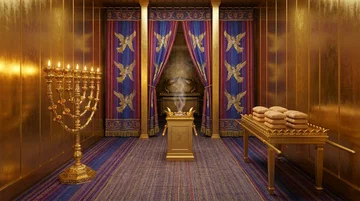
The sanctuary was about forty-five feet long and about eighteen feet wide and was divided by the veil into the two apartments called the holy and the most holy.ST Jun 4, 1885 In that layout the lampstand stood on the south side and the table of showbread on the north side and the altar of incense on the west side close to the veil in the holy place, while the ark of the covenant was within the veil in the most holy place.ST Jun 4, 1885 The holy place held the table of showbread, the candlestick with its seven lamps, and the altar of incense, while the ark was the furniture of the most holy place.ST Jun 4, 1885RH Jun 21, 1864
A linen veil formed the entrance to the tabernacle and a similar veil separated the holy place from the most holy place.ST Apr 1, 1889 The entrance hanging and the veil between the holy and most holy places are alike in kind as hangings supported by gold-plated wooden pillars with gold hooks and silver bases or sockets, so both can be called veils.ST Apr 1, 1889RH Apr 8, 1873RH Apr 8, 1873 The inner curtain is compared with the curtain at the sanctuary entrance in that both are hangings, so the entrance curtain can also be called a veil.RH Apr 8, 1873 The dividing hanging is distinguished from the hangings at the entrances to the court and the holy place in that the outer door curtain is the first veil and the partition curtain is the second veil, and the word veil alone does not necessarily identify it.RH Aug 3, 1916RH Oct 28, 1909 The sanctuary tent was about eighteen by fifty-four feet, with the first room about eighteen by thirty-six feet and the second room about eighteen feet square, and the inner veil was made of the same material and nearly the same pattern as the outer door curtain of the tent.RH Aug 3, 1916
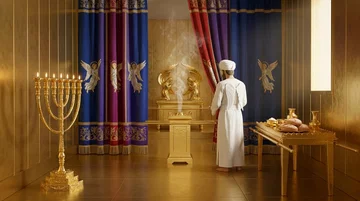
The daily work entered the holy place, but on the Day of Atonement the high priest entered within the veil into the most holy place.ST Oct 25, 1905 The curtain of blue, purple, and fine-twined linen separated the most holy place from the holy place, and no one was to pass it except the high priest at a special time in the year.ST Oct 25, 1905ST May 13, 1897 In strict definition the Sanctuary consists only of those things necessary to and actually used in the work of making atonement for the people, namely the veil, ark, table, candlestick, altars, and vessels of ministry committed to the sons of Kohath.RH May 5, 1851 The tabernacle, tent, coverings, court hangings, boards, bars, pillars, sockets, pins, and cords, cared for by Gershon and Merari, were only its appurtenances.RH May 5, 1851
Heavenly Pattern and Type
The hanging belonged to the Mosaic tabernacle whose veil was suspended from four acacia pillars overlaid with gold, with hooks of gold set in bases of silver.ST May 16, 1878RH Feb 3, 1853RH Aug 28, 1853RH Oct 2, 1856 That tabernacle was erected after forty days spent viewing what was shown on the mount, and its construction with two holy places divided by the veil on four pillars followed the pattern shown there.RH Feb 3, 1853RH Jan 4, 1870RH Aug 28, 1853 The tabernacle and its sacred vessels, with the ark containing the law placed in the second apartment, served as a pattern of the heavenly temple.ST May 16, 1878RH Jan 4, 1870RH Oct 2, 1856 Made according to the pattern shown to Moses, the earthly tabernacle with its two holy places represented the heavenly sanctuary, so its two apartments correspond to holy places in the heavenly tabernacle.RH Feb 3, 1853RH Aug 28, 1853RH Oct 2, 1856
The earthly tabernacle had two holy places divided by the veil hung on four pillars, and it served as a correct pattern or model of the heavenly building.RH Mar 8, 1870RH Feb 3, 1853ST Nov 1, 1877 Its two-part structure supports the conclusion that the heavenly sanctuary also has two holy places.RH Mar 8, 1870ST Nov 1, 1877 The great original from which it was copied must also consist of two holy places, for otherwise there would be perfect dissimilarity instead of likeness.RH Feb 3, 1853RH Aug 28, 1853
The earthly sanctuary whose making was thus specified was a dwelling place for God among Israel and a figure of the heavenly sanctuary, whose materials, furnishings, construction, rites, and features pointed to Christ and His work.ST Jun 26, 1907ST Jun 19, 1907RH Oct 2, 1856 That ancient tabernacle was made for ministry involving sacrifices and offerings, and its sanctuary service foreshadowed the heavenly temple where Jesus now ministers.ST Jan 24, 1911 Its structure and service served as a pattern and teaching type of the heavenly sanctuary, having a veil before its first apartment and another separating the two apartments, with sides of wood overlaid with gold and covered with curtains, though earthly things could not fully represent heavenly things.ST Jun 19, 1907 It is the worldly sanctuary belonging to the first covenant with its ordinances of divine service, and that connection explains why the ministration of the first covenant was called a ministration of death.ST Aug 5, 1889
Gospel Lessons and Application
The instructions for building the sanctuary, to which the hanging of the veil upon four pillars belongs, made the sanctuary an earthly object lesson of God's plan for governing and dealing with sinners. That sanctuary and its service set forth God's plan for salvation from sin, and God's people cooperated with Him in carrying out that work. The construction described in Exodus 26 was part of the dwelling place God asked Israel to make so that He could dwell among them and reveal His love.ST Jul 8, 1930 God requires His dwelling to be glorious within, though the earthly tent has no outward beauty, and there He is enshrined with His heavenly host, concealed by the richly colored and embroidered veil of the holy place.RH Nov 27, 1913
The curtain of blue and purple and fine-twined linen separating the most holy place from the holy place shows the gospel preached to Israel in the wilderness, with precious gospel truths joined to the most holy place.ST May 13, 1897 No one was to pass that curtain except the high priest at a special time in the year.ST May 13, 1897 The boards, coverings, pillars, hooks, and sockets described in Exodus 26:1-37 are not to be treated merely as measurements or material values, for the earthly structure points to a heavenly truth that must not be limited to its earthly form.RH May 25, 1905 The inner veil hung on four pillars dividing the holy place from the most holy place also illustrates the veil beyond which Christ has gone, where He is the sure and steadfast anchor of the soul.RH Nov 10, 1904
Sources