Exodus 28:38
And it shall be upon Aaron’s forehead, that Aaron may bear the iniquity of the holy things, which the children of Israel shall hallow in all their holy gifts; and it shall be always upon his forehead, that they may be accepted before the LORD.
Translations
And it shall be on Aaron’s forehead, that Aaron may bear the iniquity of the holy things, which the children of Israel shall hallow in all their holy gifts; and it shall be always on his forehead, that they may be accepted before the LORD.
And it shall be upon Aaron’s forehead, that Aaron may bear the iniquity of the holy things, which the children of Israel shall hallow in all their holy gifts; and it shall be always upon his forehead, that they may be accepted before the LORD.
And it shall be upon Aaron’s forehead, that Aaron may bear the iniquity of the holy things, which the children of Israel shall hallow in all their holy gifts; and it shall be always upon his forehead, that they may be accepted before the Lord.
And it shall be upon Aaron's forehead, that Aaron may bear the iniquity of the holy things, which the children of Israel shall hallow in all their holy gifts; and it shall be always upon his forehead, that they may be accepted before the LORD.
And it shall be upon Aaron’s forehead, and Aaron shall bear the iniquity of the holy things, which the children of Israel shall hallow in all their holy gifts; and it shall be always upon his forehead, that they may be accepted before the LORD.
And it shall be upon Aaron’s forehead, and Aaron shall bear the iniquity of the holy things, which the children of Israel shall hallow in all their holy gifts; and it shall be always upon his forehead, that they may be accepted before Jehovah.
and it hath been on the forehead of Aaron, and Aaron hath borne the iniquity of the holy things which the sons of Israel do hallow, even all their holy gifts; and it hath been on his forehead continually for a pleasing thing for them before Jehovah.
And it shall be upon Aaron's forehead, and Aaron shall bear the iniquity of the holy things, which the children of Israel shall hallow in all gifts of their holy things; and it shall be continually on his forehead, that they may be accepted before Jehovah.
So shall it be upon the forehead of Aaron, and Aaron shall bear the iniquity of the hallowed things, which the sons of Israel shall hallow, for all their hallowed gift,—and it shall be upon his forehead continually, that there may be acceptance for them before Yahweh.
Berean Standard Bible, Majority Standard Bible
And it will be worn on Aaron’s forehead, so that he may bear the iniquity of the holy things that the sons of Israel consecrate with regard to all their holy gifts. It shall always be on his forehead, so that they may be acceptable before the LORD.
It shall be on Aaron’s forehead, and Aaron shall bear the iniquity of the holy things, which the children of Israel shall make holy in all their holy gifts; and it shall be always on his forehead, that they may be accepted before the LORD.
And it will be over Aaron's brow, so that Aaron will be responsible for any error in all the holy offerings made by the children of Israel; it will be on his brow at all times, so that their offerings may be pleasing to the Lord.
So it shalbe vpon Aarons forehead, that Aaron may beare the iniquitie of the offrings, which the children of Israel shall offer in all their holy offrings: and it shall be alwayes vpon his forehead, to make them acceptable before the Lord.
Douay-Rheims (Challoner revision)
Hanging over the forehead of the high priest. And Aaron shall bear the iniquities of those things, which the children of Israel have offered and sanctified, in all their gifts and offerings. And the plate shall be always on his forehead, that the Lord may be well pleased with them.
Pictures
Cross-references 20 of 27
- Hebrews 8:5
Who serve unto the example and shadow of heavenly things, as Moses was admonished of God when he was about to make the tabernacle: for, See, saith he, that thou make all things according to the pattern shewed to thee in the mount.
The earthly priestly service is a pattern and shadow of heavenly things.
- Leviticus 16:20-22
And when he hath made an end of reconciling the holy place, and the tabernacle of the congregation, and the altar, he shall bring the live goat:
The priest transfers Israel’s iniquities to the live goat, which bears them away.
- Numbers 18:1
And the LORD said unto Aaron, Thou and thy sons and thy father’s house with thee shall bear the iniquity of the sanctuary: and thou and thy sons with thee shall bear the iniquity of your priesthood.
Aaron and his household bear the sanctuary’s iniquity.
- Hebrews 7:11
If therefore perfection were by the Levitical priesthood, ( for under it the people received the law,) what further need was there that another priest should rise after the order of Melchisedec, and not be called after the order of Aaron?
The law was received under the Levitical priesthood.
- Leviticus 16:4
He shall put on the holy linen coat, and he shall have the linen breeches upon his flesh, and shall be girded with a linen girdle, and with the linen mitre shall he be attired: these are holy garments; therefore shall he wash his flesh in water, and so put them on.
The high priest wears holy linen garments for the atonement service.
- Hebrews 9:1-5
Then verily the first covenant had also ordinances of divine service, and a worldly sanctuary.
Describes the Mosaic sanctuary and its furnishings under the first covenant.
- Leviticus 8:9
And he put the mitre upon his head; also upon the mitre, even upon his forefront, did he put the golden plate, the holy crown; as the LORD commanded Moses.
The holy crown is placed on Aaron’s forehead.
- Leviticus 10:17
Wherefore have ye not eaten the sin offering in the holy place, seeing it is most holy, and God hath given it you to bear the iniquity of the congregation, to make atonement for them before the LORD?
The priest bears the people’s iniquity to make atonement for them.
- Hebrews 9:11
But Christ being come an high priest of good things to come, by a greater and more perfect tabernacle, not made with hands, that is to say, not of this building;
Christ ministers as High Priest in the greater sanctuary foreshadowed by the ancient one.
- Leviticus 16:16
And he shall make an atonement for the holy place, because of the uncleanness of the children of Israel, and because of their transgressions in all their sins: and so shall he do for the tabernacle of the congregation, that remaineth among them in the midst of their uncleanness.
The high priest atones for the sanctuary and its uncleanness so the people may be accepted.
- Exodus 29
And this is the thing that thou shalt do unto them to hallow them, to minister unto me in the priest’s office: Take one young bullock, and two rams without blemish,
Together they describe consecrating the priesthood and its sacred service.
- Hebrews 9:24
For Christ is not entered into the holy places made with hands, which are the figures of the true; but into heaven itself, now to appear in the presence of God for us:
The earthly holy place contrasts with Christ appearing for us in heaven itself.
- Isaiah 53:11
He shall see of the travail of his soul, and shall be satisfied: by his knowledge shall my righteous servant justify many; for he shall bear their iniquities.
bearing iniquity brings cleansing and acceptance
- Exodus 39
And of the blue, and purple, and scarlet, they made cloths of service, to do service in the holy place, and made the holy garments for Aaron; as the LORD commanded Moses.
They recount the sanctuary’s building and inauguration.
- Hebrews 4:14
Seeing then that we have a great high priest, that is passed into the heavens, Jesus the Son of God, let us hold fast our profession.
Christ is the great High Priest who bears sin.
- Hebrews 9:28
So Christ was once offered to bear the sins of many; and unto them that look for him shall he appear the second time without sin unto salvation.
same bearing of sin for acceptance
- 1 Peter 2:24
Who his own self bare our sins in his own body on the tree, that we, being dead to sins, should live unto righteousness: by whose stripes ye were healed.
Christ bore sins in his body.
- Hebrews 9:7
But into the second went the high priest alone once every year, not without blood, which he offered for himself, and for the errors of the people:
Describes the high priest’s entrance into the most holy place for Israel’s sins.
- Hebrews 8:1-2
Now of the things which we have spoken this is the sum: We have such an high priest, who is set on the right hand of the throne of the Majesty in the heavens;
Jesus ministers in the heavenly sanctuary typified by the ancient one.
- Exodus 28:29
And Aaron shall bear the names of the children of Israel in the breastplate of judgment upon his heart, when he goeth in unto the holy place, for a memorial before the LORD continually.
Tahmeed describes the memorial worn by Aaron.
Commentary
Each commentary is drawn from primary sources: the writings of Ellen G. White and Adventist pioneers and periodicals. Each commentary is separate. Its own words are not a quotation; follow the references to read the source passages.
Ellen G. White
7 sources
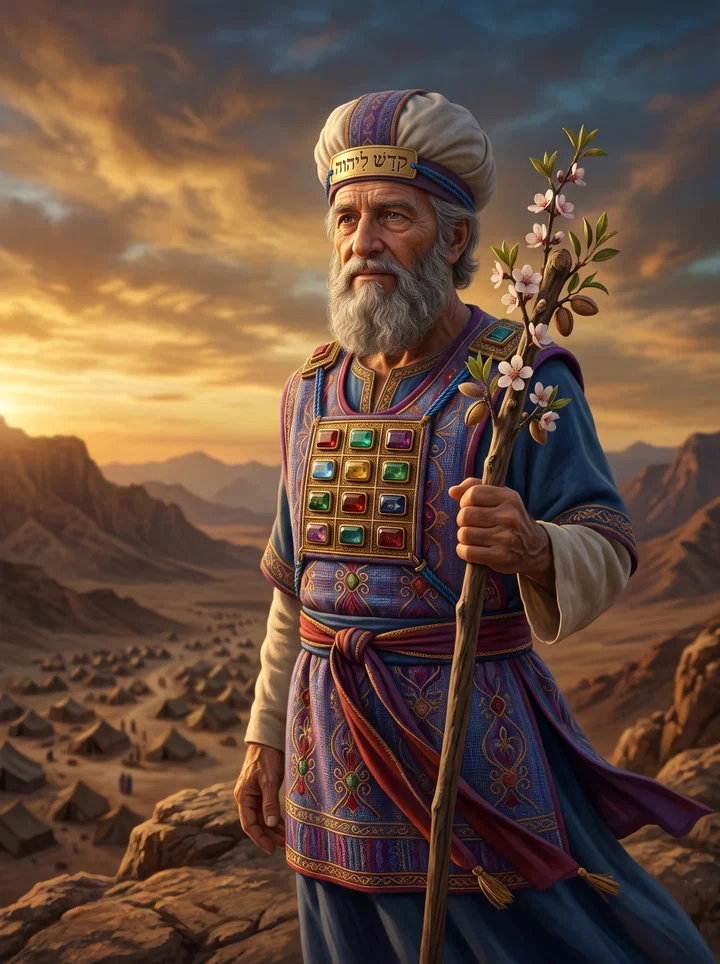
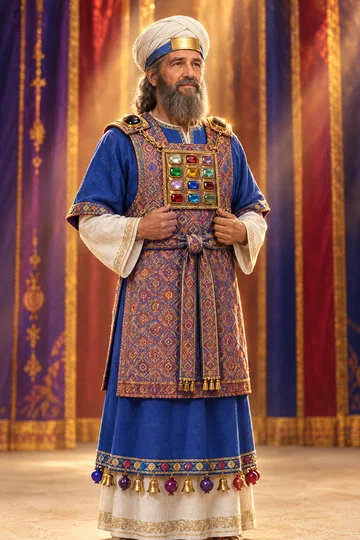
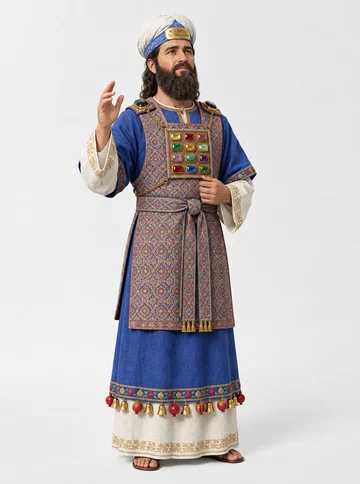
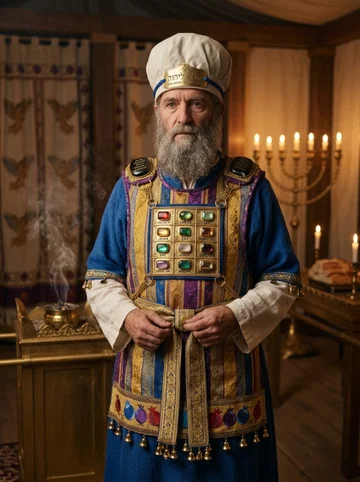
The forehead of the high priest bore a gold plate fastened by a blue lace to a white linen turban, inscribed Holiness to Jehovah, marking him as set apart as holy to the Lord.PP 351.3 That plate belonged to detailed, symbolic directions for Aaron's garments, showing that the God who moves the world and sustains life and health cares about and has a preference regarding the dress of those who serve Him.GW92 161.1Ms 56, 1900, par. 11–12 The dress of Christ's followers should likewise be symbolic and represent Him.Ms 56, 1900, par. 11–12
The care shown in the priestly clothing and conduct was meant to teach Israel and to impress every beholder with the holiness of God, the sacredness of His worship, and the purity required of those who come into His presence.2T 610.3–612.1PP 351.3 Order is required in everything connected with divine service, especially cleanliness, and God may be honored or dishonored by the apparel of those who officiate before Him.GW92 161.12T 610.3–612.1 He gave special directions to Moses about everything connected with His service, including specifying the dress for those who minister before Him.GW92 161.1
Aaron bearing on his forehead the divine name and the iniquity of the holy gifts so that Israel may be accepted reveals Jesus as the Aaron-like greater High Priest who bears the name of Jehovah on His forehead covering and the name of Israel on His breastplate to bear iniquity and secure acceptance.EW 213.1Lt 97, 1898, par. 8–9 As Son over His own house Christ is greater than Moses, and He carries with Him all who receive Him and believe in His name.Lt 97, 1898, par. 8–9 This was fulfilled when the prophetic periods closed in 1844 as Jesus ended His ministration in the holy place, closed the door of that apartment, clothed Himself in precious priestly garments including a robe with a bell and a pomegranate around the bottom, a glittering breastplate of curious work with enlarged lettering like names, and a crown-like covering on His head, and then, fully attired and surrounded by angels, passed in a flaming chariot within the second veil into the most holy place to cleanse the sanctuary and make a special atonement for Israel.EW 213.1
The inscription of holiness to the Lord is to rest upon God's saints and even upon their common temporal things.Lt 12, 1897, par. 13 It means the whole person is disciplined by the grace of Christ who made all and redeemed all, so that mind, strength, body as well as soul share in the divine nature as His purchased possession.Lt 12, 1897, par. 13 He must be served with whole mind, heart, soul and strength, and glorified in the entire life, and thus He will be glorified in them.Lt 12, 1897, par. 13
Sources
Pioneers and periodicals
43 sources
The engraved gold plate marked for holiness to the Lord was worn continually on the high priest's forehead as part of his garments for glory and beauty, so that the offerings would be accepted before the Lord.ST Mar 11, 1886ST May 16, 1878RH Sep 16, 1852ST Jun 26, 1901RH Jul 5, 1864
Aaron in that office carried the guilt attaching to the consecrated gifts of Israel, with their wrongdoing transferred to the sanctuary through sacrificial blood as part of the regular order of atonement.ST May 20, 1880ST Jun 26, 1907RH Sep 30, 1852ST Jun 4, 1885
Even prayers and other holy duties remain stained by sin and cannot atone for sin, but must themselves be carried by the High Priest to be accepted.ST Jun 12, 1884RH Aug 28, 1860
That earthly pattern pointed to Christ, the sinless High Priest who lives forever, whose blood atones for sin and whose priestly work alone secures acceptance.ST Jun 12, 1884ST Jun 26, 1907RH Aug 28, 1860RH Jul 5, 1864
It belonged to the added ceremonial instruction through Moses concerning priesthood, offerings and types that found fulfillment in Christ, distinct from the Ten Commandments spoken from Sinai and written on stone.ST Mar 22, 1883ST Mar 22, 1883ST Apr 15, 1886ST Feb 20, 1879ST Jul 8, 1886
Sanctuary Setting Described
The verse belongs to the minute description of the sanctuary built in the days of Moses in Exodus 25-40, made exactly according to the pattern shown him in the mount.ST Oct 29, 1894RH Jan 4, 1870 It is part of the instructions for the tabernacle and its furnishings received by Moses during his forty days on Mount Sinai, given while he was on the mountain.ST Jan 31, 1911 It is part of the detailed instructions for the sanctuary and its furnishings, the place God appointed as His dwelling among Israel and the center of their worship, where priests would minister in God's presence.ST Nov 14, 1892RH Jan 4, 1870 It belongs to directions for building and the description of the marvelously beautiful sanctuary given by God to Moses in the mount as the divine pattern, a great multiple object-lesson by various forms and rites teaching the great plan of salvation to Israel after deliverance from Egyptian bondage, built from free-will offerings of the children of Israel so that God might dwell among them, and built by workmen specially endowed by God for the work.
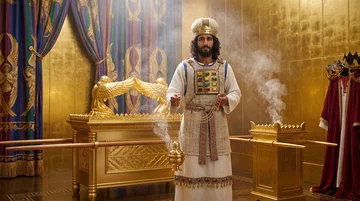
It belongs to the story told in Exodus 25 to 40 of the building, the inner tabernacle, erected by Israel at the command of God in the wilderness.ST Jun 19, 1907 The word sanctuary generally means that building, and when Solomon built the temple, that temple took the place of the portable tabernacle.ST Jun 19, 1907 In both buildings the worship of God upon the earth centered, with all earthly worship and service revolving around the holy of holies where the law of God rested with the mercy-seat over it.ST Jun 19, 1907 It stands within the instructions for the sanctuary and its priesthood, in which the priests were ordained to minister in the sanctuary before the ark, which held the law.RH Dec 31, 1861
It is part of the explicit directions God gave for the sanctuary Israel was to build, with every part specified, whose center was the holy of holies where the ark of the covenant containing God's holy law written on tables of stone was placed.ST Jan 27, 1909 God placed His Spirit upon Bezalel and Oholiab with other devoted men and women so the building might be properly erected and the work properly done, showing God is as willing to bless consecrated workers in material things as workers in spiritual things.ST Jan 27, 1909 The directions were afterward carried out just as God directed in the building of the ark with all its furniture and equipment, and wonderful blessing and glory came down upon the congregation and the building when it was completed.ST Jan 27, 1909 The instructions for the sanctuary were given after Israel's covenant with God was ratified, within worship whose purpose is to bring people into harmony with God's holy law.ST Mar 25, 1889 They present on earth His plan for dealing with sin and providing salvation through Christ.
That ancient sanctuary and its priests involved sacrifices and offerings, and that sanctuary typified the heavenly temple where Jesus now ministers.ST Jan 24, 1911 Its sacrificial service ended when Christ suffered and died once for all.ST Jan 24, 1911 In Exodus 28 God committed the priesthood to Aaron and his sons, so that after that time no one else was to perform the rites of a priest unless especially directed by the Lord.ST Mar 3, 1914 Saul had not been ordained for any such service, and had been instructed to wait at Gilgal for Samuel to offer the sacrifices, so his burnt offering was presumptuous disobedience and self-exaltation.ST Mar 3, 1914 Sanctification sometimes consists in setting apart or consecrating to a sacred or religious use, as seen in the priests being sanctified.RH Jul 26, 1864
Forehead Plate Wording
The verse describes a plate of pure gold engraved HOLINESS TO THE LORD, or Holiness to Jehovah, set on the front of the high priest's turban or mitre as a holy crown upon Aaron's forehead, part of his holy garments made for glory and beauty.ST May 16, 1878RH Sep 16, 1852RH Jul 5, 1864ST Nov 12, 1894 It was the inscription worn while he bore the iniquity connected with the holy things which Israel hallowed in all their holy gifts, so that those gifts might be accepted before the Lord.ST May 16, 1878RH Sep 16, 1852RH Jul 5, 1864
The plate belonged to consecrated and deeply significant clothing. Over the long white coat was a linen ephod curiously wrought with gold and blue and purple and scarlet, with a beautiful stone in a setting of gold on each shoulder, and by chains fastened to those settings was suspended before him the breastplate bearing the names of the twelve tribes in four rows with three in each row, while the mysterious Urim and Thummim also found place there. Aaron's breastplate and miter distinguished him from the other priests, whose garments were pure white linen signifying the purity of their priestly character and work.RH Dec 8, 1910
The forehead plate with its inscription represented his consecrated character.ST Jan 9, 1893 The clothing and conduct of the priesthood were to impress upon the people God's holiness, the sacredness of worship, and the purity required of those who entered His presence.ST Nov 12, 1894 The word rendered alway or always for its wearing is the Hebrew tahmeed, expressing what is continual or permanent and more broadly what belongs to lasting service and worship and the living union between God and His people.ST Mar 12, 1912 That same Hebrew word elsewhere rendered continual and daily is joined to the burnt-offering about twenty times, which is why burnt-offering is supplied in Daniel 8, but it is also applied to the pillar of cloud and fire, the showbread, the holy miter, the incense, the meal offering, the ever-burning lamp and all things of God's service, rendered alway, always, continue, continual, daily, ever, evermore, perpetual. The gold plate was thus to remain on his forehead always or continually, so that the offerings might be accepted before the Lord.ST Mar 11, 1886ST Jun 26, 1901
Bearing Iniquity Explained
Aaron bears the iniquity connected with the holy things which Israel hallows in all their holy gifts, so that those gifts may be accepted before the Lord.ST May 20, 1880ST Jun 26, 1907ST Jun 4, 1885RH Mar 8, 1870ST Mar 10, 1898 The holy inscription on his forehead was appointed for this bearing, joining the plate to the acceptance of the offerings.ST May 20, 1880ST Jun 26, 1907ST Jun 4, 1885RH Mar 8, 1870ST Mar 10, 1898 This bearing belongs to the priestly ministration in the earthly sanctuary as the pattern pointing to Christ and His work as High Priest.ST Jun 26, 1907RH Mar 8, 1870
Even prayers and other holy duties of believers remain tainted with sin and cannot atone for sin, but themselves need the High Priest to bear their iniquity for acceptance.ST Jun 12, 1884RH Aug 28, 1860 Acceptance depends on Christ, whose blood atones for sin, with the plate inscribed Holiness to the Lord representing His love and priestly work.ST Jun 12, 1884 A gift brought to God could bear iniquity arising from wrongdoing, yet be made holy and accepted through priestly mediation. The holy things made up the sanctuary, and the iniquity was Israel's, transferred to the sanctuary through the blood of a sacrificial victim when the priest made atonement.RH Sep 30, 1852 This transfer was part of the regular arrangement and not an accidental result of especially rebellious acts.RH Sep 30, 1852
The daily services in the holy place left the sanctuary and the priests accepted and cleansed from sin because Aaron bore the iniquity of the holy things and holy gifts continually on his forehead.ST Jun 26, 1901 The verse is connected with the high priest's yearly entrance into the most holy place, bringing sacrificial blood before the ark to make atonement for the people's sins and cleanse the sanctuary.RH Jun 21, 1864 In the yearly cleansing, after the people's sins are removed from the sanctuary by blood, the high priest bears them to the tabernacle entrance and transfers them by confession onto the live scapegoat, which bears them away from the sanctuary.RH Feb 3, 1853RH Mar 8, 1870RH Feb 3, 1853 The high priest bore this iniquity on his mitre while interceding for Israel in the sanctuary, and after completing his intercession in the most holy place he changed his garments, including the mitre.ST Apr 26, 1883
The splendid dress prescribed for the high priest's regular ministry he laid aside on the Day of Atonement, the tenth day of the seventh month, for the plainest and humblest dress when entering the most holy place.RH Jan 11, 1870ST Jun 6, 1878 This laying aside solemnly showed he was high priest only in a typical sense and not in reality.RH Jan 11, 1870ST Jun 6, 1878 Together with his sin offering for himself it was designed to impress his infirmity and sinfulness, which has no counterpart in Christ.RH Jan 11, 1870ST Jun 6, 1878
Type of Christ's Ministry
The bearing of iniquity on the forehead was part of the earthly pattern that pointed to Christ and His work as High Priest.ST Jun 26, 1907 The sanctuary itself was given as the divine pattern for building, a great multiple object-lesson by various forms and rites teaching the plan of salvation to Israel after deliverance from Egyptian bondage. It was built from the free-will offerings of the children of Israel so that God might dwell among them, by workmen specially endowed by God for the work.
The plate inscribed Holiness to the Lord represents Christ's love and priestly work.ST Jun 12, 1884 Even prayers and other holy acts remain tainted with sin and cannot atone for sin, but themselves need bearing for acceptance.ST Jun 12, 1884 Acceptance depends on Christ, whose blood atones for sin.ST Jun 12, 1884 Aaron is the type of the great High Priest who bears the iniquity of the holy things which the children of Israel hallow in all their holy gifts, with Holiness to the Lord upon his forehead always so they may be accepted before the Lord.RH Aug 28, 1860
The high priest bore this iniquity while interceding for Israel in the sanctuary, and after completing his intercession in the most holy place he changed his garments, including the mitre.ST Apr 26, 1883 This sanctuary work represents Christ's final work before the ark in heaven, when the sins of God's people will be blotted out.ST Apr 26, 1883 Aaron's service marked him as bearing the iniquity connected with Israel's holy gifts so that they might be accepted before the Lord, yet his service was temporary because he was sinful and would die.RH Jul 5, 1864 In contrast stands Christ, the sinless High Priest who lives forever.RH Jul 5, 1864
The Levitical order was established to minister before the ark containing the tables of the law in the most holy place of the typical sanctuary while that sanctuary should continue.RH Dec 12, 1854 That ministration before the ark could only exhibit human guilt and just condemnation and death under the holy law, containing in itself no promise of pardon.RH Dec 12, 1854 Its priesthood offered no sacrifice able to take away sin but could only direct penitent sinners forward to the great Sacrifice to be offered for the sins of men.RH Dec 12, 1854 In contrast, Christ the great High Priest ministers in the heavenly sanctuary before the ark of God's testament, having laid down His life for the world, and is able to save to the uttermost all who come to God through Him.RH Dec 12, 1854
Ceremonial Law Distinguished
The verse belongs to the law of Moses commanded in Horeb with the statutes and judgments, which embraces all the precepts, the Ten Commandments together with the others. It stands among the laws in which offerings and sacrifices and types were revealed, whose substance in the new dispensation is traced from the shadows of the old. With Exodus 20 to 40 and Leviticus it is especially to be remembered in the last days, not the Ten-Commandment law as a rule of conduct alone but the whole law given through Moses.
It belongs to the appointment of the Levitical priesthood with its priesthood and holy gifts, which came after the giving of the Ten Commandments in Exodus 20.ST Mar 22, 1883ST Feb 20, 1879 It treats of priesthood and holy gifts, matters not addressed by the Ten Commandments.ST Mar 22, 1883 It therefore belongs to the Levitical law received under that priesthood, not to the moral law, proving the two laws are distinct.ST Mar 22, 1883ST Mar 22, 1883ST Feb 20, 1879
It does not belong to the Ten Commandments that God spoke directly from Sinai and wrote on the two tables of stone with nothing added.ST Apr 15, 1886 It belongs to the additional instruction received through Moses during forty days in the mount and recorded chiefly in Exodus 25-30 and Leviticus.ST Apr 15, 1886 It is part of the precepts, statutes, and laws given by the hand of Moses, which include burdensome ceremonies, diverse washings, and carnal ordinances imposed until the time of reformation.ST Apr 15, 1886 It is part of a yoke which neither the fathers nor their children were able to bear.ST Apr 15, 1886
It is part of the ceremonial ordinances in Exodus 25-30 that God gave by the hand of Moses after speaking the Ten Commandments directly to the people from Sinai, having reference to flesh and to offerings for sin.ST Jul 8, 1886 Those offerings could not really take away sin.ST Jul 8, 1886 They pointed to Christ, the Lamb of God who takes away the sin of the world, who bore sins in His own body on the tree and appeared to put away sin by the sacrifice of Himself.ST Jul 8, 1886 That whole system found its fulfillment in the body of Christ and was abolished in His flesh, so the sacrifices were not to be continued after Christ suffered.ST Jul 8, 1886
Reverent Present Application
The minute prescriptions for the priests' garments and the care and reverence in wearing them taught that God is holy and that His work and everything connected with it must be treated as holy.RH Oct 30, 1913ST Nov 12, 1894 The clothing and conduct of the priest, crowned by the gold plate inscribed Holiness to Jehovah upon the forehead, were to impress the holiness of God, the sacredness of worship, and the purity required of those who enter His presence.RH Oct 30, 1913ST Nov 12, 1894 That even the smallest details of clothing and service were specified shows that small details of sacred service matter.RH Oct 30, 1913ST Nov 12, 1894ST Mar 15, 1883
A gift brought to God may bear iniquity arising from wrongdoing, yet through priestly mediation it is made holy and accepted. Money once devoted to God is therefore recognized by Him as holy. Giving Sabbath-school or missionary offerings on the Sabbath does not violate the Sabbath law.
Even prayers and other holy duties of believers remain tainted with sin and cannot atone for sin, but themselves need the High Priest to bear their iniquity so they may be accepted.RH Aug 28, 1860 Applied daily, the law as a divine mirror shows the believer more and more sinfulness in heart and ways.RH Aug 28, 1860 That sight sends him every moment to Christ.RH Aug 28, 1860 In this third use the law keeps believers alive with Christ and prepares them for larger communications of the life of God, so that the law and Christ are continually necessary together.RH Aug 28, 1860
Sources