Leviticus 16:20
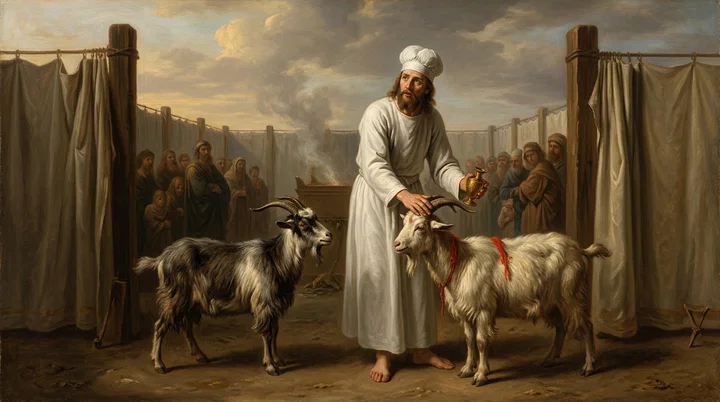
And when he hath made an end of reconciling the holy place, and the tabernacle of the congregation, and the altar, he shall bring the live goat:
Translations
And when he has made an end of reconciling the holy place, and the tabernacle of the congregation, and the altar, he shall bring the live goat:
King James Version, KJV Cambridge Paragraph Bible, Webster Bible
And when he hath made an end of reconciling the holy place, and the tabernacle of the congregation, and the altar, he shall bring the live goat:
Revised Version, American Standard Version
And when he hath made an end of atoning for the holy place, and the tent of meeting, and the altar, he shall present the live goat:
'And he hath ceased from making atonement [for] the sanctuary, and the tent of meeting, and the altar, and hath brought near the living goat;
And when he hath ended making atonement for the sanctuary, and the tent of meeting, and the altar, he shall present the living goat;
And, when he hath made an end of covering by propitiation the holy place, and the tent of meeting, and the altar, then shall he bring near the living goat.
Berean Standard Bible, Majority Standard Bible
When Aaron has finished purifying the Most Holy Place, the Tent of Meeting, and the altar, he is to bring forward the live goat.
“ When he has finished atoning for the Holy Place, the Tent of Meeting, and the altar, he shall present the live goat.
And when he has done whatever is necessary to make the holy place and the Tent of meeting and the altar free from sin, let him put the living goat before the Lord;
When he hath made an ende of purging the Holy place, and the Tabernacle of the Congregation, and the altar, then he shall bring the liue goate:
Douay-Rheims (Challoner revision)
After he hath cleansed the sanctuary, and the tabernacle, and the altar, then let him offer the living goat:
Pictures
Cross-references 20 of 81
- Hebrews 9:23-24
It was therefore necessary that the patterns of things in the heavens should be purified with these; but the heavenly things themselves with better sacrifices than these.
Earthly sanctuary cleansing prefigures Christ’s cleansing of the heavenly sanctuary.
- Hebrews 8:1-2
Now of the things which we have spoken this is the sum: We have such an high priest, who is set on the right hand of the throne of the Majesty in the heavens;
Christ ministers as High Priest in the heavenly sanctuary, the true tabernacle.
- Hebrews 9:7
But into the second went the high priest alone once every year, not without blood, which he offered for himself, and for the errors of the people:
Describes the high priest’s yearly entry into the inner sanctuary with blood.
- Hebrews 8:5
Who serve unto the example and shadow of heavenly things, as Moses was admonished of God when he was about to make the tabernacle: for, See, saith he, that thou make all things according to the pattern shewed to thee in the mount.
The earthly sanctuary service was a pattern of Christ’s heavenly ministry.
- Leviticus 16:7-10
And he shall take the two goats, and present them before the LORD at the door of the tabernacle of the congregation.
Lots distinguish the Lord’s sacrificial goat from the live scapegoat sent away.
- Leviticus 23:27-32
Also on the tenth day of this seventh month there shall be a day of atonement: it shall be an holy convocation unto you; and ye shall afflict your souls, and offer an offering made by fire unto the LORD.
Gives the Day of Atonement observance and its requirement to afflict the soul.
- Leviticus 16:30
For on that day shall the priest make an atonement for you, to cleanse you, that ye may be clean from all your sins before the LORD.
The annual atonement cleanses the people from all their sins.
- Hebrews 9:11-12
But Christ being come an high priest of good things to come, by a greater and more perfect tabernacle, not made with hands, that is to say, not of this building;
Christ’s priestly work in the heavenly sanctuary fulfills the earthly sanctuary’s pattern.
- Hebrews 10:4
For it is not possible that the blood of bulls and of goats should take away sins.
Animal blood could not take away sins.
- Daniel 8:14
And he said unto me, Unto two thousand and three hundred days; then shall the sanctuary be cleansed.
Its sanctuary-cleansing prophecy points to the Day of Atonement cleansing.
- Leviticus 16:15-16
Then shall he kill the goat of the sin offering, that is for the people, and bring his blood within the vail, and do with that blood as he did with the blood of the bullock, and sprinkle it upon the mercy seat, and before the mercy seat:
The slain goat’s blood makes atonement for the sanctuary before the live goat is brought.
- Leviticus 16:33
And he shall make an atonement for the holy sanctuary, and he shall make an atonement for the tabernacle of the congregation, and for the altar, and he shall make an atonement for the priests, and for all the people of the congregation.
Lists the sanctuary, tabernacle, altar, priests, and people as atoned for.
- Hebrews 9:24-26
For Christ is not entered into the holy places made with hands, which are the figures of the true; but into heaven itself, now to appear in the presence of God for us:
Christ’s heavenly ministry and once-for-all sacrifice fulfill the earthly sanctuary service.
- Hebrews 10:1
For the law having a shadow of good things to come, and not the very image of the things, can never with those sacrifices which they offered year by year continually make the comers thereunto perfect.
The yearly sanctuary service was a shadow of Christ’s work, and its sacrifices could not perfect worshipers.
- John 1:29
The next day John seeth Jesus coming unto him, and saith, Behold the Lamb of God, which taketh away the sin of the world.
Christ is the sacrificial Lamb who bears and takes away the world’s sin.
- Leviticus 16:15
Then shall he kill the goat of the sin offering, that is for the people, and bring his blood within the vail, and do with that blood as he did with the blood of the bullock, and sprinkle it upon the mercy seat, and before the mercy seat:
The slain goat’s blood cleanses the sanctuary before the live goat is brought.
- Hebrews 9:3
And after the second veil, the tabernacle which is called the Holiest of all;
Identifies the inner sanctuary reached after the second veil.
- Leviticus 16:2
And the LORD said unto Moses, Speak unto Aaron thy brother, that he come not at all times into the holy place within the vail before the mercy seat, which is upon the ark; that he die not: for I will appear in the cloud upon the mercy seat.
Restricts Aaron’s entry and locates God’s appearance above the mercy seat.
- Leviticus 17:11
For the life of the flesh is in the blood: and I have given it to you upon the altar to make an atonement for your souls: for it is the blood that maketh an atonement for the soul.
Blood given on the altar makes atonement for the soul.
- Leviticus 16:10
But the goat, on which the lot fell to be the scapegoat, shall be presented alive before the LORD, to make an atonement with him, and to let him go for a scapegoat into the wilderness.
The live goat is sent into the wilderness after atonement is made.
Commentary
Each commentary is drawn from primary sources: the writings of Ellen G. White and Adventist pioneers and periodicals. Each commentary is separate. Its own words are not a quotation; follow the references to read the source passages.
Ellen G. White
20 sources
After he had finished reconciling the holy place, the tabernacle of the congregation, and the altar on the great day of atonement, the high priest brought forward the live goat.GC88 420.1Ms 15, 1850, par. 8–11Ms 81, 1886, par. 9 He placed his hands upon it and confessed the sins of Israel over it, symbolically transferring them to the goat to be carried away as forever separated from the people.GC88 420.1Ms 15, 1850, par. 8–11Ms 6, 1849, par. 8 That earthly cleansing was a pattern of Christ's actual ministry in the heavenly sanctuary, where as great High Priest He cleanses the most holy place and blots out the sins of His faithful people, a work begun in 1844 at the end of the prophetic days not by fire upon the earth but by His own blood in heaven.Ms 81, 1886, par. 94SP 499.3–500.1GC88 433.1Ms 124, 1901, par. 18–19Ms 6, 1876, par. 5–6 At the last Jesus finishes His sanctuary work and confesses the sins of Israel upon the scapegoat, which represents Satan finally bearing the sins of all who come to Jesus while the unrepentant bear their own, and it is led away to the land of forgetfulness.Ms 15, 1850, par. 8–11Ms 194, 1901, par. 1 Those who held the live goat to be a type of Christ taught that Christ alone, over whom death had no power, was able to bear human sins, and not Satan who cannot bear even his own, nor Pilate washing his hands.Ms 112, 1897, par. 47 It belongs to the solemn antitypical day of atonement and judgment now going on above, calling every soul to purification before God through repentance, humility, heart-searching, confession, and turning from sin to be cleansed by the blood of Jesus before the books are opened.5T 420.3Ms 6, 1849, par. 8Lt 55, 1886, par. 9–10Lt 53, 1886, par. 4Ms 52, 1905, par. 10
Earthly Sanctuary Ritual
The sanctuary to be cleansed was God's earthly dwelling-place of glory, with a holy place and a most holy place, first the movable sanctuary erected in the desert of Sinai and afterward the temple built by Solomon to which its vessels were transferred after Israel entered Canaan.GC88 683.4–684.54SP 498.6 Its cleansing took place on the great day of atonement, and the bringing forward of the live goat comes only after finishing the reconciling of the holy place and the tabernacle of the congregation and the altar.GC88 420.1Ms 81, 1886, par. 9Ms 6, 1849, par. 8Ms 194, 1901, par. 1ST Mar 4, 1903 For that annual service the high priest entered the most holy place after careful preparation and went before God at the mercy seat while the people waited in prayer, and when he came out he blessed them.ST Mar 4, 1903
The service centered on the ark containing God's law, with the mercy seat covering it and the angels at either end, and its heavenly mysteries are not to be described beyond what has been revealed.Lt 253, 1903, par. 17 In the setting of the day of atonement Joshua acted on behalf of Israel.17MR 242.1–2 After the reconciling the high priest brought forward the live goat, placed his hands upon it and confessed over it the sins of Israel, symbolically transferring them to the goat, which then carried them away as forever separated from the people.GC88 420.1Ms 15, 1850, par. 8–11Ms 6, 1849, par. 8
Heavenly Fulfillment and Scapegoat
The cleansing of the holy place, the tabernacle of the congregation, and the altar on the great day of atonement was a pattern of Christ's actual ministry in the heavenly sanctuary in behalf of His people, matching the Day of Atonement work done for Israel.GC88 433.1Ms 124, 1901, par. 18–19 The antitypical Day of Atonement is the cleansing of the most holy place of the heavenly sanctuary, in which Christ as great High Priest blots out the sins of His faithful people throughout history.4SP 499.3–500.1 In that work sins go beforehand to judgment to be confessed and taken away.Ms 81, 1886, par. 9
The great antitype in heaven began in 1844 at the end of the prophetic days.Ms 6, 1876, par. 5–6 The sanctuary to be cleansed is not the earth to be purified by fire at Christ's second coming to punish its inhabitants for iniquity, but the heavenly sanctuary, which Christ entered to cleanse from the people's sins by virtue of His own blood.Ms 6, 1876, par. 5–6 In mercy He thereby gave them still more time to repent of their sins and prepare for His coming.Ms 6, 1876, par. 5–6 Christ as great High Priest is now attired like the Jewish high priest in priestly garments, and when Michael stands up to reign as King of kings and Lord of lords that attire is exchanged for many crowns in one crown.WLF 9.1
In the final application, when the reconciling is ended and the live goat is brought, Jesus finishes His sanctuary work, comes to the sanctuary entrance, and confesses Israel's sins upon the scapegoat.Ms 15, 1850, par. 8–11 The goat is then led away to the land of forgetfulness, and its removal takes time.Ms 15, 1850, par. 8–11 It struggles to escape but is held fast, for if it escaped Israel would be destroyed.Ms 15, 1850, par. 8–11 Then Jesus puts on the garments of vengeance and takes His place on the great white cloud before the plagues fall, the cloud being separate from the sanctuary.Ms 15, 1850, par. 8–11
The live goat sent into the wilderness is a type of Christ, not Satan and not Pilate.Ms 112, 1897, par. 47 Satan cannot be the scapegoat because he cannot bear even his own sins, and Pilate washing his hands at the choosing of Barabbas cannot be represented by it.Ms 112, 1897, par. 47 Christ alone, over whom death had no power, was able to bear human sins, meeting the multitude's cry for His blood to be upon them and their children.Ms 112, 1897, par. 47 The scapegoat chosen after the reconciling to bear the people's sins also represents Satan himself in its bearing on the day of atonement.Ms 194, 1901, par. 1 He must finally bear the sins of all who come to Jesus, while those who continue in transgression must bear their own sins.Ms 194, 1901, par. 1
All the types point to Jesus Christ as the Sin-bearer and Substitute for the offender, who cannot Himself be accused as a sinner and who takes away the sin of the repentant, believing transgressor.Ms 124, 1901, par. 18–1917MR 242.1–2 Then as now Satan points to the defilement of God's people and triumphs in their discomfiture.Ms 124, 1901, par. 18–19
Solemn Call to Readiness
The bringing of the live goat belongs to the solemn work now going on in the sanctuary above, which is the great day of atonement and Judgment and the great day of preparation for this time.5T 420.3 It concerns every individual, with perils attending every soul.5T 420.3 After the reconciling of the holy place and the tabernacle and the altar is finished, the live goat is brought forward, and this marks the final day of atonement as a time of confession before the books are opened and every person is judged for deeds done.Ms 6, 1849, par. 8Ms 52, 1905, par. 10 Sins that are confessed must be confessed before the coming time of trouble, so that they can be placed upon the scapegoat and borne away.Ms 6, 1849, par. 8Ms 52, 1905, par. 10
The present antitypical day of atonement is a solemn time for purification before God through repentance and humility and heart-searching.Lt 55, 1886, par. 9–10 The church and its members are to turn from sin and live in purity, considering how each person's case will stand in the judgment.Lt 55, 1886, par. 9–10Lt 53, 1886, par. 4 The soul must be cleansed from defilement by the blood of Jesus.Lt 53, 1886, par. 4 The needed preparation is to put away sin and draw near to God, trusting Christ to cleanse from unrighteousness and secure pardon, while sins to be taken away go beforehand to judgment.Ms 81, 1886, par. 9
This subject is to be kept constantly before the minds of those employed in institutions, and kept before the people and urged upon their consciences with earnestness and power.5T 420.3 It is not to be lightly regarded nor crowded out by business cares.5T 420.3 Correct views of the sanctuary subject give correct views of the importance of the work for this time and lead to greater energy and zeal.5T 420.3 They keep workers from becoming careless and blinded to the wants of the cause, and lead them to seek to be a channel of light.5T 420.3
Sources
Pioneers and periodicals
115 sources
When reconciling is finished the yearly Day of Atonement on the tenth day of the seventh month reaches its turning point, after the high priest alone has cleansed the holy place, the tabernacle and the altar with blood sprinkled before the mercy-seat.ST Sep 6, 1910RH Mar 8, 1870ST Apr 8, 1913RH Jun 28, 1864 That reconciling is the cleansing of the sanctuary from the transgressions and sins of Israel transferred into it through the year by confession and sacrificial blood, completed in the most holy place.ST Jun 6, 1878RH Sep 16, 1852RH Oct 31, 1854ST Jul 4, 1911 Only when that work is ended is the live goat brought forward to the door of the tabernacle, upon whose head the high priest confesses all the iniquities already atoned for and sends it by a fit man into the wilderness to perish and never return.RH Sep 1, 1863ST Jun 6, 1878RH Feb 3, 1853RH Dec 8, 1915RH Mar 24, 1863 The live goat is the scapegoat for Azazel, representing Satan the originator of sin, not Christ, while the slain goat for the Lord represents Christ's sacrifice and the high priest represents His priesthood.RH May 9, 1871ST Mar 11, 1875ST Nov 29, 1905ST Sep 26, 1911ST Apr 20, 1904 In the heavenly tabernacle Christ with His own blood finishes the second-apartment cleansing in the investigative judgment, blotting sins out of the books and removing them from God's presence.ST Jun 6, 1878ST Nov 20, 1879ST Mar 11, 1875ST Apr 3, 1879 That closing work began at the end of the 2300 days in 1844 on October 22, and when Christ at last confesses those sins upon Satan and probation closes, only those who afflict their souls and confess and forsake sin are cleansed and retained for life.ST Sep 6, 1910ST Mar 11, 1875RH Feb 3, 1853RH Dec 29, 1904RH Mar 22, 1870
Day of Atonement Setting
The verse belongs to the yearly Day of Atonement on the tenth day of the seventh month, the last and most solemn day of the yearly round, announced by trumpets on the first day of the month and occurring less than a week before the Feast of Tabernacles.ST Sep 6, 1910RH Mar 8, 1870ST Apr 3, 1879 Day after day through the year the record of sin and its remedy was made in the sanctuary by blood, but on that tenth day final disposition was made, first for the priests with a bullock and then for the people with a goat.ST Sep 6, 1910ST Apr 3, 1879RH Aug 3, 1916 After the high priest entered the most holy place alone and sprinkled the blood seven times on the mercy-seat over the broken Ten Commandments to show complete satisfaction for every repentant sinner, he came out bearing in figure the sins of all the people to place upon the scapegoat.ST Sep 6, 1910RH Mar 8, 1870 It was the cleansing of the sanctuary and the cleansing of the people together, the sanctuary cleansed from the record of sin and the people cleansed from sin itself, and it was final for every member of Israel who afflicted his soul.ST Sep 6, 1910ST Apr 3, 1879 In its antitype the time must come in Christ's redemption when the whole congregation on earth finishes transgression and makes an end of sins, not by any righteousness of their own but only by the blood of Christ, when God closes the record of sin for the world, forgives sins, cleanses the soul temple, and seals the sinner for eternity.ST Sep 6, 1910
It is the work of the high priest alone, who alone enters within the second veil where the ark and mercy seat are into the most holy place with blood and incense, and only once a year.ST Apr 8, 1913RH Jun 28, 1864RH Feb 2, 1911ST Apr 3, 1879 Before serving for the people he makes atonement for himself and his household with the bullock's blood, so that cleansed from sin he is then ready to make atonement for the people and can stand sinless.ST Apr 8, 1913ST Apr 3, 1879 While he ministers inside, the people wait outside in solemn silence and prayer, and the lower priests continue other offerings, for the day is not a cessation of priestly service but a culmination in which the high priest also performs the ordinary daily duties.RH Jun 28, 1864ST Jun 19, 1879 It remains a time of probation, with the people cleansed from sin and required to afflict their souls.ST Jun 19, 1879
Through the year sins were continually transferred from penitents into the sanctuary by confession over sacrifices and by blood ministered in the holy place, making the sanctuary the receptacle of forgiven sin.ST Jun 6, 1878ST Jul 4, 1911RH Feb 3, 1853 The daily ministration bore sins in, and the Day of Atonement reverses that process by bearing sins out.ST Jun 6, 1878ST Jul 4, 1911RH Feb 3, 1853RH Dec 24, 1908 The verse marks the end of the yearly round and the shift of ministration from the holy place to the most holy place, completing what was only partly done all year in the first apartment.RH Mar 8, 1870ST Jun 4, 1885RH Feb 3, 1853ST Sep 9, 1875RH Jan 11, 1870 That finishing work is entering the most holy apartment to cleanse it and hallow it from uncleanness by a sin offering made in both apartments for the whole house of Israel, that they might be cleansed from all their sins before the Lord.ST Apr 3, 1879ST Sep 9, 1875 Its heavenly counterpart occurs only once, at the close of Christ's priesthood, as the concluding work before his coronation and the finishing of human probation, typifying not the whole gospel dispensation but that part embraced in the hour of God's judgment in the days of the voice of the seventh angel when he begins to sound.ST Sep 9, 1875RH Jan 11, 1870
Each detail in the laws about sacrifices and offerings and about the consecration and duties of the priests had its meaning in the sacrifice, life, and work of Jesus Christ, though it is not comparatively profitable to spend much time on the meaning of the details.ST Feb 7, 1911 The live goat mentioned in the verse is left without explanation by those who hold that the passage concerns only the shift of ministry to the most holy place for the past year's sins.RH May 11, 1869 The rule restricting the high priest's entry into the holiest place to the tenth day of the seventh month was given after the tabernacle was set up, when before the rule existed Aaron entered at other times, and therefore the later ceremonial rule cannot establish what day the tabernacle was set up.ST Jul 17, 1879 The ordinance of the live goat after reconciliation for the holy place, the tabernacle, and the altar belonged to the same ceremonial system that required observance of the seventh-day Sabbath.RH Jun 28, 1864 The Day of Atonement service is the most important service connected with the sanctuary, though the Bible records no specific occasion when the day was observed.RH Dec 10, 1861
Reconciling Sanctuary and Altar
To reconcile the holy place, the tabernacle of the congregation, and the altar is to cleanse or purify them from the moral uncleanness, transgressions and sins of Israel.RH Sep 16, 1852RH Oct 31, 1854RH Dec 5, 1854 That cleansing is not removal of physical dirt or ordinary wear, and not the destroying of wicked powers or governments by vengeance, for the sanctuary is cleansed of sin and not of sinners, and sinners are never permitted to inhabit it.RH Jan 1851RH Jan 24, 1856RH Dec 5, 1854RH Dec 1, 1863 It is a priestly work performed by blood, not a king's act of vengeance and not a cleansing by fire, occupying a period of time that must be completed before the priestly work closes.RH Jan 24, 1856RH Dec 5, 1854 After this reconciling is finished the live goat is brought forward, and an atonement is also made for the altar of sacrifice itself, recognizing the people's work and the offerings for sin made upon it that same day besides the sin offering of atonement.RH Oct 31, 1854RH Aug 15, 1865
The holy place here is the Most Holy Place, the tabernacle is the tent of meeting including the holy place, and the altar is the golden altar of incense in the holy place which had received uncleanness through the daily service.RH Sep 16, 1852RH Dec 8, 1910ST Oct 25, 1905 The work also touches the altar of sacrifice outside and all furniture, sacred vessels and things in the sanctuary.ST May 27, 1897ST Jun 26, 1907 These earthly spaces and furnishings are patterns or example and shadow of things in heaven entered through veils.ST Nov 20, 1879ST Apr 3, 1879 In the heavenly service this is represented by pausing in the outer apartment after the work in the most holy place.RH Dec 8, 1910
The cleansing is effected by the blood of the bullock for the priest and of the Lord's goat for the people, sprinkled on and before the mercy-seat over the broken Ten Commandments and on the horns of the altar.ST Sep 6, 1910ST May 27, 1897 The blood is sprinkled seven times to show complete satisfaction and to satisfy the law for every repentant sinner.ST Sep 6, 1910ST Oct 25, 1905 Through the year sins were continually transferred from the people to the sanctuary by confession and by the blood of daily and individual offerings, making the sanctuary the receptacle of sin, and on this day that guilt borne in is now removed by blood.RH Mar 8, 1870ST Mar 25, 1889 When that reconciling by blood is ended the removed sins are borne out to the door and laid upon the live goat to be carried to a land not inhabited, completing the yearly round.RH Mar 8, 1870
Cleansing the sanctuary and making atonement are the same work, not separate works, with two inseparable purposes: to cleanse or make atonement for the sanctuary and altar, and to cleanse or make atonement for the children of Israel from all their sins before the Lord.RH Oct 31, 1854ST Jul 4, 1911ST Apr 3, 1879RH Oct 30, 1855 The daily ministration bore sins into the sanctuary, and this day reverses that process by bearing sins out.ST Jul 4, 1911 It was final for every member of Israel who afflicted his soul, the sanctuary cleansed from the record of sin and the people cleansed from sin itself.ST Sep 6, 1910ST Sep 9, 1875 For those duly interested who afflict their souls their sins are blotted out and forever removed upon the head of the scapegoat, in figure a decisive judgment work and acquittal.ST Apr 3, 1879ST Sep 9, 1875
Animal blood in itself could not take away sin, and the goat's death could not itself remove sin or equal the life of a person, much less a nation, but served as a repeated reminder of sin and its penalty.ST Mar 25, 1889ST May 1, 1879ST Jan 21, 1886ST Apr 15, 1886 Pardon then was real and sins were forgiven, but only in virtue of the promised offering under the new covenant, since only the promised blood of Christ cleanses from all sin and unrighteousness.ST Mar 25, 1889ST May 1, 1879 The earthly sanctuary was therefore cleansed only in figure, its sacrifices only a shadow pointing to Christ's death as the real atonement for transgression of the law beneath the mercy-seat where pardon was sought.ST Mar 25, 1889ST May 1, 1879RH Mar 4, 1862 The taking of the innocent victim's life taught the sinfulness of sin and that sin merits death, and its purpose is to remove sins from God's presence and from the throne of judgment.ST Mar 25, 1889RH Dec 1, 1863
This ceremony belongs to the first covenant, in contrast to the new covenant under which people know God and their standing as his children directly through Christ rather than through an earthly priest.RH Jun 28, 1864
Live Goat Ritual
The live goat is brought forward to the door of the tabernacle only after reconciling of the holy place, the tabernacle of the congregation, and the altar is finished.RH Sep 1, 1863RH Feb 3, 1853RH Dec 8, 1915RH Nov 17, 1863ST Aug 15, 1878 Its bringing marks the transition from cleansing by blood to final disposition, for its handling follows the sanctuary work and does not begin it.RH Sep 1, 1863RH Feb 3, 1853RH Dec 8, 1915ST Aug 15, 1878ST Aug 15, 1878 The cleansing has removed Israel's sins from the sanctuary, and the goat is then brought to receive those sins.ST Jun 6, 1878RH Feb 3, 1853RH Nov 17, 1863ST Aug 15, 1878ST Aug 15, 1878 What follows is the placing of Israel's confessed sins upon that goat and sending it into the wilderness to an uninhabited land, where it bears them away.RH Sep 1, 1863RH Feb 3, 1853RH Dec 8, 1915ST Aug 15, 1878ST Aug 15, 1878
The high priest lays both his hands upon the head of the live goat and confesses over him all the iniquities, transgressions and sins of the children of Israel already atoned for by blood, putting them upon the goat's head.RH Dec 8, 1915RH Oct 10, 1912ST Nov 20, 1879ST May 27, 1897ST Nov 29, 1905 He sends him away by the hand of a fit or appointed man into the wilderness to a land not inhabited, described as a land of separation, of forgetfulness, barren and separated.RH Sep 1, 1863RH Dec 8, 1915RH Oct 10, 1912ST Nov 20, 1879ST May 27, 1897 The blood of the bullock for the high priest and the blood of the Lord's goat for the people has already been sprinkled on and before the mercy-seat and on all things in the sanctuary to make atonement for priest, congregation and sanctuary itself.ST Jun 6, 1878ST Nov 20, 1879ST May 27, 1897 The live goat chosen by lot for Azazel is then brought alive to make atonement upon him rather than with him, completing the work partly done all year in the first apartment where guilt was transferred into the sanctuary through sin-offering blood.ST Jun 6, 1878RH Dec 8, 1915RH Oct 10, 1912ST Nov 20, 1879ST May 27, 1897 There in the wilderness the goat perishes unto final destruction and is never heard of more, beyond return.RH Sep 1, 1863RH Mar 24, 1863ST Nov 29, 1905
By bearing those iniquities away the goat completes the yearly removal of sin from sanctuary and camp.RH Sep 1, 1863ST Jun 6, 1878RH Feb 3, 1853RH May 9, 1871RH Oct 10, 1912 The sanctuary is cleansed from the record and the closing work completes what was begun in the first apartment, for sins had been transferred to the sanctuary through the blood of sin offerings and the Day of Atonement cleanses the sanctuary and blots out the people's sins.ST Jun 6, 1878RH Feb 3, 1853RH May 9, 1871RH Oct 10, 1912 The people are made free and clean, with sins remembered against them no more.RH Sep 1, 1863ST Jun 6, 1878RH Feb 3, 1853RH May 9, 1871RH Oct 10, 1912 The slain goat and its blood accomplish the sacrifice, while the live goat bears the sins away into an uninhabited land.ST Jun 6, 1878RH Feb 3, 1853RH May 9, 1871RH Oct 10, 1912
Contact with the goat defiles, so the man who leads it into the wilderness must wash himself and his clothes by thorough washing before re-entering the camp and returning to the congregation.RH Mar 24, 1863ST Apr 26, 1883ST Nov 29, 1905ST Mar 11, 1875 After completing the work in the most holy place the high priest changes all his garments, including the mitre that bore the iniquity of the holy things.ST Jun 24, 1880ST Mar 21, 1911RH Mar 24, 1863ST Apr 26, 1883 Ordinary individual offerings are not presented at the door while the atonement is performed, and after coming out the priest offers burnt offerings while the continual burnt offering and other sacrifices continue through the day.ST Jun 24, 1880ST Mar 21, 1911RH Mar 24, 1863ST Apr 26, 1883ST Nov 29, 1905 While he ministers within the second veil the people wait outside in solemn silence and prayer, and when he comes forth he blesses the people.ST Jun 24, 1880ST Mar 21, 1911ST Apr 26, 1883
Identity of Live Goat
The live goat brought forward in Leviticus 16:20 is the scapegoat for Azazel, Azazel being a proper name for a person meaning the strong one who revolted.RH May 9, 1871ST Nov 29, 1905ST Sep 26, 1911 It represents Satan, the originator and instigator and author of sin, the devil, and it does not represent Christ and is not a sacrifice to an evil power.RH May 9, 1871ST Mar 11, 1875ST Nov 29, 1905ST Sep 26, 1911ST Jul 9, 1894 Only after the work of reconciling and cleansing the holy place, the tabernacle of the congregation, and the altar is finished is this live goat brought to the door, and then the sins of the people already atoned for by blood are placed upon it to be borne away into an uninhabited land of separation and forgetfulness where it perishes and never returns.RH May 9, 1871ST Mar 11, 1875ST Sep 26, 1911ST Jul 9, 1894 In the heavenly antitype Christ as High Priest cleanses the heavenly sanctuary by the blood of the Lamb and then conveys the sins of the righteous and places them upon the head of the scapegoat to send him away, which is fulfilled when Satan is bound and cast into the bottomless pit, and because the goat is not sent away till after the cleansing is finished its antitype cannot occur till after the end of the 2300 days in 1844.ST Mar 11, 1875ST Jul 9, 1894 The sanctuary service points to Christ's final work of atonement for those who have made peace with Him, and to Satan ultimately receiving just punishment, with the antitypical atonement now in progress.ST Jul 9, 1894
This is proved because the goat is kept alive and let go rather than slain, is never heard of more and perishes in the wilderness unto final destruction, while Christ was put to death but appeared again on the third day and took up His work as High Priest of the heavenly sanctuary.RH Mar 24, 1863ST Nov 29, 1905RH Mar 13, 1866 Two goats are presented before the Lord exactly alike in value, size, age and color as counterparts, and the high priest draws two golden lots from an urn, one engraved La-Yehovah and the other La-Azazel, the matching preposition La- on both lots showing both are persons set over against each other, not one for Jehovah and one for the goat itself.ST Mar 11, 1875ST Jun 13, 1878RH Jan 18, 1870 The Chaldee paraphrase and the Targums of Onkelos and Jonathan leave Azazel untranslated as a name, the Septuagint renders it apopompaios, a malign deity sometimes appeased by sacrifices, the book of Enoch gives the name Azazel or Azalzel to one of the fallen angels, Arabic employs Azazel as the name of the evil spirit, and the Zohar and Cabalistic and Rabbinical writers keep the proverb about a gift to Sammael on the Day of Atonement, showing it is not a sacrifice but only done because commanded by God.ST Mar 11, 1875RH Jan 18, 1870 Origen declares Azazel is no other than the devil, the objection of the Emperor Julian that Moses commanded a sacrifice to the evil spirit proves Azazel was generally regarded as a proper name, and Hengstenberg affirms Azazel can be nothing else but another name for Satan, that fallen and yet mighty angel, the powerful apostate or mighty receder and malign desert spirit who finally receives the sins removed from the sanctuary.ST Mar 11, 1875ST Jun 13, 1878RH Jan 18, 1870 A sacrifice requires the taking of life, so letting this goat go alive excludes it from being a sacrifice, and by killing the first goat for Jehovah and letting the second go alive, with both assigned by lot as an appeal to God, the rite declares the sacrifice belongs to God alone and not at all to Satan, directly contradicting the Gentile practice of sacrificing to the evil power and ending all sacrifices to evil deities as such in Israel afterward.RH Mar 13, 1866 It is fitting that the serpent's baleful shadow appears here at the center of the sacrificial system on the great Day of Atonement, because destroying him was the very object of Christ's death, in which Christ as God's chosen champion avenges God's cause on man's behalf against the enemy of God and seducer of man.ST Mar 11, 1875RH Mar 13, 1866
The slain goat for the Lord represents Christ's sacrifice and death for guilty humanity, saving His people from their sins and cleansing the sanctuary from all the sins and uncleannesses of Israel, and the high priest represents Christ's priesthood ministering His own blood, so the live goat therefore represents a distinct being, for if it were Christ Himself the transfer of sins from priest to goat would be meaningless.RH May 9, 1871ST Sep 26, 1911ST Apr 20, 1904ST Feb 7, 1906 The two goats represent Christ and Satan: the Lord's goat is sacrificed, portraying Christ's death for guilty humanity, while the live goat identified with Azazel or the devil is sent into the wilderness and points to Satan's eventual destruction.ST Apr 20, 1904ST Feb 7, 1906RH Jan 10, 1907 The full yearly service typifies the entire ministry of Christ Jesus as great High Priest, and the services of this closing day typify the closing work of Christ, foreshadowing the judgment and the cleansing of the heavenly sanctuary whose appointed time is given in Daniel 8:14.ST Apr 20, 1904RH Jan 10, 1907 The sins of repentant people gathered up through the priest's ministry are confessed on this goat for Azazel and it is sent away to be destroyed, the penitent thereby made free from sin and at one with God, while the atonement applies only to those whose sins were confessed and transferred to the sanctuary.ST Feb 7, 1906RH Jan 10, 1907
The live goat has no part in reconciling the people to God or in cleansing sanctuary and people, for that atonement and cleansing is already finished by the slain goat's blood alone before the live goat is brought forward afterward to receive the sins of Israel.ST Dec 21, 1915RH Nov 8, 1915RH Oct 10, 1912ST Nov 29, 1905ST Dec 12, 1916 The offering of the Lord's goat cleansed the sanctuary and atoned in type for the sins of the people transferred there during the year, but it did not finally dispose of or destroy those sins, and when reconciling was finished the high priest laid both hands upon the live goat's head, confessed over it all the iniquities and transgressions and sins of Israel, putting them upon its head to send it away into the wilderness as symbolizing Satan the great tempter and originator of sin.ST Dec 21, 1915RH Nov 8, 1915ST Dec 21, 1915 The live goat's work therefore did not cleanse the people but represented Satan bearing responsibility for sin after the confessed sins of God's people had been blotted out, bearing responsibility afterward for sins instigated by Satan after the saints are pardoned.ST Dec 21, 1915ST Dec 12, 1916ST Dec 21, 1915 This typified Christ's one sufficient sacrifice which cleanses the heavenly sanctuary and makes the sanctified perfect, so no further sacrifice is needed to complete that work, while the ritual also pictures the final removal of sin and sinners from the universe.ST Dec 12, 1916ST Dec 21, 1915
Those who held other readings kept the goat also as signifying the congregation, redeemed by the blood of atonement, declaring they are prepared and willing to put away the evil of their doings and live a righteous and godly life in holiness as God is holy.RH Mar 24, 1863 Its fate is a type of the final condition of those who die in sin after propitiation has been made for them, answering to the last-day separation between the righteous and the wicked as sheep and goats.RH Mar 24, 1863 The ritual has been presented as a type of Christ who bore human sins and sorrows, with the sins carried out from the sanctuary in the person of the high priest put upon this live goat to carry away all the iniquity of Israel.RH Aug 27, 1857ST Jan 27, 1904 The end of the live goat is opposite to the slaying of the Lord's goat, the Lord's goat representing a voluntary death to sin while the live goat represents an involuntary death in sin.ST Jan 27, 1904 Depending on that goat as a savior is not Christian faith.RH Jun 28, 1864
Heavenly Cleansing and Judgment
The earthly sanctuary with its two holy places was the pattern of the true tabernacle of God in heaven, and its yearly round was the example and shadow of Christ's more excellent ministry there with his own blood.ST Nov 20, 1879RH Feb 3, 1853ST Apr 3, 1879 Through the year the daily service in the holy place transferred sins from sinners through victims and through the blood of sin offerings into the sanctuary itself, making it the receptacle of forgiven sin, and on the tenth day of the seventh month the ministration changed from the holy place to the most holy place where the high priest alone entered with blood.ST Jun 6, 1878RH Feb 3, 1853 Leviticus 16:20 marks the point when that reconciling and cleansing of the holy place, the tabernacle and the altar is finished and the high priest comes out of the sanctuary building to have the live goat brought to him, shifting from cleansing by the blood of the Lord's goat to final disposal of sin.ST Nov 20, 1879ST Mar 11, 1875 That completing and removal completes what was only partly done all year in the first apartment, for the sanctuary has been cleansed of the people's sins and the next step is to confess those sins over the live goat and send it away, which is the blotting out of the sins of God's people set forth as the final work of Christ's priesthood in the heavenly sanctuary during the hour of God's judgment.ST Jun 6, 1878ST Nov 20, 1879ST Apr 3, 1879 With his own blood he finishes the second-apartment work, blots out sins from the books, and removes them from God's presence and throne of judgment.ST Mar 11, 1875ST Apr 3, 1879
That cleansing is the investigative judgment, the real judgment and decisive judgment work in which in figure all past remitted sins were borne out of the sanctuary.ST Apr 3, 1879RH May 18, 1869ST Sep 9, 1875 It is the hour of God's judgment under the sounding of the seventh angel when the temple of God is opened in heaven and the ark is seen, the precursor of the close of probation given while the third angel warns of the coming plagues.ST Jun 6, 1878RH Apr 6, 1869 In the sanctuary characters are weighed in balances of justice, books are opened, cases of dead and living are reviewed, every life must agree perfectly with the law in the ark, and sins are blotted out and forever removed for those duly interested who afflict their souls.ST Jun 6, 1878ST Sep 9, 1875 That final disposal or blotting out by the great High Priest is equivalent to acquittal in the judgment, vindicating God's justice in his dealings with righteous and wicked, and it must transpire while Jesus is priest in the sanctuary above before the day of wrath when he is revealed in flaming fire as King of kings.RH May 18, 1869ST Sep 16, 1880ST Sep 9, 1875 The cleansing therefore marks the time of judgment concerned with the acts of the preceding year rather than the future, and with the fate of the world sealed.ST Sep 16, 1880ST Oct 2, 1879
After the heavenly sanctuary is cleansed Christ bears the sins of the righteous out and confesses them upon Satan the antitypical scapegoat, called Azazel, not Christ.ST Mar 11, 1875ST Sep 26, 1911ST Nov 23, 1904 The sins placed on him are only those of people who have afflicted their souls and are accepted of God, already atoned for by blood, now conveyed and laid upon his head as originator and instigator who led God's people into sin.ST Mar 11, 1875ST Sep 26, 1911 Upon him will rest the guilt not only of his own life but of the sins he induced others to commit, and he bears them away into a land not inhabited, of separation, forgetfulness and oblivion, where he perishes and never returns.ST Mar 11, 1875ST Sep 26, 1911 That sending is fulfilled when Satan is bound by an angel and cast into the bottomless pit at the appearing of Christ, confined on the desolate earth without inhabitant through the thousand years.ST Mar 11, 1875RH Mar 22, 1870ST Nov 23, 1904 At last he suffers the full penalty in the fires that destroy the wicked, bruising the serpent's head and eradicating sin forever, while those who confessed stand clear and those who did not are cut off.ST Jul 9, 1894ST Nov 23, 1904
When that placing of sins on the scapegoat is done the work of the High Priest for the sins of the world is completed, an event of infinite importance that accomplishes the great work of the Messiah in the heavenly tabernacle.RH Mar 22, 1870ST Jul 8, 1880 Its heavenly counterpart occurs only once, at the close of Christ's priesthood, as the concluding work before his coronation and the finishing of human probation, occupying a period of time that must be completed before the Second Advent.RH Dec 5, 1854RH Apr 6, 1869 Then probation closes, every destiny is decided, the final decision has been made for all people, there is no longer an intercessor, and mercy ends.ST Sep 9, 1875RH Apr 6, 1869ST Jul 8, 1880 He is ready to appear without sin unto salvation, to lay aside priestly robes for kingly vesture, and to come as King with plagues and judgment following, ending with the seven last plagues in wrath without mercy, the great earthquake and hail.ST Sep 9, 1875RH Apr 6, 1869RH Mar 22, 1870
Pardon during probation is therefore relative and conditional, not absolute, for God never disregards the claims of law and justice and does not overlook crime or lightly pass it over.ST Oct 12, 1876 Though the people are cleansed by sprinkling of the slain goat's blood upon the mercy seat and set free, the sin still exists as an offense against heaven, transferred through the priest into the sanctuary of God and from there removed to another object to be borne in the sinner's stead.ST Oct 12, 1876 Atonement carries the sense of covering as well as purging, expiating and pardoning, and remission as completion of cleansing belongs to the final removal when sins are gathered by confession over the goat and carried away to perish with it, in contrast with conditional pardon secured through an individual offering.ST Oct 2, 1879ST Oct 12, 1876 The order proves this, since the priest brings the live goat and acts concerning it only after he has finished reconciling with blood carried into the sanctuary and exercised his priestly office there, not merely after the victim was slain, showing transfer does not destroy sin or put it out of existence while a future appointed action remains.RH Jul 7, 1874 Thus blotting out from God's presence waits for the judgment even though forgiveness comes earlier, and only the impenitent who continue to transgress bear their own sins on their own heads.RH Jul 7, 1874ST Oct 2, 1879
The verse concerns Christ's most holy place ministration which those living in the last generation enter by faith while witnessing the marriage of the Lamb to the New Jerusalem.RH Mar 30, 1869
Prophetic Timing and Atonement
The antitypical cleansing began at the end of the 2300 days in 1844, on the tenth day of the seventh month, October 22, when Christ ceased ministering in the holy place and entered the most holy place before the law to begin the closing work now in progress.ST Mar 11, 1875RH Feb 3, 1853RH Mar 22, 1870RH Oct 14, 1852RH Nov 8, 1906 The live goat is brought forward only after reconciling of the holy place, tabernacle and altar is finished, so its antitype of placing sins upon Satan and sending him to an uninhabited, separate wilderness fulfilled in binding in the bottomless pit cannot occur till after that cleansing is complete.ST Mar 11, 1875RH Feb 3, 1853RH Mar 22, 1870RH Oct 14, 1852RH Feb 3, 1853 That cleansing removes sins borne into the sanctuary through sin offerings and accomplishes forgiveness with His own blood, marking a change of ministration from the first apartment to the second.ST Mar 11, 1875RH Nov 8, 1906RH Feb 3, 1853 It occupies a brief but indefinite time and marks the beginning, not the end, of that most-holy-place ministry.ST Mar 11, 1875RH Nov 8, 1906RH Feb 3, 1853
An earlier expectation took the sanctuary to be the earth or Palestine and its cleansing to be burning at Christ's coming in 1844, ending in disappointment while the chronology stood.RH Feb 22, 1870RH Dec 23, 1852 The high priest's passing from the holy place to the most holy on the tenth day of the seventh month was so applied that the great High Priest would leave the heavenly tabernacle and descend in flaming fire in autumn 1844.RH Feb 22, 1870RH Dec 23, 1852 Inquiry then showed the sanctuary to be the heavenly tabernacle cleansed by blood, not the earth purified by fire.RH Feb 22, 1870RH Dec 23, 1852
The order proves the atonement was not made on the cross.RH Nov 24, 1874RH Jul 6, 1869ST Jan 28, 1875ST Feb 21, 1878ST Jun 4, 1874 The cross was only the offering of the sacrifice, slain outside the sanctuary, while atonement is the priest's last work with blood inside the sanctuary in heaven after the ascension, typified here and nearing its close.RH Nov 24, 1874RH Jul 6, 1869ST Jan 28, 1875ST Feb 21, 1878RH Feb 1, 1870 The Levitical priesthood foreshadowed the ministry of the Lord in heaven as the only mediator, who took human nature, died, was raised, ascended, and with His own blood makes atonement for sins.RH Nov 24, 1874RH Jul 6, 1869ST Jan 28, 1875ST Feb 21, 1878ST Jun 4, 1874
The chapter is to be read carefully as an important priestly approach of a chosen yet sinful people to a holy God, revealing order and exact obedience.RH Feb 3, 1916ST Aug 18, 1881RH Oct 29, 1903 Its meaning is incomprehensible except under gospel light, but made clear it kindles beautiful and glorious and confirms Scripture and Christianity, foreshadowing Christ's atoning work and gospel ministry.RH Feb 3, 1916ST Oct 25, 1905RH Nov 8, 1915RH Sep 25, 1900 The sanctuary service was familiar in every detail as the object lesson that fixes both the time and the work of the judgment message, teaching not only that the hour is reached but the work for that time, salvation through faith in Christ as sacrifice, substitute, surety, great high priest and God in the flesh.ST Oct 25, 1905RH Nov 8, 1915RH Sep 25, 1900ST Aug 18, 1881RH Oct 29, 1903
Human Response and Warning
The day requires every person to afflict the soul in self-examination, repentance, confession, fasting and prayer, to make every wrong right and put away every sin, to do no work, to assemble in holy convocation, to remain in living connection with God, and to cooperate by faith with the High Priest as he pleads his blood, for salvation turns on that faithful part.ST Sep 6, 1910RH Dec 29, 1904ST Jun 19, 1879 Through the year the record of sin and its remedy was made continually in the sanctuary by blood, as penitents confessed over sacrifices and the blood bearing those sins was ministered in the holy place, but on the tenth day of the seventh month, the last day of the yearly round, final disposition was made, first for the priests with a bullock and then for the people with a goat.ST Sep 6, 1910ST Jun 19, 1879RH Mar 28, 1912 The high priest alone entered within the veil into the most holy place and sprinkled the blood seven times upon and before the mercy-seat over the broken Ten Commandments to show complete satisfaction for every repentant sinner, and only when he had finished reconciling the holy place and the tabernacle of the congregation and the altar because of the uncleanness and transgressions of Israel was the live goat brought forward to the door.ST Sep 6, 1910ST Jun 19, 1879RH Mar 28, 1912 That closing service was a miniature day of judgment and type of the final judgment, when each life must agree perfectly with the law in the ark and every man's life stands in solemn review, and it remained a time of probation in which the people are cleansed from all sins before the Lord.ST Jun 19, 1879RH Mar 28, 1912
Only confessed, forsaken and forgiven sins transferred by confession into the sanctuary are included in that final removal, for reconciliation precedes this last work.RH Jan 10, 1907RH Dec 1, 1863RH Jun 2, 1874RH Sep 21, 1905 The goat for the Lord has been slain and its blood applied in the most holy place, and then the live goat assigned to Azazel bears away the confessed sins of Israel into the wilderness, completing the sanctuary's cleansing and the yearly round; the sins placed upon the scapegoat are only those of those who have afflicted their souls and are accepted of God.RH Jan 10, 1907RH Sep 21, 1905 The people's penitence and humiliation prepare them to receive the benefit of the priest's blood ritual but do not themselves make atonement, and pardon during probation is therefore relative and by transfer, removing sins from the camp and freeing the confessors from their effect without yet destroying sin out of existence, since a future appointed action concerning it remains.ST Nov 27, 1884RH Sep 21, 1905 Those who refuse the provision and remain opposed to God keep their sins upon their own heads, still bear their sins, remain separated from the cleansed people, and face the ending of probation and death outside the camp.RH Jan 10, 1907RH Jun 2, 1874RH Sep 21, 1905
Those who do not afflict their souls in that day are cut off from among the people and destroyed, while those duly interested in the high priest's work stand clear before God.ST Sep 9, 1875ST Apr 2, 1912 For them sins previously brought into the sanctuary are brought into the most holy place and confessed before God, then placed upon the goat chosen for Satan and led away to a land of oblivion and forgetfulness to be destroyed, so that their sins are blotted out and forever removed from them and borne away upon the head of the scapegoat.ST Sep 9, 1875RH Nov 19, 1857ST Apr 2, 1912 That cleansing of the sanctuary is the judgment of the Lord's people and the final disposal or blotting out of their sins is equivalent to their acquittal in the judgment, deciding their cases, retaining them in the book of life, and judging them worthy of translation and the first resurrection.ST Sep 9, 1875ST Sep 16, 1886RH Nov 19, 1857 That part of the judgment must transpire while Jesus is Priest in the sanctuary above, before the day of wrath when He is revealed from heaven in flaming fire taking vengeance and descends as King of kings and Lord of lords, for in the sanctuary characters are weighed in the balances of justice and the decisions made at the close of the ministration vindicate God's justice in His dealings with the righteous and the wicked and set right all apparent departures from equal justice.ST Sep 9, 1875ST Sep 16, 1886
With the scapegoat gone to perish in a desolate land of separation and never to return to the camp, the sins are forever separated from the people and the people are made free and clean from all the sins to which the atonement related, and rejoice before the Lord.ST Mar 23, 1904ST Jan 17, 1900 They come forth dancing as from under the pillar, from the sanctuary, joyously pointing at the goat in its aerie above the far tents where, having stood in bonds watching its brother goat slain for another, it now bears forgiven sins into the desert of forgetfulness to overhanging cliffs, faintly hearing the clanging of cymbals where glory covers men and women and children.ST Mar 23, 1904ST May 13, 1913 Then the High Priest comes forth from the sanctuary to pronounce the everlasting blessing upon His waiting people, who take their first drafts from immortality, forever free from Satan's power, brought in deed and in truth unto Mount Zion and the city of the living God to triumph in the song of Moses and the Lamb.ST Jan 17, 1900 The rite stands as a perpetual memorial to brokenhearted penitents that God can not only forgive but take sin away so as to be remembered against the sinner no more forever, laying it in its proper degree upon Satan its instigator, bruising the serpent's head in its last and fullest sense, binding the strong armed man, binding the tares for burning and gathering the wheat into the heavenly garner, cleansing the earth from the curse and restoring righteous government.ST Jan 17, 1900RH Jan 15, 1861ST Feb 7, 1906
The cleansing also reaches sins confessed and conveyed to the altar of sacrifice itself that same day besides the sin offering of atonement.RH Aug 15, 1865RH May 26, 1853 That altar represents the work to be accomplished by the people, and its cleansing is a recognition of the offerings for sin made upon it that day, so that while the priest's work in the sanctuary chiefly blots out past sins, the cleansing of the altar blots out sins confessed, offered, and conveyed to it by sprinkled blood during that day as well, when blood is offered before the mercy-seat by the covenant tables to cleanse the people from their sins.RH Aug 15, 1865RH May 26, 1853
Sources