Exodus 28:5
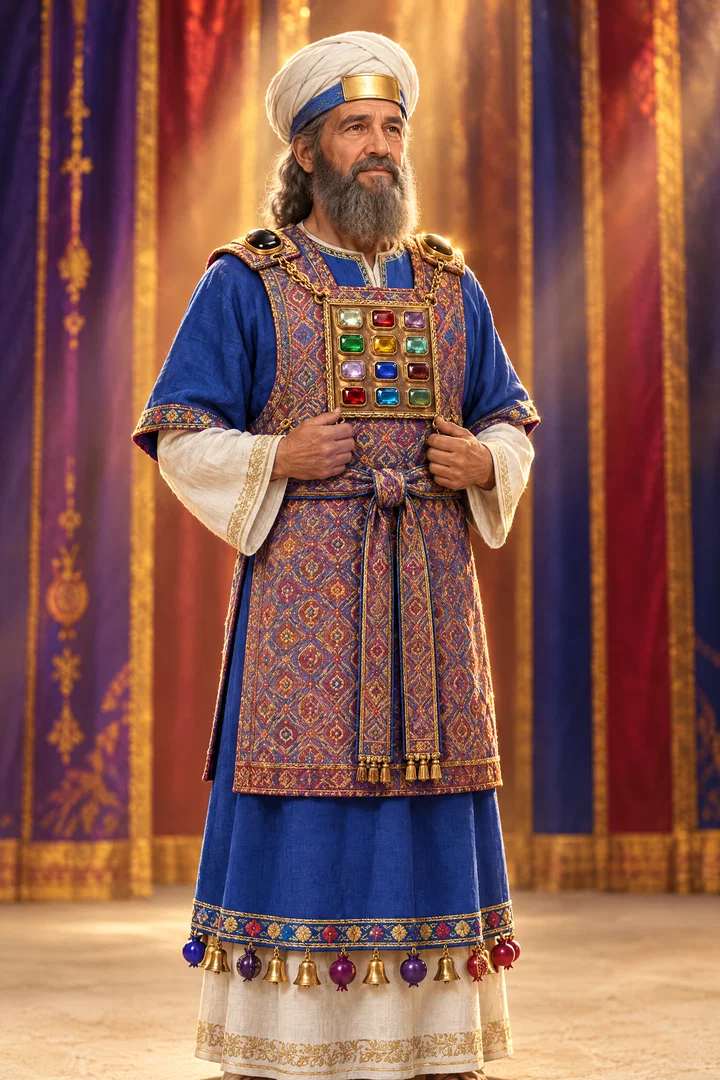
And they shall take gold, and blue, and purple, and scarlet, and fine linen.
Translations
American King James Version, King James Version, KJV Cambridge Paragraph Bible, Webster Bible
And they shall take gold, and blue, and purple, and scarlet, and fine linen.
Revised Version, American Standard Version
And they shall take the gold, and the blue, and the purple, and the scarlet, and the fine linen.
'And they take the gold, and the blue, and the purple, and the scarlet, and the linen,
And they shall take gold, and blue, and purple, and scarlet, and twined byssus,
They themselves, therefore, shall take the gold, and the blue and the purple,—and the crimson, and the fine linen.
Berean Standard Bible, Majority Standard Bible
They shall use gold, along with blue, purple, and scarlet yarn, and fine linen.
They shall use the gold, and the blue, and the purple, and the scarlet, and the fine linen.
They are to take the gold and blue and purple and red and the best linen,
Therefore they shall take golde, and blew silke, and purple, and skarlet, and fine linnen,
Douay-Rheims (Challoner revision)
And they shall take gold, and violet, and purple, and scarlet twice dyed, and fine linen.
Pictures
Cross-references
- Exodus 25:8-9
And let them make me a sanctuary; that I may dwell among them.
The earthly sanctuary was made according to the pattern shown to Moses.
- Hebrews 8:5
Who serve unto the example and shadow of heavenly things, as Moses was admonished of God when he was about to make the tabernacle: for, See, saith he, that thou make all things according to the pattern shewed to thee in the mount.
The earthly tabernacle follows the pattern shown to Moses as a shadow of heavenly things.
- Exodus 26:1
Moreover thou shalt make the tabernacle with ten curtains of fine twined linen, and blue, and purple, and scarlet: with cherubims of cunning work shalt thou make them.
Both describe the tabernacle’s colored linen curtains with cherubim.
- Leviticus 16:4
He shall put on the holy linen coat, and he shall have the linen breeches upon his flesh, and shall be girded with a linen girdle, and with the linen mitre shall he be attired: these are holy garments; therefore shall he wash his flesh in water, and so put them on.
Plain linen garments contrast with the high priest’s splendid dress.
- Acts 7:44
Our fathers had the tabernacle of witness in the wilderness, as he had appointed, speaking unto Moses, that he should make it according to the fashion that he had seen.
The wilderness tabernacle was made according to the pattern God showed Moses.
- Exodus 25:3-4
And this is the offering which ye shall take of them; gold, and silver, and brass,
Lists materials willingly offered for the sanctuary.
- Exodus 26:31-33
And thou shalt make a vail of blue, and purple, and scarlet, and fine twined linen of cunning work: with cherubims shall it be made:
The colored materials form the veil dividing the holy place from the most holy.
- Leviticus 8
And the LORD spake unto Moses, saying,
Describes the priests’ consecration and Levitical service.
- Exodus 35:5-6
Take ye from among you an offering unto the LORD: whosoever is of a willing heart, let him bring it, an offering of the LORD; gold, and silver, and brass,
Both texts list materials offered for the sanctuary.
- Exodus 28:21
And the stones shall be with the names of the children of Israel, twelve, according to their names, like the engravings of a signet; every one with his name shall they be according to the twelve tribes.
The breastplate’s stones bear the names of Israel’s twelve tribes.
- Exodus 28:33-34
And beneath upon the hem of it thou shalt make pomegranates of blue, and of purple, and of scarlet, round about the hem thereof; and bells of gold between them round about:
The robe’s bells and pomegranates match these instructions.
- Exodus 35:10-19
And every wise hearted among you shall come, and make all that the LORD hath commanded;
Records the people carrying out the sanctuary instructions.
- Exodus 28:36-38
And thou shalt make a plate of pure gold, and grave upon it, like the engravings of a signet, HOLINESS TO THE LORD.
The crownlike headpiece recalls the priest’s engraved gold plate.
- Hebrews 9:1-5
Then verily the first covenant had also ordinances of divine service, and a worldly sanctuary.
Describes the worldly sanctuary and its furnishings.
- Exodus 31:3-5
And I have filled him with the spirit of God, in wisdom, and in understanding, and in knowledge, and in all manner of workmanship,
God gives the sanctuary’s builders skill to work with precious materials.
Commentary
Each commentary is drawn from primary sources: the writings of Ellen G. White and Adventist pioneers and periodicals. Each commentary is separate. Its own words are not a quotation; follow the references to read the source passages.
Ellen G. White
5 sources
God distinctly specified the materials — gold, blue, purple, scarlet, and fine linen — and the style suited to their work, for the garments to be worn by those ministering before Him in the holy place and tabernacle and serving in the priest's office.GW92 162.2GW92 161.1EW 213.12T 610.3–612.1Ms 56, 1900, par. 11–12 The directions for Aaron's robes were especially particular because his clothing was symbolic.Ms 56, 1900, par. 11–12 That same priestly attire is worn by Jesus as heavenly priest, with a robe with bells and pomegranates, a breastplate bearing names, and a crownlike headpiece, when He enters the second apartment of the heavenly sanctuary in 1844.EW 213.1
The command teaches that coming into God's presence requires exact preparation and the putting away of every particle of dust and all impurity, because God is so high and holy that failure to comply would bring death.GW92 162.22T 610.3–612.1 That reverence was impressed on the people by the priests visibly washing hands and feet at the laver placed between the altar and the congregation.GW92 162.2 Care in approaching God's sacred service in this way taught the people that God is holy and that everything connected with His work must be free from impurity.2T 610.3–612.1
The verse proves God may be honored or dishonored by the apparel of those who officiate before Him.GW92 161.1 Their clothing and conduct and everything connected with His service are therefore to be orderly, clean, and reverent and free from impurity, with order extending even to the arrangement of houses and especially cleanliness.GW92 161.12T 610.3–612.1 As the priests' dress represented their sacred work, the dress of Christ's followers should likewise represent Christ with neatness, modesty, and purity.Ms 56, 1900, par. 11–12
Sources
Pioneers and periodicals
39 sources
The verse names the costly materials to be taken and woven for the garments of Aaron and his sons and successors as priests.ST Jun 10, 1908ST Nov 12, 1894ST Mar 25, 1889 It belongs to the minute instructions for the tabernacle, its furniture and its service given by God to Moses during his forty days in Mount Sinai, to be made exactly according to the pattern shown him in the mount.ST Oct 29, 1894ST Mar 25, 1889ST May 16, 1878 The garments made from them were worn for glory and beauty as the high priest ministered before the ark in the earthly sanctuary, yet on the Day of Atonement he laid aside this splendor for the plainest dress, showing his priesthood was only typical.RH Jan 11, 1870ST Jun 6, 1878RH Sep 16, 1852RH Jul 5, 1864ST Oct 4, 1899 The whole sanctuary with its sacrifices, offerings and Levitical ministration was the example and shadow of Christ's more excellent ministry in the true tabernacle in heaven, for the blood of bulls and goats could not take away sin but pointed forward to Christ the Lamb of God who bore sin by His once-for-all sacrifice.ST Jan 24, 1911ST Jun 26, 1907RH Mar 8, 1870ST Jul 8, 1886RH Dec 12, 1854 It stands among the ceremonial ordinances and law of the Levitical priesthood given by the hand of Moses after the Ten Commandments, distinct from the moral law spoken by God Himself, and its command for gold and costly array concerned the Jewish high priest alone and gives no permission for costly dress now.ST May 6, 1875ST Mar 22, 1883ST Apr 15, 1886ST Mar 22, 1883RH Jul 10, 1855
Materials and Sinai Instructions
Exodus 28:5 names gold, blue, purple, scarlet, and fine linen to be taken and worked into garments for Aaron and his sons and their successors in the priesthood.ST Jun 10, 1908ST Nov 12, 1894ST Mar 25, 1889RH Aug 4, 1863ST Feb 17, 1890 Those five belong with the wider gathering of materials for the sanctuary and its furnishings, alongside silver, costly gems, and fine linen used through Exodus 25 to 31.ST Jun 10, 1908ST Feb 17, 1890ST Jun 4, 1885 The inner covering of the tabernacle itself used the same fine linen embroidered with cherubim in blue, purple, and scarlet.RH Aug 4, 1863 The colored words do not mean abstract colors but stuff that could be spun and woven into cloth, probably cotton or wool.ST Mar 25, 1889
The verse stands in the detailed instructions for the tabernacle, its furniture, and its service in Exodus 25 to 31 and on through chapter 40.ST Oct 29, 1894RH Feb 11, 1858ST Mar 10, 1898ST Oct 25, 1905 God gave those instructions to Moses during his forty days in Mount Sinai, after the Ten Commandments had been proclaimed and the covenant and the book of the covenant had been ratified.ST Mar 25, 1889RH Dec 31, 1861 They were afterward carried out in the preparing and fitting of the tabernacle, which was set up on the first day of the first month of the second year from the Exodus.ST Dec 10, 1896 Those chapters form part of the second, chiefly legislative division of Exodus in chapters 19-40, by which the ransomed people were bound to Jehovah by solemn covenant and given legal ordinances.
Moses was to make everything exactly according to the minute pattern shown him in the mount.ST Oct 29, 1894ST May 16, 1878RH Jan 4, 1870ST Oct 25, 1905 That pattern is set out with extreme exactness and minute detail, whose reasons, motives, meanings, and depths cannot be fully seen, fathomed, or appreciated.ST Jun 10, 1908ST Oct 29, 1894 The giving belongs within the personal descent of God upon Sinai with His angels recorded in Exodus 19, 20, and 24-34.RH Dec 24, 1861 That descent is distinct from the giving of the Sabbath in Exodus 16, from the espousal of Israel as a holy nation in Exodus 19, and from the giving of the law in Exodus 20.RH Dec 24, 1861
Sanctuary Beauty and Dwelling
The gold, blue, purple, scarlet and fine linen to be taken for the work made the extraordinary magnificence of the tabernacle erected by Moses, about thirty cubits long and about ten in width and ten in height, formed of upright boards overlaid with gold.ST May 20, 1880ST Mar 10, 1898 Its gold overlaid the inner walls of upright boards set in sockets of silver and held by bars.ST May 20, 1880ST Mar 10, 1898 With five entrance pillars of shittim wood at the east end whose chapiters and fillets were overlaid with gold, having hooks of gold, it shone with great brilliancy representing the reflected light of God's glory in the New Jerusalem.ST May 20, 1880ST Mar 10, 1898
Its fine linen formed the inner ceiling curtain of finest and purest linen embroidered with figures of cherubim in blue, purple, and scarlet.ST May 20, 1880RH Aug 4, 1863ST Mar 10, 1898 That needlework of angels represented the angels of heaven waiting upon the bidding of Jehovah.ST May 20, 1880ST Mar 10, 1898 The same materials appear in the veil suspended from four pillars of shittim wood overlaid with gold set in sockets of silver, in the richly embroidered curtain enclosing the east end and the hangings closing it, and in court curtains of fine twined linen erected around the whole, while they also identify the materials used for the priestly garments and connect those colors and linen with the curtains and veil as part of the beauty and sacred setting.ST May 20, 1880RH Aug 4, 1863ST Nov 14, 1892ST Mar 10, 1898
After redeeming Israel from Egyptian bondage with a mighty hand, God commanded the sanctuary that He might dwell among them, because hundreds of years of slavery had unfitted them to comprehend His great salvation and the character He required.ST Jun 26, 1907ST Jun 4, 1885 It was built from the free-will offerings of the children of Israel by workmen God specially endowed, according to the divine pattern and the exact instructions for materials, furnishings, and dimensions given to Moses in the mount.ST Jun 26, 1907RH Jan 4, 1870 So established, it was God's dwelling place among Israel and a figure of the heavenly sanctuary, where Israel's worship centered and the priests could minister in His presence in its two holy places with its sacred vessels, and whose rites and service pointed to Christ and His work of forgiveness and deliverance.ST Jun 19, 1907ST Jun 26, 1907ST Jun 4, 1885RH Jan 4, 1870 That worship revolved around the holy of holies, where the law rested beneath the mercy seat.ST Jun 19, 1907
Garments and Priestly Service
The gold, blue, purple, scarlet, and fine linen were to be taken as costly, colorful materials for the priests' garments, and were used in the high priest's ephod and girdle, whose workmanship suited his office.ST Nov 12, 1894 The linen ephod made from them was a cape worn over the long white robe and signified the high priest's calling and purpose. Those garments were worn for glory and beauty as the high priest served in the sanctuary.RH Sep 16, 1852 The many-colored robe recalls them, for Aaron's splendid clothing included blue, white linen, purple, gold, and red, along with jewels and a mitre.RH Jul 5, 1864ST Oct 4, 1899
The verse belongs to the instructions for making the priests' garments in setting apart the priests for sacred use.RH Jul 26, 1864RH Feb 3, 1853 That setting apart was of the Levitical order to minister before the ark in the typical sanctuary.RH Dec 12, 1854 Its ministration was performed in the two holy places of the earthly sanctuary.RH Mar 8, 1870
Exodus 28 prescribes the splendid dress the high priest was to wear on other occasions.RH Jan 11, 1870 On the great Day of Atonement, when he entered the most holy place, he laid that dress aside and put on the plainest and humblest dress directed in Leviticus 16:4.RH Jan 11, 1870ST Jun 6, 1878 The change solemnly showed that he was high priest only in a typical sense and not in reality.RH Jan 11, 1870 Aaron's priesthood and life ended, but Christ is the sinless Priest who lives forever in heaven.RH Jul 5, 1864
Shadow, Sacrifice and Heaven
The sanctuary and its service in tabernacle and later in temple was an object-lesson let down to earth to set forth God's plan of government and His dealing with those who sought to dethrone Him. It set forth the plan devised from eternity for salvation from sin, teaching that great plan by various forms and rites after Israel had been redeemed from Egyptian bondage with a mighty hand. Because centuries of slavery had unfitted the people to comprehend His salvation and the character He required, God commanded a sanctuary that He might dwell among them, built from free-will offerings by specially endowed workmen according to the divine pattern shown to Moses in the mount. Its rites and service pointed to Christ and His work of forgiveness and deliverance.ST Jun 26, 1907
It sets forth God as priest upon the throne, still King while executing the priest's office in dealing with sinners. His people are so intimately related to the sanctuary that they co-operate with God in His work through Christ in the sanctuary, so that the divine and the human co-operate at every step.
The ancient sanctuary constructed for ministration through sacrifices and offerings by the Levitical order in its two holy places was the example and shadow of Christ's more excellent ministry in the true tabernacle.ST Jan 24, 1911RH Mar 8, 1870 That wilderness sanctuary, made with its materials, furnishings and dimensions according to instruction and serving as God's dwelling place among Israel, was a figure and pattern of the heavenly sanctuary and great temple in heaven where Jesus now ministers.ST Jan 24, 1911ST Jun 26, 1907ST May 16, 1878 That system passed away when Christ died once for all.ST Jan 24, 1911
Its offerings, having reference to flesh and offerings given through Moses by hand after the Ten Commandments were spoken directly to the people, could not really take away sin, for the blood of bulls and goats cannot take away sins.ST Jul 8, 1886 While that typical system remained, its sacrifices could not remove sin but pointed penitent sinners forward to Christ the great Sacrifice.ST Jul 8, 1886RH Dec 12, 1854 Only Jesus really takes away sin, as the Lamb of God who takes away the sin of the world, who appeared to put away sin by the sacrifice of Himself and bore sins in His own body on the tree.ST Jul 8, 1886 Eternal life requires partaking of Him by eating the flesh of the Son of man and drinking His blood, and the sacrifices were not to continue after Christ suffered but were abolished in His flesh and fulfilled in the body of Christ.ST Jul 8, 1886
The chapter shows the sacred position of the high priest's service near God's throne.ST Aug 8, 1900 Together with Psalm 80:1 it identifies the covering cherub's place as one of the two positions nearest the throne.ST Aug 8, 1900 This supports that Satan once held that place and therefore had unusual knowledge of nature's forces.ST Aug 8, 1900
Covenant Distinction and Life
Exodus 28:5 belongs to the law of Moses commanded in Horeb with statutes and judgments, embracing civil regulations, sacrifices and offerings, conduct, health, and ceremonial and moral laws, the Ten Commandments together with the others. It is part of the laws revealing offerings, sacrifices and types whose shadows point to the substance of the new dispensation. In the last days attention is called to this law, especially as set forth in Exodus 20 to 40 and Leviticus, to remember both the rule of conduct and the types.
It belongs to the written law of ordinances that follows the moral law in Moses' record, specifying gold, blue, purple, scarlet and fine linen as materials for the priestly garments.ST May 6, 1875 It is part of the appointment of the Levitical priesthood, which came after the giving of the Ten Commandments in Exodus 20, so that its chapter is contrasted with Exodus 20 to show that the commandments preceded that priesthood.ST Mar 22, 1883ST Mar 22, 1883ST Feb 20, 1879 It therefore belongs to the Levitical law relating to priesthood, tithes and offerings, including the requirement of a priesthood from the tribe of Levi, and not to the moral law of the Ten Commandments.ST Feb 20, 1879 This difference in time proves the moral law and the Levitical law are distinct, and that the faulty law that needed change was the Levitical law.ST Feb 20, 1879
It was given by the hand of Moses during forty days in the mount, after the people stood afar off and asked Moses to hear God and speak to them, chiefly as recorded in Exodus 25-30 and Leviticus.ST Apr 15, 1886 This is distinct from the Ten Commandments that God spoke directly from heaven to the people and wrote on the two tables of stone with nothing added.ST Apr 15, 1886ST Jul 8, 1886 It stands among burdensome ceremonies and carnal ordinances having reference to flesh and offerings, a yoke which neither the fathers nor their children were able to bear, imposed until the time of reformation.ST Apr 15, 1886ST Jul 8, 1886 Those offerings could not really take away sin, for the blood of bulls and goats cannot take away sins.ST Jul 8, 1886 Only Jesus can really take away sin, as the Lamb of God who takes away the sin of the world, who appeared to put away sin by the sacrifice of himself and bore sins in his own body on the tree, so that eternal life requires partaking of him by eating the flesh of the Son of man and drinking his blood; the sacrifices were not to continue after Christ suffered, but were abolished in his flesh, finding their fulfillment in the body of Christ.ST Jul 8, 1886
Slow, careful, thoughtful study of that itemized sanctuary text in Exodus 25 to 31, with its profuse use of gold, silver, costly gems and fine linen in the tabernacle and its services and its extreme exactness and minute detail whose reasons and depths cannot be fully seen, fathomed or appreciated, brings to the surface a multitude of invigorating and instructive ideas, suggestions and lessons that give vitalizing food to strengthen famishing hearts and water of life to refresh worn spirits through long, long days.ST Jun 10, 1908 The care and order required in the detailed specification of the priests' materials, style, clothing and appearance for their sacred work taught the people that God is holy and that service in His presence is sacred.RH Oct 30, 1913 No detail of God's sacred work was too small to escape His notice.ST Mar 15, 1883
God's express command through Moses that Aaron and his successors in the high priesthood be adorned in the most exquisite manner with gold and precious stones and costly array was given with regard to the Jewish high priest alone.RH Jul 10, 1855 It can affect no other person and gives no permission for costly dress now.RH Jul 10, 1855 Jews and Christians are under different dispensations, for the glory of the whole Mosaic dispensation was chiefly visible and external whereas the glory of the Christian dispensation is of an invisible and spiritual nature.RH Jul 10, 1855
Sources