Exodus 30:1
And thou shalt make an altar to burn incense upon: of shittim wood shalt thou make it.
Translations
And you shall make an altar to burn incense on: of shittim wood shall you make it.
King James Version, KJV Cambridge Paragraph Bible, Webster Bible
And thou shalt make an altar to burn incense upon: of shittim wood shalt thou make it.
Revised Version, American Standard Version
And thou shalt make an altar to burn incense upon: of acacia wood shalt thou make it.
'And thou hast made an altar [for] making perfume; [of] shittim wood thou dost make it;
And thou shalt make an altar for the burning of incense: of acacia-wood shalt thou make it;
And thou shalt make an altar, for burning incense, of acacia wood, shalt thou make it:
Berean Standard Bible, Majority Standard Bible
“ You are also to make an altar of acacia wood for the burning of incense.
“ You shall make an altar to burn incense on. You shall make it of acacia wood.
And you are to make an altar for the burning of perfume; of hard wood let it be made.
Fvrthermore thou shalt make an altar for sweete perfume, of Shittim wood thou shalt make it.
Douay-Rheims (Challoner revision)
Thou shalt make also an altar to burn incense, of setim wood.
Pictures
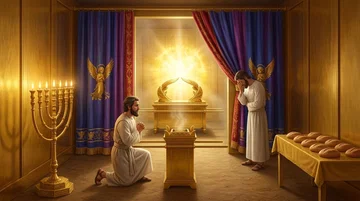
Cross-references 20 of 36
- Revelation 8:3-4
And another angel came and stood at the altar, having a golden censer; and there was given unto him much incense, that he should offer it with the prayers of all saints upon the golden altar which was before the throne.
incense smoke offered with saints' prayers to God
- Exodus 30:7-8
And Aaron shall burn thereon sweet incense every morning: when he dresseth the lamps, he shall burn incense upon it.
Prescribes the regular morning and evening incense offering on the altar.
- Hebrews 9:2-4
For there was a tabernacle made; the first, where in was the candlestick, and the table, and the shewbread; which is called the sanctuary.
Describes the tabernacle furnishings, including the incense altar.
- Hebrews 8:5
Who serve unto the example and shadow of heavenly things, as Moses was admonished of God when he was about to make the tabernacle: for, See, saith he, that thou make all things according to the pattern shewed to thee in the mount.
The earthly sanctuary and its furnishings were made as a pattern of heavenly things.
- Exodus 40:26-27
And he put the golden altar in the tent of the congregation before the vail:
Places the golden altar before the veil and records incense burned on it.
- Luke 1:9-10
According to the custom of the priest’s office, his lot was to burn incense when he went into the temple of the Lord.
The people prayed while the priest offered incense at the incense altar.
- Psalms 141:2
Let my prayer be set forth before thee as incense; and the lifting up of my hands as the evening sacrifice.
Prayer is pictured as incense offered before God.
- Exodus 25:9
According to all that I shew thee, after the pattern of the tabernacle, and the pattern of all the instruments thereof, even so shall ye make it.
The incense altar is one of the furnishings made according to the sanctuary pattern.
- Exodus 25:40
And look that thou make them after their pattern, which was shewed thee in the mount.
The sanctuary furnishings follow the pattern shown to Moses on the mount.
- Exodus 37:25-28
And he made the incense altar of shittim wood: the length of it was a cubit, and the breadth of it a cubit; it was foursquare; and two cubits was the height of it; the horns thereof were of the same.
Describes the incense altar’s construction and dimensions.
- Exodus 30:34-38
And the LORD said unto Moses, Take unto thee sweet spices, stacte, and onycha, and galbanum; these sweet spices with pure frankincense: of each shall there be a like weight:
Gives God’s instructions for making the incense burned on the altar.
- Exodus 30:6
And thou shalt put it before the vail that is by the ark of the testimony, before the mercy seat that is over the testimony, where I will meet with thee.
Places the incense altar before the veil and mercy seat in the sanctuary.
- Hebrews 9:24
For Christ is not entered into the holy places made with hands, which are the figures of the true; but into heaven itself, now to appear in the presence of God for us:
The earthly sanctuary’s holy places figure the heavenly sanctuary where Christ appears for us.
- Exodus 40:5
And thou shalt set the altar of gold for the incense before the ark of the testimony, and put the hanging of the door to the tabernacle.
Places the incense altar before the ark.
- Acts 7:44
Our fathers had the tabernacle of witness in the wilderness, as he had appointed, speaking unto Moses, that he should make it according to the fashion that he had seen.
The wilderness tabernacle was made according to the pattern shown to Moses.
- Hebrews 9:11
But Christ being come an high priest of good things to come, by a greater and more perfect tabernacle, not made with hands, that is to say, not of this building;
The earthly sanctuary pointed to Christ’s ministry in the greater sanctuary.
- Hebrews 9:8-9
The Holy Ghost this signifying, that the way into the holiest of all was not yet made manifest, while as the first tabernacle was yet standing:
The earthly sanctuary and its service are figures pointing to the heavenly.
- Exodus 30:9
Ye shall offer no strange incense thereon, nor burnt sacrifice, nor meat offering; neither shall ye pour drink offering thereon.
Forbids offering unauthorized incense on the altar.
- Exodus 30:26-27
And thou shalt anoint the tabernacle of the congregation therewith, and the ark of the testimony,
The altar of incense is anointed with holy oil.
- Leviticus 16:12-13
And he shall take a censer full of burning coals of fire from off the altar before the LORD, and his hands full of sweet incense beaten small, and bring it within the vail:
Describes incense used before entering the most holy place.
Commentary
Each commentary is drawn from primary sources: the writings of Ellen G. White and Adventist pioneers and periodicals. Each commentary is separate. Its own words are not a quotation; follow the references to read the source passages.
Ellen G. White
13 sources
The altar commanded to be made of shittim wood is the golden altar standing in the holy place of the earthly tabernacle before the veil, directly before the ark and mercy-seat though hidden from view.1SP 273.3ST Mar 4, 1903PP 348.1 The same altar stands in the first apartment of the temple in heaven, after the first veil and before the second veil, alongside the candlestick and the table of showbread.RH Jul 21, 1851CET 91.2–3SG1 158.1 Its fire was kindled by God and kept burning morning and evening with holy incense, so that a fragrant cloud filled the sanctuary while its horns were touched with the blood of the sin offering.1SP 273.3ST Mar 4, 1903PP 348.1 It is an altar of continual intercession, where the rising incense pictures prayers, praise, and thanksgiving ascending to God.PP 353.2RH Nov 8, 1915GC88 411.1–412.3 That incense represents Christ's merits, spotless righteousness, and cleansing blood, which alone make sin-defiled worship acceptable, for Jesus ministers unseen before the mercy-seat and offers the saints' prayers with its smoke to the Father to receive gracious answers.CET 91.2–31SP 273.3ST Mar 4, 1903PP 353.2Ms 50, 1900, par. 17–18
Altar's Place and Service
The altar commanded to be made is the golden altar of shittim wood for burning incense, standing in the first apartment or holy place of the earthly tabernacle.PP 348.1PP 353.2RH Nov 8, 1915GC88 411.1–412.3 It stood before the veil that separated the holy place from the most holy place.PP 348.1PP 353.2RH Nov 8, 1915GC88 411.1–412.3 It stood directly before the ark and mercy-seat, though the curtain hid them from view.1SP 273.3ST Mar 4, 1903
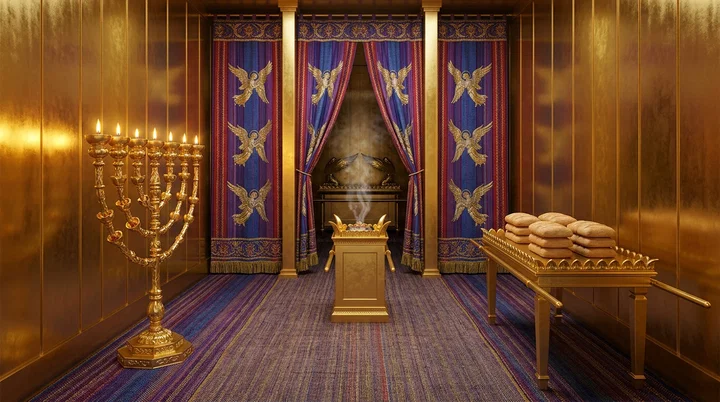
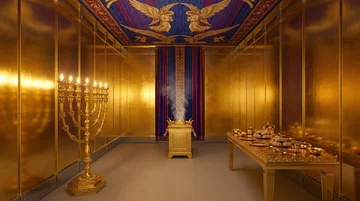
The same altar stands in the holy place or first apartment of the temple in heaven.RH Jul 21, 1851CET 91.2–3SG1 158.1LSEGW 100.1–3EW 25.6 It is seen beyond or after the first veil and before the second veil that leads into the holy of holies.RH Jul 21, 1851CET 91.2–3LSEGW 100.1–3 There it stands alongside the candlestick with seven lamps and the table of showbread or shewbread, with the censer also belonging to that apartment.RH Jul 21, 1851CET 91.2–3SG1 158.1LSEGW 100.1–3EW 25.6
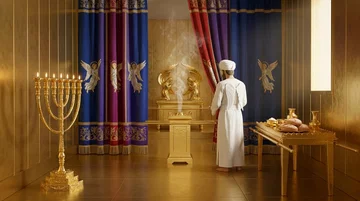
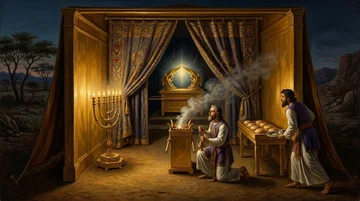
Its fire was kindled by God and was kept sacred and continually burning.1SP 273.3ST Mar 4, 1903PP 348.1 Upon it holy incense was burned morning and evening, day and night, so that a fragrant cloud filled the sanctuary and spread its fragrance through the sacred apartments and far around the tabernacle.1SP 273.3ST Mar 4, 1903PP 348.1 While offering it the priest faced the unseen mercy-seat, toward which the glory of God descended.1SP 273.3ST Mar 4, 1903 Its horns were touched with the blood of the sin offering, and on the Day of Atonement it was sprinkled with blood.PP 348.1 Its gold and gold-plated surface reflected the light of the golden candlestick and the image of Christ, adding to the splendor of the sanctuary whose furniture in that apartment is of purest gold.SG1 158.1ST Mar 4, 1903
Prayer Through Christ's Mediation
The altar commanded is an altar of continual intercession, standing before the veil for daily service with Israel's prayers.PP 353.2RH Nov 8, 1915GC88 411.1–412.3 From it a cloud of fragrant incense rose day by day, joined with the prayers of Israel, and ascended before God.PP 353.2RH Nov 8, 1915GC88 411.1–412.3 In this it is a picture of prayers, praise, confession, obedience, and thanksgiving ascending to God.Ms 50, 1900, par. 17–18
The incense rising with prayer is Christ's merits and intercession, His perfect and spotless righteousness imputed to His people through faith, with His cleansing blood.PP 353.2Ms 50, 1900, par. 17–18 Human offerings of prayer and praise and obedience are defiled by human corruption and sin and cannot be acceptable on their own, but gathered by Christ and presented with His righteousness they alone are made acceptable to God.PP 353.2Ms 50, 1900, par. 17–18 Together with the blood offerings, the altar and its incense pointed to Christ as the Mediator through whom sinners may approach God, and through whom mercy and salvation are granted to the repentant and believing.PP 353.2
In the heavenly sanctuary Jesus ministers as the unseen Mediator before the mercy-seat and the glory of God, standing by the ark and at God's right hand.CET 91.2–31SP 273.3ST Mar 4, 1903LSEGW 100.1–3Ms 50, 1900, par. 17–18 As the saints' prayers come up to Him the incense in the golden censer smokes, and He offers up their prayers with the smoke of the incense to His Father.CET 91.2–3SG1 158.1LSEGW 100.1–3 They ascend in sweet fragrance and receive gracious answers, bringing light and glory from the Father through Jesus upon those who prayed.SG1 158.1Ms 50, 1900, par. 17–18 God's people are therefore to direct their prayers by faith to Christ before the mercy-seat, facing the unseen mercy-seat as the priest faced it, and confidently claim the benefits of His mediation.1SP 273.3ST Mar 4, 1903
Sources
Pioneers and periodicals
63 sources
God directed Moses on Mount Sinai to fashion an altar of shittim wood overlaid throughout with pure gold for the burning of incense.ST May 20, 1880RH Feb 19, 1901ST Mar 25, 1889RH Aug 4, 1863 It was about two cubits high and a cubit and a half square with horns and a golden crown, and it stood in the holy place directly before the veil in front of the ark and mercy seat, between the table of showbread and the candlestick.ST May 20, 1880RH Feb 19, 1901RH Jun 18, 1901RH Jan 6, 1853ST Jun 19, 1907 Holy incense was to burn upon it perpetually every morning and evening as the priests ministered, with its fragrance filling the tabernacle continually by fire kindled by God.ST Jun 24, 1880RH Jul 2, 1914RH Feb 19, 1901ST Apr 22, 1897ST Apr 1, 1913 The rising smoke mingled with the prayers of Israel and represents how imperfect human prayers are made acceptable and effectual through God's grace and Christ's intercession and perfect righteousness.ST Mar 14, 1911STST May 15, 1901 The altar and its service were patterned after the heavenly sanctuary where incense is added to the prayers of the saints, and as a shadow pointing to Christ its ceremonial use passed away when He suffered and died once for all.ST Nov 26, 1912ST Jan 24, 1911ST Jun 26, 1907ST Apr 8, 1889
Sinai Instructions and Context
God gave the command as detailed instruction to Moses during his forty days and nights with God on Mount Sinai in the presence of Divinity.ST Mar 25, 1889RH Dec 31, 1861ST Jan 31, 1911 It came after the Ten Commandments were proclaimed and the book of the covenant was ratified, after the people stood afar off and Moses drew near to the thick darkness where God was.ST Mar 25, 1889ST Apr 15, 1886 That holy interview concluded with the law graven by God's finger on two tables of stone, and the account testifies to God's personal presence on the mountain with His angels.ST Mar 25, 1889RH Dec 24, 1861 It was delivered to the people by the hand of Moses rather than spoken directly to them from heaven with the Ten Commandments, to which God added no more and which alone were written on the tables of stone.ST Apr 15, 1886ST Jul 8, 1886 It belongs to the instructions concerning the sanctuary recorded in Exodus 25 to 31 and more broadly to the minute description of the sanctuary and its furniture in Exodus 25 to 40, beginning with the sanctuary to be built.ST Oct 29, 1894ST Mar 25, 1889ST Mar 11, 1886
Everything was to be made exactly according to the divine pattern shown in the mount, and like the other articles the altar was fashioned after that pattern as a representation and pattern of things in the heavens.ST Oct 29, 1894ST Jan 27, 1909ST Apr 8, 1889 It was afterward built from the free-will offerings of the children of Israel into a marvelously beautiful structure by workmen specially endowed by God. Like the tabernacle and all the vessels of the ministry it was sprinkled and purified with blood, for almost all things are by the law purged with blood and without shedding of blood is no remission, and it was necessary that the patterns of things in the heavens should be purified with these sacrifices.ST Apr 8, 1889 The directions specify an altar for burning incense to be made of shittim wood as part of the sanctuary where the priests ministered before the ark containing the law, and as part of God's explicit instructions for building the sanctuary and preparing its service instruments.ST Jan 27, 1909RH Dec 31, 1861ST Jan 31, 1911
The sanctuary was God's dwelling place among Israel, which He asked the people to make so He could live among them after redeeming them from Egyptian bondage.ST Jun 4, 1885ST Jul 8, 1930 It was given as part of the system of legal ordinances providing guidance for the ransomed people bound to Jehovah by solemn covenant, to preserve them as a peculiar treasure, a kingdom of priests, and a holy nation. Because centuries of slavery had unfitted Israel to comprehend God's salvation and required character, God gave a great multiple object-lesson by various forms and rites comprehending the great plan of salvation. The sanctuary and its service were an earthly object lesson of God's plan for salvation from sin and of how He deals with sinners, in which God's people had a part in carrying out the work. It was the center of earthly worship, which centered on the most holy place where God's law rested beneath the mercy seat, showing how particular God is in that which pertains to His worship, because the object of all worship, all services, and all remedies is to bring men into harmony with the holy law of God.ST Mar 25, 1889ST Jun 19, 1907
The instruction belongs to the law of Moses, which included ceremonial laws as well as moral, civil, and health laws, and in which offerings, sacrifices, and types were revealed as shadows of the new dispensation. It stands with the matter recorded chiefly in Exodus 25-30 and Leviticus, among the many burdensome ceremonies and carnal ordinances imposed until the time of reformation, a yoke which neither the fathers nor their children were able to bear.ST Apr 15, 1886 It is distinct from the right judgments, true laws, good statutes, commandments, and holy Sabbath spoken from heaven, belonging instead to the ordinances written out after the moral law and to the further precepts and ordinances committed through Moses.ST Apr 15, 1886ST May 6, 1875ST Jul 8, 1886 Those precepts found their fulfillment in the body of Christ and were abolished in His flesh, so they were not to be continued after Christ suffered, while the keeping of the commandments of God remains in full force, and the passage is part of the description of the worldly sanctuary connected with the first covenant.ST Jul 8, 1886ST Aug 5, 1889 It is part of Israel's established form of worship and of the ancient tabernacle constructed for ministration in sacrifices and offerings, which had no likeness to modern churches.ST Jan 24, 1911RH Jan 20, 1916
Materials Form and Placement
The altar for burning incense was to be made of shittim wood, also called acacia wood, and overlaid throughout with pure gold, so that it is the golden altar.ST May 20, 1880RH Feb 19, 1901RH Aug 4, 1863ST May 15, 1901RH Mar 28, 1854 It was about three and a half feet high and nearly two feet square, that is two cubits high and one and one-half cubits square at the top.RH Jan 6, 1853RH Mar 1, 1870ST Apr 22, 1889 It had a gold crown around it and horns projecting from its corners, whose shape is not specified.ST Apr 22, 1889
It was a large stationary altar furnished with rings and staves to bear it, requiring more than the high priest alone to move it and not designed to be carried readily by hand.RH Jun 18, 1901 It is distinct from the small hand-held golden censer used almost exclusively in the second apartment, so all incense offered in the first apartment was placed on this altar.RH Jun 18, 1901
It stood in the holy place, the first apartment of the tabernacle, at the end opposite the entrance and directly before the veil or second veil separating it from the most holy place.ST May 20, 1880RH Feb 19, 1901RH Jun 18, 1901RH Aug 4, 1863ST Feb 17, 1890 There it stood in front of the ark and mercy seat where God met with Moses and Israel.RH Feb 19, 1901ST Nov 26, 1912ST May 15, 1901 It stood with the other holy-place furnishings, the table of showbread or presence bread on the north side and the seven-lamped golden candlestick on the south side.ST Jun 19, 1907ST Mar 11, 1886RH Nov 8, 1915ST Oct 25, 1905ST Apr 1, 1889 Thus placed in the first compartment at the west end just before the second veil, it faced the ark containing the Ten Commandments with the mercy seat and visible Shekinah beyond the veil.RH Jul 21, 1851ST Mar 11, 1886ST Apr 1, 1889
The tabernacle housing it was an oblong building thirty cubits long and ten cubits wide, with sides and west end of acacia boards overlaid with gold secured by tenons in silver sockets weighing a talent each and bars through rings.ST Oct 29, 1894RH Feb 18, 1858RH Oct 2, 1856 The holy place was twenty cubits long, ten wide, and ten high, and the most holy place ten cubits in each dimension, just half as large as the holy place.ST Oct 29, 1894 Having no windows, its gold-plated walls, glittering altar, solid beaten-gold candlestick kept burning day and night with its seven lamps, and embroidered blue, purple, and scarlet curtains with cherubim presented indescribable magnificence, with the altar's gold reflecting the candlestick's light.ST Mar 21, 1911ST Mar 4, 1903 The altar was to be anointed with holy anointing oil made by special direction from fragrant herbs.RH Jul 2, 1914
Daily Service and Upkeep
Sweet holy incense was to burn upon the altar as perpetual incense before the Lord, offered every morning when the high priest dressed or tended the lamps and every evening when he lighted them.RH Jul 2, 1914RH Feb 19, 1901ST Nov 26, 1912ST Mar 14, 1911 This burning belonged to the daily ministration of the Levitical priesthood in the holy place, together with the regular morning and evening burnt offering and the other appointed and individual offerings through the year.ST May 15, 1901RH Feb 25, 1858RH Jun 21, 1864ST Dec 2, 1889 The altar stood before the veil in front of the ark and mercy seat where God met with the priest, and the incense was burned there morning and evening.RH Feb 19, 1901ST Nov 26, 1912ST Mar 14, 1911 Its effect continued through the interval between the morning and evening burnings.ST Apr 22, 1897
Its fragrance filled the holy place and extended into the most holy place, and the fragrant cloud filled the sanctuary and spread around the tabernacle day and night.ST Jun 24, 1880ST Mar 4, 1903ST Apr 22, 1897 Its fire was kindled by God and was kept sacred and burning by feeding it with holy incense, never allowed to go out.ST Jun 24, 1880ST Mar 4, 1903ST Apr 1, 1913 The service was committed to Aaron and his sons, and was performed by the high priest and priests ministering daily before the ark containing the law.ST Mar 3, 1914ST May 15, 1901RH Feb 25, 1858RH Jun 21, 1864ST Dec 2, 1889 No one else was to perform priestly rites unless specially directed by the Lord.ST Mar 3, 1914
Once a year the high priest put sin-offering blood upon its horns to cleanse and consecrate it from the uncleanness associated with the people's daily atonements, as part of the national atonement.RH Sep 16, 1852 Holy incense made according to God's command was burned upon it, and it was not to be used for any other purpose.ST Apr 22, 1889 Like the tabernacle and all the vessels of the ministry it was sprinkled and purified with blood, for almost all things are by the law purged with blood and without shedding of blood is no remission.ST Apr 8, 1889 While the priests burned the perpetual incense morning and evening, the people stood without praying.ST Mar 14, 1911
Meaning of the Incense
The fragrant smoke from the altar accompanied the prayers of priests and people as they ascended before God, mingling with them and rising daily with Israel's prayers.RH Nov 8, 1915ST May 15, 1901ST Mar 10, 1898 Morning and evening the cloud went up from the holy place, bearing the worship of the camp heavenward.RH Nov 8, 1915ST May 15, 1901
The incense represents God's grace, favor, love, and supplication, which makes the imperfect prayers of mortals acceptable and effectual with God.ST Mar 14, 1911STST Aug 19, 1913ST Dec 29, 1909 Even the prayer of the humblest is made acceptable by that grace and love.ST Mar 14, 1911 Prayers clothed, shaped, and refined by the Spirit of God become as sweet incense.ST Mar 14, 1911
The incense also represents Christ's intercession and perfect righteousness, by which the prayers of sinful people are made acceptable to God. Its service pictured the heavenly altar before God's throne, where incense is added to the prayers of the saints before they ascend to God.ST Nov 26, 1912ST Jul 2, 1896
As the priest offered he faced the unseen mercy seat beyond the veil, and the rising incense accompanied the glory descending upon the mercy seat.ST Jun 24, 1880ST Mar 4, 1903 So the service illustrates prayer directed by faith to Christ, the unseen Mediator before the mercy seat in the heavenly sanctuary.ST Jun 24, 1880ST Mar 4, 1903 Though unseen, He is approached by faith, and His people claim the benefits of His mediation.ST Jun 24, 1880ST Mar 4, 1903 The rising incense is a reminder that God delights in the penitent prayer of the reconciled sinner.ST Mar 10, 1898
Heavenly Counterpart and Antitype
The altar to burn incense upon was fashioned after the pattern shown in the mount as a representation and pattern of things in the heavens.ST Apr 8, 1889ST Nov 11, 1897ST Mar 17, 1898 The earthly sanctuary was patterned after the heavenly sanctuary, which has a corresponding altar of incense standing in its first apartment as the counterpart to the golden altar where incense was offered in the earthly holy place.ST Jun 26, 1907ST Nov 11, 1897ST Mar 17, 1898ST Jul 2, 1896 Like the tabernacle and all the vessels of the ministry it was sprinkled and purified with blood, for almost all things are by the law purged with blood and without shedding of blood is no remission, and it was necessary that the patterns of things in the heavens should be purified with these sacrifices while the heavenly things themselves are purified with better sacrifices.ST Apr 8, 1889 The altar of incense is seen in the Holy Place of the heavenly temple beyond the first veil, alongside the seven-lamp candlestick and the table of showbread.RH Jul 21, 1851 There incense is offered with the prayers of the saints, answering to the priests burning incense on the earthly altar.ST Jul 2, 1896
The comparison between the earthly sanctuary and the heavenly sanctuary, with its veil divisions described in Exodus 26:31-35 and Exodus 30:6, supports that the heavenly sanctuary has two holy places.
The earthly sanctuary Moses erected was an oblong building ten cubits in width and thirty cubits in length, a true type or figure of the true sanctuary of the better covenant.RH Feb 18, 1858RH Oct 2, 1856 Its furnishings included the altar of incense together with its two apartments, the golden candlestick, the ark of the covenant, and the continual service of the earthly priesthood, and every true account of the new-covenant sanctuary must show what in the antitype answers to that altar.RH Oct 2, 1856ST May 27, 1880 Nothing on the rolling earth answers to the altar of incense as its antitype, no mountain or volcano, and the earth itself is not its counterpart.RH Feb 18, 1858ST May 27, 1880 The land of Canaan, the whole earth, the church, and heaven and earth together have nothing answering to it, so none of them can be the antitypical sanctuary.RH Oct 2, 1856
The sanctuary and its service were an earthly object lesson of God's plan for salvation from sin and of how He deals with sinners, in which God's people had a part in carrying out this work. Its furnishings and services formed a pattern that pointed beyond the earthly structure to the heavenly sanctuary and Christ's work and priestly ministry, teaching about God's way.ST Jun 26, 1907ST Jun 19, 1907 The regular earthly ministration, in which incense was burned on the golden altar in the holy place morning and evening in connection with dressing and lighting the lamps, was a pattern of Christ's ministry in the heavenly sanctuary.RH Mar 28, 1854 The altar of incense stood in the holy place alongside the table of showbread and the golden candlestick as part of that pattern and service.ST Jun 19, 1907
Covenant Standing and Assurance
The direction to fashion an altar for burning incense belongs to the law given through Moses, which embraced ceremonial as well as moral, civil, and health requirements, and in its offerings, sacrifices, and types it unveiled shadows of the new dispensation pointing to Christ.RH Jun 10, 1862 Burning incense was among those ceremonial practices instituted for Israel as types and shadows, cited among ordinances to be kept forever or as a perpetual covenant, whose duration ended when their purpose was fulfilled in Him.RH Jun 10, 1862
Its services passed away when Christ suffered and died once for all, for the ancient tabernacle constructed for ministration in sacrifices and offerings bore no likeness to modern churches.ST Jan 24, 1911 The command stands with the matter recorded chiefly in Exodus 25-30 and Leviticus, delivered by the hand of Moses during the forty days in the mount after the people stood afar off and Moses drew near to the thick darkness where God was, rather than spoken directly from heaven with the Ten Commandments to which God added no more and which alone were written on the tables of stone.ST Apr 15, 1886 It is therefore numbered among the many burdensome ceremonies and carnal ordinances imposed until the time of reformation, a yoke which neither the fathers nor their children could bear, distinct from the right judgments, true laws, good statutes, commandments, and holy Sabbath spoken from heaven.ST Apr 15, 1886 These further precepts and ordinances committed through Moses found their fulfillment in the body of Christ and were abolished in His flesh, so they were not to be continued after Christ suffered, while the keeping of the commandments of God remains in full force.ST Jul 8, 1886RH Jun 10, 1862
The altar belongs also to a service planned for the people to remember and observe in all time, even under the new dispensation when most old forms and ceremonies have passed away, to remain as long as time continues.RH Jul 2, 1914 It was to be anointed with holy anointing oil made by special direction from fragrant herbs, and sweet incense was to burn upon it as perpetual incense before the Lord every morning when the lamps were dressed and every evening when they were lighted.RH Jul 2, 1914 It belonged to a specific religious institution that was not intended to continue forever, and while that institution lasted no other altars alongside it were approved, either in Jerusalem or elsewhere, so its presence establishes no precedent for multiple incense altars in later temples.ST Mar 20, 1884
The altar of incense stands in the holy place just before the veil separating from the most holy place, where perpetual incense was burned morning and evening while the people stood without praying.ST Mar 14, 1911 The angel of incense precedes the angel of strife, giving assurance that prayers are heard and made effectual before war is permitted to come.ST Mar 14, 1911 The incense is the grace of supplication and the favor of God, which makes the imperfect prayers of mortals acceptable with God, so that prayers clothed and shaped and refined by the Spirit of God become as sweet incense.ST Mar 14, 1911 Such prayers are remembered and recorded before God and will be answered, even if nations must be overthrown to do it.ST Mar 14, 1911
The instructions concerning the sanctuary in Exodus 25 to 31 were given to Moses when he remained forty days and nights in the presence of Divinity on the mount after the covenant with Israel had been made and ratified, beginning with the sanctuary to be built.ST Mar 25, 1889 They show how particular God is in all that pertains to His worship, and the holy interview concluded with the law graven by the finger of God on two tables of stone, because the object of all worship, all services, and all remedies is to bring men into harmony with the holy law of God.ST Mar 25, 1889 As one of the sanctuary's utensils set apart for sacred use, the altar illustrates sanctification as consecrating something to a religious purpose.RH Jul 26, 1864
Sources