Genesis 27:18
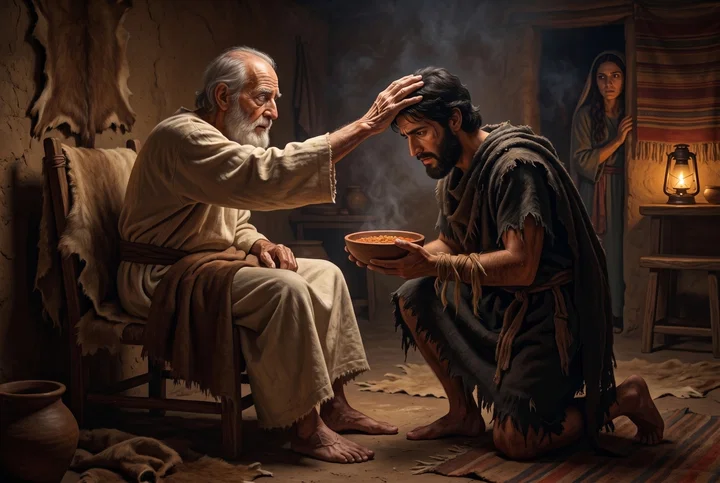
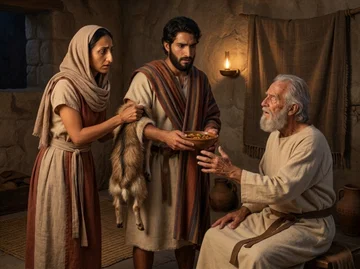
And he came unto his father, and said, My father: and he said, Here am I; who art thou, my son?
Translations
And he came to his father, and said, My father: and he said, Here am I; who are you, my son?
King James Version, KJV Cambridge Paragraph Bible, Revised Version, American Standard Version
And he came unto his father, and said, My father: and he said, Here am I; who art thou, my son?
And he came to his father, and said, My father: And he said, Here am I; who art thou, my son?
And he cometh in unto his father, and saith, 'My father;' and he saith, 'Here [am] I; who [art] thou, my son?'
And he came to his father, and said, My father! And he said, Here am I: who art thou, my son?
So he went in unto his father, and said My father! And he said Behold me! who art, thou, my son?
Berean Standard Bible, Majority Standard Bible
So Jacob went to his father and said, “My father.”“ Here I am!” he answered. “ Which one are you, my son?”
He came to his father, and said, “My father?”He said, “ Here I am. Who are you, my son?”
And he came to his father, and said, My father: and he said, Here am I: who are you, my son?
And when he came to his father, he sayd, My father. Who answered, I am here: who art thou, my sonne?
Douay-Rheims (Challoner revision)
Which when he had carried in, he said: My father? But he answered: I hear. Who art thou, my son?
Pictures
Cross-references
- Genesis 25:29-34
And Jacob sod pottage: and Esau came from the field, and he was faint:
Jacob had earlier bought Esau’s birthright, which established Jacob’s claim.
- Genesis 25:23
And the LORD said unto her, Two nations are in thy womb, and two manner of people shall be separated from thy bowels; and the one people shall be stronger than the other people; and the elder shall serve the younger.
The foretold reversal of the brothers’ positions motivated Rebekah and Jacob’s deception.
- Hebrews 12:17
For ye know how that afterward, when he would have inherited the blessing, he was rejected: for he found no place of repentance, though he sought it carefully with tears.
Esau is rejected when he later seeks the blessing he lost.
- Genesis 27:35-36
And he said, Thy brother came with subtilty, and hath taken away thy blessing.
Isaac identifies Jacob’s deception in receiving the blessing.
- Genesis 29:25
And it came to pass, that in the morning, behold, it was Leah: and he said to Laban, What is this thou hast done unto me? did not I serve with thee for Rachel? wherefore then hast thou beguiled me?
Jacob is deceived by Laban as he had deceived his father.
- Genesis 28:12-17
And he dreamed, and behold a ladder set up on the earth, and the top of it reached to heaven: and behold the angels of God ascending and descending on it.
After fleeing, Jacob dreams of the ladder and recognizes God’s presence.
- Genesis 27:36
And he said, Is not he rightly named Jacob? for he hath supplanted me these two times: he took away my birthright; and, behold, now he hath taken away my blessing. And he said, Hast thou not reserved a blessing for me?
Esau calls Jacob a supplanter who took his birthright and blessing.
- Genesis 28:1-2
And Isaac called Jacob, and blessed him, and charged him, and said unto him, Thou shalt not take a wife of the daughters of Canaan.
sent to Padan-aram for a wife
- Malachi 1:2
I have loved you, saith the LORD. Yet ye say, Wherein hast thou loved us? Was not Esau Jacob’s brother? saith the LORD: yet I loved Jacob,
Contrasts God’s treatment of Jacob and Esau.
- Genesis 37:31-33
And they took Joseph’s coat, and killed a kid of the goats, and dipped the coat in the blood;
Jacob’s sons deceive him as he once deceived Isaac.
- Genesis 27:41
And Esau hated Jacob because of the blessing wherewith his father blessed him: and Esau said in his heart, The days of mourning for my father are at hand; then will I slay my brother Jacob.
Esau hates Jacob and plans to kill him over the blessing.
- Hosea 12:3-4
He took his brother by the heel in the womb, and by his strength he had power with God:
Describes Jacob’s struggle, tears, and supplication.
- Genesis 46:1-7
And Israel took his journey with all that he had, and came to Beer-sheba, and offered sacrifices unto the God of his father Isaac.
Marks the end of affliction following the deception.
- Hebrews 11:20
By faith Isaac blessed Jacob and Esau concerning things to come.
Isaac’s blessings of Jacob and Esau concerned things to come.
- Genesis 27:42-45
And these words of Esau her elder son were told to Rebekah: and she sent and called Jacob her younger son, and said unto him, Behold, thy brother Esau, as touching thee, doth comfort himself, purposing to kill thee.
Rebekah warns Jacob of Esau’s plan and tells him to flee.
- Genesis 32:27
And he said unto him, What is thy name? And he said, Jacob.
Jacob gives his name before receiving a new one, recalling his deception.
- Romans 9:13
As it is written, Jacob have I loved, but Esau have I hated.
Contrasts God’s love for Jacob with his rejection of Esau.
Commentary
Each commentary is drawn from primary sources: the writings of Ellen G. White and Adventist pioneers and periodicals. Each commentary is separate. Its own words are not a quotation; follow the references to read the source passages.
Ellen G. White
16 sources
Jacob came to his blind, aged father pretending to be the son his father expected in order to take by fraud the blessing and birthright belonging to Esau.SG3 115.1ST Apr 17, 18791SP 107.1 His mother urged the fraud to bring about by human devising the promise that the elder would serve the younger, showing lack of faith in God's ability to fulfill His purpose in His own time and way.SG3 115.1ST Apr 17, 1879SG3 114.1Ms 139, 1899, par. 17–21PP 197.2–198.1 The sin cost him nobility and truth, brought lifelong remorse and loss of peace, stirred his brother's deadly anger and forced his flight, and gave Satan ground to accuse him and seek his destruction.ST Apr 17, 18794SP 432.3GC 616.2–3PP 197.2–198.1PP 201.3–202.2 When he repented the wrong was pardoned and remorse ended in sweet peace and reconciliation, and God heard his later cry for deliverance only because he had repented.SG3 133.24SP 437.2PP 197.2–198.1 Secret crooked dealing to gain advantage God will not tolerate, justify, or work with, and Jacob's anguished wrestling for deliverance from Esau represents God's people in the time of trouble, who can plead with confidence only when no concealed wrongs remain to destroy their trust.GC 616.2–34SP 437.2Lt 7, 1896, par. 1–4Ms 139, 1899, par. 17–2117MR 196.2–197.1
Deceptive Approach to Isaac
The words begin Jacob's deceptive coming to his blind, aged father to obtain by fraud the blessing and birthright intended for Esau.SG3 115.1ST Apr 17, 18791SP 107.14SP 432.3SG3 114.1 He was not the son his father expected, yet he pressed forward to take what belonged to another.SG3 133.2SG3 114.117MR 196.2–197.1 That obtaining of the blessing by fraud was a wrong requiring repentance.SG3 133.2
The fraud was urged by his mother Rebekah as an attempt to bring about by human devising the promise that the elder would serve the younger.SG3 114.1Ms 139, 1899, par. 17–21PP 197.2–198.1 God did not prompt that devising, and He would have accomplished His promise in His own time and way.SG3 115.1ST Apr 17, 18791SP 107.1SG3 114.1PP 197.2–198.1 The spirit of rivalry behind it should never have appeared.Ms 139, 1899, par. 17–21
He did not intend at first to tell a direct lie, but continued once he believed he had gone too far to turn back.ST Apr 17, 1879 He acted as supplanter, working with partiality, hypocrisy, and deceptive reasoning to turn his father from his rights and grasp all he could.Lt 7, 1896, par. 1–417MR 196.2–197.1PP 197.2–198.1 The name Jacob remained a reminder of that sin.PP 197.2–198.1
The act showed lack of faith in God's ability to fulfill His known promise and purpose, though God was fully able to provide after His own methods.ST Apr 17, 18791SP 107.1Ms 139, 1899, par. 17–21PP 197.2–198.1ST Jan 29, 1880 A position tied to the firstborn did not guarantee prosperity, for God's blessing depended on course of action.1SP 107.1 Righteous conduct, love, and fear of God could have secured His blessing even without the privileges of the firstborn.SG3 115.11SP 107.1
Consequences and Repentance
The coming to his blind, aged father to take by fraud the blessing intended for Esau was Jacob's own sin, and it cost him his nobility and truth.ST Apr 17, 1879GC 616.2–3 It left him burdened with self-reproach and lifelong remorse.ST Apr 17, 18794SP 432.3 When he fled from Esau he went remorseful and afraid, without the comfort of God's peace or confidence in divine protection.ST Jan 29, 1880 That crushing self-reproach still weighed on him when Esau later approached, leaving him alarmed at the thought of revenge.4SP 432.3GC 616.2–3
The fraud drew his brother's anger and deadly threats and forced him to flee for his life to escape that anger.4SP 432.3GC88 616.1–2GC 616.2–3ST Feb 13, 1901 His lack of faith in God's ability to fulfill His purpose thus made him a fugitive, remorseful and afraid.ST Jan 29, 1880 He remained fearful of revenge when Esau later drew near.4SP 432.3GC 616.2–3
That sin in obtaining the birthright by fraud gave Satan ground to accuse him before the angels of God and to claim the right to destroy him, and Satan moved Esau to march against him.PP 201.3–202.2 During the night of wrestling Satan tried to force a sense of guilt upon him to discourage him and break his hold on God.PP 201.3–202.2 His sin was clearly set before him and the Angel reminded him of it to try his faith.PP 197.2–198.1PP 201.3–202.2 As he reviewed his life he was driven almost to despair, but he held fast with earnest, agonizing cries until he prevailed.PP 201.3–202.2
The wrong required repentance, and it was pardoned, ending doubt, perplexity, and remorse with the sweet peace of reconciliation with God.SG3 133.2PP 197.2–198.1 He had learned that God is merciful, and he cast himself on His mercy, pointing back to his repentance and pleading for deliverance.PP 201.3–202.2 God heard his later prayer and mercifully saved and preserved his life only because he had previously repented of that fraud, and without that repentance God could not have heard his prayer.SG3 133.24SP 437.2PP 201.3–202.2
Warning and Final Meaning
Jacob's coming to his blind father to grasp advantage for himself exposes all secret, crooked dealing to turn another from his rights and grasp all that can be gotten as an offense God will not tolerate, justify, or excuse, and with which He will not work.Lt 7, 1896, par. 1–4Ms 139, 1899, par. 17–2117MR 196.2–197.1 The spirit of rivalry behind that devising should never have seen the light of day.Ms 139, 1899, par. 17–21 Such unholy work hurts and finally ruins every soul who engages in it, and all supposed gain not in strict conformity with God's holy law He will make as chaff which the wind drives away.Ms 139, 1899, par. 17–21
The same Jacob-like deception is practiced when men standing in high places of trust handle men as machinery, bind their freedom, and rule as lords over God's heritage.Lt 7, 1896, par. 1–417MR 196.2–197.1 They corrupt others by deceptive reasoning, pervert right principles by selfishness and covetousness which is idolatry, and grasp all they possibly can irrespective of agreements or of the result upon those disappointed and wronged.Lt 7, 1896, par. 1–417MR 196.2–197.1 They claim their councils stand as the voice of God while turning away from obeying God's Word, and angels of God veil their faces at it.Lt 7, 1896, par. 1–417MR 196.2–197.1
It warns God's commandment-keeping people never to depart into covetousness, selfishness and ambitious pride and never to let the dross of selfishness enter the soul.Ms 139, 1899, par. 17–21 They are never to seek advantage over brethren in the faith in any business deal by unfair methods, conniving at evil, underhand dealing, pretense, fraud, dishonesty, intrigue or bribery.Ms 139, 1899, par. 17–21
His night of anguish wrestling in prayer for deliverance from Esau, when alarmed by his brother's deadly threats and crushed by self-reproach, represents the experience of God's people in the time of trouble whose only hope is in the mercy of God and whose only defense is prayer.GC 616.2–34SP 437.2PP 201.3–202.2 In that final trouble unconfessed sins would bring despair and destroy confidence in pleading with God, while sins previously repented, confessed, forgiven and blotted out by the atoning blood of Christ cannot be brought back to mind.4SP 437.2PP 201.3–202.2 Only those with no concealed wrongs to reveal, who like Jacob have cast themselves on God's mercy, pointed back to repentance, and held fast with earnest agonizing cries until they prevail, can plead for deliverance with confidence.4SP 437.2PP 201.3–202.2
Sources
Pioneers and periodicals
55 sources
The verse begins the deceptive interview in which Jacob came to his aged and blind father calling him my father, and Isaac answered and asked which son had come to seek the blessing.ST Apr 17, 1879ST Sep 22, 1898ST Oct 4, 1905RH May 27, 1902 Isaac meant to bless Esau after venison from the field, but Rebekah overheard and dressed Jacob in Esau's garments with goatskins on his hands and neck to impersonate his hairy brother.ST Jul 31, 1901STST Dec 13, 1883 God had ordained both birthright and blessing for Jacob as the rightful heir, for Esau had sold and despised his birthright while Jacob valued it for its spiritual and temporal worth.ST Jul 31, 1901ST Mar 30, 1888ST May 17, 1910ST Feb 26, 1894RH Dec 30, 1915 Rebekah and Jacob lacked faith to let God fulfill His word that the elder should serve the younger in His own way and time, and sought by fraud and human craft to secure it themselves, and God did not approve the deception though He regarded Jacob's desire and repentance.ST Jul 31, 1901STRH Nov 16, 1916RH Mar 30, 1869ST Jun 9, 1881 The fraud brought Esau's murderous anger, Jacob's flight as a lonely wanderer, lifelong separation of mother and son, and retribution in kind, until through trials and wrestling Jacob repented thoroughly and prevailed as Israel.ST Jul 31, 1901STST Jan 3, 1911STRH Dec 30, 1915
Wording and Immediate Setting
The verse opens with Jacob coming into his father's presence and calling out my father, and Isaac answers that he is here and asks who has come, addressing the visitor as my son.ST Sep 22, 1898ST Oct 4, 1905RH May 27, 1902 That exchange begins the deceptive conversation in which Jacob pretends to be Esau in order to obtain the blessing.ST Sep 22, 1898ST Oct 4, 1905ST Sep 22, 1898 Jacob approaches while disguised with goat skins, and Isaac's question reflects uncertainty about the visitor's identity.RH May 27, 1902
Isaac is aged and blind with dim sight, so he cannot recognize the visitor by sight and must ask his identity.ST Apr 17, 1879ST Jun 12, 1884RH Nov 4, 1858 His dim sight explains why speech, apparel and circumstance can obscure human eye and ear in the encounter.RH Nov 4, 1858 The account from this verse through the following verses recounts Jacob deceiving his aged, blind father to obtain the blessing intended for his elder brother Esau.ST Apr 17, 1879ST Jun 12, 1884
Isaac, when near death, is arranging to pronounce the blessing upon Esau and sends him to the field to hunt and prepare venison in return for the blessing.ST Jul 31, 1901STST Oct 1, 1902 Rebekah overhears the instruction to prepare venison and receive the blessing and determines to secure it for her favorite instead.ST Jul 31, 1901STST Oct 1, 1902 She tells Jacob to kill two young goats while Esau hunts, prepares the meal herself, puts the kid skins on Jacob's neck and hands to imitate his brother's hairy skin, dresses him in Esau's garments, and sends him in to deceive his father.ST Jul 31, 1901STST Dec 13, 1883ST Oct 1, 1902 Jacob therefore comes to Isaac wearing Esau's garments to receive the blessing intended for the elder son.ST Dec 13, 1883ST Oct 1, 1902
The greeting itself is a sign of affection used in a deceptive encounter, similar to Judas's kiss.RH Sep 27, 1870 The verse falls within the portion of Genesis dealing with the chosen race, since the first eleven chapters deal with the human race and chapters 12 through 50 deal with the chosen race.ST Mar 17, 1914
Birthright and Rightful Heir
The birthright at stake in Jacob's coming to his father included a double share of the family property, rulership in the family, and the priesthood, and in this case it also included being the line through whom Christ would come and, in a measure, the salvation of the race.ST May 17, 1910 The blessing went with the birthright, and God meant both birthright and blessing for Jacob.ST Feb 26, 1894
Esau had foolishly despised and sold his birthright for food and for temporary advantage and indulgence, yet later sought the blessing with tears and was rejected.ST Mar 30, 1888ST May 17, 1910ST Feb 23, 1915 He could not undo the deliberate sale or regain what he had lost.ST Mar 30, 1888 The chapter is the context for the loss of his inheritance and blessing.ST Feb 23, 1915
God had promised Jacob that he would be a prince in Israel and inherit the blessing decreed upon Abraham and Isaac.ST Jul 31, 1901 God designed to give both birthright and blessing to Jacob because Jacob had the superior character, but to give them in His own way.ST Feb 26, 1894 God approved the blessing to Jacob because he had purchased the birthright and held the proper claim, and an honest presentation of that claim would have been enough.ST Mar 31, 1881
Jacob valued the birthright as of great worth to himself and his posterity, including spiritual blessings and manifold temporal blessings later seen in his prospering with Laban in Padan-aram, obedience to God, and a home in the kingdom of God.ST May 17, 1910RH Dec 30, 1915 Esau represents a worldly person who lives to gratify the flesh and trade the birthright for immediate pleasure, while Jacob represents one, though unconverted, who longs to know and do God's will and appreciates the birthright.ST May 17, 1910ST Oct 4, 1905 Jacob was greatly superior to Esau in morality, integrity, faith, and principle, and his desire for God's promise was better than Esau's willingness to trade it away, though his method in deceiving his father and stealing the blessing was wrong and selfish sin.ST Oct 4, 1905ST Jul 27, 1904ST Feb 26, 1894 After Jacob was converted his name was changed to Israel.ST May 17, 1910
Those who held the other teaching held that Jacob's desire for the birthright and blessing was driven by temporal rather than spiritual aims.ST Oct 4, 1905
Faithless Scheme and Sin
Rebekah and Jacob acted from lack of faith, thinking God could not fulfill His word that the elder should serve the younger unless they took a hand in it.ST Feb 24, 1887ST Jul 31, 1901STRH Nov 16, 1916ST Nov 21, 1906 They tried by human effort and craft and wisdom to secure by their own scheme what God had ordained for Jacob.ST Jul 31, 1901ST Nov 21, 1906ST Feb 26, 1894 They should have trusted God to fulfill His purpose and promise in His own way and time rather than using fraud.ST Apr 17, 1879ST Feb 24, 1887ST Jul 31, 1901 This lack of faith was first manifest in Abraham and is nearly always found at the basis of all union of church and state.ST
Jacob obtained the blessing by fraud and trickery and impersonation of Esau, an act of disobedience and transgression even among God's chosen people.ST Jan 3, 1911ST Feb 28, 1906ST Oct 6, 1914ST Jun 12, 1884 He obtained it in spite of his deception, not because of it, for God meant both birthright and blessing for Jacob and would have given them in His own way.ST Feb 26, 1894 His crude uninstructed faith still allowed God to work toward his moral reformation.ST Mar 30, 1888 In this he acted out the meaning of his name supplanter, in overreaching, mercenary, covetous character, taking advantage of Esau's appetite to purchase the birthright and obtaining by fraud the father's blessing designed for his brother.ST Apr 1, 1897ST Apr 6, 1888 His coveting of Esau's birthright and blessing took an unrighteous course to secure them, and that coveting was sin before Moses and, as idolatry, broke the first and second commandments, proving the law against coveting was already in force.
The scheme grew from favoritism in the home, with Isaac favoring Esau not for superior merit but because he was a cunning hunter whose savory dishes appealed to appetite.ST Rebekah favored Jacob, the handsome young man constantly by her side whom she humored and petted and tenderly reared.STST Feb 11, 1913 Rebekah overheard Isaac's promise of the blessing in return for venison from the field and determined her favorite should not fall victim to his brother's selfishness, so she urged and persuaded Jacob despite his scruples.ST Feb 24, 1887STRH Nov 16, 1916 He sided with his mother from sympathy and under her influence and took part with her in the deed of selfishness and fraud.ST Feb 11, 1913ST Apr 12, 1883RH Jan 7, 1873
The episode is an example of a good man's sin, not permission for others to imitate it.RH Aug 17, 1869 God did not approve Jacob's deceptive course and abhors deception, though He regarded Jacob's desire for the promise and his repentance, which was better than Esau's willingness to trade his birthright for immediate pleasure.RH Mar 30, 1869ST Jun 9, 1881ST Oct 4, 1905ST Mar 30, 1888ST Jun 9, 1881
Punishment and Suffering Followed
The deceit roused Esau to an enraged resolve to kill Jacob, a wrath that had reason from a human standpoint, and it forced the home-loving Jacob to flee for his life to a distant country and a stranger's land.ST Jul 31, 1901ST Jan 3, 1911ST Jul 27, 1904ST Feb 26, 1894RH Jan 7, 1873 He became a lonely wanderer in a strange and barren land, lying down weary and homesick at night under strange skies with his staff by his side and a cold rock for a pillow instead of the soft pillow to which he had always been accustomed.ST Feb 11, 1913ST Jul 27, 1904ST Feb 26, 1894 His aching heart was full of thoughts of home and his mother, yet he was watched by the pitying eye of God, and this flight forms the background to his later vow at Bethel.ST Jul 31, 1901ST Feb 11, 1913 The siding with his mother in the wrong from sympathy scattered abroad rather than gathered, and in after years it nearly proved his ruin and the ruin of his family and of his substance.ST Feb 26, 1894RH Jan 7, 1873
The scheming brought lifelong separation of mother and son, for Rebekah never again saw her darling son on earth.ST Jul 31, 1901STSTST Feb 26, 1894ST Oct 1, 1902 She lost the comfort of his companionship in her old age, while he who had comforted her was wholly separated from her.ST Jul 31, 1901STRH Nov 16, 1916 Jacob passed through many long years of bitter hardship, sorrow, care, and anxiety as an exile hated by his brother and separated from home.ST Jul 31, 1901STST Oct 1, 1902 His trials and victories at last brought complete change of heart.ST
Deceiving his father cost Jacob his nobility and truth and brought lifelong remorse.ST Apr 17, 1879ST Feb 24, 1887ST Nov 20, 1879 He was left remorseful and afraid, troubled by guilt, without the comfort of God's peace.ST Feb 24, 1887ST Jul 31, 1884ST Nov 20, 1879 The guilt of that deception made him a coward, bringing a sense of wrongdoing, deep remorse and penitence, utter loneliness, loss of all confidence in himself, and fear that the God of his fathers had utterly cast him off, with need of protection from God as never before.ST Jul 27, 1904ST Feb 26, 1894 He felt utterly forsaken of God and man, with his sins like a great gulf separating him from Heaven.ST Jul 27, 1904ST Feb 26, 1894 His long exile was the result of that wrongdoing against his father, his brother, himself, and God.ST Jul 31, 1884ST Nov 20, 1879
God's providence brings retribution sooner or later, so those who overreach and supplant others may themselves be overreached.ST Jan 9, 1912ST Jan 9, 1912 Jacob's deception began a chain of sorrow in which Laban deceived him concerning Rachel and his own sons deceived him about Joseph, with the loss of his beloved son, showing God's abhorrence of deception even though Jacob was penitent and forgiven and granted eternal life.RH Mar 30, 1869ST Jun 9, 1881RH Apr 26, 1870ST Apr 20, 1888 Punishment can thus resemble the sin, and harmful actions can bring painful consequences even after repentance, because results set in motion may not be stopped and people may use past sins against someone.ST Jun 9, 1881ST Apr 20, 1888 That sin brought long-continued afflictions upon Jacob as a captivity under divine chastisement, and the chastisement worked deep and thorough repentance in him.ST Jul 21, 1881 When he went down into Egypt the afflictions were closed forever and the rod was withdrawn, with his sojourn appointed for ripening for the kingdom of God and his life ending in heavenly brightness.ST Jul 21, 1881
As deception the plan worked, but as supplementing the Lord's promise with human works it was a disastrous failure that ruined the happiness of the whole family.ST Oct 1, 1902 It delayed even formal reconciliation of the brothers over twenty years.ST Oct 1, 1902 It passed Esau's animosity to his descendants for hundreds of years, so that Edom refused Israel passage from Egypt to Canaan.ST Oct 1, 1902 Israel subdued Edom only by warfare under David and Amaziah, and Israel was never able to wield any moral influence over Esau's descendants.ST Oct 1, 1902
Repentance Doctrine and Application
God would have brought the promised blessing to Jacob at the proper time and in a more honorable manner if left alone without nervous human ingenuity to help Him.ST Jul 31, 1901RH Apr 8, 1875 When the Lord promises a thing He will perform it, and His providence remains sure despite human schemes that interfere with the unfolding of His purposes.ST Jul 31, 1901RH Oct 3, 1907 Believers must therefore not become impatient or uneasy or take the case into their own hands, but quietly wait on the Lord, and when they are ready to receive His blessings He will promptly bestow them.ST Jul 31, 1901RH Apr 8, 1875
Jacob's shameful error in stealing his brother's blessing through fraud instead of waiting for God's own time required thorough repentance and perfect trust to be developed in him and to be remitted.RH Dec 30, 1915RH Apr 8, 1875 He was subjected to a number of perplexing trials, the greatest of which was wrestling with the angel, which placed him among the heroes of faith and turned his failure and obstacle into victory.STRH Apr 8, 1875 His trials and victories brought complete change of heart, and the spiritual blessing was really obtained later on the night of wrestling with the angel when through faith and prayer and humble confession and seeking pardon until all sinful scheming and supplanting was forgiven he prevailed and became Israel, placing Jacob the supplanter among the Israel of God.STRH Dec 30, 1915 That birthright he sought, though lightly esteemed by Esau, was of great worth to Jacob and his posterity, including spiritual blessings and manifold temporal blessings as later seen in the prospering of his labors with Laban in Padan-aram, and including obedience to God, denying sinful worldly pleasures, and a home in the kingdom of God.RH Dec 30, 1915
First views of sin are necessarily imperfect, and as a person progresses in holiness the iniquity, utter hatefulness, and exceeding sinfulness of sin appear more clearly.RH Oct 4, 1864 Jacob's deception by which he obtained his father's blessing was sin and wrong, which he had previously repented of deeply, yet when he later wrestled for deliverance that deception was continually held up before his mind and humbled him, showing the thoroughness of his repentance.RH Oct 4, 1864RH Jul 4, 1865 So the Christian continues to bewail past sin whenever it presents itself, with penitence and struggle bringing sin repeatedly before him.RH Oct 4, 1864RH Jul 4, 1865 Jacob had to repent of obtaining the birthright by fraud before God heard his prayer and preserved his life, which illustrates that God's people must confess their sins before the time of trouble, so that no concealed or unforgiven wrong will undermine their faith when they plead for deliverance.RH Nov 14, 1912
Jacob's act of gaining Isaac's blessing through fraud and deceit represents religious people who seek the Lord's blessing through selfishness and expediency, valuing temporal reward, place, or position over spiritual good and sacrificing principle to obtain it.STST Nov 18, 1897ST Sep 1, 1909 That lack of faith, thinking God could not fulfil His promises unless they took a hand in it, first manifest in Abraham in interfering with God's plan to bring the Promised Seed through chosen channels, is nearly always found at the basis of all union of church and state.ST The scene in which Jacob comes to Isaac wearing Esau's garments to receive the blessing intended for the elder son applies to believers coming to the Heavenly Father for a blessing clothed in Christ's righteousness, with Christ as the firstborn among many brethren.ST Dec 13, 1883
Isaac asking who his son is because his sight was dim, so that he blessed Jacob and passed over Esau, shows that ignorance and forgetfulness can estrange love and knowledge in the creature, with time, place, speech, or apparel obscuring human eye and ear.RH Nov 4, 1858 Unlike the creature, the Lord knows who are His, whose eye is always over them and everywhere, and whom nothing can obscure or darken.RH Nov 4, 1858 One person can cause another to do wrong and bears accountability for the influence exerted and its consequences, as seen in Jacob coming to his father to deceive him under his mother's influence, an error that led to his exile.ST Apr 12, 1883 Siding with wrong from sympathy scatters abroad rather than gathers with Christ, and such influence does not end with the act but lives on destroying precious souls until the Judgment makes it manifest, so that even if the wrongdoer is saved through pardoning love there remains a loss of what might have been eternal gain, as Jacob's deception forced him to flee for his life to a stranger's land and in after years nearly proved his ruin and the ruin of his family and substance.ST Apr 12, 1883RH Jan 7, 1873
The blessing was obtained but under sad circumstances and at great cost, for Rebekah never again saw her darling son on earth after Jacob came to his aged father in deceit to take the blessing meant for Esau.ST Jul 31, 1901ST Isaac had favored Esau not for superior merit but because he was a cunning hunter whose savory dishes appealed to appetite, promising the blessing in return for venison from the field, while Rebekah favored Jacob, the handsome young man constantly by her side, and overhearing determined her favorite should not fall victim to his brother's selfishness as a cunning diplomat ministering to his father's weakness.ST Esau had already foolishly sold his birthright which he never duly appreciated, yet hoped by ministering to appetite to secure the coveted blessing, and by deceit and double-dealing Jacob obtained it.ST The bitter outcome proves the fruit of favoritism in the home is not pleasant to the taste.ST
Sources