Genesis 27:30
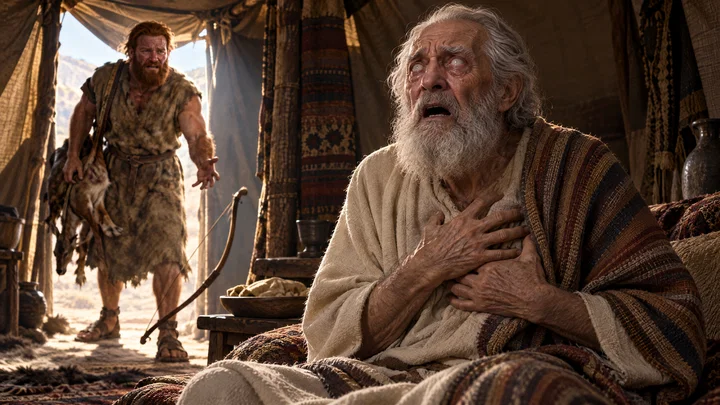
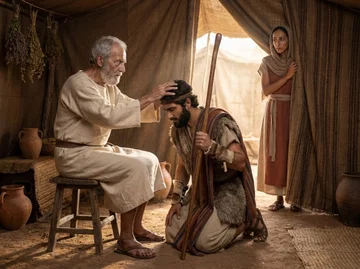
And it came to pass, as soon as Isaac had made an end of blessing Jacob, and Jacob was yet scarce gone out from the presence of Isaac his father, that Esau his brother came in from his hunting.
Translations
American King James Version, King James Version, KJV Cambridge Paragraph Bible, Revised Version, American Standard Version
And it came to pass, as soon as Isaac had made an end of blessing Jacob, and Jacob was yet scarce gone out from the presence of Isaac his father, that Esau his brother came in from his hunting.
And it came to pass, as soon as Isaac had made an end of blessing Jacob, and Jacob had yet scarcely gone out from the presence of Isaac his father, that Esau his brother came in from his hunting.
And it cometh to pass, as Isaac hath finished blessing Jacob, and Jacob is only just going out from the presence of Isaac his father, that Esau his brother hath come in from his hunting;
And it came to pass when Isaac had ended blessing Jacob, and when Jacob was only just gone out from Isaac his father, that Esau his brother came from his hunting.
And it came to pass as soon as Isaac had made an end of blessing Jacob,—yea it came to pass when Jacob, had only just gone forth, from the presence of Isaac his father, that Esau his brother, came in from his hunting.
Berean Standard Bible, Majority Standard Bible
As soon as Isaac had finished blessing him and Jacob had left his father’s presence, his brother Esau returned from the hunt.
As soon as Isaac had finished blessing Jacob, and Jacob had just gone out from the presence of Isaac his father, Esau his brother came in from his hunting.
And when Isaac had come to the end of blessing Jacob, and Jacob had not long gone away from Isaac his father, Esau came in from the field.
And when Izhak had made an ende of blessing Iaakob, and Iaakob was scarce gone out from the presence of Izhak his father, then came Esau his brother from his hunting,
Douay-Rheims (Challoner revision)
Isaac had scarce ended his words, when Jacob being now gone out abroad, Esau came,
Pictures
Cross-references
- Genesis 25:29-34
And Jacob sod pottage: and Esau came from the field, and he was faint:
Esau sold his birthright for food before Jacob took the blessing.
- Hebrews 12:17
For ye know how that afterward, when he would have inherited the blessing, he was rejected: for he found no place of repentance, though he sought it carefully with tears.
Esau later seeks his father’s blessing with tears but cannot reverse his loss.
- Genesis 25:23
And the LORD said unto her, Two nations are in thy womb, and two manner of people shall be separated from thy bowels; and the one people shall be stronger than the other people; and the elder shall serve the younger.
The elder’s service to the younger was promised before Jacob received the blessing.
- Genesis 32:28
And he said, Thy name shall be called no more Jacob, but Israel: for as a prince hast thou power with God and with men, and hast prevailed.
Jacob’s changed name contrasts the supplanter with the one who prevailed.
- Genesis 27:41
And Esau hated Jacob because of the blessing wherewith his father blessed him: and Esau said in his heart, The days of mourning for my father are at hand; then will I slay my brother Jacob.
Esau’s anger over losing the blessing leads him to plan Jacob’s death.
- Genesis 27:35-36
And he said, Thy brother came with subtilty, and hath taken away thy blessing.
Esau seeks the blessing Jacob obtained through deception.
- Genesis 28:13-15
And, behold, the LORD stood above it, and said, I am the LORD God of Abraham thy father, and the God of Isaac: the land whereon thou liest, to thee will I give it, and to thy seed;
God repeats the covenant promise to Jacob after his flight.
- Genesis 27:1-4
And it came to pass, that when Isaac was old, and his eyes were dim, so that he could not see, he called Esau his eldest son, and said unto him, My son: and he said unto him, Behold, here am I.
Isaac planned to bless Esau after he brought him food.
- Hebrews 11:20
By faith Isaac blessed Jacob and Esau concerning things to come.
Isaac’s blessings of Jacob and Esau concerned things to come.
- Genesis 32:11
Deliver me, I pray thee, from the hand of my brother, from the hand of Esau: for I fear him, lest he will come and smite me, and the mother with the children.
Jacob prayed to be delivered from Esau.
- Malachi 1:2-3
I have loved you, saith the LORD. Yet ye say, Wherein hast thou loved us? Was not Esau Jacob’s brother? saith the LORD: yet I loved Jacob,
States that God loved Jacob and hated Esau.
- Romans 9:13
As it is written, Jacob have I loved, but Esau have I hated.
Quotes the statement about God loving Jacob and hating Esau.
- Numbers 20:14-21
And Moses sent messengers from Kadesh unto the king of Edom, Thus saith thy brother Israel, Thou knowest all the travail that hath befallen us:
Edom’s refusal reflects the lasting enmity arising from Jacob’s deception of Esau.
Commentary
Each commentary is drawn from primary sources: the writings of Ellen G. White and Adventist pioneers and periodicals. Each commentary is separate. Its own words are not a quotation; follow the references to read the source passages.
Ellen G. White
7 sources
The moment is exact: Isaac had just made an end of blessing Jacob, and Jacob had scarcely gone out from his father's presence, when Esau his brother came in from his hunting.ED 147.1–21SP 108.1–24SP 437.2Lt 7, 1896, par. 1–4 It belongs to Jacob's obtaining by fraud the blessing of the firstborn that was intended for Esau, though the birthright was already his by God's promise.SG3 115.1ED 147.1–2GC88 616.1–24SP 437.2Lt 7, 1896, par. 1–4 That resort to fraud to gain what God had promised was a sin that needed repentance.ED 147.1–2GC 619.2–620.14SP 437.2
The fraud was not approved by God; Rebekah and Jacob should have trusted God to fulfill His purposes in His own time and way rather than trying to secure the foretold outcome by their own deceptive working.SG3 115.1 The act stands for secret working to gain advantage by deception, with partiality and hypocrisy, turning men from their rights and wronging and disappointing them by deceptive reasoning for selfishness and covetousness.Lt 7, 1896, par. 1–4 All such secret working is open to the eye of God, He will in no case justify it, and He will not tolerate handling men as machinery and ruling as lord over His heritage.Lt 7, 1896, par. 1–4 The blessing of the firstborn would not by itself guarantee God's favor, for Esau's prosperity or adversity would depend on whether he loved and revered God or followed a corrupt course, and Jacob too would be blessed if he loved and feared God even without the privileges normally given to the firstborn.SG3 115.1
Esau then learned that Jacob had received the blessing that would have been his had he not rashly sold his birthright, and he was greatly distressed with a regret that came too late to undo his choice.1SP 108.1–2 The deceit reaped its harvest in his brother's hatred and deadly anger, which forced Jacob to flee for his life, and fear of Esau's approach renewed Jacob's distress years later.ED 147.1–2GC88 616.1–2 The retribution continued through twenty years of exile in which Jacob was himself wronged and defrauded until at last forced to find safety in flight.ED 147.1–2 It reaped a second harvest as the evils of his own character cropped out in his sons, proving that what a person does is the result of what he is and every deed reacts upon the doer.ED 147.1–2
Jacob repented of this fraud beforehand, and because he had repented God heard his later prayer for protection and deliverance and mercifully preserved his life.GC 619.2–620.14SP 437.2 Without that prior repentance his unconfessed sin would have overwhelmed him with fear and cut off his faith so that he could not plead with God.GC 619.2–620.1 The episode warns that those who trade their hope of heaven for selfish pleasure and harmful desires will find at the day of God that repentance cannot restore what they surrendered, so all sin must be repented of and blotted out beforehand in order to have confidence to plead with God for deliverance in the time of trouble.1SP 108.1–2GC 619.2–620.1 This calls for investigation of Christ's teachings to ancient Israel against such secret working, yet hope is not removed, because God will not contend forever nor be always wroth but heals and leads and restores comfort and peace to him that is far off and to him that is near.ED 147.1–2Lt 7, 1896, par. 1–4
Sources
Pioneers and periodicals
33 sources
As soon as Isaac had finished blessing Jacob, Jacob had scarcely gone out from his father's presence when Esau came in from his hunting, and so discovered that the blessing meant for him was gone.ST Sep 22, 1898ST Jul 31, 1901ST Jan 3, 1911 Jacob obtained that blessing by fraud and overreaching, yet by God's promise it belonged to him as heir of Abraham and Isaac, for the elder was to serve the younger.ST Feb 24, 1887ST Jul 31, 1901ST Jan 3, 1911ST Jan 9, 1912ST Feb 28, 1906 Rebekah and Jacob lacked faith that God could fulfill His promise in His own time without their help, and their craft to make it sure by human scheming proved disastrous to the whole family.ST Feb 24, 1887ST Jul 31, 1884ST Jul 31, 1901ST Esau was enraged to find himself supplanted, hated Jacob and resolved to kill him, forcing Jacob to flee home as an exile and wanderer with long years of fear, remorse and bitter suffering in return for his deceit.ST Jul 31, 1901ST Jan 3, 1911ST Jan 9, 1912ST Jan 9, 1912 Esau's loss warns that those who trade their hope of heaven for present pleasure may afterward seek it with tears and be unable to recover what they surrendered.ST Apr 24, 1879ST Mar 30, 1888ST Feb 23, 1915RH Mar 20, 1879
Immediate Setting
As soon as Isaac had made an end of blessing Jacob, Jacob had yet scarce gone out from his father's presence when Esau his brother came in from his hunting.ST Sep 22, 1898ST Jul 31, 1901ST Jan 3, 1911ST Mar 30, 1888 The arrival falls immediately after Jacob has received the blessing, while Jacob is still barely out, and it sets up Esau's discovery that the blessing intended for him was gone.ST Sep 22, 1898ST Jul 31, 1901ST Mar 30, 1888ST May 17, 1910 Isaac had meant to give that blessing to Esau, having asked him to prepare venison before blessing him.ST Feb 24, 1887 He favored Esau because Esau brought him venison, and Esau had not told him that he had sold his birthright to Jacob.ST Feb 24, 1887
While Esau was out hunting venison for old blind Isaac, Rebekah killed kids and cooked the meal.ST Oct 1, 1902 She covered Jacob's neck and hands with skins to imitate Esau's hairy skin and sent him in to personate his brother and steal the blessing.ST Oct 1, 1902 Jacob's deception in this succeeded at the moment Esau came in from his hunting, and Esau is seen as coming in from his hunting in the desert with his face reddened by sun-heat.ST Oct 1, 1902RH Feb 22, 1912
Fraud and Birthright
Jacob obtained the blessing meant for Esau by fraud, trickery, duplicity, overreaching and selfish plotting, and that overreaching proved his name Jacob, meaning supplanter, truly describing his overreaching, mercenary and covetous character.ST Jan 3, 1911ST Jan 9, 1912ST Feb 28, 1906ST Apr 1, 1897ST Jan 9, 1912 The fraud left Esau the firstborn in second place and brought Esau's hatred and rage, forcing Jacob to flee from home and become a fugitive from his father's house.ST Jul 31, 1884ST Jan 3, 1911 God had promised Jacob the birthright, and the blessing would have come in due time if he had waited, but lack of faith led him to take matters into his own hands.ST Jul 31, 1884 His selfish plotting was followed by suffering, as he himself met overreaching in return.ST Jan 9, 1912ST Jan 9, 1912
The birthright at stake included a double share of property, leadership in the family, and the priesthood, and in this case it also involved the line through which Christ would come and, in a measure, the salvation of the human race.ST May 17, 1910 Jacob valued what the birthright and blessing meant and longed above all else to know and do God's will and to obtain God's promise and blessing.ST May 17, 1910ST Oct 4, 1905 Esau by contrast treated these privileges as less valuable than immediate pleasure and sold his birthright for food, for a mess of pottage which perishes with the using.ST May 17, 1910ST Nov 18, 1897ST Oct 4, 1905 Jacob took selfish advantage of his brother's supposed need to get the birthright, and then got Esau's blessing by fraud and deceit, desiring the Lord's blessing even by fraud.ST Nov 18, 1897 Jacob's desire for the blessing did not make his method right, but God recognized his desire and repentance.ST Oct 4, 1905
When Esau came in from hunting just after Jacob had left his father's presence and Isaac had finished the blessing, Esau then sought the blessing but was rejected.ST Mar 30, 1888ST Feb 23, 1915 He could not undo the birthright he had deliberately and recklessly sold, though he sought it with tears and distress and earnest effort.ST Apr 24, 1879ST Mar 30, 1888ST Feb 23, 1915RH Mar 20, 1879 His repentance came too late to undo that choice and recover what he had surrendered.ST Apr 24, 1879RH Mar 20, 1879 His later grief and inability to regain that blessing illustrate the lasting consequence of selling the birthright and giving up the right to eternal glory.RH Mar 20, 1879
Jacob's coveting of Esau's birthright and blessing and his unrighteous course to secure them was idolatry and transgression of the first and second commandments. That covetousness shows the law against coveting was already in force in Jacob's time before Moses.
Promise Versus Scheming
The blessing belonged by God's promise to Jacob as a prince in Israel and heir of the blessing decreed upon Abraham and Isaac, for the elder was to serve the younger.ST Feb 24, 1887ST Jul 31, 1884ST Jul 31, 1901 Isaac was nevertheless arranging to give it to Esau, and Jacob obtained it by means of gross deception while Esau was out in the fields.ST Jul 31, 1901 That divided course grew out of Isaac's excessive affection for Esau and Rebekah's preference for Jacob, which helped divide the family, and Jacob was influenced and urged by his mother and so led into deception and error.ST Jul 31, 1901ST Jan 14, 1913ST Apr 12, 1883 His grasping conduct in this showed the meaning of his name, supplanter.ST Jan 14, 1913
Rebekah and Jacob lacked faith that God could fulfill His promises for the Promised Seed and the channel through which that Seed should come without their taking a hand in it.ST It was the same lack of faith first shown in Abraham, and is nearly always found at the basis of all union of church and state.ST They should instead have trusted God to fulfill His purposes in His own time and quietly waited until ready, when He would promptly bestow His blessings in due time.ST Feb 24, 1887ST Jul 31, 1884ST Jul 31, 1901 Trying to make the promise sure by craft and human ingenuity and impatience was disastrous to the whole family, bringing separation, difficulties, hardships and distresses.ST Jul 31, 1901
God could have blessed either brother according to his character and conduct.ST Feb 24, 1887 Jacob's act was wrong and showed lack of faith in taking matters into his own hands rather than waiting.ST Feb 24, 1887ST Jul 31, 1884 His desire for the blessing and valuing of God's promise above all else did not make his deceitful method right, but God recognized his desire and his repentance.ST Feb 24, 1887ST Oct 4, 1905
Consequences and Repentance
The moment Jacob had scarcely left his father's presence with the blessing, Esau came in from the fields from hunting, and when he learned what had been done he was enraged, hated Jacob, swore vengeance and resolved to kill him.ST Jul 31, 1884ST Jul 31, 1901ST Jan 3, 1911RH Apr 26, 1870 Isaac had been arranging to give the blessing to Esau, but Rebekah urged Jacob into gross deception of his blind father, and by that means Jacob got the blessing intended for the firstborn while Esau was out, leaving Esau in second place through fraud.ST Jul 31, 1884ST Jul 31, 1901ST Jan 3, 1911RH Apr 26, 1870 That wrong toward his father and brother made Jacob a fugitive from his father's house and forced him to flee from home and from Canaan to a distant country, to take refuge with Rebekah's father's people in Mesopotamia and become an exile, a fugitive and a lonely wanderer on the way to Haran, where he remained many long years passing through bitter experiences.ST Jul 31, 1884ST Jul 31, 1901RH Apr 26, 1870ST Mar 31, 1881
The scheming to secure the blessing by human ingenuity and impatience instead of quietly waiting for God to perform His promise in due time brought separation, difficulties, hardships and distresses upon the whole family.ST Feb 24, 1887ST Jul 31, 1901STST Oct 1, 1902 It brought lifelong and lasting separation of mother and son with grief to Rebekah, who never saw her favorite son again, and brought Jacob fear, remorse, loss of peace and great hardship, with no formal reconciliation for over twenty years.ST Feb 24, 1887STST Oct 1, 1902RH Jul 4, 1865 His selfish plotting and overreaching were followed by suffering in return, for the deceit he practiced toward his father and brother was later returned to him through Laban's deceit, cruelty, overreaching and treatment of him, showing that evil actions bring recompense.ST Jan 9, 1912ST Jan 9, 1912RH Apr 26, 1870ST Mar 31, 1881ST Jul 27, 1915
Jacob was favored with a view across the centuries of the direful effect of his deception upon his posterity to the latest generation, wherein they would become more and more deceitful and covetous and wicked until the end, and in this way was made to discover more clearly than ever the heinousness of his sin.RH Oct 4, 1864 Even with that clearer discovery, this sin could not have been put away had he not repented of it previously.RH Oct 4, 1864 Esau's animosity lived on in his descendants for hundreds of years, who refused Israel passage from Egypt to Canaan and could never be won by moral influence, only subdued by war in the days of David and Amaziah.ST Oct 1, 1902
Jacob's sin in taking Esau's blessing by deception brought long-continued affliction upon him as captivity under God's chastening rod, and that chastisement worked deep and thorough repentance in him.ST Nov 20, 1879ST Jul 21, 1881RH Jul 4, 1865RH Mar 30, 1869 His going down into Egypt was the turning point where those afflictions were closed forever and the rod was withdrawn, his sojourn there being appointed for ripening for the kingdom of God, and his life ended in heavenly brightness.ST Jul 21, 1881 He later recognized that his exile resulted from this departure from integrity, his conscience kept the sin before him as he wrestled with the angel who humbled him, and he longed to return to the place where he had stumbled.ST Nov 20, 1879RH Jul 4, 1865 His deceit in securing the blessing was a sin peculiarly abhorrent to God; though he repented and God accepted his repentance and gave him assurance of eternal life, God left him to suffer the bitter consequences in this life, setting the scene for the danger that later led him to plead with God for deliverance from Esau, even as in the time of trouble God's people must have confessed sins and have no concealed wrongs so they can plead for deliverance without despair.RH Nov 14, 1912RH Mar 30, 1869
Types Prophecy and Application
The moment when Jacob had just received Isaac's blessing and Esau entered marks a division between a blessing given in God's name that was prophetic and a blessing for Esau given only in Isaac's own name, answering to the spiritual desire of the one and the carnal desire of the other.ST Sep 22, 1898 In that fraud and deceit by which Jacob got Esau's blessing, after taking selfish advantage of his brother's supposed need to get the birthright, Jacob desired the Lord's blessing even by fraud while Esau sold his birthright for a mess of pottage which perishes with the using.ST Nov 18, 1897 Jacob as the supplanter stands as a type of a religious class who seek the Lord's blessing as temporal place and position, loaves and fishes instead of the spiritual.ST Nov 18, 1897 They try to obtain it by might or right, by hook or crook, by principle or policy, by right or expediency, sacrificing principle, taking the unholy suggestions of the faithless, and uniting with the world and the State, only to be utterly disappointed at last, while Esau represents those who have no faith, children of unbelief and disobedience.ST Nov 18, 1897
Isaac's blessing of Jacob and passing of Esau because his sight was dim proves that time, place, speech, or apparel can obscure and darken human eye and ear, and that ignorance in the creature can estrange love and knowledge.RH Nov 4, 1858 This stands in contrast to the Lord who knows who are His and whose eye is always over them.RH Nov 4, 1858 The distress of Esau on learning that the blessing he might have received was gone, after he had already recklessly sold his birthright, warns that those who trade their hope of heaven and right to eternal glory for selfish pleasure may later seek repentance and find they cannot return and recover what they surrendered, even with earnest effort.ST Apr 24, 1879RH Mar 20, 1879
The arrival of Esau immediately after Jacob had received Isaac's blessing set the scene for the danger that later led Jacob to plead with God for deliverance from Esau.RH Nov 14, 1912 Jacob's deception in obtaining the blessing was a sin he had repented of.RH Nov 14, 1912 So in the time of trouble God's people likewise must have confessed sins and have no concealed wrongs, so they can plead for deliverance without despair.RH Nov 14, 1912
Sources