Genesis 37:34
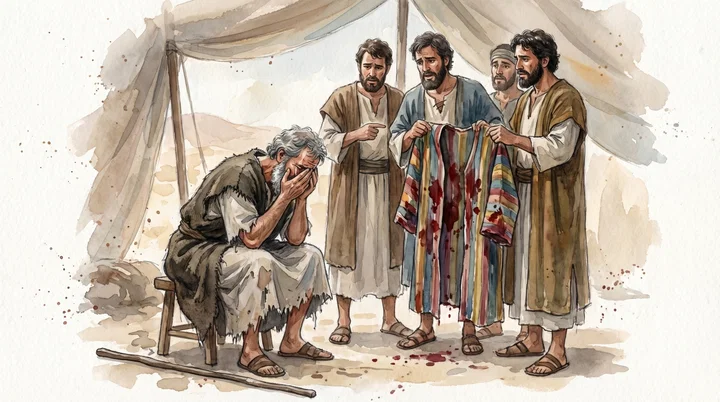
And Jacob rent his clothes, and put sackcloth upon his loins, and mourned for his son many days.
Translations
American King James Version, Webster Bible, Darby Translation
And Jacob rent his clothes, and put sackcloth on his loins, and mourned for his son many days.
King James Version, KJV Cambridge Paragraph Bible
And Jacob rent his clothes, and put sackcloth upon his loins, and mourned for his son many days.
Revised Version, American Standard Version
And Jacob rent his garments, and put sackcloth upon his loins, and mourned for his son many days.
And Jacob rendeth his raiment, and putteth sackcloth on his loins, and becometh a mourner for his son many days,
And Jacob rent his garments, and put sackcloth upon his loins,—and mourned over his son many days.
Berean Standard Bible, Majority Standard Bible
Then Jacob tore his clothes, put sackcloth around his waist, and mourned for his son many days.
Jacob tore his clothes, and put sackcloth on his waist, and mourned for his son many days.
Then Jacob, giving signs of grief, put on haircloth, and went on weeping for his son day after day.
And Iaakob rent his clothes, and put sackecloth about his loynes, and sorowed for his sonne a long season.
Douay-Rheims (Challoner revision)
And tearing his garments, he put on sackcloth, mourning for his son a long time.
Pictures
Cross-references
- Genesis 44:27-31
And thy servant my father said unto us, Ye know that my wife bare me two sons:
Judah recalls Jacob’s grief over Joseph and fears renewed sorrow over Benjamin.
- Job 1:18-21
While he was yet speaking, there came also another, and said, Thy sons and thy daughters were eating and drinking wine in their eldest brother’s house:
Both fathers mourn the loss of their children; Job also worships God in his grief.
- Genesis 46:29-30
And Joseph made ready his chariot, and went up to meet Israel his father, to Goshen, and presented himself unto him; and he fell on his neck, and wept on his neck a good while.
mourning ends at their reunion
- Genesis 45:5-8
Now therefore be not grieved, nor angry with yourselves, that ye sold me hither: for God did send me before you to preserve life.
Joseph explains that God sent him ahead to preserve life.
- Genesis 45:9-11
Haste ye, and go up to my father, and say unto him, Thus saith thy son Joseph, God hath made me lord of all Egypt: come down unto me, tarry not:
Joseph sends for Jacob and promises to provide for him in Egypt.
- Genesis 37:3-4
Now Israel loved Joseph more than all his children, because he was the son of his old age: and he made him a coat of many colours.
father's love provoked brethren's envy and hatred
- Genesis 42:36
And Jacob their father said unto them, Me have ye bereaved of my children: Joseph is not, and Simeon is not, and ye will take Benjamin away: all these things are against me.
Jacob says that all these things are against him.
- Amos 6:6
That drink wine in bowls, and anoint themselves with the chief ointments: but they are not grieved for the affliction of Joseph.
Amos condemns those ungrieved by Joseph’s affliction.
- Genesis 37:2
These are the generations of Jacob. Joseph, being seventeen years old, was feeding the flock with his brethren; and the lad was with the sons of Bilhah, and with the sons of Zilpah, his father’s wives: and Joseph brought unto his father their evil report.
Joseph reported his brothers’ wrongdoing to Jacob.
- Acts 7:9
And the patriarchs, moved with envy, sold Joseph into Egypt: but God was with him,
cited together for sons persecuting Joseph
- Genesis 37:5-11
And Joseph dreamed a dream, and he told it his brethren: and they hated him yet the more.
The brothers’ actions meant to thwart Joseph’s dreams helped bring their fulfillment.
- Genesis 42:1-2
Now when Jacob saw that there was corn in Egypt, Jacob said unto his sons, Why do ye look one upon another?
Jacob sends his sons to Egypt for grain so the family may live.
- Genesis 46:4
I will go down with thee into Egypt; and I will also surely bring thee up again: and Joseph shall put his hand upon thine eyes.
God promises Jacob he will return from Egypt and see Joseph again.
Commentary
Each commentary is drawn from primary sources: the writings of Ellen G. White and Adventist pioneers and periodicals. Each commentary is separate. Its own words are not a quotation; follow the references to read the source passages.
Ellen G. White
2 sources
Jacob mourned deeply for his son for many days, grieving him as dead because he believed Joseph was dead.SG3 168.2Lt 10, 1879, par. 4–9 That mourning lasted until he saw Joseph alive again in Egypt.SG3 168.2 At their meeting Joseph left his chariot and ran on foot to meet his father, and they embraced and wept over each other, and Jacob then said he was willing to die since he had again seen his son.SG3 168.2 This mourning belongs to Joseph's experience of being persecuted and treated as a criminal despite his goodness, suffering through which God ultimately brought victory.Lt 10, 1879, par. 4–9
Sources
Pioneers and periodicals
31 sources
Jacob tore his garments and put sackcloth about his waist and mourned many days in deep grief believing Joseph was dead.ST Apr 2, 1894ST Oct 27, 1898ST Oct 27, 1898 His sons deceived him with Joseph's coat dipped in goat's blood, and from it he concluded that Joseph had been torn in pieces and devoured by a wild beast.ST Mar 17, 1887ST Oct 27, 1898RH Mar 30, 1869 His sorrow was intense and prolonged, refusing comfort and expecting to go to the grave mourning, while Joseph was in fact alive and prospering and the loss was only supposed.ST Mar 17, 1887ST Oct 22, 1912RH Mar 30, 1869 God overruled the brothers' wrath, jealousy and wrongdoing for good, turning the apparent loss into salvation for Jacob and his family and a step in the divine plan for Israel.ST Jan 16, 1912ST Jun 11, 1894ST Jan 16, 1912 The mourning was the bitter fruit of jealousy and hatred in the family, showing that envy leads to evil and that painful consequences of sin remain even after forgiveness.STST Apr 20, 1888ST Jun 11, 1894ST Oct 27, 1898
Jacob's Mourning and Setting
Jacob rent his garments and put sackcloth upon his loins, around his waist, and mourned for his son many days in deep grief at the false belief that Joseph had been killed or was dead.ST Apr 2, 1894ST Oct 27, 1898ST Apr 20, 1888ST Apr 2, 1894 The mourning followed his sons' conspiracy and deception, after they concealed guilt and he concluded Joseph was torn in pieces, and it belongs to the account of Joseph beloved by his father, hated by his brothers, sold into bondage, with envy as its fruit.ST Oct 27, 1898ST Apr 20, 1888 His response showed intense grief at the supposed death, tearing his clothes and grieving many days.ST Apr 20, 1888ST Apr 2, 1894
He had been deceived by his sons with Joseph's bloodied coat dipped in the blood of a goat, presented as torn and found in the wilderness, with lying claims that they had not seen Joseph.ST Oct 27, 1898ST Feb 7, 1911ST Sep 28, 1904RH Aug 14, 1860 From this he concluded Joseph was torn in pieces or devoured by a wild beast or wild animals.ST Mar 17, 1887ST Oct 27, 1898RH Mar 30, 1869RH Aug 14, 1860 The bloodied coat was held out to him until he was led to believe Joseph was dead, and his lasting misery and sorrow came through that jealousy and cruel deception.ST Mar 17, 1887ST Sep 28, 1904
His grief was intense and prolonged, refusing comfort and saying he would go to his grave mourning.ST Mar 17, 1887 He wished he could die in his son's place and grieved that he could not see or kiss Joseph again in this life.ST Oct 22, 1912 He wailed that Joseph is not, and mourned as though Joseph had died when Joseph was actually alive and prospering, taken away only for a time, so the loss was only supposed.RH Mar 30, 1869ST Feb 7, 1911ST Aug 24, 1915 The mourning lasted many years because the deception made him believe Joseph had been devoured by a wild animal.RH Mar 30, 1869
The background was Joseph's righteousness against his brethren's wrong, for Joseph feared the Lord, treasured his father's righteous teachings, and obeyed God with integrity of heart more than his brethren.ST Mar 17, 1887 He grieved at their wrong conduct, meekly entreated them to pursue a righteous course and leave off wicked acts because hatred of sin could not endure seeing them sin against God, and laid the matter before his father hoping his authority would reform them.ST Mar 17, 1887 This exposure enraged them, for they had observed their father's strong love for Joseph and became envious, and their envy grew into hatred and finally to murder.ST Mar 17, 1887 That downward course moved through hatred and plotting into casting him into a pit, murderous scheme, sale into Egypt and bondage, and deceit to conceal guilt, leaving them in fearful expectation of wrath, while the larger episode shows envy leading to evil and God overruling human wrongdoing for good as part of the divine plan concerning the children of Israel toward what was foretold in Genesis 15:13.ST Oct 27, 1898ST Jun 11, 1894ST Oct 27, 1898
The sorrow of many days is described as many years, several years, and twenty-two years.RH Mar 30, 1869RH Jan 11, 1906ST Dec 14, 1915 His sons saw his distress and feared that losing Benjamin would bring their father further sorrow, and his trust in his sons brought him suffering.ST Jan 22, 1880 He did not yet know that Joseph's being sent to Egypt would ultimately provide support during the famine, though at first seeing events as against him he later came to see God's hand in them.RH Jan 11, 1906ST Dec 14, 1915 His grief is later recalled as the sorrow of a father whom Joseph's invitation and promise of food in Egypt would draw to him, for Joseph had actually been lost through his brothers' treachery but the sorrow and apparent loss became part of God's providence toward reunion and the preservation of many lives.ST Feb 10, 1881ST Jan 9, 1912
The Genesis history to which the verse belongs matches Egypt at that time, with its account of the land and people of the Nile illustrated by Egyptian pictures, stories, and religious books showing habits and customs.ST Nov 20, 1884 Egyptian monuments give no record of Bible miracles because kings do not report their disasters, yet show slaves with Hebrew features making bricks as the Hebrews made them and cities like Pithom with great windowless, doorless brick storehouses for preserving grain for war or famine.ST Nov 20, 1884 The Pentateuch record concerning Joseph is fully corroborated by deciphered inscriptions on Egyptian monuments and tombs, proving its historical accuracy and making it a valuable auxiliary to Egyptian history and of prime historical importance.ST Jul 30, 1885
Providence, Doctrine, and Application
The Joseph history shows God overruling human wrath, ambition, and jealousy for His own praise, and overruling human wrongdoing for good.ST Jan 16, 1912ST Jun 11, 1894ST Jan 16, 1912 Whatever God has intended a person for, He can be safely trusted to bring about, leading roundabout yet guiding right.RH Jan 19, 1860 The brothers' evil plotting, casting into a pit, and sale moved Joseph toward the throne of Egypt, so that apparent loss became part of God's providence and of the divine plan concerning the children of Israel being developed toward what was foretold in Genesis 15:13.ST Jun 11, 1894RH Jan 19, 1860ST Oct 27, 1898 Jacob at first saw the events surrounding Joseph's supposed death as against him, though he later came to see God's hand in them, his sorrow lasting twenty-two years.ST Dec 14, 1915
The mourning was one of the sad fruits of the mistake of having more than one wife, a course producing partiality, jealousy, envy, low standards of morality, and crime.ST More directly it was the bitter fruit of the brothers' hatred and persecution, and of jealousy within the family bringing lasting misery and sorrow.ST Sep 28, 1904 That fruit grew through downward steps from envy to hatred to a scheme of murder to deceit, leaving the deceivers in fearful expectation of wrath to be visited upon them.ST Oct 27, 1898 The episode teaches that envy leads to evil.ST Jun 11, 1894
Suffering can remain as a consequence of sin even after the sin has been forgiven, as seen when Jacob tore his clothes, put sackcloth around his waist, and mourned many days following his sons' deception.ST Apr 20, 1888 As Jacob's own earlier deception had brought suffering upon him, so his sons' deceit in making him believe Joseph had been devoured brought this grief, and his repentance and forgiveness did not prevent painful consequences in this life.RH Mar 30, 1869 Those consequences showed God's abhorrence of deception, while Jacob was still granted mercy and life in the world to come.RH Mar 30, 1869 In the same way the consequences of wrongdoing can return through painful events involving those near and dear.ST Jul 10, 1893
The wayward and envious sons persecuting Joseph who feared God demonstrates that he that was born after the flesh persecuted him that was born after the Spirit, that the wicked persecute the righteous.RH Jun 8, 1916 Joseph's life also provides an example of righteousness made a living part of character.ST Jan 16, 1912 Jacob's rending of clothes, sackcloth, and many days of mourning came from believing a lie about the torn coat found in the wilderness and the claim that Joseph had not been seen, proving that believing a lie produces joy or grief just the same as believing the truth does and that men believe just what they choose to believe.RH Aug 14, 1860
His needless mourning that turned to deliverance pictures the sorrow of longing souls who are made by tearing criticism of the Bible to feel that the Bible is not and to ask whither they shall go.ST Feb 7, 1911 The very evil of selling Joseph into slavery brought salvation to the weeping father and his family, Joseph himself becoming their only hope in time of trouble, so the Old Book still remains the hope of every longing soul in days of trouble despite attack.ST Feb 7, 1911 The life of Joseph contains principles designed to guide dealing with the contingencies of life, with an underlying principle recognized in grief and mourning for a son that helps and guides those called to pass through similar experiences.ST Nov 29, 1905 It gives a human experience with its counterpart in life today and a practical lesson to be as familiar as one's own name for the soul's good and for counseling others in similar difficulty, making the Bible a guidebook to have confidence in till the very end.ST Nov 29, 1905
The loss mourned belongs to a youth whom God guided and saved, showing that the God of Israel befriends children and youth and guards them by angels in time of trouble, and every child and youth should want Him for a friend and seek Him early to have that guarding.RH Nov 24, 1874 The verse belongs to early Bible stories that never lose beauty, freshness, and charm, bringing new inspiration to those advanced in years and read with pleasure and eager delight by youth and children.RH Oct 9, 1900 The story of Joseph should be read by every fireside, showing a man who was truthful, obedient, noble, spirited, and dared to do right.RH Oct 9, 1900 The principles revealed in this life, if instilled into the minds of the young, make an indelible impression for good that neither time nor later associations can erase, so mothers should read them to their children.RH Oct 9, 1900
Sources