Genesis 4:12
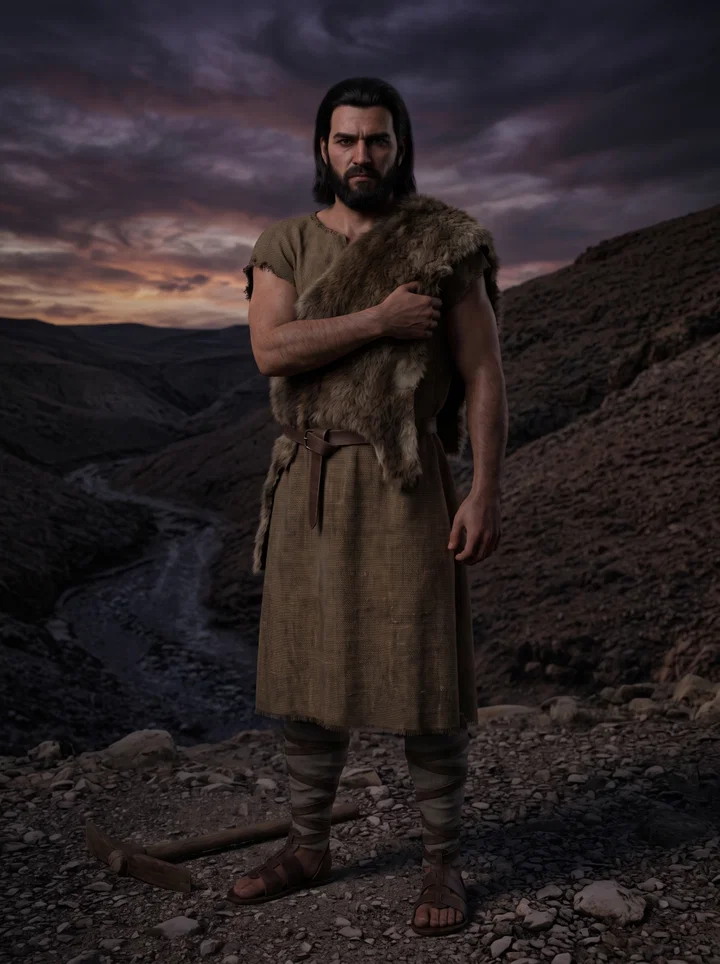
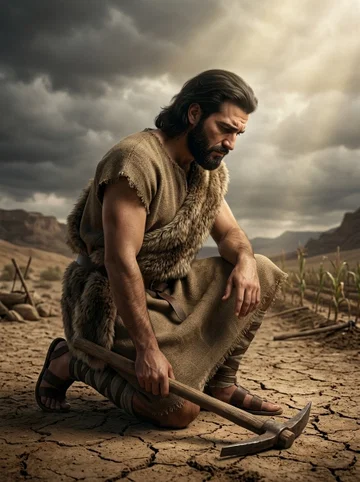
When thou tillest the ground, it shall not henceforth yield unto thee her strength; a fugitive and a vagabond shalt thou be in the earth.
Translations
When you till the ground, it shall not from now on yield to you her strength; a fugitive and a vagabond shall you be in the earth.
King James Version, KJV Cambridge Paragraph Bible
When thou tillest the ground, it shall not henceforth yield unto thee her strength; a fugitive and a vagabond shalt thou be in the earth.
When thou tillest the ground, it shall not henceforth yield to thee its strength: A fugitive and a vagabond shalt thou be in the earth.
when thou tillest the ground, it shall not henceforth yield unto thee her strength; a fugitive and a wanderer shalt thou be in the earth.
when thou tillest the ground, it shall not henceforth yield unto thee its strength; a fugitive and a wanderer shalt thou be in the earth.
when thou tillest the ground, it doth not add to give its strength to thee — a wanderer, even a trembling one, thou art in the earth.'
When thou tillest the ground, it shall not henceforth yield thee its strength; a wanderer and fugitive shalt thou be on the earth.
Though thou till the ground, it shall not go on to give its vigour to thee. A wanderer and a fugitive, shalt thou be in the earth.
Berean Standard Bible, Majority Standard Bible
When you till the ground, it will no longer yield its produce to you. You will be a fugitive and a wanderer on the earth.”
From now on, when you till the ground, it won’t yield its strength to you. You will be a fugitive and a wanderer on the earth.”
No longer will the earth give you her fruit as the reward of your work; you will be a wanderer in flight over the earth.
When thou shalt till the grounde, it shall not henceforth yeelde vnto thee her strength: a vagabond and a runnagate shalt thou be in the earth.
Douay-Rheims (Challoner revision)
When thou shalt till it, it shall not yield to thee its fruit: a fugitive and a vagabond shalt thou be upon the earth.
Pictures
Cross-references
- Genesis 3:17-19
And unto Adam he said, Because thou hast hearkened unto the voice of thy wife, and hast eaten of the tree, of which I commanded thee, saying, Thou shalt not eat of it: cursed is the ground for thy sake; in sorrow shalt thou eat of it all the days of thy life;
Adam’s sin cursed the ground; Cain’s punishment further reduced its yield.
- Genesis 4:3-5
And in process of time it came to pass, that Cain brought of the fruit of the ground an offering unto the LORD.
Cain’s rejected offering and Abel’s accepted one provoked Cain’s anger and led to the curse.
- Genesis 4:16
And Cain went out from the presence of the LORD, and dwelt in the land of Nod, on the east of Eden.
Cain leaves God’s presence to wander in Nod, whose name means wandering.
- Genesis 4:8
And Cain talked with Abel his brother: and it came to pass, when they were in the field, that Cain rose up against Abel his brother, and slew him.
Cain’s murder of Abel brought the curse and diminished the ground’s yield.
- 1 John 3:12
Not as Cain, who was of that wicked one, and slew his brother. And wherefore slew he him? Because his own works were evil, and his brother’s righteous.
Cain’s evil works led him to kill his righteous brother.
- Genesis 4:17
And Cain knew his wife; and she conceived, and bare Enoch: and he builded a city, and called the name of the city, after the name of his son, Enoch.
Cain built a city after being sentenced to wander.
- Genesis 4:7
If thou doest well, shalt thou not be accepted? and if thou doest not well, sin lieth at the door. And unto thee shall be his desire, and thou shalt rule over him.
God warned Cain about sin before the murder and curse.
- Hebrews 11:4
By faith Abel offered unto God a more excellent sacrifice than Cain, by which he obtained witness that he was righteous, God testifying of his gifts: and by it he being dead yet speaketh.
Abel’s accepted offering testified that he was righteous by faith.
- Genesis 3:23
Therefore the LORD God sent him forth from the garden of Eden, to till the ground from whence he was taken.
Adam and Cain are both sent to till the ground.
- Genesis 3:18
Thorns also and thistles shall it bring forth to thee; and thou shalt eat the herb of the field;
The ground’s first curse precedes Cain’s heavier curse.
- Genesis 8:21
And the LORD smelled a sweet savour; and the LORD said in his heart, I will not again curse the ground any more for man’s sake; for the imagination of man’s heart is evil from his youth; neither will I again smite any more every thing living, as I have done.
The curse on the ground is changed after the Flood.
- Genesis 4:2
And she again bare his brother Abel. And Abel was a keeper of sheep, but Cain was a tiller of the ground.
Cain is identified as a tiller of the ground.
- Genesis 3:1-6
Now the serpent was more subtil than any beast of the field which the LORD God had made. And he said unto the woman, Yea, hath God said, Ye shall not eat of every tree of the garden?
Eve was deceived by Satan.
- Genesis 2:15
And the LORD God took the man, and put him into the garden of Eden to dress it and to keep it.
The man is assigned the work of tending the ground.
- Genesis 4:23-24
And Lamech said unto his wives, Adah and Zillah, Hear my voice; ye wives of Lamech, hearken unto my speech: for I have slain a man to my wounding, and a young man to my hurt.
Lamech, like Cain, is a murderer.
Commentary
Each commentary is drawn from primary sources: the writings of Ellen G. White and Adventist pioneers and periodicals. Each commentary is separate. Its own words are not a quotation; follow the references to read the source passages.
Ellen G. White
26 sources
God sentenced Cain to this judgment for murdering his brother Abel in the field out of jealousy, after his own fruit offering without a lamb was rejected while Abel's lamb offering pointing to the saving blood of Christ was accepted.Ms 78, 1901, par. 3–11SG3 48.2Lt 71, 1896, par. 2–9 The sentence was given only after God gave him time to reflect and confess, which he refused with lying and rebellion, and it cursed him from the blood-stained earth so his tilling would no longer bring its strength and he would live as a fugitive wanderer.Ms 78, 1901, par. 3–11PP 77.2–3Ms 204, 1903, par. 34–361SP 55.3 In this a second curse was added to the curse already on the earth for Adam's transgression, so a heavy double curse rested upon the ground, at first still rich and beautiful yet showing sure decay.ST Feb 27, 1879ST Feb 6, 1879SG3 61.31SP 57.1 The judgment also showed mercy, for Cain had earned death yet God spared his life to give him time to repent, and his hardening under forbearance stands as proof to the universe that long life only makes the unrepentant more corrupt.PP 78.1–2PP 324.3–325.3 Cain's deed began the enmity between Satan's seed and Christ's followers, warning to the close of history that setting human will against God's word opens the mind to the tempter unto persecution and murder.PP 77.11SP 57.1SG3 50.1Lt 71, 1896, par. 2–9
Sentence Upon Cain
The sentence is God's judgment upon Cain for murdering his brother Abel in the field out of jealousy.Ms 78, 1901, par. 3–11SG3 48.2 Cain had brought a disobedient offering of fruit without a lamb, following his own will instead of God's specific requirement of a lamb for a burnt offering to prefigure the saving blood of the Lamb of God, while Abel's lamb offering was accepted by fire from heaven.Ms 78, 1901, par. 3–11Lt 71, 1896, par. 2–9 That first step in disobedience opened Cain's mind to the tempter until his will blended with Satan's will and led to Abel's death.Lt 71, 1896, par. 2–9
The sentence was not pronounced at once, for God first asked where Abel was and what Cain had done, giving him time and opportunity to reflect and confess the enormity of the murder and of the lie told to hide it.PP 77.2–3SG3 48.2 Cain refused to confess and repent, lied that he did not know where his brother was, put the blame on Abel and on God and would not correct his wrong course, rejecting correction and his responsibility as elder brother to care for and protect Abel from evil.PP 77.2–3Ms 204, 1903, par. 34–36SG3 48.2 Because he remained rebellious, judgment was no longer deferred, and the same divine voice before heard in pleading and warning now pronounced judgment, for God knew his sin, every act and even the thoughts of his heart.PP 77.2–3SG3 48.2 His anguished response afterward was remorse, not repentance.
The judgment was that Cain was cursed from the earth that had opened her mouth to receive his brother's blood from his hand.Ms 78, 1901, par. 3–11PP 77.2–3SG3 48.2 When he tilled the ground it would not henceforth yield unto him her strength, and he would be a fugitive and a vagabond, a fugitive and wanderer, in the earth.Ms 78, 1901, par. 3–11PP 77.2–31SP 55.3ST Feb 6, 1879SG3 48.2 The curse thus touched both his work and his life.1SP 55.3ST Feb 6, 1879
Cain was a tiller of the ground, and tilling the soil was the industry appointed to Adam and Eve immediately after the fall when they were sent out from Eden, as God's appointed means of healthful employment of the physical powers and recovery from loss.Lt 10, 1909, par. 4–9 After the earth was cursed it brought forth thistles, which increased the work of those who till the soil, yet the ground was still to be tilled.Lt 10, 1909, par. 4–9 Cain met the added curse with rebellion and murmuring against it. He answered it by withdrawing from his father's household and going out from the presence of the Lord, casting away the promise of restored Eden to seek possessions and enjoyment in the earth under the curse of sin.PP 81.1 He founded a city called after his eldest son, thus standing at the head of that great class who worship the god of this world, whose descendants became distinguished in mere earthly and material progress while regardless of God and in opposition to His purposes for man.PP 81.1
Adam knew of this curse upon Cain and looked upon Cain as Abel's murderer.SG3 50.2 Deprived of his son Abel and filled with bitter remorse for his own transgression that had brought misery upon his posterity, his heart was bowed down with grief.SG3 50.2
Curse Upon Earth
The murder brought a second curse upon the earth, added to the first curse that had followed Adam's transgression, so that a heavy double curse rested upon the earth.ST Feb 27, 1879ST Feb 6, 1879SG3 61.31SP 57.1ST Feb 6, 1879 The curse on the ground, which at first had been felt lightly, now rested on it doubly and with double force.1SP 57.1SG3 50.1ST Feb 6, 1879 This added curse was pronounced in the sentence that when Cain tilled the ground it would no longer yield its strength to him, and that he would be a fugitive and wanderer in the earth.ST Feb 27, 1879ST Feb 6, 18791SP 57.1
It did not at once strip nature of beauty or abundance.ST Feb 27, 1879 Mountains and hills were still lovely with majestic trees, verdure and flowers like a vast garden, and the earth was still rich and beautiful in the gifts of providence.SG3 61.3PP 90.1 Yet compared with its state before, there was apparent evidence of sure and certain decay, with evident tokens of decay though the face of nature had not yet been greatly changed.ST Feb 27, 1879SG3 61.31SP 67.1PP 90.1
The curse did not come all at once but has grown heavier through history.SG4 121.3–122.1 It increased at the murder of Abel and greatly increased again at the Flood, with the double curse still resting upon the earth in Noah's day.SG4 121.3–122.1PP 90.1 Since the Flood it has rested heavier and heavier upon men and upon beasts as the human family have forgotten God and followed disobedience and transgression of His commandments, while trees and all vegetation also have felt its effects.SG4 121.3–122.1 It is one of the curses that have blighted the earth, contributing to its broken and barren condition.CTBH 171.9–172.1
The sentence shows mercy as well as judgment, for Cain had earned death for murder, yet God spared his life and gave him time and opportunity to repent.PP 78.1–2 By letting him live God set before the universe a demonstration of what permitting sin to go unpunished produces.PP 78.1–2PP 324.3–325.3 Forbearance only made the wicked bolder, for Cain refused repentance and only hardened his heart, rebelled against divine authority, followed Satan, tempted others, and fathered a line of bold sinners.PP 78.1–2 His continued life and teaching exerted an influence upon his descendants that corrupted the earth with violence until it ripened fifteen centuries later in worldwide crime and corruption that demanded destruction of the whole world by the Flood.PP 78.1–2PP 324.3–325.3 That history of the antediluvians testifies that long life is no blessing to the sinner, that great forbearance alone does not repress wickedness, and that the longer men lived the more corrupt and abandoned they became.PP 78.1–2PP 324.3–325.3 It proves the death sentence on the fallen race for breaking God's law is both just and merciful, because cutting short hardened rebellion frees the world from its influence and is a blessing, not a curse.PP 78.1–2 The evils that resulted from sparing Cain were great, but sparing the transgressors at Sinai would have produced evils still greater, proving in mercy to the world that to save the many the persistent few must be punished.PP 324.3–325.3
Lesson and Warning
The murder of Abel was the first example of the enmity declared between the serpent and the seed of the woman, between Satan and his subjects and Christ and His followers.PP 77.1 Cain and Abel represent the two classes of the wicked and the righteous that will exist through human history until Christ's second coming.1SP 57.1SG3 50.1 The wicked envy and hate the righteous because right conduct condemns sin and exposes their own evil, and through all ages they persecute and kill those who stand in vindication of the righteousness of the law of God.PP 77.11SP 57.1SG3 50.1
The sentence stands as a warning to the close of earth's history against placing human judgment against God's word.Lt 71, 1896, par. 2–9 Cain refused the specific requirement to bring a lamb for a burnt offering to prefigure the shed blood of the Lamb of God who would save a lost world, following his own will and understanding instead.Lt 71, 1896, par. 2–9 That first step in disobedience opened his mind to the tempter until his own will blended with Satan's will and led to the death of his brother, showing the sure result of such a course.Lt 71, 1896, par. 2–9 All are therefore warned to obey God's words and to give no place to the devil, lest he rule over them.Lt 71, 1896, par. 2–9
Sin brought a curse upon the earth so that the ground does not yield its strength as it should and cannot produce its full strength without God's blessing.STE 108.1–109.1SPBC 200.1FE 326.2 Yet the earth still holds hidden blessings for those who work it with courage, will, determination and perseverance.STE 108.1–109.1SPBC 200.1FE 326.2 Sin and neglect deepen the harm of the curse, and laziness and refusal to till the soil increase it further.STE 108.1–109.1SPBC 200.1
To be a second Cain is to be looked upon as a murderer whose crime brings reproach.PP 153.3 Such a course causes one's teaching to be rejected and despised and destroys one's power to do good to fellow men.PP 153.3
Sources
Pioneers and periodicals
78 sources
God spoke aloud to Cain immediately after he murdered Abel in the field, sentencing him that when he tilled the ground it would withhold its strength from him and he would live as a fugitive and wanderer with no settled home.RH Jun 25, 1901ST Jul 14, 1898ST Dec 22, 1898PGGC 5.1–2 It was a second and heavier curse upon the earth after the curse for Adam's sin, added because of murder.RH Jul 9, 1872ST Jul 2, 1894RH Jun 25, 1867 His punishment proves that murder was sin from the beginning and that the prohibition against killing and the Decalogue were known and binding long before Sinai.ST Mar 30, 1915ST Jul 9, 1874 Cain stands as the type of unbelief, hatred and disobedience in contrast with Abel as the type of faith, love and obedience, together representing the two classes whose history runs from Adam's sons to the close of grace.ST Nov 18, 1897ST Mar 18, 1903RH Feb 10, 1874 Sinful man has no power to redeem the earth, but Christ by His death has redeemed it and its inhabitants and will remove the curse.RH Jun 27, 1912
Wording and Setting
God spoke the sentence aloud to Cain immediately after Cain murdered Abel in the field, pronouncing judgment that reward and punishment come to a degree in this life.RH Jun 25, 1901ST Dec 22, 1898PGGC 5.1–2 The doom joined the curse from the earth that had received Abel's blood to barrenness of the ground and a life of wandering, pressing guilt on Cain until he appealed that his punishment was greater than he could bear, while God promised his life would not be taken in revenge and set a mark on him as a pledge of protection.RH Jun 25, 1901ST Dec 22, 1898 When Cain tilled the ground it would henceforth withhold its strength from him, and he would live as a fugitive and wanderer with no settled home.ST Jul 14, 1898ST Jul 14, 1898RH Aug 23, 1906ST Mar 23, 1915 The curse touched both his work and his life, so farming would no longer give him its strength and he went out as a wanderer, an account placed under God's dealings with Cain that emphasizes God's long-suffering.ST Jul 14, 1898ST Jul 14, 1898ST Mar 23, 1915ST Dec 20, 1910
The word rendered vagabond means wanderer, and the land of Nod means wandering, for Cain had no settled home after leaving Eden.ST Jul 15, 1913 The Hebrew word is Nod in participial form, meaning wandering or vagabonding, with no reference to any particular spot or country, sentencing Cain to go out from the presence of the Lord and spend the remainder of his life as a fugitive wandering in the region east of Eden where his parents lived after being driven from the garden.ST Dec 22, 1898 It is never translated but simply transferred, and it is found only three times in the Bible, in Genesis 4:12 and Genesis 4:14 for Cain's vagabondage and once in Genesis 4:16.ST Dec 22, 1898ST Dec 22, 1898 The Hebrew word for wanderer is nod, so the land name Nod can be taken to mean a vagabond, and Cain's departure can be rendered as going out and dwelling in the land, a vagabond.ST May 6, 1886
The verse belongs to the opening ten chapters of Genesis, which give an outline of 1,656 years of the world's history before the Flood. It stands in the history of the highly favored antediluvian world when life lasted twelve times the present age of man and Adam who had talked with God in Paradise remained with men almost a thousand years, when Enoch began his three-hundred-year holy walk before Adam died and was translated without seeing death as a powerful testimony for truth and righteousness, when the Spirit of God strove with mankind but human perversity triumphed over restraint until every imagination of the thoughts of the heart was only evil continually and even the sons of God joined the apostasy, until only a single family remained of the worshipers of the Most High.RH Dec 17, 1861 It belongs to Genesis 4:1-24, an account running from Cain's birth through his posterity to the sixth generation, reaching nearly to the time of the Flood, after which the birth of Seth and the births of Adam's other sons and daughters are recorded, showing the events are not in chronological order, so Cain's wife was one of the daughters of Adam or Seth.ST Sep 5, 1895 It belongs to the story of the fall, the promise of the Seed, the contrasting characters of Cain and Abel, and the descendants of Cain with their early skill in metal-working and music.ST Dec 29, 1909 The order does not fix timing, so Cain's marriage no more preceded Seth's birth than Tubal-cain's birth did, and Seth and other sons and daughters of Adam and perhaps of Seth were born before Cain became fearful for his life and received the Lord's promise of immunity, with perhaps fifty or more sons and daughters of Adam and Seth within three hundred years, so Cain's wife may have been a daughter of Adam or of Seth, details being omitted because no part of the Bible was written to satisfy curiosity but to warn, to save, and to instruct in righteousness.ST Feb 3, 1904
Cain was a farmer who tilled the ground and Abel kept sheep, and each brought an offering of what he had, Cain of the fruit of the ground and Abel of the firstlings of his flock and of the fat thereof, with God having respect to Abel and his offering but not to Cain and his offering because Abel offered by faith and was righteous while Cain did not do well and sin lay at the door.ST Jul 1, 1889 The chapter shows that early people practiced farming, along with other skilled and civilized pursuits, and its history is to be received as historically true rather than evolutionary allegory.RH Dec 6, 1870RH Aug 23, 1906
Curse on the Ground
The sentence lays a second curse upon the earth after the curse that followed Adam's sin, adding a heavier and intensified curse because of murder.ST Feb 27, 1879ST Feb 6, 1879RH Jul 9, 1872ST Jul 2, 1894RH Jun 25, 1867 It stands as one of the definite cursings of the patriarchal age, coming after the first curse that made the ground bring forth thorns and thistles and before the curse brought by the deluge.RH Jul 9, 1872ST Jul 2, 1894 The added cursing helped undo what God had pronounced very good, yet the redemption of the gospel reaches even to it.ST Feb 27, 1879ST Feb 6, 1879
The added curse did not immediately strip nature of its beauty or abundance, but signs of decay were already evident.ST Feb 27, 1879 The curse on the earth, previously felt lightly, was thereby increased and is felt more and more as transgression accumulates.ST Feb 27, 1879ST Feb 6, 1879
Human transgression was imparted to the earth where man must abide, bringing it under the curse of sin so that blight and mildew were manifested instead of righteousness.ST May 14, 1902 Shed blood defiled the land, perverting its law of beneficence to selfishness, and as sin increased its poisonous influence became more deadly, marring life and greatly curtailing its joys.ST May 14, 1902ST Oct 24, 1911ST Jul 16, 1902 There can be no expiation for the land except by the blood of the one who shed it, a principle later stated in the warning that blood defiles the land and it can be cleansed only by the blood of the one who shed it.ST Oct 24, 1911 Sinful man has no power in himself to redeem the earth from that curse, and only one of the human family has the right to redeem it, with the blood of the sin offerings poured out on the ground at the bottom of the altar typifying the blood of Christ that would redeem the land from sin.
The curse made the ground less fruitful, no longer yielding its full strength and increase to the one who tilled it, but suffering failed crops and barrenness and decreased productions.RH Jul 9, 1872ST Aug 24, 1904RH Jun 25, 1867RH Jun 17, 1902RH Jun 27, 1912 Before sin the earth was to serve humanity by yielding its strength, and sin disrupted that appointed service.ST Aug 24, 1904RH Jun 17, 1902 The barren deserts that bear only occasional oases are understood as signs of the earth's former fertility and of this intensified curse.RH Jul 9, 1872 Even after this double curse resting on the soil further taking away its strength and producing power, the province of Babylonia on the Euphrates still produced cereals five-hundred-fold in the days of Herodotus, which proves how wonderfully fertile the earth must have been when it first came from the hands of the Creator in the days of Adam and how far it has degenerated since, when virgin soil yields thirty-fold at best and long-worked soil yields only ten to fifteen-fold even with fertilizers.ST Oct 11, 1899 Its reduced productivity continues while God also prepared resources such as coal through the Flood.ST Aug 24, 1904ST Oct 11, 1899
When human blood was first shed the curse on the earth rested still heavier than before, and as transgression was piled up the curse became more and more weighty.ST Jul 16, 1902 The earth had become poisoned with the virus of sin and drank in blood from malice and violence.ST Jul 16, 1902 The heavier curse brought great convulsions with the opening of the windows of heaven and breaking up of the fountains of the great deep, the overwhelming of the earth, the sinking and rising of continents, volcanoes from mixing of abnormal elements, and disease and pestilence, until earth became a great charnel-house of sin.ST Jul 16, 1902
Cain's Crime and Punishment
The sentence on Cain was severe and perfectly just chastisement, the punishment of the wicked for breaking a just law and taking a brother's life that could not be restored.RH Dec 25, 1860ST Nov 8, 1899RH Mar 17, 1863 He deserved death both for murdering his righteous brother and for bringing by that crime an added curse on the ground so that it would no longer yield its strength to him.RH Dec 25, 1860ST Nov 8, 1899 His punishment shows temporal and physical effects of transgression and stands as a warning that the threatened spiritual and eternal penalty will also be faithfully executed.RH Dec 25, 1860ST Nov 8, 1899RH Mar 17, 1863 He had tried to secure something for nothing by bringing produce of the ground instead of the required firstlings of the flock and the fat, seeking benefit without doing what was required and substituting a cheaper article.RH Jun 25, 1901ST Dec 26, 1906 By faith Abel brought a more excellent sacrifice and thereby obtained witness that he was righteous, while Cain, who was of the wicked one, slew him because his own works were evil and his brother's righteous.RH Jun 25, 1901ST Mar 9, 1888 Cain's unbelief toward the coming Redeemer was counted as sin, and his attempt to gain standing before God by works of his own devising became the stepping stone to murder.ST Mar 9, 1888ST Feb 22, 1877ST Dec 26, 1906
The murder grew out of envy and covetousness, a desire for power and influence, because God accepted Abel's offering while Cain did not do well.ST Apr 22, 1903ST Mar 25, 1889RH Jan 18, 1870ST Jul 9, 1874 Angry feelings arose that acceptance came to Abel whose works were righteous while Cain's own were evil, warning against letting envy and hatred arise in the heart.ST Mar 25, 1889RH Jan 18, 1870 The crime introduced the criminal element into society, since man made in the image of God lifted his arm to take his brother's life that only God can give.ST Apr 22, 1903ST Mar 25, 1889 The account joins that envy and covetousness of a brother's fortune to profane worship and to lying to conceal the crime, violating at least four commandments.RH Jan 18, 1870ST Jul 9, 1874 Being made a vagabond sealed his character at the end of a path that began with sinful unbelief in his offering and moved step by step to the high crime of murder.RH Aug 17, 1876ST May 27, 1889ST Feb 22, 1877 It belongs to the record of sin's misery and ruin, leaving him to face the consequences with guilt and despair over forgiveness.RH Aug 17, 1876ST May 27, 1889
The sentence followed his refusal to confess and repent, and instead of repenting he murmured at his punishment.ST Oct 16, 1879 His anguished cry that his punishment was greater than he could bear was remorse, not repentance, pressing the weight of guilt upon him so that he appealed for mercy.ST Dec 22, 1898RH Aug 17, 1876 The curse haunted him with remembrance of his sin and left him unable to settle into steady work, wandering as a fugitive.ST Oct 30, 1879 Yet in mercy he was allowed to live as a fugitive and vagabond to reap the fruit of his own sowing, with opportunity to repent.ST Dec 22, 1898ST Nov 8, 1899 His life would not be taken in revenge, vengeance being reserved to God alone to whom it belongs, and a mark was placed upon him as a pledge of that protection.ST Dec 22, 1898ST Nov 8, 1899
He went out from God's presence manifested at the gate of Paradise to spend the remainder of his life wandering in the region east of Eden, dwelling at a distance and wanting separation from God.ST Oct 16, 1879ST Dec 22, 1898ST Dec 22, 1898 He was banished and separated from his father's household so that his wicked influence would not affect the younger members and their descendants.ST Oct 16, 1879RH Mar 10, 1868 As beginning and head of the ungodly line, his rebellion removed his family far from Adam and from where God was worshiped.ST Oct 16, 1879ST Jul 27, 1915 His descendants grew up as a distinct family in wickedness and irreligion like him, and the whole family of Cain without exception finally perished in the Flood.ST Oct 16, 1879 Sparing his life demonstrated to the universe what happens when sin is permitted to go unpunished, and the history testifies that long life is no blessing to the sinner, since the longer men lived the more corrupt they became until corruption demanded destruction of the world.ST Oct 16, 1879
Law Known Before Sinai
Cain was cursed for murdering Abel, so that tilled ground would no longer yield its strength to him and he would live as a fugitive and wanderer, and his punishment proves that murder was sin from the beginning with a law forbidding it already in force before Sinai.ST Mar 30, 1915ST Jul 9, 1874ST Mar 21, 1878RH Oct 11, 1864 The record of Genesis 4:8-15 is the breaking of the sixth commandment before Sinai, showing the Decalogue was known and binding before God spoke it from the mountain.ST Mar 30, 1915ST Jul 9, 1874 Since sin was in the world until the law and sin is not imputed where there is no law, law and the knowledge of it already existed from Adam onward, making people before Moses accountable for personal transgression.ST Mar 30, 1915ST Sep 2, 1875 Cain's envy and covetousness leading to murder, with lying to conceal it, violated at least four of the commandments, and his punishment shows a law against taking life existed even though no command against murder is recorded before the Flood.ST Jul 9, 1874ST Mar 21, 1878 The prohibition against killing was therefore already binding on Adam and his descendants before the law was given to Moses, and it was afterward spoken at Sinai so that the offense might abound and sin by the commandment might become exceeding sinful.ST Mar 30, 1915RH Oct 11, 1864
The sentence was spoken immediately after Cain murdered Abel in the field, proving that reward and punishment come to a degree in this life.RH Jun 25, 1901 Cain had tried to secure something for nothing by offering produce of the ground instead of the required firstlings of the flock and the fat, and when the cheaper offering was rejected his jealousy ripened into hatred and murder.RH Jun 25, 1901 The meaning is that he was cursed in relation to the earth, so that from that very time onward tilled ground would withhold its strength from him and he would live wandering and unsettled over the earth.RH Jun 25, 1901 It enforces the law of life that what is required must be done before the desired benefit is received, with no shifting, cheating, or substitution of a cheaper article allowed: do the thing and receive power, benefit, or honor, refuse and not receive it.RH Jun 25, 1901
God spoke with Cain both before and after Abel's murder, revealing His will even to the wicked.RH Oct 18, 1853 After Cain killed his brother the ground would no longer yield its strength to him when he tilled it, as a consequence of the first outbreak of sin.ST Mar 30, 1888RH Jun 17, 1902 Before sin the earth was appointed to serve humanity by yielding its strength, and disobedience disrupted that relationship.ST Mar 30, 1888RH Jun 17, 1902 That loss illustrates how human disobedience brought the loss of the dominion over the earth first given to mankind.ST Mar 30, 1888
Types and Redemption
Cain stands as a type of unbelief, hatred and disobedience set against Abel as a type of faith, love and obedience, and the two together represent the two continuing classes of humanity, the children of the kingdom and the children of the wicked one, the sons of God and children of light who are strangers and pilgrims against the children of men and children of darkness who dwell on the earth.ST Nov 18, 1897ST Sep 1, 1909RH Feb 10, 1874ST Jun 25, 1874RH Jan 23, 1900 Their history is the wheat-and-tares history running from Adam's sons to the close of grace and the close of time, with Cains and Abels blessing and cursing the earth ever since.ST Sep 1, 1909RH Feb 10, 1874ST Jun 25, 1874RH Jan 23, 1900 In that pattern Cain the wicked persecutor of righteous Abel figures false religion persecuting true religion, and his end exemplifies the fruit of unbelief in evil bringing ultimate separation from God.ST Mar 18, 1903ST Mar 12, 1894 God's manifest judgment making him a fugitive cursed from the fruitfulness of the earth, with ground no longer yielding its strength to him, prefigures the coming final judgment on the incorrigibly impenitent.ST Nov 9, 1915ST Sep 1, 1909 Their portion and inheritance is a curse like that of Cain the fratricide with Dathan and Abiram, Ananias and Sapphira, Simon the sorcerer, Judas the traitor and those who reject the knowledge of God, ending in perishing in the day of judgment and everlasting fire with the devil and his angels unless there is restitution and amendment, and for Cain in his rebellion there was no remedy.ST Nov 9, 1915RH Sep 29, 1874
Shed blood defiled the land and brought this second curse on the earth after the first curse that made it bring forth thorns and thistles and before the curse brought by the deluge, helping to undo what God had pronounced very good, with failed crops and barrenness so the ground would no longer yield its full increase.RH Jun 27, 1912 There can be no expiation for the land except by the blood of the one who shed it, and sinful man has no power in himself to redeem the earth from that curse, for only one of the human family has the right to redeem it. The blood of the sin offerings poured out on the ground at the bottom of the altar typified the blood of Christ that would redeem the land from sin, and Christ by taking human nature and by His death redeemed the earth and its inhabitants and will remove the curse, so that the redemption of the gospel reaches even to this cursing.RH Jun 27, 1912 The curse of non-acceptance was pronounced because Cain, while full of sin and fit only for repentance, refused in self-righteous pride to humble himself and bring his sin-offering first, coming hypocritically with only a meat-offering professing complete consecration.ST Sep 5, 1900 All who like Cain refuse to seek pardon through Christ first are not accepted of God but remain under Cain's curse, and many such Cains exist today in the world and in the church.ST Sep 5, 1900
Cain rejected God's offered way of salvation while Abel accepted it in faith, yet Abel's death did not defeat God's purpose.ST Jul 14, 1898ST May 7, 1894 The cursing of the ground to withhold its strength and make the murderer a fugitive and wanderer was intended to teach humanity the evil of sin, to awaken longing for a better world, and to keep people more fully occupied.ST Jul 14, 1898
Present Warning
The curse laid on Cain for violence against his brother falls on every nation that lifts its hand against a brother nation in war, wearing forevermore on its forehead the mark of guilt.ST Dec 19, 1892RH Sep 22, 1874 Whoever lifts his hand against a brother wears the curse of Cain, and the warrior's name is abhorred.ST Dec 19, 1892RH Sep 22, 1874 Bloodshed brings the curse upon the murderer, in contrast to the blessing promised to the peacemakers.ST Jul 15, 1880RH Jul 20, 1876 Those who let quarreling grow into killing fall under divine curse instead of resting under that blessing, for the curse follows grievous words and anger.ST Jul 15, 1880 It is avoided when the aggrieved control themselves to speak slowly and in gentle tones.ST Jul 15, 1880
Cain's attempt to control his brother's worship brought consequences he later wished to escape, and his unfruitful ground and life of wandering belong to that judgment after killing Abel.ST Jan 31, 1911ST Mar 12, 1894 He stands as the wicked persecutor of righteous Abel and represents the pattern of false religion persecuting true religion.ST Mar 12, 1894 His mark is a figure for the guilt of religion that seeks state power to force belief and persecute those who refuse.ST Nov 11, 1913 The curse of unyielding ground laid on Cain rests on all his children, making human strength a slave to want through six days of toil each week.ST May 15, 1879 God answers that bondage with the seventh day, which breaks the chain, frees the limbs, and gives holy respite from mortal labor.ST May 15, 1879
The ground's failure to yield its strength is not a reason to give up farming, for unproductive soil may reflect poor methods and insufficient study.RH Apr 7, 1904 Patient, intelligent cultivation, with God's blessing, can make the earth yield abundantly.RH Apr 7, 1904 The ground's reduced yield is part of the trouble of tilling the earth, but that hardship does not excuse responding with gloom, oaths, and blasphemy, nor cursing people or God.RH Aug 8, 1871 Unless rescued, the children of the slums will become burdens upon society and rootless wanderers on the earth, as the end-product of generations of sin, vice, and crime, born, bred, and reared in an atmosphere of crime, vice, and iniquity without the ennobling influences of a Christian home and home life.ST Sep 12, 1900 Wealth hoarded at the cost of human lives bears Cain's brand, which is associated with bloodshed and greed.ST Nov 17, 1898 The account including the curse that the ground would not yield its strength to Cain and that he would be a fugitive and vagabond shows the fearful result of disobedience, that sin is death while righteousness is life, and that sin blinds and deceives while righteousness enlightens.ST Aug 13, 1896
The sentence on Cain was that the ground would no longer yield its strength to him and he would live as a fugitive and wanderer on the earth, and that history is to be received as historically true rather than evolutionary allegory.RH Aug 23, 1906 He went out as a wanderer after killing Abel, though how long he wandered before he married is not stated.ST Mar 23, 1915 The record runs from the birth of Cain and Abel through Abel's death and then Cain and his posterity for six generations, after which it returns to the birth of Seth and others, so the order does not fix timing and Cain's marriage no more preceded Seth's birth than Tubal-cain's birth did.ST Feb 3, 1904 Seth and other sons and daughters of Adam and perhaps of Seth were born before Cain became fearful for his life and received the Lord's promise of immunity, and within three hundred years the sons and daughters of Adam and Seth may have numbered fifty or more, so Cain's wife may have been a daughter of Adam or of Seth.ST Feb 3, 1904 Details are omitted because no part of the Bible was written to satisfy curiosity, but to warn, to save, and to instruct in righteousness.ST Feb 3, 1904 Cain's rebellion and murmuring were directed against the curse on the ground and on humanity that followed Adam's sin. His disobedience brought the world its first murderer, which arose from envy and covetousness and desire for power and influence, and that yielding to temptation brought sin and introduced the criminal element into society.ST Apr 22, 1903ST Aug 25, 1914
Sources