Genesis 3:18
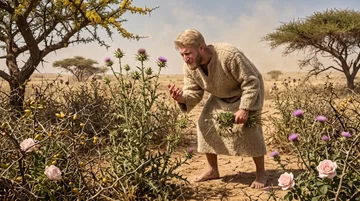
Thorns also and thistles shall it bring forth to thee; and thou shalt eat the herb of the field;
Translations
Thorns also and thistles shall it bring forth to you; and you shall eat the herb of the field;
King James Version, Webster Bible
Thorns also and thistles shall it bring forth to thee; and thou shalt eat the herb of the field;
KJV Cambridge Paragraph Bible, Revised Version, American Standard Version
thorns also and thistles shall it bring forth to thee; and thou shalt eat the herb of the field;
and thorn and bramble it doth bring forth to thee, and thou hast eaten the herb of the field;
and thorns and thistles shall it yield thee; and thou shalt eat the herb of the field.
Thorn also and thistle, shall it shoot forth to thee,—when thou hast come to eat of the herb of the field:
Berean Standard Bible, Majority Standard Bible
Both thorns and thistles it will yield for you,
and you will eat the plants of the field.It will yield thorns and thistles to you;
and you will eat the herb of the field.Thorns and waste plants will come up, and the plants of the field will be your food;
Thornes also, and thistles shall it bring foorth to thee, and thou shalt eate the herbe of the fielde.
Douay-Rheims (Challoner revision)
Thorns and thistles shall it bring forth to thee; and thou shalt eat the herbs of the earth.
Pictures



Cross-references 20 of 38
- Romans 8:22
For we know that the whole creation groaneth and travaileth in pain together until now.
Creation groans under the effects of the curse.
- Genesis 2:15
And the LORD God took the man, and put him into the garden of Eden to dress it and to keep it.
Garden work before the fall contrasts with toil after the curse.
- Genesis 2:17
But of the tree of the knowledge of good and evil, thou shalt not eat of it: for in the day that thou eatest thereof thou shalt surely die.
God’s warning of death preceded the disobedience and its consequences.
- Revelation 22:3
And there shall be no more curse: but the throne of God and of the Lamb shall be in it; and his servants shall serve him:
The curse present at the beginning is absent in the final restoration.
- Genesis 1:29
And God said, Behold, I have given you every herb bearing seed, which is upon the face of all the earth, and every tree, in the which is the fruit of a tree yielding seed; to you it shall be for meat.
God’s original provision of food contrasts with the toilsome food after sin.
- Genesis 3:6
And when the woman saw that the tree was good for food, and that it was pleasant to the eyes, and a tree to be desired to make one wise, she took of the fruit thereof, and did eat, and gave also unto her husband with her; and he did eat.
The first disobedient act brings the ground’s curse and other consequences.
- Romans 5:12
Wherefore, as by one man sin entered into the world, and death by sin; and so death passed upon all men, for that all have sinned:
Connects Adam’s sin with its consequences for humanity.
- Genesis 3:23-24
Therefore the LORD God sent him forth from the garden of Eden, to till the ground from whence he was taken.
Adam is expelled from Eden to till the ground, barred from the tree of life.
- Genesis 2:8-9
And the LORD God planted a garden eastward in Eden; and there he put the man whom he had formed.
Eden’s original goodness contrasts with the earth cursed after the fall.
- Isaiah 55:13
Instead of the thorn shall come up the fir tree, and instead of the brier shall come up the myrtle tree: and it shall be to the LORD for a name, for an everlasting sign that shall not be cut off.
Thorns are replaced by flourishing trees in the renewed creation.
- Matthew 27:29
And when they had platted a crown of thorns, they put it upon his head, and a reed in his right hand: and they bowed the knee before him, and mocked him, saying, Hail, King of the Jews!
Christ’s crown of thorns represents his bearing the earth’s curse.
- Genesis 4:12
When thou tillest the ground, it shall not henceforth yield unto thee her strength; a fugitive and a vagabond shalt thou be in the earth.
both show ground weakened by sin
- Genesis 1:28
And God blessed them, and God said unto them, Be fruitful, and multiply, and replenish the earth, and subdue it: and have dominion over the fish of the sea, and over the fowl of the air, and over every living thing that moveth upon the earth.
The curse contrasts the original command to subdue the earth with nature’s rebellion.
- Romans 8:20
For the creature was made subject to vanity, not willingly, but by reason of him who hath subjected the same in hope,
Describes creation as subjected to corruption because of human sin.
- Genesis 1:31
And God saw every thing that he had made, and, behold, it was very good. And the evening and the morning were the sixth day.
The very good creation is contrasted with the cursed ground that bears thorns.
- Genesis 2:8
And the LORD God planted a garden eastward in Eden; and there he put the man whom he had formed.
God planted Eden’s garden, contrasted with the fallen ground yielding thorns and thistles.
- Genesis 1:30
And to every beast of the earth, and to every fowl of the air, and to every thing that creepeth upon the earth, wherein there is life, I have given every green herb for meat: and it was so.
Green herbs are given as food, contrasting with the later growth of thorns and thistles.
- Revelation 22:1-2
And he shewed me a pure river of water of life, clear as crystal, proceeding out of the throne of God and of the Lamb.
The river and tree of life appear in the restored setting after the curse.
- Genesis 2:16
And the LORD God commanded the man, saying, Of every tree of the garden thou mayest freely eat:
Eden’s abundance contrasts with life after the fall.
- Genesis 3:4-5
And the serpent said unto the woman, Ye shall not surely die:
The serpent’s deception led to humanity’s curse.
Commentary part 1 of 4
Each commentary is drawn from primary sources: the writings of Ellen G. White and Adventist pioneers and periodicals. Each commentary is separate. Its own words are not a quotation; follow the references to read the source passages.
Ellen G. White
189 sources
God spoke these words to Adam because he listened to his wife and ate from the tree that had been forbidden, though his needs had been fully supplied and only one prohibition given, and his blaming of Eve did not save him from the result.PP 59.2Ms 97, 1901, par. 3–8ST May 29, 1901 The ground was cursed for his sake to bring forth to him thorns and thistles, briers and weeds, and he would eat the plants of the field in sorrow all his life, in sweat until his return to dust.ED 25.4–26.1ST Jan 23, 18791SP 42.3 The curse marred a creation first made very good, bringing blight and disease and changing mild conditions to extremes, yet it did not at once strip the earth of beauty and abundance.ST Feb 27, 1879SG3 61.3LC1 117.11SP 67.11SP 54.1 Hard toil amid thorns was appointed in love and not as a curse in itself, for work remains a blessing and safeguard to relieve sorrow, check appetite and passion, defeat temptation, and train for recovery from sin.CTBH 172.2ST Nov 12, 1885CT 274.2CT 274.1MYP 213.1 The word of sorrow and toil was spoken only after the promise of a Deliverer to bruise the serpent's head, so hope was heard before hardship, and field plants were added to the original foods so that grains, fruits, nuts and vegetables together are the appointed diet.MH 295.3–4MH 296.1–2STB 516.2–3JIOKP 37.2–3ED 27.1
Words and Setting
The sentence is God speaking to Adam because he listened to his wife's voice and ate from the tree He had commanded him not to eat.PP 59.2Ms 97, 1901, par. 3–8ST May 29, 1901Lt 91, 1900, par. 11–12Ms 139, 1903, par. 22–25 There was no excuse, for all his needs had been generously supplied and only one prohibition had been laid upon him.Ms 97, 1901, par. 3–8 His blaming Eve for giving him the forbidden fruit, and his accusation against her, did not save him from the result of disobedience.ST May 29, 1901Lt 91, 1900, par. 11–12 By following his own way in harmony with Satan's temptation and against God's known will, in a vain attempt to elevate and bless himself, he gained an experimental knowledge of disobedience and of good and evil, lost fidelity and loyalty to God, and opened the floodgates of woe, evil and suffering upon the whole world.Ms 97, 1901, par. 3–8Ms 139, 1903, par. 22–2518MR 33.2–34.1 That lesson stands for all mankind, that God's Word is to be sacredly respected and His requirements implicitly obeyed, and man's only safety is full confidence in a thus saith the Lord, refusing Satan's inventions and human ways that set aside God's expressed commandments.Ms 97, 1901, par. 3–8Ms 139, 1903, par. 22–2518MR 33.2–34.1
For his sake the ground was cursed to bring forth to him thorns and thistles, with briers, brambles and weeds, and he would eat the herb or plants of the field in sorrow all the days of his life.PP 59.2Ms 97, 1901, par. 3–8ST May 29, 1901Lt 91, 1900, par. 11–12Ms 139, 1903, par. 22–25 He would eat from it in sorrow amid its growth of thorns and thistles, in the sweat of his face until his return to dust.Ms 97, 1901, par. 3–8Ms 31, 1901, par. 4–8 Happy labor was thus replaced by a sorrowful, toil-filled life of hardship and lasting consequences, in which cultivation of food involves anxiety and the opening of the floodgates of woe so that all nature feels the effects of sin, yet not without a ray of hope.ED 25.4–26.1ST Jan 23, 18791SP 42.3SG3 45.2 This belongs with the sentence that brought humanity into acquaintance with evil and its consequences and teaches that God's commands must be sacredly respected and obeyed.ST Jan 23, 1879
The word was spoken to Adam and to all his descendants, that henceforth the earth must be worked under the drawback of transgression.Ms 84, 1897, par. 1–2 It requires proportionate use of limbs and muscles in bodily labor in the early morning and cool of the day joined with study in the heat of the day.Ms 84, 1897, par. 1–2
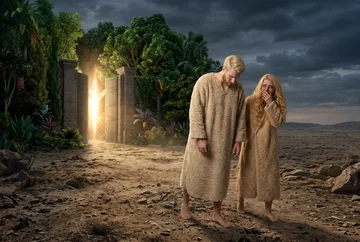
Its setting is expulsion from Eden and forfeiture of all right to it, for the transgressors could no longer cultivate their beautiful home but were shut out of the garden to work among thorns, thistles, brambles and weeds which Satan had sown.EW 103.22RED 13.1Ms 120, 1899, par. 8 They had been permitted to eat of all the trees except one, but the serpent tempted Eve and she tempted her husband and they both ate and broke God's command and became sinners.EW 103.2 There was fear lest they would again put forth the hand and eat of the tree of life and be immortal sinners, so God drove them from the garden and by cherubim and a flaming sword guarded the way of the tree of life so that disobedient man could not approach unto it and eat of its fruit which perpetuates immortality and make transgression immortal.ST May 29, 1901EW 103.2 They bade farewell in humility and unutterable sadness to their beautiful home and went forth to dwell upon an earth where rested the curse of sin, where the atmosphere was no longer mild and uniform in temperature but subject to marked changes, and where the Lord mercifully provided a garment of skins as protection from extremes of heat and cold.PP 61.5
In some places the verse belongs to the account of the first transgression and its penalty without explaining its details about thorns, thistles, or food.CTBH 42.1–3ST Feb 11, 1875LC1 118.2ED 15.2 Disregarding God's prohibition brings consequences through the laws of nature, and Adam's fall and expulsion from Eden is the beginning of human woe, bringing loss and damage to human life including weakened physical powers and subjection to death and loss of Eden.CTBH 42.1–3ST Feb 11, 1875LC1 118.2ED 15.2 The emphasis there is that Christ would redeem fallen humanity and through obedience make possible regaining what Adam lost.LC1 118.2
Cursed Earth Transformed
The earth was first made very good, without decay, but because of Adam's sin it was cursed and marred, bringing blight and condemnation and disease in the land.LC1 117.11SP 54.1HL 296.1–2 Its fragrance and beauty departed, it no longer retained its original Edenic brightness, and the world is no longer a paradise of virtue and innocence and holiness.HL 296.1–220MR 151.2Ms 4, 1875, par. 15–18 Beautiful Eden was degraded by the introduction of sin, its inhabitants defile it, and the curse is continually multiplying upon it because of their sins.20MR 151.2Ms 4, 1875, par. 15–18
Thorns and thistles, briers, brambles and tares came by that curse, sown by the enemy who was given opportunity through disobedience.FE 512.5–513.1LC1 117.1Lt 5, 1900, par. 46MR 30.2 They are the seeds of evil sown in the human heart and in the ground that at first produced only good, the traces of Satan's work and principles, calling for continual warfare.FE 512.5–513.1Lt 5, 1900, par. 4Ms 154, 1903, par. 16–18 After the fall Satan claimed to be prince of the power of the air with control of everything in nature, and God permitted him to sow tares all around to work out his principles, while protecting those who desire to work out the principles of heaven.Ms 154, 1903, par. 16–18 Creation in itself has nothing useless in it but is a reservoir of means ready for God to employ instantly to do His pleasure, and its beautiful things remain as specimens of Eden's beauty and an expression of God's love to lead from nature to nature's God.6MR 30.2Ms 154, 1903, par. 16–18
The curse did not at once strip the earth of beauty and abundance.ST Feb 27, 1879SG3 61.31SP 67.1SG3 61.2 It remained rich in plants, trees, fruit, fragrance and resources, with great trees and other signs of plenty, yet sure and certain signs of decay showed it was no longer as before.ST Feb 27, 1879SG3 61.31SP 67.1SG3 61.2 Adam saw trees lose their leaves and decay, including the first fallen decaying leaf, and mourned as these signs showed the dissolution of the beautiful natural world made for humanity.SG4 155.2–31SP 58.1 At first the curse was felt only lightly.1SP 57.1SG3 50.1SG4 121.3–122.110MR 368.2–369.2 After Cain killed Abel a double curse rested on the ground, bringing increasing misery.SG3 61.31SP 57.1SG3 50.1PP 90.1
The curse did not come all at once but increased at the murder of Abel and greatly increased at the Flood, and since the Flood has rested heavier and heavier as the human family have forgotten God, followed disobedience, transgressed His commandments, and turned His gifts into means of forgetting Him.SG4 121.3–122.110MR 368.2–369.2 At the Flood the fountains of the deep were broken up, forests, groves, gardens and cities were swept away, buried rocks and rubbish were thrown up over lovely places, and the fruitful home God had given man was turned into a broken, uneven, frightful solitude.10MR 368.2–369.2 In Noah's days the curse for Adam's transgression joined by Cain's curse was still resting as a double curse, seen in evident tokens of decay, yet it had not greatly changed the face of nature, which remained rich and beautiful in the gifts of providence.PP 90.1 All through inspired history exalted blessings are promised on condition of obedience and curses are threatened for disobedience.SG4 121.3–122.1
Under the curse the soil yields its strength only through human labor and needs God's blessing to produce its good things.SPBC 200.1FE 326.2 Cultivation meets resistance as the ground produces thorns and thistles and men depend on field crops, so blessings can still be gathered but only with courage, willingness, will and perseverance, while neglect and idleness increase the harm.SPBC 200.1FE 326.2STE 108.1–109.1 The soil has grown barren and cultivation demands double labor to make it productive, and God has raised up men with inventive faculties to build implements to lighten labor on the groaning land, yet God is not in all inventions, for Satan has controlled minds and hurried men to new inventions that lead them to forget God.SG4 155.2–3 The curse rests heavily upon the earth and is felt by the whole race and also by the animals, which have degenerated in size and in length of years.SG4 146.2HLT1 58.2–4 By wrong habits of man, especially intemperance in labor and in eating and drinking, they are made to suffer more than they otherwise would.SG4 146.2HLT1 58.2–4
Sin changed nature itself, so that conditions once mild and uniform became subject to extremes, and the earth originally perfect is now marred and defiled.8T 255.3–256.1COL 18.1ST Nov 18, 1913 Marred by sin, nature no longer gives perfect knowledge of God, no longer reveals His character perfectly or with the clarity before the Fall, and bears only an imperfect testimony, for transgression intervened between nature and nature's God.8T 255.3–256.1RH Mar 17, 1904STE 63.1–2ST May 5, 1909 Man deprived of heavenly light can no longer discern God's character in the works of His hand as man in innocence could, though rightly studied the natural world still teaches about its Creator and retains signs of Him.COL 18.1STE 63.1–2ST May 5, 1909 Even so the damaged world still bears witness to God's goodness and love, for its surviving beauty and fragrance show His mercy has not been wholly withdrawn.RH Mar 17, 1904Ms 92, 1898, par. 1ST May 5, 1909Ms 167, 1901, par. 6
Flowers grow among the thistles and roses conceal the thorns, and God did not destroy every opening bud and blooming flower nor take away their grateful fragrance.CE 67.1Ms 92, 1898, par. 1 In the delicate color and perfume of beautiful scented flowers is an unmistakable expression of His love for fallen man, teaching that He still loves us, while the natural world with unmistakable voice still proclaims His glory, power, mercy and love, and from the beauty of natural things and their wonderful adaptation to human need and happiness is learned that He still loves mankind.Ms 92, 1898, par. 1ST May 5, 1909 In thorns, thistles, briers and tares is discerned the law of condemnation and are read the traces of Satan's work, yet they do not cancel the testimony that One infinite in power, great in goodness, mercy and love created the earth and filled it with life and gladness.Ms 92, 1898, par. 1ST May 5, 1909 God in mercy left the world full of His goodness with abundance of blessings without number, and He is working out His divine plans to fill the whole earth with His glory from bounties that are inexhaustible.Ms 167, 1901, par. 6
The garden of Eden, which God had planted and blessed, was preserved from that curse and withdrawn from the earth before the Flood until it is restored in greater glory, kept as a specimen of perfect creation.1SP 61.1SG3 55.1 The world before the Flood far exceeded the present earth in beauty, grandeur and loveliness, for God surrounded man with precious things because He loved him, yet it was destroyed with man because the earth was defiled by violence, pride, self-glorification and corrupting works.10MR 370.2–371.1 Even now the earth would be a happy place if the curse were not corrupting it, but every place inhabited by human beings is debased with sin.10MR 370.2–371.1 The present blighted state gives only a faint conception of Eden's beauty and glory.Ms 92, 1898, par. 1ST May 5, 1909
Briers, thorns, thistles and tares represent what blights and mars, and these signs of harm must be read in the light of Calvary, where good conquers evil.ED 101.2–3 Nature also displays God's restoring love, and every blessing is a gift of redemption.ED 101.2–3 The world is under the curse of sin and in decay, yet even in decay it is very beautiful and with God's blessing could still be enjoyed as it is if it were not defiled by the wicked, corrupt deeds of men who tread the soil.Ms 8, 1894 [Copy 1], par. 30–31Ms 8b, 1894 [Copy 2], par. 30–31Ms 8a, 1894, par. 23 Ignorance, pleasure-loving, selfishness and sinful habits corrupting soul, body and spirit have filled the cursed world with moral leprosy, and a deadly moral malaria is destroying thousands and tens of thousands, so youth must be rescued from defiling influences as the hope for missionary labor, with trust that God lives and reigns and can do much.Ms 8, 1894 [Copy 1], par. 30–31Ms 8b, 1894 [Copy 2], par. 30–31Ms 8a, 1894, par. 23
Labor Changed Yet Blessed
In Eden work was tilling the soil and caring for what had been planted, learned under God Himself as instructor in a pleasant school, and it was not regarded as degrading but as a great blessing and pleasure that yielded abundance for every need.Ms 8b, 1894 [Copy 2], par. 12–14FE 314.1Ms 8a, 1894, par. 9 Only pleasant work would have entered the world had there been no transgression, for then there were no noxious weeds demanding patient toil, only the dressing and keeping of a beautiful garden.FE 419.1ST Feb 24, 1898 The fall changed God's order and brought the curse upon the earth, yet the decree that man should earn bread by the sweat of the brow was not given as a curse, for God never meant that man should have nothing to do.Ms 8b, 1894 [Copy 2], par. 12–14FE 314.1Ms 8, 1894 [Copy 1], par. 12–13
After disobedience happy, cheerful labor was replaced by perpetual toil and anxiety, a lifelong battle in hardship, weariness, pain, sorrow and struggle with stubborn soil to gain daily bread from the plants of the field amid thorns and thistles.ST Dec 23, 18861SP 43.2ST May 4, 1882ST Jan 18, 1916 That hardship brought poverty, sickness, suffering, disappointment, grief and eventual return to dust, in contrast with the abundant provision that harmony with nature's laws would have supplied.ST Dec 23, 1886ST Jun 11, 1874ST Work itself, however, remains God's blessing and gift to every man, woman and child, not a curse originating with the enemy, and idleness is the curse.CTBH 172.2ST Nov 12, 1885Lt 53, 1898, par. 23–24
Labor even when attended with weariness and pain is a safeguard against temptation and a source of happiness, appointed to occupy the mind, strengthen the body and develop the faculties for prosperity.ST Nov 12, 1885PP 50.1Lt 241, 1899, par. 18–20 Hard toil amid thorns was appointed in love to lighten the evil brought by disobedience, to relieve sorrow and remorse, to make Satan's temptations ineffectual and to stay the tide of evil.CT 274.2MYP 213.1PP 60.1Ms 99, 1907, par. 4–5RH Oct 3, 1912 Its discipline places a check upon self-indulgence, appetite and passion and builds industry, purity, firmness, self-control and habits needful for recovery from ruin and degradation.CT 274.2MYP 213.1PP 60.1 Through faith and hope such labor is still a blessing to the descendants of Adam and Eve and part of God's great plan for recovery from the fall, serving as wholesome discipline and training carried on with forethought, care and faith.Ms 8b, 1894 [Copy 2], par. 12–14RP 24.2–4FE 314.1ED 214.2GC88 67.2–3
The deeper the curse of sin the more God's order is changed, so the burden of toil rests heavily on one class while the curse of idleness rests on others in possession of money through the false idea that money increases moral worth.Ms 8b, 1894 [Copy 2], par. 12–14FE 314.1Ms 8, 1894 [Copy 1], par. 12–13 Labor becomes to human beings what they make it, and when made into constant drudgery relieved by liquor-drinking and exciting amusements it degrades men little better than brutes, while to regard work as degrading or to look down on working people is wholly at variance with God's purpose and only working men and women find true joy of life.FE 314.1PP 50.1 Blessings remain hidden in the depths of the earth for those who have courage and will and perseverance to gather its treasures by diligent, timely and thorough cultivation, whereas ignorance, slothful and lazy habits, neglected orchards, crops not put in at the right season, mere surface work, neglect of farms for holidays and amusements, and waste of money in idleness multiply the curse and cause failure to secure adequate returns.Ms 8b, 1894 [Copy 2], par. 46–47 Tilling the soil was not given because of sin but had already been given as means of true education and useful work, yet useful labor in connection with the curse became necessary because of sin for physical, mental and moral well-being, so no person rich or poor can glorify God by indolence.10MR 260.3–261.1Ms 85, 1908, par. 8–93T 400.1–3CTBH 171.9–172.1RH Dec 15, 1874 Those whose capital is time and physical strength are as accountable for using it in patient, persevering labor as the rich are for money, and by improving ability, avoiding ease and speculation, and practicing self-denial and economy they may have something to bring to God and to help others.RH Dec 15, 1874
Food and Health
After leaving Eden the plants of the field were added to the original Eden foods, so that grains, fruits, nuts and vegetables together are the appointed diet while livelihood is earned by cultivating the earth under the curse of sin.MH 295.3–4MH 296.1–2CTBH 178.3 Prepared in as simple and natural a manner as possible, these foods are the most healthful and nourishing, giving strength, power of endurance and vigor of intellect not given by a more complex and stimulating diet.MH 296.1–2 God's original purpose was to provide simple fruits, grains and vegetables, and though the promised land was like a second Eden it still bore the curse that marred the earth.CTBH 178.3
Even among foods wholesome in themselves, choice must fit the season, the climate and the occupation, since hard physical labor, sedentary pursuits and intense mental application require different foods.MH 296.1–2 Each person must choose from ample variety what experience and sound judgment prove best suited to his own necessities.MH 296.1–2
Eve was intemperate in desire for the forbidden fruit, ate it and led her husband to eat, so that a curse rested on them both and on the earth because of their sin.SG4 120.2 Since that fall intemperance in almost every form has existed, with appetite controlling reason as the human family follow Eve in being beguiled to disregard prohibitions while flattering themselves the consequence will not be as fearful as warned.SG4 120.2ST Jul 8, 1880 Indulgence of perverted appetite still weakens moral power, and violating the laws of health and running to excess in almost everything brings steadily increasing disease, with effect following cause.SG4 120.2ST Jul 8, 1880 Errors in preparing food influence moral tendencies, and indulgence in delicate unhealthful cooking and unhealthful dress weakens physical, mental and moral efficiency so that temptation cannot be overcome nor sincere piety kept without decided reform and time for meditation, Scripture searching and prayer instead of unimportant things.6MR 36.5–37.1
The fall from a perfect holy state through transgression brought woe, suffering, anguish, disease, deformity, decrepitude of body and feebleness of mental, moral and physical power, with increase of disease, suffering and death.ST Oct 31, 18783T 139.1–2ST Sep 2, 1875 Misery has accumulated from generation to generation as parents transmit corrupted blood, disease, evil inclinations, licentiousness and imbecility to children, leaving the race groaning under accumulated woe and making the world a lazar-house compared with man's original completeness in every faculty of mind and body in perfect soundness and perfect health.ST Oct 31, 1878 This later weakness and suffering is not the created condition or appointed lot but the consequence of the Fall and of continued violations of the laws governing life, and with accumulated transgression the ground bringing forth thorns and thistles and men eating field plants is linked to decline in physical strength and length of life.3T 139.1–2CTBH 165.2–166.1CH 19.1–2LC1 179.1
Human food was originally vegetation rather than the flesh of dead animals, and death and suffering among humans and animals, including taking animal life for food, are results of transgression rather than part of the original plan.CTBH 169.3–47MR 123.1 Flesh was permitted only after the Flood because all vegetation had been destroyed, while since then human life has shortened and physical, mental and moral degeneracy has rapidly increased in the latter days under the curse pronounced upon man, earth and every living thing.7MR 123.1
The curse rests upon the earth itself, upon man, upon beasts including cattle, upon fish in the sea, and upon the whole animal creation, decaying the earth and languishing animals under it, and as transgression becomes almost universal the curse will be permitted to become as broad and deep as the transgression.Lt 84, 1898, par. 6–718MR 353.5–354.1Ms 41, 1900, par. 36Ms 47, 1896, par. 28–29 Disease prevails alarmingly among cattle, with cancers and tumors very often seen, tissues of swine peopled with living creatures, tubercular consumption communicated by meat eating, and living parasites, so that flesh meat communicates undiscerned disease and disease among men is the sure result of using diseased flesh sold in marketplaces.18MR 353.5–354.1Ms 41, 1900, par. 36Ms 47, 1896, par. 28–29 There is no safety in eating the flesh of dead animals, it is not fit to compose the diet and must never be placed on the table, and in a short time the milk of the cow and anything coming from the animal creation will also not be safe to use.Lt 84, 1898, par. 6–718MR 353.5–354.1Ms 47, 1896, par. 28–29 Eating dead flesh was permitted because men were determined to break down every rule to gratify perverted taste, but a cultivated appetite for it brings serious disease which God will not work a miracle to counteract, leaving people to receive or despise the lifted danger signal with suffering as the sure result of persistence in their own way.Ms 47, 1896, par. 28–29 The principles of health reform against meat eating stand on this health danger, while the food question is never made a test, and those who take God at His word and obey with the whole heart will be blessed and shielded, whereas distrust, disobedience and alienation place the sinner where divine favor cannot be given.18MR 353.5–354.1Ms 41, 1900, par. 36
The curse rests upon the human body as pain, infirmity and physical weakness, and the body still feels its effects.15MR 332.2–333.2Ms 4, 1860, par. 17–19 Duty is to press against it and bear up rather than sink under it or give up to every feeling of infirmity and repining, for giving up pleases the enemy and magnifies infirmities by thinking and talking of them until life is miserable and useless.15MR 332.2–333.2Ms 4, 1860, par. 17–19 Even when suffering pain there must be effort to overcome affectation and complaining, to exercise the strength given, to seek God earnestly for strength, to talk faith, act faith and manifest courage, and to attend to daily duties, and those who so bear up receive the Lord's assistance.15MR 332.2–333.2Ms 4, 1860, par. 17–19
Sin Law and Justice
By eating what was forbidden the pair chose by experience to know disobedience and good and evil, losing fidelity and loyalty to God and opening floodgates of woe, disappointment, sorrow, evil and suffering upon the whole world and human family.Ms 97, 1901, par. 3–8Ms 139, 1903, par. 22–25ST May 26, 1898Lt 90, 1898, par. 14–16Ms 193, 1897, par. 4 The sentence came after Adam listened to his wife with no excuse, since every need had been supplied and only one prohibition laid upon him, and the lesson for all is that God's word is to be sacredly respected, His requirements implicitly obeyed, and man's only safety is full confidence in a plain divine word refusing inventions and human ways that set aside His expressed commands.Ms 97, 1901, par. 3–8Ms 139, 1903, par. 22–25Lt 90, 1898, par. 14–16 Parents are to keep this before the tender minds of children in training them to obey all statutes and commandments, for obedience brings positive promises and protection and makes sinners members of the royal family.Lt 90, 1898, par. 14–16Ms 193, 1897, par. 4Ms 8, 1896, par. 4–6 Even one small departure is perilous and not unworthy of notice, for venturing to transgress brought bitter experience, loss of Eden, expulsion, fall and retribution.Lt 35a, 1877, par. 3–6ST Nov 17, 1909Ms 6, 1878, par. 36–37 A transgression appearing small and recoverable debases and corrupts the soul by sinning against light and knowledge, strengthens the hands of sinners, accumulates evil, and will be the eternal ruin of thousands upon thousands, even millions upon millions, so it stands as a beacon warning at the byways from the path of life against excusing carelessness in little matters under talk of liberality.ST Nov 17, 1909Ms 6, 1878, par. 36–37Lt 116, 1893, par. 8–9
The sentence brought humanity into acquaintance with evil and its consequences for life, because God freely gave the good and withheld evil as not His will for the sinless to know, yet by eating contrary to command they chose that knowledge for all their days.ST Jan 23, 1879PP 59.3 From that time happy labor was replaced by anxiety, toil, hardship in cultivating food, subjection to Satan's temptations, disappointment, grief, pain and finally death.ST Jan 23, 1879PP 59.3 Sin estranged humanity from God, separated earth from heaven, brought loss of God's favor and misery to the race, broke right relation, cut off communication with heaven, put the race in Satan's hands and lost the Eden home.MH 427.24T 293.2–3Ms 84, 1886, par. 5–6 Through faith and perfect obedience as Christ overcame temptation and redeemed the fall, the obedient are brought back to Eden, for Christ met and conquered where Adam failed.4T 293.2–3Ms 84, 1886, par. 5–6
Disobedience forfeited Eden and brought the earth and human life under sin's curse, so poverty, sickness, suffering of every type and misery became the portion of Adam's children.ST Feb 22, 18832RED 33.1–34.2LC1 137.2ST Feb 18, 1913RH Jul 28, 1874 Man made sovereign in Eden fell from exalted purity and became a slave in a groaning world, and the halo of glory given holy Adam as a covering garment departed because divine glory cannot cover disobedience and sin.LC1 137.2RH Jul 28, 1874 The curse on nature was appointed in great mercy to witness of the character and results of rebellion, for while man remained loyal to Heaven all nature and inferior creatures were in subjection to him as ruler, but when he rebelled against divine law they rebelled against his rule.PP 59.4ST Apr 8, 1875 This was to show the sacredness of God's law and to lead men by their own experience to see the danger of setting it aside even in the slightest degree, connecting transgression with loss of Paradise and coming of death because of sin.PP 59.4ST Apr 8, 1875
God's law is sacred, exacting, changeless and binding on every human being, not altered to meet man in his fallen condition, for if it could have been changed Adam would have been pardoned and kept his Eden home.Lt 35a, 1877, par. 3–6Lt 110, 1896, par. 9–15 Mercy does not excuse the sinner in sin or lessen guilt, but covers guilt only after sin is repented of and forsaken, so justice and mercy go hand in hand.Lt 35a, 1877, par. 3–6 The penalty of transgression remained death, and the Father did not show benevolence at the expense of justice, which would have set aside righteousness, exalted the impenitent sinner and encouraged transgression; instead the Son stepped in and pledged His life as the penalty to give man another trial, and gave His darling Son to die to pay the debt, exalt the law and make it possible for fallen man through His blood to keep it.Lt 35a, 1877, par. 3–6Lt 110, 1896, par. 9–15Ms 143, 1898, par. 28 Transgression of the Sabbath in the bosom of the Decalogue is therefore as guilty as stealing or murder or adultery, and following the world in breaking it will not justify in judgment.Lt 35a, 1877, par. 3–6
The record proves retributive justice never fails, that disobedience brings punishment and merited consequences, that the wages of sin is death, that God carries out His warning, and that His requirements are particular and binding.4T 11.3ST May 31, 19106T 358.1–359.11SP 59.1ST Oct 15, 1896 God will not pass over any transgression now any more lightly than when He judged Adam, so that the Son left the royal courts for insult, rejection and crucifixion to save man, and the law cannot be set aside without consequence.ST Sep 1, 1881ST Oct 15, 1896 Adam's fall brought sin and woe into the world as the first in a succession of falls continuing ever since, and if the race had ceased falling when driven out its physical, mental and moral condition would now be far more elevated.2RED 74.3LC1 178.3RH Mar 4, 1875Ms 20, 1894, par. 38–42 His violation stands as warning not to indulge appetite and passion in direct violation of God's law, yet men deplore his transgression while repeating his disobedience, and to keep disobeying now perpetuates his sin, with parents who do so setting children the example.LC1 178.3Ms 20, 1894, par. 38–42
The account is authentic history of the origin of earth, creation of man, his fall, the fall of the covering cherub and introduction of sin, without which the mind is left to fables, conjectures, false and unreliable theories, superstition, falsehood and enfeebling of intellect.Ms 42, 1904, par. 7 The penalty of disobedience and results of transgression are to be plainly brought out together with the reward of obedience, to point all in responsibility, especially rulers and those united with them, to God's law as basis of right conduct and accountability, magnifying and glorifying it with exposition running like golden threads through the gospel while Christ's blood remains the sinner's only hope.Lt 188, 1903, par. 7–9 Adam lived nearly a thousand years among men to the ninth generation as witness to sin's results, commanded to instruct posterity, treasuring revelation, describing man's holy happy estate in Paradise, telling the sufferings by which he learned strict adherence, explaining merciful salvation and seeking to stem evil, yet few heeded and often he met bitter reproach for bringing woe.PP 82.1 His disobedience broke God's law and dishonored His government, and the bringing forth of thorns and thistles with eating the plants of the field records a consequence of that transgression.Ms 196, 1903, par. 1
Promise and Restoration
The sentence of thorn-bearing ground and sorrowful toil and return to dust was spoken only after the promise of a Deliverer to bruise the serpent's head, so hope was heard before hardship.STB 516.2–3JIOKP 37.2–3ED 27.1Ms 111, 1907, par. 8–9 What was lost by yielding to Satan can be regained through Christ.STB 516.2–3JIOKP 37.2–3Ms 111, 1907, par. 8–9 The consequences of thorns and thistles and toil and sorrow did not mean abandonment, because redemption gave hope beforehand.ED 27.1
In connection with the curse came pardon through a Saviour to come, which was the gospel first preached in Eden as a star of hope lighting the gloom over the human future.ST Apr 8, 1875RH Apr 29, 1875 At creation the original law was imprinted on human hearts, and transgression brought loss of paradise and the reign of death over man and over the dominion given him, leaving the future without a single ray of hope and with darkness like the pall of death, and ending immediate communication with God except through Christ to whom the fallen case was committed.RH Apr 29, 1875 Adam and Eve in sincere sorrow repented of guilt, believed the promise, and were saved from utter ruin.RH Apr 29, 1875 That hope offered pardon for transgression of the law.ST Apr 8, 1875RH Apr 29, 1875
Christ undertook the work of redemption by Himself bearing guilt to maintain the honor and fully vindicate the holiness and immutability of the Father's law, and to redeem from its curse all the obedient who embrace mercy by accepting the atonement provided.RH Apr 29, 1875 The full execution of the sentence of death was delayed because He undertook to redeem humanity.2RED 16.2–17.1 The Son opened escape by taking human transgressions and their just penalty upon Himself, laying aside robes of royalty, clothing divinity with humanity, coming as a man of sorrows acquainted with grief though He was heaven's Majesty, and suffering insult and reproach and mockery.Ms 18, 1887, par. 4 He passed over the same ground where Adam fell, in the wilderness of temptation, and gained the victory, thereby redeeming Adam's failure and placing the family on vantage ground so that all may overcome in their own behalf through the merits of the crucified and risen Saviour.Lt 148a, 1897, par. 3–4 Apart from Him there was no hope, but through Him God provided salvation from the fall described in Genesis 3:6-19.RH Nov 12, 1903
The thorn and the thistle are the difficulties and trials that make life one of toil and care, appointed for good as part of the training needed in God's plan to lift man from the ruin and degradation wrought by sin.SC 9.2Ms 41, 1892, par. 2–5 They reveal divine love even amid suffering that results from transgression of the law of love, which brought woe and death to an earth first made without decay or curse.SC 9.2Ms 41, 1892, par. 2–5 Though fallen, the world is not all sorrow and misery, for nature still gives messages of hope and comfort, with flowers upon thistles and thorns covered with roses.SC 9.2Ms 41, 1892, par. 2–5 Earth's signs of decay testify to the curse, but nature's recurring renewal with returning life points to being created anew.ED 27.2–3
Even under the curse love remains written upon every opening bud and upon the petals of every flower and upon every spire of grass, testifying to tender fatherly care and desire to make children happy by supplying daily needs.PP 599.2–4Ms 41, 1892, par. 2–5 Prohibitions and injunctions aim at well-being and not merely at displaying authority.PP 599.2–4 The earth has not been abandoned, for God's purpose is that men and women rejoice in the sights and sounds of nature today, that His image be impressed anew upon souls, that hearts be filled with heavenly peace, and that sinners be converted, in contrast to being crowded into cities huddled in terraces and tenements.Ms 85, 1899, par. 22–23 Through disobedience man gave Satan opportunity to sow evil seed in the heart, so ground that at first produced only good began to produce tares whose growth calls for continual warfare and makes cultivation much harder against present and eternal good, yet God works to defeat Satan's plans by working in man, with cultivation of soil as a school where spiritual lessons are seen reflected as in a mirror of His work upon the soul.Lt 5, 1900, par. 4
The diseased ground that came under curse when Eden was lost is not finally cursed.Ms 121, 1899, par. 16–18COL 289.2–3 When its requirements and directions for tilling are obeyed and men cooperate with God, it is restored to health and to prosperous and beautiful condition, producing treasures to be a praise and glory to His name, just as a heart controlled by God reflects His character.Ms 121, 1899, par. 16–18 Fertility and beauty return as His people follow His instructions and work with Him in caring for soil, and obedience to the land's natural laws illustrates the spiritual fruit of obedience to moral law.COL 289.2–3 When in selfishness and covetousness men manage land by their own wisdom and refuse it its sabbath, it loses vigor, and barrenness and sickness testify to disobedience.Ms 121, 1899, par. 16–18
The curse upon earth and race shows justice and mercy together and leaves hope of redemption.PP 71.1 Grateful acceptance of that hope shows loyalty, while murmuring against the curse questions divine justice and authority and follows self-exaltation and rebellion.ST Dec 16, 1886PP 71.1 Cain resented and murmured while Abel submitted to authority.ST Dec 16, 1886SG3 47.1–48.1 The fall begins the gradual unfolding of one purpose in the plan of redemption continuing through the patriarchal and Jewish ages to the present, with the same divine work in different degrees of development and different manifestations of power to meet human wants in different ages.ST Jun 3, 1886
Lessons for Daily Life
Thorns and thistles are the hardship, trouble and lasting loss that come from following one's own way and one's own will and seeking one's own pleasure instead of trusting God.9T 200.1–2Ms 109, 1908, par. 3–5Lt 4, 1901, par. 12–13 To humble oneself before God, to distrust one's own judgment, to depend on God's judgment, and to do God's will submissively and trust in Him brings peace and comfort and a humble heart to work to save the perishing.9T 200.1–2Ms 109, 1908, par. 3–5Lt 4, 1901, par. 12–13 What is lost by self-choosing is the reward, while confidence in God preserves it.Ms 109, 1908, par. 3–5Lt 4, 1901, par. 12–13
Choosing a marriage companion by one's own covetous, selfish, short-sighted judgment, trusting one's own judgment and choosing what pleases rather than what profits, brings thorns and thistles in the form of trouble and lasting regret.3MR 382.3–4 Such a union may be regretted forever after, and is avoided only by distrusting one's own judgment, depending on the judgment of God, and doing God's will submissively.3MR 382.3–4 The thorns are not accidental but the direct fruit of self-will in marriage.3MR 382.3–4
Though sin brought a curse upon an earth first made very good, and without God's blessing it can do nothing and must be made to give forth its strength, blessings remain hidden in its depths for those who have courage and will and perseverance to gather its treasures.Ms 8b, 1894 [Copy 2], par. 46–47 Diligent, timely and thorough cultivation brings blessing for farmers and their families, while the curse is multiplied by increasing sin when ignorance does its baleful work and slothful servants increase the evil by lazy habits.Ms 8b, 1894 [Copy 2], par. 46–47 Treating tillage as degrading employment, seeing only the brand of servitude in it, refusing to earn bread by sweat of brow and till the soil, neglecting orchards, failing to put crops in at the right season, doing mere surface work, neglecting farms for holidays and amusements, and wasting money in idleness cause failure to secure adequate returns.Ms 8b, 1894 [Copy 2], par. 46–47
Because of sin this earth was cursed, bringing thistles and other evils including vermin of every kind, troublesome and harmful insects and reptiles that multiply, especially in these last days, to annoy and torment and even kill and to destroy the work of hands and the fruit of the land.Ms 70, 1901, par. 18–2320MR 338.1–5 Men are given a faithful part to act against this curse by guarding against, fighting, destroying and exterminating these pests to preserve themselves and their possessions, such as destroying ants that ruin woodwork and spraying fruit trees to kill insects that spoil fruit, and then leaving the rest with the Lord.Ms 70, 1901, par. 18–2320MR 338.1–5 Even the best effort will not exterminate them, for they will still multiply, and this fight must continue as long as this life shall last.Ms 70, 1901, par. 18–2320MR 338.1–5 Evil will cease only when Satan, with the agencies he has employed to annoy and grieve God's people, is cast into the lake of fire and brimstone, and then sin will be no more.Ms 70, 1901, par. 18–2320MR 338.1–5 There is no foundation here for the extreme theory that nothing, not even ant or flea or moth, should be killed, for such teaching dishonors God's law and makes important truths of none effect.Ms 70, 1901, par. 18–23
The change from Eden, where Adam and Eve had only to dress and keep the garden with no noxious weeds demanding patient toil, to cursed ground bringing forth thorns and thistles requiring hard labor, measures how different Christ's work was.HMW 5.2ST Feb 24, 1898 He had to sow the seeds of the gospel in soil where the enemy had already sowed tares, where long separation from God had let the rubbish of error accumulate in false ideas, and where leaders taught for doctrine the commandments of men.ST Feb 24, 1898 Yet the same image holds hope, for when His message is received a barren, thorn-filled society can become like a garden of flowers and fruit-bearing trees amid humanity's hardship.HMW 5.2ST Feb 24, 1898
Violation of God's law was the greatest loss and deepest injury that can be conceived, costing Adam and Eve beautiful Eden and opening the floodgates of disappointment, sorrow, suffering and woe upon the world.Lt 14, 1885, par. 1–3Ms 2, 1904, par. 38–41MYP 441.2–442.1Ms 193, 1897, par. 4 Parents are to keep this fact before the tender minds of their children as they train them to be obedient to all the statutes and commandments of the Lord.Lt 14, 1885, par. 1–3Ms 193, 1897, par. 4 In God's wise plans fallen man has been granted another trial only through the sacrifice of Christ alone, so the example and result should lead every soul to avoid sin and abhor it as hateful, feeling that it is better to suffer loss of all things than to depart from the least of God's commandments.Lt 14, 1885, par. 1–3MYP 441.2–442.1 Everyone who hears the truth and then turns from it to keep worldly success partakes of that same fruit of disobedience by which Adam and Eve lost the right to their Eden home.Lt 236, 1903, par. 21–22MYP 441.2–442.1Ms 27, 1900, par. 26–28 Continuing in that same disobedience forfeits the right to Eden restored, proving that being once in grace does not mean always in grace, so it must be repented of at once by leaving the side of the great rebel, giving the whole soul to God, and choosing the good and refusing the evil.Lt 236, 1903, par. 21–22Lt 14, 1885, par. 1–3Ms 2, 1904, par. 38–41 The only safe course is to obey all requirements at whatever cost, even by retracting in humility and repentance a rash promise contrary to Scripture, such as to marry an unbeliever, rather than keeping it and dishonoring God, for walking contrary to God makes Him walk contrary to us.Lt 236, 1903, par. 21–22MYP 441.2–442.1
The ground cursed to produce thorns and thistles, with man to eat the plants of the field through sorrowful labor, stands as God's judgment following transgression and teaches that His commands must be sacredly respected and obeyed.ST Apr 15, 1875MYP 254.2–255.1 Disregarding His command brings real consequences, bringing guilt and sorrow into the world and woe upon it, and would have plunged the race into hopeless despair had it not been for God's goodness and mercy.ST Apr 15, 18754T 248.15T 365.2ST Jun 3, 1886 God made man in His own image and requires reverence for His commandments and obedience without questioning feasibility or convenience, listening to no specious temptations of the enemy.ST Jun 3, 1886 Every violation repeats Adam's transgression, does deepest injury to God, sustains others in sin, and increases guilt, so safety lies in full confidence in a plain divine word that refuses human inventions.ST Apr 15, 18754T 248.15T 365.2ST Jun 3, 1886 The history shows just retribution for disobedience and that God means what He says.4T 248.1MYP 254.2–255.1MYP 441.2–442.1
Nature's decay and hardship after sin, with cursed ground producing thorns and thistles and man eating the plants of the field, continually remind humanity of sin's results and the knowledge of evil.ED 26.2–3 Its surviving beauty and renewal still offer hope and comfort amid that reminder.ED 26.2–3
Sources