Genesis 4:5
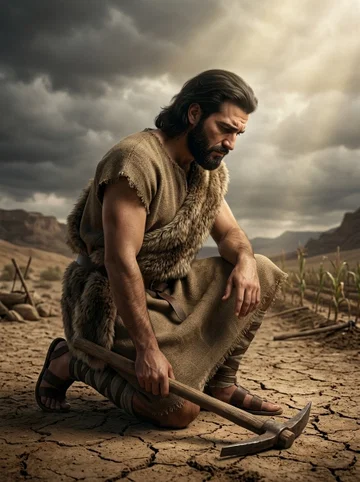
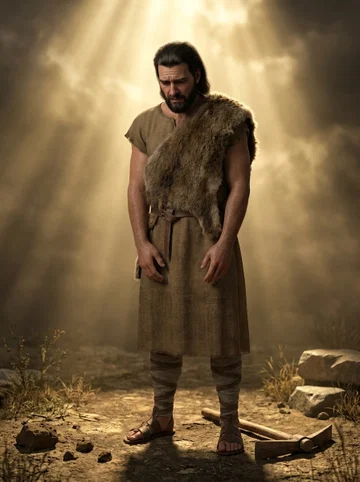
But unto Cain and to his offering he had not respect. And Cain was very wroth, and his countenance fell.
Translations
American King James Version, Webster Bible
But to Cain and to his offering he had not respect. And Cain was very wroth, and his countenance fell.
But unto Cain and to his offering he had not respect. And Cain was very wroth, and his countenance fell.
KJV Cambridge Paragraph Bible, Revised Version, American Standard Version
but unto Cain and to his offering he had not respect. And Cain was very wroth, and his countenance fell.
and unto Cain and unto his present He hath not looked; and it is very displeasing to Cain, and his countenance is fallen.
and upon Cain, and on his offering, he did not look. And Cain was very angry, and his countenance fell.
but of Cain and his present, he approved not,—and it angered Cain greatly, and his countenance fell.
Berean Standard Bible, Majority Standard Bible
but He had no regard for Cain and his offering. So Cain became very angry, and his countenance fell.
but he didn’t respect Cain and his offering. Cain was very angry, and the expression on his face fell.
But in Cain and his offering he had no pleasure. And Cain was angry and his face became sad.
But vnto Kain and to his offering he had no regarde: wherefore Kain was exceeding wroth, and his countenance fell downe.
Douay-Rheims (Challoner revision)
But to Cain and his offerings he had no respect: and Cain was exceedingly angry, and his countenance fell.
Pictures
Cross-references 20 of 23
- Hebrews 11:4
By faith Abel offered unto God a more excellent sacrifice than Cain, by which he obtained witness that he was righteous, God testifying of his gifts: and by it he being dead yet speaketh.
Abel’s offering was accepted through faith, unlike Cain’s.
- 1 John 3:12
Not as Cain, who was of that wicked one, and slew his brother. And wherefore slew he him? Because his own works were evil, and his brother’s righteous.
Cain’s evil works and hatred led him to murder his righteous brother.
- Genesis 4:11-12
And now art thou cursed from the earth, which hath opened her mouth to receive thy brother’s blood from thy hand;
God curses Cain and makes him a fugitive after he murders Abel.
- 1 Samuel 15:22
And Samuel said, Hath the LORD as great delight in burnt offerings and sacrifices, as in obeying the voice of the LORD? Behold, to obey is better than sacrifice, and to hearken than the fat of rams.
Obedience matters more than an offering.
- Genesis 4:16
And Cain went out from the presence of the LORD, and dwelt in the land of Nod, on the east of Eden.
Cain leaves the Lord’s presence and dwells in Nod.
- Matthew 23:35
That upon you may come all the righteous blood shed upon the earth, from the blood of righteous Abel unto the blood of Zacharias son of Barachias, whom ye slew between the temple and the altar.
Abel is called righteous, and his bloodshed is recalled.
- Genesis 4:1
And Adam knew Eve his wife; and she conceived, and bare Cain, and said, I have gotten a man from the LORD.
Eve’s words at Cain’s birth reflect hope that he was the promised Seed.
- Hebrews 9:22
And almost all things are by the law purged with blood; and without shedding of blood is no remission.
Without the shedding of blood, there is no remission.
- Jude 1:11
Woe unto them! for they have gone in the way of Cain, and ran greedily after the error of Balaam for reward, and perished in the gainsaying of Core.
Cain’s rejected offering exemplifies the way of Cain warned against in professed worshipers.
- Genesis 4:15
And the LORD said unto him, Therefore whosoever slayeth Cain, vengeance shall be taken on him sevenfold. And the LORD set a mark upon Cain, lest any finding him should kill him.
Cain’s life is spared and he receives a protective mark.
- Genesis 4:13
And Cain said unto the LORD, My punishment is greater than I can bear.
Cain acknowledges the punishment for his transgression.
- Psalms 51:17
The sacrifices of God are a broken spirit: a broken and a contrite heart, O God, thou wilt not despise.
A broken and contrite heart is the sacrifice God accepts.
- Luke 11:51
From the blood of Abel unto the blood of Zacharias, which perished between the altar and the temple: verily I say unto you, It shall be required of this generation.
Abel’s death begins a line of righteous bloodshed.
- Genesis 4:25
And Adam knew his wife again; and she bare a son, and called his name Seth: For God, said she, hath appointed me another seed instead of Abel, whom Cain slew.
Seth replaces Abel after Cain’s wickedness.
- Genesis 4:23-24
And Lamech said unto his wives, Adah and Zillah, Hear my voice; ye wives of Lamech, hearken unto my speech: for I have slain a man to my wounding, and a young man to my hurt.
Lamech is identified as the murderer at the end of Cain’s family line.
- 1 John 3:15
Whosoever hateth his brother is a murderer: and ye know that no murderer hath eternal life abiding in him.
Cain’s cherished hatred is akin to murder.
- Leviticus 10:1-2
And Nadab and Abihu, the sons of Aaron, took either of them his censer, and put fire therein, and put incense thereon, and offered strange fire before the LORD, which he commanded them not.
Both accounts describe an offering rejected by God.
- Hebrews 13:15-16
By him therefore let us offer the sacrifice of praise to God continually, that is, the fruit of our lips giving thanks to his name.
Praise and doing good are sacrifices pleasing to God.
- Genesis 37:7
For, behold, we were binding sheaves in the field, and, lo, my sheaf arose, and also stood upright; and, behold, your sheaves stood round about, and made obeisance to my sheaf.
Both portray envy and hostility toward a favored brother.
- John 8:44
Ye are of your father the devil, and the lusts of your father ye will do. He was a murderer from the beginning, and abode not in the truth, because there is no truth in him. When he speaketh a lie, he speaketh of his own: for he is a liar, and the father of it.
Cain’s murderous anger reflects the devil, a murderer from the beginning.
Commentary part 1 of 2
Each commentary is drawn from primary sources: the writings of Ellen G. White and Adventist pioneers and periodicals. Each commentary is separate. Its own words are not a quotation; follow the references to read the source passages.
Ellen G. White
93 sources
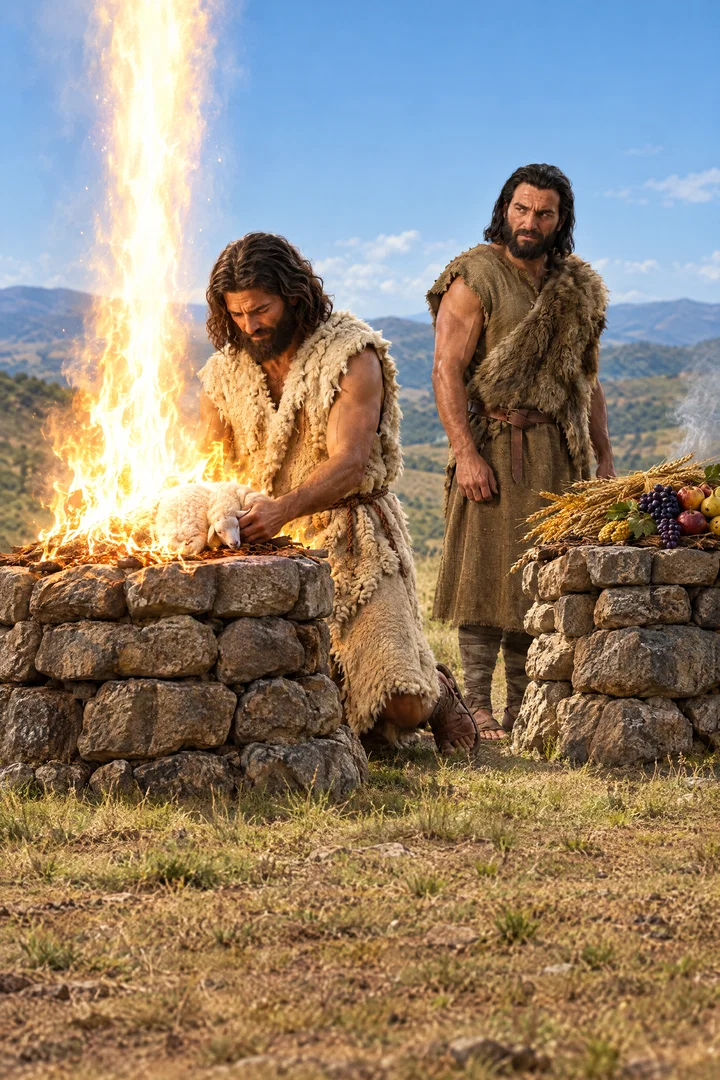
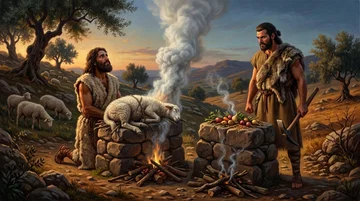
God passed over Cain and his gift at the gate of Paradise, giving no fire from heaven as a token of acceptance as He gave for Abel, and Cain showed his guilt in a face fallen with anger and dejection.Ms 78, 1901, par. 3–11Lt 16, 1897, par. 8–11Ms 77, 1897, par. 14–17SG3 47.1–48.1 The rejection was not partiality, for God had plainly required a firstborn lamb with its blood as a burnt offering of confession and dependence pointing to Christ the spotless Lamb, while fruit of the ground was appointed only for thanks, yet Cain knowingly brought fruit alone without blood.Ms 136, 1899, par. 3–4Ms 78, 1901, par. 3–11SG3 47.1–48.12RED 20.1–2RH Mar 3, 1874 His offering was worthless because it came from a proud, unbelieving heart that trusted his own labor for merit, refused to confess sin and need of a Redeemer, and exalted his own judgment above God's definite command.ST Feb 6, 18792RED 20.1–2RH Mar 3, 1874PP 72.1 Enraged with jealousy because his brother was honored and his own disobedience was reproved, he turned his wrath against the Lord and Abel until under Satan he slew him, showing envy as the offspring of pride that leads to hatred and murder.Ms 78, 1901, par. 3–11SG3 47.1–48.12RED 20.1–2 Thus the two brothers stand as the two great classes to the close of time, warning that all worship, preaching, and morality without faith in the cleansing blood of Jesus is as Christless and empty as Cain's offering.2RED 20.1–24T 395.3GW92 13.3–14.1Ms 136, 1899, par. 9–10Ms 57, 1896, par. 21
Worship Setting and Signs
The two brothers brought their offerings to the cherubim-guarded gate of Paradise where the glory of God was revealed, the place where the first worshipers came and reared altars and presented their gifts, and where God condescended to meet and communicate with them.PP 83.2–84.1
Acceptance was shown by fire or light from heaven consuming the sacrifice, as Abel received for bringing what was commanded while Cain saw nothing to signify that his offering was recognized or accepted.Ms 78, 1901, par. 3–11Lt 16, 1897, par. 8–11SG3 47.1–48.11SP 55.2ST Dec 25, 1901 The light flashed down to consume Abel's offering of the firstlings of his flock and the fat, brought in full faith and humble reverence, whereas Cain received no manifestation and no sign that his gift was accepted.Ms 78, 1901, par. 3–11SG3 47.1–48.1ST Feb 6, 18791SP 55.2ST Dec 25, 1901 The difference was not that one gift was noticed and the other overlooked in detail, but that heaven answered one altar with consuming fire and left the other without answer.Ms 78, 1901, par. 3–11Lt 16, 1897, par. 8–11SG3 47.1–48.11SP 55.2ST Dec 25, 1901
Having no respect means God rejected both Cain and his offering together, not the gift alone.Ms 77, 1897, par. 14–174T 446.3 This was not partiality and not an arbitrary purpose electing one brother to acceptance and the other to rejection, for both had the same opportunity to learn and obey and the whole matter rested on choice.ST Feb 6, 1879PP 72.4 Abel chose faith and obedience and Cain chose unbelief and rebellion, so the different result followed their different response, and Cain's anger came from his own disobedience and not from unfair treatment or favor shown to Abel.ST Feb 6, 1879PP 72.4 Rejection did not leave him without further chance, for he could still reflect, repent, and change course to bring an offering in faith and obedience rather than insisting on his own plans.Lt 16, 1897, par. 8–11
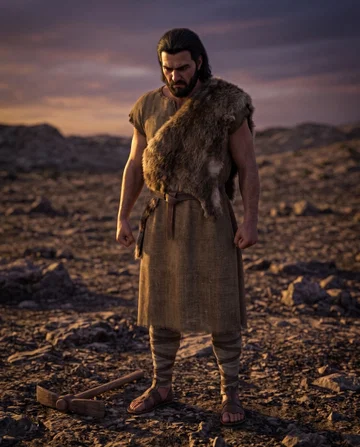
Being very wroth with fallen countenance means visible anger and dejection, the face falling and expressing guilt and refusal to do God's way and will even when nothing is said.Ms 77, 1897, par. 14–174T 446.3Ms 164, 1898, par. 4–512MR 385.1–4 The Lord saw the wrath and the falling of the face, showing that He closely marks every action and all intents and purposes, even the expression of the countenance.Ms 77, 1897, par. 14–17 The same temper is stirred in the disobedient when plans do not succeed and expectations are disappointed, as in young men and young women who reveal passion when not commended by teachers and friends for acting out promptings in direct opposition to God's requirements, and who show provocation when restrained from following the impulse of their own rebellious, unrighteous, unsanctified heart because they cannot do after Satan's arts and devices.Ms 77, 1897, par. 14–17 The angry passion, obstinacy, evil-surmising and hatred that rises when one's ideas and methods are not accepted is virtually opposed to God and is next of kin to murder, the opposite of Christ abiding in the soul by faith which is revealed in good and pleasant words and sweetness of temper.Ms 164, 1898, par. 4–5 Cain's fallen face visibly expressed his guilt, standing in opposite contrast to the face of Christ at His trial and crucifixion, which revealed innocence, serenity, benevolence, the image of God.12MR 385.1–4
The verse belongs to the departure from plain commands recorded in Genesis 4, a departure that filled the world with transgression and sin and brought God's destruction upon the world.Lt 10, 1909, par. 4–9ST Oct 6, 1898 It stands at the early corruption of the system of sacrificial offerings first established with Adam after the fall and taught to his descendants to express faith in the Redeemer to come.SG3 301.4 Those who separated from God's faithful followers turned it to sacrifice to gods of their own making instead of the God of heaven, offering not from faith but to please their gods with many beasts on polluted idol altars.SG3 301.4 They taught that the more valuable the sacrifice the greater the pleasure given to idol gods and the greater the prosperity and riches of the nation, a superstition leading to great extravagance and even the sacrifice of human beings to senseless idols under cruel laws made without grace.SG3 301.4 In this wider pattern Cain's rejected offering and anger show the difference between rejecting God's will and obeying it, his worship standing against Abel's example of obedience.ST Oct 6, 1898
Required Blood Sacrifice Disobeyed
God had expressly specified the kind of sacrifice to be brought, requiring a firstborn lamb without blemish with its blood presented as a burnt offering to show faith in the promised Redeemer, while the firstfruits of the earth were appointed for a thank offering.Ms 136, 1899, par. 3–4Ms 78, 1901, par. 3–11SG3 47.1–48.11SP 54.1PP 71.2 Both brothers knew the provision made for salvation and the system of offerings ordained to express faith in the Saviour whom the offerings typified and to acknowledge total dependence on Him for pardon, and by conforming to the divine plan for redemption they would give proof of obedience to the will of God.1SP 54.1PP 71.2Lt 71, 1896, par. 2–9 The slain lamb with shed blood was required as the acknowledgment and confession of sin and as the standing pledge of pardon through the great offering to come, by which a man signified repentance, obedience, and faith in a Redeemer to come.2RED 20.1–21SP 54.12RED 20.3Lt 280, 1904, par. 1–4PP 71.2 Without the shedding of blood there could be no remission of sin, and they were to show faith in the blood of Christ as the promised atonement by offering the firstlings of the flock in sacrifice.Ms 78, 1901, par. 3–112RED 20.3PP 71.2
The innocent lamb slain pointed forward to Christ the sinless, spotless offering for the human race, the Lamb of God whose blood shed to save a lost world was to be prefigured in every offering and takes away the sin of the world, the costly offering of God's only-begotten Son as the hope and salvation of the fallen race who would become Himself the great Sacrifice.Ms 136, 1899, par. 3–4Ms 78, 1901, par. 3–11Lt 16, 1897, par. 8–11Lt 71, 1896, par. 2–91MR 131.5 To refuse the shedding of blood which symbolized the blood of Christ to be shed for the world was to refuse to acknowledge oneself as a sinner lost and undone and in need of a Saviour and to disbelieve in the only-begotten Son whom God gave so that whoever believes should not perish but have everlasting life, leaving sin remaining upon the refuser.Lt 71, 1896, par. 2–91MR 131.5ST Jan 16, 1896 This whole ceremony was prepared with Christ as the foundation of the whole system, the schoolmaster to bring sinful human agents to a consideration of Christ the foundation of the whole Jewish economy.1MR 131.5
Cain as a tiller of the ground brought only fruit of the ground without the lamb, not even the best of the fruits, coming with murmuring and infidelity in his heart, unwilling to strictly obey and doubting the necessity of the ceremonial offerings.Ms 136, 1899, par. 3–4Ms 78, 1901, par. 3–11SG3 47.1–48.1ST Feb 6, 1879ST Dec 25, 1901 Although his offering was in itself good, beautiful and faultless in every other respect and in itself very acceptable, it was incorrect because it left out the true figure, the representation of the world's Redeemer, and therefore had no value as prefiguring God's redemption plan.Ms 78, 1901, par. 3–11Lt 16, 1897, par. 8–11Lt 71, 1896, par. 2–9 Without the lamb all he brought was valueless because it lacked the very thing that would have made it of value, since the blood of the slain lamb alone gave an offering any value.Ms 78, 1901, par. 3–11Lt 16, 1897, par. 8–11ST Dec 25, 1901Lt 71, 1896, par. 2–9 Abel in contrast brought the firstlings of his flock and the fat as commanded, in full faith of the Messiah and humble reverence, as priest in solemn faith offering a more acceptable sacrifice whose blood signified that he was a sinner with sins to put away, that he was penitent, and that he believed in the efficacy of the blood of the future great offering.SG3 47.1–48.12RED 20.1–2RH Mar 3, 1874
Cain knew God desired a lamb and could have added one from his brother's flock, but as a tiller he did not wish to do so, thinking his abundant offering was enough.Ms 78, 1901, par. 3–11ST Dec 25, 1901Lt 107, 1903, par. 15–19 He argued it made no difference whether he presented the firstfruits of the ground or a lamb, following his own human ideas instead of obeying God's command, while Abel decided to obey God.ST Dec 25, 1901Lt 100, 1895, par. 31–32 He disobeyed God's express command to present a slain lamb because he obeyed the voice of Satan telling him he need not follow God's command exactly.Lt 100, 1895, par. 31–32Ms 59, 1899, par. 10–11 God accepts His created beings only through implicit obedience to His law, and Cain disregarded God's definite directions in regard to the offerings to be made to Him.Lt 71, 1896, par. 2–9ST Jan 9, 1896Ms 77, 1897, par. 20–21 To offer what He never commanded while ignoring a plain command brings rejection, for God requires men to do what He requires in the way He requires, and worship offered in man's own way apart from Christ is devoid of merit because it is not mingled with the virtue of the blood of a crucified and risen Saviour.ST Jan 9, 1896Ms 13, 1892, par. 21–22Ms 77, 1897, par. 20–21
Proud Unbelieving Heart
Cain's religion rested on human merit and self-dependence, presenting the products of his own labor as a favor done to God through which he expected to secure divine approval, thinking his own works perfect and his obedience sufficient though it was only partial and outward.PP 72.1PP 72.5 He obeyed in building an altar and bringing a sacrifice, yet he left out the essential recognition of his need of a Redeemer, and his offering had no virtue of divine mediation to bring him into favor with God.PP 72.1PP 72.5 To follow the exact plan marked out and trust salvation wholly to the atonement of the promised Saviour seemed to him an acknowledgment of weakness, so he chose to come in his own merits and would not bring the lamb and mingle its blood with his offering.2RED 20.1–2PP 72.1 By far the greater portion of the world repeats his example, for nearly every false religion rests on the same principle that man can depend on his own efforts for salvation and needs development rather than redemption, expecting to elevate humanity to the divine standard independent of the atonement.PP 72.5PP 73.1 Humanity has no power to regenerate itself and does not tend upward toward the divine but downward toward the satanic, and transgressions can be pardoned only through the merits of Jesus, for there is no other provision to release from the thralldom of sin.PP 72.5PP 73.1 The same principle of self-exaltation independent of God that governed his offering drove the builders of Babel.PP 123.3
He refused to acknowledge his sin, weakness, and entire dependence on a power outside himself through the blood of the slain lamb, regarding such dependence as humiliation.2RED 20.1–2LC1 124.1–22RED 20.3 Confession of entire dependence was torture to his high spirit, and he resented Adam's expulsion from Eden as harsh treatment.SPBC 143.4–144.1Lt 57, 1895, par. 4–714MR 114.3–116.1 He would not submit to the appointed ordinance, but followed his own plan in offering only the fruit of the ground, thinking it nobler and less humiliating than offering the blood of beasts which showed his own sinfulness.LC1 124.3LC1 124.1–22RED 20.3 By taking part in the ceremony with blood man signified repentance, obedience, and faith in a Redeemer to come as a standing pledge of pardon through the great offering to come, and in refusing the blood Cain refused to show repentance and faith and slighted the blood of the atonement.RH Mar 3, 1874LC1 124.32RED 20.3 He demanded that God come to his own terms rather than worship according to God's directions.SPBC 143.4–144.1Lt 57, 1895, par. 4–714MR 114.3–116.1
He came before God with murmuring and unbelief in his heart about the promised sacrifice and the necessity of sacrificial offerings, with infidelity, doubt, and rebellion.SG3 47.1–48.11SP 55.1PP 72.1 He doubted the necessity of the ceremonial offerings, despised Abel's counsel to bring blood, exalted his own judgment, ideas, and will above God's, and did not choose even the best of his fruits.SG3 47.1–48.1ST Feb 6, 18791SP 55.1 His gift expressed no penitence for sin and left out the essential part.ST Feb 6, 1879LC1 123.2PP 72.1
His obedience was only partial and outward in building an altar and bringing sacrifice; he brought a thank offering without confessing sin or recognizing need for mercy, leaving out the essential Redeemer.PP 72.1COL 150.1–152.2 He had altar, sacrifice, and outward form of religion, but not the faith in Christ that gave the offering its meaning, for the blood in offerings that pointed to Christ represented the Saviour's death.ST Jul 28, 1898COL 150.1–152.2 His self-assessment as righteous left him without the humility and sense of spiritual need that are the first conditions of acceptance with God.PP 72.1COL 150.1–152.2
Without faith in Jesus and acknowledgment of the blood of Jesus, good works and what the world calls morality have no more merit than Cain's offering, which though good in itself had no Saviour in it.Ms 26a, 1892, par. 21–234T 609.1–2ST Dec 11, 1893 No offering of man can be acceptable before heaven without acknowledging the blood of Jesus, for an offering has no value as a means of reconciliation apart from faith in Christ the true sacrifice and mediator.Ms 26a, 1892, par. 21–23ST Dec 11, 1893RH Mar 25, 1875 If covered with the merit of Christ an offering becomes beautiful and valuable in His sight and testifies to the worthiness of the doer to inherit eternal life, but mere human works without that mediation are like common fire instead of God's kindled fire, not salted and seasoned with divine fire which is the communication between God and man opened through Jesus Christ alone.Ms 26a, 1892, par. 21–232RED 82.1–2RH Mar 25, 1875 An offering rejected for not expressing faith in the Saviour therefore had no value or efficacy.4T 609.1–2ST Dec 11, 1893DA 165.3–4
Satan watched every event connected with the sacrificial offerings with intense interest, and the devotion and solemnity connected with the shedding of the blood of the victim caused him great uneasiness.2RED 20.1–2LC1 123.22RED 19.2 The ceremony was clothed with mystery to him, but he soon learned that the sacrificial offerings typified some future atonement for man and signified repentance for sin.2RED 20.1–2RH Mar 3, 18742RED 19.2 Because this did not agree with his purposes, he at once commenced to work upon Cain to lead him into rebellion against that offering, filling him with doubt, murmuring, and rebellion as the parent of unbelief.2RED 20.1–2RH Mar 3, 18742RED 19.2 Cain obeyed the voice of Satan telling him he need not follow God's command exactly, and under satanic inspiration his wrath rose until he slew his brother.LC1 123.2Ms 59, 1899, par. 10–11Ms 77, 1897, par. 20–21
As the eldest Cain thought his own methods and plans should have supremacy and wanted his own ideas to prevail, which was disloyalty to God, and demanded that Abel follow his example.SPBC 143.4–144.1Ms 57, 1896, par. 2118MR 364.4 Abel was faithful and loyal to God, determined to worship according to the direction given, and protested Cain's disloyal principles and course.Ms 57, 1896, par. 2118MR 364.414MR 114.3–116.1 Cain grew angry because Abel would not concede to his views nor sustain him in his disregard of the requirements, and that anger burned so hot that he killed his brother Abel.Ms 57, 1896, par. 2118MR 364.4Ms 77, 1897, par. 20–21 Though God condescended to explain matters to reconcile him, he would not be reconciled.SPBC 143.4–144.1Lt 57, 1895, par. 4–714MR 114.3–116.1
Anger Envy and Murder
Cain grew very angry and downcast from jealousy because the offering of Abel his younger brother was accepted while his own was rejected for disobedience, and he argued about his offering and refused to see the cause in himself.Ms 78, 1901, par. 3–11ST Dec 25, 1901RH Jun 26, 1900 The rejection came because he disregarded plainly expressed requirements and brought fruit without the shedding of blood, not from unfair treatment or partial favor to Abel, and acceptance was shown when fire and light from heaven consumed Abel's sacrifice while Cain saw no sign that his was recognized.Ms 78, 1901, par. 3–11RH Jun 26, 1900 His anger and fallen countenance revealed resentment over the consequence of his own disobedience, and even in rejection he was not left without a chance to repent, change course, and bring an offering in faith and obedience.ST Dec 25, 1901 He resented Abel for maintaining that God is just and for repeating God's direction instead of correcting his own wrong.Ms 78, 1901, par. 3–11ST Dec 25, 1901
His being very wroth means he became angry with the Lord and with his brother in hatred and envy, because God honored Abel's righteous works while Cain's evil works could not be blessed.SG3 47.1–48.12RED 20.1–2RH Mar 3, 1874LC1 124.1–2PP 651.3 Abel's righteous life cast reproach upon Cain by contrast, condemned his disobedience, and showed his character to disadvantage, making him miserable.2RED 20.1–2PP 651.3PP 209.4–210.3 Cain had come with murmuring, infidelity, doubt and rebellion in his heart, unwilling to strictly obey, doubting the necessity of the ceremonial offerings, despising Abel's counsel to bring blood, refusing to acknowledge sin and need of a Redeemer as humiliating dependence, and bringing only fruit of the ground, not even the best.SG3 47.1–48.1RH Mar 3, 1874LC1 124.1–21SP 55.1 Abel in solemn faith and humble reverence brought the firstlings of his flock and the fat as commanded, in full faith of the Messiah to come, signifying that he was a sinner with sins to put away, that he was penitent, and that he believed in the efficacy of the blood of the future great offering.SG3 47.1–48.12RED 20.1–2RH Mar 3, 1874 Satan, the parent of unbelief, murmuring and rebellion, stirred doubt and rebellion in Cain and filled him with doubt and madness against his innocent brother and against God.2RED 20.1–2RH Mar 3, 1874
God did not give up His way to conciliate him, but condescended to question him and to send an angel to converse with him about his anger, to prompt reflection, repentance and return to obedience.SG3 47.1–48.11SP 55.2 The Lord condescended to explain matters to reconcile him, yet Cain demanded God come to his own terms and would not be reconciled.SPBC 143.4–144.1Lt 57, 1895, par. 4–714MR 114.3–116.1 As the eldest he thought his own plans were best and that Abel should follow his example, while Abel was determined to worship according to the direction given, and when holy fire consumed Abel's sacrifice Cain hated him because God showed him favor.SPBC 143.4–144.1Lt 57, 1895, par. 4–714MR 114.3–116.1 That wrath is the same spirit of those who outgrow faith, live for the world, say in their hearts that Christ delays His coming, and beat their fellow servants, ending in violence against the faithful.SPBC 143.4–144.1Lt 57, 1895, par. 4–714MR 114.3–116.1
Cain talked with Abel in words hot with passion because Abel would not sustain his disregard and repeated God's express direction that every sacrificial offering must be accompanied by a slain lamb.Ms 78, 1901, par. 3–11Lt 280, 1904, par. 1–4Lt 71, 1896, par. 2–9 His offering was beautiful and faultless in every other respect except that he did not follow God's plan by bringing a lamb as acknowledgment and confession of sin and as representation of Christ who would save the fallen race by becoming Himself the great Sacrifice, which alone gave an offering value.Ms 78, 1901, par. 3–11Lt 280, 1904, par. 1–4Lt 71, 1896, par. 2–9 He justified his own course and found fault with Abel and the Lord while saying nothing against himself, with hot passion burning in his heart, and because he could not compel Abel to disobey God and God preferred Abel's obedient offering, his fury, inspired by Satan, moved him to use force while Abel used no force to compel obedience.Ms 136, 1899, par. 9–10Lt 71, 1896, par. 2–9 Under Satan's inspiration his wrath rose in the field until in insane madness he slew his brother, the first death in the world, teaching the danger of the first step in placing one's own ideas, reason, judgment, way, will and imagination against God's, which blends with the will of Satan and lets the tempter take possession and master and control the mind.Ms 78, 1901, par. 3–112RED 20.1–2RH Mar 3, 1874Ms 136, 1899, par. 9–10Lt 71, 1896, par. 2–9
Envy is the offspring of pride, and if entertained in the heart it leads to hatred and eventually to revenge and murder, displaying Satan's own character in stirring fury against one who has done no harm.PP 651.3ST Dec 18, 1879 That same enmity later stirred Saul against David when David's blameless character and the evident presence of the Lord with him reproached Saul.PP 651.3 The same spirit kindled in Joseph's brothers when they admired Joseph yet hated the purity that reproved them and refused to renounce their evil ways.PP 209.4–210.3 The same fury moves scribes, Pharisees and Sadducees when Christ reproves their avarice and hypocrisy, exposes their ignorance, rebukes their false teaching of the commandments of men in place of the law they do not keep, and stands before them in a noble, spotless righteousness they cannot controvert, driving them to want the representative of all righteousness out of the way.ST Dec 18, 1879Ms 51, 1897, par. 19–22 The spirit of Cain is deadly hatred and enraged wrath against a brother that seeks his destruction, growing step by step when known sin is indulged until conscience is deadened and the heart hardened, enraged when its own wrong is exposed, hating the brother who reports it as a spy and enemy to be slain.ST Dec 18, 1879
Cain's rising in great wrath with fallen countenance was rebellion in his heart against God Himself.SG3 96.1CE 208.2PP 119.11SP 91.1 The same feeling rose afterward in those who believed God destroyed the antediluvian race and cursed the earth the third time by a flood, with hearts rising against Him because He destroyed the people from the earth instead of submitting to Him.SG3 96.1ST Mar 20, 1879PP 119.11SP 91.1 That same rebellious heart rose up in those at Babel who believed a supreme being had destroyed the antediluvian world yet defied Him.CE 208.2PP 119.1
Two Classes to End
Cain and Abel were tested as Adam had been tested, to prove whether they would believe and obey the word of God concerning the provision made for salvation.PP 71.2 Both knew the system of offerings God had ordained, that the offerings were to express faith in the Saviour whom they typified and to acknowledge total dependence on Him for pardon, and that by conforming to the divine plan for redemption they were giving proof of obedience to the will of God.PP 71.2 They were to show faith in the blood of Christ as the promised atonement by offering the firstlings of the flock in sacrifice, since without shedding of blood there could be no remission of sin, while the firstfruits of the earth were to be presented as a thank-offering.PP 71.2
Cain and Abel stand as representatives of the two great classes, orders and principles of right and wrong that will exist in the world till the close of time and of this earth's history.2RED 20.1–2Ms 136, 1899, par. 9–10Ms 57, 1896, par. 2118MR 364.4Ms 136, 1899, par. 11 Cain placed himself under Satan's control and chose to serve Satan, becoming selfish instead of remaining under God's influence to reflect the moral image of his Creator, while Abel chose to serve God.2RED 20.1–2Ms 136, 1899, par. 9–10Ms 55, 1902, par. 9–13 Cain's offering was refused because it did not recognize the Saviour, because he would offer only fruit of the ground and refused to connect the blood of beasts with his offering, his proud heart refusing to show repentance for sin and faith in a Saviour to come and to acknowledge need of a Redeemer as dependence and humiliation.2RED 20.1–2Ms 136, 1899, par. 9–10 Abel as priest in solemn faith offered a more acceptable sacrifice, his offering of the blood of beasts signifying that he was a sinner with sins to put away, that he was penitent, and that he believed in the efficacy of the blood of the future great offering.2RED 20.1–2 As the eldest Cain thought his own methods, plans, ideas and views should have supremacy and wanted them to prevail and Abel to follow his example, which was disloyalty to God, while Abel was faithful and loyal to God and therefore preferred by God and protested Cain's disloyal course.Ms 57, 1896, par. 2118MR 364.4 Cain's wrath and fallen countenance because his sacrifice was refused and Abel's was accepted was doubt and madness and fury inspired by Satan, the parent of unbelief, murmuring and rebellion, against his innocent brother and against God because he could not compel Abel to disobey God and because God preferred Abel's obedient offering, and in that insane madness he used force and slew his brother while Abel used no force to compel obedience.2RED 20.1–2Ms 136, 1899, par. 9–10Ms 57, 1896, par. 2118MR 364.4
One class conscientiously keeps the way of the Lord to do justice and judgment and stands rooted in truth together in defense of the law of Jehovah, while the other follows its own selfish, disobedient, unthankful way, disregards and disrespects God's holy law, oppresses and persecutes fellow men, and yields to Satan and the prince of darkness against truth.Ms 136, 1899, par. 9–10Ms 136, 1899, par. 11Ms 124, 1898, par. 2–3 Those who follow Cain yield themselves to do the will of Satan, follow their leader who accuses God and those made perfect through obedience, place contempt upon the Sabbath of creation, labor to destroy the work of truth, and strive to oppress God's servants as Cain oppressed Abel, but their opposition is defeated as truth asserts itself by providence and grace.Ms 136, 1899, par. 11Ms 124, 1898, par. 2–3 Abel represents the obedient well-doer who steadfastly adheres to the commandments of God and does not war against the transgressor of God's holy law.Ms 136, 1899, par. 11Ms 124, 1898, par. 2–3
The obedient by righteous obedience condemn the disobedient and receive the same hateful treatment Abel received from Cain, even unto death.ST Jan 9, 1896ST Nov 14, 1895 God's approval of Abel and rejection of Cain, because Cain exalted his own judgment and human inventions above God and brought an offering according to his own ideas and choice instead of God's express direction and plain command while Abel complied with God's requirements, filled Cain with envy, jealousy, hate and fallen countenance toward Abel because Abel's righteous obedience condemned Cain's sinful disobedience and because Abel kept God's commandments, and rejection made Cain so angry he would not listen to Abel's entreaties or to God's warnings and reproofs but killed his brother for it, beginning Abel's persecution and death at his brother's hand.ST Jan 9, 1896Lt 98, 1900, par. 9–17Ms 136, 1899, par. 14–16ST Nov 14, 1895 From that time two classes have continued on earth manifesting the same characteristics displayed by Cain and Abel, and those who keep God's law are not in favor with the world or with professed Christians who make void God's law but God tests character and blesses the loyal and obedient.ST Nov 14, 1895 Those who set aside God's Sabbath law and institute and accept a spurious sabbath and rival rest day to the seventh-day Sabbath, exalting Sunday above the Bible Sabbath, choose Cain's religion and repeat Cain's part, offering what God never commanded while ignoring a plain command He has given and bringing divine rejection, and they become enraged and bitter with Satan's spirit working in transgressors against those who keep God's Sabbath and refuse the man-made day because their obedience casts reflection on a worship that bears no divine sanction and because commandment-keeping people do not respect and reverence Sunday, trying to force them to worship it.ST Jan 9, 1896Lt 98, 1900, par. 9–17Ms 136, 1899, par. 14–16
Cain's offering was rejected because it did not express faith in the Saviour and therefore had no value or efficacy, and after the Jews sealed their rejection of Christ by putting Him to death their sacrificial offerings and temple service became meaningless in the same way, like the offering of Cain, because they no longer expressed faith in the Saviour.DA 165.3–4
Christless Worship Warns Church
Transgressions can be pardoned only through the merits of Jesus, and those who feel no need of the blood of Christ but think by their own works to secure God's approval make Cain's mistake.PP 72.5PP 73.1Ms 1, 1889, par. 57–60 If the cleansing blood is not accepted there is no other provision to release from the thralldom of sin, for humanity has no power to regenerate itself and does not tend upward toward the divine but downward toward the satanic.PP 72.5PP 73.1 Nearly every false religion rests on the same principle that man needs development rather than redemption and can elevate himself to the divine standard independent of the atonement, and Cain's history shows the result of life apart from Christ who is the only hope.PP 73.1 Cain did not know that the blood of Jesus could cleanse his sins and make his offering acceptable, acting as if he must first take steps himself and come partway before God would meet him, instead of acknowledging that Christ does it all as righteousness, Substitute, Surety, and all in all.Ms 1, 1889, par. 57–60 All tainted and polluted sacrifices brought without the blood of Jesus meet the same rejection, while those who realize what Christ is bring only an offering of praise, coming to Jesus Christ at every step and offering petitions to God through His cleansing power.Ms 1, 1889, par. 57–6016MR 235.3 His refusal to offer the blood of the Son of God was the act of one blinding himself to light, hardening conscience, refusing to acknowledge himself a sinner lost and undone in need of a Saviour, refusing to believe in the only-begotten Son of God so that his sin remained upon him, refusing to acknowledge that God so loved the world that He gave His only-begotten Son that whoever believes should not perish but have everlasting life.ST Jan 16, 1896 God is glorified only by living faith in a personal, all-sufficient Saviour who is the sinner's only hope, a faith that takes hold of Christ and trusts Him, saying He loves me and died for me and accepting His sacrifice so He shall not have died in vain, and all religious experience and service without that thorough and complete trust is Christless and nothing.16MR 235.3
Preaching, discourses, papers, and religious instruction without Christ and His atoning blood are Christless like Cain's offering.4T 395.3GW92 13.3–14.1GW92 104.1–2GW 162.1–2GW 156.1–2 Cain did bring an offering, but it lacked the sacrificial blood that alone gave an offering value as an atonement for sin, and though the fruit itself was good it had not the virtue of the slain Lamb representing Christ's blood and therefore had no saving power.4T 395.3GW92 13.3–14.1GW 156.1–2Ms 21, 1891, par. 4–69MR 293.4–295.2 Abel's offering presented Christ, illustrating how Christ's cleansing blood benefits those who believe in its merit and present it before the Father.GW92 104.1–2 Such Christless ministry cannot convict, nourish, or save, but leaves souls starving, tires the people, and turns the undecided away, failing to reach and strengthen those deciding whether to serve God.4T 446.3 An offering, sermon, or profession may look good, moral, or perfect to finite men, yet be empty, cold, and worthless without faith in Christ, transformation of character, death to self, and the Spirit of Christ.4T 609.1–2Lt 107, 1903, par. 15–1917MR 143.2 Cain presented the best he had, but without faith in Christ and the sanctifying of the soul by Jesus and the healing power of the One who gave His life for a fallen world it was worthless, for an offering is acceptable only when Christ is revealed in the character.4T 609.1–2Lt 107, 1903, par. 15–19 Unless self is crucified no one can rest on God any more than Cain could, for he knew he should supply the lamb for the burnt offering but in rebellion because he could not have his own way he complained and refused, becoming wroth with fallen countenance and placing himself where as long as life lasted he would be opposed to his Creator.Lt 107, 1903, par. 15–19 Religious work from a heart not under the control of the Spirit of Christ is unacceptable, so discourses that are mere arguments of doctrine without true conversion and practical godliness are no more acceptable than Cain's offering, as are offerings made by those who indulge gross appetite and thereby dull the senses and cloud understanding of God's character instead of cleansing themselves, preserving health, offering in righteousness, and depending on mercy.SG4 148.1–217MR 143.2 Criticizing and condemning others in church is likewise unacceptable worship that hinders growth in grace.HSFM 212.5–213.1
Presenting truth in an argumentative way and dwelling on the law without the saving power of the Redeemer, without partaking of the living bread from heaven, and without Christ abiding in the heart is destitute of nourishment and destitute of the saving blood that cleanses from all sin.Ms 21, 1891, par. 4–69MR 293.4–295.2 Hearers of such sermonizing are not pricked in the heart and do not ask what they must do to be saved, because the men have not partaken of the living bread.Ms 21, 1891, par. 4–69MR 293.4–295.2 To present the law of God without Christ gives false and confused ideas of justification by faith and mixed ideas of salvation that keep people from faith, because it lacks the knowledge of Jesus Christ and His relation to the law and lacks His imputed righteousness, leaving only a round of formal ceremonies without true obedience, since rejection of Christ makes keeping God's law impossible.Ms 48, 1893, par. 3Ms 36, 1890, par. 3 Self-chosen worship repeats Cain in transgressors of the fourth commandment who keep the first day, a common working day without sanctity, as a spurious sabbath in place of the Lord's day.Lt 98, 1900, par. 9–17Ms 163, 1897, par. 14–15Ms 136, 1899, par. 14–16 God never accepts the spurious for the true, and regards man's rival rest day to the seventh-day Sabbath in the same way He regarded Cain's sacrifice of his own choice set aside from God's holy command.Lt 100, 1895, par. 31–32Ms 136, 1899, par. 14–16 Cain followed his own human ideas and argued it made no difference whether he presented firstfruits of the ground or a lamb, exalting his own judgment above God's express direction while Abel obeyed, and God gave evidence of acceptance by fire from heaven consuming Abel's offering.Lt 100, 1895, par. 31–32ST Jan 9, 1896Lt 98, 1900, par. 9–17 Rejection filled Cain with envy, jealousy, and hate toward Abel because Abel's righteous obedience condemned Cain's sinful disobedience, and Cain would not listen to entreaties or warnings but slew his brother because Abel would not yield God's way for his brother's way.Lt 100, 1895, par. 31–32ST Jan 9, 1896Lt 98, 1900, par. 9–17 Those who honor a day of their own inventing rather than the day God blessed, disregarding a Thus saith the Lord, bear the same spirit, becoming exceedingly angry because others do not treat it as sacred, becoming enraged and bitter against commandment-keeping people whose obedience casts reflection on worship bearing no divine sanction, trying even to force them to worship it and to triumph over them in reasoning unto oppression and taking of life.Lt 100, 1895, par. 31–32ST Jan 9, 1896Ms 163, 1897, par. 14–15Ms 136, 1899, par. 14–16 This anger is Satan's spirit working in transgressors, manifest in all false religions, always leagued against good and against God and righteousness.Ms 136, 1899, par. 14–16
The Cain-spirit must not be allowed to enter the heart, for God closely marks every action, all intents and purposes, even the expression of the countenance which though a person says nothing expresses refusal to do God's way and will.Ms 77, 1897, par. 14–17 How easily the temper of the disobedient toward God is stirred when plans do not succeed and expectations are disappointed appears in young men and women like Cain who reveal passion when not commended by teachers and friends for acting out promptings in direct opposition to God's requirements, and when restrained from following the impulse of their own rebellious, unrighteous, unsanctified heart.Ms 77, 1897, par. 14–17 It is angry passion, obstinacy, evil-surmising, and hatred when one's ideas and methods called truth are not accepted and appreciated, with wrath and fallen countenance virtually opposed to God, the opposite of Christ abiding in the soul by faith which makes one all light in the Lord and is revealed in good and pleasant words and actions and sweetness of temper.Ms 164, 1898, par. 4–5 Hatred cherished by the Cain-spirit is next of kin to murder, and God has provided the remedy by giving His only begotten Son that whoever believes in Him should not perish but have everlasting life.Ms 164, 1898, par. 4–5 Rejection of a selfish, loveless offering produces wrath and fallen countenance instead of repentance, a jealousy cruel as death that led to murder because Cain's works were evil while his brother's were righteous, warning against jealousy and calling believers instead to love the brother as Christ loved them with meekness and gentleness and to bring the best offering, the symbol of the Lamb slain.Ms 41, 1890, par. 20–24 The same spirit cherishes bitterness against God's delegated ministers who bear His message, despises them, seeks to justify self, and encourages the attributes of Satan, and to reject the message borne by God's messengers is to reject Christ the Giver of the message, so those in this Cain-like condition must turn lest they die.Lt 51a, 1895, par. 28 It cherishes envy, mistrust, and selfishness when approval is withheld, revealing a heart not right with God, keeping the soul in bondage to the approbation of others instead of trust in God, appearing in standing aloof from meetings, taking no part and remaining away, and it will ruin unless earnest effort is made to work away from selfishness, to investigate motives and feelings by the Word of God, to cleanse the soul temple, and to hang the helpless soul upon God with an eye single to His glory and all acts wrought in Him.Lt 37, 1879, par. 10
Cain had no respect for God or His commandments and followed his own corrupt course, and as a result received no blessing and was rejected.1SP 107.1 Acceptance, blessing, and prosperity come from God alone according to course of action, not from position or privilege such as the firstborn's blessing; if one loves and reverences God like righteous Abel he will be accepted and blessed, but if he acts like wicked Cain he will be rejected.ST Apr 17, 1879 His character was the opposite of the divine likeness, unsanctified and devoid of mercy, justice, and the love of God, dealing with human souls in a way God does not approve, acting in spirit and temper not as a father but as director and judge and lawyer, placing a wrong mold upon those under his charge so that his work does not serve or glorify the Lord.Ms 2, 1902, par. 7–8 The verse proves Christ has been uplifted as the Way, the Truth, and the Life since the days of Adam, for Cain had another way of his own instead of the way of the Lord and wanted Abel to follow it, but Abel would not yield God's way for his brother's way in presenting the blood of the slain lamb representing the blood of Christ, and for that faithful adherence Cain murdered him, so that Abel though dead yet speaks.ST Jan 13, 1898
Sources