Isaiah 37:18
Of a truth, LORD, the kings of Assyria have laid waste all the nations, and their countries,
Translations
American King James Version, King James Version, Webster Bible
Of a truth, LORD, the kings of Assyria have laid waste all the nations, and their countries,
Of a truth, Lord, the kings of Assyria have laid waste all the nations, and their countries,
Of a truth, LORD, the kings of Assyria have laid waste all the countries, and their land,
Of a truth, Jehovah, the kings of Assyria have laid waste all the countries, and their land,
'Truly, O Jehovah, kings of Asshur have laid waste all the lands and their land,
Of a truth, Jehovah, the kings of Assyria have laid waste all the lands, and their countries,
Of a truth, O Yahweh,—the kings of Assyria have devoted to destruction all the countries, and their land;
Berean Standard Bible, Majority Standard Bible
Truly, O LORD, the kings of Assyria have laid waste all these countries and their lands.
Truly, LORD, the kings of Assyria have destroyed all the countries and their land,
Truly, O Lord, the kings of Assyria have made waste all the nations and their lands,
Trueth it is, O Lord, that the Kings of Asshur haue destroyed all lands, and their countrey,
Douay-Rheims (Challoner revision)
For of a truth, O Lord, the kings of the Assyrians have laid waste lands, and their countries.
Pictures
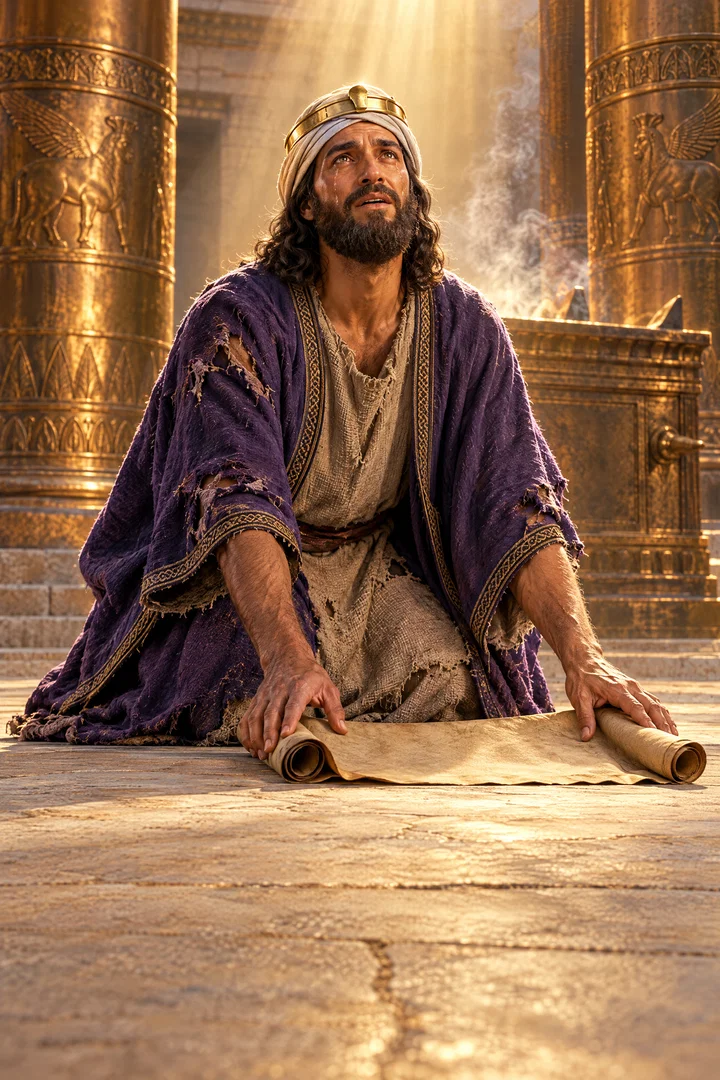


Cross-references
- 2 Kings 19
And it came to pass, when king Hezekiah heard it, that he rent his clothes, and covered himself with sackcloth, and went into the house of the LORD.
The passage says Isaiah 37 and 2 Kings 19 are alike.
- Isaiah 37:36
Then the angel of the LORD went forth, and smote in the camp of the Assyrians a hundred and fourscore and five thousand: and when they arose early in the morning, behold, they were all dead corpses.
God destroys the Assyrian army and delivers Jerusalem after Hezekiah’s prayer.
- 2 Chronicles 32:13
Know ye not what I and my fathers have done unto all the people of other lands? were the gods of the nations of those lands any ways able to deliver their lands out of mine hand?
Both texts record the Assyrians’ boast of conquering other lands.
- 2 Kings 19:18
And have cast their gods into the fire: for they were no gods, but the work of men’s hands, wood and stone: therefore they have destroyed them.
Isaiah 37 and 2 Kings 19 are identified as the same chapter.
- Isaiah 37:11
Behold, thou hast heard what the kings of Assyria have done to all lands by destroying them utterly; and shalt thou be delivered?
The Assyrian king boasts of destroying other lands.
- 2 Kings 19:35
And it came to pass that night, that the angel of the LORD went out, and smote in the camp of the Assyrians an hundred fourscore and five thousand: and when they arose early in the morning, behold, they were all dead corpses.
God destroys the army after the boast
- 2 Chronicles 32:20-21
And for this cause Hezekiah the king, and the prophet Isaiah the son of Amoz, prayed and cried to heaven.
Hezekiah and Isaiah pray, and the Lord sends an angel against Assyria.
- Isaiah 36:1-2
Now it came to pass in the fourteenth year of king Hezekiah, that Sennacherib king of Assyria came up against all the defenced cities of Judah, and took them.
names the mighty host Hezekiah prayed about
- 2 Kings 19:7
Behold, I will send a blast upon him, and he shall hear a rumour, and shall return to his own land; and I will cause him to fall by the sword in his own land.
The verse foretells the Assyrian king’s return to his own land.
- 2 Kings 19:36-37
So Sennacherib king of Assyria departed, and went and returned, and dwelt at Nineveh.
Sennacherib returned to his land and died there.
- 2 Kings 18:13-37
Now in the fourteenth year of king Hezekiah did Sennacherib king of Assyria come up against all the fenced cities of Judah, and took them.
Locates the Assyrian army during its invasion of Judah.
- 2 Chronicles 32:14
Who was there among all the gods of those nations that my fathers utterly destroyed, that could deliver his people out of mine hand, that your God should be able to deliver you out of mine hand?
uses those conquests to belittle God
- Isaiah 37:1-2
And it came to pass, when king Hezekiah heard it, that he rent his clothes, and covered himself with sackcloth, and went into the house of the LORD.
shows Hezekiah sought counsel before praying
Commentary
Each commentary is drawn from primary sources: the writings of Ellen G. White and Adventist pioneers and periodicals. Each commentary is separate. Its own words are not a quotation; follow the references to read the source passages.
Ellen G. White
1 source
It is true that the kings of Assyria had devastated many nations and their lands.Lt 93, 1900, par. 9 That long record of widespread ruin made their threat against Jerusalem appear overwhelming.Lt 93, 1900, par. 9 Hezekiah met that overwhelming threat by turning to seek God in prayer.Lt 93, 1900, par. 9 No human power can keep God from defending His people.Lt 93, 1900, par. 9
Sources
Pioneers and periodicals
16 sources
Hezekiah acknowledged as truth that the kings of Assyria had laid waste all the nations and their lands, setting the overwhelming scale of their conquests against his appeal to God.ST Jun 1, 1876ST Oct 6, 1909ST His acknowledgment rested on real success, for Assyria had become the greatest power in the world and had overcome Babylon, subdued the west, and taken forty-six cities in Judah as its army approached Jerusalem.ST Jun 21, 1905 Sennacherib and his fathers credited their gods for that success and argued that no god of any nation had delivered his people from Assyria, making the God of Jacob appear insignificant and unable to deliver Judah and Jerusalem.ST Jun 21, 1905 In answer Hezekiah humbly spread the taunting letter before the Lord, refused to oppose the army in his own strength, and cried for protection for Jerusalem and His covenant people and for the vindication of God's honor and power.ST Jun 7, 1883ST Oct 6, 1887ST His prayer, joined by Isaiah, was answered with a message through the prophet and with wonderful deliverance by God's angel, who destroyed 185,000 men of the invading army in a single night.ST Oct 6, 1909ST Jun 7, 1883RH Dec 16, 1862RH Dec 22, 1859ST Sep 5, 1900 The outcome shows that military strength and majority numbers cannot prevail against God, and that trust in Him is better than dependence on human wisdom or strength.ST Jun 1, 1876ST Jun 7, 1883
Setting and Historical Background
The verse stands within the historical section of Isaiah, chapters 36-39, which contains historical accounts and messages.ST May 28, 1912 It belongs to the history during the reign of Hezekiah when the king of Assyria came up and threatened the land, and it stands with Hezekiah's humility before God in that crisis, which brought God's message to him through the prophet and the Lord's wonderful deliverance from the power of Assyria by His angel.ST May 28, 1912ST Oct 6, 1909 The chapter parallels 2 Kings 19 with considerable verbal difference.RH Mar 11, 1875ST Sep 12, 1895
The verse belongs to the record of Sennacherib's campaign against Judah.ST Jan 4, 1916 Compared with the campaign described in Isaiah 10, Sennacherib's campaigns came from the southwest, while the campaign in Isaiah 10 came from the northeast.ST Jan 4, 1916
Hezekiah's acknowledgment that the kings of Assyria had laid waste all nations and their countries was true.ST Jun 21, 1905 The boast rested on real success: under Sargon Assyria had become the greatest power in the world, and Sennacherib had overcome rebellious Babylon, then moved westward where Sidon surrendered, Syria submitted and her Egyptian allies were defeated, Ekron was taken and her chief men impaled, and in Judah forty-six cities were taken as the army approached Jerusalem.ST Jun 21, 1905 Sennacherib and his fathers depended on Assyrian gods for that success and used the record to argue that no god of any nation or kingdom had been able to deliver his people from Assyria, and to make the God of Jacob, who had not prevented Israel's captivity, appear even more insignificant and unable to deliver Judah and Jerusalem.ST Jun 21, 1905
The chapter is God's most notable witness to Assyria that He is God above all, in the slaughter of the host of Sennacherib.ST Dec 29, 1887 It was given when Assyria stood at the head of the world in power, wisdom, and influence but had grown corrupt and gone far from God, after God had graciously sent Jonah to call them to repentance.ST Dec 29, 1887 It was one of repeated testimonies by revelation and living testimony and not by rain and fruitful seasons alone.ST Dec 29, 1887
The account shows the Assyrian army was not near Jerusalem when the angel killed 185,000 men; the army was rather with the king of Assyria at Libnah.RH Jun 15, 1869 This historical setting rules out the claim that Isaiah 30:33 was fulfilled by the destruction of the Assyrian army in the valley of Tophet.RH Jun 15, 1869
Hezekiah's Prayer and Deliverance
Of a truth the verse is Hezekiah's own acknowledgment that the kings of Assyria had laid waste all the nations and their lands, setting the overwhelming scale of Assyria's conquering power against his appeal to God and the deliverance that followed.ST Jun 1, 1876ST Oct 6, 1909ST It belongs to the history of the Assyrian threat against Judah and God's deliverance of Hezekiah and his people.ST Oct 6, 1909 In that prayer he pointed to Jerusalem and God's covenant people, and to God's honor and power, which Assyria had insulted and denied, asking God to vindicate Israel and defeat the Assyrian army.ST
In the prayer surrounding this acknowledgment he humbly spread the taunting, insulting letter out before the Lord, taunted by his enemies with his helpless condition, and cried to the Lord for protection against the mighty host with its great army against Jerusalem instead of opposing them in his own strength.ST Jun 7, 1883ST Oct 6, 1887 His prayer, joined by Isaiah, brought God's message to him through the prophet in his humility before God in that crisis, with wonderful deliverance from the power of Assyria by His angel.ST Oct 6, 1909RH Dec 16, 1862ST Sep 5, 1900 It stands as an example of subduing enemies through faith and the spiritual gifts given to the church.RH Dec 16, 1862
God answered by causing the invading army besieging Jerusalem to lose 185,000 men in a single night, destroying the Assyrian army in response to Hezekiah's prayer over Assyria's devastation of the nations.ST Jun 7, 1883RH Dec 22, 1859 The same deliverance is described as the prayer of Hezekiah joined by Isaiah killing 185,000 Assyrians in twelve hours, showing that prayer brings swift and complete deliverance from an enemy that has laid waste all nations.ST Sep 5, 1900 The outcome shows that military strength and majority numbers cannot prevail against God, that one opposing wrong is not alone when God is with him for God is a majority, and that trust in God is better than dependence on human wisdom or strength, since one messenger from God is sufficient to bring the Assyrian threat to its end.ST Jun 1, 1876ST Jun 7, 1883
Sources