Leviticus 23:11
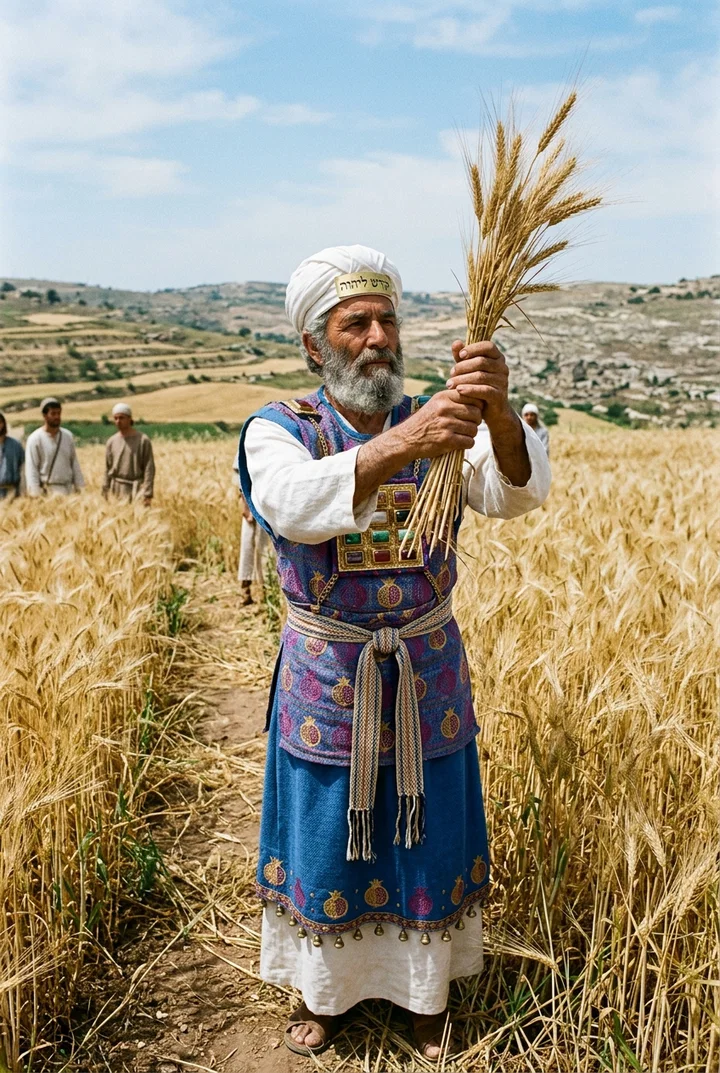
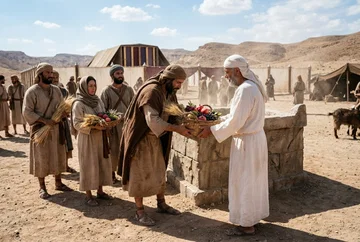
And he shall wave the sheaf before the LORD, to be accepted for you: on the morrow after the sabbath the priest shall wave it.
Translations
American King James Version, King James Version, Webster Bible
And he shall wave the sheaf before the LORD, to be accepted for you: on the morrow after the sabbath the priest shall wave it.
and he shall wave the sheaf before the Lord, to be accepted for you: on the morrow after the sabbath the priest shall wave it.
and he shall wave the sheaf before the LORD, to be accepted for you: on the morrow after the sabbath the priest shall wave it.
and he shall wave the sheaf before Jehovah, to be accepted for you: on the morrow after the sabbath the priest shall wave it.
then he hath waved the sheaf before Jehovah for your acceptance; on the morrow of the sabbath doth the priest wave it.
And he shall wave the sheaf before Jehovah, to be accepted for you; on the next day after the sabbath the priest shall wave it.
and he shall wave the sheaf before Yahweh, that ye may be accepted,—on the morrow of the sabbath, shall the priest wave it.
Berean Standard Bible, Majority Standard Bible
And he shall wave the sheaf before the LORD so that it may be accepted on your behalf; the priest is to wave it on the day after the Sabbath.
He shall wave the sheaf before the LORD, to be accepted for you. On the next day after the Sabbath the priest shall wave it.
And let the grain be waved before the Lord, so that you may be pleasing to him; on the day after the Sabbath let it be waved by the priest.
And hee shall shake the sheafe before the Lord, that it may be acceptable for you: the morowe after the Sabbath, the Priest shall shake it.
Douay-Rheims (Challoner revision)
Who shall lift up the shed before the Lord, the next day after the sabbath, that it may be acceptable for you, and shall sanctify it.
Pictures
Cross-references 20 of 46
- 1 Corinthians 15:20
But now is Christ risen from the dead, and become the firstfruits of them that slept.
Christ is the firstfruits, fulfilling the wave-sheaf offering.
- Colossians 2:16-17
Let no man therefore judge you in meat, or in drink, or in respect of an holyday, or of the new moon, or of the sabbath days:
Connects festival sabbaths and sacrificial observances with shadows fulfilled in Christ.
- Leviticus 23:15-16
And ye shall count unto you from the morrow after the sabbath, from the day that ye brought the sheaf of the wave offering; seven sabbaths shall be complete:
Begins the fifty-day count from the wave-sheaf offering to Pentecost.
- Acts 2:1-4
And when the day of Pentecost was fully come, they were all with one accord in one place.
The Spirit’s outpouring at Pentecost fulfills the feast on its appointed day.
- 1 Corinthians 15:23
But every man in his own order: Christ the firstfruits; afterward they that are Christ’s at his coming.
Christ’s resurrection fulfills the firstfruits offering and precedes believers’ resurrection.
- Exodus 20:10-11
But the seventh day is the sabbath of the LORD thy God: in it thou shalt not do any work, thou, nor thy son, nor thy daughter, thy manservant, nor thy maidservant, nor thy cattle, nor thy stranger that is within thy gates:
Distinguishes the Lord’s weekly Sabbath from the annual feast sabbaths.
- Leviticus 23:3
Six days shall work be done: but the seventh day is the sabbath of rest, an holy convocation; ye shall do no work therein: it is the sabbath of the LORD in all your dwellings.
Distinguishes the weekly Sabbath from the annual feasts.
- Deuteronomy 16:9
Seven weeks shalt thou number unto thee: begin to number the seven weeks from such time as thou beginnest to put the sickle to the corn.
both begin fifty-day count from wave-sheaf day
- Leviticus 23:5
In the fourteenth day of the first month at even is the LORD’s passover.
Passover date fixes wave-sheaf date
- Exodus 23:16
And the feast of harvest, the firstfruits of thy labours, which thou hast sown in the field: and the feast of ingathering, which is in the end of the year, when thou hast gathered in thy labours out of the field.
Names the harvest first-fruits feast.
- Matthew 28:1
In the end of the sabbath, as it began to dawn toward the first day of the week, came Mary Magdalene and the other Mary to see the sepulchre.
Christ’s first-day resurrection fulfilled the wave-sheaf type.
- 1 Corinthians 5:7
Purge out therefore the old leaven, that ye may be a new lump, as ye are unleavened. For even Christ our passover is sacrificed for us:
Christ fulfills the Passover sacrifice and the wave-sheaf firstfruits in the spring types.
- Leviticus 23:38
Beside the sabbaths of the LORD, and beside your gifts, and beside all your vows, and beside all your freewill offerings, which ye give unto the LORD.
Distinguishes the annual feast days from the Lord’s weekly Sabbaths.
- Leviticus 23:16
Even unto the morrow after the seventh sabbath shall ye number fifty days; and ye shall offer a new meat offering unto the LORD.
Counts fifty days from the wave-sheaf offering to Pentecost.
- Numbers 28:26
Also in the day of the firstfruits, when ye bring a new meat offering unto the LORD, after your weeks be out, ye shall have an holy convocation; ye shall do no servile work:
Names the day of firstfruits associated with the count.
- Leviticus 23:7
In the first day ye shall have an holy convocation: ye shall do no servile work therein.
The first holy convocation identifies the day before the sheaf offering.
- Revelation 14:4
These are they which were not defiled with women; for they are virgins. These are they which follow the Lamb whithersoever he goeth. These were redeemed from among men, being the firstfruits unto God and to the Lamb.
Both texts use firstfruits language for a group set apart to God.
- Mark 16:2
And very early in the morning the first day of the week, they came unto the sepulchre at the rising of the sun.
Both place the event after the Sabbath, on the first day.
- James 1:18
Of his own will begat he us with the word of truth, that we should be a kind of firstfruits of his creatures.
Believers are called firstfruits of God’s creatures.
- John 19:31
The Jews therefore, because it was the preparation, that the bodies should not remain upon the cross on the sabbath day, ( for that sabbath day was an high day,) besought Pilate that their legs might be broken, and that they might be taken away.
The high Sabbath coincided with the weekly Sabbath at the crucifixion.
Commentary
Each commentary is drawn from primary sources: the writings of Ellen G. White and Adventist pioneers and periodicals. Each commentary is separate. Its own words are not a quotation; follow the references to read the source passages.
Ellen G. White
7 sources
On the morrow after the Sabbath, the second day of the seven-day Feast of Unleavened Bread that followed the Passover, the priest waved the year's first barley sheaf before the Lord at His altar.DA 785.4PP 539.4DA 77.1 The waving was a thank offering that acknowledged the harvest belonged to God.DA 785.4PP 539.4ST Feb 3, 1914 The sickle could not be put to the grain and the harvest could not be gathered into sheaves until the sheaf had been presented, and the presented sheaf represented the harvest to come.DA 785.4PP 539.4ST Feb 3, 1914 For more than a thousand years this symbolic ceremony was performed, with the first heads of ripened grain gathered from the field and brought when the people went up to Jerusalem for the Passover.ST Feb 3, 1914
The ceremony was a type of the work of Christ, in which the sheaf represented the Saviour, as did the slain lamb and the unleavened bread, while the Passover kept in memory Israel's deliverance from Egypt as an object-lesson of redemption.DA 77.1 The waved sheaf of first fruits points forward to Christ, who came forth from the grave as its antitype and the firstfruits from the dead.DA 785.4DA 77.1ST Feb 3, 1914Ms 113, 1897, par. 15–16Ms 113a, 1897, par. 14 This was one of the vernal types of the law fulfilled in its order and time.LS 110.2 Christ's resurrection took place on the very day the wave sheaf was to be presented.DA 785.4ST Feb 3, 1914LS 110.2
As the first-fruits of those that slept, Christ represents the great spiritual harvest of the righteous dead to be gathered for the kingdom of God, and His resurrection is the type and pledge of their resurrection.DA 785.4ST Feb 3, 1914 As the Passover was fulfilled in the crucifixion and the meat offering in the descent of the Holy Spirit on the day of Pentecost, the timely fulfillment of the wave sheaf proves the autumnal types will likewise be fulfilled as to time in the events of the second advent.LS 110.2 Then Christ as great High Priest will come out to bless the people as the high priest came out of the sanctuary on the tenth day of the seventh month.LS 110.2
Sources
Pioneers and periodicals
128 sources
The priest is to wave a sheaf of the first-fruits of the barley harvest before the LORD, to be accepted for the people, with an unblemished year-old lamb offered as a burnt offering on the same day.ST Apr 30, 1912ST Apr 30, 1912RH Mar 1, 1906 The waving is on the morrow after the Passover sabbath, the sixteenth day of Abib or Nisan, the second day of the Feast of Unleavened Bread, while those who hold it to be the weekly Sabbath place it always on the first day of the week.ST Dec 23, 1903ST Apr 30, 1912ST Apr 30, 1912ST Jul 3, 1879RH Feb 6, 1879 That sixteenth-day offering begins the count of seven complete sabbaths, forty-nine days, unto the morrow after the seventh sabbath, fifty days to the new meat offering at the Feast of Weeks called Pentecost.ST Apr 30, 1912ST Apr 30, 1912RH Mar 1, 1906 The wave sheaf is a type fulfilled in Christ's resurrection as the first-fruits of them that slept, the first ripe grain representing and pledging the whole harvest of the just to be raised at his coming.RH May 13, 1862ST Aug 7, 1884ST Feb 23, 1882RH Mar 31, 1868ST Jan 4, 1877 It belongs to the yearly feasts and ceremonial sabbaths, which are shadows centering in Christ and ceasing at the cross, distinct from and beside the weekly seventh-day Sabbath of the LORD which originated at creation and endures.RH May 13, 1862ST Jun 4, 1902RH Aug 31, 1905ST Jun 17, 1903ST Even when connected with Christ's resurrection and Pentecost on the first day of the week, the morrow after the Sabbath gives no authority for the first day to become the Christian Sabbath or to replace the seventh-day Sabbath.ST Nov 15, 1883ST Nov 15, 1883RH Nov 13, 1856
Ritual Words and Setting
The priest waves a sheaf of the first-fruits of the barley harvest before the LORD, to be accepted for the people.ST Apr 30, 1912ST Apr 30, 1912RH Mar 1, 1906ST Aug 7, 1884ST Aug 2, 1883 The waving is on the morrow after the Passover sabbath, the sixteenth day of Abib or Nisan, the second day of the Feast of Unleavened Bread, beginning the count of fifty days to the Feast of Weeks.ST Apr 30, 1912ST Apr 30, 1912RH Mar 1, 1906RH Sep 3, 1857 In the year of the crucifixion as reckoned in that calendar, Abib 16 fell on the weekly Sabbath.ST Apr 30, 1912ST Apr 30, 1912 The wave offering is a thank offering acknowledging God's provision of the harvest and expressing belief that Christ would be first to rise from the dead and bring the blessed into life through his resurrection.ST Aug 7, 1884ST Aug 2, 1883
On that same wave-sheaf day a first-year lamb without blemish is offered as a burnt offering.ST Apr 30, 1912RH Mar 1, 1906ST Mar 3, 1909 The rite belongs to the ceremonies of the Levitical law and to the instruction for the sanctuary services, whose special work upon the LORD's Sabbaths and upon the annual sabbaths, new moons, and feasts was part of the continual ministration in the holy place, distinct from the yearly work in the most holy place for the sins of the people and for the cleansing of the sanctuary.ST May 27, 1908RH Feb 2, 1911RH Mar 8, 1870RH Feb 3, 1853 Like each detail of the sacrifices and offerings it has its meaning, and its fuller meaning is found in the sacrifice, life, and work of Jesus Christ, with the yearly festivals each fulfilled in his antitypical priestly service and distinguished from the Sabbath of Jehovah.ST May 27, 1908ST Feb 7, 1911ST Apr 23, 1912
The offering is commanded only after reaching Canaan and reaping a harvest, as a thank-offering presented before the harvest is gathered, with the first loaf made from the first threshed and ground grain also given to God in acknowledgment of him as giver of temporal blessings.ST Apr 1, 1889RH Feb 17, 1874RH Sep 3, 1857 No bread, parched corn, or green ears is eaten until the priest has offered it, and the sickle is not put to the grain to gather it into sheaves until the sheaf is presented.ST Feb 3, 1914RH Aug 21, 1856RH Sep 3, 1857 The first heads of ripened grain were gathered from the harvest field and, when the people went up to Jerusalem to the Passover, waved as a thank-offering before the Lord.ST Feb 3, 1914 The offering was presented early in the morning before breakfast.RH Aug 21, 1856
Its ripening governs when Passover and the sacred year can begin, since a ripe sheaf must be presented, so if the barley will not ripen in time the calendar month is intercalated and the beginning of the barley harvest determines when the counting of weeks to Pentecost begins.RH Sep 3, 1857ST Jul 3, 1879RH Sep 3, 1857 The offering expresses gratitude for God's crops and recognition of him as their giver, to be given as the first and best with the heart's supreme affection before putting the sickle to gather the grain.RH Feb 17, 1874ST Jun 17, 1897ST Aug 14, 1879 The first-fruits were brought from the Kidron valley to the temple and waved before God as solemn acknowledgment that he had given the harvest.ST Apr 21, 1881 The Hebrew uses the definite article with Sabbath, showing the Sabbath day is definite and not an unspecified day, namely the seventh day on which God rested.RH Apr 15, 1873RH Jan 1, 1875 The day is reckoned as beginning at evening at the setting of the sun, so the Sabbath is kept from evening to evening.ST Mar 8, 1883
Feast Date and Pentecost Count
The waving stands on the morrow after the Passover sabbath, the sixteenth day of Abib or Nisan, the second day of the Feast of Unleavened Bread.ST Dec 23, 1903ST Apr 30, 1912RH Feb 12, 1914ST Dec 23, 1903ST Mar 11, 1886 That sabbath is the first holy convocation of Passover on the fifteenth of the month, the annual feast day on which no servile work was done, not necessarily the weekly seventh-day Sabbath.ST Dec 23, 1903RH Feb 12, 1914ST Dec 23, 1903ST Mar 11, 1886ST Apr 12, 1883 On that sixteenth day the priest waved the sheaf of the first-fruits before the Lord to be accepted for the people, and offered that same day an unblemished year-old lamb as a burnt offering.ST Apr 30, 1912ST Apr 30, 1912RH Mar 1, 1906 The fifty days to Pentecost were counted beginning with that day of first-fruits, with the fiftieth day itself being Pentecost.ST Apr 30, 1912ST Apr 30, 1912ST Dec 23, 1903ST Mar 11, 1886ST Apr 12, 1883 In the year of the crucifixion that sixteenth of Abib fell on the weekly seventh-day Sabbath, the day Christ lay in the tomb, and the joining of the wave-sheaf day with the weekly Sabbath made that Sabbath a high day.ST Apr 30, 1912ST Apr 30, 1912RH Feb 12, 1914
From the day the wave sheaf is brought are counted seven complete sabbaths, literally seven perfected or completed weeks, even unto the morrow after the seventh sabbath, when fifty days are numbered to a new meat offering to the Lord.RH Mar 1, 1906ST Dec 23, 1903ST Mar 11, 1886 That sixteenth-day offering is thus the first of the fifty days counted toward the Feast of Weeks, and the seventh full week begun the day after the sabbath reaches to Pentecost.ST Apr 30, 1912ST Apr 30, 1912RH Mar 1, 1906 This feast is also called Pentecost, the Feast of First-fruits, the Feast of the Fiftieth Day, the Feast of the Conclusion, and the season of the giving of the law.RH Mar 1, 1906 Because the count begins from the yearly Passover Sabbath on the sixteenth of Nisan, it does not make Pentecost always fall on the first day of the week.ST Dec 23, 1903
Pentecost followed Passover by fifty days, but it was not celebrated fifty days after the departure from Egypt or during the forty years in the wilderness.ST Apr 1, 1889 The wave-sheaf rite belonged to the harvest feast to be observed only after reaching Canaan and reaping a harvest, and the feast was a thanksgiving for the harvest, not a memorial of the giving of the law.ST Apr 1, 1889 The Bible gives no evidence connecting it with that event.ST Apr 1, 1889 The weekly Sabbath has first place among the sacred festivals and serves as the point from which the other festivals are dated.
Meaning of Morrow After Sabbath
The Sabbath after which the sheaf is waved is the annual holy convocation of Passover on the fifteenth of Nisan, not necessarily the weekly seventh-day Sabbath.ST Dec 23, 1903ST Mar 11, 1886ST Apr 12, 1883ST Nov 15, 1883 The waving therefore falls on the fixed calendar date of the sixteenth of Nisan, the second day of the Feast of Unleavened Bread and the day of first-fruits from which the fifty days to Pentecost are counted.ST Dec 23, 1903ST Dec 23, 1903ST Mar 11, 1886ST Apr 12, 1883 Because it is fixed to that date it falls on whatever weekday the date falls in a given year and comes only once a year, proving nothing for weekly observance of the first day or for a first-day creation memorial.ST Dec 23, 1903ST Nov 15, 1883 That sheaf-offering marks the starting point for counting toward Pentecost, and in the chronology given the feast's first day and the waving are associated with the Friday of the crucifixion.ST Dec 23, 1903ST Mar 11, 1886ST Jul 11, 1911
On another reading the Sabbath is the regular weekly Sabbath, so the law fixes the offering's weekday as the first day of the week rather than fixing it to a particular day of the month.ST Jul 3, 1879RH Feb 6, 1879RH Jul 8, 1873ST Jul 3, 1879 The fifteenth day of the first month, the day after the Passover, and the rest day five days later are days of no servile work coming without regard to the day of the week and only five days apart, so they are annual Sabbaths and do not make the annual Sabbath identical with the weekly Sabbath or govern and change the order of the weeks.RH Feb 6, 1879 The Greek renders the morrow after the Sabbath as the morrow of the first day, and the Hebrew definite article marks this as the Sabbath by way of pre-eminence, a weight given to none of the yearly Sabbaths in the chapter.RH Jul 8, 1873 Since the yearly Sabbaths were movable as to the day of the week, counting from the morrow after a yearly Sabbath could not always end the fifty days with a Sabbath before the fiftieth day, for the only possible Sabbath before Pentecost was a weekly Sabbath, so the morrow after the seventh Sabbath was the first day of the week and Pentecost always fell on the first day.ST Jul 3, 1879RH Jul 8, 1873 This makes the day memorable as the day of the promised baptism of the Holy Spirit and the beginning of the new dispensation, when about three thousand souls were added, and the sheaf of new grain risen from the old harvest is a type of Christ's resurrection as first-fruits of those who have died.RH Jul 8, 1873RH Jul 8, 1873
The same timing rejects the claim that the sheaf was offered on the seventh day and connects the offering with Christ as antitype of the first-fruits, even though the New Testament does not directly state that Christ rose on the first day; on the opposing reckoning the resurrection and Pentecost would both fall on the seventh day.RH Sep 10, 1857 The beginning of the barley harvest determined when the counting of weeks began, so the season's ripening affected the date of the offering and Pentecost while the weekday remained fixed by the weekly Sabbath sequence.ST Jul 3, 1879ST Jul 3, 1879 The verse alone does not settle whether that Sabbath is the weekly seventh-day Sabbath or a Passover holy day, and therefore does not by itself settle on which weekday Pentecost fell.ST Passover was an annual feast governed by the moon whose special feast days could fall on any weekday including the Sabbath, so the verse does not establish that the fourteenth day of the first month or the wave-sheaf day fell on a particular day of the week.ST
The chapter contains nothing about reckoning the days of the week, only reckoning the days of the feast, and its time expressions like the eighth day elsewhere mean a day of the feast rather than a day of the week.RH Apr 19, 1870RH Jan 13, 1874 To make them mean Sunday assumes what is not there, and that assumption is unwarrantable, so any argument for Sunday-keeping built on it falls to the ground.RH Apr 19, 1870 The phrase does not say the first day, and the day after the first day would be the second day, so the verse does not establish that Pentecost fell on the first day of the week.RH Jul 29, 1873 Those feasts begin on fixed days of fixed months so their eighth day falls on one weekday one year and another weekday another year, and therefore that eighth day does not prefigure exalting the eighth day or first day as the Sabbath under the gospel, which must be interpreted in harmony with plain gospel facts where there is no declaration exalting the first day as a weekly Sabbath.RH Jan 13, 1874
This timing helps distinguish the annual feast days from the weekly Sabbath, since the annual days could fall on different weekdays and only sometimes coincided with the weekly Sabbath.ST Jul 17, 1879ST Aug 18, 1909ST Apr 8, 1897 The yearly feast days and Sabbaths connected with Passover, First-fruits, Trumpets, and Atonement came in because of sin as types pointing forward to Christ and met their fulfilment in him, distinguished from the Sabbath of the Lord by the expression besides the Sabbaths of Jehovah.ST Jun 17, 1903ST Aug 18, 1909ST Apr 8, 1897 The weekly Sabbath is always the seventh day in constant succession while yearly sabbaths like this fell on their set day of month and feast and so naturally fell on any day of the week, typified an event in redemption, and expired by limitation when shadow reached substance.ST Jun 17, 1903ST Apr 8, 1897 Changes in movable feast dates do not change which day is the seventh day, and the yearly observances could fall on different days of the week.ST Aug 18, 1909ST Apr 3, 1907
An argument under discussion identifies the morrow after the Sabbath as the sixteenth of Abib and claims the fifteenth of Abib was always both the first day of unleavened bread and a weekly Sabbath, making the fourteenth always Friday. That claim is set against the claim that the Passover date moved through the weekdays while the wave sheaf followed the Sabbath, with the wave-sheaf offering placed on the day after the Sabbath during Passover week.RH Oct 31, 1871
Type of Christ's Resurrection
The waving of the first sheaf of the spring barley harvest before the Lord for acceptance is the type whose antitype is the resurrection of Christ as the first-fruits of those who sleep, beginning the promise fulfilled in him.RH May 13, 1862ST Aug 7, 1884ST Feb 23, 1882ST Aug 2, 1883 The offering was a thank offering acknowledging God's provision of the harvest and expressing belief that Christ would rise first from the dead and that through his resurrection his people would enter the realm of the blessed.ST Aug 7, 1884ST Aug 2, 1883 The first-fruits offering typifies Christ rising from the dead on the day after the Sabbath, yet without giving that day a Sabbatic character or making it replace the seventh-day Sabbath.ST Feb 23, 1882
He rose on the very day the sheaf was to be presented, the sixteenth day of the first month, so that type and antitype coincided in time.RH Mar 31, 1868RH Aug 5, 1852RH Oct 30, 1855RH Jun 2, 1851RH Dec 15, 1868 One account specifies that rising as very early in the morning before breakfast, and another reckons that he kept death on the fourteenth at the killing of the Passover and arose on the seventeenth, the first day of the week, after the appointed interval.RH Aug 21, 1856 As the first ripe grain represented the whole harvest, his resurrected body is a sample of the just who will be raised at his coming, with the later grain offering fifty days afterward corresponding to Pentecost.RH Mar 31, 1868 The sheaf taken from the first ripe grain typified his resurrection while the grain left standing in the field represented the resurrection of his people at his second coming.ST Jan 4, 1877
As the waved sheaf was a sample of the later harvest, his resurrected body is the model of the bodies of his people who remain in the grave until the resurrection of the just.ST Jan 4, 1877 For more than a thousand years the first heads of ripened grain were gathered from the harvest field and waved as a thank-offering when the people went up to Jerusalem to the Passover, and not until the sheaf was presented could the sickle be put to the grain; so Christ as the first-fruits represents the great spiritual harvest to be gathered for the kingdom of God, and his resurrection is the type and pledge of the resurrection of all the righteous dead.ST Feb 3, 1914 His resurrection is the first-fruits of those who have died, pledging and promising the resurrection harvest, so that because he rose the saints will rise also. Its being waved does not prove it was the first sheaf reaped or the only sheaf already reaped, for he is the first-fruits because he is the resurrection and the life and the sample of those who will rise in the first resurrection. Although others were raised before him, their resurrections depended on his and did not demonstrate the way to life and immortality, while his holds pre-eminent rank and shows that way.RH May 5, 1874
The sheaf itself, new grain from the old kernel that had perished, was an emblem of the resurrection fulfilled with great exactness by Christ as the bread of life from heaven and the first-fruits of them that slept.RH Aug 21, 1856 On that same wave-sheaf day an unblemished year-old lamb was offered as a burnt offering, and sheaf and lamb are both fulfilled in him as the true first-fruits sheaf and the real Lamb of God slain as the Passover lamb was.ST Mar 3, 1909 He was the first-fruits waved between earth and heaven on the cross on the day after the Passover Sabbath, which was also the preparation day for the weekly Sabbath.ST Oct 11, 1899 He fulfilled the type by presenting himself to the Lord for acceptance after his resurrection, as the Passover sacrificed for us, with the great harvest to follow at his coming.RH Oct 16, 1860RH Oct 28, 1858 Being the first-fruits does not mean he was the first person raised from the dead.RH Oct 28, 1858
That wave-sheaf was fulfilled entirely in Christ in himself alone as the first-fruits, and not in the one hundred and forty-four thousand, so their being called first-fruits does not denote a resurrection and does not make them with Christ the first-fruits of them that slept.RH Jul 3, 1856 First-fruits marks a special pre-eminent condition belonging to different groups and not to one group alone.RH Nov 18, 1862 Its grand event met its antitype exactly as to time when he arose as the first fruit of them that slept, for type must meet antitype at its appointed time.RH Oct 30, 1855ST Apr 15, 1889 The burnt offerings and other circumstantial offerings appointed for that same day did not prevent the grand event from meeting its antitype at the time pointed out in the type, for the antitype commences on the day of the type but may extend forward a great distance.RH Oct 30, 1855RH Dec 15, 1868
As the Passover met its fulfillment in the crucifixion and Pentecost in the first-fruits of the Christian church, the wave sheaf met its fulfillment when Jesus rose.ST Apr 15, 1889 The vernal types, Passover, wave sheaf, and meat offering, were fulfilled in order and time in the crucifixion, the resurrection, and the descent of the Holy Spirit at Pentecost.LS 110.2RH Apr 5, 1870 This orderly fulfillment in time proves that the autumnal types will likewise be fulfilled as to time in the events connected with the second advent, when Christ as great High Priest comes out as the high priest came out of the typical sanctuary on the tenth day of the seventh month to bless the people.LS 110.2RH Apr 5, 1870RH Apr 19, 1870
Saints and Harvest Fulfillment
The waved sheaf of first ripe grain, offered on the sixteenth day of the first month, was a sample of the whole harvest to come. Its waving is fulfilled in Christ and in the saints who rose after His resurrection, as first-fruits and a sample of all the saints who will be gathered from the earth and ascend with Christ.RH Oct 26, 1905RH Sep 30, 1915ST Jan 28, 1889 He brought up a chosen company of resurrected persons from different ages, took them to heaven, and presented them to the Father as a sample of the general resurrection.RH Oct 26, 1905 That company afterward ascended with Him as the antitype of the wave-sheaf ceremony.RH Sep 30, 1915ST Jan 28, 1889
The sheaf was waved before the Lord on behalf of the people and on behalf of the harvest field from which it came, to be accepted for them.ST Jul 2, 1902ST Jan 4, 1877 It represents persons raised at Christ's resurrection, accepted by God and taken to the heavenly sanctuary.ST Jul 2, 1902 Christ at His ascension presented to the Father those raised with Him as the first representatives of the great multitude who will rise at His second coming.RH Sep 30, 1915RH May 14, 1914 Their acceptance assures God's acceptance of the faithful harvesters and of the people they gather, and the presentation of the sheaf signifies that the work of redemption is complete and that those who belong to Christ may be accepted by God.ST Jul 2, 1902RH May 14, 1914
The grain left standing in the field represents the resurrection of Christ's people at His second coming.ST Jan 4, 1877 As the waved sheaf was a sample of the later harvest, Christ's resurrected body was a model of the bodies of His people who remain in the grave until the resurrection of the just.ST Jan 4, 1877 The harvest feast thus pictures spiritual progress from deliverance and a new heart to bringing the first sheaf and then gathering the harvest.ST Jul 2, 1902 The three persons converted at Calvary are also pictured as a glorious wave sheaf, rescued from among the three families of humanity and presented by Jesus to the Father as His final earthly work.ST Dec 5, 1916
Ceremonial Feasts Versus Sabbath
The waving belongs to the series of yearly feasts and holy convocations set forth in Leviticus 23:4-38, connected with Passover, First-fruits, Pentecost, Trumpets, Atonement and Tabernacles, several kept as sabbaths on which no servile work was done.RH May 13, 1862ST Jun 4, 1902ST Jun 17, 1903ST These feast days called first, seventh and eighth days are days within their respective feasts, not days of the week, and the feast sabbaths occurred yearly on certain days of certain months and feasts on any weekday.ST Jun 4, 1902ST Jun 17, 1903 They came in because of sin as types and prophecies and shadows of things to come centering in Christ, pointing forward to his sacrifice, death, resurrection, ascension and the outpouring of the Holy Ghost at Pentecost.RH May 13, 1862ST Jun 17, 1903ST Dec 13, 1905ST The shadow ended when it reached the substance, expiring by limitation when the thing typified was reached, ceasing and nailed to the cross when reaching the substance.ST Jun 17, 1903ST
These yearly sabbaths are distinct from and beside the Sabbaths of Jehovah, the regular weekly seventh-day Sabbath of which it is said the seventh day is the Sabbath of Jehovah, the chapter listing them as additional to the Lord's Sabbaths.RH Aug 31, 1905RH Dec 29, 1859ST Jun 17, 1903ST Jun 10, 1886ST Leviticus 23 includes four ceremonial sabbaths associated with feasts, meats and drinks, called your sabbaths and her sabbaths, local and ceremonial and differing from the weekly Sabbath of the Lord, depending on ordinances given to Israel and ceasing when those ordinances ended.RH Aug 31, 1905RH Dec 29, 1859RH May 3, 1860 The distinction holds by the very nature of the institutions and by the expression besides the Sabbaths of Jehovah, because the weekly Sabbath is always the seventh day of the week in constant succession while yearly sabbaths like this could fall on any day of the week.ST Jun 17, 1903ST
The seventh-day weekly Sabbath originated before sin entered as a memorial of creation instituted in Eden, unchangeable and perpetual and moral and for all people, enduring to the immortal state and standing fast forever, and therefore not a type or shadow of things to come.STST Feb 25, 1875ST Nov 10, 1914ST Jul 15, 1880ST Apr 1, 1886 The yearly sabbaths connected with the great feasts originated this side of the fall after types and shadows were introduced, growing out of man's actions as a sinner and never existing but for sin, shadowy and typical and temporal and ceremonial for one nation, with their meaning centered in Christ who takes away sins and puts away sin.STST Feb 25, 1875ST Jan 1, 1885ST Nov 10, 1914 Unlike the Sabbath they were not based on God's rest, spoken by God's voice, written by God's finger on stone, placed in the moral law, or placed in the ark, but were written by men on parchment and placed in a book by the side of the ark.ST Feb 25, 1875 The seven annual ceremonial sabbaths belonged to the Mosaic typical system introduced because of sin, unlike the weekly Sabbath instituted at creation, and the temporary shadowy sabbaths ceased when Christ the body appeared while the substantial enduring Sabbath of the Lord remains.ST Jan 1, 1885ST Apr 1, 1886
Unlike the Sabbath the yearly observances recur yearly rather than weekly, include offerings such as drink-offerings with seven appointed feast days on which Israel was to bring offerings, and cannot be kept by uncircumcised Gentiles everywhere but required circumcision and going up to Jerusalem.ST Feb 25, 1875ST Jan 20, 1881RH Mar 18, 1875 They are ceremonial, temporal, shadowy and typical and for one nation alone, changeable and temporary while the Sabbath is unchangeable, perpetual and for all people.ST Feb 25, 1875RH Mar 18, 1875 Besides the weekly Sabbath God appointed several feasts of several days each for Israel in which labor was forbidden, with the further command that every seventh year the land was not to be tilled, showing He never designed man to labor so as to injure his constitution, nor to be idle.RH Aug 21, 1860
The seven sabbaths enforced by the typical law, with their meat offerings and drink offerings set apart as besides the Sabbath of the Lord, are the sabbaths of Colossians 2:14-17 that are against us and taken out of the way, associated with ordinances concerning meat, drink, holy days and new moons, while the weekly Sabbath was made for man.RH Feb 21, 1854RH Dec 20, 1853 The term Sabbaths can apply to appointed Jewish feast days as well as the weekly seventh-day Sabbath, and the list of four ceremonial sabbaths plural distinct from the Sabbath of the Lord of the fourth commandment were foretold to cease, so that text has no reference to the fourth-commandment Sabbath.RH Nov 8, 1853RH Feb 21, 1854RH Dec 20, 1853 Romans 14:5 refers to these festival days, not to the weekly Sabbath, with weak Judaizing Christians feeling they must still observe these feasts while those strong in faith understood these old ceremonial feasts and holydays were done away at the cross and esteemed every day alike ceremonially.ST Nov 11, 1930 The complete list of Jewish feast days and fast days connected with eating and abstaining addressed in Romans 14:5-8, like modern New Year's, Christmas and Thanksgiving observances, is distinct from the weekly Sabbath recognized from creation and guarded by one of the Ten Commandments, leaving liberty with no judging and leaving the immutable ever-required regular weekly recurring seventh-day Sabbath of the fourth commandment.ST Nov 11, 1930RH Apr 1, 1873
By contrast, those who held the opposing position classed the seventh-day Sabbath first among the feast days and holy convocations, standing first among them, so that all those feasts were abolished together and the Sabbath is no longer binding.RH Mar 8, 1864 The listing of annual sabbaths in addition to the weekly Sabbath shows that God appointed other days as sabbaths, proving that God could make any day of the week a Sabbath if He chose.RH Apr 24, 1879 Israel's special Sabbath and worship laws were binding on Israel as a nation but are not legally binding today, though their underlying principles remain binding.RH Nov 12, 1908
Waving the sheaf was an appointed service associated with the ceremonial observance of days and feasts in Leviticus 23:8-11, alongside offerings, Passover and the Feast of Unleavened Bread, belonging to a law that was a shadow of good things to come, part of the service involved when the Galatians returned to circumcision and sought justification through the law.RH Sep 2, 1851 Leviticus 23 sets forth the special work appointed for the Lord's Sabbaths and for the annual sabbaths, new moons and feasts, belonging to the daily continual ministration in the holy place of the earthly sanctuary performed by the Levitical priesthood, distinct from the yearly work in the most holy place for the sins of the people and for the cleansing of the sanctuary.RH Mar 8, 1870RH Feb 3, 1853 The regulations for Israel's offerings at the appointed gatherings included the Passover season, when the people brought offerings from the land and their labor, along with pledges, vows and freewill gifts, and the whole feast-day system stands apart from justifying use of the law condemned in Galatians.RH Sep 2, 1851RH Oct 2, 1913
That annual system of religious services consisted of an ordered series of forms intended to bring the people nearer to God and make them a mighty people and a praise throughout the earth, so departing from even a small detail was blameworthy.ST Mar 24, 1887 The verse is cited as part of the law appointing Israel's three yearly gatherings at the sanctuary: Passover, Pentecost and the Day of Atonement.RH Aug 3, 1916 The ceremonial sabbaths associated with the solemn feasts, distinct from the Lord's Sabbath, could be taken away as a judicial punishment.ST Nov 16, 1876 They belonged to the earthly inheritance of Canaan and could not be kept when the land was under Gentile rule, while the weekly Sabbath remained unaffected and belonged to a higher order of institutions.RH Aug 29, 1871
Denial of Sunday Authority
The day after the Sabbath on which the sheaf is waved is not given a Sabbatic character, for the observance is annual rather than weekly.ST Feb 23, 1882RH Mar 18, 1862RH Dec 17, 1857RH Nov 13, 1856RH Jul 21, 1874 The chapter appoints holy convocations on days other than the seventh-day Sabbath on which no servile work is done, and holding such a meeting on a weekday does not cancel the command to work six days and rest on the seventh or by itself make that other day a rest day.RH Mar 18, 1862RH Dec 17, 1857RH Nov 13, 1856 The waving of the first barley sheaf typifies Christ as the first-fruits of those who sleep rising from the dead on the day after the Sabbath, but it does not make that day a Sabbath in place of the seventh day.ST Feb 23, 1882RH Nov 13, 1856RH Jul 21, 1874 Even when the wave sheaf on the morrow after the Sabbath and the new meat offering fifty days later are connected with the resurrection of Christ and Pentecost on the first day of the week, that connection gives no authority for the first day to become the Christian Sabbath and take the place of the Sabbath.RH Nov 13, 1856ST Mar 3, 1890ST Feb 4, 1889 That gives no pretext for infringing and changing the precept spoken at Sinai, which is perfect and immutable, for God and Christ have no rival Sabbaths but are one, Christ is Lord of the Sabbath, and the Sabbath is God's holy day.RH Nov 13, 1856ST Mar 3, 1890ST Feb 4, 1889
The sheaf waved on the morrow after the Sabbath, understood as the morrow after the Passover Sabbath on the sixteenth of Nisan, was not fixed to any day of the week but fell on whatever weekday that date fell in a given year and came only once a year.ST Nov 15, 1883ST Nov 15, 1883ST Mar 3, 1890 It therefore proves nothing for weekly observance of the first day of the week, for a memorial of a first-day creation Sabbath, for appointing weekly worship on the first day, or for keeping Sunday holy, while the weekly Sabbath stands wholly independent of it through all eternities to come on God's eternal word and immutable counsel.ST Nov 15, 1883ST Nov 15, 1883ST Mar 3, 1890 The wording only places the sheaf-waving after the Sabbath, and the day after any day follows that day, so it does not show that the Sabbath was transferred to Sunday.ST Nov 15, 1883ST Nov 15, 1883ST Feb 4, 1889 Pentecost is counted fifty days from the Passover Sabbath dated from the Passover on the fourteenth of the first month, not necessarily from the morrow after the weekly Sabbath, so it can fall on the first or any other weekday.RH Nov 1850RH Apr 15, 1873ST Oct 28, 1889RH Feb 26, 1901 Seven complete Sabbaths are seven complete weeks whether the count begins on Sunday or Tuesday or any other day, and in the year the Spirit descended it fell on the fifth or seventh day or on Saturday.RH Nov 1850ST Oct 28, 1889RH Feb 26, 1901
The day honored by the outpouring of the Spirit is the Jewish feast of Pentecost itself, fulfilling the promise that the disciples would be baptized with the Holy Ghost.RH Nov 1850RH Apr 15, 1873ST Oct 28, 1889 In infinite wisdom God ordered the events connected with Christ's death so that in that year the count still brought Pentecost to the first day of the week commemorating His rising, and instead of gathering first-fruits of fields of grain with a new meat offering He gathered three thousand immortal souls as first-fruits of the spiritual harvest white to the harvest, the ingathering of all the Gentile nations with the restoration of Israel.RH Nov 1850RH Apr 15, 1873ST Oct 28, 1889 That antitype then met and perished, giving no special honor to the first day of the week in its weekly returns and no holiness to Sunday, nor showing that God meant to honor any weekly day by it.RH Nov 1850RH Apr 15, 1873ST Oct 28, 1889 The eighth-day feast Sabbath likewise does not always mean the first day of the week, because those feasts begin on fixed days of fixed months so their eighth day falls on one weekday one year and another weekday another year.RH Jan 13, 1874 Therefore it does not prefigure exalting the eighth day or first day of the week as the Sabbath under the gospel, and types of gospel events and ordinances must be interpreted in harmony with plain gospel facts where there is no declaration that the Lord exalted the first day as a weekly Sabbath.RH Jan 13, 1874
Those who held otherwise taught that the annual wave-sheaf of first-fruits at the commencement of barley harvest after entering Canaan, waved by the priest before the Lord to be accepted for Israel on the morrow after the Sabbath of Passover week, was always on the first day of the week and never on a fixed day of the month, while the Passover lamb fixed to the fourteenth day of the first month moved through all weekdays.RH Aug 21, 1856 It was offered early in the morning before breakfast before any bread, parched corn, or green ears were eaten, and the day foreshadowed a change of weekly rest from the seventh to the first day, making it necessary for Christ to rise on the first day and on no other.RH Aug 21, 1856 The sheaf itself, new grain from the old kernel that had perished, was an emblem of the resurrection fulfilled with great exactness by Christ as the bread of life from heaven and the first-fruits of them that slept, rising on the morrow after the Sabbath very early in the morning.RH Aug 21, 1856 Others taught that the wave sheaf commanded to be presented to the priest on the first day of the week after the Passover Sabbath typifies the resurrection of Christ, who rose on the seventeenth day of the month on the first day of the Jewish week, while at the crucifixion the Jews kept the Sabbath on the sixteenth instead of the seventeenth required by the original institution.RH Sep 30, 1858 Since no one may eat of the new corn until the sheaf has been presented to the priest, Jesus plucking ears of corn on the Sabbath and giving them to His disciples violated that restriction to show He abolished the Jewish priesthood and transferred it to His disciples as His future priests, and with the annulling of the Jewish priesthood the Jewish Sabbath went away also, for a change of priesthood requires a change of law.RH Sep 30, 1858
Others taught that the Sabbath of the fourth commandment was required to fall on fixed dates that change the weekday from year to year, so the day called Sabbath did not stay on Saturday but during Christ's ministry fell twenty-eight times on a day more probably Thursday, once on Friday, and a number of times on Saturday in the last year of His public teaching, and Christ kept the true Sabbath of the law in that manner which no Jew or Christian now keeps.ST Apr 15, 1897 Against this it is taught that the chapter does not teach that the weekly Sabbath commemorated freedom from Egyptian slavery on Abib 15, that the week including Pentecost contained eight days, that the weekly Sabbath from the Exodus fell on fixed calendar dates like a birthday and therefore on a different weekday every year, or that Abib 10, 14, and 16 were always work or secular days that could fall on Saturday once in seven years but never on the Sabbath.ST Feb 4, 1897 The ceremonial feast system was moveable as to the day of the week and shifted from year to year because governed by the moon and the irregular Jewish year, while the Sabbath of the Lord was fixed and always occurs on the seventh day of the week and is not affected by ceremonial institutions.RH Feb 6, 1879 It belongs with the annual or ceremonial Sabbaths that were a shadow of things to come pointing to Christ and were abolished at His death, and must not be classed with the weekly Sabbath of the fourth commandment, for if the weekly Sabbath were one of those shadows it would have been swept away entirely at the cross, not changed to another day, which would mean the fourth commandment itself was abolished.RH Feb 6, 1879 The wording placing the waving on the day after the Sabbath supports that the seventh-day Sabbath was still recognized seven weeks after Christ's resurrection, for if the Sabbath had been abolished at the cross there could be no following day designated by reference to it.RH Jul 29, 1873
Crucifixion Week Dating
The morrow after the Passover sabbath is Abib or Nisan 16, the second day of the Feast of Unleavened Bread and the first of the fifty days counted toward the Feast of Weeks or Pentecost.ST Apr 30, 1912ST Apr 30, 1912RH Feb 12, 1914RH Feb 5, 1914 On that day the sheaf of first-fruits was waved before the Lord to be accepted for the people, with an unblemished lamb offered as a burnt offering.ST Apr 30, 1912ST Apr 30, 1912 In the year of Christ's crucifixion, in A.D. 31, that sixteenth day fell on the weekly seventh-day Sabbath, the day Christ lay in the tomb.ST Apr 30, 1912ST Apr 30, 1912RH Feb 12, 1914RH Feb 5, 1914 The joining of the wave-sheaf day, the second paschal day, with the weekly Sabbath is what made that Sabbath a high day, just as when the first Passover sabbath fell on the weekly Sabbath.RH Feb 12, 1914RH Feb 12, 1914RH Jan 22, 1914RH Feb 5, 1914
The crucifixion was therefore on Friday, the fifteenth of Abib or Nisan, the first sabbath of the Passover feast.RH Feb 5, 1914RH Mar 1, 1906 Jesus ate the Passover on the fourteenth, was crucified on the fifteenth as the first festival sabbath, and rose on Sunday.RH Mar 1, 1906 The sheaf was cut at the beginning of the weekly Sabbath of the Lord about the time Jesus was taken down from the cross as the Sabbath began, and it was offered in the temple on that Sabbath, the sixteenth of Nisan, which begins the counting of the omer for seven weeks.RH Mar 1, 1906 Counting fifty days from that Sabbath waving places the Pentecost of Acts 2 on the seventh-day Sabbath and not on Sunday, since the first day of the omer fell on the seventh day and the fiftieth day fell on the seventh day as well.RH Feb 12, 1914ST Oct 11, 1899RH Feb 12, 1914RH Mar 1, 1906
In infinite wisdom God is also said to have ordered the events connected with Christ's death so that in that year the count still brought Pentecost to the first day of the week, the day commemorating His rising, when instead of gathering firstfruits of grain He gathered three thousand souls as firstfruits of the spiritual harvest of the Gentile nations.RH Apr 15, 1873 In the chronology given with that reckoning, the feast's first day and the waving of the sheaf are associated with the Friday of the crucifixion, with the sheaf-offering marking the starting point for counting toward Pentecost from the day after the holy convocation at the start of Unleavened Bread.ST Jul 11, 1911RH Apr 15, 1873 That second paschal day when the sheaf was offered was regarded as in every respect equally sacred with the first, even more so because the wave sheaf was then offered to the Lord.RH Feb 5, 1914 If that appointed sixteenth day fell on the seventh-day Sabbath the waving was not postponed, for ceremonial observances could be performed on the Sabbath and Sabbath rest did not prevent them from occurring at their appointed times.RH Jun 4, 1901
Thanksgiving and Consecration Lessons
The ceremonies of the Levitical law find their fulfillment in Christ and his work as priest, and are celebrated in a life that walks in newness of life.ST May 27, 1908 On entering the promised land Israel was to bring a wave sheaf of the first-fruits as a thank offering to the Lord before putting the sickle to the grain and before gathering the harvest, giving the first and the best to acknowledge God as the giver of all temporal blessings.RH Feb 17, 1874ST Jun 17, 1897ST Aug 14, 1879 The first loaf made from the first threshed and ground grain was also given to God.RH Feb 17, 1874 Presented after Passover on the day following the first Sabbath, the offering marked the start of the count of seven full weeks, fifty days, to the Feast of Harvest later called Pentecost.ST Jun 17, 1897 It expressed gratitude for the crops and recognition of God as their giver, and such labor and sacrifice is accepted only when given with the heart's supreme affection.ST Jun 17, 1897ST Aug 14, 1879
God's positive commemorative institutions fittingly fall on memorable days where they can be permanently located, as illustrated by the appointed waving of the sheaf.RH Jun 24, 1873 The feasts give a definitely fixed time for instituting and observing them, unlike the Lord's supper for which no such time of observance is stated.RH Jun 17, 1873 Yet the time when a commemorative institution is set up does not decide the time when it is kept, for the feasts were kept on different days than the day they were given instead of nearly all falling on the same day.RH Jun 17, 1873
The chapter describes all the feasts and is to be read carefully and compared with the New Testament accounts of the Passover and Pentecost.ST Apr 1, 1875 The holy Sabbath is specially described there and commanded to be kept as a day of rest.ST Apr 1, 1875 It is a holy convocation for calling the people together to hear the law read and to worship God and pray to him for needed good things.ST Apr 1, 1875
Sources