Mark 16:2
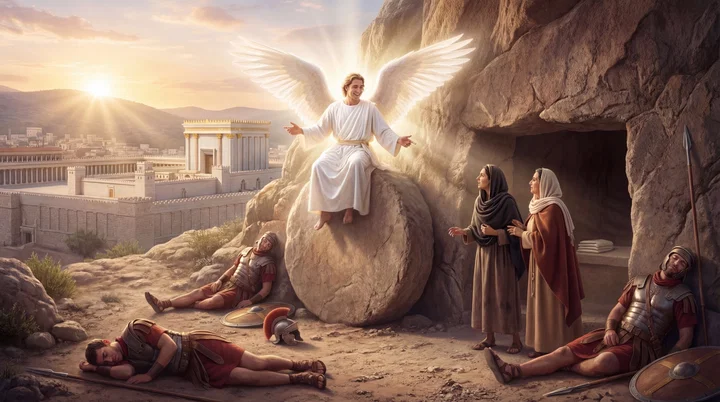
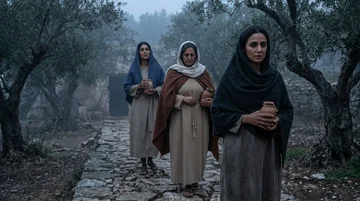
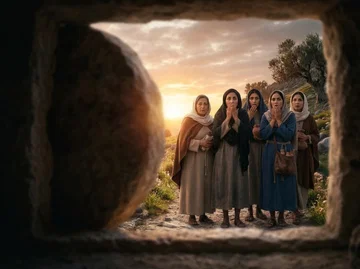
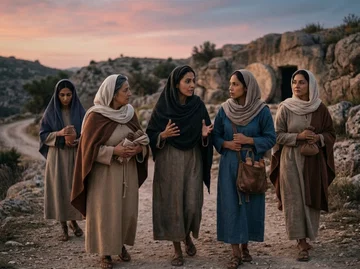
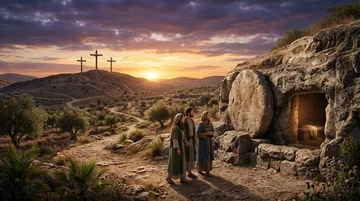
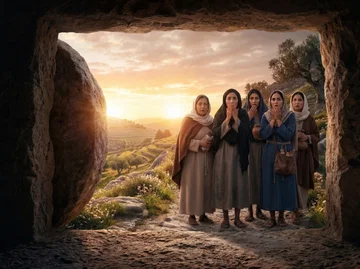
And very early in the morning the first day of the week, they came unto the sepulchre at the rising of the sun.
Translations
And very early in the morning the first day of the week, they came to the sepulcher at the rising of the sun.
King James Version, KJV Cambridge Paragraph Bible
And very early in the morning the first day of the week, they came unto the sepulchre at the rising of the sun.
And very early in the morning, the first day of the week, they came to the sepulcher at the rising of the sun:
Revised Version, American Standard Version
And very early on the first day of the week, they come to the tomb when the sun was risen.
and early in the morning of the first of the sabbaths, they come unto the sepulchre, at the rising of the sun,
And very early on the first [ day] of the week they come to the sepulchre, the sun having risen.
And, very early, on the first of the week, they are coming towards the tomb—when, the sun, arose.
Berean Standard Bible, Majority Standard Bible
Very early on the first day of the week, just after sunrise, they went to the tomb.
Very early on the first day of the week, they came to the tomb when the sun had risen.
And very early after dawn on the first day of the week, they came at the time of the coming up of the sun to the place where the body had been put.
Therefore early in the morning, the first day of the weeke, they came vnto the sepulchre, when the Sunne was nowe risen.
Douay-Rheims (Challoner revision)
And very early in the morning, the first day of the week, they come to the sepulchre, the sun being now risen.
Pictures
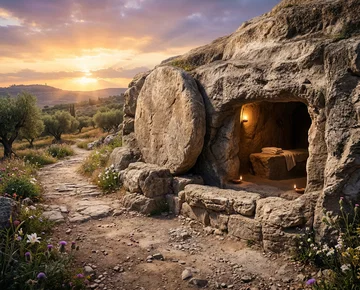
Cross-references 20 of 64
- Matthew 28:1
In the end of the sabbath, as it began to dawn toward the first day of the week, came Mary Magdalene and the other Mary to see the sepulchre.
Parallel account of the women visiting Jesus’ tomb on the first day after the Sabbath.
- Luke 24:1
Now upon the first day of the week, very early in the morning, they came unto the sepulchre, bringing the spices which they had prepared, and certain others with them.
Both describe the women coming to the tomb early on the first day of the week.
- John 20:1
The first day of the week cometh Mary Magdalene early, when it was yet dark, unto the sepulchre, and seeth the stone taken away from the sepulchre.
Mary comes to Jesus’ tomb early on the first day of the week.
- Luke 23:56
And they returned, and prepared spices and ointments; and rested the sabbath day according to the commandment.
The women rested on the Sabbath before going to the tomb on the first day.
- Mark 16:9
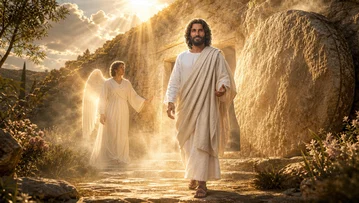
Now when Jesus was risen early the first day of the week, he appeared first to Mary Magdalene, out of whom he had cast seven devils.
Both place Jesus’ resurrection on the first day of the week.
- John 20:19
Then the same day at evening, being the first day of the week, when the doors were shut where the disciples were assembled for fear of the Jews, came Jesus and stood in the midst, and saith unto them, Peace be unto you.
Jesus appears to the disciples that evening on the first day of the week.
- Acts 20:7
And upon the first day of the week, when the disciples came together to break bread, Paul preached unto them, ready to depart on the morrow; and continued his speech until midnight.
Both texts use the same Greek expression for the first day of the week.
- 1 Corinthians 16:2
Upon the first day of the week let every one of you lay by him in store, as God hath prospered him, that there be no gatherings when I come.
Both use the same Greek expression for the first day of the week.
- Mark 15:42
And now when the even was come, because it was the preparation, that is, the day before the sabbath,
Jesus’ burial is placed on the preparation day before the Sabbath.
- Luke 24:13
And, behold, two of them went that same day to a village called Emmaus, which was from Jerusalem about threescore furlongs.
The Emmaus disciples travel on the resurrection day, the first day of the week.
- Matthew 12:40
For as Jonas was three days and three nights in the whale’s belly; so shall the Son of man be three days and three nights in the heart of the earth.
The three-days-and-nights prediction is compared with the Sunday resurrection timing.
- John 19:31
The Jews therefore, because it was the preparation, that the bodies should not remain upon the cross on the sabbath day, ( for that sabbath day was an high day,) besought Pilate that their legs might be broken, and that they might be taken away.
Identifies the Sabbath before the first-day tomb visit as a high day.
- 1 Corinthians 15:4
And that he was buried, and that he rose again the third day according to the scriptures:
Both texts place Christ’s resurrection on the third day.
- Mark 16:14
Afterward he appeared unto the eleven as they sat at meat, and upbraided them with their unbelief and hardness of heart, because they believed not them which had seen him after he was risen.
Jesus appears to the disciples on the first day and reproves their unbelief.
- Luke 24:2
And they found the stone rolled away from the sepulchre.
Both describe the women arriving at the tomb and finding the stone rolled away.
- Luke 23:54
And that day was the preparation, and the sabbath drew on.
The preparation day precedes the Sabbath, distinguishing both from the first day of the week.
- Matthew 16:21
From that time forth began Jesus to shew unto his disciples, how that he must go unto Jerusalem, and suffer many things of the elders and chief priests and scribes, and be killed, and be raised again the third day.
Jesus foretells that he will be raised on the third day.
- Romans 6:4
Therefore we are buried with him by baptism into death: that like as Christ was raised up from the dead by the glory of the Father, even so we also should walk in newness of life.
Baptism is presented as commemorating Christ’s resurrection.
- Luke 24:10
It was Mary Magdalene, and Joanna, and Mary the mother of James, and other women that were with them, which told these things unto the apostles.
Names Mary among the women who reported the empty tomb to the disciples.
- Matthew 27:66
So they went, and made the sepulchre sure, sealing the stone, and setting a watch.
The tomb was sealed and guarded before the women’s morning visit.
Commentary
Each commentary is drawn from primary sources: the writings of Ellen G. White and Adventist pioneers and periodicals. Each commentary is separate. Its own words are not a quotation; follow the references to read the source passages.
Ellen G. White
12 sources
The visit took place very early on the first day of the week, after the Sabbath had ended, at the rising of the sun, and that day was the day of the resurrection.Ms 115, 1897, par. 1–2COS 175.4–176.1ST Dec 14, 1882DA 788.13SP 198.2 The women had waited through the Sabbath before coming to the tomb with the spices they had prepared.Ms 115, 1897, par. 1–2COS 175.4–176.1DA 788.1 The verse names the day as the first day of the week but does not call it the Sabbath, the Lord's day, or a sacred day, and it gives no instruction to observe it as a weekly holy day.DA 842.2–8 The visit is also described as occurring before it was light.EW 153.2–154.1
Those who came were Mary Magdalene and Mary the mother of James and Salome, described as the three Marys and as the Marys with certain other women.Ms 115, 1897, par. 1–2ST Aug 22, 1878Ms 28, 1897, par. 21–29 They were the women who had watched Christ die and had stood by the cross.DA 788.1Ms 94, 1897, par. 22–23 They had prepared sweet and precious spices the day before, on the day before the Sabbath, and waited through the Sabbath before bringing them to the tomb.Ms 115, 1897, par. 1–2COS 175.4–176.1ST Dec 14, 1882ST Aug 22, 1878Ms 94, 1897, par. 22–23 Their purpose was to anoint and embalm the body and to continue the embalming work.Ms 115, 1897, par. 1–23SP 198.2SG1 71.2EW 153.2–154.1ST Aug 22, 1878
They came with no thought or expectation that Christ would rise from the dead.DA 788.1Ms 94, 1897, par. 22–23 They had forgotten His promise to see them again, hope was gone and night had settled on their hearts as they walked recounting His works of mercy and words of comfort.Ms 94, 1897, par. 22–23 As they approached they wondered who would roll away the stone from the door.Ms 115, 1897, par. 1–2 As they neared, the earth trembled beneath their feet and the heavens and sky were brightly and beautifully lit.ST Dec 14, 1882ST Aug 22, 1878
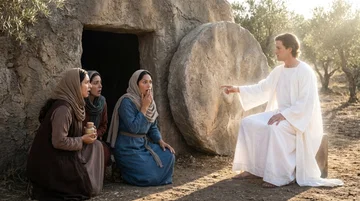
Hastening to the sepulchre they found the very great stone already rolled away from the door, the Roman guard gone, a light shining about the tomb, and the tomb empty when they looked inside.Ms 115, 1897, par. 1–2ST Dec 14, 18823SP 198.2SG1 71.2ST Aug 22, 1878 On entering they saw a young man sitting on the right side clothed in a long white garment, and being affrighted they were told not to be affrighted.Ms 115, 1897, par. 1–2 He told them that Jesus of Nazareth who was crucified is risen and is not there, showed them the place where He lay, and sent them to tell His disciples and Peter that He goes before them into Galilee where they will see Him as He said to them.Ms 115, 1897, par. 1–2SG1 71.2EW 153.2–154.1
Jesus was already no longer in the grave, having received life from heaven and risen as a mighty conqueror.Ms 83, 1910, par. 33–34 The resurrection was a fact even though the women themselves could not at first believe the news.Ms 83, 1910, par. 33–34 The report seemed to the apostles as idle tales and they believed not.Ms 115, 1897, par. 1–2 The verse means Jesus received no other anointing besides Mary's anointing before His death, for the Sabbath was nigh at hand and the women kept the Sabbath according to the commandment.Ms 28, 1897, par. 21–29
Sources
Pioneers and periodicals
129 sources
Very early on the first day of the week at sunrise, after the Sabbath had passed, the women came with spices to anoint Jesus and found the stone rolled away and the tomb empty with angels announcing He had risen.ST Nov 11, 1889ST Nov 12, 1894 The first day follows and is distinct from the Sabbath, the seventh and last day coming the day before, so the first day is not the Sabbath but Sunday.ST Mar 4, 1886ST Feb 7, 1911 The wording means the first day of the seven-day week counted from the Sabbath, and is exactly rendered first day of the week.RH Jan 2, 1900RH Dec 17, 1908ST Mar 24, 1887ST Apr 3, 1879RH Jan 2, 1900 It marks the day the empty tomb was found and that Christ rose, the day after the Sabbath and the third day after His crucifixion and burial.ST Nov 12, 1894RH Jan 17, 1856ST Aug 13, 1912 It merely records the time and gives no precept, blessing, rest, or sacred title making the first day holy or commanding its observance.ST Oct 17, 1878ST Nov 11, 1889
Women's Tomb Visit
After the Sabbath had passed, Mary Magdalene and Mary the mother of James and Salome came very early on the first day of the week at sunrise to the tomb of Jesus to anoint him with spices they had prepared and bought.ST Nov 11, 1889ST Oct 21, 1886ST Mar 16, 1882ST Aug 24, 1888 As they came they wondered who would roll away the stone for them, and on arriving they found it already rolled away from the door.ST Nov 12, 1894ST Oct 21, 1886 The Roman guard was gone, a light shone about the tomb, angels announced that he had risen, and when they looked inside the tomb was empty.ST Aug 22, 1878 The timing identifies the day of their visit but gives it no sacred title or religious obligation.ST Nov 11, 1889ST Sep 9, 1880ST Aug 24, 1888
Their purpose to anoint and their question about the stone show they had not been to the tomb on the evening before on the Sabbath, had not found it open, and had not yet been told he was risen, for otherwise they would not have come again that morning for that purpose with that question.RH Aug 12, 1875RH Feb 7, 1871 This was a visit to find the tomb open and Jesus risen, not a return after an earlier visit in which they had already learned he was risen.RH Feb 7, 1871 They did not witness the resurrection itself and did not yet believe, and only the guards saw the messenger, while the women learned the news, Mary Magdalene was sent to tell the disciples what had happened, and they received blessing before Pentecost.RH May 10, 1860RH Oct 23, 1856ST May 24, 1899 The visit records timing, not a gathering of disciples to celebrate the resurrection.RH Oct 23, 1856
Their coming so early proves a love not content to serve by others but needing to serve personally, hastening in the early dawning with sweet spices even though Joseph of Arimathea and Nicodemus had already wrapped the body with spices and even though reason said it was useless because the tomb was sealed and guarded.ST Aug 26, 1880RH Nov 9, 1911 They came only after resting on the seventh-day Sabbath according to the commandment, which remains binding, and their loving offering was not wasted but remained with them as a lasting fragrance.ST Aug 26, 1880RH Nov 9, 1911 Though friends told them not to go, they followed their weeping, saw where he was laid, refused to check tender promptings, and so became first to see Jesus who died for them, showing love must speak and act and still receives the Lord's sanction. They came expecting him to remain in long sleep in death, seeking him as the Dead One and not as the Living One, sorrow-blind and seeing only defeat intertwined with their lives, yet still seeking him, and this earnest devotion and eager seeking pleased God and met the risen One.ST May 18, 1882ST Nov 21, 1900 That death will destroy Satan's work and Satan himself, and the seeking pictures believers after nights of sorrow and despairing doubt seeking him again in the cold tomb of yesterday's experience and in the grave of buried hopes and disappointed ambitions where he is not, for he has gone before to blessings surpassing all that was known.ST Nov 21, 1900
The arrival at sunrise was very early at daybreak while still dim enough for objects to be hard to see, agreeing with John that they set out while dark.RH Oct 4, 1864ST Dec 14, 1882 Day can mean the light portion of a day, the Sabbath having ended and the first day dawning, as distinct from the full day which begins at sunset and runs sunset to sunset from Saturday sunset to Sunday sunset.ST Aug 9, 1899 The Sabbath closed at sunset so the first day began that evening, and the morning visit therefore fell on Sunday morning during that day, not on the Sabbath and not proving the day begins at sunrise.RH Oct 4, 1864RH Dec 15, 1863RH Dec 15, 1863 The phrasing illustrates evening reckoning with Sabbath-close gathering and early Sunday departure on a journey, and describes a working day, not a command.
The verse belongs to Mark's own true account of the resurrection and to the closing record of Christ's triumph over death, giving assurance believers will live through him with hope of eternal life.ST Jun 17, 1889ST Mar 5, 1912 It differs from Matthew, Luke and John because each writer was directed to tell particular details the others did not tell and to leave out details the others told, yet all four fit together in harmony without contradiction.ST Mar 5, 1912 Mark was a young man at the time who did not witness all the events though he may have witnessed some, and he wrote later after Luke and about the time of Matthew and before John, having seen what was written before yet writing as the Spirit directed to touch hearts with no effort to harmonize.ST Mar 5, 1912 With Matthew and Luke his testimony to the bodily resurrection of the Lord stands as firmly as their testimony to the virgin birth, so to cut out their birth testimony as incompetent discredits their credibility and Mark's credibility at every other point.RH Jan 1, 1914 The sealing of the stone and setting of the watch happened beforehand on the Sabbath while this coming happened afterward in the morning, showing he did not rise on Sabbath evening.ST Jul 30, 1912
Greek Phrase Meaning
The Greek word rendered week is sabbaton or sabbata, used by metonymy for the interval from Sabbath to Sabbath, hence the seven-day period.ST Mar 24, 1887ST Apr 3, 1879RH Mar 23, 1905RH May 31, 1864 When it follows a numeral naming a day of the week it means week here, not the Sabbath day itself, and the plural form is not confined to the seventh-day Sabbath.ST Mar 24, 1887ST Apr 3, 1879RH Mar 23, 1905RH May 31, 1864 The phrase identifies very early on the first day of the week as the time the women came to the tomb at sunrise, with wording differing between the Authorized and Revised Versions but with essentially the same meaning.RH Jan 2, 1900ST Mar 24, 1887RH Mar 23, 1905 The cardinal-number form one follows ancient Hebrew idiom as in the creation account, and the related term for week appears in ancient Syriac and other languages without calling the first day the Sabbath.RH Mar 23, 1905RH May 31, 1864
The feminine numeral mia for one or first agrees with the understood feminine hemera for day, not with neuter sabbaton, giving first day of the week.ST Apr 3, 1879RH May 31, 1864RH Mar 15, 1860RH Jul 24, 1866 The expression numbers the days in relation to the Sabbath as the principal day after the Hebrew and Syrian way of counting one, two, three from creation, as one in the Shabba and on to eve of the Sabbath, with Sunday called one of the Sabbath, Monday two of the Sabbath, and so on to Friday as eve of the Sabbath and Saturday as the Sabbath.RH Dec 17, 1908RH Jan 2, 1900RH Jun 24, 1915RH Mar 15, 1860 That week and its counting come from the divine institution at creation handed down by primitive tradition, and keeping the Hebrew idiom of one day explains the use of the cardinal one instead of first.RH Jun 24, 1915RH Mar 23, 1905 The same form in Luke and Acts cannot prove a new series of Sabbaths, and the different Greek words translated first in Mark 16:2 and Mark 16:9 have no difference in meaning.RH Jan 2, 1900RH Mar 15, 1860
The English rendering first day of the week is literally exact and correct.ST Mar 24, 1887ST Jan 16, 1896ST Jul 23, 1896 Rendering it sabbaths is erroneous, with no ground for any other rendering, as the grammatical construction requires week, not Sabbath.ST Mar 24, 1887ST Jan 16, 1896ST Jul 23, 1896 The claim that the King James words were inserted without original basis gives no proof of a Sabbath change.RH Nov 28, 1871RH May 31, 1864 The proposal to read first of Sabbaths or first of the Sabbaths, treating the phrase as marking the beginning of a new series of Sabbaths after the seventh-day Sabbaths ended and the first day became a Sabbath, is rejected as inconsistent and as misreading that gives no authority for Sunday sacredness.RH Nov 28, 1871RH May 31, 1864ST Mar 24, 1887RH May 4, 1869
It has been taught by those who held it that the verse literally reads upon the first of Sabbaths and marks transition from the old order of Sabbaths to a new order beginning at the resurrection.ST Mar 24, 1887 In that teaching the plural sabbaton hidden by the translation is to be rendered the first of the Christian Sabbaths, proving the evangelists call the first day Sabbath, marking the end of the seventh-day Jewish Sabbaths and the dawning into the first Christian Sabbath, with the eighth day and the first day the same as now the Sabbath for rest and holy meetings.RHRH Mar 15, 1860RH Sep 25, 1856ST Apr 10, 1879 The same teaching holds that the evangelists name the first day with the same word used for the seventh day because it signifies rest in both cases, calling it the first of the Sabbath or rest and setting the Christian Sabbath over against the Jewish Sabbath to prove a change.RH May 4, 1869RHRH Mar 15, 1860RH Sep 25, 1856 That argument is rejected as misreading, and the verse itself describes the women coming to the tomb on the first day of the week without saying that day is the Sabbath.RH Nov 28, 1871RH May 31, 1864ST Mar 24, 1887ST May 15, 1884 The opposite claim that the Greek has no week or day and knows resurrection day only as Sabbath eight times and Lord's day once is cited as disputed.RHST May 15, 1884
The verse is one of only eight New Testament mentions of the first day, none calling it holy or a Sabbath.ST May 16, 1878ST Sep 16, 1913ST Jul 18, 1878 Six of those eight concern the very same resurrection day when the women came to the tomb early in the morning, and two of the eight are by Mark, written about thirty-three years after the resurrection still calling it only first day of the week and not Lord's day or Sabbath.ST Mar 30, 1882ST Oct 14, 1913ST Jul 22, 1897ST Jul 18, 1878 Its mention gives the day no sacred title, blessing, sanctification, command to keep holy, or command to keep it in memory of the resurrection.ST May 16, 1878ST Sep 16, 1913ST Oct 14, 1913ST Jul 18, 1878 The word Sunday, of heathen sun-worship origin, does not occur in Scripture, and the verse stands as an example of the week word in the resurrection narratives showing Sunday distinct as the first day after the Sabbath was past.ST Mar 30, 1882ST Jul 22, 1897
Sabbath First-Day Order
The visit to the tomb took place very early on the first day of the week at sunrise, after the Sabbath had passed and ended, so the Sabbath did not continue into or abide on the first day.ST Mar 4, 1886ST Feb 7, 1911ST Aug 22, 1916ST Apr 29, 1913 The first day is distinguished from the Sabbath as the day following it, the Sabbath being the last day of the week and not the first, and the wording shows the first day was not regarded as the Sabbath.ST Mar 4, 1886ST Feb 7, 1911ST Aug 22, 1916ST Apr 29, 1913 The day before the first day is the Sabbath, the seventh day of the week, while the first day itself is Sunday by ordinary numbering, not the Sabbath and not Saturday.ST Feb 7, 1911ST Aug 22, 1916RH Oct 16, 1913ST Apr 29, 1913 The first day therefore followed the seventh-day Sabbath and was not counted as a Sabbath or rest day.ST Mar 4, 1886ST Apr 29, 1913
That order fixes the days at the time of the crucifixion, connecting the Sabbath before the first day with the Sabbath identified at Sinai through the manna and with the original Sabbath.ST Dec 12, 1892 Read with Genesis 2:2-3, the first day coming just after the Sabbath identifies the Sabbath as the seventh day, not the first day of the week.ST Dec 12, 1892 At the crucifixion the Sabbath was the seventh day kept from Friday evening at sundown to the following day at sundown, and the first day then was the day called Sunday, synchronized with pagan Saturday for the seventh day, with no change since.ST Apr 30, 1896ST Jan 21, 1897ST Sep 15, 1898 The Sabbath of the fourth commandment is therefore not Sunday but the seventh day just before the first day, kept from sunset Friday to sunset Saturday, and the first day runs from sunset Saturday to sunset Sunday.ST Apr 30, 1896ST Jan 21, 1897ST Sep 15, 1898 The Sabbath comes just before the first day of the week, so the commanded Sabbath is a definite particular seventh day of the week and not only a general proportion of one day in seven.ST Aug 4, 1909 The day begins at evening when the sun sets, so the Sabbath begins and ends at sunset.ST Apr 30, 1896ST Jan 21, 1897ST Sep 15, 1898
The women came early on the first day after the Sabbath, and the account distinguishes that day from the Sabbath and contrasts Sabbath rest with first-day activity.RH Nov 13, 1866ST Mar 16, 1882RH Jul 25, 1912 They had observed the seventh day as the Sabbath of the commandment and had rested on it according to the commandment, bringing spices on the first-day morning to finish anointing the body because they had counted the Sabbath too sacred for that work.ST Mar 16, 1882RH Jul 25, 1912ST May 24, 1899RH Nov 19, 1872 They came to do the work they had refrained from doing on the Sabbath, their scruples being gone on the first day when they carried spices to do work they would not do on the Sabbath.ST Mar 16, 1882RH Jul 25, 1912RH Nov 19, 1872 The first day is thus presented not as a sacred day or Sabbath but as an ordinary working day, and the account gives no testimony for its sanctity but bears against it.RH Nov 13, 1866ST Mar 16, 1882RH Nov 19, 1872 Christ also rested in undisturbed sleep in the tomb through the seventh day after finishing the labors of his earthly life, then was awakened to new life on the first day.RH Jul 25, 1912
The first day is a different day from the Sabbath, coming after the Sabbath was past, and the seventh day is still called the Sabbath even after the crucifixion and resurrection, proving the seventh day is still the Sabbath and should still be observed.ST Feb 10, 1904ST Aug 27, 1885ST Aug 13, 1912 The day after the Sabbath observed by the disciples was the first day of the week, therefore the Sabbath they kept was the seventh day of the week, the day ordained in the fourth commandment and hallowed in memory of God's rest in Eden and creation.ST Feb 16, 1882ST Dec 12, 1892RH May 5, 1874 Together with the statement that the Sabbath had passed, the sunrise arrival identifies the day before the first day as the Sabbath and shows it was still regarded as the day appointed by the commandment after Christ's resurrection.ST Feb 10, 1904ST Aug 27, 1885ST Aug 13, 1912 The Sabbath coming just before the first day is therefore the seventh day of the week, the Sabbath day according to the commandment, not a day made seventh by counting from Monday.ST Feb 16, 1882ST Nov 26, 1896ST Aug 13, 1912
Resurrection Day Timing
The visit very early on the first day of the week at sunrise is when the women came to anoint Jesus and found the tomb empty and him gone, and it identifies the first day after the Sabbath had passed as the day he rose.ST Nov 12, 1894RH Jan 17, 1856ST Aug 13, 1912ST Sep 9, 1880 He rose the day after the Sabbath, the third day after crucifixion and burial, the sixteenth day of the first month as antitype of firstfruits, and Mark states the first-day rising twice in concurrence with Matthew, Luke and John.ST Aug 13, 1912ST Sep 9, 1880RH Jun 2, 1851 The joyful morning proclaimed the risen Saviour as promised, reporting what happened that day without designating the day a Sabbath or commanding its observance.RH Jan 17, 1856ST Aug 13, 1912ST Sep 9, 1880 Those who held the narrower reading teach that the verse by itself identifies only when the women arrived and does not in its own words say he rose on the first day nor give any command to keep the day as Sabbath or in honor of the resurrection.RH Jan 17, 1856
By itself the verse does not state the exact hour he rose, only that by the arrival he was already risen and gone.ST Mar 16, 1882 Early describes when they went to the sepulchre or saw him, not when the resurrection occurred, allowing that the rising may have been at the beginning of the first day or near the end of the seventh.ST Mar 16, 1882 Mark 16:9 supplies the testimony that he rose on the first day, fulfilling his prediction of rising on the third day, and the women bringing spices and wondering who would roll away the stone shows this was their visit to the tomb and not a visit on the Sabbath.ST Feb 3, 1881ST Mar 16, 1882RH Jan 10, 1871 The timing therefore supports that he rose on the first day rather than during the Sabbath, with the preceding seventh day as the Sabbath, and the known day could properly commemorate it even if risen the day before.ST Feb 3, 1881ST Jun 18, 1894
Joined with crucifixion on the preparation day before the Sabbath, death and resurrection bracket only one Sabbath with no room for three nights lying in the grave, so the words about three days and three nights cannot mean three nights in the grave and must be explained to agree with this plain timing.ST Jun 10, 1875 The verse alone does not say burial was Friday nor that he was in the grave three days and three nights.ST Feb 8, 1905 Counting a day as twenty-four hours is used to argue crucifixion must have been Friday the sixth day for resurrection after part of the first day to fall on the third day, while counting from death about 3 p.m. Friday exposes a full seventy-two-hour theory to Monday at 3 p.m. rather than Sunday morning.RH Jan 9, 1872RH Jan 9, 1872 On a Wednesday crucifixion before a Thursday Sabbath the rising on the first day would come after the third day following that Sabbath with rest in the tomb for part of five days implying two weekly Sabbaths, and the Sunday-morning timing is also counted as the third day after betrayal though only part of the first and last days had passed.RH Mar 23, 1869ST Jun 11, 1912
The sealing of the stone and setting of the watch happened beforehand on the Sabbath day while the coming happened afterward in the morning at dawn, in harmony with Matthew and Luke, showing he did not rise on Sabbath evening but arose early on the first day.ST Jul 30, 1912ST Nov 24, 1914 At early dawn a mighty shining angel came down from the Father's presence, the earth trembled, the Roman soldiers fell like dead men, the angel rolled away the stone and sat upon it, awakened Jesus from death's sleep with the heavenly call to come forth, and Jesus came forth to die no more having the keys of death and the grave as mighty conqueror.RH Sep 16, 1915 His triumphant resurrection makes possible the resurrection of all the dead, as by Adam death came and by Christ the resurrection came, every man in his own order.RH Sep 16, 1915 The first day had already begun before Jesus rose, so his rising came later and did not begin a new Sabbath at the moment the old Sabbath ended.RH Dec 5, 1871
The verse is relevant to the dispute over whether Jesus rose on the Sabbath or on the first day of the week, where if he rose on the first day that fact could be used as an argument for Sunday observance, though too much importance is attached to proving the day of resurrection.RH Oct 4, 1864
No Sacred Title Command
The visit to the tomb took place very early on the first day of the week at sunrise after the Sabbath had passed, when the women came bringing spices to anoint the body and found he was no longer there.ST Oct 17, 1878ST Nov 11, 1889RH Jan 17, 1856ST Feb 15, 1910 The account simply records the time and day of that arrival and identifies that day as the day of the resurrection, without calling it holy or a Sabbath and without stating any religious obligation belonging to it.ST Oct 17, 1878ST Nov 11, 1889RH Jan 17, 1856ST Sep 6, 1910ST Feb 15, 1910 It gives no precept, no example, no sacred title, no blessing, no hallowing, no rest and no authority making the first day holy, making it the Sabbath or the Christian Sabbath or the Lord's day, changing the Sabbath to it, transferring blessing to it, or commanding abstinence from labor on it.ST Oct 17, 1878ST Sep 6, 1910ST Sep 16, 1913ST Jul 30, 1912 Its silence where sacredness would have been stated witnesses against Sunday sacredness, for it distinguishes the first day from the Sabbath by showing the Sabbath is the last day of the week, not the first.ST Oct 17, 1878RH Nov 19, 1872
Though written twenty to thirty-three years after the resurrection, the record still calls the resurrection morning only by the secular numeral the first day of the week, not the Sabbath and not the Lord's day.ST Jul 21, 1909RH Apr 1, 1873ST Oct 19, 1882ST Apr 13, 1915ST Sep 16, 1913 At the same time it keeps the distinction between holy and profane by calling the preceding day the Sabbath, the seventh day kept according to the commandment with resting from labor and refraining from embalming work as too sacred for that day.ST Jul 21, 1909RH Apr 1, 1873ST Apr 13, 1915RH Jul 25, 1912RH Nov 19, 1872 That continued secular naming proves no change of the Sabbath to the first day was known and no holy esteem belonged to it, for such a change would have been stated as fully as the institution of baptism and the Lord's Supper.ST Jul 21, 1909RH Apr 1, 1873RH Nov 19, 1872 The women came on the first-day morning to finish anointing because their scruples about that work were gone, and Christ himself is shown resting in undisturbed sleep in the tomb through the seventh day after finishing his earthly labors before being awakened to new life on the first day.RH Jul 25, 1912RH Nov 19, 1872
The verse is New Testament evidence that events occurred on the first day following the Sabbath without establishing a change, and to require resurrection-day observance from it is will-worship.RH Jun 23, 1853ST Feb 15, 1905RH Nov 19, 1872RH Mar 31, 1868ST Jul 30, 1912 The Bible always distinguishes the two days by calling the resurrection morning the first day and never the Sabbath, proving the first day is not the Sabbath but a different day entirely and leaving Sunday-keeping as a purely man-made institution while the seventh day alone is the Sabbath of the Lord commanded in the fourth commandment.RH Jun 23, 1853ST Feb 15, 1905ST Jan 21, 1897RH Mar 31, 1868ST Jul 30, 1912 All eight New Testament mentions of the first day put together still amount to nothing in favor of Sunday, giving no proof that the first day is the Sabbath, no precept or example for keeping it, no mention of it by Christ, and no authority for a change.RH Nov 19, 1872RH Mar 31, 1868ST Jul 30, 1912 Condemning Sunday newspapers and Sunday theaters does not keep the commandment, which requires keeping not Sunday but the seventh day from sunset Friday to sunset Saturday, the day just before the first day.RH Nov 19, 1872ST Jan 21, 1897ST Jul 30, 1912
The timing of the sunrise visit on the resurrection day does not establish that the weekly Sabbath was interrupted each year. That association of the first day with the resurrection also does not establish that Jesus was born on Sunday or give the first day special sacred status.ST Apr 8, 1889
Sunday Observance Debated
The rising on the first day is the ground given for celebrating Sunday on its weekly return and for calling it the Christian worship day and Lord's day.RH Nov 27, 1913ST Jan 5, 1882RH Apr 28, 1853ST Oct 21, 1880ST Jul 12, 1899 It is identified as the day the women came to the tomb very early at sunrise and the day Christ rose from the dead, an event that led to honoring the day as the Lord's day and to observing the first day in commemoration of the resurrection but not as the Sabbath, which belongs to Israel.RH Nov 27, 1913ST Jan 5, 1882RH Apr 28, 1853ST Oct 21, 1880ST Jul 12, 1899 The first day is thus numerically distinct from the seventh-day Sabbath, called Sunday in civil naming and observed as a day of worship commemorating the resurrection of the Saviour of the world.RH Nov 27, 1913ST Jan 5, 1882ST Jul 12, 1899 The formal mention of the first day, uniform in all four Gospels written twenty to more than sixty years after the resurrection, shows the first day had become an honored and noted day among Christians when the histories were written, stated twice by Mark in Mark 16:1-6 and again in verse 9 in concurrence with Matthew, Luke and John, distinct from the language of Christ, the angels, the chief priests and Pharisees, and the disciples, who all speak of the resurrection as on the third day from the crucifixion and burial.RH Apr 1, 1873 Early Christian writers gave this resurrection connection as the reason for celebrating Sunday with joyful public worship, reading, prayers, hymns and communion for centuries before Constantine legalized it, and Gentile converts previously revering the sun's day connected that observance with Christianity.ST Oct 21, 1880
The fact of discovery and appearances that day does not by itself establish intent to honor the day, appoint worship, institute a new Sabbath, transfer the Sabbath, change the law or obligate keeping.RH Oct 21, 1873ST Oct 21, 1897ST May 19, 1909ST Sep 12, 1916RH May 7, 1872 The record is an account of the resurrection day, not a command to keep Sunday or evidence that the Sabbath was changed, calling the day only first day of the week without blessing or sanctifying it, without commanding its observance, without calling it the Sabbath or Lord's day, and without making it a rest day.RH Oct 21, 1873ST May 19, 1909ST Sep 12, 1916 A meeting of Jesus with his disciples on the first day in Mark 16 does not establish a first-day Sabbath, and the verse is one of eight New Testament mentions of the first day that does not call the first day the Sabbath and does not record any change of the Sabbath from the seventh day to the first in commemoration of the resurrection.RH Oct 21, 1873ST Oct 21, 1897ST May 19, 1909 No act or teaching sets the day apart, there is no Thus saith the Lord, and inference is inadmissible where express statement or necessary consequence is required, with abstinence from labor not treated as sin until the late second century.RH Oct 21, 1873 The conduct that day shows it was not kept as holy, for Mary Magdalene with Joanna and Mary came very early at sunrise, then ran back to tell the disciples who did not believe Jesus had risen, two disciples spent the day walking to Emmaus and back, Jesus did not meet the apostles until the evening meal after the day, the day ended at sunset, the disciples on that evening did not commemorate the resurrection because they did not believe He was risen, and Christ rebuked their unbelief and hardness of heart; the verse supports the Gospel writers' identification of that day and does not allow it to be counted as the seventh day.RH Oct 21, 1873ST May 19, 1909RH May 7, 1872
Chronological calculation claims the resurrection day was the seventh from creation or Adam's rest now appearing as first, so that what began in Paradise as the seventh day of the original week appears in the New Testament as the first day, making Sunday the seventh or original Sabbath so that keeping Sunday keeps the seventh.ST Apr 24, 1879ST Jun 12, 1879RH Jun 2, 1851 That use of the timing to prove Sunday was the seventh day or the Sabbath is disputed as perverting the commandment, and the verse leaves sacred history definite against an any-day theory.RH Jun 2, 1851 Jesus rose on the first day after the Sabbath, remaining the first of all the days and yet also called the eighth according to the number of all the days of the cycle, and the command to circumcise on the eighth day as a type of true circumcision from deceit and iniquity through the risen Christ is used as scriptural authority for first-day observance.RH Aug 19, 1873 The eighth day after birth does not come on the first day only but comes on every day of the week alike, even on the seventh, so it cannot prove the first day to be sacred.RH Aug 19, 1873
Harmony Moral Application
The timing stands in agreement with Matthew when the phrase about late on the Sabbath is taken with the securing of the tomb in the preceding verse and the dawn is taken with the first day in the next verse.ST Feb 8, 1905 The Greek opse sabbaton means after or at the end of the Sabbath, after the Sabbath is past, not at sundown at its close, and it must be read in the light of the sunrise arrival on the first day and the other evangelists.ST Feb 8, 1905ST Jan 20, 1898ST Sep 15, 1898 The day begins at evening when the sun sets, so the Sabbath begins and ends at sunset and the visit comes afterward in the morning.ST Sep 15, 1898 Together with the other resurrection accounts the visit identifies the first day as the day Jesus rose, but it does not describe the day as sacred or record the disciples meeting for worship that morning.ST Aug 13, 1912 On that day the people did not believe he had risen, and therefore did not keep the day in honor of his resurrection.RH May 1, 1900 On that resurrection evening they did not commemorate the resurrection because they did not believe he was risen, having spent the day to Emmaus, and Jesus met them only at the evening meal and rebuked their unbelief and hardness of heart.ST Aug 13, 1912RH Oct 21, 1873
The verse belongs to the closing record of Christ's life on earth, which records his triumph over death. It gives assurance that believers will live through him with hope of eternal life, and no further lesson is drawn from the time details. The claim that Christ's resurrection on the first day was a reason for making that day the Sabbath is a shallow argument, for if the moral law is abolished a reason for choosing a day does not matter.ST Jul 24, 1884 The claim that the Holy Spirit descended on Jesus on the first day is rejected, with that event placed at his baptism.ST Jul 24, 1884 The wording has been discussed in relation to the claim that the Gospel writers called the first day Sabbath, but early Christian usage reserved Sabbath for Saturday and did not understand the Gospel wording to give the first day that title.RH Dec 5, 1871 It mentions the first day as the time of the coming to the sepulchre in connection with the resurrection, but it says nothing about the first day as the Christian Sabbath and gives no declaration or implication that the Sabbath is changed to that day.RH May 12, 1874 Though it stands at the very point where the first day would have become sacred in commemoration of the resurrection if that were true, it gives no intimation of any sanctification of the resurrection day, still calling the preceding day the Sabbath and never giving that honorable title to the first day.RH Oct 21, 1873RH May 12, 1874
Bible characters occupied with ordinary work that first day shows it a secular working day, giving Bible example for working on Sunday the same as any other secular day.ST Jul 30, 1912 It records the women coming to anoint the body and the disciples engaged that day in labor such as anointing rather than Sabbath rest, treating it as a day of labor distinct from the seventh-day Sabbath.ST Feb 17, 1881ST Feb 1, 1883 Neither Jesus nor the angel told them to rest or keep that day as a Sabbath, when the angel rolled back the sealed stone, comforted them, and sent them at once to tell the disciples that Jesus had risen.RH Aug 15, 1854 Jesus rose on the first day and appeared to his disciples on that day several times, but those appearances were to show them he was alive and risen from the dead.ST Aug 6, 1912 In no case did he tell them that day was a holy day, for the appearances only proved aliveness not holiness.ST Jul 30, 1912ST Aug 6, 1912
The arrival at sunrise is set in distinctive relation to the seventh day, giving the first day a meaning that cannot be disregarded.ST Mar 4, 1886 The week has definite beginning and end with the seventh as final Sabbath continuously observed by God's people everywhere according to the fourth commandment.ST Mar 4, 1886 It is the second New Testament mention of the first day and simply records that the women came to the sepulchre very early in the morning at the rising of the sun.ST Jul 4, 1905 It does not call the day holy, attach any sacredness to it, or give any command to keep it, and therefore gives nothing in favor of Sunday observance.ST Jul 4, 1905ST Sep 12, 1916 A meeting of Jesus with his disciples on the first day as recorded in Mark 16 does not establish a first-day Sabbath.ST Oct 21, 1897 It is an account of the resurrection day, not a command to keep Sunday or evidence that the Sabbath was changed.ST Sep 12, 1916 It supports that Jesus rose on the first day, but it does not say that Jesus commanded his followers to rest that day or that Christians are required to observe it as a day of rest.RH Mar 18, 1862 The Marys with certain other women came to embalm and anoint the body, having prepared the spices on the day before the Sabbath, and as they neared the garden the heavens were beautifully lighted up and the earth trembled, and hastening to the sepulchre they found the stone rolled away, the Roman guard gone, a light shining about the tomb, and the tomb empty when they looked inside.ST Aug 22, 1878 It calls the day when the women came the first day of the week, supporting the Gospel writers' identification of that day and not allowing it to be counted as the seventh day.RH May 7, 1872
Sources