Leviticus 24:6
And thou shalt set them in two rows, six on a row, upon the pure table before the LORD.
Translations
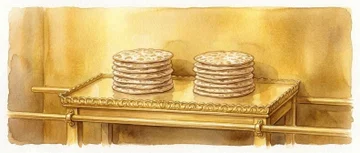
And you shall set them in two rows, six on a row, on the pure table before the LORD.
King James Version, Revised Version
And thou shalt set them in two rows, six on a row, upon the pure table before the LORD.
And thou shalt set them in two rows, six on a row, upon the pure table before the Lord.
And thou shalt set them in two rows, six in a row, upon the pure table before the LORD.
And thou shalt set them in two rows, six on a row, upon the pure table before Jehovah.
and thou hast set them two ranks (six in the rank) on the pure table before Jehovah,
And thou shalt set them in two rows, six in a row, upon the pure table before Jehovah.
And thou shalt set them in two rows, six in a row,—upon the pure table, before Yahweh.
Berean Standard Bible, Majority Standard Bible
and set them in two rows— six per row— on the table of pure gold before the LORD.
You shall set them in two rows, six on a row, on the pure gold table before the LORD.
And put them in two lines, six in a line, on the holy table before the Lord.
And thou shalt set them in two rowes, six in a rowe vpon the pure table before the Lord.
Douay-Rheims (Challoner revision)
And thou shalt set them six and six one against another upon the most clean table before the Lord:
Pictures
Cross-references
- 1 Samuel 21:6
So the priest gave him hallowed bread: for there was no bread there but the shewbread, that was taken from before the LORD, to put hot bread in the day when it was taken away.
The removed showbread was replaced with hot bread before the Lord.
- 1 Chronicles 9:32
And other of their brethren, of the sons of the Kohathites, were over the shewbread, to prepare it every sabbath.
Both describe the showbread’s preparation each Sabbath.
- John 6:35
And Jesus said unto them, I am the bread of life: he that cometh to me shall never hunger; and he that believeth on me shall never thirst.
The showbread represents Christ, the bread of life.
- Exodus 25:30
And thou shalt set upon the table shewbread before me alway.
Commands bread to be kept continually on the table before God.
- Matthew 12:3-4
But he said unto them, Have ye not read what David did, when he was an hungred, and they that were with him;
Jesus cites David eating the sacred bread while defending his disciples.
- Mark 2:26
How he went into the house of God in the days of Abiathar the high priest, and did eat the shewbread, which is not lawful to eat but for the priests, and gave also to them which were with him?
Jesus recalls David eating the bread reserved for priests.
- John 6:51
I am the living bread which came down from heaven: if any man eat of this bread, he shall live for ever: and the bread that I will give is my flesh, which I will give for the life of the world.
Christ identifies himself as the living bread foreshadowed by the showbread.
- Hebrews 9:1-5
Then verily the first covenant had also ordinances of divine service, and a worldly sanctuary.
Describes the earthly sanctuary and its furnishings as a pattern of the heavenly sanctuary.
- Exodus 40:23
And he set the bread in order upon it before the LORD; as the LORD had commanded Moses.
Describes the bread being set in order on the table.
- Luke 6:4
How he went into the house of God, and did take and eat the shewbread, and gave also to them that were with him; which it is not lawful to eat but for the priests alone?
Jesus refers to David eating the showbread in the Sabbath controversy.
- 1 Samuel 21:3-4
Now therefore what is under thine hand? give me five loaves of bread in mine hand, or what there is present.
David asks the priest for the hallowed bread.
- John 6:48
I am that bread of life.
The showbread is connected with Christ as the living bread.
- John 6:56
He that eateth my flesh, and drinketh my blood, dwelleth in me, and I in him.
The showbread is linked to Christ as the Bread of life.
- Leviticus 21:22
He shall eat the bread of his God, both of the most holy, and of the holy.
The holy bread includes the showbread set before the LORD.
Commentary
Each commentary is drawn from primary sources: the writings of Ellen G. White and Adventist pioneers and periodicals. Each commentary is separate. Its own words are not a quotation; follow the references to read the source passages.
Ellen G. White
1 source
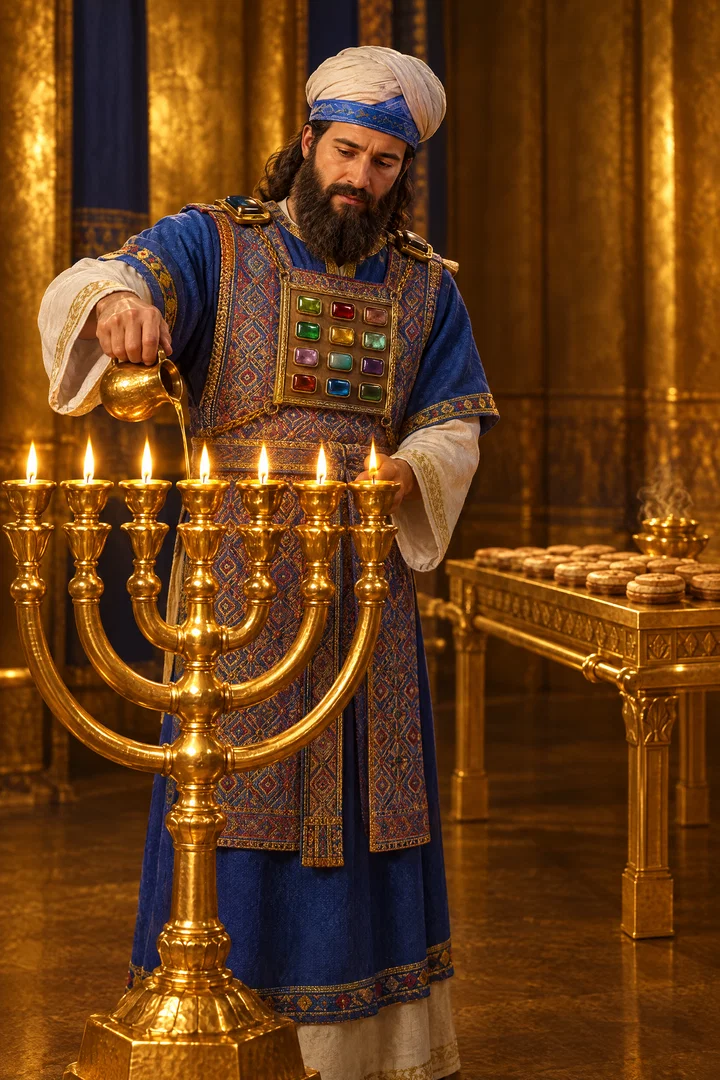
The table held twelve cakes of showbread, placed in two rows with six cakes in each row upon the pure table standing before the Lord.PP 348.1 The priests were the ones who arranged the bread in its place each Sabbath day, and as they set it they sprinkled frankincense over it.PP 348.1 When the loaves were afterward taken off the table they remained holy, and they were eaten by the priests.PP 348.1
Sources
Pioneers and periodicals
39 sources
Twelve unleavened loaves were set in two rows of six on the pure table in the holy place to stand continually before the Lord, with pure frankincense placed on each row.RH Dec 25, 1900ST Jul 17, 1879RH Jan 21, 1862ST Nov 19, 1912ST Apr 1, 1913 Fresh loaves were set in order before the Lord every Sabbath morning and remained through the week, and the bread removed was eaten only by priests in Levitical purity in the holy place.RH Dec 25, 1900RH Feb 4, 1862RH Jan 21, 1862ST Feb 10, 1904RH Jan 22, 1914 The bread represented Christ as the bread of God's presence, the bread of life and true bread from heaven who satisfies the hungry soul.RH Dec 25, 1900ST Sep 22, 1914ST May 8, 1901 The twelve loaves stood for the twelve tribes of Israel, memorializing God's continual presence among them and His goodness in giving spiritual and temporal blessings continually through Christ.RH Dec 25, 1900RH Sep 8, 1874ST May 8, 1901RH Dec 25, 1900 Preparing and changing this bread on the Sabbath was commanded work done without blame, showing that God's people are to receive His Word freshly on the Sabbath and assimilate it for strength for the week.RH Feb 4, 1862ST Apr 5, 1883ST Nov 19, 1912
Arrangement Before The Lord
Twelve loaves or cakes were to be set in order in two rows with six in each row upon the pure table before the Lord.RH Dec 25, 1900ST Jul 17, 1879RH Jan 21, 1862RH Sep 8, 1874ST May 8, 1901 That table stood in the holy place, and no bread pertained to or was offered in the most holy place.RH Sep 8, 1874RH Aug 28, 1853 The holy food set there in two rows of six upon the pure table before the Lord was the bread that a blemished priest who may not offer it may still eat.RH Aug 28, 1853
Pure frankincense was placed on each row and sprinkled over the cakes.ST Nov 19, 1912ST Apr 1, 1913RH Dec 25, 1900 The twelve unleavened loaves were so arranged on the pure table before the Lord with the frankincense upon each row.ST Nov 19, 1912RH Dec 25, 1900
The loaves were unleavened.ST Nov 19, 1912RH Dec 25, 1900 Because they were unleavened they did not become stale.RH Dec 25, 1900
The name means literally bread of the face or faces and bread of the presence, because it stood continually in the presence of God.RH Sep 8, 1874ST Feb 7, 1906ST Jan 30, 1896 It is a symbol of the life for which men are continually dependent on God, and its name and placement signify God's presence.RH Sep 8, 1874ST Feb 7, 1906 The English name shewbread comes from the German schau-brote.RH Sep 8, 1874 It was called showbread because through this bread God was revealed to the Hebrew nation.ST May 8, 1901
The table was a sacred vessel of the temple belonging to the holy place.RH Dec 8, 1859ST May 14, 1902 Its depiction with its loaves on the Arch of Titus as spoils taken by the Romans provides a historical illustration of the account.RH Dec 8, 1859ST May 14, 1902
Sabbath Handling Of Bread
Fresh bread was set in order before the Lord every Sabbath morning, remained before Him through the week, and was then removed to make room for the fresh loaves.RH Dec 25, 1900RH Feb 4, 1862RH Jan 21, 1862RH Sep 8, 1874RH Jan 22, 1914 When the fresh loaves were placed before the Lord, the old loaves were taken away and eaten by the priests who ministered in the temple.RH Feb 4, 1862RH Jan 21, 1862RH Sep 8, 1874ST Feb 10, 1904RH Jan 22, 1914 The loaves were twelve in number, placed on the sanctuary table and changed every Sabbath, after which the priests used the old loaves.RH Jan 21, 1862RH Sep 8, 1874ST Feb 10, 1904 The bread was prepared by the priests and placed on the table of showbread every Sabbath.RH Dec 25, 1900RH Feb 4, 1862RH Jan 22, 1914
The bread was placed on the table hot, so it had been baked on the Sabbath, with fresh hot loaves replacing those that had remained there during the week.RH Dec 25, 1900ST Sep 8, 1909 The Sabbath service of replacing the bread taught renewed strength and warmth.RH Dec 25, 1900ST Sep 8, 1909
The bread taken away each week was eaten only by priests in a state of Levitical purity in the holy place.RH Jan 22, 1914RH Aug 28, 1853ST Apr 1, 1913ST May 6, 1897 The cakes removed from the table were eaten by the priests in the holy place, the old loaves being eaten by the priests in the holy place after renewal every Sabbath.ST Apr 1, 1913ST May 6, 1897 Even a blemished priest who may not offer the holy food may still eat this holy bread of God.RH Jan 22, 1914RH Aug 28, 1853 Although technically reserved for priestly use, this reservation did not prevent its exceptional use by others in need.ST Feb 10, 1904
The bread was made by the Levites, while the priests received it ready-made and placed and cared for it on the table rather than preparing it.ST May 6, 1897ST May 6, 1897 The priests received and cared for the bread, renewed it every Sabbath, and then partook of it, which illustrates receiving and partaking for nourishment.ST May 6, 1897ST May 6, 1897 Those who held that the priests themselves prepared and baked the bread taught it as part of their commanded Sabbath work of preparing and changing the showbread.RH Dec 25, 1900ST Apr 5, 1883RH Jan 22, 1914
The bread remained on the table for seven days and was consumed on the eighth day.RH Dec 25, 1900RH Jan 21, 1862ST Apr 24, 1879 David and his hungry men received this priest-reserved bread from the priest at Nob while David was fleeing from Saul, when the tabernacle was at Nob.ST Feb 10, 1904ST Nov 5, 1912 The priests set the showbread before the Lord each Sabbath day in the tabernacle at Nob at that time.ST Feb 10, 1904ST Nov 5, 1912
What Bread Represented
The bread is Christ, the bread of God's presence and the bread of life, the true bread from heaven and heavenly manna made from fine flour, who satisfies the hungry soul and would come to restore all things.RH Dec 25, 1900ST May 8, 1901ST May 6, 1897RH Dec 25, 1900ST May 6, 1897 As prepared bread received and partaken to appropriate him and gain nourishment, he gives himself to his chosen people with renewed strength and warmth.ST Sep 22, 1914ST Sep 8, 1909ST May 6, 1897 Through this bread God was revealed to the nation, which is why it was called showbread.ST May 8, 1901
The twelve loaves are the twelve tribes of Israel, one loaf for each tribe, each tribe's share of heavenly sustenance and heaven's sustaining care.ST May 8, 1901RH Dec 25, 1900ST Nov 21, 1892RH Jul 27, 1916 Their weekly renewal with fresh bread every Sabbath morning was a pledge of renewed blessings from heaven through the week, with fresh blessings available on the holy day to sustain the people.ST May 8, 1901ST Nov 21, 1892RH Jul 27, 1916
Its name, bread of the presence, and its placement continually before the Lord signify God's continual presence among Israel.RH Dec 25, 1900RH Dec 25, 1900ST Feb 7, 1906ST Jan 30, 1896 That presence was intended to abide in the inner life of every person in every tribe, and God's presence in the soul cleanses from all unrighteousness. So typified, Christ is continuously present with his people by his Spirit where they do his will, as he was with Israel in the wilderness, and its holiness belongs to that presence.ST May 8, 1901ST Jan 30, 1896
The cakes memorialize God's goodness in providing for the tribes and symbolize the life for which men are continually dependent on God.RH Sep 8, 1874ST May 8, 1901 They are spiritual and temporal blessings, manifold grace, favor, and renewed blessings from heaven received continually through Christ for the week, by which Christians replenish spiritual life, even God's word, grace and favor sustaining human life.RH Dec 25, 1900ST May 8, 1901RH Dec 25, 1900ST Nov 21, 1892 The pure frankincense placed on each row and sprinkled over the cakes is Christ's righteousness covering his people.RH Dec 25, 1900
The sanctuary objects were made according to the pattern shown to Moses as earthly shadows of heavenly things pointing to the gospel, including this continual service teaching the true bread from heaven.ST May 6, 1897RH Aug 27, 1908 The earthly table needs no counterpart in heaven because Christ himself is the reality it represented.ST May 6, 1897
Sabbath Law And Ceremony
Preparing and changing the showbread on the Sabbath was commanded manual work done without blame or guilt.RH Feb 4, 1862ST Apr 5, 1883 Fresh loaves were to be prepared each Sabbath, with the old bread removed from the table before the Lord and eaten by the priests who ministered in the temple.RH Feb 4, 1862ST Apr 5, 1883 The priests were commanded to prepare and change the bread on that day, doing manual labor without blame because it was the Lord's work.RH Feb 4, 1862ST Apr 5, 1883 The Sabbath command forbids people's own work, not work done for God.ST Apr 5, 1883
The rule requiring the showbread to be presented on the Sabbath belonged to the worship shaped to fit the appointed times.RH Jan 7, 1862RH Mar 21, 1865 It was a law about the Sabbath given to the Hebrews because the Sabbath was entrusted to them, and a Sabbath-related rule entrusted to them as a law peculiar to Israel.RH Jan 7, 1862RH Mar 21, 1865 It was not part of the original Sabbatic institution itself, nor part of the fourth commandment as the grand law of the Sabbath.RH Jan 7, 1862RH Mar 21, 1865
The ceremonial precept commanding the priests to set forth the showbread every Sabbath in two rows of six on the pure table before the Lord was given after the tabernacle was set up.ST Jul 17, 1879ST Jul 17, 1879 Moses set up the tabernacle and set the table and the showbread in it on the first day of the first month, some time before that Sabbath showbread law was given.ST Jul 17, 1879ST Jul 17, 1879 That placing of the bread on Abib 1 therefore furnishes no proof that Abib 1 was a weekly Sabbath.ST Jul 17, 1879ST Jul 17, 1879
The showbread ordinance in Leviticus 24:5-9 is called perpetual or everlasting, but that wording is no stronger than commanded to a thousand generations.RH Apr 15, 1873 That perpetuity has expired, just as have the Aaronic priesthood, the Passover and its feast, circumcision, and other things called perpetual or everlasting.RH Apr 15, 1873 Calling an ordinance perpetual therefore does not prove that it still continues in force.RH Apr 15, 1873
Ties To Other Scriptures
Leviticus 24:5-9 requires fresh showbread to be prepared each Sabbath, with the old bread removed from the table before the Lord and eaten by the priests who ministered in the temple.RH Feb 4, 1862 That Sabbath labor was permitted and did not make the priests guilty, and it is compared with the disciples relieving their hunger by eating standing grain on the Sabbath.RH Feb 4, 1862 David's eating of the showbread violated the letter of the governing law, and the example does not show obedience to it in spirit.ST Jan 16, 1879 The twelve showbread loaves were arranged in two rows of six on the pure table before the Lord.RH Apr 17, 1879ST Oct 1, 1896 They are a type of Christ the bread of life, placed among the tabernacle types associated with the eucharist, and proposed for comparison with the living bread in John 6.RH Apr 17, 1879ST Oct 1, 1896
Present Application For Believers
The twelve loaves set fresh before the Lord every Sabbath show that his people are to receive his Word freshly on the Sabbath and take it into their lives.ST Nov 19, 1912 Like bread assimilated as food, the Word so received gives strength for daily duties and prepares for the temptations of the week.ST Nov 19, 1912 Parents are to set that fresh, living bread from Scripture before their households each Sabbath and partake of it themselves.RH Dec 25, 1900 Its teaching thus becomes part of experience and strengthens through the week, and because the bread was unleavened it did not become stale.RH Dec 25, 1900
Placing the bread on the Sabbath illustrates the privilege, when teaching or leading worship, of giving people fresh, living truth from the Word rather than repeating stale lessons.RH Dec 25, 1900 The bread set before the people is Christ as the bread of life.RH Dec 25, 1900 In the Sabbath service the bread was set in order on the Sabbath, remained before the Lord through the week, and was removed and eaten by the priests on the next Sabbath.RH Dec 25, 1900 Because it was placed on the table hot, it had also been baked on the Sabbath.RH Dec 25, 1900
Its Sabbath preparation, placement, removal, and eating made the whole showbread service a shadow of Christ's work and a lesson about the Sabbath.RH Dec 25, 1900 The bread represented Christ's continual presence and spiritual and temporal blessings.RH Dec 25, 1900 The changing of the bread every Sabbath, with fresh, hot loaves replacing those that had remained during the week, taught that Jesus Christ, whom the showbread symbolized, gives himself to his chosen people with renewed strength and warmth.RH Dec 25, 1900ST Sep 8, 1909 Christ so typified is present by his Spirit with those who do his will, as he was with Israel in the wilderness, showing his continuous presence with his people.ST May 8, 1901
The showbread was not merely for display but was to be consumed, illustrating that service to God means giving oneself wholly to him.RH Dec 3, 1901 The priests were commanded to prepare and change it on the Sabbath, doing manual work without blame because it was the Lord's work.ST Apr 5, 1883 The Sabbath command forbids people's own work, not work done for God, so going to worship is pleasing to God, unlike using the trip for recreation or socializing.ST Apr 5, 1883
Sources