Luke 6:4
How he went into the house of God, and did take and eat the shewbread, and gave also to them that were with him; which it is not lawful to eat but for the priests alone?
Translations
How he went into the house of God, and did take and eat the show bread, and gave also to them that were with him; which it is not lawful to eat but for the priests alone?
How he went into the house of God, and did take and eat the shewbread, and gave also to them that were with him; which it is not lawful to eat but for the priests alone?
how he went into the house of God, and did take and eat the shewbread, and gave also to them that were with him; which it is not lawful to eat but for the priests alone?
How he went into the house of God, and took and ate the show-bread, and gave also to them that were with him, which it is not lawful to eat but for the priests alone?
how he entered into the house of God, and did take and eat the shewbread, and gave also to them that were with him; which it is not lawful to eat save for the priests alone?
how he entered into the house of God, and took and ate the showbread, and gave also to them that were with him; which it is not lawful to eat save for the priests alone?
how he went into the house of God, and the loaves of the presentation did take, and did eat, and gave also to those with him, which it is not lawful to eat, except only to the priests?'
how he entered into the house of God and took the shewbread and ate, and gave to those also who were with him, which it is not lawful that [ any] eat, unless the priests alone?
How he entered into the house of God, and, the presence-bread, receiving, did eat, and gave to them who were with him, which it is not allowable to eat, save alone, to the priests?
He entered the house of God, took the consecrated bread and gave it to his companions, and ate what is lawful only for the priests to eat.”
He entered the house of God, took the consecrated bread and also gave it to his companions, and ate what is lawful only for the priests to eat.”
how he entered into God’s house, and took and ate the show bread, and gave also to those who were with him, which is not lawful to eat except for the priests alone?”
How he went into the house of God and took for food the holy bread, which only the priests may take, and gave it to those who were with him?
Howe he went into the house of God, and tooke, and ate the shewbread, and gaue also to them which were with him, which was not lawful to eate, but for the Priests onely?
Douay-Rheims (Challoner revision)
How he went into the house of God, and took and ate the bread of proposition, and gave to them that were with him, which is not lawful to eat but only for the priests?
Pictures
Cross-references
- Matthew 12:3-4
But he said unto them, Have ye not read what David did, when he was an hungred, and they that were with him;
Jesus cites David’s example to defend the disciples’ conduct on the Sabbath.
- Mark 2:23-28
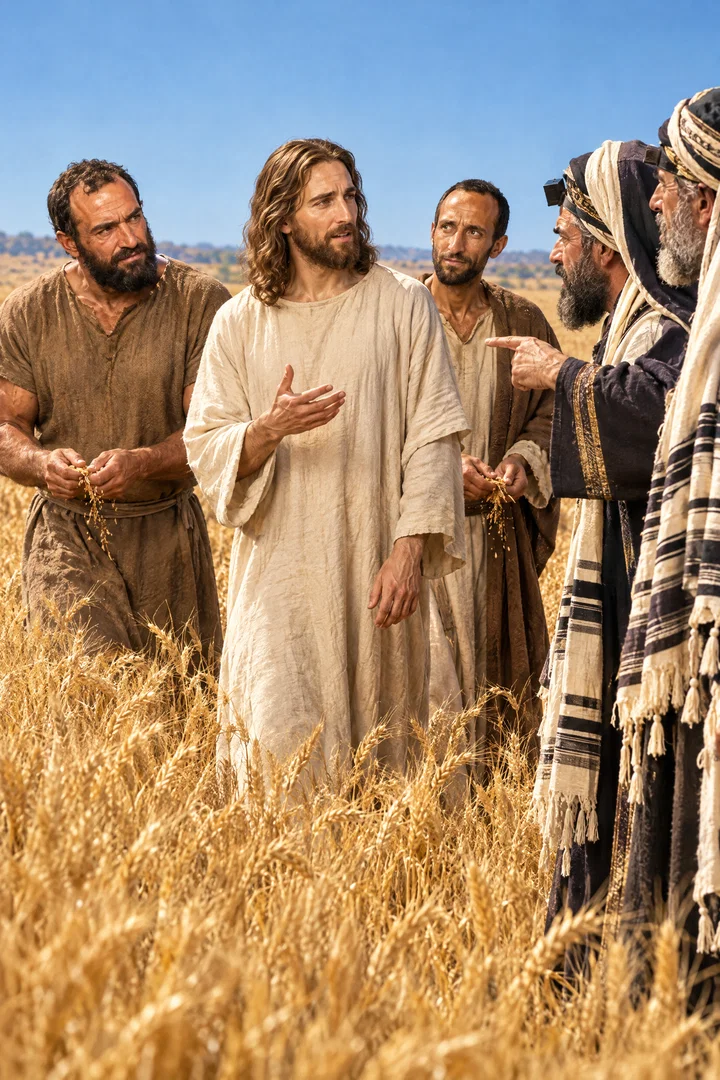
And it came to pass, that he went through the corn fields on the sabbath day; and his disciples began, as they went, to pluck the ears of corn.
Jesus defends the disciples’ Sabbath grain-picking by recalling David and the showbread.
- 1 Samuel 21:6
So the priest gave him hallowed bread: for there was no bread there but the shewbread, that was taken from before the LORD, to put hot bread in the day when it was taken away.
David receives and eats the consecrated showbread, the example behind Jesus’ reply.
- Matthew 12:5
Or have ye not read in the law, how that on the sabbath days the priests in the temple profane the sabbath, and are blameless?
Priests perform temple service on the Sabbath and are blameless.
- Matthew 12:7
But if ye had known what this meaneth, I will have mercy, and not sacrifice, ye would not have condemned the guiltless.
Mercy over sacrifice means the guiltless should not be condemned.
- Matthew 12:12
How much then is a man better than a sheep? Wherefore it is lawful to do well on the sabbath days.
Both affirm that doing good is lawful on the Sabbath.
- Mark 2:25-26
And he said unto them, Have ye never read what David did, when he had need, and was an hungred, he, and they that were with him?
Jesus recalls David eating the shewbread when answering the Pharisees.
- Leviticus 24:5-9
And thou shalt take fine flour, and bake twelve cakes thereof: two tenth deals shall be in one cake.
The passage prescribes the shewbread and reserves it for Aaron and his sons to eat.
- Matthew 12:6
But I say unto you, That in this place is one greater than the temple.
One greater than the temple is present.
- 1 Chronicles 9:32
And other of their brethren, of the sons of the Kohathites, were over the shewbread, to prepare it every sabbath.
The bread was prepared every Sabbath.
- Mark 2:27
And he said unto them, The sabbath was made for man, and not man for the sabbath:
The Sabbath was made for human benefit, not as a burden on people.
Commentary
Each commentary is drawn from primary sources: the writings of Ellen G. White and Adventist pioneers and periodicals. Each commentary is separate. Its own words are not a quotation; follow the references to read the source passages.
Ellen G. White
9 sources
This is part of the Sabbath controversy when Jesus and His disciples passed through a grainfield on the Sabbath and ate by plucking ears of grain, an account connected with the healing of a withered hand.9MR 242.1PP 531.1–2ST Sep 16, 1913 It records that David went into the house of God and took and ate the showbread and gave also to those with him, though it was not lawful to eat except for the priests alone.DA 284.2–285.3 The disciples eating grain as they passed through the field was in keeping with God's provision allowing a hungry person to take food from a neighbor's field to satisfy hunger.PP 531.1–2
Jesus quoted and used David's example to defend His disciples against the charge of breaking the Sabbath by plucking and eating grain, and to rebuke the teachers and repel the scribes and Pharisees for ignorance of Scripture.DA 284.2–285.3Ms 43b, 1891, par. 9 He denied that the disciples had broken the Sabbath and declared them innocent and guiltless.DA 284.2–285.3ST Sep 16, 1913Ms 43b, 1891, par. 9 If it was right for David to satisfy hunger with bread set apart to holy use, it was right for the disciples to supply their need and satisfy hunger on the sacred hours of the Sabbath, and what they did was in harmony with the Sabbath commandment.DA 284.2–285.3ST Sep 16, 1913 The service of God comes first and what is necessary for God's work of redeeming man is in accord with the Sabbath law.DA 284.2–285.3 Christ kept the Sabbath according to God's law rather than conforming to the rabbis' requirements, thereby rejecting false teachings that had made Sabbath observance reflect human selfishness and arbitrariness instead of God's character.DA 284.2–285.3PK 183.1
Jesus Christ here is the Lord who made the Sabbath and is Lord of the Sabbath, God in the flesh in whom all the fullness of the Godhead dwells, the greatest Teacher the world ever knew who gave unmistakable evidence that He was sent of God.STMW6 43.218MR 155.1–3Ms 43b, 1891, par. 9Ms 43b, 1891, par. 1 As Lord of the Sabbath, with unique dignity He covered the disciples with the shield of His own divine prerogatives and authority received from the Father to act out the principles of heaven, acquitting them of blame by the very statutes they were accused of breaking.DA 284.2–285.3Ms 43b, 1891, par. 9 The scribes and Pharisees and Jewish rulers took upon themselves work prompted by the enemy and charged the Lord with breaking and transgressing the Sabbath, though wide awake to condemn Him.STMW6 43.218MR 155.1–3Ms 43b, 1891, par. 1
Their charge showed the foolishness, weakness and fallibility of human judgment and complete spiritual blindness, as if they had put out their own eyes.STMW6 43.2Ms 43b, 1891, par. 1 The same blindness is seen in those who want to carry the work in America in their own way and thereby lose their bearings.Ms 43b, 1891, par. 1
Sources
Pioneers and periodicals
39 sources
The verse recalls how David, fleeing before Saul, entered the house of God with his companions and ate the consecrated showbread with them, though the law reserved it for the priests alone.RH Feb 4, 1862RH Jan 21, 1862RH Jan 8, 1857ST Nov 14, 1900 Jesus cited that act when His hungry disciples plucked ears of grain, rubbed them in their hands and ate as they passed through the cornfields on the Sabbath, and the Pharisees charged them with reaping and threshing on the sacred day.ST Mar 4, 1889ST Apr 15, 1886ST Mar 12, 1894ST Mar 12, 1894 He used David's eating to declare His disciples guiltless, showing that genuine hunger and dire bodily need justified what they did.RH Feb 4, 1862ST Feb 16, 1915RH Jan 8, 1857RH Jul 30, 1861 Meeting real human need on the Sabbath does not break God's law, for the Sabbath was made as a merciful blessing for man and not as a burden, and mercy rather than mere sacrifice is the spirit of every divine requirement.RH Jan 8, 1857RH Jul 30, 1861ST Nov 14, 1900ST Mar 3, 1914ST Jan 30, 1896 His answer did not set aside or abolish the Sabbath law but stripped away human traditions that burdened it, honored its true purpose, and gave no warrant for changing the seventh day to the first.RH Nov 14, 1871ST May 17, 1910RH Jul 18, 1854ST Oct 19, 1882ST Nov 18, 1880
David's Act Recalled
David when hungry went into the house of God and took and ate the shewbread or showbread, the sanctuary and consecrated bread, and gave also to those who were with him, though it was lawful for the priests alone to eat it and was ordinarily reserved for them.RH Feb 4, 1862RH Jan 21, 1862ST Feb 16, 1915ST Mar 4, 1889 He entered the holy place with his men or companions and shared the bread with them, while fleeing before Saul.RH Jan 8, 1857ST Nov 14, 1900ST Apr 14, 1881 The priests permitted this act, and David and his men were not condemned for it.
The bread had been replaced with fresh loaves that day, which indicates that David's act probably occurred on the Sabbath.RH Jan 21, 1862 That timing makes Jesus' citation of it when answering criticism of His disciples for plucking grain on the Sabbath especially fitting.RH Jan 21, 1862 It may have occurred on the Sabbath, which would make the example especially apt, but that detail was not necessary to His argument that urgent hunger could justify setting aside even strict temple regulations temporarily.ST Apr 14, 1881
Apart from belonging to the account of that Sabbath dispute over the hungry disciples, the passage gives no further detail about the shewbread mentioned in the verse.ST Nov 26, 1894
Disciples Accused on Sabbath
The verse belongs to the account of Jesus and His disciples passing through the grain or corn fields on the Sabbath, when the hungry disciples plucked ears, rubbed them out in their hands, and ate.ST Mar 4, 1889ST Apr 15, 1886ST Mar 12, 1894ST Nov 26, 1894 Their action was eating their own meal from grain in the field, and it forms part of the setting in which they were accused of breaking the Sabbath.ST Mar 4, 1889ST Sep 19, 1911 The Pharisees charged them with breaking the Sabbath for what they did as they passed through the fields and complained to Jesus.ST Mar 12, 1894ST Nov 26, 1894ST Feb 2, 1915 Jesus cited David's case in defense of His disciples when answering the accusation, using David's example to show that their conduct was justified, and with it He stated His own relation to the Sabbath.ST Mar 12, 1894ST Mar 12, 1894RH Apr 21, 1863
In Pharisaic eyes the disciples' plucking and rubbing of ears of barley or grain was reaping and threshing on the sacred day, so the incident appeared as a borderline act and gave offense.ST Sep 8, 1881 Those accusations are an extreme burdening of the Sabbath law.ST Mar 4, 1889 Reports of this offense, together with reports of the popular readiness to make Jesus king and His resolute refusal to head a political movement and rumors of His independence as a religious reformer, alarmed the authorities at Jerusalem.ST Sep 8, 1881 So their deputies came no longer to the disciples but to Jesus Himself with specific complaints made possible by free access to private life.ST Sep 8, 1881 The episode illustrates how religious rules can be used to accuse others over their Sabbath conduct.ST Feb 2, 1915
The event took place on the seventh day of the week, not on Sunday, and the Pharisees' accusation shows that the day was the Sabbath.ST Apr 15, 1886 The day was the seventh day, not Sunday, the first day of the week.ST Jul 23, 1912 To call it Sunday dinner misidentifies the day and obscures the distinction between the Sabbath God blessed and sanctified and the first day, to which that blessing was not transferred.ST Jul 23, 1912
Necessity and Mercy Principle
Jesus cited David's eating of the sanctuary bread to answer the charge that His hungry disciples acted unlawfully by plucking grain, rubbing it out, and eating it on the Sabbath, showing that their conduct was justified and that their hunger mattered in judging the act.RH Feb 4, 1862RH Jan 8, 1857RH Apr 21, 1863ST Sep 19, 1911 The priests permitted David and his hungry men to eat the sacred bread reserved for priests alone, and they were not condemned, so the case stood as a precedent for the disciples who were eating their own meal from grain in the field.RH Feb 4, 1862ST Sep 19, 1911 Their eating did not violate a ceremonial law, but proved them guiltless.RH Feb 4, 1862RH Jan 8, 1857
Satisfying genuine hunger and meeting real bodily need on the Sabbath is lawful and does not violate God's law, for necessity fully acquits.ST Feb 16, 1915RH Jan 8, 1857RH Jul 18, 1854 In that necessity David did not sin by eating the shewbread ordinarily lawful for priests alone, and the disciples did not sin by relieving hunger on the Sabbath.RH Jul 30, 1861ST Sep 19, 1911ST Nov 18, 1880 Hunger may be met without violating God's law, and such beneficial action honors rather than destroys the Sabbath law.RH Jul 18, 1854ST Nov 18, 1880
Their need was dire necessity like David's when fleeing before Saul, since attendance on One greater than the temple had precluded prior provision for bodily wants.RH Jan 8, 1857 It was like the priests who prepare sacrifices and kindle fires in temple service on the Sabbath, who profane the Sabbath and are blameless.RH Jan 8, 1857 Just as a restriction on sacred bread did not prevent meeting urgent human need, so Sabbath requirements do not prohibit work that is genuinely necessary.RH Jul 30, 1861ST Nov 14, 1900 Sabbath rest may include acts of necessity, for the Sabbath was made for people as a blessing and merciful institution, not as a burden imposed by restrictive rules, and the Son of man is its Lord.ST Nov 14, 1900ST Mar 3, 1914ST Mar 12, 1894ST Mar 19, 1894
Mercy rather than mere sacrifice is the genius of every economy, so a narrow Pharisaic letter condemns where an enlightened scriptural reading warrants the deed.RH Jan 8, 1857 The Sabbath is for acts of humanity and mercy, not harsh criticism or burdensome human traditions, and it remains sacred while being observed as a pleasure rather than a hardship.RH Jan 8, 1857ST Jan 30, 1896 Works of necessity and mercy that lessen misery accord with its benevolent design for man, unlike presumptuous daring Sabbath-breaking punished with death.RH Jan 8, 1857 Since David ate the consecrated showbread when necessity demanded it, Jesus' healing of suffering people and doing good on the Sabbath should have been excused all the more and was not a violation of God's law.ST Aug 25, 1909
Christ Upholds Sabbath Law
Jesus defended His disciples as acting lawfully under the Sabbath law and denied that they had broken the Sabbath.ST Sep 16, 1913ST Jun 6, 1878RH May 13, 1875 What they did to satisfy hunger in plucking grain was in harmony with the Sabbath commandment.ST Sep 16, 1913ST Jun 6, 1878RH May 13, 1875 His reply establishes that their accusers condemned the guiltless.ST Sep 16, 1913RH May 13, 1875
His answer did not set aside God's law but interpreted the Sabbath law and distinguished it from Jewish tradition.ST May 17, 1910RH Jul 18, 1854 He did only what was lawful and did not break the Sabbath law, using David's eating of bread ordinarily reserved for priests to show hunger may be met without violating God's law.ST May 17, 1910RH Jul 18, 1854 He stripped away human rules that burdened the Sabbath and taught its true purpose and spirit, so the incident does not show He broke the fourth commandment or abolished the weekly Sabbath.RH Jul 18, 1854 Meeting real need did not destroy the Sabbath law, but His beneficial action honored it.RH Jul 18, 1854ST Nov 18, 1880
He freed the Sabbath from human traditions by correcting how it was being treated, and by His authority as Lord of the Sabbath restored it to its intended place.RH Nov 14, 1871ST Jun 11, 1894 The Sabbath disputes made proper observance a point of contention between Him and the Pharisees over burdensome traditions and their correction.RH Nov 14, 1871ST Jun 11, 1894 That lordship did not give right to change the Sabbath day.RH Nov 14, 1871
The citation supports that He did not violate God's commandments and did not abolish the Sabbath during His ministry.RH Oct 21, 1851RH Nov 1, 1853 He was accused of breaking the Sabbath and defended His actions by declaring Himself Lord of the Sabbath.RH Oct 21, 1851 If He had transgressed God's law He would have been a sinner and could not be the sinless sacrifice through whom people receive pardon and salvation.RH Nov 1, 1853
The account gives no hint that He changed the seventh day for the first day, abolished the weekly Sabbath, or replaced it with Sunday.RH Nov 14, 1871ST Oct 19, 1882 The day was the seventh day, not Sunday the first day of the week, and to call it Sunday dinner misidentifies the day.ST Jul 23, 1912 The blessing God placed on the Sabbath and sanctified was not transferred to the first day.RH Nov 14, 1871ST Jul 23, 1912 The incident is an example of the conflict that arose when His followers acted on the Sabbath, not evidence that the Sabbath had been abolished or replaced.ST Oct 19, 1882
The verse does not say that He gave His disciples a priesthood or acted to abolish the Jewish priesthood.RH Oct 21, 1858 It states that the disciples, not Jesus, plucked and ate grain on the Sabbath.RH Oct 21, 1858 Any priesthood given to them would have been Jewish and would have ended at the cross.RH Oct 21, 1858
Some use the cornfield episode as an argument against observing the Bible Sabbath, claiming He and His followers did not follow Scripture.RH Feb 11, 1858 Against this is set that His followers followed the Scriptures, while the Jews who criticized the disciples were governed by the Mishna or by corruptions of Scripture.RH Feb 11, 1858
One position holds that He took a revolutionary attitude toward the Sabbath by going against the strict Sabbatarian religious view of His day, which modern Sabbatarians want to rehabilitate and fasten onto the Christian Sunday.RH Jul 24, 1913 An opposing charge holds that He was no particular observer of the Sabbath and that neglect of Sabbath observance was one of the crimes charged against Him.ST
Sabbath Practice and Application
Jesus justified his disciples in rubbing out wheat to eat on the Sabbath day, defending their actions in the grainfield against accusations of Sabbath breaking.STST Jan 30, 1896 His ministering to the sick and healing them on that day proves he would not bring suffering on his children on the Sabbath by forbidding fire when it is necessary to life and comfort.ST The command to kindle no fire throughout their habitations on the Sabbath therefore refers to Israel's wilderness wanderings through a very warm country where no fire was needed except for cooking food, and that cooking was not to be done on the Sabbath.ST The Sabbath remains sacred while being observed as a pleasure rather than a hardship, free from burdensome human traditions, for acts of humanity and mercy and not harsh criticism.ST Jan 30, 1896
Jesus answered the complaint about his disciples eating grain on the Sabbath by recalling David's eating of the consecrated bread with his companions, though it was reserved for priests alone, and the episode illustrates how religious rules can be used to accuse others over their Sabbath conduct.ST Feb 2, 1915 Christ's experience with the Pharisees over Sabbath observance parallels the prosecution of Adventists for not observing the Sabbath according to their opponents' rigid ideas, showing the likeness between the Pharisees' Sabbath restrictions and that prosecution.ST Nov 21, 1895 Accusation over Sabbath conduct by rigid rules then and prosecution for not observing according to rigid ideas now belong to the same pattern.ST Feb 2, 1915ST Nov 21, 1895
Sources