Luke 10:31
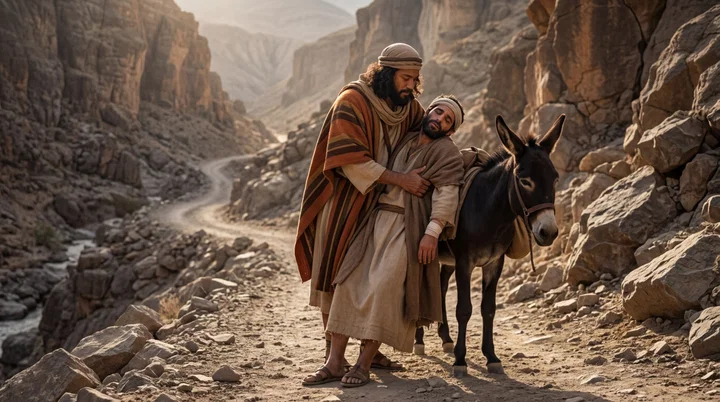
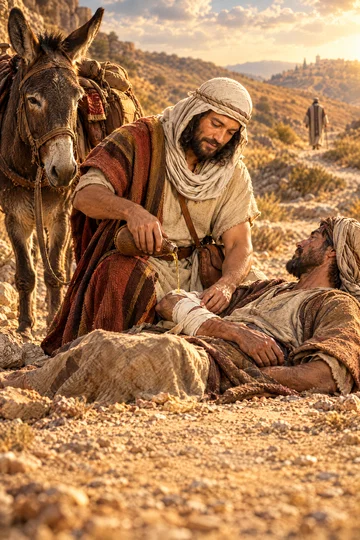
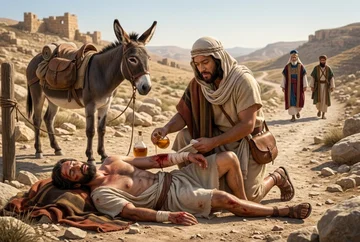
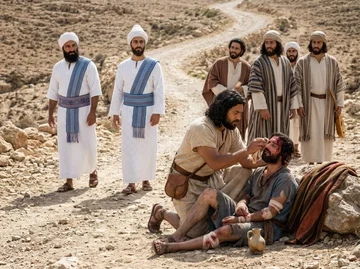
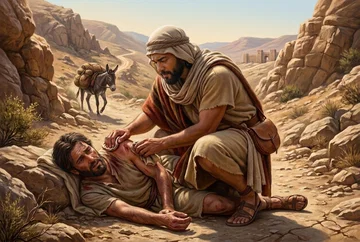
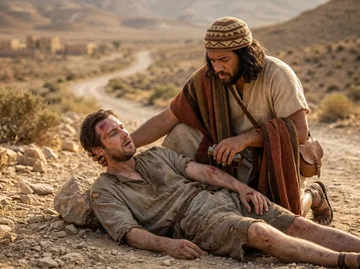
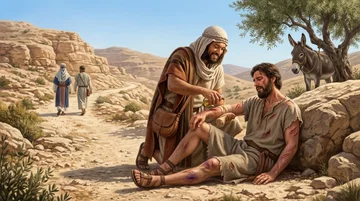
And by chance there came down a certain priest that way: and when he saw him, he passed by on the other side.
Translations
American King James Version, King James Version, KJV Cambridge Paragraph Bible
And by chance there came down a certain priest that way: and when he saw him, he passed by on the other side.
And by chance there came down a certain priest that way; and when he saw him, he passed by on the other side.
Revised Version, American Standard Version
And by chance a certain priest was going down that way: and when he saw him, he passed by on the other side.
'And by a coincidence a certain priest was going down in that way, and having seen him, he passed over on the opposite side;
And a certain priest happened to go down that way, and seeing him, passed on on the opposite side;
And, by chance, a certain priest, was coming down by that road, and, seeing him, passed by, on the opposite side.
Berean Standard Bible, Majority Standard Bible
Now by chance a priest was going down the same road, but when he saw him, he passed by on the other side.
By chance a certain priest was going down that way. When he saw him, he passed by on the other side.
And by chance a certain priest was going down that way: and when he saw him, he went by on the other side.
Nowe so it fell out, that there came downe a certaine Priest that same way, and when he sawe him, he passed by on the other side.
Douay-Rheims (Challoner revision)
And it chanced, that a certain priest went down the same way: and seeing him, passed by.
Pictures

Cross-references
- Luke 10:36-37
Which now of these three, thinkest thou, was neighbour unto him that fell among the thieves?
Jesus identifies the merciful helper as a neighbor and commands the lawyer to act likewise.
- Leviticus 19:18
Thou shalt not avenge, nor bear any grudge against the children of thy people, but thou shalt love thy neighbour as thyself: I am the LORD.
The priest neglects the command to love one’s neighbor.
- Luke 10:27
And he answering said, Thou shalt love the Lord thy God with all thy heart, and with all thy soul, and with all thy strength, and with all thy mind; and thy neighbour as thyself.
The priest’s failure contrasts with the command to love one’s neighbor.
- Luke 10:25
And, behold, a certain lawyer stood up, and tempted him, saying, Master, what shall I do to inherit eternal life?
The question about inheriting eternal life prompts the parable.
- Luke 10:36
Which now of these three, thinkest thou, was neighbour unto him that fell among the thieves?
Asks who proved neighbour to the man in need.
- Luke 10:35
And on the morrow when he departed, he took out two pence, and gave them to the host, and said unto him, Take care of him; and whatsoever thou spendest more, when I come again, I will repay thee.
The Samaritan’s continued care contrasts with the priest’s passing by.
- Deuteronomy 22:1-4
Thou shalt not see thy brother’s ox or his sheep go astray, and hide thyself from them: thou shalt in any case bring them again unto thy brother.
Commands to help a neighbor show why passing by was a breach of duty.
- Galatians 5:14
For all the law is fulfilled in one word, even in this; Thou shalt love thy neighbour as thyself.
Both connect the law with loving one’s neighbour.
- Matthew 25:35-39
For I was an hungred, and ye gave me meat: I was thirsty, and ye gave me drink: I was a stranger, and ye took me in:
Compassion for people in need expresses everyday Christianity.
Commentary part 1 of 2
Each commentary is drawn from primary sources: the writings of Ellen G. White and Adventist pioneers and periodicals. Each commentary is separate. Its own words are not a quotation; follow the references to read the source passages.
Ellen G. White
99 sources
By chance a priest came down the dangerous road from Jerusalem to Jericho, saw the traveler who had been stripped, wounded and left half dead by robbers, and deliberately passed by on the other side without helping him.ST Jul 7, 1890DA 4973T 523.2–3Ms 100, 1904, par. 5–11Ms 117, 1903, par. 8–13 This was Christ's answer to the lawyer who had rightly summed the law as loving God with all heart, soul, strength and mind and loving his neighbor as himself, and who then asked who is his neighbor.3T 523.2–3Ms 71, 1897, par. 29–32Lt 134, 1902, par. 17–19 A neighbor is not bounded by religion, race, class, nation or friendship, but is anyone who needs help, whoever most needs charity, sympathy and practical care.COL 376.1–2SW 41.1ST Jul 23, 18944T 226.3DA 503.4 True religion is not profession, office, rites or reverence for the letter, but loving deeds and practical mercy, so the priest's cold neglect broke the command to love his neighbor as himself and proved that sacred position alone does not fulfill the law.ST Jul 7, 1890DA 497.1Lt 81, 1901, par. 7–10Ms 87, 1894, par. 28–31Lt 98, 1896, par. 8–10 The wounded man pictures humanity robbed and ruined by Satan and the rescuer pictures Christ who came to heal and redeem, the meeting was brought in God's providence as a test of character, and being a neighbor means going and doing likewise by promptly relieving suffering as soon as it is seen.Ms 100, 1904, par. 5–11Lt 107, 1902, par. 4–6ST Jul 7, 1890RH Sep 13, 1906COL 382.1–2
Story Words and Setting
Christ spoke this as His answer to the lawyer who asked what he must do to inherit eternal life and then asked who is his neighbor.3T 523.2–3Ms 71, 1897, par. 29–32Lt 134, 1902, par. 17–19 The lawyer had rightly summed the law as loving God with heart and soul and strength and mind and loving his neighbor as himself, and had been told to do this and live.3T 523.2–3Ms 71, 1897, par. 29–32Ms 31, 1902, par. 13–16 The case was presented to explain whom he must love as himself.Ms 40, 1889, par. 1–2Lt 22, 1901, par. 16–19 It is teaching to be studied and applied to individual cases.Lt 22, 1901, par. 16–19Ms 31, 1902, par. 13–16
The setting is the road going down from Jerusalem to Jericho.Ms 100, 1904, par. 5–11COL 379.2ST Jul 2, 1894 It was a dangerous way through a wild, rocky wilderness ravine in Judea, infested with robbers and often the scene of violence.Lt 304, 1908, par. 13–15COL 379.2HMW 31.1–2 A traveler on that road fell among thieves who stripped him of all that was valuable.Ms 71, 1897, par. 29–32Ms 100, 1904, par. 5–11Lt 304, 1908, par. 13–15 They wounded and bruised him, leaving him stripped and bleeding and weltering in his own blood by the wayside.Ms 167, 1898, par. 5–7Ms 117, 1903, par. 8–13Lt 304, 1908, par. 13–15 He was left half dead, apparently unto death.3T 523.2–3Lt 134, 1902, par. 17–19Ms 153, 1904, par. 15–19
By chance a certain priest came down that way.3T 523.2–3Ms 71, 1897, par. 29–32Ms 100, 1904, par. 5–11 He saw the wounded man lying there.ST Jul 7, 1890DA 497Lt 217, 1905, par. 6–11 He deliberately passed by on the other side without rendering any assistance or taking on the trouble of caring for him.3T 523.2–3Lt 217, 1905, par. 6–11Lt 105, 1902, par. 2–5 A Levite afterward did the same at intervals.Ms 100, 1904, par. 5–11ST Jul 2, 1894
The account records an incident that had actually and lately taken place.Lt 134, 1902, par. 17–19Ms 167, 1898, par. 5–7Ms 167, 1898, par. 8–10 It was fresh in the minds of all the hearers and familiar to many.Ms 167, 1898, par. 5–7Ms 31, 1902, par. 13–16 It was spoken before a large crowd including Pharisees and Sadducees and priests and lawyers seeking cause to report Him.Ms 31, 1902, par. 13–16 The priest himself was among those listening.Ms 31, 1902, par. 13–16 The priests and Levites who heard knew its picture was true to life.ST Feb 24, 1898DA 499.2–500.2
Who Counts as Neighbor
Luke 10:31 belongs to the challenge to every boundary drawn around who must be regarded as neighbor, for a neighbor is not one of one's own church or faith, whether pleasant or disagreeable, Jew or Gentile, and makes no distinction of race, color, class, nation, social standing, or learning.COL 376.1–2ST Jul 23, 1894DA 503.4 No distinction of friend and enemy, stranger and neighbor, rich and poor, high and low, learned and unlearned is allowed to separate society into distinct circles with alienation between them, and in Christ the Jewish restrictions are swept away so that there are no territorial lines, no artificial distinctions, no caste, no aristocracy.SW 41.16T 294.1–2 A neighbor is not only relatives, friends, or members of one's own church or group, but any member of the human family beyond those who think and believe as one does.Ms 87, 1894, par. 40–41Ms 87, 1894, par. 8–10
A neighbor is anyone who needs help, whoever most needs charity and help, sympathy and practical help.COL 376.1–2SW 41.14T 226.3 The wounded man pictures all who are subjects of interest, sympathy, and charity no matter who they are and even when they are not kith or kin, and neglect of the needy and unfortunate brought under notice leaves no assurance of eternal life.4T 226.33T 524.1 That includes a soul wounded by the adversary and straying from Christ, a brother sick in spirit, every person who belongs to God and is His property, and every soul wounded and bruised by Satan.COL 376.1–2DA 503.46T 294.1–2 God values a man not by wealth, talent, or education but in proportion as he becomes a good steward of mercy and love, entrusted with talents of means, ability, and gifts of grace to be a good steward of beneficence for others and not to reap all advantage for himself.SW 41.1
Need itself claims help from humanity, whether the need is physical or spiritual, and belief of the truth takes believers out of selfish, narrow worldliness to be laborers together with God in helping those in need.ST Jul 23, 1894Lt 26, 1894, par. 16 The field of work is the world, and Christian religion is shown by practical service that relieves people's temporal needs and crosses territorial, social, and other human distinctions, opening the way to share Christ's love.Lt 26, 1894, par. 16Ms 25, 1897, par. 5 That call to love reaches without narrow or Pharisaical limits at home and abroad, so that people in mission fields and people living in distant cities are neighbors whose needs call for care.Ms 15, 1897, par. 1Lt 187, 1905, par. 6
Law Love and True Religion
Christ's answer sums up all principles contained in the law of God, with the priest who saw the stripped and wounded half-dead traveler and passed by standing inside that answer to the questions what must be done to inherit eternal life and who is neighbor.Lt 134, 1902, par. 17–19Ms 97, 1901, par. 15–18Ms 150, 1899, par. 17–19 The whole duty of humanity is comprised in keeping the first four and the last six commandments, supreme love to God with all the heart, soul, strength and mind sanctifying the affections, and love to the neighbor as self whose fruit is love to mankind, bringing peace, happiness and joy to home and church.Ms 97, 1901, par. 15–18Ms 17, 1893, par. 1ST Jul 2, 1894 The two great arms of love are love to God held supremely under the first four commandments, which gives the mind of Christ, and love to fellow man under the last six, for no one loves God who does not love his neighbor because the neighbor is the purchase of the blood of Christ, so love does not shut itself inside four walls away from suffering.Ms 17, 1893, par. 13T 524.1 Neglect of the needy and unfortunate brought under notice, no matter who they are and even when they are not kith or kin, breaks the second great commandment on which the last six depend, and those who do not open their hearts to the wants and sufferings of humanity will not open their hearts to the claims of God in the first four precepts, showing idols claiming the heart so God is not honored and does not reign supreme.ST Jul 2, 18943T 524.1
True religion is not merely a system of beliefs or rites, outward religious forms, profession of piety, or reverence for the letter of the commandments, but is expressed in loving deeds, genuine goodness, practical mercy, benevolence and doing what brings the greatest good to others.ST Jul 7, 1890DA 497.1Ms 87, 1894, par. 28–31 Religious office did not make the priest a loving neighbor, for he and the Levite observed outward forms but failed to keep the law in their hearts, while the Samaritan showed compassion through action from a kind and loving heart.ST Jul 7, 18907MR 237.1–238.1DA 504.1 Outward religion and knowledge of the law do not make a person a doer of its commands, which require mercy and love for neighbor, and the priest's failure exposes unfitness for an office devoted to serving others.Ms 87, 1894, par. 28–317MR 237.1–238.1COL 382.1–2 Though he had taken part in God-appointed temple worship, he treated practical care for a fellow human being as beneath his dignity and missed the opportunity God gave him to serve as an agent of blessing, warning that religious duties cannot be separated from the command to love neighbor, for neglecting that love misrepresents Christ's religion and damages character, and Christ calls followers to act with the same practical care, shown by what a person does and not merely by what he says.DA 504.1COL 382.1–2
The refusal to relieve the sufferer breaks the command to love the neighbor as self and fails to keep the law that gives right to eternal life, in contrast to having mercy as the Samaritan did.Lt 98, 1896, par. 8–10Ms 109, 1906, par. 8–14Ms 153, 1904, par. 15–19 Seeing urgent need, the priest chose not to help and passed by rather than take on the trouble of caring, exemplifying selfish neglect and failure to understand God's compassion and love for humanity, and illustrating violation of the principles of justice and mercy contained in God's law.Lt 98, 1896, par. 8–10Ms 109, 1906, par. 8–14Lt 165, 1901, par. 23–25 With the Levite he represents a class in the church who show indifference to the very ones who need sympathy and help, and notwithstanding position in the church they are commandment-breakers because they violate supreme love to God and unselfish love to neighbor on which the first four and the last six hang.Ms 87, 1894, par. 28–313T 511.2–3 To offend in that one point is to be guilty of all, leaving no assurance of eternal life because it fails the claims God has upon men.Ms 153, 1904, par. 15–193T 524.1
A person's value and righteousness before God rests on the spirit he shows, not on nation, profession, religious position or office.RH Sep 13, 1906RH Sep 13, 1906ST Jul 7, 1890 Despite standing among the highest Jewish religious authorities and being chosen to serve in God's temple, the priest acted without mercy, pity, love or kindness, showing that claiming regard for God's law and keeping outward observances does not by itself mean showing love to a neighbor or keeping the law in the heart.Ms 130, 1906, par. 46–48COS 69.1–70.3RH Sep 13, 1906ST Jul 7, 1890 As representative of the nation claiming exalted righteousness he acted with cruelty and selfishness and had no heart to feel for suffering humanity, while the despised and hated Samaritan possessed far superior character, nobility of soul and love of the right quality, showing mercy in disinterested benevolence to one he did not know and treating the stranger as he himself would desire to be treated.RH Sep 13, 1906ST Jul 23, 1894 Those tested and proved in loving others as themselves will be pronounced fit for an inheritance with the saints in light.ST Jul 2, 1894RH Sep 13, 1906
Christ Pictured and Providence
The wounded traveler stands for humanity itself, for the sinner and the lost human race, deceived and ruined by Satan, robbed and wounded and left destitute and perishing by the wayside.ST Jul 7, 1890DA 503.5ST Jul 23, 1894 The one who rescues him pictures Christ, who looked with compassion on that ruin, left His glory and came to its rescue, healed its wounds and provided for its needs.ST Jul 7, 1890DA 503.5 He covers the sinner with His robe of righteousness, provides safety at His own cost, died to redeem, and gives everlasting life to whoever believes, and His life both exposes how far men fall short of loving neighbor as self and commands His followers to copy His compassionate love.ST Jul 7, 1890DA 503.5ST Jul 23, 1894 In that contrast the Samaritan represents Christ, while the priest who saw and passed by shows that religious position alone does not make one righteous, since the compassionate act showed the greater righteousness and fulfilled the command to love neighbor as oneself.RH Sep 13, 1906 The same neglect is seen in those professing to know God who left the colored race in the South wounded and beaten since emancipation, leaving thousands without help toward spiritual freedom, condemned by the example of Christ who did not leave the degraded human family to perish but came to bridge the gulf that transgression made between man and God.Ms 21a, 1895, par. 4
The priest and the Levite were brought into contact with the sufferer in God's providence so that they might minister to him, and the meeting was an opportunity for compassion and a test of character and fitness for sacred office.RH Sep 13, 1906Ms 87, 1894, par. 32–36Ms 167, 1898, par. 13–16 Christ constantly weaves the web of human events and guides men, placing the suffering man where one with sympathy and compassion would attend to his needs.Ms 167, 1898, par. 13–16 Suffering and calamity are thus permitted to call people away from selfishness and to awaken compassion, tenderness and love.RH Sep 13, 1906 Though set apart for God-appointed temple worship and called to lead men to understand God's love, the priest treated practical care as beneath his dignity, missed his opportunity to serve as an agent of blessing, and passed by, showing that religious duties and long prayers cannot be separated from love to neighbor or make up for want of mercy.COL 382.1–2DA 499.2–500.2Ms 87, 1894, par. 32–36 His failure contradicted the merciful teaching he professed to know, for he claimed to be a repository of truth, mercy and compassion yet was destitute of the love of God, and national bigotry kept him from mercy when he supposed the sufferer might be a Samaritan.DA 499.2–500.2Ms 167, 1898, par. 13–16 Having a holy office and being expected to show pity, he left a precious work of mercy and love undone and left the injured man perhaps to die.Ms 40, 1889, par. 4
The Samaritan's care for the same stranger stands in opposite spirit, and angels were beside him as he helped, teaching not to pass by suffering but to impart the comfort received from God.RH Jan 19, 1911COL 388.2 Those who so serve others have the cooperation of Christ.COL 388.2 The full lesson of who is neighbor is learned in blessed companionship with heavenly beings, for serving others on earth prepares people for that companionship, and angels welcome those who have lived to minister.COL 389.1
Priest Character and Motives
The priest was a man in sacred office and responsible position, chosen to serve in God's temple among the highest Jewish religious authorities.Ms 117, 1903, par. 8–13Ms 130, 1906, par. 46–48Ms 108, 1899, par. 14–19 He professed piety, acknowledged God's law as his guide, and claimed religious privilege and superior righteousness.Lt 82a, 1897, par. 7–13Ms 130, 1906, par. 46–48Ms 17, 1893, par. 1 Yet when he saw the wounded and bruised traveler lying by the road he had no pity, compassion, mercy or kindness, but showed a cold, unfeeling, stony, hard heart and passed by on the other side without helping.Lt 82a, 1897, par. 7–13Ms 117, 1903, par. 8–13Ms 130, 1906, par. 46–48Ms 108, 1899, par. 14–19Ms 17, 1893, par. 1 His religious position, duties and long prayers did not lead him to show mercy, and his indifference stands in contrast to the kindness required by God's law.Ms 117, 1903, par. 8–13Ms 130, 1906, par. 46–48 His conduct was failure to love God with all the heart and to love his neighbor as himself, proving that seeing a neighbor's need without helping is neglect of love and that religious status alone does not fulfill the law or make one a loving neighbor.Lt 81, 1901, par. 7–10Ms 108, 1899, par. 14–19Ms 17, 1893, par. 1 The two great arms of love are love to God held supremely under the first four commandments, which gives the mind of Christ, and love to fellow man under the last six, and no one loves God who does not love his neighbor, because the neighbor is the purchase of Christ's blood, so love does not shut itself inside four walls away from suffering.Ms 17, 1893, par. 1
He knew God's lessons of mercy and compassion given through Moses for Israel yet disregarded them and refused help to his suffering brother.Lt 81, 1901, par. 7–10 He held sacred office and professed to teach Scripture and represent God, with a calling to have compassion and lead people to understand God's love, but his failure contradicted the merciful teaching he knew.DA 499.2–500.2DA 500.3–503.1 Priests and scribes had read the law commanding love and care for the stranger, for the wounded and dying man who is a stranger, a neighbor and a brother in suffering, but had not brought it into practical life.ST Jul 23, 1894 God had brought him to the sufferer so he could help, yet he only glanced at him and did not help, despite his sacred office and duty to show compassion to those in need.DA 499.2–500.2DA 498.6–499.1
When he saw the wounded man in urgent need he let helping not suit his feelings and chose not to help rather than take on the trouble of caring for him.Lt 105, 1902, par. 2–5Lt 98, 1896, par. 8–10 Though able to give aid he failed his duty to his fellow man, counting relief as too much trouble, an inconvenience and beneath his dignity.Lt 98, 1896, par. 8–10RH Apr 9, 1908 He gave only a sigh of pity, wishing he had not seen him, and purposely avoided him by going past without helping.Ms 77, 1901, par. 6–7 His callous passing by, together with the Levite's, receives severe rebuke and warns against withholding pity and practical help from those who suffer.ST Jul 23, 1894 Selfishness made him unkind and unmerciful and, with national bigotry and prejudice, kept him from showing mercy, since he thought the sufferer might be a Samaritan and was uncertain of his identity.RH Apr 9, 1908RH Apr 9, 1908DA 499.2–500.2DA 500.3–503.1DA 498.6–499.1
Call to Practical Mercy
Being a neighbor means showing mercy in action, and the command is to go and do the same as the compassionate helper did rather than as the one who passed by.Ms 100, 1904, par. 5–11Lt 107, 1902, par. 4–6Ms 97, 1901, par. 15–18Lt 79, 1898, par. 4–5Lt 70, 1906, par. 6–8 A heart moved by the Holy Spirit will not avoid duty but will promptly help as soon as suffering is seen, relieving physical needs and suffering as far as able.Ms 100, 1904, par. 5–11Lt 107, 1902, par. 4–6Ms 101, 1901, par. 42–46Ms 97, 1901, par. 15–18Lt 79, 1898, par. 4–5 That work includes supplying food, shelter, work and life's necessities, which opens the way to reach hearts with spiritual truth.Ms 100, 1904, par. 5–11Lt 107, 1902, par. 4–6Ms 101, 1901, par. 42–466T 275.2–276.1ST Jun 6, 1900 It is to be the Lord's helping hand to everyone in need of the help that can be bestowed, even when helping is not inviting and costs inconvenience, care and anxiety, which is genuine medical missionary work and practicing the law of God.Ms 101, 1901, par. 42–46Ms 97, 1901, par. 15–186T 275.2–276.1 Following these principles brings peace, happiness and joy to the home and church.Ms 97, 1901, par. 15–186T 275.2–276.1
Passing by pictures heartless neglect of suffering plainly seen, leaving a brother who has fallen into decay and needs encouragement, a fallen neighbor, or institutions destitute of necessities, without interest, kind speaking, kind acting and help.Ms 101, 1901, par. 42–46ST Jun 6, 19006T 261.4–262.1Lt 17, 1898, par. 2Ms 100, 1904, par. 12–14 To act in that way dishonors God, especially when a needy brother is passed by to patronize those who do not love or fear God, brings the result back upon the doer, cannot benefit him, hardens the heart, and keeps God from cooperating with him in development of character.Ms 101, 1901, par. 42–466T 261.4–262.1Lt 17, 1898, par. 2Ms 100, 1904, par. 12–14 Indifference, careless neglect, taking advantage of misfortune and increasing affliction for selfish gain are written against such persons in the heavenly records in the book, and God will repay every act of injustice and neglect, for everyone will finally be rewarded as his works have been.3T 512.16T 261.4–262.1Lt 17, 1898, par. 2 Pity and acts of mercy, benevolence and thoughtful consideration for the afflicted are counted as done to Christ himself, preserved in the heavenly records, rewarded, and mark commandment-keepers who shall have eternal life, while getting and holding all for self tends to poverty of soul.3T 512.16T 261.4–262.1 Thousands might have been saved if those acting like the priest and Levite had acted the part of the good helper, for one soul rescued is a soul saved from Satan's grasp, and to enjoy the good things of this life like Dives while making no use of what God gave to carry out His purposes is to share the priest's guilt.ST Jun 6, 19003T 512.1
The wounded man pictures the Southern field in its neglected and perishing need, and the priest pictures those who have seen that need and left it unhelped.Ms 77, 1901, par. 6–7RH Aug 27, 1901SW 21.2SBAWP 63.1–64.1SW 27.1 The colored race, wounded, robbed, beaten and left for dead, was left after emancipation without spiritual freedom, education and the gospel, with only a hundredth part of the needed effort done.Ms 77, 1901, par. 6–7RH Aug 27, 1901SW 21.2SBAWP 63.1–64.1SW 27.1 To see wretchedness and do nothing, to withhold means, labor and earnest effort, to divert sacred funds, or to allow pride, display and self-interest to take resources and attention from neglected fields, is to pass by on the other side and share his guilt.Ms 77, 1901, par. 6–7ST Jun 6, 1900SBAWP 63.1–64.1SPBC 164.1Ms 100, 1904, par. 12–14 Spending hundreds of thousands on large facilities, buildings and presses for self while Nashville, the Huntsville school and neighboring enterprises cannot finish and work, and leaving institutions destitute of necessities, is that same neglect, whereas duty requires a neighborly, substantial interest expressed in unselfish effort and liberal gifts to sustain and lift the needy to high vantage ground, redeeming past neglect, which the Lord blesses.Ms 77, 1901, par. 6–7SPBC 164.1Ms 100, 1904, par. 12–14 The priest gave only a sigh of pity, wishing he had not seen him, and his pity did not move him to act.Ms 77, 1901, par. 6–7RH Aug 27, 1901
The same failure is looking at the long-neglected work in the cities, especially Southern cities, and in destitute missionary fields like Australia, and then neglecting it.Lt 148, 1902, par. 5–66T 294.36T 275.2–276.19T 209.1–2 It is withholding practical care from the sick, afflicted, crippled, blind, lame, widows, orphans, poor, worn-out workers, fellow workers left in poverty, Brother Leininger, Brother Myers, Edson White left like the wounded man, sisters left without modest clothing, and a brother pleading over mortgaged means.6T 294.36T 275.2–276.13T 512.1Ms 1, 1856, par. 513MR 285.2–286.1 Churches and members pass by souls wounded by sin who need the power of the divine Healer to cure their wounds, souls for whom Satan has set his trap, and to know their danger and go home caring nothing for them as lost sheep is to lack the spirit of the good helper and to share the attributes of the enemy of God.6T 294.36T 275.2–276.1 Every church that believes the truth for this time should long since have been gathering in the needy, the oppressed, the suffering and the destitute, supplying physical necessities, feeding the hungry, bringing the poor that are cast out into homes, and according to strength and opportunity personal service of this kind is required of all, since donations of money cannot take its place though giving means is right, and doing this work gives a favorable opportunity to set forth Christ the crucified One.6T 275.2–276.1Ms 1, 1856, par. 513MR 285.2–286.1 It is also refusing sympathy and restoring help to tempted, erring, straying and fallen souls, victims of intemperance, liquor, tobacco and stimulants, and drunkards treated as lost causes, instead of seeking, warning, teaching, encouraging and restoring them as Christ died for them, lifting up a standard against the enemy and restoring the moral image of God in man through simple food, unstimulating drink, clean clothing, hopeful words and words fitly spoken to discouraged souls.6T 294.3ST Jun 6, 1900Ms 1, 1856, par. 5
The passage is also a call to transgressors of the law to temperance instead of intemperance, setting intemperance against the condition of the world before the flood and before the destruction of Sodom.Lt 58, 1898, par. 8–1116MR 260.4–261.1Ms 25, 1896, par. 20–22 It sets the value of the human soul in the light of the cross of Calvary and warns that those who like Belshazzar indulge appetite and sacrilegious disobedience are weighed in the balances and found wanting.Lt 58, 1898, par. 8–1116MR 260.4–261.1 It warns every hearer that they have souls to save or souls to lose, are deciding eternal destiny, must waste no more moments, must flee to refuge and lay hold on eternal life, and must make Christ their strength to break the slavery of perverted appetite.Lt 58, 1898, par. 8–11Lt 148, 1902, par. 5–6 Love for God and neighbor must govern the use of entrusted property, so that possessions are regarded as talents for wise use, kept subordinate to eternal interests, and allocated with sanctified judgment to advance God's glory and the good of others, not to gratify passion or become objects of trust and devotion, lest wealth taking precedence over obedience become a snare endangering the soul.16MR 260.4–261.1Ms 25, 1896, par. 20–22 That serious work requires enlisting the whole being, heart, mind, soul and strength, not confining labor to believers but becoming acquainted with unbelievers, placing truth before those living up to all the light they have, reaching precious souls such as those in Melbourne, and using the open door Christ's death to redeem human beings has set before them to bring others into fellowship with the saints.Lt 148, 1902, par. 5–69T 209.1–2Ms 103, 1908, par. 18–19 When the Holy Spirit is poured out there is triumph over prejudice of color or caste into a pure, heavenly, unselfish atmosphere, God controls minds, human hearts love as Christ loved, faith takes hold of eternal realities, the heart is filled with faith that works by love and purifies the soul, and the color line is regarded very differently.Lt 148, 1902, par. 5–69T 209.1–2Ms 103, 1908, par. 18–19
The lesson helped teach the disciples that Christ's love and mercy extended to Samaritans despite their hostility toward Him, and that lesson prepared them to carry the gospel to Samaria and to welcome its people as recipients of Christ's message.DA 488.4–6Lt 21, 1875, par. 3–4 Anna's taking charge of the tent company is likened to that caring example in contrast to neglect.DA 488.4–6Lt 21, 1875, par. 3–4
Sources