Luke 10:32
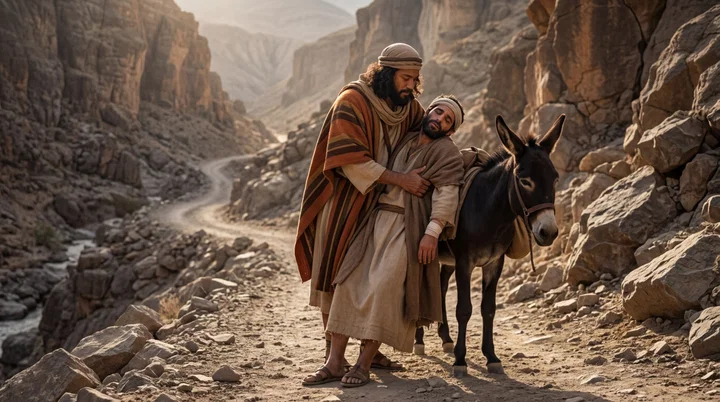
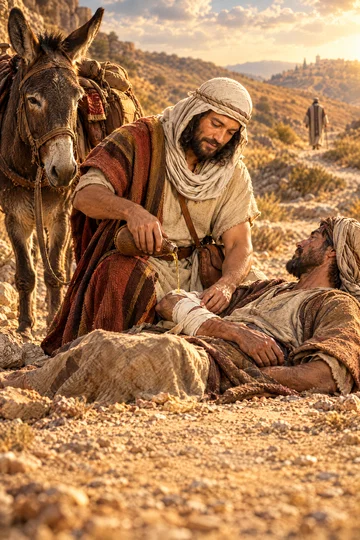
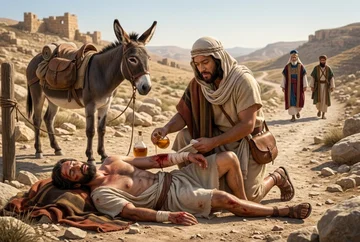
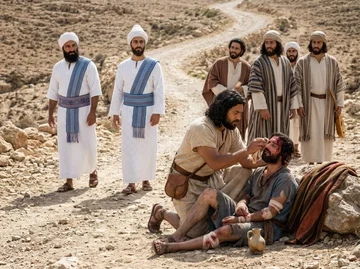
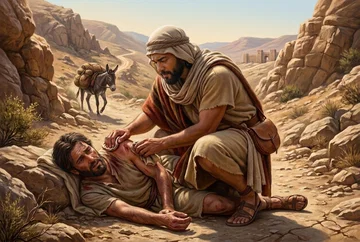
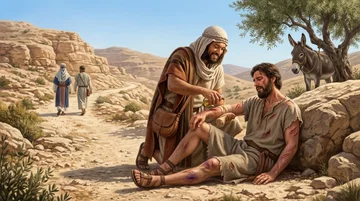
And likewise a Levite, when he was at the place, came and looked on him, and passed by on the other side.
Translations
American King James Version, King James Version, KJV Cambridge Paragraph Bible, Webster Bible
And likewise a Levite, when he was at the place, came and looked on him, and passed by on the other side.
Revised Version, American Standard Version
And in like manner a Levite also, when he came to the place, and saw him, passed by on the other side.
and in like manner also, a Levite, having been about the place, having come and seen, passed over on the opposite side.
and in like manner also a Levite, being at the spot, came and looked [ at him] and passed on on the opposite side.
And, in like manner, a Levite also, coming down to the place, and seeing him, passed by, on the opposite side.
Berean Standard Bible, Majority Standard Bible
So too, when a Levite came to that spot and saw him, he passed by on the other side.
In the same way a Levite also, when he came to the place and saw him, passed by on the other side.
And in the same way, a Levite, when he came to the place and saw him, went by on the other side.
And likewise also a Leuite, when he was come neere to the place, went and looked on him, and passed by on the other side.
Douay-Rheims (Challoner revision)
In like manner also a Levite, when he was near the place and saw him, passed by.
Pictures


Cross-references
- Leviticus 19:18
Thou shalt not avenge, nor bear any grudge against the children of thy people, but thou shalt love thy neighbour as thyself: I am the LORD.
The Levite’s neglect contrasts with the command to love one’s neighbor as oneself.
- Luke 10:36-37
Which now of these three, thinkest thou, was neighbour unto him that fell among the thieves?
Jesus identifies the neighbor as the one who shows mercy and commands others to act likewise.
- Luke 10:27
And he answering said, Thou shalt love the Lord thy God with all thy heart, and with all thy soul, and with all thy strength, and with all thy mind; and thy neighbour as thyself.
The command to love one’s neighbor frames the parable’s test of neighborly love.
- Luke 10:25
And, behold, a certain lawyer stood up, and tempted him, saying, Master, what shall I do to inherit eternal life?
The lawyer’s question prompts the parable’s answer about inheriting eternal life.
- Matthew 25:35-40
For I was an hungred, and ye gave me meat: I was thirsty, and ye gave me drink: I was a stranger, and ye took me in:
Care for people in need is counted as care for Christ.
- Luke 10:36
Which now of these three, thinkest thou, was neighbour unto him that fell among the thieves?
Asks which of the three proved to be a neighbor.
- 1 John 3:17
But whoso hath this world’s good, and seeth his brother have need, and shutteth up his bowels of compassion from him, how dwelleth the love of God in him?
Both condemn withholding help and compassion from someone in need.
- Deuteronomy 22:4
Thou shalt not see thy brother’s ass or his ox fall down by the way, and hide thyself from them: thou shalt surely help him to lift them up again.
Both texts address the duty to help someone in need.
- Matthew 25:42-45
For I was an hungred, and ye gave me no meat: I was thirsty, and ye gave me no drink:
neglecting suffering saints neglects Christ
- Exodus 23:4-5
If thou meet thine enemy’s ox or his ass going astray, thou shalt surely bring it back to him again.
The law required helping even an enemy’s lost or burdened animal.
Commentary part 1 of 2
Each commentary is drawn from primary sources: the writings of Ellen G. White and Adventist pioneers and periodicals. Each commentary is separate. Its own words are not a quotation; follow the references to read the source passages.
Ellen G. White
113 sources
On the road down from Jerusalem to Jericho a traveler lay stripped, wounded and half dead, and after the priest a Levite came to the place, looked closely on his helpless suffering, and passed by on the other side without helping, in opposite contrast to the Samaritan who afterward had compassion and fully cared for him.ST Jul 7, 18903T 523.2–3Lt 107, 1902, par. 4–6Ms 101, 1901, par. 42–46Ms 71, 1897, par. 29–32 Jesus told this in answer to the lawyer's questions about eternal life and who is neighbor, after the lawyer rightly quoted love to God and to neighbor as self, closing by showing that neighbor is he who shows mercy and commanding go and do likewise.Lt 134, 1902, par. 17–19Ms 100, 1904, par. 5–11Ms 71, 1897, par. 29–32 A neighbor is anyone who needs sympathy and practical help, without distinction of pleasantness, race, color, class, creed, or friendship, and keeping the law to love neighbor as self means showing mercy in deed.COL 376.1–23T 523.2–3Lt 134, 1902, par. 17–19ST Jul 23, 1894SW 41.1 Though the Levite served in sacred things and knew the law of mercy, his leaving the sufferer unaided proved him out of harmony with God, showing that office, knowledge, profession and strict letter-keeping do not replace loving deeds.ST Jul 7, 1890DA 497.1Lt 81, 1901, par. 7–10Ms 87, 1894, par. 28–31DA 497.2–3 He stopped, was convicted and knew he ought to help, yet because it was disagreeable trouble he persuaded himself it was no concern of his, and with selfish, hard, exclusive heart turned away; so seeing need and knowing duty are not enough, and neglect to relieve suffering when providentially brought in contact with it is sin that breaks the law and will bring condemnation.Lt 217, 1905, par. 6–11Lt 81, 1901, par. 7–10Ms 117, 1903, par. 8–13Ms 167, 1898, par. 8–10Ms 84, 1893, par. 27
Narrative Action and Setting
The journey was down from Jerusalem to Jericho, where a certain man going that way fell among thieves who stripped him of all that was valuable, wounded him, and left him half dead, wounded and dying by the roadside sorely in need of help.3T 523.2–3Ms 100, 1904, par. 5–11Ms 71, 1897, par. 29–32Ms 31, 1902, par. 13–16RH Sep 2, 1902 That road runs as a wild, rocky, robber-infested ravine through the wilderness of Judea.Lt 304, 1908, par. 13–15 The attack left him bleeding and helpless in suffering condition by the wayside.Lt 304, 1908, par. 13–15RH Sep 2, 1902
Likewise after the priest had already passed by on the other side without helping, a Levite came traveling that way and came to the place where the wounded man lay.3T 523.2–3Ms 100, 1904, par. 5–11Ms 71, 1897, par. 29–32Ms 31, 1902, par. 13–16RH Sep 2, 1902 He came close enough to reach the spot, stopped and looked on him in his helpless, suffering condition, seeing the fallen man in decay and need.ST Jul 7, 1890Ms 101, 1901, par. 42–46Lt 217, 1905, par. 6–11Lt 42, 1907, par. 14–16Lt 304, 1908, par. 13–15 Then, leaving him without the help he needed, he passed by on the other side without helping, doing just what the priest had done before him.3T 523.2–3Lt 107, 1902, par. 4–6Ms 101, 1901, par. 42–46Ms 97, 1901, par. 15–18Lt 42, 1907, par. 14–16
His neglect stands in opposite contrast to the Samaritan who afterward came where he was, had compassion, went to him, and cared for him.3T 523.2–3Ms 71, 1897, par. 29–32Ms 77, 1901, par. 6–7Lt 79, 1898, par. 4–5ST Jul 2, 1894 The Samaritan bound up his wounds pouring in oil and wine, set him on his own beast, brought him to an inn, and took care of him.Ms 71, 1897, par. 29–32Lt 79, 1898, par. 4–5 He paid for his keep, two pence with promise to repay more on his return, and paid for his care thereafter.3T 523.2–3Ms 71, 1897, par. 29–32
Occasion and Historical Setting
Jesus told the story of the Levite in answer to the lawyer's questions about what to do to inherit eternal life and who is his neighbor.Lt 134, 1902, par. 17–19Ms 100, 1904, par. 5–11Ms 71, 1897, par. 29–32Ms 40, 1889, par. 1–2Ms 31, 1902, par. 13–16 The lawyer had correctly quoted the law to love God with all heart, soul, strength and mind and neighbor as self, and Jesus had answered, do this and live.Ms 71, 1897, par. 29–32Lt 22, 1901, par. 16–19Ms 31, 1902, par. 13–16 Christ closes the lesson by asking which was neighbor to the wounded man, drawing the answer, he that showed mercy, and commanding, go and do likewise as the Samaritan did.Lt 134, 1902, par. 17–19Ms 100, 1904, par. 5–11Ms 71, 1897, par. 29–32Ms 31, 1902, par. 13–16 Loving one's neighbor is thus not merely a teaching to affirm but a principle to be practiced in unselfish deeds, to be examined carefully and applied personally rather than treated as partial or divided duty.Lt 22, 1901, par. 16–19Ms 40, 1889, par. 1–2
It was spoken before a large crowd containing Pharisees, Herodians, Sadducees, priests and lawyers.Ms 71, 1897, par. 29–32Ms 31, 1902, par. 13–16 They stood with disappointed expectations, bitter hatred and silenced lips, and prompted the lawyer to question Jesus about the law, hoping to trap Him into a reportable answer.Ms 71, 1897, par. 29–32Ms 31, 1902, par. 13–16 Jesus read their plotting hearts as He taught.Ms 31, 1902, par. 13–16 The Levite himself was among those listening.DA 498.6–499.1
The account relates an incident that had actually taken place.Lt 134, 1902, par. 17–19DA 498.6–499.121MR 190.2–4 The incident was familiar to many present, who listened with intense interest.Ms 31, 1902, par. 13–16 The wounded man was a descendant of Abraham.21MR 190.2–4
The priest and Levite were brought by God's providence into contact with the sufferer that they might minister to him.RH Sep 13, 1906Ms 40, 1889, par. 4Ms 167, 1898, par. 13–16 Christ constantly weaves the web of human events and guides men and places the suffering where one with sympathy and compassion will attend to needs.Ms 167, 1898, par. 13–16 God permits suffering and calamity to call people away from selfishness and awaken compassion, tenderness and love.RH Sep 13, 1906 The Levite was especially favored and given opportunity to practice the law and to serve as an agent of blessing, despite having taken part in God-appointed temple worship.COL 382.1–2Ms 40, 1889, par. 4 His looking and passing by proves those professing the greatest lovingkindness and claiming to be repositories of truth, mercy and compassion were destitute of the love of God, and warns against separating religious duties from neighborly love or dismissing such care as a little thing governed by personal inclination.RH Sep 13, 1906COL 382.1–2Ms 167, 1898, par. 13–16
Who Counts as Neighbor
A neighbor is anyone who needs sympathy and practical help, and need alone is enough to make the claim.COL 376.1–2ST Jul 23, 18944T 226.3ST Feb 25, 18866T 294.1–2 No pause is allowed to ask whether the sufferer is pleasant or disagreeable, Jew or Gentile, of one's own church or faith or another, stranger or friend, kith or kin, bitter opponent, believer or unbeliever, or of what race, color, class or social standing.COL 376.1–2ST Jul 23, 18943T 524.1DA 503.4 The suffering and destitute of every class are neighbors, and when their needs come to notice they are to be helped as far as possible, first by relieving physical suffering and meeting temporal wants, which opens the way to reach the heart with virtue and religion.ST Jul 23, 1894SW 41.14T 226.3ST Feb 25, 18866T 294.1–2 Keeping the law to love God with all heart, soul, strength and mind and neighbor as self means practicing that love in the relation designed between people, forbidding division of society into rich and poor, high and low, learned and unlearned, and requiring those entrusted with means, ability and gifts of grace to steward them for others rather than reap all advantage for self, since a person is valued not by wealth, talent or education but as he becomes a steward of mercy and love.COL 376.1–2ST Jul 23, 1894SW 41.14T 226.36T 294.1–2 Everyone claiming to be a child of God and having a name on the church book must note the failure to show pity and love and instead represent mercy, compassion and tenderness with immediate compassion as soon as one in need and suffering is seen.ST Jul 23, 1894SW 41.14T 226.3ST Feb 25, 18866T 294.1–2
The wounded man left robbed, beaten and half dead by the roadside represents those who are subjects for interest, sympathy and charity, without exception for who they are.Ms 77, 1901, par. 6–7ST Jul 23, 18946T 294.1–23T 524.1Lt 83, 1897, par. 10 He stands for every soul wounded and bruised by the adversary, every one who is God's property, the sinner and the lost human race deceived, wounded and left to perish.ST Jul 23, 1894DA 503.56T 294.1–23T 524.1 In direct application he stands for the Southern field left by the roadside to die, and to pass by is to leave that field in its need instead of showing mercy and doing active evangelistic work to bind up wounds, care for it and pay the cost as the Samaritan did.Ms 77, 1901, par. 6–76T 294.1–2Lt 83, 1897, par. 10 The fallen and degraded left wounded and ready to perish are like those passed by and need compassionate help, and the call to churches in every locality north, south, east and west is to have eyes anointed to see opportunities, undertake the work lying nearest, even families within the shadow of their own doors not yet shown sufficient interest to feel their souls are cared for, and go out into the highways and hedges and compel men to come in that the house may be full.Ms 77, 1901, par. 6–76T 294.1–23T 524.1Lt 83, 1897, par. 10
In Christ the Jewish distinctions as to who was neighbor are swept away, leaving no territorial lines, no artificial distinctions, no caste, no aristocracy.6T 294.1–2DA 503.49T 209.1–2Ms 103, 1908, par. 18–19 Love must cross divisions of nationality and social distinction, and those closely connected with Christ are lifted above prejudice of color or caste, with faith taking hold of eternal realities and working by love to purify the soul.6T 294.1–2DA 503.49T 209.1–2Ms 103, 1908, par. 18–19 Lived out where race antagonism exists, this brings a triumph of humanity over prejudice when the Holy Spirit is poured out, so that the color line is regarded very differently and minds and hearts love in a pure, heavenly, unselfish atmosphere, including talented laborers working for their own people yet bearing testimony in tent meetings and large assemblies that reaches many souls.6T 294.1–29T 209.1–2Ms 103, 1908, par. 18–19
Law Requires Practical Mercy
The parable sums up all the principles contained in God's law, supreme love to God under the first four commandments and unselfish love to the neighbor under the last six, so that keeping the law to love the neighbor as self means showing mercy in deed as the Samaritan did.3T 523.2–3Lt 134, 1902, par. 17–19Ms 100, 1904, par. 5–11 The Levite came to the place where the man stripped, wounded and left half dead by thieves lay, looked on him and then passed by on the other side without helping, doing just what the priest had done before him and standing in opposite contrast to the Samaritan who afterward came, had compassion, bound wounds, carried him to an inn and paid for his care.3T 523.2–3Lt 134, 1902, par. 17–19Ms 100, 1904, par. 5–11 That neglect answers who is neighbor and who was neighbor to him that fell among thieves, proving that failing to show mercy breaks the command to love neighbor as self and forfeits eternal life, while going and doing likewise gives life.3T 523.2–3Ms 100, 1904, par. 5–11Ms 153, 1904, par. 15–19 It was the business of the Levites to attend to all such suffering cases, but the man's condition was so forbidding that the Levite went away, illustrating failure to love one's neighbor and to fulfill God's law.Lt 8, 1895, par. 22–25Ms 153, 1904, par. 15–19 The account relates an incident that had actually taken place, and with Luke 10:25-37 it sets forth in living reality the difference between obedience and disobedience to the law, speaking directly to transgressors, setting the value of the soul in the light of the cross of Calvary and calling every hearer to decide eternal destiny now, to flee to refuge and lay hold on eternal life, as temperance and intemperance revealed that difference in the world before the flood, before the destruction of Sodom, and in Belshazzar's sacrilegious feast ending in being weighed and found wanting.Lt 134, 1902, par. 17–19Lt 58, 1898, par. 8–11
Though claiming to explain God's law and serving in sacred things and in God-appointed temple worship, the Levite left the suffering person without the help he needed, and that breach of the law to love his neighbor exposed his character.ST Jul 7, 1890Lt 81, 1901, par. 7–10Ms 87, 1894, par. 28–31 He knew the lessons of mercy and compassion given to Israel through Moses, yet disregarded them and refused aid, failing to show tender compassion to his suffering neighbor in great need.Lt 81, 1901, par. 7–10Ms 87, 1894, par. 28–31Ms 167, 1898, par. 5–7 His conduct shows that religious position or outward observance does not make a person a true neighbor, but spirit and actions reveal whether the law is kept in the heart.ST Jul 7, 1890Ms 109, 1906, par. 8–14Lt 82a, 1897, par. 7–13 Claiming to keep God's compassionate law does not prove love for neighbor unless its principles are carried out through kindness to people in need, and those who claim religious privilege with stony hearts and fail in practical love to a neighbor in distress prove themselves out of harmony with God.Ms 109, 1906, par. 8–14Lt 82a, 1897, par. 7–13 Religious standing, office, knowledge of the law, strict letter-keeping and exalted profession do not replace mercy and compassion.ST Jul 7, 1890Ms 87, 1894, par. 28–31
True religion is not a matter of systems, creeds, or rites, but of loving deeds, doing the greatest good to others, and genuine goodness.DA 497.1DA 497.2–3 Religious position or knowledge does not itself amount to genuine goodness, which is shown by loving deeds that bring good to others.DA 497.1DA 497.2–3 The Samaritan acted from a kind and loving heart and thus proved himself a doer of the law, while the Levite like the priest before him reached the wounded man, looked and deliberately passed by, illustrating that love of neighbor requires action, not merely words.DA 497.2–3DA 504.1 The answer to how to inherit eternal life is the true science of Christianity lived out through love for God and one's neighbor.DA 504.121MR 414.3–5
Seeing a suffering person without helping is failure to be a neighbor and failure to reveal God's character to suffering humanity and to represent Christ as Christ represents the Father.Lt 79, 1898, par. 4–5COS 69.1–70.3COS 68.5–7 Though chosen to serve in God's temple, the Levite with cold, unfeeling heart saw the wounded traveler and passed by without helping, failing to reflect God's mercy and kindness.COS 69.1–70.3COS 68.5–7RH Mar 27, 1900 Like Judaism, Christianity becomes perverted when selfishness and cold formality quench the fire of love, and the Levite's neglect under Christ's severest rebuke exposes that perversion as a solemn warning to Christians not to fail for humanity's sake to show mercy and pity.ST Jul 23, 1894ST Jul 23, 1894 As representatives claiming exalted righteousness yet manifesting cruelty and selfishness, priest and Levite gave no evidence of pity and love, while the despised Samaritan proved character far superior, a heart feeling for suffering humanity and nobility of soul to show mercy to one unknown.ST Jul 23, 1894RH Mar 27, 1900 Real love is not mere sentimental weeping over tales of woe but follows the impulse of a kind and loving heart in doing for the needy with disinterested benevolence what should be done, treating the wounded stranger as one would desire to be treated in similar circumstances, and those who withhold kindness and encouragement from people in trouble are strangers to Christ's tenderness and love.ST Jul 23, 1894ST Jul 23, 1894RH Mar 27, 1900
Why the Levite Passed
The Levite came close enough to stop and look upon the wounded man in his helpless, bleeding condition, and in that look he was convicted and understood that he ought to help.Lt 217, 1905, par. 6–11Ms 117, 1903, par. 8–13Lt 304, 1908, par. 13–15COL 379.2 He knew the duty to care for the afflicted and the stranger, for such suffering cases were his sacred business and his office called him to care for the sick.Lt 304, 1908, par. 13–15RH Apr 9, 1908RH Apr 9, 1908 He knew the lessons of mercy and compassion given to Israel through Moses, yet he disregarded them and refused aid to his suffering neighbor.Lt 81, 1901, par. 7–10 Seeing need and knowing duty are not enough when mercy is refused in act.Lt 217, 1905, par. 6–11HMW 31.1–2
Helping was disagreeable, unwelcome trouble and inconvenience, and because it was unpleasant he persuaded himself that the case was no concern of his.Lt 217, 1905, par. 6–11Ms 117, 1903, par. 8–13COL 379.2HMW 31.1–2 Out of curiosity he merely looked, and he wished he had not come that way so that he would not have seen the sufferer.Lt 304, 1908, par. 13–15 He did not desire the trouble of caring for the sick man and was unwilling to undertake the work, so he left him in misery without help, just as the priest had done.Lt 98, 1896, par. 8–10Lt 304, 1908, par. 13–15 His refusal stands opposite to the Samaritan who afterward did with gentleness, kindness and compassion the same disagreeable work the priest and Levite refused.Lt 98, 1896, par. 8–10Lt 304, 1908, par. 13–15
Self ruling made him unkind and unmerciful, for he thought of himself instead of his duty and could not treat another as he would wish to be treated.RH Apr 9, 1908RH Apr 9, 1908RH Apr 9, 1908 With stony heart, hardheartedness, cruelty, selfishness, sanctimonious self-sufficiency, narrow exclusiveness and national bigotry he turned away, giving no evidence of pity and love despite exalted profession of righteousness.ST Jul 23, 1894DA 499.2–500.2 He turned away partly because the man might be a Samaritan, condemning by prejudice and indifference one in need.DA 499.2–500.2 The sufferer was in fact a Jew and fellow tribesman, whose distress in every sense should have awakened the sympathy and regard of those of his own nation, and whom priest and Levite should have been first to minister to with tender compassion.Ms 167, 1898, par. 8–10
Gospel Picture Foreshadowed
The wounded man left half dead beside the road pictures the sinner and the lost human race, humanity deceived by the adversary, wounded and ruined by Satan and left to perish.ST Jul 7, 1890ST Jul 23, 1894DA 503.5 His helplessness is the helplessness of all who have fallen under Satan's power and cannot save themselves.ST Jul 7, 1890ST Jul 23, 1894
The one who has compassion and comes to the rescue pictures Christ and presents His love and character.ST Jul 7, 1890RH Sep 13, 1906ST Jul 23, 1894DA 503.5 He lived the law by denying Himself for the good of others, laying aside His royal robe and kingly crown, stooping from highest command in heaven to become a servant and clothing divinity with humanity.RH Sep 13, 1906Ms 167, 1898, par. 13–16 He lived in poverty and self-denial that men through His poverty might be made rich, and by disinterested benevolence and cheerful, glad sacrifice He saves what the priest and Levite left.Ms 167, 1898, par. 13–16 He covers the soul with His robe of righteousness.ST Jul 23, 1894 His love for Samaritans remained unchanged despite their rejection of Him, and His commendation of the good Samaritan prepared the disciples to carry the gospel to Samaria, teaching them that those once regarded as enemies could welcome His messengers and receive the gospel.DA 488.4–6 Unlike the Levite, Jesus never looks on a wounded and bruised sufferer in greatest perplexity needing His sympathy and passes by on the other side, but remains a faithful and true Friend who can always be depended upon, to whom all may come in the simplicity of children with joy and rejoicing.Lt 147, 1896, par. 7
Duty to Show Compassion
Merely coming to where the sufferer lies, looking on him in helpless need, and then going past on the other side without helping leaves a fallen brother in decay instead of showing interest and speaking and acting kindly to restore and encourage him.Lt 107, 1902, par. 4–6Ms 101, 1901, par. 42–46Ms 97, 1901, par. 15–18Lt 42, 1907, par. 14–16Lt 52, 1906, par. 29–31 Seeing need without acting does not fulfill the duty of loving neighbor, for love to neighbor means showing mercy and giving practical help at once in word and deed.Lt 107, 1902, par. 4–6Ms 97, 1901, par. 15–18Lt 42, 1907, par. 14–16Lt 52, 1906, par. 29–31 That duty is owed to everyone in need of help one can bestow, without first asking belief, doing for all and especially for fellow believers, and it is not to be a selective, impulsive benevolence that patronizes those who do not love or fear God while a needy brother is neglected to dishonor God.Lt 107, 1902, par. 4–6Ms 101, 1901, par. 42–46Ms 97, 1901, par. 15–18 Even when helping is uninviting and costs inconvenience, care and anxiety, the requirement is to go and give compassionate, practical care, which is the positive opposite of passing by and is genuine keeping of the law of God.Lt 107, 1902, par. 4–6Ms 101, 1901, par. 42–46
The work begins by meeting physical needs first, supplying necessities, feeding the hungry, bringing in the poor that are cast out, sheltering the homeless, comforting the sick, and relieving suffering as far as ability and opportunity allow.4T 226.3ST Feb 25, 18866T 275.2–276.1Lt 83, 1897, par. 14–16 Donations of money cannot take the place of this personal service, which is required of all according to strength and opportunity through daily gathering grace and strength from God to reach to the very depths of human misery and help those who cannot possibly help themselves.4T 226.36T 275.2–276.1 Relieving temporal suffering in this way opens the way to hearts with virtue and religion and spiritual truth, affording a favorable opportunity to set forth Christ the crucified One.4T 226.3ST Feb 25, 18866T 275.2–276.1 Compassion expressed in such action toward a wounded stranger shows the Holy Spirit's control and Christ dwelling within and cooperating, and it is done with heavenly companions.Ms 115, 1899, par. 18Ms 115a, 1899, par. 12Lt 83, 1897, par. 14–16
Loving God with heart, mind, soul and strength shapes how possessions are viewed and used, for property of every kind, with every talent, means, ability and gift of grace, is entrusted by God to be managed wisely subordinate to eternal interests for His glory and the good of others.Lt 148, 1902, par. 5–6Ms 25, 1896, par. 20–2216MR 260.4–261.1SW 41.1 Sanctified judgment is to guide its use in good stewardship of God's beneficence and mercy and love, rather than reaping all advantage for self, for God values a person not by wealth, talent or education but in proportion as he becomes such a steward.16MR 260.4–261.1SW 41.1Ms 11, 1892, par. 9–11 That love forbids separating society into distinct classes of rich and poor, high and low, learned and unlearned, and requires becoming acquainted with unbelievers and placing truth before those living up to all the light they have, including precious souls in the cities, since Christ died to redeem human beings from sin and has set an open door to bring others into fellowship.Lt 148, 1902, par. 5–6SW 41.1 To have every advantage while seeing great necessity and human wretchedness and ignorance, yet to lock up sympathy and pass by, is sanctimonious, self-sufficient, self-righteous selfishness that refuses collision with need; left unchecked it grows to giant size and turns the soul's ground to granite beyond impression, drying up the soul by spending God's money in unjust proportions on its own already large facilities and conveniences while a destitute neighboring work among black and white people is left unbuilt, and money so used will not appear on the right side, for those entrusted with His goods are accountable to relieve temporal and spiritual needs and Jesus sees and marks the neglect.SW 41.1Lt 205, 1901, par. 14–16Ms 11, 1892, par. 9–11
Neglecting to watch for opportunities and to discern the necessities of fellow beings is sin in God's sight, for Christ identifies His interest with suffering humanity and keeping His commandments means loving God supremely and neighbor as self.Ms 84, 1893, par. 27Lt 69, 1895, par. 3–4 When duty is made plain by God's Word, failing to do it is blameworthy human caution, not a virtue, and should be criticized rather than encouraged; what is required is to act as the good Samaritan acted, wide awake to see how to bless humanity and to work in Christ's lines with constantly improving efficiency.Ms 84, 1893, par. 27Lt 69, 1895, par. 3–4 Having great light and great opportunities without improving them brings condemnation in the judgment, as the queen of the south and the men of Nineveh will rise up to condemn.Ms 84, 1893, par. 27Lt 5, 1895, par. 19–21 To see fellow workers in dire need of modest, respectable clothing, to know their real condition and have power to change it, yet to leave them destitute while spending freely on self, testifies against professed Christians before God, heaven and men, is registered in heaven as neglect of Christ in the person of His saints, proves blindness to the value of souls precious to God, springs from deep-rooted selfishness, and shuts out blessing and richer experience in God.Ms 2, 1895, par. 1–5Lt 5, 1895, par. 19–21Ms 156a, 1901, par. 12 The same guilt rests on those with abundant resources who fail to help others receive spiritual light and practical support, on responsible people who neglect to help restore what has been withheld, and on those who see neglected fields such as Australia and the Southern field yet withhold support with unequal distribution; such neglect is recorded in heaven and will testify against them and be answered for in the day of judgment.CNA 144.1Lt 5, 1895, par. 19–21Ms 156a, 1901, par. 12
The Levite who came close enough to look at the afflicted yet failed to act stands as the negative example opposite true medical missionary work, for though bound by sacred duty to care for the afflicted he did nothing to relieve him.Ms 101, 1901, par. 42–46Ms 190, 1903, par. 13–19Ms 33, 1899, par. 1Ms 63, 1899, par. 17–19 Physicians who are called to visit the suffering, speak only a few words, do nothing to relieve him, and then charge a large fee follow that failure; that course is dishonesty before God, robbery and fraud, and does not glorify God as Restorer, since the diseased bodies they treat are God's property.Ms 63, 1899, par. 17–19Ms 169a, 1899, par. 7–10 They are instead to go vigorously to work to relieve the sufferer as the good Samaritan did, performing real service and charging only a simple price proportionate to the work actually done.Ms 63, 1899, par. 17–19Ms 169a, 1899, par. 7–10 Medical students must not come, look on suffering, and pass by on the other side instead of bearing responsibility; even with diplomas their education has but just begun.Ms 63, 1899, par. 17–19HPMMW 34.5 The inexperienced student who has never borne responsibility in thinking, caretaking and studying complicated cases thinks himself a ripe scholar because he knows so little, while greater knowledge brings a sense of inability; the one who best knows himself works in all humility without proud boasts, bearing a weight of responsibility as he sees the woes of suffering humanity, and will not take human life into his hands to deal with even bodies of men without connecting with the experienced physician as a child with a father to be instructed and nourished and corrected if in error, getting experience by beginning at the lower round of the ladder and by careful, earnest, thoughtful exertion climbing round after round, with Bible religion as the mainspring of action.Ms 33, 1899, par. 1HPMMW 34.5
Specific Neglects Rebuked
Passing by on the other side rebukes leaving the Southern field to die like the robbed and beaten man left by the roadside, instead of showing mercy and doing active work for it as commanded in Go and do thou likewise.Ms 77, 1901, par. 6–7RH Aug 27, 1901SW 21.2 It is seeing wretched suffering and yet neglecting it, seeing wretchedness and hunger for sympathy and help since emancipation yet wounding and leaving the colored race by the wayside beaten, bruised, despised and forsaken as if they had no souls.SW 21.2SW 27.1SBAWP 63.1–64.1 Though they have reasoning powers, Christ died for them as verily as for white people and they may attain eternal life by faith in Him, so decided efforts must counteract the wrong by the very kind of labor their circumstances require, that they may be saved, converted, educated, and go forth to rescue fellow men from darkness into light with workers, schools, means and gospel light no longer withheld.9T 209.1–2SW 27.1 Where race antagonism exists the Samaritan's work means loving as Christ loved in seeking salvation of souls, lifted above prejudice of color or caste by close connection with Christ, with faith laying hold of eternal realities and working by love to purify the soul.9T 209.1–2 Lived out, that brings triumph of humanity over prejudice when the Holy Spirit is poured out and the loud cry is given in the Southern field, so the color line is regarded very differently and minds and hearts love in a pure, heavenly, unselfish atmosphere, including talented colored laborers working with God for their own people yet bearing testimony in tent-meetings and large assemblies that reaches many souls.9T 209.1–2
The same passing by rebukes many in Battle Creek who see the helpless man most in need of help yet do not count helping worth doing, neglecting people and fields in need while pride, display and selfish use of resources are favored.8T 59.1–2SPBC 164.1 People with abundant resources dishonor God when they fail to help others receive spiritual light and practical support, and such neglect will testify against them in the judgment, so those given great advantages cannot be called faithful servants if they leave others without care.Lt 5, 1895, par. 19–21 It is seeing the need of the long-neglected cities and then leaving it undone, an indifference that brings the curse against those who came not to the help of the Lord against the mighty.11MR 355.2RH Sep 30, 1902Lt 21, 1902, par. 12–16 Those who have seen the need must stop passing it by and take up the city work wholeheartedly, intelligently and unselfishly with willing workers.11MR 355.2RH Sep 30, 1902Lt 21, 1902, par. 12–16
Seeing great necessity yet locking up sympathy and keeping means for self is passing by like the Levite, as when money is used for an extra building in Battle Creek and extending the printing plant while Nashville and the Southern field are left destitute.Lt 205, 1901, par. 10–13Ms 156, 1901, par. 13–15 Obedience means enlarging the overgrown establishment no more but diminishing it, distributing God's money equally, and dividing and subdividing by properly proportioned institutions in many places to extend knowledge of the truth, because the Southern field is the neighbor and help must come to Nashville as it came to Battle Creek without delay.Lt 205, 1901, par. 10–13 It condemns knowing dire necessities yet refusing sympathy, cooperation and simple advantages that would help the poor help themselves, helping only so far as wages are concerned, giving only barrels of cast-off clothing and token laborers with so little bowels of mercy, compassion and help toward those cultivating the hardest part of the Lord's vineyard.Lt 221, 1899, par. 6–8Ms 164, 1897, par. 1 Money brought in for that field is set apart for that work as the tithe is set apart for ministers, so to withhold and divert money solicited for the destitute field to other purposes is to rob a destitute field with unfaithful stewardship that displeases God and must be answered for in judgment.Ms 156, 1901, par. 13–15Ms 164, 1897, par. 1 The same heartless neglect of a neighbor in distressing need, content to let a brother or institution struggle unaided under adverse circumstances, is seen toward the Huntsville school in its destitution of many necessities.Ms 100, 1904, par. 12–14 It requires redeeming the time by neighborly, substantial interest in an institution planted in one's own field, with the interest that would place it on high vantage ground, with liberal gifts from stronger conferences and faithful action by those in the South, calling for hearts of flesh, tender, kind, courteous hearts that feel the woes of others instead of being blind and deaf and dumb to need.Ms 100, 1904, par. 12–14Lt 221, 1899, par. 6–8
Passing by also rebukes churches that leave poor sinners just as the Levite looked and passed, requiring a different order of things with truth presented by helping people just where they are in Samaritan work to save neglected poor sinners.6T 275.2–276.1STMW11 32.2 Every church believing present truth should long since have been gathering in the needy, oppressed, suffering and destitute, showing the Samaritan's tender sympathy by supplying physical necessities, feeding the hungry, bringing the poor that are cast out into homes, daily gathering grace and strength from God to reach the depths of human misery and help those who cannot help themselves.6T 275.2–276.1 Donations of money cannot take the place of this work, for according to strength and opportunity personal service is required of all, and in doing it there is favorable opportunity to set forth Christ crucified.6T 275.2–276.1 Such Samaritan work gives character to presentation of truth and becomes the entering wedge whereby truth finds standing-room, creating an entirely different atmosphere around workers, for the Holy Spirit communicates to all doing God's service and those worked by the Spirit become a power to lift up, strengthen and save souls ready to perish.STMW11 32.2 The lesson requires brethren blessed with health to feel interested for one another with kind regard and care for those without health, favoring an afflicted and crippled brother, pitying and sympathizing, lending a helping hand, supplying lack by small aid from each, comforting and cheering his heart, and doing as they would wish if crippled themselves, rather than oppressing him even when nerves are shocked and he erred in judgment, which forfeits reward and is noticed by God.Ms 1, 1856, par. 51T 150.3–4 Churches must not simply leave faithful ministers and worn workers in hardship to suffer but take active steps to meet needs, nor leave fellow workers without modest clothing, sick believers without food, drink and care, a brother fallen into decay, a brother crushed by debt after investing in missions, Brother Pocock's family without work sought, Brother Leininger long overlooked, Edson White judged beyond help, and quiet members without part, but seek out what help is needed and act as the Samaritan did with encouragement and personal service.6T 261.4–262.1Lt 105, 1902, par. 6–87T 291.1–2
The Levite's course must not be followed when a brother is seen falling into decay, for God places the poor and suffering among His people to test them and reveal hearts, and to pass by is to swerve from principle, violate justice and neglect mercy, where God cannot cooperate in character development and whatever dishonors God cannot benefit.Lt 64, 1909, par. 6–76T 261.4–262.1 Seeing need and passing by condemns religious people who witness ruin of those overcome by intemperance yet make no effort to rescue them, instead of acting like the Samaritan with practical help and hopeful words.ST Jun 6, 1900MH 172.2 It pictures indifference, neglect and false reasoning by one who should have been first to help, recognizing need the Levite could meet yet refusing inconvenience, in contrast to Christ's pity and compassion, rebuking all professing His name who see work to be done yet will not consecrate lives in self-denying, self-sacrificing effort to save perishing souls.Lt 64, 1909, par. 6–7 A professed servant who comes where a poor wounded soul needs sympathy and restoring, yet has no eye to pity and no hand to save, disheartens the returning wanderer and instead of pouring healing oil pours vitriol by unjust, un-Christlike speech and action, revealing lack of the true Shepherd's love, opposite the Samaritan and the Shepherd hunting the lost sheep, leaving work to God's own arm, hindering the soul for whom Christ works not imputing sin but imputing righteousness, which God will require and requite.Lt 23, 1894, par. 8–9 Passing deliberately to the other side is cold, neglectful treatment of those needing restoration, especially the fallen, discouraged, tempted, oppressed, drunkards, and tobacco and stimulant users, counting help lost time, condemning rather than befriending, warning not and worsening wounds.MH 172.25T 604.3 Christ's followers must offer self-sacrificing restoration with tender sympathy bestowing benefits to relieve necessity, which aids culture of mind and heart and opens the way to receive Christ's attributes by working in His lines, while getting and holding all for self tends to poverty of soul, for Christ died at heavy ransom for that soul and decided immediate efforts are required.ST Jun 6, 19006T 261.4–262.1Lt 23, 1894, par. 8–9
Sources