Luke 12:50
But I have a baptism to be baptized with; and how am I straitened till it be accomplished!
Translations
American King James Version, King James Version, KJV Cambridge Paragraph Bible, Revised Version, American Standard Version
But I have a baptism to be baptized with; and how am I straitened till it be accomplished!
But I have a baptism to be baptized with; and how am I straitened till it shall be accomplished!
but I have a baptism to be baptized with, and how am I pressed till it may be completed!
But I have a baptism to be baptised with, and how am I straitened until it shall have been accomplished!
But, an immersion, have I, to be immersed with, and how am I distressed, until it be ended!
Berean Standard Bible, Majority Standard Bible
But I have a baptism to undergo, and how distressed I am until it is accomplished!
But I have a baptism to be baptized with, and how distressed I am until it is accomplished!
But there is a baptism which I have to undergo; and how am I kept back till it is complete!
Notwithstanding I must be baptized with a baptisme, and how am I grieued, till it be ended?
Douay-Rheims (Challoner revision)
And I have a baptism wherewith I am to be baptized: and how am I straitened until it be accomplished?
Pictures
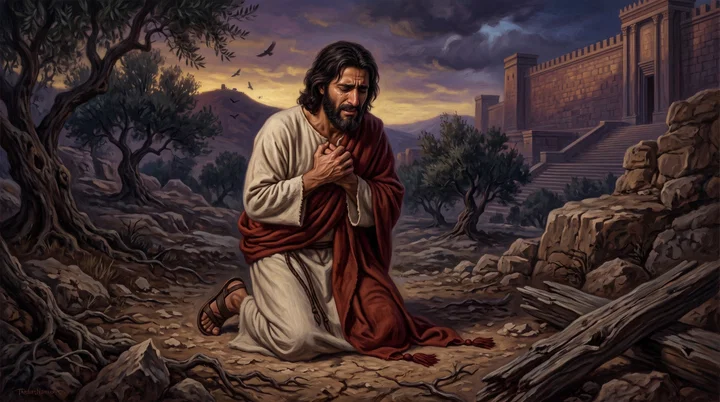
Cross-references 20 of 27
- Mark 10:38-39
But Jesus said unto them, Ye know not what ye ask: can ye drink of the cup that I drink of? and be baptized with the baptism that I am baptized with?
Jesus describes his coming suffering as a baptism and says his disciples will share it.
- Matthew 26:39-42
And he went a little further, and fell on his face, and prayed, saying, O my Father, if it be possible, let this cup pass from me: nevertheless not as I will, but as thou wilt.
Jesus submits to the Father’s will while facing the cup of suffering.
- Matthew 20:22-23
But Jesus answered and said, Ye know not what ye ask. Are ye able to drink of the cup that I shall drink of, and to be baptized with the baptism that I am baptized with? They say unto him, We are able.
Jesus connects his baptism with drinking the cup of suffering, which his disciples will share.
- Luke 22:44
And being in an agony he prayed more earnestly: and his sweat was as it were great drops of blood falling down to the ground.
Jesus’ anguish in Gethsemane reflects the suffering he faced at the cross.
- John 12:27
Now is my soul troubled; and what shall I say? Father, save me from this hour: but for this cause came I unto this hour.
Jesus faces the coming hour of suffering as the purpose of His mission.
- Romans 6:3-5
Know ye not, that so many of us as were baptized into Jesus Christ were baptized into his death?
Baptism into Christ’s death points to sharing in his resurrection.
- John 19:30
When Jesus therefore had received the vinegar, he said, It is finished: and he bowed his head, and gave up the ghost.
His cry marks the completion of the suffering he longed to accomplish.
- Isaiah 53:5
But he was wounded for our transgressions, he was bruised for our iniquities: the chastisement of our peace was upon him; and with his stripes we are healed.
His suffering brings healing and peace and rescues from sin.
- Isaiah 53:11
He shall see of the travail of his soul, and shall be satisfied: by his knowledge shall my righteous servant justify many; for he shall bear their iniquities.
His suffering accomplishes its purpose and is not in vain.
- Luke 22:42
Saying, Father, if thou be willing, remove this cup from me: nevertheless not my will, but thine, be done.
Jesus faces his coming suffering and submits to the Father’s will.
- Mark 14:36
And he said, Abba, Father, all things are possible unto thee; take away this cup from me: nevertheless not what I will, but what thou wilt.
Jesus accepts the suffering he is destined to undergo.
- Matthew 3:13-17
Then cometh Jesus from Galilee to Jordan unto John, to be baptized of him.
Jesus’ water baptism foreshadows the baptism he must undergo.
- Mark 8:31
And he began to teach them, that the Son of man must suffer many things, and be rejected of the elders, and of the chief priests, and scribes, and be killed, and after three days rise again.
Jesus speaks of the suffering and death he must undergo.
- Luke 23:33
And when they were come to the place, which is called Calvary, there they crucified him, and the malefactors, one on the right hand, and the other on the left.
Identifies the suffering's completion with Jesus' death on Calvary.
- Matthew 26:38
Then saith he unto them, My soul is exceeding sorrowful, even unto death: tarry ye here, and watch with me.
Links the baptism to Jesus' sorrow in the garden.
- Luke 22:15-20
And he said unto them, With desire I have desired to eat this passover with you before I suffer:
The final Passover and institution of the Lord’s Supper precede Christ’s suffering.
- Luke 22:53
When I was daily with you in the temple, ye stretched forth no hands against me: but this is your hour, and the power of darkness.
Both refer to Christ’s approaching hour of suffering.
- Philippians 3:10
That I may know him, and the power of his resurrection, and the fellowship of his sufferings, being made conformable unto his death;
Both connect sharing Christ’s sufferings with his resurrection power.
- Hebrews 10:5-10
Wherefore when he cometh into the world, he saith, Sacrifice and offering thou wouldest not, but a body hast thou prepared me:
Christ’s self-offering fulfills what the sacrifices symbolized.
- John 2:4
Jesus saith unto her, Woman, what have I to do with thee? mine hour is not yet come.
Jesus says His hour has not yet come.
Commentary
Each commentary is drawn from primary sources: the writings of Ellen G. White and Adventist pioneers and periodicals. Each commentary is separate. Its own words are not a quotation; follow the references to read the source passages.
Ellen G. White
21 sources
He spoke of a baptism still ahead of Him, the final ordeal of suffering and death in Gethsemane and on the cross where He would drink the cup of wrath and give Himself as the true Passover lamb, and He was pressed and weighed down with anguish at what His humanity must bear yet yearning until it was accomplished.Lt 20, 1897, par. 5–7ST Dec 9, 1897Lt 147, 1903, par. 16–18Ms 36, 1897, par. 1–5ST Dec 23, 1897
He had freely pledged Himself by covenant to give His life as humanity's Substitute, Surety and ransom, so that salvation and everlasting life might be possible for every repentant sinner.ST Dec 9, 1897Ms 134, 1905, par. 8Ms 36, 1897, par. 1–5
As that Substitute He bore the sins of the world upon His innocent soul, enduring the curse of the law and separation from His Father, and by so bearing sin He vindicated God's justice and showed His law unchangeable while revealing His love.ST Dec 9, 1897Lt 147, 1903, par. 16–18Ms 42, 1897, par. 7–9ST Dec 23, 1897
His death met what the sacrificial offerings and the Passover lamb foreshadowed, and though innocent and recoiling from shame and agony He submitted to the Father's will for the joy set before Him of winning the world back to pardon, restoration and everlasting life.ST Dec 9, 1897DA 642.1ST Aug 14, 18798T 209.2CH 555.1
His followers are therefore called to lift the cross and bear it after Him with that same self-sacrificing spirit, even drinking a cup of suffering and enduring trial until God's will is fulfilled.Ms 185, 1898, par. 7–105T 132.2CET 177.3–178.1Lt 66, 1906, par. 14
Baptism of Suffering Explained
The baptism is the coming ordeal of suffering and death awaiting Him at Gethsemane and the cross.Lt 20, 1897, par. 5–7Lt 147, 1903, par. 16–18Ms 42, 1897, par. 7–9Ms 134, 1905, par. 8Ms 36, 1897, par. 1–5 It is His final baptism of blood, in which He is soon to drink the cup of wrath and be sacrificed as the true Passover lamb.ST Dec 9, 1897ST Aug 9, 1905DA 642.1 In that death the sacrificial offerings meet their fulfillment, for the Passover lamb's type meets its antitype in His death for the sins of the world.ST Dec 9, 1897DA 642.13SP 83.2–84.1 He called that suffering He was about to endure a baptism He had yet to undergo.Lt 20, 1897, par. 5–7ST Dec 9, 1897Ms 42, 1897, par. 7–9Ms 134, 1905, par. 8Ms 36, 1897, par. 1–5
To be straitened is to be pressed and constrained until it is accomplished.Lt 20, 1897, par. 5–7ST Dec 9, 1897Ms 36, 1897, par. 1–5 It means to be weighed down by agony and inwardly burdened, pressed with anguish and dread at the strain His humanity must bear.Lt 147, 1903, par. 16–18Ms 42, 1897, par. 7–9Ms 134, 1905, par. 8ST Aug 9, 1905 Yet at the same time it is longing and yearning until the work is accomplished.Lt 20, 1897, par. 5–7Ms 134, 1905, par. 8Ms 36, 1897, par. 1–5
He speaks of this baptism as still future and appointed, approaching but not yet undergone.Ms 36, 1897, par. 1–5ST Dec 23, 1897DA 642.13SP 83.2–84.1 It had to be accomplished, and He had come for that very purpose.ST Dec 23, 1897ST Aug 9, 1905 His suffering would be completed in the sacrifice He was about to undergo, culminating in His death.DA 642.13SP 83.2–84.1
Purpose of His Sacrifice
The baptism He looked toward was voluntarily taken up, for He had bound Himself by covenant to give His life as Substitute and Surety and ransom for a fallen world, offering the sacrifice that opens salvation and everlasting life to every repentant sinner.ST Dec 9, 1897Ms 134, 1905, par. 8Ms 36, 1897, par. 1–5ST Dec 23, 1897ST Aug 9, 1905 He had come for that very purpose, and though He felt pressed until it should be accomplished, He freely chose to undergo it in order to save the world.ST Dec 9, 1897Ms 134, 1905, par. 8ST Aug 9, 1905 In that united plan the Father and the Son acted together, so that His giving of Himself was at once the provision of a ransom and the expression of divine love.ST Dec 9, 1897ST Dec 23, 1897
As Substitute He took upon His innocent soul the weighing burden of the sins of the world and bore the penalty due to transgression.ST Dec 9, 1897Ms 42, 1897, par. 7–98T 209.2CH 555.1DA 410.2 That bearing included enduring the curse of the law and the punishment for sin, even separation from His Father.ST Dec 9, 1897Lt 147, 1903, par. 16–18Ms 42, 1897, par. 7–9 By so bearing sin He vindicated the justice of God and upheld the law as unchangeable, settling the controversy over its character.ST Dec 9, 1897Ms 42, 1897, par. 7–9 At the same time His death on the cross revealed God as both holy and loving, justice and love meeting in the one sacrifice.ST Dec 9, 1897ST Dec 23, 1897
His death was what the sacrificial offerings had symbolized, and at the final Passover the type of the Passover lamb met its fulfillment in His being sacrificed as the true Passover lamb, soon to drink the cup of wrath for the sins of the world.ST Dec 9, 1897DA 642.13SP 83.2–84.1 Though innocent, He accepted this baptism of blood and the curse due to the guilty, recoiling from humiliation and agony yet choosing to endure it at any cost to Himself.ST Aug 14, 1879ST Sep 23, 1886ST Aug 2, 1883 He did so because He saw the ruin wrought by sin and the inability of perishing humanity to save itself.ST Aug 14, 1879ST Aug 2, 1883 He feared separation from God, and faced the full cost of saving humanity, yet submitted to the Father's will.Lt 147, 1903, par. 16–18
He was cheered in His life of toil and sacrifice by the thought that His travail would not be for nothing, but would win the world back to its loyalty to God.8T 209.2CH 555.1DA 410.2 For the joy set before Him He endured the cross and despised the shame.8T 209.2 Without His willing suffering and death the guilty would perish, but through it those facing death because of sin may receive pardon, restoration to God's image, and everlasting life.ST Aug 14, 18795RED 18.2–19.3ST Sep 23, 1886
Call to Follow Him
Those who have been blessed with great light are to put their whole heart into the service of Christ with earnest religious interest rather than striving in a tame, listless way.Ms 185, 1898, par. 7–10 That earnestness is to be maintained through daily prayer and watchfulness.Ms 185, 1898, par. 7–10 He longed for the baptism of blood He would undergo in giving His life to save souls, and was wholly devoted to completing that saving work.5T 132.2 He yearned for the suffering He was to endure on the cross, which He described as a baptism, and was inwardly burdened until that suffering was accomplished, and His followers are called to lift the cross and bear it after Him, striving for that same devoted, self-sacrificing spirit.5T 132.2Lt 66, 1906, par. 14 Baptism here means an ordeal of suffering that must be endured before it is accomplished, and the faithful must likewise drink the cup and undergo such trial.CET 177.3–178.1 Though they earnestly plead for deliverance from enemies who threaten them with death, God's will must be fulfilled before they are delivered.CET 177.3–178.1
Sources
Pioneers and periodicals
34 sources
He still had ahead of Him an overwhelming immersion in suffering and death, and He felt inwardly pressed and held until that work was finished.ST Jan 27, 1914ST Jul 9, 1894ST Jul 9, 1894ST Apr 15, 1880 That coming baptism was His death on the cross as the Lamb bearing the sins of the world, which weighed upon Him and constrained Him until it was accomplished.ST Dec 9, 1897RH Apr 21, 1904 He had come for this very purpose and pledged Himself to bear sin's penalty, living in sinful flesh true to the law and fulfilling what was foretold and assigned Him, longing eagerly to complete it out of love for the lost.ST Dec 9, 1897ST Aug 9, 1905ST Nov 1, 1910 Though He recoiled from what His humanity must bear and pled that the cup might pass, He patiently endured Gethsemane and the cross until His death was finished.ST Aug 9, 1905ST Sep 2, 1913RH Jul 1, 1873 In that death He bore the world's sin, the curse of the law, and separation from His Father as a ransom, vindicating God's justice and showing His law unchangeable while expressing God's love.ST Dec 9, 1897ST Dec 23, 1897ST Aug 12, 1886
Words And Context
The saying stands in teaching on preparing for His coming, spoken after the saying about casting fire upon the earth and before the saying about giving division in the earth rather than peace.ST Jul 9, 1894 It belongs to a sermon to His disciples given in the presence of a multitude that sets the confidence of willing faith against the fear of unbelief.ST Oct 3, 1878 The watch exhortations around it were given in connection with the signs of the second advent and apply to a certain period just prior to that event, the waiting, watching time since the 1844 disappointment when believers wait for the coming of the Lord without definite time in moral and spiritual darkness until the coming of the Son of man.RH Oct 15, 1872
The word translated straitened means constrained and pressed and held until the work is finished.ST Jul 9, 1894ST Jul 9, 1894 He was constrained and pressed until His baptism was accomplished.ST Jul 9, 1894ST Jul 9, 1894
Baptism here is used figuratively for severe suffering and for martyrdom, a baptism of blood.ST Jan 27, 1914ST Apr 15, 1880 The figure draws on the fixed sense of baptism as immersion, so that He was to be overwhelmed by suffering until it was accomplished, and using the word figuratively does not change that meaning.ST Apr 15, 1880 His words allude to Isaiah 21:4 in the Septuagint, where transgression baptizes the speaker and fills him with fear.ST Sep 2, 1913 This points to His agony in the garden as He was overwhelmed by the sins of the world, in a trial of suffering that had to be completed.ST Sep 2, 1913
Christ's Baptism Of Suffering
The baptism still ahead was coming suffering and death, a baptism of blood culminating at Calvary as the Lamb of God for the sins of the world.ST Dec 9, 1897ST Nov 8, 1899ST Aug 12, 1886 It pressed upon Him and inwardly constrained Him with deep strain until it was accomplished, weighing heavily as its appointed time drew near.RH Apr 21, 1904ST Nov 8, 1899RH Jul 1, 1873 That anguish belonged especially to the garden before His death on the cross.ST Sep 2, 1913RH Jul 1, 1873
He freely chose this sacrifice to save the world and came for this very purpose, having pledged Himself to bear sin's penalty and offer the sacrifice that makes salvation possible for every repentant sinner.ST Dec 9, 1897ST Aug 9, 1905 As the God-Man in sinful flesh He lived true to every requirement of the divine law and fulfilled what the prophets foretold, doing the work God assigned Him in His humiliation to make His coming again possible.ST Nov 1, 1910 Love for the lost made Him long eagerly for the work to be completed, so that the path to Calvary was joy and beauty to Him and not a burdensome sacrifice.ST Sep 28, 1915ST Aug 12, 1897
He dreaded the hour because of what His humanity must bear and recoiled from it, feeling the strain His humanity would have to bear.ST Aug 9, 1905 At the crisis He pleaded that the cup of death might pass from Him, yet patiently and willingly went through Gethsemane and the cross in wholly yielded self-renunciation, remaining at peace even when accused and condemned.ST Nov 5, 1912ST Aug 13, 1902 His cry that it was finished marked the completion of that work.ST Nov 5, 1912
In that death He bore the world's sin and the law's curse and endured separation from His Father as punishment for transgression, though innocent accepting the curse due to guilty people.ST Dec 9, 1897ST Aug 14, 1879 He gave Himself as ransom for fallen humanity, the Father and Son united in the plan of redemption, and His death on the cross expressed both God's justice and His love and revealed God as holy and loving.ST Dec 23, 1897 Through this sacrifice He vindicated God's justice and showed God's law unchangeable, settling the controversy over its character, fulfilling what the sacrificial offerings had symbolized and meeting the Passover with its antitype.ST Dec 9, 1897ST Aug 12, 1886
In Gethsemane He saw the history of the human race, that transgressors left to themselves must perish, the helplessness of man, the power of sin, and the woes and impending fate of a doomed world if left to perish.ST Aug 14, 1879RH Jul 13, 1905 Seeing this ruin and man's inability to save himself, He decided to save man at any cost to Himself, choosing to endure humiliation and agony so that perishing millions might gain everlasting life.ST Jan 20, 1914ST Aug 14, 1879ST Aug 2, 1883RH Jul 13, 1905 By shedding blood for remission He reconciles people to the Father and His law, passing through death before His people to defeat the one holding death's power and gain the keys of death and the grave to release His people and give immortality, while His intercession makes it possible for the Father to forgive them and accept them as subjects of the kingdom.RH Mar 25, 1875 His death crowned and completed His ministry, and God exalted Him with a name above every name, securing the redeemed restored to God's image in pardon and everlasting life and singing in praise.ST Sep 28, 1915ST Aug 13, 1902
Sharing His Constraint
The baptism of suffering was not His alone, for His disciples would share in that same baptism, and their answer that they are able is given as their response to that prospect.ST Sep 2, 1913 The order is fixed: the cross comes before the crown, and the crucifixion of the flesh precedes glorification in immortality.ST Mar 26, 1894 Those who would share in glory must share in His sufferings, and the power of His resurrection is found through that fellowship.ST Mar 26, 1894
His own baptism in the watery grave stands as an example of the importance of baptism, so that following Him in receiving water baptism is the way to invite Him to give a larger measure of His Holy Spirit.RH Apr 21, 1904 That same baptism also represents the severe trial and purification awaiting those who are alive at His second coming.ST Mar 11, 1886 They must endure a fiery test that purges every vestige of worldly dross, and those who endure will come forth refined as gold, reflect His image, and receive praise and honor and glory at His appearing.ST Mar 11, 1886
His feeling of being pressed by the work He had to accomplish is the pattern for urgency in the minister's labor.ST Jun 10, 1886 God's people near the end will likewise face suffering and trial as they serve Him, for the baptism is a baptism of suffering and trial and service, and they may feel the pressure He felt.RH Nov 21, 1907 The remnant are likewise straitened by the great work still before them and must patiently wait for its completion.RH Nov 21, 1865 A soul intensely constrained by an unfinished mission is straitened until that great work is accomplished.ST Nov 2, 1882 Opposition and hostility arise where the gospel is preached under that same deep strain until the work is accomplished.
The call to sell possessions is applied to raising means for spreading Bible truth, with those holding surplus property to sell a portion and contribute.RH Nov 10, 1859 The poor need not sell their small homes and put themselves in want, yet all should share in giving, even if only a little.RH Nov 10, 1859 The words in the twelfth chapter of Luke illustrate full surrender and the need to put nothing personal or worldly ahead of accepting His invitation.RH Mar 4, 1909 The phrase expressing being constrained until a work is accomplished is used to introduce discussion of another proposed substitute.RH Jul 17, 1866
Sources