Luke 22:15
And he said unto them, With desire I have desired to eat this passover with you before I suffer:
Translations
And he said to them, With desire I have desired to eat this passover with you before I suffer:
King James Version, KJV Cambridge Paragraph Bible, Revised Version, American Standard Version
And he said unto them, With desire I have desired to eat this passover with you before I suffer:
And he said to them, I have earnestly desired to eat this passover with you before I suffer.
and he said unto them, 'With desire I did desire to eat this passover with you before my suffering,
And he said to them, With desire I have desired to eat this passover with you before I suffer.
And he said unto them—I have greatly desired, to eat, this passover, with you before I suffer;
Berean Standard Bible, Majority Standard Bible
And He said to them, “ I have eagerly desired to eat this Passover with you before My suffering.
He said to them, “ I have earnestly desired to eat this Passover with you before I suffer,
And he said, I have had a great desire to keep this Passover with you before I come to my death;
Then he saide vnto them, I haue earnestly desired to eate this Passeouer with you, before I suffer.
Douay-Rheims (Challoner revision)
And he said to them: With desire I have desired to eat this pasch with you, before I suffer.
Pictures
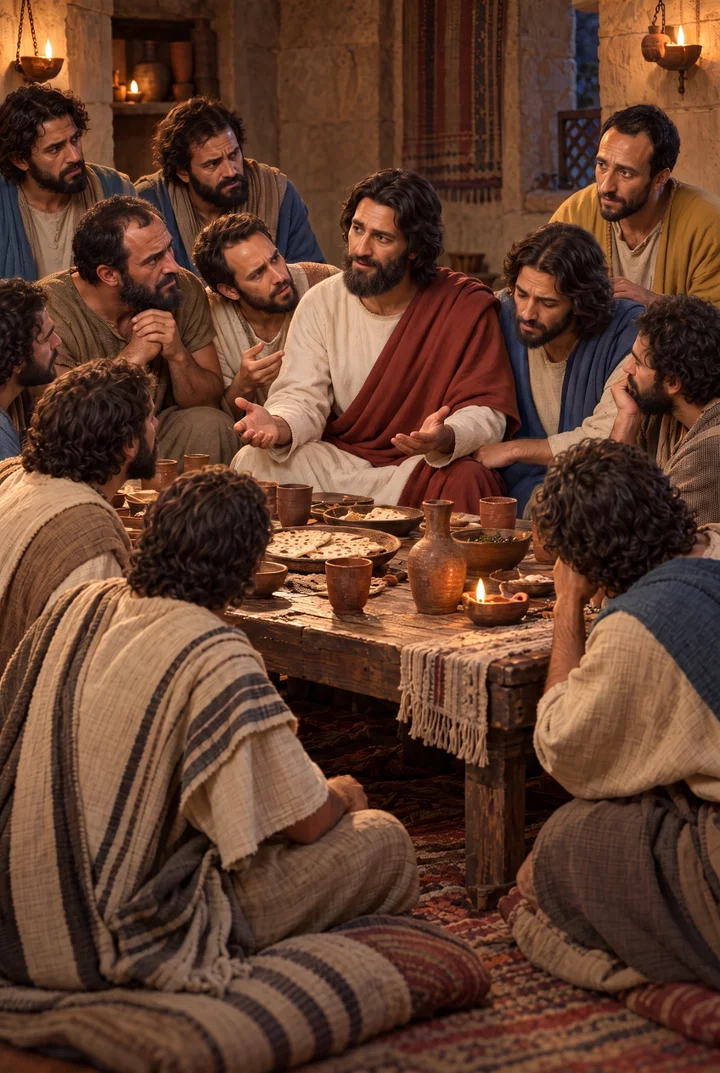
Cross-references 20 of 35
- 1 Corinthians 11:23-26
For I have received of the Lord that which also I delivered unto you, That the Lord Jesus the same night in which he was betrayed took bread:
Both describe the supper instituted at the meal as remembering and proclaiming Christ’s death until he comes.
- Mark 14:12-17
And the first day of unleavened bread, when they killed the passover, his disciples said unto him, Where wilt thou that we go and prepare that thou mayest eat the passover?
Parallel account of the Passover supper Jesus desired to share with his disciples.
- Exodus 12:6
And ye shall keep it up until the fourteenth day of the same month: and the whole assembly of the congregation of Israel shall kill it in the evening.
Places the Passover lamb’s slaughter at evening on the fourteenth day.
- Matthew 26:26-29
And as they were eating, Jesus took bread, and blessed it, and brake it, and gave it to the disciples, and said, Take, eat; this is my body.
Jesus identifies the cup with his covenant blood and speaks of drinking again in the kingdom.
- Luke 22:19-20
And he took bread, and gave thanks, and brake it, and gave unto them, saying, This is my body which is given for you: this do in remembrance of me.
Jesus institutes the new supper after the Passover meal as a memorial of his death.
- John 13:1-30
Now before the feast of the passover, when Jesus knew that his hour was come that he should depart out of this world unto the Father, having loved his own which were in the world, he loved them unto the end.
The same Passover supper includes Jesus’ words about his coming suffering and Judas’s betrayal.
- John 1:29
The next day John seeth Jesus coming unto him, and saith, Behold the Lamb of God, which taketh away the sin of the world.
Jesus is the Passover Lamb whose sacrifice takes away the world’s sin.
- Matthew 26:17
Now the first day of the feast of unleavened bread the disciples came to Jesus, saying unto him, Where wilt thou that we prepare for thee to eat the passover?
The disciples asked where to prepare the meal.
- Exodus 12:13
And the blood shall be to you for a token upon the houses where ye are: and when I see the blood, I will pass over you, and the plague shall not be upon you to destroy you, when I smite the land of Egypt.
Passover lamb’s blood turning away judgment prefigures Christ, the sinless Lamb.
- 1 Corinthians 5:7
Purge out therefore the old leaven, that ye may be a new lump, as ye are unleavened. For even Christ our passover is sacrificed for us:
Christ is identified as the Passover sacrifice, fulfilling the Passover type in his death.
- John 13:1-17
Now before the feast of the passover, when Jesus knew that his hour was come that he should depart out of this world unto the Father, having loved his own which were in the world, he loved them unto the end.
Describes another commanded ordinance, associated with humility.
- Mark 14:22-25
And as they did eat, Jesus took bread, and blessed, and brake it, and gave to them, and said, Take, eat: this is my body.
Another account of the Supper, including the promise to drink anew in God’s kingdom.
- Mark 14:12-16
And the first day of unleavened bread, when they killed the passover, his disciples said unto him, Where wilt thou that we go and prepare that thou mayest eat the passover?
The disciples prepare the Passover meal Jesus will eat with them.
- Leviticus 23:5
In the fourteenth day of the first month at even is the LORD’s passover.
Dates the Passover to the fourteenth day of the month.
- Exodus 12:18
In the first month, on the fourteenth day of the month at even, ye shall eat unleavened bread, until the one and twentieth day of the month at even.
The unleavened bread begins at the evening of the Passover meal.
- Exodus 12:15
Seven days shall ye eat unleavened bread; even the first day ye shall put away leaven out of your houses: for whosoever eateth leavened bread from the first day until the seventh day, that soul shall be cut off from Israel.
Passover required removing leaven and eating unleavened bread.
- John 18:28
Then led they Jesus from Caiaphas unto the hall of judgment: and it was early; and they themselves went not into the judgment hall, lest they should be defiled; but that they might eat the passover.
The rulers had not yet eaten Passover, which Jesus desired to eat with his disciples before suffering.
- Matthew 26:1-2
And it came to pass, when Jesus had finished all these sayings, he said unto his disciples,
Jesus says Passover is near and foretells his betrayal and crucifixion.
- Mark 15:42
And now when the even was come, because it was the preparation, that is, the day before the sabbath,
Identifies the day before the Sabbath as the day of Jesus’ crucifixion.
- Exodus 12:8
And they shall eat the flesh in that night, roast with fire, and unleavened bread; and with bitter herbs they shall eat it.
Describes the Passover meal Jesus shared.
Commentary
Each commentary is drawn from primary sources: the writings of Ellen G. White and Adventist pioneers and periodicals. Each commentary is separate. Its own words are not a quotation; follow the references to read the source passages.
Ellen G. White
17 sources
With doubled language He voiced intense, earnest longing to share that Passover meal with His disciples before His suffering.5RED 4.2–5.13SP 83.2–84.1Ms 54, 1897, par. 1–2 These were His first words after gathering with the twelve about the prepared table in the upper chamber when the hour had come for the yearly feast remembering Israel's release from slavery in Egypt.3SP 83.2–84.1Ms 54, 1897, par. 1–2Ms 106, 1903, par. 8–11 That night was virtually the last Passover ever to be kept, for its type met its fulfillment in the slaying and death of the Lamb of God for the sins of the world, bringing the system of types and ceremonies to its close.5RED 4.2–5.13SP 83.2–84.1Ms 35, 1897, par. 1–2 At that same meal He instituted the Lord's Supper to take the place of the Passover as the lasting memorial of His sacrifice and death, with the bread His body given for His followers and the cup His blood of the new covenant, to be observed through all time until it is fulfilled in the kingdom of God.5RED 4.2–5.13SP 83.2–84.1Ms 106, 1903, par. 8–11 He kept that Passover in obedience to the law and all its divinely appointed ordinances, thereby identifying Himself with the paschal lamb as its great antitype, for the innocent lamb whose blood caused the destroying angel to pass over Israel's homes had pointed forward to Him as the sinless Lamb whose merits alone avert judgment and bring redemption to fallen humanity.SG3 225.15RED 48.1ST Jul 4, 1878
Longing and Setting
With a doubled expression of desire He declared a deep, earnest, eager longing to eat this Passover with His disciples before He suffered.5RED 4.2–5.13SP 83.2–84.1Ms 54, 1897, par. 1–2Ms 106, 1903, par. 8–11COS 106.1–5 The longing was not casual but intense, the strong repetition marking how earnestly He desired that final meal with them.5RED 4.2–5.13SP 83.2–84.1Ms 54, 1897, par. 1–2Ms 106, 1903, par. 8–11Ms 19, 1897, par. 30–33 His words were spoken when the hour had come, as His first words after gathering with the twelve apostles about the table.3SP 83.2–84.1Ms 54, 1897, par. 1–2Ms 106, 1903, par. 8–11 They met in the upper chamber for the Passover meal they had prepared, the yearly feast commemorating Israel's release from slavery in Egypt.3SP 83.2–84.1Ms 54, 1897, par. 1–2Ms 19, 1897, par. 30–33ST May 23, 1878COS 105.1–6
Unlike the calm joy of His usual meetings with the disciples and the special interest of former Passover suppers, He spoke this time in touching sadness.3SP 83.2–84.1COS 106.1–5ST May 23, 1878 His spirit was troubled, His heart burdened, and His face shadowed with grief, while they sympathized without knowing the cause.3SP 83.2–84.1COS 106.1–5ST May 23, 1878DA 642.3–4 Yet even in that sorrow He treasured this time with them.3SP 83.2–84.1COS 106.1–5DA 642.3–4 He clearly foresaw the events soon to come, knowing His suffering was near and that He was soon to receive His full baptism of suffering.5RED 4.2–5.13SP 83.2–84.1COS 106.1–5ST May 23, 1878 He was wrung with grief over the ingratitude and cruelty of those He came to save and over the terrible fate awaiting them.5RED 4.2–5.13SP 83.2–84.1ST May 23, 1878
The few quiet hours between Him and Gethsemane were to be spent for the benefit of His disciples.3SP 83.2–84.1ST May 23, 1878 After eating the supper He went with them to the garden of Gethsemane where He often went to pray.3SP 83.2–84.1ST May 23, 1878COS 113.2 He talked with them and taught them as they walked, until He became strangely silent as they neared the garden.COS 113.2
Type Fulfilled, Memorial Given
This was virtually the last Passover ever to be celebrated, the last before its type met its fulfillment and antitype in the slaying and death of the Lamb of God for the sins of the world, bringing the Passover system of types and ceremonies to its close so that the Passover was to end.5RED 4.2–5.13SP 83.2–84.1Ms 35, 1897, par. 1–2DA 652.1–2ST May 23, 1878 The Passover had recalled Israel's deliverance from Egypt and pointed forward to Christ, the unblemished Lamb, for the innocent lamb slain there whose blood sprinkled on the doorposts caused the destroying angel to pass over Israel's homes prefigured Jesus as the sinless Lamb of God whose merits alone avert judgment and condemnation from fallen man and bring great salvation and redemption of fallen humanity.SG3 225.15RED 48.1ST Jul 4, 1878 He ate and observed this Passover in obedience to the Jewish law and all its divinely appointed ordinances, and in that meal connected the Lord's Supper with the Passover, thereby identifying Himself with the paschal lamb as its great antitype.5RED 48.1ST Jul 4, 1878
On that same night at this last Passover He instituted the Lord's Supper to take the place of the Passover as the lasting memorial of His great sacrifice and death, to be continued through all time and observed by His followers in every land and age.5RED 4.2–5.13SP 83.2–84.1Ms 35, 1897, par. 1–2DA 652.1–2SG3 225.1 At this supper the bread represented His body given for His followers and the cup His blood of the new covenant.5RED 4.2–5.1 He declared He would eat no more of it until it is fulfilled in the kingdom of God.Ms 106, 1903, par. 8–11 He joined that meal to washing their feet, a humble service that would reveal pride, selfishness, or hatred and encourage confession, forgiveness, patience, and love, meant to prepare them for sharing the remembrance of His death in the Lord's Supper.1SP 201.2–202.1SG3 225.2
Those who rejected Christ defiled their souls and made their keeping of the Passover feast of no value and a bitter mockery.5RED 48.1 The food and drink of that Passover were pure unfermented juice of the grape and bread without leaven, because He never places temptation before anyone and the sacramental service was designed to be soul-refreshing and life-giving with nothing connected to it that ministers to evil.Ms 106, 1903, par. 8–11 He is the same one who warned that wine mocks and strong drink rages, and He provided no intoxicating beverage, teaching instead to bring the lower nature into subjection by self-denial and suffering to break the power of appetite against Satan's temptation to indulgence that beclouds reason and benumbs spiritual perception.Ms 106, 1903, par. 8–11
Sources
Pioneers and periodicals
50 sources
With deep longing he asked to share that particular Passover meal with his twelve disciples in the prepared upper room when the hour had come before he suffered.RH May 10, 1864ST Oct 22, 1894ST Dec 20, 1899RH Feb 5, 1914ST Aug 12, 1886 It was the regular Passover at its proper time on the evening of the fourteenth day of Nisan, the night after the lamb had been slain that afternoon and the same night he was betrayed.ST Oct 22, 1894RH Feb 5, 1914ST Mar 11, 1886RH Mar 1, 1906 He spoke with touching sadness and a spirit weighed down by full foresight of what was coming, yet his sharing of the meal in quiet communion with his beloved disciples strengthened him for his trial.ST May 23, 1878ST Aug 12, 1886 This was virtually the last Passover ever kept, for type was to meet antitype in his death as the Lamb of God, and just as the Passover gave way he instituted the Lord's Supper in its place as a memorial of his death with unleavened bread and unfermented fruit of the vine.ST May 23, 1878ST Mar 3, 1909ST Mar 3, 1909ST Jul 13, 1915ST Feb 7, 1878 It was his last such meal with them, for he would not drink of the cup again until he drank it anew with his saints made immortal at the marriage supper in God's kingdom.RH May 10, 1864ST Apr 5, 1883ST Mar 6, 1879
Time and Place of Supper
The meal took place when the hour had come, with Jesus seated with the twelve apostles in the prepared upper room.ST Dec 20, 1899RH Feb 5, 1914ST Aug 12, 1886 It was the Passover at its regular and proper time, on the evening of the fourteenth day of Nisan or Abib, just before his death.ST Oct 22, 1894ST Mar 11, 1886RH Mar 1, 1906 He ate it after the Passover lamb had been slain that afternoon, on the night following the day the lamb was killed, the same night he was betrayed.RH Feb 5, 1914 Together with the surrounding verses, the meal is identified with the day the Passover lamb was killed, the first day of unleavened bread, dated to Thursday and the fourteenth day of Abib.RH Feb 5, 1914
The meal was prepared according to the directions in Exodus 12, so a paschal lamb was slain and eaten by Jesus and his disciples.ST Sep 20, 1910 Those who held that he anticipated the common Jewish observance teach that he ate the Passover with his disciples on the evening before the Jews ate it, anticipating their Passover by a day in order to teach his disciples and institute the Lord's Supper before he died.ST Apr 3, 1907 Yet he still met the Jews' time by himself dying at the very time the Passover lamb was killed, between the evenings, between three o'clock and sunset.ST Apr 3, 1907 In the same line of teaching the supper was a few hours before the regular Passover but on the same day, anticipating his death on the cross after the ninth hour when the darkness had ended, at the time described as between the two evenings in Exodus 12:6.ST Jun 20, 1911
After the supper he went to Gethsemane and was crucified on Friday, the fifteenth day, the first day of the Feast of Unleavened Bread.ST Mar 11, 1886ST Mar 11, 1886 The following day, the sixteenth, was the seventh-day Sabbath and the first day of the count to Pentecost.ST Mar 11, 1886 It was the fourth and final Passover supper of his ministry, shared quietly with his disciples.RH Mar 7, 1912
The institution was on Thursday evening or night, a week-day night before his suffering and crucifixion, not on Sunday.ST Jan 13, 1881ST May 11, 1915ST Jan 25, 1910ST May 27, 1875 It was the next event of importance after the triumphal entry and belongs to the betrayal, the institution of the Lord's Supper, and the events leading to his suffering, closely connected with the death on which Christian hope depends, so that careful attention to their order reveals their full significance.STST Oct 28, 1913ST Nov 15, 1883 On casual reading the account appears to show Judas was present and partook with the others when Christ desired to eat the Passover and instituted the memorial, a question of relative time that must be settled by careful examination of the united testimony of all four evangelists rather than by casual reading.RH Jul 29, 1873
Judas was not present when Christ instituted the supper and had no part in it.RH Jul 29, 1873 Jesus shared the Passover table with Judas even though he knew of his deceit, and in the scene Jesus had spoken of the coming betrayal, Judas received the sop and left while the others remained and sang a solemn hymn with Jesus.RH Jan 8, 1914ST
Meaning of Earnest Desire
The phrase this Passover points to that particular Passover meal shared with the disciples, not to the Passover institution as a whole.RH May 10, 1864 With strong desire he deeply and earnestly desired to eat this Passover with his disciples before he suffered.RH May 10, 1864ST Oct 22, 1894ST Dec 20, 1899ST Sep 20, 1910 That earnest longing was for the Passover meal itself, prepared and shared with them just before his suffering.ST Oct 22, 1894ST Dec 20, 1899ST Sep 20, 1910ST Mar 6, 1879
He spoke these words in the upper chamber in touching sadness, with a heavy, troubled spirit and a mind weighed down by what was coming, unlike the calm joy of his usual meetings, and the disciples sympathized without knowing the cause.ST May 23, 1878ST Aug 12, 1886 He spoke with full foresight of the near events, grieved by the ingratitude and cruelty of those he came to save, and seeing pictured before him the terrible fate awaiting them in consequence.ST May 23, 1878ST Aug 12, 1886 His desire to share the meal showed innocent human feeling and proves he had a true human body, coming like other men eating and drinking and sharing fully in physical life and its need for food.RH Nov 14, 1854ST Apr 11, 1878
This communion with his beloved disciples was a blessing immediately preceding his trial that strengthened him for what lay ahead, and the few quiet hours between him and Gethsemane were to be spent for the benefit of his disciples.ST May 23, 1878 His desire was satisfied, illustrating that an equally earnest desire to be filled with Christ's righteousness will also be satisfied.ST Dec 13, 1905
Passover Fulfilled, Supper Instituted
This was virtually the last Passover ever to be celebrated, for type was to meet antitype in the slaying of the Lamb of God for the sins of the world.ST May 23, 1878 The Passover service was done away at the crucifixion, when the type met the antitype in the sacrifice of Christ as the real Passover and the typical service lost its significance.ST Mar 3, 1914 The Passover was both commemorative and typical, pointing back to the deliverance from Egypt and the angel of death and forward to the greater deliverance by Christ in freeing his people from sin and eternal death.ST Mar 3, 1909
Just at the close of this Passover supper, as the Passover gave way to its fulfillment in Christ, Jesus instituted another ordinance, the Lord's Supper, in its place as a memorial of both his crucifixion and his coming, to be celebrated with unleavened bread and unfermented wine representing his body and blood and to be observed with the ordinance of humility.ST Mar 3, 1909ST Mar 3, 1909 The Passover meal came before the Lord's Supper, which Jesus instituted afterward and thereby introduced.ST May 12, 1898ST Nov 19, 1912 He observed the Passover in obedience to the Jewish law and then connected the Lord's Supper with the Passover, thereby identifying himself as the great antitype of the paschal lamb.ST Jul 4, 1878
Israel's deliverance from Egypt commemorated at Passover typified the salvation he brought, and the innocent lamb slain in Egypt whose blood sprinkled on the doorposts caused the destroying angel to pass over the homes of Israel prefigured the sinless Lamb of God whose merits alone avert the judgment and condemnation of fallen man.ST Jul 4, 1878ST Sep 30, 1886 The meal recalled Israel's deliverance from Egypt and pointed forward to Christ, the Lamb of God, whose death would redeem humanity, and after sharing it Christ instituted the Lord's Supper to commemorate his crucifixion in its place.ST Mar 25, 1880 His death followed that same night, fulfilling the Passover type at the time it had long been observed, and he instituted a feast to commemorate his death as the Lamb of God who takes away the sin of the world.ST Apr 2, 1912
At this moment he stands as humanity's representative at the transition between two dispensations and presents himself as the final offering for sin, and his death brings to an end the sacrificial offerings begun after humanity lost Eden which had prefigured his death.RH Mar 7, 1912 The institution is a sacred Christian feast that substitutes for and immediately follows the Jewish Passover, and because it was Passover time nothing having to do with ferment could be used, so the bread had to be unfermented bread and the cup called the fruit of the vine was fresh unfermented grape juice, not intoxicating wine.ST Jul 13, 1915ST Feb 7, 1878 Houses were faithfully searched to take away and destroy everything speaking of ferment or leaven, so the cup was freshly pressed wine, the pure juice of the grape, the only thing that could fitly represent the blood of Christ shed for mankind.ST Jul 13, 1915
The verse authorizes only unfermented wine for that sacrament and gives no foundation for using fermented wine or intoxicating liquor in communion, so churches should abandon fermented wine and lead in practical temperance instead of keeping an exception for sacramental liquor.ST Feb 23, 1915 The account is an ordinance Christ commanded his disciples to observe in remembrance of him, now required under the Gospel in which believers commemorate the Saviour's death.ST Dec 30, 1889ST Aug 13, 1896 Like the sacrifices before it, partaking helps believers humbly repent of transgressions of the moral law and exercise faith in the Saviour for remission of sins, justification, strength to keep God's law, and salvation, with no merit in the work itself toward pardon, justification, and salvation, and those who partake properly declare themselves unworthy and in perishing need of pardon, justification, divine aid to do God's will, and final salvation.ST Aug 13, 1896
The disciples received the ordinance in anticipation of his death, expressing faith that he would die for them, while after his death it is observed in memory of the one who has already died for them.ST Dec 11, 1879 Its account agrees precisely with the accounts of the other evangelists of that same last supper, including the partaking of the bread and wine with Jesus' words about them and his betrayal that same night, and with Paul's independent account received from the Lord that on the night he was betrayed Jesus took bread, gave thanks, broke it as his body, and took the cup as the New Testament in his blood to be eaten and drunk in remembrance of him to show his death till he come.RH Jan 28, 1862 The meal was a special, private occasion on which he instituted the Lord's Supper for his chosen disciples, giving the sacred emblems as a memorial of his death intended for his true followers, not a public, unrestricted gathering.RH May 27, 1873
The supper is a solemn and appropriate memorial he left of his dying, with its emblems of his dying body set before believers to fill their minds with what he suffered for them in Gethsemane and on Calvary for our sins, and it is good for the soul to meditate upon these scenes often, so the memorial should be carefully and frequently observed and not neglected month after month, quarter after quarter, or year after year, with church elders having authority to attend to it and monthly meetings serving as good occasions for it.RH Dec 13, 1870 The Lord's Supper grew out of Christ's farewell meeting with his disciples.ST Jul 21, 1898
Future Kingdom Banquet
With desire he desired to eat that particular Passover meal with his disciples before his suffering, and his words about not eating and drinking again until it was fulfilled in God's kingdom mean this was his last such meal with them until the kingdom came.RH May 10, 1864 At that meal he gave them the cup as the sign of the new covenant in his blood, and he would not drink the fruit of the vine again until he drank it anew with his saints in God's kingdom.ST Apr 5, 1883ST Mar 6, 1879 That drinking anew will be at the marriage supper, after they have been made immortal and brought into the Father's presence.ST Apr 5, 1883 It will be when his work as High Priest is complete and his saints are with him.ST Mar 6, 1879
That promise is fulfilled when he as father of his people comes and raises his children of every age and takes them to the city above to the marriage of the Lamb.ST Aug 22, 1878 Then the whole family in heaven and earth, the father, the mother New Jerusalem above, and the children, is gathered together in one, and the children are there as guests both to witness and to partake of the great marriage feast.ST Aug 22, 1878 This does not mean the Passover will be eaten in the kingdom of God.ST Mar 3, 1914 The Passover service was done away at the crucifixion, when type met antitype in the sacrifice of Christ as the real Passover and the typical service lost its significance.ST Mar 3, 1914
Sabbath Day and Faithful Practice
Jesus ate the Passover and broke bread on Thursday evening, not on the first day of the week, which proves there was no requirement to break bread on Sunday, since he did it on Thursday and the disciples sometimes did it every day.ST Jan 13, 1881 The Lord's Supper was instituted on a week-day night, not on Sunday, so it gives no precedent for Sunday communion and no command for Sunday observance, leaving churches free to celebrate the Supper on Saturday or any other day, with celebration on Sunday being allowable but not a scriptural duty.ST May 27, 1875 Its institution on Thursday night, on the night of the betrayal, distinguishes the Supper from the later breaking of bread in Acts 20.ST Jan 25, 1910 The Supper was shared on the night before the crucifixion, identified as Thursday night, and on the following day, the sixth day, Jesus died, completing the greatest act in the plan of salvation, yet these events did not make that day sacred.ST May 11, 1915
His sharing of the Passover table with Judas even though he knew of Judas's deceit and unfaithfulness shows that eating with someone does not require treating that person as sinless or faithful.RH Jan 8, 1914 The Passover meal came before his suffering and belonged to the special, private occasion on which he instituted the Lord's Supper for his chosen disciples, not a public, unrestricted gathering, for he gave the sacred emblems as a memorial of his death intended for his true followers.RH May 27, 1873 Judas was not present when that communion memorial was instituted and had no part in it, a fact that bears on close communion.RH Jul 29, 1873
Sources