Luke 15:17
And when he came to himself, he said, How many hired servants of my father’s have bread enough and to spare, and I perish with hunger!
Translations
American King James Version, King James Version
And when he came to himself, he said, How many hired servants of my father’s have bread enough and to spare, and I perish with hunger!
And when he came to himself, he said, How many hired servants of my father’s have bread enough and to spare, and I perish with hunger?
And when he came to himself, he said, How many hired servants of my father have bread enough and to spare, and I am perishing with hunger!
Revised Version, American Standard Version
But when he came to himself he said, How many hired servants of my father’s have bread enough and to spare, and I perish here with hunger!
'And having come to himself, he said, How many hirelings of my father have a superabundance of bread, and I here with hunger am perishing!
And coming to himself, he said, How many hired servants of my father's have abundance of bread, and I perish here by famine.
But coming, to himself, he said—How many hired servants of my father, have bread enough and to spare, whereas, I, with famine, here, am perishing!
Finally he came to his senses and said, ‘ How many of my father’s hired servants have plenty of food? But here I am, starving to death!
Finally he came to his senses and said, ‘ How many of my father’s hired servants have plenty of food, but I am starving to death!
But when he came to himself, he said, ‘ How many hired servants of my father’s have bread enough to spare, and I’m dying with hunger!
But when he came to his senses, he said, What numbers of my father's servants have bread enough, and more, while I am near to death here through need of food!
Then he came to him selfe, and said, Howe many hired seruaunts at my fathers haue bread ynough, and I die for hunger?
Douay-Rheims (Challoner revision)
And returning to himself, he said: How many hired servants in my father’s house abound with bread, and I here perish with hunger?
Pictures
Cross-references
- Luke 15:7
I say unto you, that likewise joy shall be in heaven over one sinner that repenteth, more than over ninety and nine just persons, which need no repentance.
Heaven rejoices over one sinner who repents.
- Luke 15:10
Likewise, I say unto you, there is joy in the presence of the angels of God over one sinner that repenteth.
Both portray joy in heaven when a sinner repents and the lost are found.
- Luke 15:24
For this my son was dead, and is alive again; he was lost, and is found. And they began to be merry.
The father celebrates his son’s return, describing him as alive again and found.
- John 6:35
And Jesus said unto them, I am the bread of life: he that cometh to me shall never hunger; and he that believeth on me shall never thirst.
Christ is the bread of life that satisfies the hungry soul.
- Luke 15:32
It was meet that we should make merry, and be glad: for this thy brother was dead, and is alive again; and was lost, and is found.
The father explains why they should celebrate the returning son.
- Romans 2:4
Or despisest thou the riches of his goodness and forbearance and longsuffering; not knowing that the goodness of God leadeth thee to repentance?
The father’s goodness leads the prodigal to repentance.
- Luke 15:22
But the father said to his servants, Bring forth the best robe, and put it on him; and put a ring on his hand, and shoes on his feet:
The father clothes and honors his returning son.
- Luke 15:4
What man of you, having an hundred sheep, if he lose one of them, doth not leave the ninety and nine in the wilderness, and go after that which is lost, until he find it?
The shepherd seeks the lost sheep, as the sinner turns back toward the father.
- Isaiah 55:7
Let the wicked forsake his way, and the unrighteous man his thoughts: and let him return unto the LORD, and he will have mercy upon him; and to our God, for he will abundantly pardon.
The wicked are urged to return to God and receive abundant pardon.
- Luke 15:13
And not many days after the younger son gathered all together, and took his journey into a far country, and there wasted his substance with riotous living.
The younger son’s departure from his father’s house illustrates backsliding.
- Luke 15:11
And he said, A certain man had two sons:
Introduces the parable of the two sons in Luke 15.
- Luke 15:21
And the son said unto him, Father, I have sinned against heaven, and in thy sight, and am no more worthy to be called thy son.
The son confesses his sin and accepts that he is unworthy to be called a son.
- Isaiah 55:1
Ho, every one that thirsteth, come ye to the waters, and he that hath no money; come ye, buy, and eat; yea, come, buy wine and milk without money and without price.
Invites the hungry to come freely and receive abundance.
- Luke 15:1-2
Then drew near unto him all the publicans and sinners for to hear him.
The parable addresses the religious leaders’ rejection of Jesus’ welcome to sinners.
- Luke 15:28-30
And he was angry, and would not go in: therefore came his father out, and intreated him.
Contrasts the elder brother’s complaint with the prodigal’s return.
Commentary part 1 of 2
Each commentary is drawn from primary sources: the writings of Ellen G. White and Adventist pioneers and periodicals. Each commentary is separate. Its own words are not a quotation; follow the references to read the source passages.
Ellen G. White
111 sources
The verse marks the moment when self-deception gives way and the wandering son returns to reason, awakening to recognize his desperate need and suffering.COL 198.4–199.1TCBMP 123.1ST Apr 20, 1915 Starving in a strange land, he contrasts his perishing with hunger against the plenty in his father's house, where even the hired servants have bread enough and to spare.ST Jan 29, 1894Ms 147, 1897, par. 31–333T 101.3–102.2 Remembering his father's kindness, love and goodness gives him hope and draws him toward home, though he still thinks himself fit only to beg for a servant's place.3T 101.3–102.2ST Jun 2, 1909COL 202.3–203.1 That recognition leads him to decide to return by humble confession of sin and unworthiness, resolving to leave his ruin and accept a servant's place.Ms 147, 1897, par. 31–333T 101.3–102.2ST Jan 29, 1894 The father he turns toward represents God, who longs for the sinner to return and, though sinned against, receives the returning one with compassion, pity, love, forgiveness and greatest joy.3T 103.5–104.1RH Jan 19, 191118MR 113.5
Parable Setting and Purpose
Luke 15:17 belongs to the parable of the prodigal son, which reveals God's pitying, kind and tender love for those who stray and turn away from Him.COL 198.111MR 367.1Lt 80, 1898, par. 1 Though they choose their own course and are exposed to temptation, He does not leave them in their misery nor abandon them there, but works to bring them back.COL 198.111MR 367.1Lt 80, 1898, par. 1 The parable was given in answer to the complaints of the scribes and Pharisees that Jesus associated with sinners, to teach mercy and forgiveness toward those who have sinned.ST Jan 29, 1894Ms 102, 1894, par. 12–14 It presents the lost as those who need a Saviour, and Christ's mission as recovering them rather than condemning or destroying them.ST Jan 29, 1894Ms 102, 1894, par. 12–14
It deals with those who have known the Father's love but have been led captive by the tempter and led away and separated from Him.COL 198.2–311MR 370.1 God's love remains strong for the one who has separated from Him; He continues to love him, calls him back, and works to bring him home.Lt 80, 1898, par. 9–1311MR 370.1Lt 52, 1899, par. 3 When such a one repents and returns, He receives him with a father's joy and tender care as His child, clothing him with the robe of righteousness.Lt 80, 1898, par. 9–13Ms 132, 1902, par. 911MR 370.1Lt 52, 1899, par. 3 Christ taught this truth by illustration drawn from facts of life and experience familiar to His hearers, using everyday surroundings and ordinary human experience to illustrate immortal truth.3MR 333.2–3ED 102.3–4ST Nov 30, 1915 The story is formed to interest every mind and appeal to every heart, showing a spirit open to the influences of nature and delighting to gather spiritual teaching from daily life, so that the daily task is brightened and uplifted by constant reminders of the spiritual and the unseen.3MR 333.2–3ED 102.3–4ST Nov 30, 1915
He taught by illustration rather than by proof, leaving hearers free to accept or reject truth.19MR 259.1–3 He instructed in practical godliness, distinctly outlining duty, commending truth to the conscience with clearness and earnestness, using no long, farfetched, complicated reasoning but coming right to the point.19MR 259.1–3 He reads every heart as an open book and draws things both new and old from His treasure-house to illustrate and enforce His teachings, touching the heart and awakening sympathies.19MR 259.1–3 The reunion is most pathetic and touching, a deeply moving picture of the father seeing his son afar off, running to meet him, and rejoicing that he who had been thought dead is alive.19MR 259.1–3Ms 24, 1891, par. 88 In that same compassion the parable represents Christ's loving care for Israel, the father's love for his lost son reflecting Christ's yearning for the people even as they resisted mercy and faced Jerusalem's destruction.ST Feb 27, 1896
Downfall and Destitution
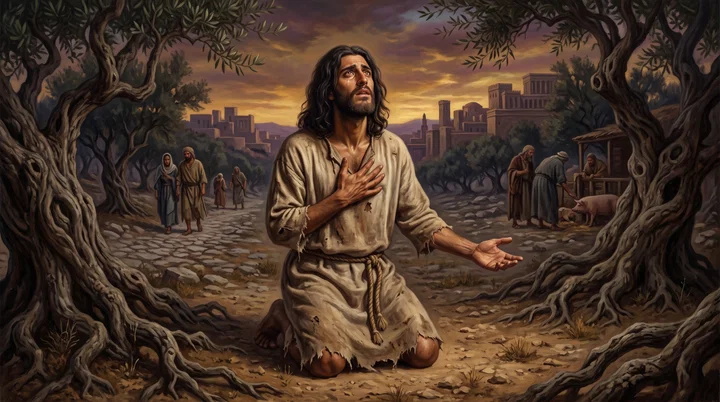
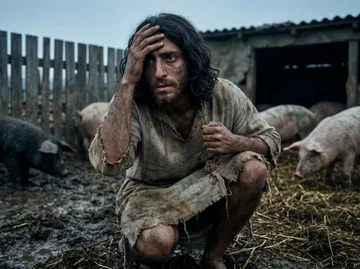
The son had rejected his father's care and selfishly demanded his portion, separating himself to avoid counsel and reproof and obligation in order to manage his inheritance as he pleased in pursuit of freedom and present pleasure.COL 198.4–199.13T 100.3–101.2TCBMP 123.1 He went far away to forget his father and seek pleasure without restraint, wasting his inheritance and the gifts of youth in sinful indulgence and extravagant pleasure.3T 100.3–101.2MYP 408.1COL 199.2–200.3 Famine then brought pinching want and destitution, leaving him friendless in a strange country, clad in rags and hungry and longing even for the refuse fed to swine.3T 100.3–101.2MYP 408.1COL 199.2–200.3 He was brought down from a life of sinful indulgence to the low business of feeding swine, in need of the very means he had squandered.3T 100.3–101.2COL 199.2–200.3
His condition illustrates the sinner's bondage to sin and the spiritual and moral ruin that follow separation from God and living for self.COL 199.2–200.3 The sinner is a prodigal long stayed away from God, perishing in sins while serving sin and the flesh and the devil for poor wages with no profit.COL 199.2–200.32T 295.1 Separation from God weakens self-government, allowing pride and impulse and disordered habits to overpower conscience and reason and principle, so that restoration to oneself as well as to God is needed.Lt 10, 1888, par. 2–5
Sons become prodigals through indulgence in the home, when parents permit pernicious ways and allow too much freedom and indulge will and inclination instead of restraining and educating from the dawn of reason in the fear and love of God.11MR 40.3–41.2Lt 117, 1898, par. 4–5 Such failure to sustain mind and purpose by firm, undeviating, sanctified principles with consistency and affection and a lovely and consistent example can lead children into crooked ways and rebellion.11MR 40.3–41.2Lt 117, 1898, par. 4–5 The prodigal also pictures a person ruined by selfish indulgence who, once ambitious and successful, sinks through habitual drinking until courage is lost and he comes under Satan's control, yet Christ meets such a fallen and discouraged person with tender sympathy suited to his need.Ms 22, 1898, par. 19
Professed commandment keepers who transgress act as the prodigal, unthankful and unholy, flattering themselves that they are Christians while employing their entrusted talents to counterwork God.Ms 75, 1898, par. 13–14 Conformed to the spirit and principles of worldlings and exerting their influence on Satan's side, there is no light in them for sanctification or holiness.Ms 75, 1898, par. 13–14 Jesus yearns after these sons and daughters and longs to do them the good He would delight to do, but He cannot do it because of the perversity of their characters.Ms 75, 1898, par. 13–14
Coming to Himself
The moment is the breaking of self-deception, when the son returns to reason and awakens from deception to recognize his desperate need and suffering.COL 198.4–199.1TCBMP 123.1ST Apr 20, 1915 Coming to himself is coming to moral senses, becoming sensible of great sin and neglect against the heavenly Father.3T 103.5–104.12T 295.1Ms 12, 1888, par. 8 It is diligently searching the heart over the road traveled and where it will end, refusing false hopes and consenting to the one humble way back.2T 295.1 It is recognizing true condition and need, turning thoughts to God and becoming ready to obey His directions.Ms 12, 1888, par. 8
It is also becoming aware of lost condition and of the distance placed between oneself and the Saviour.Lt 14a, 1891, par. 10 This is the state of one who knows he is unsaved and grieving Christ, yet finds moral power weak and the will not on the Lord's side.Lt 14a, 1891, par. 10 Repeated attempts at self-reform in own strength have failed, and there is struggle to attend to the Word or to pray with feeling.Lt 14a, 1891, par. 10 Coming to the right mind begins with reflecting on relationship to the Maker.ST May 19, 1881 To prefer human praise to God's favor, sinful rewards to heaven's treasures, and sin's husks to God's spiritual food is moral madness, even when intelligent in worldly matters but disregarding eternal interests.ST May 19, 1881
In that awakening he contrasts his perishing with hunger against the plenty in his father's house.ST Jan 29, 1894Ms 147, 1897, par. 31–333T 101.3–102.2COL 203.2–205.1COL 202.3–203.1 Even the hired servants have bread enough and to spare, more than enough food in abundance, while he is starving.ST Jan 29, 1894Ms 147, 1897, par. 31–333T 101.3–102.2COL 203.2–205.1COL 202.3–203.1 Brought low by hunger and destitution, remembering the security and provision left behind, his recognition of need leads him to decide to return.ST Jan 29, 1894Ms 147, 1897, par. 31–33ST Jan 29, 1894 He sees that his friendlessness, want, hunger and suffering follow his own folly, disobedience and sin in alienating himself from his father's house and separating himself from his father.3T 101.3–102.2ST Jun 2, 1909COL 202.3–203.1COL 202.1–2TCBMP 124.1 This recognition turns him toward returning to his father.COL 202.3–203.1ST Jan 29, 1894ST Apr 20, 1915
His coming to his senses happens as Satan's deceptive influence is broken.ST Jun 2, 1909COL 202.1–2 Thinking of his father's kindness, love and goodness gives him hope and draws him toward home.3T 101.3–102.2ST Jun 2, 1909COL 202.3–203.1COL 202.1–2 Assurance of God's love leads sinners to return in repentance, though he still thinks himself fit only to beg for a servant's place.ST Jun 2, 1909COL 202.3–203.1COL 202.1–2 The longing to return to God while still far from the father is the tender pleading of God's Spirit drawing the sinner back.
The father's plentiful bread and household abundance picture God's ample mercy, compassion, love and hope rather than rejection.ST Jul 29, 1913ST Dec 5, 1892Lt 10, 1856, par. 5 Salvation is full and freely available nourishment and joy in Christ, so believers should not remain spiritually hungry but receive it by continual faith.LS 314.1–315.1Lt 2, 1853, par. 12–14 Life away from the Father's house is starvation in a foreign land, and the hungry are urged to return to the Father's abundant supply.Lt 10, 1856, par. 5
Repentance and Return
Recognition of desperate need moves the starving son to resolve to go back to his father, confessing sin and unworthiness and asking only for a servant's place.Ms 147, 1897, par. 31–33ST Jan 29, 1894TCBMP 124.1 Brought low by hunger and want through his own disobedience, alienated from his father's house and perishing while even hired servants enjoy plenty and to spare, he is humbled by remembering his father's kindness, provision and love.3T 101.3–102.2TCBMP 124.1TCBMP 128.1 He returns as a destitute beggar without comfortable or even decent clothing, wretched through privation and emaciated with hunger, with renewed appreciation of his father's love and claims, and he is received with pity, compassion and forgiveness.Ms 147, 1897, par. 31–333T 101.3–102.2TCBMP 128.1 He does not wait until he has made himself respectable before deciding to return.ST Jan 29, 1894ST Jan 29, 1894
He leaves the service of Satan and of sin at once, turns square about, and decides from that day to be a Christian, even if keeping the Sabbath costs position and trade.ST Jan 29, 18943MR 64.5–65.3 Coming back means the straying soul begins to resist temptation and turn from sin and Satan's service to the Father's house and service.Ms 40, 1899, par. 10–12Lt 59, 1886, par. 1–5 It means changing life and character, confessing backslidings, coming to Jesus, and returning to the Father's blessing.Ms 40, 1899, par. 10–12Lt 27, 1890, par. 18–19Lt 27, 1890, par. 1 The return is marked by seeking the Lord with confession and contrition, and those who seek Him do not seek in vain.Ms 21, 1889, par. 96–97 It means being led step by step in submission to His will and His way to obtain a rich experience.Ms 21, 1889, par. 96–97Ms 89, 1893, par. 1–2
Coming to himself means grasping Christ by faith, fixing the eye on Him, casting himself helpless on His mercy, and choosing to come penitent to the Father's house.Lt 1a, 1890, par. 1 It means ceasing what is known to be sin, giving the little remnant of life to Jesus, and being saved by His cleansing blood, because He waits to be gracious.Lt 1a, 1890, par. 1 Coming back means more than reclaiming a son's privileges; to enjoy sonship its conditions must be met.Ms 183, 1901, par. 12Ms 98, 1901, par. 17–20Lt 164, 1900, par. 21–23 He must also accept a son's obligations and remain under his father's care rather than wander again.Ms 183, 1901, par. 12Ms 98, 1901, par. 17–20
This is unreserved surrender of the whole life, guided by God's word and submitted to His control for deliverance from sin, remaining under the shepherd's care in the fold and repaying love by staying.10MR 110.3–5 It means meeting God not on human ground but on His ground, with cordial assent and willing obedience to His terms.ST May 8, 1901 It means renouncing the favor and friendship of the world, making Christ all and in all and walking according to His Word, acknowledging Christ as King, submitting to His authority, consulting His will, making His law the rule of life, being bound by His requirements, making His life the pattern, obeying His Word, denying self for His glory, and being willing to sacrifice all for His sake.ST May 8, 190110MR 110.3–5 God's boundless love in assuming humanity in His Son, given as propitiation for the sins of the whole world, opens the way, and Christ freely cooperates with and gladly receives all who so receive Him to reign within.ST May 8, 1901
God will accept the prodigal who links himself with God and turns to Him with full decision of soul.Lt 33, 1896, par. 12 Giving heart and soul to God brings His blessing, and God will work with the one who returns to help other youth give their hearts to God and be converted.Lt 33, 1896, par. 12 Returning to God in repentance is not humiliating, for as the father welcomed the prodigal, God receives the contrite person with love and covers the returning sinner with the robe of Christ's righteousness.Lt 76, 1898, par. 18–20 The son's example warns against delaying return to family and God, for humble return and deliverance from sin depend on Jesus' strength, not one's own.Lt 18f, 1890, par. 2
The history applies to a backslider who once loved and served the Lord but turned away, and to one estranged from the heavenly Father who has neglected the call to return though invited to come and become loyal.Lt 59, 1886, par. 1–5Lt 52, 1899, par. 1Lt 15, 1899, par. 9–11 The return begins with seeing need, and the repentant soul is welcomed without reproach; what is required is penitence, a broken and contrite heart.ST Jan 29, 1894 The verse shows the beginning of repentance in which a person recognizes lost condition and need and turns toward home.ST Jan 29, 1894Lt 45, 1894, par. 25–27 The prodigal's return to the Father's house pictures God's gift of His Son to bring wandering people back to Him.Ms 41, 1890, par. 45–51
God in Christ daily beseeches men to be reconciled, with outstretched arms ready to receive and welcome not only the sinner but the prodigal, restoring the sinner to divine favor through goodness and mercy.Lt 15a, 1890, par. 9–11 Christ's dying love manifested on Calvary is the assurance of acceptance, peace and love, so that the sin-darkened soul may see light shining from the cross.Lt 15a, 1890, par. 9–11 The turning point is given for youth: many youth live as he did in careless, pleasure-loving, spendthrift living, expending inheritance in pleasure and sinful indulgence until left friendless in a strange country, clad in rags and hungry.MYP 408.1 They forsake the fountain of living waters, the fountain of true pleasure, and hew out broken cisterns which can hold no water.MYP 408.13MR 64.5–65.3 Coming to himself puts the mind in a new channel with purified thoughts and changed purposes, a solemn sense of responsibility, and happiness and thankfulness in the pardon and love evidenced by the Lord.MYP 408.13MR 64.5–65.3 Those who have wandered from God come back in contrition and penitence after hearing a message of love, and find hope of redemption through Christ.Lt 178, 1902, par. 28–30
Father's Loving Reception
The father in the parable is God, who longs for the sinner to return and, though He is the one sinned against, receives the returning one with compassion, pity, love, forgiveness, and greatest joy.3T 103.5–104.1RH Jan 19, 191118MR 113.5Ms 132, 1902, par. 9 The son's coming to his senses begins a return in which he repents and goes back, and he is received not as a servant but as a beloved son, forgiven and restored.COL 203.2–205.118MR 113.5 The welcome opens without accusation to a father waiting with yearning love, who prepares a feast to welcome him home.GW 157.3
That welcome is pictured by embrace, by garments covering rags, by a ring given as token of restored standing and place in the family, by clothing with the robe of righteousness, and by a place at the Father's table in reconciliation to God.Lt 80, 1898, par. 9–13GW 140.2Ms 40, 1899, par. 10–1211MR 370.2–371.1Lt 59, 1898, par. 12–14 The Father's gift of His beloved Son as sacrifice shows infinite love for the fallen race and opens a channel for that love, so that all who believe on Jesus are restored again to favor.Lt 85, 1886, par. 17–18 That believing brings obedience to all of God's commandments and life in Christ.Lt 85, 1886, par. 17–18
God regards wanderers with love proved at Calvary, where He sent His Son to be the propitiation for sins, not for some only but for the sins of the whole world, with infinite benevolence pouring out its treasures to make man one with God.RH Nov 26, 1901 He takes the first step to seek people even while they are in rebellion, and welcomes back every wanderer who allows Him to bring them home, giving courage to despondent and distrustful sinners.ST Jan 22, 1894 Even the poorest person who comes to the Father in repentance is welcomed with love, and heaven rejoices, with joy among the heavenly host over the repentant return.Ms 19, 1890, par. 21STBk 14.1STOM 11.2STA 14.1 The return of one repentant sinner brings greater joy than the ninety-nine who need no repentance, and he is met with tender sympathy and earnest care.5T 604.1
God acts as a true shepherd toward those ready to die through indifference and careless disregard, going after the lost sheep and speaking to the distressed soul to return with the promise to return, healing backslidings, loving freely, and turning anger away, with all heaven rejoicing in the finding.Lt 71, 1895, par. 25 The father's house is the home to which the lost are reclaimed and brought back when they recognize desperate need.ST Oct 31, 1916 The father's plenty shows that one who has failed can come to the Lord, confess mistakes, and seek strength to begin again.MYP 97.1 The contrast between starvation and household abundance presents God as a loving father who bears with His wayward people and is willing to suffer for their sins and bear their guilt.Ms 56, 1902, par. 5 The prodigal is welcomed by Christ, whose love assures the sinner of acceptance, peace, and love.Ms 82, 1894, par. 22–24
Seeking and Restoring Wanderers
The moment of coming to himself leaves the wanderer suffering in feeling, often desponding and discouraged, sensible of great sin and neglect against the heavenly Father and of desperate need that only the Father can supply.3T 103.5–104.1TCBMP 128.2 Above everything else such a one needs pity, help, sympathy and free forgiveness, not efforts to make him feel his error and reminders of his mistakes.3T 103.5–104.1TCBMP 128.2 His repentance calls for tender sympathy that understands his suffering over the years he has lost and meets him with encouragement, hope, compassion and love.Lt 45, 1894, par. 21–24Lt 16, 1887, par. 7–14Lt 45, 1894, par. 25–27 That meeting must not be with reproach, censure, suspicion, jealousy or severe judgment toward those who have fallen under temptation.Lt 16a, 1887, par. 416MR 339.3Lt 45, 1894, par. 25–27 The parable itself is meant to soften the heart toward the fallen, to encourage return to Christ for pardon and strength, and to restrain harshness.Lt 16, 1887, par. 7–14Lt 16a, 1887, par. 416MR 339.3
What is needed is the loving welcome of the father, not the cold rejection and refusal to forgive shown by the elder brother.11MR 370.2–371.1RH Nov 25, 1902Ms 113, 1902, par. 30 The elder brother's complaints, though natural, are wrong, and his rejoicing-exposed spirit is selfish, jealous, murmuring, gossiping, planting doubt, questioning and evil-surmising, displeased that the lost are welcomed and saved.11MR 370.2–371.1TCBMP 128.2Ms 49, 1898, par. 24–25 That elder son stands for members of an established church who have already had much labor and a house of worship, who ought to rejoice when wandering sheep come to themselves, are awakened, baptized and brought to the fold.21MR 296.5–6Ms 49, 1898, par. 24–25 Instead they act out the parable most distinctly by feeling envious and jealous because more labor is not given to them, expecting to be constantly fed with sermons, demanding ministerial labor for themselves, and neglecting soul-saving in their homes and among others.21MR 296.5–6Ms 49, 1898, par. 24–25 None should take that complaining attitude, but with Christ formed within as the hope of glory should seek to save the lost, carry the message of salvation, bear light, reflect truth by precept and example, pray in sincerity, stretch out the hand all day long and hunt for souls as an earnest working church; the lesson means much and must be carefully studied together with the lost sheep and the lost coin, because practicing it involves eternal interests.Lt 71, 1895, par. 27Ms 49, 1898, par. 24–25
The church is failing in seeking the lost and bringing them into the fold, and must recognize and acknowledge that failure.Ms 16, 1868, par. 2–3 The lesson of the prodigal together with the lost sheep must be studied more closely and obeyed with purpose by going into the wilderness to search for, find and bring back those who have strayed, instead of wounding and driving the sheep away.Ms 16, 1868, par. 2–3Lt 71, 1895, par. 27Ms 81, 1893, par. 61–63 The prodigal far from home and perishing with hunger represents people far from the Father's house, perishing in sin and needing to be brought to saving knowledge of the truth.RH Nov 26, 19019T 50.2Ms 45, 1901, par. 8 His desperate condition makes him an object of compassion, to be treated with compassion in God's enterprise of mercy sustained by self-denial and offerings in righteousness.RH Nov 26, 19019T 50.2Ms 45, 1901, par. 8
His awakening marks the beginning of return, when he recognizes his desperate condition and remembers that even his father's hired servants have food in abundance.MH 179.1–2 Sinners who have themselves been rescued can understand and help others who are lost, and through their ministry many prodigals can be brought back to the Father.MH 179.1–2 Workers are therefore to encourage those who have left the Father's house to return, and people seeking truth, including those who come to the Sanitarium, can turn back and be saved when they are wisely helped.Lt 200, 1902, par. 8–10STB 147.5STB 620.1–2RH Mar 16, 1905STB 119.1 The verse marks a turning point showing that one in error can be brought back from ruin rather than driven further into desperation.Lt 50, 1893, par. 8–9 Applied to teachers, patient gracious dealing can help erring students return to God, while harshness and humiliating exposure can imperil them and keep them from returning.Lt 50, 1893, par. 8–9
Erring people need opportunity to recover and turn back, not harsh or condemning treatment, and are not to be held at a distance or left under Satan's control but met with tender love and efforts to restore them.RH Nov 25, 1902Lt 16, 1887, par. 7–14 Erring youth especially should be treated with tenderness and sympathy rather than harsh judgment, as shown by the young backslider turning from sin and Satan's service to come back to his father's house and service.Lt 16, 1887, par. 7–14Lt 59, 1886, par. 1–5 The prodigal coming to his senses and recognizing his desperate condition is paralleled by a man degraded by liquor who entered the tent deeply moved to become fully converted.Lt 28, 1874, par. 6–7
Sources
Pioneers and periodicals
184 sources
The verse is the turning point where the younger son, after wasting his portion in riotous living and being brought to want and feeding swine in famine with no man giving to him, comes to clear sight of his misery by comparing his perishing with hunger to the plenty of his father's hired servants who have bread enough and to spare.ST Oct 17, 1900ST Sep 6, 1899ST Aug 6, 1894ST May 4, 1904ST Aug 6, 1894 Coming to himself is awakening from Satan's deception and spiritual stupor to see his true wretched condition.ST May 4, 1904RH Jul 15, 1862 That sight becomes resolve to arise and go to his father with confession of sin against heaven, owning unworthiness to be called son and asking only a servant's place.ST Jan 29, 1894ST Oct 17, 1900ST Sep 6, 1899 The father is God, good beyond measure, who does not give the wanderer up but waits, seeks by His Spirit, and meets the returning one when yet a great way off without reproach or rehearsing past wrongs, welcoming him with embrace, robe, ring, and feast and restoring him as son and heir.ST Mar 25, 1880ST Jan 29, 1894RH Dec 13, 1906ST Nov 22, 1899ST Nov 22, 1899 The bread enough and to spare is abundant provision in the Father's house, the bread of life that feeds body, mind, heart, and soul, with mercy to spare for every despairing sinner who will come home without first making himself respectable.RH Jul 15, 1862RH Jun 14, 1870RH Jul 21, 1910ST Jan 4, 1905ST Jan 22, 1894
Parable Setting and Story
Luke 15:17 belongs to the third parable in Luke 15, spoken because publicans and sinners gathered to hear Jesus and the scribes and Pharisees complained that he received sinners and ate with them.ST Nov 22, 1899RH Sep 3, 1872ST Nov 21, 1900ST Mar 28, 1906 That complaint revealed a low and incorrect view that God has no pity and compassion for the erring and fallen but regards them as fit subjects of divine wrath to be shunned by good people, and the parable sweeps that false view away to show how he regards poor, helpless and perishing souls defiled with sin.ST Nov 22, 1899ST Jun 13, 1916 It belongs to the vivid portrayal of the son's wandering, sad condition, sense of need, return homeward, father's greeting and rejoicing that stirs every soul, and its wandering boy gone astray commands the strongest time and thought and prayer and care.ST Nov 22, 1899ST Jun 13, 1916 That love for the wanderer is a faint glimmer of heavenly light, the divine love Jesus brought from glory to take root and bud and blossom and bear fruit in humanity, first in himself and then in all who truly believe, leading him to find his life work among the lowly as the friend of publicans and sinners, walking and working and healing among the sin-sick even though devout church people could not understand his course.ST Jun 13, 1916
The three parables of the lost sheep, lost coin, and lost son show the Son of man come to seek and to save that which was lost, the value the Son of God places on a soul, and joy in heaven and in God's presence over one sinner who repents.RH Nov 12, 1914ST Nov 21, 1900 The return of the lost son is met by his father with joy, and the wanderer's recognition of his desperate condition leading him toward his father's house is welcomed by the Father's protecting love, so that penitence and the steps back from wandering are cause for joy.RH Mar 18, 1858 Jesus receives sinners so they may receive him, become God's children, and share in the marriage supper of the Lamb. The chapter's parables also provide the setting for the parable of the rich man and Lazarus that follows and explain how a rich sinner can be saved as seen in Zaccheus the publican.RH Sep 3, 1872ST Nov 21, 1900
The prodigal represents the Gentiles, and more broadly publicans and sinners, backsliders, penitents, and every wanderer from the Father's house, while the elder brother represents the Jews and Pharisees.STRH Jul 3, 1900ST Oct 17, 1900ST Dec 18, 1901ST Mar 28, 1906 The great object of the parable is the great love of God to the undeserving, whether Jew or Gentile, backslider or sinner, for God is no respecter of persons, and salvation from sin is offered even to a prodigal sinner.STST Dec 18, 1901 People estranged from God remain his children and heirs in their minority, and this life gives them opportunity to acknowledge God as Father and become sons indeed, with the father's house representing the home to which the lost are reclaimed and brought back.ST Oct 31, 1916ST Mar 8, 1899 The prodigal position is one believers stood in in the past before they ceased to count themselves with the prodigal, and the elder brother being offended and refusing to enter rebukes those who are joyful when lost sheep and lost money are found yet offended when a lost brother is received.RH Jul 3, 1900ST Mar 28, 1906
The verse comes after the younger son received his portion from his father, wasted his living with riotous living in a far country, spent all, suffered mighty famine and want, joined himself to a citizen to feed swine, desired the husks the swine ate, and no man gave to him.ST Aug 6, 1894ST May 4, 1904ST Aug 6, 1894 It records what he said when he came to himself in that reduction, remembering how many of his father's hired servants had bread enough and to spare while he perished with hunger.ST Aug 6, 1894ST May 4, 1904ST Aug 6, 1894 It is part of the most beautiful illustration of penitence on record, giving every trait and circumstance marking fallen man turning from his wayward course and professing allegiance to God again through successive scenes of departure from home, abandonment to the sins of an unholy world, suffering that necessarily ensues, deep penitence, return to the father, and restoration to the privileges of a son.ST Aug 26, 1875 His selfish use of his father's gifts leads him into loss, and the verse marks his recognition of his desperate condition, by which people waste the Heavenly Father's blessings in sinful and selfish indulgence and become lost.
The verse is the turning point of the story and comes just before the son's resolve to arise and go to his father and confess sin against heaven and before him, followed by the father's reception of him when yet a great way off.ST Aug 6, 1894ST May 4, 1904ST Dec 19, 1900ST Aug 6, 1894 That remembrance turns his mind to home and is coming and returning to the Lord, offering himself to God as a servant, and God receives all sinners who so come and instead of leaving them as servants makes them sons, friends and heirs, revealing a wonderful love broader than man's mind.ST May 4, 1904ST Aug 6, 1894 Such return brings overflowing, unconcealed joy in God himself in the presence of the angels, for God watches for the wanderer and rushes to meet him when he is yet a long way off.ST Aug 6, 1894 Every person is either the returning prodigal or the carping elder brother who is actually in as hard circumstances as the prodigal and unconscious of it.ST Aug 6, 1894
The story presents its lesson through a striking example rather than an abstract lecture, as one of Christ's illustrations drawn from familiar experiences of daily life, used to teach spiritual truth and brighten ordinary life with reminders of the spiritual and unseen.ST Nov 30, 1915ST Jun 1, 1882 With the lost sheep and the ten pieces of silver it leads directly into the two parables of Luke 16, the unjust steward and the rich man and Lazarus, all forming one discourse of parables and all introduced alike with a certain man and there was a certain, proving the account of the rich man and Lazarus is a parable just as the prodigal son is.RH Mar 28, 1865 The lost son recognizing his desperate condition and remembering that even his father's hired servants have food in abundance reveals his loss and his need to return, picturing humanity as lost from God and needing supernatural light to recognize that it has a divine Father and to find the way back to him.ST Feb 19, 1902
Coming to Himself Explained
Coming to himself is awakening from Satan's deception, spiritual insanity, stupor and insensibility to see one's true miserable condition clearly, and the suffering is recognized as the result of one's own folly.ST May 4, 1904RH Jul 15, 1862ST Feb 13, 1912 Remembering the plenty in the father's home gives value to what was lost and awakens longing to return, which is a blessed turning point where the Spirit gives practical encouragement to decide to go back.ST May 4, 1904RH Jul 15, 1862 The sinner begins to recover reason amid the distress of his fallen condition, recognizing the folly of perishing when the father's house freely offers the bread of life, and this marks the start of return to righteousness and recognition of need for God.RH Jul 15, 1862ST Feb 13, 1912 He begins to think clearly, seeing both the abundance of the father's house and his own peril, learning the worth of his heavenly inheritance only through loss, and his cry that he perishes marks the crisis of an awakened sinner who faces that sin leads to death and takes the humbling step of returning through sound conversion in repentance, faith, love and obedience.RH Jul 15, 1862 Coming to himself means seeing clearly after sin's deceit is broken, and even the father's servants are seen to have more than enough while he perishes with hunger, illustrating how far men have strayed from God and how recognizing need turns toward the Father.ST Feb 13, 1912RH Jun 20, 1871 A person can wander from God without being conscious of it, possessed by the fatal fancy that all is as well as ever while stupid, blind and ignorant of his true state under Satan's spell of worldliness and formality.RH Jun 20, 1871
Waking from that spiritual insensibility means seeing that after walking in light he is groping in darkness, after feeding on manna from heaven he is eating husks and garbage without even knowing he is hungry, after claiming to be rich he is poor and miserable, and after being clothed with salvation he is naked.RH Jun 20, 1871 Sin dulls the senses until a person can feel satisfied while spiritually wretched, poor, blind and naked, and coming to himself is seeing that condition clearly.RH Jun 20, 1871RH Nov 30, 1905 Though this awareness feels painful and worse than the former delusion, it is better because it makes steps toward change possible, teaching the danger of turning from an honest view of one's condition and the need to pray for sight. Away from home and living on husks pictures the sinner's lost unregenerated condition, and the Christian who lets cares and pleasures come between himself and God and neglects secret prayer in the closet where strength is gained becomes faint and hungry for want of heavenly food, feeling far from the Father's house with desolation and barrenness on every side and knowing his spiritual life is dying and will soon be dead unless he speedily finds his way back to the living fount.RH Nov 30, 1905RH May 8, 1866 Coming to one's right mind begins with reflecting on relationship to the Maker, for preferring human praise to God's favor, sinful rewards to heaven's treasures, and sin's husks to God's spiritual food is moral madness even when a person shows intelligence in worldly matters but disregards eternal interests.ST May 19, 1881RH May 8, 1866
Coming to himself while off herding swine, so hungry as to be willing to pick up husks from which the swine had sucked the juice to wring out more, means waking to the true man, the better self, the true self in every man.RH May 20, 1902RH May 20, 1902 That true self is the personality and individuality God created each soul to be, to glorify Him and to express the mind of God, with the divine design and destiny to be conformed to the image of God's Son.RH May 20, 1902RH May 20, 1902 Opposed to it is the false selfish self, which is of Satan, which has usurped the throne in man and reigns there, compelling the better self to drag along in bondage and slavery to evil.RH May 20, 1902 As soon as he awakes and opens his eyes and comes to himself he instantly recognizes the Father, and his heart turns with resolve to arise and go to the Father.RH May 20, 1902RH May 20, 1902 The work of the gospel is to bring men face to face with themselves to this point, and the mind of Christ that empties and annihilates the selfish self is the manifestation of that true self.RH May 20, 1902
The awakening of the erring mind on a moral subject is slow and involuntary, for the understanding must first be convinced by arguments and evidences, then the conscience is reached through long painful labor, and only afterward is the will influenced to return.ST Aug 5, 1875RH Nov 20, 1860 The erring one may be dull and slow yet may still return, and may even now cherish better sentiments than he is credited for, while his heart struggles to free itself from Satan's influence.RH Nov 20, 1860 He must not be forced but waited for with patience and forbearance, with no obstacles thrown in his way even when there is no hope, and with a noble forgiving heart kept ready to welcome the returning wanderer.RH Nov 20, 1860 So it is with a self-complacent, self-righteous old professor who is a poor backslider, almost an apostate, almost gone, almost lost, for after many years travel away from God light comes in slowly through humbled prayer as never before with astonished recognition of how far he was from God, and the Lord has pity on him and meets him as the father met the prodigal son.ST Aug 5, 1875RH Nov 20, 1860
The prodigal's awakening parallels Nebuchadnezzar at the end of his appointed chastisement, after being suddenly bereft of reason and driven from men to eat grass as oxen with body wet with dew of heaven till hairs grew like eagles' feathers and nails like birds' claws.ST Sep 21, 1904 He lifted up his eyes to heaven and in that moment his reason was restored and like the prodigal son he came to himself.ST Sep 21, 1904 Coming to himself meant accepting the chastisement received as a blessing and praising and honoring Him that lives forever whose dominion is an everlasting dominion, having at last learned that the Most High rules in the kingdom of men and gives it to whomever He will.ST Sep 21, 1904 Coming to himself can also describe awakening to neglect in helping one's own child after seeing another's ruin, as when the shock of another young man's ruin makes a father recognize how little is being done to help his own son.ST Sep 21, 1904ST Jul 9, 1912
Sources